

Protease Inhibitors and Innate Immune Agonists as Antiviral Strategies Against Dengue and Zika Viruses

 and
and 
Abstract
1. Introduction
2. Covalent Inhibitors of NS2B–NS3 Protease
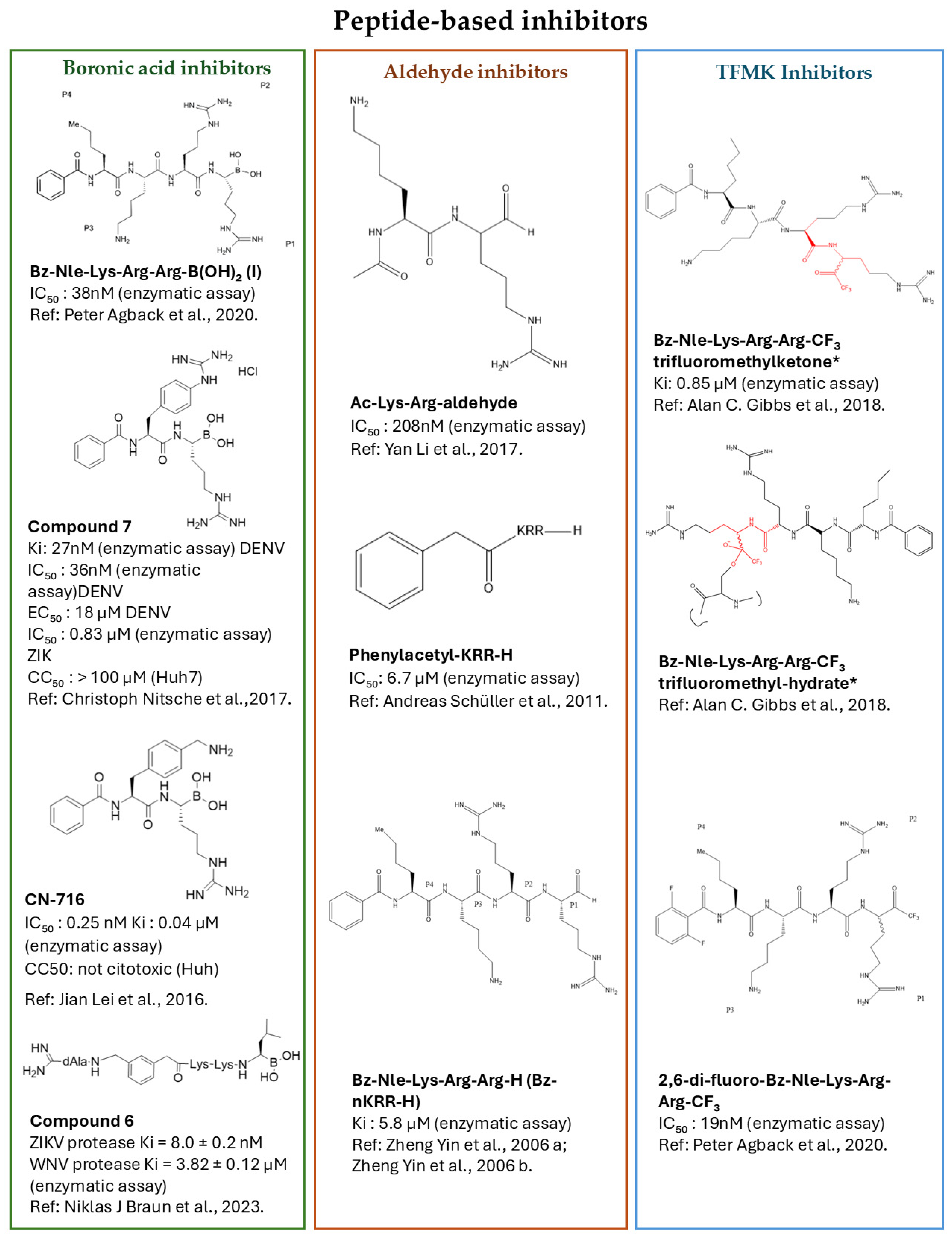
2.1. Peptide-Based Inhibitors
2.1.1. Boronic Acid Inhibitors
2.1.2. Aldehyde Inhibitors

2.1.3. Trifluoromethyl Ketone Inhibitors
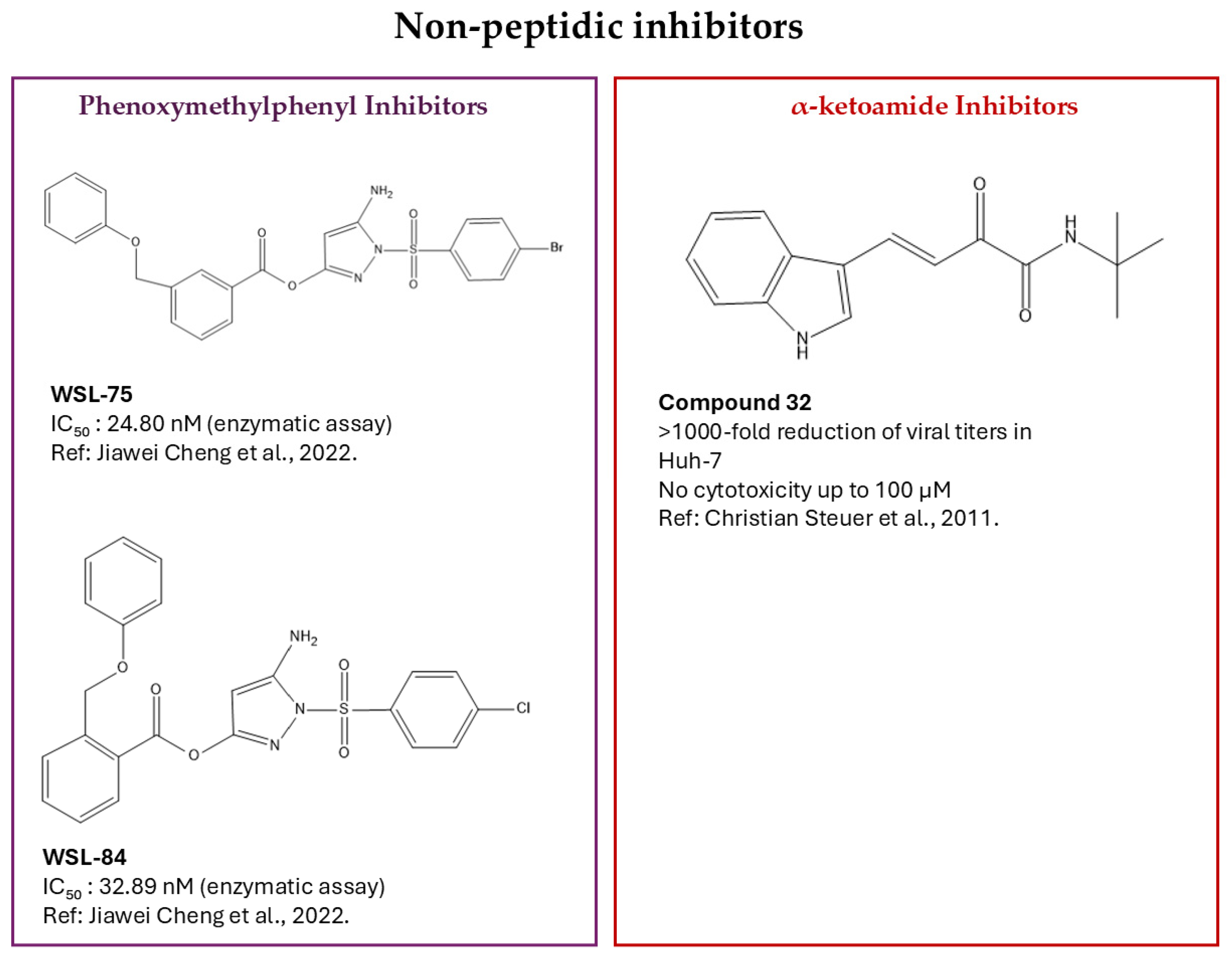
2.2. Non-Peptidic Inhibitors
2.2.1. Phenoxymethylphenyl Derivatives
2.2.2. α-Ketoamide Inhibitors
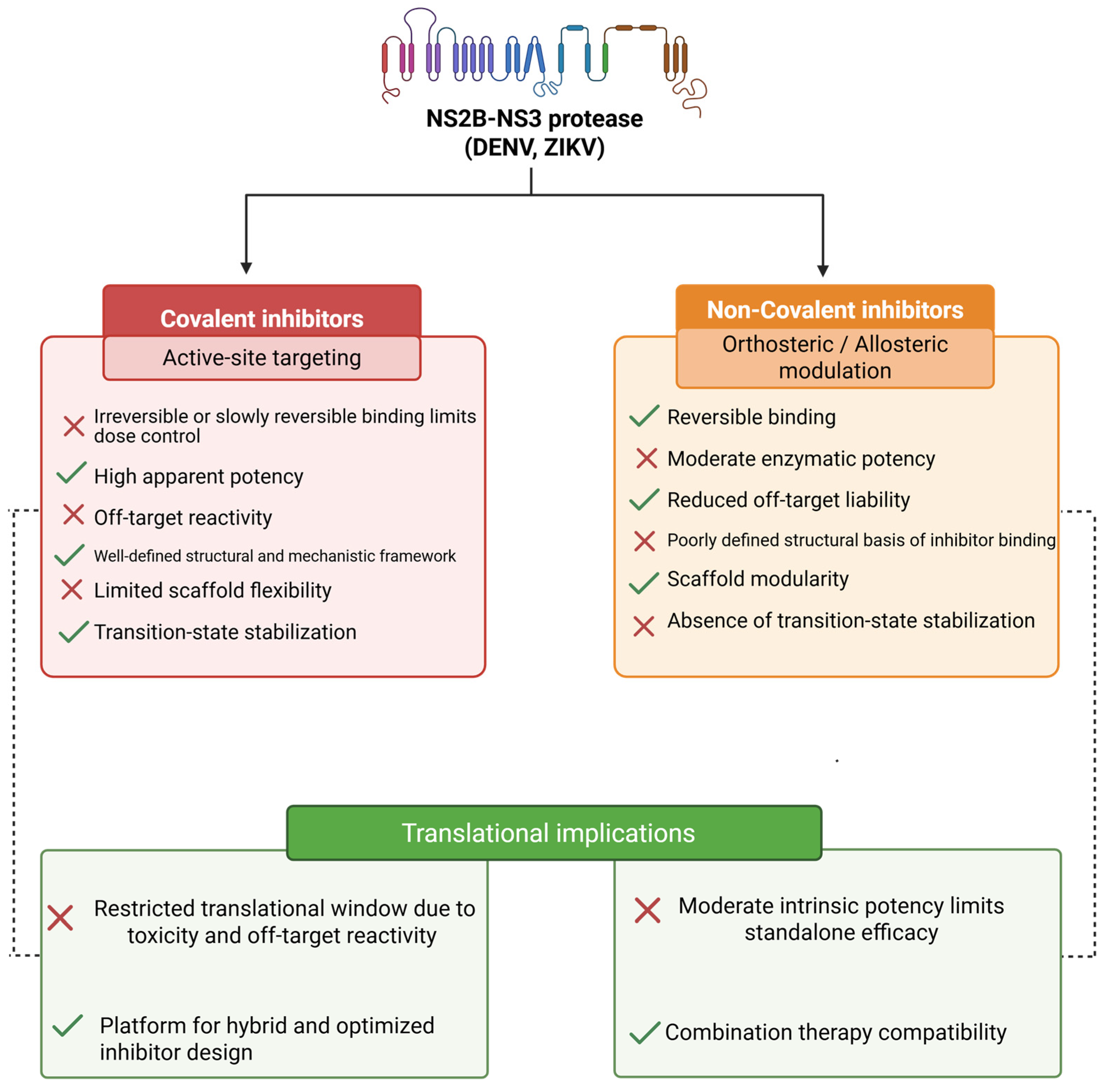
2.3. Strengths, Limitations, and Translational Barriers of Covalent NS2B–NS3 Protease Inhibition

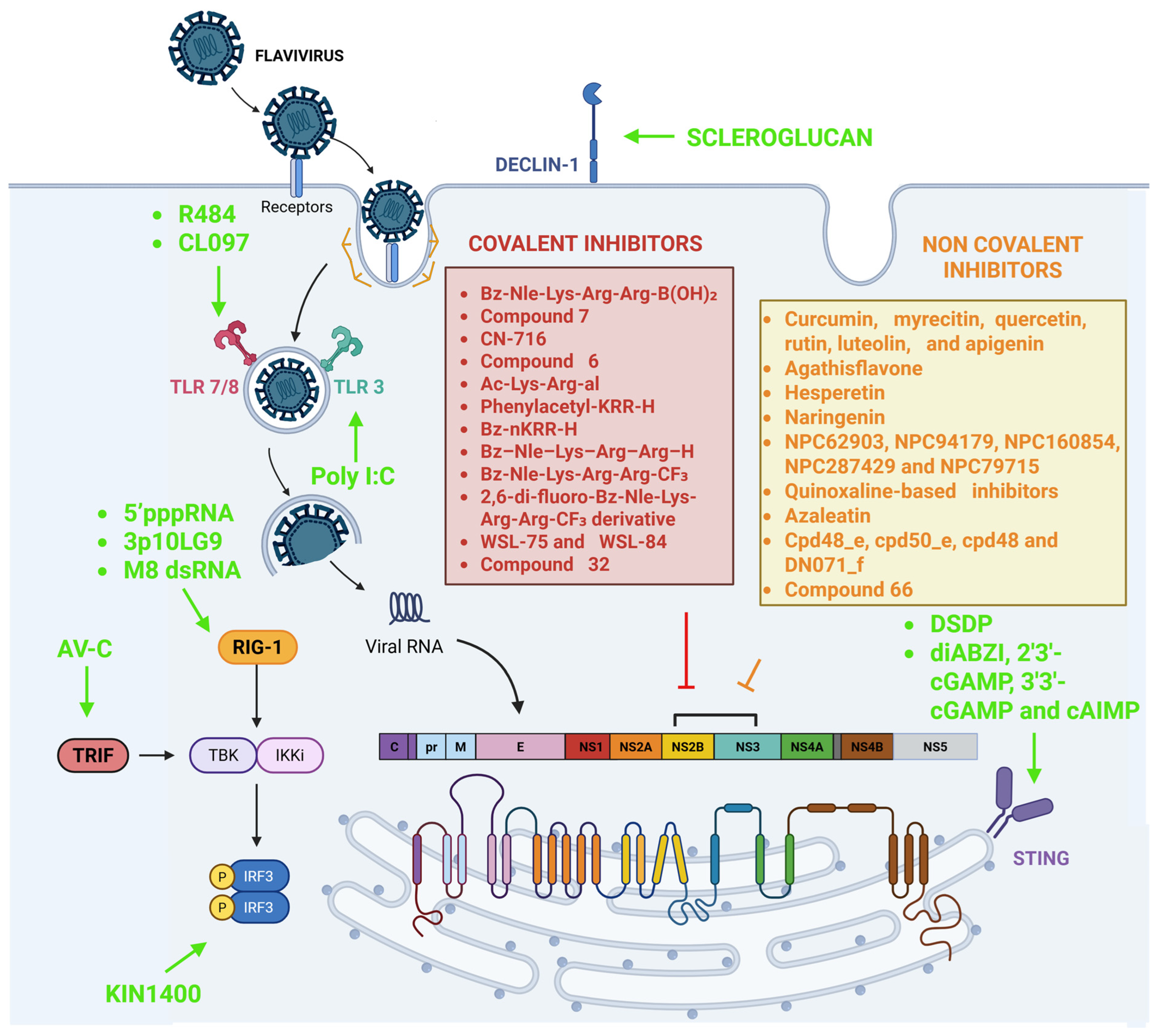
| Inhibitor | Type of Inhibitor | Virus Target | Action Site | References |
|---|---|---|---|---|
| Bz-Nle-Lys-Arg-Arg-B(OH)2 (I) | Tetrapeptide–boronic acid derivative inhibitor | DENV-2 | Active site (Ser135, catalytic triad) | [33] |
| Compound 7 | Peptide–boronic acid derivative inhibitor | DENV | Active site (Ser135, catalytic triad) | [34] |
| CN-716 | Boronic peptide | ZIKV | Active site (Ser135, catalytic triad) | [35] |
| Compound 6 | Boroleucine derivatives inhibitor | ZIKV | Active site (Ser135, catalytic triad) | [36] |
| Ac-Lys-Arg-al |
Dipeptide aldehyde inhibitor | ZIKV | Active site (Ser135, catalytic triad) | [37] |
| Phenylacetyl-KRR-H | Substrate-mimetic tripeptide aldehydes | DENV | Ser135 of the catalytic triad | [38] |
| (Bz-nKRR-H) Bz–Nle–Lys–Arg–Arg–aldehyde | Tetrapeptide aldehyde inhibitor |
DENV/DENV-3/ ZIKV | Active site (Ser135, catalytic triad) | [40,41] |
| Bz-Nle-Lys-Arg-Arg-CF3 | Trifluoromethyl ketone inhibitors | DENV-2 | Active site (Ser135, catalytic triad) | [42] |
| 2,6-di-fluoro-Bz-Nle-Lys-Arg-Arg-CF3 derivative | Trifluoromethyl ketone inhibitors | DENV-2 | Active site (Ser135, catalytic triad) | [33] |
|
WSL-75 and WSL-84 | Derived phenoxymethylphenyl inhibitor | DENV-2 | Active site (Ser135, catalytic triad) | [44] |
| Compound 32 | α-ketoamide derivative | DENV-2 | Active site (Ser135, catalytic triad) | [43] |
3. Non-Covalent Inhibitors
3.1. Allosteric Inhibitors
3.2. Strengths, Limitations, and Translational Barriers of Non-Covalent NS2B–NS3 Protease Inhibition
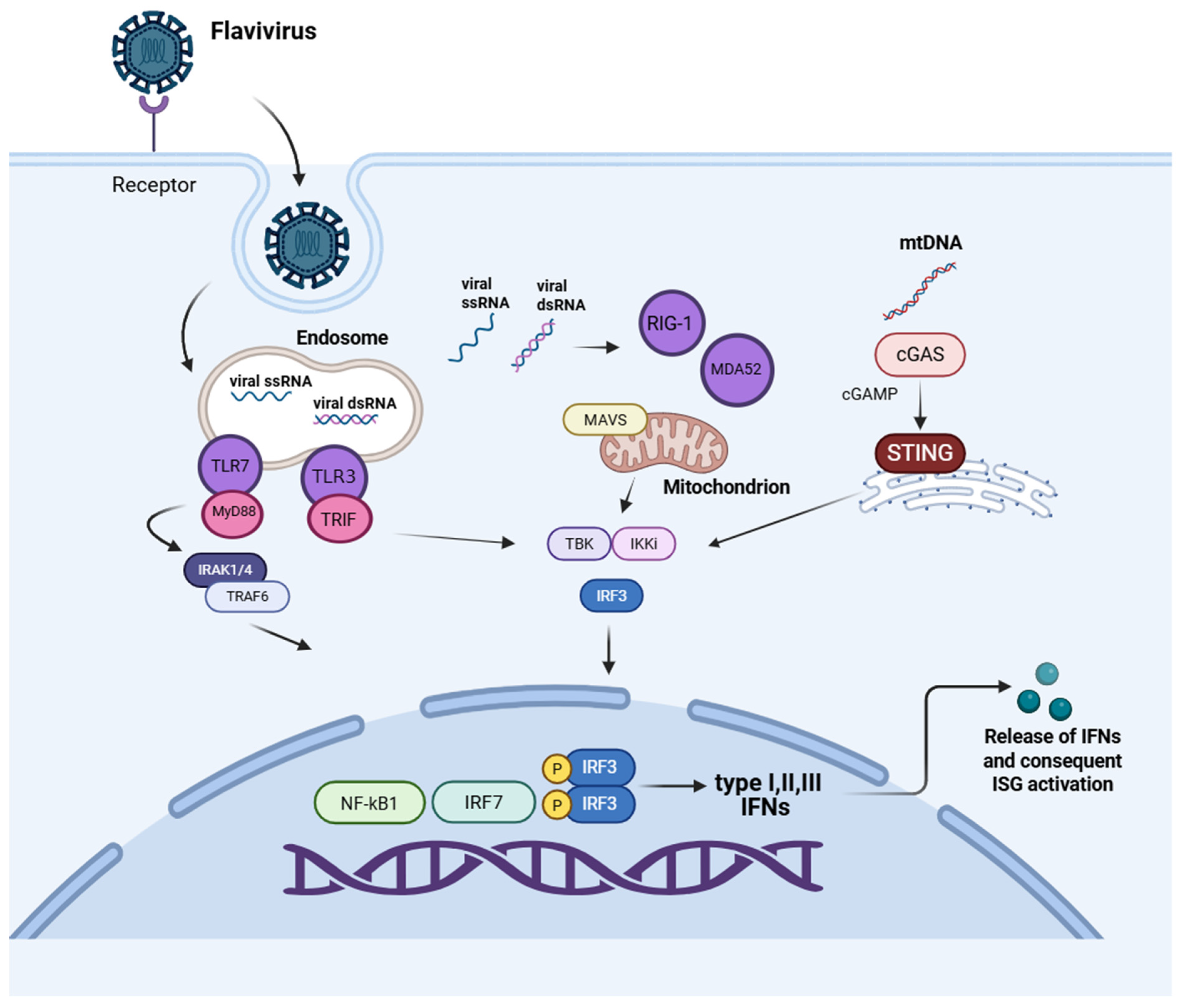
4. The Innate Antiviral Landscape: PRRs, Interferons, and Host-Targeted Therapeutic Approaches
4.1. Toll-like Receptor Agonists
| Agonist | Target/ Pathway | Active Concentration | Antiviral Effect | Experimental Model | References |
|---|---|---|---|---|---|
| Resiquimod (R848) | TLR7/8→MyD88→ IRF7→IFN-I | 1 µM | Suppression of ZIKV replication following pre-treatment. | Human monocytes; monocyte-derived macrophages (MDMs) | [86] |
| CL097M-012 | TLR7/8 | 1 mg/animal | Marked reduction in DENV viremia during early infection. | Indian rhesus macaques (in vivo) | [88] |
| Poly (I:C) | TLR3→TRIF→IRF3→ IFN-I/III | 5 µg/mL | Potent inhibition of DENV-2 replication (prophylactic or simultaneous treatment conditions). | Human hepatoma cells (HepG2) | [89] |
| 5′pppRNA | RIG-I→MAVS→ TBK1/IKKε→IRF3 | 1–10 ng/mL | Complete suppression of infectious DENV particle production and blockade of viral RNA synthesis (prophylactic and early therapeutic conditions) | A549 cells, primary human monocytes, and monocyte-derived dendritic cells (MDDCs), | [90] |
| 3p10LG9 | RIG-I optimized agonist | EC50: U937-DC-SIGN: 3.77 nM; A549: ~0.27 nM; CD11c+ DDC: 13.6 nM; LC: 15.5 nM; CD14+ DDC: 15.5 nM | Potent, dose-dependent inhibition of DENV replication (prophylactic setting) | U937-DC-SIGN, A549 cells and primary human skin APCs (CD11c+ DDCs, CD14+ DDCs, LCs) | [91] |
| M8 dsRNA | RIG-I ligand | A549: 1 ng/mL; Mo-DCs: 10 ng/mL | Potent induction of IFN-β/λ and ISGs with strong inhibition of DENV replication | A549 epithelial cells and Mo-DCs | [92] |
| DSDP | STING agonist | 6.25 μM for DENV; 25 μM for ZIKV | Reduction in intracellular DENV/ZIKV RNA and viral titers | Human fibroblasts (THF) | [93] |
| diABZI, 2′3′-cGAMP, 3′3′-cGAMP and cAIMP | STING→IRF3 | ≤100 µg/mL (highest non-toxic dose | Significant inhibition of ZIKV infection | Human foreskin fibroblasts (HFF-1) | [94] |
| Scleroglucan | Dectin-1→NF-kB | ≤100 µg/mL (highest non-toxic dose | Modest anti-ZIKV activity through STING-independent pathway | Human foreskin fibroblasts (HFF-1) | [94] |
| KIN1400 | IRF3 pathway activator | 2–20 µM | Reduction in DENV RNA and infectious particle production (active also in the early post-infection window) | Human hepatoma cells (Huh-7) | [95] |
| AV-C | TRIF→IRF3 | IC90 of 5.8 μM for ZIKV; IC90 of 9.9 μM for DENV | Reduction in ZIKV and DENV replication | Human fibroblasts (THF) | [96] |
4.2. RIG-I Agonists
4.3. cGAS–STING Pathway Agonists
4.4. Translational Challenges: Safety, Dosing, and Timing
5. Conclusions
Author Contributions
Funding
Institutional Review Board Statement
Informed Consent Statement
Data Availability Statement
Conflicts of Interest
Abbreviations
| Abbreviation | Full Name |
| 5′pppRNA | 5′-triphosphate RNA |
| A172 | Human glioblastoma cell line |
| A549 | Human lung carcinoma epithelial cell line |
| Ala | Alanine |
| Arg | Arginine |
| AS1/2 | Allosteric site1/2 |
| Asp | Aspartic acid |
| AV-C | 1-(2-fluorophenyl)-2-(5-isopropyl-1,3,4-thiadiazol-2-yl)-1,2-dihydrochromeno[2,3-c]pyrrole-3,9-dione |
| Bz-nKRR-H | Benzoyl-norleucine-Lys-Arg-Arg-aldehyde |
| BHK-21 | Baby hamster kidney-21 cells |
| C | Capsid |
| Catalytic triad | (Ser-His-Asp) |
| CARD–CARD | Caspase activation and recruitment domain |
| CC50 | 50% cytotoxic concentration |
| CDNs | Cyclic dinucleotides |
| cGAMP | Cyclic GMP–AMP |
| cGAS | Cyclic GMP–AMP synthase |
| CLRs | C-type lectin receptors |
| CN-716 | Boronic peptide CN-716 inhibitor |
| Compound 32 | α-Ketoamide inhibitor |
| Compound 6 | Boroleucine-derived covalent inhibitor |
| Compound 7 | Boronic acid peptide inhibitor |
| CRISPR/Cas9 | Clustered Regularly Interspaced Short Palindromic Repeats/CRISPR-associated protein 9 |
| CYD | Chimeric yellow fever–dengue |
| CYD-TDV | Chimeric yellow fever–dengue tetravalent dengue vaccine (Dengvaxia) |
| Cys | Cysteine |
| DENV | Dengue virus |
| DENV-1 | Dengue virus serotype 1 |
| DENV-2 | Dengue virus serotype 2 |
| DENV-3 | Dengue virus serotype 3 |
| DENV-2 PDK-53 | Dengue virus serotype 2 attenuated strain PDK-53 |
| DSDP | Dispiro-diketopiperazine STING agonist |
| dsRNA | Double-stranded RNA |
| E | Envelope protein |
| EC50 | Half-maximal effective concentratio |
| EC68 | 68% effective concentration |
| EMA | European Medicines Agency |
| ER | Endoplasmic reticulum |
| FDA | Food and Drug Administration |
| GAF | Gamma-activated factor |
| GAS | Gamma-activated sequences |
| Gln | Glutamine |
| Glu | Glutamic acid |
| Gly | Glycine |
| HepG2 | Human hepatoma cells |
| HFF-1 | Human foreskin fibroblasts |
| His | Histidine |
| hmdDCs | Human monocyte-derived dendritic cells |
| HST | Hesperidin |
| Huh7 | Human hepatoma cell line |
| Huh7.5 | Human hepatoma cell line |
| IC50 | Half-maximal inhibitory concentration |
| IC90 | 90% inhibitory concentration |
| IFIT1 | Interferon-induced protein with tetratricopeptide 1 |
| IFIT2 | Interferon-induced protein with tetratricopeptide 2 |
| IFITM1 | Interferon-induced transmembrane protein 1 |
| IFN-I/ IFN-α/IFN-β | Type I interferons |
| IFN-II/IFN-γ | Type II interferons |
| IFN-III/IFN-λ | Type III interferons |
| IFNAR1 | Interferon-alpha/beta receptor 1 |
| IFNAR2 | Interferon-alpha/beta receptor 2 |
| IFNGR1 | Interferon-gamma receptor 1 |
| IFNGR2 | Interferon-gamma receptor 2 |
| IFNLR1 | Interferon lambda receptor 1 |
| IFNs | Interferons |
| IgG1 | Immunoglobulin G subclass 1 |
| IgG2a/c | Immunoglobulin G subclass 2a and 2c |
| IgG2c | Immunoglobulin G subclass 2c |
| IKK | IκB kinase |
| IL-10R2 | Interleukin-10 receptor 2 |
| IL-1β | Interleukin-1β |
| IL-2 | Interleukin-2 |
| IL-28A/B | Interleukin-28A/B |
| IL-29 | Interleukin-29 |
| IL-6 | Interleukin-6 |
| Ile | Isoleucine |
| IRAK 1/4 | Interleukin-1 receptor-associated kinase 1/4 |
| IRF3 | Interferon regulatory factor 3 |
| IRF7 | Interferon regulatory factor 7 |
| IRF9 | Interferon regulatory factor 9 |
| IRFs | Interferon regulatory factors |
| ISG15 | Interferon-stimulated gene 15 |
| ISG54 | Interferon-stimulated gene 54 (IFIT2) |
| ISG56 | Interferon-stimulated gene 56 (IFIT1) |
| ISGF3 | Interferon-stimulated gene factor 3 |
| ISGs | Interferon-stimulated genes |
| ISREs | Interferon-stimulated response elements |
| JAK1 | Janus kinase 1 |
| JAK2 | Janus kinase 2 |
| JAK-STAT | Janus kinase-signal transducer and activator of transcription pathway |
| Ki | Inhibition constant |
| Ki_ii | Second-order inhibition constant (slow-binding inhibition constant) |
| Kᴰ | Dissociation constant |
| LBHB | Low-barrier hydrogen bond |
| LBHBs | Low-barrier hydrogen bonds |
| Leu | Leucine |
| Lys | Lysine |
| MAVS | Mitochondrial antiviral signaling protein |
| MD | Molecular dynamics |
| MDA5 | Melanoma differentiation-associated protein 5 |
| MEK/ERK | Mitogen-Activated Protein Kinase/Extracellular signal-Regulated Kinase |
| Met | Methionine |
| MX1 | Myxovirus resistance protein 1 |
| MX2 | Myxovirus resistance protein 2 |
| MyD88 | Myeloid differentiation primary response 88 |
| NAR | Naringenin |
| NF-κB | Nuclear factor kappa-B |
| NK | Natural killer cell |
| Nle | Norleucine |
| NLRs | NOD-like receptors |
| NMR | Nuclear magnetic resonance |
| NPASS | Natural Product Activity and Species Source |
| NS | Nonstructural proteins |
| NS2B–NS3 | Nonstructural 2B–3 protease |
| NTPase | Nucleoside-triphosphatase |
| OAS3 | Oligoadenylate synthetase 3 |
| ORF | Open reading frame |
| P1-P4 side chain | Substrate residues on the N-terminal side of the scissile peptide bond (following Schechter and Berger nomenclature) |
| p38 MAPK | p38 mitogen-activated protein kinase |
| PAMPs | Pathogen-associated molecular patterns |
| PBMCs | Peripheral blood mononuclear cells |
| Phe | Phenylalanine |
| PKR | Protein Kinase R |
| poly(I:C) | Polyinosinic:polycytidylic acid |
| prM | Pre-membrane protein |
| prM/M | Premembrane/membrane protein |
| Pro | Proline |
| PRRs | Pattern-recognition receptors |
| R848 | Resiquimod |
| RIG-I | Retinoic acid-inducible gene I |
| RLRs | RIG-I-like receptors |
| RSAD2 | Viperin |
| S1–S4 | Protease subsites that accommodate the P1–P4 substrate residues (following Schechter and Berger nomenclature) |
| SAR | Structure–Activity Relationship |
| Ser | Serine |
| SI | Selectivity index |
| ssRNA | Single-stranded RNA |
| STAT1 | Cytoplasmic transcription factors 1 |
| STAT2 | Cytoplasmic transcription factors 2 |
| STING | Stimulator of interferon genes |
| TAK-003 | tetravalent live-attenuated dengue vaccine (Qdenga®) |
| TBK1 | TANK-binding kinase 1 |
| TFMK | Trifluoromethyl ketone |
| THF | Human fibroblasts with extended replicative lifespan |
| Thr | Threonine |
| TLR2 | Toll-like receptor 2 |
| TLR3 | Toll-like receptor 3 |
| TLR4 | Toll-like receptor 4 |
| TLR7 | Toll-like receptor 7 |
| TLR8 | Toll-like receptor 8 |
| TLR9 | Toll-like receptor 9 |
| TLRs | Toll-like receptors |
| TNF-α | Tumor necrosis factor-α |
| TRAF6 | TNF receptor-associated factor 6 |
| TRIF | TIR-domain-containing adapter-inducing interferon-β |
| Trp | Tryptophan |
| TV-003/TV-005 | Butantan-DV |
| TYK2 | Tyrosine Kinase 2 |
| Tyr | Tyrosine |
| U937-DC-SIGN | U937 monocytes expressing DC-SIGN |
| UTR | Untranslated region |
| Val | Valine |
| Vero | African green monkey kidney epithelial cell line |
| Vero E6 | African green monkey kidney epithelial cell line E6 |
| WHO | World Health Organization |
| WNV | West Nile virus |
| WSL-75 | Phenoxymethylphenyl-derived inhibitor WSL-75 |
| WSL-84 | Phenoxymethylphenyl-derived inhibitor WSL-84 |
| YFV | Yellow fever virus |
| ZIKV | Zika virus |
| Note: Amino acid numbers (e.g., Ser135, His51, Asp75) refer to residue numbering within the NS2B–NS3 protease sequence of the corresponding Flavivirus. | |
References
- Gould, E.; Solomon, T. Pathogenic Flaviviruses. Lancet 2008, 371, 500–509. [Google Scholar] [CrossRef] [PubMed]
- Pierson, T.C.; Diamond, M.S. The Continued Threat of Emerging Flaviviruses. Nat. Microbiol. 2020, 5, 796–812. [Google Scholar] [CrossRef]
- Bhatt, S.; Gething, P.W.; Brady, O.J.; Messina, J.P.; Farlow, A.W.; Moyes, C.L.; Drake, J.M.; Brownstein, J.S.; Hoen, A.G.; Sankoh, O.; et al. The Global Distribution and Burden of Dengue. Nature 2013, 496, 504–507. [Google Scholar] [CrossRef] [PubMed]
- Lowe, R.; Gasparrini, A.; Van Meerbeeck, C.J.; Lippi, C.A.; Mahon, R.; Trotman, A.R.; Rollock, L.; Hinds, A.Q.J.; Ryan, S.J.; Stewart-Ibarra, A.M. Nonlinear and Delayed Impacts of Climate on Dengue Risk in Barbados: A Modelling Study. PLoS Med. 2018, 15, e1002613. [Google Scholar] [CrossRef] [PubMed]
- Johansson, M.A.; Dominici, F.; Glass, G.E. Local and Global Effects of Climate on Dengue Transmission in Puerto Rico. PLoS Negl. Trop. Dis. 2009, 3, e382. [Google Scholar] [CrossRef]
- Abbasi, E. The Impact of Climate Change on Travel-Related Vector-Borne Diseases: A Case Study on Dengue Virus Transmission. Travel Med. Infect. Dis. 2025, 65, 102841. [Google Scholar] [CrossRef]
- Muñoz, L.S.; Parra, B.; Pardo, C.A. Neurological Implications of Zika Virus Infection in Adults. J. Infect. Dis. 2017, 216, S897–S905. [Google Scholar] [CrossRef]
- Capeding, M.R.; Tran, N.H.; Hadinegoro, S.R.S.; Ismail, H.I.H.M.; Chotpitayasunondh, T.; Chua, M.N.; Luong, C.Q.; Rusmil, K.; Wirawan, D.N.; Nallusamy, R.; et al. Clinical Efficacy and Safety of a Novel Tetravalent Dengue Vaccine in Healthy Children in Asia: A Phase 3, Randomised, Observer-Masked, Placebo-Controlled Trial. Lancet 2014, 384, 1358–1365. [Google Scholar] [CrossRef]
- Villar, L.; Dayan, G.H.; Arredondo-García, J.L.; Rivera, D.M.; Cunha, R.; Deseda, C.; Reynales, H.; Costa, M.S.; Morales-Ramírez, J.O.; Carrasquilla, G.; et al. Efficacy of a Tetravalent Dengue Vaccine in Children in Latin America. N. Engl. J. Med. 2015, 372, 113–123. [Google Scholar] [CrossRef]
- Rosa, B.R.; da Cunha, A.J.L.A.; de Andrade Medronho, R. Efficacy, Immunogenicity and Safety of a Recombinant Tetravalent Dengue Vaccine (CYD-TDV) in Children Aged 2–17 Years: Systematic Review and Meta-Analysis. BMJ Open 2019, 9, e019368. [Google Scholar] [CrossRef]
- Biswal, S.; Reynales, H.; Saez-Llorens, X.; Lopez, P.; Borja-Tabora, C.; Kosalaraksa, P.; Sirivichayakul, C.; Watanaveeradej, V.; Rivera, L.; Espinoza, F.; et al. Efficacy of a Tetravalent Dengue Vaccine in Healthy Children and Adolescents. N. Engl. J. Med. 2019, 381, 2009–2019. [Google Scholar] [CrossRef] [PubMed]
- Lee, M.F.; Long, C.M.; Poh, C.L. Current Status of the Development of Dengue Vaccines. Vaccine X 2025, 22, 100604. [Google Scholar] [CrossRef] [PubMed]
- Yousuf, R.; Salam, M.W.; Akter, S.; Sinha, S.; Haque, M. Dengue Dynamics: A Global Update. Adv. Hum. Biol. 2023, 14, 5–10. [Google Scholar] [CrossRef]
- Diaz-Quijano, F.A.; de Carvalho, D.S.; Raboni, S.M.; Shimakura, S.E.; de Mello, A.M.; da Costa-Ribeiro, M.C.V.; Silva, L.; da Cruz Magalhães Buffon, M.; Cesario Pereira Maluf, E.M.; Graeff, G.; et al. Effectiveness of Mass Dengue Vaccination with CYD-TDV (Dengvaxia®) in the State of Paraná, Brazil: Integrating Case-Cohort and Case-Control Designs. Lancet Reg. Health—Am. 2024, 35, 100777. [Google Scholar] [CrossRef]
- Guy, B.; Briand, O.; Lang, J.; Saville, M.; Jackson, N. Development of the Sanofi Pasteur Tetravalent Dengue Vaccine: One More Step Forward. Vaccine 2015, 33, 7100–7111. [Google Scholar] [CrossRef]
- Edelman, R.; Hombach, J. “Guidelines for the Clinical Evaluation of Dengue Vaccines in Endemic Areas”: Summary of a World Health Organization Technical Consultation. Vaccine 2008, 26, 4113–4119. [Google Scholar] [CrossRef]
- Sabchareon, A.; Wallace, D.; Sirivichayakul, C.; Limkittikul, K.; Chanthavanich, P.; Suvannadabba, S.; Jiwariyavej, V.; Dulyachai, W.; Pengsaa, K.; Wartel, T.A.; et al. Protective Efficacy of the Recombinant, Live-Attenuated, CYD Tetravalent Dengue Vaccine in Thai Schoolchildren: A Randomised, Controlled Phase 2b Trial. Lancet 2012, 380, 1559–1567. [Google Scholar] [CrossRef]
- Thomas, S.J.; Yoon, I.-K. A Review of Dengvaxia®: Development to Deployment. Hum. Vaccines Immunother. 2019, 15, 2295–2314. [Google Scholar] [CrossRef]
- Larson, H.J.; Hartigan-Go, K.; de Figueiredo, A. Vaccine Confidence Plummets in the Philippines Following Dengue Vaccine Scare: Why It Matters to Pandemic Preparedness. Hum. Vaccines Immunother. 2019, 15, 625–627. [Google Scholar] [CrossRef]
- Huang, C.Y.-H.; Butrapet, S.; Tsuchiya, K.R.; Bhamarapravati, N.; Gubler, D.J.; Kinney, R.M. Dengue 2 PDK-53 Virus as a Chimeric Carrier for Tetravalent Dengue Vaccine Development. J. Virol. 2003, 77, 11436–11447. [Google Scholar] [CrossRef]
- Butrapet, S.; Huang, C.Y.-H.; Pierro, D.J.; Bhamarapravati, N.; Gubler, D.J.; Kinney, R.M. Attenuation Markers of a Candidate Dengue Type 2 Vaccine Virus, Strain 16681 (PDK-53), Are Defined by Mutations in the 5′ Noncoding Region and Nonstructural Proteins 1 and 3. J. Virol. 2000, 74, 3011–3019. [Google Scholar] [CrossRef]
- Bifani, A.M.; Choy, M.M.; Tan, H.C.; Ooi, E.E. Attenuated Dengue Viruses Are Genetically More Diverse Than Their Respective Wild-Type Parents. NPJ Vaccines 2021, 6, 76. [Google Scholar] [CrossRef]
- Osorio, J.E.; Brewoo, J.N.; Silengo, S.J.; Arguello, J.; Moldovan, I.R.; Tary-Lehmann, M.; Powell, T.D.; Livengood, J.A.; Kinney, R.M.; Huang, C.Y.-H.; et al. Efficacy of a Tetravalent Chimeric Dengue Vaccine (DENVax) in Cynomolgus Macaques. Am. J. Trop. Med. Hyg. 2011, 84, 978–987. [Google Scholar] [CrossRef]
- Patel, S.S.; Rauscher, M.; Kudela, M.; Pang, H. Clinical Safety Experience of TAK-003 for Dengue Fever: A New Tetravalent Live Attenuated Vaccine Candidate. Clin. Infect. Dis. 2023, 76, e1350–e1359. [Google Scholar] [CrossRef]
- Rivera, L.; Biswal, S.; Sáez-Llorens, X.; Reynales, H.; López-Medina, E.; Borja-Tabora, C.; Bravo, L.; Sirivichayakul, C.; Kosalaraksa, P.; Vargas, L.M.; et al. Three-Year Efficacy and Safety of Takeda’s Dengue Vaccine Candidate (TAK-003). Clin. Infect. Dis. 2022, 75, 107–117. [Google Scholar] [CrossRef]
- López-Medina, E.; Biswal, S.; Saez-Llorens, X.; Borja-Tabora, C.; Bravo, L.; Sirivichayakul, C.; Vargas, L.M.; Alera, M.T.; Velásquez, H.; Reynales, H.; et al. Efficacy of a Dengue Vaccine Candidate (TAK-003) in Healthy Children and Adolescents 2 Years after Vaccination. J. Infect. Dis. 2022, 225, 1521–1532. [Google Scholar] [CrossRef] [PubMed]
- Lindenbach, B.D.; Rice, C.M. Molecular Biology of Flaviviruses. Adv. Virus Res. 2003, 59, 23–61. [Google Scholar] [PubMed]
- Luo, D.; Vasudevan, S.G.; Lescar, J. The Flavivirus NS2B–NS3 Protease–Helicase as a Target for Antiviral Drug Development. Antivir. Res. 2015, 118, 148–158. [Google Scholar] [CrossRef] [PubMed]
- Starvaggi, J.; Previti, S.; Zappalà, M.; Ettari, R. The Inhibition of NS2B/NS3 Protease: A New Therapeutic Opportunity to Treat Dengue and Zika Virus Infection. Int. J. Mol. Sci. 2024, 25, 4376. [Google Scholar] [CrossRef]
- Sutanto, F.; Konstantinidou, M.; Dömling, A. Covalent Inhibitors: A Rational Approach to Drug Discovery. RSC Med. Chem. 2020, 11, 876–884. [Google Scholar] [CrossRef]
- da Silva-Júnior, E.F.; de Araújo-Júnior, J.X. Peptide Derivatives as Inhibitors of NS2B-NS3 Protease from Dengue, West Nile, and Zika Flaviviruses. Bioorg. Med. Chem. 2019, 27, 3963–3978. [Google Scholar] [CrossRef]
- Knyazhanskaya, E.; Morais, M.C.; Choi, K.H. Flavivirus Enzymes and Their Inhibitors. In The Enzymes; Academic Press: Cambridge, MA, USA, 2021; pp. 265–303. [Google Scholar]
- Agback, P.; Woestenenk, E.; Agback, T. Probing Contacts of Inhibitor Locked in Transition States in the Catalytic Triad of DENV2 Type Serine Protease and Its Mutants by 1H, 19F and 15 N NMR Spectroscopy. BMC Mol. Cell Biol. 2020, 21, 38. [Google Scholar] [CrossRef]
- Nitsche, C.; Zhang, L.; Weigel, L.F.; Schilz, J.; Graf, D.; Bartenschlager, R.; Hilgenfeld, R.; Klein, C.D. Peptide–Boronic Acid Inhibitors of Flaviviral Proteases: Medicinal Chemistry and Structural Biology. J. Med. Chem. 2017, 60, 511–516. [Google Scholar] [CrossRef] [PubMed]
- Lei, J.; Hansen, G.; Nitsche, C.; Klein, C.D.; Zhang, L.; Hilgenfeld, R. Crystal Structure of Zika Virus NS2B-NS3 Protease in Complex with a Boronate Inhibitor. Science 2016, 353, 503–505. [Google Scholar] [CrossRef]
- Braun, N.J.; Huber, S.; Schmacke, L.C.; Heine, A.; Steinmetzer, T. Boroleucine-Derived Covalent Inhibitors of the ZIKV Protease. ChemMedChem 2023, 18, e202200336. [Google Scholar] [CrossRef]
- Li, Y.; Zhang, Z.; Phoo, W.W.; Loh, Y.R.; Wang, W.; Liu, S.; Chen, M.W.; Hung, A.W.; Keller, T.H.; Luo, D.; et al. Structural Dynamics of Zika Virus NS2B-NS3 Protease Binding to Dipeptide Inhibitors. Structure 2017, 25, 1242–1250.e3. [Google Scholar] [CrossRef]
- Schüller, A.; Yin, Z.; Brian Chia, C.S.; Doan, D.N.P.; Kim, H.-K.; Shang, L.; Loh, T.P.; Hill, J.; Vasudevan, S.G. Tripeptide Inhibitors of Dengue and West Nile Virus NS2B–NS3 Protease. Antivir. Res. 2011, 92, 96–101. [Google Scholar] [CrossRef] [PubMed]
- Noble, C.G.; Seh, C.C.; Chao, A.T.; Shi, P.Y. Ligand-Bound Structures of the Dengue Virus Protease Reveal the Active Conformation. J. Virol. 2012, 86, 438–446. [Google Scholar] [CrossRef]
- Yin, Z.; Patel, S.J.; Wang, W.-L.; Wang, G.; Chan, W.-L.; Rao, K.R.R.; Alam, J.; Jeyaraj, D.A.; Ngew, X.; Patel, V.; et al. Peptide Inhibitors of Dengue Virus NS3 Protease. Part 1: Warhead. Bioorg. Med. Chem. Lett. 2006, 16, 36–39. [Google Scholar] [CrossRef]
- Yin, Z.; Patel, S.J.; Wang, W.-L.; Chan, W.-L.; Rao, K.R.R.; Wang, G.; Ngew, X.; Patel, V.; Beer, D.; Knox, J.E.; et al. Peptide Inhibitors of Dengue Virus NS3 Protease. Part 2: SAR Study of Tetrapeptide Aldehyde Inhibitors. Bioorg. Med. Chem. Lett. 2006, 16, 40–43. [Google Scholar] [CrossRef] [PubMed]
- Gibbs, A.C.; Steele, R.; Liu, G.; Tounge, B.A.; Montelione, G.T. Inhibitor Bound Dengue NS2B-NS3pro Reveals Multiple Dynamic Binding Modes. Biochemistry 2018, 57, 1591–1602. [Google Scholar] [CrossRef]
- Steuer, C.; Gege, C.; Fischl, W.; Heinonen, K.H.; Bartenschlager, R.; Klein, C.D. Synthesis and Biological Evaluation of α-Ketoamides as Inhibitors of the Dengue Virus Protease with Antiviral Activity in Cell-Culture. Bioorg. Med. Chem. 2011, 19, 4067–4074. [Google Scholar] [CrossRef]
- Cheng, J.; Feng, S.; Zhang, Y.; Ding, T.; Jiang, H.; Zhang, Z.; Wang, J.; Wang, X.; Cheng, M. Discovery of Highly Potent DENV NS2B-NS3 Covalent Inhibitors Containing a Phenoxymethylphenyl Residue. Biochem. Biophys. Res. Commun. 2022, 627, 214–219. [Google Scholar] [CrossRef]
- Brecher, M.; Li, Z.; Liu, B.; Zhang, J.; Koetzner, C.A.; Alifarag, A.; Jones, S.A.; Lin, Q.; Kramer, L.D.; Li, H. A Conformational Switch High-Throughput Screening Assay and Allosteric Inhibition of the Flavivirus NS2B-NS3 Protease. PLoS Pathog. 2017, 13, e1006411. [Google Scholar] [CrossRef] [PubMed]
- João, E.E.; Lopes, J.R.; Guedes, B.F.R.; da Silva Sanches, P.R.; Chin, C.M.; dos Santos, J.L.; Scarim, C.B. Advances in Drug Discovery of Flavivirus NS2B-NS3pro Serine Protease Inhibitors for the Treatment of Dengue, Zika, and West Nile Viruses. Bioorg. Chem. 2024, 153, 107914. [Google Scholar] [CrossRef] [PubMed]
- Cruz, K.G.; Eron, M.H.; Makhaik, S.; Savinov, S.; Hardy, J.A. A Non-Active-Site Inhibitor with Selectivity for Zika Virus NS2B-NS3 Protease. ACS Infect. Dis. 2024, 10, 412–425. [Google Scholar] [CrossRef] [PubMed]
- Yildiz, M.; Ghosh, S.; Bell, J.A.; Sherman, W.; Hardy, J.A. Allosteric Inhibition of the NS2B-NS3 Protease from Dengue Virus. ACS Chem. Biol. 2013, 8, 2744–2752. [Google Scholar] [CrossRef]
- Aljoundi, A.; Bjij, I.; El Rashedy, A.; Soliman, M.E.S. Covalent Versus Non-Covalent Enzyme Inhibition: Which Route Should We Take? A Justification of the Good and Bad from Molecular Modelling Perspective. Protein J. 2020, 39, 97–105. [Google Scholar] [CrossRef]
- Grabski, H.; Grabska, S.; Abagyan, R. Identifying Allosteric Small-Molecule Binding Sites of Inactive NS2B-NS3 Proteases of Pathogenic Flaviviridae. Viruses 2024, 17, 6. [Google Scholar] [CrossRef]
- Lim, L.; Dang, M.; Roy, A.; Kang, J.; Song, J. Curcumin Allosterically Inhibits the Dengue NS2B-NS3 Protease by Disrupting Its Active Conformation. ACS Omega 2020, 5, 25677–25686. [Google Scholar] [CrossRef]
- Dang, M.; Lim, L.; Roy, A.; Song, J. Myricetin Allosterically Inhibits the Dengue NS2B-NS3 Protease by Disrupting the Active and Locking the Inactive Conformations. ACS Omega 2022, 7, 2798–2808. [Google Scholar] [CrossRef] [PubMed]
- Roy, A.; Lim, L.; Srivastava, S.; Lu, Y.; Song, J. Solution Conformations of Zika NS2B-NS3pro and Its Inhibition by Natural Products from Edible Plants. PLoS ONE 2017, 12, e0180632. [Google Scholar] [CrossRef]
- de Sousa, L.R.F.; Wu, H.; Nebo, L.; Fernandes, J.B.; das Graças Fernandes da Silva, M.F.; Kiefer, W.; Kanitz, M.; Bodem, J.; Diederich, W.E.; Schirmeister, T.; et al. Flavonoids as Noncompetitive Inhibitors of Dengue Virus NS2B-NS3 Protease: Inhibition Kinetics and Docking Studies. Bioorg. Med. Chem. 2015, 23, 466–470. [Google Scholar] [CrossRef]
- Eberle, R.J.; Olivier, D.S.; Pacca, C.C.; Avilla, C.M.S.; Nogueira, M.L.; Amaral, M.S.; Willbold, D.; Arni, R.K.; Coronado, M.A. In Vitro Study of Hesperetin and Hesperidin as Inhibitors of Zika and Chikungunya Virus Proteases. PLoS ONE 2021, 16, e0246319. [Google Scholar] [CrossRef]
- Cataneo, A.H.D.; Kuczera, D.; Koishi, A.C.; Zanluca, C.; Silveira, G.F.; de Arruda, T.B.; Suzukawa, A.A.; Bortot, L.O.; Dias-Baruffi, M.; Verri, W.A.; et al. The Citrus Flavonoid Naringenin Impairs the In Vitro Infection of Human Cells by Zika Virus. Sci. Rep. 2019, 9, 16348. [Google Scholar] [CrossRef]
- Nasir, A.; Samad, A.; Ajmal, A.; Li, P.; Islam, M.; Ullah, S.; Shah, M.; Bai, Q. Identification of Novel and Potential Inhibitors against the Dengue Virus NS2B/NS3 Protease Using Virtual Screening and Biomolecular Simulations. Int. J. Biol. Macromol. 2024, 272, 132855. [Google Scholar] [CrossRef]
- Zephyr, J.; Rao, D.N.; Johnson, C.; Shaqra, A.M.; Nalivaika, E.A.; Jordan, A.; Yilmaz, N.K.; Ali, A.; Schiffer, C.A. Allosteric Quinoxaline-Based Inhibitors of the Flavivirus NS2B/NS3 Protease. Bioorg. Chem. 2023, 131, 106269. [Google Scholar] [CrossRef]
- Mustafa, N.F.; Cheng, K.-K.; Nadri, M.H.; Razali, S.A.; Zakaria, I.I.; Salin, N.H.; Amran, S.I. Discovery of Azaleatin as a Potential Allosteric Inhibitor for Dengue NS2B-NS3 Protease Using In Vitro and In Silico Studies. J. Biomol. Struct. Dyn. 2025, 43, 7759–7770. [Google Scholar] [CrossRef]
- Mahalapbutr, P.; Hengphasatporn, K.; Manimont, W.; Vajarintarangoon, L.; Shigeta, Y.; Bhat, N.; Aiebchun, T.; Nutho, B.; Hannongbua, S.; Rungrotmongkol, T. Identification of Sulfonamide-Vinyl Sulfone/Chalcone and Berberine-Cinnamic Acid Hybrids as Potent DENV and ZIKV NS2B/NS3 Allosteric Inhibitors. Int. J. Mol. Sci. 2025, 26, 11762. [Google Scholar] [CrossRef] [PubMed]
- Nie, S.; Zhao, J.; Wu, X.; Yao, Y.; Wu, F.; Lin, Y.-L.; Li, X.; Kneubehl, A.R.; Vogt, M.B.; Rico-Hesse, R.; et al. Synthesis, Structure-Activity Relationship and Antiviral Activity of Indole-Containing Inhibitors of Flavivirus NS2B-NS3 Protease. Eur. J. Med. Chem. 2021, 225, 113767. [Google Scholar] [CrossRef] [PubMed]
- Paulis, A.; Tramontano, E. Unlocking STING as a Therapeutic Antiviral Strategy. Int. J. Mol. Sci. 2023, 24, 7448. [Google Scholar] [CrossRef] [PubMed]
- Cao, X.; Cordova, A.F.; Li, L. Therapeutic Interventions Targeting Innate Immune Receptors: A Balancing Act. Chem. Rev. 2022, 122, 3414–3458. [Google Scholar] [CrossRef] [PubMed]
- Mantovani, A.; Garlanda, C. Humoral Innate Immunity and Acute-Phase Proteins. N. Engl. J. Med. 2023, 388, 439–452. [Google Scholar] [CrossRef] [PubMed]
- Toubi, E.; Vadasz, Z. Innate Immune-Responses and Their Role in Driving Autoimmunity. Autoimmun. Rev. 2019, 18, 306–311. [Google Scholar] [CrossRef]
- Abe, T.; Marutani, Y.; Shoji, I. Cytosolic DNA-Sensing Immune Response and Viral Infection. Microbiol. Immunol. 2019, 63, 51–64. [Google Scholar] [CrossRef]
- Wicherska-Pawłowska, K.; Wróbel, T.; Rybka, J. Toll-Like Receptors (TLRs), NOD-Like Receptors (NLRs), and RIG-I-Like Receptors (RLRs) in Innate Immunity. TLRs, NLRs, and RLRs Ligands as Immunotherapeutic Agents for Hematopoietic Diseases. Int. J. Mol. Sci. 2021, 22, 13397. [Google Scholar] [CrossRef]
- Li, D.; Wu, M. Pattern Recognition Receptors in Health and Diseases. Signal Transduct. Target. Ther. 2021, 6, 291. [Google Scholar] [CrossRef]
- Beirag, N.; Varghese, P.M.; Kishore, U. Innate Immune Response to Viral Infection. Cytokine 2025, 43, 199–224. [Google Scholar]
- Sekaran, S.D.; Ismail, A.A.; Thergarajan, G.; Chandramathi, S.; Rahman, S.K.H.; Mani, R.R.; Jusof, F.F.; Lim, Y.A.L.; Manikam, R. Host Immune Response against DENV and ZIKV Infections. Front. Cell. Infect. Microbiol. 2022, 12, 975222. [Google Scholar] [CrossRef]
- Brasier, A.R.; Ju, H.; Garcia, J.; Spratt, H.M.; Victor, S.S.; Forshey, B.M.; Halsey, E.S.; Comach, G.; Sierra, G.; Blair, P.J.; et al. A Three-Component Biomarker Panel for Prediction of Dengue Hemorrhagic Fever. Am. J. Trop. Med. Hyg. 2012, 86, 341–348. [Google Scholar] [CrossRef]
- Nelson, B.R.; Roby, J.A.; Dobyns, W.B.; Rajagopal, L.; Gale, M.; Adams Waldorf, K.M. Immune Evasion Strategies Used by Zika Virus to Infect the Fetal Eye and Brain. Viral Immunol. 2020, 33, 22–37. [Google Scholar] [CrossRef]
- Dvorkin, S.; Cambier, S.; Volkman, H.E.; Stetson, D.B. New Frontiers in the CGAS-STING Intracellular DNA-Sensing Pathway. Immunity 2024, 57, 718–730. [Google Scholar] [CrossRef] [PubMed]
- Shu, C.; Yi, G.; Watts, T.; Kao, C.C.; Li, P. Structure of STING Bound to Cyclic Di-GMP Reveals the Mechanism of Cyclic Dinucleotide Recognition by the Immune System. Nat. Struct. Mol. Biol. 2012, 19, 722–724. [Google Scholar] [CrossRef]
- Platanias, L.C. Mechanisms of Type-I- and Type-II-Interferon-Mediated Signalling. Nat. Rev. Immunol. 2005, 5, 375–386. [Google Scholar] [CrossRef] [PubMed]
- Zhang, C.; Shang, G.; Gui, X.; Zhang, X.; Bai, X.; Chen, Z.J. Structural Basis of STING Binding with and Phosphorylation by TBK1. Nature 2019, 567, 394–398. [Google Scholar] [CrossRef]
- Chen, K.; Liu, J.; Cao, X. Regulation of Type I Interferon Signaling in Immunity and Inflammation: A Comprehensive Review. J. Autoimmun. 2017, 83, 1–11. [Google Scholar] [CrossRef] [PubMed]
- Lazear, H.M.; Schoggins, J.W.; Diamond, M.S. Shared and Distinct Functions of Type I and Type III Interferons. Immunity 2019, 50, 907–923. [Google Scholar] [CrossRef]
- Der, S.D.; Zhou, A.; Williams, B.R.G.; Silverman, R.H. Identification of Genes Differentially Regulated by Interferon α, β, or γ Using Oligonucleotide Arrays. Proc. Natl. Acad. Sci. USA 1998, 95, 15623–15628. [Google Scholar] [CrossRef]
- Sadler, A.J.; Williams, B.R.G. Interferon-Inducible Antiviral Effectors. Nat. Rev. Immunol. 2008, 8, 559–568. [Google Scholar] [CrossRef]
- Lin, F.; Young, H.A. Interferons: Success in Anti-Viral Immunotherapy. Cytokine Growth Factor Rev. 2014, 25, 369–376. [Google Scholar] [CrossRef]
- Tovey, M.G.; Lallemand, C. Safety, Tolerability, and Immunogenicity of Interferons. Pharmaceuticals 2010, 3, 1162–1186. [Google Scholar] [CrossRef]
- Miller, R.L.; Meng, T.-C.; ATomai, M. The Antiviral Activity of Toll-Like Receptor 7 and 7/8 Agonists. Drug News Perspect. 2008, 21, 69. [Google Scholar] [CrossRef] [PubMed]
- Brugnolo, F.; Sampognaro, S.; Liotta, F.; Cosmi, L.; Annunziato, F.; Manuelli, C.; Campi, P.; Maggi, E.; Romagnani, S.; Parronchi, P. The Novel Synthetic Immune Response Modifier R-848 (Resiquimod) Shifts Human Allergen-Specific CD4+ TH2 Lymphocytes into IFN-γ–Producing Cells. J. Allergy Clin. Immunol. 2003, 111, 380–388. [Google Scholar] [CrossRef]
- Wagner, T.L.; Ahonen, C.L.; Couture, A.M.; Gibson, S.J.; Miller, R.L.; Smith, R.M.; Reiter, M.J.; Vasilakos, J.P.; Tomai, M.A. Modulation of TH1 and TH2 Cytokine Production with the Immune Response Modifiers, R-848 and Imiquimod. Cell. Immunol. 1999, 191, 10–19. [Google Scholar] [CrossRef]
- Vanwalscappel, B.; Tada, T.; Landau, N.R. Toll-Like Receptor Agonist R848 Blocks Zika Virus Replication by Inducing the Antiviral Protein Viperin. Virology 2018, 522, 199–208. [Google Scholar] [CrossRef]
- Mattijssen, S.; Pruijn, G.J.M. Viperin, a Key Player in the Antiviral Response. Microbes Infect. 2012, 14, 419–426. [Google Scholar] [CrossRef]
- Sariol, C.A.; Martínez, M.I.; Rivera, F.; Rodríguez, I.V.; Pantoja, P.; Abel, K.; Arana, T.; Giavedoni, L.; Hodara, V.; White, L.J.; et al. Decreased Dengue Replication and an Increased Anti-Viral Humoral Response with the Use of Combined Toll-Like Receptor 3 and 7/8 Agonists in Macaques. PLoS ONE 2011, 6, e19323. [Google Scholar] [CrossRef]
- Liang, Z.; Wu, S.; Li, Y.; He, L.; Wu, M.; Jiang, L.; Feng, L.; Zhang, P.; Huang, X. Activation of Toll-Like Receptor 3 Impairs the Dengue Virus Serotype 2 Replication through Induction of IFN-β in Cultured Hepatoma Cells. PLoS ONE 2011, 6, e23346. [Google Scholar] [CrossRef] [PubMed]
- Olagnier, D.; Scholte, F.E.M.; Chiang, C.; Albulescu, I.C.; Nichols, C.; He, Z.; Lin, R.; Snijder, E.J.; van Hemert, M.J.; Hiscott, J. Inhibition of Dengue and Chikungunya Virus Infections by RIG-I-Mediated Type I Interferon-Independent Stimulation of the Innate Antiviral Response. J. Virol. 2014, 88, 4180–4194. [Google Scholar] [CrossRef] [PubMed]
- Ho, V.; Yong, H.Y.; Chevrier, M.; Narang, V.; Lum, J.; Toh, Y.-X.; Lee, B.; Chen, J.; Tan, E.Y.; Luo, D.; et al. RIG-I Activation by a Designer Short RNA Ligand Protects Human Immune Cells against Dengue Virus Infection Without Causing Cytotoxicity. J. Virol. 2019, 93, e00102-19. [Google Scholar] [CrossRef]
- Chiang, C.; Beljanski, V.; Yin, K.; Olagnier, D.; Yebdri, F.B.; Steel, C.; Goulet, M.-L.; DeFilippis, V.R.; Streblow, D.N.; Haddad, E.K.; et al. Sequence-Specific Modifications Enhance the Broad-Spectrum Antiviral Response Activated by RIG-I Agonists. J. Virol. 2015, 89, 8011–8025. [Google Scholar] [CrossRef] [PubMed]
- Liu, B.; Tang, L.; Zhang, X.; Ma, J.; Sehgal, M.; Cheng, J.; Zhang, X.; Zhou, Y.; Du, Y.; Kulp, J.; et al. A Cell-Based High Throughput Screening Assay for the Discovery of CGAS-STING Pathway Agonists. Antivir. Res. 2017, 147, 37–46. [Google Scholar] [CrossRef]
- Garcia, G.; Irudayam, J.I.; Jeyachandran, A.V.; Dubey, S.; Chang, C.; Cario, S.C.; Price, N.; Arumugam, S.; Marquez, A.L.; Shah, A.; et al. Innate Immune Pathway Modulator Screen Identifies STING Pathway Activation as a Strategy to Inhibit Multiple Families of Arbo and Respiratory Viruses. Cell Rep. Med. 2023, 4, 101024. [Google Scholar] [CrossRef] [PubMed]
- Pattabhi, S.; Wilkins, C.R.; Dong, R.; Knoll, M.L.; Posakony, J.; Kaiser, S.; Mire, C.E.; Wang, M.L.; Ireton, R.C.; Geisbert, T.W.; et al. Targeting Innate Immunity for Antiviral Therapy Through Small Molecule Agonists of the RLR Pathway. J. Virol. 2016, 90, 2372–2387. [Google Scholar] [CrossRef]
- Pryke, K.M.; Abraham, J.; Sali, T.M.; Gall, B.J.; Archer, I.; Liu, A.; Bambina, S.; Baird, J.; Gough, M.; Chakhtoura, M.; et al. A Novel Agonist of the TRIF Pathway Induces a Cellular State Refractory to Replication of Zika, Chikungunya, and Dengue Viruses. mBio 2017, 8, e00452-17. [Google Scholar] [CrossRef]
- Gomes, B.; Augusto, M.T.; Felício, M.R.; Hollmann, A.; Franco, O.L.; Gonçalves, S.; Santos, N.C. Designing Improved Active Peptides for Therapeutic Approaches against Infectious Diseases. Biotechnol. Adv. 2018, 36, 415–429. [Google Scholar] [CrossRef]
- Damen, M.; Izidoro, M.; Okamoto, D.; Oliveira, L.; Amatdjais-Groenen, H.; van Dongen, S.; van Cleef, K.; van Rij, R.; Dieteren, C.; Gironés, D.; et al. Cationic Geminoid Peptide Amphiphiles Inhibit DENV2 Protease, Furin, and Viral Replication. Molecules 2022, 27, 3217. [Google Scholar] [CrossRef]
- Richter, M.; Chakrabarti, A.; Ruttekolk, I.R.; Wiesner, B.; Beyermann, M.; Brock, R.; Rademann, J. Multivalent Design of Apoptosis-Inducing Bid-BH3 Peptide–Oligosaccharides Boosts the Intracellular Activity at Identical Overall Peptide Concentrations. Chem.—A Eur. J. 2012, 18, 16708–16715. [Google Scholar] [CrossRef]
- Koschek, K.; Durmaz, V.; Krylova, O.; Wieczorek, M.; Gupta, S.; Richter, M.; Bujotzek, A.; Fischer, C.; Haag, R.; Freund, C.; et al. Peptide–Polymer Ligands for a Tandem WW-Domain, an Adaptive Multivalent Protein–Protein Interaction: Lessons on the Thermodynamic Fitness of Flexible Ligands. Beilstein J. Org. Chem. 2015, 11, 837–847. [Google Scholar] [CrossRef] [PubMed]
- Schroeder, B.; Demirel, P.; Fischer, C.; Masri, E.; Kallis, S.; Redl, L.; Rudolf, T.; Bergemann, S.; Arkona, C.; Nitsche, C.; et al. Nanoparticular Inhibitors of Flavivirus Proteases from Zika, West Nile and Dengue Virus Are Cell-Permeable Antivirals. ACS Med. Chem. Lett. 2021, 12, 1955–1961. [Google Scholar] [CrossRef]
- Lorenz, K.J.; Maier, H. Plattenepithelkarzinome Im Kopf-Hals-Bereich. HNO 2008, 56, 402–409. [Google Scholar] [CrossRef] [PubMed]
- Chen, W.; Mook, R.A.; Premont, R.T.; Wang, J. Niclosamide: Beyond an Antihelminthic Drug. Cell. Signal. 2018, 41, 89–96. [Google Scholar] [CrossRef] [PubMed]
- Li, Z.; Brecher, M.; Deng, Y.-Q.; Zhang, J.; Sakamuru, S.; Liu, B.; Huang, R.; Koetzner, C.A.; Allen, C.A.; Jones, S.A.; et al. Existing Drugs as Broad-Spectrum and Potent Inhibitors for Zika Virus by Targeting NS2B-NS3 Interaction. Cell Res. 2017, 27, 1046–1064. [Google Scholar] [CrossRef]
- Saleem, H.N.; Kousar, S.; Jiskani, A.H.; Sohail, I.; Faisal, A.; Saeed, M. Repurposing of Investigational Cancer Drugs: Early Phase Discovery of Dengue Virus NS2B/NS3 Protease Inhibitors. Arch. Pharm. 2023, 356, e2300292. [Google Scholar] [CrossRef]
- Wu, D.; Mao, F.; Ye, Y.; Li, J.; Xu, C.; Luo, X.; Chen, J.; Shen, X. Policresulen, a Novel NS2B/NS3 Protease Inhibitor, Effectively Inhibits the Replication of DENV2 Virus in BHK-21 Cells. Acta Pharmacol. Sin. 2015, 36, 1126–1136. [Google Scholar] [CrossRef] [PubMed]


| Inhibitor | Type of Inhibitor | Virus Target | Action Site | References |
|---|---|---|---|---|
| Curcumin | Non-competitive allosteric inhibitor | DENV-2 | Allosteric pocket (NS2B–NS3 interface) | [51] |
| Myricetin | Non-competitive allosteric inhibitor | DENV-2 | Allosteric sites AS1-AS2 (NS2B–NS3 interface) | [52] |
| Curcumin, myricetin, quercetin, rutin, luteolin, and apigenin | Non-competitive allosteric inhibitor | ZIKV | Allosteric conformational site | [53] |
| Agathisflavone | Non-competitive allosteric inhibitor |
DENV-2/ DENV-3 | Allosteric pocket adjacent to the catalytic site (NS2B–NS3 interface) | [54] |
| Hesperidin | Allosteric inhibitor | ZIKV | Allosteric site of NS2B–NS3 protease | [55] |
| Naringenin | Allosteric inhibitor | ZIKV | Allosteric site of NS2B–NS3 protease | [56] |
| NPC62903, NPC94179, NPC160854, NPC287429 and NPC79715 | Allosteric modulators | DENV | Allosteric pocket adjacent to the catalytic site (NS2B–NS3 interface) | [57] |
| Quinoxaline-based inhibitors | Allosteric inhibitors |
DENV/ ZIKV | Allosteric pocket (NS2B–NS3 interface) | [58] |
| Azaleatin | Allosteric inhibitor | DENV | Lateral allosteric pocket | [59] |
| Cpd48_e, cpd50_e, cpd48 and DN071_f | Allosteric inhibitors |
DENV/ ZIKV | Allosteric pocket (NS2B–NS3 interface) | [60] |
| Compound 66 | Non-competitive inhibitor | DENV/ZIKV | Not defined | [61] |
Disclaimer/Publisher’s Note: The statements, opinions and data contained in all publications are solely those of the individual author(s) and contributor(s) and not of MDPI and/or the editor(s). MDPI and/or the editor(s) disclaim responsibility for any injury to people or property resulting from any ideas, methods, instructions or products referred to in the content. |
© 2026 by the authors. Licensee MDPI, Basel, Switzerland. This article is an open access article distributed under the terms and conditions of the Creative Commons Attribution (CC BY) license.
Share and Cite
Costa, M.; Trischitta, P.; Barnà, F.M.; Sciortino, M.T.; Pennisi, R. Protease Inhibitors and Innate Immune Agonists as Antiviral Strategies Against Dengue and Zika Viruses. Pathogens 2026, 15, 232. https://doi.org/10.3390/pathogens15020232
Costa M, Trischitta P, Barnà FM, Sciortino MT, Pennisi R. Protease Inhibitors and Innate Immune Agonists as Antiviral Strategies Against Dengue and Zika Viruses. Pathogens. 2026; 15(2):232. https://doi.org/10.3390/pathogens15020232
Chicago/Turabian StyleCosta, Marianna, Paola Trischitta, Federica Mastrolembo Barnà, Maria Teresa Sciortino, and Rosamaria Pennisi. 2026. "Protease Inhibitors and Innate Immune Agonists as Antiviral Strategies Against Dengue and Zika Viruses" Pathogens 15, no. 2: 232. https://doi.org/10.3390/pathogens15020232
APA StyleCosta, M., Trischitta, P., Barnà, F. M., Sciortino, M. T., & Pennisi, R. (2026). Protease Inhibitors and Innate Immune Agonists as Antiviral Strategies Against Dengue and Zika Viruses. Pathogens, 15(2), 232. https://doi.org/10.3390/pathogens15020232