

Persistence and Transmission Dynamics of Babesia ovis After Imidocarb Dipropionate Treatment: Evaluation via Blood Transfusion and Tick Infestation

 ,
,  , , ,
, , ,  ,
,  ,
,  and
and
Abstract
1. Introduction
2. Materials and Methods
2.1. Experimental Animals
2.2. Infection of Sheep
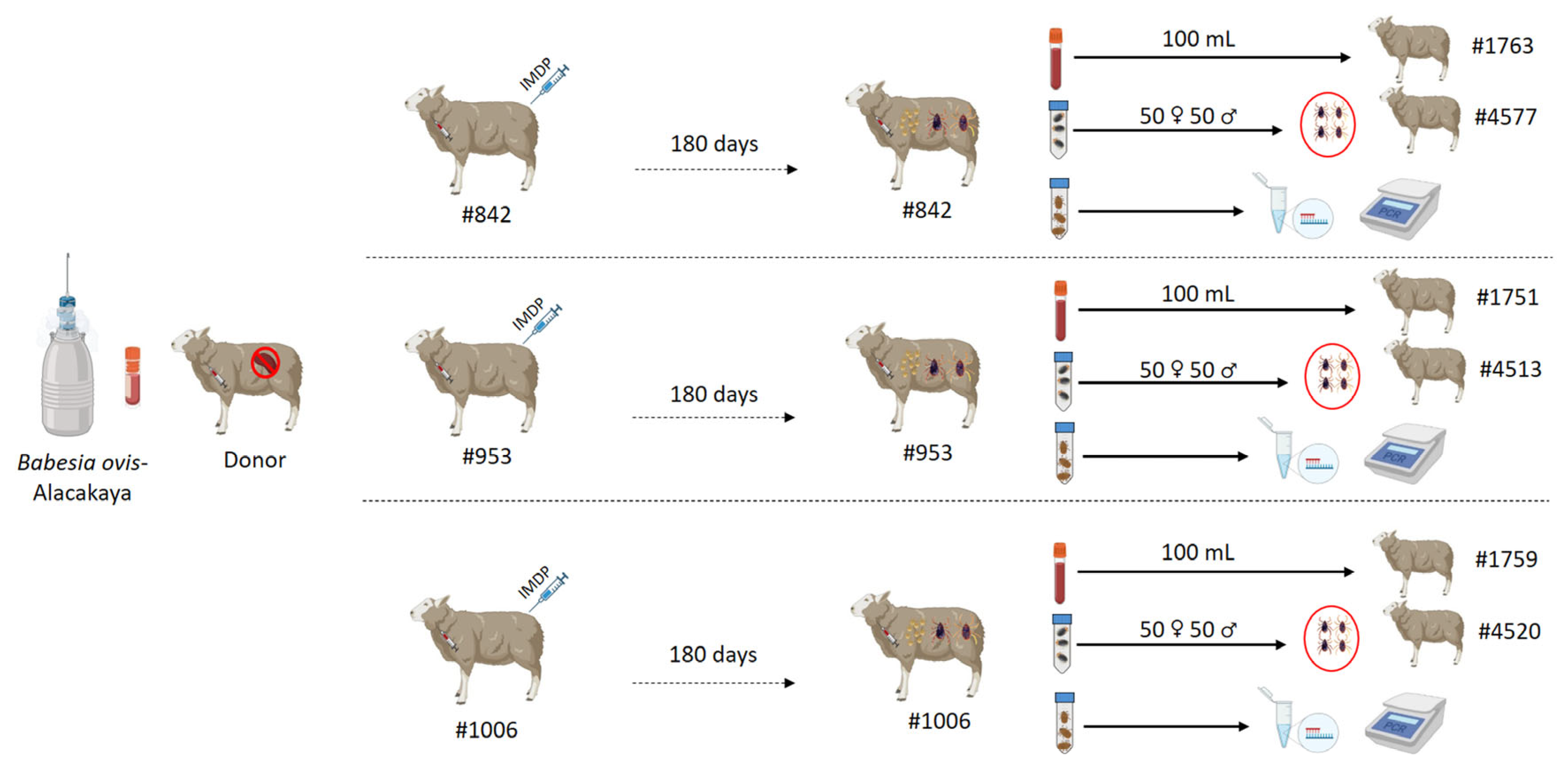
2.3. Treatment of Sheep and Sample Collection
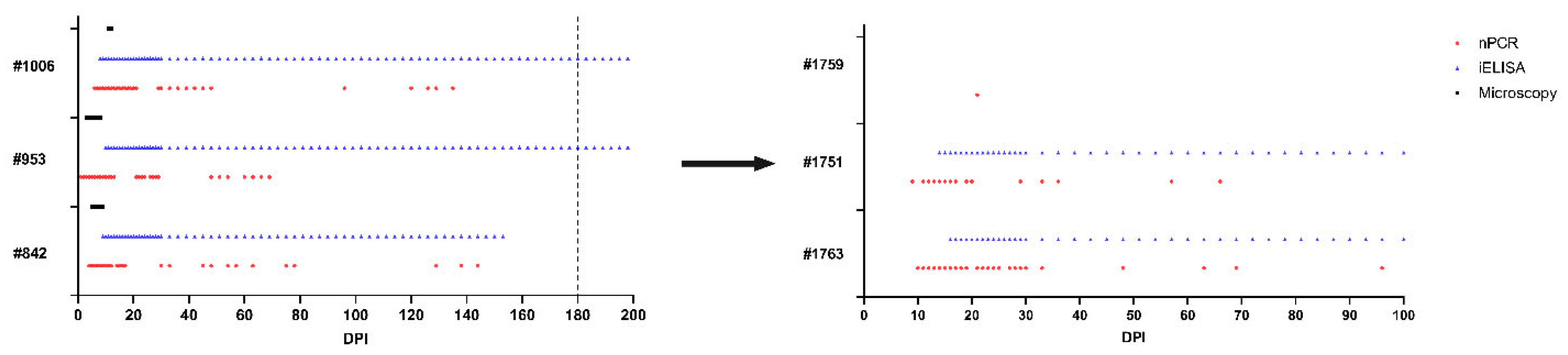
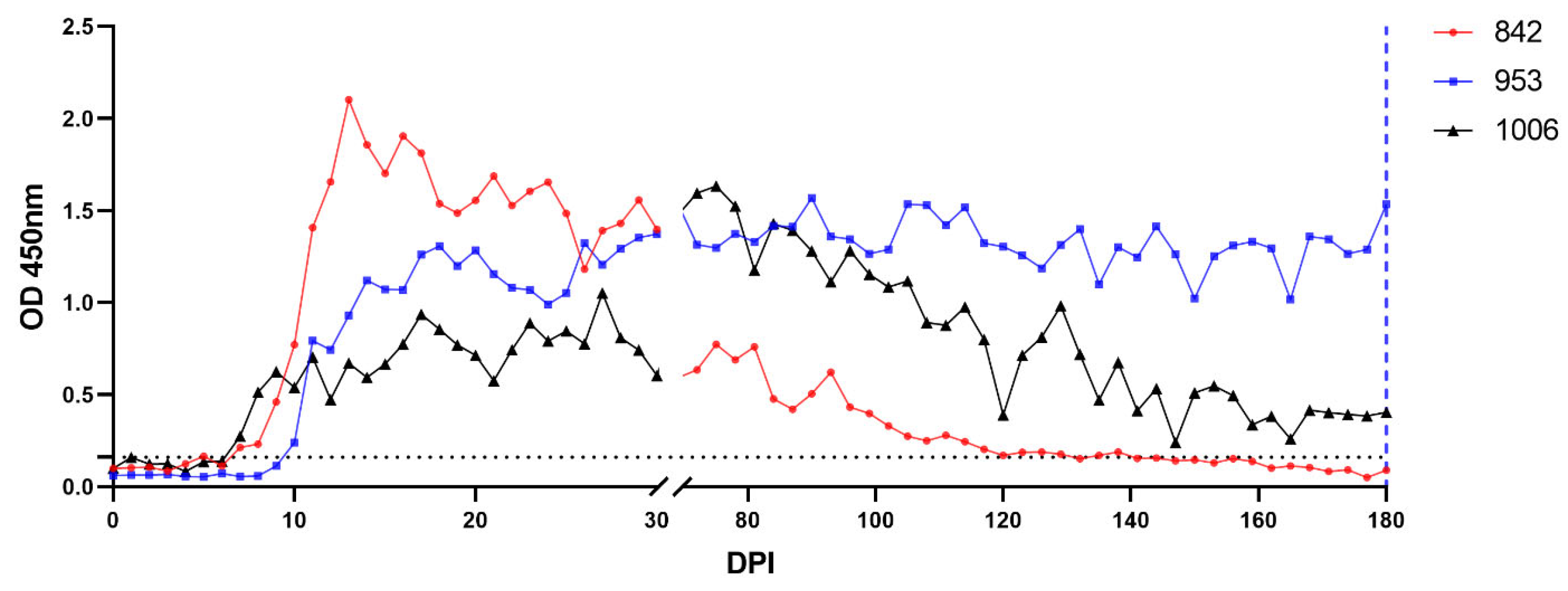
2.4. Long-Term Detection of B. ovis DNA and Antibody Response in Experimentally Infected Sheep
2.5. Evaluation of B. ovis Elimination via Blood Sub-Inoculation and R. bursa Infestation
2.6. Statistical Analysis
3. Results
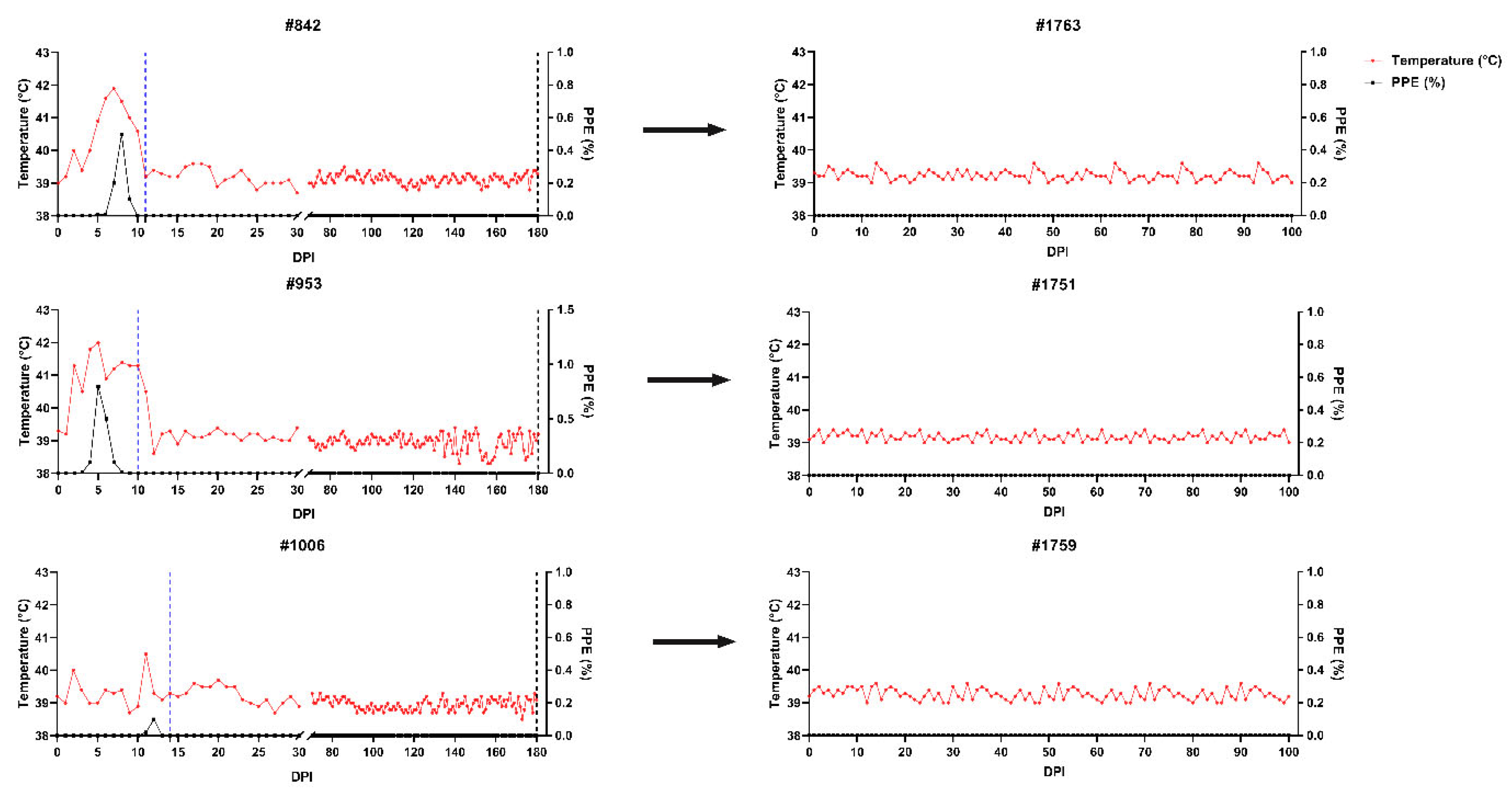
3.1. Clinical Progression and Treatment of Experimentally Infected Sheep
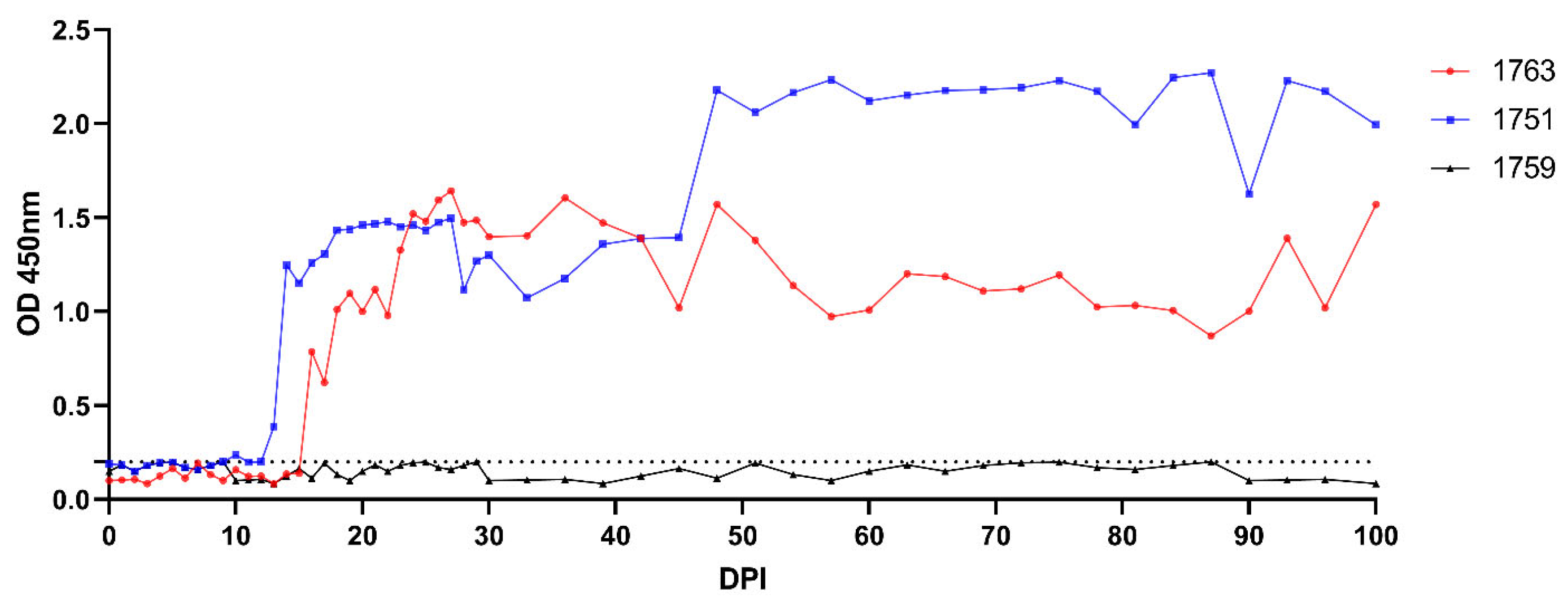
3.2. Post-Treatment Blood Transfusion Can Transmit B. ovis, but R. bursa Does Not Acquire or Transmit the Parasite
4. Discussion
5. Conclusions
Supplementary Materials
Author Contributions
Funding
Institutional Review Board Statement
Informed Consent Statement
Data Availability Statement
Acknowledgments
Conflicts of Interest
Abbreviations
| IMDP | Imidocarb dipropionate |
| nPCR | Nested PCR |
| iELISA | indirect ELISA |
| BoSA1 | Babesia ovis Secreted Antigen 1 |
| PPE | Percentage of parasitized erythrocytes |
| DPI | Days post-infection |
| mL | Milliliter |
| OD | Optical density |
References
- Ceylan, O.; Xuan, X.; Sevinc, F. Primary tick-borne protozoan and rickettsial infections of animals in Turkey. Pathogens 2021, 10, 231. [Google Scholar] [CrossRef] [PubMed]
- Schnittger, L.; Ganzinelli, S.; Bhoora, R.; Omondi, D.; Nijhof, A.M.; Florin-Christensen, M. The piroplasmida Babesia, Cytauxzoon, and Theileria in farm and companion animals: Species compilation, molecular phylogeny, and evolutionary insights. Parasitol. Res. 2022, 121, 1207–1245. [Google Scholar] [CrossRef] [PubMed]
- Firat, R.; Ulucesme, M.C.; Aktaş, M.; Ceylan, O.; Sevinc, F.; Bastos, R.G.; Suarez, C.E.; Ozubek, S. Role of Rhipicephalus bursa larvae in transstadial transmission and endemicity of Babesia ovis in chronically infected sheep. Front. Cell. Infect. Microbiol. 2024, 14, 1428719. [Google Scholar] [CrossRef]
- Ozubek, S.; Ulucesme, M.C.; Ceylan, O.; Sevinc, F.; Aktaş, M. The Impact of Babesia ovis-infected Rhipicephalus bursa larvae on the severity of babesiosis in sheep. Front. Cell. Infect. Microbiol. 2025, 15, 1544775. [Google Scholar] [CrossRef] [PubMed]
- Stuen, S. Haemoparasites—Challenging and wasting infections in small ruminants: A review. Animals 2020, 10, 2179. [Google Scholar] [CrossRef]
- Yeruham, I. Babesiosis in sheep: The ecology of the tick vector Rhiphicepalus bursa, transmission of Babesia ovis, immunological, clinical and clinico-pathological aspects. PhD Thesis, The Hebrew University of Jerusalem, Jerusalem, Israel, 1995. [Google Scholar]
- Yeruham, I.; Hadani, A.; Galker, F. Some epizootiological and clinical aspects of ovine babesiosis caused by Babesia ovis—A Review. Vet. Parasitol. 1998, 74, 153–163. [Google Scholar] [CrossRef]
- Ozubek, S.; Ulucesme, M.C.; Suarez, C.E.; Bastos, R.G.; Aktas, M. Assessment of Babesia ovis pathogenicity in goats: Implications for transmission dynamics and host resistant. Front. Cell. Infect. Microbiol. 2024, 14, 1480347. [Google Scholar] [CrossRef]
- Sevinc, F.; Xuenan, X. Major tick-borne parasitic diseases of animals: A frame of references in Turkey. Eurasian J. Vet. Sci. 2015, 31, 132–142. [Google Scholar] [CrossRef]
- Sevinc, F.; Turgut, K.; Sevinc, M.; Ekici, O.D.; Coskun, A.; Koc, Y.; Erol, M.; Ica, A. Therapeutic and prophylactic efficacy of imidocarb dipropionate on experimental Babesia ovis infection of lambs. Vet. Parasitol. 2007, 149, 65–71. [Google Scholar] [CrossRef]
- Mosqueda, J.; Olvera-Ramírez, A.; Aguilar-Tipacamú, G.; Cantó, G. Current advances in detection and treatment of babesiosis. Curr. Med. Chem. 2012, 19, 1504–1518. [Google Scholar] [CrossRef]
- Pudney, M.; Gray, J.S. Therapeutic efficacy of atovaquone against the bovine intraerythrocytic parasite, Babesia divergens. J. Parasitol. 1997, 83, 307–310. [Google Scholar] [CrossRef]
- Meyer, C.; Guthrie, A.J.; Stevens, K.B. Clinical and clinicopathological changes in 6 healthy ponies following intramuscular administration of multiple doses of imidocarb dipropionate. J. S. Afr. Vet. Assoc. 2005, 76, 26–32. [Google Scholar] [CrossRef]
- Baneth, G. Antiprotozoal Treatment of canine babesiosis. Vet. Parasitol. 2018, 254, 58–63. [Google Scholar] [CrossRef] [PubMed]
- Esmaeilnejad, B.; Samiei, A.; Hasani, S.J.; Anassori, E.; Tavassoli, M.; Mofidi, S.K.M. A review of babesiosis caused by Babesia ovis in small ruminants. Trop. Anim. Health Prod. 2025, 57, 205. [Google Scholar] [CrossRef]
- Belloli, C.; Lai, O.R.; Ormas, P.; Zizzadoro, C.; Sasso, G.; Crescenzo, G. Pharmacokinetics and mammary elimination of imidocarb in sheep and goats. J. Dairy Sci. 2006, 89, 2465–2472. [Google Scholar] [CrossRef]
- Tang, Y.; Yu, N.; Liu, C.; Han, M.; Wang, H.; Chen, X.; Kang, J.; Li, X.; Liu, Y. Residue depletion of imidocarb in bovine tissues by UPLC-MS/MS. Animals 2022, 13, 104. [Google Scholar] [CrossRef]
- Sears, K.; Knowles, D.; Dinkel, K.; Mshelia, P.W.; Onzere, C.; Silva, M.; Fry, L. Imidocarb dipropionate lacks efficacy against Theileria haneyi and fails to consistently clear Theileria equi in horses co-infected with T. haneyi. Pathogens 2020, 9, 1035. [Google Scholar] [CrossRef] [PubMed]
- Salant, H.; Nachum-Biala, Y.; Zivotofsky, D.; Tzur, T.E.; Baneth, G. Babesia negevi infection in dogs and response to treatment. Tick Tick-borne Dis. 2024, 15, 102282. [Google Scholar] [CrossRef]
- Hashemi-Fesharki, R. Studies on imidocarb dihydrochloride in experimental Babesia ovis infection in splenectomized lambs. Br. Vet. J. 1977, 133, 609–614. [Google Scholar] [CrossRef] [PubMed]
- Sevinc, F.; Cao, S.; Xuan, X.; Sevinc, M.; Ceylan, O. Identification and expression of Babesia ovis secreted antigen 1 and evaluation of its diagnostic potential in an enzyme-linked immunosorbent assay. J. Clin. Microbiol. 2015, 53, 1531–1536. [Google Scholar] [CrossRef] [PubMed]
- Ozubek, S.; Aktas, M. Molecular and parasitological survey of ovine piroplasmosis, including the first report of Theileria annulata (Apicomplexa: Theileridae) in sheep and goats from Turkey. J. Med. Entomol. 2017, 54, 212–220. [Google Scholar] [CrossRef]
- Oosthuizen, M.C.; Zweygarth, E.; Collins, N.E.; Troskie, M.; Penzhorn, B.L. Identification of a novel Babesia sp. from a sable antelope (Hippotragus niger Harris, 1838). J. Clin. Microbiol. 2008, 46, 2247–2251. [Google Scholar] [CrossRef]
- Aktas, M.; Altay, K.; Dumanli, N. Development of a polymerase chain reaction method for diagnosis of Babesia ovis infection in sheep and goats. Vet. Parasitol. 2005, 133, 277–281. [Google Scholar] [CrossRef]
- Almazán, C.; Bonnet, S.; Cote, M.; Slovák, M.; Park, Y.; Šimo, L. A versatile model of hard tick infestation on laboratory rabbits. J. Vis. Exp. 2018, 57994. [Google Scholar] [PubMed]
- Frerichs, W.M.; Allen, P.C.; Holbrook, A.A. Equine piroplasmosis (Babesia Equi): Therapeutic trials of imidocarb dihydrochloride in horses and donkeys. Vet. Rec. 1973, 92, 461–464. [Google Scholar] [CrossRef]
- Ueti, M.W.; Mealey, R.H.; Kappmeyer, L.S.; White, S.N.; Kumpula-McWhirter, N.; Pelzel, A.M.; Grause, J.F.; Bunn, T.O.; Schwartz, A.; Traub-Dargatz, J.L. Re-emergence of the apicomplexan Theileria equi in the United States: Elimination of persistent infection and transmission risk. Vet. Parasitol. 2012, 188, 148–156. [Google Scholar] [CrossRef]
- Grause, J.F.; Ueti, M.W.; Nelson, J.T.; Knowles, D.P.; Kappmeyer, L.S.; Bunn, T.O. Efficacy of imidocarb dipropionate in eliminating Theileria equi from experimentally infected horses. Vet. J. 2013, 196, 541–546. [Google Scholar] [CrossRef] [PubMed]
- Butler, C.M.; Nijhof, A.M.; Van der Kolk, J.H.; De Haseth, O.B.; Taoufik, A.; Jongejan, F.; Houwers, D.J. Repeated high dose imidocarb dipropionate treatment did not eliminate Babesia caballi from naturally infected horses as determined by PCR-Reverse Line Blot Hybridization. Vet. Parasitol. 2008, 151, 320–322. [Google Scholar] [CrossRef] [PubMed]
- Cardillo, N.M.; Lacy, P.A.; Villarino, N.F.; Doggett, J.S.; Riscoe, M.K.; Bastos, R.G.; Laughery, J.M.; Ueti, M.W.; Suarez, C.E. Comparative efficacy of buparvaquone and imidocarb in inhibiting the in vitro growth of Babesia bovis. Front. Pharmacol. 2024, 15, 1407548. [Google Scholar] [CrossRef]
- Cardillo, N.M.; Villarino, N.F.; Lacy, P.A.; Riscoe, M.K.; Doggett, J.S.; Ueti, M.W.; Chung, C.J.; Suarez, C.E. The combination of buparvaquone and ELQ316 exhibit a stronger effect than ELQ316 and imidocarb against Babesia bovis in vitro. Pharmaceutics 2024, 16, 1402. [Google Scholar] [CrossRef]
- Cardillo, N.M.; Villarino, N.F.; Lacy, P.A.; Doggett, J.S.; Riscoe, M.K.; Suarez, C.E.; Ueti, M.W.; Chung, C.J. Enhanced anti-Babesia efficacy of buparvaquone and imidocarb when combined with ELQ-316 in vitro culture of Babesia bigemina. Pharmaceuticals 2025, 18, 218. [Google Scholar] [CrossRef]
- Ozubek, S.; Ulucesme, M.C.; Aktas, M. Transovarial transmission of Babesia ovis in Rhipicephalus bursa, confirmed by multi-generational experiments. Parasite 2025, 32, 60. [Google Scholar] [CrossRef]
- Kawahara, M.; Rikihisa, Y.; Lin, Q.; Isogai, E.; Tahara, K.; Itagaki, A.; Hiramitsu, Y.; Tajima, T. Novel genetic variants of Ana plasma phagocytophilum, Anaplasma bovis, Anaplasma centrale, and a novel Ehrlichia sp. in wild deer and ticks on two major islands in Japan. Appl Environ Microbiol 2006, 72, 1102–1109. [Google Scholar] [CrossRef] [PubMed]
- Bekker, C.P.; De Vos, S.; Taoufik, A.; Sparagano, O.A.; Jongejan, F. Simultaneous detection of Anaplasma and Ehrlichia species in ruminants and detection of Ehrlichia ruminantium in Amblyomma variegatum ticks by reverse line blot hybridization. Veterinary microbiology 2002, 89, 223–238. [Google Scholar] [CrossRef] [PubMed]
- Georges, K.; Loria, G.R.; Riili, S.; Greco, A.; Caracappa, S.; Jongejan, F.; Sparagano, O. Detection of haemoparasites in cattle by reverse line blot hybridisation with a note on the distribution of ticks in Sicily. Vet. Parasitol. 2001, 99, 273–286. [Google Scholar] [CrossRef] [PubMed]



| Transmission by Direct Blood Inoculation | ||
|---|---|---|
| Donor Sheep | Inoculation Amount | Recipient Sheep |
| #842 | 100 mL-intravenous | #1763 |
| #953 | 100 mL-intravenous | #1751 |
| #1006 | 100 mL-intravenous | #1759 |
| Transmission by Tick Feeding | ||
| Donor Sheep | R. bursa Adult Tick | Recipient Sheep |
| #842 | 50 female 50 male | #4577 |
| #953 | 50 female 50 male | #4513 |
| #1006 | 50 female 50 male | #4520 |
Disclaimer/Publisher’s Note: The statements, opinions and data contained in all publications are solely those of the individual author(s) and contributor(s) and not of MDPI and/or the editor(s). MDPI and/or the editor(s) disclaim responsibility for any injury to people or property resulting from any ideas, methods, instructions or products referred to in the content. |
© 2025 by the authors. Licensee MDPI, Basel, Switzerland. This article is an open access article distributed under the terms and conditions of the Creative Commons Attribution (CC BY) license.
Share and Cite
Firat, R.; Ulucesme, M.C.; Eyvaz, A.; Alatas, M.; Aktas, M.; Ceylan, O.; Sevinc, F.; Ozubek, S. Persistence and Transmission Dynamics of Babesia ovis After Imidocarb Dipropionate Treatment: Evaluation via Blood Transfusion and Tick Infestation. Pathogens 2026, 15, 7. https://doi.org/10.3390/pathogens15010007
Firat R, Ulucesme MC, Eyvaz A, Alatas M, Aktas M, Ceylan O, Sevinc F, Ozubek S. Persistence and Transmission Dynamics of Babesia ovis After Imidocarb Dipropionate Treatment: Evaluation via Blood Transfusion and Tick Infestation. Pathogens. 2026; 15(1):7. https://doi.org/10.3390/pathogens15010007
Chicago/Turabian StyleFirat, Recep, Mehmet Can Ulucesme, Arda Eyvaz, Mehmet Alatas, Munir Aktas, Onur Ceylan, Ferda Sevinc, and Sezayi Ozubek. 2026. "Persistence and Transmission Dynamics of Babesia ovis After Imidocarb Dipropionate Treatment: Evaluation via Blood Transfusion and Tick Infestation" Pathogens 15, no. 1: 7. https://doi.org/10.3390/pathogens15010007
APA StyleFirat, R., Ulucesme, M. C., Eyvaz, A., Alatas, M., Aktas, M., Ceylan, O., Sevinc, F., & Ozubek, S. (2026). Persistence and Transmission Dynamics of Babesia ovis After Imidocarb Dipropionate Treatment: Evaluation via Blood Transfusion and Tick Infestation. Pathogens, 15(1), 7. https://doi.org/10.3390/pathogens15010007