1. Introduction
In July 2025, Japan held its regular upper house election for the House of Councilors. Although the results did not significantly alter the political balance, the rise in populist rhetoric was notable. The newly emergent
Sanseito, a Trump-inspired populist party, secured the fourth-largest number of seats out of sixteen parties by leveraging social media (
NHK WORLD-JAPAN News 2025). Promoting an anti-immigrant, “Japan First” agenda with the slogan “Do not destroy Japan any further!” (
Lipscy 2025), party leader Sohei Kamiya explicitly aligned Sanseito with European right-wing, anti-immigration parties such as Germany’s AfD and Reform UK (
Blair 2025). Within this climate, xenophobic discourse increasingly targets immigrants and foreigners, including those in Japan’s artistic industries.
The
manga (Japanese comics) industry is no exception. Scholars have shown that manga not only sustains global markets but also nurtures communities of ardent fans, or
otaku (
Itō et al. 2012;
Brienza 2016), simultaneously attracting aspiring artists from around the world. While many enter the field hoping to transform passion into livelihood, Japan’s immigration policies remain notoriously restrictive. A major concern is the Technical Intern Training Program (TITP), officially designed for human resource development and foreign assistance but functioning as a de facto mechanism for recruiting unskilled and semi-skilled labor, despite allegations of exploitation and abuse (
Chung and Yunchen 2025). Although the international manga creators in this study are admitted on long-term artist (
geijutsu) visas, which fall outside this category (
MOFA 2023), the broader political climate and restrictive immigration regime nevertheless shape their professional trajectories. This study therefore addresses the challenges international artists face as they pursue early careers in the manga industry in Japan.
To address this topic, this study draws on fieldwork conducted at Artist Village Aso 096k, a residency program established in 2022 by the publisher COAMIX. The program invites international artists—often finalists of the company’s Silent Manga Audition (SMA) competition—to train them in Japan’s editorial system, which emphasizes close, one-on-one collaboration between editors and creators. COAMIX highlights this model as a distinctive Japanese style of editorial practices and encourages participants to learn this style and bring it back to their home country (
COAMIX n.d.). During my one-week study, five international artists were invited, where four participated in collaborative comic-making activities with sound recordings. All five engaged in casual interviews without audio recording or structured questionnaires, such as conversations over meals.
Methodologically, for this paper, I adopted an Arts-Based Research (ABR) framework (
Leavy 2009,
2017;
Barone and Eisner 2012). ABR integrates creative practice into scholarly inquiry, producing forms of knowledge that extend beyond textual analysis through embodied and material engagement. By situating hand-drawn comics as both method and object of study, I foreground the affective, embodied, and political dimensions of international artists’ labor. Specifically, I analyze how the artists reimagined their careers in storytelling by moving from digital tools to analog drawing. I argue that this material shift fostered reflective storytelling and functioned as a mode of care and creative resistance against the state systems. Collaborative hand-drawn comics created richer dialogs than interviews alone, transforming the research site into a space of collective critique. Ultimately, this study contends that hand-drawn comics serve as a powerful medium for resisting xenophobic discourse.
This study is guided by the following research question: How can analog comics function as a mode of resistance and care within the transnational artistic labor of early-career international manga creators in Japan? This question foregrounds the material and affective dimensions of drawing as a site where migrants negotiate precarity, aspiration, and identity. Through an ABR framework, I examine how hand-drawn comics enable forms of reflection and meaning-making that exceed conventional interview data. As the following section demonstrates, the fieldwork produced three interconnected findings, slowness, irrevocability, and embodied storytelling, that illuminate the epistemological and political potentials of analog practice in contemporary artistic labor.
2. Results
This study highlights three findings from the fieldwork: the affective and epistemological potentials of slowness, irrevocability, and embodied storytelling. To explore these dimensions, I employed Arts-Based Research (ABR), inviting international artists to create hand-drawn comics rather than relying on their usual digital tools. The shift from digital to material practice emerged through short drawing activities inspired by the award-winning cartoonist Lynda Barry, whose methods emphasize limited materials, time constraints, and memory-based prompts (
Barry 2019). While specific activity names are introduced here, detailed descriptions of materials and processes are provided in the
Section 4.
Barone and Eisner (
2012) define ABR as “a method designed to enlarge human understanding” (p. 8), by inviting individuals to create an expressive form of engagement. Accordingly, ABR positions art-making as a way of knowing, encompassing problem generation, data production, analysis, interpretation, and representation in a wide range of research disciplines (
Leavy 2009,
2017).
Leavy (
2009,
2017) further emphasizes two core philosophies of this approach: the reduction in hierarchical distance between researcher and participant, and an emphasis on subjective narrative. This relatively new research method includes various art forms like theater performance, visual arts, film, fiction, and poetry (
Leavy 2017). Within this spectrum, comics have increasingly been explored as both method and form, most notably through the work of
Nick Sousanis (
2015). His graphic narrative dissertation, later published as
Unflattening, demonstrated the potential of comics to “unflatten” thought. His work, alongside collaborative scholarship in the
Handbook of Arts-Based Research (
Kuttner et al. 2017) and subsequent studies (
O’Sullivan 2023;
Kuttner et al. 2021), provided a foundation for the present study. Building on this body of scholarship, my fieldwork at Artist Village Aso 096k demonstrated how hand-drawn comics became a site for reflection, critique, and personal storytelling among international manga artists.
In this study, I adopted the comic-making methods developed by Lynda Barry, a comics author and professor of interdisciplinary creativity at the University of Wisconsin-Madison. Barry, who received a 2019 MacArthur Fellowship for her innovative pedagogical and artistic work (
MacArthur Foundation 2019), created the Drawbridge program, which brings together graduate students and young children as co-researchers through spontaneous drawing (
University of Wisconsin-Madison 2020). Her approach fosters self-exploration by engaging memory through material and temporal constraints. This approach was particularly suited to my fieldwork, as international artists had limited availability yet were asked to engage in deep self-reflection. Correspondingly, each activity was designed to last twenty to thirty minutes, allowing both drawing and discussion. In several cases, conversations extended beyond this timeframe, reflecting the participants’ strong engagement with the process. The following sections elaborate the three key findings that emerged from this process.
2.1. Slowness
The drawing activities foregrounded the contrast between the slow pace of analog creation and the fast-paced, deadline-driven environment of the manga industry. The international artists in Artist Village typically balanced two projects: their own digital manga project and contracted work for serialized webtoons (web comics). The latter, which secured their financial stability in the village, required rapid technical execution and teamwork under constant deadlines. As assistants, they contributed inking, backgrounds, coloring, and effects for ongoing serialized comics. Participants A and B described this contracted work as resembling “game art production,” involving extensive 3D modeling and full-color rendering, and “extremely technical, like programming.” Because multiple artists collaborated on a single manuscript, efficiency and speed were crucial. To meet these demands, participants developed skills in digital tools, time management, and rapid drawing—skills gained, yet under significant pressure as early-career artists.
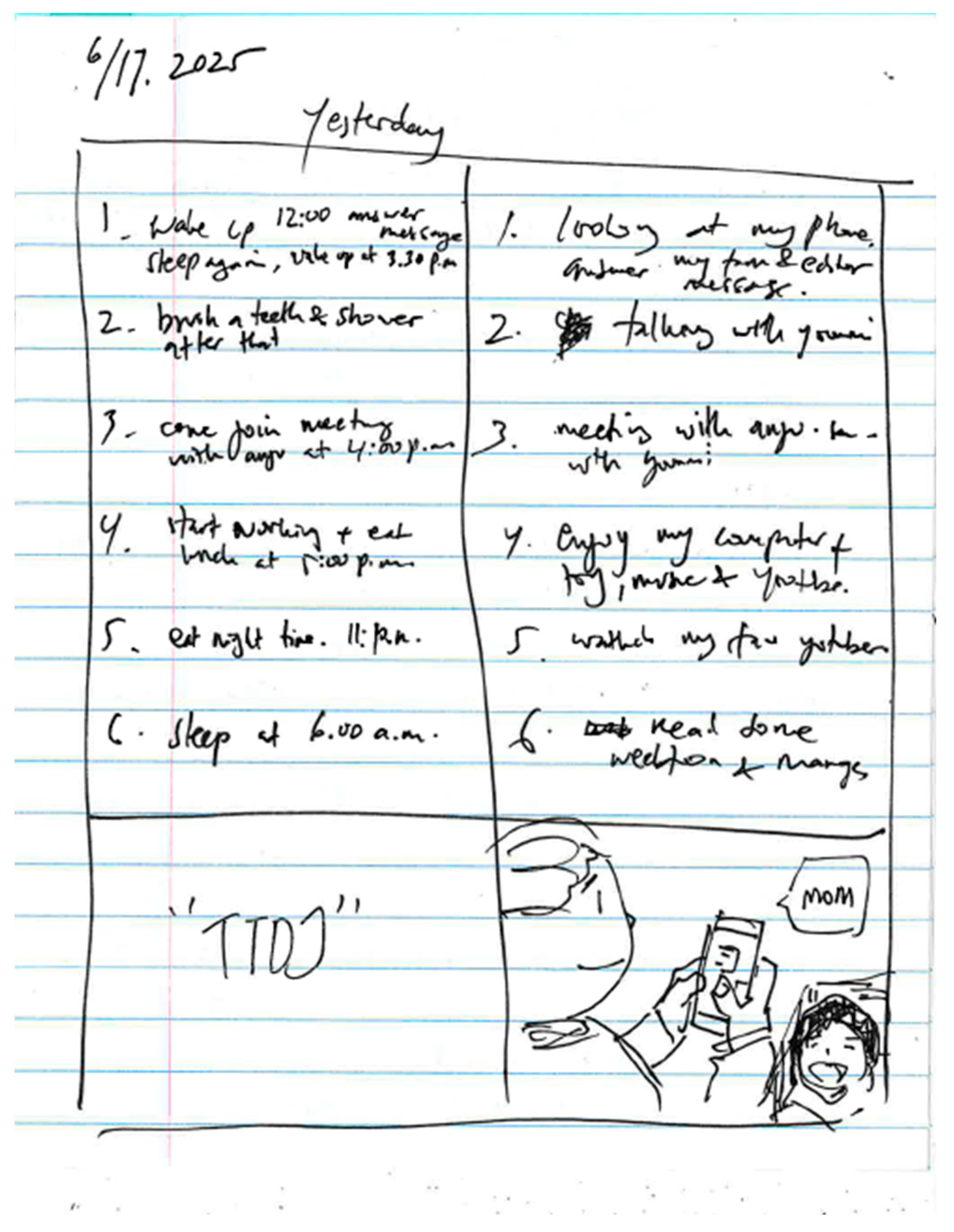
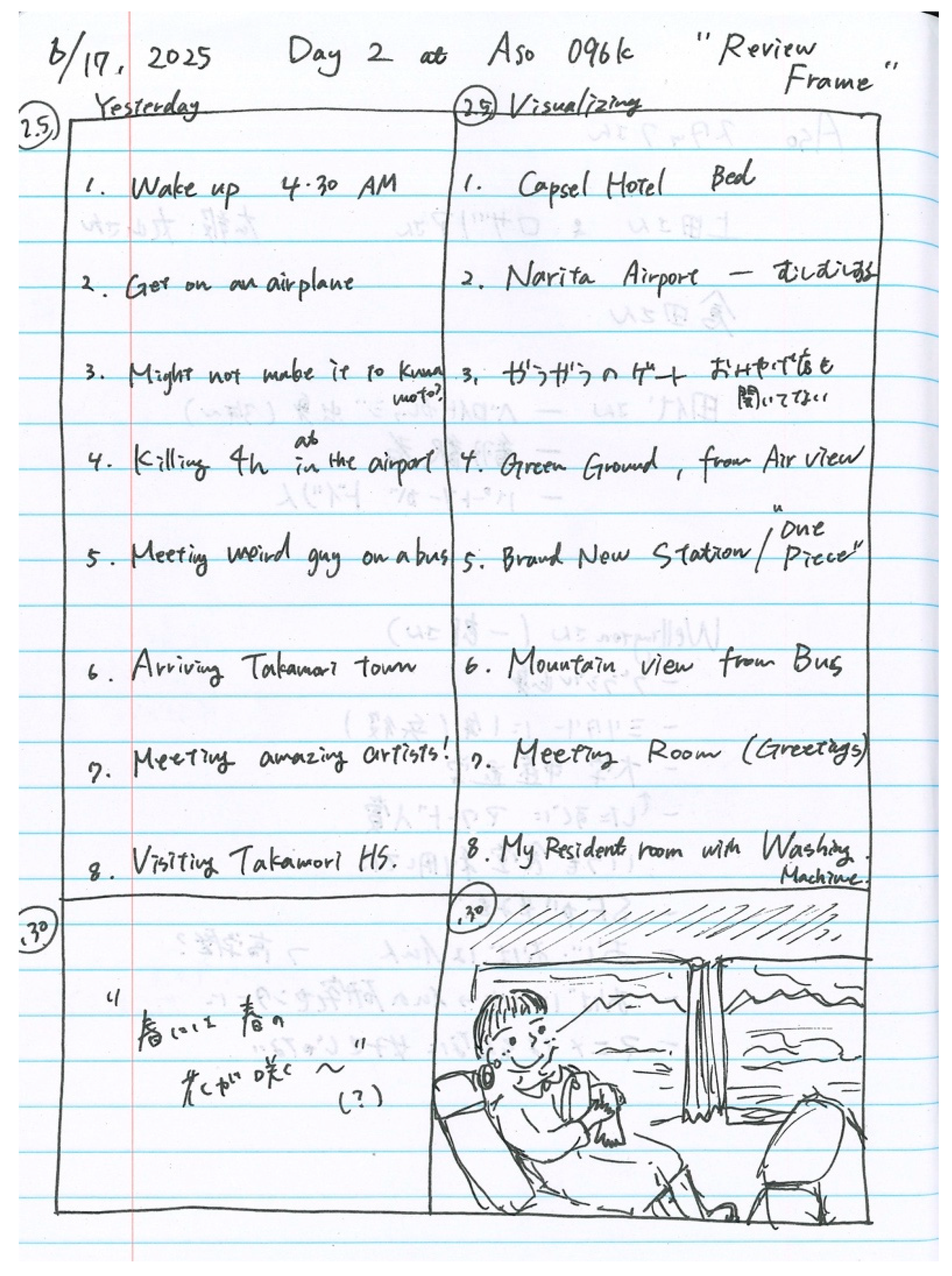
By contrast, the analog Review Frame activity encouraged participants to slow down, reflect on their daily routines, and draw without concern for efficiency. Although the time frame was set for each activity, most participants were surprised by how much time they could spend at this slower rhythm. This anti-efficiency method also fostered serendipity, allowing the participants to add unplanned details or explore new ideas. While their professional projects required strict adherence to editorial expectations, hand-drawn sessions highlighted slowness as a counter-practice to industrial speed, offering space for reflection and self-expression.
2.2. Irrevocability
The second finding concerns the epistemological potential of irrevocability in physical drawings. By restricting materials to pen and paper, participants could not “undo” or “reset” their drawings, unlike in digital environments. Barry’s method intentionally employs this restriction, based on the belief that an “undo” button prevents people from moving forward. Furthermore, a reflective prompt reinforces this principle. As an example, participants were asked to recall events from the previous day, highlighting memory as a subjective yet irrevocable past; thus, examining one’s memory is another way to interpret events and to see oneself from different angles. While memory is always subjective, this framing emphasizes the acceptance of imperfection while fostering alternative perspectives on self and experience.
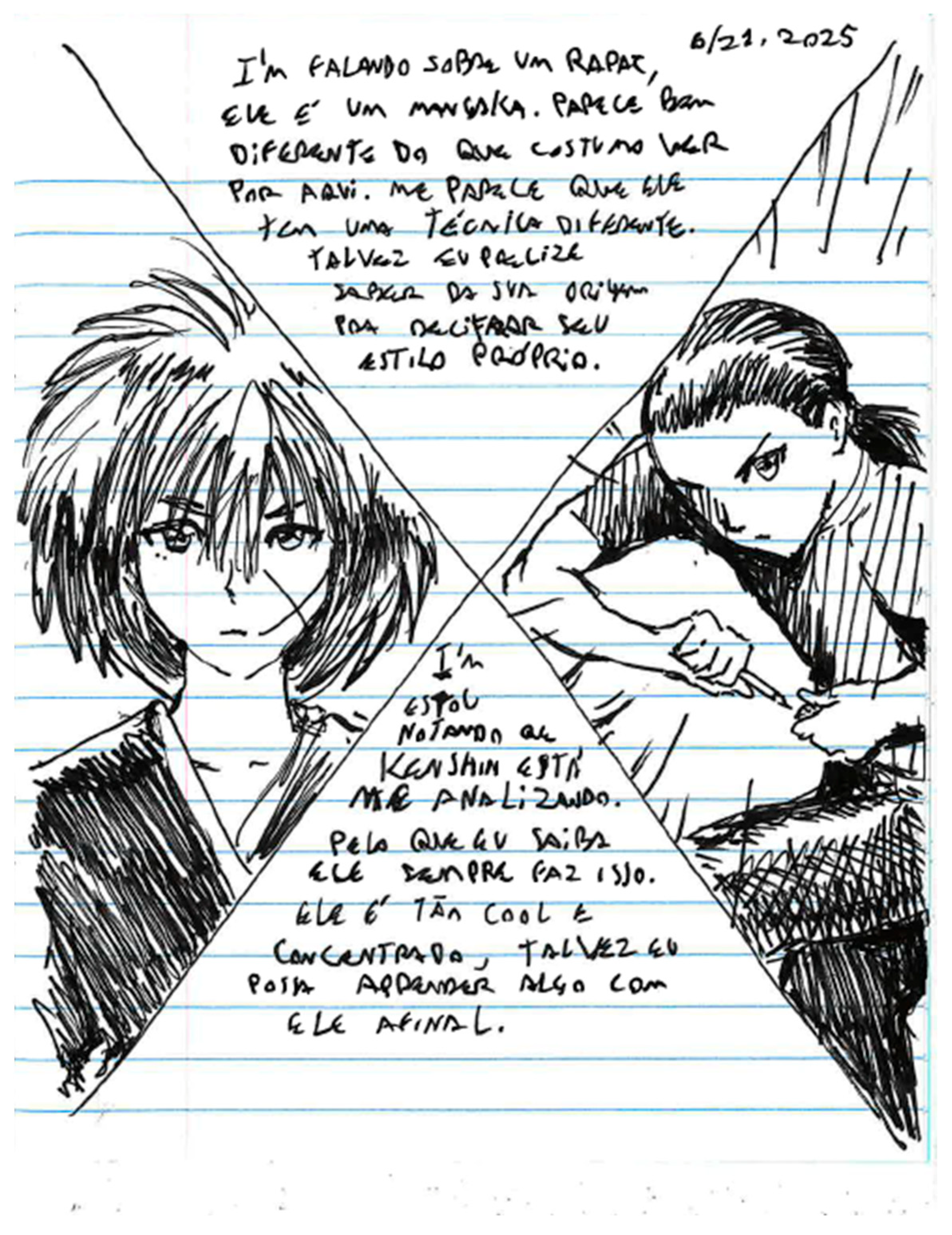
Although some participants initially hesitated, they gradually embraced the limitations of materiality and memory, producing drawings with increasing intensity and confidence. Participant A, in the
You See It, When It Sees You activity, used bold lines to depict his confrontation with the samurai protagonist Kenshin from the manga work
Rurōni Kenshin (
Watsuki 1994), wielding a pen as participant A’s “sword” (
Figure 1). Kenshin’s dialog—“I need to know this guy’s style”—reframed participant A as an adversary to be evaluated through technique. This choice was particularly striking, as participant A and I had just discussed his evolving drawing style. From his initial hesitation, participant A shifted to an intense, heavily hatched drawing that filled the session’s entire timeframe. He later explained that the image was shaped by his exhaustion from spending eight hours revising dialog on his manuscript the day before. The activity condensed this experience into a powerful visual metaphor. This transformation illustrates how irrevocability can generate not only deeper engagement, commitment, and creative transformation in artistic practice, but also self-reflection and conversation between participants and researcher.
2.3. Embodied Storytelling
The third finding, embodied storytelling, was most evident in the
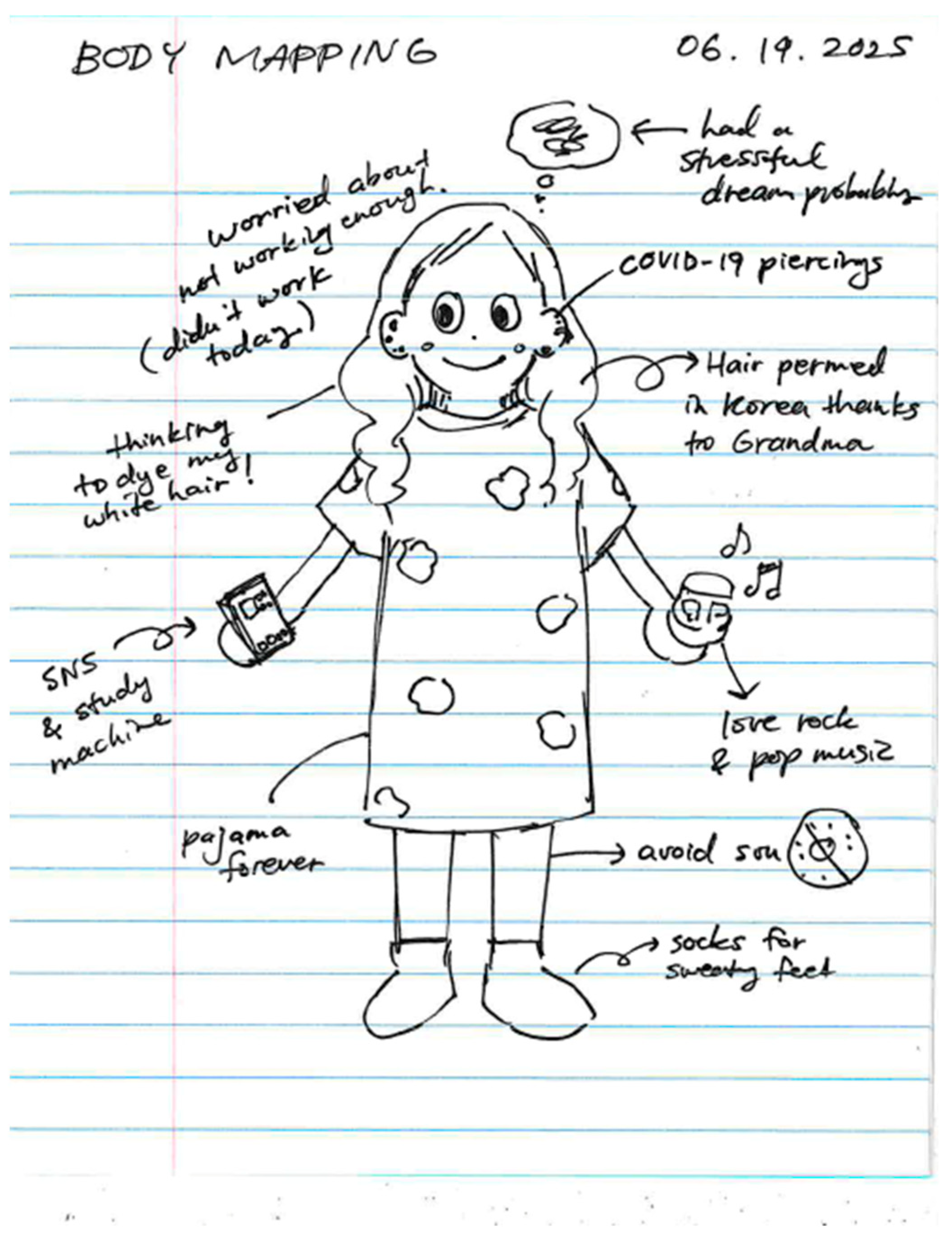
Body Mapping activity. This activity allows participants to combine text and image, narrating personal histories, cultural identities, and vulnerabilities. For example, participant C expressed anxieties about age, career precarity, and familial expectations surrounding her work (
Figure 2). Although her parents’ views have since changed, they initially believed that “art is not real job.” She also expressed the fear that her entry into the manga industry came “too late” compared to other professional creators, leaving her with a persistent sense of “not working hard enough.” Through body mapping, she visualized these pressures, situating them within broader cultural beliefs about work and legitimacy. During our conversation, she expanded on these images by sharing her family background and life experiences. Such sensitive cultural reflections emerged through this drawing method, with the body mapping activity effectively capturing these moments of embodied self-expression.
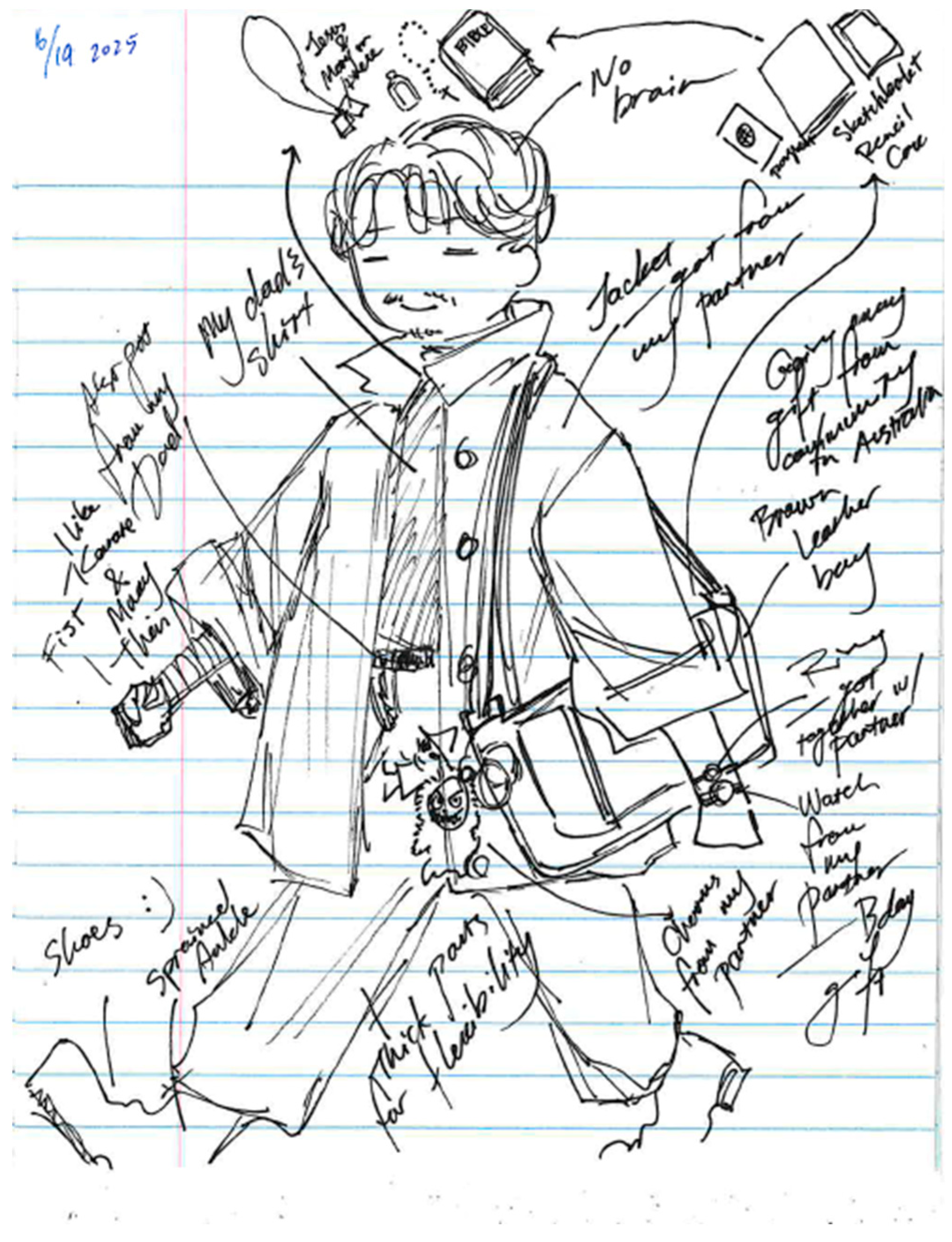
Participant B’s body mapping (
Figure 3) depicted his personal belongings, past injuries, and religious and cultural symbols. His illustration included memorable objects—such as a bag, shirt, and key chains—as well as elements of his new life in Japan and the community he belongs to. For instance, he carefully described the significance of a leather bag gifted by his cultural heritage community in Australia; a shirt from his father that he and his colleagues in the artist village joked resembled “a Steve Jobs shirt”; and numerous keychains from his partner. He also noted a lingering ankle injury that still caused pain when stretching. The injury was sustained during a short fieldtrip to the famous shrine near the artist village. Participant B meticulously shared the background stories of each item in his illustration, including those related to his religious practices. Among the many memories represented in his drawing, the most striking element was his passport, which he carried daily. Although he did not explicitly describe it negatively, I interpreted it as a constant reminder of his foreigner status in Japan. Hence, through body mapping, the participants articulated embodied narratives that intertwined the personal, cultural, and political dimensions of their lives, revealing how identity is expressed at both the material and symbolic levels.
In summary, these three findings suggest that ABR—and specifically hand-drawn comics—can offer spaces of care and resistance within transnational creative industries. Slowness disrupted the time pressures of industrial production, irrevocability emphasized engagement and reflection, and embodied storytelling revealed intimate negotiations of identity and foreignness. Taken together, these practices demonstrate that comics are not only cultural products but also powerful research tools capable of articulating the affective and political dimensions of artistic labor.
Beyond the thematic findings, the fieldwork also highlighted the significance of my own participation as a researcher and comics practitioner. Drawing alongside the artists enabled conversations that moved fluidly between shared enthusiasm for the comics we admired and mutual engagement with the drawings produced in the sessions. Several participants expressed surprise that I could also draw, which shifted our interaction from a researcher–subject framework toward an artist-to-artist dialog. This dynamic contributed to a strong sense of rapport, allowing sensitive topics, such as pressures related to immigration status, family expectations, and career precarity, to emerge naturally in situations where a structured interview alone may not have elicited them. Participating in these activities also reshaped my understanding of the artists themselves: while their contracts were temporary and many considered themselves “early career,” their skill, discipline, and creative insight consistently reflected professional-level practice. Through this process, I came to recognize the inadequacy of labeling them as “amateurs,” underscoring the importance of attending to how institutional categories intersect with lived artistic identities.
3. Discussion
This study has highlighted how three findings—slowness, irrevocability, and embodied storytelling—gain particular significance in a global context marked by rising xenophobic discourse. For international manga artists navigating precarious labor conditions in Japan, reflective drawing emerges as more than an introspective tool.
The findings of this study will speak directly to current debates in cultural labor, especially scholarship that examines how creative industries rely on intensified productivity and affective investment. For early-career international manga artists working within Japan’s editorial system, labor is shaped by digital acceleration, tight deadlines, and the expectation of constant skill optimization. The themes of slowness and irrevocability demonstrate how analog comics momentarily suspend these pressures. Beyond this, I argue that it functions as a form of care that resists the exclusionary logics of immigration policy and industrial production, which offers new ways of navigating social instability. This section discusses how the key findings can be interpreted from the perspectives of care and resistance to further position material drawings as a new way of navigating the current global challenges.
My findings extend upon previous studies by emphasizing how Lynda Barry’s material-centered and analog practices can serve not only through individual reflection but also as a space of care for international artists working under structural limitations. For this study’s method, I drew inspiration from Barry’s approach to comics-making, which foregrounds reflection, memory, and material practice (
Barry 2002,
2019). Her exercises prompt participants to revisit past selves, imagine alternative futures, and externalize interior states. A distinguished scholar on comics and graphic novels,
Hillary Chute (
2010) emphasized Barry’s physical and material creation with reference to Barry’s concept of
autobifictionalography, which merges autobiography and fiction. This combined term reflects Barry’s belief that personal narratives are never purely factual but are partially imaginative. Chute traces the term “fiction” back to the Latin
fictio and its verb form
fingo, meaning “to make by shaping from clay, wax, molten metal, and so on” (
Chute 2010, p. 109). Thus, materiality is inevitable in Barry’s autobifictionalographical practice. Similarly,
Hil Malatino (
2020), in their book
Trans Care, describes Barry’s exercises as enabling radical forms of self-recognition and self-care. Echoing these perspectives, the international artists shared their everyday lives and showed their care. For instance, participant D described her career trajectory—from a childhood dream of being a soccer player to an art teacher to a manga artist—as shaped by irrevocable decisions that nonetheless converged in a fulfilling practice. Her comics on family relationships and long-distance caregiving demonstrated how drawing can articulate complex ties across national and emotional boundaries (
Figure 4). She emphasized how her family and partner supported her career trajectory, and so she takes great care of them during her time working in Japan. In this way, Barry’s material-centered approach becomes a conduit for care, enabling artists to connect, reflect, and support one another across cultural and personal boundaries.
The overall findings resonate with the work of Japanese theorist Tsurumi Shunsuke, who argued that manga is never ideologically neutral but instead embodies implicit “plans (
keikaku)” (
Tsurumi [1973] 2018, p. 371) that shape human experience. He believes that manga, through its humor and imaginative play, loosens rigid thought patterns and becomes a medium of transformation. The works produced by international artists in this study similarly expressed personal ideologies or plans, illustrating comics’ capacity to generate new modes of thought and life. In the context of transnational creative labor, comics become not merely a research output but an art form capable of transforming our worldview.
This creative engagement with comics also revealed forms of resistance, echoing Tsurumi’s notion of humor and play as tools for ideological subversion. Participant B’s body mapping challenged the marginalization of his foreign identity by visually reclaiming space for his embodied experience. Participant C’s work subtly resisted the conventional belief—echoed by her parents—that “art is not a real job” by portraying herself as a professional manga creator actively engaged in the artistic industry. Meanwhile, participant A’s integration of a samurai character from Rurōni Kenshin can be read as a playful yet pointed critique of the stereotypical “Japaneseness” often projected onto international manga artists. These acts of drawing became gestures of defiance—quiet yet potent assertions of agency within the constraints of cultural and institutional norms. In this way, comics serve not only as a medium of expression but also as a mode of resistance, allowing artists to reimagine their positions within and against dominant narratives.
Lastly, this study also faced limitations. The fieldwork lasted only one week, restricting the number of activities (three to five sessions of 20–30 min each per artist) and precluding direct observation of editorial meetings. A longer-term ethnographic study could examine the relational dynamics among artists, editors, publishers, and the rural community of Aso Village. It could also trace how international artists navigate Japan’s immigration bureaucracy alongside their creative labor, which is an area underexplored in manga studies. Despite these constraints, this study suggests several questions for future directions: (1) how editorial mentorship shapes artistic identities; (2) how international manga artist networks sustain themselves beyond Japan; and (3) how local communities interact with transnational cultural labor. Comparative research across artist residencies in Japan and abroad could further illuminate the role of ABR and comic making as research methods for documenting international labor, care, and resistance within global creative industries.
4. Materials and Methods
This section highlights three Arts-Based Research (ABR) activities adapted in this study—“Review Frame,” “You See It, When It Sees You,” and “Body Mapping”—to examine the creative processes of international artists during fieldwork at Artist Village Aso 096k. Each activity was developed as an expanded version of Lynda Barry’s comic-making methods (
Barry 2019), with modifications tailored to the target population of this study. The following first outlines Barry’s original instructions and then describes the adaptations implemented during fieldwork. As an overarching rule of Barry’s pedagogy, in this study, only accessible materials were used: felt-tip pens and blue books, which are several-page booklets commonly used for written exams in U.S. universities. Each day, I first shared my own model works (
Figure 5,
Figure 6 and
Figure 7) to demonstrate possible outcomes while emphasizing that the participants’ interpretations were not limited by these examples. All sessions were audio-recorded to preserve field data.
In analyzing the participants’ drawings, I employed an iterative visual–material analytic process. Each drawing was treated as both a material artifact and an expressive narrative. Particular attention was paid to the interaction between text and image, including how written fragments expanded, contradicted, or reframed the visual content, and vice versa. This approach enabled me to interpret drawings not solely as illustrations but as embodied narratives, revealing meanings that were deepened through participants’ verbal reflections during the sessions. Analytical memos were written following each session to document larger themes, to identify visual motifs across drawings, and to formulate follow-up questions for the next activity.
4.1. Review Frame
Barry introduced “Review Frame” in
Making Comics (
Barry 2019, p. 72) as an activity combining writing and drawing to encourage reflection on past events. The required materials are one sheet of paper, a pen, and a timing device. Participants draw a large square on the page, dividing it into four uneven sections (see
Figure 5). In the upper-left, they list eight things done the previous day; in the upper-right, they describe the scenes they can visualize from the day. Each writing task is allotted 2.5 min. In the lower-left section, they are given 30 s to recall and write down a quotation or fragment of speech heard the previous day. Finally, in the lower-right section, they are given 30 s to draw the most memorable scene from the previous day.
For this study, the activity was conducted as an icebreaker at the beginning of the one-week period to establish rapport and to better understand the daily routines of the participating international artists. The page structure and questions followed Barry’s design, but the time frames were relaxed to accommodate participants’ adjustment to the method.
4.2. You See It, When It Sees You
This exercise was presented in
Making Comics (
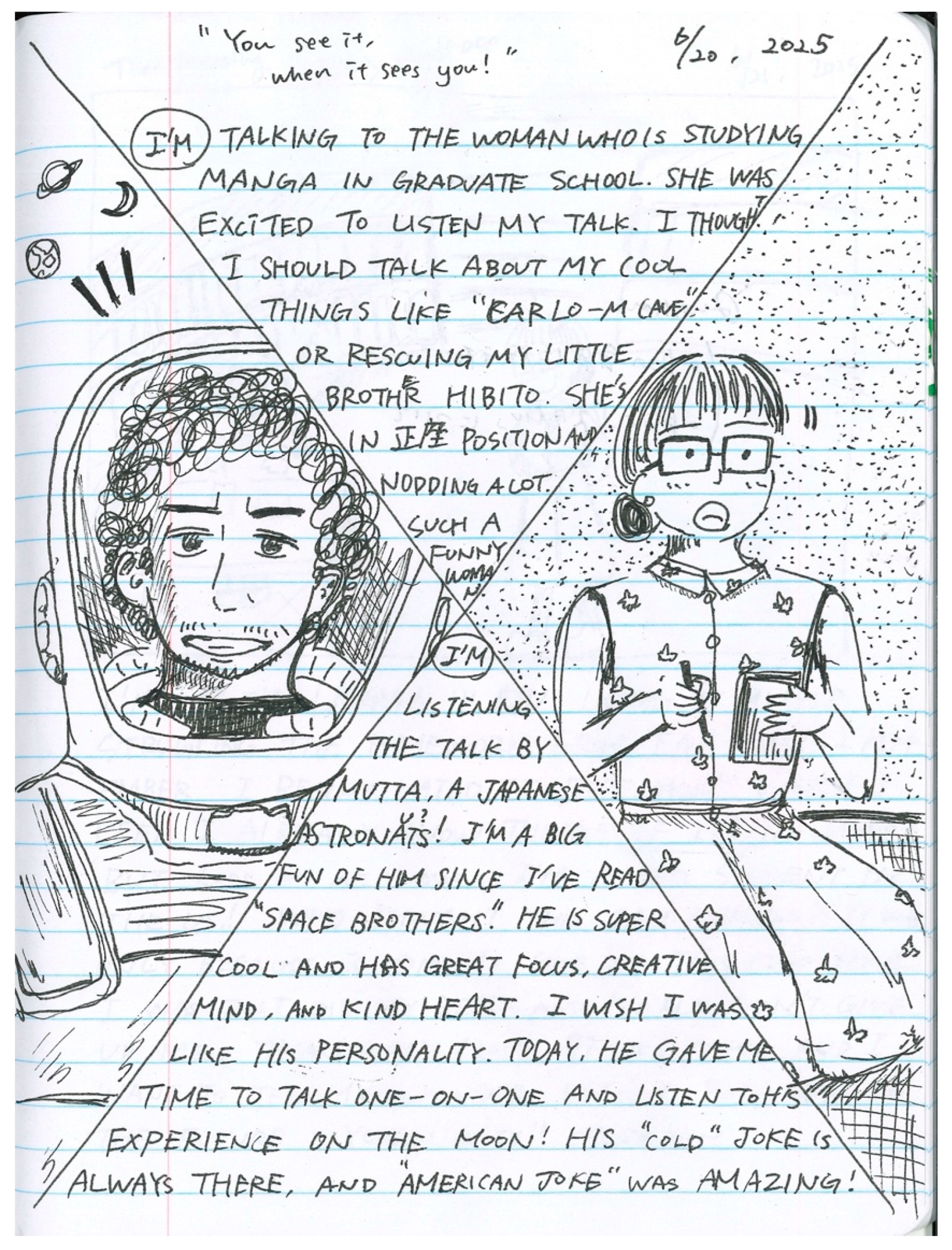
Barry 2019, pp. 130–31); according to Barry’s description, the “exercise plays with shifting points of view from real eyes to mind’s eye and from real world to imaginary world” (p. 130). The materials include a sheet of paper, a pen, a chosen object, and a timing device. Participants divide the page into four triangular sections by drawing a large X (see
Figure 6). In the left triangle, participants are given five minutes to draw the object from their own perspective. In the top triangle, they are given three minutes to write about the object, starting with “I am” (p. 131). In the right triangle, they are given five minutes to draw themselves as if seen from the object’s point of view. Finally, in the bottom triangle, they are given three minutes to write about themselves from the object’s perspective, starting with “I am.”
For this study, I replaced the physical object with a character of personal significance to the participant. This adaptation emphasized the participants’ identity as comics creators and fostered imaginative engagement with their own creative practices. The artists were invited to use either an existing character from their favorite works or an original character of their own creation. As a result, some wrote with a famous manga character from their favorite works and some drew their own original character. Other prompts (page structure, timing, and question) were retained the original versions.
4.3. Body Mapping
While
Barry (
2019, pp. 156–61) echoes the idea of mapping, this study drew directly from the “Body Mapping” method developed by
MK Czerwiec (
2023). As a nurse, educator, and cartoonist, Czerwiec co-founded the field of Graphic Medicine with Ian Williams and Matthew Noe, integrating comics into medical education to address health issues, educate readers, and share patient experiences. Czerwiec was also a co-author of
Graphic Medicine Manifesto (
Czerwiec et al. 2015). Body mapping was originally introduced as a tool to help patients and families make decisions about their medical care (
Czerwiec 2023). Czerwiec explains that body mapping is particularly meaningful for her because it connects the concepts of mapping and comics by using comics as a map to locate and navigate the self in time and space. In other words, she states, “Body maps bring all of this together—comics, what matters about our bodies, our lives, our health” (
Czerwiec 2023). While she emphasizes medical characteristics, this concept also applies to the broader population like the international artists in this study.
Czerwiec’s own description of the activity is available on her blog (
Czerwiec 2023), where she demonstrates different variations by other graphic novel authors and medical specialists. While the materials can be varied, the core prompt is the same: body mapping encourages participants to visualize themselves in time and space by drawing a full body and surrounding it with material and affective elements (e.g., clothing, objects, emotions).
Czerwiec’s (
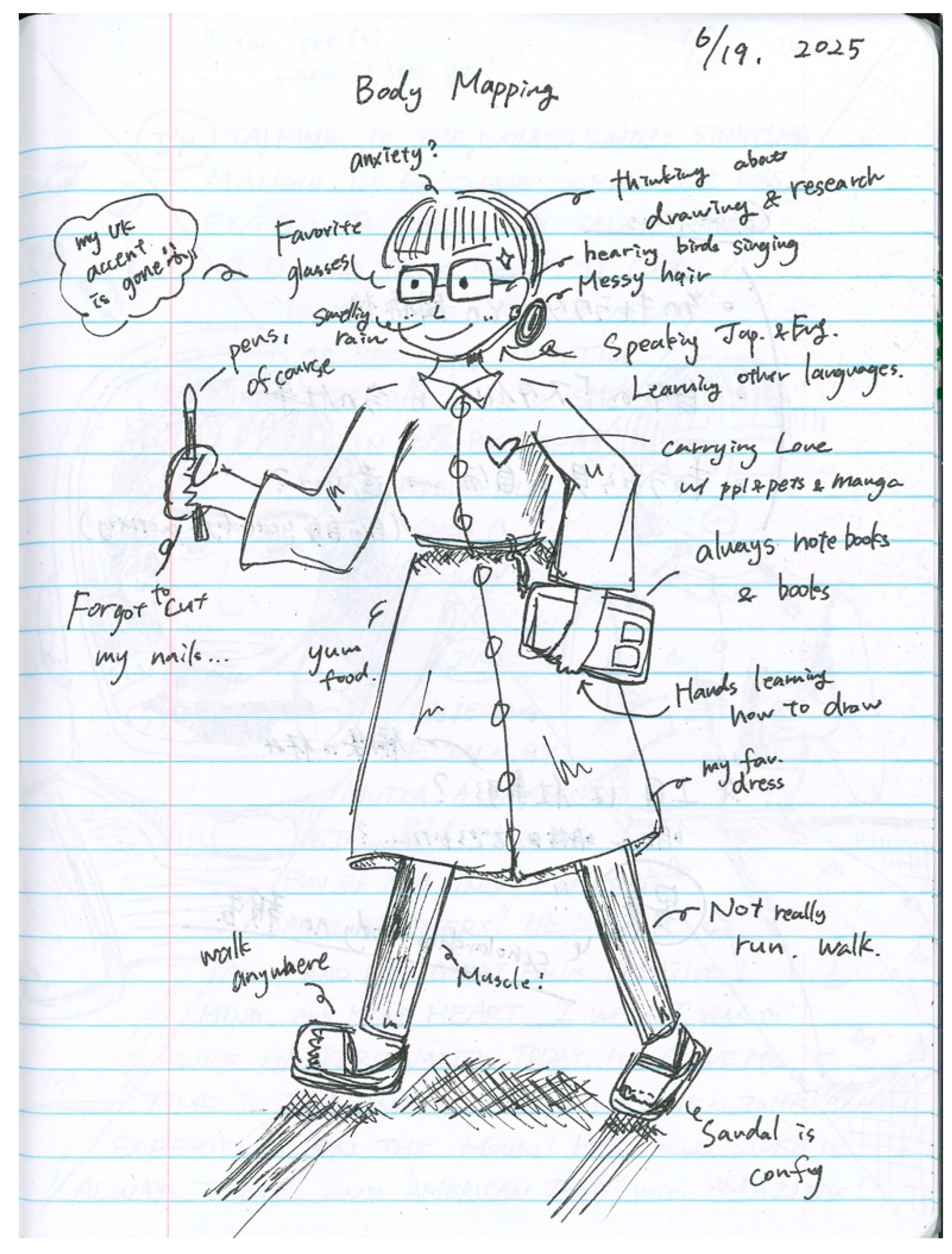
2023) blog provides model questions such as “Consider literal things on your body like scars, tattoos, other imprints—what stories do they tell and how do you represent these visually?” and “What about the culture(s) you were raised in—how do those traditions enact themselves on your body?” In this study, I presented my own body map (see
Figure 7) before inviting participants to create theirs. Using a single sheet of paper, a pen, and a timing device, participants completed the activity in approximately 20 min, drawing their bodies in either realistic or stylized form and adding details based on the model questions.
In sum, all three activities are adaptable across disciplines and contexts for their qualitative and ethnographic research. For instance, “Review Frame” has been used for reflective journaling and notetaking for book reviews (
Barry 2025, personal communication). By integrating comics-based methods into fieldwork, this study demonstrates their potential to connect comics and the arts with anthropological inquiry and further related fields. The replication, modification, and extension of the activities presented here in future ABR or interdisciplinary research projects is welcomed.
5. Conclusions
This study examined fieldwork at Artist Village Aso 096k in rural Japan to explore how hand-drawn comics function as a critical practice within global creative labor. The findings demonstrate that reflective, material drawing methods—grounded in Arts-Based Research (ABR)—enable artists to navigate the current uncertain political climate while cultivating forms of care and storytelling. By resisting the speed, abstraction, and reversibility of digital systems, these practices reassert the value of embodied, situated creation. Beyond their immediate artistic outcomes, the activities highlight how comic making can serve as a mode of resistance, challenging the structural pressures of the manga industry, as well as xenophobic discourse surrounding migrant labor. This case study thus underscores the broader potential of comics to bridge creative practice with ethnographic inquiry. In conclusion, this study contributes to ongoing debates on art, labor, and precarity in transnational cultural industries by demonstrating how comics can operate not only as esthetic products but also as critical tools for reimagining the politics of creative work. In doing so, this study invites people to rethink not only the politics of the manga industry but also the role of artistic practice in confronting xenophobic discourse and precarious global conditions.