1. Introduction
1.1. The Right to Information in an International Context
The patient’s right to appropriate, personalized, understandable (individualized) information is one of the fundamental pillars of healthcare (
Beauchamp and Childress 2019;
Council of Europe 1997;
World Health Organization 2016). Failure to provide information is not merely a communication failure but a legally relevant omission that violates the patient’s right to self-determination, which may give rise to claims relating to personality rights and liability for damages (
Dósa 2010). Over the past decade, the enforcement of patient rights—particularly the right to self-determination and information—has become one of the key areas of focus in the development of law both in Hungary and in Europe.
European literature and judicial practice treat informed consent not merely as a legal formality, but as a fundamental ethical and legal element of the doctor-patient relationship (
Beauchamp and Childress 2019;
Brazier 2003;
Faden and Beauchamp 1986;
Fleischer 2018;
Gillon 2003;
Herring 2017;
Kennedy and Grubb 2019). In line with this, the Hungarian legal literature consistently emphasizes that a lack of information can be regarded as a violation of the right to self-determination and as a separate infringement of personality rights (
Barzó 2019;
Dósa 2002;
Györfi 2020;
Hollán 2015;
Jobbágyi 2013;
Lomnici 2010;
Őri et al. 2023,
2025;
Varga 2019;
Zákány 2023;
Zubek et al. 2007). According to Kovács, the lack of information makes autonomous decision-making impossible, thereby violating the patient’s moral status (
Kovács 2004,
2010,
2012,
2013). The Hungarian sources cited in this manuscript primarily highlight that, under Hungarian law, a breach of the duty to provide information has significance not only in terms of professional law but also in terms of personality rights, and this approach has gradually gained ground in judicial practice.
Based on an empirical analysis of 156 Italian judgments, Pallocci et al. pointed out that courts increasingly treat breaches of the duty to inform as a separate category of injury, distinct from physical injury, and in more than 15% of cases, they award damages on this basis (
Pallocci 2023). This approach no longer merely examines whether the intervention caused any harm to the patient’s health, but also to what extent the lack of information limited the patient’s self-determination and freedom of choice. This trend is reinforced by Tronconi and his research team, who, in comparing Italian and other European legal practices, have shown that courts now determine the need for compensation even in the absence of physical injury if the patient’s autonomy has been violated because they did not have the opportunity to make a genuine, informed decision (
Tronconi et al. 2025). The legal assessment of information is therefore moving away from a form-based, formalistic approach and focusing on the content and quality of communication with the patient.
In terms of the quality of patient information, the assessment of whether a violation occurred depends, in particular, on whether the patient received substantive information about the significant risks of the procedure, alternative treatment options, and whether the lack of such information was likely to have influenced the patient’s decision.
1.2. Autonomy, Self-Determination
The patient’s right to self-determination is one of the earliest codified principles of modern medical ethics and health law (
Őri and Feith 2023). An early example of informed consent, which is still very rudimentary in legal history, can be found in an 18th-century Ottoman source, in which the patient’s legal representative (parent) consents to their child’s surgery in the presence of witnesses. In the document, the parent also states that in the event of a fatal outcome of the intervention, he or she does not wish to exercise his or her right to “compensation” under traditional law, i.e., the institution of diyat (in English: blood money) (
Kara and Aksoy 2006).
According to the principle of autonomy, individuals have the right to make free decisions about interventions affecting their health, based on adequate and relevant information that they can understand. This principle was elevated to one of the cornerstones of modern healthcare law in the classic work by Beauchamp and Childress (
Beauchamp and Childress 2019).
Autonomous decision-making occurs when the patient receives adequate and personalized information, has a genuine choice, and can make their decision in an environment free from external influence or coercion. In many continental and constitutional legal systems (e.g., German, Italian, and European human rights practice), such deficiencies in the consent process are interpreted as a violation of the patient’s right to self-determination and personality rights, which in itself may constitute a violation of rights even if the intervention was medically correct and effective (
Buchner and Freye 2022).
According to the WHO (
World Health Organization 2010) and OECD statements on patient rights (
OECD and European Union 2022), informed, active patient participation (empowered patient model) is one of the main indicators of patient safety and quality of care. The violation of the right to self-determination is of a dual legal nature: it constitutes both a violation of fundamental rights and a violation of civil rights.
The right to autonomous decision-making regarding medical treatment can be derived from the human dignity enshrined in Article II of the Hungarian Fundamental Law, which is the “fundamental right” to physical and mental integrity and freedom of choice, and from the right to respect for private and family life guaranteed in Article VI. Under these two provisions, decisions made by patients regarding their own bodies and health fall within the scope of personal freedoms protected by the constitution, and the state and healthcare providers are obliged to respect this right to make decisions (
Fundamental Law of Hungary 2011).
The Charter of Fundamental Rights of the European Union and Directive 2011/24/EU affirm that patient autonomy and the right to make an informed decision are prerequisites for the legitimacy of healthcare (
Charter of Fundamental Rights of the European Union 2000;
European Union 2011). In line with this, the Oviedo Convention stipulates that medical intervention may only be performed with the patient’s free and informed consent. Hungary has ratified the Convention, so its principles are of guiding significance within the domestic regulatory environment as well. The Charter, meanwhile, is binding within the scope of EU law; therefore, it is presented in this study as part of the European normative context.
The development of the institution of informed consent not only transformed everyday medical practice but also redefined the legal status of patients: the physician-centred, paternalistic model was gradually replaced by the paradigm of patient-centred care (
Őri and Feith 2023). In Hungarian law, Act CLIV of 1997 on Healthcare (
Act on Health Care 1997) stipulates that patients are entitled to understandable, comprehensive, and up-to-date information (Section 13 of the Healthcare Act) and that medical interventions may only be performed with their informed consent (Section 15 of the Healthcare Act).
At the same time, for a long time, violating the duty to inform was not considered a separate legal violation in Hungarian judicial practice, but rather an additional element of professional misconduct. However, since the second half of the 2010s, courts have increasingly recognized that the violation of self-determination is in itself a legal disadvantage that requires reparation (
Őri et al. 2025).
1.3. The Legal Institution of NPDs in Hungary
As a legal institution, NPDs are monetary compensation for the violation of personality rights, the purpose of which is not to compensate for suffering, but to condemn the violation socially and morally.
The new Hungarian Civil Code (Act V of 2013 on the Civil Code 2014), which came into force in 2014, introduced a significant change in the system of remedies for violations of personality rights. The reform did not reclassify the violation of the duty to inform itself; rather, it restructured the system of legal consequences for violations of personality rights by introducing NPDs as an independent sanction under personality rights law. This is of particular significance for the present study because the change also influenced the focus of judicial discretion and the logic underlying the assessment of compensation.
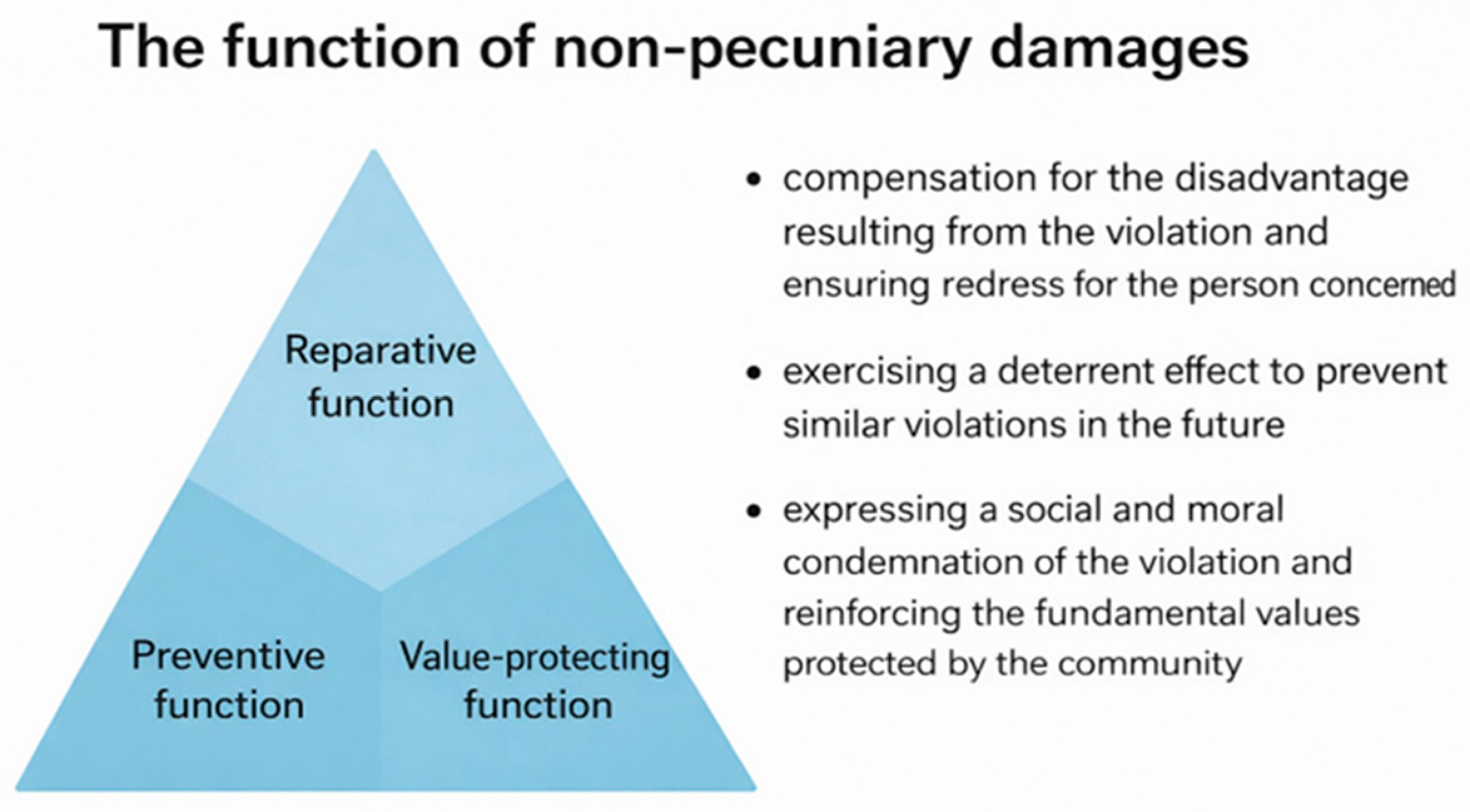
Its function can be understood in three dimensions (
Figure 1):
reparative function—compensation for the violation of rights and ensuring individual redress,
preventive function—deterrent effect against future violations of rights,
value-protecting function—expression of social and moral condemnation of the violation of rights.
This research primarily examines the reparative function, but its findings also touch on the preventive and value-preserving dimensions.
Prior to the 2014 reform in Hungary, claims related to breaches of the duty to provide information were adjudicated under the traditional system of NPDs. However, by introducing compensatory damages, the new Civil Code has created a more unified system of sanctions under the law of personality rights. Under Section 2:52, entitlement to compensation for emotional distress does not require proof of any additional harm beyond the fact of the infringement, which has also established the breach of the duty to inform as an independent basis for compensation.
At the same time, any assessment of this compensatory practice requires a method that allows awards from different periods to be compared in economically meaningful terms.
Comparing the nominal value of damages alone provides limited information, as it does not reflect the different economic conditions and purchasing power of different periods. An examination of real value—which makes a comparison with the prevailing wage level or other stable economic indicators in a given country—makes it possible to assess the actual weight of the compensation awarded by the court at the time. The purpose of this type of analysis is not to determine the “value” of the injury, but to make judicial practice comparable across different periods.
1.4. Research Objective
Although the authors of this study share the goals behind standardization efforts, their analysis below approaches the issue from the individual dimensions of human dignity and self-determination, thereby giving prominence to a different set of considerations. Their goal is to explore the actual socio-economic value of compensation amounts, especially NPDs, reflecting European trends. Their study is based on the assumption that the measure of fair and effective reparation is not only the nominal amount, but also its real economic value: that is, to what extent the awarded damages represent compensation in relation to the minimum wage at the time. This ratio may be suitable for demonstrating whether the non-material compensations awarded by courts in a given period retain their actual value in light of the economic environment, inflation, and social justice, and whether they are suitable for effectively compensating for the harm caused. The authors’ hypothesis is that the real value of NPDs did not keep pace with the growing social significance of violations related to autonomy.
The central aim of the research is therefore to explore the changes in the content and real value of damages and NPDs awards related to breaches of the duty to inform patients between the examined periods of 2008–2010 and 2018–2020 in Hungary, as well as the extent to which these changes bring Hungarian judicial practice closer to European trends in patient rights. The judicial practice of the two periods was developed within partially different legal frameworks, which is an important aspect of the comparison.
The study focused on the following research questions:
- (a)
What is the direction and extent of the shift in the judicial assessment of the amount of NPDs and its compensatory and corrective function when comparing the two periods examined, with particular regard to the differences between first and second instance proceedings and their dynamics?
- (b)
How the real value of the NPDs awarded has changed, and whether any substantive change in the actual weight of the compensation can be demonstrated in a comparison over time, in particular by applying real value normalization proportional to the minimum wage (hereinafter: MW-multiplier normalization)?
Another aim of the research was to explore
- (a)
whether the extreme differences between NPDs’ awards had decreased or increased, and how this reflects the standardization or increased individualization of judicial discretion;
- (b)
the role of the corrective function of second-instance proceedings, with particular regard to the direction and extent of changes compared to first-instance decisions;
- (c)
what differences can be identified in the award of NPDs in relation to individual claims brought by a single claimant and claims brought by multiple claimants acting jointly.
This study is an improved and integrated version of previous research results (
Őri et al. 2023,
2025), which introduces MW-multiplier normalization so that changes in the amounts of damages over time can be compared according to their actual economic and social weight.
2. Methods
The court decisions (hereinafter: CD) forming the basis of our study were collected from the Wolters Kluwer Law Database. The search was conducted using the database’s “detailed search” function, searching for the keyword “damages”. An additional search parameter was the “year of publication”, specifying the years 2008, 2009, 2010, 2018, 2019, and 2020. After specifying these parameters, “healthcare” was selected as the topic. The search identified 149 decisions for the period 2008–2010 and 200 decisions for the period 2018–2020. Quite a few cases were not related to healthcare. These included, for example, compensation proceedings relating to placement in a penal institution and the right to practice. A further condition for selection was that the judgment should assess, on the merits, the fulfillment of the duty to inform or the failure to do so.
As a result of the content screening, 96 cases met the selection criteria during the 2008–2010 period, and 104 cases met the criteria during the 2018–2020 period.
During data collection, some CDs appeared as results for several years because the system found a connection for two consecutive years in the same case (due to first- and second-instance proceedings). These duplications were filtered out.
The research was ultimately based on content analysis of 193 final CDs (N = 193, of which n2008–2010 = 95; n2018–2020 = 98).
Data collection was carried out by reading and coding the full text of the judgments, during which the relevant data, the claimed and awarded elements of compensation (material damage, NPDs, annuity) were recorded. The code was applied uniformly, based on predetermined criteria. A standardized coding sheet was created for qualitative analysis, as well as for the quantitative and content analysis resulting therefrom. Coding was performed by three researchers; in cases of differing interpretations, consensus-based decision-making ensured coding reliability. The results were verified by the first author, and any inconsistencies were reconciled with the coders.
The qualitative analysis focused on the content and argumentation structure of the judges’ reasoning. The aim was to identify the legal and evaluative criteria used in the CDs to assess violations of the duty to inform. The analysis of the texts made it possible to identify recurring elements of reasoning.
Following the qualitative content analysis, quantitative processing was performed using the SPSS statistical program (Statistical Package for the Social Sciences, SPSS version 25.0), which enabled statistical analyses. The analysis was based on recording and comparing the amounts requested, and the amounts awarded during the two periods under review. Descriptive statistical measures (mean, median, minimum, maximum) were used in the analysis. The purpose of the numerical, i.e., quantitative analysis was to show how the amounts of NPDs awarded by courts have changed in recent years and whether these changes represent a real trend or are merely random variations. To this end, the amounts claimed and actually awarded in each judgment were recorded and then compared for the two periods examined (2008–2010 and 2018–2020).
To avoid distortion of the comparison, the research used MW-multiplier normalization.
This approach allows for the comparison of amounts over time and the assessment of their social significance. The use of the minimum wage as a benchmark is justified by its legally established, universally binding nature. Unlike average or median earnings, it is not a statistical indicator but a uniformly applicable, fixed reference value that is not influenced by distribution characteristics or outliers. It thus provides a stable and comparable benchmark for temporal analysis. Furthermore, the determination of the minimum wage typically takes into account developments in the macroeconomic environment—particularly inflation—and is therefore suitable for reflecting the economic conditions of the given period.
Table 1 below shows that changes in the real value of the cost of living are also taken into account when determining the minimum wage. Comparing the data for the two examined periods under review, it can be observed that the change in the forint amount of the minimum wage was slightly lower than the change in the consumer price index during the earlier period; in contrast, during the later period, the increase in the forint amount of the minimum wage exceeded the rate of change in the price of the consumer basket.
In light of all this, the minimum wage provides an appropriate benchmark for comparing the relative socio-economic weight of awarded damages over time.
The MW-multiplier expresses how many months of the Hungarian minimum wage the awarded compensation (NPDs) corresponds to under the economic conditions of the given year. The source of minimum wage data is Table STADAT 2.1.54 of the Central Statistical Office (in Hungarian: Központi Statisztikai Hivatal, KSH).
When comparing the amounts of NPDs claimed and awarded, the analysis treats individual claims submitted by a single claimant and claims related to joint action by multiple claimants separately. In cases involving multiple claimants, the analysis is limited to presenting the range of NPDs awarded. The reason for this is that the amount of NPDs is fundamentally linked to the individual claimant, to the infringement of their individual rights, and to the severity of such infringement, and is therefore determined on the basis of different assessment criteria for each individual. Consequently, an aggregate statistical comparison of individual amounts would not be methodologically well-founded.
3. Findings
The analysis of the amount of NPDs covered cases in which the court issued a final and binding decision on the amount awarded.
Accordingly, in the period 2008–2010, there were 28 cases out of 95, and in the period 2018–2020, there were 44 cases out of 98, in which a final decision on the amount of NPDs was available for evaluation. The cases eligible for evaluation included those in which the court had specifically determined the amount of compensation for NPDs. Based on a comparison of the two periods examined, it can be concluded that both the arithmetic mean and median amounts of NPDs awarded increased in the period 2018–2020 (
Table 2).
The minimum amount of NPDs awarded in the period 2018–2020 is lower (HUF 100,000) than the minimum amount awarded in the period 2008–2010 (HUF 700,000), and the maximum amount awarded in the more recent period is significantly higher (HUF 35,000,000 compared to the previous HUF 15,000,000).
The statistical indicators in the table were calculated on a case-by-case basis, based on the amounts adjudicated in individual cases.
In
Table 3, the range of NPDs claimed and awarded for claims filed by a single plaintiff is presented for the periods and court instances examined.
In both periods examined, there were lawsuits in which claims for NPDs were adjudicated not by the action of a single claimant, but by the joint action of several claimants. In these healthcare compensation lawsuits, it is not the amount of NPDs awarded to each plaintiff that is of primary importance to the healthcare provider, but rather the total amount that it will have to pay as a result of the litigation. From this perspective, presenting the range of NPDs awarded provides relevant and meaningful information about the magnitude of potential financial exposure, even if a more detailed statistical analysis cannot be performed due to the personal nature of the individual amounts. In cases brought by multiple claimants, the amounts of NPDs awarded showed differences in both periods examined, both in terms of the amounts claimed and awarded, and between individual instances (
Table 4). In first-instance proceedings, the range of NPDs claimed in the period 2008–2010 was between HUF 3 million and HUF 20 million, while in the period 2018–2020 this range changed to between HUF 2 million and HUF 49 million.
In both periods, the amount of NPDs awarded at first instance was lower than the amounts claimed. In the period 2008–2010, the amounts awarded ranged from HUF 0.5 million to 18 million, while in the period 2018–2020, the amounts ranged from HUF 5 million to 35 million, indicating an upward trend in both the lower and upper limits (
Table 4).
In second instance proceedings, the NPDs awarded in the period 2008–2010 ranged from HUF 1 million to HUF 14 million, while in the period 2018–2020, the range was between HUF 0.1 million and HUF 35 million.
Based on a comparison of the two periods examined, it can be concluded that the proportion of judgments ending with non-material damages/NPDs in the amount of “HUF 0”, i.e., with a complete rejection, decreased overall. In the period 2008–2010, a total of 56 judgments were handed down complete rejection. Of these, 44 cases at first instance, while 12 cases resulted in complete rejection at the second instance. In contrast, in the period 2018–2020, there were 33 decisions in first-instance proceedings and 11 decisions in second instance proceedings in which the court did not award NPDs (
Table 5).
Based on a comparison of the instances, it can be concluded that, in both periods examined, there was a significant correction in the amount of NPDs awarded in the first instance during the second instance proceedings. However, the direction and average extent of the correction differ between the two periods. In the period 2008–2010, damages awarded in first-instance proceedings showed an average decrease in second instance proceedings, with an average correction of −HUF 468,263. In contrast, in the period 2018–2020, second-instance decisions resulted in an average increase, with an average correction of +HUF 77,143.
However, it can be observed in both periods that there are significant differences between individual cases compared to the average value of the corrections. The deviation exceeds HUF 1 million in both periods (2008–2010: HUF 1,277,142; 2018–2020: HUF 1,886,225), which suggests that second-instance corrections are not applied uniformly and to the same extent, but are highly case-dependent.
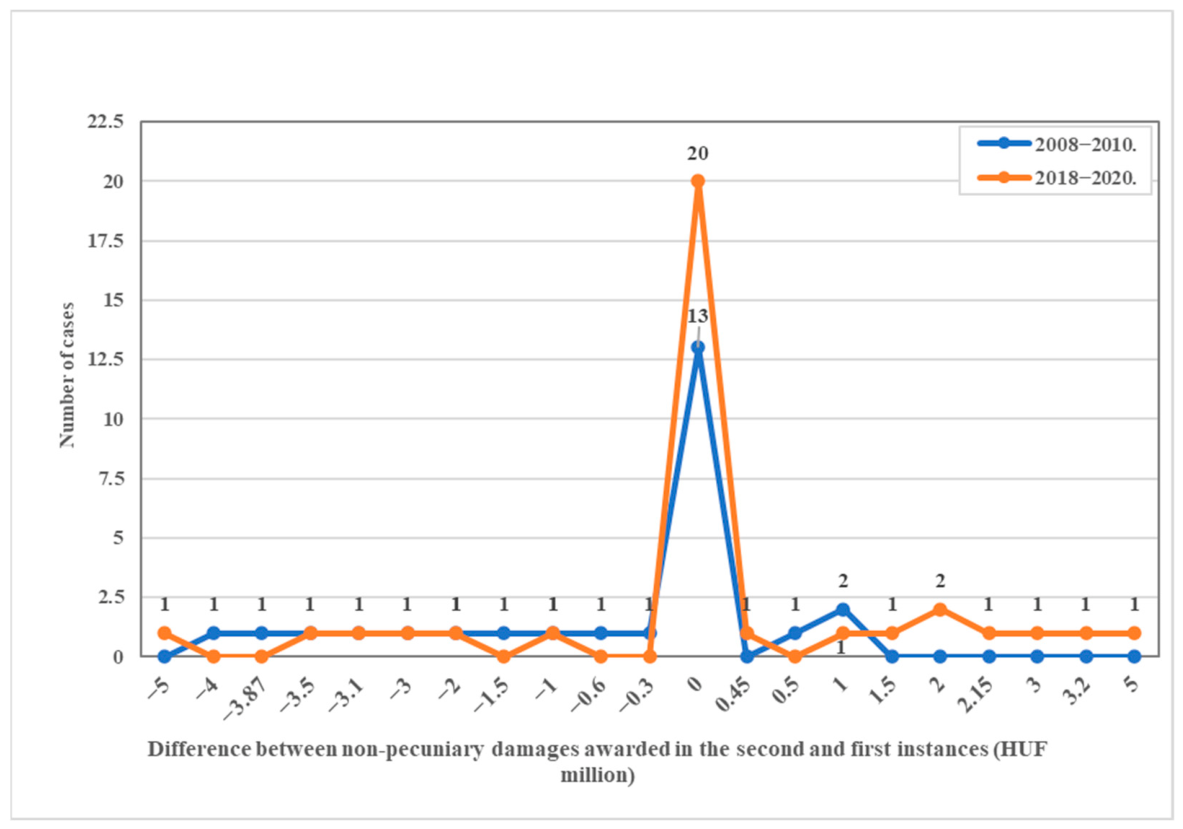
Figure 2 shows the number of cases in which the compensation award changed in the second-instance proceedings compared to the first instance, as well as the amount of the change.
The data clearly show that there are several significant differences between the two periods examined, both in terms of the direction and the extent of the changes.
On the one hand, reductions (when the second instance set a lower amount) were more significant in the 2018–2020 period. During this period, there were several cases where the amount was reduced by 1–5 million forints, whereas between 2008 and 2010, reductions fell within a narrower range, typically between 0.3 and 4 million forints.
On the other hand, increases (when the appellate court raised the amount) were also more significant and occurred within a wider range in the more recent period. Between 2018 and 2020, increases ranged from 0.45 million to as much as 5 million forints, whereas in the earlier period they were less frequent and involved smaller amounts.
At the same time, the proportion of cases in which the appellate court did not alter the first-instance decision was significant in both periods. Between 2008 and 2010, the amount of compensation remained unchanged in 13 out of 23 cases, and between 2018 and 2020, it remained unchanged in 20 out of 35 cases.
Table 6 and
Table 7 show the nominal amounts of NPDs awarded (expressed in Hungarian forints) and compare these amounts with the minimum monthly wage applicable in the given period.
The results of the related statistical analysis (
Table 6) show that, in the case of non-pecuniary damages claims brought by a single claimant, the increase in nominal amounts in first-instance judgments was accompanied by an increase in the real value of compensation.
Table 7 shows the nominal value (in Hungarian forints) of the amounts awarded in relation to the claims for NPDs jointly submitted by multiple claimants, as well as their value in relation to the applicable monthly minimum wage for the given period.
Table 7 shows the amounts awarded in relation to the claims for non-pecuniary damages jointly submitted by multiple claimants, both in nominal terms and in relation to the applicable monthly minimum wage for the given period.
Overall, it can be concluded that in cases where multiple claimants jointly submit claims for non-pecuniary damages, judicial practice shows a rising trend in nominal terms, but in real terms, the system can be characterized by a stable upper range and a differentiated lower threshold. This approach is particularly relevant from the perspective of risk assessment by healthcare providers and liability insurers, as in cases involving multiple claimants, it is not the size of the individual claims that is decisive, but rather the total amount that can be awarded.
4. Discussion
Summarizing the results of this research, the following conclusions can be drawn based on statistical analysis of the data:
The combined increase in the average and median suggests that it is not just a few exceptionally high awards that influence the distribution of NPDs awarded, but that the typical level of such awards has also shifted upwards in the recent period.
The increase in the standard deviation indicates that in the period 2018–2020, the NPDs awarded are more widely scattered around the average, i.e., there are more significant differences between individual cases. This phenomenon indicates a greater degree of individualization in judicial discretion. Based on the minimum and maximum values of NPDs, it can be concluded that courts applied the legal institution of NPDs on a broader scale between 2018 and 2020: on the one hand, they tend to award lower amounts of compensation for less serious infringements, while on the other hand, they award significantly higher amounts of NPDs for the most serious infringements. The broadening range of extremes indicates a more differentiated judicial practice.
An examination of the ratio between the amounts claimed and awarded indicates that there are marked differences between the results of first-instance and second-instance proceedings in both periods.
In the case of a single claimant, the increase in the amounts claimed in the first instance proceedings was not accompanied by a corresponding increase in the NPDs awarded, and a similar trend can be observed in appeals proceedings as well.
Both in absolute numbers and in proportion, cases that ended in complete rejection became less frequent, especially in first-instance proceedings. This trend suggests that, in recent years, courts have been awarding NPDs—even small amounts—in a higher proportion of cases, and that the establishment of an infringement is becoming increasingly divorced from the complete absence of monetary compensation.
A comparison among the instances shows that while in the earlier period the second instance primarily played a corrective and moderating role, in the period 2018–2020 it also played a balancing and, in some cases, corrective and elevating role. The high deviation in both periods suggests that the deliberations of the courts of second instance are highly individualized.
In both periods examined, there were no corrections in the amount in the vast majority of second-instance proceedings, meaning that second-instance review played a significant stabilizing role in both periods. At the same time, during 2018–2020, there were also larger positive and negative deviations.
The trend in the real value of NPDs does not show a uniform upward trend across the court instances: while there was an increase in first-instance judgments, declining trend can be identified in second-instance decisions. This suggests that nominal increases and the actual socioeconomic impact of compensation do not always go hand in hand.
Based on the comparison of the two periods examined, it can be concluded that the extreme differences between the NPDs awarded did not decrease, but rather increased considerably in the period 2018–2020. In the most recent period, the amounts awarded in both first-instance and second-instance proceedings varied more widely. In the period 2018–2020, NPDs exceeding HUF 20 and 30 million were awarded exclusively in first-instance judgments, while no such payments were identified in the period 2008–2010. A similar trend can be observed in second-instance judgments, where significantly higher upper limits appeared in the more recent period. In parallel with this, in the years 2018–2020, decisions were also made to award extremely low amounts of NPDs, ranging from HUF 100,000 to HUF 200,000, which were also not typical of the previous period. The simultaneous expansion of minimum and maximum values suggests that the practice of awarding NPDs has become more polarized.
Although the relative proportion of violations of the right to information decreased during the two periods examined, the absolute number of cases increased, which may be related to the growing awareness of patient rights and the fact that the legal institution of NPDs was firmly established in domestic judicial practice by the end of the period examined. In the second period, courts more frequently recognize violations of the right to information as independent infringements of personality rights requiring compensation, regardless of whether any damage to health has occurred (
Őri et al. 2023,
2025).
These trends confirm that judicial practice treats violations of the duty to inform not merely as procedural or formal errors, but as conduct that infringes on autonomy. The legal institution of NPDs, introduced in 2014 (Act V of 2013 on the Civil Code 2014), marked a turning point in the development of Hungarian law.
The reform established a new framework for sanctioning violations of personality rights and helped ensure that breaches of the duty to provide information are now grounds for independent compensation.
A change in approach can already be identified in judgments handed down between 2018 and 2020. The courts rule that the lack of information—if it was sufficient to restrict the patient’s freedom of choice—in itself justifies the award of NPDs. In its judgment No. Pfv.III.20.711/2024/4 (BH 2025.1.11.), the Supreme Court stated that the violation of the patient’s right to information under Section 13(1) of the Healthcare Act constitutes an infringement of personality rights related to mental health and gives rise to a claim for NPDs. The judicial interpretation of NPDs in several European countries—including Estonia, Germany, and England—has gradually expanded to include the independent recognition of dignity, autonomy, and emotional harm. A comparative analysis by
Lahe and Kull (
2016) showed that the concept of NPDs in European legal systems has expanded significantly over the past decade: courts no longer link compensation exclusively to physical material damage, but also recognize violations of human dignity, emotional bonds, and autonomous decision-making as independent legal disadvantages (
Lahe and Kull 2016). A similar shift in approach can be seen in Italian and broader European practice: in their empirical and dogmatic study,
Tronconi et al. (
2025) pointed out that courts are increasingly consistent in considering incomplete or formal information as a violation of autonomy and linking the need for reparation to the severity of the infringement of personality rights (
Tronconi et al. 2025). Italian Act No. 219/2017 further reinforced this approach by linking the validity of consent to written, personalized, and documented information (
Italian Republic 2017, n. 219-Norme in materia di consenso informato e di disposizioni anticipate di trattamento, 2018). Based on international examples, it can be concluded that the protection of patient autonomy and informed decision-making is gaining increasing importance even in a European context. Hungarian practice is moving in a parallel direction; however, based on the current data, the extent of this convergence can only be assessed with caution.
The results of this research confirm that, between the periods examined, the judicial assessment of breaches of the duty to inform has undergone a change in approach and a change in terms of compensation. While in 2008–2010, infringement of the right to information was mostly considered an ancillary element of professional negligence, by 2018–2020 it had gained recognition as an independent act of infringement of the right to self-determination, which gives rise to reparation regardless of any damage to health. This shift has been confirmed by previous studies by the authors of this paper, according to which courts no longer interpret violations of the right to information as formal breaches of duty, but as infringements of autonomy, giving rise to NPDs on their own (
Őri et al. 2023,
2025).
However, it is important to note that the data measured using the MW-multiplier do not show a spectacular increase in the real value of compensation, but rather a more consistent application of the legal institution. This means that although higher amounts were awarded in nominal terms, the actual weight of compensation did not increase proportionally to the living conditions of the period in question. Therefore, it cannot be understood solely in terms of the amount but in the fact that courts have less frequently rejected claims based on infringement of the right to information and have more consistently recognized infringement of self-determination as a disadvantage requiring reparation.
Strengths and Limitations of the Research
One of the main strengths of this research is the use of a real-value index relative to the minimum wage, which allows comparison of awarded damages over time while accounting for changes in the economic environment. This approach is suitable for interpreting the relative weight and proportionality of compensation, while not reducing the personality rights nature of the NPDs to a purely financial category. Unlike pecuniary damages—which can typically be expressed directly in monetary terms—non-pecuniary injuries (non-material disadvantages) cannot be directly linked to a single economic indicator; therefore, their assessment necessarily requires the use of a benchmark.
In this context, the minimum wage serves as a suitable benchmark for comparing the nominal amounts of compensation for NPDs over time, since, on the one hand, it quantifies the magnitude of the awarded amounts, and on the other hand—through its regular review—it indirectly reflects the economic conditions of the given period, particularly the impact of inflation.
Another strength of the study is that it analyzes changes in judicial practice by comparing two distinct periods (2008–2010 and 2018–2020), thereby allowing the application of compensatory damages to be placed within a temporal and normative context. The analysis is based on final CDs in medical malpractice cases, which are suitable for revealing trends in judicial discretion and compensation practices.
Another advantage of the study is that it examines claims related to breaches of the duty to inform across multiple medical specialties, thereby seeking to identify broader patterns.
However, several limitations must be taken into account when interpreting the results of this study. In some of the cases brought by multiple plaintiffs, the awarded amounts were available only in aggregate form, which limited the possibility of comparisons at the individual level.
The study is based exclusively on final CDs and thus does not cover out-of-court settlements, insurance settlements, or other alternative forms of dispute resolution, which may constitute a significant portion of actual practice. Even so, such negotiations are likely to take place in the shadow of the law, in the sense that the parties’ positions may be shaped by their expectations regarding judicial outcomes, including the compensation patterns reflected in the case law analysed above (
Mnookin and Kornhauser 1979;
Cooter et al. 1982).
Normalization using the MW-multiplier normalization is suitable for comparing data over time; however, it does not reflect the full spectrum of income conditions, and in particular does not take into account regional differences or the specific characteristics of individual sectors. Furthermore, the minimum wage alone cannot be considered a fully objective measure, as its ratio within the income distribution changes over time: while in the 2008–2010 period the minimum wage accounted for approximately 34–36% of the average gross wage, between 2018 and 2020 this ratio rose to around 41% (KSH STADAT, downloaded: 15 April 2026).
In light of all this, the chosen method is appropriate for ensuring comparability, but its results can only be interpreted with due consideration of the above limitations.
Finally, although the coding was performed according to uniform criteria, with the involvement of multiple researchers and through consensus-based coordination, the interpretation of judicial reasoning necessarily involves an interpretive element, which carries the potential for a certain degree of researcher bias.
5. Conclusions
Overall, it can be concluded that Hungarian judicial practice has shifted over the past decade from a formal, document-centred approach to information to a content-centred approach focused on patient rights and autonomy. The judicial assessment of breaches of the duty to disclose can be divided into three distinct stages of development (
Table 8).
The results suggest that, during the period under review, the award of compensation for injury has become increasingly linked to the recognition of a violation of autonomy. Certain aspects of Hungarian practice are converging with European trends in patient rights in this regard; however, the methodological framework of the study also imposes limits on comparability.
The limitations of the study stem primarily from the methodological framework and the specific characteristics of the data sources used.
Future research could focus on incorporating out-of-court forms of legal redress—particularly insurance settlements and agreements—which would enable a more comprehensive understanding of the entire practice of legal redress.
Further studies are also needed to explore how changes in documentation practices and digitization affect the enforcement of autonomy in later periods.
The present findings may provide a basis for further comparative studies, particularly for exploring the relationship between European and Central and Eastern European judicial practices.