Article

Digitising Bills of Lading in the UAE: Legal Governance and Implementation Challenges

by
Mohamed Morsi Abdou
*,
Ayman M. Zain Othman
,
Aisha Obaid Alqaydi
and
Mahmoud Fayyad
College of Law, University of Kalba, Sharjah P.O. Box 1817, United Arab Emirates
*
Author to whom correspondence should be addressed.
Laws 2026, 15(3), 37; https://doi.org/10.3390/laws15030037
Submission received: 3 March 2026 / Revised: 5 April 2026 / Accepted: 20 April 2026 / Published: 2 May 2026

Abstract

The AI-supported digitisation of bills of lading has become an important requirement for the maritime transport industry, because it accelerates maritime shipping operations and helps avoid the drawbacks of paper bills of lading. This importance prompted the UAE legislator to introduce a legal provision in the new Maritime Law expressly permitting the use of electronic bills of lading. Despite the significance of this legislative step, this study demonstrates that it suffers from regulatory shortcomings; accordingly, the study aims to bridge the legal gap arising from the deficiency and ambiguity that characterise the rules governing the use of electronic bills of lading. This research fills a gap in the legal literature, as the digitisation of bills of lading under the new UAE Maritime Law has not been deeply explored. It also examines the role of artificial intelligence as an auxiliary instrument in enhancing the efficiency and reliability of this digital transformation. The research adopts an inductive and analytical approach to the provisions of the Maritime Law and related legislation to extract the general legal principles governing dealings in electronic bills of lading. The study shows that the digitisation of maritime bills of lading raises several legal issues resulting from their subjection to more than one legal regime, which may lead to legislative conflict and divergence in judicial approaches. The study concludes that the effective use of electronic bills of lading requires issuance of implementing regulations that explicitly clarify the conditions for their issuance, recognising their possession and electronic negotiability.

1. Introduction

In general, a digitalisation approach is a framework that supports companies in managing the changes resulting from the integration of digital technology, as well as their operations post-transformation (Matt et al. 2015). Digital transformation represents an internal organisational and cultural transition that enables shipping companies to adopt the benefits of digital solutions across processes, skills, and business models (Plomaritou and Jeropoulos 2022). Digitalisation therefore represents a practical tool for enhancing the competitive standing of companies operating in the maritime shipping industry. In an increasingly dynamic commercial environment, shipowners, managers, fleet operators, charterers, shippers, brokers, and agents need to make effective use of emerging opportunities to remain competitive and maintain profitability (Plomaritou and Jeropoulos 2022).
In response to the growing convergence between technological innovation and the maritime transport sector—particularly in the carriage of goods—an increasing number of leading maritime jurisdictions have begun adopting digitisation to harness the efficiencies enabled by modern information technologies.1 This digitisation in the maritime shipping world allows for the simplification of bill of lading (BoL) issuance procedures, acceleration of electronic negotiability, and a significant mitigation of one of the longstanding challenges in maritime commerce, such as the delays associated with the delivery of shipping documents to the relevant parties (Laryea 2000; Castellani 2025). Furthermore, this use minimizes the number of incidents, related risks, and charges associated with cargo delivery methods that lack an original BoL (Plomaritou and Nikolaidis 2016).
More specifically, maritime trade occupies a substantial segment of the United Arab Emirates’ international commercial transactions.2 As a result, new maritime legislation was enacted in 2023 (Federal Decree by Law No. (43) of 2023 Concerning the Maritime Law), integrating recent legislative advancements to keep the UAE an attractive investment destination in the shipping sector. This legislation included several new legal provisions that regulate the relationship between technology and maritime commercial transactions, such as operating automated ships3 and electronic bill of lading (eBL), such as article (163/1), which provides that “a bill of lading may be issued through electronic means”.
This progress in legislation must be explicitly conveyed to all participants in maritime transport to prevent the emergence of practical impediments. As a matter of fact, legal certainty is undeniably fundamental for parties involved in marine transactions, given its relation to potential financial disputes arising from inherently precise and complex operations. In this regard, this study aims to critically analyse the main practical and legal aspects of digitalising the BoL in the UAE, given the significant advantages of digitalisation.
Therefore, the inductive analytical study of the new legal rules in the UAE Maritime Law—such as articles 163, 166, 167 and other related laws—will focus on the shortcomings and legislative deficiencies that prevent the effective digitisation of the BoL in practice. This legal approach for the digitisation of the BoL, powered by artificial intelligence (AI), establishes a real basis for achieving legal certainty with the eBL in accordance with UAE laws.
It is worth noting that the study focuses on exploring the potential use of AI to support the digitisation of BoL, without referring to a fully AI-managed BoL, as this level has not yet been implemented in practice. From a legal perspective, the full handling of the bill of lading by autonomous AI systems remains unattainable, as legal responsibility and contractual consent must be attributed to identifiable legal persons (Baeyaert 2025). Accordingly, AI functions only as a supportive tool rather than an independent legal actor capable of entering into legal relations as a subject of duties as well as rights.
The study maintains that achieving legal certainty requires an explicit recognition of the principle of functional equivalence between electronic and paper bills of lading. It further emphasises the need for the UAE legislator to draw on the English law approach to the concept of possession of electronic documents. This orientation should be clearly reflected in the executive regulations of the relevant legislation, particularly by setting out the conditions for issuing eBLs, regulating their methods of transfer and negotiation, and clarifying their evidentiary value in maritime commercial transactions.
This research examines to what extent the legal framework governing eBL in UAE maritime law ensures the efficiency and effectiveness of their functions compared to traditional BoL, given the existing regulatory ambiguities. This research provides an overview of the impact of legislation on the use of eBL in UAE maritime trade, based on an analysis of the Maritime Law and related laws, as well as a review of the relevant literature. It addresses the challenges associated with issuance, possession and negotiation of eBL and proposes potential recommendations for ensuring their effective implementation. Its primary contribution is to enhance legal certainty and support the adoption of eBL in UAE maritime trade.

2. UAE’s Maritime Trade: Embracing the eBL as a Practical Imperative

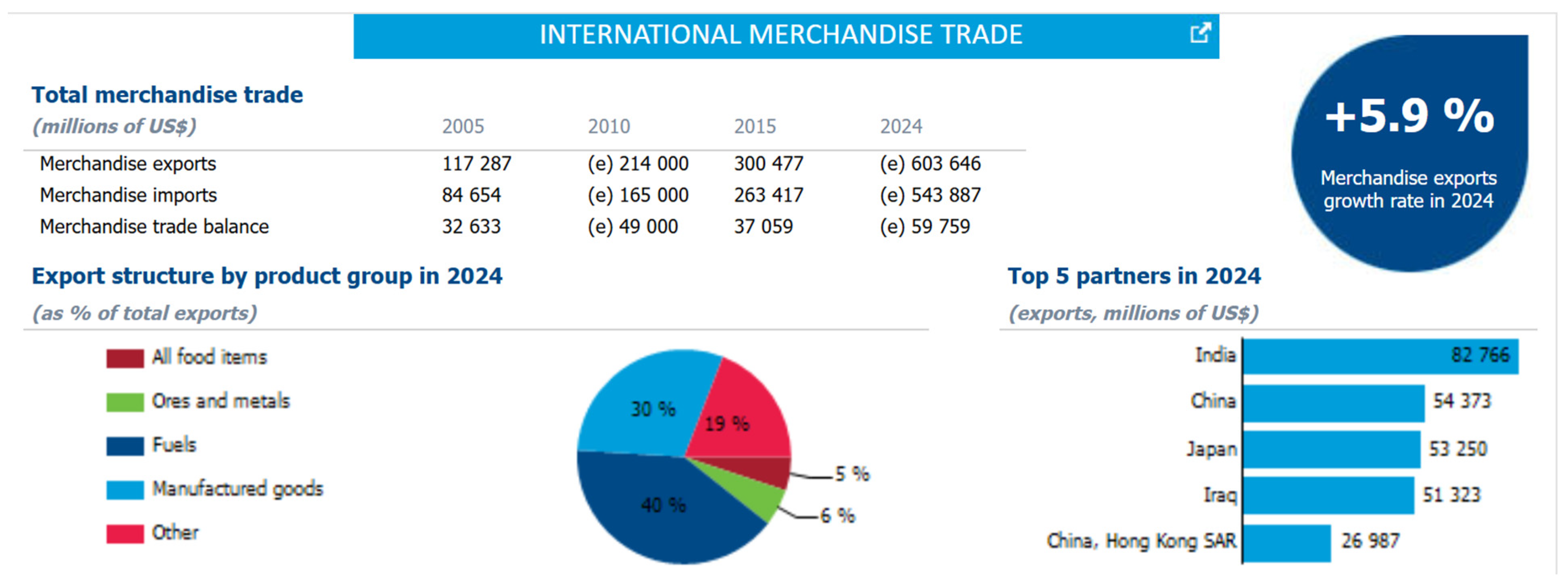
According to United Nations Conference on Trade and Development (UNCTAD) statistics, the UAE’s international maritime trade in merchandise grew steadily from 2005 to 2023. This increase is notable given the UAE’s reliance on maritime transport for most of its import and export activities, making the nation a pivotal maritime logistics hub in the Middle East (UNCTAD 2025a, Maritime profile: United Arab Emirates, 2025).
Furthermore, UAE exports increased by 415 from 2005 to 2024, rising from USD 117.3 billion to USD 603.6 billion. The data illustrate the efficiency, connectivity, and operational capacity of the UAE’s maritime transport infrastructure, as a significant portion of these exports is transported via deep-water ports such as Jebel Ali and Fujairah. Seaports are crucial to the UAE’s status as a regional re-export and maritime trans-shipment hub, with imports rising from USD 84.6 billion in 2005 to USD 543.8 billion in 2024. Consequently, the UAE’s trade balance maintained substantial surpluses, totalling about USD 59.8 billion in 2024. The surplus in marine commerce reflects the strong performance of the UAE’s export-driven sectors, as port authorities and maritime operators effectively move value-added goods, petroleum products, and re-exported items. Figure 1 shows the UAE’s Maritime Merchandise Trade between 2005 and 2024.
While this indicator shows the scale of growth in the UAE’s maritime trade, it also highlights the need for digital transformation to increase operational efficiency on the one hand and to address the legal challenges of this on the other. Specifically, the absence of explicit contractual and regulatory frameworks for eBLs poses a challenge. Hence, the maritime actors (carriers, shippers, consignees, freight forwarders, and customs) may face uncertainties in the use and negotiation of eBL (Todd 2019). This analysis emphasises the need for a robust eBL governance framework in the UAE to ensure that digitalisation contributes to tangible efficiency and compliance gains.

3. Advantages of Artificial Intelligence-Powered Digitisation of Bills of Lading

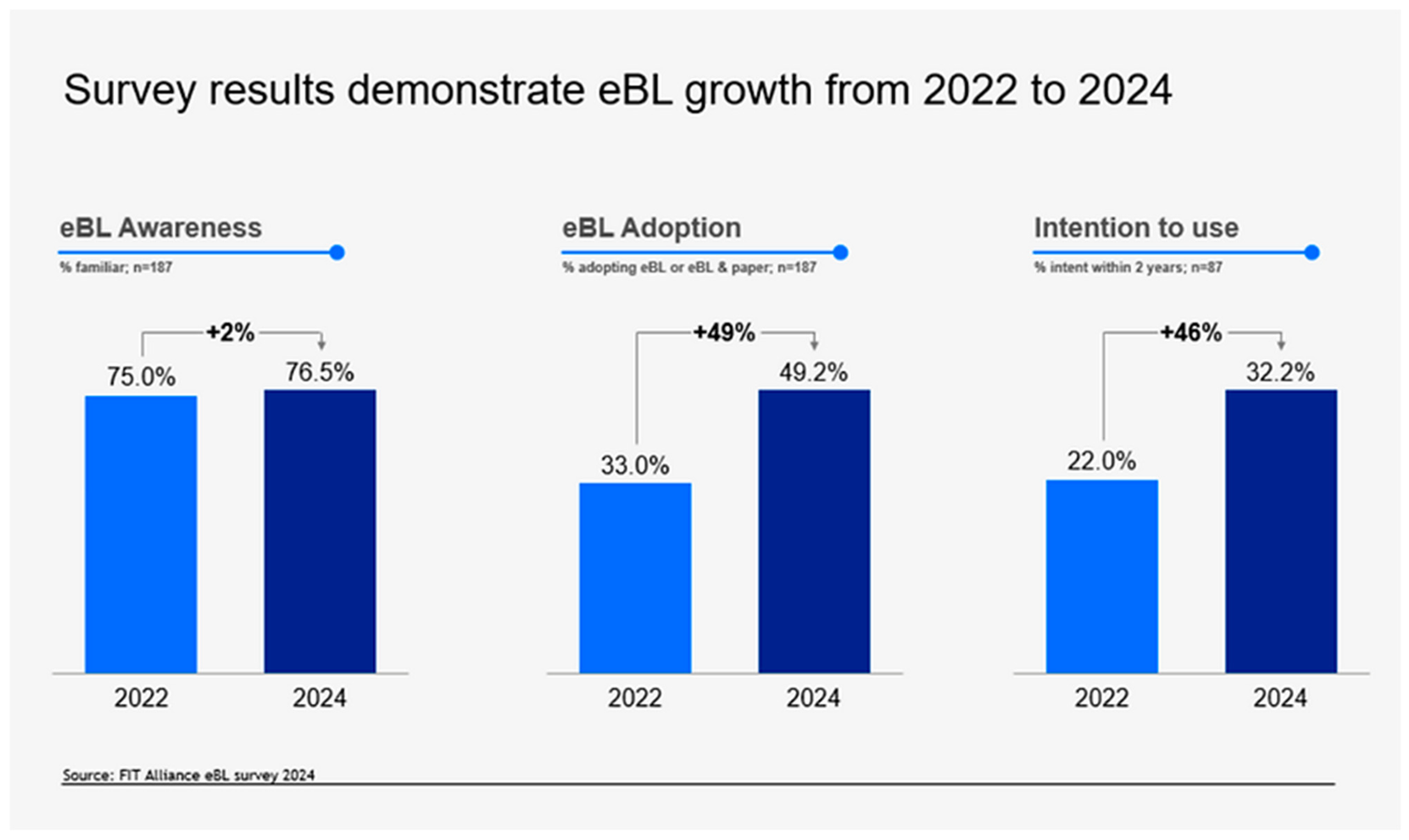
Digitalisation accelerates the issuance, negotiability, and transfer of documents, eradicating delays linked to paper-based methods. Based on recent surveys by the FIT Alliance,4 which provide insight into the current global level of eBL acceptance and its expected trajectory, noteworthy findings are revealed. These findings emphasise the qualitative benefits of transitioning to eBL. Between 2022 and 2024, the adoption rate of eBL rose significantly from 33% to 49%, reflecting a substantial acceleration in the digital transformation of trade documentation. This trend indicates growing confidence in eBL technology and highlights the maritime industry’s readiness to utilise operational efficiency, cost savings, and process improvements offered by digitalisation (FIT 2024). Figure 2 shows a clear increase in the global adoption of eBL between 2022 and 2024.

3.1. Transaction Facilitation

The digital transformation impacts services, processes, organisational arrangements, management strategies, and marketing approaches (Matt et al. 2015). Hence, a primary benefit of eBL is the substantial improvement in processing efficiency and the expedited transaction processing times (Plomaritou and Jeropoulos 2022). Traditionally, requiring the original paper BoL to be presented at the discharge port for the purchaser to receive the cargo on time causes many challenges (Zhu et al. 2022). Moreover, manual handling of paper-based BoL has been laborious and error-prone. Multiple parties in the supply chain had to mail, validate, and manually process tangible documents, which caused delays and inefficiencies. eBL enhances this process by digitising paperwork, facilitating rapid transfer and verification of information among the relevant stakeholders (Keskar 2023). As a result, eBLs are crucial in addressing misdelivery of a shipment, as there is no need to provide a letter of indemnity to the carrier (Castellani 2025; Plomaritou and Jeropoulos 2022).
The rapid advancement of digital technology positions the Internet of Things (IoT) as a crucial instrument for improving efficiency and transparency in shipping operations, especially in the administration of BoL (Yang et al. 2024). The utilisation of eBL significantly expedites trading processes and enhances cost efficiency (Wunderlich and Saive 2020). In this regard, artificial intelligence-driven data extraction provides a scalable, precise, and rapid approach to digitising BoL by eliminating human data entry.
AI can analyse and retrieve content from scanned pages with machine learning techniques, hence assessing structural and layout variations. Reduced time spent on data processing and diminished human error yield significantly enhanced operational efficiency (Talakola 2025).
However, an important maritime industry group indicates that the use of eBLs in containerised trade has more than doubled since the beginning of 2024. According to a report released by the Digital Container Shipping Association (DCSA), whose members collectively represent nearly three-quarters of global containerised trade, almost 5% of bills of lading were digital in the first half of 2024 (Basquill 2024).

3.2. Reduction of Costs and Avoiding Human Errors

For every stakeholder, trade documentation is complicated, time-consuming, and resource-intensive, spanning several documents and processes. Single shipment documentation can require 50 sheets of paper shared with 30 stakeholders. Each time carriers receive cargo from shippers, the BoL is one of the most crucial commercial documents. The BoL accounts for 10–30% of trade documentation costs (Casanova et al. 2022). For example, IBM and Maersk conducted a test shipment of flowers from Kenya to Rotterdam, generating approximately 200 communication records. The expenses related to the processing and management of trade documents were estimated at that time to account for up to 20% of the physical transportation costs (Lind et al. 2021).
Additionally, the BoL data demands various levels of human interaction. Clerks and logistics specialists must extract essential data, including consignee information, shipping details, and product rates, from scanned photographs or physical records. Naturally, time-intensive operations such as these are susceptible to human error, leading to inaccurate data entry, processing delays, and potential revenue discrepancies. Moreover, the labour-intensive nature of manual data entry limits scalability and escalates operational expenses for logistics companies managing a daily huge cargo count (Talakola 2025).
The adoption of eBL reduces the costs of maritime commercial transactions. McKinsey’s analysis indicates that this change could save about USD 6.5 billion directly, mostly by making it easier to share documents, cutting costs related to mistakes, and speeding up the process of releasing cargo (Casanova et al. 2022). Also, it is much harder to falsify digital bills of lading than paper ones (Petronilho et al. 2022). Thus, eBL reduces printing, courier, and storage costs and minimizes risks of loss, damage, duplication, or forgery of paper documents. In other words, the eBL with solutions enabled by AI systems is one of the most important ways to lower the overall costs of global maritime trade.

3.3. Enhanced Reliability

On the one hand, reliance on electronic transport records reduces reliance on manual processing, increases reliability, and eliminates the possibility of human errors that could negatively impact international sales transactions (Zhu et al. 2022; Castellani 2025). Discrepancies in a BoL may prompt a bank to deny payment under a documentary credit linked to the transaction, alleging erroneous information or inconsistencies with the credit terms. Therefore, the issuing bank may refuse to honour the credit to reduce the risk of fraud (Bury 2016; Hashmi 2012).
Thus, electronic signatures, encryption techniques, blockchain technology, and artificial intelligence are essential elements to enhancing the security of eBL systems. These technologies jointly authenticate the identities of the participating parties, safeguard data against illegal access or modification, and establish an unchangeable audit record of transaction history (Keskar 2023; Talakola 2025). Thus, when supported by a robust infrastructure, eBLs exhibit greater reliability than their paper counterparts and eliminate the necessity for in-person interaction. Furthermore, electronic information is precise, genuine, comprehensive, and up to date (Castellani 2025).
Moreover, the initial step to enhance the accuracy and efficiency of BoL digitisation is the application of AI-powered bill of lading data mining. AI is changing the management of shipping data in logistics, transcending the constraints of human operations, and adapting to the evolving nature of the maritime industry. Therefore, data extraction-driven AI offers benefits that go beyond mere automation. Logistics companies have real-time access to consistent shipping data, which enhances decision-making by improving data accuracy. Enhanced processing timeframes reduce supply chain congestion and provide expedited shipping approvals (Talakola 2025). As a result, the adoption of secure intelligent electronic systems for the immediate online transmission of shipping documents as encrypted electronic records safeguards these essential documents against potentially fraudulent activities associated with paper-based bills of lading, thus reducing the risks of theft and forgery (Hooper 1999), and enhancing reliability in maritime shipping.
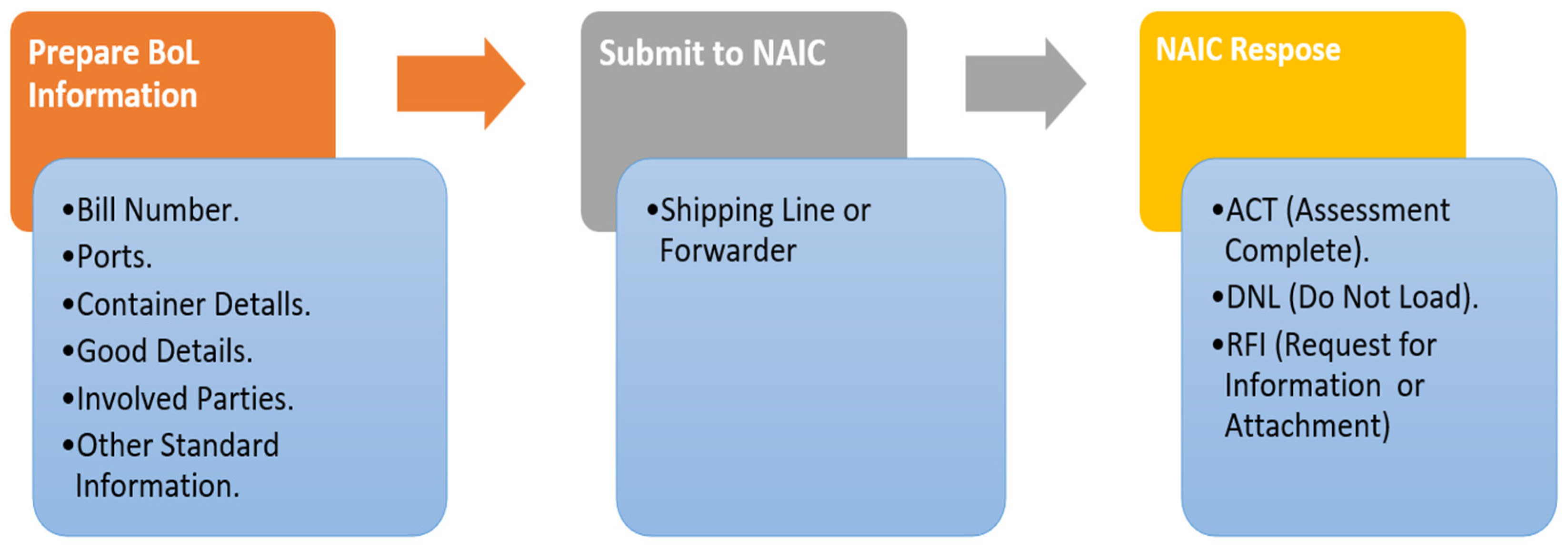
On the other hand, the switch to eBL has become essential in the UAE, especially since the Maritime Pre-Load Cargo Information Program (MPCI)5 made digital compliance a requirement for moving goods through UAE ports6. The MPCI system is designed to enhance transparency, traceability, and the fluidity of cargo flows by mandating the early and accurate submission of BoL information through electronic, machine-processable formats (NAIC 2025). Therefore, this has propelled the advancement of paperless trade, specifically the utilization of electronic formats for commercial and trade-related papers in transactions between businesses and authorities.
This regulatory shift not only streamlines operational procedures for carriers and freight forwarders but also strengthens the evidentiary reliability and legal enforceability of the BoL in its electronic form. Accordingly, the digitisation of the BoL is no longer a technical modernization but a legal and operational necessity aligned with the UAE’s broader commitment to digital trade facilitation and smart port governance. Figure 3 shows Maritime Preload Cargo Information (MPCI) compliance steps.
The legal basis for implementing the MPCI program in the UAE is outlined in Federal Decree Law No. 22 of 2018 and Resolution No. 15 of 2019, which require the submission of cargo information for all transportation modalities. These regulations delineate the requisite data, submission deadlines, and responsible entities. According to the UAE Cabinet Resolution No. (23) of 2023, shipping lines and freight forwarders are required to electronically submit Bills of Lading to NAIC before loading at the last international departure port outside the UAE. This pertains to all containerised maritime cargo intended for import, transshipment, or transit via the UAE.

4. Challenges and Practical Limitations in Implementation

Several challenges and hurdles need to be addressed to facilitate the widespread implementation of the eBL. The following points highlight the most important ones:

4.1. Lack of Interoperability in eBL Transactions

The ability of various eBL platforms to exchange, treat, and process data is known as interoperability. For eBLs to be accepted and shared across various platforms and countries, interoperability must be achieved. Thus, the absence of established formats may lead to confusion, data inaccuracies, and obstructed data flow (Keskar 2023). Even though there have been digital options for years, eBL adoption has been limited due to the existence of many different platforms. The digital transformation of the industry has been slowed down by siloed eBL platforms that force everyone involved in a transaction to use the same solution provider. Electronic transferable records management systems must promote data flows rather than create data silos via ensuring data interoperability (Castellani 2025).
Ensuring seamless interactions among various eBL systems and stakeholders, such as shippers, carriers, banks, and customs agencies, requires the implementation of industry-wide standards. The stakeholder highlighted uncertainty regarding the range of available eBL solutions, pointing to the need for clearer visibility into platform offerings and their capabilities. The latest survey results indicate that 71% of respondents reported concerns related to technology, platforms, or interoperability (FIT 2024).
As a practical example, the e-title™ Solution7 illustrates how differing technical and legal frameworks directly impede interoperability in eBL transactions. E-title™ avoids dependence on expensive central registries, mitigates the concentration of risk, and ensures that the service provider or national platform maintains operational control over title documents (Zhu et al. 2022).
E- title™ operates on a peer-to-peer model and is governed by a private Electronic Title User Agreement rooted in English common law and the UNCITRAL Model Law framework, establishing a self-contained legal environment distinct from the contractual structures and governance models of other eBL solutions8. Its dependence on distinctive security measures, such as Hardware Security Modules (HSMs), further solidifies a closed technical ecosystem that cannot be effortlessly connected with alternative platforms utilising various authentication or document management standards.
Consequently, eBL produced or transmitted via e-title™ cannot be easily exchanged or acknowledged across external systems, demonstrating that disparate infrastructures and uncoordinated legal frameworks continue to pose a significant obstacle to interoperability in digital trade documents. Hence, the digitisation of bills of lading requires robust and secure platforms capable of issuing and transmitting eBL while ensuring cybersecurity, data integrity, and reliable proof of ownership. Developing globally harmonised interoperability frameworks to address this challenge requires a coordinated international effort.
Arguably, the blockchain is a promising solution to circumvent the conceptual faults of eBL platforms. The distributed approach ensures the absence of a singular point of failure. Participants in transportation processes do not require reliance on a singular, centralised authority. The blockchain’s consensus method establishes trust in the database. Substituting the paper BoL with a token ensures the continuous singular ownership of the BoL throughout the entire procedure (Wunderlich and Saive 2020). Additionally, the integration of AI alongside blockchain technology plays an important role in the digitalisation of BoL, as AI enhances risk alert mechanisms and detects maritime fraud related to BoL (Abdou 2018, Legal regulations to prevent institutional maritime fraud—Study in comparative judiciary decisions, 2018), particularly considering the growing proximity to resolving the issue of legal liability arising from the operation of AI (Abdou 2026, Custodian of Autonomous AI Systems in the UAE: An Adapted Legal Framework, 2026). Hence, the digital revolution in product documentation driven by artificial intelligence AI is transforming, automating, and optimising logistical procedures. Technologies powered by artificial intelligence utilising optical character recognition (OCR) and natural language processing (NLP) are generating structured forms from BoL data, thereby reducing the need for human labour and enhancing accuracy (Talakola 2025).
The blockchain functions as a globally trusted, tamper-resistant layer for all participants in the sea freight process, where each eBL triggers the creation of a dedicated blockchain instance; each actor operates as an individual node retaining local control of relevant data, with visibility restricted to concerned parties, ensuring that no media discontinuities occur. Stored data is safeguarded against errors and any modifications require consensus, while eBL is seamlessly integrated into each actor’s business processes, providing uniform, simultaneous, and verifiable access without the possibility of unilateral manipulation (Wunderlich and Saive 2020; Talakola 2025).
In this regard, and practically, Maersk and IBM (International Business Machines) worked together to create the “TradeLens” platform. “TradeLens” is an open and neutral industry platform that uses blockchain technology (Plomaritou and Jeropoulos 2022). It is supported by key players in the global shipping industry and facilitates clear, fast, and secure information sharing. This fosters greater trust and collaboration across the global supply chain. The platform relies on its extensive supply chain ecosystem, which includes freight forwarders, shippers, ports and terminals, intermodal operators, ocean carriers, customs brokers, government agencies, and more. During shipments, each participant shares information that can be tracked, stored, and acted upon across the platform. “TradeLens” connects the ecosystem through a set of open standards and utilises Hyperledger Fabric blockchain technology together with IBM Cloud to enable safe document sharing and industry-wide collaboration (Zhu et al. 2022).
In May 2025, the DCSA announced the first successful eBL transaction that follows industry standards and works with other systems. Working with the best eBL solution providers made this important milestone possible (DCSA 2025). It is a big step toward safe, scalable, and truly paperless global trade.

4.2. Operational Adaptation and Cyber Risk

Despite the significant potential of the IoT in managing shipping documents, several operational limitations hinder its widespread adoption. The gradual adoption of digital technology is due to several factors, including the longer lifecycle of assets and the high costs associated with new digital solutions (Plomaritou and Jeropoulos 2022). The reason is that the IoT systems require extensive deployment of sensors, data processing units, and network infrastructure across the supply chain, posing significant challenges for shipping companies and logistics providers (Yang et al. 2024).
Furthermore, the deficiency of digital infrastructure and communication systems in port and maritime customs authorities, along with an inadequacy of trained personnel to manage electronic transport records9 at import and export locations, greatly contributes to the hesitance of maritime stakeholders to embrace electronic transport records (Hashmi 2012).
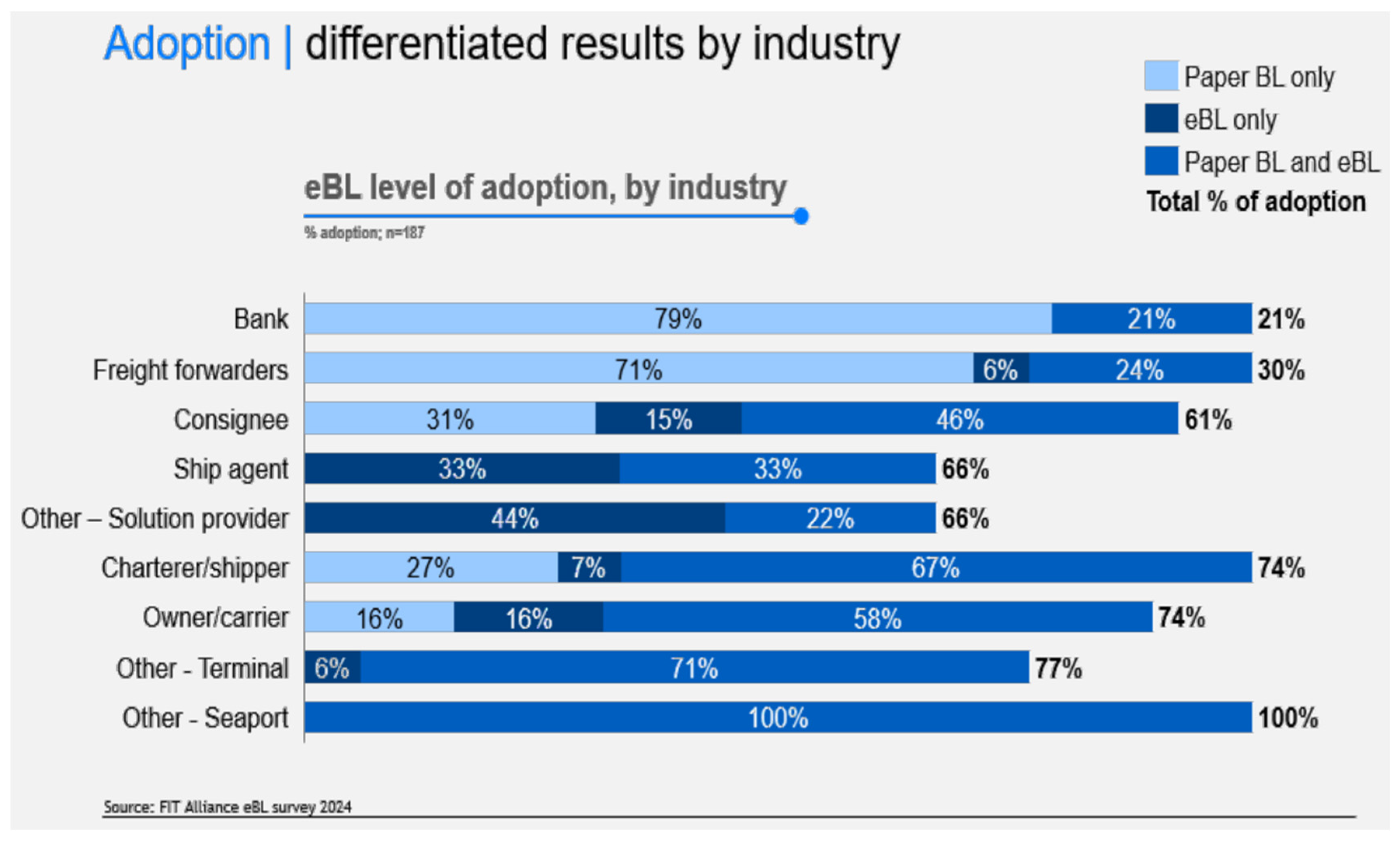
The statistics indicate increasing acceptance of eBL across the maritime industry. However, significant obstacles remain for some maritime sectors. Banks demonstrate little involvement, with only 21% supporting eBL, reflecting structural and regulatory barriers, as well as concerns about legal recognition and interoperability with trade partners. Also, several ship agents demonstrate restricted adoption rates, underscoring deficiencies in understanding and preparedness to embrace digital solutions (FIT 2024). Figure 4 shows that some maritime stakeholders have difficulties in adopting the eBL.
Likewise, one of the most significant obstacles to digitising the maritime BoL remains concern about maritime cyber risk. The international maritime organisation has defined this risk as “a measure of the extent to which a technology asset could be threatened by a potential circumstance or event, which may result in shipping-related operational, safety or security failures as a consequence of information or systems being corrupted, lost or compromised”10.
However, the data security and privacy issues pose significant obstacles to the adoption of eBL. These maritime systems contain sensitive information, including cargo specifications, transaction records, and financial data. IoT devices exchange data in real time over networks. Still, because there are so many different types of devices and no standard security procedures, IoT systems are easy targets for cyberattacks and data breaches (Yang et al. 2024). As a result, several operators have promptly expressed their refusal to rely fully on blockchain technology, fearing potential hacking by malware created by hackers (Zhu et al. 2022).
Considering the above, the International Maritime Organization (IMO) Guidelines on Maritime Cyber Risk Management affirm that effective control of cyber risks is integral to maintaining safe and secure maritime operations in a progressively digital shipping environment. By applying a risk-based approach to the prevention, handling, and recovery from cyber incidents, maritime actors can protect the integrity and continuity of the digital systems on which modern shipping relies (IMO 2025).
Furthermore, AI-powered blockchain technology provides a secure, efficient means of handling and protecting BoL data, thereby reducing maritime fraud (Irannezhad and Faroqi 2023). The blockchain for BoL authentication uses distributed ledger technologies to eliminate intermediaries, automate verification through smart contracts, and ensure immutable data preservation. Thus, artificial intelligence-driven fraud detection can reduce fraudulent activities such as falsifying documents and duplicate BoL files by using machine learning algorithms that identify anomalies in BoL data. Digital signatures and timestamping facilitate document validation, while consensus mechanisms ensure that only authenticated entities can modify or approve BoL entries (Talakola 2025). Hence, AI-powered digital BoL can play a crucial role in deterring cyberattacks.
However, the responsible and transparent collection and management of data is an essential component of digital ethics. The sensitive data contained within these BoLs is critical for data security and compliance. To ensure transparency and compliance, AI systems must adhere to data protection and consumer privacy laws, implement encryption and access limits, and maintain audit records (Talakola 2025). This framework is particularly relevant to eBL, which depends on the reliability and security of digital systems for its legal validity and operational effectiveness.

4.3. Legal Misalignment

The need for a substitute to the costly and slow standard BoL has been increasing since the onset of the century. Currently, the juridical uncertainty regarding the electronic transition of maritime transport documents, particularly the eBL, both worldwide and nationally, challenges the forthcoming perspectives. Despite persistent efforts from the maritime transport sector to adopt digitization, the process remains slow. A primary impediment to digitalisation in maritime transport is the uncertainty within the existing legal framework, stemming from the lack of globally accepted methods to confer eBLs with the same legal validity as their paper equivalents.
The digital revolution has naturally led to the emergence of the eBL. However, its ambiguous legal position and varying legislation across countries complicate the establishment of a global solution (Petronilho et al. 2022). The standardisation of regulations across borders is essential for international trade, which involves entities subject to different legal systems. In the absence of globally recognized legal standards, conflicts stemming from eBL usage may evolve into complex issues and hinder prompt settlement.
Even though the Rotterdam Rules11 and the Model Law on Electronic Transferable Records are big steps forward, stakeholders should not wait to put eBL into effect until all the laws are the same. Despite the absence of uniform regulations for these technologies in many different countries, they continue to function effectively and deliver value across all sectors.
Presently, customs acceptance, insurance requirements12, multimodal shipping, and the worldwide acceptance of eBL can all make it difficult to be compliant, especially when shipments go from one country to another with different rules for electronic transactions.
Therefore, incorporation clauses in eBL should explicitly specify the governing law, which must recognise eBL, such as UAE maritime law, even if it differs from the law governing the charter party.
Although legal compliance will ultimately facilitate broader adoption of eBL, it is not the only factor driving progress. Practical implementation—through contractual arrangements and active engagement with digital platforms—is already delivering the advantages of electronic trade documentation. This, in turn, promotes collaboration across sectors including banking, freight forwarding, and logistics (FIT 2024).

5. Validities of the eBL in UAE Law

The legal status and enforceability of eBLs pose considerable challenges that hinder their broad adoption in international commerce. Internationally, the Model Law on Electronic Transferable Records (MLETR) and the Rotterdam Rules13 support the digitisation of BoL. However, neither system has been implemented, as there are still some obstacles to overcome (The UAE has not ratified the Rotterdam Rules). The MLETR serves only as a guide for national legislative bodies, and the Rotterdam Rules have not yet gained sufficient support from countries to be ratified and adopted internationally. Given this legal issue, this part of the article examines the legal requirements for the validity of eBL under UAE law, including the identification of the legitimate holder and the reliability of the electronic issuance method. Moreover, it reviews any existing or expected executive regulations or ministerial guidelines that may define technical standards, endorsement rules, transfer of rights, and authentication mechanisms applicable to eBL in the UAE.

5.1. Legal Recognition of eBL

Clearly, the replacement of paper bills of lading with digital bills of lading should not affect their legal functions. Regardless of the technology used to issue eBL, it must perform the same functions as its BoL equivalent: serving as a receipt for goods, providing evidence of the contract of carriage, and acting as a document of title for the goods (Petronilho et al. 2022; Krebs 2024). It ensures the obligation to deliver the goods to the specified destination and to hand them over to the consignee, with the transfer of ownership of the items listed in the bill of lading being effectively accomplished through the transfer of the bill of lading itself (Wunderlich and Saive 2020; Zhu et al. 2022). It is essential to examine the legal requirements needed for an eBL to be considered valid. However, statutory recognition of eBL is desirable because it allows issuance and negotiation under UAE law, provided that the parties can choose the law governing their relationship.
The UAE legislator has recognised the necessity of eBL and introduced a new article (163) in the Federal Decree-Law Concerning Maritime Law 2023. According to Article 163, “the BoL may be issued via any electronic means, and the eBL shall have the same probative force as a paper BoL”. This article serves as the legal basis for the principle of functional equivalence, enabling eBL in accordance with UAE law. This principle stems from the unsuccessful attempt to consolidate all international regulations governing marine trade in the Rotterdam Rules (United Nations Convention on Contracts for the International Carriage of Goods Wholly or Partly by Sea).
However, this legal recognition of eBL as an electronic document in the UAE is conditional upon the statutory requirements for the validity of electronic documents as set out in the Federal Decree Law on Electronic Transactions and Trust Services (ETTS 2021). The UAE is a signatory to the UNCITRAL Model Law on Electronic Commerce and the UNCITRAL Model Law on Electronic Signature. The UAE electronic law has been influenced by the UNCITRAL Model Laws and has adopted a “functional equivalent” approach toward the form requirements of electronic data. This means that the validity (originality) of an eBL in the UAE requires verification of the legal conditions, which include the following:
(A)
Identifiability of the eBL Originator
Undoubtedly, for any electronic contract to be characterised by trust and confidence, there must be safeguards regarding the identity of the contracting parties. The identity of the contracting parties is established in a manner that leaves no doubt. Upon reference to ETTS law, it is found to have adopted a method for determining the identity of the document originator either actually or presumptively, pursuant to Article (12) thereof, which specifies circumstances under which an eBL shall be deemed issued by the Carrier:
A.1 Cases of Actual Issuance by the Carrier: “1—Where the document was issued by the Carrier personally on his own behalf. 2—If it is sent by a person who can act on behalf of the Carrier, such as the Ship Agent. 3—If it is sent by an electronic medium automated and programmed to operate automatically by or on behalf of the Carrier”. In this regard, the UAE legislator has conferred legitimacy on this type of contracting through automated electronic intermediaries, but for this type of contract to be valid, the person must have prior knowledge that they are contracting through an electronic intermediary rather than a natural person (Othman 2023).
A.2 Cases of Presumptive Issuance by the Carrier: The Addressee shall be entitled to treat the eBL as having been issued by the Carrier and to act accordingly in the following situations: 1—When the Shipper correctly follows a previously approved Carrier procedure designed to ensure that the eBL has indeed been issued by the Carrier. 2—When the eBL received by the Shipper results from the actions of a person who, by virtue of their relationship with the Carrier (for example, via the e-title™ platform) or any of its agents, has access to a method employed by the Carrier to verify that the eBL was issued by them.
However, Legal doctrine requires that such a document bear the electronic signature of the document originator to acquire at a minimum the probative value of a customary written instrument (Elobaidi 2013). Furthermore, the UN Convention on the Carriage of Goods by Sea, 1978 (Hamburg Rules) in article 14(3) indicates the following: “The signature on the bill of lading may be in handwriting, printed in facsimile, perforated, stamped, in symbols, or made by any other mechanical or electronic means, if not inconsistent with the law of the country where the bill of lading is issued”. This means that adapting an electronic document shouldn’t be a challenge, since electronic signatures are typically associated with them. The only rule set by the convention is that the country where the eBL is issued must recognise electronic signatures. This procedure complies with current UAE law.
(B)
Accessibility of eBL
This requirement constitutes one of the most fundamental requirements prescribed under the ETTS law to ensure the legal validity of the eBL. According to Article 6, the eBL must be maintained in the format in which it was created, transmitted, or received, or in any form that reliably demonstrates that it accurately reflects the information as created, sent, or received. Furthermore, it requires that information be preserved in a manner that permits subsequent use and reference and storing the information in a way that allows the identification of the eBL’s Originator, its intended destination, and the exact date and time of its transmission and receipt. This requirement is deemed essential to ensuring the efficacy and legal probative value of electronic documents in court. The legislator recognized the necessity of such a requirement, as it constitutes a clear safeguard for all parties to electronic transactions (Aljneibi 2014).
(C)
Ensuring the Integrity of eBL content
According to article 9 of the ETTS law, where any legislation in force in the State (such as maritime law) requires the submission or storage of any document, record, information or message in its original form, this requirement shall be considered met by the Electronic Document in the following cases: 1—If there is technical evidence confirming the integrity of the information contained in the eBL since the document, if the record or information has been created for the first time in its final form as an Electronic Document. 2—If the eBL enables the presentation of the required information whenever it is requested. Accordingly, the UAE judiciary has confirmed that official or customary electronic documents have probative effect if they meet the technical requirements set out in law14. Therefore, the same judiciary relies on appointing an expert in “information technology” to review the electronic record, to confirm the details of the information contained in the electronic messages, as they are available within the electronic system of the Originator, to confirm whether or not the electronic document was issued by it15.
Compared to English law, under the UK Electronic Trade Documents Act 2023, an eBL is legally recognised only if it meets specific conditions that replicate the essential functions of a paper BoL. The system must ensure that the electronic document contains all required information, can be uniquely identified, is protected against unauthorised alteration, and that control over the document is held by one party at a time, with the ability to prove such control. Also, the transfer of control must be properly recorded so that the person who had it before can no longer control the document. Thus, it can be concluded that the laws of the UAE and England are very similar in their regulation of eBL, except for the issue of “possession” or “control” of the BoL concerning its negotiability.

5.2. Negotiability of the eBL

An eBL is not merely another version of a typical paper Bill of Lading; it represents an ideal combination of legal guidelines and technology that can fulfil all the functions of a traditional BoL (Zhu et al. 2022), and most importantly, it is negotiable. At present, almost 80% of global maritime trade is documented by Bills of Lading (UNCTAD 2025b, Shipping data: UNCTAD releases new seaborne trade statistics, 2025). At the same time, no legal resolution has been established regarding the negotiability function of the eBL. Serious doubts have arisen regarding the negotiability of the eBL, while the negotiation of BoL is generally considered stable and well-established (Kelly 1992; Seideman 2003; Ma 2000). Notwithstanding the practical benefits of utilising eBL, many legal concerns persist over its negotiability, especially under the revised UAE maritime legislation.
Clearly, if we linked Articles 160, 162, and 166 of the Maritime Law, it could be concluded that the UAE legislator has granted the right to negotiate a paper BoL to the consignee in case of “to order” BoL by endorsement or to the bearer in case of “to bearer” BoL by delivery. Conversely, the legislator did not address the same issue with respect to eBL. This, of course, raises the question: Who is entitled to negotiate the eBL? Considering this legal issue, the “legal holder,” or possessor, of an eBL is among the most complex.
At the global level, the UNCITRAL MLETR16 in article (11) establishes the notion of “control” over electronic transferable records (such as eBL) as a functional equivalent to possession of paper bills of lading. Article 10(1) of the MLETR establishes the conditions under which an electronic record can fulfill the legal requirements of a transferable document. Essentially, if the law demands a transferable instrument, this obligation can be satisfied electronically provided two key conditions are met. First, the electronic record must contain all the information that would normally be required in a traditional transferable document. Second, a reliable method must be in place to ensure three critical aspects: identifying the record as the intended electronic transferable record, maintaining control over it from the moment it is created until it is no longer effective or valid, and preserving its integrity throughout its lifecycle. In practice, this ensures that electronic transferable records carry the same legal weight and reliability as their paper-based counterparts. Thus, the MLETR is intended to facilitate the legal use of electronic transferable records, both internationally and nationally, and applies to records that are functionally similar to transferable documents or instruments, including eBL (Sun and He 2024; Castellani 2025).
On the national level, although the UAE Maritime Law does not explicitly or implicitly state who is the legal holder of the eBL or how it may be negotiated, the UAE legislator’s approach can be inferred by linking articles 166/2 and 163/2 of the Maritime Law with article 5/1 of the ETTS law. Arguably, the legislator has extended the traditional notion of possession to include eBLs. By following the approach established in the MLETR, the law introduces the concept of “control” as a practical equivalent to physical possession, ensuring that legal rights and responsibilities associated with holding a transferable document are preserved in the digital environment.
This conclusion can be demonstrated as follows: On the one hand, according to article 166/2, the legislator confirmed that the legal holder of the eBL is the person eligible to receive from the carrier, and he explicitly stated in article 163/2 that the BoL may be issued via any electronic means, and can be transferred or negotiated electronically, with such electronic negotiation carrying the same legal effect as the negotiation of a traditional paper bill of lading. On the other hand, the legislator regulated the provisions for dealing with electronic documents—such as an eBL—on the ETTS law, as evidenced by Article 2/1/b of that law. This clearly means that the UAE legislator functionally equated the eBL with the paper BoL within the framework of maritime law while treating the eBL as an electronic document and the resulting transaction as an electronic transaction processed under the provisions of the ETTS Law. Therefore, the possessor of the eBL, who is the controlling party under the ETTS Law, has the same rights as the legal holder of the BoL under maritime law, including the ability to negotiate the eBL.
According to the ETTS law, it can be concluded that the UAE legislator, in article 14, implicitly referred to the right of control, considering the point at which an electronic document is considered delivered once it enters an information system that is beyond the control of the originator or anyone acting on their behalf. This can be interpreted as the UAE legislator considering that possession of an electronic document means control over it within a specific information system. Moreover, this technical control over the electronic document requires, according to the same law, that the controller has a specific digital identity, which can be verified by their reliable electronic signature.
Based on this conceptual framework, the carrier or its representative (Originator) creates an eBL (Art.163/1), including the mandatory data required by the legislator in maritime law (Art.157/3), and signs it electronically. It is then transmitted to an information system controlled by the shipper17 (Addressee) or any agreed-upon platform (like e-title™), who has the right to receive the goods or transfer exclusive control of the eBL (symbolic possession of goods) to the consignee (Art.160/2).
Finally, although “possession” is the legal basis for the negotiability of eBL, the UAE legislator has chosen not to define it in the ETTS law. As a result, legal doctrine and judicial interpretation have been left to determine what constitutes possession of an eBL. Thus, many legal concerns will arise from this legislative silence, as it could lead to different judicial approaches to resolving maritime disputes over the identity of the party entitled to control or negotiate the eBL. If there were unambiguous legal safeguards in place, the UAE legislator ought to have incorporated a clear legal clause allowing anyone to possess electronic documents into the ETTS Law.
Conversely, the UK legislator has adopted a flexible approach to the concept of possession of electronic documents in the Electronic Trade Documents Act of 2023.18 It did not create a new legal concept of possession, like the idea of “control” as a functional equivalent of possession, which was supported by MLETR and adopted by the UAE legislator. Instead, it simply expanded the idea of possession to include electronic documents,19 such as eBL (Sun and He 2024). This approach was designed to guarantee access to possessory remedies, drawing on practical experiences with recovering lost or stolen digital assets, including cryptocurrencies. Its purpose is to maintain English law as the governing law of choice for documents of title. The enactment of the ETDA is especially significant, given that English law is commonly selected in international maritime transactions. Based on earlier ideas, we recommend that the UAE legislator clarify the provisions regarding the possession of the eBL, the rights of its legal possessor, its negotiating mechanisms, and other necessary legal matters in the executive regulations of the maritime law that are expected to be issued, to ensure legal certainty for dealing with eBL.

6. The Probative Value of eBL in the UAE

The legal recognition of eBL’s probative effect in the UAE will enhance its position in international maritime trade transactions. It will also protect relevant stakeholders from legal uncertainty and the fear of losing their money at the port.

6.1. Legal Conditions for the Probative Effect of an eBL

Generally, according to the ETTS Law, an eBL has the same probative effect as a paper BoL in the UAE, as per Article 5, which states: “An electronic document shall not lose its legal force or enforceability for being in electronic form.” The UAE legislator has set three conditions that must be met collectively for an eBL to have legal probative effect, as provided in Article 163/3, which include the following:
(1) The means of issuing or negotiating eBL shall allow the designation of its legal holder. The designation of the legal holder of the eBL was discussed in relation to the analysis of identifying the person entitled to negotiate it, as previously analysed in Section 4.2.
(2) The method of issuing or negotiating eBL shall guarantee its validity. This condition is deemed fulfilled once the validity requirements of the BoL as an electronic document are met, as previously analysed in Section 4.1.
(3) The method of issuing or negotiating eBL shall provide the holder with a method of proving his possession. An eBL, being a non-physical document, cannot prove possession by the same legal means as a paper BoL, such as presenting the original BoL (Art.167/3 maritime law) or proving the proper sequence of endorsements (Art. 166/3 of maritime law). The issuance or negotiation of an eBL must enable the legal holder to prove its exclusive legal control over the eBL through dependable technical methods, including a reliable electronic signature (Art.18/3 of ETTS law) or secure electronic records (such as the e-title™ platform), that evidence the transfer of control and the holder’s sole entitlement to it. This approach prohibits dual possession and achieves functional equivalence with physical possession in a paper BoL.

6.2. The Probative Effect of the eBL Between Its Parties

Under Article 157(2) of the UAE Maritime Law, the electronic bill of lading (eBL), including both the general and specific information and the conditions for carriage it contains, is recognized as legally valid for demonstrating the contract of carriage between the Carrier and the shipper, as well as in dealings with third parties (Abdelhay and Abdou 2021). In this way, the eBL serves a crucial function in defining the rights and obligations of the contracting parties. However, within the relationship between the Carrier and the shipper, it remains possible to challenge the information recorded on the eBL using any form of evidence, with the exception of the cargo details specified in Clause 3 of Article 157, which can only be substantiated through written documentation or electronic document (Art.7 of ETTS law).

6.3. The Enforceability of eBL Against Third Parties

Under Article 157(7) of the UAE Maritime Law, the carrier is not permitted to challenge the evidentiary value of the bill of lading against a bona fide third party (Abdelhay and Abdou 2021). The consignee is generally treated as such a third party, unless they are the shipper themselves. On the other hand, the consignee retains the right to contest the facts recorded in the bill of lading using any available form of evidence.
Consequently, once a bill of lading has been endorsed to a third party, such as the consignee or an endorsee, it functions as conclusive proof of the contract of carriage. Any agreements, whether oral or written, between the shipper and the carrier that could modify the rights or obligations of a third party must be explicitly included in the bill of lading. This requirement exists because the third party cannot be expected to be aware of terms that were agreed upon orally between the shipper and the carrier but are not reflected in the contract of carriage (Plomaritou and Jeropoulos 2022).

7. Conclusions

This study is primarily limited to the legal analysis of eBL under the new UAE maritime law, without extending to an in-depth examination of the technical or legal aspects of the digital platforms used to negotiate eBL. Accordingly, further interdisciplinary research is recommended to explore the legal and technical framework regulating digital platforms for eBL, to support the effective and secure adoption of eBL in international maritime shipping.
While this study provides in-depth insights into the barriers to adopting digitised BoL, it also advocates for leveraging AI-powered digital technologies to overcome these obstacles. The main drivers of digital transformation of BoL are cost reduction, increased business efficiency, effective management of massive amounts of data, and ensuring reliability in maritime shipping transactions. Conversely, the main obstacles to the digital transformation of BoL are high implementation costs, a lack of compatibility between digital platforms specialising in digital BoL, and a lack of legal certainty regarding the use of eBL.
In today’s maritime shipping, it is evident that eBLs may offer enormous benefits, and they are the most effective means to transfer goods without having to make paper BoLs. It is also evident that many stakeholders do not want to use eBLs because the laws around electronic documents are still unclear. The new UAE Maritime Law does not explicitly define the rules for issuing, possessing, and negotiating eBLs, leaving the matter scattered across several different laws. Furthermore, the new maritime law lacks an explicit provision affirming, on a legal basis, the principle of functional equivalence between eBLs and their paper counterparts, thereby necessitating reliance on other laws to achieve this goal. It is appropriate to follow the UK legislator’s approach, as it clearly adopts the traditional concept of possession, making it easier to apply the principle of functional equivalence to eBLs. However, it remains imperative that the executive regulations of the Maritime Law, which are expected to be issued soon, include an explicit legal resolution to all these issues to ensure legal certainty regarding dealings with eBL.

Author Contributions

Conceptualization, M.M.A. and M.F.; methodology, M.M.A. and M.F.; validation, M.M.A.; formal analysis, M.M.A., A.M.Z.O. and M.F.; investigation, M.M.A.; resources, M.M.A., A.M.Z.O. and A.O.A.; data curation, M.M.A.; writing—original draft preparation, M.M.A., A.M.Z.O., A.O.A. and M.F.; writing—review and editing, M.M.A. and M.F.; supervision, M.M.A. All authors have read and agreed to the published version of the manuscript.

Funding

This research received no external funding.

Institutional Review Board Statement

Not applicable.

Informed Consent Statement

Not applicable.

Data Availability Statement

The original data presented in the study are openly available in UNCTADstat (United Nations Conference on Trade and Development) at https://unctadstat.unctad.org/CountryProfile/MaritimeProfile/en-GB/784/index.html (accessed on 18 February 2026) and in the FIT Alliance eBL Report at https://www.fit-alliance.org/post/fit-alliance-ebl-report (accessed on 18 February 2026).

Conflicts of Interest

The authors declare no conflict of interest.

Abbreviations

The following abbreviations are used in this manuscript:
BoLBill of Lading
eBLElectronic Bill of Lading
eBLsElectronic Bills of Lading
AIArtificial Intelligence
IoTInternet of Things
MLETRModel Law on Electronic Transferable Records
ETTSFederal Decree Law on Electronic Transactions and Trust Services
DCSADigital Container Shipping Association
MPCIMaritime Pre-Load Cargo Information Program

References

  1. Abdelhay, Emad Eldin Ahmed, and Mohamed Morsi Abdou. 2021. The Maritime Law of the United Arab Emirates (Reinforced by the Most Important and Recent Arab and Foreign Judicial Precedents). Sharjah: University of Sharjah. [Google Scholar]
  2. Abdou, Mohamed Morsi. 2018. Legal regulations to prevent institutional maritime fraud—Study in comparative judiciary decisions. Dirasat: Sh ari’a and Law Sciences 45: 24–45. [Google Scholar]
  3. Abdou, Mohamed Morsi. 2026. Custodian of Autonomous AI Systems in the UAE: An Adapted Legal Framework. Laws 15: 2. [Google Scholar] [CrossRef]
  4. Aljneibi, Khaled. 2014. The Scope of Electronic Transactions and Electronic Evidence in the Courts of the United Arab Emirates. Digital Evidence and Electronic Signature Law Review 11: 37–45. [Google Scholar] [CrossRef]
  5. Baeyaert, Joffrey. 2025. Beyond Personhood: The Evolution of Legal Personhood and Its Implications for AI Recognition. Technology and Regulation 2025: 355–86. [Google Scholar] [CrossRef]
  6. Basquill, John. 2024. eBL Adoption Doubles to 5% but Barriers to Digitisation Remain, DCSA Finds. London: Global Trade Review. Available online: https://www.gtreview.com/news/digital-trade/ebl-adoption-doubles-to-5-but-barriers-to-digitisation-remain-dcsa-finds/?utm_source=chatgpt.com (accessed on 18 February 2026).
  7. Bury, David A. 2016. Electronic bills of lading: A never-ending story? Tulane Maritime Law Journal 41: 204. [Google Scholar]
  8. Casanova, Didier, David Dierker, Ludwig Hausmann, Bjørnar Jensen, and Jaron Stoffels. 2022. The Multi-Billion-Dollar Paper Jam: Unlocking Trade by Digitalizing Documentation. Tokyo: McKinsey & Company. Available online: https://www.mckinsey.com/industries/logistics/our-insights/the-multi-billion-dollar-paper-jam-unlocking-trade-by-digitalizing-documentation (accessed on 12 February 2026).
  9. Castellani, Luca. 2025. The UNCITRAL Model Law on Electronic Transferable Records as Enabler of the Use of Electronic Bills of Lading. In Maritime Digitalization and Decarbonization: A Sustainable Future. Busan: World Maritime University. [Google Scholar]
  10. DCSA. 2025. DCSA Completes Standards-Based Interoperable eBL Transaction, Marking Major Industry Milestone. Amsterdam: Digital Container Shipping Association (DCSA). Available online: https://dcsa.org/newsroom/ebl-interoperability-milestone?utm_source=chatgpt.com (accessed on 19 April 2026).
  11. Elobaidi, Ali Hadi. 2013. Attribution Rules of the Electronic Message to the Creator in the UAE E-Commerce and Transactions Law. Journal Sharia and Law 2013: 3. [Google Scholar]
  12. FIT. 2024. FIT Alliance eBL Report. Tigard: FIT Alliance. Available online: https://www.fit-alliance.org/post/fit-alliance-ebl-report (accessed on 21 February 2026).
  13. Hashmi, Sabena. 2012. The Rotterdam rules: A blessing? Loyola Maritime Law Journal 10: 227. [Google Scholar]
  14. Hooper, Chester D. 1999. Carriage of goods and charter parties. Tulane Law Review 73: 17. [Google Scholar]
  15. IMO. 2025. Guidelines on Maritime Cyber Risk Management. London: International Maritime Organization. Available online: https://wwwcdn.imo.org/localresources/en/OurWork/Security/Documents/MSC-FAL.1-Circ.3-Rev.3.pdf (accessed on 2 February 2026).
  16. Irannezhad, Elnaz, and Hamed Faroqi. 2023. Addressing some of bill of lading issues using the Internet of Things and blockchain technologies: A digitalized conceptual framework. Maritime Policy & Management 50: 428–46. [Google Scholar] [CrossRef]
  17. Kelly, Richard Brett. 1992. The CMI charts a course on the sea of electronic data interchange: Rules for electronic bills of lading. Tulane Maritime Law Journal 16: 351. [Google Scholar]
  18. Keskar, Samir Sham. 2023. Electronic Bills of Lading (Ebol) in International Trade: Current Status and Future Outlook. Durgadevi Saraf Institute of Management Studies (DSIMS) 5: 80–102. [Google Scholar]
  19. Krebs, Thomas. 2024. Electronic bills of lading, transnational and English law: Blocking the blockchain? Uniform Law Review 28: 323–38. [Google Scholar] [CrossRef]
  20. Laryea, Emmanuel T. 2000. Paperless shipping documents: An Australian perspective. Tulane Maritime Law Journal 25: 255–56. [Google Scholar]
  21. Lind, Mikael, Wolfgang Lehmacher, Andre Simha, Lutercia Porto, Henk Mulder, Ralf Huesmann, and Luiz Almança. 2021. The Maritime Executive—Intellectual Capital for Leaders. Document Digitization: The eBL as a Vehicle for a Data-Driven Approach. Available online: https://maritime-executive.com/editorials/document-digitization-the-ebl-as-a-vehicle-for-a-data-driven-approach (accessed on 26 March 2026).
  22. Ma, Winnie. 2000. Lading Without Bi ls—How Good is the Bolero Bill of Lading in Australia? Bond Law Review 12: 206–34. [Google Scholar] [CrossRef]
  23. Matt, Christian, Thomas Hess, and Alexander Benlian. 2015. Digital Transformation Strategies. Business & Information Systems Engineering 57: 339–43. [Google Scholar] [CrossRef]
  24. NAIC. 2025. Maritime Pre-Load Cargo Information Program (MPCI). Available online: https://naic.icp.gov.ae/portal/assets/mpci-guidelines/UAE%20MPCI%20Business%20Specification%20Document%20V1.0.pdf (accessed on 5 February 2026).
  25. Othman, Ayman Mohamed Zain. 2023. Smart Contract: Theoretical Basis and Application Dialectic. Baghdad University Journal 38: 239–72. [Google Scholar] [CrossRef]
  26. Petronilho, Francisco, Hugo Fonseca, and André Zúquete. 2022. The state of the art of the electronic bill of lading. F1000Research 11: 991. [Google Scholar] [CrossRef]
  27. Plomaritou, Evi, and Emmanouil Nikolaidis. 2016. Commercial Risks Arising from Chartering Vessels. Journal of Shipping and Ocean Engineering 6: 261–68. [Google Scholar] [CrossRef]
  28. Plomaritou, Evi, and Sotiris Jeropoulos. 2022. The digitalisation in chartering business: Special reference to the role of e-bill of lading in the bulk and liner markets. Journal of Shipping and Trade 7: 28. [Google Scholar] [CrossRef]
  29. Seideman, Tony. 2003. Transforming the paper chain. Journal of Commerce. Available online: https://www.joc.com/article/transforming-the-paper-chain-5286468 (accessed on 19 April 2026).
  30. Sun, Siqi, and Ran He. 2024. How to possess an electronic bill of lading as information? A comparative perspective of the legislation on the “possession problem” of electronic bills of lading. Frontiers in Marine Science 11: 1493647. [Google Scholar] [CrossRef]
  31. Talakola, Swetha. 2025. Transforming BOL Images into Structured Data Using AI. International Journal of Artificial Intelligence, Data Science, and Machine Learning 6: 105–14. [Google Scholar] [CrossRef]
  32. Todd, Paul. 2019. Electronic bills of lading, blockchains and smart. International Journal of Law and Information Technology 27: 339–71. [Google Scholar] [CrossRef]
  33. UNCTAD. 2025a. Maritime Profile: United Arab Emirates. Geneva: UNCTAD. Available online: https://unctadstat.unctad.org/CountryProfile/MaritimeProfile/en-GB/784/index.html (accessed on 22 February 2026).
  34. UNCTAD. 2025b. Shipping Data: UNCTAD Releases New Seaborne Trade Statistics. Geneva: UN Trade and Development (UNCTAD). [Google Scholar]
  35. Wunderlich, Stefan, and David Saive. 2020. The Electronic Bill of Lading—Challenges of Paperless Trade. In Blockchain and Applications—International Congress. Edited by Javier Prieto, Ashok Kumar Das, Stefano Ferretti, António Pinto and Juan Manuel Corchado. Cham: Springer, pp. 93–100. [Google Scholar] [CrossRef]
  36. Yang, Rong Rong, Dirceu Matheus, Jr., and Calebe P. Bianchini. 2024. The Application and Limitation of IoT in Bills of Lading: Reflection on Future Technological Directions. In 21 Congresso Latino-Americano de Software Livre Technologias Abertas. Brazil: Latin. Science. [Google Scholar]
  37. Zhu, Xiaohao, Zhipeng Cui, and Pengfei Zhang. 2022. The Role of Electronic Bill of Lading and Challenges to the Current Legal Framework. Journal of Shipping and Ocean Engineering 12: 19–26. [Google Scholar] [CrossRef] [PubMed]
1
United Kingdom Electronic Trade Documents Act 2023; Singapore Electronic Transactions Act 2010.
2
The UAE ranks 21st in the world in terms of the size of the maritime fleet, and has more than 20 major ports, where the strategic geographical location has contributed to becoming a global Centre for maritime business, achieving rare competitiveness in the sector and maritime infrastructure. The UAE is an active member of the International Maritime Organization (IMO), which includes 174 countries. The United Arab Emirates has been elected to be one of the members of the Executive Council of Category (B) for a two-year term from 2022–2023, and this category includes in the council, (10) members from countries (https://www.moei.gov.ae/ar/about-ministry/international-maritime-organization-testing, accessed on 30 April 2026.) with the greatest interests in international seaborne trade, including Australia, Brazil, Canada, France, Germany, India, the Netherlands, Spain, Sweden, in addition to the United Arab Emirates. UAE, Federal Center for Geographic Information, available online: https://atlas.fgic.gov.ae/uaeatlas/Infrastructure/WaterTransportation, accessed on 1 May 2025.
3
Article (87/4).
4
The FIT Alliance, available online: https://www.fit-alliance.org/post/fit-alliance-eBL-report (accessed on 8 December 2025).
5
To promote the implementation of the UAE MPCI program, the foundational system design has been developed in accordance with the principles outlined by the United Nations rules for Electronic Data Interchange for Administration, Commerce and Transport (UN/EDIFACT) standards, while considering the experiences and practices utilised or being established in analogous international initiatives. Comprehensive industry and market research has been undertaken to ensure that the system and its processes do not interfere with maritime cargo operations in any manner that could impact trade flow. See: https://naic.icp.gov.ae/portal/assets/mpci-guidelines/UAE%20MPCI%20Business%20Specification%20Document%20V1.0.pdf (accessed on 7 December 2025).
6
The present scope of the MPCI program encompasses import, transit, and transshipment (FROB) cargoes, with FROB files mandated exclusively from the shipping line. Only containerized maritime freight is considered, including both full container loads (FCL) and less than container loads (LCL). This phase excludes all other shipment categories, non-containerized cargo, and non-commercial commodities. MPCI, P.10.
7
E-title™, what is e-title™? https://www.e-title.net/sol_what.php (accessed on 10 December 2025).
8
E-title™, Electronic Title User Agreement, https://www.e-title.net/etug_agreement.php (accessed on 10 December 2025).
9
The “Rotterdam Rules” defines the “electronic transport records” in Article 1, paragraph (18).
10
International Maritime Organisation, maritime cyber risk, available online: https://www.imo.org/en/ourwork/security/pages/cyber-security.aspx, (accessed on 18 December 2025).
11
United Nations Convention on Contracts for the International Carriage of Goods Wholly or Partly by Sea (New York, 2008) (the “Rotterdam Rules”). Adopted by the General Assembly on 11 December 2008, the Convention establishes a uniform and modern legal regime governing the rights and obligations of shippers, carriers and consignees under a contract for door-to-door carriage that includes an international sea leg. available online: https://uncitral.un.org/en/texts/transportgoods/conventions/rotterdam_rules, (accessed on 6 May 2025).
12
The International Group of P&I Clubs (IG) started a new, simpler way to approve e-Bill of lading platforms on 4 February 2025. The new approach says that solution providers must show that their system works and that only “compliant” eBL are used. This change results from recent legislative developments indicating that an increasing number of countries are enacting laws to recognise eBL. available online: https://www.igpandi.org/article/ig-approved-electronic-bill-of-lading-systems/ (accessed on 6 Decembre 2025).
13
The Convention establishes a legal framework that facilitates their incorporation into national legislation, aiming to reduce physical and legal barriers to international maritime trade. The Rotterdam Rules enhance the regulation of electronic transport records by elucidating their legal implications, the protocols for their issuance and usage, and the processes by which they can replace conventional paper bills, be transferred, and ultimately become invalid. These provisions have had a clear impact on the new UAE Maritime Law, especially concerning the regulation of transactions involving eBL. Therefore, this article examines the efficacy of the new framework for eBL in mitigating the legal challenges associated with its use in UAE ports.
14
Dubai. 2025. 28 (Court of cassation March 13, 2025).
15
Dubai. 2025. 592 (Court of cassation May 14, 2025).
16
UNCITRAL Model Law on Electronic Transferable Records, available online: https://uncitral.un.org/en/texts/ecommerce/modellaw/electronic_transferable_records, accessed on 22 December 2025.
17
Article 14/1/b of ETTS.
18
UK Electronic Trade Documents Act 2023.
19
Article 3 of UK Electronic Trade Documents Act 2023 states: Possession, indorsement and effect of electronic trade documents: (1) A person may possess, indorse and part with possession of an electronic trade document. (2) An electronic trade document has the same effect as an equivalent paper trade document. (3) Anything done in relation to an electronic trade document has the same effect (if any) in relation to the document as it would have in relation to an equivalent paper trade document. (4) An electronic trade document is to be treated as corporeal moveable property for the purposes of any Act of the Scottish Parliament relating to the creation of a security in the form of a pledge over moveable property. available online: https://www.legislation.gov.uk/ukpga/2023/38/enacted, accessed on 25 December 2025.
Figure 1. The UAE’s Maritime Merchandise Trade (2005–2024). Source UNCTAD: Maritime profile—United Arab Emirates (2025).
Laws 15 00037 g001
Figure 2. FIT Alliance eBL SURVEY 2024. Source: (FIT 2024).
Laws 15 00037 g002
Figure 3. MPCI Compliance Steps. Source adapted by authors.
Laws 15 00037 g003
Figure 4. Limited adaptation in some critical maritime sectors. Source: (FIT 2024).
Laws 15 00037 g004
Disclaimer/Publisher’s Note: The statements, opinions and data contained in all publications are solely those of the individual author(s) and contributor(s) and not of MDPI and/or the editor(s). MDPI and/or the editor(s) disclaim responsibility for any injury to people or property resulting from any ideas, methods, instructions or products referred to in the content.