

Digitising Bills of Lading in the UAE: Legal Governance and Implementation Challenges


Abstract
1. Introduction
Therefore, the inductive analytical study of the new legal rules in the UAE Maritime Law—such as articles 163, 166, 167 and other related laws—will focus on the shortcomings and legislative deficiencies that prevent the effective digitisation of the BoL in practice. This legal approach for the digitisation of the BoL, powered by artificial intelligence (AI), establishes a real basis for achieving legal certainty with the eBL in accordance with UAE laws.
2. UAE’s Maritime Trade: Embracing the eBL as a Practical Imperative
3. Advantages of Artificial Intelligence-Powered Digitisation of Bills of Lading
3.1. Transaction Facilitation
3.2. Reduction of Costs and Avoiding Human Errors
3.3. Enhanced Reliability
4. Challenges and Practical Limitations in Implementation
4.1. Lack of Interoperability in eBL Transactions
4.2. Operational Adaptation and Cyber Risk
4.3. Legal Misalignment
5. Validities of the eBL in UAE Law
5.1. Legal Recognition of eBL
- (A)
- Identifiability of the eBL Originator
- (B)
- Accessibility of eBL
- (C)
- Ensuring the Integrity of eBL content
5.2. Negotiability of the eBL
6. The Probative Value of eBL in the UAE
6.1. Legal Conditions for the Probative Effect of an eBL
6.2. The Probative Effect of the eBL Between Its Parties
6.3. The Enforceability of eBL Against Third Parties
7. Conclusions
Author Contributions
Funding
Institutional Review Board Statement
Informed Consent Statement
Data Availability Statement
Conflicts of Interest
Abbreviations
| BoL | Bill of Lading |
| eBL | Electronic Bill of Lading |
| eBLs | Electronic Bills of Lading |
| AI | Artificial Intelligence |
| IoT | Internet of Things |
| MLETR | Model Law on Electronic Transferable Records |
| ETTS | Federal Decree Law on Electronic Transactions and Trust Services |
| DCSA | Digital Container Shipping Association |
| MPCI | Maritime Pre-Load Cargo Information Program |
References
- Abdelhay, Emad Eldin Ahmed, and Mohamed Morsi Abdou. 2021. The Maritime Law of the United Arab Emirates (Reinforced by the Most Important and Recent Arab and Foreign Judicial Precedents). Sharjah: University of Sharjah. [Google Scholar]
- Abdou, Mohamed Morsi. 2018. Legal regulations to prevent institutional maritime fraud—Study in comparative judiciary decisions. Dirasat: Sh ari’a and Law Sciences 45: 24–45. [Google Scholar]
- Abdou, Mohamed Morsi. 2026. Custodian of Autonomous AI Systems in the UAE: An Adapted Legal Framework. Laws 15: 2. [Google Scholar] [CrossRef]
- Aljneibi, Khaled. 2014. The Scope of Electronic Transactions and Electronic Evidence in the Courts of the United Arab Emirates. Digital Evidence and Electronic Signature Law Review 11: 37–45. [Google Scholar] [CrossRef]
- Baeyaert, Joffrey. 2025. Beyond Personhood: The Evolution of Legal Personhood and Its Implications for AI Recognition. Technology and Regulation 2025: 355–86. [Google Scholar] [CrossRef]
- Basquill, John. 2024. eBL Adoption Doubles to 5% but Barriers to Digitisation Remain, DCSA Finds. London: Global Trade Review. Available online: https://www.gtreview.com/news/digital-trade/ebl-adoption-doubles-to-5-but-barriers-to-digitisation-remain-dcsa-finds/?utm_source=chatgpt.com (accessed on 18 February 2026).
- Bury, David A. 2016. Electronic bills of lading: A never-ending story? Tulane Maritime Law Journal 41: 204. [Google Scholar]
- Casanova, Didier, David Dierker, Ludwig Hausmann, Bjørnar Jensen, and Jaron Stoffels. 2022. The Multi-Billion-Dollar Paper Jam: Unlocking Trade by Digitalizing Documentation. Tokyo: McKinsey & Company. Available online: https://www.mckinsey.com/industries/logistics/our-insights/the-multi-billion-dollar-paper-jam-unlocking-trade-by-digitalizing-documentation (accessed on 12 February 2026).
- Castellani, Luca. 2025. The UNCITRAL Model Law on Electronic Transferable Records as Enabler of the Use of Electronic Bills of Lading. In Maritime Digitalization and Decarbonization: A Sustainable Future. Busan: World Maritime University. [Google Scholar]
- DCSA. 2025. DCSA Completes Standards-Based Interoperable eBL Transaction, Marking Major Industry Milestone. Amsterdam: Digital Container Shipping Association (DCSA). Available online: https://dcsa.org/newsroom/ebl-interoperability-milestone?utm_source=chatgpt.com (accessed on 19 April 2026).
- Elobaidi, Ali Hadi. 2013. Attribution Rules of the Electronic Message to the Creator in the UAE E-Commerce and Transactions Law. Journal Sharia and Law 2013: 3. [Google Scholar]
- FIT. 2024. FIT Alliance eBL Report. Tigard: FIT Alliance. Available online: https://www.fit-alliance.org/post/fit-alliance-ebl-report (accessed on 21 February 2026).
- Hashmi, Sabena. 2012. The Rotterdam rules: A blessing? Loyola Maritime Law Journal 10: 227. [Google Scholar]
- Hooper, Chester D. 1999. Carriage of goods and charter parties. Tulane Law Review 73: 17. [Google Scholar]
- IMO. 2025. Guidelines on Maritime Cyber Risk Management. London: International Maritime Organization. Available online: https://wwwcdn.imo.org/localresources/en/OurWork/Security/Documents/MSC-FAL.1-Circ.3-Rev.3.pdf (accessed on 2 February 2026).
- Irannezhad, Elnaz, and Hamed Faroqi. 2023. Addressing some of bill of lading issues using the Internet of Things and blockchain technologies: A digitalized conceptual framework. Maritime Policy & Management 50: 428–46. [Google Scholar] [CrossRef]
- Kelly, Richard Brett. 1992. The CMI charts a course on the sea of electronic data interchange: Rules for electronic bills of lading. Tulane Maritime Law Journal 16: 351. [Google Scholar]
- Keskar, Samir Sham. 2023. Electronic Bills of Lading (Ebol) in International Trade: Current Status and Future Outlook. Durgadevi Saraf Institute of Management Studies (DSIMS) 5: 80–102. [Google Scholar]
- Krebs, Thomas. 2024. Electronic bills of lading, transnational and English law: Blocking the blockchain? Uniform Law Review 28: 323–38. [Google Scholar] [CrossRef]
- Laryea, Emmanuel T. 2000. Paperless shipping documents: An Australian perspective. Tulane Maritime Law Journal 25: 255–56. [Google Scholar]
- Lind, Mikael, Wolfgang Lehmacher, Andre Simha, Lutercia Porto, Henk Mulder, Ralf Huesmann, and Luiz Almança. 2021. The Maritime Executive—Intellectual Capital for Leaders. Document Digitization: The eBL as a Vehicle for a Data-Driven Approach. Available online: https://maritime-executive.com/editorials/document-digitization-the-ebl-as-a-vehicle-for-a-data-driven-approach (accessed on 26 March 2026).
- Ma, Winnie. 2000. Lading Without Bi ls—How Good is the Bolero Bill of Lading in Australia? Bond Law Review 12: 206–34. [Google Scholar] [CrossRef]
- Matt, Christian, Thomas Hess, and Alexander Benlian. 2015. Digital Transformation Strategies. Business & Information Systems Engineering 57: 339–43. [Google Scholar] [CrossRef]
- NAIC. 2025. Maritime Pre-Load Cargo Information Program (MPCI). Available online: https://naic.icp.gov.ae/portal/assets/mpci-guidelines/UAE%20MPCI%20Business%20Specification%20Document%20V1.0.pdf (accessed on 5 February 2026).
- Othman, Ayman Mohamed Zain. 2023. Smart Contract: Theoretical Basis and Application Dialectic. Baghdad University Journal 38: 239–72. [Google Scholar] [CrossRef]
- Petronilho, Francisco, Hugo Fonseca, and André Zúquete. 2022. The state of the art of the electronic bill of lading. F1000Research 11: 991. [Google Scholar] [CrossRef]
- Plomaritou, Evi, and Emmanouil Nikolaidis. 2016. Commercial Risks Arising from Chartering Vessels. Journal of Shipping and Ocean Engineering 6: 261–68. [Google Scholar] [CrossRef]
- Plomaritou, Evi, and Sotiris Jeropoulos. 2022. The digitalisation in chartering business: Special reference to the role of e-bill of lading in the bulk and liner markets. Journal of Shipping and Trade 7: 28. [Google Scholar] [CrossRef]
- Seideman, Tony. 2003. Transforming the paper chain. Journal of Commerce. Available online: https://www.joc.com/article/transforming-the-paper-chain-5286468 (accessed on 19 April 2026).
- Sun, Siqi, and Ran He. 2024. How to possess an electronic bill of lading as information? A comparative perspective of the legislation on the “possession problem” of electronic bills of lading. Frontiers in Marine Science 11: 1493647. [Google Scholar] [CrossRef]
- Talakola, Swetha. 2025. Transforming BOL Images into Structured Data Using AI. International Journal of Artificial Intelligence, Data Science, and Machine Learning 6: 105–14. [Google Scholar] [CrossRef]
- Todd, Paul. 2019. Electronic bills of lading, blockchains and smart. International Journal of Law and Information Technology 27: 339–71. [Google Scholar] [CrossRef]
- UNCTAD. 2025a. Maritime Profile: United Arab Emirates. Geneva: UNCTAD. Available online: https://unctadstat.unctad.org/CountryProfile/MaritimeProfile/en-GB/784/index.html (accessed on 22 February 2026).
- UNCTAD. 2025b. Shipping Data: UNCTAD Releases New Seaborne Trade Statistics. Geneva: UN Trade and Development (UNCTAD). [Google Scholar]
- Wunderlich, Stefan, and David Saive. 2020. The Electronic Bill of Lading—Challenges of Paperless Trade. In Blockchain and Applications—International Congress. Edited by Javier Prieto, Ashok Kumar Das, Stefano Ferretti, António Pinto and Juan Manuel Corchado. Cham: Springer, pp. 93–100. [Google Scholar] [CrossRef]
- Yang, Rong Rong, Dirceu Matheus, Jr., and Calebe P. Bianchini. 2024. The Application and Limitation of IoT in Bills of Lading: Reflection on Future Technological Directions. In 21 Congresso Latino-Americano de Software Livre Technologias Abertas. Brazil: Latin. Science. [Google Scholar]
- Zhu, Xiaohao, Zhipeng Cui, and Pengfei Zhang. 2022. The Role of Electronic Bill of Lading and Challenges to the Current Legal Framework. Journal of Shipping and Ocean Engineering 12: 19–26. [Google Scholar] [CrossRef] [PubMed]
| 1 | United Kingdom Electronic Trade Documents Act 2023; Singapore Electronic Transactions Act 2010. |
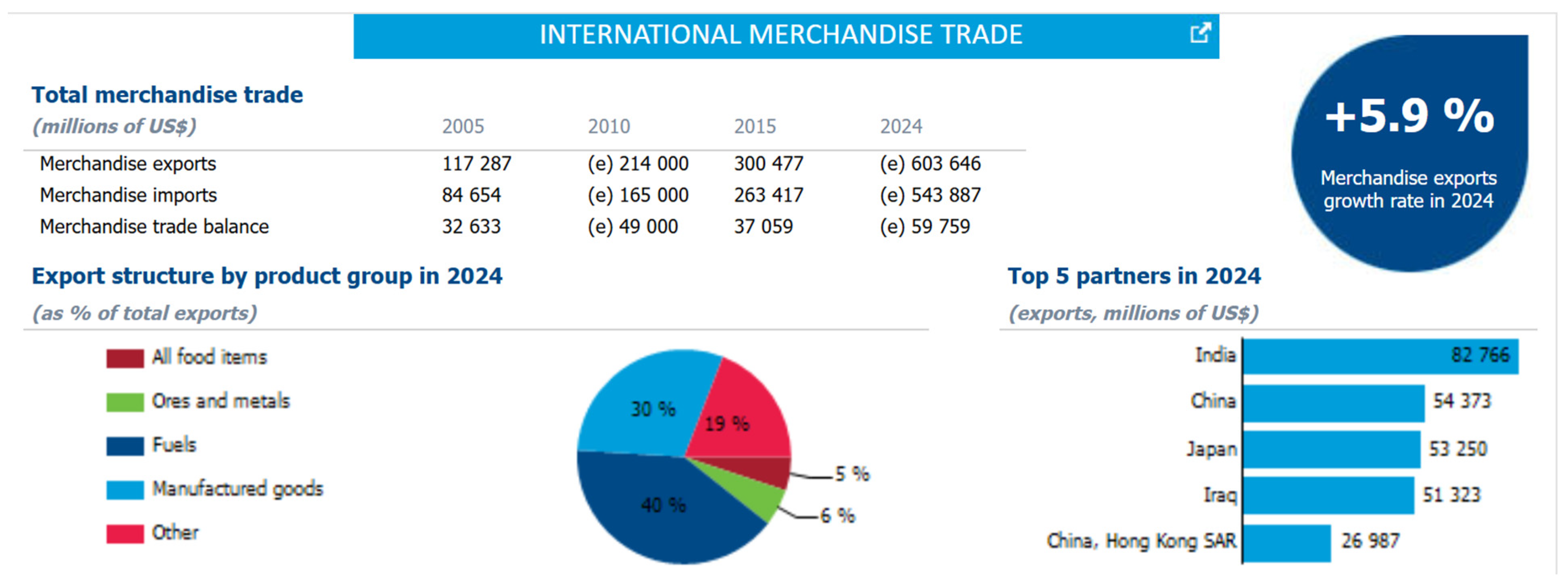
| 2 | The UAE ranks 21st in the world in terms of the size of the maritime fleet, and has more than 20 major ports, where the strategic geographical location has contributed to becoming a global Centre for maritime business, achieving rare competitiveness in the sector and maritime infrastructure. The UAE is an active member of the International Maritime Organization (IMO), which includes 174 countries. The United Arab Emirates has been elected to be one of the members of the Executive Council of Category (B) for a two-year term from 2022–2023, and this category includes in the council, (10) members from countries (https://www.moei.gov.ae/ar/about-ministry/international-maritime-organization-testing, accessed on 30 April 2026.) with the greatest interests in international seaborne trade, including Australia, Brazil, Canada, France, Germany, India, the Netherlands, Spain, Sweden, in addition to the United Arab Emirates. UAE, Federal Center for Geographic Information, available online: https://atlas.fgic.gov.ae/uaeatlas/Infrastructure/WaterTransportation, accessed on 1 May 2025. |
| 3 | Article (87/4). |
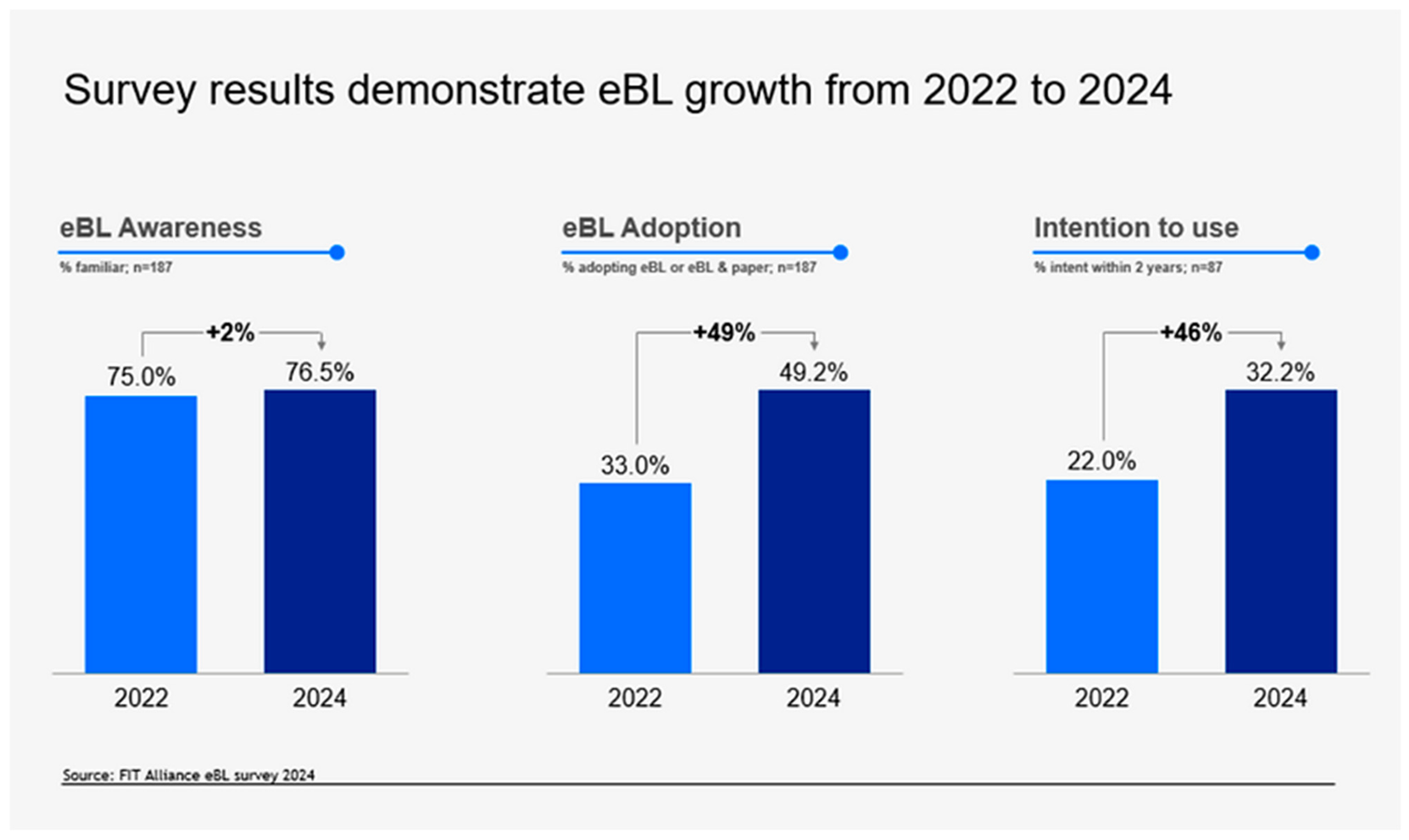
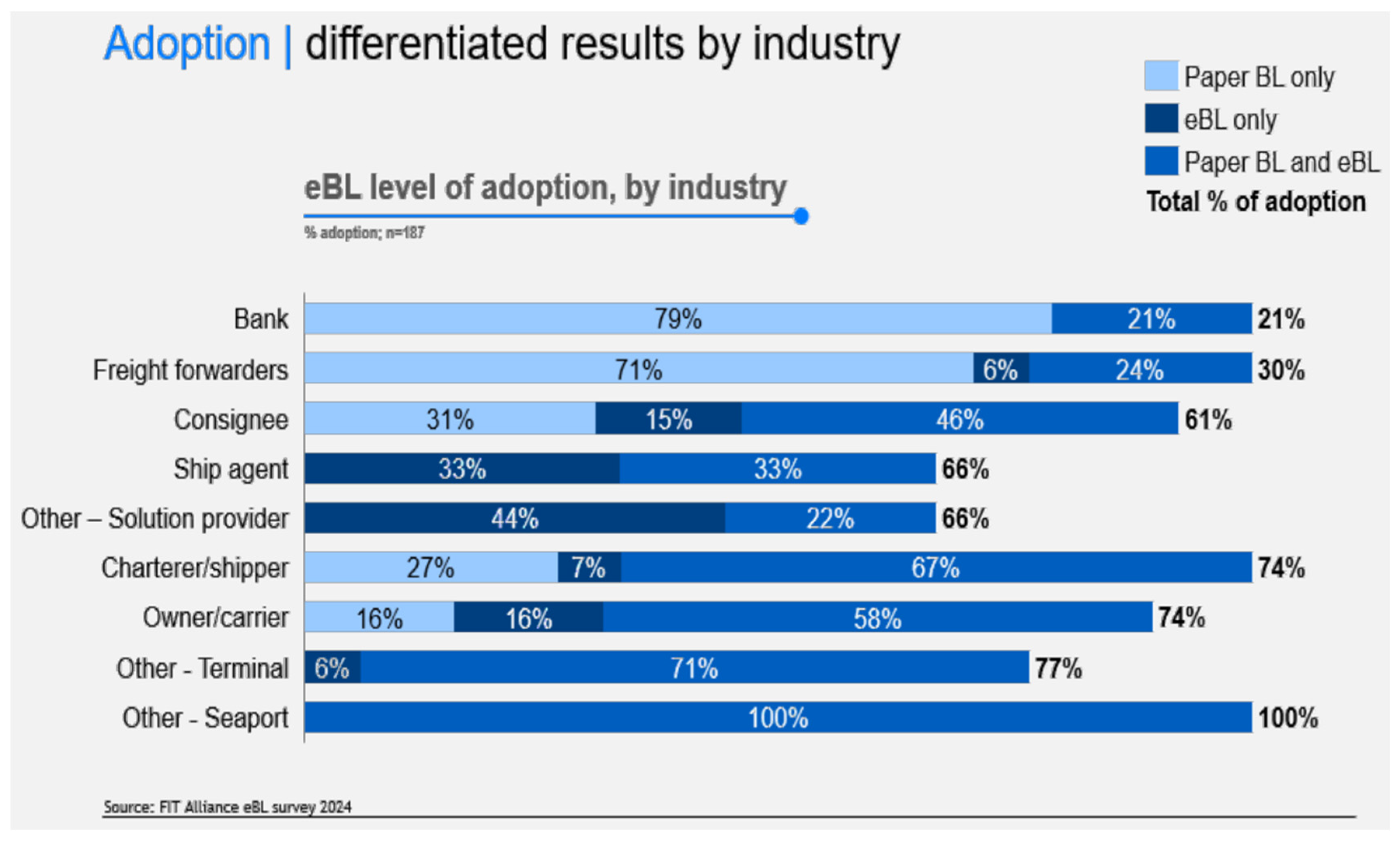
| 4 | The FIT Alliance, available online: https://www.fit-alliance.org/post/fit-alliance-eBL-report (accessed on 8 December 2025). |
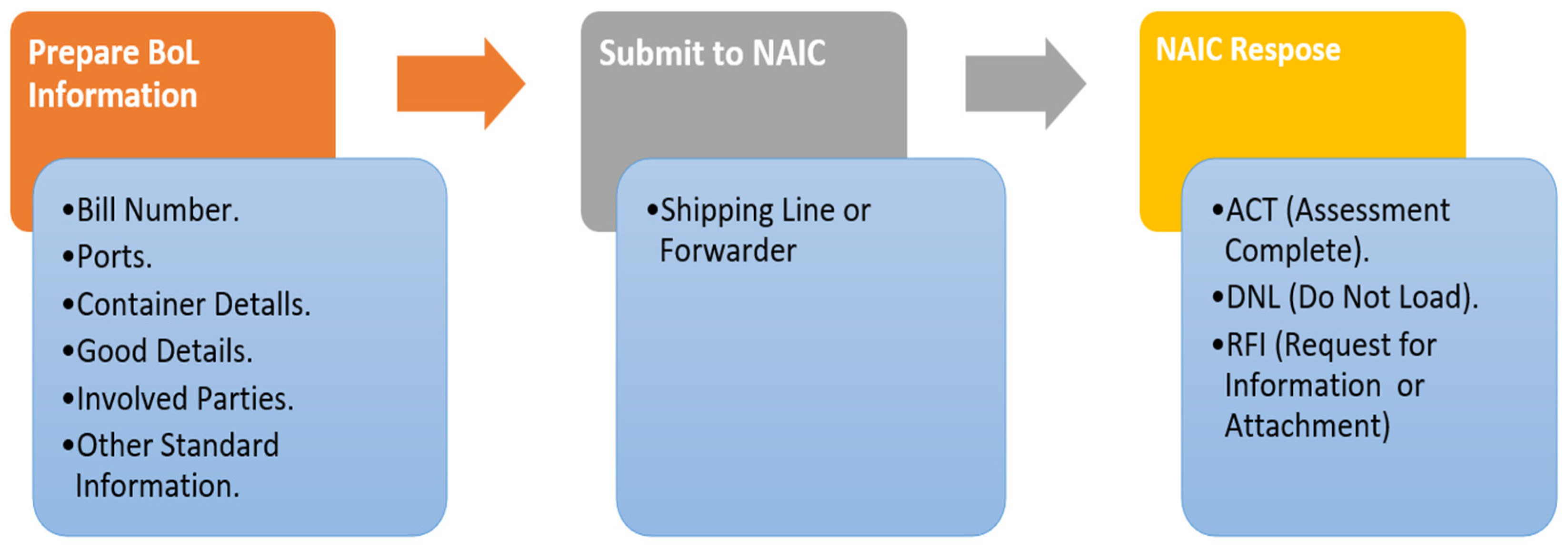
| 5 | To promote the implementation of the UAE MPCI program, the foundational system design has been developed in accordance with the principles outlined by the United Nations rules for Electronic Data Interchange for Administration, Commerce and Transport (UN/EDIFACT) standards, while considering the experiences and practices utilised or being established in analogous international initiatives. Comprehensive industry and market research has been undertaken to ensure that the system and its processes do not interfere with maritime cargo operations in any manner that could impact trade flow. See: https://naic.icp.gov.ae/portal/assets/mpci-guidelines/UAE%20MPCI%20Business%20Specification%20Document%20V1.0.pdf (accessed on 7 December 2025). |
| 6 | The present scope of the MPCI program encompasses import, transit, and transshipment (FROB) cargoes, with FROB files mandated exclusively from the shipping line. Only containerized maritime freight is considered, including both full container loads (FCL) and less than container loads (LCL). This phase excludes all other shipment categories, non-containerized cargo, and non-commercial commodities. MPCI, P.10. |
| 7 | E-title™, what is e-title™? https://www.e-title.net/sol_what.php (accessed on 10 December 2025). |
| 8 | E-title™, Electronic Title User Agreement, https://www.e-title.net/etug_agreement.php (accessed on 10 December 2025). |
| 9 | The “Rotterdam Rules” defines the “electronic transport records” in Article 1, paragraph (18). |
| 10 | International Maritime Organisation, maritime cyber risk, available online: https://www.imo.org/en/ourwork/security/pages/cyber-security.aspx, (accessed on 18 December 2025). |
| 11 | United Nations Convention on Contracts for the International Carriage of Goods Wholly or Partly by Sea (New York, 2008) (the “Rotterdam Rules”). Adopted by the General Assembly on 11 December 2008, the Convention establishes a uniform and modern legal regime governing the rights and obligations of shippers, carriers and consignees under a contract for door-to-door carriage that includes an international sea leg. available online: https://uncitral.un.org/en/texts/transportgoods/conventions/rotterdam_rules, (accessed on 6 May 2025). |
| 12 | The International Group of P&I Clubs (IG) started a new, simpler way to approve e-Bill of lading platforms on 4 February 2025. The new approach says that solution providers must show that their system works and that only “compliant” eBL are used. This change results from recent legislative developments indicating that an increasing number of countries are enacting laws to recognise eBL. available online: https://www.igpandi.org/article/ig-approved-electronic-bill-of-lading-systems/ (accessed on 6 Decembre 2025). |
| 13 | The Convention establishes a legal framework that facilitates their incorporation into national legislation, aiming to reduce physical and legal barriers to international maritime trade. The Rotterdam Rules enhance the regulation of electronic transport records by elucidating their legal implications, the protocols for their issuance and usage, and the processes by which they can replace conventional paper bills, be transferred, and ultimately become invalid. These provisions have had a clear impact on the new UAE Maritime Law, especially concerning the regulation of transactions involving eBL. Therefore, this article examines the efficacy of the new framework for eBL in mitigating the legal challenges associated with its use in UAE ports. |
| 14 | Dubai. 2025. 28 (Court of cassation March 13, 2025). |
| 15 | Dubai. 2025. 592 (Court of cassation May 14, 2025). |
| 16 | UNCITRAL Model Law on Electronic Transferable Records, available online: https://uncitral.un.org/en/texts/ecommerce/modellaw/electronic_transferable_records, accessed on 22 December 2025. |
| 17 | Article 14/1/b of ETTS. |
| 18 | UK Electronic Trade Documents Act 2023. |
| 19 | Article 3 of UK Electronic Trade Documents Act 2023 states: Possession, indorsement and effect of electronic trade documents: (1) A person may possess, indorse and part with possession of an electronic trade document. (2) An electronic trade document has the same effect as an equivalent paper trade document. (3) Anything done in relation to an electronic trade document has the same effect (if any) in relation to the document as it would have in relation to an equivalent paper trade document. (4) An electronic trade document is to be treated as corporeal moveable property for the purposes of any Act of the Scottish Parliament relating to the creation of a security in the form of a pledge over moveable property. available online: https://www.legislation.gov.uk/ukpga/2023/38/enacted, accessed on 25 December 2025. |


Disclaimer/Publisher’s Note: The statements, opinions and data contained in all publications are solely those of the individual author(s) and contributor(s) and not of MDPI and/or the editor(s). MDPI and/or the editor(s) disclaim responsibility for any injury to people or property resulting from any ideas, methods, instructions or products referred to in the content. |
© 2026 by the authors. Licensee MDPI, Basel, Switzerland. This article is an open access article distributed under the terms and conditions of the Creative Commons Attribution (CC BY) license.
Share and Cite
Abdou, M.M.; Othman, A.M.Z.; Alqaydi, A.O.; Fayyad, M. Digitising Bills of Lading in the UAE: Legal Governance and Implementation Challenges. Laws 2026, 15, 37. https://doi.org/10.3390/laws15030037
Abdou MM, Othman AMZ, Alqaydi AO, Fayyad M. Digitising Bills of Lading in the UAE: Legal Governance and Implementation Challenges. Laws. 2026; 15(3):37. https://doi.org/10.3390/laws15030037
Chicago/Turabian StyleAbdou, Mohamed Morsi, Ayman M. Zain Othman, Aisha Obaid Alqaydi, and Mahmoud Fayyad. 2026. "Digitising Bills of Lading in the UAE: Legal Governance and Implementation Challenges" Laws 15, no. 3: 37. https://doi.org/10.3390/laws15030037
APA StyleAbdou, M. M., Othman, A. M. Z., Alqaydi, A. O., & Fayyad, M. (2026). Digitising Bills of Lading in the UAE: Legal Governance and Implementation Challenges. Laws, 15(3), 37. https://doi.org/10.3390/laws15030037