
Article

An Insolvency Toolkit for SMEs in Emerging Economies—A Spotlight on Uganda
The City Law School, City St. Georges, University of London, London EC1V 0HB, UK
Submission received: 15 December 2025 / Revised: 13 January 2026 / Accepted: 15 January 2026 / Published: 22 January 2026
(This article belongs to the Special Issue Developments in International Insolvency Law: Trends and Challenges)

Abstract

This article examines the subject of SME failures due to financial distress in emerging economies by focusing on Uganda as a case study. It adopts a convergent doctrinal and empirical approach, drawing on existing black letter law and literature alongside some of the empirical data obtained from a survey of SME business owners impacted by financial distress, a survey of accredited insolvency practitioners and exchanges from a stakeholder workshop on SME insolvencies in Uganda. The article examines existing legal, regulatory and procedural frameworks on corporate rescue and the identified gaps exacerbating SME failures in unpacking why, despite the availability of these frameworks, business rescue as the policy objective of Uganda’s insolvency law has yet to be fully achieved. The article devises a recommended toolkit that if adopted, may guide the approaches needed to improve SME rescue, and meet legal and statutory objectives of Uganda’s insolvency frameworks to enhance economic stability.

1. Introduction

Debates and/or discussions on the resolution of small- and medium-sized enterprise (SME) insolvencies have been the subject of attention and criticism across extant sovereign jurisdictions (Lu 2018; Gurrea-Martínez 2021; Mrockova 2022; Kavitha 2022). While several sovereign states have enacted insolvency laws and frameworks to guide and regulate insolvency law and practice, there remains a lack of a convergent insolvency framework or model that is specifically dedicated to the resolution of SME insolvencies. Jurisdictions, such as USA,1 Singapore (Sandrasegara and Kiat 2020), Japan (Abe et al. 2020), Myanmar (Atkins 2020) and China (Mrockova 2021, 2022)2 have introduced tailored insolvency frameworks for Micro-Small sized enterprises (MSEs). However, many other sovereign states have standardised insolvency laws and frameworks that guide all corporate entities in financial distress and insolvency, yet standardised insolvency laws and frameworks have so far failed to address specific legal and procedural challenges faced by SMEs in financial distress (Kucher et al. 2020; Gurrea-Martínez 2021).
Standardised insolvency law and frameworks have been credited for facilitating efficient3 allocation of resources, maximising the debtor’s pool of distributable assets to creditors and ameliorating common-pool problems, especially those associated with informal creditor enforcement actions, such as selfish and opportunistic asset-grabbing by individual creditors by creating a binding collective forum of distribution (Armour et al. 2015). However, although these attributes (of standardised insolvency laws and frameworks) may appear attractive on the rubric, they are more applicable to larger corporate entities with multiple layers of debt and creditor classes and may not fare advantageously to SMEs in financial distress (Mokal et al. 2018; Crane 2020).
Besides national efforts, international institutions and organisations (Bergthaler et al. 2015; The World Bank 2017; UNCITRAL 2021) have undertaken research and published guidance or frameworks to regulate and guide SME insolvencies, but there has yet to be a streamlined convergent approach to this effect across the globe. Research undertaken on SMEs in financial distress across extant jurisdictions has increasingly established that in most emerging economies, liquidation is usually the main rational option for SMEs in financial distress due to factors such as access constraints to professional legal advice, less and/or inadequate knowledge of available insolvency laws and frameworks, and cost and feasibility considerations4 of available choices (restructuring vs. liquidation), among other factors (The World Bank 2020). Uganda is one example of an emerging economy whose private sector is largely dominated by SMEs,5 but whose SME failure rate due to financial distress is overwhelming and, therefore, attracting attention of late. For this reason, Uganda as an emerging economy is the subject of this article as a case study.6
This article examines the subject of SME failures due to financial distress in emerging economies by focusing on Uganda as a case study. Although the categorisation of enterprises in Uganda includes micro-, small-, medium- and large-sized enterprises, the article focuses on small–medium-sized enterprises (SMEs) as micro and small enterprises share similar characteristics. For example, micro-small enterprises are categorised as employing between 2 and 49 employees (micro employing 0–2 employees) while medium-sized enterprises employ between 50 and 100 employees (Ministry of Trade, Industry and Cooperative 2024). Moreover, micro enterprises constitute only 2% of enterprises, small enterprises 7% and medium enterprises 90%. Hence, the reason for choosing to refer to small–medium-sized enterprises (SMEs) in this article is that is the generally adopted categorisation (slogan) within the business communities.
This article adopts a convergent doctrinal and empirical approach by drawing on existing black letter law and literature alongside empirical data obtained from a survey of SME business owners impacted by financial distress—a survey of accredited insolvency practitioners registered by the official receiver and regulator of company, insolvency and business matters in Uganda, the Uganda Registration Services Bureau (URSB)—and from the exchanges from a stakeholder workshop on SME insolvencies in Uganda. The empirical work (survey questions and thematic analysis) focused attention on the problems and challenges at hand, those of high-level SME failures. As the law on the books and the law in practice are synonymous in achieving the intended policy objectives of corporate rescue (Halliday and Carruthers 2009, pp. 365–6), the research examined why, despite the availability of the law on the books, business rescue as the policy objective of the law has yet to be fully achieved.
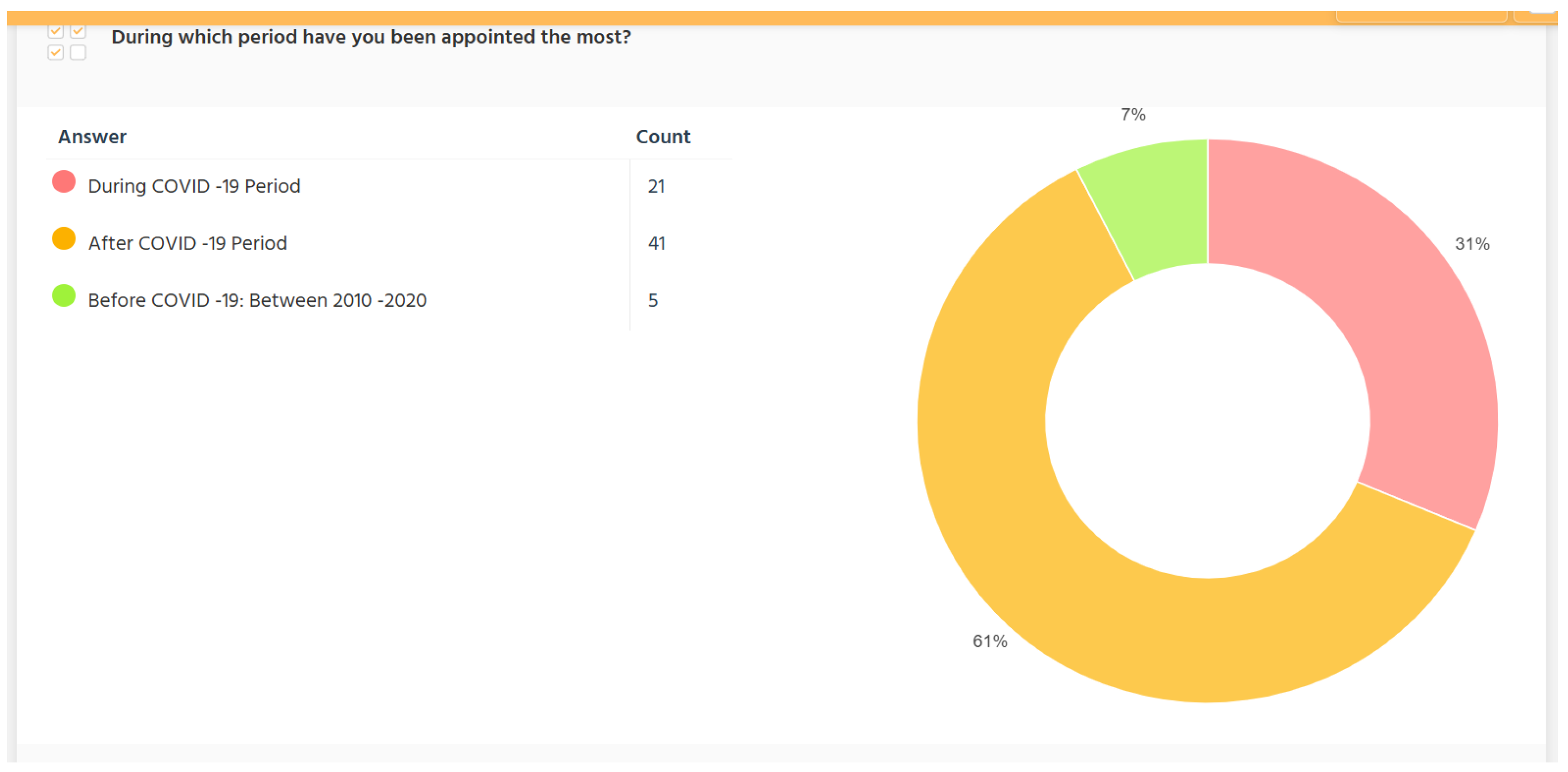
The participants (business owners and IPs) subject to the survey were selected following a flexible sampling technique (Tremblay 1957; Poggie 1972), that considered their previous experiences with financial distress in relation to their businesses, coupled with their knowledge in relation to the topic of the research survey overall. The selected IPs were registered with the regulator—the URSB—and had undertaken insolvency and debt restructuring work for a considerable period (including pre, during and post-COVID-19), although a survey of IPs indicated that most of the appointments were in the post-COVID-19 era (Figure 1 below).
Participants for the stakeholder workshop were drawn from the general stakeholder groups that hold interest in Uganda’s financial and business sectors and, therefore, would contribute not only to the improvement of this area of study but also to the future directions of the design and co-production of the solution(s) to the problems and challenges subject to this study. These included accountants, bankers, lawyers, the regulators, a judge and other IPs. Data was collected using email surveys, semi-structured interviews and a stakeholder workshop with questions sent prior to the survey, interviews and stakeholder workshop. This was followed by a thematic review of the responses (Moser and Korstjens 2018; Lochmiller 2021), transcription and writing up. The article devises a recommended toolkit that if adopted, may guide the approaches needed to improve SME rescue, meet legal and statutory objectives of Uganda’s insolvency frameworks and improvements in the economic stability and livelihoods.

2. Key Challenges for SMEs in Financial Distress in Uganda

Uganda’s current insolvency framework was largely influenced by Sir Kenneth Cork’s recommendations (Cork 1982) for a modern and efficient insolvency framework and subsequently, some of the key recommendations of the Report were adopted by the Uganda Law Reform Commission (ULRC) enroute the enactment of the Insolvency Act 2011 (IA 2011) (as amended in 2022) (Nyombi 2018; Nsubuga 2021). As corporate rescue was one of the key recommendations of the Cork Report, it was adopted into Uganda’s IA 2011 as its main objective. To achieve this objective, the IA 2011 prescribes provisional administration,7 and administration8 as the main rescue procedures, alongside other procedures, such as voluntary arrangements,9 receivership10 and liquidation.11 These procedures are supported by the Insolvency Practice Regulation 2017.12 This is in addition to the Companies Act 2012 which prescribes provisions that deal with creditor compromises and arrangements,13 reconstructions and amalgamation14 and voluntary winding-up.15
However, both statutes (IA 2011 and CA 2012) do not prescribe special provisions on the treatment of SMEs in financial distress. Rather, they prescribe standardised insolvency provisions for all entities in financial distress. These standardised insolvency laws and frameworks come with tools, such as debtor-in-possession (DIP) mechanisms and moratoria or automatic stay protection to debtors that may curtail creditors’ enforcement and recovery actions in a bid to tailor a collective and rehabilitative approach to business rescue (Nsubuga 2021; Gurrea-Martínez 2023). They also seek to minimise creditor disruptions and costs associated with the restructuring and/or reorganisation process and therefore, preserve value (Phelan and Tama 2011; Paterson 2017). However, these tools are not as effective with SMEs in financial distress as would be the case with larger companies and hence, the need for special SME insolvency provisions (Rasmussen 1998; Crane 2020).
Special insolvency law provisions and frameworks for SMEs are essential because SMEs face unique challenges that differ from larger corporations and therefore, standardised insolvency laws and frameworks may not serve their interests efficiently (Mokal et al. 2018, pp. 17–8;16 Ghio and Thomson 2025, p. 2).17 Unique challenges may include, for example, complex ownership structures, management/operational structures and the nature of the credit and/or lending market facilities, among others, that may increase their susceptibility to external economic and financial shocks. Financial distress in SMEs may also draw creditors to initiate enforcement and recovery actions which may affect the going-concern value of the debtor’s business, hampering potential rehabilitation endeavours.
Invested stakeholders, such as trade suppliers, lenders (especially secured lenders) and employees may also terminate their contracts with debtors and this may impact the debtor company’s reorganisation prospects, such as sourcing rescue finance, which is a key component of business rescue (Ayotte and Skeel 2013). This may not be the case with larger companies with multiple layers of debt and lenders, as other incentives, such as debt for equity swaps, among other factors, may be a key incentive to obtaining post-petition rescue financing which may enhance the debtor’s rescue endeavours (Armour et al. 2015; Tsioli 2023).
A report from a 2018 study by a group of international insolvency scholars following a study of key specific challenges to the efficient resolution of SME insolvencies identified seven challenges that if addressed, efficient resolution of SME insolvencies would be achieved (Mokal et al. 2018, chap. 3–6). These included (i) timely commencement; (ii) costs associated with the insolvency proceedings, (iii) creditor participation and protection, (iv) debtor involvement and protection, (v) funding and no-asset cases resolution, (vi) the scope and structure of the special rules and (vii) the functionality of supporting mechanisms such as information production and accessibility.18 These challenges were also adopted by the World Bank in its report on the treatment of SMEs in insolvency (The World Bank 2017).
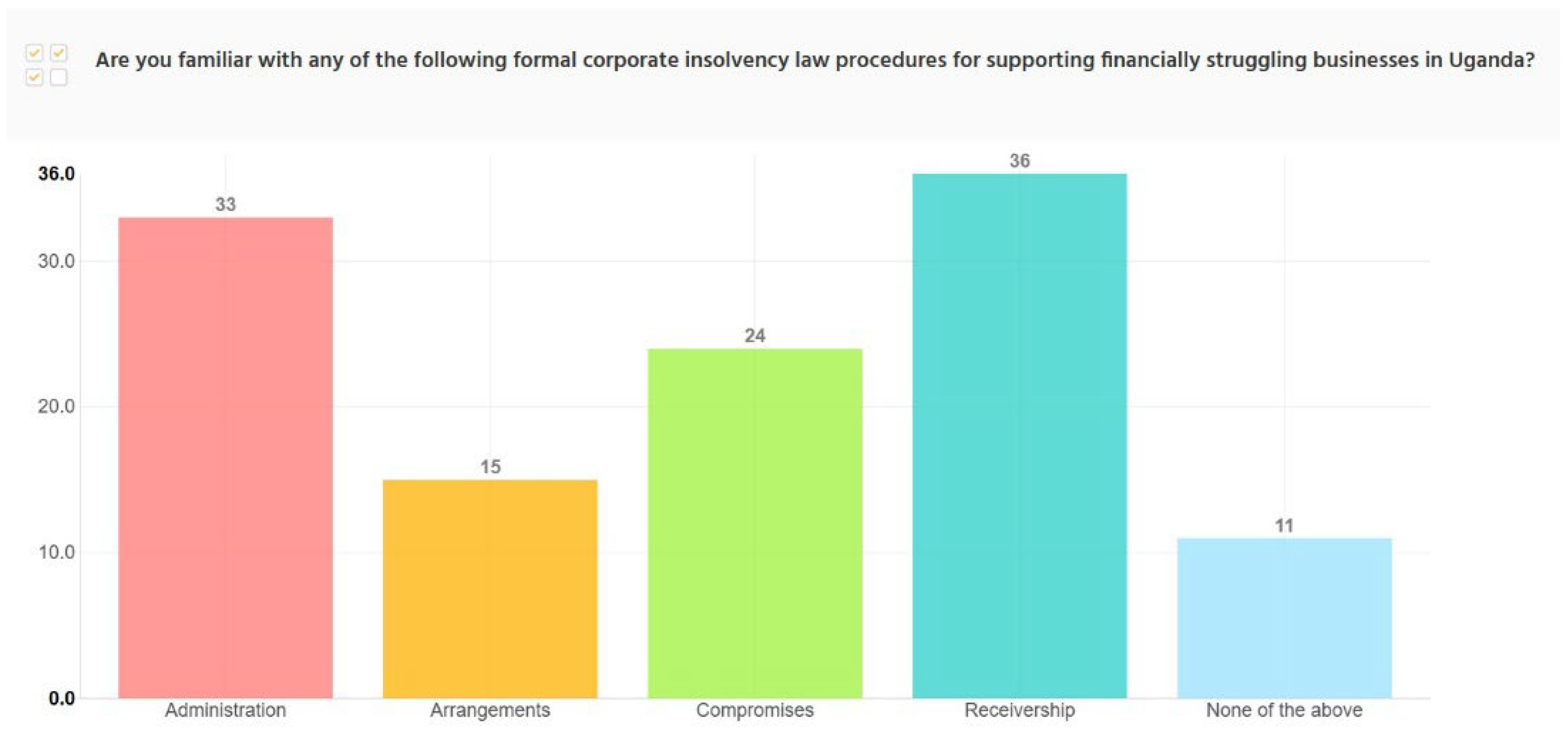
In 2022, the Uganda Law Reform Commission (ULRC) adopted some of these recommendations during its review and reform of the IA 2011.19 However, no special provisions and/or chapter were established as being dedicated to the treatment of SMEs in financial distress, and this has left the previously identified unique challenges to Uganda’s SME sector, specifically those experiencing financial distress, unaddressed and in need of addressing (Nyombi 2018; Nsubuga 2021; Konde 2023). These unique challenges were further pointed out during my survey conducted on SME owners impacted by financial distress and during the stakeholder workshop plenary (see Figure 2 and Figure 3 below). These are analysed below.

2.1. Timely Filing/Commencement and Stigma Challenges

According to Professor Parry, a common reason why corporate rescue attempts are unsuccessful is that steps are not taken at a sufficiently early stage, as managers are naturally inclined to want the company to trade out of its difficulties (Parry 2008, p. 13). For SMEs in particular, timely commencement of insolvency proceedings is important as a delay may deplete the few available assets of the debtor, which could impact any chances of a successful going-concern rescue or restructuring (Jackson 1986; Mokal et al. 2018, pp. 15–6). Directors often realise that the entities under their control are experiencing financial difficulties but fail to react in a timely manner. They may continue to engage in ambitious and excessive risk-taking with hope that they may overcome the financial difficulties. This may not only prejudice the company, but creditors and other stakeholders as well (Langford and Ramsay 2021).
In some SME business ownerships, directors are also shareholders (shareholder-directors) wearing two hats. This may create challenges to efficient decision-making in times of financial distress. Under the hat of a director, some directors, especially in emerging economies, may not appreciate the role of formal insolvency procedures, such as administration, voluntary arrangements or receivership due to procedural requirements, usually established through statutes or rules (Nsubuga 2021; Adebola et al. 2025). They usually perceive the procedural rules and processes as creating a degree of burden and complexity to overcome, which would in turn create costs (such as filing costs and IP charges) and be time-consuming (where court approval is required).
On the other hand, directors are afraid of being stigmatised with failure (Ghio and Thomson 2023). Stigma has been identified as one of the key factors in delayed or failed rescue filings both in developed and emerging economies (McCormack 2007; Tajti 2018; Nsubuga 2021). Liquidation is perceived as an escape route to preserve dignity and standing within peers, lenders and overall business communities. In Uganda particularly, it is a big task for the legislators, regulators, insolvency practitioners and other stakeholders within the financial sector and business communities to embrace the competitive advantages of business rescue and restructuring, especially within SME ownerships.
This could be achieved through forging a collective effort, first, by a design of legislative policies that promote and encourage corporate rescue and restructuring, and second, through education (capacity building and knowledge transfer) from institutions/agencies, such as the Institute of Corporate Governance Uganda (ICGU) and member associations of business organisations, such as the Institute of Certified Public Accountants and the Federation of Small and Medium Enterprises (FSME). This could be complimented by capacity-building initiatives from professional regulators, such as the Uganda Registration Services Bureau (URSB) that serves as the overall regulator of business registration and insolvency-related matters,20 to enhance the collaboration between professional practitioners, such as lawyers, insolvency practitioners, bankers and accountants/auditors and the business communities, especially SME owners.
Through these measures, insolvency stigma that takes its toll on decision-making processes by SME business owners or directors in insolvency, premised on information asymmetry, capacity building and knowledge sharing within business communities, may be remedied. This may, in turn, present a competitive advantage in the sense that the efforts taken by the regulators or member associations to incentivise corporate rescue and restructuring in times of financial distress are impactful. This is because stigma can adversely impact the functionality of an established legal framework with associated policy objectives (Sousa 2013; Ghio and Thomson 2023).
Although the intensity or impact of stigma may vary from jurisdiction to jurisdiction (Martin 2003; Howell and Mason 2015), it may be more impactful in emerging economies, such as Uganda. During the stakeholder workshop conducted as part of the study of SME failures, participants echoed the concern that as much as business success is a celebrated and recognised achievement from local communities in Uganda, failure can equally be a platform for ridicule and resentment among business communities and peers. Failure on the part of the owner or directors may not only impact the reputation of the business but also that of the owners as, at times, lenders may base their decisions on the reputation of the owner(s). Hence, upon financial difficulties, the owner may be more inclined to informally liquidate the business to preserve their dignity and standing within their communities and business peers to avoid being tainted with the stigma of failure (Wanyina 2023; Kayongo 2024).
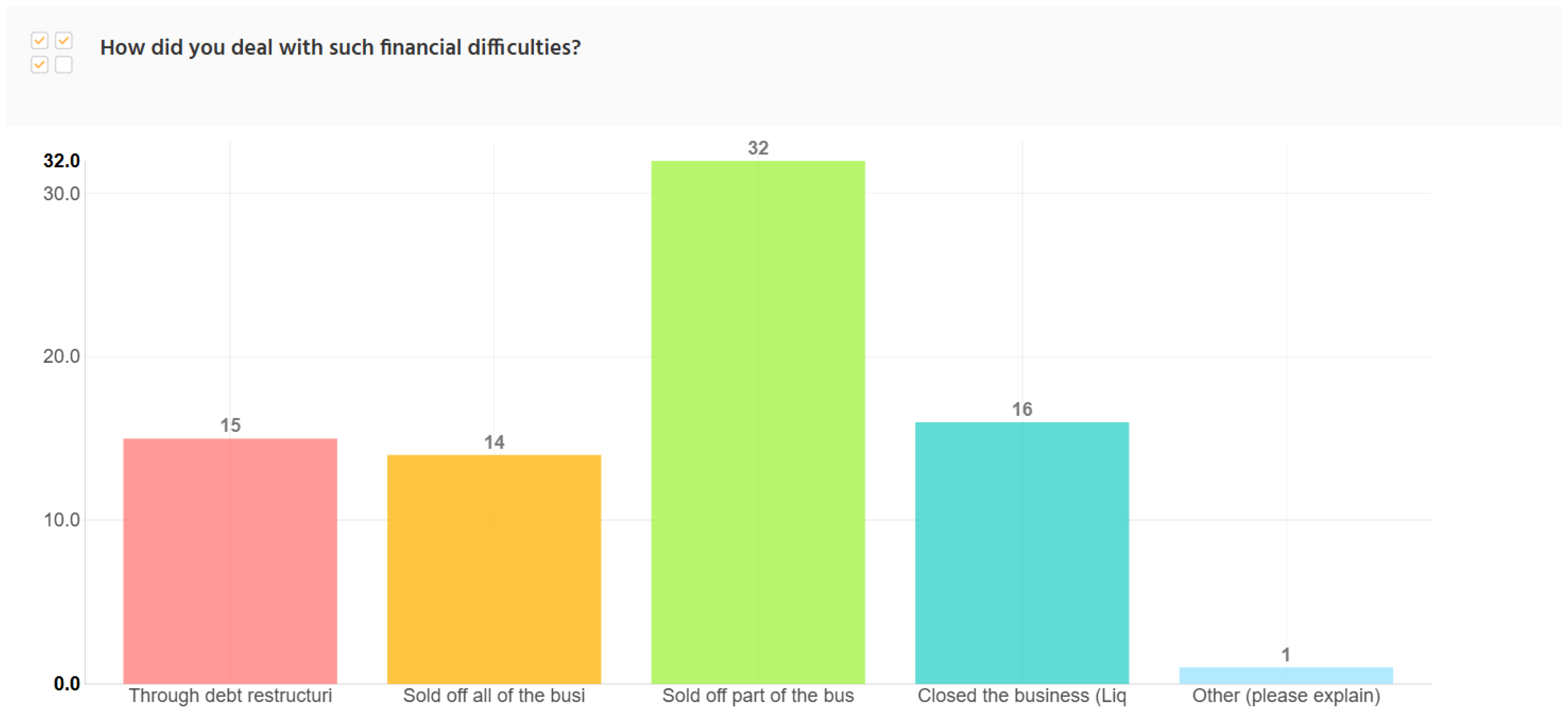
Therefore, despite liquidation being recognised as an efficiency-enhancing mechanism (Baird and Jackson 1984) and sometimes used as a rescue tool in high-income countries (Keay and Walton 2024), the lending practices and attitude from certain creditors (usually through coercive security instruments) may force business owners to informally liquidate and open a new business rather than adopt formal corporate rescue or restructuring proceedings (per survey response in Figure 3 above). Therefore, despite less awareness or knowledge of existing formal corporate rescue measures from Uganda’s regulators and other key stakeholders, stigma has created challenges within business communities with complying and/or respecting already established corporate rescue and restructuring legal structures, that is, the willingness to comply with the legal and policy frameworks to achieve the intended policy objectives.

2.2. Time and Cost Constraints in the Insolvency Process

In developed economies, such as the UK, it is recognised that where a company is insolvent or bordering insolvency, the task and/or duty for the directors is to consider creditors’ interests (along with those of the members/shareholders) as a “must” or to ‘act in the interests of creditors’ once the company is in insolvent liquidation or administration, as creditors’ interests become paramount.21 This is to avoid or limit further losses for creditors where eventual insolvent liquidation takes effect. This practice is not formally established or recognised in Uganda’s insolvency frameworks. Nevertheless, some of Uganda’s formal insolvency processes, such as administration and arrangements, may take “some time” to be fully executed in a formal setting. For example, the administration procedure as a main driver of corporate rescue is a two-stage procedure consisting of provisional administration22 and formal administration.23
Provisional administration is an initial stage taken by company directors with the provisionally appointed administrator to consider the viability of the company. This is to assess whether the company has sufficient business assets to instigate insolvency proceedings while formal administration proceedings are initiated to administer the administration deed executed by the company in agreement with creditors.24 This exercise may last up to thirty days,25 during which an agreement must be reached between the company, provisional administrator and creditors for a formal administration deed to be executed to initiate formal administration proceedings.26 Where the administration deed is approved, the company formally enters into formal administration proceedings. For an SME in financial distress, this may prove a critical period in its recovery journey.
Moreover, there are less incentives for SMEs faced with financial difficulties to consider formal insolvency and debt restructuring proceedings in their turnaround endeavours. This is due to a misconception that formal insolvency and restructuring processes are expensive, time-wasting and involve protracted procedural and judicial hearings that are expensive and provide insolvency practitioners a window of opportunity to financially exploit an already ailing business; hence, the preference for informal approaches (Kashaija 2023; Wanyina 2023).
It is common practice within Uganda’s business communities and private sector at large to prefer consensual out-of-court workouts between creditors and debtors due to loan instruments and market settings (usually, with one big or strong creditor, such as the bank or institutional lender). This preference is premised on the notion that debtor–creditor workouts/agreements are usually faster to conclude and are a more cost-effective means of restructuring a company compared to administration that would involve a two-stage process (as explained above). Hence, compromises between debtors and creditors are the most adopted ones as these can be proposed and agreement reached (in a time-saving manner) where three quarters of the value of creditors agree to such compromise or arrangement.27 The agreements then become binding on all creditors, the company itself, the liquidator and other stakeholders of the company.28
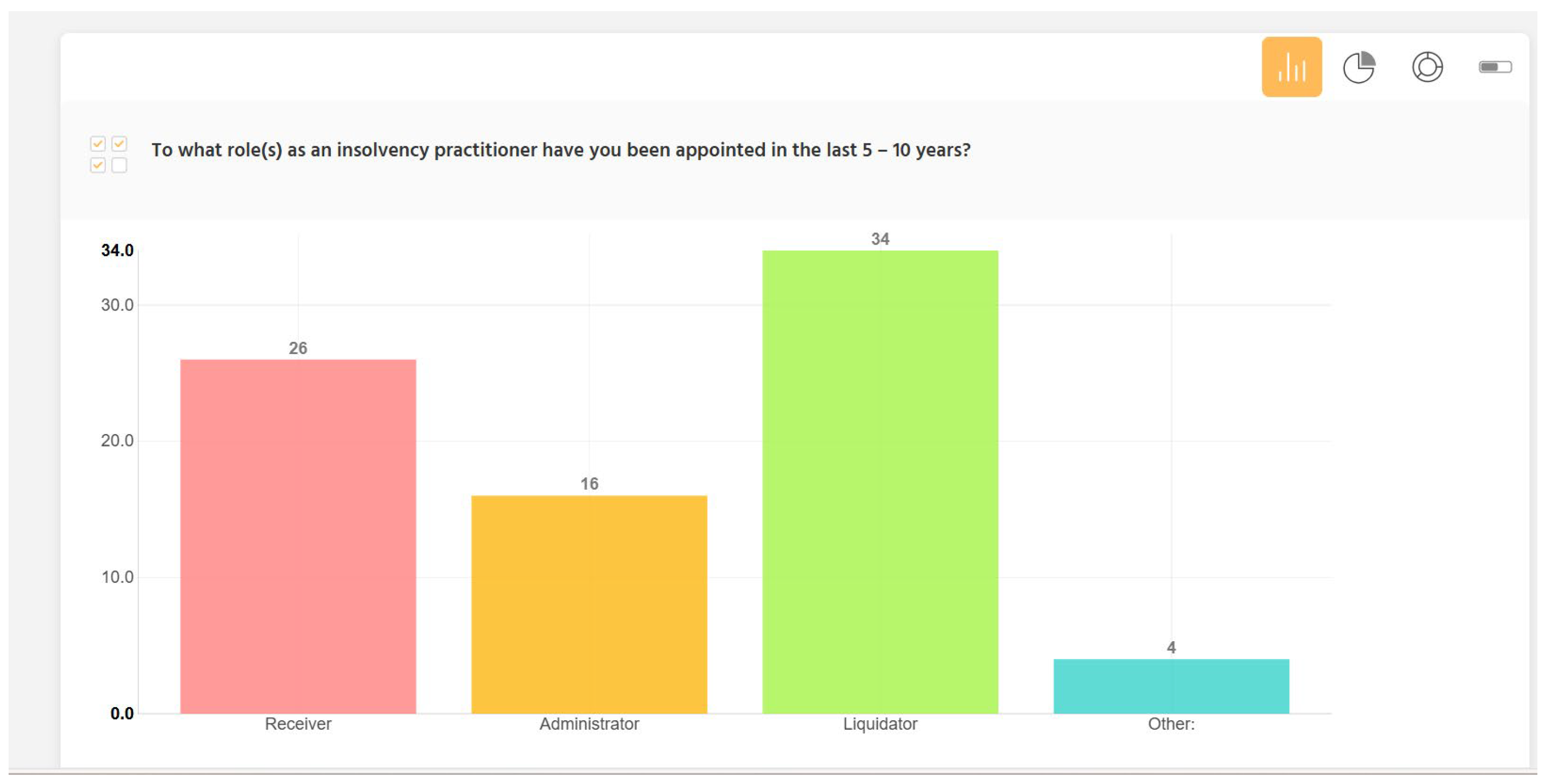
However, the concern is that most of the compromises are driven by the secured creditor(s) and tend to inhibit adoption of inclusive formal insolvency procedures that are rescue-oriented to serving broader stakeholder interests as a whole over selfish recovery mechanisms that do not serve creditors’ interests as a whole (Mokal 2005). Moreover, insolvency practitioners (where involved) prefer to use more practical and simplified procedures that enhance a quick resolution, usually a quick sale of business assets rather than formal routes, such as administration. Therefore, cost constraints (including commencement and participation costs), together with protracted and prolonged procedural requirements, have greatly swayed the debtor away from the formal restructuring routes, in favour of informality as supported by the findings in Figure 4 below.

2.3. Creditor–Debtor Involvement and Protection

Like many other sovereign jurisdictions, Uganda’s insolvency framework prioritises value maximisation and protection of creditor interests as a whole, but to the extent that they are the de facto owners of the insolvent company’s assets upon insolvency.29 Consequently, this level of protection equips SME creditors with more armoury to influence, if not dictate, the insolvency process. Uganda’s legal framework prescribes collective decision-making in processes, such as arrangements30 and reconstruction and amalgamations,31 through meetings and voting with a minimum quorum.32 However, many SME creditors do not actively engage in such collective negotiations,33 usually due to the possibilities of nil recoveries premised on ownership, capital and loan structures (Osekenye 2023). In certain proceedings, such as restructuring proceedings, powerful secured creditors exercise more control and influence other creditors to vote in favour of the proposed restructuring plan, which is nevertheless binding on the minority upon approval by the required quorum (Tirole 2006, pp. 389–95; Payne 2022). This is unlike the position, for instance, where SMEs opt for liquidation as creditor entitlements are well defined in legislation.
Debtor participation and protection is, therefore, key, especially in setting and pursuing corporate and restructuring specifically in SMEs. There is a need to amplify and support a so-called debtor-in-possession model in Uganda’s insolvency framework, like is the case with other developed jurisdictions, such as the UK and the EU (Kelch 1991; Triantis 1993). The DIP is defined as the same person as a pre-petition debtor unless a trustee is appointed. Traceable to the U.S. bankruptcy reorganisation of the equity railroad receiverships of the 19th and early 20th centuries, the DIP is the existing management/directors of the debtor before filing for insolvency or restructuring/reorganisation proceeding (Tufano 1997; Skeel 2004; Nsubuga 2022).
A DIP model would be advantageous to SME rescue as existing directors’ knowledge, expertise and network of business contacts concerning the debtor’s business and financial affairs are usually uninterrupted and may be useful in attracting not only creditor support for approving proposed plans, but also other imperatives, such as rescue financing requests. From this perspective, directors may undertake timely and voluntary initiation of debt restructuring proceedings, as the fear of losing control of the business (and stigma of failure as discussed above) may be overcome. As such, this approach may be beneficial to the debtor’s rescue prospects (Payne 2014; Van Zwieten 2020).

3. The Proposed Toolkit

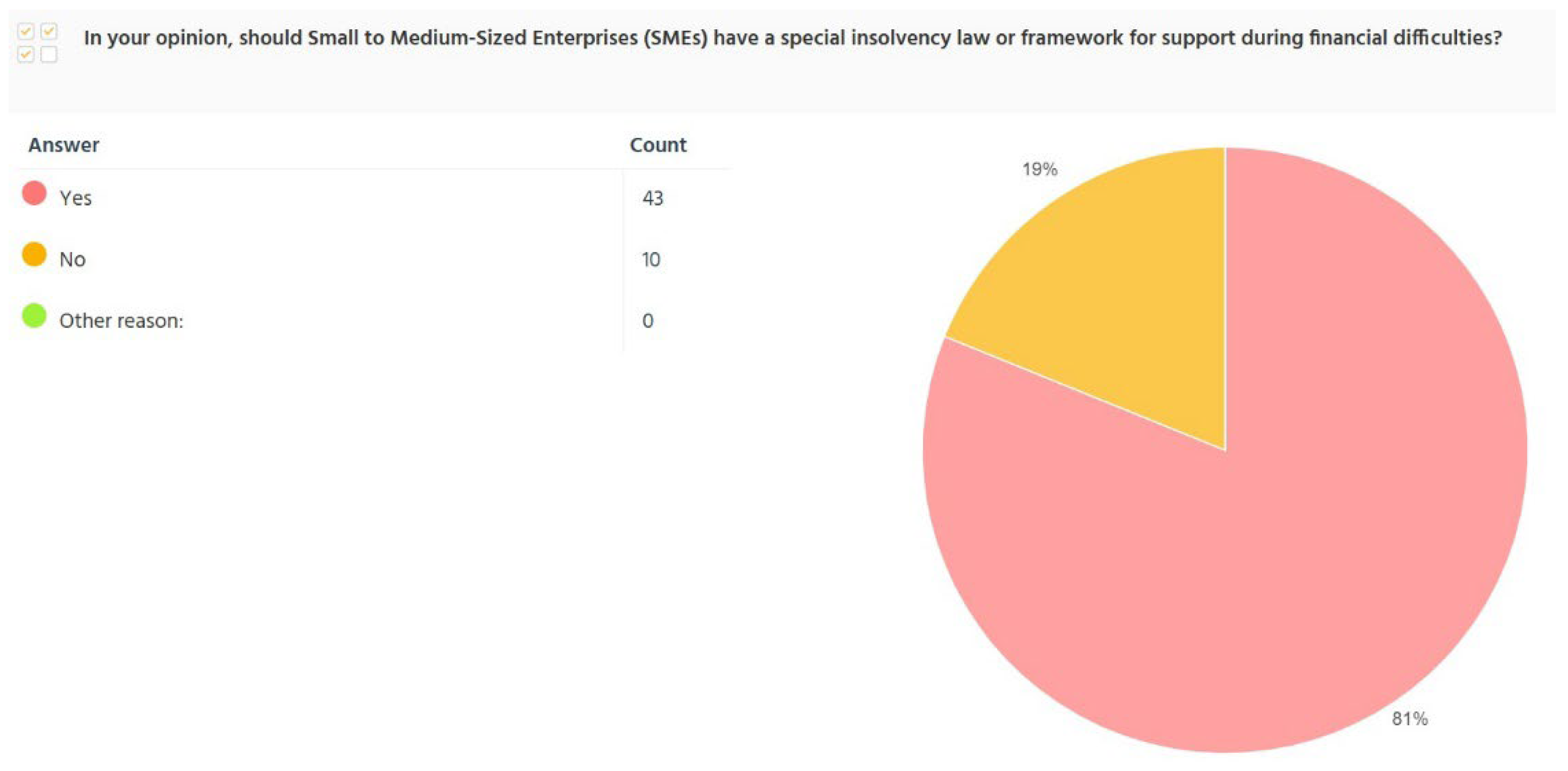
This paper has established that the key challenges impacting SME insolvencies in Uganda and the quest for an efficient resolution framework could be remedied through regulatory, legal and procedural reforms. This finding is greatly supported by surveyed insolvency practitioners who believed that a special insolvency law or framework specifically for SMEs in financial distress is urgently desirable (per Figure 5 below). This is because enhancing the creation of new business support for the growth of existing businesses and supporting and encouraging business owners to save and invest to accelerate economic growth are some of the key characteristics of a well-functioning financial system (Triantis 1993).
However, achieving these objectives in a financial-legal system calls for strong compliance with the rules or laws that establish, enforce and regulate strategic relationships, such as the financial–corporate relationships in that financial system. Non-compliance to these rules by invested stakeholders in the financial system may lead to unregulated financial practices and arbitrary enforcement of the rules or policies which may impact the functionality of the overall legal-financial system.
At present, there exists a lack of a harmonised regulatory framework for the activities carried out within Uganda’s formal business communities and financial sector at large that, in turn, impacts the design of a streamlined legal framework, including an efficient insolvency regime (Kainobwisho 2024). The impact of such absence is that business activities, which are mainly driven by credit, become subsumed in dispersed regulatory spheres which in turn clog the effectiveness of the regulatory and policy frameworks, especially on corporate rescue and the sustainable financial system as sought by the legal regimes. Hence, when challenges, such as corporate and financial distress, arise, there is the challenge of appropriating an efficient framework, within which those challenges may be addressed. Efficient resolution of SMEs in financial distress in Uganda’s legal framework is one such challenge that is in need of addressing. This section provides a recommended toolkit that if adopted and transposed into the legal framework may shape the functionality of the business rescue system that would solve the high-rate failures of SMEs in Uganda’s business communities and financial system at large.

3.1. Super-Priority Rescue Funding for SMEs

As discussed in this article, one of the biggest obstacles for SMEs in financial distress is the absence of a streamlined pathway to rescue financing; a critical aspect of preserving the company’s business, it is often considered less relevant for MSE restructuring since most special frameworks are focused on larger corporations.
Although the availability of rescue financing is not in itself a guaranteed remedy to the business’ financial troubles, its availability provides a springboard upon which rescue approaches may be drawn. For instance, rescue financing may lead to a streamlined restructuring plan for saving a company from financial difficulties. This is because, while a corporate and/or business rescue plan may focus on immediately stabilising the company’s financial operations, a restructuring plan may focus on broader and longer-term strategies, such as the company’s operational structure and sustained viability (Ellina 2025).
This would enhance the potential to restore critical supply chains, revive going-concern value, safeguard jobs and increase the chances of recovery, thereby improving economic livelihoods. However, achieving these objectives can be both legally and procedurally challenging due to the absence of statutory frameworks established through company and insolvency legislation as is currently the case within Uganda’s legal framework. This raises the question as to whether a market-based or a regulatory approach is the proper approach to strategically dealing with SME rescue financing.

3.1.1. A Market-Based Approach?

In Uganda, the most available source of rescue financing is additional borrowing, be it from existing lenders (banks and institutions) or private loan providers. Potential rescue financiers approach lending inquiries on the basis of the needs of the financially distressed entities with no certainty that such inquiries for rescue financing will be approved/assured. This creates a gap between the objectives of corporate rescue and the realities faced by the debtor and appointed insolvency practitioner, which in most cases results in failed rescue plans, and eventual adoption of liquidation measures (Wanyina 2023).
Uganda’s rescue finance is heavily market-based, yet it is under-regulated. In an ideal, well-functioning and well-regulated debt/finance market, the test for loan capital or rescue finance is the viability34 assessment by potential creditors, where a market evaluation by creditors analysing the nature and degree of risk is undertaken before deciding whether to finance a financially distressed business. This is the so-called market-based approach, free from legal interference (Payne and Sarra 2018). Although legal interference in the form of regulation would facilitate and enhance the functionality of the finance market, the overall premise is that financially distressed but genuinely viable entities would be able to secure rescue financing, facilitated by the market itself (Campbell 2018). The concern with Uganda’s financial market is that it is overwhelmingly dominated by banks and other financial institutions as repeat lenders to businesses, especially SMEs, and to a lesser extent, family and close friends.
Banks as secured creditors play a key part in the rescue of financially distressed SMEs in Uganda’s business sector. Firstly, due to their proprietary interests in the company’s assets established through loan deeds, and secondly, as rescue financiers whenever a need for rescue financing arises. However, they strategically secure both fixed and floating charges with priority and seniority enforcement rights in their debenture agreements to leverage the distinct advantages such charges entail. Such leverage can complicate the process of securing rescue finance, as other lenders/financiers are outcompeted which creates a regulatory problem (Kashaija 2023). For example, fixed charge holders would rank in priority over other creditors, including potential rescue financiers, and this would also mean that existing company assets subject to the charge may not be used to secure rescue financing arrangements without the consent of the fixed charge holder (McCormack 2007; Paterson 2018; Abudu Sallam 2023).
Moreover, a market-based solution to financial distress involves negotiations between the company itself, existing secured creditors and new creditors (rescue financiers) in a subordinated manner. These negotiations are usually protracted yet critical to SMEs in financial distress (near insolvency). Challenges, such as information asymmetry, where potential creditors/rescue financiers lack accurate information and data about the company’s viability, exacerbate the perception that these companies are not worthy of refinancing as going concerns. This may lead to undervaluation of the business in financial distress, impacting the willingness of potential rescue financiers to invest in such businesses (Adler and Triantis 2017).
In addition, to be fruitful, a certain degree of compromise between the parties must be made, which is rarely the case in Uganda’s business sector as, usually, repeat lenders are more focused on enforcing and recovering their interests upon default than rescue (Nsubuga 2021). There is, therefore, a need to explore legislative and/or regulatory intervention specifically targeted at enhancing and facilitating SME rescue financing within Uganda’s financial sector as legislative intervention may inform market solutions and outcomes.

3.1.2. A Regulatory Approach?

In 2022, the IA 2011 was amended by the Ugandan Parliament to improve some of the previously identified areas that presented challenges to both insolvency practice and regulation (Nyombi 2018; Nsubuga 2021; Kainobwisho 2024). Among the changes brought by the 2022 amendments was the introduction of post-commencement rescue financing in administration and arrangement proceedings.35 To qualify for the established rescue financing, the debtor, together with the appointed administrator or supervisor (under an arrangement), must satisfy the creditors and court that the acquired rescue financing is to facilitate the administrator or supervisor with financial armoury in pursuing the objectives of administration or the facilitation of a successful arrangement.
Therefore, once both creditor and court approval is secured, the officeholder (administrator or supervisor) may exercise power to grant security over the debtor’s property to obtain rescue financing necessary to steer the business back to a healthy financial position. However, the amount the officeholder may borrow is limited to the value of the debtor’s unencumbered assets at the time of the execution of the administration deed or the approved arrangement (Kayongo 2024). Although the limit on the amount borrowed is set to guard against the exposure the rescue financier may encounter, ensuring that the debtor has sufficient security at its disposal to cover the post commencement debt, this limit and/or restriction creates a challenge for SMEs in financial difficulties as the post-commencement rescue financing can only be obtained on the debtor’s unencumbered assets at the time of execution of the deed.
Yet, availability and extension of rescue financing is a key driver for a going-concern rescue of the financially distressed business, especially SMEs with small capital structures. This ensures, at least in the interim, the continued operation of debtor’s business operations to avert unnecessary liquidations (The World Bank 2020). At present, some provisions within the IA 2011, such as administration,36 come with moratoria provisions which afford the debtor some protection and space to seek rescue financing from creditor enforcement actions. A moratorium stays all creditor enforcement actions or any other legal proceedings against the company during the administration process, lasting up to ninety days once invoked by the debtor.37 Therefore, it provides breathing space for the debtor during which actions such as sourcing rescue financing to fund critical supplies of goods and key service contracts may be undertaken.
However, despite the availability of such a provision, its impact has yet to be realised in terms of usage and eventual impact on corporate rescue, especially SME rescue. This is because administration is a collective procedure that, once invoked, may impact certain creditor rights. Yet, most secured creditors in Uganda are more interested in the power to enforce their security rights upon signs of financial distress or default. Consequently, they are generally less willing to extend credit in the form of rescue financing to financially distressed businesses due to concerns over the status, protection and ranking of the new security rights as there lacks specific and/or substantive legislative protection for rescue financing within the IA 2011 to this effect.
As a result, administration as the main rescue-oriented procedure in Uganda has not been fully embraced and used by businesses and SMEs, in particular, while in financial distress. Its adoption and usage, and the adoption and usage of other formal corporate rescue processes, have been relatively low. Instead, there has been a particular preference for administrative receivership38 from the business communities (including professional insolvency practitioners and lenders) due to flexibility in drafting security instruments that afford priority rights, enforcement and recovery autonomy, yet most receivership proceedings result in liquidations (Nsubuga 2021; Kashaija 2023).
At present, Uganda’s legal framework lacks statutory priority specifically for SME rescue financing. This implies that any priority to SME rescue financing must be individually negotiated with potential rescue financier(s). There is, therefore, a need for legislative intervention for SME-specific rescue financing to boost SMEs rescue in this regard. Legislative intervention may involve, for example, introducing formal rescue financing provisions with clear guidelines through amendments to the IA 2011 and CA 2012 granting statutory super-priority to SME rescue financing. Formal super-priority may elevate rescue financing to precede all insolvency expenses, and rank equally in priority with fixed charge holders. This would incentivise fixed charge holders to consider rescue financing (a notion of going-concern rescue) as opposed to enforcing and recovering their interests, through non-collective procedures, such as administrative receivership and liquidation.

3.2. Streamlining the Role of IPs to Meet SME Demands

Integrity in the insolvency process is another concern discussed by participants at the stakeholder workshop and insolvency practitioner surveys. This was especially on issues such as IPs’ sale of assets, management of the insolvent estate, IPs’ fees and objectivity in terms of conflict of interest. On the sale of assets aspect, some participants mentioned that IPs are interested in sales because of the commission that they receive. They are often unwilling to rescue, which impacts the overall objective of corporate insolvency law, which is corporate rescue as opposed to liquidation (Wanyina 2023).
Hence, the task at hand would be on working out how existing Insolvency Practitioners Regulations39 and the IA 2011 (as amended) would be used to guide the sale of assets, including on issues of due diligence, such as obtaining valuation reports, advertisement of assets for sale and efficient accountability on the sale and IP fees.
Part of the reforms to the IA 2011 introduced via the 2022 reforms was the introduction of the offence of unlawful dealing with the assets of the debtors to deprive or delay creditors’ claims during the insolvency proceedings. Amendment 8 of the Insolvency (Amendment) Act, 2022 provides that a person who conceals, disposes of, or creates a charge on the property or removes any part of it with the intention of depriving or delaying creditor claims within two years before the commencement of insolvency proceedings commits an offence. The offence is punishable on conviction with a monetary fine not exceeding two hundred and fifty currency points or a custodial sentence (imprisonment) of up to five years or both.40 The aim is to deter potential offenders from unlawful mismanagement of the debtors’ insolvent estates, protect the debtors’ assets, relative value and maximise distributable value to all invested creditors/stakeholders.
Although the Insolvency Act 2011 and the Insolvency Practitioners Regulations (2017) have some provisions on the integrity of the process, it is important as a starting point to understand the obligation of the IP to the client and to the IPs themselves. This would then guide IPs on issues such as IP fees, and how concerns as to the structure of IP fees and professional integrity are approached such that they do not undermine the objectives of the law and regulations.
The next section briefly explores some of the best approaches adopted by India and New Zealand in streamlining the role(s) of IPs as a measure of improving insolvency regulation and practice, and how Uganda’s cause may be shaped by these approaches. The rationale for choosing both India and New Zealand is driven by the notion that by drawing from the regulatory and procedural aspects adopted by India and New Zealand, key concerns around transparency, IP remuneration, valuation, etc., that inhibit the adoption of formal insolvency procedures by SMEs may be addressed.

3.2.1. India: Creation of a Regulated Insolvency Profession

Prior to the enactment of the Indian Bankruptcy Code (IBC) in 2016, insolvency practice in India did not exist as a distinct profession. The bankruptcy/insolvency process was heavily driven by courts who had to decide matters of disputes and hand down insolvency/bankruptcy-related judgments, despite a dearth of expertise in the field of insolvency. While accountants and lawyers advised their clients on matters related to credit instruments, enforcement and recovery mechanisms, they did not have a formal role within the insolvency process (Bankruptcy Law Reforms Committee 2015). There was therefore a need to ensure that professionals formally involved in the insolvency/bankruptcy process are professionally regulated to improve the effectiveness and integrity in the service (Kumar and Sundaresh 2018).
Following the passage of the IBC in 2016,41 a new insolvency regime was introduced in India. The IBC (2016) defines an insolvency professional as a person enrolled with an insolvency professional agency and registered with the Insolvency and Bankruptcy Board of India (IBBI).42 The IBC (2016) provided for the creation of a central state regulator—the Insolvency and Bankruptcy Board of India (IBBI)43—to regulate the Insolvency Professional Agencies (IPAs), which are deemed recognised professional bodies (RPBs), holding them accountable for the professional conduct and/or misconduct of their member IPs. This is a co-regulatory system of insolvency practitioner regulation.
The co-regulatory system involves IPs being directly regulated by their recognised professional bodies (the IPAs), which are themselves regulated by the designated government agency—the IBBI. The powers and functions of the IBBI are set out under s.196(1),44 and these include, inter alia, registration and accreditation of insolvency professional agencies, insolvency professionals and information utilities, issuing procedural guidelines to IPs, IPA and information utilities, promoting transparency and best practices in insolvency practice and enforcing the code within the profession, in addition to imposing disciplinary sanction upon breach/non-compliance with the Code.45
To ensure professional competence, transparency and integrity, the IBC (2006) made it a requirement that at least a quarter of the directors of an IPA are registered insolvency professionals. This affords a broader scope of expertise within the field of insolvency which in turn enhances the potential quality of services rendered, as opposed to a field where IPs are predominantly accountants or other professionals. The Insolvency and Bankruptcy Board of India (Insolvency Professionals) Regulations (Insolvency and Bankruptcy Board of India 2016) provides for all RPB members (including the IPA for IPs) to satisfy a combination of prior experience and passing a qualifying examination prior to registration and licensing as an IP.
To ensure compliance, the IBBI as the regulator is vested with power courtesy of the IBC (2016)46 to establish a disciplinary committee. The disciplinary committee is vested with powers to deal with disciplinary matters relating to the insolvency profession, including imposing sanctions to IPAs, IPs and agencies engaged in insolvency work for professional non-compliance.47
However, most noticeable is the provision for creditor committees to play a key role not only in the procedural aspects of the case at hand, but also in the resolution of disputes that may arise in each insolvency proceeding. To that effect, the insolvency resolution process is co-driven by a committee of creditors (COC) alongside the appointed IP. The COC comprises all unaffiliated financial creditors of the debtor company who must approve the appointed IP in the first meeting, by way of a majority vote of at least 66 percent. The appointed IP may make proposals on procedural and day-to-day aspects of the resolution framework, but the COC again must vote to approve such proposals. These may include issues on the manner of insolvent distribution, IPs’ fees/remuneration and management of the debtor’s estate, among other issues which are usually challenging in an insolvency or restructuring proceeding (Kumar and Sundaresh 2018).

3.2.2. New Zealand

New Zealand is another jurisdiction from which Uganda can draw guidance in improving its insolvency practice and regulatory framework. Like India, New Zealand also adopts a co-regulatory approach where RPBs license and regulate IPs while the RPBs are themselves regulated by the government regulator. The main RPBs are the Restructuring Insolvency and Turnaround Association of New Zealand (RITANZ)48, regulating IPs, and the Chartered Accountants Australia and New Zealand (CAANZ)49 regulating accountants. There is no statutory definition for an IP in New Zealand. However, it is generally accepted that the role of IP may include holding office as an administrator, receiver or liquidator (Brown et al. 2017).
To ensure efficient governance and regulation of insolvency practice to meet the intended policy objectives of its insolvency laws and regulations, the RITANZ Code of professional practice and the Insolvency Practitioner Regulation Act 201950 set compliance benchmarks for all IPs. RITANZ is an incorporated society established in New Zealand, in 2014, by members of the insolvency profession to promote high standards of practice and professional conduct in the insolvency and corporate restructuring profession. However, licensing of IPs is under the auspices of accredited RPBs, approved by the Registrar of Companies courtesy of Insolvency Practitioner Regulation Act 2019. Provided the RPB is satisfied that the applicant meets the prescribed minimum standards, and is, therefore, fit to hold office, the RPB would issue a practice licence,51 and with effect from 1 September 2020, IPs in New Zealand are required to be licensed before undertaking any forms of insolvency appointments or engagements.52
Consequently, membership of the RITANZ is a condition for IPs to be licenced in New Zealand. However, several factors, such as good character, must be met for the applicant IP to be licenced by RITANZ. RITANZ has jurisdiction to decline such licencing application upon failure to meet expected standards of good professional standing. Where licensing has been declined by RITANZ, the applicant IP may then appeal to the High Court to review the decision of RITANZ.53 For example, in Grant v Restructuring Insolvency & Turn-around Association New Zealand,54 Mr Grant’s application to RITANZ was declined due to failure to meet the good character test.
Mr Grant had 34 prior convictions for dishonesty, including a series of credit card frauds and other related serious share theft frauds, committed while he was 22 years of age. Fast-forward, he had not re-offended for almost twenty years, trained as an economist and had set up Waterstone Insolvency—an insolvency firm employing over twenty employees—and been appointed to over 800 insolvencies. Not a qualified accountant, membership of RITANZ provided a route to continue practicing as an IP. Nevertheless, his application was declined by RITANZ and upheld on appeal by the High Court. Following judicial review, a second panel hearing recommended by the High Court, RITANZ subsequently approved his membership.
In addition to good character, the RITANZ Code and the Insolvency Practitioners Regulation Act 2019 impose further duties on IPs, such as a duty to report where they have reasonable grounds to believe that a serious problem has arisen in relation to a company to which they are undertaking insolvency engagements.55 And to uphold integrity in insolvency profession, IPs are prohibited from buying any assets under the administration of a practitioner and IP firms must establish policies that prohibit IPs, their partners, staff, their respective relatives and entities or any other material interest unless approved by the RITANZ Code.56 The only exception to the rule on IP acquisition of assets is where those assets are available to the general public for sale and no special treatment, information or preference over and above that granted to the public is offered to or accepted by the IP, his or her partners, firm, staff and respective relatives, or where the sale is approved by the court.57
On the issues of IP fees/remuneration, it is a requirement that fees must be reasonable in a sense that they are proportionate to the nature, duties, complexity and extent of work undertaken by the IP.58 IP fees must be meaningfully and openly disclosed to creditors and market forces may determine reasonable fees.59 In addition, parallel or subsequent IP appointments are permissible, but the appointing creditor is prohibited from coercive or derogatory behaviour. IPs and firms are responsible for the professional behaviour and statements of their staff.60 The new appointed IP is required to give at least a day’s notice to the incumbent, and the replaced IP is required to assist in a timely and efficient manner with the transfer of records and information, without compromising their own legal position.61
Therefore, if Uganda is to achieve the intended objectives of both the law on the books and law in practice, integrity as a critical aspect of insolvency law in practice needs to be at the forefront. This is because the ability of reforms to the law on the books to deliver the desired change hinges on the ability of the insolvency practitioners to deliver on their statutorily allocated roles. Hence, the need for a special focus on the law in practice to address the challenges around ethical and procedural professional safeguards in Uganda’s insolvency framework, especially on issues such as IP fees, sale of assets to connected parties and transactional transparency. It is envisaged that such international approaches may be used to guide Uganda’s approach in embedding these practices to enhance service user confidence in the insolvency profession.

4. Conclusions

This paper has analysed the question of high-rate SME failures within emerging economies, spotlighting Uganda as a case study. It has established and analysed the key challenges faced by SMEs in financial distress in Uganda and devised a toolkit that if adopted, may shape the approaches that would remedy these key challenges. This would effectively and efficiently support SMEs to overcome their financial difficulties, continue trading to enhance their economic growth and financial stability and improve their livelihoods. The devised toolkit may be impactful in shaping legal and regulatory reforms that could address the key challenges, especially rescue financing, building proximate professional relationships between SME business owners and IPs and cutting costs and time constraints for ease of rescue and restructuring filings.
This paper has advanced the notions that availability of a well-regulated financial system and access to financial services and products would be a key factor that may incentivise business owners in Uganda to efficiently plan, manage and balance their income and expenses, and manage current and projected financial and business risks to enhance business growth and productivity, especially within the SME sector (Laeven et al. 2008). This may not only lead to business investment, but also human/physical capital development and loan capital, such as rescue financing. Financial services availability may also serve as an intermediation that encourages and promotes easy access to financial credit for start-up capital or business improvement/rescue financing (Prochniak and Wasiak 2017). It may also lead to a reduction in the cost of credit, which has the benefit of overall reduced transactional cost of loan capital or credit, which makes the financial economy more competitive (Esso 2010).
For example, costs and time constraints were identified as one of the key factors impacting efficient SME rescue in Uganda. However, these challenges could be addressed by following the devised toolkit. For instance, commencement filing charges and fees could either be waived or significantly reduced for SMEs. Electronic filing through easily accessible technological tools should be encouraged by the URSB in its capacity as the official registrar of businesses and government official receiver.
This may significantly simplify procedural administrative complexities, such as in-person court appearances for hearings for approvals, shorten waiting times for creditor and court notice periods and simplify financial reporting of SME cases. It may also improve the transparency regarding insolvency and restructuring filing and reporting, availability and accessibility to reliable financial information for SMEs owners and other invested stakeholders. In addition, it may also lower/reduce legal and professional consultation fees for lawyers, accountants and insolvency practitioners to incentivise use of formal routes by SMEs in financial distress.

Funding

This research was funded by British Academy/Leverhulme Small Research Grant, grant number SRG2324\241654.

Data Availability Statement

Data supporting the results can be found at https://app.surveylegend.com/app/#/my-surveys (accessed on 7 November 2025).

Conflicts of Interest

The author declares no conflict of interest.

References

  1. Abe, Shinichiro, Shinnosuke Fukuoka, Yosuke Kanegae, and Zentaro Nihei. 2020. Jurisdictional Report: Myanmar. In Corporate Restructuring and Insolvency Law in Asia 2020. Singapore: Asian Business Law Institute, pp. 358–416. [Google Scholar]
  2. Abudu Sallam, Waiswa. 2023. Corporate Rescue: A worthwhile legal option for financially distressed companies. The Insolvency Journal of Uganda 1: 17–31. [Google Scholar]
  3. Adebola, Bolanle, Kayode Olude, and Sanford Mba. 2025. Comprehending and resolving the challenges of the Nigerian insolvency law in practice: The performance improvement approach. Journal of Corporate Law Studies 25: 145–83. [Google Scholar] [CrossRef]
  4. Adler, Barry, and George Triantis. 2017. Debt Priority and Options in Bankruptcy: A Policy Intervention. American Bankruptcy Law Journal 91: 563–5. [Google Scholar]
  5. Armour, John, Mahesh Uttamchandani Antonia Menezes, and Kristin Van Zwieten. 2015. How do creditor rights matter for debt finance? In Research Handbook on Secured Financing in Commercial Transactions. Edited by Frederique Dahan. London: Edward Elgar Publishing, pp. 3–25. [Google Scholar]
  6. Atkins, Scott. 2020. Jurisdictional Report: Myanmar. In Corporate Restructuring and Insolvency Law in Asia 2020. Singapore: Asian Business Law Institute, pp. 489–532. [Google Scholar]
  7. Ayotte, Kenneth, and David A. Skeel, Jr. 2013. Bankruptcy Law as a Liquidity Provider. The University of Chicago Law Review 80: 1557. [Google Scholar]
  8. Baird, Douglas, and Thomas Jackson. 1984. Corporate Reorganizations and the Treatment of Diverse Ownership Interests: A Comment on Adequate Protection of Secured Creditors in Bankruptcy. University of Chicago Law Review 51: 97–130. [Google Scholar] [CrossRef]
  9. Bankruptcy Law Reforms Committee. 2015. The report of the Bankruptcy Law Reforms Committee Volume I: Rationale and Design. Available online: http://ibbi.gov.in/BLRCReportVol1_04112015.pdf (accessed on 9 November 2025).
  10. Bergthaler, Wolfgang, Kenneth Kang, Yan Liu, and Dermot Monaghan. 2015. Tackling Small and Medium Sized Enterprise Problem Loans in Europe. IMF Staff Discussion Note. Available online: https://www.imf.org/external/pubs/ft/sdn/2015/sdn1504.pdf (accessed on 30 November 2025).
  11. Brown, David, David Vance, and Jeff Hart. 2017. Insolvency Practitioners. In Heath and Whale on Insolvency. Edited by Paul Heath and Mike J. Whales. New Zealand: LexisNexis. [Google Scholar]
  12. Campbell, David. 2018. The ‘Market’ in the Theory of Regulation. Social and Legal Studies 27: 545–7. [Google Scholar] [CrossRef]
  13. Cork, Sir Kenneth. 1982. Insolvency Law and Practice: Report of the Review Committee. London: H.M.S.O. [Google Scholar]
  14. Crane, Frederik. 2020. Why MSMEs are failing: Evidence from the real world. Journal of the International Council for Small Business 1: 139–40. [Google Scholar] [CrossRef]
  15. Ellina, Sophia. 2025. (Re)considering the position of corporate rescue finance for distressed companies under English insolvency law. Journal of Business Law 5: 374–98. [Google Scholar]
  16. Enterprise Bankruptcy Law of the Peoples Republic of China (EBL). 2006. Available online: https://english.www.gov.cn/services/doingbusiness/202102/24/content_WS6035f009c6d0719374af97ad.html (accessed on 9 November 2025).
  17. Esso, Loesse Jacques. 2010. Re-examining the Finance-Growth Nexus: Structural Break, Threshold Cointegration and Causality Evidence from the ECOWAS. Journal of Economic Development 35: 57–79. [Google Scholar]
  18. Ghio, Emilie, and Donald Thomson. 2023. Is insolvency stigmatised? International Insolvency Review 32: 397–99. [Google Scholar] [CrossRef]
  19. Ghio, Emilie, and Donald Thomson. 2025. Insolvency: More than just numbers. International Company and Commercial Law Review 36: 23–38. [Google Scholar] [CrossRef]
  20. Gurrea-Martínez, Aurelio. 2021. Implementing an insolvency framework for micro and small firms. International Insolvency Review 30: 46–66. [Google Scholar] [CrossRef]
  21. Gurrea-Martínez, Aurelio. 2023. Debtor-in-Possession Financing in Reorganisation Procedures: Regulatory Models and Proposals for Reform. European Business Organization Law Review 24: 555–7. [Google Scholar] [CrossRef]
  22. Halliday, Terrence, and Bruce Carruthers. 2009. Bankrupt: Global Lawmaking and Systemic Financial Crisis. Stanford: Stanford University Press, pp. 365–6. [Google Scholar]
  23. Howell, Nicola, and Rosalind Mason. 2015. Reinforcing Stigma or Delivering a Fresh Start: Bankruptcy and Future Engagement in the Workforce. University of New South Wales Law Journal 38: 1529–74. [Google Scholar]
  24. Insolvency and Bankruptcy Board of India. 2016. Insolvency and Bankruptcy Board of India (Insolvency Professionals) Regulations. Available online: http://ibbi.gov.in/webadmin/pdf/legalframwork/2018/Apr/word%20copy%20Updated%20upto%2001.04.2018%20IP%20REGULATIONS_2018-04-11%2016:15:54.pdf (accessed on 12 November 2025).
  25. Jackson, Thomas H. 1986. The Logic and Limits of Bankruptcy Law. Cambridge: Harvard University Press, chap. 1. [Google Scholar]
  26. Kainobwisho, Mercy. 2024. The Insolvency (Amendment) Act 20 of 2022 on the evolution of Uganda’s modern insolvency jurisprudence. The Insolvency Journal of Uganda 2: 4–12. [Google Scholar]
  27. Kashaija, Emmanuel. 2023. Corporate rescue and restructuring in Uganda: Is it justifiable to stakeholders in insolvency? The Insolvency Journal of Uganda 1: 8–16. [Google Scholar]
  28. Kavitha, Dinesh. 2022. A panacea for small firm insolvencies? A critical review of the pre-pack scheme launched in India. International Journal of Law and Management 64: 389–402. [Google Scholar] [CrossRef]
  29. Kayongo, Paul Mark. 2024. Capital for entrepreneurial success: An analysis of its awareness and leveraging amongst entrepreneurs in Uganda. The Insolvency Journal of Uganda 1: 45–66. [Google Scholar]
  30. Keay, Andrew, and Peter Walton. 2024. Insolvency Law: Corporate and Personal. London: LexisNexis. [Google Scholar]
  31. Kelch, Thomas G. 1991. The Phantom Fiduciary: The Debtor in Possession in Chapter 11. Wayne Law Review 38: 1323–9. [Google Scholar]
  32. Konde, Nasser. 2023. Corporate rescue of businesses in Uganda: Lessons from the Corona virus pandemic. The Insolvency Journal of Uganda 1: 32–41. [Google Scholar]
  33. Kucher, Alexander, Stefan Mayr, Christine Mitter, Christine Duller, and Birgitfeldbauer Durstmuller. 2020. Firm age dynamics and causes of corporate bankruptcy: Age dependent explanations for business failure. Review of Managerial Science 14: 633–61. [Google Scholar] [CrossRef]
  34. Kumar, Dhananjay, and Gautam Sundaresh. 2018. Insolvency Professionals Under India’s New Insolvency Regime. Emerging Markets Restructuring Journal 8: 1–8. [Google Scholar]
  35. Laeven, Luc, Ross Levine, Thorsten Beck, and Asli Demirguc-Kunt. 2008. Finance, Firm Size and Growth. Journal of Money, Credit and Banking 40: 1380–2. [Google Scholar] [CrossRef]
  36. Langford, Rosemary, and Ian Ramsay. 2021. The Contours and Content of the Creditors Interests Duty. Journal of Corporate Law Studies 21: 85–9. [Google Scholar] [CrossRef]
  37. Lochmiller, Chad. 2021. Conducting Thematic Analysis with Qualitative Data. The Qualitative Report 26: 2029–31. [Google Scholar] [CrossRef]
  38. Lu, Lerong. 2018. Solving the SME financing puzzle in the UK: Has online P2P lending got the Midas touch? Journal of International Banking Law and Regulation 33: 449–60. [Google Scholar]
  39. Martin, Nathalie. 2003. Common-Law Bankruptcy Systems: Similarities and Differences. American Bankruptcy Institute Law Review 11: 367–8. [Google Scholar]
  40. McCormack, Gerard. 2007. Super-priority New Financing and Corporate Rescue. Journal of Business Law 7: 701–28. [Google Scholar]
  41. Ministry of Trade, Industry and Cooperative. 2024. The state of entrepreneurship in Uganda 2024: Profile of Uganda’s Micro Small and Medium Enterprises. Available online: https://www.mtic.go.ug/wp-content/uploads/2025/01/MSME-profile.pdf (accessed on 9 November 2025).
  42. Mokal, Riz, Ronald Davis, Alberto Mazzoni, Irit Mevorach, Madam Justice Barbara Romaine, Janis Sarra, Ignacio Tirado, and Stephan Madaus. 2018. Micro, Small, and Medium Enterprise Insolvency: A Modular Approach. Oxford: Oxford University Press, chap. 3–6. [Google Scholar]
  43. Mokal, Rizwaan. 2005. Corporate Insolvency Law, Theory and Application. Oxford: Oxford University Press, pp. 92–132. [Google Scholar]
  44. Moser, Albine, and Irene Korstjens. 2018. Series: Practical Guidance to Qualitative Research. Part 3: Sampling, Data Collection and Analysis. European Journal of General Practice 24: 9–11. [Google Scholar] [CrossRef]
  45. Mrockova, Natalie. 2021. Corporate Bankruptcy Law in China. London: Hart Publishing, chap. 4. [Google Scholar]
  46. Mrockova, Natalie. 2022. Resolving SME insolvencies: An analysis of new Chinese rules. Journal of Corporate Law Studies 22: 469–503. [Google Scholar] [CrossRef]
  47. Nsubuga, Hamiisi. 2021. Reinvigorating corporate rescue in emerging economies—A Ugandan perspective. Insolvency Intelligence 34: 95–102. [Google Scholar]
  48. Nsubuga, Hamiisi. 2022. The Debtor-in-Possession Model in the EU Insolvency and Restructuring Framework—A Domino Effect? Journal of Business Law 3: 238–51. [Google Scholar]
  49. Nyombi, Crispas. 2018. The Objectives of Corporate Insolvency Law: Lessons for Uganda. International Journal of Law and Management 60: 2–18. [Google Scholar] [CrossRef]
  50. Osekenye, Joel. 2023. Contemporary changes in Uganda’s insolvency practice: Lessons. The Insolvency Journal of Uganda 1: 60–8. [Google Scholar]
  51. Parry, Rebecca. 2008. Corporate Rescue. London: Sweet & Maxwell, p. 13. [Google Scholar]
  52. Paterson, Sarah. 2017. Debt restructuring and notions of fairness. Modern Law Review 80: 600–23. [Google Scholar] [CrossRef]
  53. Paterson, Sarah. 2018. Finding our way: Secured transactions and corporate bankruptcy law and policy in America and England. Journal of Corporate Law Studies 18: 247–54. [Google Scholar] [CrossRef]
  54. Payne, Jennifer. 2014. Debt Restructuring in English Law: Lessons from the United States and the Need for Reform. Law Quarterly Review 130: 282–6. [Google Scholar]
  55. Payne, Jennifer. 2022. Debt restructuring outside formal insolvency proceedings. In The Anatomy of Insolvency Law. Edited by Reinhard Bork and Renato Mangano. Oxford: Oxford University Press. [Google Scholar]
  56. Payne, Jennifer, and Janis Sarra. 2018. Tripping the Light Fantastic: A comparative analysis of the European Commission’s proposals for new and interim financing of insolvent businesses. International Insolvency Review 2: 178–200. [Google Scholar] [CrossRef]
  57. Phelan, Robin, and Ocean Tama. 2011. The use of DIP financing as a mechanism to control the corporate restructuring process. Texas Journal of Business Law 44: 15–27. [Google Scholar]
  58. Poggie, John, Jr. 1972. Toward Quality Control in Key Informant Data. Human Organization 31: 23–4. [Google Scholar] [CrossRef]
  59. Prochniak, Mariusz, and Katarzyna Wasiak. 2017. The Impact of Financial Systems on Economic Growth in the Context of the Global Crisis: Empirical Evidence for the EU and OECD Countries. Empirica 44: 295–337. [Google Scholar] [CrossRef]
  60. Rasmussen, Robert K. 1998. Behavioral Economics, the Economic Analysis of Bankruptcy Law and the Pricing of Credit. Vanderbilt Law Review 51: 1679–83. [Google Scholar] [CrossRef]
  61. Sandrasegara, Manoj Pillay, and Sim Kwan Kiat. 2020. Jurisdictional Report: Myanmar. In Corporate Restructuring and Insolvency Law in Asia 2020. Singapore: Asian Business Law Institute, pp. 587–666. [Google Scholar]
  62. Skeel, David A., Jr. 2004. The Past, Present, and Future of Debtor-in-Possession Financing. Cardozo Law Review 25: 1905–7. [Google Scholar]
  63. Sousa, Michael D. 2013. Bankruptcy Stigma: A Socio-Legal Study. American Bankruptcy Law Journal 87: 435–82. [Google Scholar] [CrossRef]
  64. Tajti, Tibor. 2018. Bankruptcy Stigma and the Second Chance Policy: The Impact of Bankruptcy Stigma on Business Restructurings in China, Europe and the United States. China-EU Law Journal 6: 1–29. [Google Scholar] [CrossRef]
  65. The World Bank. 2017. Report on the Treatment of MSME Insolvency. Available online: https://documents.worldbank.org/en/publication/documents-reports/documentdetail/973331494264489956 (accessed on 30 November 2025).
  66. The World Bank. 2020. Capital Markets and SMEs in Emerging Markets and Developing Economies: Can They Go the Distance? Available online: https://documents1.worldbank.org/curated/en/270221582271669731/pdf/Capital-Markets-and-SMEs-in-Emerging-Markets-and-Developing-Economies-Can-They-Go-the-Distance.pdf (accessed on 20 October 2025).
  67. Tirole, Jean. 2006. The Theory of Corporate Finance. Princeton: Princeton University Press, pp. 389–95. [Google Scholar]
  68. Tremblay, Marc-Adélard. 1957. The Key Informant Technique: A Non-ethnographic Application. American Anthropologist 59: 688–90. [Google Scholar] [CrossRef]
  69. Triantis, George. 1993. A Theory of the Regulation of Debtor-in-Possession Financing. Vanderbilt Law Review 46: 901–4. [Google Scholar]
  70. Tsioli, Lydia. 2023. Rescue financing under a viability spotlight. Journal of Corporate Law Studies 23: 843–85. [Google Scholar] [CrossRef]
  71. Tsioli, Lydia. 2025. Viability in Corporate Debt Restructuring Law. London: Edward Elgar, chap. 3 and 4. [Google Scholar]
  72. Tufano, Peter. 1997. Business Failure, Judicial Innovation, and Financial Innovation: Restructuring U.S. Railroads in the Nineteenth Century. Business History Review 71: 1–3. [Google Scholar] [CrossRef]
  73. UNCITRAL. 2021. Legislative Recommendations on Insolvency of Micro and Small Enterprises. Available online: https://uncitral.un.org/en/lrimse (accessed on 30 November 2025).
  74. United Nations Capital Development Fund. 2020. Uganda Business Impact Survey 2020: Impact of COVID-19 on Formal Sector Small and Medium Enterprises. Available online: https://www.uncdf.org/article/5634/uganda-business-impact-survey-2020#:~:text=In%20April%202020%2C%20UNCDF%20in%20collaboration%20with%20Makerere,on%20the%20private%20sector%20and%20accelerate%20economic%20recovery (accessed on 11 October 2025).
  75. Van Zwieten, Kristin. 2020. Disciplining the Directors of an Insolvent Company. Insolvency Intelligence 33: 2–10. [Google Scholar]
  76. Wanyina, Bwayo Richard. 2023. Voluntary liquidation, an insolvency practitioner’s return. The Insolvency Journal of Uganda 1: 97–101. [Google Scholar]
1
Small Business Reorganization Act of 2019, Pub. L. No. 116-54, 133 Stat. 1079 (23 August 2019).
2
In China’s case, as The Enterprise Bankruptcy Law 2006 (EBL 2006) did not have provisions specifically targeted at resolving SME insolvencies, additional separate rules were introduced to apply alongside the EBL 2006 in 2018 and 2020 respectively, thereby introducing simplified insolvency law and rules for SMEs. See further; Mrockova (2021, 2022). However, although less intrusive, this option is not advanced for Uganda in this article as it may not fit in well in the current legal structure, especially the court system, preferring a special SME insolvency framework that the article advocates.
3
Efficiency is used in this context to refer to the desire for effective use of the regulatory framework (including legal tools, procedures, rules, etc.) to achieve the desired and/or intended objectives, such as maximising value.
4
However, please note that different socio-economic contexts may mean that not all SMEs would be impacted with the same level of severity of financial distress and therefore, rescue objectives may differ accordingly.
5
Amounting to approximately 90 percent of the entire private sector. See United Nations Capital Development Fund (2020).
6
This choice is also driven by the fact that some of the literature and data used in this article were collected/researched as part of the author’s research projected awarded by the British Academy/Leverhulme Small Research Grant—SRG2324\241654—Devising an insolvency toolkit to enhance SME rescue and sustainability in Uganda’s business sector.
7
Insolvency Act 2011 (Uganda), ss. 139–161.
8
Insolvency Act 2011 (Uganda), ss. 140–162.
9
Insolvency Act 2011 (Uganda), ss. 125–137.
10
Insolvency Act 2011 (Uganda), ss. 180–197.
11
Insolvency Act 2011 (Uganda), ss. 56–124.
12
The Insolvency Practitioners Regulations 2017 (Uganda).
13
Companies Act 2012 (Uganda), s. 234.
14
Companies Act 2012 (Uganda), ss. 236–245.
15
Companies Act 2012 (Uganda), ss. 268–272.
16
The authors in this published work advocate for a modular approach to MSME insolvencies. However, although the modular approach seeks to prescribe avenues to solving MSME insolvencies, it is a distinct approach from the ideal of a special regime for SME insolvencies in Uganda that my article advances, especially drawing on local and contextual challenges in Uganda’s business and financial sectors with fragmented regulatory frameworks.
17
Ghio also acknowledges that despite years of reform, the European Union (EU) insolvency law framework is still structurally and behaviourally inaccessible to micro-, small-, and medium-sized enterprises (MSMEs). This reaffirms the concern that legal and policymaking on MSME insolvency is curiously underdeveloped and systemically overlooked as priority is directed towards larger, well-resourced firms.
18
Although some of these challenges also impact larger corporations, they impact SMEs more adversely than large corporations.
19
Insolvency (Amendment) Act 2022 (Uganda).
20
Further information available online: https://ursb.go.ug/ (accessed on 28 October 2025).
21
BTI 2014 LLC v Sequana [2023] UKSC B.C.C 32, 11, 165, 176. per Reed LJ and Briggs LJ.
22
Insolvency Act 2011 (Uganda), ss. 138–161.
23
Insolvency Act 2011 (Uganda), ss. 162–174.
24
Insolvency Act 2011 (Uganda), s. 162.
25
Insolvency Act 2011 (Uganda), s. 145(1)(a).
26
Insolvency Act 2011 (Uganda), s. 148.
27
Companies Act 2012 (Uganda), ss. 234–236.
28
Companies Act 2012 (Uganda), s. 234(2).
29
See generally, Insolvency Act 2011 (Uganda), ss140–162; Companies Act 2012 (Uganda), s. 234.
30
Companies Act 2012 (Uganda), ss. 230–234.
31
Companies Act 2012 (Uganda), ss. 230.
32
Companies Act 2012 (Uganda), ss. 230–242.
33
Although sometimes the lack of engagement by SME creditors may indicate trust in the procedure, this is not the case in Uganda as this is driven by recovery considerations.
34
The term viability may be used to refer to either the “economic” or “financial” status of an entity. While economic viability refers to the comparison between the debtor’s going-concern and liquidation value, financial viability refers to either the solvent or insolvent status of the entity. However, an entity may be deemed insolvent or imminently insolvent based on a cash-flow or balance sheet basis or when still technically solvent but facing a reasonable likelihood of insolvency. On the other hand, financial viability can also be construed as an aim of a corporate debt restructuring procedure or as a necessary precondition to achieving the desired financial status of the entity. See further (Tsioli 2023, 2025).
35
Insolvency Act 2011 (Uganda), s. 164A.
36
See note 8 above.
37
Insolvency Act 2011 (Uganda), s. 139 (4); s. 164.
38
Insolvency Act 2011 (Uganda), ss. 175–197.
39
The Insolvency Practitioners Regulations (Uganda) 2017.
40
Insolvency Act 2011 (Uganda), s. 19A.
41
Insolvency and Bankruptcy Code 2016 (India).
42
Insolvency and Bankruptcy Code 2016 (India), s. 2(19).
43
For the IBBI and its mandate, see https://ibbi.gov.in/en (accessed on 12 October 2025).
44
Insolvency and Bankruptcy Code 2016 (India), s. 196(1).
45
For a full list of the powers and functions of the Insolvency and Bankruptcy Board of India, see https://ibbi.gov.in/en/about/powers-functions (accessed on 28 October 2025).
46
Insolvency and Bankruptcy Code 2016 (India), s. 220.
47
Further information on disciplinary committee available online: https://ibbi.gov.in/en/about/disciplinary-committee (accessed on 16 October 2025).
48
Restructuring Insolvency and Turnaround Association of New Zealand (RITANZ). Further information available online: https://www.ritanz.org.nz/ (accessed on 12 October 2025).
49
Chartered Accountants Australia and New Zealand (CAANZ). Further information available online: https://www.charteredaccountantsanz.com/ (accessed on 12 October 2025).
50
Insolvency Practitioners Regulation Act 2019 (NZ).
51
Insolvency Practitioner Regulation Act 2019 (NZ) s. 9(2).
52
Insolvency Practitioner Regulation Act 2019 (NZ) s. 5.
53
See Grant v RITANZ [2020] NZHC 2876, 13.
54
Grant v Restructuring Insolvency & Turnaround Association New Zealand Inc (RITANZ) [2020] NZHC 2876.
55
Insolvency Practitioners Regulation Act 2019 (NZ), s. 60.
56
RITANZ, Principle 5.1.
57
RITANZ, Principle 5.2.
58
RITANZ, Principle 9.1.
59
RITANZ, Principle 9.2.
60
RITANZ, Principle 6.7.
61
RITANZ, Principle 7.
Figure 1. IPs were mostly appointed in post-COVID-19 era.
Laws 15 00008 g001
Figure 2. Most owners were more acquainted with receivership and administration.
Laws 15 00008 g002
Figure 3. Most owners sold off their businesses in financial distress rather than attempting rescue.
Laws 15 00008 g003
Figure 4. Indicating that most IP appointments have been for liquidations.
Laws 15 00008 g004
Figure 5. Most IPs are in favour of an SME-specific insolvency law/framework.
Laws 15 00008 g005
Disclaimer/Publisher’s Note: The statements, opinions and data contained in all publications are solely those of the individual author(s) and contributor(s) and not of MDPI and/or the editor(s). MDPI and/or the editor(s) disclaim responsibility for any injury to people or property resulting from any ideas, methods, instructions or products referred to in the content.