Article

Sb2S3/Sb2O3 Heterojunction for Improving Photoelectrochemical Properties of Sb2S3 Thin Films

1
Key Laboratory for Nonferrous Vacuum Metallurgy of Yunnan Province, Kunming University of Science and Technology, Kunming 650093, China
2
Faculty of Metallurgical and Energy Engineering, Kunming University of Science and Technology, Kunming 650093, China
3
State Key Laboratory of Complex Non-Ferrous Metal Resources Clean Utilization, Kunming University of Science and Technology, Kunming 650093, China
*
Author to whom correspondence should be addressed.
Metals 2025, 15(5), 478; https://doi.org/10.3390/met15050478
Submission received: 17 March 2025 / Revised: 21 April 2025 / Accepted: 22 April 2025 / Published: 24 April 2025

Abstract

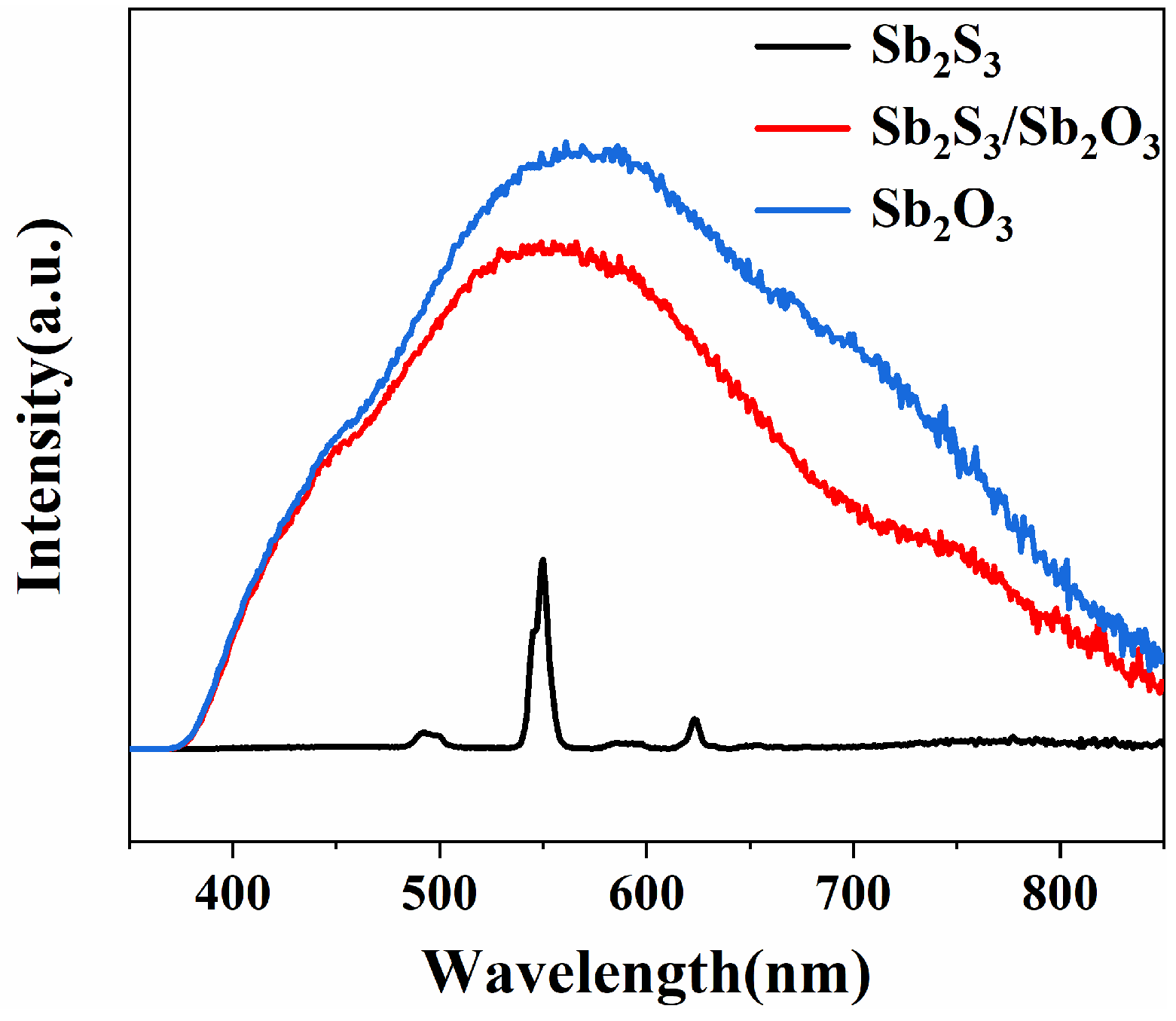
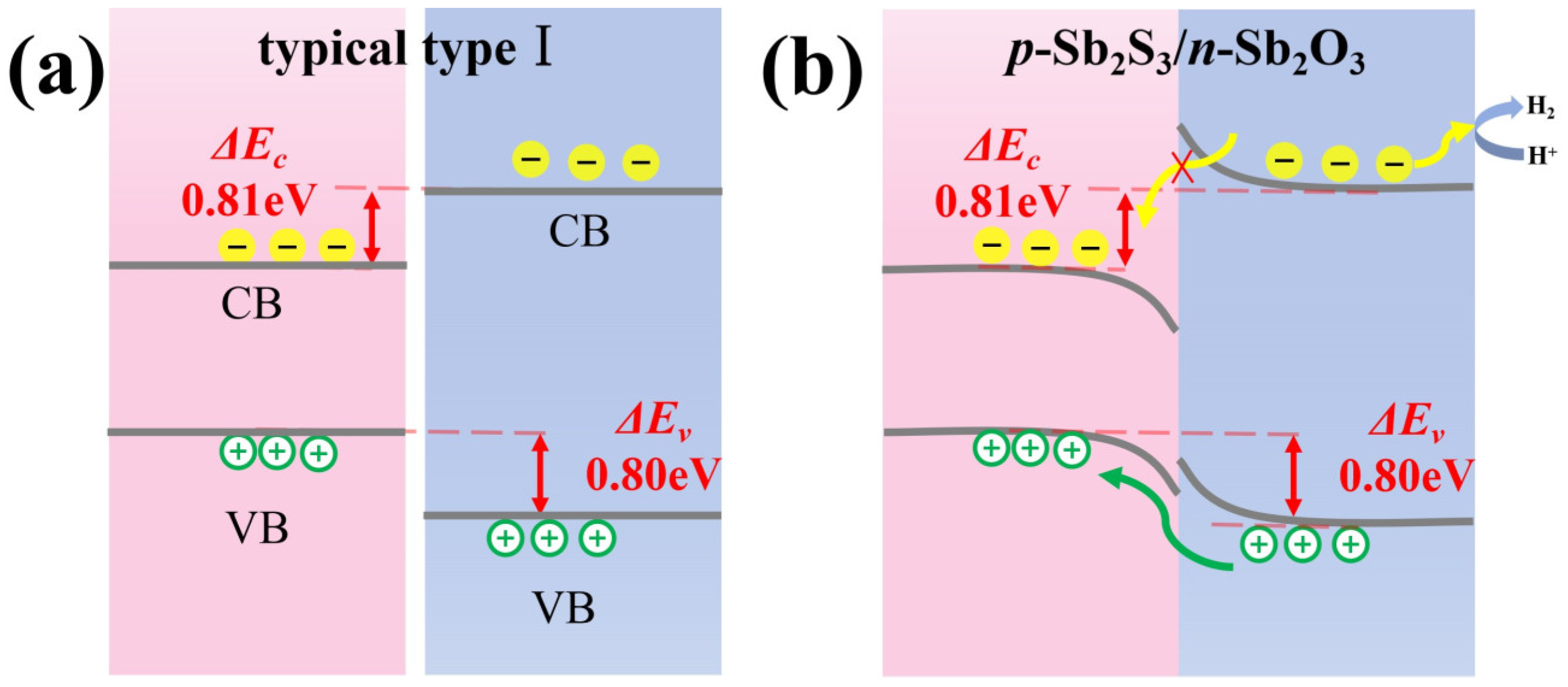
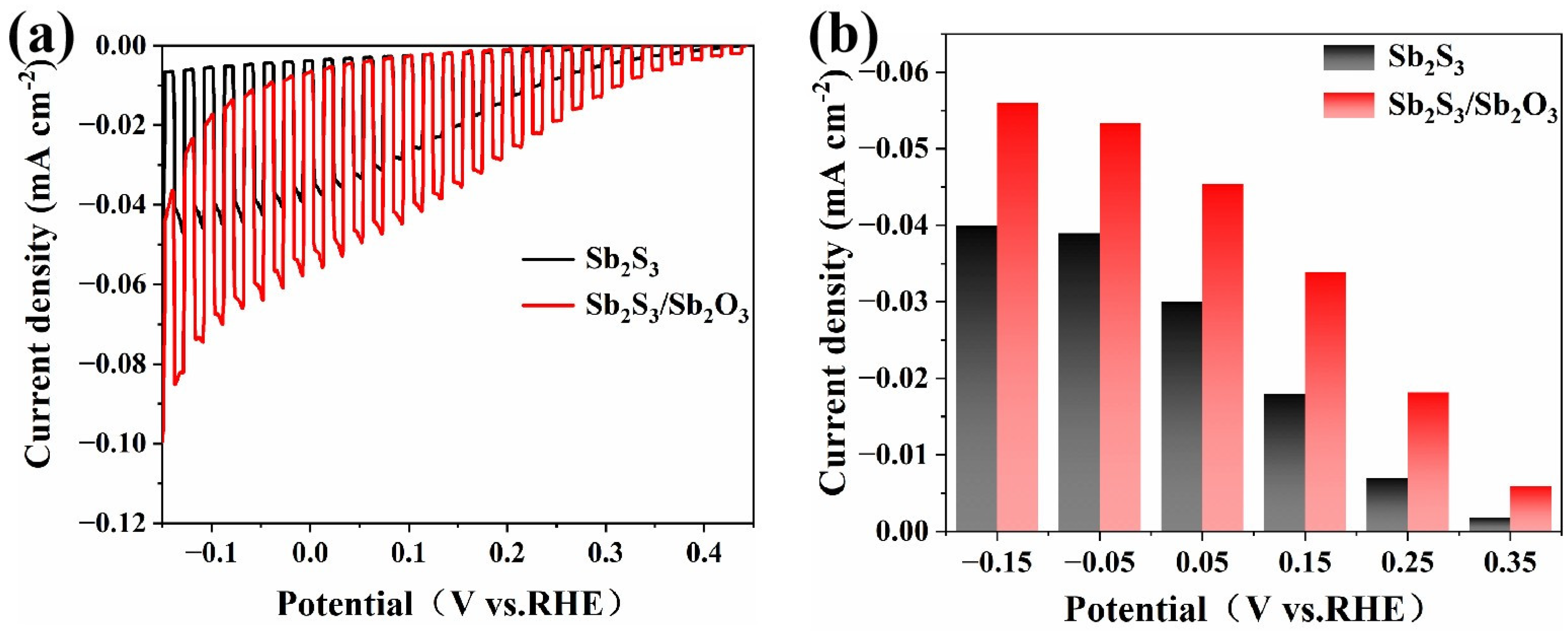
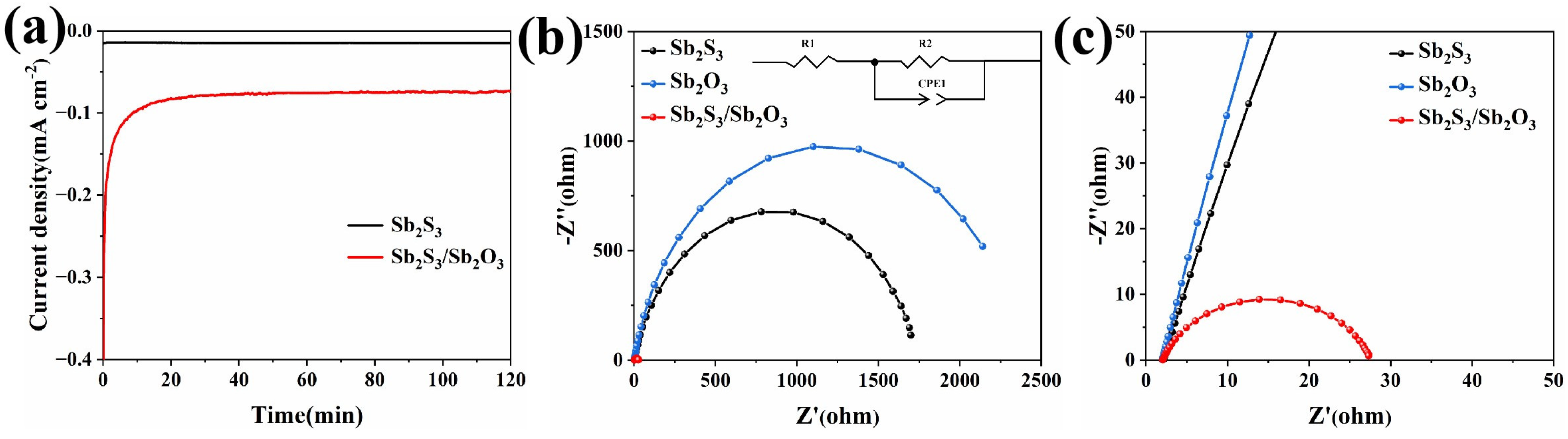
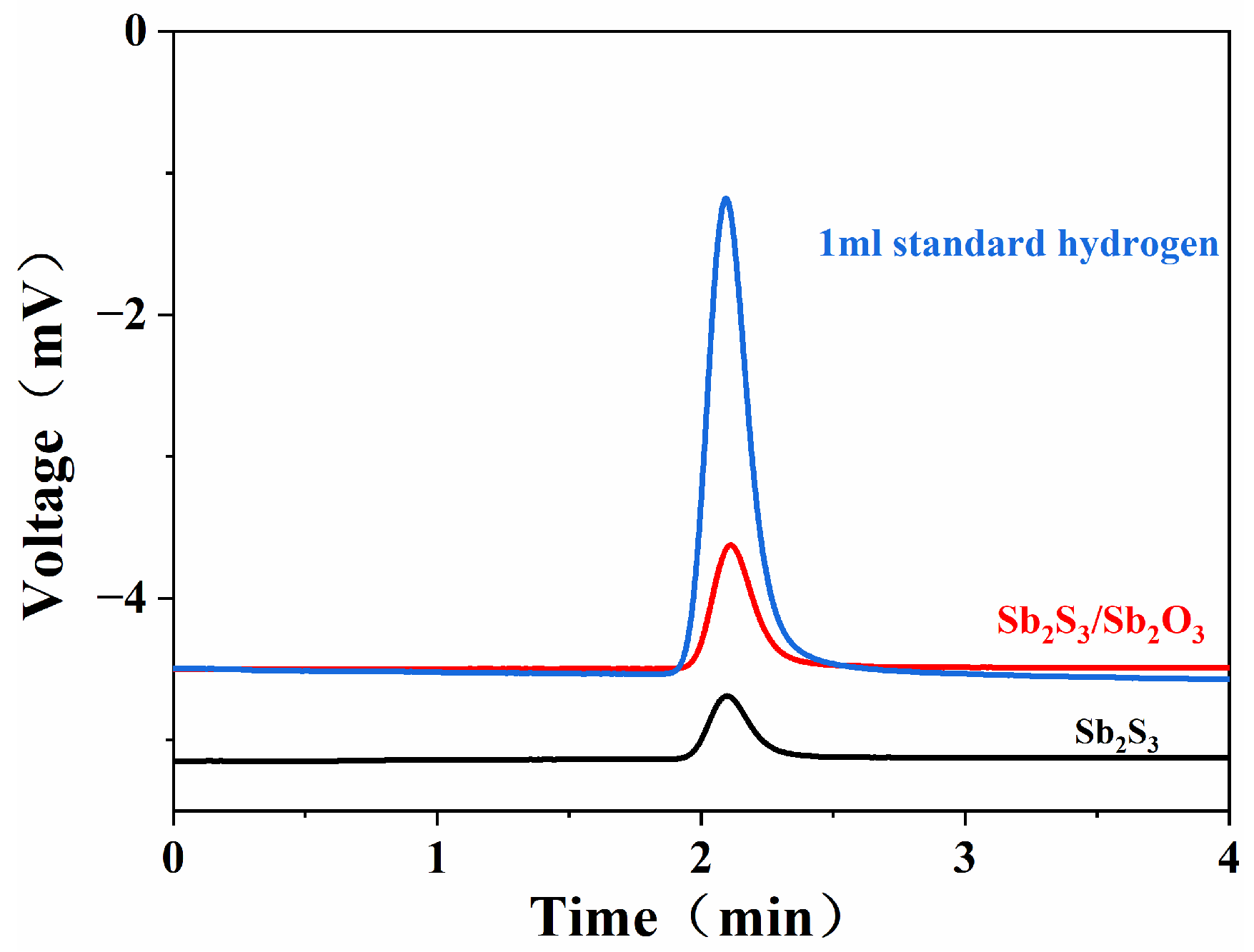
We prepared antimony metal films via electrodeposition, followed by the synthesis of Sb2S3 films through a chemical vapor phase reaction. Finally, an Sb2O3 film was deposited onto the Sb2S3 film using a chemical bath method, successfully constructing a heterojunction photocathode of Sb2S3/Sb2O3; the synthesized Sb2S3/Sb2O3 heterojunction is classified as a Type I heterostructure. The resulting Sb2S3/Sb2O3 heterojunction exhibited a photocurrent density of −0.056 mA cm−2 at −0.15 V (vs. RHE), which is 1.40 times higher than that of Sb2S3 alone under simulated solar illumination. Additionally, the Sb2S3/Sb2O3 heterojunction demonstrated a lower carrier recombination rate and a faster charge transfer rate compared to Sb2S3, as evidenced by photoluminescence and electrochemical impedance spectroscopy tests. For these reasons, the Sb2S3/Sb2O3 heterojunction obtained a hydrogen precipitation rate of 0.163mL cm−2 h−1, which is twice the hydrogen precipitation rate of Sb2S3, under the condition of 60 min of light exposure. The significant enhancement in photoelectrochemical performance is attributed to the formation of the Sb2S3/Sb2O3 heterojunction, which improves both carrier separation and charge transfer efficiency. This heterojunction strategy holds promising potential for visible light-driven photoelectrochemical water splitting.
Keywords: Sb2S3 film; Sb2S3/Sb2O3 heterojunction; photoelectrochemical; water splitting Sb2S3 film; Sb2S3/Sb2O3 heterojunction; photoelectrochemical; water splitting