Article

Gradually Tunable Conductance in TiO2/Al2O3 Bilayer Resistors for Synaptic Device
Division of Electronics and Electrical Engineering, Dongguk University, Seoul 04620, Korea
*
Author to whom correspondence should be addressed.
Metals 2021, 11(3), 440; https://doi.org/10.3390/met11030440
Submission received: 14 February 2021 / Revised: 4 March 2021 / Accepted: 5 March 2021 / Published: 7 March 2021

Abstract

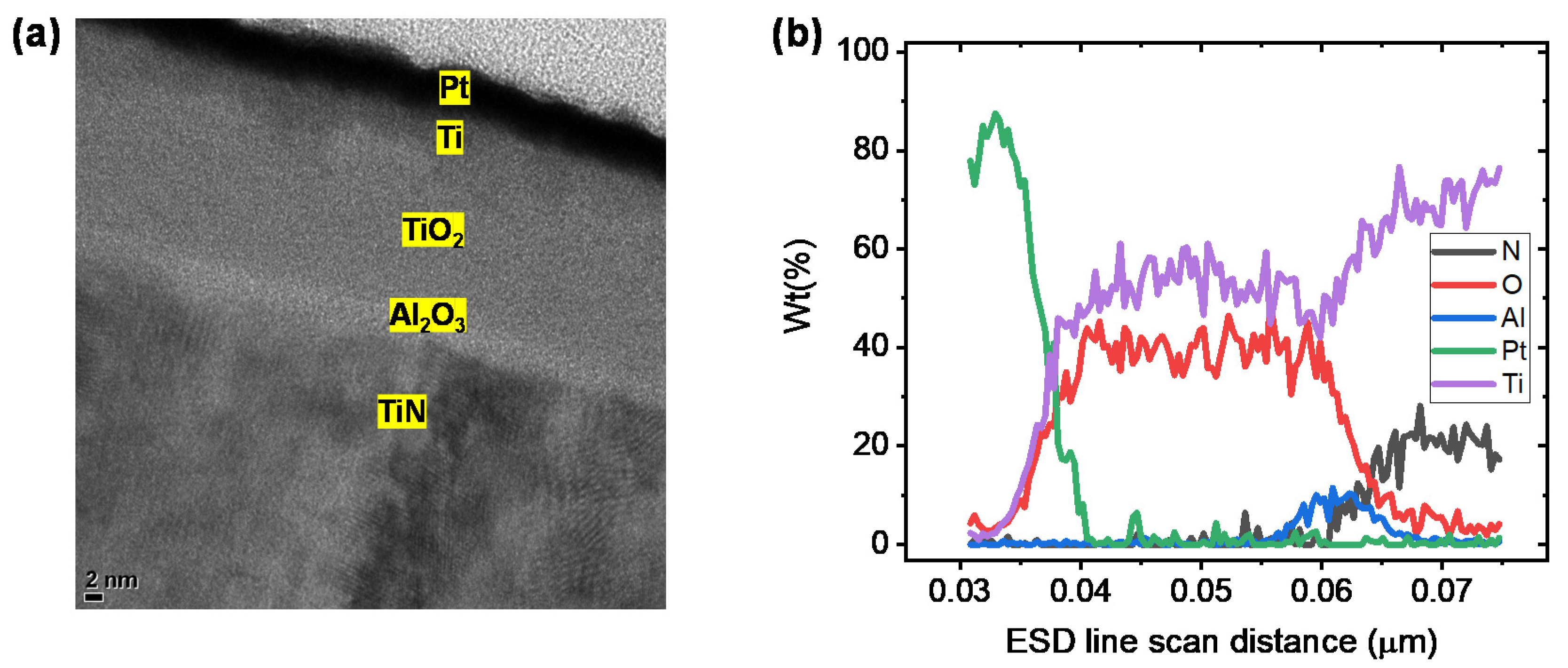
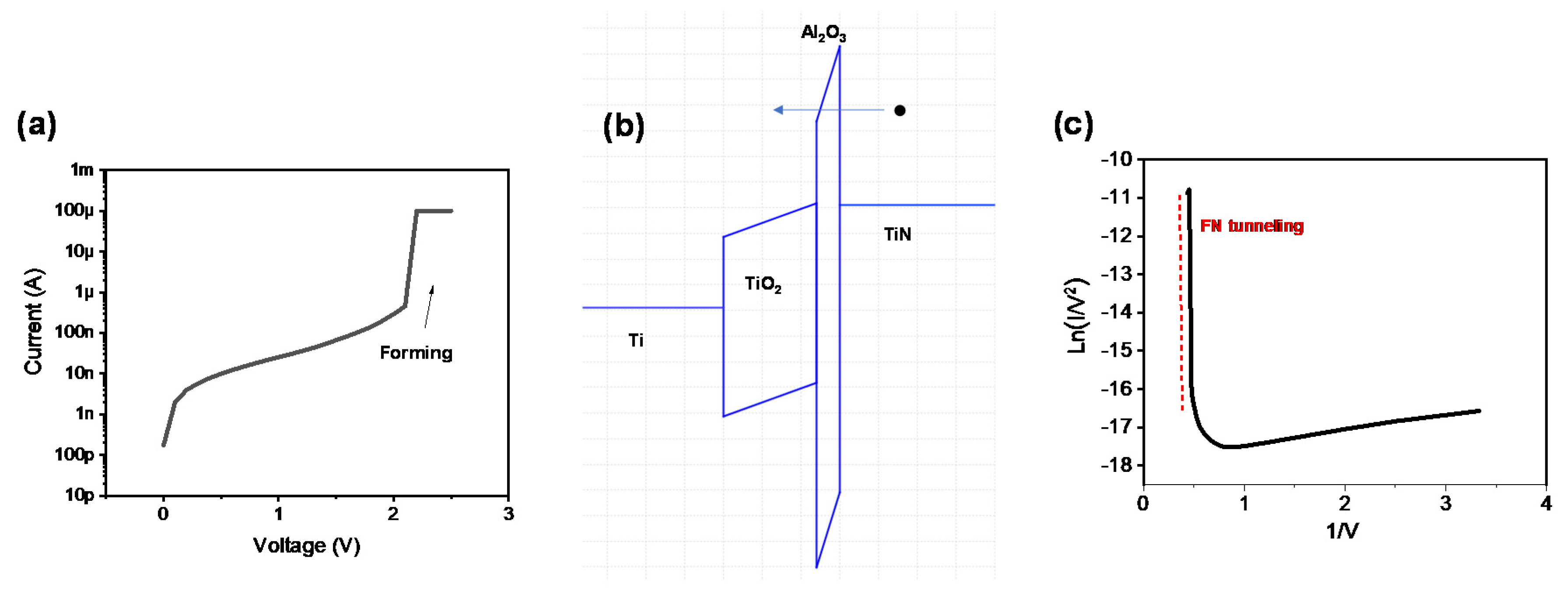
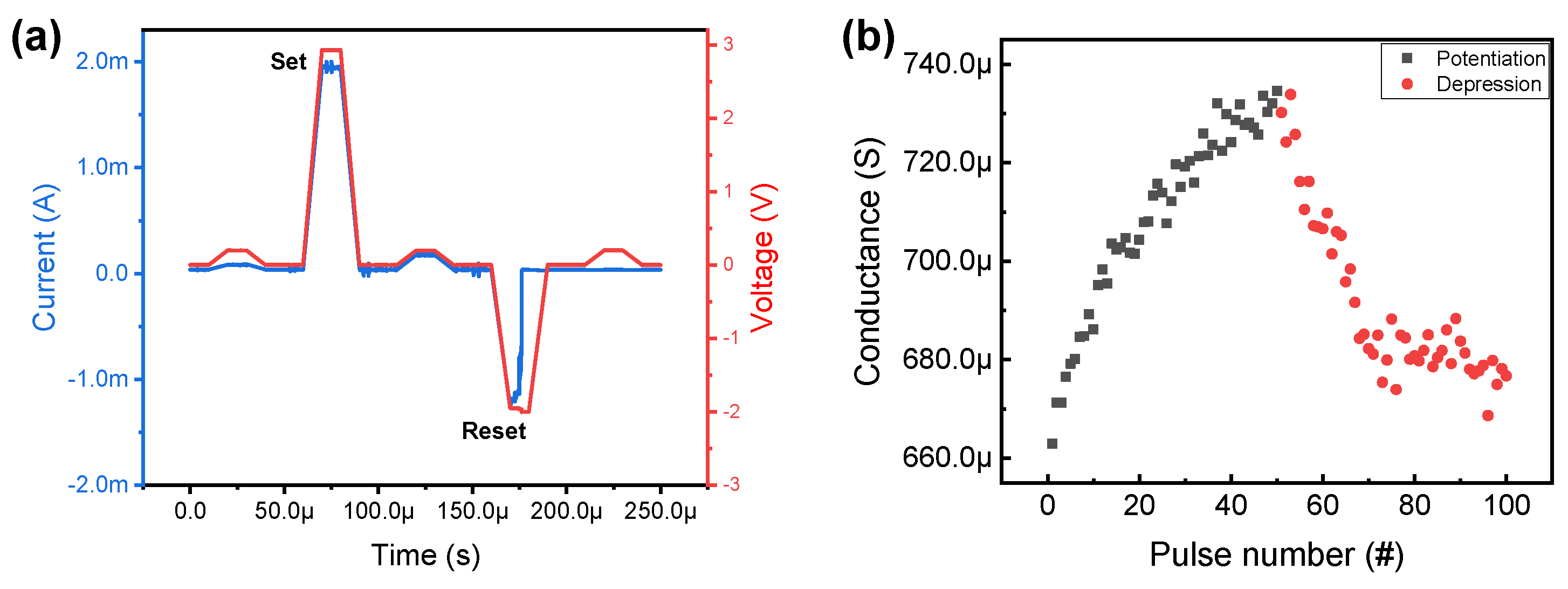
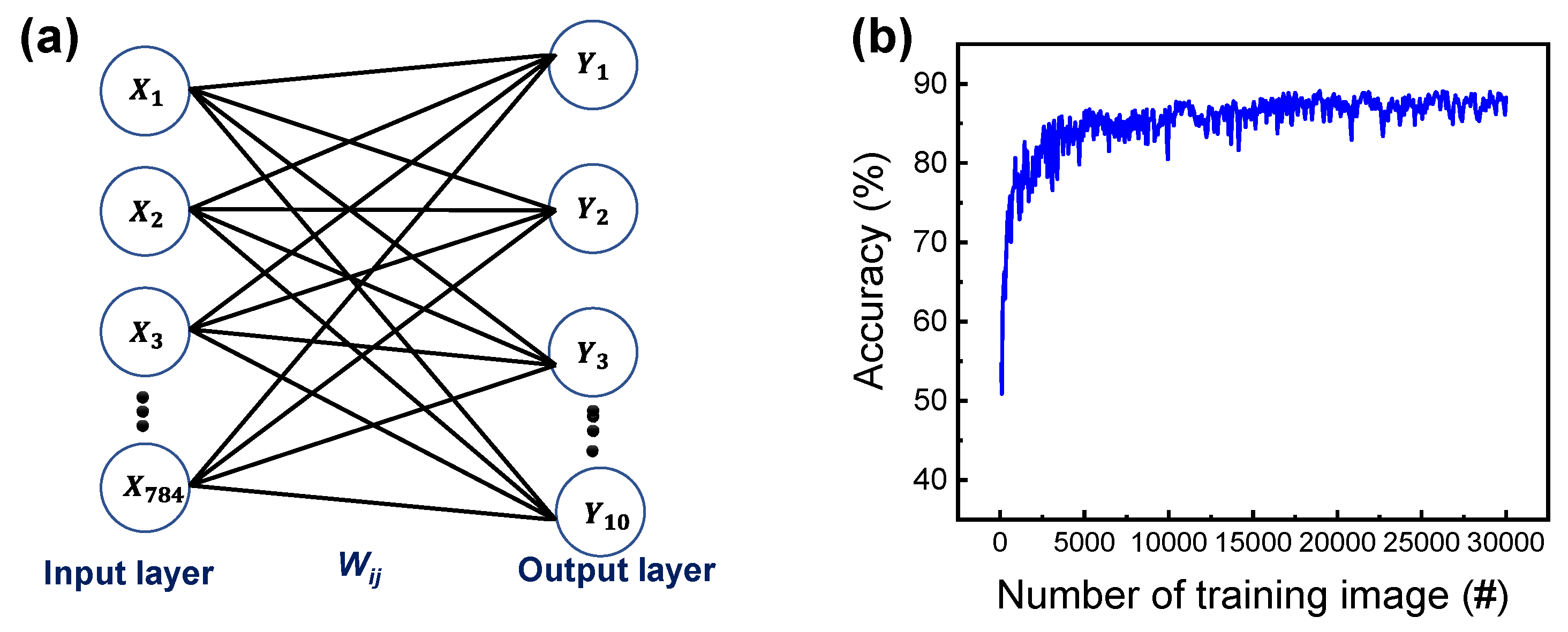
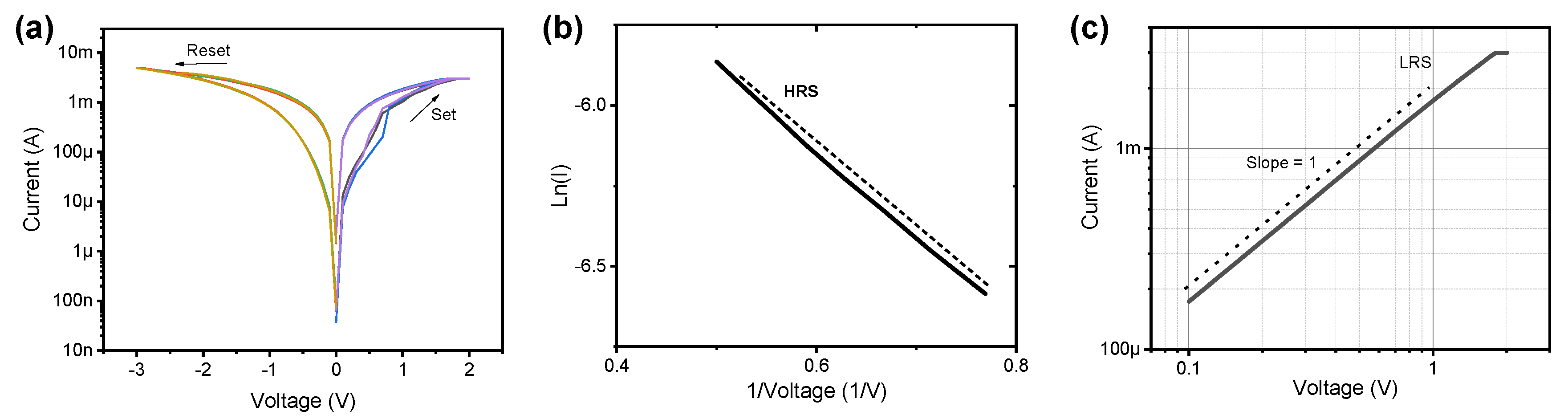
In this work, resistive switching and synaptic behaviors of a TiO2/Al2O3 bilayer device were studied. The deposition of Pt/Ti/TiO2/Al2O3/TiN stack was confirmed by transmission electron microscopy (TEM) and energy X-ray dispersive spectroscopy (EDS). The initial state before the forming process followed Fowler-Nordheim (FN) tunneling. A strong electric field was applied to Al2O3 with a large energy bandgap for FN tunneling, which was confirmed by the I-V fitting process. Bipolar resistive switching was conducted by the set process in a positive bias and the reset process in a negative bias. High-resistance state (HRS) followed the trap-assisted tunneling (TAT) model while low-resistance state (LRS) followed the Ohmic conduction model. Set and reset operations were verified by pulse. Moreover, potentiation and depression in the biological synapse were verified by repetitive set pulses and reset pulses. Finally, the device showed good pattern recognition accuracy (~88.8%) for a Modified National Institute of Standards and Technology (MNIST) handwritten digit database in a single layer neural network including the conductance update of the device.
Keywords: neuromorphic system; synaptic device; resistive switching; metal oxides; bilayer neuromorphic system; synaptic device; resistive switching; metal oxides; bilayer