
Article

Who Chooses to Marry? A Bayesian Analysis of Marital Status and Sociodemographic Outcomes in Japan

1
Center for Advanced Intelligence Project, RIKEN, Tokyo 103-0027, Japan
2
Faculty of Economics, Kanazawa Gakuin University, Kanazawa 920-1392, Japan
3
Faculty of Economics and Business Administration, Fukushima University, Fukushima 960-1296, Japan
4
Faculty of Economics, Keio University, Tokyo 108-8345, Japan
*
Author to whom correspondence should be addressed.
Societies 2026, 16(3), 98; https://doi.org/10.3390/soc16030098
Submission received: 28 January 2026 / Revised: 16 March 2026 / Accepted: 16 March 2026 / Published: 19 March 2026

Abstract

Delayed marriage and non-marriage have become increasingly important issues in Japan, where marriage remains closely related to household formation and well-being. This study examines which sociodemographic characteristics are associated with being married and how marital status correlates with economic conditions, health behaviors, subjective well-being, and COVID-19-related measures. Using annual panel data from 2014 to 2022, we first conducted descriptive comparisons between married and non-married individuals and then estimated a Bayesian panel logit model with respondent-specific effects to account for unobserved heterogeneity. The analysis was designed to identify associations rather than causal effects. The results showed the strongest positive associations with being married for individuals aged 30–49 years, consistent with delayed marriage. Employment attributes such as holding side work and managerial positions were positively associated with marriage, whereas nonprofit employment and self-employment were negatively or imprecisely associated. Financial assets and total debt were positively correlated with marriage, consistent with joint household formation. Higher happiness and life hope were positively associated with being married; regular exercise and longer weekend sleep were negatively associated, whereas longer weekday sleep was positively associated. In addition, respondent-specific effects revealed substantial heterogeneity beyond observed covariates. These findings identify key socioeconomic and behavioral domains associated with marriage in Japan, highlight the importance of unobserved heterogeneity, and provide evidence that may help identify groups prone to delayed marriage under changing social and economic conditions.

1. Introduction

Marriage is a fundamental institution that links individual life trajectories with broader social structures. The literature indicates that marital status is related to subjective well-being [1,2], psychological health [3,4], and economic outcomes [5,6]. However, the magnitude and direction of these relationships vary across cultural contexts, social institutions, and gender-role norms.
Motivated by delayed marriage and non-marriage in Japan [7], where marriage continues to serve as an aspirational social norm [8], this study focuses on identifying the sociodemographic and socioeconomic characteristics associated with being married. In particular, we examine the association between marital status and socioeconomic attributes and measures of well-being. Throughout, we interpret empirical patterns as associations rather than causal effects.
Moreover, marital status is associated with educational attainment, high labor market positions, and perceived financial satisfaction [9,10]. It also influences quality of life related to household health [11], life satisfaction [12], overall quality of life [13], job satisfaction [14], and personal growth [15].

1.1. Prior Research on Marriage, Health, and Well-Being

Scholars have examined the impact of marriage on physical health from various perspectives. Married individuals exhibit lower mortality from cardiovascular disease and cancer [16,17,18] and decreased risk of depression [19,20]. Conversely, marriage has been linked to high risks of obesity, other lifestyle-related diseases [21,22], suicide [23], hypertension [24], and cognitive differences [25]. The marital status of parents also influences the health-related quality of life of their children [26].
Furthermore, positive links between marriage and happiness are widely reported [27,28]. For example, marital status correlates with better self-rated health [29,30], self-esteem [31] and life satisfaction [12,32], whereas divorce and widowhood exert negative consequences on mental health [33,34]. In general, married individuals report high levels of life satisfaction and positive emotions [4,35], while non-married ones and divorcees exhibit negative effects [36]. In addition, marital quality is important: low levels of satisfaction with marriage yield fewer benefits in terms of well-being [37,38].
Notably, the coronavirus disease 2019 (COVID-19) pandemic highlighted the buffering role of marriage in mental and physical well-being [39,40]. A key caveat in the literature is self-selection: individuals with high baseline levels of well-being or better health may be more likely to marry. Accordingly, differences between married and non-married individuals reflect selection into marriage and potential consequences of marriage. Studies explicitly examining whether marriage increases happiness or whether happier people are more likely to marry have emphasized this concern [41]. Therefore, the current study addresses health and well-being measures as correlates and interprets results in an associational framework.

1.2. Marital Status and Socioeconomic Attributes: Who Opts to Marry?

The study poses a central question: “which individuals decide to marry?” High levels of subjective well-being [41], adverse childhood experiences [42], and legal access to abortion [6] are associated with the decision to marry, while expanding career opportunities for women increases the risk of divorce [43]. Self-esteem, intimacy orientation, and regional or cultural norms influence individuals’ marriage intention [44,45]. Moreover, marriage is a socially embedded institution: reference-group norms, social networks, and prevalent gender-role expectations shape preferences for marriage and perceived payoffs from marrying [8,44].
Moreover, marital status is associated with socioeconomic disparities. Married individuals typically enjoy high levels of income, wealth, and financial satisfaction [46,47]; however, marriage can widen the gender gap in employment [48]. Meanwhile, other studies have found no link between marriage and financial satisfaction [49]. Smoking [50], physical activity [51], and happiness inequality [52] vary with marital status, including late-life social participation, which prevents frailty [53].
Further, gender roles, labor market structures, and family norms in Japan differ from those of other countries. Thus, empirically examining these factors is essential for elucidating local inequality and the social role of marriage in Japan.
Using nationally representative Japanese panel data, this study examines how marital status is associated with socioeconomic attributes and well-being-related measures in Japan. Guided by prior research, we expect marriage to be most strongly associated with life-course timing, employment attributes linked to household formation, assets and liabilities, and selected well-being and time-allocation measures while also allowing for substantial heterogeneity beyond observed covariates. The analysis is associational rather than causal and aims to identify the main correlates of being married in Japan.
The remainder of the paper is structured as follows. Section 2 describes the data and variables and introduces the analytical method. Section 3 presents a preliminary analysis comparing the averages of key variables between married and unmarried individuals and shows the empirical results. Section 4 discusses the findings from the perspective of marriage culture in Japan and conducts comparisons with other countries. Section 5 concludes and presents policy implications, limitations of the study, and directions for further research.

2. Materials and Methods

2.1. Participants and Setting

This study employed annual panel data from a self-administered survey on Japanese adults conducted between 2014 and 2022 by the Panel Data Research Center of the Institute for Economic Studies at Keio University. Across nine waves, 5723 individuals provided 39,250 valid responses. Paper questionnaires were disseminated and retrieved during home visits, and from 2021 onward, an online questionnaire was also available.
To identify respondent-specific effects in the panel logit model, we restricted the estimation sample to respondents who exhibited within-person variation in marital status during the observation period. We excluded individuals who completed fewer than two survey waves, never changed marital status (always married or always not married), or lived outside Japan. The final estimation sample comprised 2427 observations from 309 respondents.

2.2. Measures

The dependent variable was marital status, coded as 1 if the respondent was married and 0 otherwise in each wave. Accordingly, the category “not married” may include never-married, divorced, and widowed respondents as recorded in the survey.
The explanatory variables covered regional and urban-size indicators, demographic variables, employment status and workplace sector, psychological indicators, drinking and smoking habits, health check-up indicators, exercise, sleep duration, satisfaction measures, and economic variables. Regional indicators included Hokkaido, Tohoku, Chubu, Kinki, Chugoku, Shikoku, and Kyushu, with Kanto as the reference category. Urban-size indicators distinguished other cities and towns/villages from metropolitan areas. Demographic variables included sex, age-group dummies, and sex-by-age interactions. Employment-related variables captured side work, leave status, workplace sector, managerial status, and side-job restrictions. The psychological indicators were happiness, life hope, and self-rated health. Health-related behavior variables included drinking frequency, smoking status, health check-up status, regular exercise, and weekday and weekend sleep duration. Satisfaction measures captured income, job, housing, leisure time, leisure style, health, and overall life satisfaction. Economic variables included the logarithms of bank deposits, securities, debt, loan payments, and charitable donations.
Table 1 and Table 2 report overall descriptive statistics for the main variables used in the analysis. Detailed year-specific descriptive statistics and subgroup mean-comparison tables are reported in the Supplementary Materials.

2.3. Design and Procedure

Missing values due to item non-response or entry errors were imputed using a one-nearest-neighbor algorithm. To capture the early impacts of the COVID-19 pandemic, overline versions of selected variables were created using only the 2021 and 2022 survey waves. Because each wave was fielded in February, the 2021 and 2022 responses reflect conditions in 2020 and 2021, respectively.
We first conducted descriptive comparisons between married and non-married respondents for the full sample and separately for the male and female subsamples to examine potential gender-specific patterns. Independent-sample t-tests were used to assess whether observed differences in means were statistically significant. Detailed subgroup comparison results are provided in the Supplementary Materials.

2.4. Statistical Analysis

We estimated a Bayesian panel logit model with respondent-specific effects to examine the association between marital status and individual-level characteristics. Let y i t denote marital status for respondent i in year t, where y i t = 1 if married and y i t = 0 otherwise. The probability of being married was modeled as
P ( y i t = 1 ) = logit 1 ( α i + x i t β ) ,
where α i captures respondent-specific time-invariant heterogeneity. Estimation was conducted using Gibbs sampling with Pólya–Gamma data augmentation. Full prior settings, notation, and technical derivations are provided in Appendix A.

3. Results

3.1. Preliminary Analysis of Marital Status and Sociodemographic Characteristics

To explore the relationship between marital status and demographic characteristics, we first conducted a descriptive analysis comparing the mean values of key demographic attributes between married and unmarried individuals. This comparison served as a preliminary step for elucidating underlying sociodemographic differences associated with marital status. We conducted this comparison for the full sample and separately for the male and female subsamples to examine potential gender-specific patterns. Independent-sample t-tests were performed to assess whether observed differences were statistically significant between married and unmarried individuals. Detailed year-specific descriptive statistics and mean-comparison tables between married and unmarried respondents including sex-specific comparisons by year are reported in the Supplementary Materials. The findings provide foundational insights into sociodemographic differences between married and unmarried individuals, which were subsequently explored via logit analysis.

3.1.1. Economic Factors and Asset Status

For the full sample, married individuals tended to exhibit higher savings and securities assets compared with unmarried individuals. This result can be attributed to the fact that savings and asset accumulation tend to progress more efficiently due to shared income after marriage. In contrast, unmarried individuals primarily manage savings individually, which results in relatively lower securities assets and savings. Alternatively, debt and loan balances are significantly higher among married individuals, which may be likely due to joint loans and shared financial burdens such as mortgages.

3.1.2. Health Behaviors

For men, married individuals exhibited lower exercise frequency and higher self-reported health ratings. In the context of married life, household responsibilities (e.g., housework and child rearing) may limit the time available for exercise, while emotional and social support within households may contribute to better self-reported health. For women, married individuals also tend to have less frequent exercise habits, and household responsibilities seemingly play a significant role in the formation of health behaviors.

3.1.3. Happiness and Life Hope

For the full sample, married individuals report higher levels of happiness and life hope. Marriage promotes stability in life, while support within the family likely enhances happiness and optimism about the future. Men and women experience increases in life satisfaction and mental support after marriage, which indicates positive impacts on overall well-being.

3.1.4. Impact of COVID-19

For men, married individuals are less likely to experience job loss or income reduction due to COVID-19. A potential reason is that married individuals, particularly those with multiple sources of income, can distribute economic risks and mitigate the effects of COVID-19 more effectively. Conversely, unmarried individuals are more vulnerable to the economic impacts of the pandemic, because they typically rely on one source of income.
Overall, these descriptive patterns provide a preliminary picture of differences between married and non-married respondents and motivate the multivariate panel logit analysis reported next.

3.2. Results of Panel Data Model

The Bayesian panel logit model was estimated under weakly informative prior settings. The full prior specification, notation, and technical details of the estimation procedure are provided in Appendix A.
Table 3 presents the posterior coefficients. The estimation sample is limited to respondents whose marital status changed at least once between 2014 and 2022; therefore, the coefficients should be interpreted as associations rather than causal effects. In the subsequent text, we highlight significant estimates.

3.3. Age and Time Trends: Evidence of Delayed Marriage

Using ages less than 30 years as the reference, the study observed the strongest positive associations with being married for ages 30–39 and 40–49 years, where CI denotes the 95% credible interval. The coefficients remain positive for ages 50–59, 60–69, and 70+ years, which confirms the well-documented postponement of first marriage in Japan. Year dummies became negative after 2015, with the sharpest declines observed in 2020 and 2021.
Given that age dummies are included, the year indicators can be interpreted as net period-level changes in marriage propensity. At the same time, under the standard age–period identification constraint, these effects also reflect a combination of period and cohort shifts. Therefore, the study cautiously interprets the increasingly negative pattern as consistent with broader macro and normative changes over time, with an additional sharp decline observed during the COVID-19 period.

3.4. Employment Attributes and Occupational Status

Relative to public-sector employees, holding a side job and occupying a managerial position are strongly positively associated with being married. Employment in a nonprofit organization displays a significant negative association, whereas self-employment is negative but imprecise.

3.5. Assets and Liabilities

Financial assets and total debt balance are positively associated with being married. The logarithm of monthly repayment flow indicates virtually no association.

3.6. Happiness and Health Behaviors

The Happiness score, as well as optimism about the future, is positively associated with being married. Regular exercise and long weekend sleep are negatively associated, whereas longer weekday sleep is positively associated.

3.7. Large but Statistically Uncertain Associations

Living in a town or village and the male × age 40–49 interaction exhibit large posterior means but 95% credible intervals that cross zero, indicating the need for further investigation using larger samples.

3.8. Individual Effects

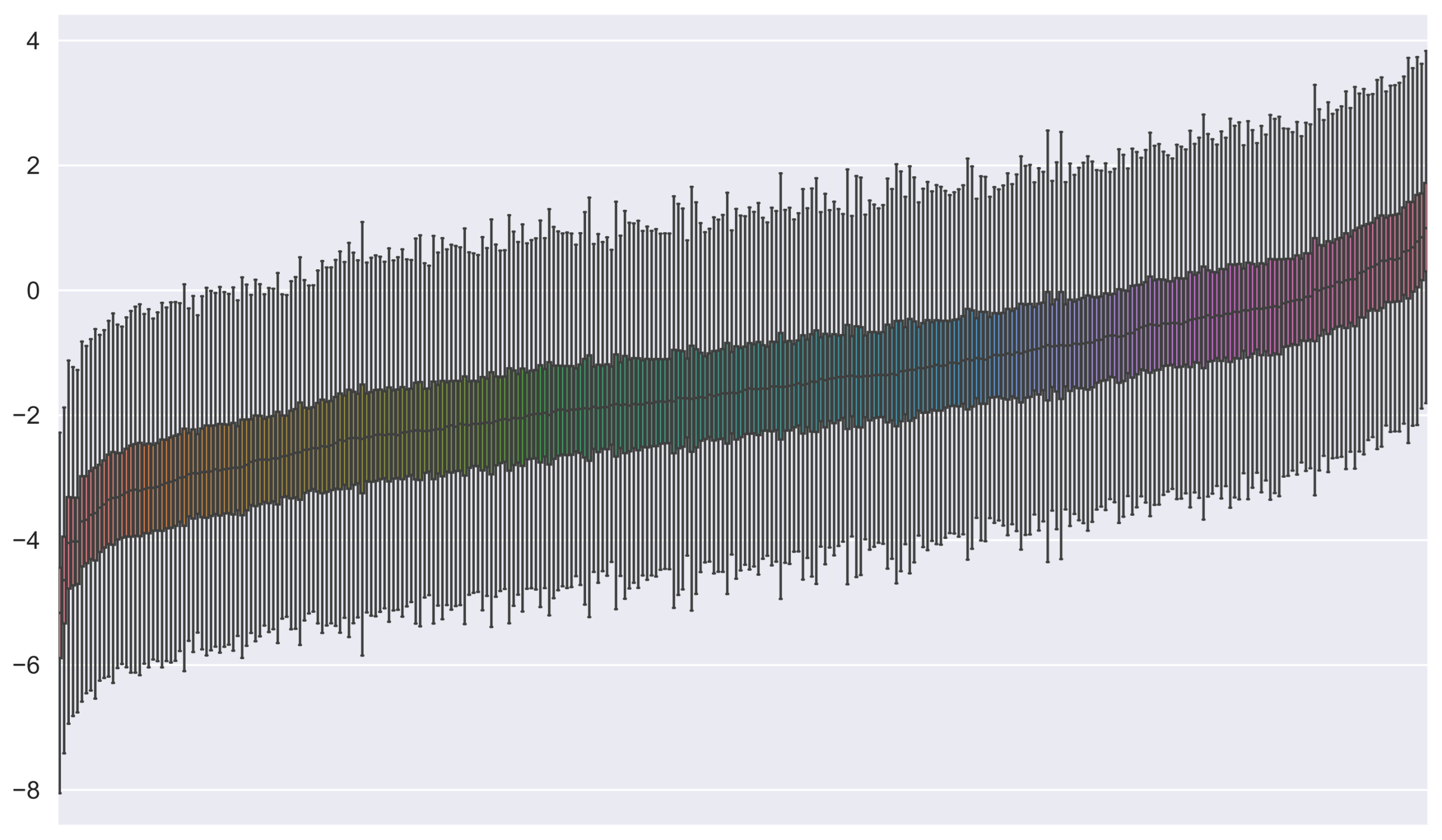
Figure 1 displays box plots of the posterior distributions of individual effects for the 309 respondents. The posterior means of individual effects range from 5.163 to 1.009 on the logit scale, yielding a span of 6.172 . Ceteris paribus, this corresponds to an odds ratio of e 6.172 4.8 × 10 2 , indicating that the most marriage-prone individual is approximately 480 times more likely to marry than the least. In probability terms, the estimated likelihood of marriage increases from approximately 0.6 % to 73 %. This substantial heterogeneity, unexplained by observed socioeconomic covariates, indicates that important determinants of marital behavior are not captured by the observed covariates alone.

4. Discussion

This section interprets the abovementioned empirical results from the perspective of Japan’s institutional and cultural contexts, relates them to previous findings, and summarizes policy relevance and study limitations.
Before turning to interpretation, the main findings can be summarized briefly. Marriage was most strongly associated with ages 30–49, with selected employment attributes such as side work and managerial status, and with higher happiness and life hope. Financial assets and debt were positively associated with being married, while exercise and longer weekend sleep were negatively associated. The estimated respondent-specific effects also revealed substantial heterogeneity beyond observed covariates.
While the analysis is intentionally associational rather than causal, it contributes to the literature by providing Bayesian panel logit estimates with respondent-specific effects using Japanese longitudinal survey data. This framework enables the quantification of covariate associations and substantial unobserved heterogeneity in marriage propensity, which is difficult to assess using purely cross-sectional comparisons.

4.1. Interpretation of Estimated Parameters

4.1.1. Age Profile and LifeCourse Transitions

The age coefficients follow a non-linear pattern: they peak at ages 30–49 years, slightly decrease in the 50s, increase again in the 60s, and decline after the age of 70 years. The scarcity of married individuals aged less than 30 years confirms the well-documented trend of postponed first marriages in Japan [7]. Rebound in the 60s is potentially associated with retirement re-planning and remarriage in later life. Qualitative studies report that older adults regard remarriage as a positive restart [54,55]. Contraction after the age of 70 + years is consistent with widowhood reclassification and the adverse mental health effects of spousal loss [56]. The year dummies sharply decreased in 2020–2021, indicating that the COVID-19 pandemic temporarily deterred marriage formation.

4.1.2. Employment Structure and Institutional Incentives

Side work and managerial status exhibited strong positive associations with being married, which supports household utility models in which higher and more stable income facilitates marriage [57]. Employment in the non-profit sector was negatively related, suggesting that lower pay or slower promotion paths delay family formation. The coefficient for self-employment is negative but imprecise, reflecting heterogeneous entrepreneurial trajectories.

4.1.3. Financial Assets, Debt, and Joint Decision-Making

Net financial assets and total debt are positively correlated with being married, emphasizing that marriage frequently coincides with asset building and liability taking. Similar links between wealth and marriage have been documented in studies outside of Japan [58,59]. If most debt is related to mortgages, then the findings imply that home purchase and marriage are jointly decided; previous studies have also reported this pattern in Japan [60,61,62].

4.1.4. Health Behaviors and Time Allocation

Regular exercise and long weekend sleep hours are negatively associated with marriage, whereas weekday sleep hours yield a positive link. Similarly, prior studies have observed less physical activity after marriage or childbirth [63,64]. Married individuals tend to maintain stable weekday sleep, whereas single individuals compensate on weekends [65,66]. Occasional drinking is negatively related to marriage—evidence that social drinking is more common among single adults [67,68].

4.1.5. Unobserved Heterogeneity

The estimated individual effects exhibit a wide dispersion, thus indicating that baseline marriage propensity varies substantially across respondents. The average covariate effects alone can only partially explain marital behavior. Such heterogeneity may reflect not only stable individual dispositions but also differences in values, normative orientations toward marriage, and marriage-market or social-network environments [8,44,45].

4.2. Policy Relevance

Marriage is closely associated with health and well-being; thus, quantifying individuals who opt to and do not opt to marry provides an evidence base for targeting family, labor, housing, and health initiatives. The estimates enable data-driven prioritization, impact measurement, and early warning along three dimensions: (i) identifying groups who are most prone to postpone or forgo marriage (e.g., young low-income workers); (ii) identifying relevant policy channels (e.g., income, housing finance, and time allocation); and (iii) monitoring vulnerability to macro shocks such as COVID-19.

4.3. Limitations and Future Research

This study has several limitations, which open avenues for future research. The analysis is restricted to the 309 respondents whose marital status changed at least once between 2014 and 2022 to ensure the identification of respondent-specific effects in the panel logit framework. Thus, the estimates are not directly generalizable to individuals who remained continuously married or continuously not married during the observation period. Additional panel waves and refreshment samples would be valuable for comparing these groups within a unified framework.
In addition, the results should be interpreted as statistical associations rather than causal effects. Although the panel structure and respondent-specific effects help control for time-invariant unobserved heterogeneity, causal identification would require exogenous variation such as policy changes or plausibly exogenous regional shocks.
Precision is also limited for covariates with small cell counts (e.g., certain regions or rare occupational categories), leading to wider posterior intervals. Future work could improve precision using a larger effective sample size such as through data-fusion approaches that link panel data to external administrative or government statistics.
Regarding COVID-19 measures, related questions are available only in the 2021 wave, which prevents a full assessment of temporal dynamics during the pandemic period. Future survey waves would allow for a more comprehensive examination of medium-term behavioral changes and long-term adjustments.
Several variables related to health behavior (e.g., exercise, sleep, and alcohol use) rely on self-reports; therefore, differences in respondents’ interpretations and measurement errors may influence estimates. A comprehensive questionnaire design, improved wording, and supplementary validation items would help mitigate this concern.
Furthermore, the current specification excludes explicit controls for dependent children or detailed household composition. Child-related responsibilities may be closely interconnected with time allocation (e.g., sleep and exercise) and marriage decisions. Therefore, incorporating rich measures of household structure is a useful direction for future research.
Moreover, age is modeled indirectly at first marriage or marriage duration. Given that the dependent variable is annual marital status and the estimation sample is restricted to respondents who underwent a transition in marital status, evaluating heterogeneity by marriage timing would require a different design and richer information on marriage histories. We regard this aspect as an important avenue for future research.
Addressing these limitations by expanding the data and refining the analytical framework would enhance the current understanding of the determinants of marriage in Japan.

5. Conclusions

This study examined the relationship between marital status and various outcomes (i.e., economic stability, health, happiness, and age) using panel data from Japan. Results indicated that married individuals exhibited higher savings, assets, and life satisfaction compared with unmarried individuals. This finding suggests that marriage is associated with greater economic and emotional stability. However, married individuals also tended to accrue more debt, which may be attributable to joint financial responsibilities. In terms of health behaviors, married individuals reported less frequent exercise, potentially due to additional household responsibilities. Meanwhile, with respect to the impact of COVID-19, married individuals were less affected by job loss and income reduction, possibly due to economic risk-sharing within households. The study also observed gender differences, with married women in particular having less frequent exercise habits. The study found an evident relationship with age, as individuals who married at older ages tended to have higher economic stability and life satisfaction. These results implied that marriage is associated with increased economic and emotional stability, but household responsibilities can hinder health maintenance. Additionally, the results reflected the trend of delayed marriage in Japan, particularly among individuals aged in their late 30s and 40s, among whom marriage is more strongly associated with increased economic stability and happiness. This finding implies that shifting social and economic factors are influencing the timing of marriage in Japan.

Supplementary Materials

The following supporting information can be downloaded at: https://www.mdpi.com/article/10.3390/soc16030098/s1.

Author Contributions

Conceptualization, M.N.; methodology, M.N., T.T. and T.N.; software, M.N., N.K. and T.N.; validation, M.N. and T.T.; formal analysis, M.N., W.S. and N.K.; investigation, M.N., W.S. and N.K.; resources, M.N. and T.N.; data curation, M.N., W.S., N.K. and T.T.; writing—original draft preparation, M.N., W.S. and N.K.; writing—review and editing, M.N., T.T. and T.N.; visualization, M.N. and T.T.; supervision, T.N.; project administration, M.N.; funding acquisition, M.N., T.T. and T.N. All authors have read and agreed to the published version of the manuscript.

Funding

This research was funded by JSPS KAKENHI, grant numbers JP23K18819 and JP25K00626.

Institutional Review Board Statement

Not applicable.

Informed Consent Statement

Not applicable.

Data Availability Statement

Restrictions apply to the availability of these data. Data were obtained from Keio University and are available https://www.pdrc.keio.ac.jp/en/ (accessed on 24 April 2025) with the permission of Keio University.

Acknowledgments

The data for this analysis, Japan Household Panel Survey (JHPS/KHPS), was provided by the Panel Data Research Center, Institute for Economic Studies, Keio University.

Conflicts of Interest

The authors declare no conflicts of interest.

Abbreviations

The following abbreviations are used in this manuscript:
COVID-19Coronavirus disease 2019
MCMCMarkov chain Monte Carlo
ASISAncillarity–sufficiency interweaving strategy
SDStandard deviation
CIConfidence interval

Appendix A. Bayesian Hierarchical Logit Model

This study employed a standard Bayesian panel logit model to examine the relationship between marital status and individual-level characteristics. To consider unobserved heterogeneity, we incorporated individual effects, which were hierarchically modeled. Specifically, the study assumed that individual effects followed a normal distribution, with hierarchical mean and regression coefficients assigned normal priors while variance in individual effects was assigned an inverse gamma prior. Following [69], we adopted a data augmentation approach in which latent variables in the logit model were assigned a Pólya-Gamma prior distribution. This data augmentation ensured that the full conditional distributions belonged to the same family as that of prior distributions, thus enabling direct sampling from standard distributions and thereby simplifying random number generation. As a result, all parameters could be sampled using Gibbs sampling, which eliminates the need for the Metropolis–Hastings steps and improves computational efficiency within the Markov chain Monte Carlo (MCMC) framework.
The estimation strategy is based on a Bayesian panel logit regression. We define the following variables:
  • y i t : the binary variable of respondent i in year t.
  • x i t : the K × 1 vector of explanatory variables for respondent i in year t.
We consider a binary panel data model in which the dependent variable y i t indicates the marital status of individual i at time t. Formally,
y i t = 1 , if   married , 0 , if   unmarried ,         i = 1 , , N ,   t = 1 , , T i .
The binary outcome is assumed to follow a Bernoulli distribution,
y i t Bernoulli ( π i t ) ,
π i t = P ( y i t = 1 ψ i t ) = exp ( ψ i t ) 1 + exp ( ψ i t ) ,
ψ i t = α i + x i t β ,
where α i denotes an individual-specific effect capturing unobserved, time-invariant heterogeneity, and x i t is a vector of observed covariates.
We further defined the stacked outcome vector, design matrix, and individual effects as
y = y 11 y 1 T 1 y N 1 y N T N ,
X = x 11 x 1 T 1 x N 1 x N T N ,
α = α 1 α N .
Under this specification, the likelihood function of the panel logit model can be written as
p ( y X , α , β )   = i = 1 N t = 1 T i π i t y i t ( 1 π i t ) 1 y i t   = i = 1 N t = 1 T i exp ( ψ i t ) y i t 1 + exp ( ψ i t ) .
Prior distributions for the individual effects and regression coefficients are specified as
α i N ( μ α , σ α 2 ) ,         β N ( μ β , A β 1 ) ,
where individual effects are governed by the hierarchical prior
μ α N ( μ 0 , σ 0 2 ) ,
σ α 2 IG ν 0 2 , λ 0 2 ,
with IG ( · ) denoting inverse-gamma distribution.
Combining the likelihood in Equation (A7) with the prior distributions in Equations (A8) and (A9), Bayes’ theorem yields the following posterior distribution
p ( θ D ) p ( y X , α , β ) p ( θ ) ,
where D = ( y , X ) . Given that the posterior distribution in Equation (A11) is analytically intractable, we adopted a simulation-based approach and obtained posterior samples using Gibbs sampling [70].
Following Polson et al. [69], the logistic likelihood admits the identity
( exp ( ψ ) ) a ( 1 + exp ( ψ ) ) b   = 0 1 2 b exp   κ ψ ω ψ 2 2 p ( ω )   d ω ,
κ = a b 2 ,         ω PG ( b , 0 ) .
Here, PG ( · , · ) denotes the Pólya–Gamma distribution. Given that
( exp ( ψ ) ) a ( 1 + exp ( ψ ) ) b = exp ( ψ ) 1 + exp ( ψ ) , ( a = 1 , b = 1 ) , 1 1 + exp ( ψ ) , ( a = 0 , b = 1 ) ,
and ω ψ PG ( b , ψ ) , the full conditional distribution of ω i t is given by
ω i t y , X , α , β PG 1 , α i + x i t β .
Introducing the latent variables ω = ( ω 11 , , ω N T N ) , the likelihood can be rewritten as follows:
p ( y X , ω , α , β )   = i = 1 N t = 1 T i exp   κ i t ψ i t ω i t ψ i t 2 2 ,
where κ i t = y i t 1 / 2 .
After algebraic rearrangement, the conditional likelihood can be expressed as a quadratic form in α and β . Defining
K = t = 1 T 1 κ 1 t t = 1 T N κ N t ,         Z = t = 1 T 1 ω 1 t x 1 t t = 1 T N ω N t x N t ,
x ¯ = i = 1 N t = 1 T i κ i t x i t ,         Ω = diag ( ω ) ,
V = diag t = 1 T 1 ω 1 t , , t = 1 T N ω N t ,
the conditional likelihood can be written compactly as
p ( y X , ω , α , β ) exp   K α + x ¯ β 1 2 α V α α Z β 1 2 β X Ω X β .
As a consequence, the full conditional distributions of all parameters are available in closed form. In particular,
α θ α , D   N   ( V + σ α 2 I ) 1 ( K Z β + μ α σ α 2 ι ) , ( V + σ α 2 I ) 1 ,
β θ β , D   N   ( X Ω X + A β ) 1 ( x ¯ Z α + A β μ β ) , ( X Ω X + A β ) 1 ,
μ α θ μ α , D   N   σ α 2 i = 1 N α i + σ 0 2 μ 0 σ α 2 N + σ 0 2 , 1 σ α 2 N + σ 0 2 ,
σ α 2 θ σ α 2 , D   IG   N + ν 0 2 , i = 1 N ( α i μ α ) 2 + λ 0 2 .
In the empirical study, the prior hyperparameters were fixed as follows:
μ β = 0 K ,   A β 1 = I K ,   μ 0 = 0 ,   σ 0 2 = 1 ,   ν 0 = λ 0 = 1 .
Additionally, given that the number of parameters (377) is relatively large compared with the sample size (2427), a possibility of estimation instability exists. To address estimation efficiency, we used the Ancillarity–Sufficiency Interweaving Strategy (ASIS) proposed by [71]. ASIS improves the convergence of the MCMC algorithm by interweaving the sampling of ancillary and sufficient statistics, further enhancing computational efficiency [72]. Thus, all parameters could be sampled using Gibbs sampling, ensuring improved computational efficiency.

References

  1. Diener, E.; Gohm, C.L.; Suh, E.; Oishi, S. Similarity of the Relations between Marital Status and Subjective Well-Being Across Cultures. J. Cross Cult. Psychol. 2000, 31, 419–436. [Google Scholar] [CrossRef]
  2. Haring-Hidore, M.; Stock, W.A.; Okun, M.A.; Witter, R.A. Marital Status and Subjective Well-Being: A Research Synthesis. J. Marriage Fam. 1985, 47, 947–953. [Google Scholar] [CrossRef]
  3. Shapiro, A.; Keyes, C.L.M. Marital Status and Social Well-Being: Are the Married Always Better Off? Soc. Indic. Res. 2008, 88, 329–346. [Google Scholar] [CrossRef]
  4. Zhao, L.; Zhang, K.; Gao, Y.; Jia, Z.; Han, S. The relationship between gender, marital status and depression among Chinese middle-aged and older people: Mediation by subjective well-being and moderation by degree of digitization. Front. Psychol. 2022, 13, 923597. [Google Scholar] [CrossRef]
  5. Beard, S. Saying “I Do” in College: Examining Marital Status and Academic Performance. Undergrad. Res. J. 2018, 22, 2. [Google Scholar]
  6. Choo, E.; Siow, A. Who Marries Whom and Why. J. Political Econ. 2006, 114, 175–201. [Google Scholar] [CrossRef]
  7. Raymo, J.; Uchikoshi, F.; Yoda, S. Marriage intentions, desires, and pathways to later and less marriage in Japan. Demogr. Res. 2021, 44, 67–98. [Google Scholar] [CrossRef]
  8. Situmorang, A. STAYING SINGLE IN A MARRIED WORLD: Never-married women in Yogyakarta and Medan. Asian Popul. Stud. 2007, 3, 287–304. [Google Scholar] [CrossRef]
  9. Markey, C.N.; Markey, P.M.; Schneider, C.; Brownlee, S. Marital Status and Health Beliefs: Different Relations for Men and Women. Sex Roles 2005, 53, 443–451. [Google Scholar] [CrossRef]
  10. Rostami, A.; Ghazinour, M.; Nygren, L.; Nojumi, M.; Richter, J. Health-related Quality of Life, Marital Satisfaction, and Social Support in Medical Staff in Iran. Appl. Res. Qual. Life 2013, 8, 385–402. [Google Scholar] [CrossRef]
  11. Dams, J.; Grochtdreis, T.; König, H.H. Health-Related Quality of Life of Individuals Living In Households with Depression: Evidence from the German Socio-Economic Panel (SOEP). Appl. Res. Qual. Life 2022, 17, 2087–2100. [Google Scholar] [CrossRef]
  12. Evans, A.; Gray, E.; Reimondos, A. Having a Partner or Living with a Partner: Differences in Life Satisfaction and Mental Health. Appl. Res. Qual. Life 2023, 18, 2295–2313. [Google Scholar] [CrossRef]
  13. Sun, J.; Lyu, X.; Liu, Y. Association Between Community Care Services Availability and Quality of Life Among Older Adults: Evidence from China. Appl. Res. Qual. Life 2024, 19, 3463–3477. [Google Scholar] [CrossRef]
  14. Jin, T.; Wang, T.; Zhou, S.; Liu, D. Long Working Hours and Job Satisfaction in Platform Employment: An Empirical Study of On-Demand Delivery Couriers in China. Appl. Res. Qual. Life 2024, 19, 1197–1223. [Google Scholar] [CrossRef]
  15. Marks, N.F.; Lambert, J.D. Marital Status Continuity and Change Among Young and Midlife Adults: Longitudinal Effects on Psychological Well-Being. J. Fam. Issues 1998, 19, 652–686. [Google Scholar] [CrossRef]
  16. Schultz, W.M.; Hayek, S.S.; Samman Tahhan, A.; Ko, Y.; Sandesara, P.; Awad, M.; Mohammed, K.H.; Patel, K.; Yuan, M.; Zheng, S.; et al. Marital Status and Outcomes in Patients With Cardiovascular Disease. J. Am. Heart Assoc. 2017, 6, e005890. [Google Scholar] [CrossRef] [PubMed]
  17. Krajc, K.; Miroševič, Š.; Sajovic, J.; Klemenc Ketiš, Z.; Spiegel, D.; Drevenšek, G.; Drevenšek, M. Marital status and survival in cancer patients: A systematic review and meta-analysis. Cancer Med. 2023, 12, 1685–1708. [Google Scholar] [CrossRef]
  18. Li, Y.; Wu, G.; Zhang, Y.; Yang, W.; Wang, X.; Duan, L.; Niu, L.; Chen, J.; Zhou, W.; Liu, J.; et al. Effects of marital status on survival of retroperitoneal liposarcomas stratified by age and sex: A population-based study. Cancer Med. 2023, 12, 1779–1790. [Google Scholar] [CrossRef]
  19. Zhai, X.; Tong, H.H.Y.; Lam, C.K.; Xing, A.; Sha, Y.; Luo, G.; Meng, W.; Li, J.; Zhou, M.; Huang, Y.; et al. Association and causal mediation between marital status and depression in seven countries. Nat. Hum. Behav. 2024, 8, 2392–2405. [Google Scholar] [CrossRef]
  20. Grundström, J.; Konttinen, H.; Berg, N.; Kiviruusu, O. Associations between relationship status and mental well-being in different life phases from young to middle adulthood. SSM Popul. Health 2021, 14, 100774. [Google Scholar] [CrossRef]
  21. Sobal, J.; Rauschenbach, B.S.; Frongillo, E.A. Marital status, fatness and obesity. Soc. Sci. Med. 1992, 35, 915–923. [Google Scholar] [CrossRef]
  22. Sato, K. Relationship between marital status and body mass index in Japan. Rev. Econ. Househ. 2021, 19, 813–841. [Google Scholar] [CrossRef]
  23. Øien-Ødegaard, C.; Hauge, L.J.; Reneflot, A. Marital status, educational attainment, and suicide risk: A Norwegian register-based population study. Popul. Health Metrics 2021, 19, 33. [Google Scholar] [CrossRef]
  24. Ramezankhani, A.; Azizi, F.; Hadaegh, F. Associations of marital status with diabetes, hypertension, cardiovascular disease and all-cause mortality: A long term follow-up study. PLoS ONE 2019, 14, e0215593. [Google Scholar] [CrossRef] [PubMed]
  25. Xu, P.R.; Wei, R.; Cheng, B.J.; Wang, A.J.; Li, X.D.; Li, H.B.; Sun, L.; Du, J.; Sheng, J.; Liu, K.Y.; et al. The association of marital status with cognitive function and the role of gender in Chinese community-dwelling older adults: A cross-sectional study. Aging Clin. Exp. Res. 2021, 33, 2273–2281. [Google Scholar] [CrossRef]
  26. Hsu, P.C.; Hwang, F.M.; Chien, M.I.; Mui, W.C.; Lai, J.M. The impact of maternal influences on childhood obesity. Sci. Rep. 2022, 12, 6258. [Google Scholar] [CrossRef] [PubMed]
  27. Kravdal, Ø.; Wörn, J.; Reme, B.A. Mental health benefits of cohabitation and marriage: A longitudinal analysis of Norwegian register data. Popul. Stud. 2022, 77, 91–110. [Google Scholar] [CrossRef] [PubMed]
  28. Sarmiento Prieto, J.P.; Castro-Correa, C.; Arrieta, A.; Jerath, M.; Arensburg, S. Relevance of social capital in preserving subjective well-being in the face of the COVID-19 pandemic. Risk Hazards Crisis Public Policy 2023, 14, 159–178. [Google Scholar] [CrossRef]
  29. Nakakita, M.; Nakatsuma, T. A hierarchical Bayesian approach for identifying socioeconomic factors influencing self-rated health in Japan. Healthc. Anal. 2024, 6, 100367. [Google Scholar] [CrossRef]
  30. Saha, A.; Rahaman, M.; Mandal, B.; Biswas, S.; Govil, D. Rural urban differences in self-rated health among older adults: Examining the role of marital status and living arrangements. BMC Public Health 2022, 22, 2175. [Google Scholar] [CrossRef]
  31. Nakakita, M.; Oya, S.; Kubota, N.; Toyabe, T.; Nakatsuma, T. Relationships Between Self-Esteem and Personal Attributes, Income, Consumption, and Assets: Japanese Panel Study. Eur. J. Investig. Heal. Psychol. Educ. 2025, 15, 78. [Google Scholar] [CrossRef]
  32. Nakakita, M.; Toyabe, T.; Kubota, N.; Saito, W.; Nakatsuma, T. An analytical study of worker well-being and COVID-19 impact using Bayesian panel modeling. Healthc. Anal. 2025, 8, 100434. [Google Scholar] [CrossRef]
  33. Grochtdreis, T.; König, H.H.; Riedel-Heller, S.G.; Dams, J. Health-Related Quality of Life of Asylum Seekers and Refugees in Germany: A Cross-Sectional Study with Data from the German Socio-Economic Panel. Appl. Res. Qual. Life 2022, 17, 109–127. [Google Scholar] [CrossRef]
  34. Kislev, E. Aging, Marital Status, and Loneliness: Multilevel Analyses of 30 Countries. Res. Ageing Soc. Policy 2022, 10, 77–103. [Google Scholar] [CrossRef]
  35. Peng, J.; Wu, W.H.; Doolan, G.; Choudhury, N.; Mehta, P.; Khatun, A.; Hennelly, L.; Henty, J.; Jury, E.C.; Liao, L.M.; et al. Marital Status and Gender Differences as Key Determinants of COVID-19 Impact on Wellbeing, Job Satisfaction and Resilience in Health Care Workers and Staff Working in Academia in the UK During the First Wave of the Pandemic. Front. Public Health 2022, 10, 928107. [Google Scholar] [CrossRef]
  36. Pan, L.; Li, L.; Peng, H.; Fan, L.; Liao, J.; Wang, M.; Tan, A.; Zhang, Y. Association of depressive symptoms with marital status among the middle-aged and elderly in Rural China–Serial mediating effects of sleep time, pain and life satisfaction. J. Affect. Disord. 2022, 303, 52–57. [Google Scholar] [CrossRef]
  37. Pang, M.; Lai, M.M.; Chong, L.L.; Lee, Y.; Lau, S.H. Modelling retirement resources, home environment and quality of marriage for greater well-being. Appl. Res. Qual. Life 2024, 19, 2933–2966. [Google Scholar] [CrossRef]
  38. Lawrence, E.M.; Rogers, R.G.; Zajacova, A.; Wadsworth, T. Marital Happiness, Marital Status, Health, and Longevity. J. Happiness Stud. 2019, 20, 1539–1561. [Google Scholar] [CrossRef]
  39. Alruwaili, A.; Alanazy, A.R.M. The prevalence of depression among paramedical students and workers with highlights from the COVID-19 pandemic: A meta-analysis of prevalence. Gen. Hosp. Psychiatry 2024, 87, 134–142. [Google Scholar] [CrossRef] [PubMed]
  40. Kudoh, R.; Komiya, K.; Shinohara, A.; Kageyama, T.; Hiramatsu, K.; ichi Kadota, J. Marital status and post-COVID-19 conditions. Respir. Investig. 2023, 61, 181–185. [Google Scholar] [CrossRef]
  41. Stutzer, A.; Frey, B.S. Does marriage make people happy, or do happy people get married? J. Socio-Econ. 2006, 35, 326–347. [Google Scholar] [CrossRef]
  42. Matsukura, H.; Yamaoka, Y.; Matsuyama, Y.; Kondo, K.; Fujiwara, T. Association between adverse childhood experiences and marital status among Japanese older adults. Child Abus. Negl. 2023, 144, 106340. [Google Scholar] [CrossRef]
  43. Parker, G.; Durante, K.M.; Hill, S.E.; Haselton, M.G. Why women choose divorce: An evolutionary perspective. Curr. Opin. Psychol. 2022, 43, 300–306. [Google Scholar] [CrossRef] [PubMed]
  44. Banerji, M.; Deshpande, A.S. Does ‘Love’ make a difference? Marriage choice and post-marriage decision-making power in India. Asian Popul. Stud. 2020, 17, 201–220. [Google Scholar] [CrossRef]
  45. Stein, P.J. Singlehood: An Alternative to Marriage. Fam. Coord. 1975, 24, 489–503. [Google Scholar] [CrossRef]
  46. Fan, L.; Babiarz, P. The Determinants of Subjective Financial Satisfaction and the Moderating Roles of Gender and Marital Status. Fam. Consum. Sci. Res. J. 2019, 47, 237–259. [Google Scholar] [CrossRef]
  47. Yamokoski, A.; Keister, L.A. The wealth of single women: Marital status and parenthood in the asset accumulation of young baby boomers in the united states. Fem. Econ. 2006, 12, 167–194. [Google Scholar] [CrossRef]
  48. van Rensburg, C.C.J.; Claassen, C.; Fourie, A. The relationship between marital status and employment in South Africa. J. Econ. Financ. Sci. 2019, 12, 1–9. [Google Scholar] [CrossRef]
  49. Owusu, G.M.Y. Predictors of financial satisfaction and its impact on psychological wellbeing of individuals. J. Humanit. Appl. Soc. Sci. 2021, 5, 59–76. [Google Scholar] [CrossRef]
  50. Ramsey, M.W.; Chen-Sankey, J.C.; Reese-Smith, J.; Choi, K. Association between marital status and cigarette smoking: Variation by race and ethnicity. Prev. Med. 2019, 119, 48–51. [Google Scholar] [CrossRef]
  51. Cavazzotto, T.G.; de Lima Stavinski, N.G.; Queiroga, M.R.; da Silva, M.P.; Cyrino, E.S.; Serassuelo Junior, H.; Vieira, E.R. Age and Sex-Related Associations between Marital Status, Physical Activity and TV Time. Int. J. Environ. Res. Public Health 2022, 19, 502. [Google Scholar] [CrossRef]
  52. Niimi, Y. What Affects Happiness Inequality? Evidence from Japan. J. Happiness Stud. 2018, 19, 521–543. [Google Scholar] [CrossRef]
  53. Wang, Y.; Chen, Z.; Zhou, C. Social engagement and physical frailty in later life: Does marital status matter? BMC Geriatr. 2021, 21, 248. [Google Scholar] [CrossRef]
  54. Zulkarnain, A.; Korenman, S. Divorce and health in middle and older ages. Rev. Econ. Househ. 2019, 17, 1081–1106. [Google Scholar] [CrossRef]
  55. Carr, D. Marital Transitions: Widowhood, Divorce, and Remarriage. In The Encyclopedia of Adulthood and Aging; John Wiley & Sons, Ltd.: Hoboken, NJ, USA, 2015; pp. 1–5. [Google Scholar] [CrossRef]
  56. Bennett, K.M. Psychological wellbeing in later life: The longitudinal effects of marriage, widowhood and marital status change. Int. J. Geriatr. Psychiatry 2005, 20, 280–284. [Google Scholar] [CrossRef]
  57. Becker, G.S. A Theory of Marriage: Part I. J. Political Econ. 1973, 81, 813–846. [Google Scholar] [CrossRef]
  58. Lafortune, J.; Low, C. Tying the Double-Knot: The Role of Assets in Marriage Commitment. Am. Econ. Rev. 2017, 107, 163–167. [Google Scholar] [CrossRef]
  59. Lupton, J.P.; Smith, J.P. Marriage, Assets, and Savings. In Marriage and the Economy; Cambridge University Press: Cambridge, UK, 2003; pp. 129–152. [Google Scholar] [CrossRef]
  60. Hayashi, F.; Ito, T.; Slemrod, J. Housing finance imperfections, taxation, and private saving: A comparative simulation analysis of the United States and Japan. J. Jpn. Int. Econ. 1988, 2, 215–238. [Google Scholar] [CrossRef]
  61. Yukutake, N.; Moriizumi, Y. Credit constraints and the delay of homeownership by young households in Japan. Int. J. Hous. Mark. Anal. 2018, 13, 56–76. [Google Scholar] [CrossRef]
  62. Niizeki, T.; Suga, F. The impact of the rise and collapse of Japan’s housing price bubble on households’ lifetime utility. J. Jpn. Int. Econ. 2021, 60, 101136. [Google Scholar] [CrossRef]
  63. Rapp, I.; Schneider, B. The impacts of marriage, cohabitation and dating relationships on weekly self-reported physical activity in Germany: A 19-year longitudinal study. Soc. Sci. Med. 2013, 98, 197–203. [Google Scholar] [CrossRef] [PubMed]
  64. Werneck, A.; Winpenny, E.; Foubister, C.; Guagliano, J.; Monnickendam, A.; Van Sluijs, E.; Corder, K. Cohabitation and marriage during the transition between adolescence and emerging adulthood: A systematic review of changes in weight-related outcomes, diet and physical activity. Prev. Med. Rep. 2020, 20, 101261. [Google Scholar] [CrossRef]
  65. Lauderdale, D.S. Survey Questions About Sleep Duration: Does Asking Separately About Weekdays and Weekends Matter? Behav. Sleep Med. 2013, 12, 158–168. [Google Scholar] [CrossRef] [PubMed]
  66. Duffy, J.; Roepke, S.E. Differential impact of chronotype on weekday and weekend sleep timing and duration. Nat. Sci. Sleep 2010, 2020, 213–220. [Google Scholar] [CrossRef]
  67. Kretsch, N.; Harden, K.P. Marriage, Divorce, and Alcohol Use in Young Adulthood: A Longitudinal Sibling-Comparison Study. Emerg. Adulthood 2013, 2, 138–149. [Google Scholar] [CrossRef]
  68. Miller-Tutzauer, C.; Leonard, K.; Windle, M. Marriage and alcohol use: A longitudinal study of “maturing out”. J. Stud. Alcohol 1991, 52, 434–440. [Google Scholar] [CrossRef]
  69. Polson, N.G.; Scott, J.G.; Windle, J. Bayesian Inference for Logistic Models Using Pólya–Gamma Latent Variables. J. Am. Stat. Assoc. 2013, 108, 1339–1349. [Google Scholar] [CrossRef]
  70. Geman, S.; Geman, D. Stochastic Relaxation, Gibbs Distributions, and the Bayesian Restoration of Images. IEEE Trans. Pattern Anal. Mach. Intell. 1984, PAMI-6, 721–741. [Google Scholar] [CrossRef]
  71. Yu, Y.; Meng, X.L. To Center or Not to Center: That Is Not the Question—An Ancillarity–Sufficiency Interweaving Strategy (ASIS) for Boosting MCMC Efficiency. J. Comput. Graph. Stat. 2011, 20, 531–570. [Google Scholar] [CrossRef]
  72. Nakakita, M.; Toyabe, T.; Nakatsuma, T.; Hoshino, T. Convergence Rate of Efficient MCMC with Ancillarity-Sufficiency Interweaving Strategy for Panel Data Models. arXiv 2025, arXiv:2507.18404v2. Available online: http://arxiv.org/abs/2507.18404 (accessed on 27 January 2026).
Figure 1. Box plot of individual effects α i for 309 respondents in ascending order.
Societies 16 00098 g001
Table 1. Descriptive Statistics for Dummy Variables (All Respondents and Entire Period).
VariableDescription10Mean (1)Mean (0)
Reg_HokLives in Hokkaido13422930.5520.492
Reg_TohLives in Tohoku14422830.4380.499
Reg_ChuLives in Chubu44919780.4900.497
Reg_KinLives in Kinki37020570.5140.492
Reg_ChgLives in Chugoku15822690.5190.494
Reg_ShiLives in Shikoku5223750.3850.498
Reg_KyuLives in Kyushu31321140.4890.497
OtherCityLives in other city (vs. metro)15608670.4960.496
TownVillageLives in town/village16022670.5560.491
Year_2014Survey year 201430621210.6010.480
Year_2015Survey year 201530221250.5760.484
Year_2016Survey year 201630121260.5480.488
Year_2017Survey year 201728621410.5000.495
Year_2018Survey year 201827521520.5090.494
Year_2019Survey year 201926121660.4670.499
Year_2020Survey year 202024821790.4400.502
Year_2021Survey year 202122722000.3880.507
Year_2022Survey year 202222122060.3530.510
MaleMale90815190.5200.481
Age30_39Age 30–3967417530.5990.456
Age40_49Age 40–4941520120.5590.483
Age50_59Age 50–5926121660.4140.506
Age60_69Age 60–6932920980.4980.495
Age70plusAge 70+58818390.4570.508
Male_Age30_39Male × Age30_3932920980.6140.477
Male_Age40_49Male × Age40_4917922480.6370.484
Male_Age50_59Male × Age50_5912822990.4220.500
Male_Age60_69Male × Age60_699923280.4040.500
Male_Age70plusMale × Age70plus12123060.4630.497
SideWorkWorking alongside home/school25421730.6650.476
OnLeaveFull leave (no work)69017370.5360.480
SelfEmpSelf-employed46219650.4680.502
ForProfitWork for profit firm101414130.5100.485
NonProfitWork for non-profit org.22622010.3940.506
NoTitleNo managerial title61418130.4580.509
ManagerManagerial position21722100.6220.483
SideJobSideJob27621510.3990.508
SideJobBannedSide job banned83415930.5080.489
Drink_MonthDrinks few times/month45019770.4400.508
Drink_W1_2Drinks weekly 1–2 days19422330.5150.494
Drink_W3plusDrinks weekly 3+ days58518420.5030.493
ExSmokerFormer smoker51119160.5170.490
SmokerCurrent smoker57118560.4760.502
CheckupClearAnnual health check clear142310040.4850.511
CheckupFindingFinding at check-up16537740.5150.453
ExerciseExercises regularly104713800.4570.525
VaccinatedCOVID vaccination19322340.3320.510
Note: Columns “1” and “0” report the number of observations where the dummy equals 1 and 0, respectively. “Mean (1)” and “Mean (0)” report the proportion of married observations conditional on the dummy being 1 and 0, respectively.
Table 2. Descriptive Statistics for Quantitative Variables (All Respondents and Entire Period).
VariableDescriptionMeanMedianSDMinMax
MainIncome_logLog(main-job income)10.5414.336.610.0017.22
HappinessHappiness score6.016.002.290.0010.00
LifeHopeLife hope3.483.001.051.005.00
HealthSelfSelf-rated health2.573.000.951.005.00
SleepWeekdayWeekday sleep hours6.516.501.142.0012.00
SleepWeekendWeekend sleep hours7.297.001.232.0012.00
Sat_IncomeSatisfaction: income4.535.002.550.0010.00
Sat_JobSatisfaction: job5.195.002.570.0010.00
Sat_HousingSatisfaction: housing5.996.002.490.0010.00
Sat_LeisureTimeSatisfaction: leisure time5.445.002.500.0010.00
Sat_LeisureStyleSatisfaction: leisure style5.635.002.380.0010.00
Sat_HealthSatisfaction: health5.755.002.320.0010.00
Sat_LifeSatisfaction: life5.916.002.170.0010.00
COVID_JobLossCOVID worry: job loss0.520.001.240.005.00
COVID_IncomeDropCOVID worry: income drop0.480.001.150.005.00
COVID_NoCareCOVID worry: no care0.400.000.980.005.00
COVID_InfectionCOVID worry: infection0.370.000.900.005.00
COVID_CollapseCOVID worry: collapse0.360.000.890.005.00
COVID_VagueCOVID worry: vague0.450.001.070.005.00
Deposits_logLog(bank deposits)10.7614.737.100.0019.11
Securities_logLog(securities)2.770.005.920.0018.42
Debt_logLog(debt)5.320.007.350.0020.03
Loan_logLog(loan payment)4.640.005.470.0014.91
Donation_logLog(donations)1.630.003.460.0013.82
Table 3. Posterior Means (SDs) and 95 % Credible Intervals of the Hierarchical Marriage Model. Asterisk * indicates that the 95 % credible interval excludes zero.
β Variable DescriptionMean (SD) *95% CI
β Reg_Hok Lives in Hokkaido0.29 (0.49)[−0.71, 1.18]
β Reg_Toh Lives in Tohoku−0.73 (0.48)[−1.73, 0.16]
β Reg_Chu Lives in Chubu−0.25 (0.31)[−0.84, 0.38]
β Reg_Kin Lives in Kinki0.25 (0.32)[−0.40, 0.86]
β Reg_Chg Lives in Chugoku0.88 (0.47)[−0.05, 1.80]
β Reg_Shi Lives in Shikoku−0.63 (0.72)[−1.98, 0.81]
β Reg_Kyu Lives in Kyushu−0.15 (0.36)[−0.84, 0.56]
β OtherCity Lives in other city (vs metro)−0.22 (0.22)[−0.64, 0.24]
β TownVillage Lives in town/village0.81 (0.44)[−0.06, 1.62]
β Year2015 Survey year 2015−0.42 (0.22)[−0.85, 0.02]
β Year2016 Survey year 2016−0.51 (0.23) *[−0.93, −0.04]
β Year2017 Survey year 2017−1.21 (0.24) *[−1.67, −0.75]
β Year2018 Survey year 2018−1.21 (0.24) *[−1.69, −0.73]
β Year2019 Survey year 2019−1.45 (0.25) *[−1.92, −0.96]
β Year2020 Survey year 2020−1.71 (0.26) *[−2.25, −1.21]
β Year2021 Survey year 2021−2.93 (0.47) *[−3.86, −2.01]
β Year2022 Survey year 2022−2.62 (0.69) *[−3.90, −1.22]
β Male Male−0.40 (0.76)[−1.91, 1.07]
β Age30_39 Age 30–393.58 (0.43) *[2.79, 4.47]
β Age40_49 Age 40–493.77 (0.53) *[2.76, 4.82]
β Age50_59 Age 50–592.89 (0.57) *[1.77, 3.99]
β Age60_69 Age 60–693.33 (0.53) *[2.30, 4.38]
β Age70plus Age 70+2.08 (0.52) *[1.06, 3.08]
β Male_Age30_39 Male × Age30_391.24 (0.75)[−0.25, 2.69]
β Male_Age40_49 Male × Age40_491.57 (0.84)[−0.01, 3.29]
β Male_Age50_59 Male × Age50_590.11 (0.92)[−1.72, 1.90]
β Male_Age60_69 Male × Age60_690.20 (0.93)[−1.59, 2.01]
β Male_Age70plus Male × Age70plus0.93 (0.92)[−0.91, 2.72]
β SideWork Working alongside home/school2.11 (0.26) *[1.60, 2.62]
β OnLeave Full leave (no work)1.25 (0.35) *[0.57, 1.95]
β SelfEmp Self-employed−0.59 (0.38)[−1.36, 0.15]
β ForProfit Work for profit firm−0.50 (0.36)[−1.16, 0.24]
β NonProfit Work for non-profit org.−1.16 (0.43) *[−2.01, −0.33]
β NoTitle No managerial title−0.36 (0.26)[−0.87, 0.14]
β Manager Managerial position0.81 (0.33) *[0.16, 1.45]
β MainIncome_log Log(main-job income)0.01 (0.03)[−0.05, 0.07]
β SideJob SideJob−0.88 (0.23) *[−1.34, −0.45]
β SideJobBanned Side job banned0.23 (0.18)[−0.12, 0.59]
β Happiness Happiness score0.20 (0.04) *[0.13, 0.28]
β LifeHope Life hope0.16 (0.08) *[0.01, 0.33]
β HealthSelf Self-rated health0.06 (0.09)[−0.12, 0.24]
β Drink_Month Drinks few times/month−0.50 (0.21) *[−0.91, −0.11]
β Drink_W1_2 Drinks weekly 1–2 days−0.38 (0.27)[−0.90, 0.16]
β Drink_W3plus Drinks weekly 3+ days−0.28 (0.23)[−0.71, 0.17]
β ExSmoker Former smoker−0.15 (0.24)[−0.63, 0.32]
β Smoker Current smoker−0.46 (0.26)[−0.98, 0.04]
β CheckupClear Annual health check clear−0.01 (0.19)[−0.39, 0.36]
β CheckupFinding Finding at check-up0.37 (0.19) *[0.02, 0.75]
β Exercise Exercises regularly−0.56 (0.15) *[−0.86, −0.28]
β SleepWeekday Weekday sleep hours0.20 (0.08) *[0.04, 0.36]
β SleepWeekend Weekend sleep hours−0.18 (0.07) *[−0.32, −0.04]
β Sat_Income Satisfaction: income0.07 (0.04) *[0.00, 0.14]
β Sat_Job Satisfaction: job0.02 (0.03)[−0.04, 0.08]
β Sat_Housing Satisfaction: housing−0.13 (0.04) *[−0.20, −0.06]
β Sat_LeisureTime Satisfaction: leisure time−0.08 (0.04)[−0.16, 0.00]
β Sat_LeisureStyle Satisfaction: leisure style−0.09 (0.04) *[−0.18, −0.00]
β Sat_Health Satisfaction: health−0.06 (0.05)[−0.15, 0.03]
β Sat_Life Satisfaction: life0.04 (0.06)[−0.06, 0.15]
β COVID_JobLoss COVID worry: job loss0.03 (0.18)[−0.34, 0.37]
β COVID_IncomeDrop COVID worry: income drop0.00 (0.19)[−0.37, 0.37]
β COVID_NoCare COVID worry: no care0.18 (0.21)[−0.24, 0.61]
β COVID_Infection COVID worry: infection−0.16 (0.23)[−0.63, 0.27]
β COVID_Collapse COVID worry: collapse−0.08 (0.23)[−0.54, 0.36]
β COVID_Vague COVID worry: vague0.29 (0.18)[−0.06, 0.65]
β Vaccinated COVID vaccination−0.63 (0.61)[−1.83, 0.53]
β Deposits_log Log(bank deposits)−0.01 (0.01)[−0.03, 0.02]
β Securities_log Log(securities)0.04 (0.01) *[0.02, 0.07]
β Debt_log Log(debt)0.07 (0.01) *[0.05, 0.09]
β Loan_log Log(loan payment)0.00 (0.01)[−0.02, 0.03]
β Donation_log Log(donations)−0.01 (0.02)[−0.05, 0.03]
μ α μ α −2.77 (0.96) *[−4.64, −0.88]
σ α 2 σ α 2 2.28 (0.34) *[1.64, 2.97]
Disclaimer/Publisher’s Note: The statements, opinions and data contained in all publications are solely those of the individual author(s) and contributor(s) and not of MDPI and/or the editor(s). MDPI and/or the editor(s) disclaim responsibility for any injury to people or property resulting from any ideas, methods, instructions or products referred to in the content.