


Simple Summary
The prevalence of non-native subspecies introductions in the Daloushan (DL) region raises questions about their specific impact on population structure and population diversity. This study examined the tRNA leu-COII sequence of 217 samples in the region, identified genetic lineage admixture, and detected two distinct types of introgression within Apis cerana cerana from southern and northern origins. This finding was confirmed through gene flow analysis using whole-genome data. Furthermore, there is inconsistency in the internal genetic structure of the DL population, with varying levels of genetic diversity. This suggests that continuous gene flow has kept the Apis cerana populations in the region in a state of instability, emphasizing the necessity of early protection for honeybees with local genetic characteristics.
Abstract
Continuous human-mediated introduction of colonies and queens promotes genetic introgression and reshapes the genetic diversity and structure of local honeybee populations. According to reports, multiple non-native honeybee colonies and queens have been introduced into the DL region, leading to continuous genetic introgression. Here, we assessed the effects of continuous introgression on indigenous Apis cerana in the DL region using mtDNA and genome-wide SNP markers. We sequenced the mitochondrial tRNA leu-COII from 217 individuals sampled at 7 DL sites and identified 26 haplotypes defined by 18 polymorphic sites. The ΦST values indicated no internal differentiation within the Apis cerana populations in the DL region. Phylogenetic, network, ABBA-BABA test, and f3 statistic suggested introgression from both northern and southern sources. The f4-ratio indicates that approximately 16% of the ancestry in the DL group is derived from the Aba group. Genetic diversity varied widely within the DL region (Hd: 0.2907–0.8220; π: 0.0009–0.0038; K: 0.3140–1.3980), indicating different stages of introgression. The genetic structure within the DL group appears to be unstable, necessitating long-term monitoring of evolutionary processes and genetic diversity dynamics in A. c. cerana for further insights.
1. Introduction
With the advancement of economic development, increased commercial activities, and improved transportation conditions, the interregional transportation of honeybee colonies and queens is expanding. This is leading to heightened genetic exchange between different subspecies or geographic populations [1]. Additionally, the natural mating behavior of bees complicates genetic management. Mature drones, whether from artificially reared colonies or wild populations, gather in specific aerial areas during mating flights to mate with virgin queens [2]. Due to this biological trait, alien genetic material can swiftly infiltrate the genetic pool of native bee colonies, leading to introgression.
Research indicates that gene penetration can impact the genetic composition of native populations. Studies have shown changes in the genetic makeup of bee populations in Sicily, Italy, and the Southern Ural region in Russia due to the introduction of non-native subspecies [3,4]. When genes from external sources are not well-suited to the local ecological environment, they can endanger the genetic stability and long-term adaptability of indigenous populations. The local subspecies Apis mellifera mellifera in Germany has faced near-local extinction due to the extensive introduction of commercially bred queens [5,6,7]. Given the inherent challenge of completely removing external individuals, the genes they harbor may persist within a population in a neutral or recessive fashion, thereby influencing genetic homogeneity and local subspecies characteristics.
Mitochondrial haplotype and genome-wide assessments of gene flow are key components in current genetic introgression studies. In the field of genetic introgression detection, mitochondrial DNA (mtDNA), characterized by maternal inheritance, lack of recombination, and high mutation rate, is widely utilized in studies of population phylogenetics, population genetic structure, and gene introgression [8,9,10,11]. The mitochondrial tRNA leu-COII intergenic region is a unique non-coding region specific to the honeybee. Significant genetic structural differences are observed among different distribution regions of Apis mellifera, indicating rich genetic diversity that can effectively distinguish between different geographic populations of Apis mellifera [12,13,14]. The length of the sequence from 41–97 bp makes it cost-effective for sequencing and provides a substantial amount of foundational genetic data. Therefore, this fragment serves as an effective molecular marker for studying gene introgression, genetic structure, and genetic diversity within bee species [15,16,17,18]. Mitochondrial haplotype network construction and phylogenetic analyses are commonly used approaches to investigate maternal lineage differentiation and mitochondrial introgression [19,20]. Furthermore, there are numerous gene flow detection methods based on genome-wide data. The ABBA-BABA statistic (D statistic) and related statistics such as the f4-ratio are commonly used to assess evidence of gene flow between populations or closely related species [21]. The admixture f3 (C; A, B) statistic tests whether population C is a mixture of populations A and B, with significantly negative values (Z scores < −3) regarded as strong evidence of admixture [22].
The Daloushan (DL) region is a favorable habitat with abundant nectar sources, serving as a significant native range for Apis cerana cerana, which thrives in substantial numbers in the wild [23]. In recent years, due to poverty alleviation and rural revitalization policies, there has been a rapid expansion in beekeeping scale in Guizhou Province. Multiple non-native honeybee colonies and queens were introduced. From 2007 to 2019, the number of Apis cerana colonies in the province increased from around 60,000 to 510,000 [24,25,26,27]. According to reports, the introduction of honeybee colonies and queens has resulted in a decrease in the local bee population, reduced resistance, diminished foraging abilities, and increased aggressiveness [23,27]. This has transformed the region into an ideal “natural experimental model” for studying the impact of sustained gene flow on local populations. We aim to jointly investigate the impact of gene introgression on the DL region using mitochondrial sequences and whole-genome data.
2. Materials and Methods
2.1. Sampling and DNA Extraction
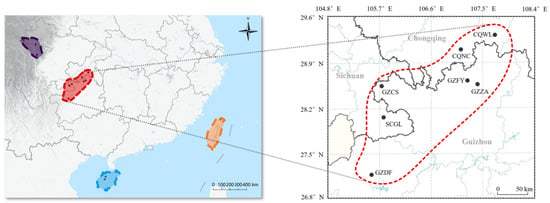
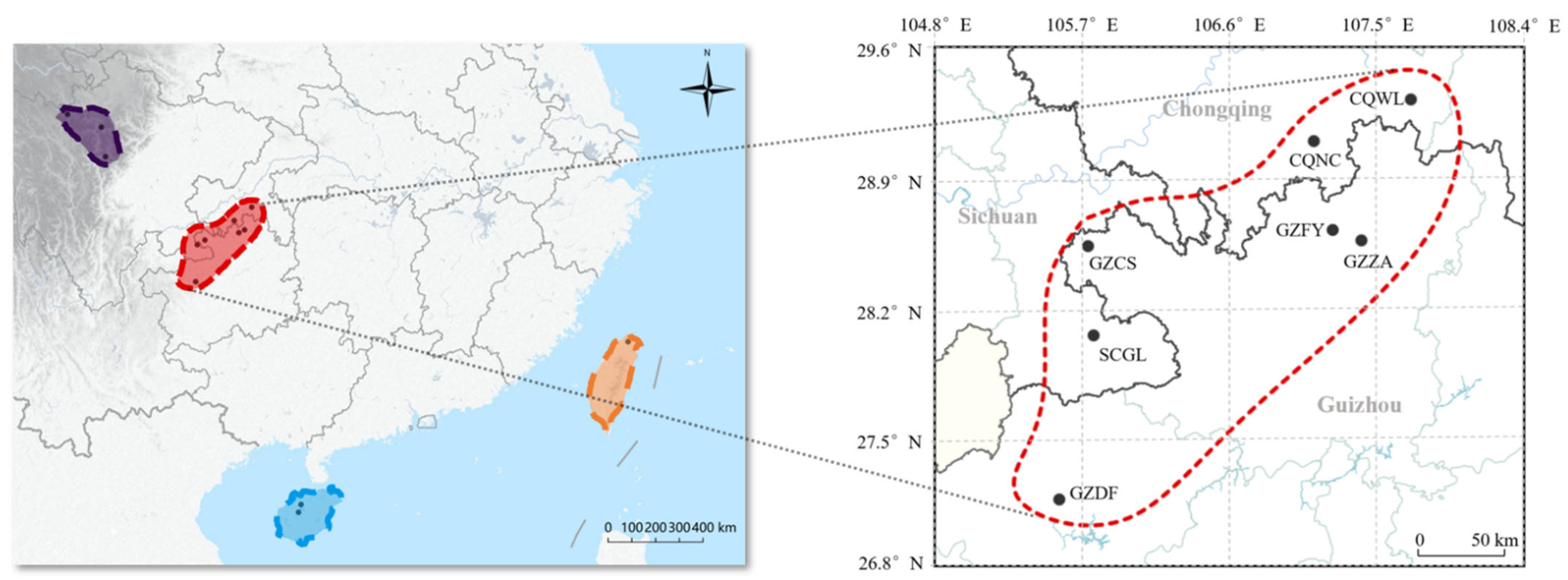
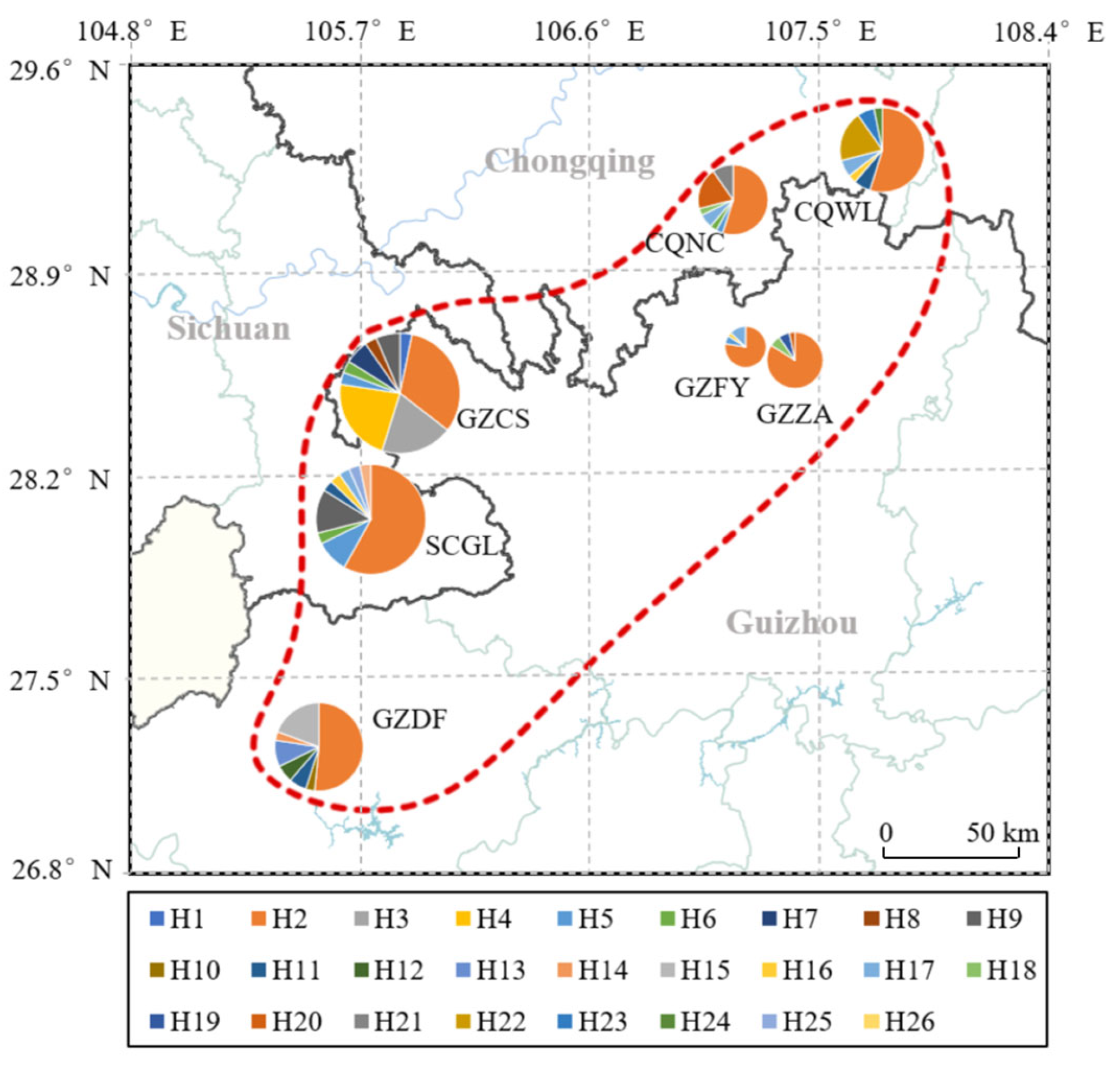
A total of 217 individuals, from 7 sampling sites (31 individuals for each site), were sampled in the DL region (Figure 1; Table S1). In addition to the above samples, this study also collected three populations, namely A. c. abansis (Aba group), A. c. hainana (HAN group), and A. c. taiwanensis (TW group), each consisting of 31 individuals, as potential outgroup sources. Each individual represents a single colony. Samples were taken from inside the hives, placed in absolute ethanol, and then stored at −20 °C until DNA extraction. Genomic DNA was extracted from the thorax of 217 individuals using the EZup column animal genomic DNA purification kit (Sangon Biotech, Shanghai, China).
Figure 1.
Information on sampling sites. The black markers in red circle represent the seven sampling points in the DL region: CQWL, Wulong; CQNC, Nanchuan; GZFY, Fuyan; GZZA, Zheng’an; GZDF, Dafang; GZCS, Chishui; SCGL, Gulin. The purple (A. c. abansis), blue (A. c. hainana), and orange (A. c. taiwanensis) areas are hypothesized to be the source populations for introgression.
2.2. tRNA leu-COII Intergenic Region
PCR analysis of the tRNA leu-COII intergenic haplotypes was performed using primers E (5′-TCAGGGTATTCATAGGATCA-3′) and H (5′-TTTAATATGGCAGAATAGTG-3′) in a final volume of 50 μL: 19 μL of sterile ddH2O, 2 μL of each primer (10 pmol/μL), 25 μL of PrimeSTAR Max, and 2 μL of DNA template. The primers were designed by Primer Premier 5 [28] and were synthesized by Fuzhou Shangya Biological Co., Fuzhou, China. The PCR conditions were as follows: initial denaturation at 95 °C for 5 min, followed by 30 cycles of denaturation at 95 °C for 30 s, annealing at 50 °C for 30 s, and elongation at 72 °C for 1 min, with a final elongation at 72 °C for 8 min. The PCR products were sent to Shangya Biological Co., Ltd. (Fuzhou, China) for direct sequencing in both directions using the Sanger method.
2.3. Analysis of mtDNA Data
The tRNA leu-COII sequences were aligned manually using Clustal X 1.83 [29], and all mitochondrial sequences were blasted on NCBI. Summary statistics, including polymorphic sites, number of haplotypes (H), haplotype diversity (Hd), nucleotide diversity (π), the average number of nucleotide differences (K), and the number of polymorphic sites, were calculated for each of the seven populations using DnaSP 5.10 [30].
In order to examine the sources of introgression for A. c. cerana, we conducted analyses on a larger dataset including the Aba group, HAN group and TW group. This allowed us to obtain a more complete overview of the genetic structure of A. c. cerana in the DL region. Genetic differentiation among the DL sampling sites and the reference subspecies was estimated using Fst values, calculated by Arlequin 3.5.2.2 [31]. The ΦST values and analysis of molecular variance (AMOVA) were calculated using 20,000 permutations.
Relationships among haplotypes and their relative proportions in DL were inferred using the median-joining network algorithm [32,33], as implemented in NETWORK 10.0 (Fluxus Engineering, Clare, UK). To examine the phylogenetic relationships among haplotypes based on the tRNA leu-COII region [19,20], we constructed a maximum-likelihood (ML) tree in IQ-TREE 3.0.1 [34], using the sequence (AP018149) from Malaysia as an outgroup [35].
2.4. Genomic Analysis
To obtain more genetic information, we selected 10 samples from each of the Aba, HAN, and DL groups, for a total of 30 populations for genome analysis. All DNA samples were constructed as genomic DNA libraries and high-throughput sequenced by Novogene (Beijing, China) using an Illumina PE150 system (Illumina, San Diego, CA, USA). Adapters were removed and low-quality sequencing fragments were filtered out by conducting data quality control with fastp 0.23.4 [36]. All clean reads were mapped to the reference genome of Apis cerana (GCF_029169275.1) using BWA 0.7.19 [37] with the parameter: “mem -t 4 -k 32 -M”. PCR or optical duplicates were removed using SAMtools 0.1.19 [38] with the command: “rmdup”. Single-nucleotide polymorphisms (SNPs) were called using Genome Analysis Toolkit (GATK) 4.6.20 [39] and filtered with a depth between 4 and 1000 (4 < DP < 1000), mapping quality (MQ) >20.0, minor allele frequency (MAF) >0.01, and a maximum missing genotype rate <0.05 to obtain high-quality SNPs.
LD for each population was assessed by calculating the squared allele frequency correlation (R2) statistic using the PopLDdecay package 3.43 [40]. The maximum distance between two SNPs was set to 5 kb. The Perl script Plot_MultiPop.pl in PopLDdecay was used to calculate and visualize the LD decay.
Population structure was analyzed using ADMIXTURE 1.3.0 [41] to estimate individual ancestry based on SNP genotypes through maximum likelihood. Principal component analysis (PCA) was conducted using pLink2 1.9.0-b.8 [42], and the top two major components were plotted using the R package ggplot2 4.0.1 [43].
To further confirm genetic introgression, ABBA-BABA analysis (Patterson’s D) and f4-ratio were performed using Dsuite 0.5 [21]. Patterson’s D measures the excess of shared derived alleles between P3 and either P1 or P2 based on a tree model of four groups as (((P1, P2), P3, O), where (P1, P2), P3 is DL and O is the outgroup. The D statistic is 0 when there is no gene introgression between P1, P2, and P3, and will be positive or negative if there is gene introgression between P2 and P3 or between P1 and P3. The f4-ratio provides a quantitative estimate of the extent of introgression from the source population into the target population. Additionally, we calculated the f3 statistic using ADMIXTOOLS 8.0.2 [22] to further confirm gene flow among the DL, Aba, and HAN groups.
3. Results
3.1. Genetic Variation in the DL
The sequencing and alignment of the tRNA leu-COII region in A. c. cerana from the DL, a fragment of around 352 bp was obtained. The average content of bases A, T, C, and G was found to be 40.95%, 44.58%, 9.84%, and 5.00%, respectively. The average A + T content was 85.53%, and the average C + G content was 14.84%, indicating a pronounced AT-skew. A total of 18 polymorphic sites were detected, including 13 parsimony-informative sites and 5 singleton mutation sites.
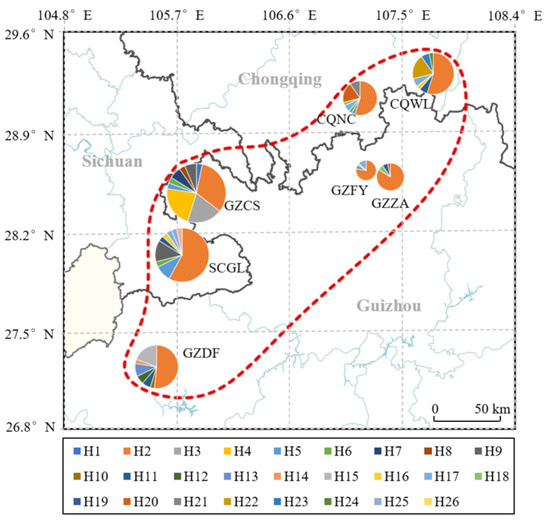
A total of 26 haplotypes (Accession ID: Table S5) were identified and labeled as H1-H26 (Figure 2). The most common haplotype was H2 (Acmt01001), which was present in all A. c. cerana populations and was the most frequent (58.99%) haplotype in all sampling sites (Table S2). Haplotypes H2, H5, H6, H9, H11, H16, H17, H18, and H20 were distributed in more than two sites, accounting for 78.80% of the total samples. Specifically, haplotypes H5 (GZCS, GZFY, CQNC, SCGL) and H17 (GZFY, CQNC, CQWL, SCGL) were found in four sites, while haplotypes H6 (GZCS, CQNC, SCGL), H11 (GZDF, CQWL, SCGL), and H17 (GZFY, CQWL, SCGL) were found in three sites. Haplotypes H9 (GZCS, SCGL), H18 (GZZA, CQNC), and H20 (GZZA, CQNC) were identified in two sites each.
Figure 2.
The haplotype distribution of the DL. A total of 26 haplotypes (H1–H26) that were detected in DL. Each color represents a different haplotype, with the size of the circle indicating the frequency of each haplotype. Larger circles correspond to higher frequencies.
In the DL region, a total of 12 unique haplotypes were found, representing 21.20% of the collected samples. These haplotypes are distributed among 5 sampling sites: GZCS (5 unique haplotypes: H1, H3, H4, H7, H8), GZDF (5 haplotypes: H10, H12, H13, H14, H15), CQWL (3 haplotypes: H22, H23, H24), SCGL (2 haplotypes: H24, H25), GZZA (1 haplotype: H19), and CQNC (1 haplotype: H21). Notably, GZFY did not exhibit any unique haplotypes.
3.2. Genetic Differentiation
The AMOVA results (Table 1) showed that 95.13% of the genetic variation was attributable to differences between the DL group and the three outgroups, indicating extremely strong among-group differentiation (ΦCT = 0.9513, p < 0.001) and supporting the reliability of our outgroup selection. Overall, the genetic differentiation was also very high (ΦST = 0.9564, p < 0.001). In contrast, differentiation among populations within the DL group was low, suggesting no pronounced genetic subdivision within the DL populations (ΦSC = 0.1047, p < 0.001).
Table 1.
Analysis of Molecular Variance (AMOVA) for A. cerana Across Different Regions.
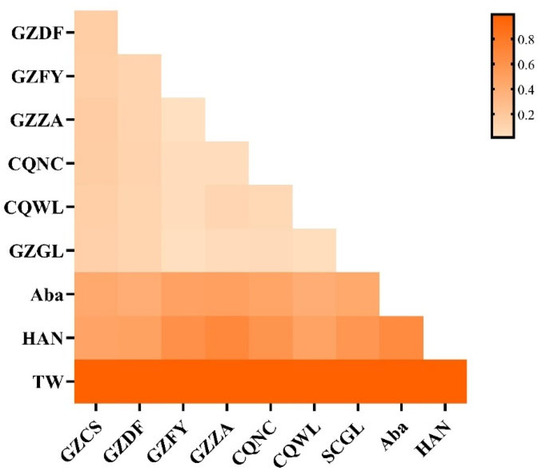
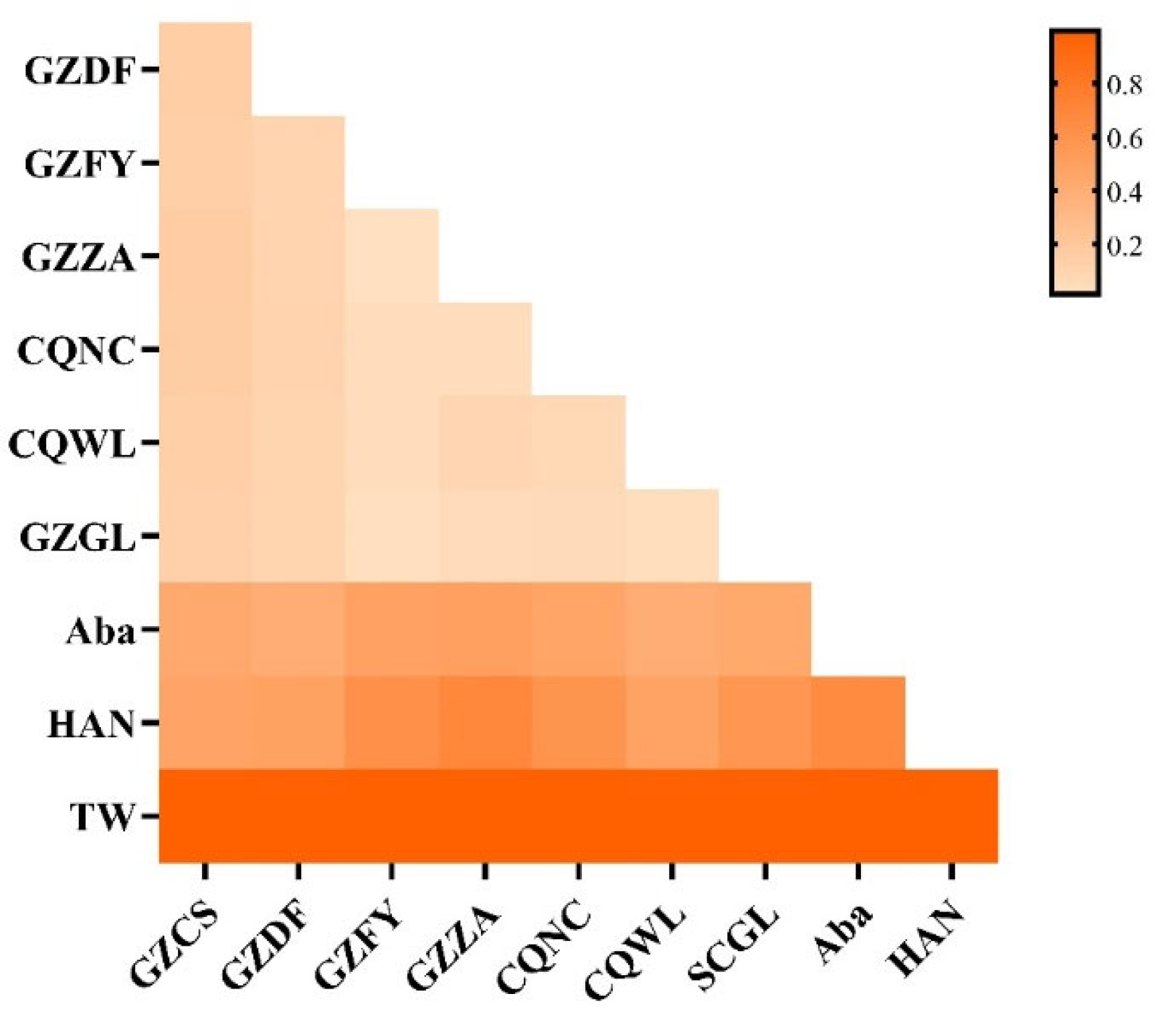
Analysis of inter-population Fst (Figure 3; Table S3) revealed significant genetic differentiation between A. c. cerana and external populations, with Fst values ranging from 0.3987 to 0.9924. Within the DL geographical populations, there was no apparent genetic differentiation, although GZCS and GZDF showed slightly higher Fst values compared to other sampling sites. The highest genetic differentiation was observed between GZCS and other sites, with Fst values ranging from 0.1300 to 0.1604, followed by GZDF with Fst values of 0.0941 to 0.1075. The Fst values between SCGL, GZFY, GZZA, CQNC, and CQWL ranged from 0.0140 to 0.0855, indicating low levels of differentiation.
Figure 3.
Pairwise Fst matrix of honey bee populations in the DL region. The heatmap shows the matrix of pairwise Fst values among DL sampling sites (e.g., GZDF, GZFY, GZZA, CQNC, CQWL, GZGL) and the hypothesized donor populations (Aba, HAN, TW). Color intensity reflects the magnitude of Fst.
3.3. Network Analysis
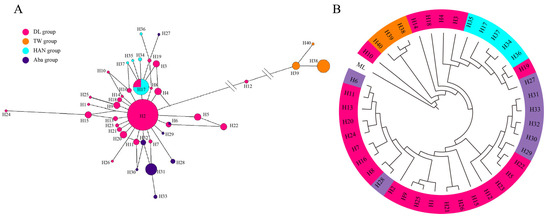
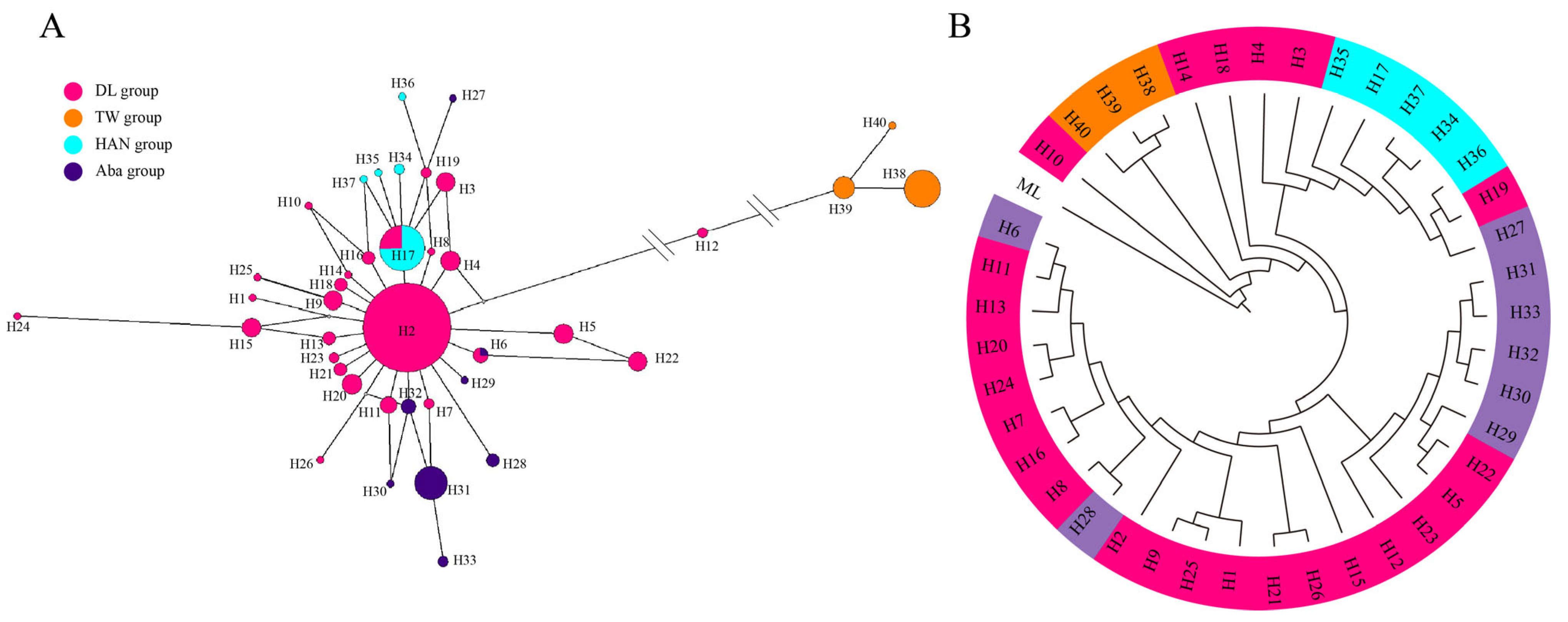
The haplotype frequencies and relationships of A. c. cerana in the DL region were clarified using the median-joining network (Figure 4A). Four main clusters were identified, representing the DL group, TW group, HAN group, and Aba group. Haplotype H2, centrally positioned among the DL haplotypes, displayed the highest connectivity with other haplotypes and was found in all sampling locations, indicating its role as the ancestral haplotype in the DL region. The shared haplotype H17 was positioned at the center of the HAN group, connecting with DL haplotypes H3 and H19. Haplotype H31 was situated at the center of the Aba group, along with haplotype H7 in this cluster. The DL group exhibited the greatest genetic divergence from the TW group, with no shared haplotypes between them.
Figure 4.
Haplotype relationships of A. c. cerana in the DL region and reference populations based on mtDNA tRNA leu-COII. (A): Median-joining network of haplotypes. Different colors represent distinct groups, with circle size indicating haplotype frequency, where larger circles correspond to higher frequencies. (B): Genetic relationships among DL sampling sites and reference subspecies using the Maximum Likelihood (ML). Model selection was performed using ModelFinder (implemented in IQ-TREE 3.0.1) under the best-fit substitution model HKY + F+G4. Different colors indicate different populations, and the sequence from Malaysia as an outgroup.
3.4. Evolutionary Analysis Based on Haplotypes
The maximum likelihood phylogenetic tree, constructed based on the tRNA leu-COII sequence, depicts the relationships among haplotypes (Figure 4B). ModelFinder selected the HKY + F + G4 model as the optimal substitution model for the ML tree construction. The resulting tree delineates major clades encompassing all haplotypes, with three reference populations forming distinct clusters, while haplotypes from the DL region exhibit a notably non-monophyletic distribution pattern. The haplotypes within the DL group exhibit a clustered pattern of multiple origins: some DL haplotypes (e.g., H3, H4, H17, H19) cluster with HAN group haplotypes, while other DL haplotypes cluster with Aba group haplotypes (e.g., H5, H6, H8, H11, H22). Apart from the aforementioned haplotypes clustering with the reference groups, the remaining DL haplotypes form a relatively independent clustered branch on the tree, indicating the preservation of regional maternal lineage units with distinctive characteristics in the DL region. Furthermore, some haplotypes within the DL population do not strictly cluster based on geographical origins but instead show a mixed distribution with different reference populations (HAN and Aba groups), reflecting the complexity of maternal genetic backgrounds in the DL region; this topological feature aligns overall with the phylogenetic relationships revealed by haplotype network analysis (Figure 4).
3.5. Genetic Diversity
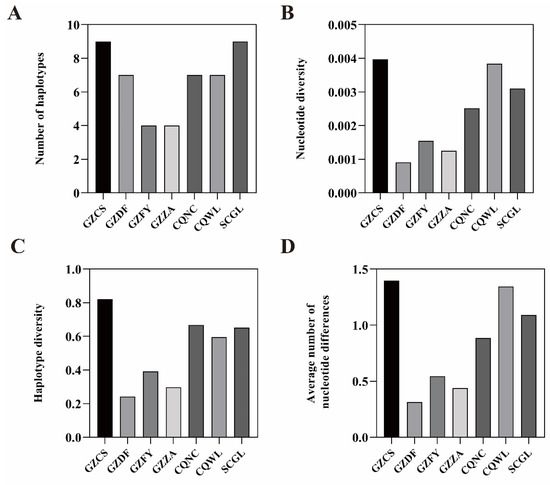
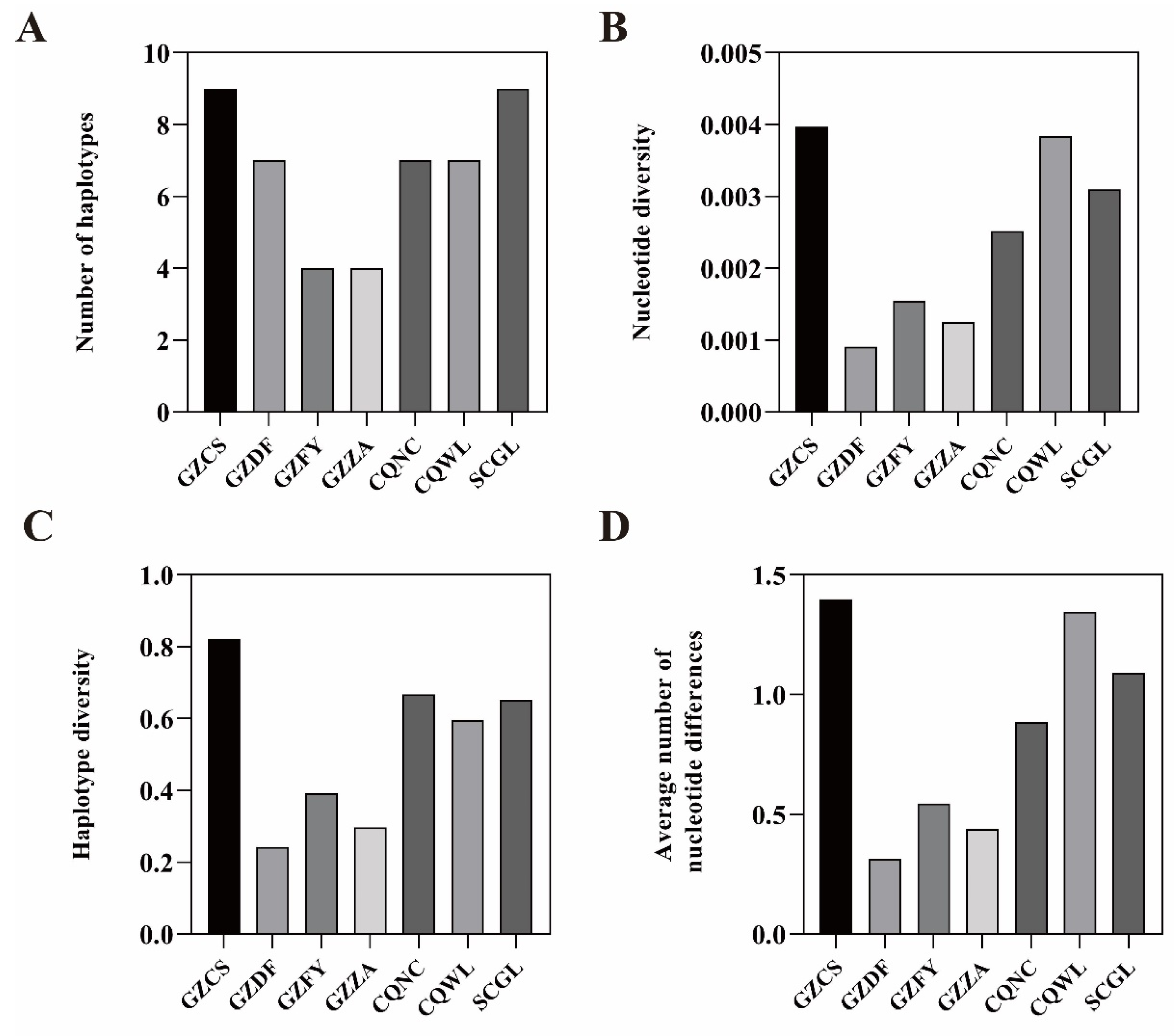
Genetic diversity estimates for each sampling site in the DL region are presented in Figure 5 (Table S4). Genetic diversity varied considerably across sites, with haplotype diversity (Hd) ranging from 0.2907 to 0.8220, nucleotide diversity (π) ranging from 0.0009 to 0.0038 and the average number of nucleotide differences ranging from 0.3140 to 1.398. The overall average haplotype diversity was 0.5240. Among the sites, GZCS (0.8220), CQNC (0.6667), SCGL (0.6520), and CQWL (0.5960) exceeded this average, while GZDF (0.2430) exhibited the lowest haplotype diversity.
Figure 5.
Comparison of genetic diversity among sampling sites. (A): Number of haplotypes (B): Nucleotide diversity (C): Haplotype diversity (D): Average number of nucleotide differences.
Similarly, the overall average nucleotide diversity was 0.00245. Sites GZCS (0.0040), CQWL (0.0038), SCGL (0.0031), and CQNC (0.0025) showed higher than average nucleotide diversity, whereas GZDF had the lowest value (0.0009). GZFY and GZZA exhibited moderate levels of diversity.
3.6. Genomic Genetic Structure
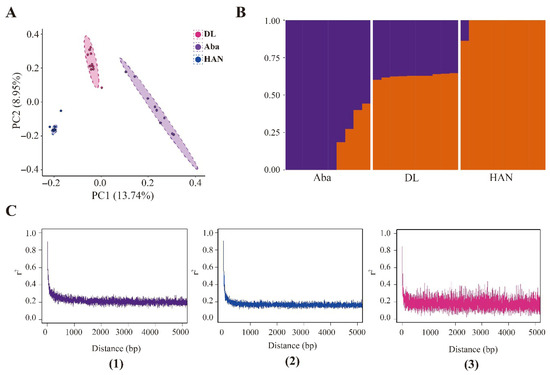
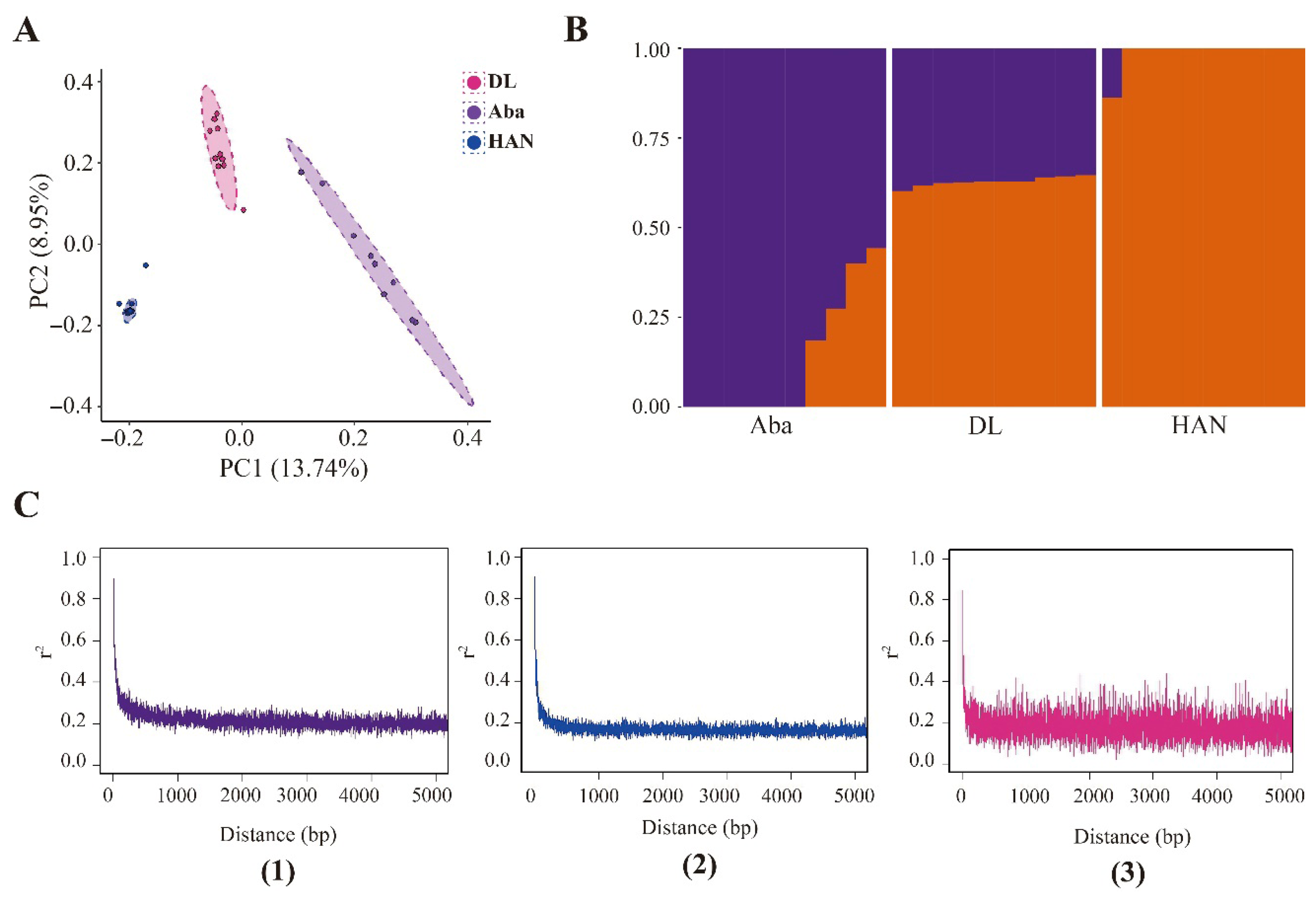
PCA analysis using whole-genome SNP data demonstrated distinct genetic differentiation among the three populations (Figure 6A). The first principal component (PC1), which accounted for 13.74% of the total variance, effectively distinguished the HAN, DL, and AB populations. The second principal component (PC2), explaining 8.95% of the variance, showed considerable overlap between the AB and DL populations, indicating a higher degree of genetic similarity between these groups.
Figure 6.
Population genetic diversity and variation of honey bees. (A) Principal component analysis (PCA) plot showing Aba (purple), DL (pink), and HAN (blue) samples on PC1 and PC2. (B) Population genetic structure of three groups (K = 2). Different colors indicate different groups. (C) LD differences among honey bee populations. LD decay is measured on the basis of the squared correlations of allele frequencies (R2) against the distance between polymorphic sites. (1) Aba group; (2) HAN group; (3) DL group.
The results of the ADMIXTURE and LD decay analyses were consistent with the PCA results. The ADMIXTURE analysis (Figure 6B) revealed that DL individuals exhibit two main ancestral components, one shared with Aba and the other with HAN, indicating a clear admixture pattern. LD (r2) decayed rapidly with increasing physical distance in all three groups, reaching a low background level (Figure 6C). This suggests efficient historical recombination, a relatively large effective population size, and generally weak long-range LD. Interestingly, the DL group (Figure 6C-(3)) exhibited a slightly elevated and highly fluctuating LD plateau at intermediate to long distances, suggesting the presence of introgressed tracts of varying lengths throughout the genome.
3.7. Gene Introgression Test Between Subspecies
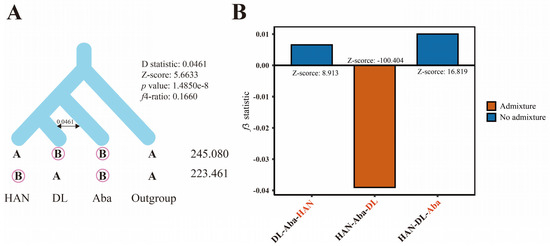
To examine gene flow among the three Apis populations, we calculated the D-statistics using Dsuite (Figure 7A). The ABBA-BABA test, also referred to as the D-test (D-statistics), is a commonly used approach in population genetics for identifying significant deviations resulting from admixture events. The ABBA-BABA test was employed, with A. dorsata used as the outgroup. The analysis combination model is ([HAN, DL], Aba, Outgroup). Z-scores exceeding an absolute value of >3 indicate statistically significant gene flow. The results confirmed that gene flow was observed between DL samples and Aba samples. Additionally, the f4-ratio indicated that approximately 16.60% of the ancestry in the DL group derives from the Aba group.
Figure 7.
Gene flow test among the DL, HAN, and Aba groups. (A) ABBA-BABA analysis of the three groups, with the f4-ratio estimating the introgression proportion. The D statistic, Z-score, p value, and f4-ratio are shown. The numbers on the right indicate the counts of ABBA and BABA loci. (B) The f3 statistic tests for different population combinations. The bars show f3 statistics with Z-scores labeled. Orange indicates significantly negative f3 values consistent with admixture, whereas blue indicates no evidence of admixture.
To further confirm the gene flow between DL samples and the Aba and HAN groups, we calculated the admixture f3 statistic using Admixtools (Figure 7B). The admixture f3 analysis showed a significantly negative value (Z < −3) for the combination (HAN, Aba; DL), with f3= −0.0391 and Z = −100.4, indicating strong evidence that population DL represents a mixture of populations HAN (Type 1) and Aba (Type 2).
4. Discussion
This study demonstrates that, over the past decade, the A. c. cerana in the DL region has exhibited a typical genetic structure and genetic diversity characteristics shaped by the continuous introduction of colonies and queens. Mitochondrial DNA analysis revealed the presence of non-native haplotypes, while whole-genome resequencing further indicated the presence of hybridization signals at SNP loci, showing a significantly mixed pattern of genetic structure. Due to adaptive differences from introgressed genes, the different sampling sites in the DL group exhibit distinct levels of genetic diversity.
Both the maternal and nuclear datasets support widespread introgression in DL. At the mitochondrial level, the maximum-likelihood phylogeny and haplotype network link DL lineages to two major putative sources: a southern lineage represented by the HAN group (Type 1) and a northwestern lineage represented by the Aba group (Type 2). This multi-source scenario is corroborated by genome-wide SNP evidence, as the f4-ratio estimate indicates that approximately 16.60% of the ancestry in DL is derived from the Aba group. The concordance between mtDNA and SNP signals strengthens the inference that introgression in DL has been ongoing and geographically complex.
From an evolutionary perspective, whether alien alleles persist in the local gene pools depends largely on their fitness in the recipient environment. Introgression theory predicts that the removal rate of alien genes depends on their adaptability to the new environment [44,45,46,47]. When alien genes have low fitness, they are quickly eliminated [48]. Some introduced individuals may not survive in the local environment, leaving no offspring and resulting in undetectable alien genes in the local gene pool. In harsh conditions or prevalent diseases, the harmfulness of low-fitness alien genes increases [49]. These genes may require extended selection for elimination, leading to an initial increase in genetic diversity and eventually shaping a new genetic structure suited to the local environment. In the DL region, ongoing gene introgression prolongs the process of removing unfavorable alien genes, maintaining the local genetic structure in an unstable state.
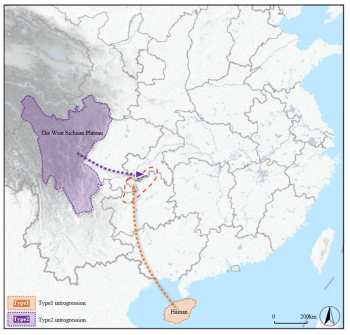
Our results are consistent with an ecological-compatibility explanation for the differential persistence of introgressed components. In the DL group, the haplotype shared with HAN (H17) accounted for 4.15% (9/217) of individuals, whereas the haplotype shared with Aba (H6) accounted for only 1.38% (3/217). Type 1 introgression likely originates from South and Southeast China, where a subtropical monsoon climate broadly resembles that of the DL region [50]; such similarity may facilitate retention and local spread of Type 1 components. By contrast, Type 2 introgression is plausibly associated with the western Sichuan Plateau [51], characterized by high elevation, low temperatures, and reduced precipitation, which differ markedly from the warm and humid conditions of DL. This climatic mismatch may reduce the fitness of Type 2 components in DL, increasing the probability of selective purging and limiting long-term persistence.
These patterns further imply that introgression can have stage-dependent effects on genetic diversity. While repeated introductions may elevate variation in the short term by adding novel haplotypes and alleles, subsequent selection against maladaptive components can lead to a decline after initial enrichment [52,53,54]. In addition, gene swamping may accelerate the erosion of native variation if hybrids or introgressed genomes are selectively removed, potentially eliminating linked indigenous alleles as collateral. The uneven distribution of diversity across DL populations therefore suggests that enrichment and erosion may operate simultaneously, with direct implications for the conservation of locally adapted lineages.
Accordingly, enhanced monitoring and management of colony and queen movements, along with conservation-oriented breeding and resource protection, will be essential to mitigate the potential impacts of continuous introgression on local genetic diversity and genetic integrity [55].
5. Conclusions
Continuous introgression plays a crucial role in shaping the genetic structure of Apis cerana in the DL region, possibly increasing short-term genetic variation while posing long-term risks of diluting or losing local genetic resources. Future work should quantify the time scale and intensity differences of introgression, assess the adaptive outcomes of various introgression types, and combine queen and colony management strategies to mitigate the potential effects of continuous introgression on local genetic diversity and integrity.
Supplementary Materials
The following supporting information can be downloaded at https://www.mdpi.com/article/10.3390/insects17010128/s1. Table S1: Information of sampling sites; Table S2: Frequency of Haplotypes; Table S3: Fst values; Table S4: Genetic diversity; Table S5: The accession IDs of haplotypes in this study.
Author Contributions
Conceptualization, S.Z., M.J., X.Z. and X.X.; methodology, M.J., S.Z. and Y.L.; software, M.J. and Y.L.; validation, M.J.; formal analysis, M.J., Y.L. and S.Z.; investigation, S.Z., M.J., Y.L., Y.W. (Yinan Wang), Y.W. (Yue Wang), D.Z. and Z.Z.; resources, X.Z., B.Z. and S.Z.; data curation, S.Z. and M.J.; original draft preparation, S.Z.; writing—review and editing, M.J., B.Z. and Y.L.; visualization, M.J. and Y.L.; supervision, X.X., X.Z. and B.Z.; project administration, S.Z. and Y.L.; funding acquisition, X.Z., X.X., S.Z. and B.Z. All authors have read and agreed to the published version of the manuscript.
Funding
This research was funded by the earmarked fund for China Agriculture Research System (CARS-44-KXJ11), Fujian Natural Science Foundation Project (2021j01079), FAFU innovation funds for research (202510389370) and Quanzhou Introducing High-level Qualification Teams Program (2023CT015).
Data Availability Statement
The original contributions presented in this study are included in the article. Further inquiries can be directed toward the corresponding authors.
Acknowledgments
We are grateful to Zuyin Xu, Rongguo Dai, Youchang Yuan, Hongji Wang, Yiqiang Zhang, Yun Fan, Zonghui Ji et al. for their generous support and assistance during the sampling process. We also appreciate the comments and suggestions from three anonymous reviewers.
Conflicts of Interest
The authors declare no conflicts of interest.
References
- Allendorf, F.W.; Leary, R.F.; Spruell, P.; Wenburg, J.K. The problems with hybrids: Setting conservation guidelines. Trends Ecol. Evol. 2001, 16, 613–622. [Google Scholar] [CrossRef] [Scilit]
- Winston, M.L. The Biology of the Honey Bee; Harvard University Press: Cambridge, MA, USA, 1987. [Google Scholar]
- Muñoz, I.; Dall′Olio, R.; Lodesani, M.; De la Rúa, P. Estimating introgression in Apis mellifera siciliana populations: Are the conservation islands really effective? Insect Conserv. Divers. 2014, 7, 563–571. [Google Scholar] [CrossRef] [Scilit]
- Yumaguzhin, F.; Yanbaev, Y.; Nikolenko, A.; Azikaev, M.; Asylguzhin, G.; Galin, R. Genetic verification of conservation measures of the gene pool of the burzyan population of the dark forest honeybee (Apis mellifera mellifera) in the “Bashkir Urals” biosphere reserve, Russia. Can. J. Vet. Res. 2022, 86, 140–146. [Google Scholar]
- Maul, V.; Hähnle, A. Morphometric studies with pure bred stock of Apis mellifera carnica pollmann from Hessen. Apidologie 1994, 25, 119–132. [Google Scholar] [CrossRef] [Scilit]
- Jensen, A.B.; Palmer, K.A.; Boomsma, J.J.; Pedersen, B.V. Varying degrees of Apis mellifera ligustica introgression in protected populations of the black honeybee, Apis mellifera mellifera, in Northwest Europe. Mol. Ecol. 2005, 14, 93–106. [Google Scholar] [CrossRef] [Scilit] [PubMed]
- Ellis, J.S.; Soland-Reckeweg, G.; Buswell, V.G.; Huml, J.V.; Brown, A.; Knight, M.E. Introgression in native populations of Apis mellifera mellifera L: Implications for conservation. J. Insect Conserv. 2018, 22, 377–390. [Google Scholar] [CrossRef] [Scilit]
- Toews, D.P.L.; Brelsford, A. The biogeography of mitochondrial and nuclear discordance in animals. Mol. Ecol. 2012, 21, 3907–3930. [Google Scholar] [CrossRef] [Scilit]
- Veith, M.; Baumgart, A.; Dubois, A.; Ohler, A.; Galán, P.; Vieites, D.R.; Nieto-román, S.; Vences, M. Discordant patterns of nuclear and mitochondrial introgression in Iberian populations of the European common frog (Rana temporaria). J. Hered. 2012, 103, 240–249. [Google Scholar] [CrossRef] [Scilit]
- Carpio, A.J.; Melo-Ferreira, J.; Martinez-Haro, M.; Farelo, L.; Campos, R.; Alves, P.C.; Acevedo, P. Iberian hares with anciently introgressed mitochondrial DNA express a marginal environmental niche. J. Biogeogr. 2021, 48, 2328–2336. [Google Scholar] [CrossRef] [Scilit]
- Ostroverkhova, N.V.; Rosseykina, S.A.; Yaltonskaya, I.A.; Filinov, M.S. Estimates of the vitality and performances of Apis mellifera mellifera and hybrid honey bee colonies in Siberia: A 13-year study. PeerJ 2024, 12, e17354. [Google Scholar] [CrossRef] [Scilit]
- Jiang, Y.; Zhao, H.; Jiang, J.; Cao, G.; Zhang, G.; Zhu, W.; Guo, C. Studies on mtDNA tRNAleu-COII gene polymorphisms of Apis cerana distributed in different geographic areas in China. Sci. Agric. Sin. 2007, 40, 1535–1542. (In Chinese) [Google Scholar] [CrossRef]
- Yu, Y.; Zhou, S.; Xu, X.; Zhu, X.; Zhou, B. Analysis on genetic diversity of Apis cerana cerana in Changbai Mountains. J. Fujian Agric. For. Univ. (Nat. Sci. Ed.) 2013, 42, 643–647. (In Chinese) [Google Scholar]
- He, J.; Xu, K.; Du, Y.; Jiang, H.; Niu, Q.; Wang, Z.; Liu, Y. Progress in research on mitochondrial genome of honey bees and their polymorphisms. J. Environ. Entomol. 2024, 46, 341–353. (In Chinese) [Google Scholar]
- Xu, X.; Zhou, B.; Zhu, X.; Wu, X. Progress on mitochondrial DNA applications in Apis cerana. Apic. China 2009, 60, 5–8. (In Chinese) [Google Scholar]
- Zhou, S.; Xu, X.; Zhu, X.; Gao, J.; Zhou, B. Genetic diversity of Apis cerana cerana in Hainan based on mitochondrial DNA. J. Fujian Agric. For. Univ. Nat. Sci. Ed. 2012, 41, 170–175. (In Chinese) [Google Scholar]
- Yu, Y. Analysis on Population Genetics of Apis cerana in Southwest China. Doctoral Dissertation, Fujian Agriculture and Forestry University, Fuzhou, China, 2017. (In Chinese) [Google Scholar]
- Cao, L.; Shi, J.; Xu, Y.; Su, X.; Hu, F.; Zheng, H. Genetic diversity of Apis cerana in Zhejiang, China based on mitochondrial DNA tRNAleu-COII sequence. Acta Agric. Zhejiangensis 2022, 34, 2395–2403. (In Chinese) [Google Scholar]
- Muñoz, I.; De la Rúa, P. Wide genetic diversity in old world honey bees threaten by introgression. Apidologie 2021, 52, 200–217. [Google Scholar] [CrossRef] [Scilit]
- Oleksa, A.; Kusza, S.; Tofilski, A. Mitochondrial DNA suggests the introduction of honeybees of African ancestry to East-Central Europe. Insects 2021, 12, 410–423. [Google Scholar] [CrossRef] [Scilit]
- Malinsky, M.; Matschiner, M.; Svardal, H. Dsuite—Fast D-statistics and related admixture evidence from VCF files. Mol. Ecol. Resour. 2021, 21, 584–595. [Google Scholar] [CrossRef] [Scilit]
- Patterson, N.; Moorjani, P.; Luo, Y.; Mallick, S.; Rohland, N.; Zhan, Y.; Genschoreck, T.; Webster, T.; Reich, D. Ancient admixture in human history. Genetics 2012, 192, 1065–1093. [Google Scholar] [CrossRef] [Scilit]
- Wei, X.; He, X.; Xiang, H.; Ren, J.; Zheng, G.; Long, L.; Wu, J. Development status and trend of apiculture in Guizhou province. Guizhou Agric. Sci. 2020, 48, 87–92. (In Chinese) [Google Scholar]
- Du, X. Small bees, big industry: An overview of Sichuan’s beekeeping sector development. J. Bee 2001, 35–36. (In Chinese) [Google Scholar] [CrossRef]
- Bao, J. Recall the bee distribution center of Sichuan in the 1970s and 1980s—Er Xian Bridge, Chengdu. J. Bee 2012, 32, 42–43. (In Chinese) [Google Scholar]
- Xu, Z.; Wei, X.; He, C.; Lin, L.; Zhou, W.; Li, C. Guizhou sends “bee”!—Current situation and industrial development countermeasure of Chinese apiculture in Guizhou. J. Bee 2017, 37, 51–54. (In Chinese) [Google Scholar]
- Zhang, M.; Tian, Q.; Zhou, Y.; Li, C.; Pu, C.; Zhou, B.; Chen, Z.; Wen, M.; Wang, K. Problems and development suggestions of Apis cerana cerana breeding in Guizhou. Guizhou J. Anim. Husb. Vet. Med. 2019, 43, 33–35. (In Chinese) [Google Scholar]
- Lalitha, S. Primer premier 5. Biotech Softw. Internet Rep. 2000, 1, 270–272. [Google Scholar] [CrossRef] [Scilit]
- Thompson, J.D.; Gibson, T.J.; Plewniak, F.; Jeanmougin, F.; Higgins, D.G. The CLUSTAL_X windows interface: Flexible strategies for multiple sequence alignment aided by quality analysis tools. Nucleic Acids Res. 1997, 25, 4876–4882. [Google Scholar] [CrossRef] [Scilit]
- Librado, P.; Rozas, J. DnaSP v5: A software for comprehensive analysis of DNA polymorphism data. Bioinformatics 2009, 25, 1451–1452. [Google Scholar] [CrossRef] [Scilit]
- Excoffier, L.; Lischer, H.E.L. Arlequin suite ver 3.5: A new series of programs to perform population genetics analyses under linux and windows. Mol. Ecol. Resour. 2010, 10, 564–567. [Google Scholar] [CrossRef] [Scilit]
- Péntek-Zakar, E.; Oleksa, A.; Borowik, T.; Kusza, S. Population structure of honey bees in the carpathian basin (Hungary) confirms introgression from surrounding subspecies. Ecol. Evol. 2015, 5, 5456–5467. [Google Scholar] [CrossRef] [Scilit]
- Bandelt, H.J.; Forster, P.; Röhl, A. Median-joining networks for inferring intraspecific phylogenies. Mol. Biol. Evol. 1999, 16, 37–48. [Google Scholar] [CrossRef] [Scilit] [PubMed]
- Wong, T.K.F.; Ly-Trong, N.; Ren, H.; Baños, H.; Roger, A.J.; Susko, E.; Bielow, C.; Maio, N.D.; Goldman, N.; Hahn, M.W.; et al. IQ-TREE 3: Phylogenomic Inference Software Using Complex Evolutionary Models. EcoEvoRix 2025. [Google Scholar] [CrossRef] [Scilit]
- Ilyasov, R.A.; Youn, H.G.; Lee, M.; Kim, K.W.; Proshchalykin, M.Y.; Lelej, A.S.; Takahashi, J.; Kwon, H.W. Phylogenetic relationships of Russian Far-East Apis cerana with other North Asian populations. J. Apic. Sci. 2019, 63, 289–314. [Google Scholar] [CrossRef] [Scilit]
- Chen, S. Ultrafast one-pass FASTQ data preprocessing, quality control, and deduplication using fastp. iMeta 2023, 2, e107. [Google Scholar] [CrossRef] [Scilit]
- Li, H. Aligning Sequence Reads, Clone Sequences and Assembly Contigs with BWA-MEM. arXiv 2013, arXiv:1303.3997. [Google Scholar] [CrossRef] [Scilit]
- Danecek, P.; Bonfield, J.K.; Liddle, J.; Marshall, J.; Ohan, V.; Pollard, M.O.; Whitwham, A.; Keane, T.; McCarthy, S.A.; Davies, R.M.; et al. Twelve years of SAMtools and BCFtools. GigaScience 2021, 10, giab008. [Google Scholar] [CrossRef] [Scilit]
- der Auwera, G.A.V.; O’Connor, B.D. Genomics in the Cloud: Using Docker, GATK, and WDL in Terra, 1st ed.; O’Reilly Media, Inc.: Sebastopol, CA, USA, 2020. [Google Scholar]
- Zhang, C.; Dong, S.; Xu, J.; He, W.; Yang, T. PopLDdecay: A fast and effective tool for linkage disequilibrium decay analysis based on variant call format files. Bioinformatics 2019, 35, 1786–1788. [Google Scholar]
- Alexander, D.H.; Novembre, J.; Lange, K. Fast model-based estimation of ancestry in unrelated individuals. Genome Res. 2009, 19, 1655–1664. [Google Scholar] [CrossRef] [Scilit]
- Chen, Z.; Meng, J.; Cao, Y.; Yin, J.; Fang, R.; Fan, S.; Liu, C.; Zeng, W.; Ding, Y.; Tan, D.; et al. A high-speed search engine pLink 2 with systematic evaluation for proteome-scale identification of cross-linked peptides. Nat. Commun. 2019, 10, 3404. [Google Scholar]
- Wickham, H. Ggplot2, 2nd ed.; Springer: New York, NY, USA, 2016. [Google Scholar]
- Orr, H.A. The population genetics of speciation: The evolution of hybrid incompatibilities. Genetics 1995, 139, 1805–1813. [Google Scholar] [CrossRef] [Scilit]
- Schluter, D. Evidence for ecological speciation and its alternative. Science 2009, 323, 737–741. [Google Scholar] [CrossRef] [Scilit] [PubMed]
- Sankararaman, S.; Mallick, S.; Patterson, N.; Reich, D. The combined landscape of Denisovan and Neanderthal ancestry in present-day humans. Curr. Biol. 2016, 26, 1241–1247. [Google Scholar] [CrossRef] [Scilit] [PubMed]
- Liu, Z.; Zhao, Y. Methods to detect and characterize introgression. Yi Chuan Hered. 2023, 45, 128–143. (In Chinese) [Google Scholar]
- Aguillon, S.M.; Dodge, T.O.; Preising, G.A.; Schumer, M. Introgression. Curr. Biol. 2022, 32, R865–R868. [Google Scholar] [CrossRef] [Scilit]
- Edelman, N.B.; Mallet, J. Prevalence and adaptive impact of introgression. Annu. Rev. Genet. 2021, 55, 265–283. [Google Scholar] [CrossRef] [Scilit]
- Liu, M. Atlas of Physical Geography of China (Chinese Edition); Sinomap Press: Beijing, China, 2010. (In Chinese) [Google Scholar]
- Ren, L.; Yu, Y.; Zheng, G.; Long, L. Guizhou apiculture promotes economic development at county level. Apic. China 2021, 72, 41–44. (In Chinese) [Google Scholar]
- Büchler, R.; Costa, C.; Hatjina, F.; Andonov, S.; Meixner, M.; Conte, Y.L.; Uzunov, A.; Berg, S.; Bienkowska, M.; Bouga, M.; et al. The influence of genetic origin and its interaction with environmental effects on the survival of Apis mellifera L. colonies in Europe. J. Apic. Res. 2014, 53, 205. [Google Scholar] [CrossRef] [Scilit]
- Rhymer, J.M.; Simberloff, D. Extinction by hybridization and introgression. Annu. Rev. Ecol. Evol. Syst. 1996, 27, 83–109. [Google Scholar] [CrossRef] [Scilit]
- Muñoz, I.; Henriques, D.; Jara, L.; Johnston, J.S.; Chávez-Galarza, J.; De La Rúa, P.; Pinto, M.A. SNPs selected by information content outperform randomly selected microsatellite loci for delineating genetic identification and introgression in the endangered dark European honeybee (Apis mellifera mellifera). Mol. Ecol. Resour. 2017, 17, 783–795. [Google Scholar] [CrossRef] [Scilit]
- Buswell, V.G.; Huml, J.V.; Ellis, J.S.; Brown, A.; Knight, M.E. Whole genome analyses of introgression in British and Irish Apis mellifera mellifera. J. Apic. Res. 2025, 64, 185–197. [Google Scholar] [CrossRef] [Scilit]

Disclaimer/Publisher’s Note: The statements, opinions and data contained in all publications are solely those of the individual author(s) and contributor(s) and not of MDPI and/or the editor(s). MDPI and/or the editor(s) disclaim responsibility for any injury to people or property resulting from any ideas, methods, instructions or products referred to in the content. |
© 2026 by the authors. Licensee MDPI, Basel, Switzerland. This article is an open access article distributed under the terms and conditions of the Creative Commons Attribution (CC BY) license.