You are currently viewing a new version of our website. To view the old version click .
Insects
  • Review
  • Open Access

8 December 2025

An Insight into Biology, Function and Pest Management Guidance of Gut Microbiota in Spodoptera frugiperda
,
,
and
Tianjin Key Laboratory of Conservation and Utilization of Animal Diversity, College of Life Sciences, Tianjin Normal University, Tianjin 300387, China
*
Author to whom correspondence should be addressed.
This article belongs to the Section Insect Behavior and Pathology

Simple Summary

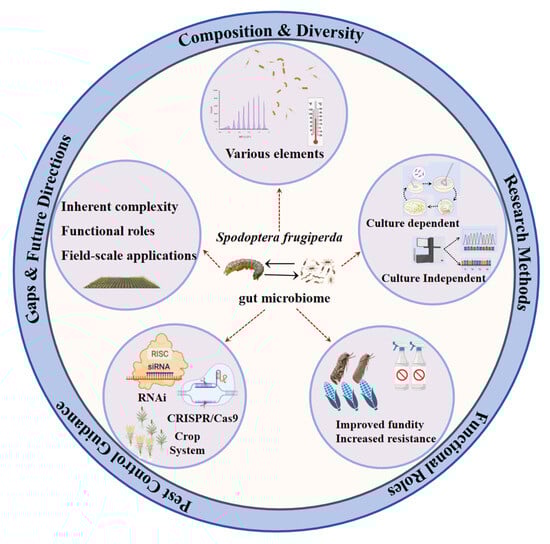
Spodoptera frugiperda is a globally distributed and highly destructive agricultural pest that causes substantial annual economic losses. Its gut harbors a diverse microbial community shaped by both external and internal factors, and these symbiotic microbes play important roles in the pest’s physiological processes and stress adaptation. This review focuses on the prevalent microbial diversity in the S. frugiperda gut, the function of these microbes in the host’s stress adaptation, and the potential value of this knowledge for pest management. It also addresses current research limitations and outlines future directions, aiming to clarify the interaction mechanisms between the gut microbiome and S. frugiperda, thereby providing guidance for developing more effective and targeted pest control strategies.

Abstract

Gut microbial community research has garnered considerable attention due to its pivotal role in shaping diverse insect hosts’ life-history traits, with key studies confirming that insect gut microbiota is vital for core physiological processes including growth, nutrient metabolism, nitrogen fixation, pheromone biosynthesis, and environmental adaptation. Findings highlight that integrating insect ecology understanding with gut microbial community characterization is indispensable for innovative pest management strategies. Notably, S. frugiperda, a globally destructive agricultural pest causing substantial annual economic losses, has been extensively investigated. Its host range is extremely wide, from staple food crops such as corn and rice to various cash crops. This review systematically synthesizes the prevalent diversity of its gut’s dominant microbes, clarifies the important mechanism of gut microbiota in host stress adaptation (providing direct evidence for explaining the pest’s stress resistance formation), draws the key conclusion that host–microbe interaction mechanisms can serve as key pest management targets to guide more targeted control technologies. We also discuss current limitations such as inadequate microbial function verification and unclear host–microbe molecular mechanisms while outlining future directions including focusing on microbial community dynamic changes under multiple environmental stresses and functional microbe screening and application.

1. Introduction

The fall armyworm, Spodoptera frugiperda (J.E. Smith) (Lepidoptera: Noctuidae), which results in substantial economic losses globally, features a broad host spectrum, robust migratory ability, and high reproductive capacity [1,2,3,4]. The species was first recorded as an injurious pest and named by Smith & Abbott in 1797 [5], and has had severe “marching-worms”—caused outbreaks that spread across almost the entire U.S. from 1856 onward [6,7]. Additionally, the first record of S. frugiperda in West and Central Africa dates back to early 2016 [8]. After that, confirmation was made that the species had spread and multiplied across all sub-Saharan countries [9], along with various Asian countries such as Pakistan [10], Nepal [11], South Korea, and Japan [12,13]. In China, this insect spread to Yunnan in 2019 [14], and it is projected that, in 2025, the area of corn in the middle and late growth stages afflicted by S. frugiperda across China will reach 13 billion m2 [15]. Recognized as an A1 Quarantine Pest in the European Union (EU) in 2020 [16], this pest was identified by the Ministry of Agriculture and Rural Affairs of the People’s Republic of China (MARA) as both a First-category Crop Disease and Pest and a Key Managed Invasive Species in 2022 and 2023 [17,18].
The successful global invasion of S. frugiperda can be largely attributed to its ability to overcome diverse environmental challenges, a capacity increasingly linked to its intimate association with gut microbiota. In general, microbial symbionts exhibit far greater diversity within the insect gut lumen than in host cells or on the cuticle [19]. In recent years, interest in insect gut microbiota has grown substantially, as these microbial communities are known to help maintain gut homeostasis and significantly influence host development, reproduction, nutrition, immunity, and other vital phenotypes [19,20,21,22]. In the case of S. frugiperda, shifts in the composition and diversity of larval gut microbiota could lead to microbial imbalance, which in turn impacts both energy metabolism and metabolic stability [23]. Such functional connections underscore the ecological and physiological relevance of gut microbes in this major pest.
Given the distinct and unique roles of gut microbiota in regulating the survival, reproduction, and adaptive capacity of S. frugiperda, this review will systematically focus on five core dimensions to elaborate on the interactions between the pest and its gut symbionts: First, regarding the composition and diversity of gut microbiota, it will clarify the dominant microbial taxa in different developmental stages of S. frugiperda and analyze how environmental factors (e.g., host plants and pesticide exposure) drive variations in microbial community structure. Second, for techniques for exploring gut microbiota, it will summarize both traditional methods and modern high-throughput technologies, while comparing their advantages in resolving microbial taxonomic details and functional potentials. Third, in terms of physiological functions modulated by gut microbiota, it will elaborate on specific regulatory roles. Fourth, regarding the potential values of gut microbiota in controlling S. frugiperda, it will discuss feasible application directions, including designing targeted strategies to disrupt gut microbial homeostasis. Finally, we also propose future prospects and outline challenges for research on the gut microbiota of S. frugiperda, aiming to further advance this research area.
A deeper and more comprehensive understanding of the taxonomic structure and functional roles of the gut microbiome in S. frugiperda will not only help decipher the underlying mechanisms of its rapid global invasion (such as how gut symbionts promote adaptation to new host plants or climatic zones) but also expect to reveal potential targets for novel microbiome-based management strategies. These targets may include key symbiotic microbes that are indispensable for the pest’s survival, or specific metabolic products of the gut microbiome that regulate pest behavior, which could provide new ideas to break through the limitations of traditional chemical pesticide control and achieve more sustainable pest management.

2. Composition of Gut Microbiota in Spodoptera frugiperda

Three major regions make up the insect gut: the anterior midgut, posterior midgut, and hindgut [24]. The gut microbial community of insects comprises a variety of microorganisms, including protists, fungi, archaea, viruses, and bacteria, with bacteria representing the dominant group [25,26]. In recent years, the number of studies on the gut microbial diversity of S. frugiperda has been on the rise [27,28,29]. Studies have shown that the gut microbiota of S. frugiperda is predominantly composed of the phyla Firmicutes and Proteobacteria [27,30], with smaller proportions of Bacteroidetes and Actinobacteria [30]. Firmicutes and Proteobacteria play essential roles in nutrient acquisition, maintenance of gut homeostasis, and modulation of host immune function [31,32,33]. A high abundance of these bacterial phyla has also been reported in other lepidopteran insects, such as Choristoneura fumiferana [34], Plutella xylostella [35], Busseola fusca [36], and Ostrinia nubilalis [37].
At the family level, Enterobacteriaceae and Enterococcaceae stand out as two key microbial groups in S. frugiperda [29]. This finding aligns with comparative analyses across 30 Lepidoptera species, which recognize both families as core components of the lepidopteran gut microbiota [38], with the function of assisting the host insects in digestion and detoxification processes. At the genus level, in all samples and across all developmental stages of S. frugiperda collected from corn fields in Dali City, Yunnan Province, China, Enterococcus (within Enterococcaceae) is the most abundant microbiota, accounting for 51.1%, followed by Enterobacter (within Enterobacteriaceae) at 23.2% [39]. Previous studies have revealed that Enterococcus is associated with the degradation of alkaloids and latex, as well as the detoxification of plant secondary metabolites [40,41]. Moreover, Enterobacter contributes to vitamin and pheromone synthesis, degradation of plant compounds, and nitrogen fixation [42]. Other bacterial genera (Klebsiella, Providencia, Acinetobacter, Pseudomonas, Ralstonia, Sediminibacterium, and Serratia) were verified in an earlier study of S. frugiperda; most of these may be beneficial for facilitating digestive processes and immunity of host insects within the gut [39,43]. Compared to gut microbiota in S. frugiperda, the bacterial diversity in Diaphania pyloalis was significantly simpler, with Wolbachia as the principal component [44]. For Bombyx mori, high-throughput sequencing has identified Proteobacteria, Firmicutes, Actinobacteria, and Bacteroidetes as the dominant taxa [44]. In contrast, Enterococci and Clostridium serve as the core gut bacteria in both S. littoralis larvae and Helicoverpa armigera larvae [45].
In parallel, the intestinal tract of S. frugiperda harbors a fungal community that develops a close-knit and sophisticated interaction with the host. The representative genera include Candida, Sarocladium, Sporobolomyces, Moesziomyces, and Mucor [46]. As vital symbionts in insect intestines, novel Candida species have been isolated from the guts of insects such as beetles [47]. Sarocladium, which has been isolated from the intestinal tracts of termites, exhibits cellulolytic and xylanolytic activities [48]. Sporobolomyces is widely distributed in natural environments, characterized by notable ecological adaptability [49]. Moesziomyces can break down certain types of plastics and serves as a primary producer of mannose erythritol lipid (MEL), an important surfactant belonging to the glycolipid class [50]. The genus Mucor, commonly found in diverse habitats ranging from soil and feces to air, secretes highly active proteases and contributes to the moderate degradation of soybean protein, among other functions [51].
Although some studies have isolated viruses (including baculoviruses and Reoviridae) from whole bodies of S. frugiperda that can be potentially used for pest control [52], the proportion of viruses in the gut of S. frugiperda is extremely low [26], making it extremely difficult to routinely isolate them for biological control.

3. Diversity of Spodoptera frugiperda Gut Symbionts

In herbivorous insects, the composition of gut microbial communities is influenced by a range of biotic and abiotic factors [53,54,55]. Evidence has shown that the diversity of gut microbiota in S. frugiperda can be modulated by multiple variables, including different diets (host plants and artificial diet) [25,26,56,57,58], host developmental stage [27], environmental stressors (e.g., dryness and humidity) [43], and sex [39] (Table 1). Understanding how these factors shape the gut microbiome of S. frugiperda can provide critical insights into the ecological adaptability of this global pest.
Table 1. Diversity of gut microbiota in Spodoptera frugiperda.
Diet stands as the primary factor capable of rapidly and significantly altering the relationship between insect hosts and their gut microbiota, and it profoundly impacts the composition, taxonomy, and function of microbial communities—an observation that underscores the remarkable plasticity of gut microbiota [62,63]. Compared with S. frugiperda reared on a field-collected diet, those fed an artificial diet exhibited higher microbial diversity. In contrast, the relative abundance of Firmicutes was higher in the field diet group than in the lab diet group [58]. This discrepancy might lie in the high cellulose and hemicellulose in leaf samples—these components increase the host’s reliance on Firmicutes for efficient polysaccharide digestion [64].
Owing to its high polyphagy and an extensive host range, S. frugiperda larvae can consume more than 300 plant species, including gramineous crops such as maize, wheat, rice, sorghum, as well as vegetable crops such as oilseed rape, pepper, potato, and other crops of economic significance [1,46,65]. The microbial abundance and diversity linked to various plants such as maize, rice, cotton, wheat, potato, tomato, soybean, pepper, millet, oilseed rape, pakchoi, purple cabbage, and wild oat were different, indicating that they supply different nutrients to support S. frugiperda development [57,59,66,67,68]. Furthermore, the host plant has been found to alter not just the bacterial community but also the fungal community of S. frugiperda [69]. Similarly, in other economically significant pests (including S. littoralis, Agrotis ipsilon, Busseola fusca, Helicoverpa armigera, Heliothis virescens, Manduca sexta, Ostrinia nubilalis, and Plutella xylostella), the makeup of microbiota also varies between polyphagous and oligophagous species [70].
The gut microbial community in S. frugiperda undergoes dynamic changes throughout its complete metamorphic life cycle. During larval development, microbial richness is highest in early instars but declines significantly from the fourth instar onward, remaining low thereafter. These shifts result in three distinct clustering patterns corresponding to early, middle, and late developmental stages. It is hypothesized that the gut bacterial community may undergo a “screening” process during larval growth, which selectively retains microorganisms that are better adapted to and support the host’s physiological requirements [71]. Exposure to insecticides, as well as dry and rainy seasons, significantly reshaped the gut microbiome of fall armyworm, causing a chain reaction of changes in community diversity, assembly patterns, as well as bacterial abundance [43,72]. However, the intervention of antibiotics disrupts the host–microbiome balance, leading to a process of disruption and incomplete recovery, thereby altering the insect’s insecticide resistance phenotype [73].
In S. frugiperda, sex-specific differences exist in gut microbial communities, which are reflected not only in composition but also in functional contributions to host physiology [29]. Unlike the relatively stable microbial profiles in male individuals, female-specific microbial assemblages show unique structural characteristics, which may be closely tied to their distinct hormonal fluctuations and physiological demands across life stages [39]. Metabolically, females exhibit consistently higher activity levels than males, a trait associated with their elevated nutritional and energy demands, which support energy-intensive processes such as long-distance migration, ovarian development, and reproduction. To meet these elevated nutritional and energetic demands, female S. frugiperda may rely on a more abundant and functionally diversified gut bacterial community, enhancing nutrient acquisition efficiency. This microbial enrichment not only fulfills the female’s own metabolic requirements but also supports the transfer of essential nutrients to offspring. Thus, the female-specific gut microbiome constitutes an adaptive trait that balances maternal physiology with reproductive investment, contributing to the species’ population persistence [39].

4. Methods for Exploring Gut Microbiota

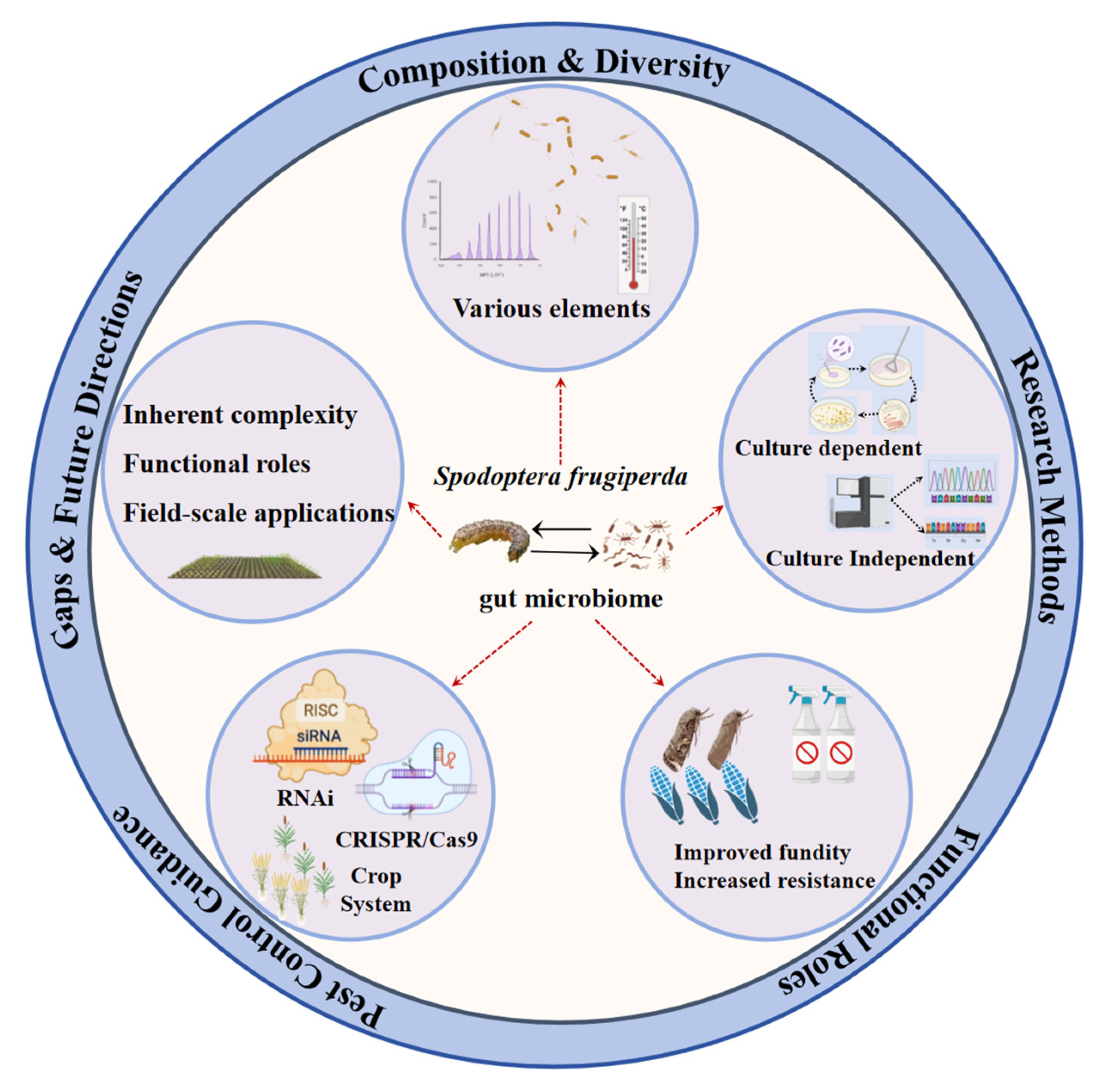
Characterizing gut microbiota and elucidating their functional roles are essential for understanding microbial–host interactions in insects. The approaches for taxonomic identification of gut microorganisms fall into two main categories: culture-dependent and culture-independent methods (Figure 1), with the choice often influenced by sample origin and research objectives [74,75]. While culture-dependent methods are effective for isolating abundant or readily culturable species, they often overlook less dominant or fastidious microbes. In contrast, culture-independent techniques, such as high-throughput sequencing, provide broader coverage and a more comprehensive perspective of microbial diversity [76]. For studies related to pest outbreak monitoring or risk assessment, an integrated approach combining both strategies is recommended to maximize taxonomic resolution and functional insight.
Figure 1. Methods for exploring gut microbiota of Spodoptera frugiperda.

4.1. Culture-Dependent Methods

Culture-dependent methods focus on the enrichment of known microbial groups through customized media and controlled incubation [77], a strategy that promotes the growth of target organisms while suppressing non-target species. The resulting isolates can be further analyzed via phenotypic characterization, genetic sequencing, or functional assays to deeply elucidate their biological properties [78]. This method’s quantitative comparisons of microbial abundance may overestimate dominant culturable taxa and underestimate unculturable ones, so rigorous interpretation is required when linking isolate data to the actual gut microbiome structure. Although this approach has inherent limitations in capturing unculturable microbes that may account for a large proportion of the gut microbiome, it remains indispensable in early-stage research, particularly for studies focused on functional microbial strains with direct application value in pest management.
Traditional microbial isolation and purification methods—encompassing dilution plating, streak culture, and selective medium screening—have been extensively employed to study the gut microbiota of S. frugiperda. Population samples were collected from major infestation regions across southern China, such as Yunnan, Chongqing, and Hunan provinces, where the insect exhibits high population density and strong agroecological adaptability [46,79,80]. Using culture-dependent methods, diverse bacterial (e.g., Klebsiella, Enterococcus) and fungal (e.g., Candida, Sporobolomyces) taxa have been successfully isolated from the S. frugiperda gut. These isolated microbes not only enrich the inventory of known S. frugiperda gut symbionts but also lay a material foundation for subsequent functional verifications. However, the diversity of isolated microbes may not reflect the true community composition in the insect gut, limiting the comprehensiveness of functional prediction.
Notably, beyond microbial isolation, the traditional culture-dependent method also provides a feasible and cost-effective tool for the preliminary investigation of the mechanisms behind S. frugiperda’s response to biotic and abiotic stresses. For instance, by culturing gut microbes under simulated chemical stress (e.g., exposure to insecticides), researchers can initially screen for stress-tolerant microbial strains and infer their potential mechanisms in enhancing the insect’s stress resistance [72,81]. While this screening strategy is efficient for identifying candidate functional strains, its limitation lies in the disconnect between laboratory stress simulation and field conditions—strains performing well in vitro may not exert the same effect in vivo, within the complex gut environment. To address this, data from culture-dependent stress assays should be validated by complementary in vivo experiments (e.g., microbe reintroduction into axenic insects) to confirm functional relevance.

4.2. Culture-Independent Methods

Culture-independent methods are highly recommended for the initial taxonomic profiling of insect gut microbial communities [82], as a substantial proportion of these microorganisms in such communities cannot be cultivated in vitro due to fastidious nutritional requirements, sensitivity to laboratory environmental conditions, or dependence on host interactions.
In previous studies, 16S rRNA metagenomics has been widely employed to characterize the gut microbial community structure and diversity of S. frugiperda. This high-throughput approach has revealed stage-specific microbial assemblages across different developmental stages (from egg to larva, pupa, and adult), suggesting tailored functional roles in supporting physiological needs during development [27,29,39]. However, taxonomic profiling relies heavily on reference databases—microbes without matched sequences may be misclassified or labeled as “unidentified”, leading to underestimated true diversity. Furthermore, culture-independent analyses have been applied to assess how factors such as diets, environmental stressors, host plant identity, and agrochemicals influence the composition and diversity of gut microbiota in this species [28,40,43,56,57,58,59,60,61,83]. A key drawback is the lack of standardization in experimental design, making cross-study comparisons challenging and reducing the reproducibility of findings.
Unlike 16S rRNA gene sequencing, which targets taxonomic composition, metatranscriptomics provides deep functional insights by capturing genome-wide transcriptional activity within microbial communities [52]. This approach enables profiling of actively expressed genes involved in key metabolic processes such as carbohydrate fermentation, amino acid biosynthesis, and lipid metabolism, while also identifying which microbial taxa are functionally relevant under specific physiological or environmental conditions [84,85].

5. Function Modulated by Gut Microbiota

Symbiotic gut microbiota significantly enhance the environmental adaptability and geographical expansion of S. frugiperda by sustaining intestinal homeostasis and influencing key host physiological traits [22] (Table 2). Specifically, these microbes facilitate the breakdown of complex nutrients and plant secondary metabolites, thereby promoting development [23]. They also modulate host immune responses, improving resistance to pathogens and environmental stressors in new habitats [86,87]. Through these functions, beneficial gut microbes play an integral role in supporting the pest’s successful invasion and establishment across diverse ecosystems; nevertheless, studies on the related mechanisms are relatively rare.
Table 2. The category and function of some important symbiotic microbiomes of Spodoptera frugiperda.

5.1. Role of Gut Symbionts in Xenobiotic Degradation In Vitro

In modern agricultural systems, chemical pesticides remain the primary strategy for pest control, playing a crucial role in safeguarding crop yield and quality. However, the extensive and prolonged application of these chemical compounds has driven the evolution of adaptive resistance traits in economically significant pests such as S. frugiperda. This pest species has developed notable resistance to a range of commonly used insecticides, including lufenuron, chlorantraniliprole, indoxacarb, lambda-cyhalothrin, and Bacillus thuringiensis endotoxins, significantly reducing the effectiveness of chemical control measures and posing serious challenges to sustainable crop protection [60,73,87].
Recent research has shed light on the critical contribution of gut microbes in S. frugiperda to its chemical resistance, operating through both direct metabolic degradation and indirect physiological modulation. For instance, isolated gut symbiotic strains have demonstrated the ability to dechlorinate and degrade polyvinyl chloride (PVC). Specifically, E. casseliflavus EMBL3 encodes NAD-dependent oxidoreductase that dechlorinates PVC polymer [88]. Additionally, Klebsiella C3 alters the host’s metabolic profile, affecting key detoxification pathways and thereby modulating S. frugiperda’s sensitivity to lufenuron, highlighting the diverse detoxification capabilities of the gut microbiome [87]. These findings broaden our understanding of resistance evolution beyond host-centric mechanisms and reveal novel potential targets for pest management [90,91,92,93].

5.2. Role of Gut Symbionts in Altering Host Tolerance In Vivo

The gut microbiota regulates the physiological functions of insect hosts. Accumulating evidence has established clear links between the structure and function of the microbiota and key insect life-history traits, particularly development and reproduction. Elevated reproductive capacity is critical for invasive insects like S. frugiperda to successfully colonize new habitats, enabling rapid population expansion and outbreaks that often cause severe impacts on agricultural ecosystems [94,95]. Throughout the insect’s molting and metamorphosis processes, its gut microbial communities undergo considerable restructuring. However, core bacterial genera such as Enterococcus persist consistently, underscoring their indispensable role in sustaining S. frugiperda’s development and fitness [29,39].
Functional verification studies have confirmed the regulatory role of gut symbionts. Gut bacteria in S. frugiperda, such as Enterococcus and Enterobacter, have been shown to facilitate host growth and development even under nutrient-deficient dietary conditions [96]. Furthermore, microbiota-depleted S. frugiperda exhibited impaired ovarian development and fecundity, while reinoculation with specific bacterial strains restored reproductive output to normal levels [78]. These findings, consistent with studies on other insect species such as Zeugodacus tau and Henosepilachna vigintioctopunctata [97,98], collectively confirm that gut microbiota is indispensable regulators of S. frugiperda’s reproductive performance and developmental fitness, and providing a theoretical basis for exploring microbiota-based pest management strategies.

5.3. Interactive Relationships Involving Gut Symbionts

Beyond facilitating detoxification and development, microbial symbionts of S. frugiperda also modulate induced defense responses in host plants [99]. Specifically, insect-associated symbiotic bacteria can act as ecological decoys, triggering plant immune responses typically directed against microbial pathogens rather than herbivores. This misdirection effectively suppresses the activation of plant defense mechanisms, thereby creating a more favorable feeding environment for S. frugiperda larvae and enhancing their development [100]. Therefore, targeted manipulation of the herbivore’s microbiota presents a potential strategy to disrupt these interactions, ultimately impairing the insect’s performance on defensive host plants [101,102].
The interactive relationships mediated by the gut microbiome of S. frugiperda extend across multiple trophic levels, resulting in complex ecological effects. While substantial research has characterized lepidopteran oral secretions regulating plant defense induction, the involvement of microbes in these interactions has been largely overlooked [103]. On one hand, gut bacteria of S. frugiperda, such as the JA defense-suppressing strains Pantoea ananatis and Enterobacteriaceae-1 (genus Serratia/Rahnella), can be secreted via the insect’s regurgitant or frass to directly modulate defense responses in tomato plants, thereby improving the insect’s performance [86]. On the other hand, certain plant defenses can compromise gut barrier integrity; this allows gut microorganisms to translocate into the body cavity, thereby amplifying the detrimental effects of defense compounds on the insect host [89]. Furthermore, parasitism can induce cascading effects on microbial communities across trophic levels, indicating that gut bacteria are integral components of the complex interactions among parasitoids, herbivores, and their host plants [100].

6. Techniques for Insect Pest Control

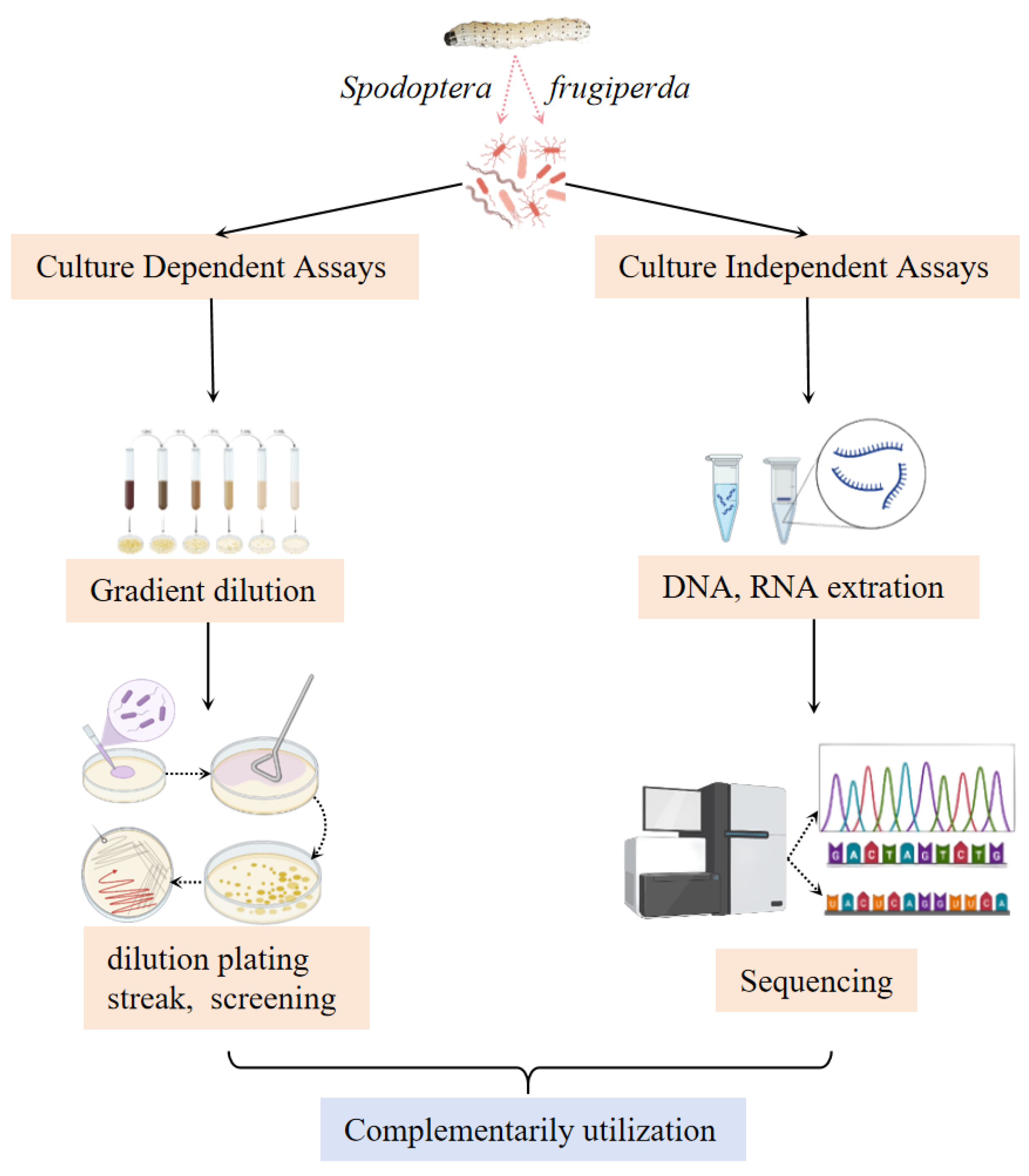
The symbiotic microbiome provides insects with holistic benefits, influencing development, nutrition, reproduction, defense against pathogens, and detoxification processes [19,104,105,106,107,108]. Given the recognized potential of insect gut endosymbionts in biotechnology and sustainable pest control, research on insect gut microbes holds significant promise for innovative management strategies [109]. In the case of S. frugiperda, a globally invasive pest of maize and other crops, targeted manipulation of its gut microbiota, when integrated with existing control strategies, may enhance suppression efficacy [110,111,112]. Modern integrated pest management (IPM) entails the appropriate integration of diverse pest control strategies [113]. The gut microbiota represents a promising regulatory target and could be leveraged to control S. frugiperda through the combined application of incompatible insect techniques (IIT), genetic modification, and application of chemicals [114,115,116] (Figure 2).
Figure 2. The guide of gut microbiota for Spodoptera frugiperda pest management.

6.1. Incompatible Insect Techniques (IIT)

Targeting the gut microbiota of S. frugiperda presents a sustainable alternative to conventional chemical pesticides, which are major contributors to ecological contamination and rapid pest resistance. The Incompatible Insect Technique (IIT) leverages endosymbionts to manipulate insect populations by inducing phenotypic effects such as cytoplasmic incompatibility, parthenogenesis, and feminization [117]. Specifically, cytoplasmic incompatibility (CI) relies on symbiont infection in males (but not females), triggering abnormal mitosis during the first embryonic division and resulting in embryonic mortality; parthenogenesis induction involves symbionts initiating the development of unfertilized eggs, producing female-only offspring with reduced genetic diversity; feminization occurs when symbionts interfere with the male sex-determination pathway, leading to genetic males developing as functional females and thereby skewing population sex ratios. The core principle has been successfully demonstrated in several insect models, including Drosophila melanogaster (with Acetobacter cerevisiae), the Mediterranean fruit fly Ceratitis capitata (with Wolbachia-induced CI), and the mosquito Culex quinquefasciatus (with CI) [116,117,118,119,120,121]. These established precedents validate the core principles of IIT and provide a framework for adapting this approach to the biological specificities of S. frugiperda.
While promising, the application of IIT to S. frugiperda is not straightforward. A significant limitation of many foundational studies is their focus on laboratory or confined field conditions, which may not accurately predict efficacy in the complex, open-field environments [122]. The successful establishment of infection in a naive population requires high-fidelity maternal transmission and a significant fitness cost to uninfected individuals, conditions that are difficult to guarantee [123]. Furthermore, the technique’s success is highly dependent on the specific host–symbiont combination; a strain that induces strong CI in one species may be ineffective or not establish in another [124]. A critical failure point in any IIT program would be the incomplete maternal transmission of the symbiont, leading to the rapid emergence of uninfected, fertile individuals that could collapse the suppression effect.
Proposed Experimental Pipeline for IIT in S. frugiperda:

6.1.1. Symbiont Discovery and Screening

Systematically characterize the native microbiome of S. frugiperda from different geographical populations to identify candidate endosymbionts.

6.1.2. Laboratory Validation

Microinject candidate symbionts into aposymbiotic (symbiont-free) S. frugiperda eggs. Key monitoring metrics include maternal transmission rate, CI penetrance, and host fitness costs.

6.1.3. Contained Field Trial (e.g., Large Field Cages)

Release infected males into cages containing a known density of uninfected wild-type insects. The primary success metric is the suppression of the F1 generation population compared to control cages.

6.2. Genetic Modification of Symbionts

The gut microbiota is a reservoir of genes essential for host fitness, making it a target for precision genetic manipulation. Strategies include CRISPR/Cas9-mediated gene knockout, paratransgenesis, and symbiont-mediated RNAi (SMR) [125]. The precision of these strategies enables rigorous validation of gene functions while minimizing off-target effects, thereby establishing a foundation for developing precise and environmentally safe pest control tools.
The CRISPR/Cas9 and paratransgenesis systems allow for the functional disruption of microbial genes critical for nutrient provisioning or detoxification, thereby inducing dietary deficiencies or increasing pesticide susceptibility in the host. They open innovative avenues for pest control through the functional manipulation of symbiotic microbes [126,127,128,129,130]. For instance, in the mosquito Aedes aegypti, the Scarless Cas9-Assisted Recombineering (no-SCAR) system was used to knock out the ompA gene in the gut symbiont Cedecea neteri, which impaired biofilm formation [131]. However, challenges like off-target effects, inefficient delivery to non-model symbionts, and the fitness cost imposed on the engineered microbe remain significant hurdles [126].
Additionally, Symbiont-Mediated RNAi (SMR) employs engineered bacteria to deliver host-specific double-stranded RNA (dsRNA), a technique validated in multiple insect pests [132,133]. This method overcomes key limitations of conventional RNAi, such as environmental instability of dsRNA and poor oral uptake, enabling sustained and efficient gene silencing within the host. Nevertheless, the presence of gut nucleases and the efficiency of the insect’s RNAi machinery are the primary barriers to effective RNAi [132].
The release of engineered symbionts poses serious and plausible ecological risks. The primary concern is horizontal gene transfer (HGT) of the transgene to non-target microorganisms in the gut of other insects or in the soil, potentially altering ecological functions or conferring unknown advantages [134]. Pre-release risk assessment must therefore include rigorous host-specificity testing and investigations of HGT potential in complex microbial communities. Furthermore, the complexity of insect microbiomes and their context-dependent interactions with the host presents a significant challenge in predicting the ecological outcomes of releasing engineered symbionts [135].
The deployment of engineered symbionts is tightly constrained by an evolving and often stringent regulatory landscape. Internationally, the Cartagena Protocol on Biosafety [136] governs the transboundary movement of Living Modified Organisms (LMOs). Nationally, countries such as China (Measures for the Safety Administration of Genetic Engineering) and the European Union (with its stringent GMO directives) operate hierarchical approval systems that require extensive Environmental Risk Assessment (ERA) [137,138]. Beyond regulation, public acceptance is a critical barrier. The concept of releasing “genetically modified microbes” faces significant societal skepticism, often amplified by a lack of public understanding and low trust in regulatory institutions. Successful deployment will require transparent science communication and proactive stakeholder engagement.
Proposed Experimental Pipeline for Engineered Symbionts:

6.2.1. Engineer Symbiont

Use engineered strategies to knockout a gene for an essential nutrient in a culturable gut symbiont of S. frugiperda.

6.2.2. Assess Efficacy

Re-introduce the knockout strain into axenic S. frugiperda and monitor for the predicted fitness deficit.

6.2.3. Risk Assessment

Host Range Testing: Feed the engineered symbiont to non-target Lepidopterans and other insects to assess colonization ability. HGT Potential: Co-culture the engineered symbiont with a diverse microbial community in vitro and use selectable markers to screen for gene transfer events. Persistence Monitoring: In contained trials, track the environmental persistence of the engineered strain outside the host.

6.3. Chemicals Applied in Field Management

In agricultural field production, strategically designed crop rotation and intercropping systems, when properly implemented, can effectively mitigate pest issues in an environmentally sustainable manner [139]. Beyond such agronomic practices, chemical-based intervention strategies have also been explored. Notably, a review evaluated experimental and theoretical studies on mixtures (herbicides, insecticides, fungicides, and antibiotics), where each component was applied at its full label rate, have confirmed that such mixtures are an optimal strategy for resistance management [140,141]. A chemical in a mixture with a different mode of action can slow resistance evolution [142]. Additionally, bioactive molecules such as antimicrobial peptides (AMPs) have emerged as alternative tools for targeted insect symbiont control. The mechanism relies on electrostatic interactions: the positively charged AMPs bind to the negatively charged microbial cell membrane, disrupting the structural integrity of the cell wall and impairing microbial viability [143]. This mode of action has been validated in multiple insects such as Anopheles gambiae and A. aegypti [144,145], supporting the potential of AMPs as a precision tool for microbiome-based pest management.
While theoretically sound for targeting a single pest, this approach is highly inefficient in polyphagous pests like S. frugiperda that infest multiple crop growth stages, as components may be redundant or target different, non-co-occurring species. This leads to a disproportionate increase in environmental load, cost, and regulatory complexity without a proportional gain in efficacy [146,147]. Crucially, mixtures can accelerate the evolution of cross-resistance if a single metabolic detoxification mechanism confers tolerance to both chemicals. Therefore, rotating modes of action remains a more practical and lower-risk resistance management strategy [148]. Additionally, the use of antibiotics for field-based symbiont control is non-targeted, devastating the beneficial microbiomes of soil, water, and non-target organisms. This makes their field application for pest control fundamentally infeasible.
Although bioactive molecules offer a more targeted approach, their specificity for pest symbionts over beneficial microbes needs rigorous testing. Beyond chemicals, agroecological practices such as push–pull intercropping and strategic crop rotation are effective in managing S. frugiperda by directly altering the habitat and reducing host plant availability. These strategies represent the most sustainable and low-risk foundation for an integrated management program.

7. Future Perspectives and Challenges

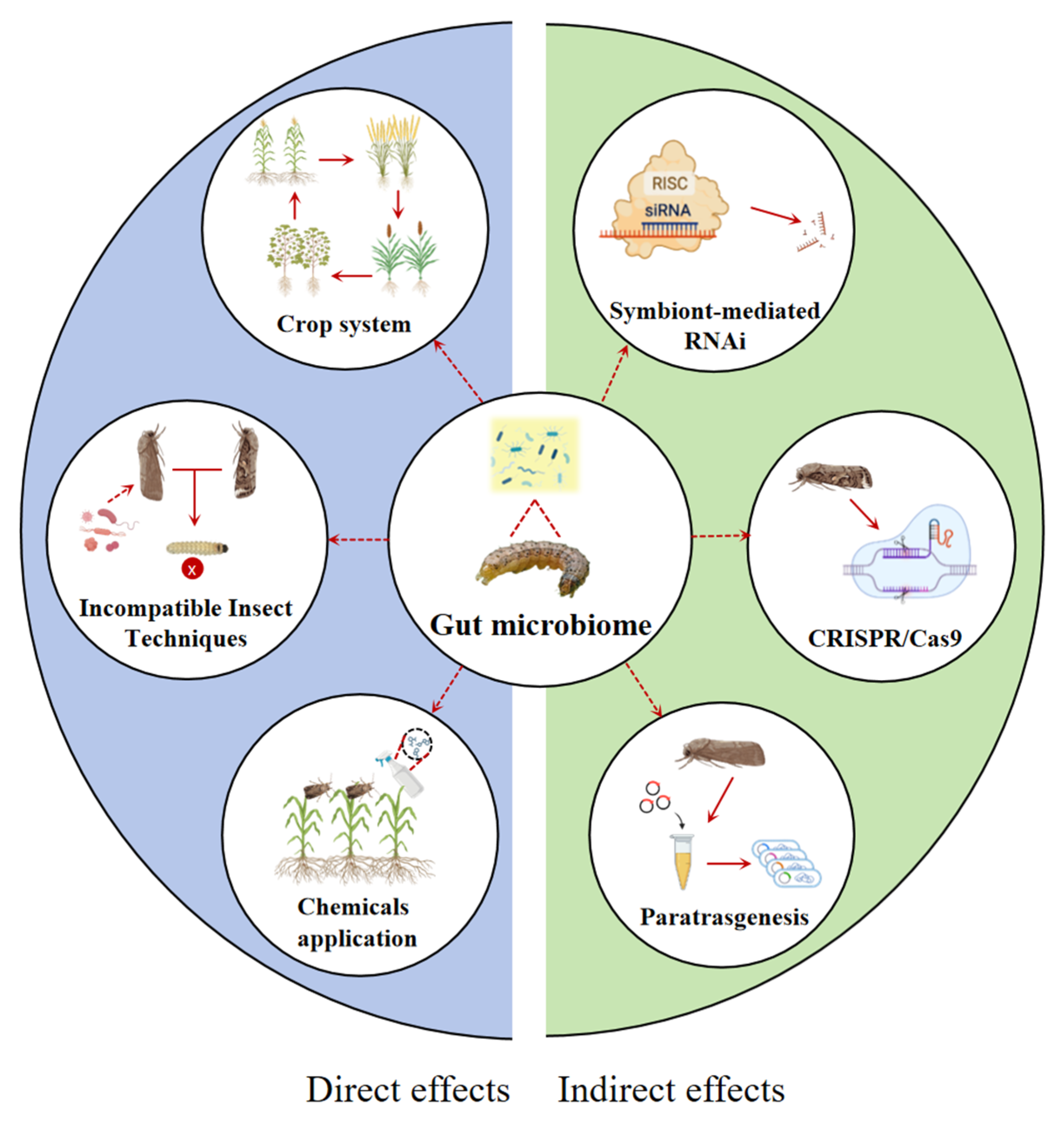
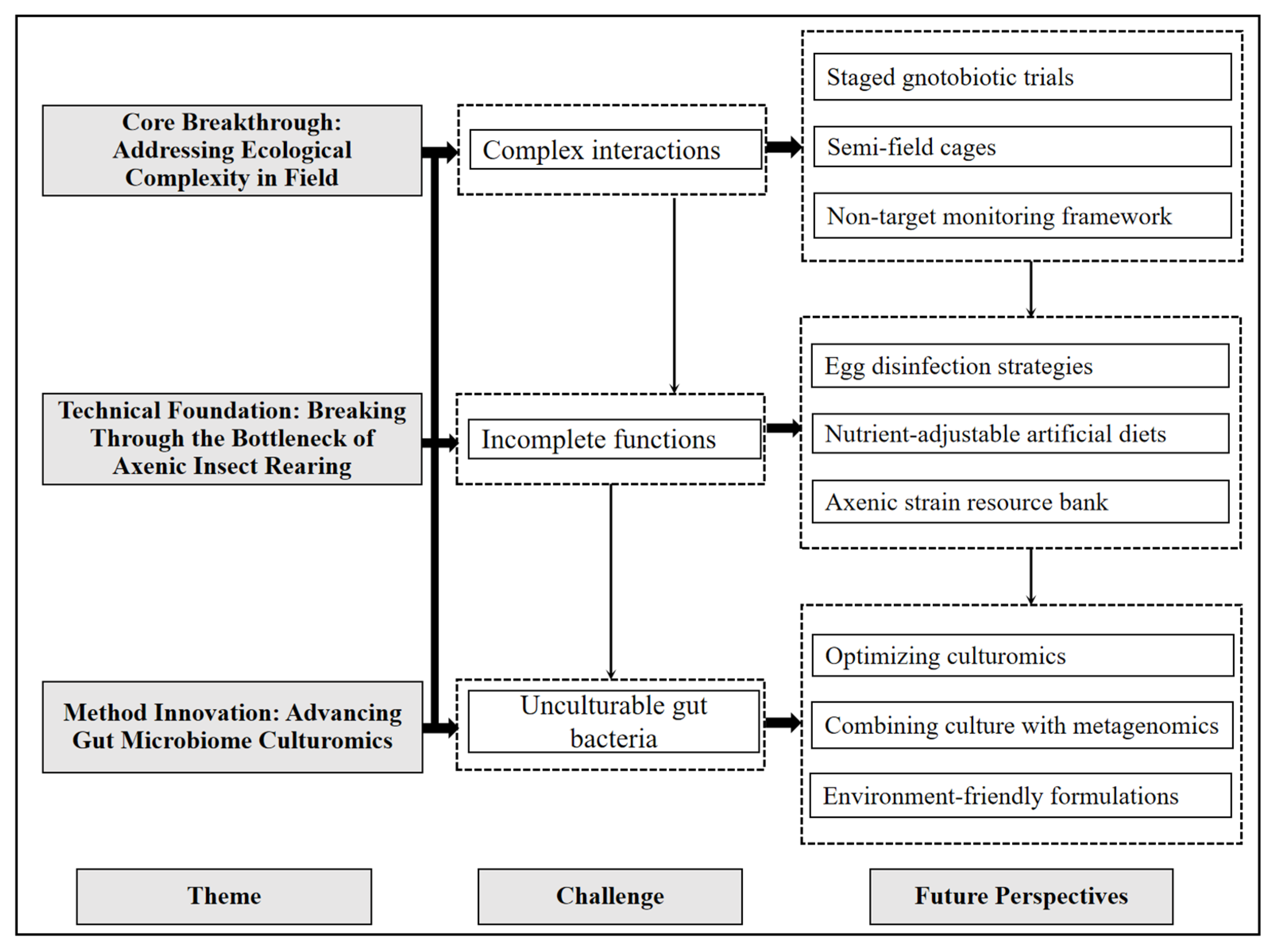
Research on the interactions between S. frugiperda and its gut microbes provides valuable insights into insect-symbiont coevolution, thereby enriching the theoretical foundations of microbial ecology and insect physiology. However, despite the promising potential of utilizing S. frugiperda’s gut bacteria for pest management, significant challenges remain in their practical application (Figure 3):
Figure 3. Roadmaps that bridge key lab findings to realistic field tests.

7.1. Core Breakthrough: Addressing Ecological Complexity in Field

A critical challenge lies in translating laboratory-based findings on the gut microbiome to field-scale pest control. In agricultural ecosystems, insect-gut microbe symbioses are inherently influenced by complex networks of abiotic (e.g., temperature and precipitation) and biotic (e.g., non-target insects and plant microbiomes) factors. This complexity often leads to discrepancies between conclusions drawn from controlled laboratory studies and results observed in practical applications [149]. To bridge this gap, practical measures include staged gnotobiotic trials (verifying microbial functions in axenic environments first, then introducing ecological factors), semi-field cages (replicating farmland conditions to test microbial control effects), and non-target monitoring frameworks (using high-throughput sequencing to track non-target organism dynamics and evaluating ecosystem impacts via long-term plots). Implementing such measures is crucial for developing microbial control strategies that are both ecologically sustainable and effective in practical agricultural settings.

7.2. Technical Foundation: Breaking Through the Bottleneck of Axenic Insect Rearing

A major obstacle in developing microbiome-targeted pest control is the incomplete understanding of gut bacterial functions. Axenic rearing systems are designed to address this by enabling the deconstruction and reassembly of microbial communities [150,151]. However, establishing axenic insect lines is technically challenging, limiting functional study scalability. We recommend the following practical solutions: refining egg disinfection strategies (e.g., sequential treatment with sodium hypochlorite and ethanol) to maintain hatching rates, developing nutrient-adjustable artificial diets, and establishing a centralized repository for axenic strains, accompanied by standardized records of key biological parameters. Collectively, these measures would strengthen the technical foundation for elucidating the functional roles of gut microbes.

7.3. Method Innovation: Advancing Gut Microbiome Culturomics

Elucidating the functional roles of individual gut microbial taxa is hindered because most gut bacteria are unculturable under traditional laboratory conditions, where standard media and static environments fail to replicate the in vivo gut microclimate [152,153]. While high-throughput culturomics-which integrates diverse media and environmental simulation-has enabled the cultivation of previously inaccessible strains, its large-scale application remains constrained by technical and logistical challenges. Practical measures to address these limitations include: optimizing culturomics through the development of gut-mimicking media with physiologically relevant pH and oxygen gradients; integrating culturomics with metagenomics by using sequencing data to predict functional genes and guide targeted isolation; and formulating microbial formulations within protective microcapsules to enhance their persistence in field applications.
The continued advancement of high-throughput sequencing and multi-omics technologies (e.g., metagenomics, metatranscriptomics), will enable systematic profiling of the gut microbial community in S. frugiperda, including its composition, structure, and function. Integrating multi-omics data to construct host–microbe interaction networks, complemented by laboratory and field validation, will be central to translating gut microbiome research into practical S. frugiperda control strategies. Enhanced international collaboration and resource sharing will be crucial to accelerate this process, facilitating the translation of research findings into effective management tools for S. frugiperda—a prominent transboundary pest.

8. Conclusions

This review synthesizes current knowledge of the gut microbiota in S. frugiperda, emphasizing its pivotal role in host physiology and identifying host–microbe interactions as promising targets for novel pest management strategies. The gut microbiome represents a unifying target for integrating multiple control strategies, especially eco-friendly approaches, to compromise the pest’s fitness. The validation of insect symbionts as critical targets firmly establishes the gut microbiota of S. frugiperda as a foundation for developing sustainable and effective population suppression tools.
Specific microbial taxa merit in-depth investigation to accelerate practical applications. Among Firmicutes, Enterococcus spp., which are consistently identified as dominant members of the gut microbiota, should be the focus of functional characterization, elucidating the metabolic pathways involved in xenobiotic degradation or beneficial metabolite production by these strains could inform the design of synergistic pest control strategies. Within Proteobacteria, insecticide-degrading taxa such as Pseudomonas and Sphingomonas spp. warrant detailed genomic and enzymatic studies to identify key functional genes and develop engineered microbial strains with enhanced degradation capabilities for field deployment. Additionally, potentially important taxa, including cellulolytic and nitrogen-fixing bacteria (e.g., Cellulomonas and Azospirillum spp.), should be systematically screened for their ability to modulate host feeding behavior and nutrient utilization, as disrupting these interactions could provide novel avenues for pest control. Finally, rigorous assessments of the ecological risks, off-target effects, and regulatory compliance of microbiome-based interventions are essential to ensure their safe and sustainable integration into agricultural systems, thereby contributing to environmentally friendly and cost-effective management of S. frugiperda worldwide.

Author Contributions

Conceptualization, formal analysis, writing—original draft preparation, writing—review and editing, X.-R.Y.; methodology, writing—review and editing, J.-N.L.; writing—review and editing, Z.-Y.S.; resources, supervision, funding acquisition, project administration, C.-C.Y. All authors have read and agreed to the published version of the manuscript.

Funding

This research was funded by the National Natural Science Foundation of China (No. 32170473) and Tianjin Natural Science Foundation (No. 25JCQNJC00080).

Data Availability Statement

No new data were created or analyzed in this study. Data sharing is not applicable to this article.

Acknowledgments

We would like to thank all other members of the Tianjin Key Laboratory of Conservation, Utilization of Animal Diversity, Tianjin Normal University, for their valuable suggestions to improve this manuscript and the anonymous reviewers for modifications to the draft of this manuscript.

Conflicts of Interest

The authors declare no conflicts of interest.

Abbreviations

The following abbreviations are used in this manuscript:
AMPsAntimicrobial peptides
CICytoplasmic Incompatibility
dsRNADouble-stranded RNA
ERAEnvironmental Risk Assessment
EUEuropean Union
GMOGenetically Modified Organism
HGTHorizontal Gene Transfer
IITIncompatible insect techniques
IPMIntegrated pest management
LMOsLiving Modified Organisms
MARAThe Ministry of Agriculture and Rural Affairs of the People’s Republic of China
MELMannose erythritol lipid
PVCPolyvinyl chloride

References

  1. Montezano, D.G.; Specht, A.; Sosa-Gómez, D.R.; Roque-Specht, V.F.; Sousa-Silva, J.C.; Paula-Moraes, S.V.; Peterson, J.A.; Hunt, T. Host plants of Spodoptera frugiperda (Lepidoptera: Noctuidae) in the Americas. Afr. Entomol. 2018, 26, 286–300. [Google Scholar] [CrossRef]
  2. Sun, X.; Hu, C.; Jia, H.; Wu, Q.; Shen, X.; Zhao, S.; Jiang, Y.; Wu, K. Case study on the first immigration of fall armyworm, Spodoptera frugiperda invading into China. J. Integr. Agric. 2021, 20, 664–672. [Google Scholar] [CrossRef]
  3. Yan, X.R.; Wang, Z.Y.; Feng, S.Q.; Zhao, Z.H.; Li, Z.H. Impact of temperature change on the Fall Armyworm, Spodoptera frugiperda under global climate change. Insects 2022, 13, 981. [Google Scholar] [CrossRef] [PubMed]
  4. Yan, X.R.; Zhao, Z.H.; Feng, S.Q.; Zhang, Y.J.; Wang, Z.Y.; Li, Z.H. Multi-omics analysis reveal the fall armyworm Spodoptera frugiperda tolerate high temperature by mediating chitin-related genes. Insect Biochem. Mol. Biol. 2024, 174, 104192. [Google Scholar] [CrossRef] [PubMed]
  5. Smith, J.E.; Abbott, J. The Natural History of the Rarer Lepidopterous Insects of Georgia Including Their Systematic Characters, the Particulars of Their Several Metamorphoses, and the Plants on Which They Feed; Collected from the Observation of Mr. John Abbot, Many Years Resident in That Country; The Lepidopterists’ News: London, UK, 1797. [Google Scholar]
  6. Glover, T. Insects Frequenting the Cotton-Plant; U. S. Commissioner of Patents for the Year 1855. Agriculture; Cornelius Wendell, Printer: Washington, DC, USA, 1856; pp. 64–115. [Google Scholar]
  7. Luginbill, P. The Fall Armyworm: USDA Technical Bulletin No. 34; United States Department of Agriculture: Washington, DC, USA, 1928; Volume 34, 92p. [Google Scholar]
  8. Goergen, G.; Kumar, P.L.; Sankung, S.B.; Togola, A.; Tamò, M. First report of outbreaks of the fall armyworm Spodoptera frugiperda (J E Smith) (Lepidoptera, Noctuidae), a new alien invasive pest in West and Central Africa. PLoS ONE 2016, 11, e0165632. [Google Scholar] [CrossRef] [PubMed]
  9. Mendesil, E.; Tefera, T.; Blanco, C.A.; Paula-Moraes, S.V.; Huang, F.; Viteri, D.M.; Hutchison, W.D. The invasive fall armyworm, Spodoptera frugiperda, in Africa and Asia: Responding to the food security challenge, with priorities for integrated pest management research. J. Plant Dis. Prot. 2023, 130, 1175–1206. [Google Scholar] [CrossRef]
  10. Yousaf, S.; Rehman, A.; Masood, M.; Ali, K.; Suleman, N. Occurrence and molecular identification of an invasive rice strain of fall armyworm Spodoptera frugiperda (Lepidoptera: Noctuidae) from Sindh, Pakistan, using mitochondrial cytochrome c oxidase I gene sequences. J. Plant Dis. Prot. 2022, 129, 71–78. [Google Scholar] [CrossRef]
  11. Bajracharya, A.S.R.; Bhat, B.; Sharma, P.; Pathour, S.; Meshram Naresh, M.; Raza, H.T. First record of fall armyworm Spodoptera frugiperda (J.E. Smith) from Nepal. Indian J. Entomol. 2019, 81, 635–639. [Google Scholar] [CrossRef]
  12. Lee, G.S.; Seo, B.Y.; Lee, J.; Kim, H.; Song, J.H.; Lee, W. First report of the fall armyworm, Spodoptera frugiperda (Smith, 1797) (Lepidoptera: Noctuidae), a new migratory pest in Korea. Korean J. Appl. Entomol. 2020, 59, 73–78. [Google Scholar]
  13. Wu, M.F.; Qi, G.J.; Chen, H.; Ma, J.; Liu, J.; Jiang, Y.Y.; Lee, G.S.; Otuka, A.; Hu, G. Overseas immigration of fall armyworm, Spodoptera frugiperda (Lepidoptera: Noctuidae) invading Korea and Japan in 2019. Insect Sci. 2022, 29, 505–520. [Google Scholar] [CrossRef]
  14. Jiang, Y.Y.; Liu, J.; Xie, M.C.; Li, Y.H.; Yang, J.J.; Zhang, M.L.; Qiu, K. Observation on law of diffusion damage of Spodoptera frugiperda in China in 2019. Plant Prot. 2019, 45, 10–19. [Google Scholar]
  15. National Agro-Tech Extension and Service Center (NATESC). Forecast of Disease and Pest Occurrence Trends in Corn During the Middle and Late Growth Stages. 2025. Available online: https://www.natesc.org.cn/news/des?id=95f817ee-95b4-460d-b24f-5124523fc3ae&Category=%E5%85%A8%E6%96%87%E6%90%9C%E7%B4%A2&CategoryId=d6a35339-e804-4f90-bf93-927382b1fd22 (accessed on 24 July 2025).
  16. EPPO. EPPO Datasheet: Spodoptera frugiperda. 2020. Available online: https://gd.eppo.int/taxon/LAPHFR/datasheet (accessed on 25 June 2020).
  17. MARA. Announcement No. 567. 2022. Available online: https://www.moa.gov.cn/govpublic/KJJYS/202211/t20221109_6415160.htm (accessed on 20 December 2022).
  18. MARA. Announcement No. 654. 2023. Available online: https://www.moa.gov.cn/govpublic/ZZYGLS/202303/t20230314_6422981.htm (accessed on 7 March 2023).
  19. Douglas, A.E. Multiorganismal insects: Diversity and function of resident microorganisms. Annu. Rev. Entomol. 2015, 60, 17–34. [Google Scholar] [CrossRef] [PubMed]
  20. Akami, M.; Ren, X.; Qi, X.; Mansour, A.; Gao, B.; Cao, S.; Niu, C. Symbiotic bacteria motivate the foraging decision and promote fecundity and survival of Bactrocera dorsalis (Diptera: Tephritidae). BMC Microbiol. 2019, 19, 229. [Google Scholar] [CrossRef]
  21. Schwab, D.B.; Riggs, H.E.; Newton, I.L.; Moczek, A.P. Developmental and ecological benefits of the maternally transmitted microbiota in a dung beetle. Am. Nat. 2016, 188, 679–692. [Google Scholar] [CrossRef] [PubMed]
  22. Shao, Y.; Mason, C.J.; Felton, G.W. Toward an integrated understanding of the Lepidoptera microbiome. Annu. Rev. Entomol. 2024, 69, 117–137. [Google Scholar] [CrossRef]
  23. Chen, Y.; Zhou, H.; Lai, Y.; Chen, Q.; Yu, X.Q.; Wang, X. Gut microbiota dysbiosis influences metabolic homeostasis in Spodoptera frugiperda. Front. Microbiol. 2021, 12, 727434. [Google Scholar] [CrossRef]
  24. Wang, S.; Wang, L.; Fan, X.; Yu, C.; Feng, L.; Yi, L. An insight into diversity and functionalities of gut microbiota in insects. Curr. Microbiol. 2020, 77, 1976–1986. [Google Scholar] [CrossRef]
  25. Ugwu, J.A.; Wenzi, R.; Asiegbu, F.O. Monocot diet sources drive diversity of gut bacterial communities in Spodoptera frugiperda (Lepidoptera: Noctuidae) larvae. J. Appl. Entomol. 2022, 146, 942–956. [Google Scholar] [CrossRef]
  26. Wu, L.; Hu, C.; Liu, T. Metagenomic profling of gut microbiota in Fall Armyworm (Spodoptera frugiperda) larvae fed on different host plants. BMC Microbiol. 2024, 24, 337. [Google Scholar] [CrossRef]
  27. Chen, J.; Ma, Y.; Huang, S.; Li, J.; Zhang, Y.; Wang, H.; Qi, G.; Shi, Q.; Zhang, Z.; Yang, M.; et al. The dynamics of the microbial community in fall armyworm Spodoptera frugiperda during a life cycle. Entomol. Exp. Appl. 2023, 171, 502–513. [Google Scholar] [CrossRef]
  28. Liu, Y.; Chen, T.; Huang, Y.; Chen, C.; Nai, Y. Investigation of the fall armyworm (Spodoptera frugiperda) gut microbiome and entomopathogenic fungus-induced pathobiome. J. Invertebr. Pathol. 2023, 200, 107976. [Google Scholar] [CrossRef]
  29. Lü, D.; Dong, Y.; Yan, Z.; Liu, X.; Zhang, Y.; Yang, D.; He, K.; Wang, Z.; Wang, P.; Yuan, X.; et al. Dynamics of gut microflora across the life cycle of Spodoptera frugiperda and its effects on the feeding and growth of larvae. Pest Manag. Sci. 2023, 79, 173–182. [Google Scholar] [CrossRef]
  30. Gichuhi, J.; Sevgan, S.; Khamis, F.; Van den Berg, J.; du Plessis, H.; Ekesi, S.; Herren, J.K. Diversity of fall armyworm, Spodoptera frugiperda and their gut bacterial community in Kenya. PeerJ 2020, 8, e8701. [Google Scholar] [CrossRef]
  31. Colston, T.J.; Jackson, C.R. Microbiome evolution along divergent branches of the vertebrate tree of life: What is known and unknown. Mol. Ecol. 2016, 25, 3776–3800. [Google Scholar] [CrossRef]
  32. Mannaa, M.; Mansour, A.; Park, I.; Lee, D.W.; Seo, Y.S. Insectbased agri-food waste valorization: Agricultural applications and roles of insect gut microbiota. Environ. Sci. Ecotechnol. 2024, 17, 100287. [Google Scholar] [CrossRef] [PubMed]
  33. Wang, X.; Sun, S.; Yang, X.; Cheng, J.; Wei, H.; Li, Z.; Michaud, J.P.; Liu, X. Variability of gut microbiota across the life cycle of Grapholita molesta (Lepidoptera: Tortricidae). Front. Microbiol. 2020, 11, 1366. [Google Scholar] [CrossRef]
  34. Landry, M.; Comeau, A.M.; Derome, N.; Cusson, M.; Levesque, R.C. Composition of the spruce budworm (Choristoneura fumiferana) midgut microbiota as affected by rearing conditions. PLoS ONE 2015, 10, e0144077. [Google Scholar] [CrossRef]
  35. Xia, X.; Zheng, D.; Zhong, H.; Qin, B.; Gurr, G.M.; Vasseur, L.; Lin, H.; Bai, J.; He, W.; You, M. DNA sequencing reveals the midgut microbiota of diamondback moth, Plutella xylostella (L.) and a possible relationship with insecticide resistance. PLoS ONE 2013, 8, e68852. [Google Scholar] [CrossRef]
  36. Snyman, M.; Gupta, A.K.; Bezuidenhout, C.C.; Claassens, S.; Van den Berg, J. Gut microbiota of Busseola fusca (Lepidoptera: Noctuidae). World J. Microb. Bio. 2016, 32, 115. [Google Scholar] [CrossRef]
  37. Belda, E.; Pedrola, L.; Peretó, J.; Martínez-Blanch, J.F.; Montagud, A.; Navarro, E.; Urchueguía, J.; Ramón, D.; Moya, A.; Porcar, M. Microbial diversity in the midguts of field and lab-reared populations of the European corn borer Ostrinia nubilalis. PLoS ONE 2011, 6, e21751. [Google Scholar] [CrossRef] [PubMed]
  38. Paniagua Voirol, L.R.; Frago, E.; Kaltenpoth, M.; Hilker, M.; Fatouros, N.E. Bacterial symbionts in lepidoptera: Their diversity, transmission, and impact on the host. Front. Microbiol. 2018, 9, 556. [Google Scholar] [CrossRef]
  39. Fu, J.; Wang, J.; Huang, X.; Guan, B.; Feng, Q.; Deng, H. Composition and diversity of gut microbiota across developmental stages of Spodoptera frugiperda and its effect on the reproduction. Front. Microbiol. 2023, 14, 1237684. [Google Scholar] [CrossRef]
  40. Gomes, A.F.F.; Omoto, C.; Cônsoli, F.L. Gut bacteria of field-collected larvae of Spodoptera frugiperda undergo selection and are more diverse and active in metabolizing multiple insecticides than laboratory-selected resistant strains. J. Pest Sci. 2020, 93, 833–851. [Google Scholar] [CrossRef]
  41. Liu, Y.; Shen, Z.; Yu, J.; Li, Z.; Liu, X.; Xu, H. Comparison of gut bacterial communities and their associations with host diets in four fruit borers. Pest Manag. Sci. 2020, 76, 1353–1362. [Google Scholar] [CrossRef]
  42. Morales-Jiménez, J.; Zúñiga, G.; Ramírez-Saad, H.C.; Hernández-Rodríguez, C. Gut-associated bacteria throughout the life cycle of the bark beetle Dendroctonus rhizophagus Thomas and Bright (Curculionidae: Scolytinae) and their cellulolytic activities. Microb. Ecol. 2012, 64, 268–278. [Google Scholar] [CrossRef]
  43. Palacio, M.F.H.; Montoya, O.I.; Saldamando, C.I.; García-Bonilla, E.; Junca, H.; CadavidRestrepo, G.E.; Moreno-Herrera, C.X. Dry and rainy seasons significantly alter the gut microbiome composition and reveal a key enterococcus sp. (Lactobacillales: Enterococcaceae) core component in Spodoptera frugiperda (Lepidoptera: Noctuidae) corn strain from Northwestern Colombia. J. Insect Sci. 2021, 21, 10. [Google Scholar] [CrossRef]
  44. Chen, B.; Du, K.; Sun, C.; Vimalanathan, A.; Liang, X.; Li, Y.; Wang, B.; Lu, X.; Li, L.; Shao, Y. Gut bacterial and fungal communities of the domesticated silkworm (Bombyx mori) and wild mulberry-feeding relatives. ISME J. 2018, 12, 2252–2262. [Google Scholar] [CrossRef]
  45. Tang, X.; Freitak, D.; Vogel, H.; Ping, L.; Shao, Y.; Cordero, E.A.; Andersen, G.; Westermann, M.; Heckel, D.G.; Boland, W. Complexity and variability of gut commensal microbiota in polyphagous lepidopteran larvae. PLoS ONE 2012, 7, e36978. [Google Scholar] [CrossRef]
  46. Wu, Y.Y.; Geng, J.K.; Xu, S.; Tang, Y.L.; Gu, R.C.; Wei, J.H.; Pang, G.Q.; Zhou, Z.Y. Isolation and identification of intestinal fungi of fall armyworm larvae in Chongqing area. J. Southwest Univ. (Nat. Sci. Ed.) 2019, 41, 1–8. [Google Scholar]
  47. Shu, S.O.; McHugh, J.V.; Pollock, D.D.; Blackwell, M. The beetle gut: A hyperdiverse source of novel yeasts. Mycol. Res. 2005, 109, 261–265. [Google Scholar] [CrossRef]
  48. Tarayre, C.; Bauwens, J.; Brasseur, C.; Mattéotti, C.; Millet, C.; Guiot, P.A.; Destain, J.; Vandenbol, M.; Portetelle, D.; De Pauw, E.; et al. Isolation and cultivation of xylanolytic and cellulolytic Sarocladium kiliense and Trichoderma virens from the gut of the termite Reticulitermes santonensis. Environ. Sci. Pollut. Res. 2015, 2, 4369–4382. [Google Scholar] [CrossRef]
  49. Zhao, D.Y. Research progress on microbial degradation of petroleum hydrocarbon pollutants. Environ. Prot. Circ. Econ. 2012, 32, 48–51. [Google Scholar]
  50. Tanaka, E.; Koitabashi, M.; Kitamoto, H. A teleomorph of the ustilaginalean yeast Moesziomyces antarcticus on barnyardgrass in Japan provides bioresources that degrade biodegradable plastics. Antonie Van Leeuwenhoek 2019, 112, 599–614. [Google Scholar] [CrossRef]
  51. Wang, L.Y. The Study on Liquid Submerged Culture and Industrial Application of Acinomucor elegans; Hebei University: Baoding, China, 2002. [Google Scholar]
  52. Xu, Y.; Alia, T.; Li, X.Y.; Shi, W.P.; Cao, C. The discovery of viruses associated with the fall armyworm Spodoptera frugiperda by high-throughput sequencing. J. Plant Prot. 2020, 47, 807–814. [Google Scholar]
  53. Huang, K.; Wang, J.; Huang, J.; Zhang, S.; Vogler, A.P.; Liu, Q.; Li, Y.; Yang, M.; Li, Y.; Zhou, X. Host phylogeny and diet shape gut microbial communities within bamboo-feeding insects. Front. Microbiol. 2021, 12, 633075. [Google Scholar] [CrossRef]
  54. Marín-Miret, J.; González-Serrano, F.; Rosas, T.; Baixeras, J.; Latorre, A.; PérezCobas, A.E.; Moya, A. Temporal variations shape the gut microbiome ecology of the moth Brithys crini. Environ. Microbiol. 2022, 24, 3939–3953. [Google Scholar] [CrossRef] [PubMed]
  55. Zhang, N.; He, J.; Shen, X.; Sun, C.; Muhammad, A.; Shao, Y. Contribution of sample processing to gut microbiome analysis in the model Lepidoptera, silkworm Bombyx mori. Comput. Struct. Biotec. 2021, 19, 4658–4668. [Google Scholar] [CrossRef] [PubMed]
  56. Ma, L.; Wang, D.T.; Ren, Q.L.; Zhang, L.; Cheng, Y.X.; Jiang, X.F. Feeding experience on hairy vetch induces a loss of host-specifc adaptation to maize and changes in the gut microbiota communities of the fall armyworm. J. Pest Sci. 2024, 97, 777–792. [Google Scholar] [CrossRef]
  57. Oliveira, N.C.d.; Cônsoli, F.L. Dysbiosis of the larval gut microbiota of Spodoptera frugiperda strains feeding on different host plants. Symbiosis 2023, 89, 197–211. [Google Scholar] [CrossRef]
  58. Xu, X.; De Mandal, S.; Wu, H.; Zhu, S.; Kong, J.; Lin, S.; Jin, F. Effect of diet on the midgut microbial composition and host immunity of the fall armyworm, Spodoptera frugiperda. Biology 2022, 11, 1602. [Google Scholar] [CrossRef]
  59. Lv, D.; Liu, X.; Dong, Y.; Yan, Z.; Zhang, X.; Wang, P.; Yuan, X.; Li, Y. Comparison of gut bacterial communities of fall armyworm (Spodoptera frugiperda) reared on different host plants. Int. J. Mol. Sci. 2021, 22, 11266. [Google Scholar] [CrossRef]
  60. Castañeda-Molina, Y.; Marulanda-Moreno, S.M.; Saldamando-Benjumea, C.; Junca, H.; Moreno-Herrera, C.X.; CadavidRestrepo, G. Microbiome analysis of Spodoptera frugiperda (Lepidoptera, Noctuidae) larvae exposed to Bacillus thuringiensis (Bt) endotoxins. PeerJ 2023, 11, e15916. [Google Scholar] [CrossRef]
  61. Siddiqui, J.A.; Fan, R.; Liu, Y.; Syed, A.H.; Benlin, Y.; Chu, Q.; Ding, Z.; Ghani, M.I.; Liu, X.; Wakil, W.; et al. The larval gut of Spodoptera frugiperda harbours culturable bacteria with metabolic versatility after insecticide exposure. Insect Mol. Biol. 2025, 34, 452–469. [Google Scholar] [CrossRef]
  62. Hammer, T.J.; Janzen, D.H.; Hallwachs, W.; Jafe, S.P.; Fierer, N. Caterpillars lack a resident gut microbiome. Proc. Natl. Acad. Sci. USA 2017, 114, 9641–9646. [Google Scholar] [CrossRef]
  63. Mason, C.J.; St Clair, A.; Peiffer, M.; Gomez, E.; Jones, A.G.; Felton, G.W.; Hoover, K. Diet influences proliferation and stability of gut bacterial populations in herbivorous lepidopteran larvae. PLoS ONE 2020, 15, e0229848. [Google Scholar] [CrossRef]
  64. Lü, J.; Guo, W.; Chen, S.; Guo, M.; Qiu, B.; Yang, C.; Lian, T.; Pan, H. Host plants influence the composition of the gut bacteria in Henosepilachna vigintioctopunctata. PLoS ONE 2019, 14, e0224213. [Google Scholar] [CrossRef] [PubMed]
  65. Ingber, D.A.; McDonald, J.H.; Mason, C.E.; Flexner, L. Oviposition preferences, Bt susceptibilities, and tissue feeding of fall armyworm (Lepidoptera: Noctuidae) host strains. Pest Manag. Sci. 2021, 77, 4091–4099. [Google Scholar] [CrossRef]
  66. Chen, Y.P.; Li, Y.H.; Sun, Z.X.; Du, E.W.; Lu, Z.H.; Li, H.; Gui, F.R. Effects of host plants on bacterial community structure in larvae midgut of Spodoptera frugiperda. Insects 2022, 13, 373. [Google Scholar] [CrossRef] [PubMed]
  67. Han, W.K.; Tang, F.X.; Yan, Y.Y.; Wang, Y.; Liu, Z.W. Plasticity of the gene transcriptional level and microbiota in the gut contributes to the adaptability of the fall armyworm to rice plants. J. Agric. Food Chem. 2023, 71, 18546–18556. [Google Scholar] [CrossRef]
  68. Jones, A.G.; Mason, C.J.; Felton, G.W.; Hoover, K. Host plant and population source drive diversity of microbial gut communities in two polyphagous insects. Sci. Rep. 2019, 9, 2792. [Google Scholar] [CrossRef]
  69. Watson, M.; May, G.; Bushley, K.E. Sources of fungal symbionts in the microbiome of a mobile insect host Spodoptera frugiperda. Microb. Ecol. 2023, 86, 900–913. [Google Scholar] [CrossRef]
  70. Mereghetti, V.; Chouaia, B.; Montagna, M. New insights into the microbiota of moth pests. Int. J. Mol. Sci. 2017, 18, 2450. [Google Scholar] [CrossRef]
  71. Liu, Y.P. Study on the Mechanism of Gut Bacteria-Mediated Gluttony of Spodoptera frugiperda, a Major Invasive Pest in China. Ph.D. Thesis, Hubei University, Wuhan, China, 2024. [Google Scholar]
  72. Almeida, L.G.d.; Moraes, L.A.B.d.; Trigo, J.R.; Omoto, C.; Cônsoli, F.L. The gut microbiota of insecticide-resistant insects houses insecticide degrading bacteria: A potential source for biotechnological exploitation. PLoS ONE 2017, 12, e0174754. [Google Scholar] [CrossRef] [PubMed]
  73. Zhang, Y.; Mao, K.; Chen, K.; Zhao, Z.; Ju, F. Symbiont community assembly shaped by insecticide exposure and feedback on insecticide resistance of Spodoptera frugiperda. Commun. Biol. 2024, 7, 1194. [Google Scholar] [CrossRef] [PubMed]
  74. Hoefel, D.; Monis, P.T.; Grooby, W.L.; Andrews, S.; Saint, C.P. Culture-independent techniques for rapid detection of bacteria associated with loss of chloramine residual in a drinking water system. Appl. Environ. Microbiol. 2005, 71, 6479–6488. [Google Scholar] [CrossRef]
  75. Kisand, V.; Wikner, J. Combining culture-dependent and—Independent methodologies for estimation of richness of estuarine bacterioplankton consuming riverine dissolved organic matter. Appl. Environ. Microbiol. 2003, 69, 3607–3616. [Google Scholar] [CrossRef]
  76. Vaz-Moreira, I.; Egas, C.; Nunes, O.C.; Manaia, C.M. Culture-dependent and culture-independent diversity surveys target different bacteria: A case study in a freshwater sample. Antonie Van Leeuwenhoek 2011, 100, 245–257. [Google Scholar] [CrossRef]
  77. Gong, J.; Yang, C. Advances in the methods for studying gut microbiota and their relevance to the research of dietary fiber functions. Food Res. Int. 2012, 48, 916–929. [Google Scholar] [CrossRef]
  78. Chu, B.; Ge, S.; He, W.; Sun, X.; Ma, J.; Yang, X.; Lv, C.; Xu, P.; Zhao, X.; Wu, K. Gut symbiotic bacteria enhance reproduction in Spodoptera frugiperda (J.E. Smith) by regulating juvenile hormone III and 20-hydroxyecdysone pathways. Microbiome 2025, 13, 132. [Google Scholar] [CrossRef]
  79. Li, Q.Y.; Tang, Y.L.; Jiang, R.X.; Zhang, Y.H.; Zhu, F.; Bai, X.R.; Gu, R.C.; Wu, Y.Y.; Wu, Y.J.; Chen, J.; et al. Isolation and identification of gut bacteria of Spodoptera frugiperda feeding on maize in Yunnan, China. J. Southwest Univ. (Nat. Sci. Ed.) 2022, 42, 1–8. [Google Scholar]
  80. Zhang, S.S.; Cai, H.L.; Zhang, X.X.; Yang, Z.X. Identification of the intestinal bacteria in Spodoptera frugiperda collected from Changde area and analysis of potential host plants. J. Hunan Agric. Univ. (Nat. Sci.) 2020, 46, 319–323. [Google Scholar]
  81. Zhang, K.; Yang, G.Y.; Chen, S.H.; Wang, G.; Jin, S.T.; Cai, H.B.; Chen, B. Effects of lufenuron median lethal concentration on intestinal culturable bacterial community of Spodoptera frugiperda (Smith) larvae. J. South. Agric. 2025, 56, 827–839. [Google Scholar]
  82. Romero, S.; Nastasa, A.; Chapman, A.; Kwong, W.K.; Foster, L.J. The honey bee gut microbiota: Strategies for study and characterization. Insect Mol. Biol. 2019, 28, 455–472. [Google Scholar] [CrossRef]
  83. Li, Y.; Liu, L.; Cai, X.; Yang, X.; Lin, J.; Shu, B. The bacterial and fungal communities of the larval midgut of Spodoptera frugiperda (Lepidoptera: Noctuidae) varied by feeding on two cru ciferous vegetables. Sci. Rep. 2022, 12, 13063. [Google Scholar]
  84. McCarthy, C.B.; Cabrera, N.A.; Virla, E.G. Metatranscriptomic analysis of larval guts from field-collected and laboratory-reared Spodoptera frugiperda from the South American subtropical region. Genome Announc. 2015, 3, e00777-15. [Google Scholar] [CrossRef]
  85. Rozadilla, G.; Cabrera, N.A.; Virla, E.G.; Greco, N.M.; McCarthy, C.B. Gut microbiota of Spodoptera frugiperda (J.E. Smith) larvae as revealed by metatranscriptomic analysis. J. Appl. Entomol. 2020, 144, 351–363. [Google Scholar] [CrossRef]
  86. Acevedo, F.E.; Peiffer, M.; Tan, C.W.; Stanley, B.A.; Stanley, A.; Wang, J.; Jones, A.G.; Hoover, K.; Rosa, C.; Luthe, D.; et al. Fall armyworm-associated gut bacteria modulate plant defense responses. Mol. Plant Microbe Interact. 2017, 30, 127–137. [Google Scholar] [CrossRef]
  87. Li, Q.; Zheng, R.; Zhao, J.; Lu, S.; Liu, Y.; Huang, D.; Zhang, J.; Liu, L.; Zhou, X.; Tang, Q. Gut bacteria of the fall armyworm, Spodoptera frugiperda, promote host resistance against the toxic effects of lufenuron. J. Pest Sci. 2025, 98, 1413–1429. [Google Scholar] [CrossRef]
  88. Peng, H.; Zhang, Z.; Kang, X.; Zhang, Y.; Zhang, H.; Wang, Y.; Yang, D.; Zhang, J.; Wang, Y.; Cui, L.; et al. Unveiling gut microbiota and metabolic functions contributed to polyvinyl chloride degradation in Spodoptera frugiperda larvae. J. Hazard. Mater. 2025, 492, 138209. [Google Scholar] [CrossRef] [PubMed]
  89. Mason, C.J.; Ray, S.; Shikano, I.; Peiffer, M.; Jones, A.G.; Luthe, D.S.; Hoover, K.; Felton, G.W. Plant defenses interact with insect enteric bacteria by initiating a leaky gut syndrome. Proc. Natl. Acad. Sci. USA 2019, 116, 15991–15996. [Google Scholar] [CrossRef]
  90. Cheng, D.; Guo, Z.; Riegler, M.; Xi, Z.; Liang, G.; Xu, Y. Gut symbiont enhances insecticide resistance in a significant pest, the oriental fruit fly Bactrocera dorsalis (Hendel). Microbiome 2017, 5, 13. [Google Scholar] [CrossRef]
  91. Kikuchi, Y.; Hayatsu, M.; Hosokawa, T.; Nagayama, A.; Tago, K.; Fukatsu, T. Symbiont-mediated insecticide resistance. Proc. Nat. Acad. Sci. USA 2012, 10922, 8618–8622. [Google Scholar] [CrossRef] [PubMed]
  92. Siddiqui, J.A.; Khan, M.M.; Bamisile, B.S.; Hafeez, M.; Qasim, M.; Rasheed, M.T.; Rasheed, M.A.; Ahmad, S.; Shahid, M.I.; Xu, Y. Role of insect gut microbiota in pesticide degradation: A review. Front. Microbiol. 2022, 13, 870462. [Google Scholar] [CrossRef]
  93. Xia, X.; Sun, B.; Gurr, G.M.; Vasseur, L.; Xue, M.; You, M. Gut microbiota mediate insecticide resistance in the diamondback moth Plutella Xylostella (L). Front. Microbiol. 2018, 9, 25. [Google Scholar] [CrossRef]
  94. Hu, G.; Lim, K.S.; Horvitz, N.; Clark, S.J.; Reynolds, D.R.; Sapir, N.; Chapman, J.W. Mass seasonal bioflows of high-flying insect migrants. Science 2016, 354, 1584–1587. [Google Scholar] [CrossRef]
  95. Satterfeld, D.A.; Sillett, T.S.; Chapman, J.W.; Altizer, S.; Marra, P.P. Seasonal insect migrations: Massive, infuential, and overlooked. Front. Ecol. Environ. 2020, 18, 335–344. [Google Scholar] [CrossRef]
  96. Mason, C.J.; Peifer, M.; Chen, B.; Hoover, K.; Felton, G.W. Opposing growth responses of lepidopteran larvae to the establishment of gut microbiota. Microbiol. Spectr. 2022, 10, e01941-22. [Google Scholar] [CrossRef]
  97. Li, H.; Zhao, C.; Yang, Y.; Zhou, Z.; Qi, J.; Li, C. The influence of gut microbiota on the fecundity of Henosepilachna vigintioctopunctata (Coleoptera: Coccinellidae). J. Insect Sci. 2021, 21, 15. [Google Scholar] [CrossRef]
  98. Noman, M.S.; Shi, G.; Liu, L.J.; Li, Z.H. Diversity of bacteria in different life stages and their impact on the development and reproduction of Zeugodacus tau (Diptera: Tephritidae). Insect Sci. 2021, 28, 363–376. [Google Scholar] [CrossRef]
  99. Zhu, F.; Poelman, E.; Dicke, M. Insect herbivore-associated organisms affect plant responses to herbivory. New Phytol. 2014, 204, 315–321. [Google Scholar] [CrossRef]
  100. Wang, J.; Mason, C.J.; Ju, X.; Xue, R.; Tong, L.; Peiffer, M.; Song, Y.; Zeng, R.; Felton, G.W. Parasitoid causes cascading effects on plant-induced defenses mediated through the gut bacteria of host caterpillars. Front. Microbiol. 2021, 12, 708990. [Google Scholar] [CrossRef]
  101. Hammer, T.J.; Bowers, M.D. Gut microbes may facilitate insect herbivory of chemically defended plants. Oecologia 2015, 179, 1–14. [Google Scholar] [CrossRef]
  102. Mithöfer, A.; Boland, W. Plant defense against herbivores: Chemical aspects. Annu. Rev. Plant Biol. 2012, 63, 431–450. [Google Scholar] [CrossRef]
  103. Felton, G.W.; Tumlinson, J.H. Plant-insect dialogs: Complex interactions at the plant-insect interface. Curr. Opin. Plant Biol. 2008, 11, 457–463. [Google Scholar] [CrossRef]
  104. Baumann, P. Biology of bacteriocyte-associated endosymbionts of plant sapsucking insects. Ann. Rev. Microbiol. 2005, 59, 155–189. [Google Scholar] [CrossRef] [PubMed]
  105. Douglas, A.E. Symbiotic microorganisms: Untapped resources for insect pest control. Trends Biotechnol. 2007, 25, 338–342. [Google Scholar] [CrossRef]
  106. Montenegro, H.; Petherwick, A.S.; Hurst, G.D.D.; Klaczko, L.B. Fitness effects of Wolbachia and Spiroplasma in Drosophila melanogaster. Genetica 2006, 127, 207–215. [Google Scholar] [CrossRef] [PubMed]
  107. Oliver, K.M.; Russell, J.A.; Moran, N.A.; Hunter, M.S. Facultative bacterial symbionts in aphids confer resistance to parasitic wasps. Proc. Natl. Acad. Sci. USA 2003, 100, 1803–1807. [Google Scholar] [CrossRef]
  108. Stouthamer, R.; Breeuwer, J.A.; Hurst, G.D. Wolbachia pipientis: Microbial manipulator of arthropod reproduction. Ann. Rev. Microbiol. 1999, 53, 71–102. [Google Scholar] [CrossRef]
  109. Ndung’u, K.E.; Khamis, F.M.; Ajene, I.J.; Mbogo, K.O.; Akutse, K.S. Spodoptera frugiperda population structure and influence of farmers’ practices on gut biodiversity for sustainable management of the pest in Kenya. Front. Ecol. Evol. 2023, 11, 1235558. [Google Scholar] [CrossRef]
  110. Li, S.; De Mandal, S.; Xu, X.; Jin, F. The tripartite interaction of host immunity-Bacillus thuringiensis infection-gut microbiota. Toxins 2020, 12, 514. [Google Scholar] [CrossRef]
  111. Nagoshi, R.N.; Htain, N.N.; Boughton, D.; Zhang, L.; Xiao, Y.; NagoshiB, Y.; Mota-Sanchez, D. Southeastern Asia fall armyworms are closely related to populations in Africa and India, consistent with common origin and recent migration. Sci. Rep. 2020, 10, 1421. [Google Scholar] [CrossRef]
  112. Paddock, K.J.; Pereira, A.E.; Finke, D.L.; Ericsson, A.C.; Hibbard, B.E.; Shelby, K.S. Host resistance to Bacillus thuringiensis is linked to altered bacterial community within a specialist insect herbivore. Mol. Ecol. 2021, 30, 5438–5453. [Google Scholar] [CrossRef]
  113. Kogan, M. Integrated pest management: Historical perspectives and contemporary developments. Ann. Rev. Entomol. 1998, 43, 243–270. [Google Scholar] [CrossRef]
  114. Aksoy, S.; Weiss, B.; Attardo, G. Paratransgenesis applied for control of tsetse transmitted sleeping sickness. Adv. Exp. Med. Biol. 2008, 627, 35–48. [Google Scholar]
  115. Noman, M.S.; Liu, L.; Bai, Z.; Li, Z. Tephritidae bacterial symbionts: Potentials for pest management. Bull. Entomol. Res. 2019, 110, 1–14. [Google Scholar] [CrossRef]
  116. Ridley, E.V.; Wong, A.C.; Douglas, A.E. Microbe-dependent and nonspecific effects of procedures to eliminate the resident microbiota from Drosophila melanogaster. Appl. Environ. Microbiol. 2013, 79, 3209–3214. [Google Scholar] [CrossRef] [PubMed]
  117. Edenborough, K.M.; Flores, H.A.; Simmons, C.P.; Fraser, J.E. Using Wolbachia to eliminate dengue: Will the virus fight back? J. Virol. 2021, 95, 02203-20. [Google Scholar] [CrossRef] [PubMed]
  118. Abd-Alla, A.M.; Bergoin, M.; Parker, A.G.; Maniania, N.K.; Vlak, J.M.; Bourtzis, K.; Boucias, D.G.; Aksoy, S. Improving sterile insect technique (SIT) for tsetse flies through research on their symbionts and pathogens. J. Invertebr. Pathol. 2013, 112, S2–S10. [Google Scholar] [CrossRef] [PubMed]
  119. Coon, K.L.; Vogel, K.J.; Brown, M.R.; Strand, M.R. Mosquitoes rely on their gut microbiota for development. Mol. Ecol. 2014, 23, 2727–2739. [Google Scholar] [CrossRef]
  120. Zabalou, S.; Apostolaki, A.; Livadaras, I.; Franz, G.; Robinson, A.S.; Savakis, C.; Bourtzis, K. Incompatible insect technique: Incompatible males from a Ceratitis capitata genetic sexing strain. Entomol. Exp. Appl. 2009, 132, 232–240. [Google Scholar] [CrossRef]
  121. Laven, H. Eradication of Culex pipiens fatigans through Cytoplasmic Incompatibility. Nature 1967, 216, 383–384. [Google Scholar] [CrossRef]
  122. Hoffmann, A.; Montgomery, B.; Popovici, J.; Iturbe-Ormaetxe, I.; Johnson, P.H.; Muzzi, F.; Greenfield, M.; Durkan, M.; Leong, Y.S.; Dong, Y.; et al. Successful establishment of Wolbachia in Aedes populations to suppress dengue transmission. Nature 2011, 476, 454–457. [Google Scholar] [CrossRef]
  123. Ross, P.A.; Wiwatanaratanabutr, I.; Axford, J.K.; White, V.L.; Endersby-Harshman, N.M.; Hoffmann, A.A. Wolbachia infections in Aedes aegypti differ markedly in their response to cyclical heat stress. PLoS Pathog. 2017, 13, e1006006. [Google Scholar] [CrossRef]
  124. Werren, J.H.; Baldo, L.; Clark, M.E. Wolbachia: Master manipulators of invertebrate biology. Nat. Rev. Microbiol. 2008, 6, 741–751. [Google Scholar] [CrossRef] [PubMed]
  125. Maltz, M.A.; Weiss, B.L.; O’Neill, M.; Wu, Y.; Aksoy, S. OmpA-mediated biofilm formation is essential for the commensal bacterium Sodalis glossinidius to colonize the tsetse fly gut. Appl. Environ. Microbiol. 2012, 78, 7760–7768. [Google Scholar] [CrossRef] [PubMed]
  126. Rupawate, P.S.; Roylawar, P.; Khandagale, K.; Gawande, S.; Ade, A.B.; Jaiswal, D.K.; Borgave, S. Role of gut symbionts of insect pests: A novel target for insect-pest control. Front. Microbiol. 2023, 14, 1146390. [Google Scholar] [CrossRef]
  127. Barrangou, R.; van Pijkeren, J.P. Exploiting CRISPR-Cas immune systems for genome editing in bacteria. Curr. Opin. Biotechnol. 2016, 37, 61–68. [Google Scholar] [CrossRef]
  128. Sander, J.D.; Joung, J.K. CRISPR-Cas systems for editing, regulating and targeting genomes. Nat. Biotechnol. 2014, 32, 347–355. [Google Scholar] [CrossRef]
  129. Taracena, M.L.; Oliveira, P.L.; Almendares, O.; Umana, C.; Lowenberger, C.; Dotson, E.M.; Paiva-Silva, G.O.; Pennington, P.M. Genetically modifying the insect gut microbiota to control Chagas disease vectors through systemic RNAi. PLoS Negl. Trop. Dis. 2015, 9, e0003358. [Google Scholar] [CrossRef]
  130. Arora, A.K.; Douglas, A.E. Hype or opportunity? Using microbial symbionts in novel strategies for insect pest control. J. Insect Physiol. 2017, 103, 10–17. [Google Scholar] [CrossRef] [PubMed]
  131. Hegde, S.; Nilyanimit, P.; Kozlova, E.; Anderson, E.R.; Narra, H.P.; Sahni, S.K.; Heinz, E.; Hughes, G.L. CRISPR/Cas9-mediated gene deletion of the ompA gene in symbiotic Cedecea neteri impairs biofilm formation and reduces gut colonization of Aedes aegypti mosquitoes. PLoS Negl. Trop. Dis. 2019, 13, e0007883. [Google Scholar] [CrossRef]
  132. Whyard, S.; Singh, A.D.; Wong, S. Ingested double-stranded RNAs can act as species-specific insecticides. Insect Biochem. Mol. Biol. 2009, 39, 824–832. [Google Scholar] [CrossRef]
  133. Li, T.; Wei, Y.; Zhao, C.; Li, S.; Gao, S.; Zhang, Y.; Wu, Y.; Lu, C. Facultative symbionts are potential agents of symbiont-mediated RNAi in aphids. Front. Microbiol. 2022, 13, 4710. [Google Scholar] [CrossRef]
  134. Keese, P. Risks from GMOs due to horizontal gene transfer. Environ. Biosaf. Res. 2008, 7, 123–149. [Google Scholar] [CrossRef]
  135. Douglas, A.E. Omics and the metabolic function of insect-microbial symbioses. Curr. Opin Insect Sci. 2018, 29, 1–6. [Google Scholar] [CrossRef]
  136. Secretariat of the Convention on Biological Diversity. Cartagena Protocol on Biosafety to the Convention on Biological Diversity: Text and Annexes; Secretariat of the Convention on Biological Diversity: Montreal, QC, Canada, 2000. [Google Scholar]
  137. Ministry of Science and Technology of China. Measures for the Safety Administration of Genetic Engineering; Order No. 17 of the State Science and Technology Commission; Ministry of Science and Technology of China: Beijing, China, 1993. [Google Scholar]
  138. European Parliament and Council. Regulation (EC) No. 1829/2003 on genetically modified food and feed. Off. J. Eur. Union 2003, 268, 1–23. [Google Scholar]
  139. Brooker, R.W.; Bennett, A.E.; Cong, W.F.; Daniell, T.J.; George, T.S.; Hallett, P.D.; Hawes, C.; Iannetta, P.P.M.; Jones, H.G.; Karley, A.J.; et al. Improving intercropping: A synthesis of research in agronomy, plantphysiology and ecology. New Phytol. 2015, 206, 107–117. [Google Scholar] [CrossRef]
  140. REX Consortium. Heterogeneity of selection and the evolution of resistance. Trends Ecol. Evol. 2013, 28, 110–118. [Google Scholar] [CrossRef] [PubMed]
  141. Jeon, J.; Rahman, M.M.; Han, C.; Shin, J.; Sa, K.J.; Kim, J. Spodoptera frugiperda (Lepidoptera: Noctuidae) life table comparisons and gut microbiome analysis reared on corn varieties. Insects 2023, 14, 358. [Google Scholar] [CrossRef]
  142. Beckie, H.J.; Busi, R.; Lopez-Ruiz, F.J.; Umina, P.A. Herbicide resistance management strategies: How do they compare with those for insecticides, fungicides and antibiotics? Pest Manag. Sci. 2021, 77, 3049–3056. [Google Scholar] [CrossRef]
  143. Wu, Q.; Patočka, J.; Kuča, K. Insect antimicrobial peptides, a mini review. Toxins 2018, 8, 10. [Google Scholar] [CrossRef] [PubMed]
  144. Kim, W.; Koo, H.; Richman, A.M.; Seeley, D.; Vezzoli, J.; Klocko, A.D.; O’Brochta, D.A. Ectopic expression of a cecropin transgene in the human malaria vector mosquito Anopheles gambiae (Diptera: Culicidae): Effects on susceptibility to Plasmodium. J. Med. Entomol. 2004, 41, 447–455. [Google Scholar] [CrossRef]
  145. Kokoza, V.; Ahmed, A.; Shin, S.W.; Okafor, N.; Zou, Z.; Raikhel, A.S. Blocking of Plasmodium transmission by cooperative action of Cecropin a and Defensin a in transgenic Aedes aegypti mosquitoes. Proc. Natl. Acad. Sci. USA 2010, 107, 8111–8116. [Google Scholar] [CrossRef]
  146. Betancur, H.O.J. Insecticide resistance management: A long term strategy to ensure effective pest control in the future. J. Anim. Sci. Res. 2018, 2, e2576–e6457. [Google Scholar] [CrossRef]
  147. Helps, J.C.; Paveley, N.D.; White, S.; van den Bosch, F. Determinants ofoptimal insecticide resistance management strategies. J. Theor. Biol. 2020, 503, e110383. [Google Scholar] [CrossRef]
  148. IRAC. IRAC International Insecticide Mixture Statement; Insecticide Resistance Action Committee: Brussels, Belgium, 2012. [Google Scholar]
  149. Zhang, Y.; Zhang, S.; Xu, L. The pivotal roles of gut microbiota in insect plant interactions for sustainable pest management. npj Biofilms Microb. 2023, 9, 66. [Google Scholar] [CrossRef]
  150. Ma, M.; Liu, P.; Yu, J.; Han, R.; Xu, L. Preparing and rearing axenic insects with tissue cultured seedlings for host-gut microbiota interaction studies of the leaf beetle. J. Vis. Exp. 2021, 176, e63195. [Google Scholar]
  151. Wu, J.; Wang, Q.; Wang, D.; Wong, A.C.N.; Wang, G. Axenic and gnotobiotic insect technologies in research on host-microbiota interactions. Trends Microbiol. 2023, 31, 858–871. [Google Scholar] [CrossRef]
  152. Diakite, A.; Dubourg, G.; Dione, N.; Afouda, P.; Bellali, S.; Ngom, I.I.; Valles, C.; Million, M.; Levasseur, A.; Cadoret, F.; et al. Extensive culturomics of 8 healthy samples enhances metagenomics efficiency. PLoS ONE 2019, 14, e0223543. [Google Scholar] [CrossRef]
  153. Hongoh, Y. Toward the functional analysis of uncultivable, symbiotic microorganisms in the termite gut. Cell. Mol. Life Sci. 2011, 68, 1311–1325. [Google Scholar] [CrossRef]
Disclaimer/Publisher’s Note: The statements, opinions and data contained in all publications are solely those of the individual author(s) and contributor(s) and not of MDPI and/or the editor(s). MDPI and/or the editor(s) disclaim responsibility for any injury to people or property resulting from any ideas, methods, instructions or products referred to in the content.

Article Metrics

Citations

Article Access Statistics

Multiple requests from the same IP address are counted as one view.