
Survey and Molecular Diagnostics of Target Site Mutations Conferring Resistance to Insecticides in Populations of Aphis spiraecola from Greece
by
 , , , , , and
Aris Ilias
1,2,* ,
,
Panagiotis J. Skouras
3 ,
,
Argyro Kalaitzaki
1 ,
,
Emmanouil Roditakis
2 ,
,
Evangelos Tsirikos
4,
Anastasia Tsagkarakou
1,
John Vontas
5,6 and
John T. Margaritopoulos
7,*
1
Institute of Olive Tree, Subtropical Crops and Viticulture, Hellenic Agricultural Organization “DEMETER”, 41335 Heraklion, Greece
2
Department of Agriculture, School of Agricultural Sciences, Hellenic Mediterranean University, 72100 Heraklion, Greece
3
Laboratory of Agricultural Entomology and Zoology, Department of Agriculture, University of the Peloponnese, 24150 Kalamata, Greece
4
Agrotopos Agricultural Products, 21100 Nafplion, Greece
5
Institute of Molecular Biology and Biotechnology, Foundation for Research and Technology Hellas, 70013 Heraklion, Greece
6
Department of Crop Science, Agricultural University of Athens, 11855 Athens, Greece
7
Institute of Industrial and Fodder Crops, Hellenic Agricultural Organization “DEMETER”, 11145 Volos, Greece
*
Authors to whom correspondence should be addressed.
Insects 2025, 16(12), 1199; https://doi.org/10.3390/insects16121199
Submission received: 14 October 2025
/
Revised: 20 November 2025
/
Accepted: 24 November 2025
/
Published: 25 November 2025
(This article belongs to the Section Insect Pest and Vector Management)
Simple Summary
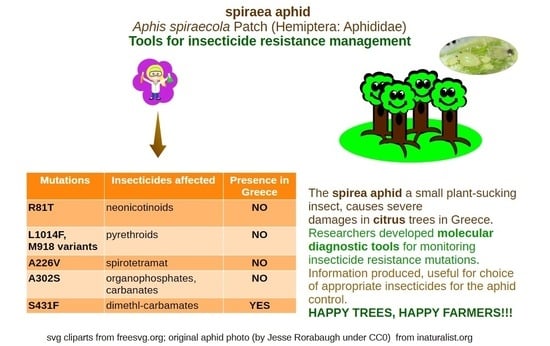
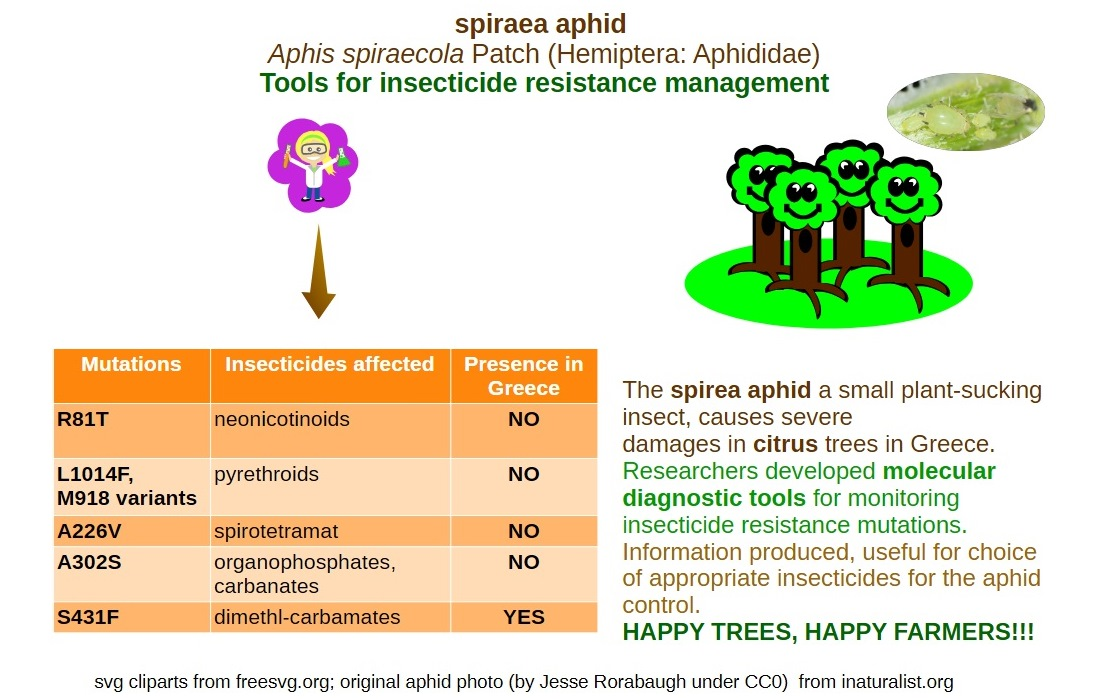
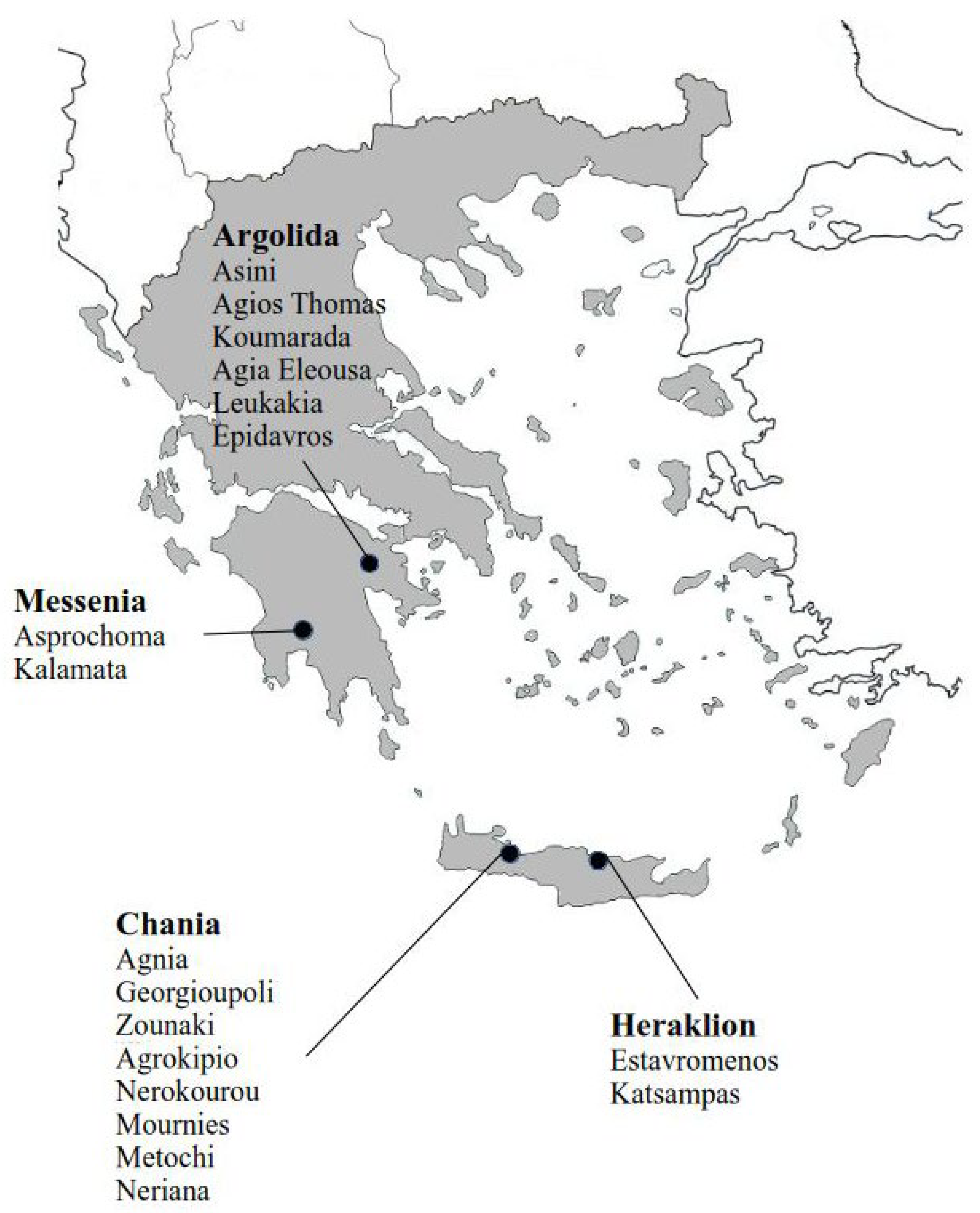
The spirea aphid, Aphis spiraecola, is a small insect that damages citrus trees and other crops by feeding on plant sap and spreading viruses. Farmers typically rely on insecticides to manage this pest; however, excessive use can result in the development of resistance, thereby reducing the effectiveness of control measures. In this study, we collected aphids from citrus orchards across Greece and tested them for genetic changes already known to confer insecticide resistance in related species. We found that Greek populations do not yet carry mutations conferring resistance to most common insecticides, such as neonicotinoids, pyrethroids, organophosphates, and spirotetramat. However, one mutation (S431F), which can reduce the effectiveness of dimethy-carbamate insecticides, such as pirimicarb, was detected at high frequency. This suggests that pirimicarb, a selective aphidicide, although not registered for citrus in Greece, may no longer be a reliable option in cases of emergency use or in resistance management programs. We also developed simple and cost-effective diagnostic tools that can quickly identify resistance mutations in field samples. These tools may enable farmers and advisors to monitor aphid populations more effectively and support sustainable pest control strategies in citrus production.
Abstract
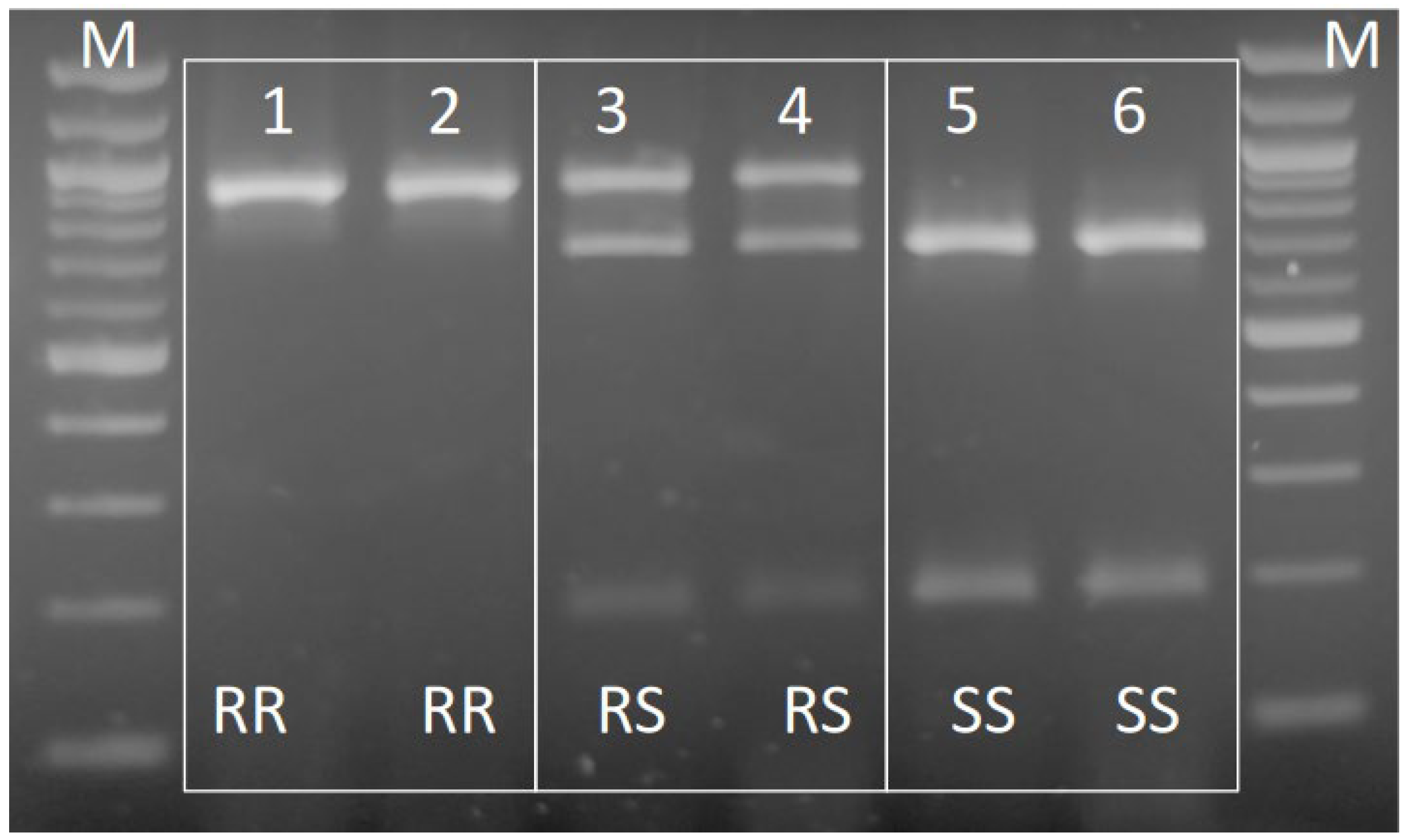
The spirea aphid, Aphis spiraecola (Hemiptera: Aphididae), is a major pest of citrus and other crops, causing feeding damage and transmitting plant viruses. Control relies mainly on insecticides, increasing the risk of resistance. We surveyed Greek populations of A. spiraecola (2022–2023) and developed molecular diagnostics to detect target site mutations linked to resistance against neonicotinoids, carbamates, organophosphates, pyrethroids, and spirotetramat. Seventy-two aphids were analyzed. All individuals were homozygous and susceptible at R81T, A302S, L1014F, M918 variants, and A2226V loci. However, the S431F mutation in the AChE2 gene, associated with resistance to dimethyl-carbamates, such as the selective aphicide pirimicarb, was present in all regions. Heterozygotes occurred at high frequencies, while homozygous resistant individuals were rare. These findings indicate that Greek populations remain largely susceptible to most insecticide classes, but the widespread occurrence of S431F questions the use of pirimicarb in resistance management. The diagnostic assays developed here are cost-effective tools for large-scale monitoring, enabling early detection of resistance in A. spiraecola. Continued surveillance, combined with bioassays and studies on metabolic mechanisms, will be essential for sustainable pest management.