
You are currently viewing a new version of our website. To view the old version click .
Journal of Personalized Medicine
  • Systematic Review
  • Open Access

4 July 2023

Comparison of a Peripheral Nerve Block versus Spinal Anesthesia in Foot or Ankle Surgery: A Systematic Review and Meta-Analysis with a Trial Sequential Analysis

,
,
,
,
and
1
Department of Anesthesiology and Pain Medicine, Research Institute of Medical Science, Konkuk University School of Medicine, 82 Gugwondae-ro, Chungju 27376, Republic of Korea
2
Department of Anesthesiology and Pain Medicine, Wonkwang University School of Medicine, 895 Muwang-ro, Iksan 54538, Republic of Korea
3
Department of Anesthesiology and Pain Medicine, Asan Medical Center, University of Ulsan College of Medicine, 88 Olympic-ro 43-gil, Songpa-gu, Seoul 05505, Republic of Korea
4
Department of Surgery, Chung-Ang University College of Medicine, 84 Heukseok-ro, Dongjak-gu, Seoul 06911, Republic of Korea
This article belongs to the Section Evidence Based Medicine

Abstract

Background: This systematic review and meta-analysis with trial sequential analysis (TSA) aimed to compare perioperative outcomes of peripheral nerve blocks (PNBs) and spinal anesthesia (SA) in elective foot and ankle surgery. Methods: The study protocol was registered in PROSPERO (CRD42021229597). Researchers independently searched PubMed, EMBASE, and the Cochrane Central Register of Controlled Trials for relevant randomized controlled trials (RCTs). Results: Analysis of nine RCTs (n = 802; 399 PNBs, 403 SA) revealed significantly shorter block performance times (WMD: 7.470; 95% CI 6.072 to 8.868), the onset of sensory (WMD: 7.483; 95% CI 2.837 to 12.130) and motor blocks (WMD: 9.071; 95% CI 4.049 to 14.094), durations of sensory (WMD: 458.53; 95% CI 328.296 to 588.765) and motor blocks (WMD: 247.416; 95% CI 95.625 to 399.208), and significantly higher postoperative analgesic requirements (SMD: −1.091; 95% CI −1.634 to −0.549) in the SA group. Additionally, systolic blood pressure (SBP) at 30 min (WMD: 13.950; 95% CI 4.603 to 23.298) was lower in the SA group. Conclusions: The SA demonstrated shorter block performance time, faster onset and shorter duration of sensory and motor blocks, higher postoperative analgesic requirements, and lower SBP at 30 min compared to PNBs in elective foot and ankle surgery.

1. Introduction

The use of peripheral nerve blocks (PNBs) in orthopedic limb surgery has become increasingly popular [1,2]. Commonly used peripheral nerve blocks for foot and/or ankle surgery are the sciatic, femoral, popliteal, lateral femoral cutaneous, saphenous, and ankle blocks [3,4]. As single-site injections, these techniques do not provide broad and adequate anesthetic coverage for foot and/or ankle surgery. Therefore, these techniques are traditionally not used as a single anesthetic technique for foot and/or ankle surgery but are combined with general anesthesia or spinal anesthesia for postoperative pain relief [5,6]. However, some studies have recently demonstrated that PNBs alone or combined can provide adequate anesthesia in foot and ankle surgery [7,8,9,10,11,12,13,14,15].
Previous studies have suggested that PNBs have considerable clinical advantages, such as less cardiovascular effects, a longer analgesic duration, lower hospital costs, a shorter length of stay (LOS), and a lower incidence of urinary retention and post-dural puncture headache (PDPH) [1,2]. However, technical difficulties, the potentials for inadequate blocks, increased block performance times, delayed block onsets, and additional needs for equipment such as a peripheral nerve stimulator or a portable ultrasound unit are regarded as obstacles to the application of PNBs in everyday clinical practice. Therefore, due to its easiness, short block performance time, onset time, and reliability for an adequate block, spinal anesthesia (SA) is more often performed in clinical practice.
There has been an attempt to incorporate the evidence from various studies investigating the effects of combinations of PNBs [16]. However, it incorporated studies with broad designs, such as retrospective series and prospective and retrospective cohort studies. Furthermore, as this analysis included effects from adjuvants, it did not focus on the pure effects of PNBs. To date, no systematic review and meta-analysis have compared the pure effects of PNBs with SA for foot and ankle surgery.
Therefore, we critically reviewed and synthesized the current evidence from randomized controlled trials (RCTs) to compare the effects and safety of SA versus PNBs in patients undergoing foot and ankle surgery.

2. Materials and Methods

We developed the protocol for this systematic review and meta-analysis with a trial sequential analysis according to the Preferred Reporting Items for Systematic Review and Meta-Analysis Protocol (PRISMA-P) and registered it in the PROSPERO network (registration number: CRD42021229597, available at https://www.crd.york.ac.uk/PROSPERO/display_record.php?RecordID=229597 (accessed on 14 June 2021).
This study was completed by observing the recommendations of the Cochrane Collaboration [17] and reported by following the PRISMA statement guidelines [18].

2.1. Inclusion and Exclusion Criteria

The inclusion and exclusion criteria were determined before conducting any systematic searches. We included full reports of RCTs investigating the efficacy, patient satisfaction, and adverse effects in patients undergoing foot or ankle surgery between PNBs and SA.
The PICO-SD information is as follows:
Patients (P): all elective patients undergoing foot or ankle surgery with PNBs and SA.
Intervention (I): PNBs (femoral, sciatic, popliteal) performed as anesthesia using a single dose or continuous infusion.
Comparison (C): SA.
Outcome measurements (O): The primary outcome of this systematic review and meta-analysis with a trial sequential analysis was the pain scores during surgery and the postoperative period. The secondary outcomes were patient satisfaction and adverse effects.
Study design (SD): The inclusion criteria for this systematic review and meta-analysis with a trial sequential analysis were the full reports of randomized controlled trials (RCTs). The exclusion criteria were observational studies, conference abstracts, posters, case reports, case series, comments or letters to the editor, reviews, and laboratory or animal studies.

2.2. Information Source and Search Strategy

To identify RCTs for this systematic review and meta-analysis with a trial sequential analysis, two investigators (ML and CL) independently performed searches of the PubMed, EMBASE, and Cochrane Central Register of Controlled Trials (CENTRAL) databases on 28 June 2021 and updated them on 15 March 2023. The search terms included the following in various combinations with free text, Medical Subject Headings, and EMTREE terms: (peripheral nerve block OR sciatic nerve block OR femoral nerve block OR popliteal nerve block OR saphenous nerve block OR ankle block) AND (spinal anesthesia OR spinal nerve block) AND (ankle surgery OR foot surgery). In addition, we searched the reference lists of original articles to ensure that we included all available studies. No limitations were placed on the publication date or language.

2.3. Study Selection

Two investigators (ML and CL) independently scanned the titles and abstracts of the reports identified. If a report was considered eligible from the title or abstract, the full text was retrieved and evaluated. All abstracts that could not provide sufficient information regarding the eligibility criteria were selected for full-text evaluation. Potentially relevant studies that at least one investigator identified were retrieved, and the full-text versions were evaluated. Articles that met the inclusion criteria were assessed separately by the two investigators (ML and CL), and any discrepancies were resolved through discussion. Disagreement over inclusion or exclusion was settled by a discussion with a third investigator (HK).
Kappa statistics were used to measure the degree of agreement for study selection between the two independent investigators. Kappa statistics were interpreted as follows: (1) less than 0, less than chance agreement; (2) 0.01 to 0.20, slight agreement; (3) 0.21 to 0.40, fair agreement; (4) 0.41 to 0.60, moderate agreement; (5) 0.61 to 0.80, substantial agreement; and (6) 0.8 to 0.99, almost perfect agreement [19].

2.4. Data Extraction

Using a standardized data collection form, two independent investigators (ML and CL) extracted all relevant data from the included studies, input them into standardized forms, and then crosschecked them. Any discrepancy was resolved through discussion. If an agreement could not be reached, a third investigator (HK) provided a resolution.
The extracted data included the first author, journal, publication year, country of origin, study protocol registration (registry and registration number), study design, characteristics and conversion to general anesthesia, intraoperative vital signs (systolic blood pressure (SBP), diastolic blood pressure (DBP), mean blood pressure, heart rate), block performance time, onset time and duration of sensory and motor blocks, postoperative analgesic requirements, all intervention-related side effects (urinary retention, PDPH, local anesthetic systemic toxicity (LAST), nerve damage), and patient satisfaction.
The data were initially extracted from tables or text. In cases involving missing or incomplete data, we tried to contact the authors to obtain the relevant information.

2.5. Risk of Bias

Risk of bias was assessed using the Revised Cochrane risk of bias tool for randomized trials (RoB 2.0) version (22 August 2019) by two independent authors (ML and HK). RoB 2.0 is structured into five domains: D1, bias arising from the randomization process; D2, bias because of deviations from the intended interventions; D3, bias because of missing outcome data; D4, discrimination in the measurement of the outcome; and D5, bias in the selection of the reported result. We also evaluated the overall risk of bias. The risk was judged as low risk when the risk of bias for all domains was low, high when the risk of bias for at least one domain was high, or the risk of biases for multiple domains was of some concern, and some concern if the overall judgment neither low nor high.

2.6. Data Analysis

2.6.1. Conventional Meta-Analysis

A meta-analysis was conducted using Comprehensive Meta-Analysis version 2.0 (Englewood, NJ, USA, 2008). Two investigators (ML and HK) independently input all data into the software. The pooled risk ratio (RR) for binary variables or weighted mean difference (WMD) for quantitative data and their 95% confidence intervals (CIs) were calculated for each outcome. A random-effects model was used to account for clinical or methodological heterogeneity in each study. Statistical heterogeneity was assessed using the I2 test, with I2 > 50 indicating significant heterogeneity. We performed a sensitivity analysis to explore heterogeneity by removing one study at a time and evaluating whether it altered our results. Publication bias was not estimated since fewer than 10 studies were included. We calculated the number needed to treat (NNT) using a 95% CI based on the absolute risk reduction to estimate the overall clinical impact of the intervention.

2.6.2. Trial Sequential Analysis

A conventional meta-analysis runs the risk of random errors due to sparse data. A trial sequential analysis (TSA) is a methodology that includes a required information size (RIS) calculation for a meta-analysis with a threshold for statistical significance, which controls the risk of potential false-positive and false-negative findings of meta-analyses [20]. Therefore, we additionally performed a TSA on the outcomes to calculate the RIS and assess whether our results were conclusive. We used a random-effects model with the DerSimonian–Laird (DL) to construct the cumulative Z curve. The TSA was performed to maintain an overall 5% risk of a type I error.
When the cumulative Z curve crossed the trial sequential monitoring boundary or entered the futility area, the sufficient level of evidence for accepting or rejecting the anticipated intervention effect may have been reached, and no further studies were needed. If the Z curve did not cross any boundaries and the RIS was not reached, the evidence to reach a conclusion was insufficient, indicating the requirement for more studies.
For dichotomous outcomes, we estimated the RIS based on the observed proportion of patients with an outcome in the PNB group (the cumulative proportion of patients with an event relative to all patients in the PNB group), a relative risk reduction of 30% in the SA group, an alpha of 5% for all our outcomes, a beta of 20%, and the observed diversity as suggested by the trials in the meta-analysis.
For quantitative outcomes, we used the observed standard deviation (SD) in the trial sequential analysis, a mean difference of the observed SD/3, an alpha of 5% for all outcomes, a beta of 20%, and the observed diversity as suggested by the trials in the meta-analysis.

2.6.3. Quality of the Evidence

The evidence grade was determined using the guidelines of the Grading of Recommendations Assessment, Development, and Evaluation (GRADE) system, which uses a sequential assessment of the evidence quality, followed by an assessment of risk–benefit balance and a subsequent judgment on the strength of the recommendations [21].

3. Results

3.1. Study Selection

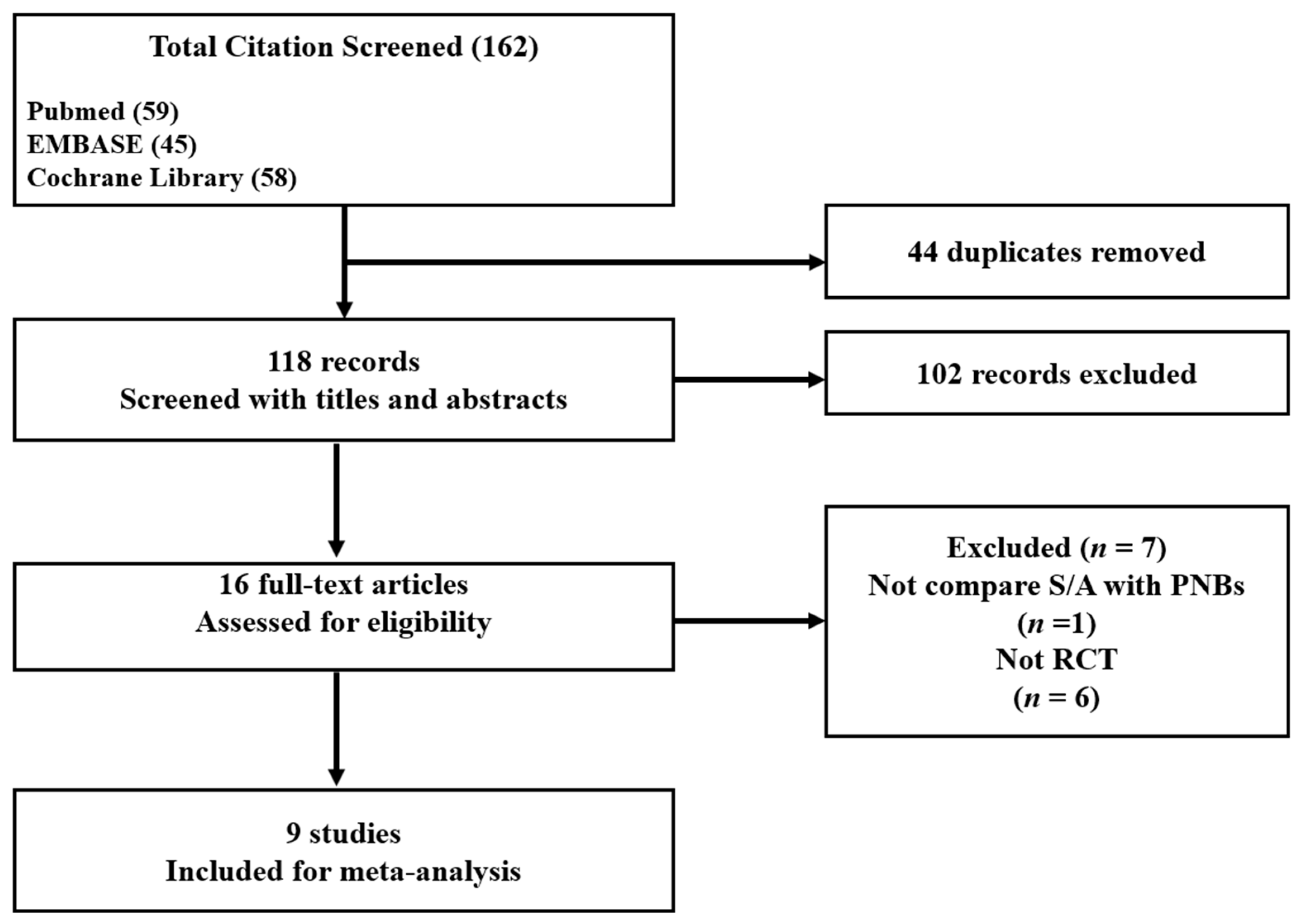
From the PubMed, EMBASE, and CENTRAL database searches, 162 studies were initially selected. After adjusting for duplicates (n = 44), 118 studies remained. Of these, 102 studies were excluded after reviewing the titles and abstracts, as they were not relevant. At this stage of study selection, the kappa value for selecting studies between the two reviewers was 0.759. Full texts of the remaining 16 studies were reviewed in detail. Of these, seven studies were further excluded because one study did not compare PNBs versus SA [22], and six were not RCTs [5,23,24,25,26,27]. The kappa value for selecting articles between the two investigators was 0.875.
Finally, nine studies satisfied the inclusion criteria and were incorporated into this study [7,8,9,10,11,12,13,14,15]. Two studies included below-knee amputation (BKA), and the authors of two studies provided additional data excluding BKA at our e-mail on request [10,15]. Thus, nine studies with a total of 802 patients were included in our meta-analysis (Figure 1).
Figure 1. Flow diagram showing the number of abstracts and articles identified and evaluated during the review process.

3.2. Study Characteristics

The study characteristics are shown in Table 1. Seven studies performed ultrasound-guided PNBs with or without a nerve stimulator [7,8,9,10,11,13,14]. Two studies used a nerve stimulator alone [12,15]. Seven studies performed two PNBs (femoral or saphenous and sciatic nerve blocks) [7,9,10,11,12,13,15]. Dabir et al. performed three PNBs (femoral, lateral femoral cutaneous, and popliteal blocks), and Yang et al. performed four PNBs (femoral, obturator, lateral femoral cutaneous, and sacral plexus blocks). Only three trials were registered at ClinicalTrials.gov, Clinicaltrialsregister.eu, and the Iran Registry of Clinical Trials [7,8,10].
Table 1. Characteristics of included studies.

3.3. Risk of Bias

The risk of bias assessment performed using the Cochrane tool for the included studies is presented in Table 2. Studies were judged to have low risk [7,14], some concerns [8,9,11,12,13], or high risk [10,15]. Among the nine included studies, bias in the measurement of the outcome and bias in the selection of the reported results were assessed as “low risk”, except for Chauhan et al.’s study [15]; bias arising from the randomization process; bias due to deviations from intended intervention; and bias due to missing outcome data were assessed as “some concerns” in four studies, three studies, and two studies, respectively.
Table 2. Risk of bias.

3.4. Conversion to General Anesthesia

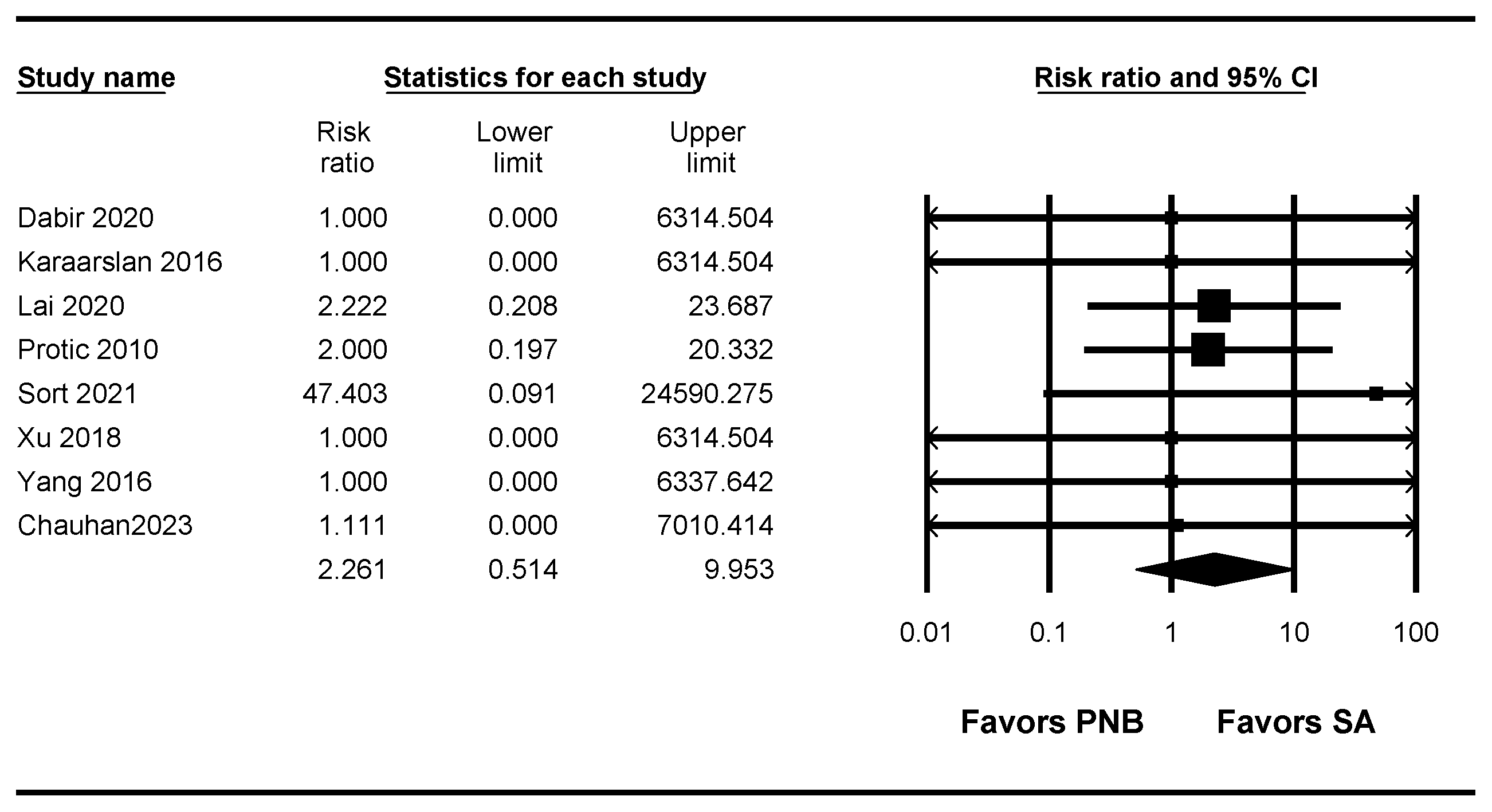
A total of eight studies [7,8,9,10,11,13,14,15] (602 patients) measured the conversion rate to general anesthesia. There was no evidence of a difference in the conversion rate to general anesthesia between the PNB and SA groups (RR: 2.261; 95% CI 0.514 to 9.953; I2 = 0.0), but the conversion rate to general anesthesia was lower in the SA group (0.66%, 2 of 303) than in the PNB group (3.01%, 9 of 299) in terms of the NNT (NNT harm (NNTH): 43; 95% CI NNTH 22 to NNTH 478) (Figure 2, Table 3).
Figure 2. Forest plot showing conversion to general anesthesia. The figure depicts individual trials as filled squares with the relative sample size and the 95% confidence interval (CI) of the difference as a solid line. The diamond shape indicates the pooled estimate and uncertainty for the combined effect [7,8,9,10,11,13,14,15].
Table 3. The summary of the meta-analysis.
The TSA indicated that only 2.9% (602 of 20,771 patients) of the RIS was accrued. The trial sequential monitoring boundary was ignored due to too little information use. The cumulative Z curve did not cross the conventional test boundary (Supplementary Figure S1, Table 3).

3.5. Block Performance Time

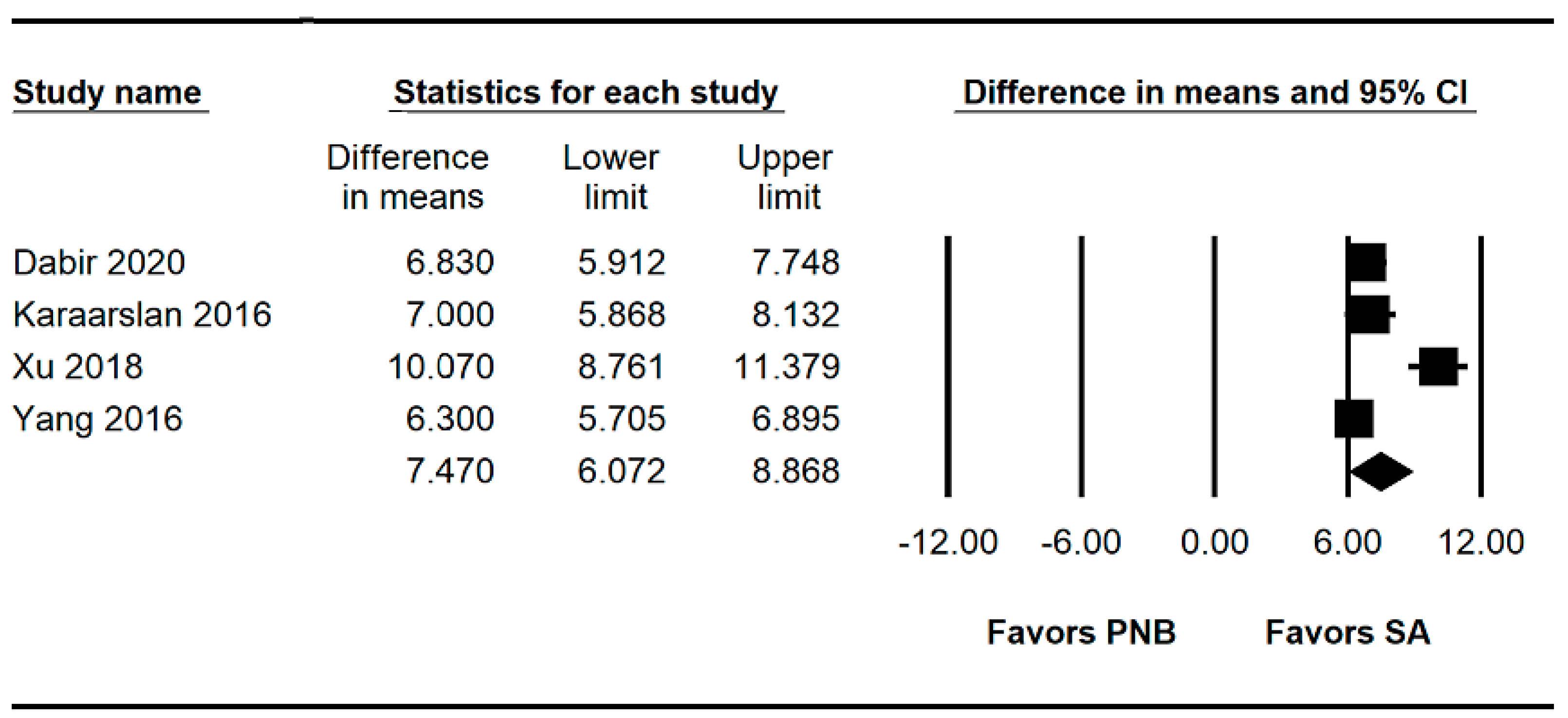
Four studies [8,9,13,14] (260 patients) measured the block performance time. The block performance time was significantly lower in the SA group than in the PNB group (WMD: 7.470; 95% CI 6.072 to 8.868; I2 = 88.66) (Figure 3, Table 3).
Figure 3. Forest plot showing the block performance time. The figure depicts individual trials as filled squares with relative sample size and the 95% confidence interval (CI) of the difference as a solid line. The diamond shape indicates the pooled estimate and uncertainty for the combined effect. A sensitivity analysis performed by removing one study at a time showed no change in statistical significance (Supplementary Figure S2). The TSA indicated that the number of accrued patients almost reached the RIS (260 of 262 patients). The cumulative Z curve crossed both the conventional test boundary and the trial sequential monitoring boundary. (Supplementary Figure S3, Table 3) [8,9,13,14].

3.6. Onset Time of the Sensory Block

Four studies [8,13,14,15] (234 patients) measured the onset time of the sensory block. The onset time of the sensory block was significantly shorter in the SA group than in the PNB group (WMD: 7.483; 95% CI 2.837 to 12.130; I2 = 99.665 (Supplementary Figure S4, Table 3).
A sensitivity analysis performed by removing the studies by Yang et al. [14] changed the statistical significance of results without eliminating heterogeneity (Supplementary Figure S5).
The TSA indicated that only 18.9% (234 of 1236 patients) of the RIS was accrued. The cumulative Z curve crossed both the conventional test boundary and the trial sequential monitoring boundary (Supplementary Figure S6, Table 3).

3.7. Onset Time of the Motor Block

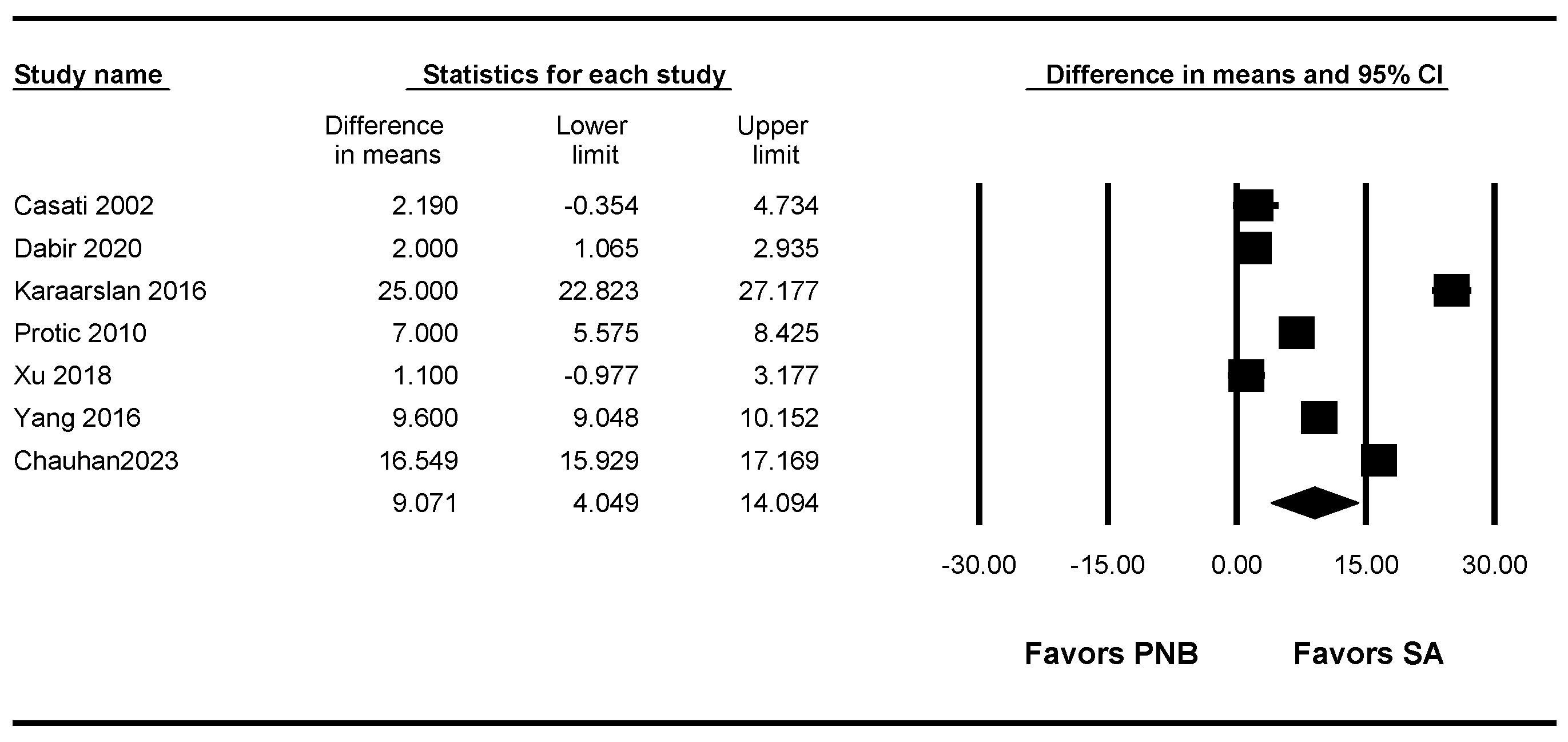
Seven studies [8,9,11,12,13,14,15] (554 patients) measured the onset time of the motor block. The onset time of the motor block was significantly shorter in the SA group than in the PNB group (WMD: 9.071; 95% CI 4.049 to 14.094; I2 = 99.403) (Figure 4, Table 3).
Figure 4. Forest plot showing the onset time of the motor block. The figure depicts individual trials as filled squares with relative sample size and the 95% confidence interval (CI) of the difference as a solid line. The diamond shape indicates the pooled estimate and uncertainty for the combined effect [8,9,11,12,13,14,15].
A sensitivity analysis performed by removing one study at a time showed no change in statistical significance (Supplementary Figure S7).
The TSA indicated that 93.7% (554 of 591 patients) of the RIS was accrued. The cumulative Z curve crossed both the conventional test boundary and the trial sequential monitoring boundary (Supplementary Figure S8, Table 3).

3.8. Duration of the Sensory Block

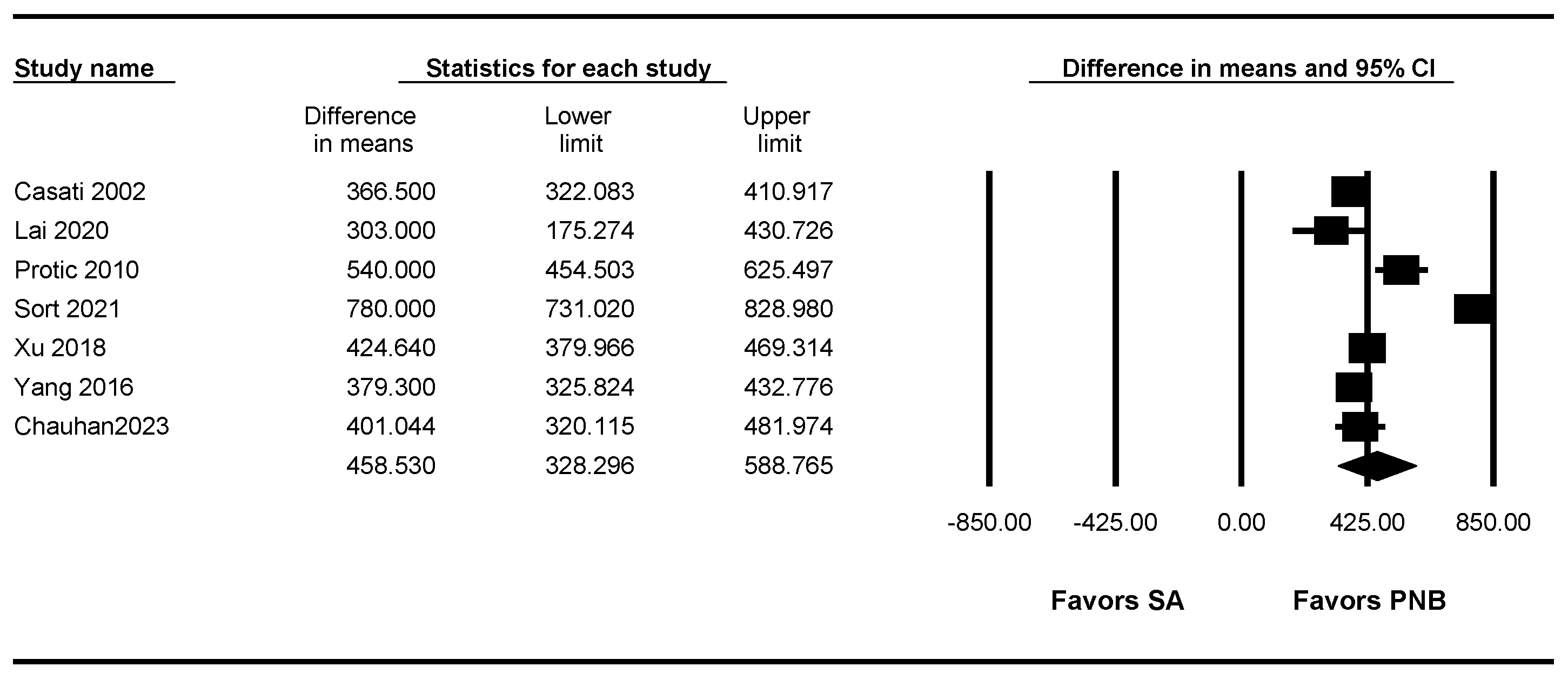
Seven studies [7,10,11,12,13,14,15] (679 patients) measured the duration of the sensory block. The duration of the sensory block was significantly longer in the PNB group than in the SA group (WMD: 458.530; 95% CI 328.296 to 588.765; I2 = 97.02) (Figure 5, Table 3).
Figure 5. Forest plot showing duration of sensory block. The figure depicts individual trials as filled squares with relative sample size and the 95% confidence interval (CI) of the difference as a solid line. The diamond shape indicates the pooled estimate and uncertainty for the combined effect [7,10,11,12,13,14,15].
A sensitivity analysis performed by removing one study at a time showed no change in statistical significance (Supplementary Figure S9).
The TSA indicated that the number of accrued patients exceeded the RIS (679 of 246 patients). The cumulative Z curve crossed both the conventional test boundary and the trial sequential monitoring boundary (Supplementary Figure S10, Table 3).

3.9. Duration of the Motor Block

Four studies [12,13,14,15] (397 patients) measured the duration of the motor block. The duration of the motor block was significantly longer in the PNB group than in the SA group (WMD: 247.416; 95% CI 95.625 to 399.208; I2 = 97.325) (Supplementary Figure S11, Table 3).
A sensitivity analysis performed by removing one study at a time showed no change in statistical significance (Supplementary Figure S12).
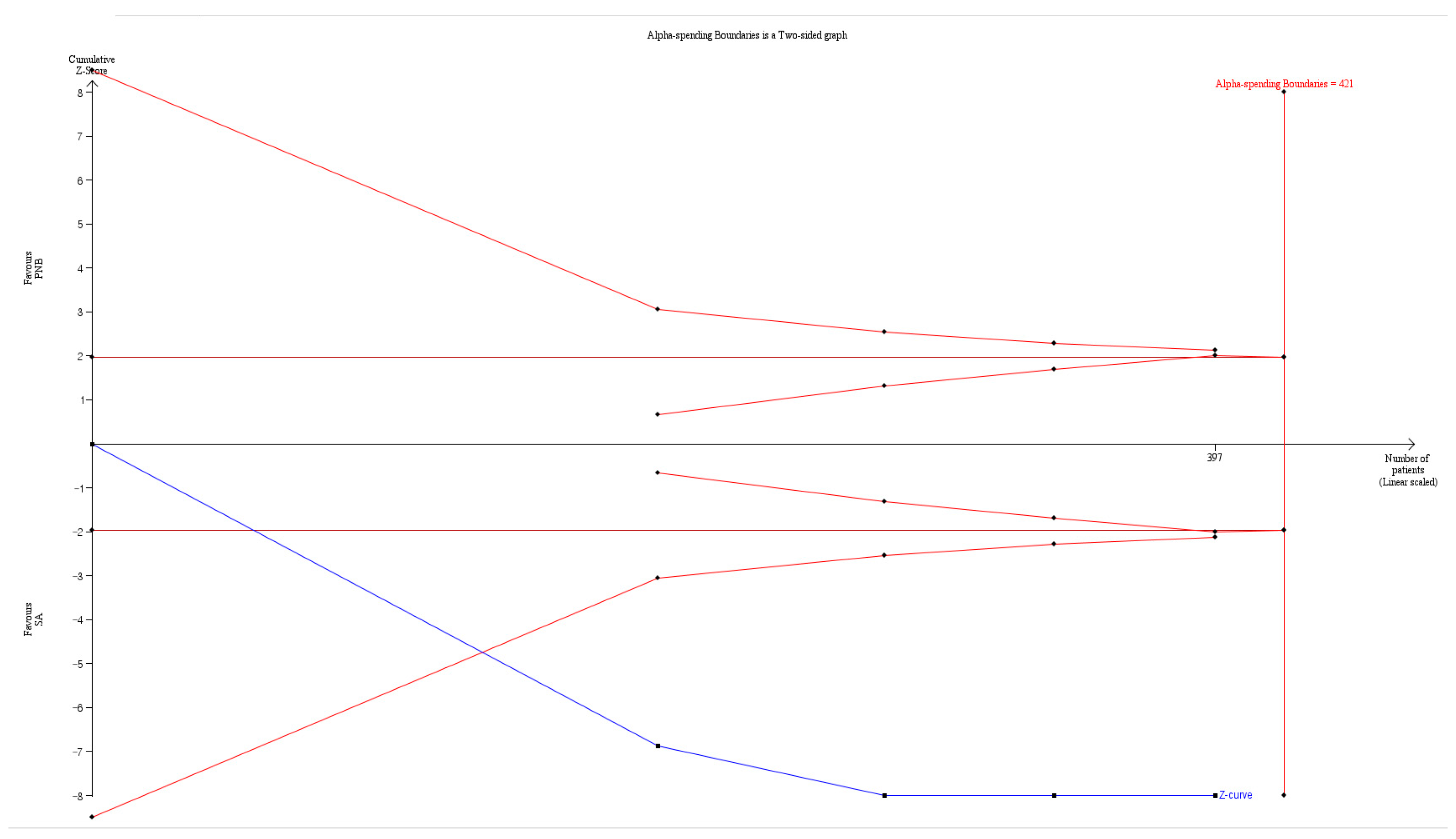
The TSA indicated that 94.3% (397 of 421 patients) of the RIS was accrued. The cumulative Z curve crossed both the conventional test boundary and the trial sequential monitoring boundary (Figure 6, Table 3).
Figure 6. Trial sequential analysis showing the duration of the motor block. The trial sequential analysis (TSA) for the studies comparing the effect of peripheral nerve blocks (PNBs) to that of spinal anesthesia (SA) on the duration of the motor block. The uppermost and lowermost curves represent trial sequential monitoring boundary lines for benefit and harm, respectively. The horizontal line represents the conventional boundaries for statistical significance. The triangular lines on the right side reflect the futility boundaries. The number on the x-axis indicates the required information size.

3.10. Postoperative Analgesic Requirements

Three studies [7,12,15] (407 patients) measured the postoperative analgesic requirements. The postoperative analgesic requirement was significantly lower in the PNB group than in the SA group (SMD: −1.091; 95% CI −1.634 to −0.549; I2 = 83.10) (Supplementary Figure S13, Table 3).
A sensitivity analysis performed by removing one study at a time showed no change in statistical significance (Supplementary Figure S14).
The TSA indicated that only 23.4% (407 of 1741 patients) of the RIS was accrued. The cumulative Z curve crossed the conventional test boundary and the trial sequential monitoring boundary (Supplementary Figure S15, Table 3).

3.11. Incidence of Hypotension

A total of four studies [9,10,11,14] (272 patients) measured the incidence of hypotension. The incidence of hypotension was significantly lower in the PNB group than in the SA group. (RR: 0.152; 95% CI 0.042 to 0.548; I2 = 0.0; NNT benefit (NNTB): 7; 95% CI NNTB 5 to NNTH 14) (Supplementary Figure S16, Table 3).
The TSA indicated that only 6.7% (272 of 4043 patients) of the RIS was accrued. The cumulative Z curve crossed the conventional test boundary but did not cross the trial sequential monitoring boundary (Supplementary Figure S17, Table 3).

3.12. Use of Vasoactive Drugs

A total of three studies [7,9,10] (305 patients) measured the use of vasoactive drugs. The use of vasoactive drugs was significantly lower in the PNB group than in the SA group. (RR: 0.253; 95% CI 0.101 to 0.638; I2 = 0.0; NNTB: 8; 95% CI NNTB 5 to NNTH 15) (Supplementary Figure S18, Table 3).
The TSA indicated that only 8.2% (305 of 3698 patients) of the RIS was accrued. The cumulative Z curve crossed the conventional test boundary but did not cross the trial sequential monitoring boundary (Supplementary Figure S19, Table 3).

3.13. Systolic Blood Pressure

Three studies [10,13,15] (212 patients) measured SBP. There was no evidence of a difference between the SA and PNB groups at T0. (WMD: −0.112; 95% CI −5.329 to 5.168; I2 = 31.501) (Supplementary Figure S20, Table 3).
The SBP was significantly lower in the SA group than in the PNB group at T30. (WMD: 13.950; 95%CI 4.603 to 23.298; I2 = 74.829) (Supplementary Figure S21, Table 3).
A sensitivity analysis performed by removing the studies by Xu et al. [13] changed the statistical significance of results without eliminating heterogeneity (Supplementary Figure S22).
The TSA indicated that only 11.1% (212 of 1911 patients) of the RIS was accrued at T0. The cumulative Z curve crossed the conventional test boundary but did not cross the trial sequential monitoring boundary (Supplementary Figure S23, Table 3). The TSA indicated that the number of accrued patients exceeded the RIS (212 of 75 patients) at T30. The cumulative Z curve crossed both the conventional test boundary and the trial sequential monitoring boundary (Supplementary Figure S24, Table 3).

3.14. Diastolic Blood Pressure

Three studies [10,13,15] (212 patients) measured the DBP. There was no evidence of a difference between the SA and PNB groups at T0. (WMD: −1.297; 95% CI −3.931 to 1.337; I2 = 0.0) (Supplementary Figure S25, Table 3).
There was no evidence of a difference between the SA and PNB groups at T30. (WMD: 4.535; 95% CI −0.969 to 10.039; I2 = 75.674) (Supplementary Figure S26, Table 3).
The TSA indicated that only 11.8% (212 of 1802 patients) of the RIS was accrued at T0. The cumulative Z curve did not cross the conventional test boundary. (Supplementary Figure S27, Table 3). The TSA indicated that only 32.8% (212 of 646 patients) of the RIS was accrued at T30. The cumulative Z curve did not cross the conventional test boundary (Supplementary Figure S28, Table 3).

3.15. Heart Rate

Three studies [10,13,15] (212 patients) measured the heart rate. There was no evidence of a difference between the SA and PNB groups at T0. (WMD: −0.204; 95% CI −3.696 to 3.288; I2 = 0.062) (Supplementary Figure S29, Table 3).
There was no evidence of a difference between the SA and PNB groups at T30. (WMD: 2.617; 95% CI −3.265 to 8.599; I2 = 66.401) (Supplementary Figure S30, Table 3).
The TSA indicated that only 11.8% (212 of 1802 patients) of the RIS was accrued at T0. The cumulative Z curve did not cross the conventional test boundary (Supplementary Figure S31, Table 3). The TSA indicated that only 9.5% (212 of 2237 patients) of the RIS was accrued at T30. The cumulative Z curve did not cross the conventional test boundary (Supplementary Figure S32, Table 3).

3.16. Urinary Retention

A total of four studies [9,11,12,15] (354 patients) measured urinary retention. There was no evidence of a difference between the SA and PNB groups (RR: 0.089; 95% CI 0.002 to 3.297; I2 = 0.0), but urinary retention occurred less frequently in the PNB group (0.0%, 0 of 175) than in the SA group (5.59%, 10 of 179) in terms of the NNT (NNTB: 18; 95% CI NNTB 11 to NNTH 45) (Supplementary Figure S33, Table 3).
The TSA indicated that only 18.5% (354 of 1912 patients) of the RIS was accrued. The cumulative Z curve did not cross the conventional test boundary (Supplementary Figure S34, Table 3).

3.17. Post-Dural Puncture Headache

A total of four studies [9,11,14,15] (234 patients) measured the incidence of PDPH. There was no evidence of a difference between the SA and PNB groups. (RR: 0.159; 95% CI 0.004 to 6.071; I2 = 0.0), but the incidence of PDPH was lower in the PNB group (0.00%, 0 of 115) than in the SA group (3.36%, 4 of 119) in terms of the NNT (NNTB: 30; 95% CI NNTB 15 to NNTH 813) (Supplementary Figure S35, Table 3).
The TSA indicated that only 1.2% (234 of 14,721 patients) of the RIS was accrued. The trial sequential monitoring boundary was ignored due to too little information use. The cumulative Z curve did not cross the conventional test boundary (Supplementary Figure S36, Table 3).

3.18. Patient Satisfaction

A total of two studies [7,12] (350 patients) measured patient satisfaction. There was no evidence of a difference between the SA and PNB groups (RR: 1.049; 95% CI 0.981 to 1.122; I2 = 25.04; NNTH: 13; 95% CI NNTH −131 to ∞ NNTB 226) (Supplementary Figure S37, Table 3).
The TSA indicated that 83.7% (350 of 418 patients) of the RIS was accrued. The cumulative Z curve did not cross the conventional test boundary (Supplementary Figure S38, Table 3).

3.19. Quality of Evidence

Eighteen outcomes were evaluated using the GRADE system (Table 4). The quality of the pooled analysis for conversion to general anesthesia was high. The quality of the pooled analysis for block performance time, onset of the sensory block, duration of the motor block, and postoperative analgesics requirement was low. Otherwise, the quality of the pooled analysis was moderate or high.
Table 4. The GRADE evidence quality for each outcome.

4. Discussion

This meta-analysis of eight RCTs, including 802 patients (of whom 399 patients underwent PNBs and 403 patients underwent SA), demonstrated that the block performance time, onset of sensory and motor blocks, and duration of sensory and motor blocks were significantly shorter, the postoperative analgesics requirements were higher, and the SBP at 30 min was significantly lower in the SA group than in the PNB group. In these outcomes, the cumulative Z curve crossed the trial sequential monitoring boundary, suggesting that the results of TSA reached a sufficient level of evidence and were, therefore, conclusive.
This meta-analysis also showed that PNBs were associated with a decreased incidence of hypotension and vasoactive medications used. However, the cumulative Z curve did not cross the trial sequential monitoring boundary because of sparse data (postoperative analgesic requirements, incidence of hypotension, and vasoactive medications used).
Regarding conversion to general anesthesia, urinary retention, and headache, there was no evidence of differences in the conventional meta-analysis and trial sequential analysis. However, the results from the NNT showed statistically significant differences in these outcomes.
After a brief report that introduced ultrasound-guided regional block techniques in the mid-1990s, the use of this technique has been rapidly increasing [28]. Nerve blocks for foot and/or ankle surgery have been traditionally and commonly used with general anesthesia or SA for postoperative pain relief. PNBs alone neither provide adequate anesthetic coverage for foot and/or ankle surgery nor prevent tourniquet-induced pain. However, two or more combinations of PNBs enable broader anesthetic coverage and prevent tourniquet-induced pain; therefore, foot and/or ankle surgery could be performed under two or more combinations of PNBs. Furthermore, all the studies included in our study compared SA with a combination of two or more PNBs.
In our study, there was no evidence of a difference in the conversion rate to general anesthesia between the PNB and SA groups. Furthermore, our study showed that PNBs provided better pain control, as evidenced by lower postoperative analgesic requirements and longer sensory blocks than SA. PNB also increased the duration of motor block compared with SA. Although there was no evidence of a difference in the meta-analysis and trial sequential analysis, the incidences of PDPH and urinary retention increased regarding the NNT. These findings supported the usefulness of PNBs for foot and/or ankle surgery when two or more types of PNBs were applied. However, the conversion rate to general anesthesia was still high (3.01%) compared with SA (0.66%), which may limit the clinical use of PNBs.
Hypotension is known to result in various side effects, such as cardiac ischemia, cerebral hypoperfusion, acute renal injury, or mortality [29]. In our study, the SBP at 30 min and the incidence of hypotension and use of vasoactive medications were significantly lower in the SA group than in the PNB group. The proposed mechanism of hypotension after SA is reduced systemic vascular resistance (SVR) caused by sympathetic blockage from T1 to L2, decreased cardiac output (CO) caused by the reduced venous return from venous pooling, and decreased cardiovascular compensation mechanisms. PNBs can provide more stable hemodynamics due to a lack of sympathetic nervous system blockage. Therefore, PNBs can be a good choice for patients susceptible to hypotension, such as patients with compromised cardiopulmonary or neurologic function, severe aortic stenosis, or diabetic mellitus [30,31].
However, as shown in our study, the longer performance time and delayed onset of sensory and motor blocks may limit the routine use of PNBs for foot and/or ankle surgery. They may delay the start of surgery and hinder the efficient flow of the operating room. Although this was not observed in our study, technical difficulties, additional needs for equipment such as a peripheral nerve stimulator or ultrasound, and the potential for nerve injury or systemic toxicity due to a relatively larger number of local anesthetics could be barriers to the adoption of PNBs in everyday practice.
This systematic review and meta-analysis with a trial sequential analysis have a number of limitations. First, even after comprehensive and sensitive searching, only nine studies with 802 patients were included in this study. For some outcomes, it may have been underpowered; therefore, the findings from the study were inconclusive. Second, there was clinical and methodological heterogeneity across the studies, which utilized different numbers or types of PNBs and different surgical procedures.

5. Conclusions

In our systematic review and meta-analysis with a trial sequential analysis, the block performance time, onset of sensory and motor blocks, and duration of sensory and motor blocks were significantly shorter, postoperative analgesics requirement were higher, and the SBP at 30 min was significantly lower in the SA group than in the PNB group. However, the results for other outcomes are underpowered and, therefore, inconclusive. Thus, to clarify the effectiveness and harm of SA and PNBs, adequately powered and well-planned RCTs are required. Furthermore, when selecting the anesthetic techniques, it is important to take into account the aggressive nature of SA resulting from its central neuroaxial impact, as opposed to PNB.

Supplementary Materials

The following supporting information can be downloaded at: https://www.mdpi.com/article/10.3390/jpm13071096/s1, Figure S1: The trial sequential analysis for the studies comparing the effect of PNB to that of SA on conversion to general anesthesia; Figure S2: Sensitivity analysis excluding one study at a time for the block performance time; Figure S3: The trial sequential analysis for the studies comparing the effect of PNB to that of SA on the block performance time; Figure S4: Forest plot for studies comparing the effect of PNB to that of SA on the onset time of the sensory block; Figure S5: Sensitivity analysis excluding one study at a time for the onset time of the sensory block; Figure S6: The trial sequential analysis for the studies comparing the effect of PNB to that of SA on onset time of the sensory block; Figure S7: Sensitivity analysis excluding one study at a time for the onset time of motor block; Figure S8: The trial sequential analysis for the studies comparing the effect of PNB to that of SA on the onset time of motor block; Figure S9: Sensitivity analysis excluding one study at a time for the duration of the sensory block; Figure S10: The trial sequential analysis for the studies comparing the effect of PNB to that of SA on the duration of the sensory block; Figure S11: Forest plot for studies comparing the effect of PNB to that of SA on the duration of the motor block; Figure S12: Sensitivity analysis excluding one study at a time for the duration of the motor block; Figure S13: Forest plot for studies comparing the effect of PNB to that of SA on the postoperative analgesics requirements; Figure S14: Sensitivity analysis excluding one study at a time for the postoperative analgesics requirements; Figure S15: The trial sequential analysis for the studies comparing the effect of PNB to that of SA on the postoperative analgesics requirements; Figure S16: Forest plot for studies comparing the effect of PNB to that of SA on the incidence of hypotension; Figure S17: The trial sequential analysis for the studies comparing the effect of PNB to that of SA on the incidence of hypotension; Figure S18: Forest plot for studies comparing the effect of PNB to that of SA on the use of vasoactive drug medication; Figure S19: The trial sequential analysis for the studies comparing the effect of PNB to that of SA on the use of vasoactive drug medication; Figure S20: Forest plot for studies comparing the effect of PNB to that of SA on the systolic blood pressure at T0; Figure S21: Forest plot for studies comparing the effect of PNB to that of SA on the systolic blood pressure at T30; Figure S22: Sensitivity analysis excluding one study at a time for the systolic blood pressure at T0; Figure S23: The trial sequential analysis for the studies comparing the effect of PNB to that of SA on the systolic blood pressure at T0; Figure S24: The trial sequential analysis for the studies comparing the effect of PNB to that of SA on the systolic blood pressure at T30; Figure S25: Forest plot for studies comparing the effect of PNB to that of SA on the diastolic blood pressure at T0; Figure S26: Forest plot for studies comparing the effect of PNB to that of SA on the diastolic blood pressure at T30; Figure S27: The trial sequential analysis for the studies comparing the effect of PNB to that of SA on the diastolic blood pressure at T0; Figure S28: The trial sequential analysis for the studies comparing the effect of PNB to that of SA on the diastolic blood pressure at T30; Figure S29: Forest plot for studies comparing the effect of PNB to that of SA on the heart rate at T0; Figure S30: Forest plot for studies comparing the effect of PNB to that of SA on the heart rate at T30; Figure S31: The trial sequential analysis for the studies comparing the effect of PNB to that of SA on the heart rate at T0; Figure S32: The trial sequential analysis for the studies comparing the effect of PNB to that of SA on the heart rate at T30; Figure S33: Forest plot for studies comparing the effect of PNB to that of SA on the urinary retention; Figure S34: The trial sequential analysis for the studies comparing the effect of PNB to that of SA on the urinary retention; Figure S35: Forest plot for studies comparing the effect of PNB to that of SA on the post-dural puncture headache; Figure S36: The trial sequential analysis for the studies comparing the effect of PNB to that of SA on the post-dural puncture headache; Figure S37: Forest plot for studies comparing the effect of PNB to that of SA on the patient satisfaction; Figure S38: The trial sequential analysis for the studies comparing the effect of PNB to that of SA on the patient satisfaction.

Author Contributions

Conceptualization, M.L., C.L., J.L., Y.-S.C., H.K. (Hyungtae Kim) and H.K. (Hyun Kang); methodology, M.L., C.L, Y.-S.C. and H.K. (Hyun Kang); data curation, M.L. and H.K. (Hyun Kang); writing—original draft preparation, M.L., J.L., Y.-S.C. and C.L.; writing—review and editing, M.L., C.L. and H.K. (Hyun Kang); supervision and final approval: M.L., C.L. and H.K. (Hyun Kang); critical revision of the manuscript for important intellectual content, M.L. and H.K. (Hyun Kang). All authors have read and agreed to the published version of the manuscript.

Funding

This research was funded by the Basic Science Research Program through the National Research Foundation (NRF) of Korea funded by the Ministry of Education, Science and Technology (NRF-2022R1F1A1074934).

Institutional Review Board Statement

Not applicable.

Data Availability Statement

Data are contained within the article and Supplementary Material.

Conflicts of Interest

The authors declare no conflict of interest.

References

  1. Cozowicz, C.; Poeran, J.; Zubizarreta, N.; Mazumdar, M.; Memtsoudis, S.G. Trends in the use of regional anesthesia: Neuraxial and peripheral nerve blocks. Reg. Anesth. Pain Med. 2016, 41, 43–49. [Google Scholar] [CrossRef]
  2. Gabriel, R.A.; Ilfeld, B.M. Use of regional anesthesia for outpatient surgery within the United States: A prevalence study using a nationwide database. Anesth. Analg. 2018, 126, 2078–2084. [Google Scholar] [CrossRef]
  3. Fraser, T.W.; Doty, J.F. Peripheral nerve blocks in foot and ankle surgery. Orthop. Clin. 2017, 48, 507–515. [Google Scholar] [CrossRef]
  4. Bjørn, S.; Wong, W.Y.; Baas, J.; Nielsen, K.K.; Børglum, J.; Hauritz, R.W.; Bendtsen, T.F. The importance of the saphenous nerve block for analgesia following major ankle surgery: A randomized, controlled, double-blind study. Reg. Anesth. Pain Med. 2018, 43, 474–479. [Google Scholar] [CrossRef] [PubMed]
  5. Christensen, K.P.; Møller, A.M.; Nielsen, J.K.; Klausen, T.W.; Sort, R. The effects of anesthetic technique on postoperative opioid consumption in ankle fracture surgery. Clin. J. Pain 2016, 32, 870–874. [Google Scholar] [CrossRef]
  6. Kir, M.C.; Kir, G. Ankle nerve block adjuvant to general anesthesia reduces postsurgical pain and improves functional outcomes in hallux valgus surgery. Med. Princ. Pract. 2018, 27, 236–240. [Google Scholar] [CrossRef] [PubMed]
  7. Sort, R.; Brorson, S.; Gögenur, I.; Hald, L.L.; Nielsen, J.K.; Salling, N.; Hougaard, S.; Foss, N.B.; Tengberg, P.T.; Klausen, T.W. Peripheral nerve block anaesthesia and postoperative pain in acute ankle fracture surgery: The AnAnkle randomised trial. Br. J. Anaesth. 2021, 126, 881–888. [Google Scholar] [CrossRef]
  8. Dabir, S.; Mosaffa, F.; Hosseini, B.; Alimoradi, V. Comparison of the combined femoral and lateral femoral cutaneous nerve block plus popliteal block with spinal anesthesia for thigh tourniquet pain during foot or ankle surgery: A randomized clinical trial. Anesthesiol. Pain Med. 2020, 10, e103674. [Google Scholar] [CrossRef] [PubMed]
  9. Karaarslan, S.; Tekgül, Z.T.; Şimşek, E.; Turan, M.; Karaman, Y.; Kaya, A.; Gönüllü, M. Comparison between ultrasonography-guided popliteal sciatic nerve block and spinal anesthesia for hallux valgus repair. Foot Ankle Int. 2016, 37, 85–89. [Google Scholar] [CrossRef]
  10. Lai, H.Y.; Foo, L.L.; Lim, S.M.; Yong, C.F.; Loh, P.S.; Chaw, S.H.; Hasan, M.S.; Wang, C.Y. The hemodynamic and pain impact of peripheral nerve block versus spinal anesthesia in diabetic patients undergoing diabetic foot surgery. Clin. Auton. Res. 2020, 30, 53–60. [Google Scholar] [CrossRef]
  11. Protić, A.; Horvat, M.; Komen-Usljebrka, H.; Frkovic, V.; Zuvic-Butorac, M.; Bukal, K.; Sustic, A. Benefit of the minimal invasive ultrasound-guided single shot femoro-popliteal block for ankle surgery in comparison with spinal anesthesia. Wien. Klin. Wochenschr. 2010, 122, 584–587. [Google Scholar] [CrossRef] [PubMed]
  12. Casati, A.; Grispigni, C.; Aldegheri, G.; Vinciguerra, F.; Sciascia, A.; Fraschini, G.; Fanelli, G. Peripheral or central nerve blocks for foot surgery: A prospective, randomized clinical comparison. Foot Ankle Surg. 2002, 8, 95–100. [Google Scholar] [CrossRef]
  13. Xu, H.-Q.; Zhang, Z.-J.; Jia, R.; Duan, L.-P. Clinical observation of ultrasound guided popliteal sciatic nerve combined saphenous nerve block for hallux valgus patients with metatarsophalangeal joint dislocation. Zhongguo Gu Shang China J. Orthop. Traumatol. 2018, 31, 907–911. [Google Scholar]
  14. Yang, L.; Ji, J.; Zhao, Z.; Wang, W.; Luo, S.; Mo, Y.; Wang, J. Effect comparison of ultrasound-guided lower extremity nerve block and spinal anesthesia in ankle surgery. Zhonghua Yi Xue Za Zhi 2016, 96, 3337–3341. [Google Scholar]
  15. Chauhan, D.; Bhamri, S.; Shah, N.; Syed, A.N. A peripheral nerve stimulator guided popliteal sciatic nerve block combined with adductor canal block in lower leg surgery—A sole anesthetic technique. Indian J. Clin. Anaesth. 2023, 10, 53–57. [Google Scholar] [CrossRef]
  16. Gianakos, A.L.; Romanelli, F.; Rao, N.; Badri, M.; Lubberts, B.; Guss, D.; DiGiovanni, C.W. Combination lower extremity nerve blocks and their effect on postoperative pain and opioid consumption: A systematic review. J. Foot Ankle Surg. 2021, 60, 121–131. [Google Scholar] [CrossRef]
  17. Higgins, J.P.; Thomas, J.; Chandler, J.; Cumpston, M.; Li, T.; Page, M.J.; Welch, V.A. Cochrane Handbook for Systematic Reviews of Interventions, 2nd ed.; Wiley-Blackwell: New York, NY, USA, 2019. [Google Scholar]
  18. Page, M.J.; Moher, D.; Bossuyt, P.M.; Boutron, I.; Hoffmann, T.C.; Mulrow, C.D.; Shamseer, L.; Tetzlaff, J.M.; Akl, E.A.; Brennan, S.E. PRISMA 2020 explanation and elaboration: Updated guidance and exemplars for reporting systematic reviews. BMJ 2021, 372, n160. [Google Scholar] [CrossRef]
  19. Viera, A.J.; Garrett, J.M. Understanding interobserver agreement: The kappa statistic. Fam. Med. 2005, 37, 360–363. [Google Scholar]
  20. Kang, H. Trial sequential analysis: Novel approach for meta-analysis. Anesth. Pain Med. 2021, 16, 138–150. [Google Scholar] [CrossRef]
  21. Atkins, D.; Best, D.; Briss, P.A.; Eccles, M.; Falck-Ytter, Y.; Flottorp, S.; Guyatt, G.H.; Harbour, R.T.; Haugh, M.C.; Henry, D.; et al. Grading quality of evidence and strength of recommendations. BMJ 2004, 328, 1490. [Google Scholar]
  22. Kullenberg, B.; Topalis, C.; Resch, S. Ankle nerve block-perioperative pain relief in surgery of the forefoot. Foot 2006, 16, 135–137. [Google Scholar] [CrossRef]
  23. Arnold, H.; Weber, J.; Von Hoesslin, H. The concept of pre-emptive balanced analgesia in ambulatory foot surgery: Results of a prospective study. Foot Ankle Surg. 2000, 6, 39–43. [Google Scholar] [CrossRef]
  24. Filimonov, R.V.; Filimonova, I.V.; Shapoval, S.D.; Kobeliatskyi, Y.Y. Comparative analysis of the methods of anesthetic maintenance in patients with diabetes with the syndrome of diabetic foot requiring operative intervention. Wiad. Lek. 2019, 72, 558–561. [Google Scholar] [CrossRef] [PubMed]
  25. Hansen, E.; Eshelman, M.R.; Cracchiolo, A., III. Popliteal fossa neural blockade as the sole anesthetic technique for outpatient foot and ankle surgery. Foot Ankle Int. 2000, 21, 38–44. [Google Scholar] [CrossRef]
  26. Sarrafian, S.; Ibrahim, I.; Breihan, J. Ankle-foot peripheral nerve block for mid and forefoot surgery. Foot Ankle. 1983, 4, 86–90. [Google Scholar] [CrossRef]
  27. Shah, S.; Tsai, T.; Iwata, T.; Hadzic, A. Outpatient regional anesthesia for foot and ankle surgery. Int. Anesthesiol. Clin. 2005, 43, 143–151. [Google Scholar] [CrossRef] [PubMed]
  28. Marhofer, P.; Harrop-Griffiths, W.; Kettner, S.; Kirchmair, L. Fifteen years of ultrasound guidance in regional anaesthesia: Part 1. Br. J. Anaesth. 2010, 104, 538–546. [Google Scholar] [CrossRef] [PubMed]
  29. Monk, T.G.; Bronsert, M.R.; Henderson, W.G.; Mangione, M.P.; Sum-Ping, S.J.; Bentt, D.R.; Nguyen, J.D.; Richman, J.S.; Meguid, R.A.; Hammermeister, K.E. Association between intraoperative hypotension and hypertension and 30-day postoperative mortality in noncardiac surgery. Anesthesiology 2015, 123, 307–319. [Google Scholar] [CrossRef] [PubMed]
  30. Asao, Y.; Nasu, K.; Shimizu, T.; Higuchi, T. Five Cases of Anesthetic Management for Femoral Neck Fracture Repair Complicated with Severe Aortic Stenosis. Masui Jpn. J. Anesthesiol. 2016, 65, 965–968. [Google Scholar]
  31. Asao, Y.; Higuchi, T.; Tsubaki, N.; Shimoda, Y. Combined paravertebral lumbar plexus and parasacral sciatic nerve block for reduction of hip fracture in four patients with severe heart failure. Masui Jpn. J. Anesthesiol. 2005, 54, 648–652. [Google Scholar]
Disclaimer/Publisher’s Note: The statements, opinions and data contained in all publications are solely those of the individual author(s) and contributor(s) and not of MDPI and/or the editor(s). MDPI and/or the editor(s) disclaim responsibility for any injury to people or property resulting from any ideas, methods, instructions or products referred to in the content.

Article Metrics

Citations

Article Access Statistics

Multiple requests from the same IP address are counted as one view.