


Abstract
Background and Clinical Significance: Mucopolysaccharidosis type VI is a rare lysosomal storage disorder due to arylsulfatase B enzyme deficiency, leading to progressive multisystem disease and complex airway. Acute respiratory infections can precipitate airway embarrassment. A structured treatment guideline is currently lacking. We present a 7-year-old MPS VI male with respiratory distress, highlighting the challenges in management. Case Presentation: Case review focusing on clinical presentation, imaging findings, and multidisciplinary decision-making during acute deterioration. A child diagnosed with MPS VI at the age of 3.5 years old, due to low arylsulfatase B enzyme activity and homozygous for c.275C>A p.(Thr92Lys) variant in the ARSB gene. At 7 years of age, he showed the signs of dyspnoea, increased respiratory effort with bilateral crepitations, and noisy breathing. Initial management included facemask oxygen, nebulised adrenaline, corticosteroids, and bronchodilators. Computer tomography scan of the neck and chest showed a complex upper airway, multiple tracheal narrowing, tortuosity, and an extra loop of truncus brachiocephalicus from the arch of the aorta. Potential interventions carried substantial risks due to abnormal airway and multisystem disease. Following extensive multidisciplinary discussion after careful consideration of the significant risks associated with invasive airway interventions, a shared decision was reached with the family to adopt a comfort-focused palliative care approach. Despite the best supportive care, the child unfortunately passed away after 3 months. The family was involved in every decision process and was fully supported. Conclusions: MPS VI is associated with complex airways and multisystem disease. Multidisciplinary decision-making with family is critical to safe and appropriate care. The rarity of the disease, lack of guidelines, complex airways, and multiple comorbidities make management challenging.
1. Introduction and Clinical Significance
Mucopolysaccharidoses (MPS) are rare, inherited, lysosomal storage diseases with a combined incidence of 1 in 22,000 [1]. They arise due to a deficiency of lysosomal hydrolases, leading to the accumulation of glycosaminoglycans (GAGs) in various parts of the body. Depending on the type of enzyme deficiency, MPS can be classified into 8 different types [2]. Table 1 shows various types of MPS, with enzyme deficiency, incidence, inheritance and life expectancy [3].
Table 1.
Various types of MPS; reproduced from Braunlin et al. [3], who compiled data from Neufeld et al. [4] and Valayannopoulos et al. [5].
MPS type VI or Maroteaux-Lamy syndrome is one of the MPS; it is a rare autosomal recessive inherited lysosomal disorder with a birth prevalence of between 1 in 43,261 and 1 in 1,505,160 live births [5]. According to epidemiological data, Maroteaux-Lamy syndrome is the third most common MPS type in Kazakhstan, with a birth prevalence of 0.12 per 100,000 live births [8]. The disease develops due to a defect in the Arylsulfatase B (ARSB) gene coding for the enzyme lysosomal hydrolase N-acetylgalactosamine 4-sulphatase, leading to the accumulation of GAGs such as dermatan sulphate and chondroitin sulphate in various parts of the body, causing multiorgan damage. MPS VI affects multiple systems, including cardio-vascular, respiratory and skeletal systems, but neuro-cognitive aspects are normally preserved in this type of MPS [9,10]. Respiratory system impairment is one of the leading causes of early mortality in MPS. Patients with MPS VI are known to have complex airways [9,11]. Abnormalities in the airway and ventilation can arise from the lips to the lungs. In the upper airways, these patients may have bulky upper airways and limited neck extension; mouth opening can make access to the airways difficult. Angulation in the trachea, stenosis, malacia and tortuosity can make navigation through the airway difficult. Often, these patients also have reduced lung capacity, pulmonary changes, and splinting of the diaphragm due to hepatosplenomegaly, making ventilation challenging. Musculoskeletal problems in the cervical, thoracolumbar spine, and rib cage can add to the existing airway issues. Often these patients also have sleep disordered breathing, obstructive sleep apnoea [9]. Respiratory tract infections in this scenario may become challenging in an already compromised airway. We discuss an MPS VI diagnosed at the age of 3 months, now 7 years of age, presenting with airway embarrassment following a respiratory tract infection. We discuss the various management methods, dilemmas and ethical issues in the management of this complex situation by various health care professionals.
A detailed case review was undertaken, examining the child’s clinical presentation, progression of respiratory symptoms, and bedside assessment during acute deterioration. Diagnostic evaluation included analysis of cross-sectional imaging and three-dimensional airway reconstructions to characterise structural abnormalities contributing to respiratory compromise. The review also explored the multidisciplinary discussions involving respiratory, ENT (Ear, nose and Throat), anaesthetic, and palliative care teams, focusing on risk–benefit considerations and shared decision-making with the family.
2. Ethical Issues
This case report was prepared in accordance with ethical standards for clinical case reporting. Written informed consent for publication was obtained from the patient’s family, including consent to publish clinical details and imaging findings. All identifying information has been removed to ensure full confidentiality. As this is a single retrospective case report with no experimental intervention, formal ethical approval was not required according to local regulations. The authors affirm that the report adheres to the principles of the Declaration of Helsinki.
3. Case Presentation
The patient was diagnosed with mucopolysaccharidosis type VI (MPS VI) at 3 years of age following identification of markedly reduced arylsulfatase B activity (2.7 μmol/L/h; normal ≥8.8 μmol/L/h). Genetic testing confirmed a homozygous pathogenic ARSB variant, c.275C>A p.(Thr92Lys). According to the Human Gene Mutation Database (HGMD) Professional 2018.1, this variant has previously been described as disease-causing for MPS VI by Karageorgos et al., 2007 [12]. At diagnosis, he exhibited early phenotypic features including coarse facial characteristics, short stature (height z-score −2.37), dysostosis multiplex, pectus carinatum, generalised hypotonia, and multiple Mongolian spots. Additional findings included mild corneal clouding, hypertrophied adenoids and tonsils, and an asymptomatic umbilical hernia. Hearing and dentition were normal. Parents reported nasal obstruction and snoring, although there were no witnessed apnoeic episodes or daytime somnolence. Overnight oxygen saturations occasionally fell below 96%, but formal polysomnography could not be performed. Enzyme replacement therapy (ERT) was initiated promptly, and he underwent regular multisystem surveillance over the following four years. His comorbidities included asthma, and he had documented allergies to co-enzyme Q and herbal preparations used for sinusitis. At 7 years of age, he was admitted with increasing shortness of breath, recurrent respiratory infections, and worsening sleep quality associated with snoring. His exercise tolerance had declined; he remained independently mobile indoors but required assistance outdoors. There were no acute ENT, ophthalmic, cervical spine, or cognitive concerns.
On examination, he remained markedly short for age (height 99 cm, z-score −4.76), with weight 19 kg (z-score −1.85) and BMI 19.4 (z-score 1.62). He was afebrile. Oxygen saturations on room air fluctuated significantly, with a nadir of 50%. Although prior admission, there was no clear history of obstructive sleep apnoea, the combination of snoring and nocturnal desaturations suggested possible undiagnosed sleep-disordered breathing. Respiratory examination revealed tachypnoea (24 breaths/min), increased work of breathing with accessory muscle use, bilateral chest crepitations, and noisy breathing. Pulmonary function testing demonstrated severe restrictive impairment reflected in the Forced Vital Capacity (FVC—20%) and Forced Expiratory Volume in one second (FEV1—23%). Cardiac examination showed relative cardiac dullness extending 0.5 cm beyond the left midclavicular line, muffled heart sounds, a systolic murmur at the apex, and tachycardia (125 beats per minute). Echocardiography revealed mitral valve cusp thickening with moderate regurgitation, left ventricular hypertrophy, an aortic fibrous ring, and preserved ejection fraction (65%). Haematological (full blood count and C-reactive protein) and coagulation parameters were normal.
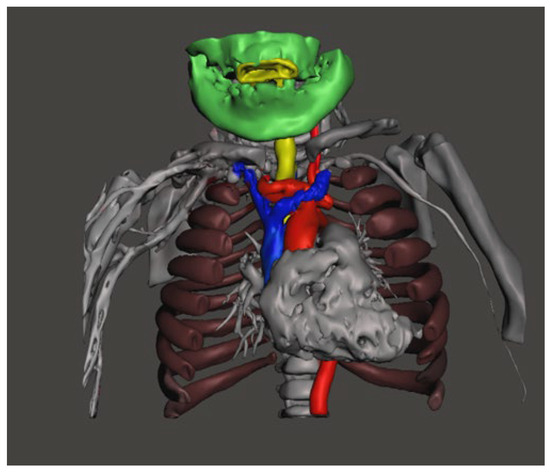
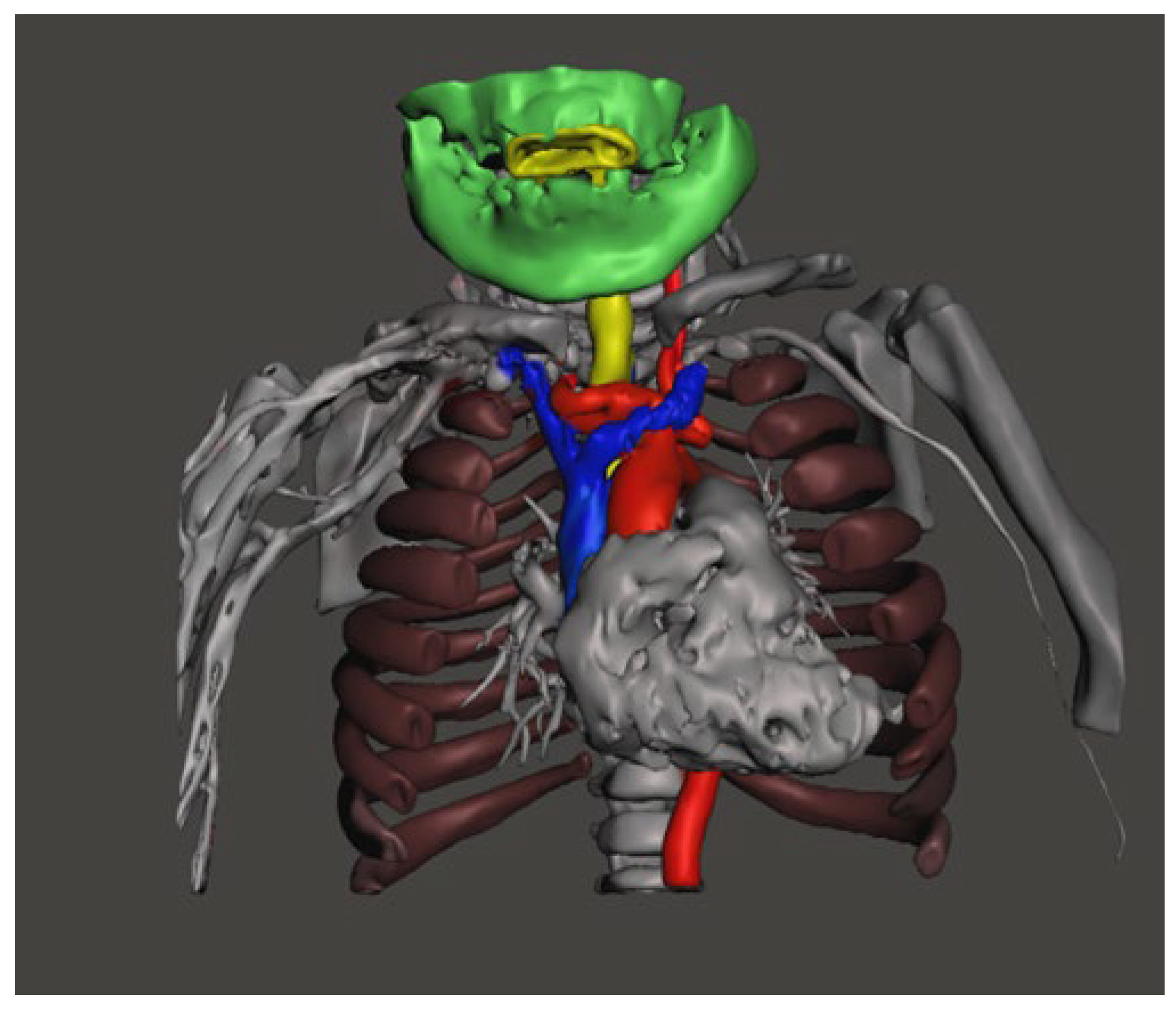
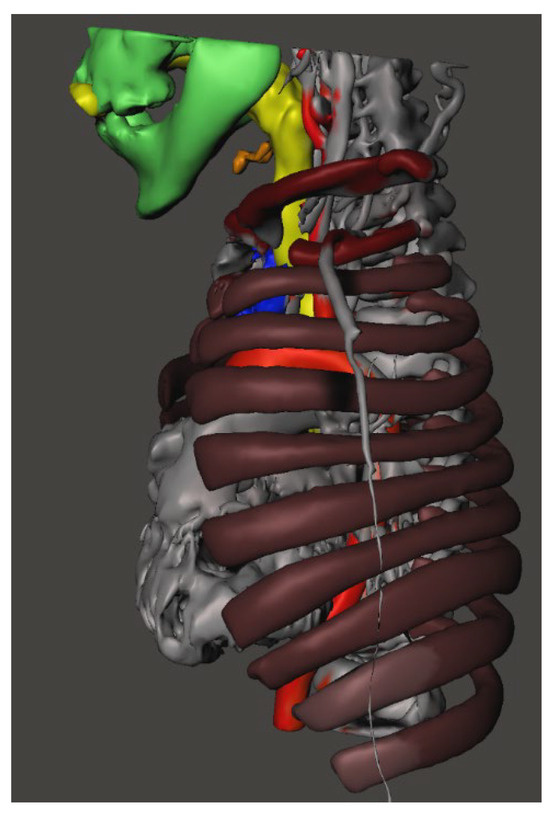
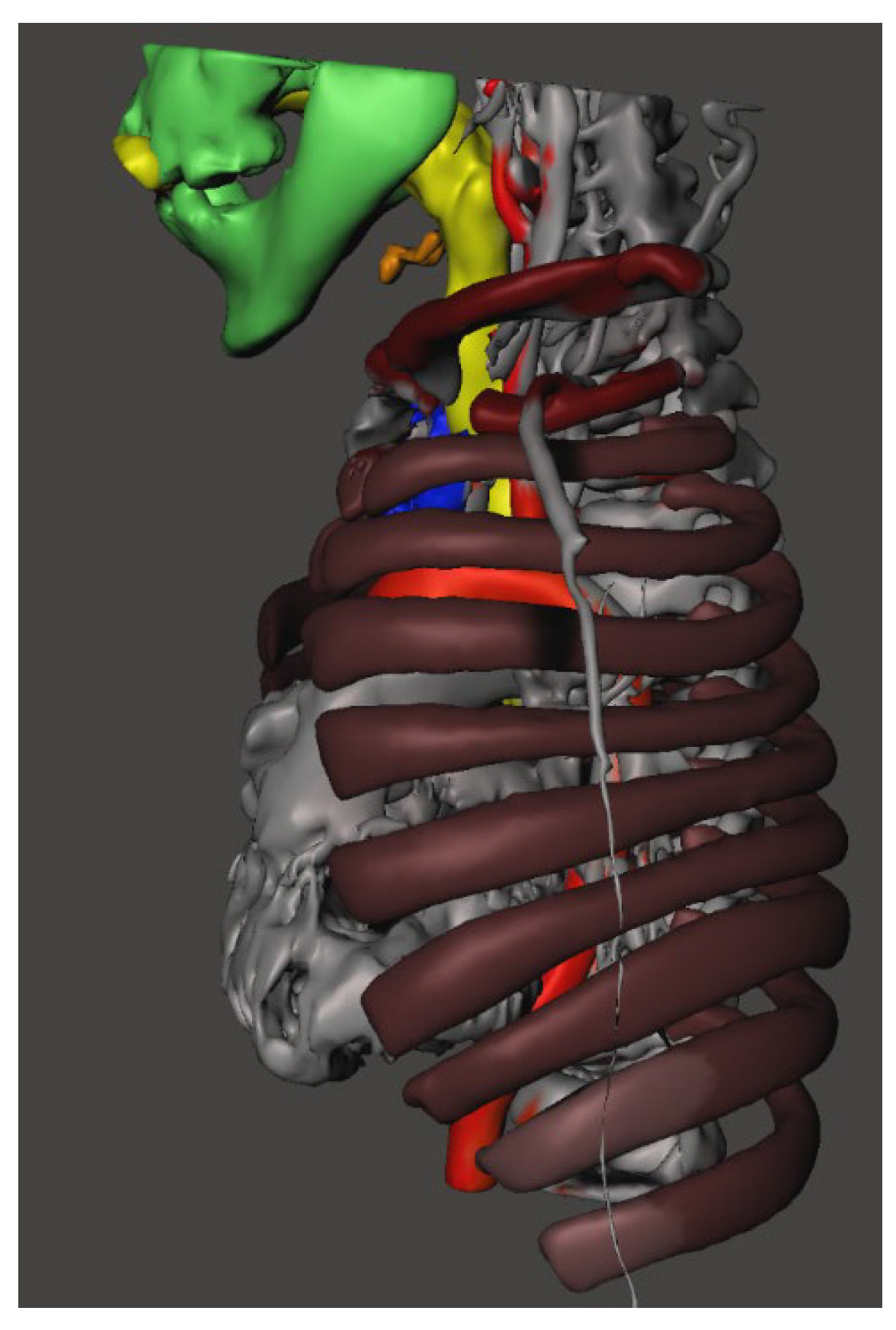
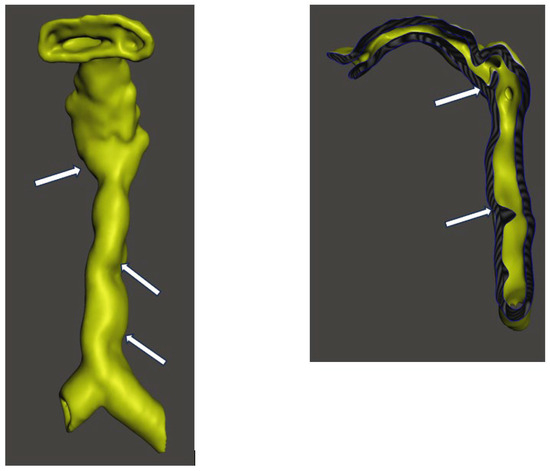
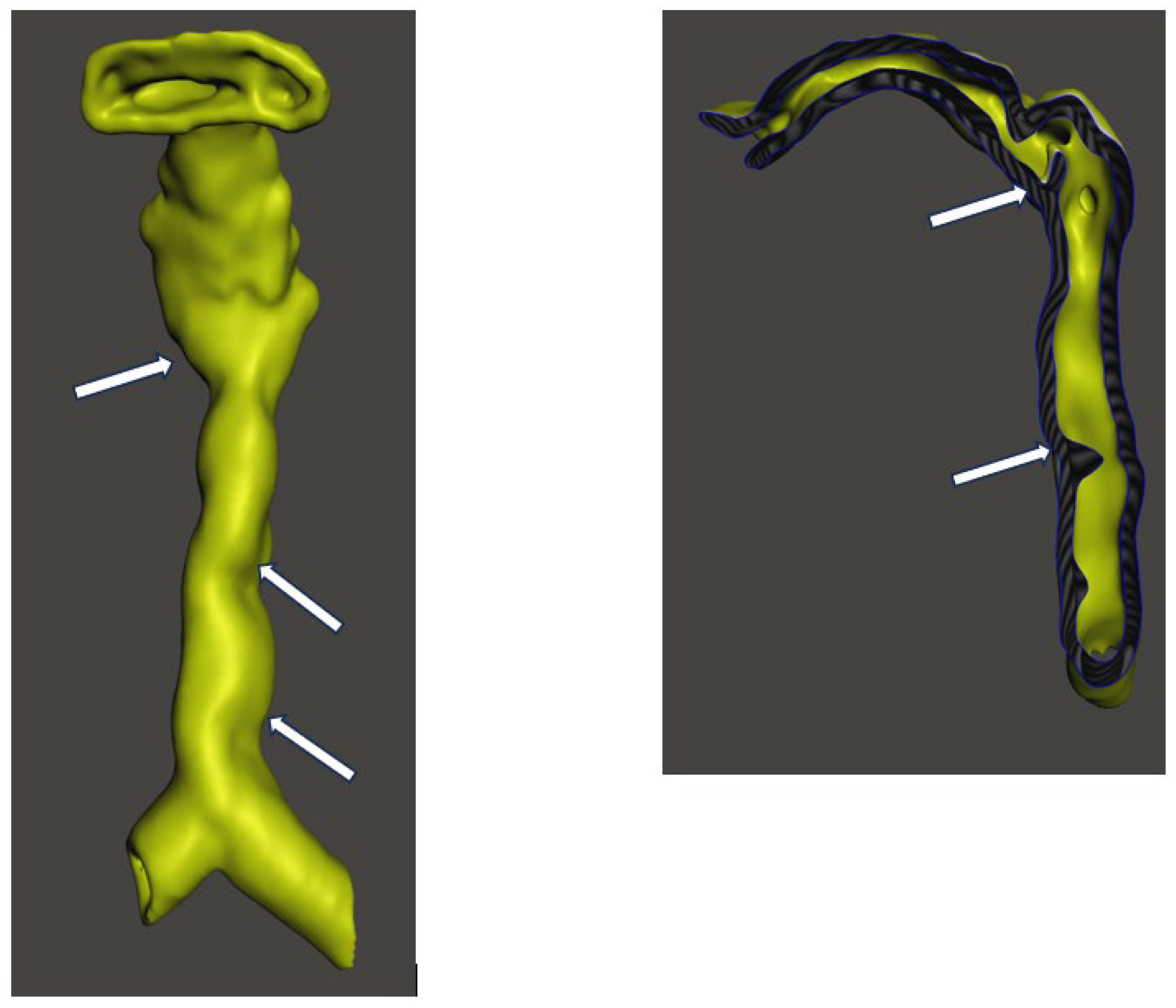
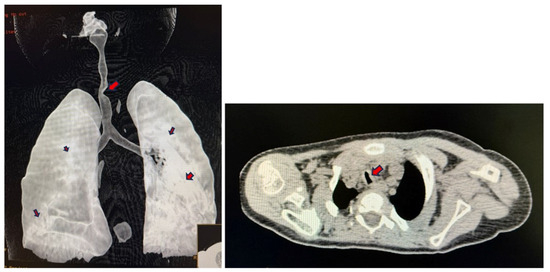
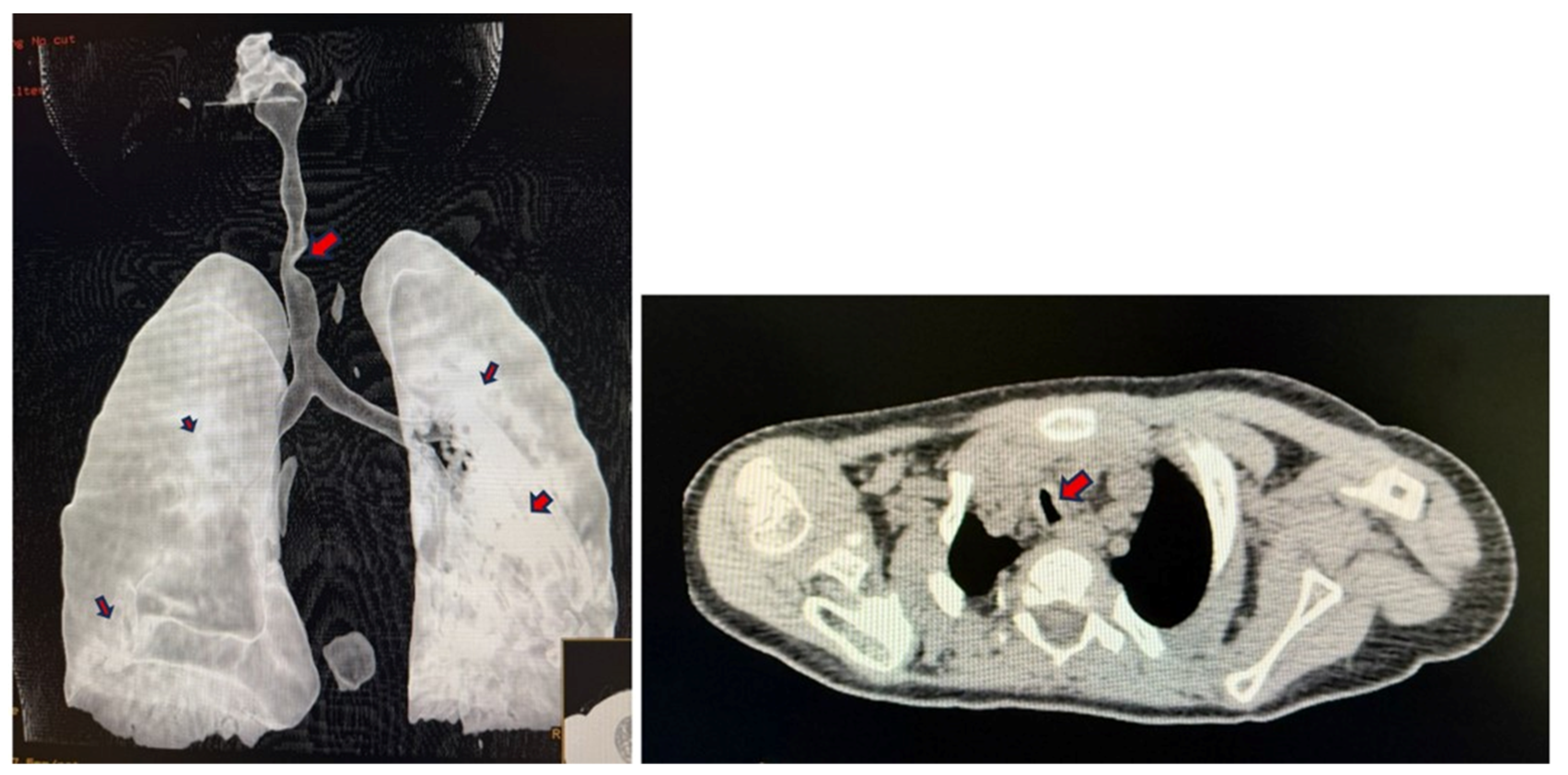
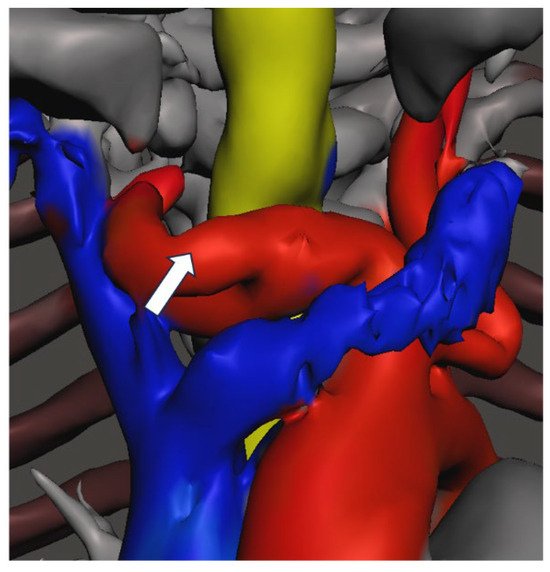
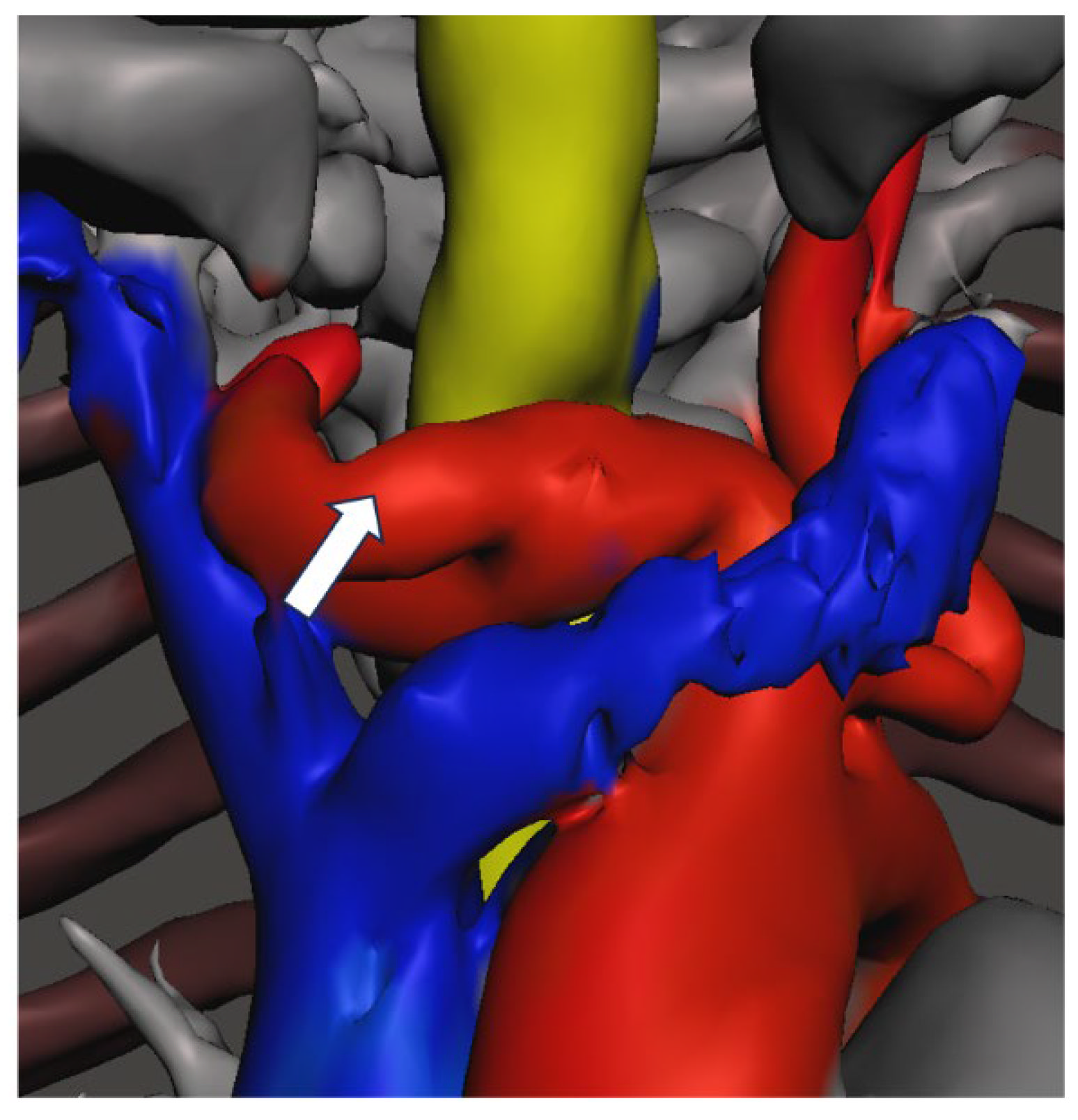
CT imaging of the neck and chest with 3D reconstruction demonstrated a short neck, large head, small thoracic cage, and broad spatulated ribs with reduced intercostal spaces (Figure 1 and Figure 2). The upper airway was bulky with a high anterior larynx, large epiglottis, tortuous trachea and multiple tracheal narrowing (Figure 3). The narrowest tracheal segment measured 3.3 mm in diameter (approximately 50% of the lumen). Patchy bilateral parenchymal opacities were present (Figure 4). An additional loop of the truncus brachiocephalicus arose from the aortic arch and coursed anterior to the trachea at the thoracic inlet, without clear evidence of airway compression (Figure 5).
Figure 1.
Three-dimensional reconstruction anteroposterior view of the lower head, chest showing disproportionately large skull (green) in relation to chest (brown), short neck, broad ribs (brown), large heart (grey) and reduced space for lungs. The trachea is shown in yellow, ascending aorta and large arteries in red, major veins in blue.
Figure 2.
3-dimensional reconstruction of the lower head, chest showing short neck, large jaw, hyoid bone tucked under the jaw, broad spatulate ribs and reduced intercostal spaces.
Figure 3.
3D reconstruction of anteroposterior and left lateral cross-section view of the oropharynx, larynx and trachea showing high larynx where the epiglottis is marked with an arrow, multiple areas of tracheal narrowing marked with arrows.
Figure 4.
CT scan of chest and 3-dimensional reconstruction shows tortuous and narrowed trachea and patchy infiltrates marked by red arrows.
Figure 5.
3-dimensional reconstruction of the root of the neck, thoracic inlet, showing an extra loop of truncus brachiocephalus in the upper mediastinum marked with an arrow.
There was no sputum production, precluding microbiological sampling. A working diagnosis of lower respiratory tract infection due to viral or atypical bacteria was made. Initial supportive management included face-mask oxygen, nebulised adrenaline, corticosteroids, bronchodilators, and broad-spectrum antibiotics. Continuous positive airway pressure was not tolerated due to discomfort with facial interfaces. High-flow nasal oxygen, which bypasses the oral cavity, was better tolerated and marginally reduced oxygen requirements. Despite treatment, his clinical condition gradually worsened, with increasing oxygen requirements and signs of respiratory fatigue. Escalation to intubation and mechanical ventilation was considered. Airway management planning followed the Difficult Airway Society guidelines [13]; incorporating Plan A (endotracheal intubation), Plan B (laryngeal mask airway), Plan C (bag and mask ventilation), and Plan D (front of neck access). Anticipated challenges, potential consequences, and mitigation strategies for each step are summarised in Table 2.
Table 2.
Airway plan as per the Difficult Airway Society guidelines [13] of plan A, B, C and D; the challenges, consequences and methods to mitigate these challenges.
Mechanical ventilation will be challenging due to ongoing infection, broad spatulate ribs with reduced intercostal spaces, and a contracted chest wall with markedly reduced lung volumes, as reflected by the low FEV1 and FVC. Various intubation strategies outlined in Table 2 were considered, including fibreoptic and video-laryngoscopic approaches, and input was sought from clinicians with specialist expertise in MPS. The risks associated with each intervention were discussed thoroughly within a multidisciplinary team and shared with the family. The final option would be palliation, as the risks outweigh the benefits. This would mean that the child will be kept comfortable and all supportive care will be offered, but no active invasive interventions will be done. This would also involve no actively performing cardiopulmonary resuscitation should there be a deterioration. With these options presented, the family was invited for a detailed discussion, during which all risks were explained. Specialist nurses were involved to ensure the family felt fully supported. After careful consideration, the family declined any invasive interventions despite the child’s worsening respiratory status. A collective multidisciplinary decision was therefore made to prioritise comfort and provide palliative care. High-flow nasal oxygen was better tolerated than face-mask oxygen and resulted in a modest reduction in oxygen requirements. Despite comprehensive supportive care, the child sadly passed away peacefully in his sleep after three months of hospital admission.
4. Discussion
Maroteaux–Lamy syndrome (MPS VI) is a rare lysosomal storage disorder characterised by arylsulfatase deficiency. This leads to dermatan sulphate accumulation in multiple tissues with significant clinical heterogeneity. Limited awareness among healthcare professionals contributes to delays in recognition and challenges in management. This is a progressive multisystem disease [14], making management complex. The clinical features are short stature, motor dysfunction [15], ocular, oro-dental problems, organomegaly, cardio-respiratory insufficiency, coarse features, umbilical or inguinal hernias, sleep disorder, spinal cord compression, and carpal tunnel syndrome [9]. The ENT problems include adeno tonsillar hypertrophy, hearing loss, otitis media, chronic sinusitis and airway problems [9,11]. The radiological features include dysostosis multiplex, cervical instability, compressive myelopathy, central vertebral beaking, thoracolumbar junctional kyphosis, cervicothoracic kyphosis [15]. These radiological abnormalities further complicate clinical care. Garcia et al. [16] investigated the role of very early and continuous ERT. They have shown that ERT can slow disease progression, preserve endurance and motor function. The authors have also noted a reduction in growth impairment when initiated early. However, ERT does not prevent long-term progression of skeletal or ocular disease. With respect to cardiac disease, the study has shown that cardiac valve involvement generally remained mild, although progression occurred in one patient. These limitations highlight the need for additional therapeutic strategies and continued research into disease-modifying treatments. Airway management remains one of the most challenging aspects of MPS VI care. Anatomical distortion, tracheal narrowing, vascular anomalies, and multisystem comorbidities significantly increase the risks associated with anaesthesia, intubation, extubation, and ventilatory support. Problems with anaesthesia have been noted in case reports as extremely challenging [17]. Although international recommendations on MPS VI published in 2019 [14] provide perioperative guidance, there are no clear protocols for managing acute airway crises. Expert anaesthetic involvement, support from ENT, cardiology, and radiology, and strict avoidance of neck hyperextension have been recommended to minimise the risk of neurological injury. Tracheostomy may be needed when intubation and ventilation are not possible. The other indications of tracheostomy in MPS VI include severe upper airway obstruction, severe sleep apnoea not treatable by CPAP (continuous positive airway pressure) or adenotonsillectomy [14]. Common causes, such as in non-MPS patients needing prolonged ventilation and failure to extubate, are also indications for tracheostomy. Tracheostomy in patients with MPS is recognised as a particularly high-risk intervention due to the combination of a large head, short neck, limited neck extension, and distorted airway anatomy. Selecting an appropriately sized tracheostomy tube can be difficult, and the procedure may be hazardous in the presence of abnormal vascular structures, as demonstrated in our patient, where the risk of catastrophic haemorrhage is significant. Published literature consistently highlights the anatomical challenges associated with tracheostomy in MPS, including an anteriorly displaced larynx, tracheal narrowing and tortuosity, abnormal tracheal cartilage, and difficulty identifying the trachea, all of which increase the likelihood of creating a false passage or failing to secure the airway. Post-procedural complications are also common and include tube obstruction, rapid granulation tissue formation, recurrent inflammation, tracheal stenosis, tube displacement, increased caregiver burden, reduced quality of life, and higher mortality [18,19,20,21]. These factors collectively emphasise why tracheostomy should be approached with extreme caution in MPS and why, in selected cases, it may not be in the patient’s best interests. Following successful intubation, extubation may also be equally challenging and is better performed in a staged fashion. The risks of any intervention need to be evaluated through a multidisciplinary approach that draws on local expertise and, when necessary, input from centres with greater experience. Given the high risk of respiratory deterioration, particularly during infections, personalised management plans and clearly defined ceilings of care with involvement of the family are crucial. Preventive strategies, including infection control measures and immunisation against respiratory infections, may reduce the frequency of acute episodes. Regular monitoring and anticipatory planning support safer elective and emergency interventions. In the end stage of the disease, advanced care planning and palliative approaches ensure that management aligns with the patient’s best interests.
This report has several limitations. Respiratory viral swabs were not performed, which may have helped clarify the underlying infectious trigger. Longitudinal monitoring of urinary GAG levels was also not possible due to a lack of local availability; however, the child demonstrated clear clinical evidence of progressive deterioration, including reduced exercise tolerance, declining mobility, and recurrent respiratory infections. Genetic counselling and family mutation analysis would have been valuable, but could not be undertaken for similar resource-related reasons. These constraints highlight the broader issue of health inequalities frequently encountered in the management of rare diseases [22]. Sleep studies and polysomnography could not be completed because of limited equipment availability and poor patient tolerance. This challenge is well recognised in the literature: polysomnography in MPS is technically difficult to perform [23], often incomplete [18]. Although accurate when successfully obtained, its feasibility in real-world settings is limited [19].
5. Conclusions
Maroteaux–Lamy syndrome (MPS VI) is a rare, progressive disorder with multisystem involvement, and respiratory infections can trigger rapid clinical deterioration. Such episodes may result in significant airway compromise and pose substantial risks to health. Careful airway evaluation and coordinated multidisciplinary management are essential when responding to acute crises. Key decisions often involve whether to proceed with interventions such as anaesthesia, intubation, ventilation, extubation, or tracheostomy, each of which must be considered in the context of the patient’s comorbidities. Any intervention should be planned collaboratively by a multidisciplinary team, taking a holistic view of all organ systems and weighing potential risks and benefits. Families should be supported and actively involved in shared decision-making. Personalised care plans should incorporate preventive strategies and outline approaches for both elective and emergency scenarios. Establishing advance care directives and defining ceilings of care are important components of anticipatory planning. In advanced disease, or when the risks of intervention outweigh potential benefits, palliative care should be considered to ensure that management remains aligned with the patient’s best interests.
Author Contributions
Conceptualization, M.S., C.G. and A.T.; methodology, A.T.; formal analysis, investigation, resources, A.T., M.S. and C.G.; data curation, A.T.; writing—A.T., C.G. and M.S.; writing—review and editing, M.S., A.T. and C.G.; supervision, C.G. and M.S.; project administration, M.S. and A.T. All authors have read and agreed to the published version of the manuscript.
Funding
This research received no external funding.
Institutional Review Board Statement
This case report was prepared in accordance with ethical standards for clinical case reporting. As this is a single retrospective case report with no experimental intervention, formal ethical approval was not required according to local regulations. The authors affirm that the report adheres to the principles of the Declaration of Helsinki. TheChild underwent regular complex laboratory and instrumental diagnosis including computed tomography and magnetic resonance imaging, according to the government clinical guideline of treating and management of mucopolysaccharidosis, that was approved by lysosomal storage disease experts committee of Ministry of healthcare of Republic of Kazakhstan. Date of approval 9 July 2020, Clinical guideline №105.
Informed Consent Statement
Informed consent for publication was obtained from the patient’s family, including consent to publish clinical details and imaging findings. All identifying information has been removed to ensure full confidentiality. The Child underwent regular complex laboratory and instrumental diagnosis including computed tomography and magnetic resonance imaging, according to the government clinical guideline of treating and management of mucopolysaccharidosis, that was approved by lysosomal storage disease experts committee of Ministry of healthcare of Republic of Kazakhstan. Date of approval 9 July 2020, Clinical guideline №105, we don’t take consent for participation.
Data Availability Statement
All the relevant clinical information regarding this patient has been presented; any additional information may be provided upon request.
Acknowledgments
We would like to express our sincere gratitude to the patient’s family for allowing us to share this case. The authors also thank all healthcare professionals involved in the patient’s multidisciplinary care. We are grateful to Stuart Watson and the 3DSPIN team at Salford Care Organisation, UK, for their support with the 3D reconstruction. We are extremely grateful for the support from Scientific centre of paediatrics and paediatric surgery, Almaty, Kazakhstan.
Conflicts of Interest
The authors have no conflicts of interest to declare.
Abbreviations
The following abbreviations are used in this manuscript:
| MPS | Mucopolysaccharidosis |
| ARSB | Arylsulfatase B |
| HGMD | Human Gene Mutation Database |
| ENT | Ear, Nose and Throat |
| GAG | Glycosaminoglycans |
| ERT | Enzyme Replacement Therapy |
| BMI | Body Mass Index |
| FVC | Forced Vital Capacity |
| FEV1 | Forced Expiratory Volume in 1 s |
| CT | Computerised Tomography |
| 3D | Three Dimensions |
| LMA | Laryngeal Mask Airway |
| CPAP | Continuous Positive Airway Pressure |
References
- Mehta, A.B.; Winchester, B. Lysosomal Storage Disorders: A Practical Guide; Wiley-Blackwell Chicester: Chichester, UK, 2012. [Google Scholar]
- Muenzer, J. Overview of the mucopolysaccharidoses. Rheumatology 2011, 50, v4–v12. [Google Scholar] [CrossRef] [Scilit] [PubMed]
- Braunlin, E.A.; Harmatz, P.R.; Scarpa, M.; Furlanetto, B.; Kampmann, C.; Loehr, J.P.; Ponder, K.P.; Roberts, W.C.; Rosenfeld, H.M.; Giugliani, R. Cardiac disease in patients with mucopolysaccharidosis: Presentation, diagnosis and management. J. Inherit. Metab. Dis. 2011, 34, 1183–1197. [Google Scholar] [CrossRef] [Scilit] [PubMed]
- Neufeld, E.; Muenzer, J. The mucopolysaccharidoses. In The Metabolic and Molecular Bases of Inherited Diseases, 8th ed.; Scriver, C.R., Beaudet, A.L., Sly, W.S., Valle, D., Childs, R., Kinzler, K.W., Eds.; McGraw-Hill: New York, NY, USA, 2001; pp. 3421–3452. [Google Scholar]
- Valayannopoulos, V.; Nicely, H.; Harmatz, P.; Turbeville, S. Mucopolysaccharidosis vi. Orphanet J. Rare Dis. 2010, 5, 5. [Google Scholar] [CrossRef] [Scilit] [PubMed]
- Natowicz, M.R.; Short, M.P.; Wang, Y.; Dickersin, G.R.; Gebhardt, M.C.; Rosenthal, D.I.; Sims, K.B.; Rosenberg, A.E. Clinical and biochemical manifestations of hyaluronidase deficiency. N. Engl. J. Med. 1996, 335, 1029–1033. [Google Scholar]
- Al Fahdi, I.; Singh, S.; Yadavalli, K.; Chatti, K.; Bhavani, G.S.; Girisha, K.M. Syndrome of the Month: ARSK—Related Mucopolysaccharidosis Type 10. Am. J. Med. Genet. Part A 2025, 197, e64210. [Google Scholar]
- Tulebayeva, A.; Mukhambetova, G.; Sharipova, M.; Tylki-Szymanska, A. The birth prevalence of mucopolysaccharidosis types I, II, III, IVA, VI, and VII in the Republic of Kazakhstan between 1984 and 2023. Diagnostics 2025, 15, 679. [Google Scholar] [CrossRef] [Scilit] [PubMed]
- D’Avanzo, F.; Zanetti, A.; De Filippis, C.; Tomanin, R. Mucopolysaccharidosis type VI, an updated overview of the disease. Int. J. Mol. Sci. 2021, 22, 13456. [Google Scholar] [CrossRef] [Scilit] [PubMed]
- Harmatz, P.; Shediac, R. Mucopolysaccharidosis VI: Pathophysiology, diagnosis and treatment. Front. Biosci. (Landmark Ed.) 2017, 22, 385–406. [Google Scholar] [CrossRef] [Scilit] [PubMed]
- Gadepalli, C.; Stepien, K.M.; Sharma, R.; Jovanovic, A.; Tol, G.; Bentley, A. Airway Abnormalities in Adult Mucopolysaccharidosis and Development of Salford Mucopolysaccharidosis Airway Score. J. Clin. Med. 2021, 10, 3275. [Google Scholar] [CrossRef] [Scilit] [PubMed]
- Karageorgos, L.; Brooks, D.A.; Pollard, A.; Melville, E.L.; Hein, L.K.; Clements, P.R.; Ketteridge, D.; Swiedler, S.J.; Beck, M.; Giugliani, R. Mutational analysis of 105 mucopolysaccharidosis type VI patients. Hum. Mutat. 2007, 28, 897–903. [Google Scholar] [CrossRef] [Scilit] [PubMed]
- Ahmad, I.; El-Boghdadly, K.; Iliff, H.; Dua, G.; Higgs, A.; Huntington, M.; Mir, F.; Nouraei, S.R.; O’Sullivan, E.P.; Patel, A. Difficult Airway Society 2025 guidelines for management of unanticipated difficult tracheal intubation in adults. Br. J. Anaesth. 2025, 136, 283–307. [Google Scholar] [CrossRef] [Scilit] [PubMed]
- Akyol, M.U.; Alden, T.D.; Amartino, H.; Ashworth, J.; Belani, K.; Berger, K.I.; Borgo, A.; Braunlin, E.; Eto, Y.; Gold, J.I. Recommendations for the management of MPS IVA: Systematic evidence-and consensus-based guidance. Orphanet J. Rare Dis. 2019, 14, 137. [Google Scholar] [CrossRef] [Scilit] [PubMed]
- Nicolas-Jilwan, M.; AlSayed, M. Mucopolysaccharidoses: Overview of neuroimaging manifestations. Pediatr. Radiol. 2018, 48, 1503–1520. [Google Scholar] [CrossRef] [Scilit] [PubMed]
- Garcia, P.; Phillips, D.; Johnson, J.; Martin, K.; Randolph, L.M.; Rosenfeld, H.; Harmatz, P. Long-term outcomes of patients with mucopolysaccharidosis VI treated with galsulfase enzyme replacement therapy since infancy. Mol. Genet. Metab. 2021, 133, 100–108. [Google Scholar] [CrossRef] [Scilit] [PubMed]
- Demis, A.A.; Oikonomidou, S.; Daglis, F.; Polymenakos, S.; Panagiotou, M. Double valve replacement in a patient with Maroteaux—Lamy syndrome as an ultimate team challenge. J. Cardiothorac. Surg. 2021, 16, 141. [Google Scholar] [CrossRef] [Scilit] [PubMed]
- Walker, P.; Rose, E.; Williams, J. Upper airways abnormalities and tracheal problems in Morquio’s disease. Thorax 2003, 58, 458–459. [Google Scholar] [CrossRef] [Scilit] [PubMed]
- Frawley, G.; Fuenzalida, D.; Donath, S.; Yaplito-Lee, J.; Peters, H. A retrospective audit of anesthetic techniques and complications in children with mucopolysaccharidoses. Pediatr. Anesth. 2012, 22, 737–744. [Google Scholar] [CrossRef] [Scilit] [PubMed]
- Galluzzi, F.; Garavello, W. Tracheostomy in children with mucopolysaccharidosis: A systematic review. Int. J. Pediatr. Otorhinolaryngol. 2024, 187, 112167. [Google Scholar] [CrossRef] [Scilit] [PubMed]
- Jeong, H.-S.; Cho, D.-Y.; Ahn, K.M.; Jin, D.-K. Complications of tracheotomy in patients with mucopolysaccharidoses type II (Hunter syndrome). Int. J. Pediatr. Otorhinolaryngol. 2006, 70, 1765–1769. [Google Scholar] [CrossRef] [Scilit] [PubMed]
- Briscoe, S.; Martin Pintado, C.; Sutcliffe, K.; Melendez-Torres, G.; Garside, R.; Lawal, H.M.; Orr, N.; Shaw, L.; Thompson Coon, J. Evidence of inequities experienced by the rare disease community with respect to receipt of a diagnosis and access to services: A scoping review of UK and international evidence. Orphanet J. Rare Dis. 2025, 20, 303. [Google Scholar] [CrossRef] [Scilit] [PubMed]
- Valayannopoulos, V.; Wijburg, F.A. Therapy for the mucopolysaccharidoses. Rheumatology 2011, 50, v49–v59. [Google Scholar] [CrossRef] [Scilit] [PubMed]

Disclaimer/Publisher’s Note: The statements, opinions and data contained in all publications are solely those of the individual author(s) and contributor(s) and not of MDPI and/or the editor(s). MDPI and/or the editor(s) disclaim responsibility for any injury to people or property resulting from any ideas, methods, instructions or products referred to in the content. |
© 2026 by the authors. Licensee MDPI, Basel, Switzerland. This article is an open access article distributed under the terms and conditions of the Creative Commons Attribution (CC BY) license.