1. Introduction
Hypothyroidism is a common endocrine disorder in pregnancy, particularly in the Middle East, and is linked to adverse maternal and perinatal outcomes [
1,
2]. Subclinical hypothyroidism (SCH), defined as elevated TSH with normal free thyroxine, is frequently identified during pregnancy [
1]. This study aims to clarify current management practices for hypothyroidism during pregnancy in the Middle East and to evaluate associated maternal and perinatal outcomes in this region. Untreated hypothyroidism increases the risk of perinatal complications such as spontaneous abortion, premature birth, placental abruption, stillbirth, low birth weight, poor neurodevelopment, and maternal complications like preeclampsia and gestational hypertension [
3]. Appropriate thyroid hormone replacement during pregnancy minimizes these risks [
2]. According to American Thyroid Association (ATA) guidelines, overt hypothyroidism is diagnosed when TSH exceeds trimester-specific reference intervals with decreased Free thyroxine(FT4) or when TSH is above 10.0 mIU/L, regardless of FT4. Levothyroxine remains the standard treatment, with early dose adjustment and regular TSH monitoring recommended [
4].
Trimester-specific TSH goals are required because thyroid function changes during pregnancy. In our setting, the suggested upper TSH limits are: first trimester ≤ 2.5 mIU/L, second ≤ 3.0, and third ≤ 3.5, in line with international criteria. Maintaining TSH within these ranges using levothyroxine reduces maternal and neonatal complications [
5]. Data from Qatar and the Gulf remain limited, but regional and international studies show high rates of thyroid dysfunction among pregnant women in the Middle East. A Qatar secondary care study found 3.47% had hypothyroidism, with one-third showing thyroid autoimmunity [
6]. The “Qatar Birth Cohort Study” reported thyroid dysfunction in 19% and diabetes in 33% of pregnant women in Qatar [
7]. Similarly, a meta-analysis of pregnant Arab women showed pooled prevalence estimates of subclinical hypothyroidism at ~20% (95% Confidence Interval(CI): 14–28%) and overt hypothyroidism at ~3% (95% CI: 1–8%) [
8]. Variations in iodine intake, TSH reference ranges, healthcare access, and treatment adherence limit the direct application of international guidelines regionally. These factors, alongside differences in screening, diagnosis, and study design, likely explain the high SCH prevalence in Arab populations.
For this study, maintaining trimester-specific maternal TSH is considered adequate treatment. Given limited regional data and increasing recognition of thyroid dysfunction as a modifiable risk, we assess therapeutic approaches and maternal–perinatal outcomes of hypothyroidism in a Qatari cohort.
2. Study Aim and Hypothesis
This study’s primary goal is to assess differences in maternal and perinatal outcomes between individuals who achieve trimester-specific TSH targets in accordance with 2017 American Thyroid Association guidelines and those who do not. Maternal outcomes include preeclampsia, placental abruption, gestational diabetes and gestational hypertension, while perinatal outcomes include preterm birth, spontaneous abortion, and stillbirth. The study will investigate the hypothesis that pregnant women with hypothyroidism who achieve trimester-specific TSH targets have a lower incidence of unfavorable maternal and perinatal outcomes.
3. Materials and Methods
This single-center retrospective cohort study was conducted at Sidra Medicine in Doha, Qatar. The inclusion criteria comprised pregnant women who attended antenatal care at Sidra Medicine between January 2019 and November 2022, with a diagnosis of hypothyroidism and receiving thyroxine replacement therapy.
Eligible participants included women with either overt or subclinical hypothyroidism. Overt hypothyroidism was defined as a thyroid-stimulating hormone (TSH) level above the trimester-specific reference range with low free thyroxine (FT4) or when TSH is above 10.0 mIU/L, regardless of FT4, while subclinical hypothyroidism was defined as elevated TSH with normal FT4 levels. Women were included regardless of whether hypothyroidism was diagnosed prior to pregnancy (pre-gestational) or during pregnancy (gestational).
Exclusion criteria included patients with pre-gestational diabetes, chronic hypertension, multiple gestations, and congenital fetal anomalies. Additionally, records lacking essential information, such as delivery data, were excluded.
Electronic medical records of eligible women were reviewed. Based on trimester-specific TSH values, patients were classified as having adequately or inadequately controlled hypothyroidism. Adequate control was defined as TSH ≤ 2.5 mIU/L in the first trimester, ≤3.0 mIU/L in the second trimester, and ≤3.5 mIU/L in the third trimester. Values above these thresholds indicated inadequate control. These cutoffs follow the 2017 American Thyroid Association pregnancy guidelines and Sidra Medicine reference values.
GDM was diagnosed according to the International Association of Diabetes and Pregnancy Study Groups criteria, with universal 75 g oral glucose tolerance testing performed between 24 and 28 weeks’ gestation.
TSH was measured once per trimester during routine prenatal visits. At each assessment, values were compared with trimester-specific reference ranges to determine adequacy of control. Adequate control was defined as maintaining TSH within the reference range at each trimester assessment.
TSH, FT4, and Free triiodothyronine (FT3) were measured at Sidra Medicine’s central laboratory using automated immunoassays per manufacturer instructions (reference ranges: TSH 0.38–5.33 mIU/L, FT4 8.4–19.1 pmol/L, FT3 3.8–6.0 pmol/L). Anti-thyroid peroxidase antibodies (anti-TPO) were also measured via automated immunoassay (reference 0–10 IU/mL).
Data collected included maternal demographics (age, nationality, gravidity, parity, BMI), thyroid function tests (TSH, FT4, FT3, anti-TPO) at three prenatal visits, and obstetric history. Additional variables included maternal outcomes (gestational hypertension, diabetes), levothyroxine dose, hypothyroidism type (pre-gestational or gestational), and maternal and perinatal outcomes (preeclampsia, placental abruption, spontaneous abortion, stillbirth, preterm labor, delivery method, gestational age, and neonatal birth weight).
Associations between thyroid control and maternal and perinatal outcomes were assessed using chi-square tests for categorical variables and independent t-tests for continuous variables. Adjusted odds ratios with 95% confidence intervals were reported when feasible; estimates for rare outcomes were not reported due to instability. Comparisons of thyroid status across trimesters were descriptive and exploratory, and formal repeated-measures modeling was not performed due to limited longitudinal data. Baseline characteristics were summarized descriptively. Additionally, an exploratory multivariable logistic regression was conducted to identify potential risk factors for GDM; these analyses are considered hypothesis-generating given the sample size and limited precision in effect estimates. TSH was analyzed as a categorical variable based on trimester-specific reference ranges (“normal” vs. “high”).
Because third-trimester TSH showed the strongest univariate association with GDM, it was included in the multivariable logistic regression model. Model calibration was assessed using the Hosmer-Lemeshow goodness-of-fit test, with a non-significant p-value (>0.05) indicating adequate fit. Collinearity was evaluated via variance inflation factors (VIF), with VIF > 5 considered indicative of problematic collinearity.
No prior power calculation was performed due to the retrospective design and available sample size. With 379 participants, the study had 80% power at a 5% significance level to detect moderate to large differences (≈15–20%) in binary maternal outcomes (e.g., GDM, preeclampsia). Results were reported descriptively using proportions and p-values.
No patient identifiers were used, and informed consent was waived because the study used only pre-existing records without direct patient contact.
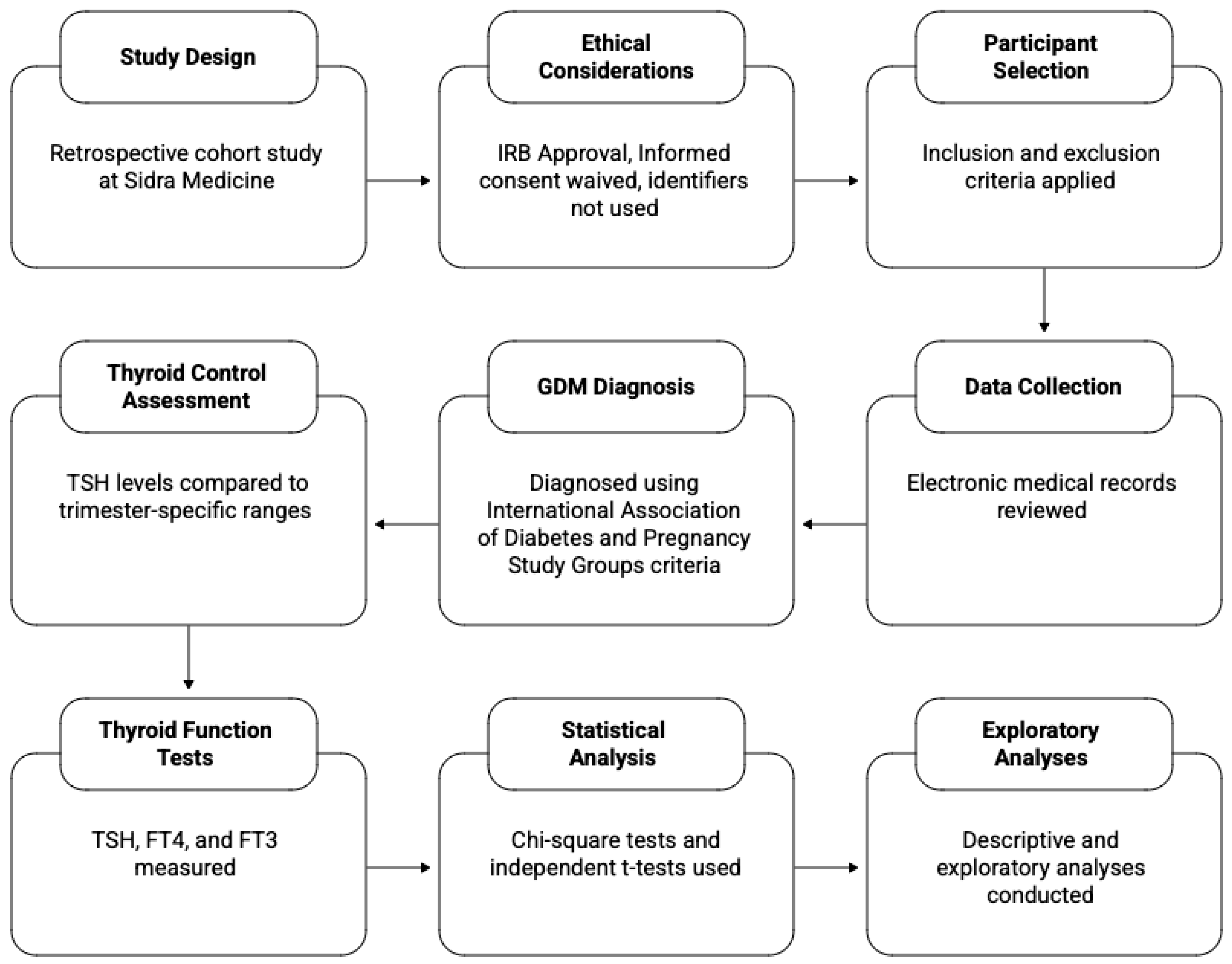
Figure 1 outlines the study design, participant selection, data collection, analysis, and ethics. A normal-thyroid comparison group was not available; analyses compared only adequately versus inadequately treated hypothyroidism.
4. Results
The study included 379 pregnant women with hypothyroidism. Baseline characteristics are summarized in
Table 1. Participants had a mean age of 32.7 ± 5.0 years (range 19–46) and were mostly overweight or obese, with a mean BMI of 30.3 ± 6.1 kg/m
2 and weight of 78.6 ± 15.1 kg. Qatari nationals comprised 54.1% of the cohort, followed by Asians (16.9%), other nationalities (17.2%), and Arabs (11.9%). Pre-gestational hypothyroidism was present in 55.7%, and gestational hypothyroidism in 44.3%. Anti-TPO antibodies were elevated in 58.5% of participants.
Table 2 compares thyroid function and treatment between gestational and pre-gestational hypothyroidism. Women with gestational hypothyroidism had higher baseline TSH levels (3.22 ± 2.30 mIU/L) than pre-gestational cases (2.65 ± 1.83 mIU/L;
p = 0.015), reflecting ongoing levothyroxine therapy in the latter group. Pre-gestational patients required higher levothyroxine doses (93.2 ± 47.5 vs. 67.6 ± 30.1 mcg/day;
p < 0.001). FT4 levels were slightly higher in the gestational group at baseline (11.87 ± 4.20 vs. 11.09 ± 3.65 pmol/L;
p = 0.048). No significant differences were observed at the last thyroid assessment or in gestational age at delivery.
Pregnancy outcomes according to first- and third-trimester TSH status are shown in
Table 3. No significant differences were observed in the first trimester for GDM, hypertension, preeclampsia, placental abruption, spontaneous abortion, or preterm birth. In the third trimester, women with normal TSH had a higher prevalence of GDM than those with elevated TSH (51.6% vs. 36.8%;
p = 0.013), while no differences were noted for other outcomes. Odds ratios were calculated only for GDM in the multivariable model due to low event numbers for other outcomes.
Multivariable logistic regression, including maternal age, gravidity, parity, BMI, nationality, and third-trimester TSH, identified factors independently associated with GDM (
Table 4). Normal third-trimester TSH was independently associated with higher odds of GDM (OR 1.70, 95% CI 1.04–2.78;
p = 0.035). Model fit was adequate (Hosmer-Lemeshow χ
2 = 296.14,
p = 0.374), and no collinearity was detected (all VIF < 5).
5. Discussion
In this cohort of pregnancies complicated by hypothyroidism, most maternal outcomes were not significantly influenced by thyroid control status. TSH targets for each trimester were <2.5 mIU/L in the first, <3.0 mIU/L in the second, and <3.5 mIU/L in the third trimester. By the third trimester, 64.2% of women achieved these targets, reflecting effective levothyroxine titration and monitoring. This aligns with prior studies showing that optimized biochemical thyroid management does not adversely affect obstetric outcomes [
9]. Dynamic, trimester-specific dose escalation is supported by the observation that women with pre-gestational hypothyroidism required higher levothyroxine doses than those with gestational hypothyroidism [
10,
11,
12].
Women with normal third-trimester TSH had a higher prevalence of GDM compared with those with elevated TSH. This association is unlikely to reflect a direct causal effect of thyroid normalization and may instead result from residual confounding or increased clinical surveillance [
13,
14,
15]. Although subtle alterations in thyroid hormones, such as low FT4 or altered FT3/FT4 ratios, have been proposed to affect glucose metabolism, the mechanisms remain speculative and warrant cautious interpretation [
13,
14].
Thyroid status did not significantly impact outcomes such as spontaneous abortion, preterm birth, placental abruption, hypertensive disorders, or preeclampsia, likely due to their low incidence [
16,
17]. Mildly elevated first-trimester TSH (2.5–4.0 mIU/L) has also been shown not to adversely affect pregnancy outcomes in TPOAb-negative women, suggesting that early pregnancy upper TSH limits may safely be raised in this population [
18]. While levothyroxine treatment is generally beneficial in biochemical hypothyroidism and may improve live birth rates in antibody-positive euthyroid women, subgroup analyses were limited due to incomplete TPOAb data [
19,
20,
21,
22,
23].
These findings emphasize the importance of ongoing trimester-specific dose optimization rather than relying on a single early TSH assessment [
24,
25]. Pre-gestational hypothyroidism and thyroid antibody positivity are common in Gulf Cooperation Council countries, despite sufficient iodine intake [
26]. Accordingly, adaptive levothyroxine titration is preferable to fixed-dose supplementation, particularly in populations with high baseline thyroid disease and GDM risk [
27]. Further research with matched euthyroid controls is needed to confirm these results, as the absence of a normal-thyroid comparison group limits assessment of relative maternal and perinatal risks.
In summary, timely, trimester-specific levothyroxine adjustment is crucial in managing hypothyroidism during pregnancy. Women with pre-gestational hypothyroidism required higher doses, highlighting the need for early detection and individualized therapy. The observed association between third-trimester thyroid status and GDM underscores the complex interplay between thyroid function and glucose metabolism but should be interpreted as exploratory; reverse causality cannot be excluded, as GDM diagnosis and monitoring may influence thyroid testing.
6. Strengths
This study provides valuable regional data from Qatar on the management of hypothyroidism in pregnancy, addressing an important gap in Middle Eastern literature. The relatively large cohort and use of electronic medical records ensured standardized biochemical data collection and minimized recall bias. The single-center design promoted consistency in laboratory reference ranges, thyroid monitoring, and levothyroxine titration practices. Evaluation across all three trimesters allowed assessment of dynamic dose adjustments and demonstrated progressive improvement in TSH control. The use of guideline-based trimester-specific TSH targets and exploratory multivariable analysis further strengthened the clinical relevance of the findings.
7. Limitations
This retrospective single-center study has limited generalizability and cannot establish causality. The single-center design ensured consistent thyroid monitoring, reference ranges, and clinical care. Incomplete TPO antibody testing restricted subgroup analyses, and the lack of iodine, vitamin D, and neonatal data limits interpretation of autoimmune and metabolic effects. The absence of a euthyroid control group limits direct comparisons, though internal analyses allowed evaluation of treatment effectiveness. Inclusion of both overt and subclinical hypothyroidism may increase clinical heterogeneity. Extraction from multiple EMR modules prevented reliable determination of screened records, introducing potential selection bias.
Trimester-specific TSH thresholds, rather than continuous measures, may reduce sensitivity to subtle associations; future studies could consider continuous or quantile-based modeling. Most FT4 values were within reference limits, limiting distinction between compensated and overtreated thyroid conditions. Not all participants underwent early GDM screening, and the higher observed GDM frequency with normalized third-trimester TSH should be interpreted cautiously due to potential residual confounding, treatment effects, reverse causality, or early metabolic programming.
Limited statistical power from the descriptive, retrospective design and low event rates constrains adjusted analyses. Observed associations are therefore descriptive rather than causal.
8. Future Directions
Future studies should prospectively track thyroid dynamics from preconception through the postpartum period. Including comprehensive neonatal outcomes would allow assessment of long-term developmental effects. Molecular and genetic studies could clarify regional risk factors for thyroid autoimmunity in the Gulf. Comparative trials of fixed-dose versus adaptive LT4 regimens may optimize treatment strategies. Finally, establishing a regional thyroid-in-pregnancy registry could enhance research collaboration, improve care quality, and inform public health policy.
9. Conclusions
Timely LT4 titration and trimester-specific monitoring supports adaptive thyroid management during pregnancy, with maximum normalization achieved by the third trimester. Women with pre-gestational hypothyroidism require higher LT4 doses, highlighting the importance of early detection and individualized dosing. The observed association between third-trimester thyroid status and GDM reflects the complex interplay between thyroid function and glucose metabolism and should be considered descriptive and hypothesis-generating.
Author Contributions
Conceptualization and design, I.I.; writing—original draft preparation, C.G.S.; writing—review and editing, C.G.S., H.A., I.I. and M.B., Data Collection: C.G.S. and A.J., Results Analysis: M.B. and I.I. All authors have read and agreed to the published version of the manuscript.
Funding
Sidra Medicine funded the open-access publication fees of this study.
Institutional Review Board Statement
The study was conducted in accordance with the Declaration of Helsinki. Institutional Review Board approval was obtained from Sidra Medicine prior to the initiation of the study (Protocol Number: 1936028, Approval Date: 21 December 2022).
Informed Consent Statement
Not Applicable. This study involves patient data collection only, and no direct participant contact was required. Therefore, no consent was obtained from participants. The IRB granted a waiver of consent for this project, as it falls under data-collection activities using existing records.
Data Availability Statement
The data presented in this study are not publicly available due to patient privacy and ethical restrictions. The clinical datasets contain sensitive patient information and are protected under the regulations of Sidra Medicine and the Institutional Review Board. De-identified data may be made available from the corresponding author upon reasonable request and subject to approval by the Sidra Medicine Institutional Review Board.
Acknowledgments
The authors gratefully acknowledge the support of Sidra Medicine, Qatar, for providing institutional resources that facilitated this review.
Conflicts of Interest
Author Mohamed Bashir was employed by the Hamad Medical Corporation. The remaining authors declare that the research was conducted in the absence of any commercial or financial relationships that could be construed as a potential conflict of interest.
Abbreviations
The following abbreviations are used in this manuscript:
| ATA | American Thyroid Association |
| BMI | Body Mass Index |
| CI | Confidence Interval |
| VIF | (Variance inflation factors |
| EMR | Electronic Medical Record |
| FT3 | Free Triiodothyronine |
| FT4 | Free Thyroxine |
| GCC | Gulf Cooperation Council |
| GDM | Gestational Diabetes Mellitus |
| HTN | Hypertension |
| LPI | Lead Principal Investigator |
| LT4 | Levothyroxine |
| MoPH | Ministry of Public Health |
| NICU | Neonatal Intensive Care Unit |
| OH | Overt Hypothyroidism |
| PET | Preeclampsia/Pregnancy-Induced Hypertension |
| PIH | Pregnancy-Induced Hypertension |
| RCT | Randomized Controlled Trial |
| SCH | Subclinical Hypothyroidism |
| SD | Standard Deviation |
| TSH | Thyroid-Stimulating Hormone |
| TPOAb | Thyroid Peroxidase Antibody |
References
- Gao, X.; Liu, A.; Wang, X.; Han, Y.; Wang, H.; Li, J.; Hou, Y.; Yang, Y.; Wang, H.; Zhang, C.; et al. Postpartum Levothyroxine Adjustment and Its Impact Factors in Women With Hypothyroidism in Pregnancy. Endocr. Pract. 2022, 28, 578–585. [Google Scholar] [CrossRef] [PubMed]
- American College of Obstetricians and Gynecologists. Thyroid disease in pregnancy: ACOG practice bulletin, number 223. Obstet. Gynecol. 2020, 135, e261–e274. [Google Scholar] [CrossRef]
- Siscart, J.; Perejón, D.; Serna, M.C.; Oros, M.; Godoy, P.; Sole, E. Prevalence, risk factors, and consequences of hypothyroidism among pregnant women in the health region of Lleida: A cohort study. PLoS ONE 2023, 18, e0278426. [Google Scholar] [CrossRef]
- Saghafian Larijani, S.; Mirfakhraee, H.; Saghafian Larijani, R. Adverse side effects of maternal levothyroxine consumption in pregnant women with subclinical hypothyroidism: A systematic review study. J. Pregnancy Disord. 2025, 13, e13297. [Google Scholar] [CrossRef]
- Alexander, E.K.; Pearce, E.N.; Brent, G.A.; Brown, R.S.; Chen, H.; Dosiou, C.; Grobman, W.A.; Laurberg, P.; Lazarus, J.H.; Mandel, S.J.; et al. Guidelines of the American Thyroid Association for the Diagnosis and Management of Thyroid Disease During Pregnancy and the Postpartum. Thyroid 2017, 27, 315–389. [Google Scholar] [CrossRef]
- Athar, S.; Beer, S.F.; Martis, Z.; Alloub, M.I. The prevalence of thyroid autoimmunity in pregnancy and adverse neonatal outcomes at a secondary care hospital in the Middle East. Cureus 2022, 14, e24814. [Google Scholar] [CrossRef]
- Sadoun, E.; Leventakou, V.; Casas, M.; Ahmed, H.F.; Kogevinas, M.; Fthenou, E. A birth cohort study in the Middle East: The Qatari birth cohort study (QBiC) phase I. BMC Public Health 2017, 17, 836. [Google Scholar] [CrossRef] [PubMed] [PubMed Central]
- Aamir, A.B.; Latif, R.; Alqudihi, H.H.; Zedan, R.A.; Hunachagi, S. Prevalence of thyroid disorders in pregnant Arab women: A systematic review and meta-analysis. J. Fam. Community Med. 2025, 32, 91–100. [Google Scholar] [CrossRef]
- Dash, S.C.; Sahoo, N.; Rout, U.; Mishra, S.P.; Swain, J.; Mazumder, A.G. Outcomes With Levothyroxine Treatment in Early Pregnancy With Subclinical Hypothyroidism. Cureus 2022, 14, e24984. [Google Scholar] [CrossRef] [PubMed]
- Casey, B.M.; Thom, E.A.; Peaceman, A.M.; Varner, M.W.; Sorokin, Y.; Hirtz, D.G.; Reddy, U.M.; Wapner, R.J.; Thorp, J.M.; Saade, G., Jr.; et al. Shriver National Institute of Child Health and Human Development Maternal–Fetal Medicine Units Network Treatment of Subclinical Hypothyroidism or Hypothyroxinemia in Pregnancy. N. Engl. J. Med. 2017, 376, 815–825. [Google Scholar] [CrossRef] [PubMed]
- Abalovich, M.; Amino, N.; Barbour, L.A.; Cobin, R.H.; De Groot, L.J.; Glinoer, D.; Mandel, S.J.; Stagnaro-Green, A. Management of thyroid dysfunction during pregnancy and postpartum: An Endocrine Society Clinical Practice Guideline. J. Clin. Endocrinol. Metab. 2007, 92, S1–S7. [Google Scholar] [CrossRef]
- Yassa, L.; Marqusee, E.; Fawcett, R.; Alexander, E.K. Thyroid Hormone Early Adjustment in Pregnancy (The THERAPY) Trial. J. Clin. Endocrinol. Metab. 2010, 95, 3234–3241. [Google Scholar] [CrossRef]
- Chen, G.D.; Gou, X.Y.; Pang, T.T.; Zhang, Y. Associations between thyroid function and gestational diabetes mellitus in Chinese pregnant women: A retrospective cohort study. BMC Endocr. Disord. 2022, 22, 44. [Google Scholar] [CrossRef]
- Raets, L.; Minschart, C.; Van den Bruel, A.; Van den Bogaert, E.; Van Crombrugge, P.; Moyson, C.; Verhaeghe, J.; Vandeginste, S.; Verlaenen, H.; Vercammen, C.; et al. Higher thyroid fT3-to-fT4 ratio is associated with gestational diabetes mellitus and adverse pregnancy outcomes. J. Clin. Med. 2022, 11, 5016. [Google Scholar] [CrossRef]
- Pinto, S.; Croce, L.; Carlier, L.; Cosson, E.; Rotondi, M. Thyroid dysfunction during gestation and gestational diabetes mellitus: A complex relationship. J. Endocrinol. Investig. 2023, 46, 1737–1759. [Google Scholar] [CrossRef]
- Zou, C.; Shen, Q.; Yang, Y.; Liao, Y.; Du, Q. Association of maternal thyroid function and gestational diabetes with pregnancy outcomes: A retrospective cohort study. Front. Endocrinol. 2025, 16, 1555409. [Google Scholar] [CrossRef]
- Lee, S.Y.; Cabral, H.J.; Aschengrau, A.; Pearce, E.N. Associations Between Maternal Thyroid Function in Pregnancy and Obstetric and Perinatal Outcomes. J. Clin. Endocrinol. Metab. 2020, 105, e2015–e2023. [Google Scholar] [CrossRef] [PubMed]
- Li, P.; Lin, S.; Li, L.; Cui, J.; Zhou, S.; Fan, J. Effect of mildly elevated thyroid-stimulating hormone during the first trimester on adverse pregnancy outcomes. BMC Endocr. Disord. 2018, 18, 64. [Google Scholar] [CrossRef] [PubMed]
- Ohanoglu Cetinel, K.; Karademir, Y.; Demirag, T.A.; Tunc, B.; Guler, O.M.; İnce, A. Thyroid-Stimulating Hormone and Free Thyroxine Levels at Labor Admission: Associations with Obstetric and Neonatal Outcomes in Term Pregnancies. Diagnostics 2026, 16, 595. [Google Scholar] [CrossRef]
- Bein, M.; Yu, O.H.Y.; Grandi, S.M.; Frati, F.Y.E.; Kandil, I.; Filion, K.B. Levothyroxine and the risk of adverse pregnancy outcomes in women with subclinical hypothyroidism: A systematic review and meta-analysis. BMC Endocr. Disord. 2021, 21, 34. [Google Scholar] [CrossRef] [PubMed]
- Negro, R.; Schwartz, A.; Stagnaro-Green, A. Impact of Levothyroxine in Miscarriage and Preterm Delivery Rates in First Trimester Thyroid Antibody-Positive Women With TSH Less Than 2.5 mIU/L. J. Clin. Endocrinol. Metab. 2016, 101, 3685–3690. [Google Scholar] [CrossRef]
- van Dijk, M.M.; Vissenberg, R.; Fliers, E.; van der Post, J.A.M.; van der Hoorn, M.P.; de Weerd, S.; Kuchenbecker, W.K.; Hoek, A.; Sikkema, J.M.; Verhoeve, H.R.; et al. Levothyroxine in euthyroid thyroid peroxidase antibody positive women with recurrent pregnancy loss (T4LIFE trial): A multicentre, randomised, double-blind, placebo-controlled, phase 3 trial. Lancet Diabetes Endocrinol. 2022, 10, 322–329. [Google Scholar] [CrossRef] [PubMed]
- Rawal, S.; Tsai, M.Y.; Hinkle, S.N.; Zhu, Y.; Bao, W.; Lin, Y.; Panuganti, P.; Albert, P.S.; Ma, R.C.W.; Zhang, C. A Longitudinal Study of Thyroid Markers Across Pregnancy and the Risk of Gestational Diabetes. J. Clin. Endocrinol. Metab. 2018, 103, 2447–2456. [Google Scholar] [CrossRef] [PubMed]
- Klubo-Gwiezdzinska, J.; Burman, K.D.; Van Nostrand, D.; Wartofsky, L. Levothyroxine Treatment in Pregnancy: Indications, Efficacy, and Therapeutic Regimen. J. Thyroid. Res. 2011, 2011, 843591. [Google Scholar] [CrossRef]
- Nazarpour, S.; Ramezani Tehrani, F.; Simbar, M.; Tohidi, M.; Minooee, S.; Rahmati, M.; Azizi, F. Effects of levothyroxine on pregnant women with subclinical hypothyroidism, negative for thyroid peroxidase antibodies. J. Clin. Endocrinol. Metab. 2018, 103, 926–935. [Google Scholar] [CrossRef]
- Alzahrani, A.S.; Al Mourad, M.; Hafez, K.; Al-Sofiani, M. Diagnosis and management of hypothyroidism in Gulf Cooperation Council (GCC) countries. Adv. Ther. 2020, 37, 3097–3111. [Google Scholar] [CrossRef]
- De Groot, L.; Abalovich, M.; Alexander, E.K.; Amino, N.; Barbour, L.; Cobin, R.H.; Eastman, C.J.; Lazarus, J.H.; Luton, D.; Mandel, S.J.; et al. Management of Thyroid Dysfunction during Pregnancy and Postpartum: An Endocrine Society Clinical Practice Guideline. J. Clin. Endocrinol. Metab. 2012, 97, 2543–2565. [Google Scholar] [CrossRef] [PubMed]
| Disclaimer/Publisher’s Note: The statements, opinions and data contained in all publications are solely those of the individual author(s) and contributor(s) and not of MDPI and/or the editor(s). MDPI and/or the editor(s) disclaim responsibility for any injury to people or property resulting from any ideas, methods, instructions or products referred to in the content. |