
Scalable Dual-Servo Pectoral Fin Platform for Biomimetic Robotic Fish: Hydrodynamic Experiments and Quasi-Steady CFD


 ,
,
Abstract
1. Introduction
2. The Design and Implementation of the Modular Biomimetic Pectoral Fin Platform
2.1. System Overview and Design Objectives
- Bio-fidelity: Reproducing the coupled flap-and-twist motion of manta rays using a dual-servo mechanism;
- Control Precision: Ensuring accurate and repeatable generation of kinematic trajectories (frequency, amplitude, and phase) for experimental validation;
- Modularity: Enabling the actuation unit to function both as part of a free-swimming robot and as a standalone test article in hydrodynamic experiments.
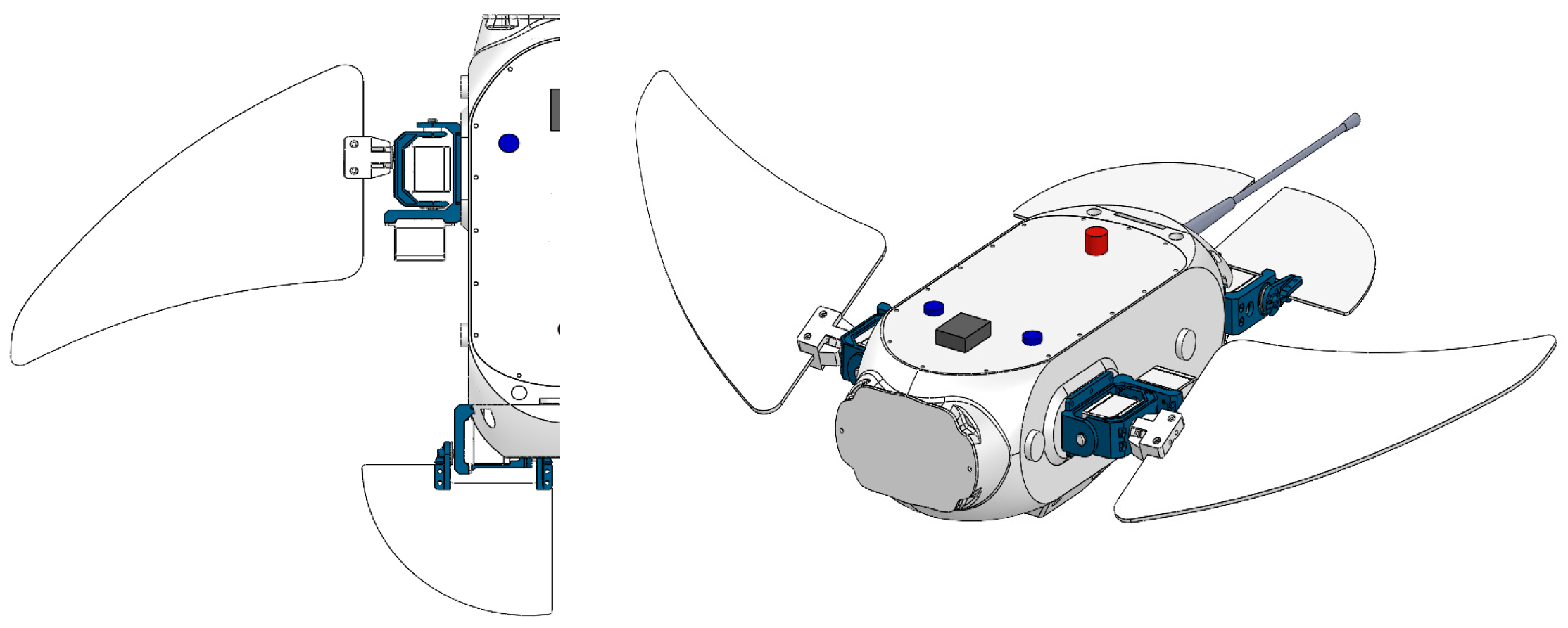
2.2. Pectoral Fin Actuation Mechanism
- Flapping Motion: The first servo, located at the root, drives the primary vertical flapping motion (heaving), determining the flapping amplitude and frequency;
- Pitching/Twisting Motion: The second servo is coupled to the fin base to control the instantaneous angle of attack (pitching).
2.3. Mechanical Structure and Waterproofing
2.4. Motion Control Framework
- Stability: It ensures smooth transitions when changing flapping frequency or amplitude during experiments, preventing mechanical jerks that could introduce noise into force measurements.;
- Adjustability: It allows for real-time modulation of the motion parameters (frequency, amplitude, and phase offset), enabling a systematic sweep of the kinematic space during the hydrodynamic tests.
3. Experimental Investigation of Biomimetic Pectoral Fin Hydrodynamics
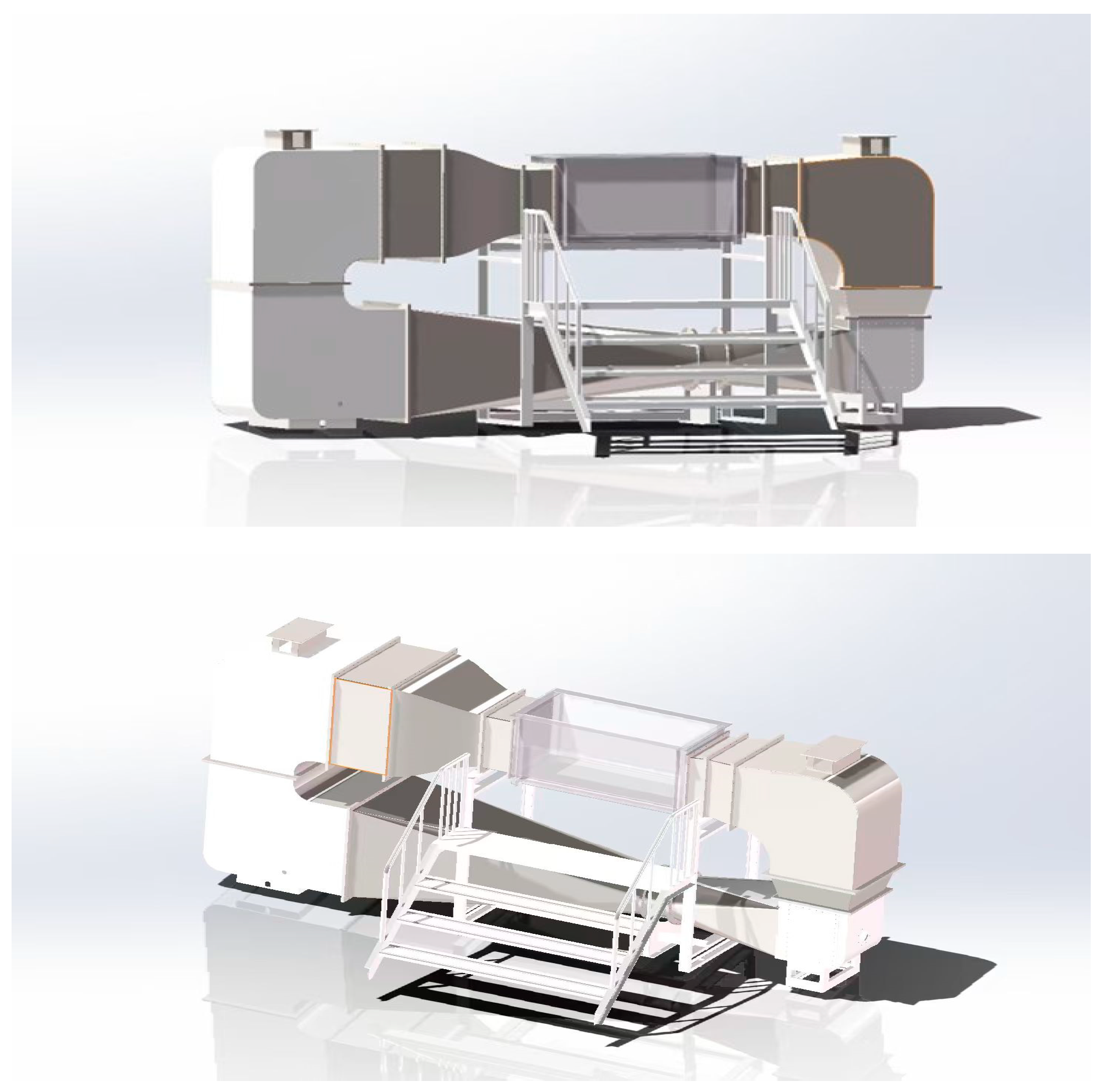
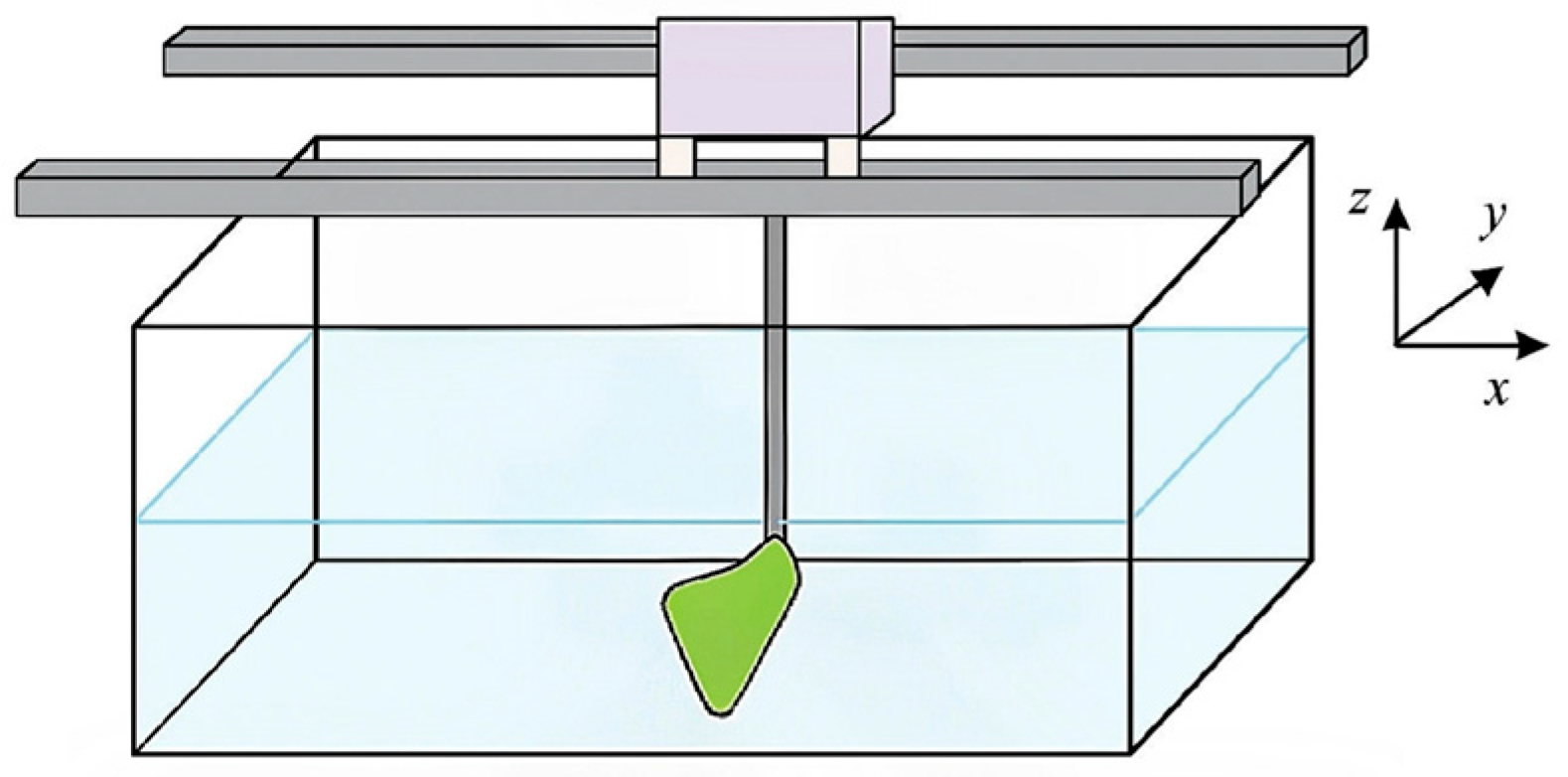
3.1. Experimental System Configuration
- (1)
- X-axis: Servo-driven linear motion, 1.20 m stroke, sinusoidal actuation.
- (2)
- Y-axis: Servo-driven linear motion, 0.55 m stroke, sinusoidal actuation.
- (3)
- Z-axis: Servo-driven linear motion, 0.35 m stroke, sinusoidal actuation.
- (4)
- C-axis: Continuous 360° rotation with adjustable forward and reverse speeds.
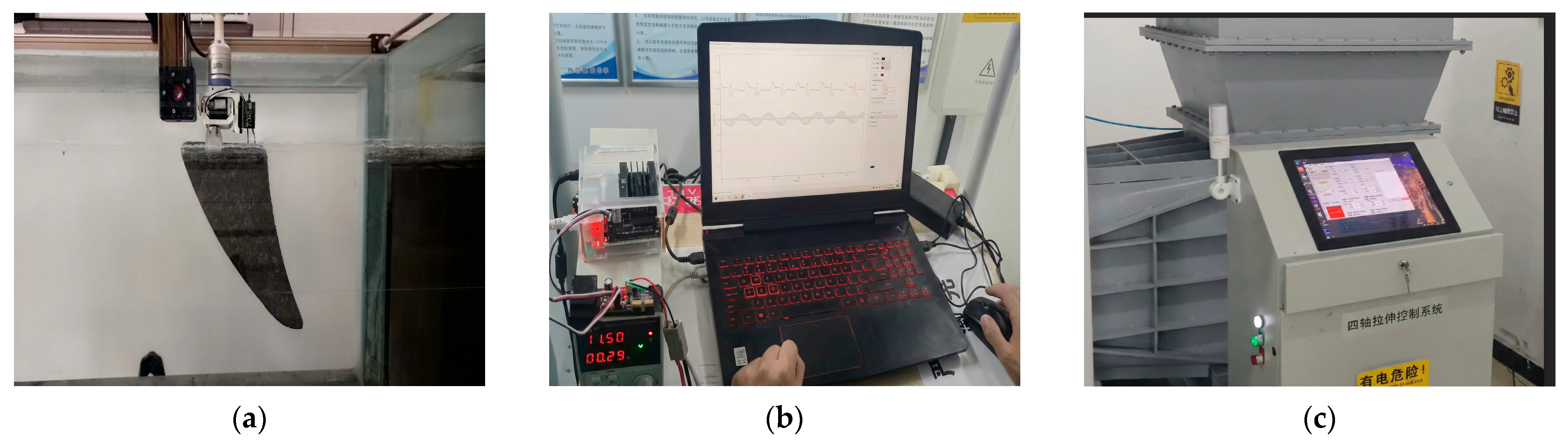
3.2. Biomimetic Pectoral Fin Actuation Device
- Servo 1 (flapping actuator): Mounted at the fin root to drive the primary up–down flapping motion.
- Servo 2 (rotational actuator): Attached to the fin base to adjust the instantaneous rotational (twist) angle and modulate the angle of attack.
- High biomimetic fidelity: The dual-degree-of-freedom design realistically reproduces the coupled flapping and rotational motions of natural pectoral fins.
- Flexible control: By adjusting the servo phase difference, amplitude, and frequency, the system can achieve multi-modal motions such as straight swimming, turning, ascending, and diving.
- Stable propulsion: Periodic sinusoidal control ensures continuous thrust output, which has been experimentally verified to produce stable propulsion in quiescent water.
- Scalability: The control system is based on standard PWM driving and the ROS framework, facilitating integration into larger-scale biomimetic robotic platforms.
3.3. Hydrodynamic Experimental Measurement Methods of the Biomimetic Pectoral Fin
3.4. Data Processing and Parameter Normalization
- Reference Area (S): The planform area of the triangular pectoral fin, calculated as .
- Characteristic Length (c): The root chord length of the fin, c = 0.0224 m.
- Reference Velocity (): The steady inflow velocity of the water tunnel.
- Fluid Density (): The density of water, .
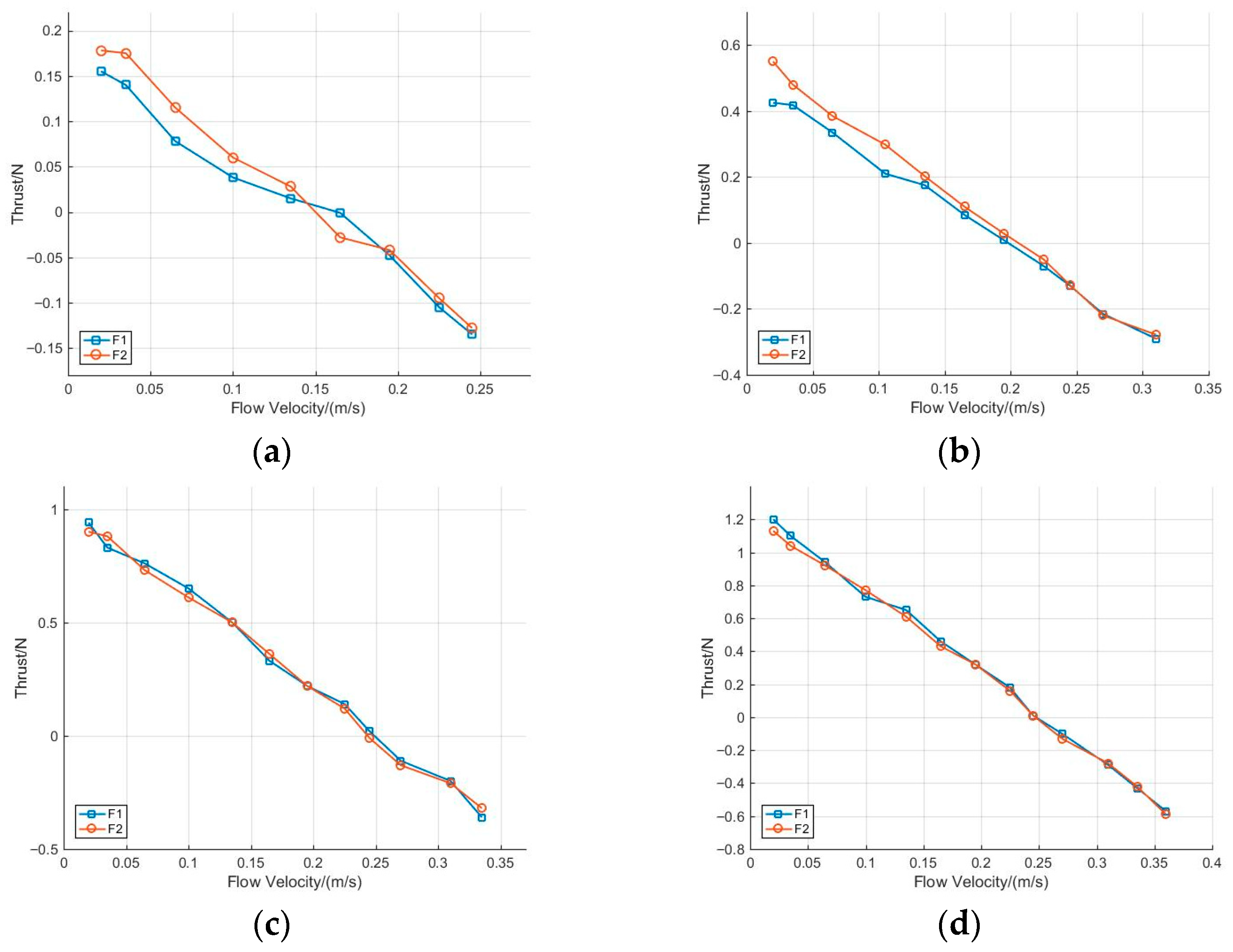
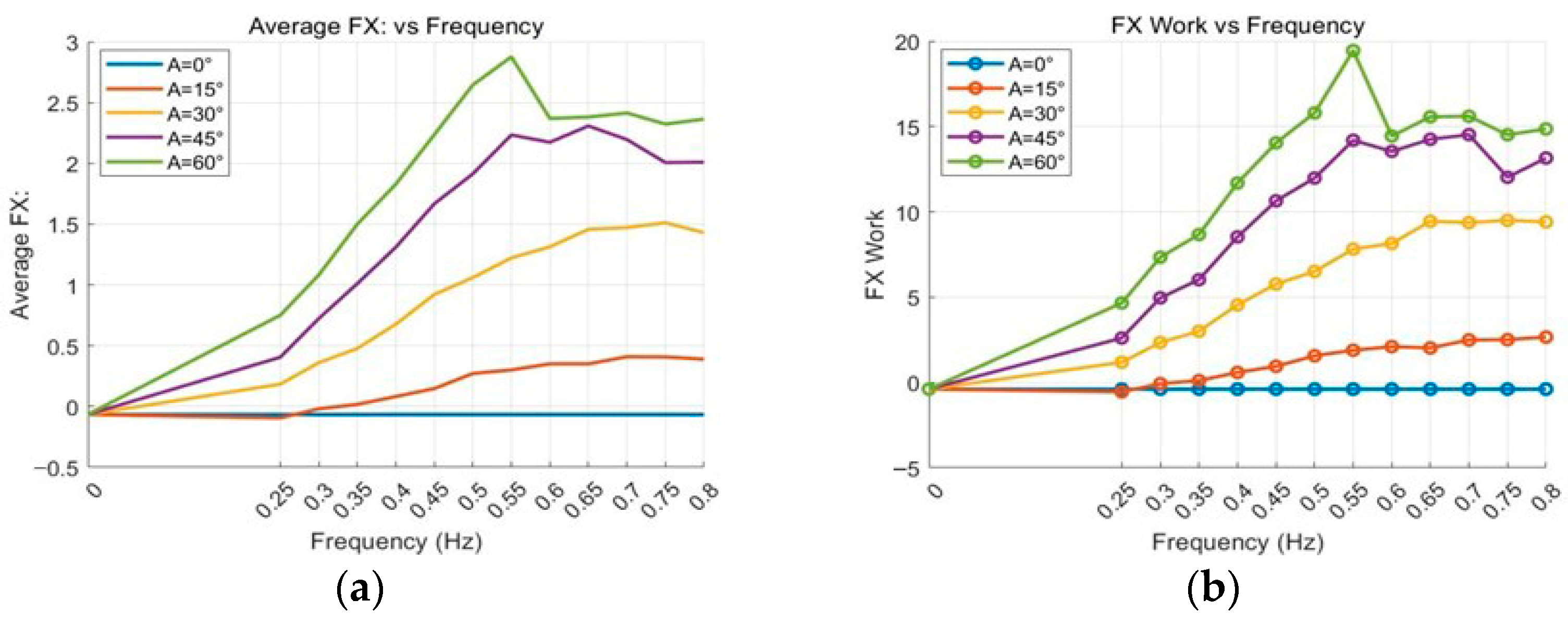
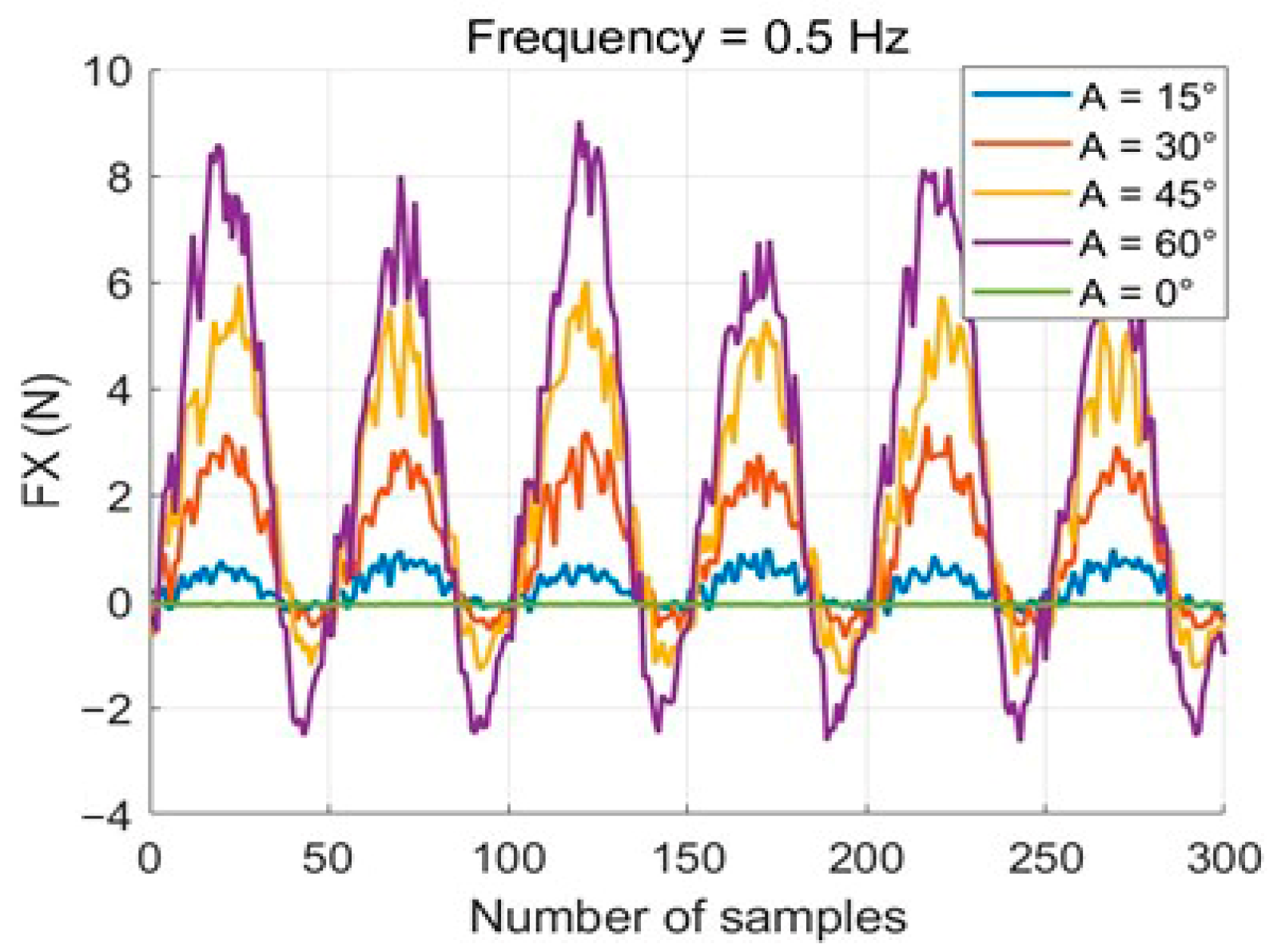
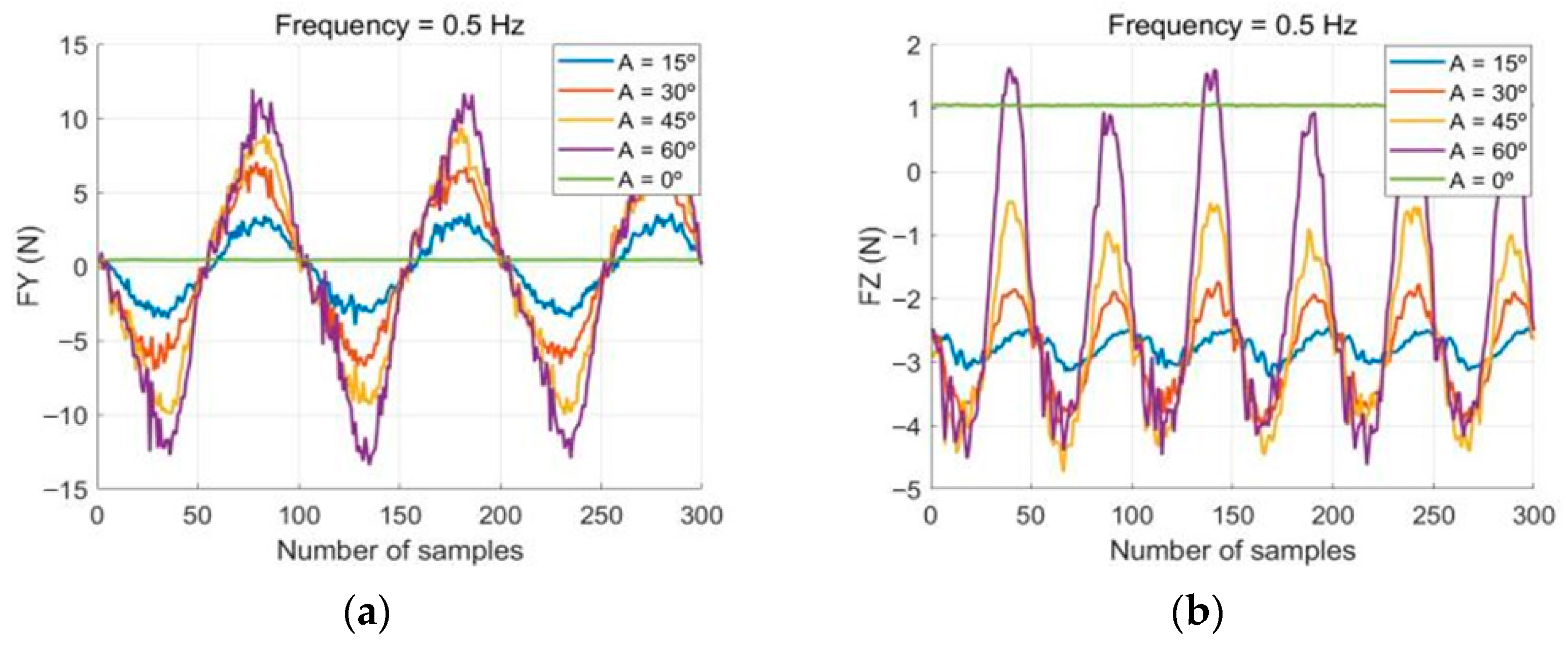
3.5. Results and Discussion
4. Mechanistic Investigation of Pectoral Fin Hydrodynamic
4.1. Quasi-Steady Assumption and Effective Angle of Attack
4.2. Governing Equations
4.3. Numerical Model and Boundary Conditions
4.4. Turbulence Model and Solver Settings
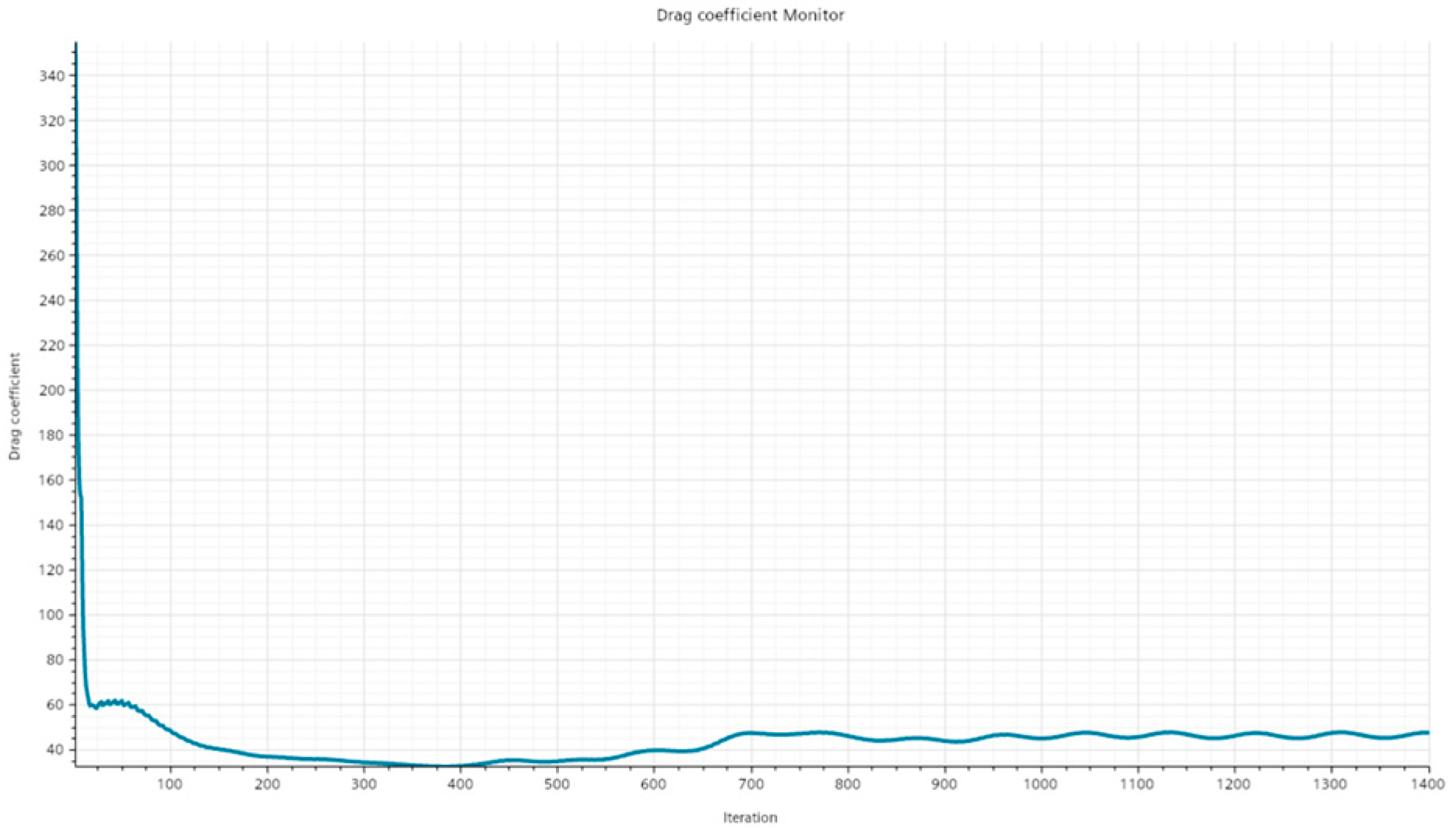
4.5. Grid Generation and Grid Independence Verification
4.5.1. Grid Setup
4.5.2. Reynolds Number Sensitivity and Validation
4.6. Flow Field Analysis and Correlation with Experimental Results
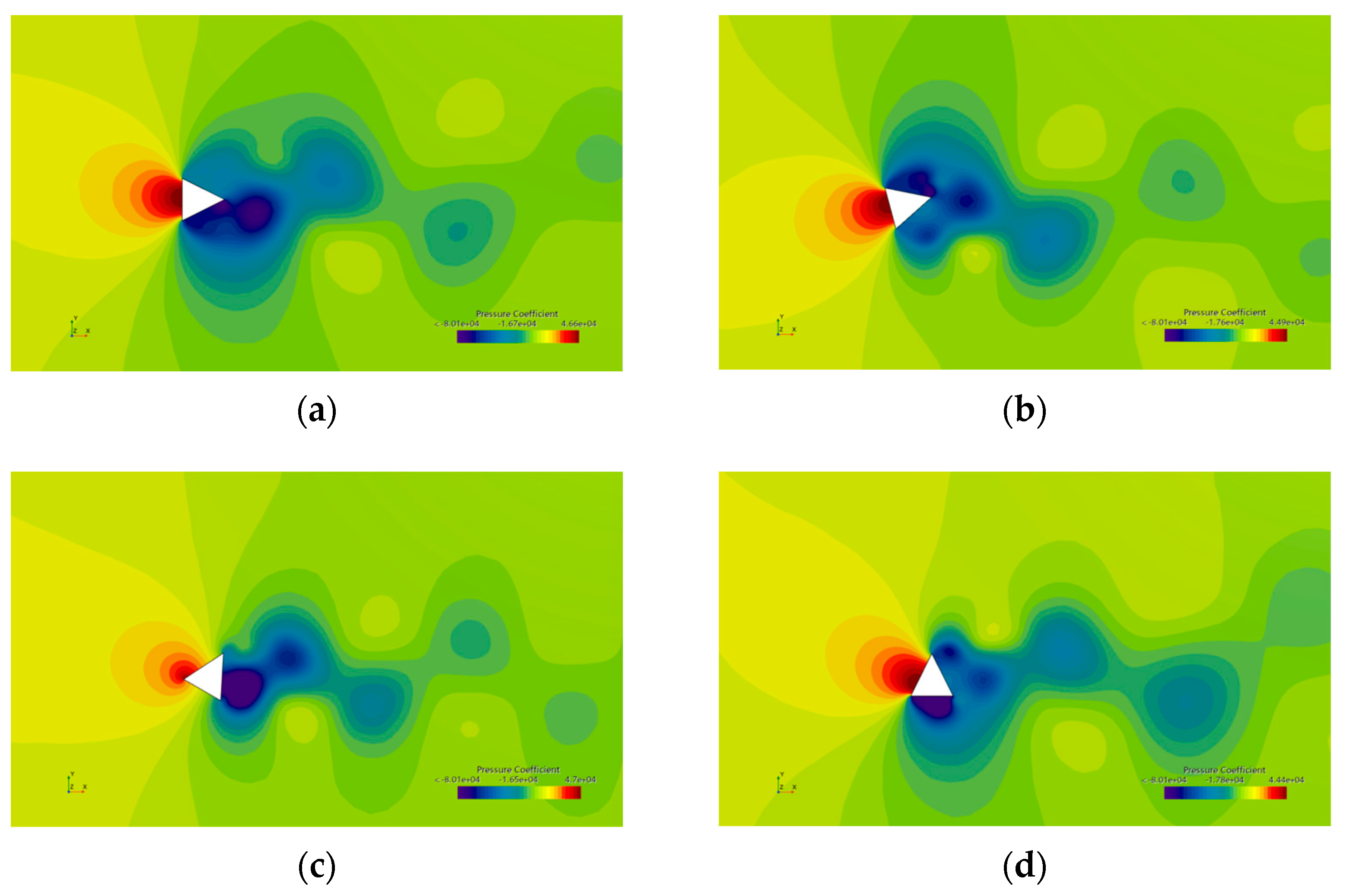
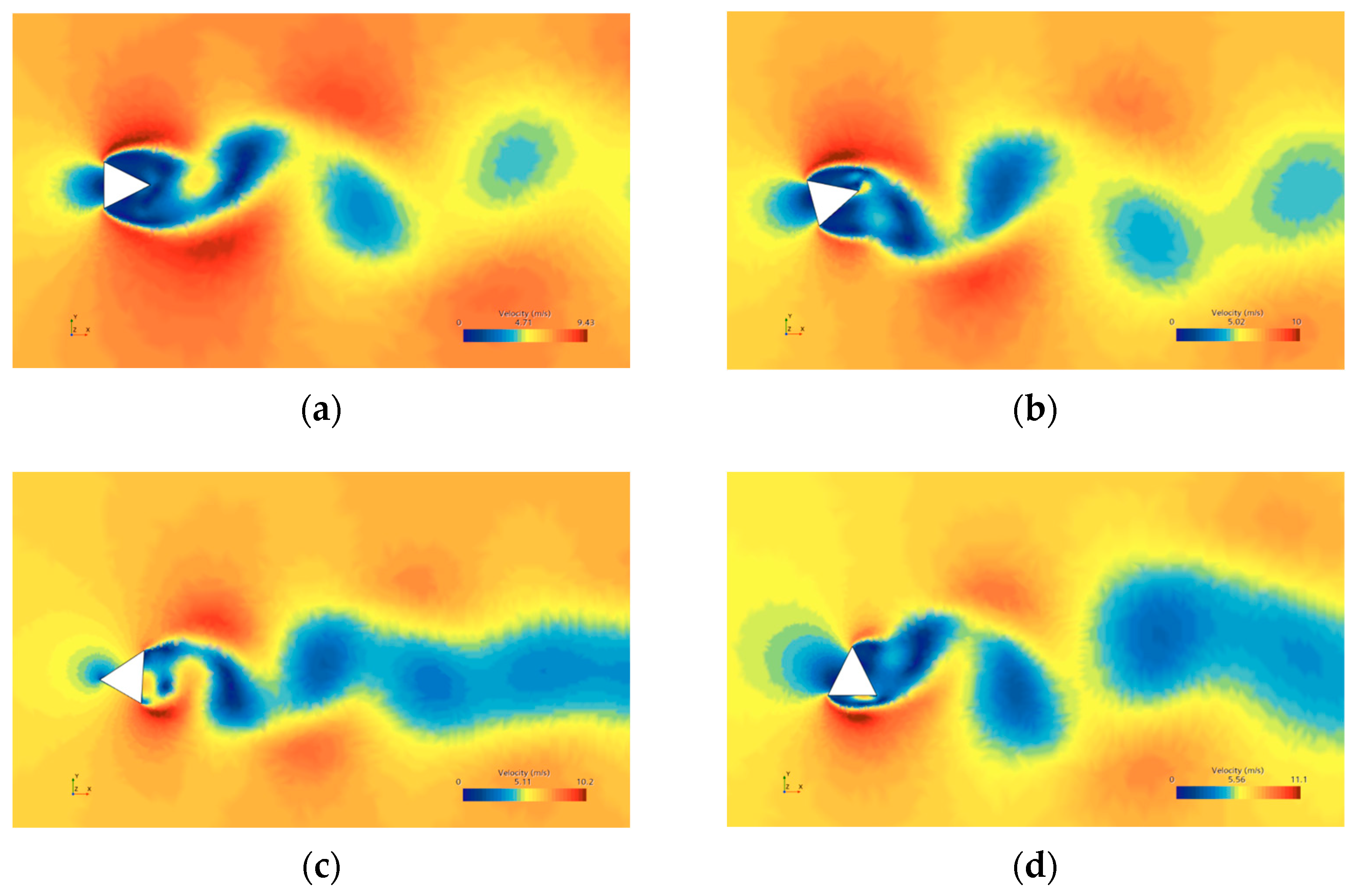
4.6.1. Pressure and Velocity Fields from at Different Angles of Attack
4.6.2. Lift and Drag Characteristics and Lift-to-Drag Ratio
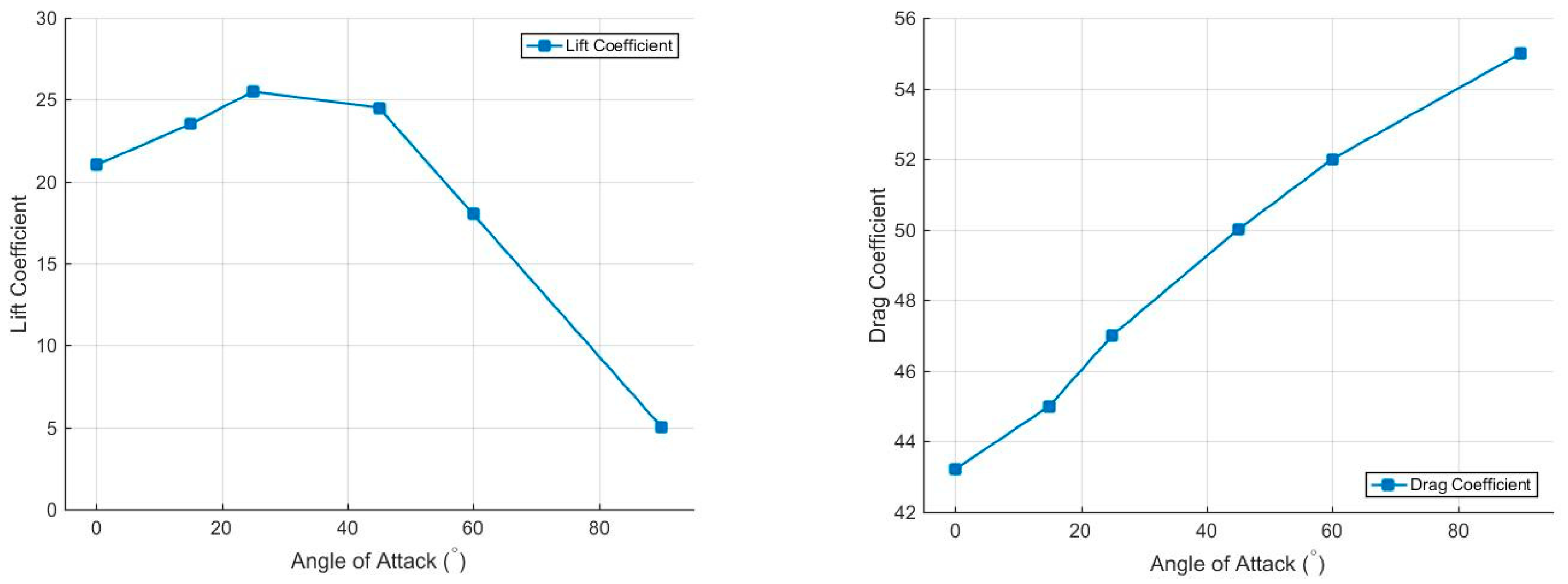
- Thrust Production Mechanism: In a flapping cycle, the forward thrust is primarily derived from the projection of the lift vector. An increase in the lift coefficient CL at moderate angles (0° to 45°) directly supports the experimental finding that increasing flapping amplitude (and thus the effective angle of attack) enhances mean thrust.
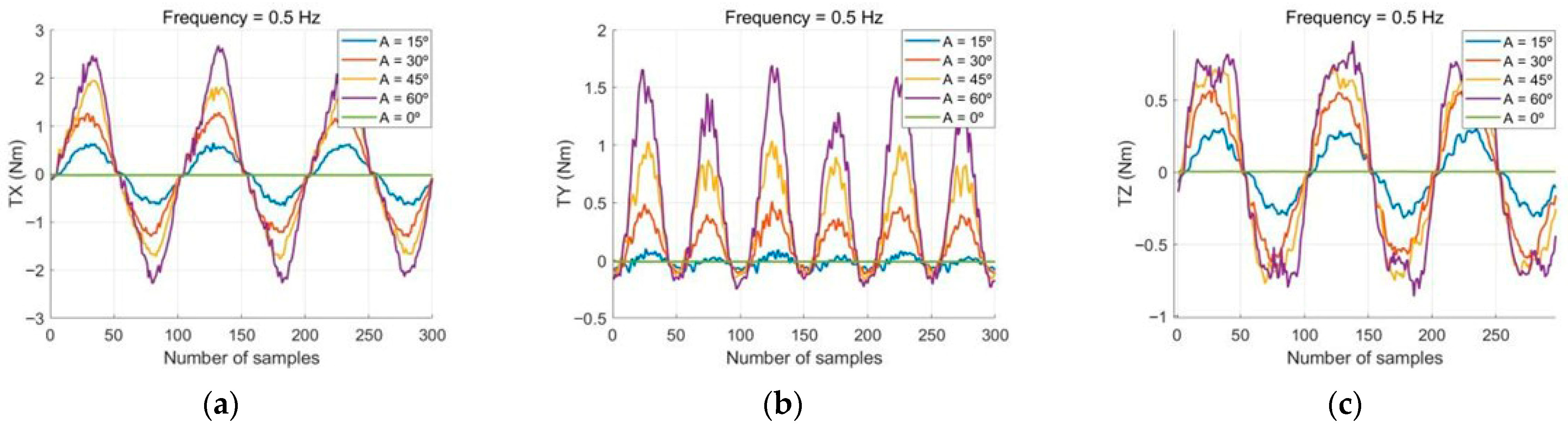
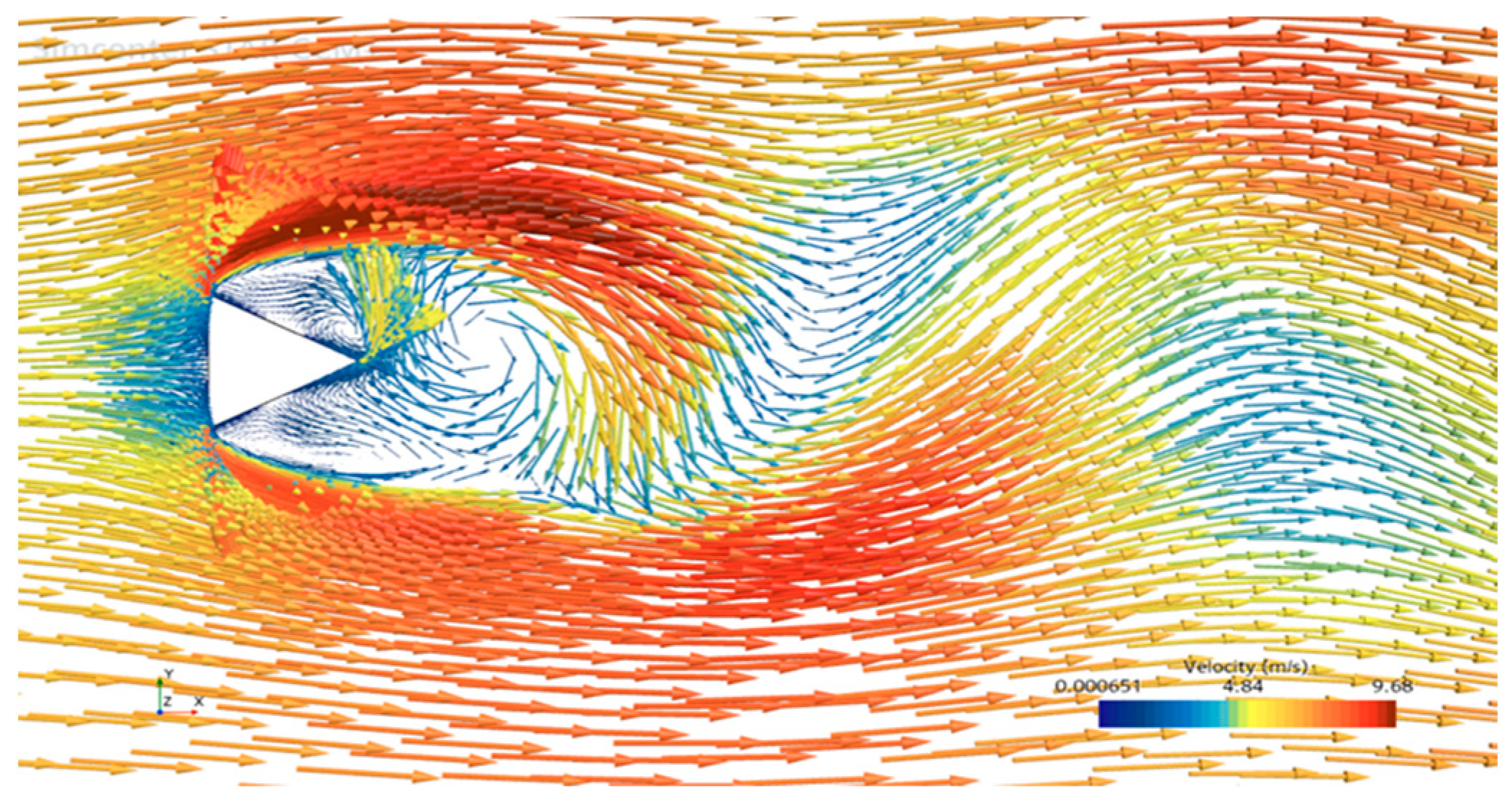
- Efficiency Saturation: The simulation reveals a precipitous drop in the lift-to-drag ratio as the angle of attack approaches 90°. This numerical trend provides the physical evidence for the “thrust saturation” observed in Figure 5 of Section 3.5. In the dynamic context, when the fin flaps at excessive amplitudes (e.g., 60°), the effective angle of attack periodically enters this high-drag “deep stall” regime. As shown in Figure 17, the massive surge in pressure drag (CD) at 90°—caused by the massive flow separation visualized in Figure 13d—effectively counteracts the propulsive component. This static aerodynamic characteristic elucidates why the thrust efficiency in experiments tends to saturate or decline under extreme kinematic parameters, confirming that flow separation is the governing constraint.
4.6.3. Vorticity Structure and Wake Dynamics
4.6.4. Turbulent and Effective Viscosity Distributions
4.6.5. Validation of Experimental Thrust Trends
- Linear Regime Validation: At low flapping amplitudes (corresponding to low effective AOAs, e.g., 0–15°), the CFD results show a linear increase in the lift coefficient (CL) and a consistently low drag coefficient (CD). This explains the stable and efficient thrust generation observed in the low-amplitude experimental trials.
- Saturation Regime Validation: At high flapping amplitudes (corresponding to high AOAs, e.g., >45°), the experimental thrust growth slows down. The CFD simulation provides the physical validation for this limit: at 90° AOA, the flow enters a deep stall regime where the drag coefficient (CD) increases by an order of magnitude, drastically reducing the effective lift-to-drag ratio.
4.7. Summary of Hydrodynamic Characteristics
5. Conclusions
Author Contributions
Funding
Data Availability Statement
Conflicts of Interest
References
- Xie, F.; Zuo, Q.; Chen, Q.; Fang, H.; He, K.; Du, R.; Zhong, Y.; Li, Z. Designs of the biomimetic robotic fishes performing body and/or caudal fin (BCF) swimming locomotion: A review. J. Intell. Robot. Syst. 2021, 102, 13. [Google Scholar] [CrossRef]
- Chen, L.; Lian, H.; Pei, Q.; Meng, Z.; Jiang, S.; Dong, H.-W.; Yu, P. FEM-BEM analysis of acoustic interaction with submerged thin-shell structures under seabed reflection conditions. Ocean Eng. 2024, 309, 118554. [Google Scholar] [CrossRef]
- Xu, Y.; Wei, Z.; Pei, Q.; Li, X.; Li, Y. FEM-BEM analysis with subdivision surface for acoustic analysis of thin-shell structures under sea floor and sea level reflection conditions. Ocean Eng. 2025, 342, 122821. [Google Scholar] [CrossRef]
- Chen, L.; Lian, H.; Dong, H.-W.; Yu, P.; Jiang, S.; Bordas, S.P.A. Broadband topology optimization of three-dimensional structural-acoustic interaction with reduced order isogeometric FEM/BEM. J. Comput. Phys. 2024, 509, 113051. [Google Scholar] [CrossRef]
- Chen, L.; Zhao, J.; Lian, H.; Yu, B.; Atroshchenko, E.; Li, P. A BEM broadband topology optimization strategy based on Taylor expansion and SOAR method—Application to 2D acoustic scattering problems. Int. J. Numer. Methods Eng. 2023, 124, 5151–5182. [Google Scholar] [CrossRef]
- Yuan, X.; Huo, R.; Pei, Q.; Zhao, G.; Li, Y. Uncertainty quantification for the 3D half-space sound scattering problem of IGABEM based on the Catmull–Clark subdivision surfaces. Eng. Anal. Bound. Elem. 2025, 176, 106222. [Google Scholar] [CrossRef]
- Zhao, G.; Xuan, J.; Xu, Y.; Li, Y. Fast multipole boundary element method with subdivision surface for acoustic analysis under seabed and sea surface reflection conditions. Phys. Fluids 2025, 37, 097148. [Google Scholar] [CrossRef]
- Li, G.; Liu, G.; Leng, D.; Fang, X.; Li, G.; Wang, W. Underwater undulating propulsion biomimetic robots: A review. Biomimetics 2023, 8, 318. [Google Scholar] [CrossRef] [PubMed]
- Li, B.; Wang, Q.; Huang, X.; Zhang, Y.; Kong, X.; Han, D. Design of a biomimetic manta ray–type underwater observation device. J. Shanghai Ocean Univ. 2025, 34, 875–886. [Google Scholar] [CrossRef]
- Huang, H.; Xian, S.; Xiong, C.; Li, W.; Zhong, Y. Design and dynamics modeling of a hybrid drive bionic robotic fish. Biomim. Intell. Robot. 2025, 5, 100247. [Google Scholar] [CrossRef]
- Bai, F.; Song, X.; Wang, Z.; Wang, X.; Liu, Y.; Liu, K.; Xue, G. Research on design, modeling, and maneuverability analysis of hybrid-driven robotic fish. Front. Mar. Sci. 2025, 12, 1648335. [Google Scholar] [CrossRef]
- Triantafyllou, M.S.; Triantafyllou, G.S. An efficient swimming machine. Sci. Am. 1995, 272, 64–70. [Google Scholar] [CrossRef]
- Chen, L.; Liu, C.; Lian, H.; Gu, W. Electromagnetic scattering sensitivity analysis for perfectly conducting objects in TM polarization with isogeometric BEM. Eng. Anal. Bound. Elem. 2025, 172, 106126. [Google Scholar] [CrossRef]
- Chen, L.L.; Zhang, Y.; Lian, H.; Atroshchenko, E.; Ding, C.; Bordas, S.P.A. Seamless integration of computer-aided geometric modeling and acoustic simulation: Isogeometric boundary element methods based on Catmull-Clark subdivision surfaces. Adv. Eng. Softw. 2020, 149, 102879. [Google Scholar] [CrossRef]
- Chen, L.; Lian, H.; Liu, C.; Li, Y.; Natarajan, S. Sensitivity analysis of transverse electric polarized electromagnetic scattering with isogeometric boundary elements accelerated by a fast multipole method. Appl. Math. Model. 2025, 141, 115956. [Google Scholar] [CrossRef]
- Shen, J.; Gu, W.; Zhao, G.; Liu, C.; Zhai, C.; Lian, H. Isogeometric boundary element analysis of sensitivity in TE-polarized electromagnetic scattering from dielectric bodies. Eng. Anal. Bound. Elem. 2025, 181, 106549. [Google Scholar] [CrossRef]
- He, Q.; Zhu, Y.; Li, W.; Cui, W.; Fan, D. Pectoral fin-assisted braking and agile turning: A biomimetic approach to improve underwater robot maneuverability. J. Mar. Sci. Eng. 2025, 13, 1295. [Google Scholar] [CrossRef]
- Lian, H.; Zhang, Y.; Bian, N.; Qu, Y.; Li, Y.; Chen, L. Integrating 3DGS novel view synthesis and CFD for modeling bionic robotic fish from multi view imagery. Ocean Eng. 2025, 340, 122407. [Google Scholar] [CrossRef]
- Lian, H.; Li, X.; Qu, Y.; Du, J.; Meng, Z.; Liu, J.; Chen, L. Bayesian uncertainty analysis for underwater 3D reconstruction with neural radiance fields. Appl. Math. Model. 2025, 138, 115806. [Google Scholar] [CrossRef]
- Chen, L.; Wang, Z.; Lian, H.; Ma, Y.; Meng, Z.; Li, P.; Ding, C.; Bordas, S.P.A. Reduced order isogeometric boundary element methods for CAD-integrated shape optimization in electromagnetic scattering. Comput. Methods Appl. Mech. Eng. 2024, 419, 116654. [Google Scholar] [CrossRef]
- Dong, H.; Mittal, R.; Najjar, F.M. Wake topology and hydrodynamic performance of low-aspect-ratio flapping foils. J. Fluid Mech. 2006, 566, 309–343. [Google Scholar] [CrossRef]
- Sfakiotakis, M.; Lane, D.M.; Davies, J.B.C. Review of fish swimming modes for aquatic locomotion. IEEE J. Ocean. Eng. 1999, 24, 237–252. [Google Scholar] [CrossRef]
- Lauder, G.V.; Tytell, E.D. Hydrodynamics of undulatory propulsion. Fish Physiol. 2005, 23, 425–468. [Google Scholar] [CrossRef]
- Li, Z.; Li, B.; Li, H.; Xia, G. Pectoral fin propulsion performance analysis of robotic fish with multiple degrees of freedom based on burst-and-coast swimming behavior stroke ratio. Biomimetics 2024, 9, 301. [Google Scholar] [CrossRef] [PubMed]
- Nie, S.; Gao, P.; Huo, L.; Ji, H.; Hong, R.; Ma, Z. Water hydraulic actuator for bionic fish pectoral fin: Optimization and implementation. Sens. Actuators A Phys. 2025, 387, 116438. [Google Scholar] [CrossRef]
- Sun, J.; Liu, Y.; Bai, F.; Yan, X.; Quan, E.; Xue, G. Trajectory tracking control of robotic fish in offshore disturbance environments via disturbance observer-based inverse sliding mode. Front. Mar. Sci. 2025, 12, 1691667. [Google Scholar] [CrossRef]
- Ding, F.; Chen, W.; Zhang, J.; Chen, B. A high-frequency oscillating tensegrity robotic fish with wide-ranging online body stiffness adjustability. Ocean Eng. 2025, 328, 121063. [Google Scholar] [CrossRef]
- Chen, L.; Li, H.; Guo, Y.; Chen, P.; Atroshchenko, E.; Lian, H. Uncertainty quantification of mechanical property of piezoelectric materials based on isogeometric stochastic FEM with generalized nth-order perturbation. Eng. Comput. 2024, 40, 257–277. [Google Scholar] [CrossRef]
- Ijspeert, A.J. Central pattern generators for locomotion control in animals and robots: A review. Neural Netw. 2008, 21, 642–653. [Google Scholar] [CrossRef]
- Crespi, A.; Badertscher, A.; Guignard, A.; Ijspeert, A.J. Swimming and crawling with an amphibious snake robot. In Proceedings of the 2005 IEEE International Conference on Robotics and Automation (ICRA 2005), Barcelona, Spain, 18–22 April 2005; IEEE: Piscataway, NJ, USA, 2005; pp. 3024–3028. [Google Scholar] [CrossRef]
- Li, B.; Li, Z.; Li, H.; Du, Y. Optimization of three-degree-of-freedom biomimetic pectoral fin propulsion law. J. Shanghai Jiaotong Univ. (Sci.) 2024, 29, 1–14. [Google Scholar] [CrossRef]
- Chen, L.; Huo, R.; Lian, H.; Yu, B.; Zhang, M.; Natarajan, S.; Bordas, S.P.A. Uncertainty quantification of 3D acoustic shape sensitivities with generalized nth-order perturbation boundary element methods. Comput. Methods Appl. Mech. Eng. 2025, 433, 117464. [Google Scholar] [CrossRef]
- Chen, L.; Lian, H.; Huo, R.; Du, J.; Liu, W.; Meng, Z.; Bordas, S.P.A. Uncertainty analysis in acoustics: Perturbation methods and isogeometric boundary element methods. Eng. Comput. 2024, 40, 3875–3900. [Google Scholar] [CrossRef]
- Lian, H.; Li, S.; Li, X.; Xu, Y.; Chen, L.L.; Natarajan, S. Underwater acoustic simulation from multi-view sonar images: A NeuS-assisted boundary element approach. Thin-Walled Struct. 2026, 219, 114180. [Google Scholar] [CrossRef]
- Zhong, Y.; Li, Z.; Du, R. Robot fish with two-DOF pectoral fins and a wire-driven caudal fin. Adv. Robot. 2018, 32, 25–36. [Google Scholar] [CrossRef]
- Chen, L.; Cai, Y.; Bi, S. Central Pattern Generator (CPG)-based locomotion control and hydrodynamic experiments of synergistical interaction between pectoral fins and caudal fin for boxfish-like robot. Biomimetics 2023, 8, 380. [Google Scholar] [CrossRef]
- Anderson, J.M.; Streitlien, K.; Barrett, D.S.; Triantafyllou, M.S. Oscillating foils of high propulsive efficiency. J. Fluid Mech. 1998, 360, 41–72. [Google Scholar] [CrossRef]
- Techet, A.H. Propulsive performance of biologically inspired flapping foils at high Reynolds numbers. J. Exp. Biol. 2008, 211, 274–279. [Google Scholar] [CrossRef] [PubMed]
- Sun, Q.; Wu, J.; Sheng, C.; Hu, S.; Wang, Z.; Huang, H. Design and implementation of multi-level linkage mechanism bionic pectoral fin for manta ray robot. Ocean Eng. 2023, 284, 115152. [Google Scholar] [CrossRef]
- Chen, L.; Bi, S.; Cai, Y.; Qiu, H. Design and hydrodynamic experiment research on novel biomimetic pectoral fins of a ray-inspired robotic fish. Machines 2022, 10, 606. [Google Scholar] [CrossRef]
- Dong, H.; Bozkurttas, M.; Mittal, R.; Madden, P.; Lauder, G.V. Computational modelling and analysis of the hydrodynamics of a highly deformable fish pectoral fin. J. Fluid Mech. 2010, 645, 345–373. [Google Scholar] [CrossRef]
- Menter, F.R. Two-equation eddy-viscosity turbulence models for engineering applications. AIAA J. 1994, 32, 1598–1605. [Google Scholar] [CrossRef]
- Lauder, G.V.; Drucker, E.G. Morphology and experimental hydrodynamics of fish fin control surfaces. IEEE J. Ocean. Eng. 2004, 29, 556–571. [Google Scholar] [CrossRef]
- Lauder, G.V.; Anderson, E.J.; Tangorra, J.; Madden, P.G.A. Fish biorobotics: Kinematics and hydrodynamics of self-propulsion. J. Exp. Biol. 2007, 210, 2767–2780. [Google Scholar] [CrossRef] [PubMed]








| Method | Experimental Method | Advantages | Limitations |
|---|---|---|---|
| Fixed propulsion method | Fixed tank, active drive. | Direct thrust data acquisition. | Thrust is not equal to drag. |
| Autonomous propulsion method | Prototype on low-friction track, moves until stable. | Accurately reflects propulsion performance. | Thrust is hard to measure directly. |
| Towing force feedback method | Prototype towed at constant speed to measure resistance. | Directly acquire fluid resistance data. | Measured drag is not the same as actual pectoral fin drag. |
| Grid Scheme | Total Grid Cells | Drag Force | Difference from Previous Grid |
|---|---|---|---|
| Coarse Grid | 15,342 | 42.5 | - |
| Medium Grid | 55,810 | 43.3 | 1.88% |
| Fine Grid | 179,865 | 43.4 | 0.23% |
| Condition | Re | CL | CD | Deviation | |
|---|---|---|---|---|---|
| Experimental Match | 1.2 m/s | 3.0 × 10⁴ | 0.821 | 0.158 | - |
| Numerical Baseline | 6.0 m/s | 1.5 × 10⁵ | 0.854 | 0.164 | 3.8% |
Disclaimer/Publisher’s Note: The statements, opinions and data contained in all publications are solely those of the individual author(s) and contributor(s) and not of MDPI and/or the editor(s). MDPI and/or the editor(s) disclaim responsibility for any injury to people or property resulting from any ideas, methods, instructions or products referred to in the content. |
© 2026 by the authors. Licensee MDPI, Basel, Switzerland. This article is an open access article distributed under the terms and conditions of the Creative Commons Attribution (CC BY) license.
Share and Cite
Zhang, C.; Bai, Z.; Liu, Z.; Kuang, J.; Li, P.; Yan, Q.; Zhao, G.; Atroshchenko, E. Scalable Dual-Servo Pectoral Fin Platform for Biomimetic Robotic Fish: Hydrodynamic Experiments and Quasi-Steady CFD. Machines 2026, 14, 121. https://doi.org/10.3390/machines14010121
Zhang C, Bai Z, Liu Z, Kuang J, Li P, Yan Q, Zhao G, Atroshchenko E. Scalable Dual-Servo Pectoral Fin Platform for Biomimetic Robotic Fish: Hydrodynamic Experiments and Quasi-Steady CFD. Machines. 2026; 14(1):121. https://doi.org/10.3390/machines14010121
Chicago/Turabian StyleZhang, Chaohui, Zhanlin Bai, Zhenghe Liu, Jinbo Kuang, Pei Li, Qifang Yan, Gaochao Zhao, and Elena Atroshchenko. 2026. "Scalable Dual-Servo Pectoral Fin Platform for Biomimetic Robotic Fish: Hydrodynamic Experiments and Quasi-Steady CFD" Machines 14, no. 1: 121. https://doi.org/10.3390/machines14010121
APA StyleZhang, C., Bai, Z., Liu, Z., Kuang, J., Li, P., Yan, Q., Zhao, G., & Atroshchenko, E. (2026). Scalable Dual-Servo Pectoral Fin Platform for Biomimetic Robotic Fish: Hydrodynamic Experiments and Quasi-Steady CFD. Machines, 14(1), 121. https://doi.org/10.3390/machines14010121