

Bundles over Quantum RealWeighted Projective Spaces

Abstract
:1. Introduction
 -grading of this coordinate algebra. A typical -grading assigns degree ±1 to every generator of this algebra (different from the identity). The degree zero part forms a subalgebra which in particular cases corresponds to quantum complex or real projective spaces (grading of coordinate algebras of quantum spheres [1] or prolonged quantum spheres [2]). Often this grading is strong, meaning that the product of
  -graded parts is equal to the
  -part of the total algebra. In geometric terms this reflects the freeness of the circle action.
 (
(  a positive integer) and
  ( an odd positive integer) identified in [3] as fixed points of weighted circle actions on the coordinate algebra
  of a non-orientable quantum Seifert manifold described in [2]. Our aim is to construct quantum
  -principal bundles over the corresponding quantum spaces
  and describe associated line bundles. Recently, the importance of such bundles in non-commutative geometry was once again brought to the fore in [5], where the non-commutative Thom construction was outlined. As a further consequence of the principality of -coactions we also deduce that
  can be understood as quotients of
  by almost free
  -actions.
 in Section 3. Section 4 contains main results including construction of principal comodule algebras over
  . We observe that constructions albeit very similar in each case yield significantly different results. The principal comodule algebra over is non-trivial while that over turns out to be trivial (this means that all associated bundles are trivial, hence we do not mention them in the text). Whether it is a consequence of our particular construction or there is a deeper (topological or geometric) obstruction to constructing non-trivial principal circle bundles over
  remains an interesting open question.
2. Review of Bundles in Non-Commutative Geometry
2.1. Topological Aspects of Bundles
 where
where  and
and  are topological spaces and
  is a continuous surjective map. Here is called the base space, the total space and
  the projection of the bundle.
  , the fibre over
  is the topological space
  , i.e., the points on the total space which are projected, under , onto the point in the base space. A bundle whose fibres are homeomorphic which satisfies a condition known as local triviality are known as fibre bundles. This is formally expressed in the next definition.
 where is bundle and
  is a topological space such that are homeomorphic to for each . Furthermore, satisfies the local triviality condition.
  , there is an open neighourhood
  such that
  is homeomorphic to the product space
  , in such a way that carries over to the projection onto the first factor. That is the following diagram commutes:
 is the natural projection
  and
and  is a homeomorphism.is homeomorphic to
  and the Mobius strip is a fibre bundle.
  be a topological space which is compact and satisfies the Hausdorff property and G a compact topological group. Suppose there is a right action
  of
of  on and write
  .on is said to be free if
  for any
  implies that
  , the group identity.
  is defined as
  .acts freely on if and only if
  is injective.
  " Suppose the action is free, hence
  implies that
  . If
. If  , then
  and
and  . Applying the action of
  to both sides of we get
  , which implies
  by the freeness property, concluding
  and
and  is injective as required.
 " Suppose is injective, so
  or implies and . Since
  from the properties of the action, if
  then from the injectivity property.
  acts on
  we can define the quotient space
  ,
, 
 are called the orbits of the points
  . They are defined as the set of elements in to which can be moved by the action of elements of . The set of orbits of under the action of forms a partition of , hence we can define the equivalence relation on as,
  and
and  are in the same orbit, i.e.,
  . Given any quotient space, then there is a canonical surjective map
 to their orbits. We define the pull-back along this map
  to be the set
 contains elements of in the first leg and the action of
  on
on  in the second leg. To put it another way, the image records elements of
  in the first leg and all the elements in the same orbit as this in the second leg. Hence we can identify the image of the canonical map as the pull back along , namely
  . This is formally proved as a part of the following proposition.
 acts freely on
  if and only if the map
 is well-defined since the elements
  and
and  are in the same orbit and hence map to the same equivalence class under
  . Using Proposition 2.5 we can deduce that the injectivity of is equivalent to the freeness of the action. Hence if we can show that is surjective the proof is complete.
 . This means
  , which implies and
  are in the same equivalence class, which in turn means they are in the same orbit. We can therefore deduce that
  for some
  . So,
. So,  implying
  . Hence
  completing the proof. on is said to be principal if the map
  is both injective and continuous (and such that the inverse image of a compact subset is compact in a case of locally compact spaces). from
  onto the space
  . Principal actions lead to the concept of topological principle bundles.
 such that
- (a)
![Axioms 01 00201 i102]() is a bundle and
is a bundle and ![Axioms 01 00201 i083]() is a topological group acting continuously on
is a topological group acting continuously on ![Axioms 01 00201 i084]() with action
with action ![Axioms 01 00201 i103]() ,
, ![Axioms 01 00201 i104]() ;
; - (b) the action
![Axioms 01 00201 i105]() is principal;
is principal; - (c)
![Axioms 01 00201 i106]() such that
such that ![Axioms 01 00201 i107]() ;
; - (d) the induced map
![Axioms 01 00201 i108]() is a homeomorphism.
is a homeomorphism.




 on the total space , i.e., principal bundles correspond to principal actions. By Definition
  , principal actions occur when the principal map is both injective and continuous, or equivalently, when the action is free and continuous. The third property ensures that the fibres of the bundle correspond to the orbits coming from the action and the final property implies that the quotient space can topologically be viewed as the base space of the bundle.is a topological space and a topological group which acts on from the right. The triple
  where
where  is the orbit space and the natural projection is a bundle. A principal action of on makes the quadruple
  a principal bundle.
  as a -principal bundle over
  , or as a -principal bundle over
  .where each fibre is endowed with a vector space structure such that addition and scalar multiplication are continuous maps. -principal bundle
  and let
  be a representation space of , i.e., a (topological) vector space with a (continuous) left -action
  ,
,  . Then acts from the right on
  by
by 
 and a surjective (continuous map)
  ,
,  and thus have a fibre bundle
  . In the case where is a vector space, we assume that acts linearly on .
 is a continuous map
  such that, for all
  ,
, 
 . The set of sections of is denoted by
  . associated to a principal -bundle are in bijective correspondence with (continuous) maps
  such that
  -equivariant maps are denoted by
  .
.  . Given a map
  , define the section
  ,
, 
 , define
  by assigning to a unique
  such that
  . Note that
  is unique, since if
  , then and
  . Freeness implies that , hence
  . The map
  has the required equivariance property, since the element of
  corresponding to
  is
is  .
. 2.2. Non-Commutative Principal and Associated Bundles
is a complex affine variety with an action of an affine algebraic group and set  (all with the usual Euclidean topology). Let
  ,
,  and
and  be the corresponding coordinate rings. Put
  and
and  and note the identification
  . Through this identification,
  is a Hopf algebra with comultiplication:
 , counit
  ,
,  , and the antipode
  ,
,  .acts on we can construct a right coaction of
  on
on  by
by  ,
,  . This coaction is an algebra map due to the commutativity of the algebras of functions involved.and , next we view the space of functions on Y,
  , where
  .
.  is a subalgebra of
  by
by  is the canonical surjection defined above. The map
  is injective, since
  in
in  means there exists at least one orbit
  such that
  , but
, but  , so
, so  which implies
 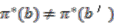 . Therefore, we can identify with
  . Furthermore,
  if and only if
 ,
,  . This is the same as
  , , where
  is the unit function
  (the identity element of
  ). Thus we can identify
  with the coinvariants of the coaction
  :
:  is a subalgebra of
  , it acts on via the inclusion map
  ,
,  . We can identify
  with
with  by the map
 is well defined because
  . Proposition 2.6 immediately yieldson is free if and only if
  ,
,  is bijective.
  on
on  , we can identify
  with the canonical map
 on is free if and only if this purely algebraic map is bijective. In the classical geometry case we take
  ,
,  and
and  , but in general there is no need to restrict oneself to commutative algebras (of functions on topological spaces). In full generality this leads to the following definition.be a Hopf algebra and a right -comodule algebra with coaction
  . Let
. Let  , the coinvariant subalgebra of . We say that
  is a Hopf–Galois extension if the left -module, right -comodule map
  be a Hopf algebra with bijective antipode and let be a right -comodule algebra with coaction . Let
  denote the coinvariant subalgebra of . We say that is a principal -comodule algebra if:
- (a)
![Axioms 01 00201 i216]() is a Hopf–Galois extension;
is a Hopf–Galois extension; - (b) the multiplication map
![Axioms 01 00201 i220]() ,
, ![Axioms 01 00201 i221]() , splits as a left
, splits as a left ![Axioms 01 00201 i219]() -module and right
-module and right ![Axioms 01 00201 i165]() -comodule map (the equivariant projectivity condition).
-comodule map (the equivariant projectivity condition).

 is the Hopf algebra associated to a
  -algebra of functions on a quantum group [10], then the existence of the Haar measure together with the results of [8] mean that condition (a) in Definition 2.15 implies condition (b) (i.e., the freeness of the coaction implies its principality).-comodule algebra with coaction is principal if and only if it admits a strong connection form, that is if there exists a map
  such that


 denotes the multiplication map,
  is the unit map,
  is the comultiplication,
  counit and the (bijective) antipode of the Hopf algebra , and
  is the flip.
  exists, then the inverse of the canonical map
  (see Definition 2.14 ) is the composite

 is a principal comodule algebra, then is the composite
 is the left
  -linear right -colinear splitting of the multiplication
  . be a right -comodule algebra. The space of
  -linear maps
  is an algebra with the convolution product
 . is said to be cleft if there exists a right
  -colinear map
  that has an inverse in the convolution algebra
  and is normalised so that
  . Writing
  for the convolution inverse of
  , one easily observes that
  is called a cleaving map or a normalised total integral.is an -colinear algebra map, then it is automatically convolution invertible (as
  ) and normalised. A comodule algebra admitting such a map is termed a trivial principal comodule algebra. be a Hopf algebra of the compact quantum group. By the Woronowicz theorem [10], admits an invariant Haar measure, i.e., a linear map
  such that, for all
  ,
, 
 is the Sweedler notation for the comultiplication. Next, assume that the lifted canonical map:

 -linear map such that
  , for all
  . Then, by the Schneider theorem [8], is a principal -comodule algebra. Explicitly, a strong connection form is
 ; see [13].
  associated to a principal -bundle . Since
  is a vector representation space of , also the set
  is a vector space. Consequently
  is a vector space. Furthermore,
  is a left module of
  with the action
  To understand better the way in which -module is associated to the principal comodule algebra
  we recall the notion of the cotensor product. , right -comodule with coaction
  and left -comodule with coaction
  , the cotensor product is defined as an equaliser:
  is an -comodule algebra, and
  , the
, the  is a left -module with the action
  In particular, in the case of a principal -bundle over
  , for any left
  -comodule the cotensor product
  is a left
  -module.of a vector bundle associated to a principal -bundle is finite dimensional. View as a left comodule of
  with the coaction
  (summation implicit) determined by
  Then the left -module of sections is isomorphic to the left -module
  .
.  with
with  . Let
. Let  be a (finite) dual basis. Take
  , and define
  . -module map
  be a principal -comodule algebra. Set
  and let be a left -comodule. The left -module
  is called a module associated to the principal comodule algebra .
  is a projective left -module, and if is a finite dimensional vector space, then is a finitely generated projective left -module. In this case it has the meaning of a module of sections over a non-commutative vector bundle. Furthermore, its class gives an element in the
  -group of . If is a cleft principal comodule algebra, then every associated module is free, since
  as a left -module and right -comodule, so that
3. Weighted Circle Actions on Prolonged Spheres.
3.1. Circle Actions and ![Axioms 01 00201 i314]() -Gradings.
-Gradings.

 ,
,  can be identified with the
  -algebra
  of Laurent polynomials in a unitary variable
  (unitary means
  ). As a Hopf -algebra , is generated by the grouplike element , i.e.,
 . As a consequence of this interpretation of , an algebra is a -comodule algebra if and only if is a
  -graded algebra,
 is the coinvariant subalgebra of . Since is spanned by grouplike elements, any convolution invertible map
  must assign a unit (invertible element) of to
  . Furthermore, colinear maps are simply the -degree preserving maps, where
  . Put together, convolution invertible colinear maps
  are in one-to-one correspondence with sequences
3.2. The ![Axioms 01 00201 i331]() and
and ![Axioms 01 00201 i332]() Coordinate Algebras
Coordinate Algebras


 be a real number,
  . The coordinate algebra
  of the even-dimensional quantum sphere is the unital complex
  -algebra with generators
  , subject to the following relations:

 is a
is a  -graded algebra with
  and so is
  (with
(with  ). In other words, is a right
  -comodule algebra and is a left -comodule algebra, hence one can consider the cotensor product algebra
  . It was shown in [2] that, as a unital -algebra,
  has generators
  and a central unitary
  which are related in the following way:

 pairwise coprime numbers
  one can define the coaction of the Hopf algebra
  on
on  as
as 
 . This coaction is then extended to the whole of
  so that is a right
  -comodule algebra.
 containing all coinvariant elements, i.e.,
3.3. The 2D Quantum Real Projective Space ![Axioms 01 00201 i365]()
 which is generated by
  and central unitary
  such that
 is
is 
 of coprime positive integers, the coaction
  is given on generators by
 so that the coaction is a -algebra map. We denote the comodule algebra with coaction
  by
by  .
. but instead whether is either even or odd, and hence only cases
  and
and  need to be considered [3]. We describe these cases presently.
3.3.1. The Odd or Negative Case
,  is a polynomial -algebra generated by
  ,
,  ,
,  which satisfy the relations:


 into
into  or the isomorphism of with the coinvariants of
  is provided by
  has the following irreducible -representations. There is a family of one-dimensional representations labelled by
  and given by
 , and given by

 ,
,  , is an orthonormal basis for the representation space
  .
. -algebra of continuous functions on
  , obtained as the completion of these bounded representations, can be identified with the pullback of
  -copies of the quantum real projective plane
  introduced in [14].
3.3.2. The Even or Positive Case
 and hence odd,
  is a polynomial -algebra generated by
  ,
,  which satisfy the relations:

 into
into  or the isomorphism of with the coinvariants of
  is provided by
 case, there is a family of one-dimensional representations of labelled by
  and given by
 , and given by
 ,
,  is an orthonormal basis for the representation space
  .
. -algebra
  of continuous functions on , obtained as the completion of these bounded representations, can be identified with the pullback of -copies of the quantum disk
  introduced in [15]. Furthermore,
  can also be understood as the quantum double suspension of points in the sense of [16, Definition 6.1].
4. Quantum Real Weighted Projective Spaces and Quantum Principal Bundles
 and fibre structures given by the circle Hopf algebra
  . The question arises as to which quantum space (i.e., a
  -comodule algebra with coinvariants isomorphic to ) we should consider as the total space within this construction. We look first at the coactions of on that define
  , i.e., at the comodule algebras
  .
. 4.1. The (Non-)Principality of ![Axioms 01 00201 i439]()

 is a principal comodule algebra if and only if
  .
. is a prolongation of the
  -comodule algebra
  . The latter is a principal comodule algebra (over the quantum real projective plane
  [14]) and since a prolongation of a principal comodule algebra is a principal comodule algebra [8, Remark 3.11], the coaction
  is principal as stated.
 , i.e., it cannot be surjective since we know is in the codomain. We begin by identifying a basis for the algebra
 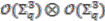 ; observing the relations in Equations (6a) and (6b) it is clear that a basis for
  is given by elements of the form

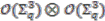 is given by elements of the form
  , where
  . Applying the canonial map gives
 means
means  for simplicity of notation. The next stage is to construct all possible elements in
  which map to . To obtain the identity in the first leg we must use one of the following relations:


 and
and  to be equal. We now construct all possible elements of the domain which map to after applying the canonical map.
 (
(  ); this can be done in fours ways. First, using
  ,
,  ,
,  and
and  . Now,

 cannot be obtained as an element of the image of the canonical map in this case.
 (
(  ); this can be done in four ways
  ,
,  , and
, and  . Now,

 is not a problem provided
  is not equal to
  . This is reviewed at the next stage of the proof. The same conclusion is reached in all four cases.
 appears only when
  , in which case the relation simplifies to
  , so the next stage involves constructing elements in the domain which map to
  . There are eight possibilities altogether to be checked:
  ,
,  ,
,  ,
,  ,
,  ,
,  ,
,  and
and  . The first case gives:

 cannot be obtained as an element in the image in this case. Similar calculations for the remaining possibilities show that either is not in the image of the canonical map, or that if is in the image then
  .
. , using the third relation, could be in the image of the canonical map. All possible elements in the domain which could potentially map to this element are constructed and investigated. There are eight possibilities:
  ,
,  ,
,  ,
,  ,
,  ,
,  ,
,  and
and  . The first possibility comes out as
 , which is contained in
  , is not in the image of the canonical map, proving that this map is not surjective and ultimately not an isomorphism when
  and are both not simultaneously equal to
  , completing the proof that
  is not a principal comodule algebra in this case. as our total space, then we are forced to put to ensure that the required Hopf–Galois condition does not fail. A consequence of this would be the generators
  and
and  would have -degree
  . This suggests that the comodule algebra is too restrictive as there is no freedom with the weights or , and that we should in fact consider a subalgebra of which admits a
  -coaction that would offer some choice. Theorem 4.1 indicates that the desired subalgebra should have generators with grades to ensure the Hopf–Galois condition is satisfied. This process is similar to that followed in [4], where the bundles over the quantum teardrops
  have the total spaces provided by the quantum lens spaces and structure groups provided by the circle group . We follow a similar approach in the sense that we view as a right -comodule algebra, where is the Hopf algebra of a suitable cyclic group.
 4.2. The Negative Case ![Axioms 01 00201 i523]()

4.2.1. The Principal ![Axioms 01 00201 i524]() -Comodule Algebra over
-Comodule Algebra over ![Axioms 01 00201 i381]()
-algebra  which is generated by unitary grouplike element
  and satisfies the relation
  . The algebra is a right
  -comodule -algebra with coaction
 -degree of the generator
  is determined by the degree of
  : the relation
  and that the coaction must be compatible with all relations imply that
  . Since has degree zero, must also have degree zero.given the coaction defined above.
  , generated by
  ,
,  and
and  subject to the following relations
  is central unitary. The embedding of into is given by
  ,
,  and
and  , ,
, ,  and
and  are coinvariant elements of . Apply the coaction to the basis (7) to obtain
 . Hence every coinvariant element is a polynomial in , , and . Equations (20) are now easily derived from Equations (6) and (18). is a right
  -comodule coalgebra with coaction defined as
  must be double the grade of
  since
since  and
and  have degree zero, and so
 of invariant elements under the coaction
  is isomorphic to the
  . -subalgebra of
  of elements which are invariant under the coaction is generated by
  ,
,  and
and  . The isomorphism of
  with
with  is then obtained by using the embedding of in described in Proposition 4.2, i.e.,
  ,
,  and
and  .
. is spanned by elements of the type
  ,
,  , where
  and
and  . Applying the coaction
  to these basis elements gives
  Hence is -invariant if and only if
  . If
. If  is even, then
  is even and
  is odd, then so is and
 is dealt with similarly, thus proving that all coinvariants of are polynomials in
  ,
,  ,
,  and their -conjugates.
  is a non-cleft principal
  -comodule algebra over
  via the coaction . is a principal -comodule algebra over we employ Proposition 2.16 and construct a strong connection form as follows.
 recursively as follows.

 and, for all
  , the deformed or q-binomial coefficients
  are defined by the following polynomial equality in indeterminate
 has been designed such that normalisation property, Equation (1a), is automatically satisfied. To check Equation (1b) for given by Equation (22b) and (22c) takes a bit more work. We use proof by induction, but first have to derive an identity to assist with the calculation. Set
  ,
,  in Equation (23) to arrive at

 . By Equation (24)
  providing the basis. Next, we assume that the relation holds for
  , that is
  , and consider the case
  ,
, 

 , where
  . To show this property holds for each
  we adopt the same strategy; this is omitted from the proof as it does not provide further insight, instead repetition of similar arguments.
 to
to  gives
gives  given by Equation (22b) when . We now assume the property holds for
  , hence
  , and consider the case .
 where . The case for
  is proved in a similar manner, as is Equation (1d). Again, the details are omitted as the process is identical. This completes the proof that
  is a strong connection form, hence
  is a principal comodule algebra.
 . Since
 are scalar multiples of
  for , we can conclude that the only invertible elements in
  are the elements of the form . These elements correspond to the elements
  in
in  , which in turn correspond to
  in
in  .is the cleaving map; to ensure the map is convolution invertible we are forced to put
  . Since
  has degree in
  and
and  has degree
  in , the map fails to preserve the degrees, hence it is not colinear. Therefore,
  is a non-cleft principal comodule algebra.
 4.2.2. Almost Freeness of the Coaction ![Axioms 01 00201 i647]()

 , the algebras
  represent singular manifolds or orbifolds. It is known that every orbifold can be obtained as a quotient of a manifold by an almost free action. The latter means that the action has finite (rather than trivial as in the free case) stabiliser groups. As explained in Section 2, on the algebraic level, freeness is encoded in the bijectivity of the canonical map
  , or, more precisely, in the surjectivity of the lifted canonical map
  (Equation (2)). The surjectivity of means the triviality of the cokernel of , thus the size of the cokernel of can be treated as a measure of the size of the stabiliser groups. This leads to the following notion proposed in [4].be a Hopf algebra and let be a right -comodule algebra with coaction
  . We say that the coaction is almost free if the cokernel of the (lifted) canonical map
  -module.
  defined in the preceding section is free, at the classical limit
 represents a singular manifold or an orbifold. On the other hand, at the same limit, corresponds to a genuine manifold, one of the Seifert three-dimensional non-orientable manifolds; see [17]. It is therefore natural to ask, whether the coaction
  of
of  on which has
  as fixed points is almost free in the sense of Definition 4.5.is almost free.
  , the
, the  -algebra embedding described in Proposition 4.2. One easily checks that the following diagram
 , is commutative. The principality or freeness of proven in Theorem 4.4 implies that
  ,
,  , where
  is the (lifted) canonical map corresponding to coaction . This means that
  . Therefore, there is a short exact sequence of left -modules
  -module
  is finitely generated, hence so is
  .
. 4.2.3. Associated Modules or Sections of Line Bundles
 following the procedure outlined at the end of Section 2.2; see Definition 2.21.
 is determined by the grading of a basis element of , say . More precisely, for any integer
  , is a left -comodule with the coaction
 with we thus obtain, for each coaction

 consists of all elements of of -degree . In particular
  . Each of the is a finitely generated projective left
  -module, i.e., it represents the module of sections of the non-commutative line bundle over
  . The idempotent matrix
  defining can be computed explicitly from a strong connection form (see Equations (22) in the proof of Theorem 4.4) following the procedure described in [11]. Write
  . Then
 and , using Equations (22b) and (22a) as well as redistributing numerical coefficients we obtain
 is not hermitian, the left-upper
  block is hermitian. On the other hand, once
  is completed to the -algebra
  of continuous functions on
  (and then identified with the suitable pullback of two algebras of continuous functions over the quantum real projective space; see [3]), then a hermitian projector can be produced out of by using the Kaplansky formula; see [18, page 88].make up a cycle in the cyclic complex of
  , whose corresponding class in the cyclic homology
  is known as the Chern character of . Again, as an illustration of the usage of an explicit form of a strong connection form, we compute the traces of for general .is the class of the polynomial
  in generator of , given by the following recursive formula. First,
  , and then, for all positive ,

 . By normalisation (22a) of the strong connection , obviously
  . In view of Equation (22b) we obtain the following recursive formula
 could be a polynomial in
  and
and  . However, the third of Equations (20) together with Equation (24) and identification of as yield
  only. As commuting and through a polynomial in in Equation (28) will produce a polynomial in again, we conclude that each of the is a polynomial in . The second of Equations (20), the centrality of and the identification of as
  imply that
4.3. The Positive Case ![Axioms 01 00201 i717]()

4.3.1. The Principal ![Axioms 01 00201 i585]() -Comodule Algebra over
-Comodule Algebra over ![Axioms 01 00201 i417]()
, and proceed by viewing as a right  -comodule algebra, where is a Hopf-algebra of a finite cyclic group. The aim is to construct the total space
  of the bundle over
  as the coinvariant subalgebra of .
  must contain generators
  and
and  of
of  . Suppose
  and
and  is a coaction. We require
  to be compatible with the algebraic relations and to give zero
  -degree to and are zero. These requirements yield
  is odd, the simplest solution to these requirements is provided by
  ,
,  ,
,  ,
,  . This yields the coaction
 (
(  ) is the unitary generator of
  .
.  is extended to the whole of so that is an algebra map, making a right -comodule algebra.is isomorphic to the -algebra generated by
  and central unitary
  subject to the following relations:
 and the coinvariant subalgebra of is given by
  ,
,  and
and  .
.  ,
,  ,
,  and
and  are coinvariant elements of . Apply the coaction to the basis (7) to obtain
 in the first case or
  in the second. Since is odd, must be even and then , hence the invariant elements must be of the form
 is a right -comodule with coaction defined as,
  , however the second relation in Equations (30a) tells us that the grade of
  must be the same as that of
  since,

 and
and  , have degree zero, as do the right had sides,
 is defined setting the grades of
  and
and  as 1, and putting the grade of as
  to ensure the coaction is compatible with the relations of the algebra .-comodule algebra has
  as its subalgebra of coinvariant elements under the coaction . under the coaction are found using the same method as in the odd case. A basis for the algebra is given by
  ,
,  , where
  and
and  .to the first of these basis elements gives,
 is equivalent to
  . Simple substitution and re-arranging gives,
  is a polynomial in
  and
and  . Repeating the process for the second type of basis element gives the -conjugates of and . Using Proposition 4.8 we can see that
  and
and  .
.  case, although
  is a principal comodule algebra it yields trivial principal bundle over
  .
.  -comodule algebra is trivial.
 is central unitary in
  , hence must be convolution invertible. Also,
  is a right -comodule map since,
 is a trivial principal comodule algebra, all associated -modules are free.
 4.3.2. Almost Freeness of the Coaction ![Axioms 01 00201 i793]()
, the principality of can be used to determine that the -coaction  on that defines
  is almost free.is almost free.
  the -algebra embedding described in Proposition 4.8. One easily checks that the following diagram
 is commutative. By the arguments analogous to those in the proof of Proposition 4.6 one concludes that there is a short exact sequence of left -modules
  is the lifted canonical map corresponding to coaction . The left -module
  is finitely generated, hence so is .
 5. Conclusions
-coactions on the coordinate algebra of the quantum Seifert manifold weighted by coprime integers and . We concluded that the coaction is principal if and only if  , which corresponds to the case of a -bundle over the quantum real projective plane. In all other cases the coactions are almost free. We identified subalgebras of
  which admit principal -coactions, whose invariants are isomorphic to coordinate algebras
  of quantum real weighted projective spaces. The structure of these subalgebras depends on the parity of . For the odd case, the constructed principal comodule algebra is non-trivial, while for the even case, the corresponding principal comodule algebra turns out to be trivial. The triviality of
  is a disappointment. Whether a different nontrivial principal -comodule algebra over
  can be constructed or whether such a possibility is ruled out by deeper geometric, topological or algebraic reasons remains to be seen.
 References
- Soibel’man, Y.S.; Vaksman, L.L. Algebra of functions on the quantum group SU(n + 1), and odd-dimensional quantum spheres. Algebra i Analiz 1990, 2, 101–120. [Google Scholar]
- Brzeziński, T.; Zieliński, B. Quantum principal bundles over quantum real projective spaces. J. Geom. Phys. 2012, 62, 1097–1107. [Google Scholar] [CrossRef]
- Brzeziński, T. Circle actions on a quantum Seifert manifold. In Proceedings of the Corfu Summer Institute 2011 School and Workshops on Elementary Particle Physics and Gravity, Corfu, Greece, 4-18 September 2011.
- Brzeziński, T.; Fairfax, S.A. Quantum teardrops. Comm. Math. Phys. in press.
- Beggs, E.J.; Brzeziński, T. Line bundles and the Thom construction in noncommutative geometry. J. Noncommut. Geom. in press.
- Baum, P.F.; Hajac, P.M.; Matthes, R.; Szymański, W. Noncommutative geometry approach to principal and associated bundles. 2007,arXiv:math/0701033. Available online: http://arxiv.org/abs/math/0701033 (accessed on 10 September 2012).
- Brzeziński, T.; Majid, S. Quantum group gauge theory on quantum spaces. Comm. Math. Phys. 1993, 157, 591–638. [Google Scholar] [CrossRef]
- Schneider, H.-J. Principal homogeneous spaces for arbitrary Hopf algebras. Israel J. Math. 1990, 72, 167–195. [Google Scholar] [CrossRef]
- Hajac, P.M. Strong connections on quantum principal bundles. Comm. Math. Phys. 1996, 182, 579–617. [Google Scholar] [CrossRef]
- Woronowicz, S.L. Compact matrix pseudogroups. Comm. Math. Phys. 1987, 111, 613–665. [Google Scholar] [CrossRef]
- Brzeziński, T.; Hajac, P.M. The Chern-Galois character. Comptes Rendus Math. (Acad. Sci. Paris Ser. I) 2004, 338, 113–116. [Google Scholar]
- Dąbrowski, L.; Grosse, H.; Hajac, P.M. Strong connections and Chern-Connes pairing in the Hopf–Galois theory. Comm. Math. Phys. 2001, 220, 301–331. [Google Scholar] [CrossRef]
- Beggs, E.J.; Brzeziński, T. An explicit formula for a strong connection. Appl. Categor. Str. 2008, 16, 57–63. [Google Scholar] [CrossRef]
- Hajac, P.M.; Matthes, R.; Szymański, W. Quantum real projective space, disc and spheres. Algebr. Represent. Theory 2003, 6, 169–192. [Google Scholar] [CrossRef]
- Klimek, S.; Leśniewski, A. A two-parameter quantum deformation of the unit disc. J. Funct. Anal. 1993, 115, 1–23. [Google Scholar] [CrossRef]
- Hong, J.H.; Szymański, W. Quantum spheres and projective spaces as graph algebras. Comm. Math. Phys. 2002, 232, 157–188. [Google Scholar] [CrossRef]
- Scott, P. The geometries of 3-manifolds. Bull. Lond. Math. Soc. 1983, 15, 401–487. [Google Scholar] [CrossRef]
- Gracia-Bondia, J.M.; Várilly, J.C.; Figueroa, H. Elements of Noncommutative Geometry; Birkhäusäer: Boston, MA, USA, 2001. [Google Scholar]
© 2012 by the authors; licensee MDPI, Basel, Switzerland. This article is an open access article distributed under the terms and conditions of the Creative Commons Attribution license (http://creativecommons.org/licenses/by/3.0/).
Share and Cite
Brzeziński, T.; Fairfax, S.A. Bundles over Quantum RealWeighted Projective Spaces. Axioms 2012, 1, 201-225. https://doi.org/10.3390/axioms1020201
Brzeziński T, Fairfax SA. Bundles over Quantum RealWeighted Projective Spaces. Axioms. 2012; 1(2):201-225. https://doi.org/10.3390/axioms1020201
Chicago/Turabian StyleBrzeziński, Tomasz, and Simon A. Fairfax. 2012. "Bundles over Quantum RealWeighted Projective Spaces" Axioms 1, no. 2: 201-225. https://doi.org/10.3390/axioms1020201
APA StyleBrzeziński, T., & Fairfax, S. A. (2012). Bundles over Quantum RealWeighted Projective Spaces. Axioms, 1(2), 201-225. https://doi.org/10.3390/axioms1020201
