Next Article in Journal
Big Data and AI in Geoscience: From Data to Discovery—A Thematic Overview
Previous Article in Journal
Mineralogy and Geochemistry of the Xiaotunxiang Fluorite Deposit in Guizhou Province, SW China, and Their Geological Significance
Previous Article in Special Issue
Machine Learning-Based Prediction of Boron Desorption in Acidic Tea-Growing Soils
 
 
Due to scheduled maintenance work on our servers, there may be short service disruptions on this website between 11:00 and 12:00 CEST on March 28th.
Article

Data-Fusion MCR-ALS of IHSS Humic Substances: Quantitative Integration of 13C NMR, Elemental, and Acidic Characteristics into Endmember Compositional Motifs for Molecular Modeling

1
Institute of Soil, Water and Environmental Sciences, Agricultural Research Organization-Volcani Institute, P.O. Box 15159, Rishon LeZion 7505101, Israel
2
Interdisciplinary Center for Chemistry and Biology (CICA), Department of Physics and Earth Sciences, Faculty of Sciences, University of A Coruña, As Carballeiras, s/n, Campus Elviña, 15071 A Coruña, Spain
*
Author to whom correspondence should be addressed.
Minerals 2026, 16(3), 228; https://doi.org/10.3390/min16030228
Submission received: 19 January 2026 / Revised: 11 February 2026 / Accepted: 22 February 2026 / Published: 25 February 2026
(This article belongs to the Special Issue Clays in Soil Science and Soil Chemistry)

Abstract

Realistic atomistic modeling of mineral and soil systems requires chemically meaningful representations of organic matter (OM). Bulk 13C nuclear magnetic resonance (NMR) data have been proposed as compositional inputs for stochastic generation of OM structures, and prior studies using nonnegative multivariate curve resolution (MCR) suggested that bulk 13C NMR spectra of OM may be represented as mixtures of only a few components. However, these studies typically relied on single-block decompositions and did not explicitly assess decomposition uniqueness. The objective of this work was to examine whether a quantitative and chemically interpretable nonnegative MCR decomposition of OM can be obtained while explicitly evaluating (1) residual rotational ambiguity controlling the uniqueness of components, and (2) the variance captured by the decomposition. Using a dataset of International Humic Substances Society (IHSS) humic acids, fulvic acids, and aquatic OM, we applied single- and multi-block nonnegative MCR–alternating least squares (ALS) analyses integrating 13C NMR spectra, elemental composition (C, H, O, N, S), and titratable carboxylic and phenolic group contents. The multi-block approach effectively narrowed the feasible solution space and enriched the chemical characterization of the resulting MCR components. Across all analytical blocks, two chemically distinct components, an aromatic-rich and an aliphatic-rich motifs, consistently emerged, together explaining ~97–98% of the total variance and exhibiting near-zero residual rotational ambiguity. These findings support that diverse OM types can be represented quantitatively as mixtures of a small set of unique recurring compositional motifs. These motifs serve as ensemble-level averages whose underlying molecular diversity may vary substantially across materials. They provide quantitative, chemically justified inputs for molecular modeling of mineral–OM systems, which could contribute to chemical interpretability of modeling and provide better mechanistic insights into OM variation across diverse sample series.

1. Introduction

Atomistic modeling and simulations of clay minerals, metal oxides and systems mimicking soils and soil components have become a widely recognized tool for elucidating their properties on a microscopic level, including mechanisms and strengths of interactions with water solvent, organic and inorganic molecules, ions, pollutants and nutrients [1,2,3,4,5,6,7,8,9,10]. The modeling of mineral phases and surfaces in real-life scenarios may require considering the presence of organic matter (OM), either natural or anthropogenically modified, which is ubiquitous in various environmental and engineered compartments including soils, sediments, rocks, water bodies, and atmosphere. The effects of OM on mineral surface properties and reactivities may be profound. Therefore, OM adsorption on mineral surfaces reduces their interfacial energy, thus affecting relationships between mineral dissolution, nucleation, and growth, and may lead to chemical reactions where minerals serve as catalysts and/or reactants [11]. Complex flocculation–dispersion behavior of clay minerals may be affected by the presence of OM (humic substances), weakening clay face-to-edge interactions [12], and, as a consequence, OM may assist in the dispersion of clay minerals while reducing swelling [13]. OM composition and spatial orientation may both increase and decrease the wettability of OM–mineral surfaces [14]. It may affect water vapor adsorption, making minerals less hydrophilic [15] or, in contrast, increasing soil water vapor sorption and modifying sorption–desorption hysteresis via adsorbed cations and organic functional groups [16]. In soils, OM is a competitor with other species for sorption sites on mineral surfaces (e.g., with phosphates, [17]), or it can provide a new major, dominating domain for the partitioning of non-ionized organic molecules from water [18]. It must be noted also that mineral–OM interactions are of great interest, since they are considered fundamental for OM stabilization, preventing its further degradation and contributing to carbon (C) storage [11,19].
Natural and anthropogenically modified OM is chemically very complex; even when characterizing its water-soluble fraction, ultrahigh resolution Fourier-transform ion cyclotron mass spectra show many thousands of molecular formulas, not structures [20,21]. Hertkorn et al. [20] emphasized that even for such heteroatom-poor aquatic OM as the Suwannee River fulvic acid, there are hundreds of thousands of C environments behind several thousands of molecular formulas, and even more when accounting for isomers, thus implying an immense structural diversity. Given such complexity, one meaningful strategy to create models for incorporating into atomistic simulations would be the stochastic generation of multiple OM structures obtained by connecting chemically reasonable molecular building blocks, constrained by elemental and compositional criteria; this approach has been implemented in the Vienna Soil Organic Matter Modeller (VSOMM) [22]. In VSOMM, the 13C nuclear magnetic resonance (NMR)-based distribution of different C types serves as a compositional constraint, together with C and nitrogen (N) contents, a controlled pH, and a specific counterion. Many chemically different molecules are generated to satisfy each sample-specific 13C NMR distribution.
However, when considering a series of different OM samples, the bulk 13C NMR spectra of each sample used in VSOMM as a compositional input could be the result of combining a few independent compositional motifs mixed in different proportions across the series [23,24]. In other words, the chemical variation across a series of OM samples may be governed not by unlimited molecular diversity but by mixtures of a few persistent compositional entities. Identifying such shared compositional entities could change the modeling philosophy: instead of being sample-specific, modeling could be focused on these basic compositional motifs, and samples could be reconstructed by their mixing in appropriate proportions. This could increase chemical interpretability of the modeled components, their consistency across the samples, and enhance the mechanistic relevance of the modeled structures when analyzing their interactions with mineral surfaces, as well as provide a better mechanistic insight into OM variation across soils, horizons, and treatments.
The task of identifying chemically meaningful independent spectral components in 13C NMR spectra fits well with the family of nonnegative multivariate curve resolution (MCR) methods [25,26], which perform a bilinear decomposition of spectral datasets into component scores (“concentrations”) and loadings (“spectra”). The nonnegative MCR could be considered as a kind of unsupervised “mathematical chromatography” [27] of the bulk 13C NMR spectra, which can be separated into the contributions of different components without knowing in advance their number or spectra [28,29]. It is also worth mentioning that principal component analysis (PCA), commonly used for multivariate data analysis (and also for the examination of 13C NMR data of humic substances, [30,31]), albeit being a powerful tool for data classification, cannot decompose the data into contributions of chemically meaningful components due to the unconstrained nature of the loadings, where the negative values are allowed, and thus it cannot provide the actual spectra and concentration scores of basic contributors [28].
Classic (single-block) nonnegative MCR was applied previously to the 13C NMR spectra of complex soil OM samples, mostly humic acid (HA) fractions, and examples can be found in the literature. Therefore, nonnegative MCR of the 13C NMR data was performed for soil HA [23,24,32,33,34,35]; HA from tropical soils under accumulation of the herbicide oxyfluorfen [36], after pig slurry amendment [37], and with different pedogenesis degrees [38]; base-extracted humic substances (not differentiated into HA and fulvic—FA—acids) from vermicompost and peat [39]; and HA from poultry litter compost [40]. The same MCR components were suggested to be mixed in different proportions in diverse OM samples, regardless of their source of origin, soil type, and environment [23,24,35].
A recognized issue of the MCR analysis is that the decomposition may not be unique due to rotational ambiguities even when nonnegativity constraints are introduced for the component’s spectra and scores [25,26,28]. However, the uniqueness of nonnegative MCR decompositions is a necessary condition for the components to represent chemically meaningful entities. The failure to explore rotational ambiguities in MCR questions the uniqueness of its decomposition and reduces the components to mathematical constructs rather than chemical realities. While earlier published studies made important contributions into the MCR-based decomposition of 13C NMR spectra of OM samples, important aspects are missing or not clarified: (i) the extent of remaining rotational ambiguities, which questions the uniqueness of extracted MCR components; and (ii) the amount of data variance accounted for in the decomposition, i.e., to what extent the components extracted by the decomposition of spectra explained the differences in OM composition of the studied samples. For example, while three PCA components explained 85% of the total variance in the 13C NMR data of 100 HA, only two MCR components were proposed, and neither the remaining rotational ambiguity nor the ability of resolved components to represent the experimental data was reported [35]. Similarly, in a study comprising eighty HA spectra [24], only two MCR components were selected to represent the experimental data, although two (of the three examined) PCA components accounted for only 51% of the total variance. Hence, there is a need to provide further support for the unique decomposition of 13C NMR spectra of OM samples such that the obtained MCR components could be considered as a valid quantitative input when modeling realistic OM systems.
Therefore, the major goal of this work was to examine whether a quantitative nonnegative MCR decomposition of 13C NMR data of OM can be obtained while providing MCR components with minimal rotational ambiguity. The important points about the dataset analyzed in this work are: (i) it was taken from the sample characterization provided by the International Humic Substances Society (IHSS); the IHSS samples and their descriptions are widely used as references in soil, environmental, and OM research; and (ii) it included HA, FA, and aquatic OM. The novelty and principal contribution of this work is the attempt to expand the traditional single-block nonnegative MCR analysis of 13C NMR data of OM by adding additional compositional constraints and performing multi-block decomposition. Such multi-block decomposition was hardly used in earlier MCR studies of OM 13C NMR data and involves the simultaneous nonnegative MCR analysis of the 13C NMR-based composition, the elemental composition associated with the presence of C, N, hydrogen (H), oxygen (O), and sulfur (S) atoms, and the contents of acidic, carboxylic and phenolic, groups. Adding more diverse experimental data into the nonnegative MCR analysis not only reduces the feasible chemical space but also helps to characterize the obtained components with additional properties, shedding light on their chemical nature and features. Thus, such data fusion was supposed to provide further support for the identification of the unique MCR components controlling 13C NMR-based composition of OM samples that could be used in molecular modeling simulations of soils and minerals in realistic scenarios.

2. Data Sources and Methods

2.1. Data Source

The 13C NMR-based estimates of distributions of different types of C for various OM samples and their batches, the contents of C, H, O, N, and S elements, and of titratable acidic (carboxylic and phenolic) groups were obtained from the IHSS site [41]. The 13C NMR-based distributions are based on integrated peak area percentages for specific ranges of chemical shifts and provide, therefore, chemically informed representations of the full spectra. The elemental contents provided in % (w/w) of a dry, ash-free sample were converted to the elemental mass ratios per C. The maximum charge densities (reported at the IHSS site in meq per g of C) of two types of proton binding sites originally obtained from fitting of titration curves served as the measures for the contents of the carboxylic and phenolic functional groups. The examined samples included HA, FA and aquatic OM, defined by the IHSS criteria as “standard” materials and “references”.
The selection of specific chemical properties, in addition to the 13C NMR-based distributions, was dictated by the number of samples characterized, the availability of numerical data, and the accessible details of experimental protocols.

2.2. Non-Negative MCR Analysis

A nonnegative MCR analysis of the dataset was performed with the MCR-ALS GUI (Graphical User Interface) 2.0 toolbox for MATLAB R2023a, where ALS refers to an alternating least squares algorithm [42]. Initially, the number of MCR components was set at two, and later it was changed sequentially to larger values. The “purest variable” detection method and fast nonnegative least squares algorithm were applied as described in Jaumot et al. [42].
The single-block nonnegative MCR-ALS analysis of 13C NMR data alone involved 24 IHSS OM samples. Six types of C were reported for these samples in the integrated 13C NMR data, and thus, the data input matrix included twenty-four rows and six columns. Nonnegativity constraints were applied in the MCR-ALS analysis to the spectra of components and their fractions in a mixture. In addition, the closure condition was applied to the MCR components, requiring that the sum of their fractions equals 1, such that the 13C NMR-based distribution of C types identified for each component should sum up to 100%. The iteration during the MCR-ALS fitting continued until the change in percentage of standard deviation of residuals between two successive iterations was less than 0.001. The stability of the decomposition was confirmed by performing multiple independent fits.
A MCR-BAND analysis, within the MCR-ALS GUI, was used to assess the degree of uniqueness of the MCR-ALS solution by quantifying the extent of feasible rotational ambiguities [43,44], using the same constraints as in the MCR-ALS fitting. The MCR-BAND method examines the differences (Δf) between the minimal and maximal relative contributions of a certain component into the spectrum recorded for a mixture of a number of components [43]. When these differences tend to zero, it suggests that there is no remaining rotational ambiguity. The results of the MCR-BAND analysis may numerically differ for each component; hence, if at least one of them showed significant remaining rotational ambiguity, i.e., Δf substantially differing from zero, the whole decomposition was considered as providing a non-unique solution. Typically, the Δf value in the nonnegative MCR-ALS analyses considered to provide unique solutions was less than 10−4. The explained variance was provided by the MCR-ALS GUI and defined as [1 − (Lof/100)2] [45], where Lof is the fitting error (lack-of-fit, in %), that was used to quantify the extent of fitting. At the end of the nonnegative MCR-ALS decomposition, the 13C NMR-based distribution of C types was obtained for each component, as well as its C fraction in the mixture.
Estimates of distributions of different C types in the above-mentioned 24 IHSS OM samples were obtained at differing conditions, i.e., 13 samples were characterized using solid-state 13C NMR and 11 samples with solution 13C NMR [41]. Hence, the single-block nonnegative MCR-ALS analyses were also performed for these separate subsets (i.e., 13 and 11 samples) to test the possible significance of different types of NMR measurements.
For multi-block MCR-ALS decomposition, it was only possible to include 14 samples, characterized by 13C NMR data, 4 elemental ratios and/or carboxylic and phenolic groups contents. Hence, for the combined two-block analysis of 13C NMR distribution data and carboxylic and phenolic groups contents, the input matrix contained 14 rows (samples) and 8 columns representing six C types (the first block) and two types of acidic groups (the second block). The carboxylic and phenolic group contents used were in the same format as reported, i.e., in meq per g of C.
For the three-block analysis, when the elemental ratios were added to the input matrix, the input dataset contained 14 rows (samples) and 12 columns referring to six C types (the first block), 2 types of acidic groups (the second block), and 4 types of elemental ratios (the third block). The elemental ratios were included as elemental mass ratios per C mass. In the multi-block analysis, when the same set of samples is characterized by different methods (e.g., 13C NMR-based distributions of C, elemental contents ratios and the contents of acidic groups), a single set of concentration (fraction) profiles of components across the samples is obtained, and each component is characterized by its own distinct response (‘spectrum’) in every instrumental technique [42].
To balance the MCR-ALS solution and to avoid dominance by data blocks with larger variance or more variables, the Frobenius norm, which is the square root of the sum of the squares of all elements in a data matrix (block), was used to scale each block in the dataset [46]. In addition, due to substantial differences in magnitude among the various types of elemental ratios, non-centered Pareto scaling was applied for each type of elemental ratio, i.e., a ratio value was divided by the square root of its standard deviation [47,48], before applying the Frobenius norm for balancing blocks. All the other details of the nonnegative MCR-ALS decomposition in the multi-block analysis corresponded to those described above for single-block decomposition. Statistica 7.0 StatSoft Inc. (Tulsa, OK, USA) was used to obtain the Box and Whisker plot and perform the regression line calculations.

3. Results

3.1. Single-Block Nonnegative MCR-ALS Decomposition of 13C NMR Data

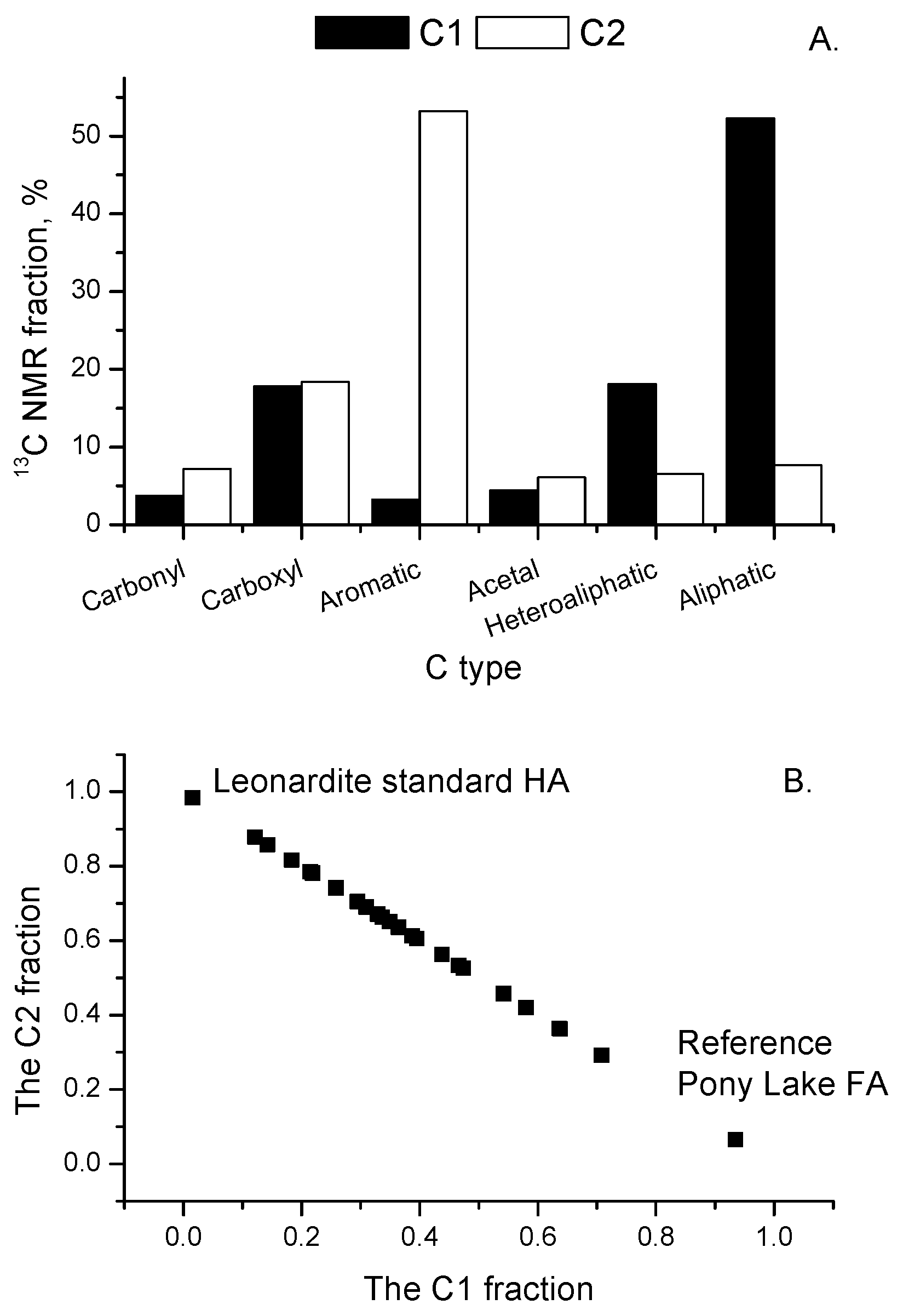
Two components proposed to represent the 13C NMR distribution for 24 IHSS samples accounted for 97.7% of the variance. Figure 1A presents the distributions of different C types for both MCR components. The extent of the remaining rotational ambiguity did not exceed 3 × 10⁻⁵ for both components, essentially indicating the lack of it. When an additional component was introduced into the fitting, the variance accounted for was 99.0%; however, one of those components showed a remaining rotational ambiguity Δf of 0.044, which was sharply increased by more than three orders of magnitude from what was found in the two-component model.
Figure 1B shows the fractions of the two nonnegative MCR components (C2 and C1) in the two-component model, calculated as the share of C associated with each component relative to the total sample C; this representation illustrates the relative presence of C1 and C2 in the series. The points are aligned in a straight line, where the point density distribution describes the variation in composition among samples, showing two extreme cases: a reference Pony Lake FA enriched in component C1, and the Leonardite standard HA, most depleted of that component. Thus, two MCR components essentially lacking rotational ambiguity provide a highly sufficient representation of the 13C NMR distribution over the different C types for the 24 IHSS samples. Table 1 provides the 13C NMR-based distribution of different C types for two nonnegative MCR-ALS-identified components in 24 IHSS samples.
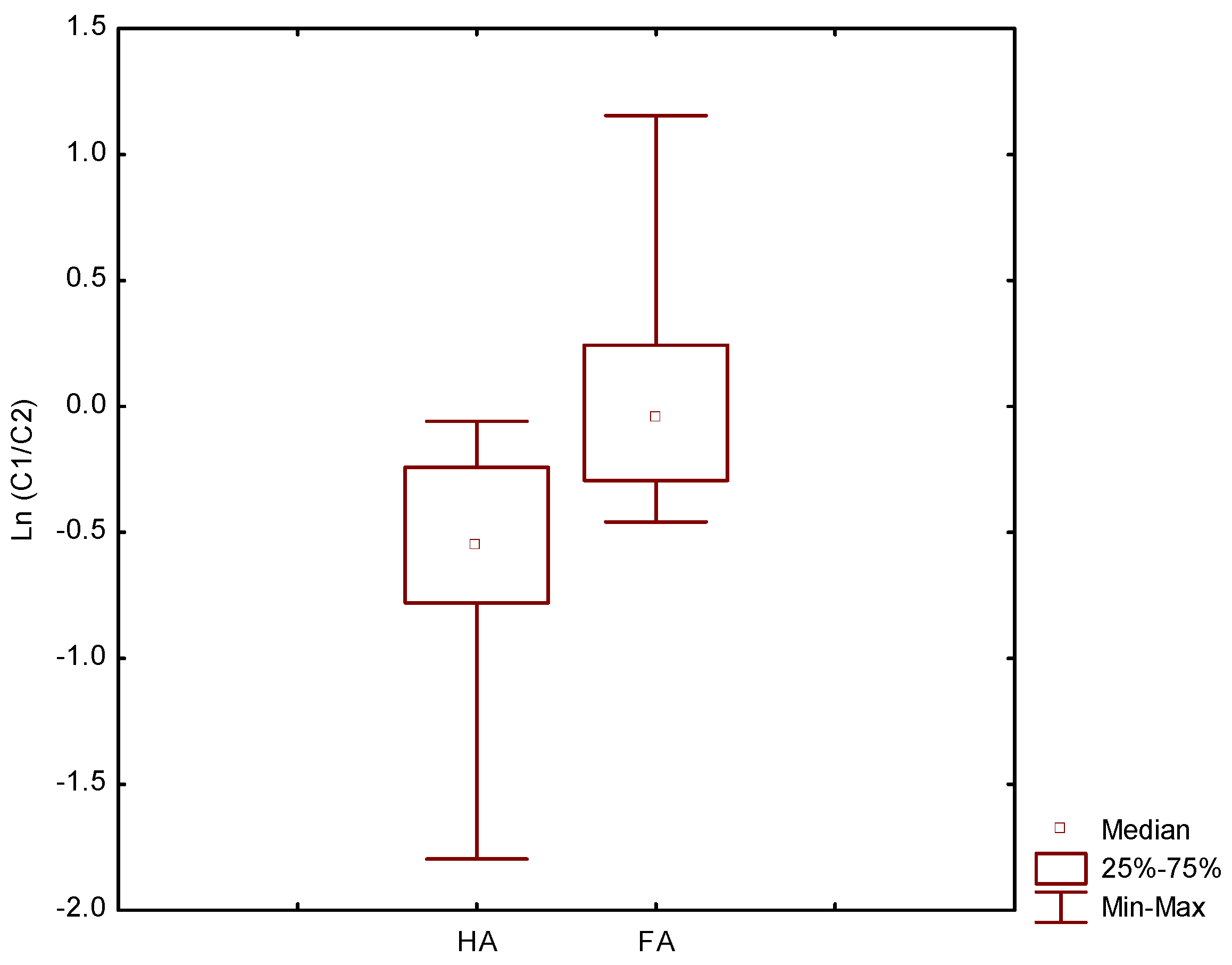
Figure 2 shows that, although all 24 samples are formed by mixing the same nonnegative MCR components, there are clear differences in the ratios of both components between samples described as HA and FA (combined with aquatic OM), which involve elevated fractions of C1, enriched in aliphatic and hetero-aliphatic C, in the FA samples.

3.2. Two-Block Nonnegative MCR-ALS Decomposition of 13C NMR Data Augmented with Acidic Groups Content Data

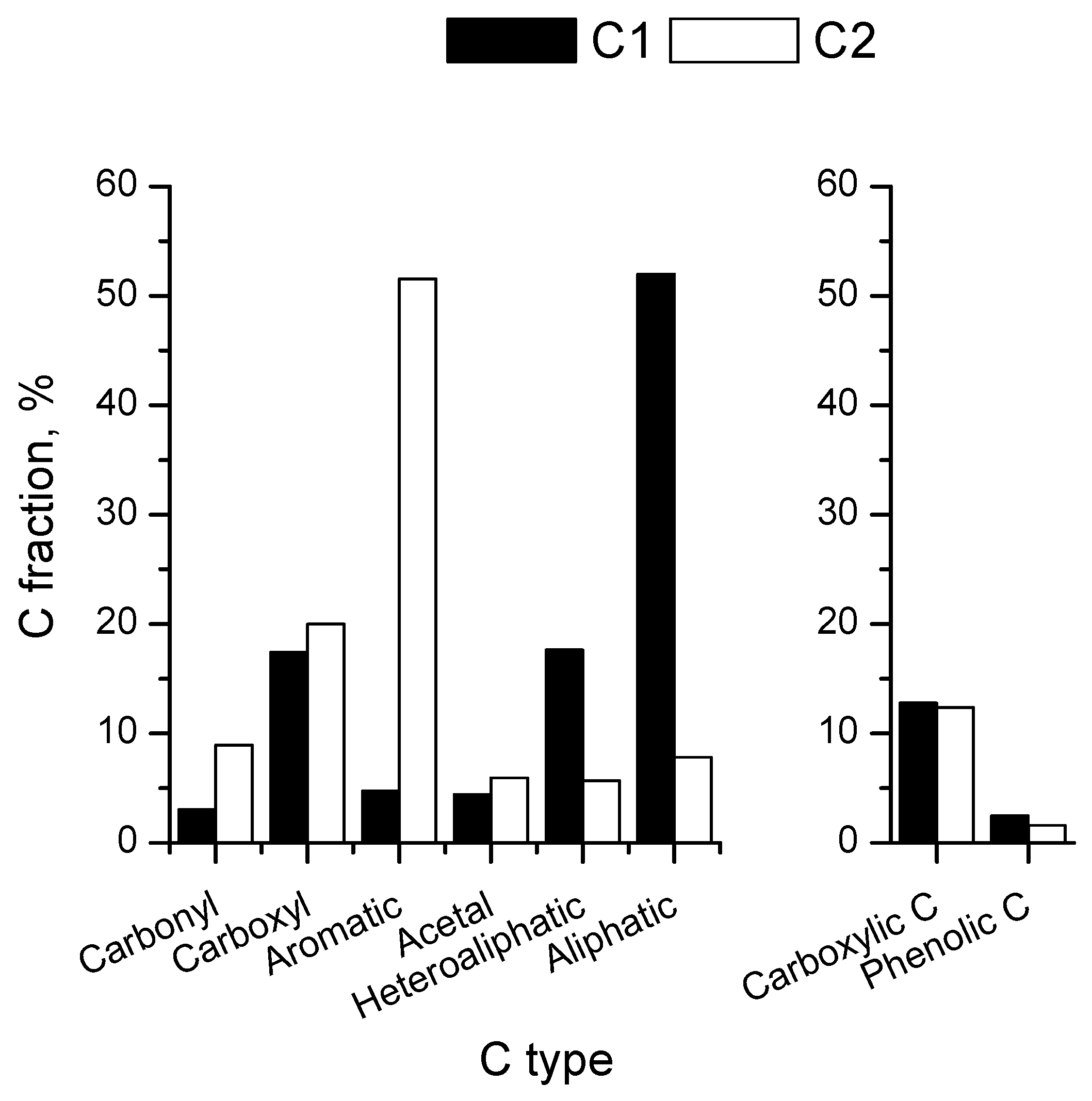
The two-block MCR-ALS decomposition included the 13C NMR fractions and the carboxylic and phenolic groups contents of 14 samples (since there were 10 samples in the initial single-block analyzed database that lacked information on the contents of acidic groups). Two MCR components accounted for 96.8% of the whole variance associated with the two-block data, having minimal residual rotational ambiguity (Δf = 3 × 10⁻⁵). The two-component solution is presented in Figure 3 and shows, for each component, the 13C NMR-based distribution of different C types (the left panel) and the fractions of C atoms in acidic groups, i.e., either in carboxylic groups or linked with phenolic hydroxyl (the right panel). The latter were calculated by direct conversion of the contents of carboxylic and phenolic groups (in meq per g of C) computed for each component by the MCR model to the fractions of C present in carboxylic groups or linked with phenolic hydroxyl of the whole C of a given component. This conversion considers that each carboxylic group contains one C atom, and each phenolic group is related to one C atom.
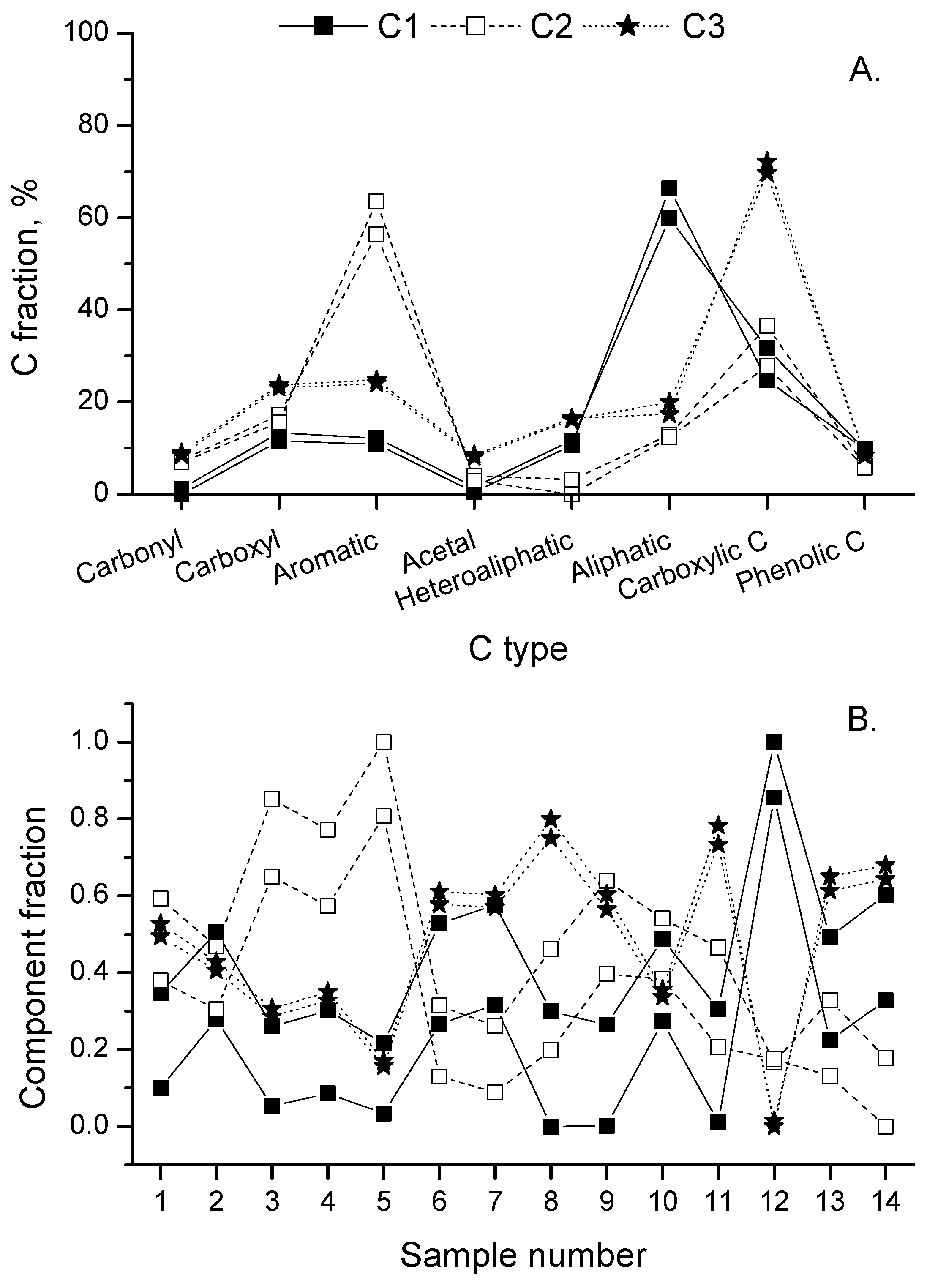
Adding a third component led to a non-unique solution expressed in significant rotational ambiguity (Δf = 0.18). This is illustrated in Figure 4, where boundaries for C-type fractions associated with 13C NMR data and contents of acidic groups are provided, as well as the boundaries for component fractions in a mixture, for all the studied samples. Note that the size of the intervals between boundaries, revealing a multiplicity of solutions, may be relatively narrow for fractions of some C types (Figure 4A), but at the same time, they can be very substantial, on a relative scale, for component fractions in certain samples, e.g., in the case of components C1 and C2 in most samples (Figure 4B).
Depending on the component and the sample, the width between the BAND-derived boundaries (e.g., in Figure 4B) reflects the existence of multiple solutions that satisfy both the experimental data and the imposed constraints. A further increase in the number of components led to even greater rotational ambiguity, expressed as Δf = 0.24 for a four-component model.

3.3. Three-Block Nonnegative MCR-ALS Decomposition of 13C NMR Data Augmented with Acidic Groups and Elemental Ratios

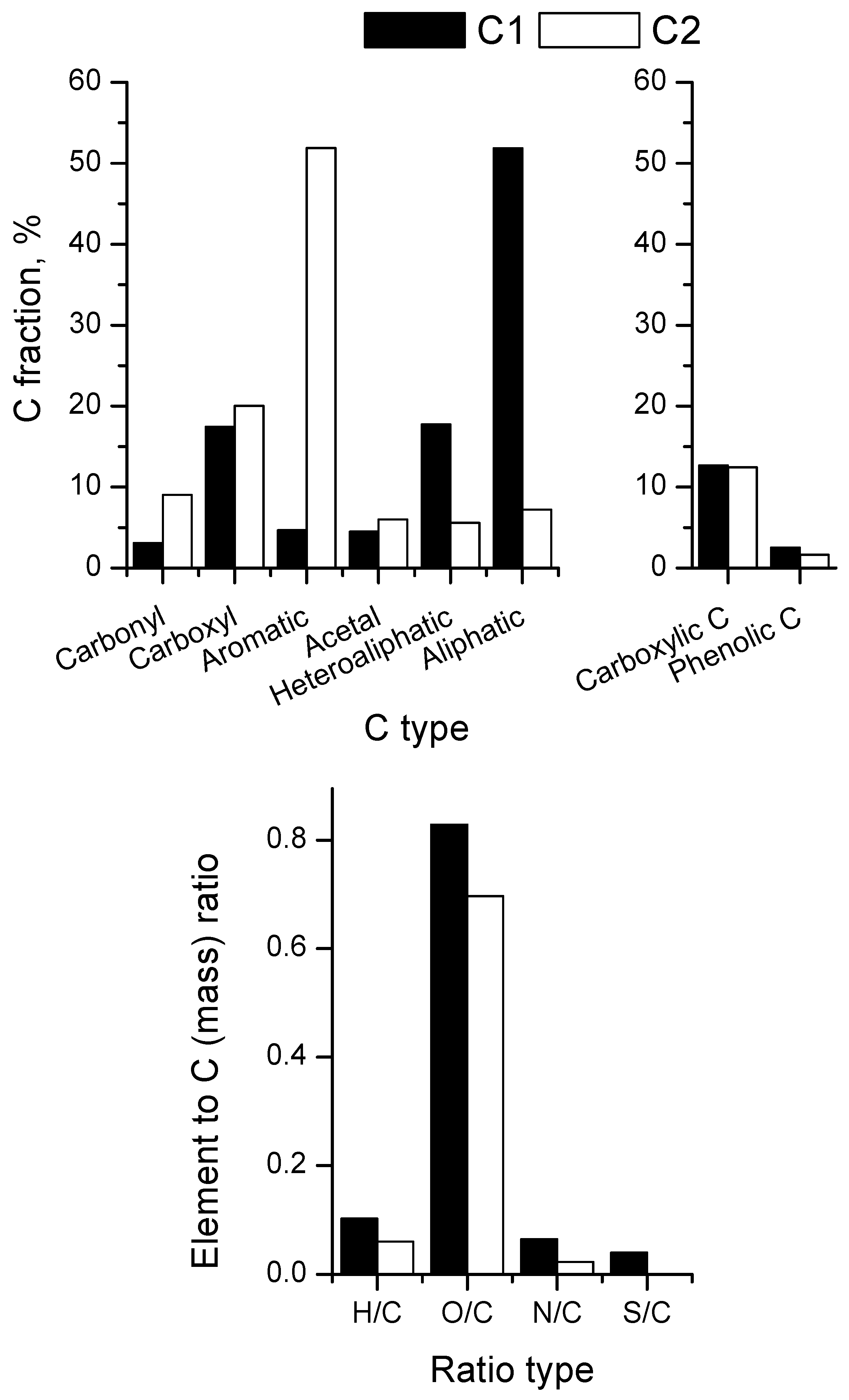
The dataset with 13C NMR fractions and contents of carboxylic and phenolic groups for 14 samples was further increased by the addition of H, O, N and S to C mass ratios and then subjected to a three-block MCR analysis. In this case, a two-component model accounted for 96.9% of the whole variance, with a residual rotational ambiguity expressed in Δf = 1.6 × 10⁻⁵, thus suggesting a unique solution. Adding a third component increases Δf to 0.09. The results of the two-component nonnegative MCR modeling are shown in Figure 5, characterizing the attributes of both components. Also, for each component, Table 1 provides the numerical data of the 13C NMR-based distribution of C types, the fractions of C present in carboxylic groups or linked to phenolic groups (in % of the total organic C), and the elemental ratios. As above, these fractions of C in carboxylic groups or linked to phenolic groups were obtained from the contents of carboxylic and phenolic groups (in meq per g of C) determined for each component during the nonnegative MCR-ALS decomposition.

4. Discussion

Two OM components successfully accounted for >97% of the variance in the data used in all three types of nonnegative MCR-ALS analyses (Figure 1, Figure 3 and Figure 5). One component, C1 is enriched in aliphatic C (around 52%) and relatively depleted of aromatic C (4%–5%), whereas C2 is rich in aromatic C, with a content exceeding 50% and only 7%–8% of aliphatic C (Table 1). García et al. [35] termed the two components arising from the MCR analysis of 13C NMR of 100 HAs as hydrophilic and hydrophobic ones. The “hydrophobic component” of García et al. [35] seemed to be enriched both in aromatic and non-polar aliphatic moieties. In contrast, both MCR components identified in the present study are similarly hydrophilic, in terms of contents of acidic titratable groups, i.e., carboxylic and phenolic (Figure 5, Table 1).
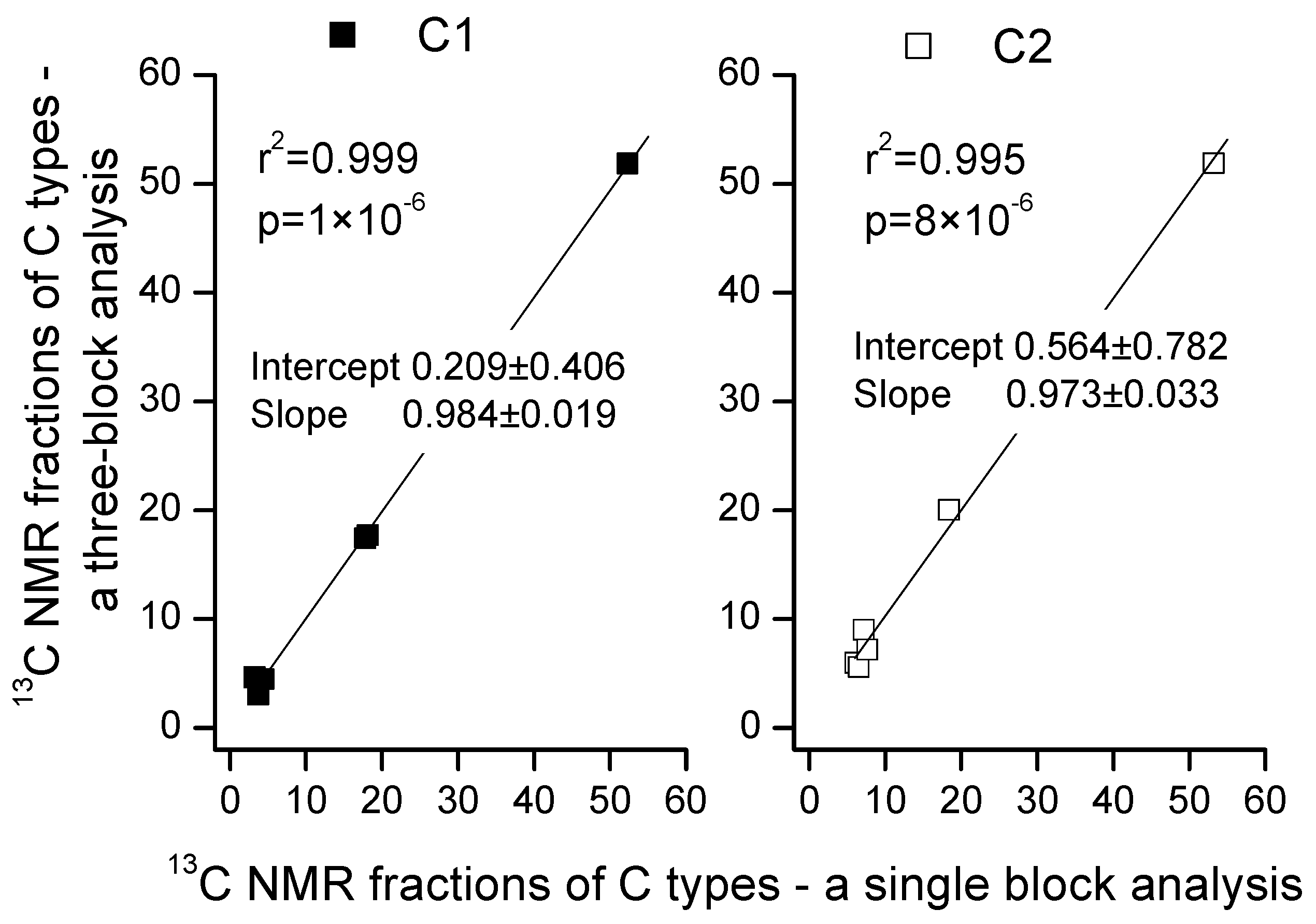
The 13C NMR distribution of C types in these components did not vary strongly, even when additional information, in terms of data blocks, was introduced into the analysis. Figure 6 examines the relations between 13C NMR-determined fractions of C types in a three-block analysis and those in the single-block analysis for each component. The linear regressions were found to have slopes and intercepts that do not differ statistically significantly from one and zero, respectively, thus supporting the robustness of the characterization of each component in terms of 13C NMR distribution of C types. The enrichment of FA samples (examined with aquatic OM) in C1, characterized by aliphatic and hetero-aliphatic C (Figure 2) is in line with earlier studies indicating a rather aliphatic character of FA compared to HA [49,50,51] (and many others).
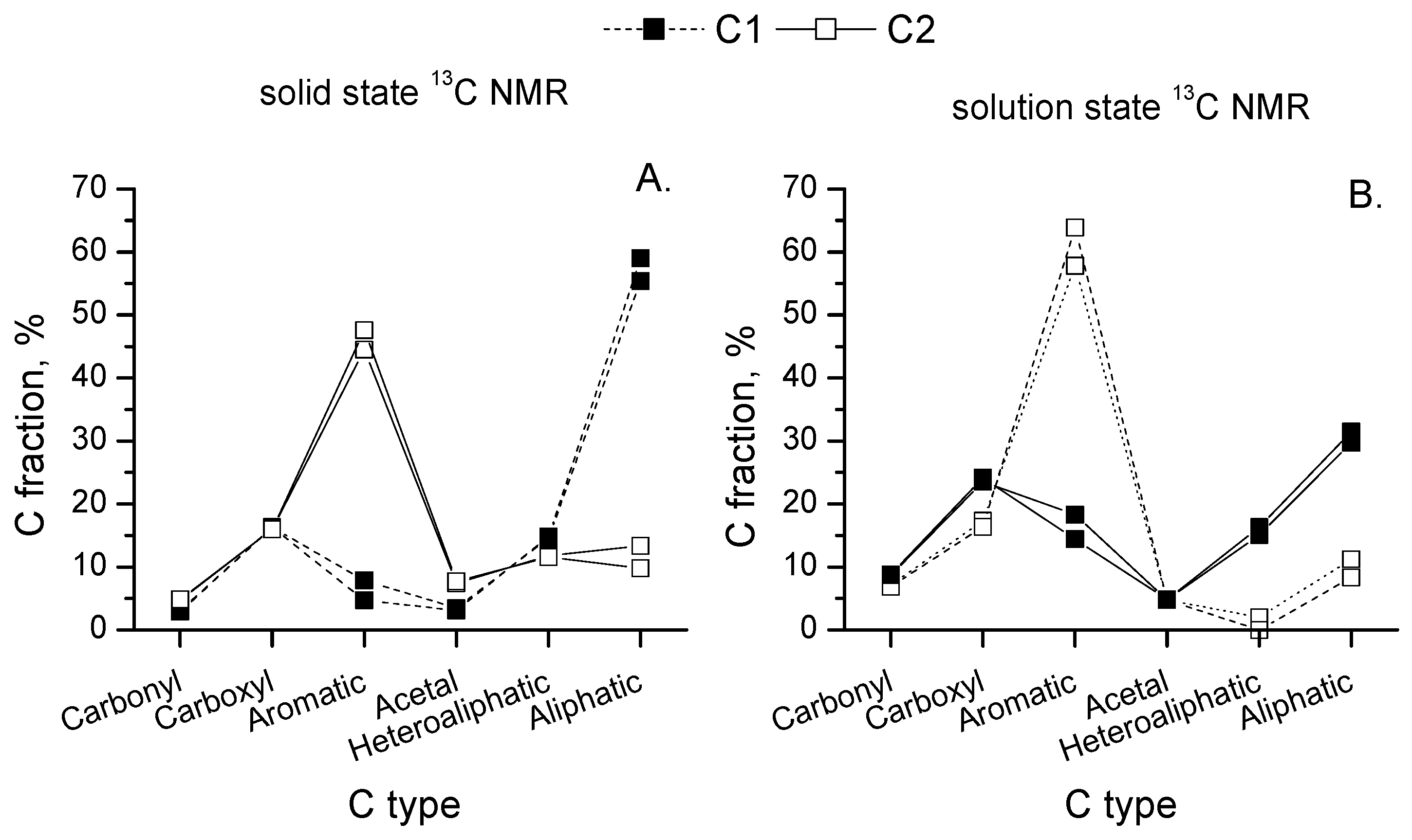
It might be argued that IHSS OM samples examined include two different subgroups of the data, i.e., those obtained by solid-state vs. solution-state 13C NMR [41]. The separate single-block nonnegative MCR-ALS decompositions of these two subgroups of data, obtained by different 13C NMR acquisitions, and based on 13 and 11 samples, showed that two-component models explained variance to a great extent, i.e., 98.4% and 98.8%, for solid-state and solution-state data, respectively. However, the decompositions were distinctly non-unique even with two components, with Δf values of 0.11 and 0.08, for solid-state and solution-state measurements, respectively. Nevertheless, it is illustrative to compare, for each data subgroup, the 13C NMR distributions of C types between two components within the upper and lower component-specific boundaries (Figure 7).
It is obvious from Figure 7A that, when the solid-state 13C NMR data of 13 IHSS OM samples were decomposed into contributions from two components, the resulting component C1 is essentially enriched in aliphatic C and depleted in aromatic C, compared to C2, in great correspondence to the results shown above in Figure 1, Figure 3 and Figure 5. Also, in a subgroup of the solution-state 13C NMR data (11 samples, Figure 7B), a deficit of aromatic C and a dominance of aliphatic C in component C1, compared to component C2, are observed, albeit the contrast is less marked than in the solid-state NMR batch (Figure 7A). It must be noted that the differences between the two batches arise not only from variations in the specific conditions of 13C NMR measurements, but also from differences in the particular samples included into these reduced datasets. Hence, the comparison shown in Figure 7 supports our understanding that the two components, “aliphatic” and “aromatic”, identified in the current work (Figure 1, Figure 3 and Figure 5), provide a practically exhaustive unique description of the various data with a proven lack of rotational ambiguity.
From the two-block analysis (Figure 3), by comparing the data in two panels, one may derive that C associated with titratable carboxylic groups (the right panel) contributes by 73.2 and 61.9% to the values of carboxylic C determined from the 13C NMR measurements for C1 and C2 (the left panel), respectively. In the three-block analysis (Figure 5), these percentages were similar: 72.7 and 62.1% for components C1 and C2, respectively. Although the experimental source of carboxylic C is fundamentally different when comparing 13C NMR and titration data, the relationships between the values obtained by the two methods are reasonable since carboxylic C identified by 13C NMR is the carbonyl C present in both ionizable carboxylic groups (-COOH) and esters (-COO-) [51]. Only a part, albeit a major one of the 13C NMR carboxylic C in these OM samples, is associated with acidic groups ionizable in water and could be considered essentially hydrophilic.
Certain insightful conclusions may be derived from comparing, in both components, the contents of C in carboxylic groups or linked to phenolic hydroxyl groups, i.e., the results originated from the titration data, with the aromatic C content determined from the 13C NMR data. For example, following the three-block analysis (Figure 5, Table 1), the “aliphatic” component C1 is characterized by a phenolic to aromatic C ratio of 0.54. It must be stressed that, although the phenolic hydroxyl group does not contain C, it is nevertheless directly linked to an aromatic C. Therefore, aromatic moieties present in this component are essentially hydroxylated: approximately one out of two aromatic C is linked to an -OH group. At the same time, the ratio of C from titratable carboxylic groups to aromatic C in the same C1 component is 2.72. Taking into account the phenolic hydroxyl-linked C to aromatic C ratio, the actual ratio of C present in titratable carboxylic groups to aromatic C is 2.72/(1 − 0.54) = 5.91. Considering that only one titratable carboxylic group may be linked to each aromatic C, it is clear that most of the carboxylic groups (not less than 100 × (5.91 − 1)/5.91 = 83%) present in the C1 components are distributed over its aliphatic moieties. Thus, this component is seen as contributed by organic molecules with aromatic moieties enriched by hydroxyls, whereas ionizable acidic carboxylic groups are mostly present in various aliphatic backbones. The “aromatic” component C2 is characterized by a phenolic hydroxyl-linked C-to-aromatic C ratio of 0.03, essentially indicating the lack of phenolic OH groups in aromatic moieties. The ratio of C in titratable ionizable carboxylic groups to aromatic C is only 0.24. Hence, considering the presence of aliphatic moieties, aromatic C atoms in this component seem to be limitedly linked to typical acidic groups: there are almost no phenolic hydroxyls, and only a minor part of aromatic C is linked to acidic carboxyl groups. When performing similar computations and examinations of ratios based on the two-block nonnegative MCR-ALS decomposition (Figure 3), the ratio values were virtually identical to those obtained from the three-block analysis and discussed above.
Three-block nonnegative MCR analysis (Figure 5) also allows us to conclude that the so-called “aliphatic” component C1 is enriched, compared to “aromatic” C2 component, by H, O, N and S. The difference is significant towards N, whereas the S atoms seem to be exclusively assigned to component C1.
A question that may arise from the results of the nonnegative MCR decomposition is about the consequences of capturing the compositional characteristics of different materials, such as HA, FA, and aquatic OM, with a small number of nonnegative MCR components only. It is important to remember that each measured property, whether a specific 13C NMR fraction, an acidic group content, or an elemental ratio, is an average over an unknown and likely broad underlying molecular distribution. The shape and width of these distributions are not known, and expectedly, they may differ among various compositional characteristics (e.g., among C types, acidic groups, or elemental ratios). Therefore, identifying only two major MCR components across diverse OMs should not necessarily be taken as evidence for two families of chemically similar substances. Instead, these components represent recursive ensemble-averaged compositional motifs that appear in different proportions across materials. Even if two OM types exhibit the same relative contributions of components C1 and C2, the actual molecular-level distributions of compositional attributes around these averages may differ substantially, reflecting differences in molecular diversity and structural richness. In other words, different materials can share similar mean compositional states yet possess distinct underlying molecular distributions and structural arrangements within those states. The results do not imply that each MCR component corresponds to a narrow or uniform molecular population. Only mean compositional signatures are resolved; the detailed shapes of their molecular distributions are unknown.

5. Conclusions

This work was focused on identifying unique MCR components controlling the 13C NMR-based composition, the contents of titratable ionizable functional groups (carboxylic and phenolic) and the elemental ratios such as H/C, O/C, N/C and S/C of varied IHSS OM samples, with the goal to provide inputs potentially useful for molecular modeling simulations. The nonnegative MCR-ALS decomposition of selected properties of IHSS OM materials consistently produced two unique components, lacking rotational ambiguity, that together accounted for most of the variance (~97%–98%) across all analytical blocks. While it is well known that the same functional chemical groups recur in different proportions across different OM materials, the nonnegative MCR-identified components appear as unique “compositional motifs” arising from a constrained simultaneous combination of multiple compositional descriptors. This constitutes the substantive contribution of the current analysis.
More work is needed to better understand the physicochemical meaning of these compositional motifs. However, interpreting these components as endmembers present in different OMs in varying proportions suggests that their use in molecular modeling could help identify the extreme behaviors within the compositional space defined by the data. Incorporating additional constraints into molecular models, such as the contents of carboxylic and phenolic groups or specific elemental ratios, may enable the development of even more realistic representations of the molecular ensembles present in OM materials and, therefore, contribute to better atomistic simulations of minerals, clays and soil systems in realistic environmental and engineering scenarios.

Author Contributions

M.B.: formulating the research idea, writing the original draft, reviewing and editing, conceptualization, and methodology. M.L.: methodology, reviewing and editing. All authors have read and agreed to the published version of the manuscript.

Funding

This research received no external funding.

Data Availability Statement

Inquiries regarding the protocols and details of calculations can be directed to the corresponding author.

Conflicts of Interest

The authors declare no conflicts of interest.

References

  1. Cygan, R.T.; Greathouse, J.A.; Kalinichev, A.G. Advances in Clayff Molecular Simulation of Layered and Nanoporous Materials and Their Aqueous Interfaces. J. Phys. Chem. C 2021, 125, 17573–17589. [Google Scholar] [CrossRef]
  2. Kanhaiya, K.; Nathanson, M.; In ’t Veld, P.J.; Zhu, C.; Nikiforov, I.; Tadmor, E.B.; Choi, Y.K.; Im, W.; Mishra, R.K.; Heinz, H. Accurate Force Fields for Atomistic Simulations of Oxides, Hydroxides, and Organic Hybrid Materials up to the Micrometer Scale. J. Chem. Theory Comput. 2023, 19, 8293–8322. [Google Scholar] [CrossRef] [PubMed]
  3. Ahmed, A.A.; Gypser, S.; Freese, D.; Leinweber, P.; Kühn, O. Molecular Level Picture of the Interplay between PH and Phosphate Binding at the Goethite-Water Interface. Phys. Chem. Chem. Phys. 2020, 22, 26509–26524. [Google Scholar] [CrossRef] [PubMed]
  4. Galicia-Andrés, E.; Tunega, D.; Gerzabek, M.H.; Oostenbrink, C. On Glyphosate–Kaolinite Surface Interactions. A Molecular Dynamic Study. Eur. J. Soil Sci. 2021, 72, 1231–1242. [Google Scholar] [CrossRef]
  5. Dettmann, L.F.; Kühn, O.; Ahmed, A.A. Martini-Based Coarse-Grained Soil Organic Matter Model Derived from Atomistic Simulations. J. Chem. Theory Comput. 2024, 20, 5291–5305. [Google Scholar] [CrossRef]
  6. Galicia-Andrés, E.; Oostenbrink, C.; Gerzabek, M.H.; Tunega, D. On the Adsorption Mechanism of Humic Substances on Kaolinite and Their Microscopic Structure. Minerals 2021, 11, 1138. [Google Scholar] [CrossRef]
  7. Ohno, T.; Kubicki, J.D. Adsorption of Organic Acids and Phosphate to an Iron (Oxyhydr)Oxide Mineral: A Combined Experimental and Density Functional Theory Study. J. Phys. Chem. A 2020, 124, 3249–3260. [Google Scholar] [CrossRef]
  8. Ahmed, A.A.; Morshedizad, M.; Kühn, O.; Leinweber, P. Deciphering Competitive Interactions: Phosphate and Organic Matter Binding on Goethite through Experimental and Theoretical Insights. Sci. Total Environ. 2024, 940, 173510. [Google Scholar] [CrossRef]
  9. Willemsen, J.A.R.; Bourg, I.C. Molecular Dynamics Simulation of the Adsorption of Per- and Polyfluoroalkyl Substances (PFASs) on Smectite Clay. J. Colloid Interface Sci. 2021, 585, 337–346. [Google Scholar] [CrossRef]
  10. Escalona, Y.; Petrov, D.; Oostenbrink, C. Modeling Soil Organic Matter: Changes in Macroscopic Properties Due to Microscopic Changes. Geochim. Cosmochim. Acta 2021, 307, 228–241. [Google Scholar] [CrossRef]
  11. Kleber, M.; Bourg, I.C.; Coward, E.K.; Hansel, C.M.; Myneni, S.C.B.; Nunan, N. Dynamic Interactions at the Mineral–Organic Matter Interface. Nat. Rev. Earth Environ. 2021, 2, 402–421. [Google Scholar] [CrossRef]
  12. Tarchitzky, J.; Chen, Y.; Banin, A. Humic Substances and Ph Effects on Sodium-Montmorillonite and Calcium-Montmorillonite Flocculation and Dispersion. Soil Sci. Soc. Am. J. 1993, 57, 367–372. [Google Scholar] [CrossRef]
  13. Churchmann, G.J.; Skjemstad, J.O.; Oades, J.M. Influence of Clay Minerals and Organic Matter on Effects of Sodicity on Soils. Aust. J. Soil Res. 1993, 31, 779–800. [Google Scholar] [CrossRef]
  14. Ellerbrock, R.H.; Gerke, H.H.; Bachmann, J.; Goebel, M.-O. Composition of Organic Matter Fractions for Explaining Wettability of Three Forest Soils. Soil Sci. Soc. Am. J. 2005, 69, 57. [Google Scholar] [CrossRef]
  15. Cheng, W.; Hanna, K.; Boily, J.-F. Water Vapor Binding on Organic Matter-Coated Minerals. Environ. Sci. Technol. 2019, 53, 1252–1257. [Google Scholar] [CrossRef]
  16. Song, X.; Chen, C.; Arthur, E.; Tuller, M.; Zhou, H.; Shang, J.; Hu, K. Effect of Soil Organic Matter on Sorption of Water Vapor and Associated Hysteresis. Soil Sci. Soc. Am. J. 2023, 87, 1249–1262. [Google Scholar] [CrossRef]
  17. Guppy, C.N.; Menzies, N.W.; Moody, P.W.; Blamey, F.P.C. Competitive Sorption Reactions between Phosphorus and Organic Matter in Soil: A Review. Aust. J. Soil Res. 2005, 43, 189–202. [Google Scholar] [CrossRef]
  18. Chiou, C.T.; Peters, L.J.; Freed, V.H. A Physical Concept of Soil-Water Equilibria for Nonionic Organic Compounds. Science 1979, 206, 831–832. [Google Scholar] [CrossRef]
  19. Cotrufo, M.F.; Ranalli, M.G.; Haddix, M.L.; Six, J.; Lugato, E. Soil Carbon Storage Informed by Particulate and Mineral-Associated Organic Matter. Nat. Geosci. 2019, 12, 989–994. [Google Scholar] [CrossRef]
  20. Hertkorn, N.; Frommberger, M.; Witt, M.; Koch, B.P.; Schmitt-Kopplin, P.; Perdue, E.M. Natural Organic Matter and the Event Horizon of Mass Spectrometry. Anal. Chem. 2008, 80, 8908–8919. [Google Scholar] [CrossRef]
  21. Zhang, B.; Shan, C.; Wang, S.; Fang, Z.; Pan, B. Unveiling the Transformation of Dissolved Organic Matter during Ozonation of Municipal Secondary Effluent Based on FT-ICR-MS and Spectral Analysis. Water Res. 2021, 188, 116484. [Google Scholar] [CrossRef] [PubMed]
  22. Escalona, Y.; Petrov, D.; Oostenbrink, C. Vienna Soil Organic Matter Modeler 2 (VSOMM2). J. Mol. Graph. Model. 2021, 103, 107817. [Google Scholar] [CrossRef]
  23. Garciá, A.C.; De Souza, L.G.A.; Pereira, M.G.; Castro, R.N.; Garciá-Mina, J.M.; Zonta, E.; Lisboa, F.J.G.; Berbara, R.L.L. Structure-Property-Function Relationship in Humic Substances to Explain the Biological Activity in Plants. Sci. Rep. 2016, 6, 20798. [Google Scholar] [CrossRef] [PubMed]
  24. de Aguiar, T.C.; de Oliveira Torchia, D.F.; van Tol de Castro, T.A.; Tavares, O.C.H.; de Abreu Lopes, S.; de Souza da Silva, L.; Castro, R.N.; Berbara, R.L.L.; Pereira, M.G.; García, A.C. Spectroscopic–Chemometric Modeling of 80 Humic Acids Confirms the Structural Pattern Identity of Humified Organic Matter despite Different Formation Environments. Sci. Total Environ. 2022, 833, 155133. [Google Scholar] [CrossRef] [PubMed]
  25. de Juan, A.; Tauler, R. Multivariate Curve Resolution: 50 Years Addressing the Mixture Analysis Problem—A Review. Anal. Chim. Acta 2021, 1145, 59–78. [Google Scholar] [CrossRef]
  26. Bogomolov, A.Y.; Manankov, A.S. Chemometrics for the Analysis of Multicomponent Mixtures by Optical Spectroscopy. J. Anal. Chem. 2025, 80, 1657–1676. [Google Scholar] [CrossRef]
  27. Bro, R.; Viereck, N.; Toft, M.; Toft, H.; Hansen, P.I.; Engelsen, S.B. Mathematical Chromatography Solves the Cocktail Party Effect in Mixtures Using 2D Spectra and PARAFAC. TrAC Trends Anal. Chem. 2010, 29, 281–284. [Google Scholar] [CrossRef]
  28. Engelsen, S.B.; Savorani, F.; Rasmussen, M.A. Chemometric Exploration of Quantitative NMR Data. eMagRes 2013, 2, 267–278. [Google Scholar] [CrossRef]
  29. Puig-Castellví, F.; Alfonso, I.; Tauler, R. Untargeted Assignment and Automatic Integration of 1H NMR Metabolomic Datasets Using a Multivariate Curve Resolution Approach. Anal. Chim. Acta 2017, 964, 55–66. [Google Scholar] [CrossRef]
  30. Šmejkalová, D.; Spaccini, R.; Piccolo, A. Multivariate Analysis of CPMAS 13C-NMR Spectra of Soils and Humic Matter as a Tool to Evaluate Organic Carbon Quality in Natural Systems. Eur. J. Soil Sci. 2008, 59, 496–504. [Google Scholar] [CrossRef]
  31. Escalona, Y.; Petrov, D.; Galicia-Andrés, E.; Oostenbrink, C. Exploring the Macroscopic Properties of Humic Substances Using Modeling and Molecular Simulations. Agronomy 2023, 13, 1044. [Google Scholar] [CrossRef]
  32. Novotny, E.H.; Hayes, M.H.B.; Madari, B.E.; Bonagamba, T.J.; deAzevedo, E.R.; de Souza, A.A.; Song, G.; Nogueira, C.M.; Mangrich, A.S. Lessons from the Terra Preta de Índios of the Amazon Region for the Utilisation of Charcoal for Soil Amendment. J. Braz. Chem. Soc. 2009, 20, 1003–1010. [Google Scholar] [CrossRef]
  33. Araujo, J.R.; Archanjo, B.S.; de Souza, K.R.; Kwapinski, W.; Falcão, N.P.S.; Novotny, E.H.; Achete, C.A. Selective Extraction of Humic Acids from an Anthropogenic Amazonian Dark Earth and from a Chemically Oxidized Charcoal. Biol. Fertil. Soils 2014, 50, 1223–1232. [Google Scholar] [CrossRef]
  34. Martins Gomes, E.T.; Berbara, R.L.L.; Pereira, M.G.; Urquiaga, S.S.; Tavares, O.C.H.; Assunção, S.A.; Zonta, E.; do Amaral Sobrinho, N.M.B.; García, A.C. Effects of Farmed Managements in Sandy Soils on Composition and Stabilization of Soil Humic Substances. Land Degrad. Dev. 2018, 29, 68–79. [Google Scholar] [CrossRef]
  35. García, A.C.; van Tol de Castro, T.A.; Santos, L.A.; Tavares, O.C.H.; Castro, R.N.; Berbara, R.L.L.; García-Mina, J.M. Structure–Property–Function Relationship of Humic Substances in Modulating the Root Growth of Plants: A Review. J. Environ. Qual. 2019, 48, 1622–1632. [Google Scholar] [CrossRef]
  36. Barbosa, D.R.; García, A.C.; da Costa Barros de Souza, C.; Brasil do Amaral Sobrinho, N.M. Influence of Humic Acid Structure on the Accumulation of Oxyfluorfen in Tropical Soils of Mountain Agroecosystems. Environ. Pollut. 2021, 284, 117380. [Google Scholar] [CrossRef]
  37. Furtado e Silva, J.A.M.; do Amaral Sobrinho, N.M.B.; Lima, E.S.A.; García, A.C. Modifications of Soil Organic Matter Structure by Long-Term Pig Slurry Amendment of Tropical Soil. Arch. Agron. Soil Sci. 2022, 68, 61–75. [Google Scholar] [CrossRef]
  38. De Moura, O.V.T.; van Tol de Castro, T.A.; de Oliveira França, D.; Tavares, O.C.H.; da Silva, C.F.; Pereira, M.G.; García, A.C. Spectroscopic Techniques Combined With Chemometrics To Study Organic Matter in Tropical Soils With Different Degrees of Pedogenetic Evolution. Quim. Nova 2022, 45, 40–47. [Google Scholar] [CrossRef]
  39. Louzada dos Santos, T.; Huertas Tavares, O.C.; de Abreu Lopes, S.; Elias, S.S.; Louro Berbara, R.L.; García, A.C. Environmental Implications of the Organic Matter Structure for White-Rot Fungus Pleurotus Eryngii Growth in a Tropical Climate. Fungal Biol. 2021, 125, 845–859. [Google Scholar] [CrossRef]
  40. de Souza, C.d.C.B.; García, A.C.; Lima, E.S.A.; do Amaral Sobrinho, N.M.B. Humic Substances Formation during Poultry Litter Composting and Its Influence on the Structural Characteristics of the Compost. J. Mater. Cycles Waste Manag. 2023, 25, 2232–2244. [Google Scholar] [CrossRef]
  41. International Humic Substances Society IHSS Site. Available online: https://humic-substances.org/ihss-samples-a-retrospective/#products (accessed on 1 July 2025).
  42. Jaumot, J.; de Juan, A.; Tauler, R. MCR-ALS GUI 2.0: New Features and Applications. Chemom. Intell. Lab. Syst. 2015, 140, 1–12. [Google Scholar] [CrossRef]
  43. Jaumot, J.; Tauler, R. MCR-BANDS: A User Friendly MATLAB Program for the Evaluation of Rotation Ambiguities in Multivariate Curve Resolution. Chemom. Intell. Lab. Syst. 2010, 103, 96–107. [Google Scholar] [CrossRef]
  44. Tauler, R.; de Juan, A.; Jaumot, J. Multivariate Curve Resolution Homepage. 2016. Available online: https://mcrals.wordpress.com/2016/03/ (accessed on 1 July 2025).
  45. Jaumot, J.; Gargallo, R.; De Juan, A.; Tauler, R. A Graphical User-Friendly Interface for MCR-ALS: A New Tool for Multivariate Curve Resolution in MATLAB. Chemom. Intell. Lab. Syst. 2005, 76, 101–110. [Google Scholar] [CrossRef]
  46. Smilde, A.K.; Måge, I.; Næs, T.; Hankemeier, T.; Lips, M.A.; Kiers, H.A.L.; Acar, E.; Bro, R. Common and Distinct Components in Data Fusion. J. Chemom. 2017, 31, e2900. [Google Scholar] [CrossRef]
  47. Varmuza, K.; Filzmoser, P. Adjusted Pareto Scaling for Multivariate Calibration Models. J. Chemom. 2024, 38, e3588. [Google Scholar] [CrossRef]
  48. van den Berg, R.A.; Hoefsloot, H.C.J.; Westerhuis, J.A.; Smilde, A.K.; van der Werf, M.J. Centering, Scaling, and Transformations: Improving the Biological Information Content of Metabolomics Data. BMC Genom. 2006, 7, 142. [Google Scholar] [CrossRef]
  49. Ricca, G.; Severini, F. Structural Investigations of Humic Substances by IR-FT, 13C-NMR Spectroscopy and Comparison with a Maleic Oligomer of Known Structure. Geoderma 1993, 58, 233–244. [Google Scholar] [CrossRef]
  50. Rice, J.A.; MacCarthy, P. Statistical Evaluation of the Elemental Composition of Humic Substances. Org. Geochem. 1991, 17, 635–648. [Google Scholar] [CrossRef]
  51. Krivdin, L.B. Liquid-Phase NMR of Humic and Fulvic Acids. Magn. Reson. Chem. 2024, 63, 128–150. [Google Scholar] [CrossRef]
Figure 1. Nonnegative MCR-ALS decomposition of 13C NMR-based distributions of different C types over 24 IHSS samples. (A). Fractions of different C types (in %) shown for two unique components accounting for 97.7% of the variance between 24 samples. (B). Fraction of the C2 component plotted vs. the fraction of the C1 component obtained from the single-block nonnegative MCR analysis (the fractions represent the C part of a given component in a whole sample C).
Minerals 16 00228 g001
Figure 2. A Box and Whisker plot: compositions of HA and FA (the latter combined with aquatic OM) characterized by ln(C1/C2) where C1 and C2 are here the fractions of the two nonnegative MCR components.
Minerals 16 00228 g002
Figure 3. Nonnegative MCR-ALS decomposition of 13C NMR-based distribution of different C types over 14 IHSS samples, “fused” with the contents of acidic groups (carboxylic and phenolic). For a given component, six columns in the left panel exhibit the 13C NMR-based distribution summed up to 100%. In the right panel, the values associated with carboxylic and phenolic groups represent (in % of the total organic C) the relevant fractions of C atoms presented either in carboxylic groups or linked with phenolic hydroxyl in each component. The heights of the columns shown in both panels are directly comparable.
Minerals 16 00228 g003
Figure 4. Nonnegative MCR-BAND two-block analysis of feasible solutions. (A). The upper and lower component-specific boundaries for C fractions associated with 13C NMR data (first six C types) and acidic groups (the last two C types). The 13C NMR data are summed up to 100%. (B). Upper and lower boundaries for fractions of the 3 components in a mixture for each of the 14 samples (the fractions represent the C part of a given component in a whole sample C).
Minerals 16 00228 g004
Figure 5. Nonnegative MCR-ALS decomposition of the dataset with 14 IHSS samples, including 3 blocks of data: 13C NMR-based C type distribution, contents of acidic groups (carboxylic and phenolic) and elemental ratios. For a given component, six columns in an upper left panel exhibit the 13C NMR-based distribution summed up to 100%. In the upper right panel, the values associated with carboxylic and phenolic groups represent the relevant fractions of C atoms presented either in carboxylic groups or linked with phenolic hydroxyl, in % of the total organic C. The heights of the columns shown in both upper panels are directly comparable. The lower panel exhibits elemental ratios associated with each component.
Minerals 16 00228 g005
Figure 6. The 13C NMR-based fractions of C types computed for each component using the three-block nonnegative MCR analysis and plotted against those determined in the single-block analysis. The r2 is the squared correlation coefficient, and its corresponding p-value is shown in the plots. The intercepts and slopes of linear regressions are provided with standard errors.
Minerals 16 00228 g006
Figure 7. The nonnegative single-block MCR-BAND analysis showing intervals of feasible solutions for two subgroups of IHSS OM samples characterized by 13C NMR in (A) solid state and (B) solution state: The upper and lower component-specific boundaries are shown for fractions of different C types.
Minerals 16 00228 g007
Table 1. Summary of the results of the nonnegative MCR-ALS decomposition of the properties of the IHSS samples.
PropertySingle-Block Analysis of 13C NMR Data (Including 24 Samples)Three-Block Analysis of 13C NMR Data, Contents of Acidic Groups, and Elemental Content Ratios of 14 Samples
Component 1Component 2Component 1Component 2
13C NMR carbonsFractions (% of the component C)
Carbonyl3.737.193.089.02
Carboxyl17.8018.3817.4520.03
Aromatic3.2553.204.6751.90
Acetal4.396.094.475.99
Heteroaliphatic18.126.5417.725.59
Aliphatic52.307.6551.877.20
C presented in or associated with acidic groupsFractions (% of the component C)
Carboxyls (-COOH)na *na *12.6812.43
Phenolic (C-OH)na *na *2.511.62
Elemental mass ratiosunitless
H/Cna *na *0.1020.061
O/Cna *na *0.8290.697
N/Cna *na *0.0650.023
S/Cna *na *0.0400
* na: not applicable.
Disclaimer/Publisher’s Note: The statements, opinions and data contained in all publications are solely those of the individual author(s) and contributor(s) and not of MDPI and/or the editor(s). MDPI and/or the editor(s) disclaim responsibility for any injury to people or property resulting from any ideas, methods, instructions or products referred to in the content.