Article

In Situ Geochemical and Sulfur Isotopic Composition of Pyrites from the Jiepailing Tin–Beryllium Polymetallic Deposit, Southern Hunan Province, China: Implications for Ore-Forming Processes

1
Department of Natural Resources, Hunan Vocational College of Engineering, Changsha 410151, China
2
Hunan Mine Carbon Sequestration and Sink Enhancement Engineering Technology Research Center, Changsha 410151, China
3
Changsha Mining Wasteland Regeneration Technology Innovation Center, Changsha 410151, China
4
Geological Exploration Institute of the Seventh Geological Brigade of Jiangxi Geological Bureau, Ganzhou 341000, China
5
Wuhan Center, China Geological Survey (Geosciences Innovation Center of Central South China), Wuhan 430205, China
6
Research Center for Petrogenesis and Mineralization of Granitoid Rocks, China Geological Survey, Wuhan 430205, China
*
Authors to whom correspondence should be addressed.
Minerals 2025, 15(3), 312; https://doi.org/10.3390/min15030312
Submission received: 6 February 2025 / Revised: 25 February 2025 / Accepted: 14 March 2025 / Published: 18 March 2025

Abstract

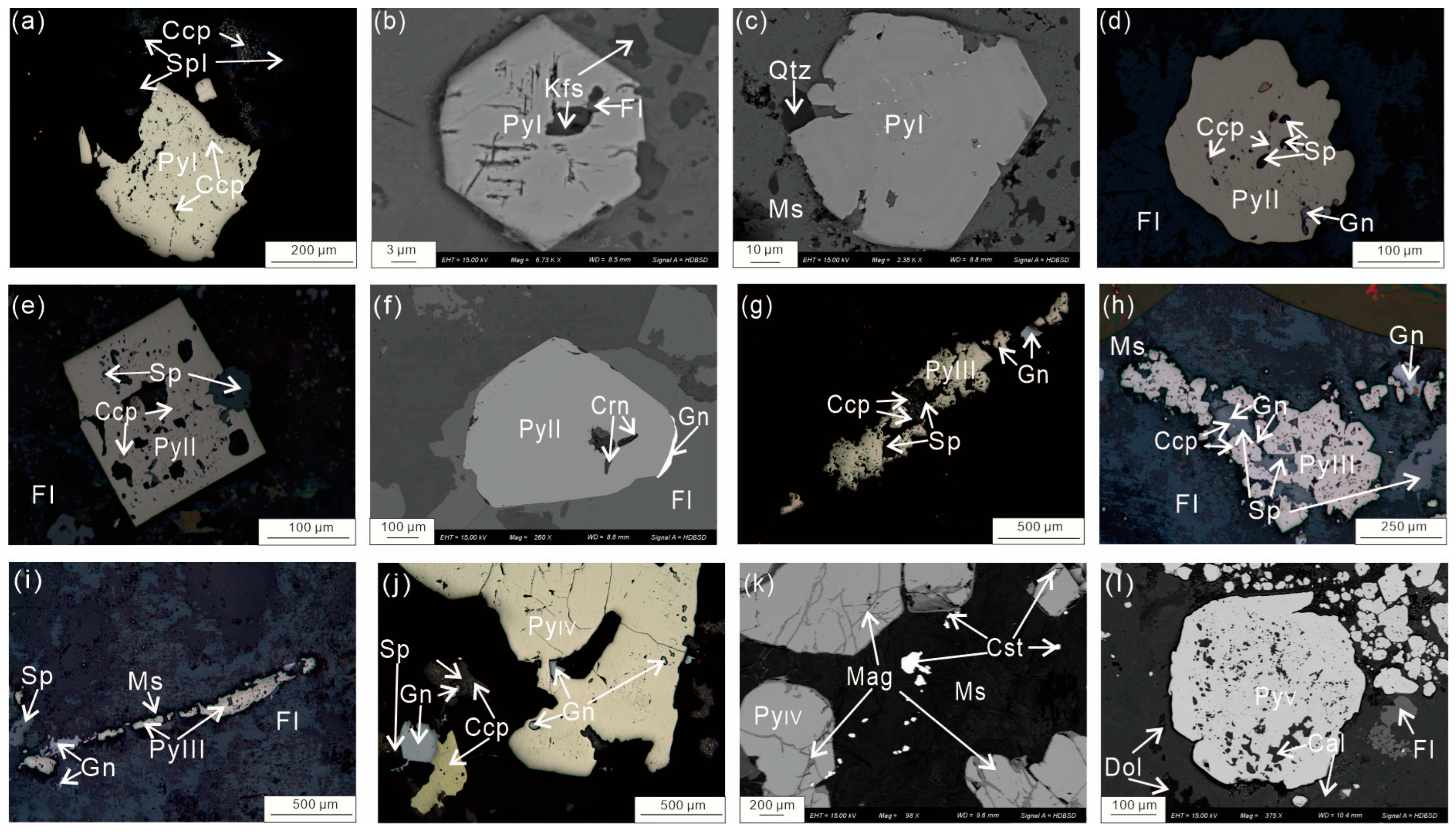
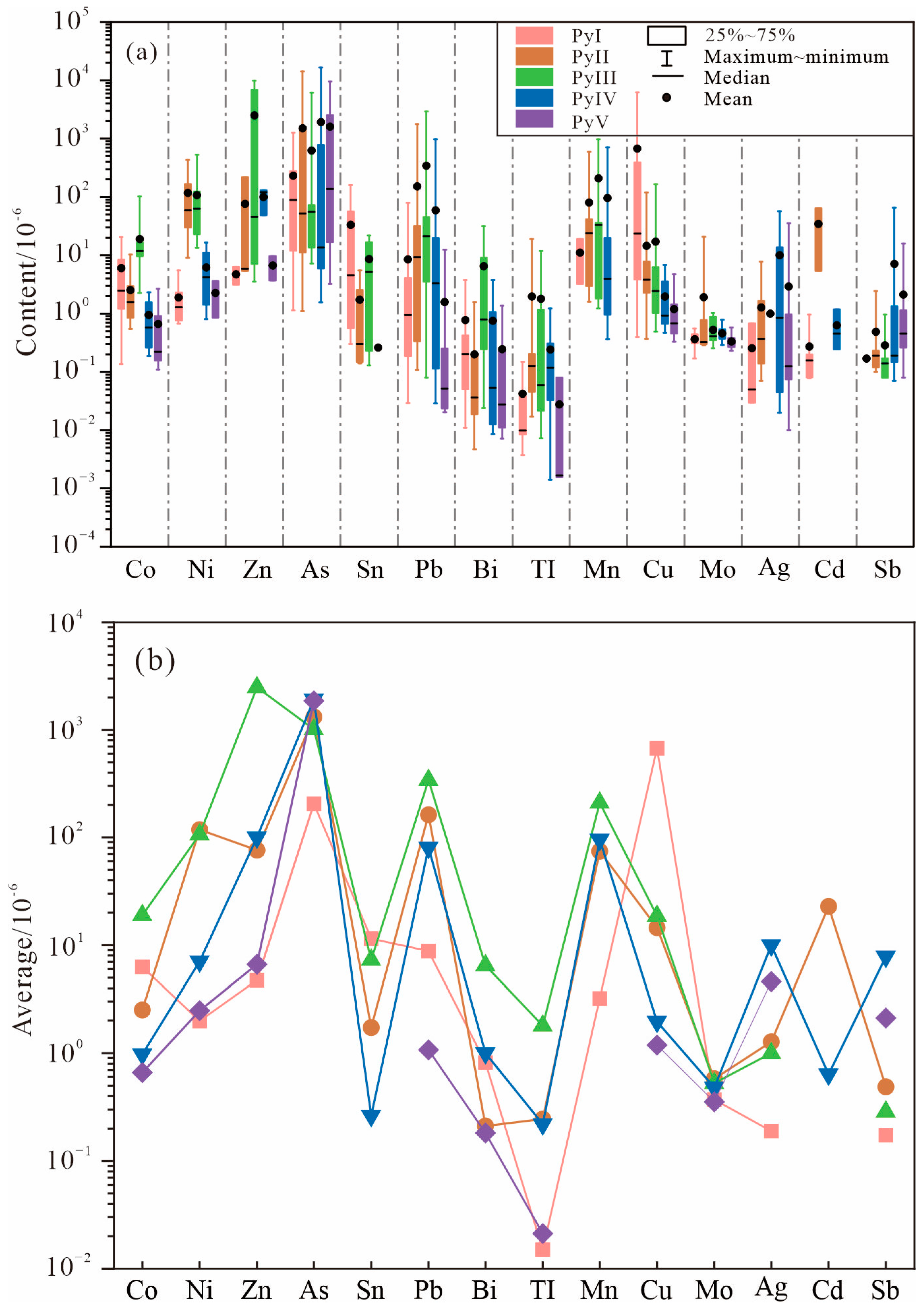
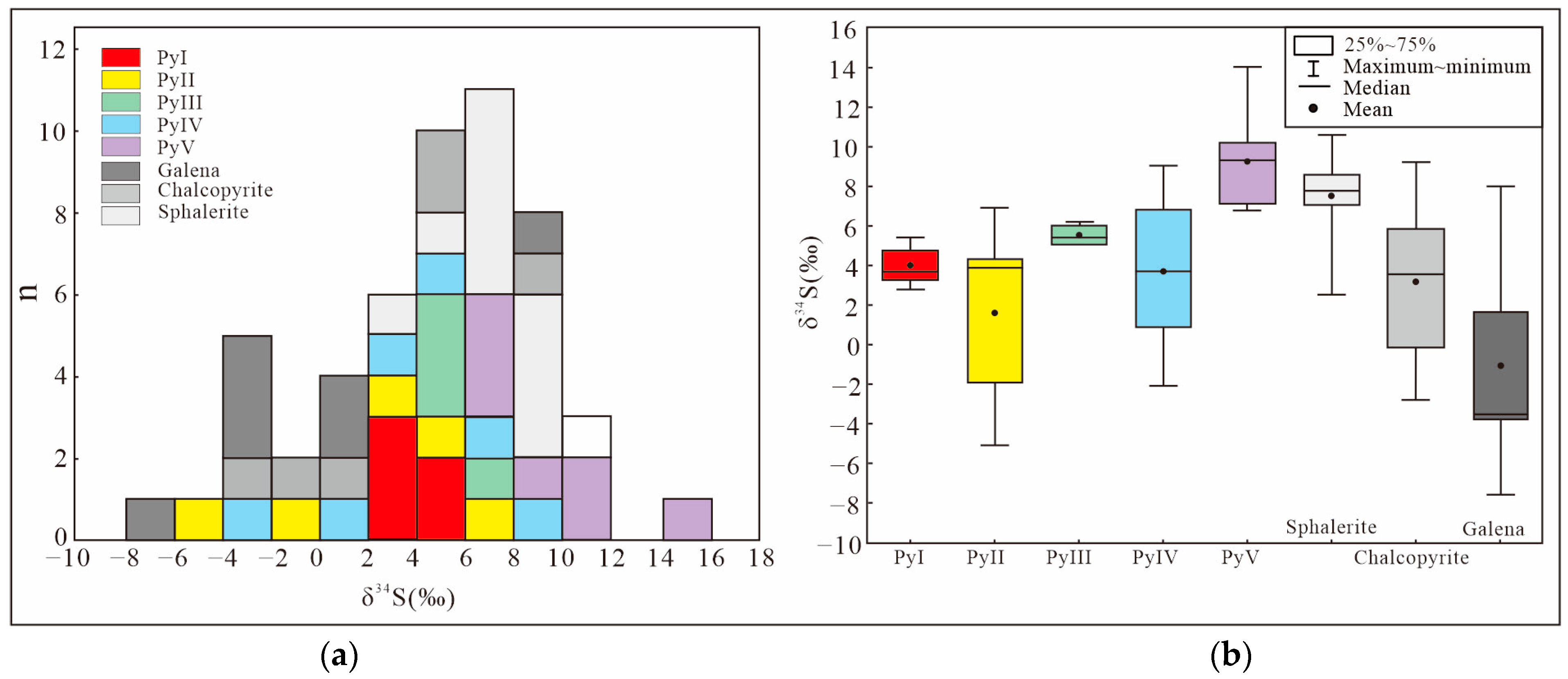
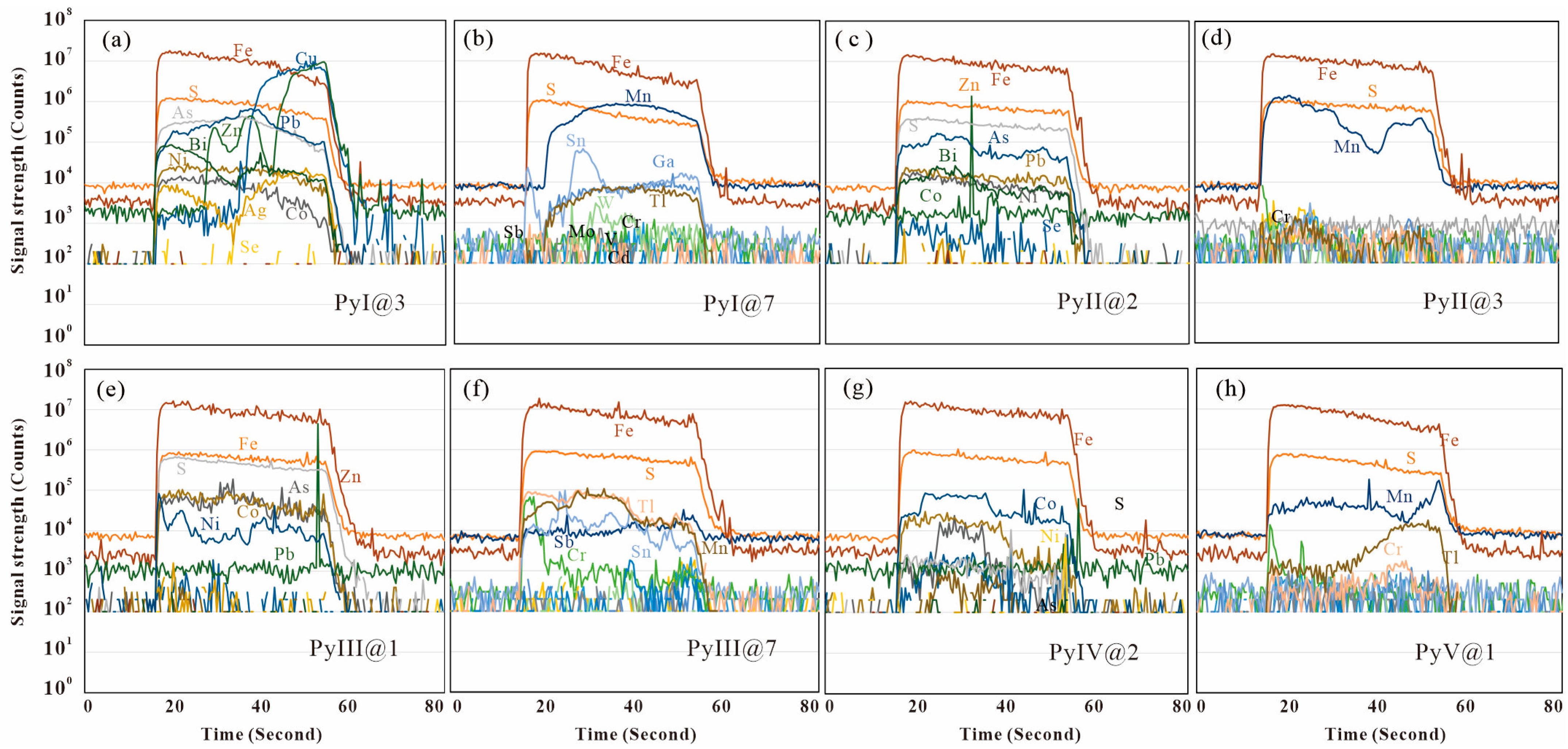
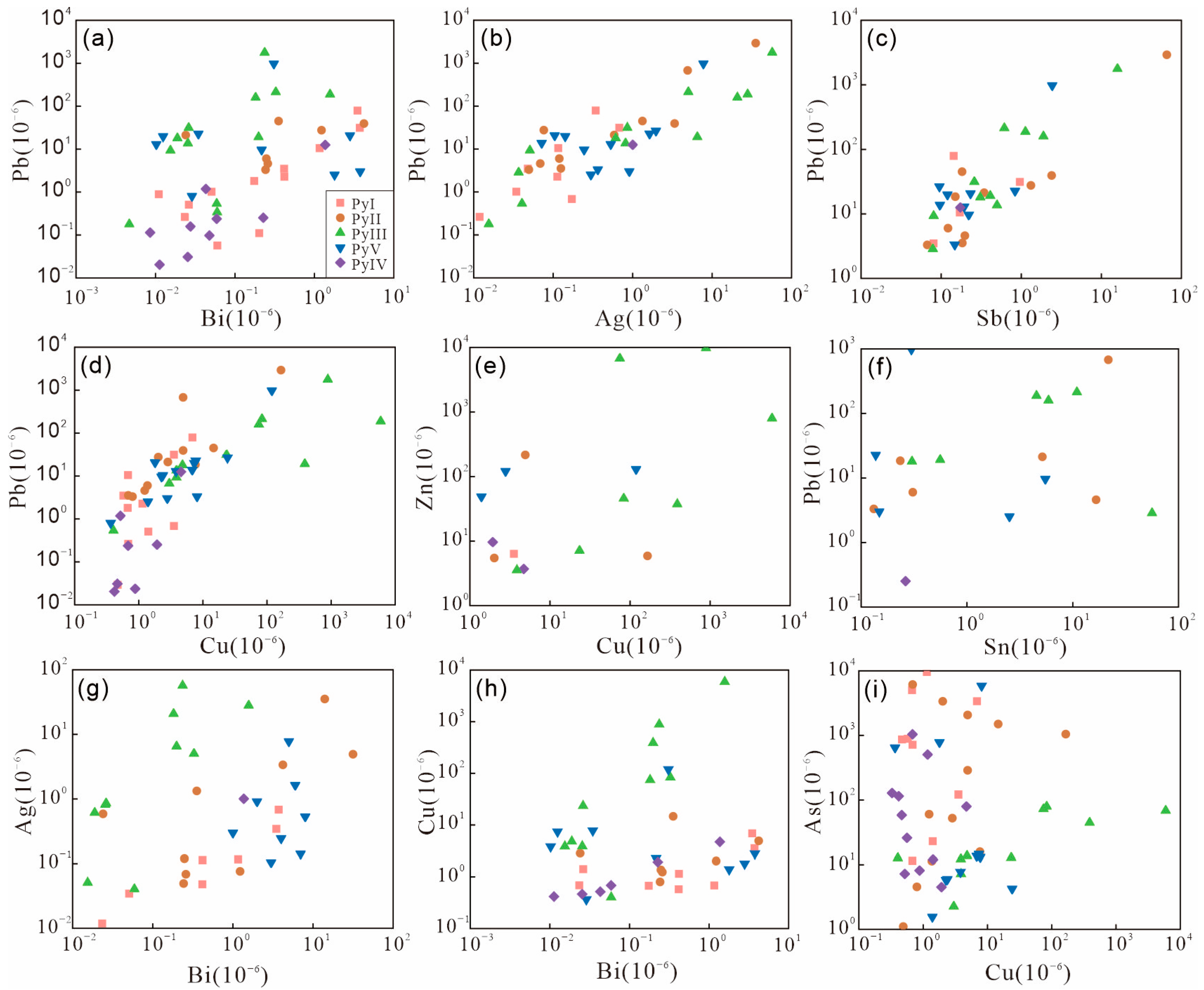
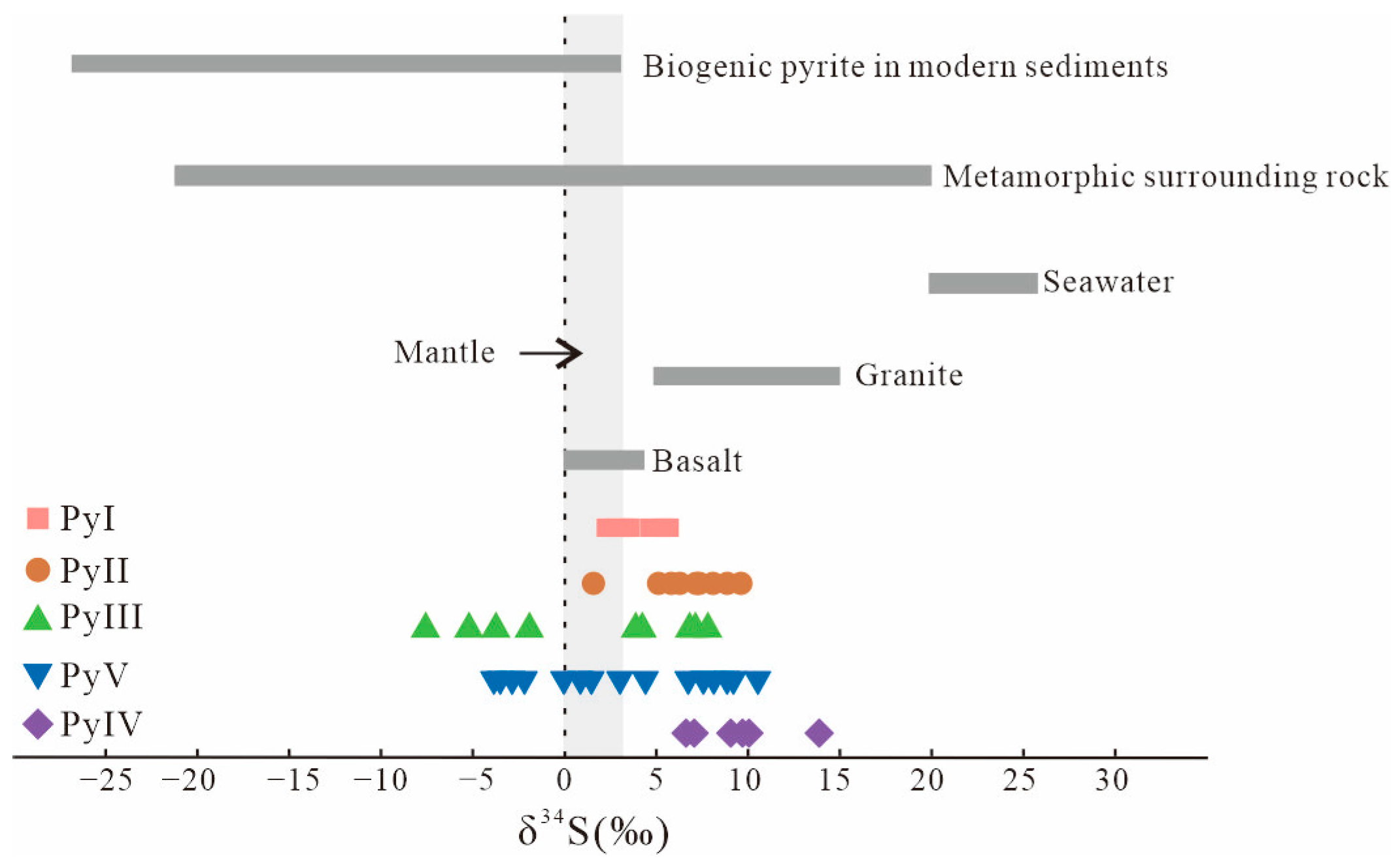
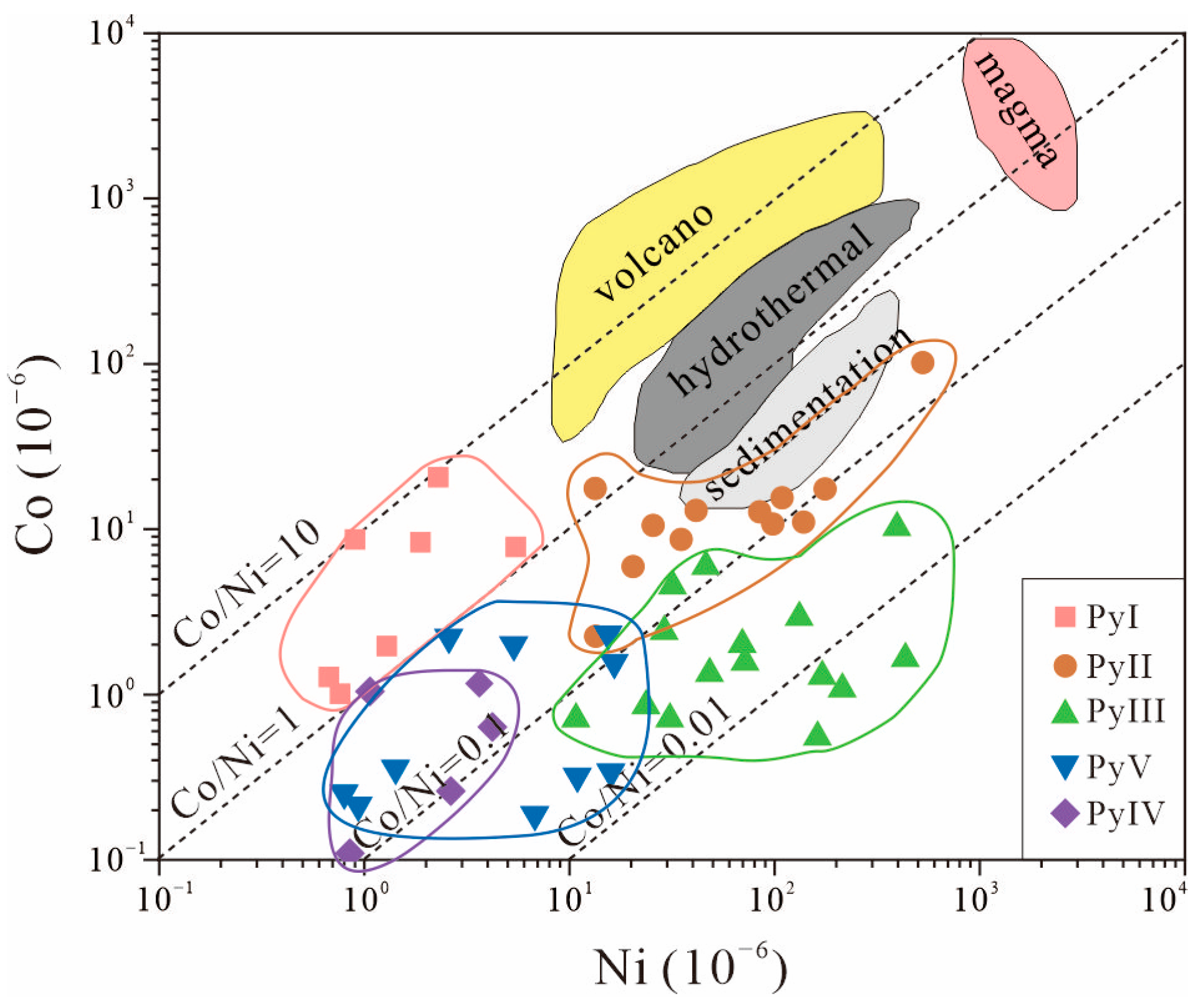
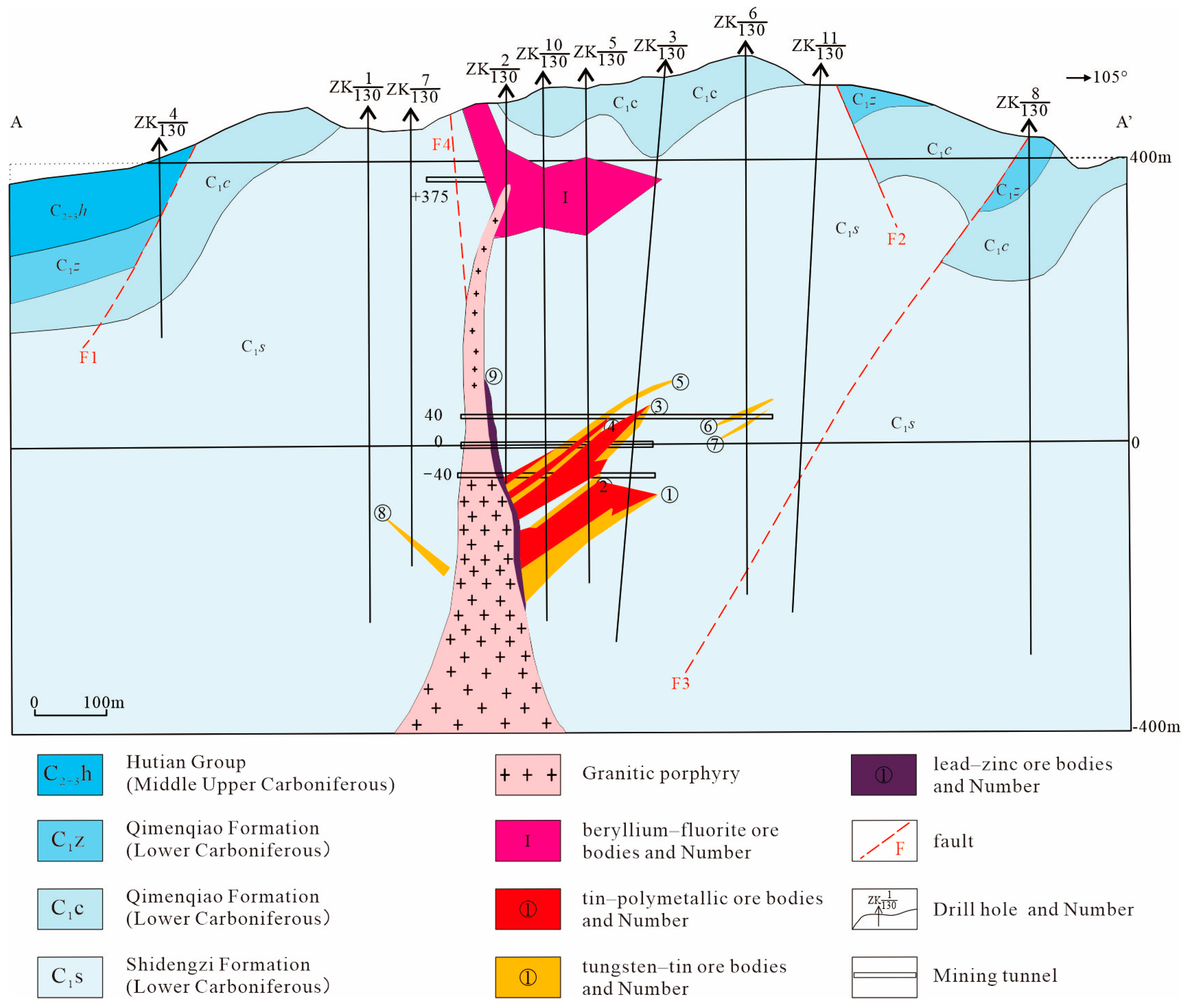
The Jiepailing deposit in southern Hunan is a typical large to super-large polymetallic tin deposit enriched in beryllium and other rare metals. To enhance the understanding of the mineralization processes of the Jiepailing deposit, detailed mineralogical, in situ geochemical, and sulfur isotopic analyses were conducted on pyrite closely associated with tin–polymetallic mineralization. Five types of pyrite have been identified in the deposit: (1) euhedral to subhedral medium- to coarse-grained pyrite (PyI) in tungsten–tin ore; anhedral fine-grained pyrite (PyII) in tin polymetallic–fluorite ore; anhedral fine-grained or aggregate pyrite (PyIII) in lead–zinc ore; euhedral to subhedral coarse-grained pyrite (PyIV) in beryllium–fluorite mineralization; and subhedral to anhedral fine-grained pyrite (PyV) in carbonate veinlets developed in the wall rock. Backscattered electron imaging indicates consistent structural features across the five types of pyrite. In situ trace element analysis reveals differences in trace element concentrations among the pyrite types. PyI is relatively enriched in Sn, Cu, and Co. In contrast, PyIII is enriched in Pb, Zn, Sn, and Ti, while PyIV and PyV are enriched in Ag and Sb. PyI has a Co/Ni ratio more than 1, while the Co/Ni ratios in the other four types of pyrite are less than 1. LA-MC-ICP-MS in situ sulfur isotope analysis shows δ34S values ranging from 2.5‰ to 5.8‰ (average 4.3‰, PyI), 2.5‰ to 5.8‰ (average 4.3‰, PyII), −7.6‰ to 9.5‰ (average 3.9‰, PyIII), −3.7‰ to 10.6‰ (average 3.6‰, PyIV), and 6.8‰ to 14.1‰ (average 9.2‰, PyV). Based on previous studies, regional geological background, deposit characteristics, and the in situ trace element and sulfur isotope compositions of pyrite, it is inferred that the various ore bodies in the Jiepailing deposit are products of Late Cretaceous magmatic–hydrothermal activity. The early ore-forming fluid originated from magmatic sources and during the migration into the wall rock and shallow formations, mixed with fluids primarily derived from atmospheric precipitation. Temperature, pressure, and composition changed of the ore-forming fluid which carried a large amount of substances, leading to tungsten–tin, tin polymetallic–fluorite, lead–zinc, and beryllium–fluorite mineralization, followed by carbonation during the late-stage mineralization.
Keywords: Jiepailing tin polymetallic deposit; pyrite; LA-ICP-MS; in situ trace elements; metallogenic process Jiepailing tin polymetallic deposit; pyrite; LA-ICP-MS; in situ trace elements; metallogenic process