Article

Research on Digital Core Characterization and Pore Structure Control Factors of Tight Sandstone Reservoirs in the Fuyu Oil Layer of the Upper Cretaceous in the Bayan Chagan Area of the Northern Songliao Basin


School of Earth Sciences, Northeast Petroleum University, Daqing 163318, China
*
Author to whom correspondence should be addressed.
Minerals 2025, 15(12), 1289; https://doi.org/10.3390/min15121289
Submission received: 8 November 2025 / Revised: 3 December 2025 / Accepted: 6 December 2025 / Published: 9 December 2025
(This article belongs to the Section Mineral Exploration Methods and Applications)

Abstract

The tight sandstone reservoir of the Fuyu Oil Layer in the Quantou Formation of the Cretaceous in the Bayan Chagan area displays intricate microscopic pore structures and pronounced heterogeneity, limiting hydrocarbon exploration and development efficiency. Utilizing core CT scanning digital core technology integrated with field emission scanning electron microscopy (FE–SEM) and whole-rock/clay mineral X-ray diffraction (XRD) analysis, this research performs multi-scale quantitative characterization on 15 representative rock samples from the study area, systematically elucidating reservoir pore structure diversity and its formation mechanisms. The study demonstrates that reservoirs in the study area can be categorized into three types: A, B, and C, exhibiting progressively declining reservoir performance. Type A reservoirs are characterized primarily by dissolution-formed large to medium pores, where macropores (radius > 5 μm) account for more than 92% of storage capacity, average coordination numbers reach 0.27~0.45, and connectivity is optimal. Type B reservoirs are influenced by siliceous cementation, featuring developed residual intergranular pores, macropore volume share declining to 88%, and coordination numbers decreasing to 0.11~0.20. Type C reservoirs experience intense compaction and illite cementation modification, where micropores (radius < 1 μm) constitute 5.6% numerically, yet macropore volume share is merely 76%, coordination numbers drop to 0.02–0.03, and connectivity is minimal. Mineralogical analysis reveals that quartz content exhibits a positive correlation with reservoir properties, as its rigid grain framework effectively resists compaction. Illite content rises with increasing burial depth, and plastic illite occupies pores and segment throats, resulting in Type C reservoir permeability reduction to 0.01~0.25 mD. Dissolution intensity (Type A > Type B > Type C) and cementation types (quartz cementation prevailing in Type B, illite cementation prevailing in Type C) represent crucial factors governing reservoir quality differentiation. This research confirms the reliability of digital core technology for tight reservoir classification and assessment, developing a discrimination model founded on “pore structure-mineral composition-diagenesis”. It provides a geological basis for sweet spot prediction and efficient development in the study area.

1. Introduction

At present, as global energy demand continues to rise, the exploration and development potential of conventional oil and gas is gradually depleting, leading to the exploration and development of oil and gas resources entering the unconventional sector [1,2,3]. Tight oil and gas is a crucial type of unconventional oil and gas resource. China is rich in tight oil and gas resources, with substantial proven reserves and a broad distribution range. The exploration and development of tight oil and gas is gradually replacing conventional oil and gas resources as a key area of exploration and development [4]. At present, substantial tight sandstone oil and gas reserves are found in major basins in China, including the Sichuan Basin, Songliao Basin, and Ordos Basin [5,6,7]. However, tight sandstone reservoirs, characterized by complex pore structures, low porosity and permeability, and strong reservoir heterogeneity, present significant challenges for the exploration and development of tight sandstone oil and gas [8,9,10].
Research by previous scholars indicates that the precise representation of the reservoir’s microscopic pore structure is crucial for the evaluation and effective development of tight sandstone oil and gas resources [11,12]. At present, the commonly used methods for characterizing tight sandstone reservoirs include mercury intrusion, gas adsorption, and nuclear magnetic resonance techniques [13,14,15,16]. While these methods can offer refined characterization of the reservoir’s microscopic pore features, they all have limitations. For instance, mercury intrusion can damage rock samples, gas adsorption cannot measure isolated pores, and nuclear magnetic resonance is influenced by reservoir heterogeneity, which can cause a discrepancy between the characterization results and the actual conditions.
At present, digital core technology is extensively used in the evaluation of different types of unconventional reservoirs, quantitative representation of complex microscopic pore structures, and rock physics experiments [17,18]. Digital core technology is a numerical simulation method for rocks that accurately reflects their real structural features. In contrast to traditional reservoir characterization methods, digital core technology has the benefits of being fast, accurate, non-destructive to samples, and offering high resolution, making it highly effective for evaluating rock heterogeneity [19,20,21].
The Bayanchagan region of the Songliao Basin has abundant tight oil and gas reserves, yet systematic research on the tight sandstone reservoirs in this area is still underdeveloped. Current studies primarily focus on the macroscopic characteristics of the reservoirs, and the microscopic structural features are not well understood [22,23,24]. Earlier research has made initial investigations into the reservoir characteristics in this region and has established a classification of the reservoirs [25]. However, a detailed analysis of the causes of reservoir heterogeneity has not yet been conducted. Building on this, the present study incorporates digital core technology, along with field emission scanning electron microscopy (FE–SEM) and XRD mineral composition analysis, to perform digital core-based classification and characterization of the tight sandstone reservoirs in the Bayanchagan region [20]. Additionally, the study further explores the heterogeneity of different reservoir types from a microscopic genesis mechanism perspective to identify the main factors controlling reservoir formation and evolution. This research will provide a geological foundation for future oil and gas exploration and development in the area, as well as help assess the effectiveness of digital core technology in the classification and evaluation of tight reservoirs.

2. Regional Geological Overview

The Songliao Basin, located in northeastern China, is a large Cenozoic continental sedimentary basin with a graben-horst dual structure. Covering an area of about 2.6 × 10⁵ km2, it is the largest onshore basin in China with the richest oil and gas resources [26]. The structural division of the Songliao Basin consists of six first-order structural units: the central depression area, the western slope area, the northern tilted area, the northeastern uplift area, the southeastern uplift area, and the southwestern uplift area [27,28]. The stratigraphy of the Songliao Basin is relatively simple, consisting of Jurassic (J), Cretaceous (K), Neogene (N), and Quaternary (Q) strata from bottom to top. The Cretaceous is divided into the Upper and Lower Cretaceous formations. The study area is located in the western Bayanchagan region of the northern central depression zone in the Songliao Basin, with an exploration area of approximately 5.4 × 10² km2. The main part is located in the central section of the Longhupao-Daan terrace, with two fault zones, Halahai and Talaha, that extend in the same direction (Figure 1a,b). The main oil layers developed in this area from top to bottom are the Heidi Temple oil layer, the Sartu oil layer, the Putaohua oil layer and the Gaotai Zi oil layer. Among them, the Fuyu oil layer is located between the third and fourth segments of the Qiantou Formation of the Cretaceous System in the Mesozoic Era. It features river-delta and river facies, and the lithology is mainly composed of sandstone and argillaceous sandstone [29,30] (Figure 1c). The rock permeability in the region is mainly ultra-low permeability. This paper primarily focuses on the Upper Cretaceous Q4 Section Fuyu oil layer in the Bayanchagan area, where 12 wells have produced industrial oil flows, demonstrating the good oil-bearing properties of the Fuyu oil layer in the region.

3. Samples and Methods

The experimental samples were chosen from three wells (Y201, Y26, Y28) in the Bayanchagan region, Songliao Basin. Through systematic observation of these wells, 15 core samples were selected, and a series of experimental analyses, including CT scanning, digital core modeling, field emission scanning electron microscopy (FE–SEM), and XRD diffraction, were performed to refine the characterization of the reservoir in the study area.
The field emission scanning electron microscope instrument adopted in this experiment is the Czech TESCAN MIRA LMS. FE–SEM is a high-precision electron microscope that operates by directing a focused electron beam onto the surface of the core sample, causing interactions between atoms that generate various electrical signals, which are used to display high-resolution images of the sample’s microscopic structure. Prior to the experiment, the core samples are cut into 1.5 × 1.5 cm square pieces, then bombarded with argon ions for 3 h under a vacuum. Afterward, the sample surface is chromium-coated, and the smooth rock surface is placed under the FE–SEM for observation of its microscopic morphological features.
The XRD experiment was conducted using the new high-resolution diffractometer D8AA25 from Bruker AXS GMBH in Karlsruhe, Germany. The working voltage is 15 KV, with a resolution of 2.0 nm, ambient temperature of 20 °C, and 30% humidity. The principle of the XRD experiment is to measure the diffraction of X-rays by a substance, generating a diffraction pattern. This pattern is then analyzed to determine the types and quantities of bulk rock and clay minerals.
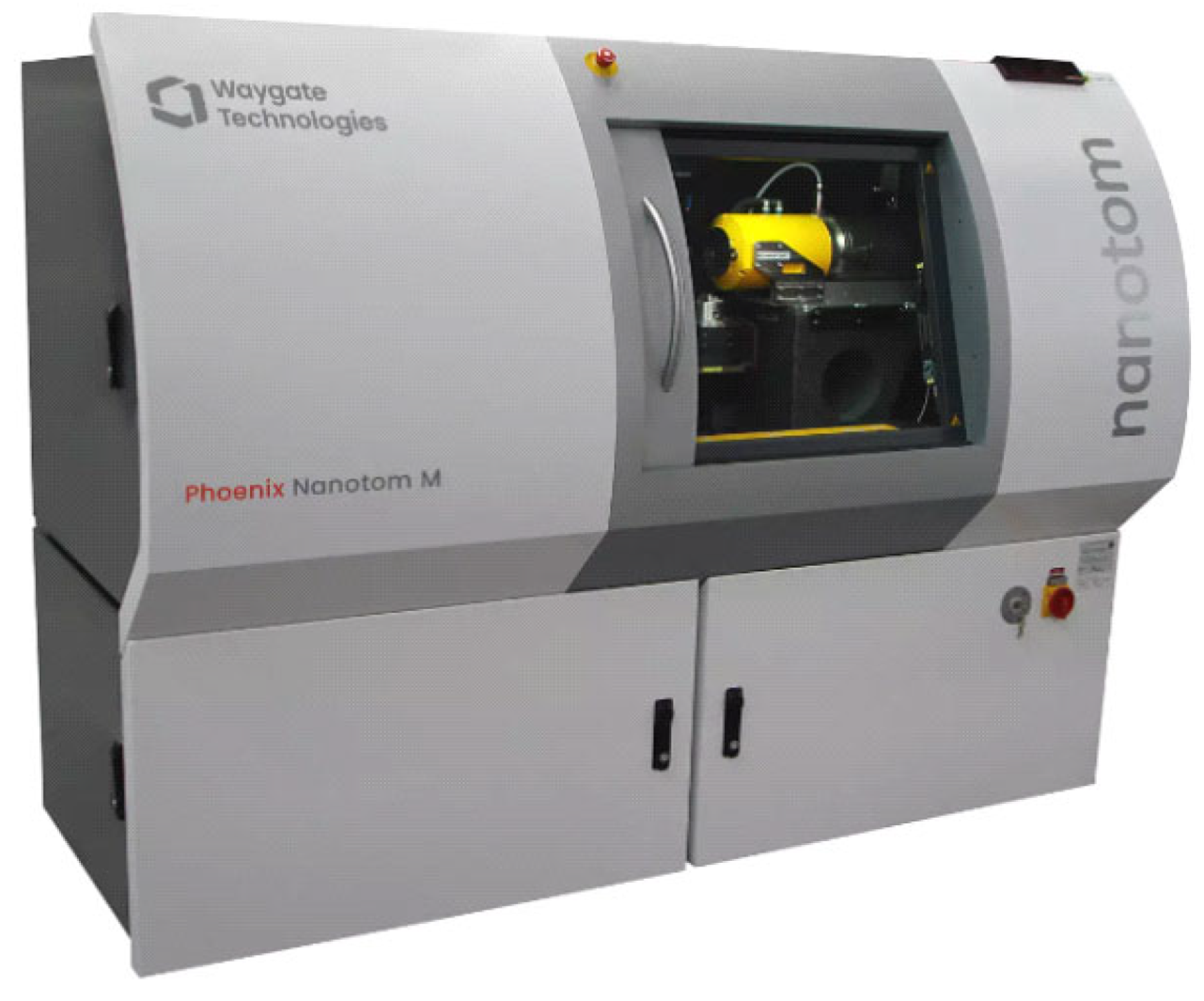
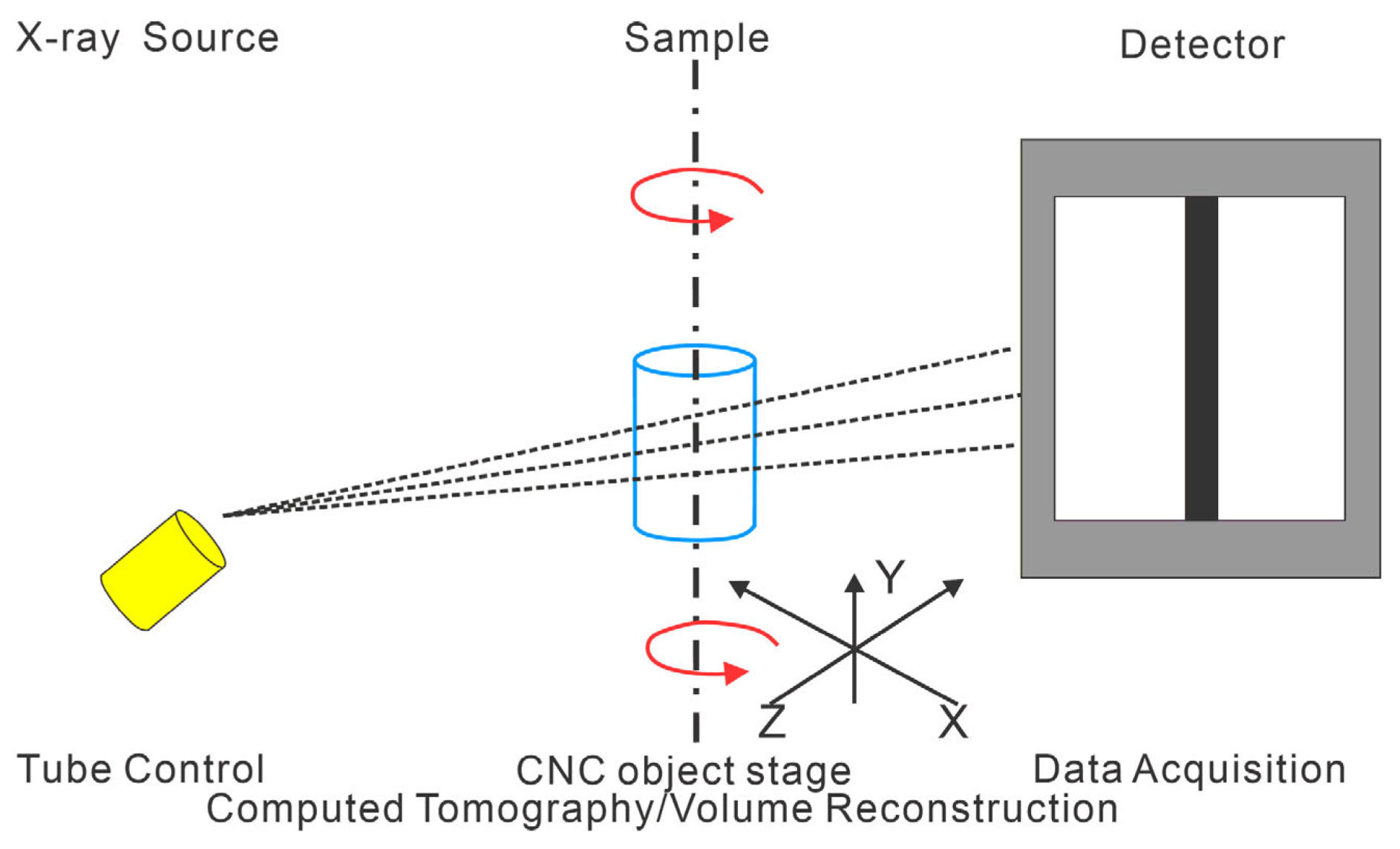
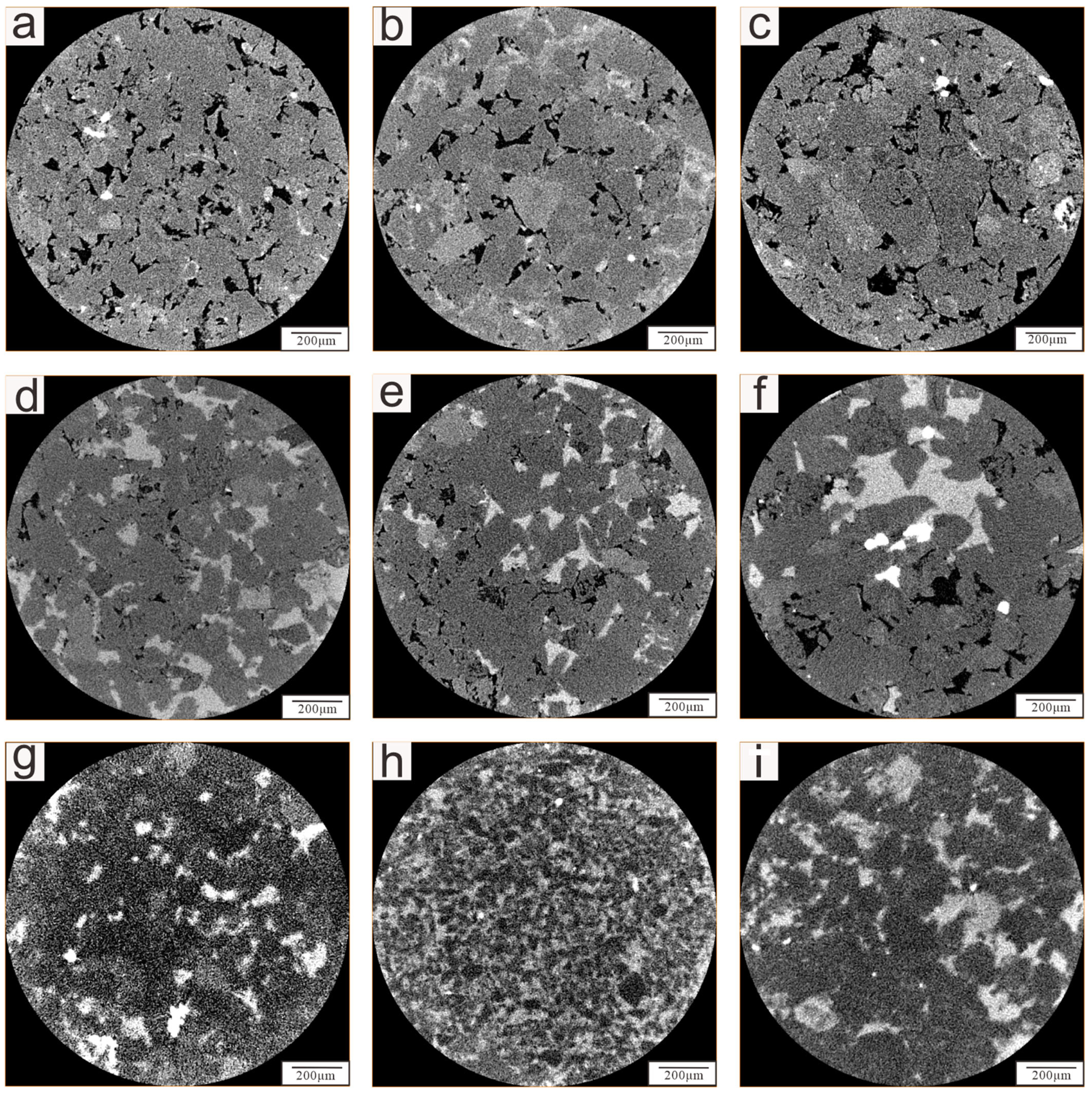
The CT scanning experiment adopted the German Phoenix Nanotom S digital core scanner (Figure 2). Initially, core samples were processed into small cylindrical plugs with a diameter of 5 mm using a diamond drill bit. The samples were placed in the scanning chamber and scanning parameters were adjusted (resolution: 1.428 μm, voltage: 130 Kv, current: 120 μA, exposure time: 1800 ms, resulting in 1800 two-dimensional grayscale images). After setup, the X-ray source was activated, allowing X-rays to pass through the sample on the stage and be detected by the detector. The sample was rotated by a set angle, X-rays were emitted repeatedly, and the attenuated X-ray signals were recorded. The sample underwent continuous 360-degree rotation (Figure 3), producing the overall two-dimensional grayscale image of the sample (Figure 4). These images were then used for three-dimensional core reconstruction. As X-rays pass through the core, energy attenuation occurs, and minerals with different densities produce varying grayscale on the two-dimensional images. Pores appear dark black, white represents high-density rock components, and gray represents the rock matrix.
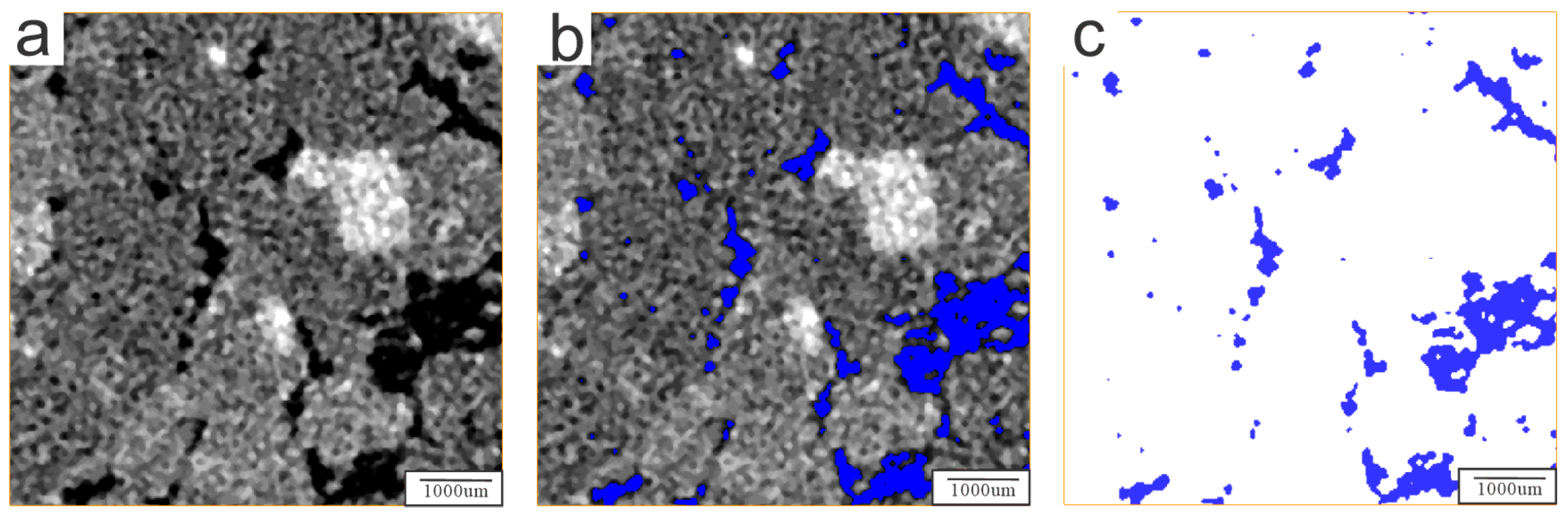
After CT scanning, the acquired data require further processing, and three-dimensional pore structure characterization is performed using Avizo 2020 software. Due to factors such as variations in the sample material and electronic component fluctuations, the slice images obtained from CT scanning often contain noise. To accurately reflect the rock’s internal features, denoising and filtering are necessary. In this experiment, a median filtering method was employed. The principle of median filtering involves sorting the pixel values in the neighboring pixels, then choosing the middle value as a substitute, thereby removing noise while preserving as many details of the original image as possible. After median filtering, the two-dimensional grayscale images must undergo image segmentation. The threshold segmentation method is applied, dividing the grayscale values based on the relationship between the grayscale of the image and the rock density, and referencing the measured porosity using a preset threshold to separate the image into two parts, further distinguishing the rock matrix from the pores (Figure 5). Given the large size of the original two-dimensional grayscale image data, after binarization, a 300 × 300 × 300-pixel region with clear pore features is selected. Using the PNM module in Avizo software, a three-dimensional model is created by stacking the binarized 2D slice images into a 3D data volume. The pore and throat model of the sample is then extracted based on the maximum sphere algorithm, where pores are approximated as spherical and throats as tubular to represent the storage space. This process generates a 3D visual model that reflects the pore distribution and connectivity between pores in three-dimensional space. Connected pores in the 3D pore model are extracted using the watershed algorithm from topology to analyze reservoir connectivity. Finally, by constructing the three-dimensional visual model of the sample, the pore-throat features of the original core are intuitively displayed. Statistical analysis of the 3D model yields parameters such as pore radius, pore count, throat radius, and throat count, which are used to quantitatively characterize the reservoir’s micro-pore structure.

4. Results and Discussion

4.1. Petrological Characteristics of Reservoirs

The XRD diffraction results for whole rock and clay minerals indicate that the mineral composition of the tight sandstone reservoir in the Bayanchagan area of the Songliao Basin is mainly quartz, with quartz content ranging from 27.4% to 56.1%, and an average of 42.4%. Plagioclase follows as the second most abundant mineral, with a content range of 15% to 48.1%, averaging 26.8%. Potassium feldspar content ranges from 2.6% to 12.8%, with an average of 5.0%. Calcite has the lowest content, ranging from 0% to 19.9%, with an average of 5.1% (Table 1). The clay mineral content ranges from 10.9% to 30.1%, with an average of 20.7%. Illite is the most abundant clay mineral, with a content range of 18% to 66%, averaging 38.1%. Chlorite follows, with a content range of 8% to 50%, averaging 32.1%. The content of illite-smectite mixed-layers ranges from 20% to 46%, with an average of 29.9%, where smectite accounts for 23.6% and illite accounts for 76.4% (Table 2).

4.2. Reservoir Physical Property Characteristics and Classification

A total of 15 samples were selected from 3 wells to analyze and statistically evaluate the physical properties of the Q4 section reservoir in the Bayanchagan area. The permeability ranges from 0.01 mD to 1.24 mD, with an average of 0.41 mD (Table 3). The porosity ranges from 3.59% to 13.98%, with an average of 8.03%, indicating poor reservoir properties (Table 3). In this study, 9 significant samples from the Bayanchagan area were selected for fault CT scanning, and a 400 × 400 × 400-pixel region was chosen for three-dimensional digital core quantitative characterization. Based on reservoir physical properties, fault CT scan images, and digital core reservoir parameters, the tight sandstone reservoirs in the Bayanchagan area were classified into three types, with pore connectivity decreasing in sequence. The permeability of type A reservoirs ranges from 1.1014 mD to 0.9046 mD, and the coordination number ranges from 0.45 to 0.27 (Table 4). The permeability of type B reservoirs ranges from 0.7636 mD to 0.0601 mD, and the coordination number ranges from 0.20 to 0.11 (Table 4). The permeability of type C reservoirs ranges from 0.2453 mD to 0.0098 mD, and the coordination number ranges from 0.03 to 0.02 (Table 4). From the two-dimensional grayscale images, type A reservoirs mainly consist of intergranular pores (Figure 4a–c), type B reservoirs mainly consist of remaining intergranular pores, with the pores filled by high-density materials (Figure 4d–f), and type C reservoirs show strong compaction, with only small pores remaining (Figure 4g–i).

4.3. Reservoir Pore Structure Characteristics

To further investigate the pore-structure characteristics of the three reservoir types in the BYCG area, we selected a number of typical samples from each reservoir type and redefined subregions for three-dimensional visualization modeling over domains of 300 × 300 × 300 pixels (Figure 6). In the pore-network model, pores and throats of varying sizes are depicted as spheres and rods in different colors; as the color shifts from blue to red, the sizes of pores and throats progressively decrease, and the three reservoir types display distinct pore–throat characteristics. More specifically, Type A reservoirs are characterized by pores arranged in a cross-cutting, network-like configuration (Figure 6a,d). In Type B reservoirs, pores exhibit a partially connected arrangement, whereby only a portion of the pores are mutually connected (Figure 6b,e). In Type C reservoirs, pores are predominantly isolated, and abundant micron-sized pores densely occupy the reservoir volume, collectively forming the storage space (Figure 6c,f).
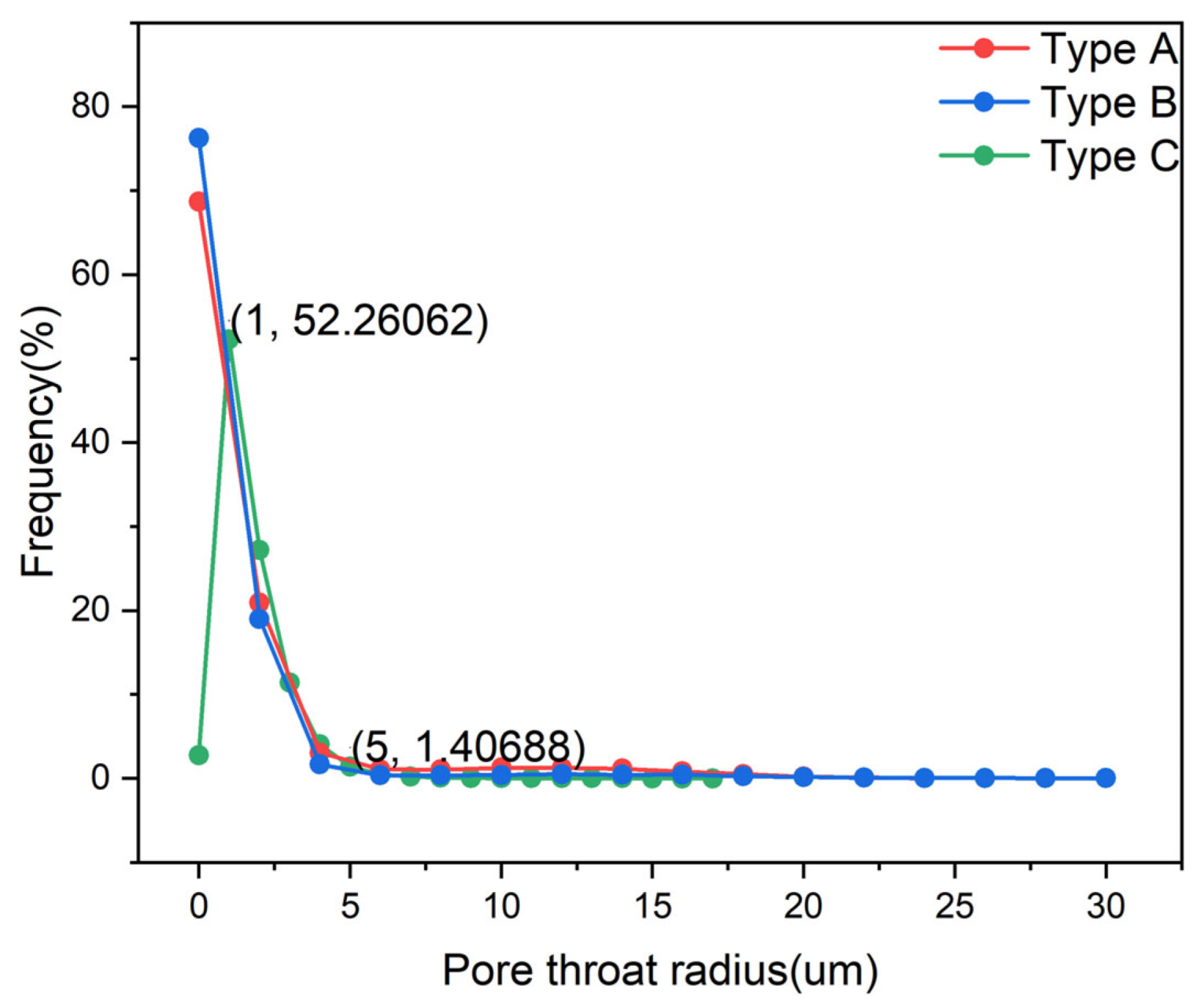
For quantitative characterization of reservoir space features, Avizo software was employed to calculate detailed pore and throat characteristic parameters. Results demonstrate distinct differences in pore and throat distribution characteristics across the three reservoir types within the study area. For detailed analysis of pore and throat distribution features in the three reservoir types, pore and throat dimensions in the study area were further categorized. Utilizing inflection points from the pore radius distribution curve (Figure 6), pores with radii exceeding 5 μm were classified as “macropores” using 1 μm and 5 μm as demarcation points. Pores with radii ranging from 1 to 5 μm were categorized as “mesopores”. Pores with radii below 1 μm were classified as “micropores”. Accordingly, throats with radii exceeding 5 μm were designated as “coarse throats”. Throats with radii ranging from 1 to 5 μm were classified as “medium throats”. Throats with radii below 1 μm were categorized as “fine throats”.
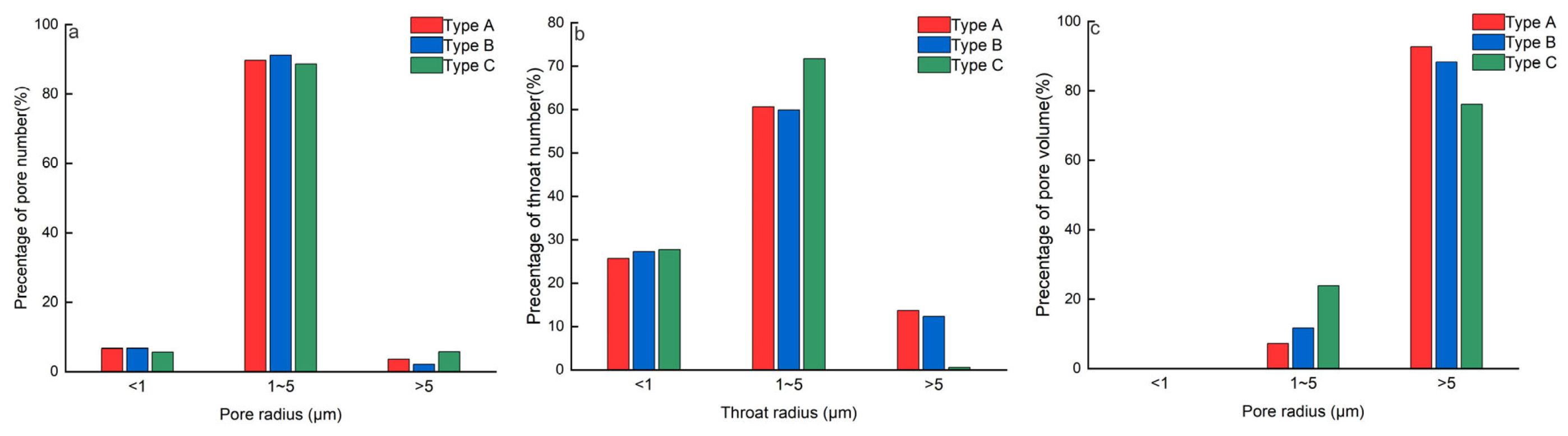
In the designated test interval of the samples, Type C reservoirs exhibit the maximum pore count (51,613), succeeded by Type B reservoirs (46,384), while Type A reservoirs show the minimum pore count (32,652), demonstrating a progressive increase in pore numbers from Type A to Type C reservoirs. Regarding the percentage distribution of pores by size, all three reservoir types are predominantly composed of “mesopores” (1–5 μm), comprising more than 80% of the total pore population. “Micropores” (radius < 1 μm) account for about 6% of the total pores. “Macropores” (radius > 5 μm) constitute roughly 2% in Type A and B reservoirs (Table 5 and Table 6) (Figure 7), whereas in Type C reservoirs they comprise approximately 5% (Table 7). In terms of pore volume distribution, the pore volume across all three reservoir types is primarily controlled by the limited number of macropores. In particular, macropores constitute more than 80% of the pore volume in Type A and B reservoirs. Conversely, in Type C reservoirs, macropores account for merely 76.09% of the pore volume. Progressing from Type A to Type C reservoirs, the macropore proportion shows a gradual decline, accompanied by a corresponding increase in the volume shares of mesopores and micropores (Figure 8b). In terms of throat characteristics, substantial variations exist in throat counts across the three reservoir types. In the test interval, Type B reservoirs exhibit the maximum throat number (7100), succeeded by Type C reservoirs (6314), while Type A reservoirs display the minimum throat count (5895) (Table 8). Generally, the percentage of coarse throats shows a progressive increase from Type A to Type C reservoirs (Figure 8c).

4.4. Reservoir Connectivity Characteristics

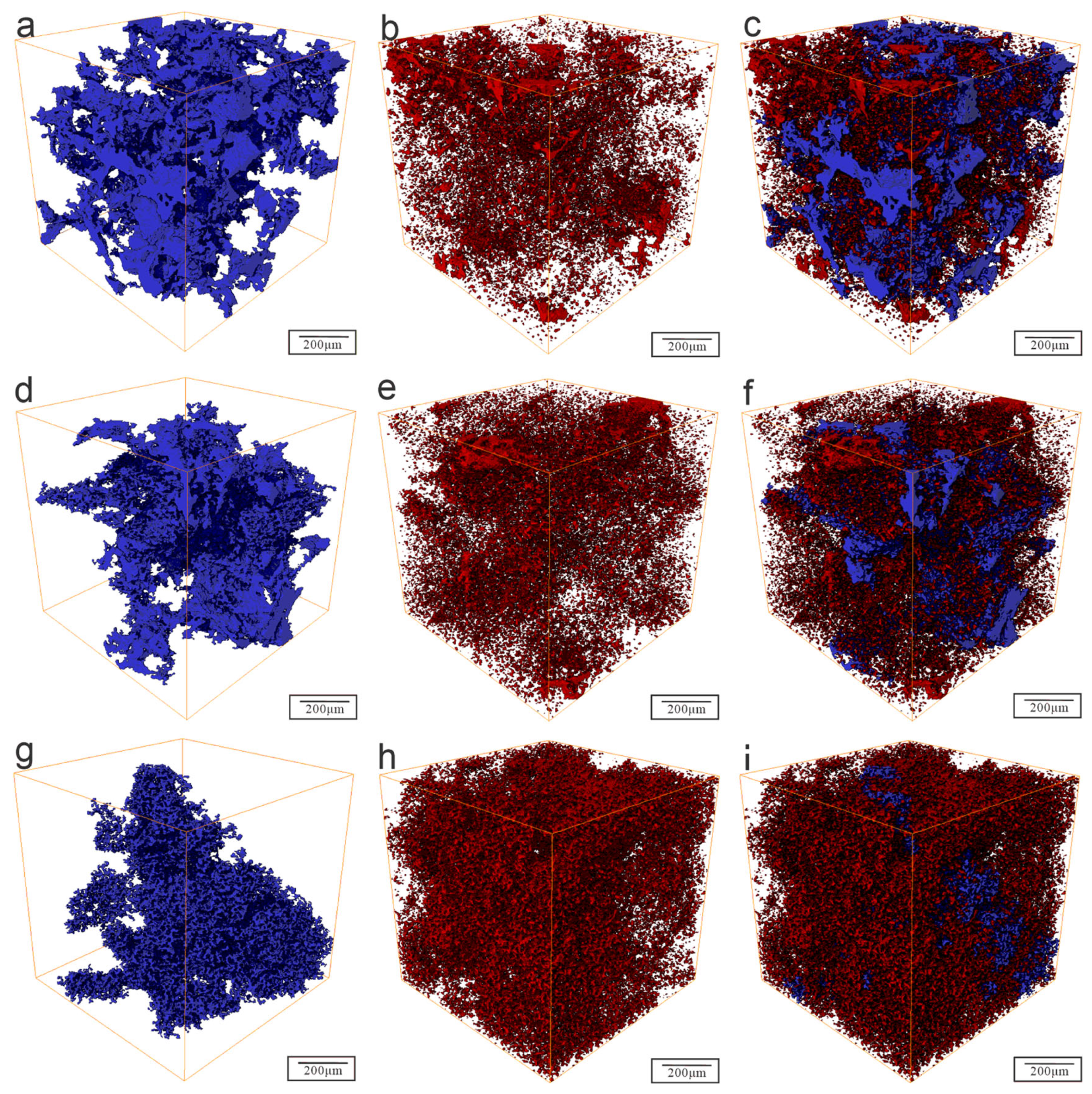
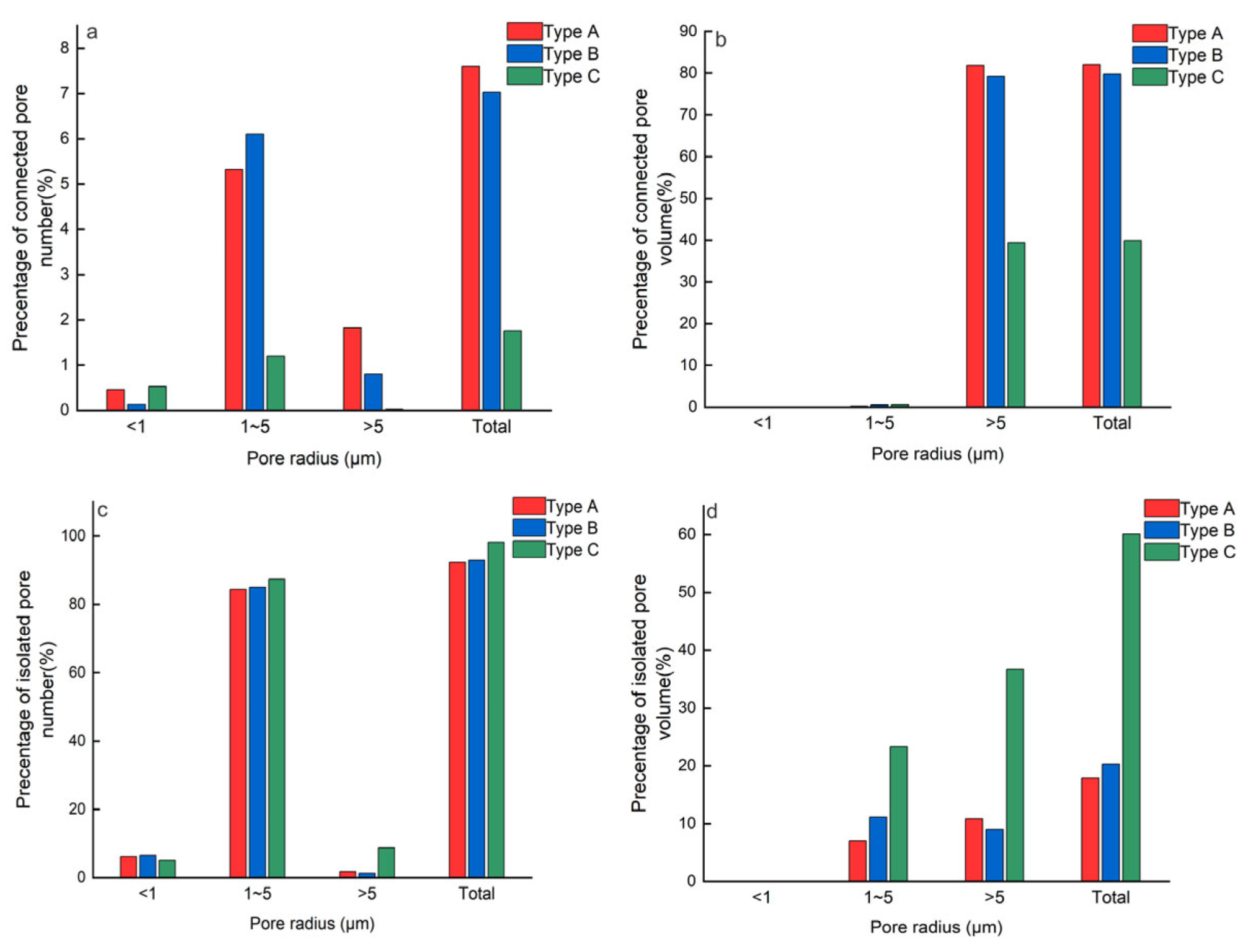
For further characterization of connectivity in the three reservoir types, connected pores and isolated pores were extracted based on three-dimensional digital core models, constructing connected pore and isolated pore network models for the reservoirs, with quantitative characterization of pore parameters. The study reveals that connected pores exhibit continuous and dense distribution patterns within the reservoirs, whereas isolated pores display scattered and disordered distribution (Figure 9). All three reservoir types are predominantly composed of isolated pores (>90%), while connected pores constitute a minimal fraction (7.60%~1.59%). Nevertheless, Type C reservoirs exhibit a precipitous drop in connected pore proportion (merely 1.76%), indicating underdeveloped pore systems (Figure 10a). Progressing from Type A to Type C reservoirs, the connected pore percentage shows a gradual reduction, accompanied by a corresponding increase in isolated pore percentage. Regarding pore volume distribution, limited connected pores in Type A and B reservoirs account for the vast majority of effective volume. Conversely, Type C pore volume is primarily composed of isolated pores, with isolated pores comprising as much as 60.09% of the total volume (Figure 10b,c). Progressing from Type A to Type C reservoirs, the connected pore volume share shows a gradual decline, with a corresponding increase in isolated pore proportion (Figure 10). Within connected pores across the three reservoir types, macropores exhibit the smallest numerical percentage but the largest volume share. Meanwhile, isolated pores are mainly comprised of micropores to mesopores (Figure 10a).

4.5. Analysis of the Formation Mechanism of Reservoirs

Reservoir quality exerts a decisive influence on hydrocarbon resource exploration and development, with pore structure representing a key assessment parameter for reservoir quality [4,31]. Consequently, investigation into the formation mechanisms of reservoir pores holds particular significance in reservoir assessment [32]. As widely recognized, diagenetic processes constitute important factors influencing reservoir quality [33,34,35]. Building upon this premise, this research further examines the impacts of various diagenetic processes on reservoir pore structure, aiming to elucidate the formation mechanisms responsible for the diversity observed in tight sandstone reservoirs of the Q4 member in the BYCG region. Furthermore, it seeks to provide additional verification for the accuracy of digital core experimental methods.
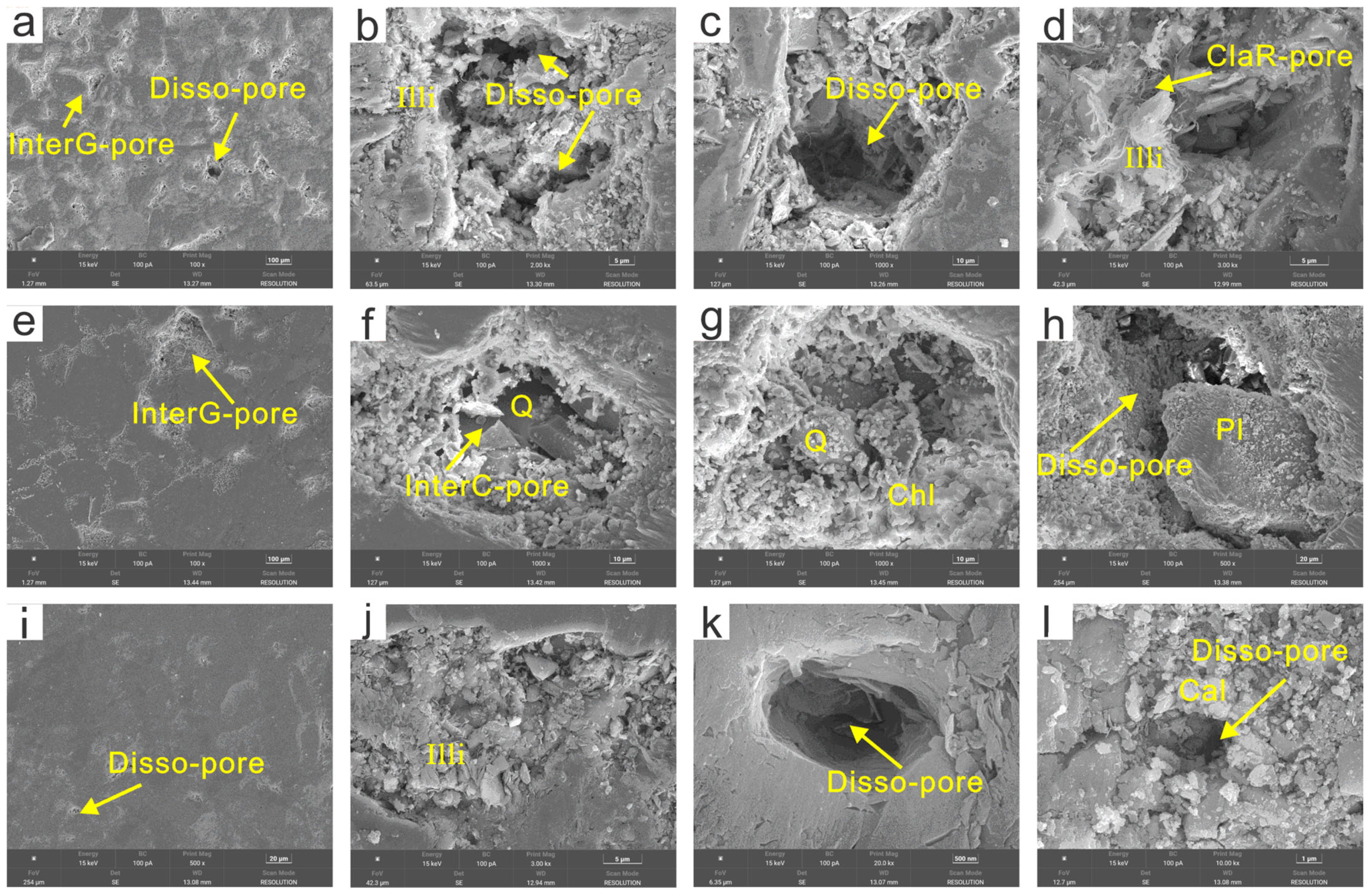
Research findings demonstrate that variations among the three reservoir types mainly occur in macropore and coarse throat proportions and connectivity, exhibiting a declining trend: Type A > Type B > Type C. The reservoirs in the study area experienced compaction, cementation, and dissolution during their formation. Type A reservoirs show relatively weak compaction, characterized by pore types consisting mainly of larger intergranular dissolution pores, intragranular dissolution pores, and primary intergranular pores (Figure 11a). The lithology is dominated by medium sandstone and fine sandstone, displaying well-preserved hair-like illite and bridge-like illite under microscopic examination, with observable pores between clay minerals (Figure 11d). Type B reservoirs undergo relatively intense compaction and limited dissolution, featuring pore types predominantly composed of residual intergranular pores (Figure 11e). The lithology consists mainly of fine sandstone and siltstone, exhibiting strong siliceous cementation (Figure 11f,g). Type C reservoirs undergo the most intense compaction, characterized by pore types consisting mainly of minute intergranular pores with limited dissolution pores (Figure 11i). The lithology is dominated by siltstone and argillaceous siltstone, showing illite cementation that blocks pore spaces (Figure 11j). Progressing from Type A to Type C reservoirs, compaction and cementation effects progressively intensify, whereas dissolution processes gradually diminish. Primary intergranular pores show a gradual reduction, with dominant reservoir pores transitioning from large pores to minute pores (Figure 11a,e,i).
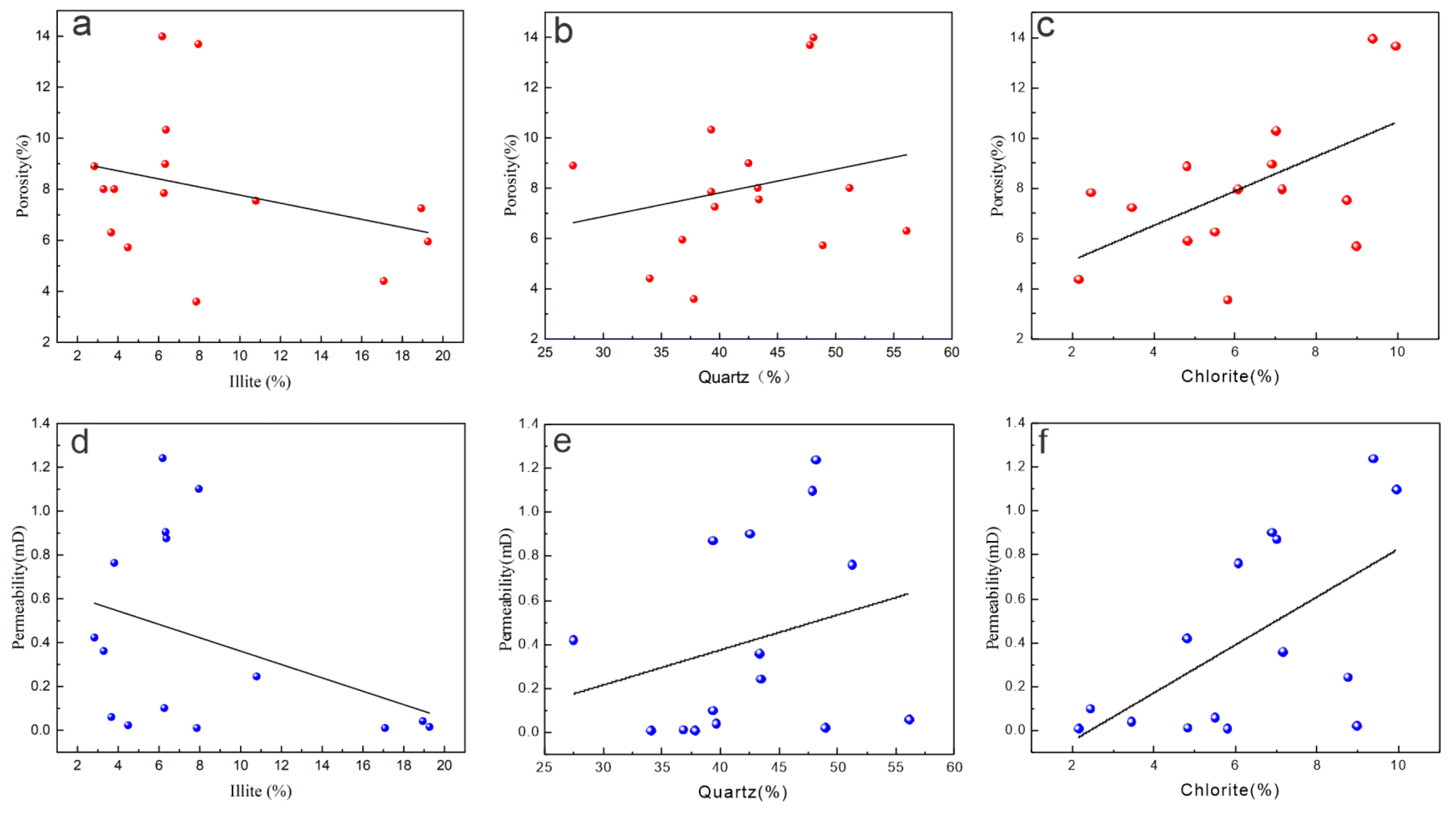
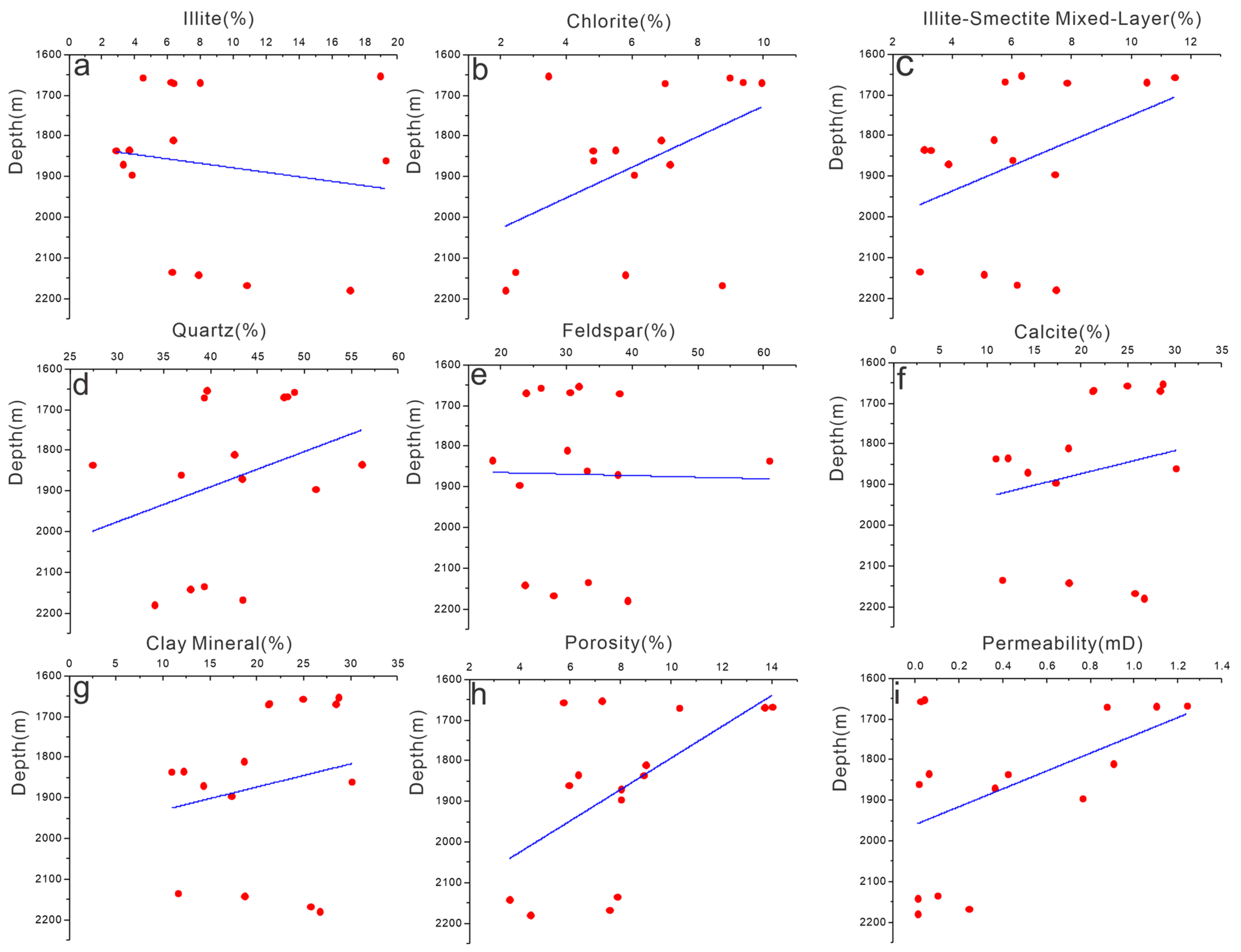
Illite demonstrates considerable plasticity and occupies pore spaces during cementation, consequently diminishing reservoir properties and leading to decreasing trends in porosity and permeability (Figure 12a,d). As reservoir burial depth increases, illite-smectite mixed layers gradually convert to illite, with illite content showing a progressive rise (Figure 13a,c). Type C reservoirs feature pore types primarily composed of clay mineral pores, with some pore throats possibly at nanometer dimensions that micro-CT cannot precisely detect, representing key factors contributing to the inferior physical properties of Type C reservoirs. As quartz and chlorite contents increase, both porosity and permeability exhibit rising trends (Figure 12b,c,e,f). This occurs because although quartz cementation in reservoirs occludes pores and diminishes reservoir properties, the rigid framework of quartz grains offers substantial compaction resistance, allowing preservation of primary pores. Within the study area, chlorite predominantly occurs as film-like chlorite; while chlorite films readily obstruct throats and degrade reservoir properties, they also exhibit some compressive resistance. Additionally, chlorite film formation suppresses quartz overgrowth processes [36,37,38]. The coexistence relationship between chlorite and quartz, coupled with their cementation and compaction interactions, enables relatively good preservation of pores in Type B reservoirs.
The reservoir samples utilized in this research exhibit distinct stratigraphic and depth representativeness. Type A reservoir samples were mainly obtained from reservoirs at around 1600 m depth, characterizing the typical properties of relatively shallow-buried reservoirs. Type B reservoir samples were chosen from critical intervals at about 1800 m depth, representing the transitional features of intermediate-depth reservoirs. Type C reservoir samples were derived from shallow sequences at around 2100 m depth, exemplifying the reservoir characteristics in deeper sections of the study area (Table 3). This systematic sampling approach according to depth and stratigraphic position guarantees that research findings can distinctly reveal the vertical distribution patterns of high-quality reservoirs (Type A). Furthermore, it establishes a reliable geological framework for comparative analysis with analogous reservoirs in neighboring regions or other basins. Thus, the derived understanding provides more definitive guidance for exploration practices.

5. Conclusions

Tight sandstone reservoirs in the Fuyu oil layer of the Bayanchagan area can be clearly classified into three types based on pore connectivity, pore-throat distribution, and mineral composition. Type A reservoirs (depth approximately 1600 m) develop networked large to medium dissolution pores, with macropore volume proportion > 92% and connected porosity reaching 7.6%, representing high-productivity sweet spots. Type B reservoirs (depth approximately 1800 m) display locally connected pores, where siliceous cementation causes throat narrowing, exhibiting moderate reservoir performance. Type C reservoirs (depth approximately 2100 m) undergo strong compaction and illite cementation alteration, featuring isolated pore distribution with connected porosity of only 1.76%, constituting low-productivity intervals. The three reservoir types show significant differences in macropore volume proportion (Type A 92.7% → Type C 76.1%), quantitatively revealing the controlling effect of microstructural heterogeneity on macroscopic flow capacity.
The uneven development of compaction, cementation, and dissolution processes constitutes the fundamental cause of reservoir differential evolution. Dissolution: Type A reservoirs develop abundant intergranular and intragranular dissolution pores due to intense feldspar particle dissolution, effectively enhancing storage space. Cementation: Quartz cementation dominates in Type B reservoirs, which, while reducing porosity, enhances rock resistance to compaction. Illite cementation is particularly developed in Type C reservoirs, with content reaching 38.1% (average value), and its flaky, bridging occurrence severely blocks throats, representing the main cause of connectivity deterioration. Compaction: With increasing burial depth (deeper than 2100 m), mechanical compaction causes primary intergranular pores in Type C reservoirs to nearly disappear, reducing porosity to 3.59%~7.85%.
XRD and FE–SEM analyses confirm that quartz content (27.4%–56.1%) shows positive correlation with porosity and permeability, with its rigid support effect being crucial for pore preservation. Illite content demonstrates significant negative correlation with reservoir physical properties and shows linear increasing trend with burial depth, serving as a sensitive indicator for reservoir quality prediction. Although chlorite films possess compaction resistance, excessive development can partition pore space, with their net effect depending on synergistic relationships with quartz cementation.
The quantitative digital core evaluation process established in this study has achieved three-dimensional visualization and parameter extraction of the pore-throat network in the tight reservoirs of the Bayanchagan area, making up for the deficiencies of conventional methods such as mercury injection and nitrogen adsorption in characterizing connectivity. This classification scheme and genesis model can provide a replicable technical framework for the evaluation of similar tight oil reservoirs in the Songliao Basin.

Author Contributions

Conceptualization and Writing (original draft & review and editing), Y.L.; Resources and Data curation, Q.L.; Methodology and Validation, H.F.; Formal analysis, Z.W. All authors have read and agreed to the published version of the manuscript.

Funding

This research was specially funded by the Postdoctoral Foundation of Heilongjiang Province, with the project number LBH-TZ2308; the China Postdoctoral Science Foundation (General Funding), grant number 2022MD723760; the National Natural Science Foundation of China Young Scientists Fund, grant number 42002141; and the National Natural Science Foundation of China General Program, grant number 42172150.

Data Availability Statement

Data are contained within the article.

Conflicts of Interest

The authors declared no potential conflicts of interest with respect to the research, authorship, and/or publication of this article.

References

  1. Merryn, T.; Tristan, P.; Barbara Herr, H.; Nick, P. Deliberating the perceived risks, benefits, and societal implications of shale gas and oil extraction by hydraulic fracturing in the US and UK. Nat. Energy 2017, 2, 17054. [Google Scholar] [CrossRef]
  2. Tao, S.; Zhang, D.; Huang, H.; Wang, S.; Meng, Y. Advances in Unconventional Oil and Gas. Energies 2022. [Google Scholar] [CrossRef]
  3. Zhang, K. From tight oil & gas to shale oil & gas—An approach to developing unconventional oil & gas in China. Int. Pet. Econ. 2012, 3, 9–15. [Google Scholar]
  4. Sun, L.; Zou, C.; Jin, A.; Wei, Y.; Zhu, R.; Wu, S.; Guo, Z. Development characteristics and orientation of tight oil and gas in China. Pet. Explor. Dev. 2019, 46, 1073–1087. [Google Scholar] [CrossRef]
  5. Dai, J.; Ni, Y.; Liu, Q.; Wu, X.; Gong, D.; Hong, F.; Zhang, Y.; Liao, F.; Yan, Z.; Li, H. Sichuan super gas basin in southwest China. Pet. Explor. Dev. 2021, 48, 1251–1259. [Google Scholar] [CrossRef]
  6. Chen, K.; Zhao, M.; Feng, Y.; Fu, X.; Wang, Y.; Guo, H.; Ding, J.; Chen, Q. Intelligent recognition of “geological-engineering” sweet spots in tight sandstone reservoirs—An application to a tight gas reservoir in Ordos Basin, China. Front. Earth Sci. 2025, 13, 1535883. [Google Scholar] [CrossRef]
  7. Yuhua, W.; Qi’an, M.; Jiangping, L.; Xuefeng, B.; Jianliang, P.; Tao, X.; Jia, W. Tight Oil Exploration in Northern Songliao Basin. Zhongguo Shiyou Kantan 2015, 20, 44. [Google Scholar]
  8. Sheng, J.J. Enhanced Oil Recovery in Shale and Tight Reservoirs; Gulf Professional Publishing: Houston, TX, USA, 2019. [Google Scholar] [CrossRef]
  9. James, A.J.; Stephen, M.T. Overview of Impacts from Tight Oil and Shale Gas Resource Development. In Environmental Considerations Associated with Hydraulic Fracturing Operations: Adjusting to the Shale Revolution in a Green World; John Wiley & Sons, Inc.: Hoboken, NJ, USA, 2019. [Google Scholar] [CrossRef]
  10. Jeremy, B.; Robert, K. Shale Gas, Tight Oil, Shale Oil and Hydraulic Fracturing. In Future Energy; Elsevier: Amsterdam, The Netherlands, 2020. [Google Scholar] [CrossRef]
  11. Dong, F.; Sun, Z.; Gao, Z.; Lu, X.; Chen, Y.; Huang, H.; Ren, D. Quantitative Characterization of Micro-Scale Pore-Throat Heterogeneity in Tight Sandstone Reservoir. Appl. Sci. 2022, 12, 6758. [Google Scholar] [CrossRef]
  12. Lin, J.; Wen, Z.; Zhang, B.; Chao, Z.; Feng, H.; Hao, J. Characterization Method of Tight Sandstone Reservoir Heterogeneity and Tight Gas Accumulation Mechanism, Jurassic Formation, Sichuan Basin, China. Geofluids 2022, 2022, 9420835. [Google Scholar] [CrossRef]
  13. Wu, B.; Xie, R.; Jin, G.; Liu, J.; Wang, S.; Fan, W. Investigation on the Pore Structure and Multifractal Characteristics of Tight Sandstone Using Nitrogen Gas Adsorption and Mercury Injection Capillary Pressure Experiments. Energy Fuels 2021, 36, 262–274. [Google Scholar] [CrossRef]
  14. Jin, G.; Xie, R.; Xiao, L. Nuclear Magnetic Resonance Characterization of Petrophysical Properties in Tight Sandstone Reservoirs. J. Geophys. Res.-Solid Earth 2020, 125, e2019JB018716. [Google Scholar] [CrossRef]
  15. Li, Z. Research on Pore Structure and Fractal Characteristics of Tight Sandstone Reservoir Based on High-Pressure Mercury Injection Method. J. Geosci. Environ. Prot. 2023, 11, 115–122. [Google Scholar] [CrossRef]
  16. Mu, C.; Hua, H.; Wang, X. Characterization of pore structure and reservoir properties of tight sandstone with CTS, SEM, and HPMI: A case study of the tight oil reservoir in fuyu oil layers of Sanzhao Sag, Songliao basin, NE China. Front. Energy Res. 2023, 10, 1053919. [Google Scholar] [CrossRef]
  17. Qiao, J.; Zeng, J.; Jiang, S.; Feng, S.; Feng, X.; Guo, Z.; Teng, J. Heterogeneity of reservoir quality and gas accumulation in tight sandstone reservoirs revealed by pore structure characterization and physical simulation. Fuel 2019, 253, 1300–1316. [Google Scholar] [CrossRef]
  18. Yang, Y.; Horne, R.N.; Cai, J.; Yao, J. Recent advances on fluid flow in porous media using digital core analysis technology. Adv. Geo-Energy Res. 2023, 9, 71–75. [Google Scholar] [CrossRef]
  19. Abdulquadri, O.A.; Mohamed Soufiane, J.; Mohammad, A.; Daniel, M.; Fadi, H.N.; Fateh, B.; Emad, W.A.-S.; Osama Al, J. Pore to core plug scale characterization of porosity and permeability heterogeneities in a Cretaceous carbonate reservoir using laboratory measurements and digital rock physics, Abu Dhabi, United Arab Emirates. Mar. Pet. Geol. 2024, 172, 107214. [Google Scholar] [CrossRef]
  20. Li, Y.; Zhang, Y.; Fu, H.; Yan, Q. Detailed characterization of micronano pore structure of tight sandstone reservoir space in three dimensional space: A case study of the Gao 3 and Gao 4 members of Gaotaizi reservoir in the Qijia area of the Songliao basin. Arab. J. Geosci. 2020, 13, 119. [Google Scholar] [CrossRef]
  21. Liu, Y.; Wang, S.; Zheng, R.; Li, H. Quantitative Characterization of Tight Rock Microstructure of Digital Core. Geofluids 2022, 2022, 3554563. [Google Scholar] [CrossRef]
  22. Zhang, B.; Kang, D.; Ma, S.; Duan, W.; Zhang, Y. Densification and Fracture Type of Desert in Tight Oil Reservoirs: A Case Study of the Fuyu Tight Oil Reservoir in the Sanzhao Depression, Songliao Basin. Lithosphere 2021, 2021, 2609923. [Google Scholar] [CrossRef]
  23. Si, S.; He, J.; Liu, P.; Liu, J.; Yan, G.; Yao, Q.; Yang, Y.; Chen, X.; Liu, C. Oil Charging Power Simulation and Tight Oil Formation of Fuyu Oil Layer in Sanzhao Area, Songliao Basin. Front. Earth Sci. 2022, 10, 825548. [Google Scholar] [CrossRef]
  24. Chen, X.; Zhao, H.; Qiao, W.; Chen, X.; Hu, J.; Ji, Z.; Zhang, W.; Gu, H.; Li, Y. Seismic Response Characteristics of Tight Oil Sweet Spots in Fuyu Reservoir Under the Source in the Northern Songliao Basin. In Proceedings of the International Field Exploration and Development Conference 2023, Beijing, China, 24–26 September 2023; Springer Series in Geomechanics and Geoengineering. Springer: Berlin/Heidelberg, Germany, 2024. [Google Scholar] [CrossRef]
  25. Li, Y.; Niu, D.; Zhang, Y.; Wu, H.; Fu, H.; Wang, Z. Microscopic pore-throat grading evaluation in a tight oil reservoir using machine learning: A case study of the Fuyu oil layer in Bayanchagan area, Songliao Basin central depression. Earth Sci. Inform. 2021, 14, 601–617. [Google Scholar] [CrossRef]
  26. Chen, S.; Liu, D.; Wang, Y.; Zhang, W.; Zheng, Q.; Yin, X. A comparative analysis of mercury intrusion and nitrogen adsorption methods for multifractal characterization of shale reservoirs in northern Songliao Basin. Sci. Rep. 2025, 15, 7866. [Google Scholar] [CrossRef]
  27. Ji, C.; Liu, T.; Chen, Y.; Wang, Q.; Sun, P.; Sun, L.; He, T. Nanoscale pore structure and fractal characteristics of lacustrine shale: A case study of the Upper Cretaceous Qingshankou shales, Southern Songliao Basin, China. PLoS ONE 2024, 19, e0309346. [Google Scholar] [CrossRef]
  28. He, C.; Lin, Y.; Zhang, T.; Ma, J.; Li, Y.; Cheng, J.; Zhang, Y. Study on the structural characteristics of the Yangdachengzi oil layer in the Quantou Formation, ZY block, central depression, Songliao Basin. Front. Earth Sci. 2023, 11, 1132837. [Google Scholar] [CrossRef]
  29. Jiang, M.; Liu, Y.; Zhang, Y.; Cao, S.; Fang, H. Study on sedimentary facies and prediction of favorable reservoir areas in the Fuyu reservoir in the Bayanchagan area. J. Environ. Manag. 2022, 321, 115960. [Google Scholar] [CrossRef]
  30. Qiao, P.Y.; Zhang, Y.; Yu, X. Study on Depositional Elements and Sandstone Body Development Characteristics Under High-Resolution Sequence Framework of the Fuyu Oil Layer in Bayanchagan Area. SPE J. 2024, 30, 423–438. [Google Scholar] [CrossRef]
  31. Du, M.; Yang, Z.; Yang, S.; Feng, C.; Wang, G.; Jia, N.; Li, H.; Shi, X. Study on the Quantitative Characterization and Heterogeneity of Pore Structure in Deep Ultra-High Pressure Tight Glutenite Reservoirs. Minerals 2023, 13, 601. [Google Scholar] [CrossRef]
  32. Zhang, L.; Wu, H.; Fu, D.; Wang, H.; Lei, X.; Liu, Z.; Wei, L.; Liu, Y. The impact of multistage fluid and diagenetic environmental coupling on the development of deep clastic rock reservoirs: A case from the Zhuhai Formation, Wenchang A Sag, Zhujiangkou Basin. Energy Explor. Exploit. 2025, 44, 01445987251379955. [Google Scholar] [CrossRef]
  33. Si, S.; He, J.; Zhao, Y.; Er, C.; Bai, Y.; Wu, W. Diagenesis of tight sandstone and its influence on reservoir properties: A case study of Fuyu reservoirs in Songliao Basin, China. Unconv. Resour. 2022, 3, 84–92. [Google Scholar] [CrossRef]
  34. Yuan, Z.; Tang, X.; Xiao, H.; Jiang, Z.; Liu, J.; Xu, M.; Jiao, Y. Characteristics and Genetic Mechanism of Effective Seepage Channels in the Tight Reservoir of the Fuyu Oil Layer in the Northern Part of the Songliao Basin. Energy Fuels 2024, 38, 9660–9675. [Google Scholar] [CrossRef]
  35. Yu, W.; Wang, F.; Liu, X.; Tian, J.; Yang, T.; Ren, Z.; Gong, L. Diagenetic Evolution and Its Impact on Reservoir Quality of Tight Sandstones: A Case Study of the Triassic Chang-7 Member, Ordos Basin, Northwest China. Energies 2023, 16, 2217. [Google Scholar] [CrossRef]
  36. Griffiths, J.; Worden, R.H.; Utley, J.E.; Brostrøm, C.; Martinius, A.W.; Lawan, A.Y.; Al-Hajri, A.I. Origin and distribution of grain-coating and pore-filling chlorite in deltaic sandstones for reservoir quality assessment. Mar. Pet. Geol. 2021, 134, 105326. [Google Scholar] [CrossRef]
  37. Richard, H.W.; Joshua, G.; Luke, J.W.; James, E.P.U.; Lawan, A.Y.; Muhammed, D.D.; Simon, N.; Peter, A. Chlorite in sandstones. Earth-Sci. Rev. 2020, 204, 103105. [Google Scholar] [CrossRef]
  38. Dou, W.; Lin, M.; Liu, L.; Jia, L. The effect of chlorite rims on reservoir quality in Chang 7 sandstone reservoirs in the Ordos Basin, China. Mar. Pet. Geol. 2023, 158, 106506. [Google Scholar] [CrossRef]
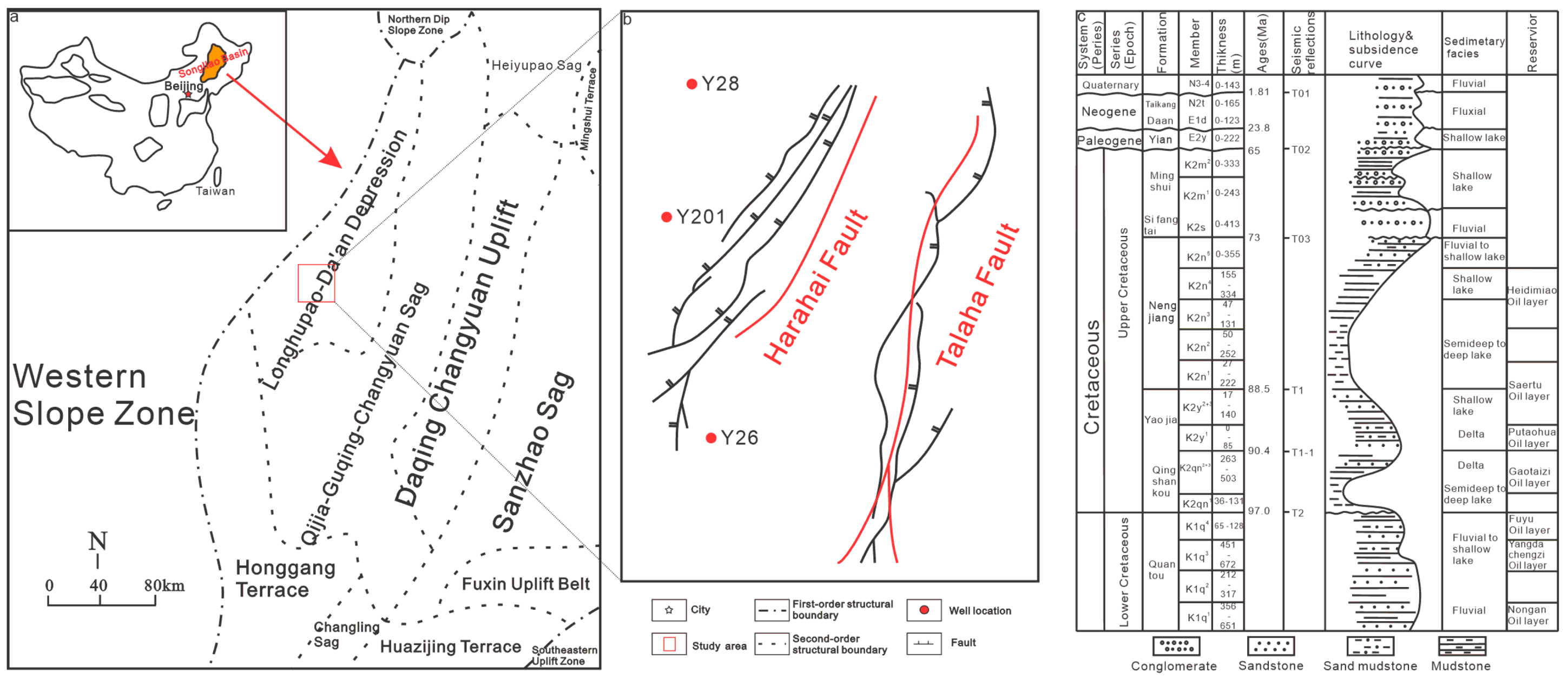
Figure 1. Geological Structure Map of the Study Area: (a). Regional Location of the Study Area; (b). Structural Map of the Study Area; (c). Stratigraphic column of the study area.
Minerals 15 01289 g001
Figure 2. Phoenix Nanotom S Digital Core Scanner.
Minerals 15 01289 g002
Figure 3. Principle of Core CT Scanning.
Minerals 15 01289 g003
Figure 4. Two-dimensional grayscale slices based on CT scanning (the dark black area represents pores, the gray area represents the rock matrix, and the white highlighted area represents high-density minerals): (a) Y28 well, 1669.05 m; (b) Y28 well, 1670.4 m; (c) Y201 well, 1809.85 m; (d) Y201 well, 1834.9 m; (e) Y201 well, 1835.5 m; (f) Y201, 1895.09 m; (g) Y26 well, 2134.87 m; (h) Y26 well, 2140.97 m; (i) Y26 well.
Minerals 15 01289 g004
Figure 5. Binarization segmentation process diagram: (a) Original two-dimensional grayscale image; (b) Pore-throat filling effect in the two-dimensional image (blue indicates pores); (c) Image after binarization segmentation (where blue indicates pores and white indicates the rock matrix).
Minerals 15 01289 g005
Figure 6. Pore network and pore connectivity models: (a) Pore network model of type A reservoir; (b) Pore connectivity model of type B reservoir; (c) Pore radius distribution of type C reservoir; (d) Pore network model of type A reservoir; (e) Pore connectivity model of type B reservoir; (f) Pore radius distribution of type C reservoir.
Minerals 15 01289 g006
Figure 7. Distribution curves of pore throat radii in three types of reservoirs.
Minerals 15 01289 g007
Figure 8. Pore and throat radius distribution for typical samples of three types of reservoirs in the Bayanchagan area: (a) Percentage distribution of pore numbers with different radii in the three types of reservoirs; (b) Percentage distribution of pore volume with different radii in the three types of reservoirs; (c) Percentage distribution of throat numbers with different radii in the three types of reservoirs.
Minerals 15 01289 g008
Figure 9. Connectivity models for three typical types of reservoirs: (a) Connected pore model of type A reservoir; (b) Isolated pore model of type A reservoir; (c) Connectivity model of type A reservoir; (d) Connected pore model of type B reservoir; (e) Isolated pore model of type B reservoir; (f) Connectivity model of type B reservoir; (g) Connected pore model of type C reservoir; (h) Isolated pore model of type C reservoir; (i) Connectivity model of type C reservoir.
Minerals 15 01289 g009
Figure 10. Statistical diagrams of connected and isolated pores in typical samples from three types of reservoirs in the Bayanchagan area: (a) Percentage of connected pores with different radii in the three types of reservoirs; (b) Percentage of connected pore volume with different radii in the three types of reservoirs; (c) Percentage of isolated pores with different radii in the three types of reservoirs; (d) Percentage of isolated pore volume with different radii in the three types of reservoirs.
Minerals 15 01289 g010
Figure 11. Identification of typical clay minerals and pore types in tight sandstone samples using scanning electron microscopy, Chl: Chlorite; Illi: Illite; Q: Quartz; Cal: Calcite; Pl: Plagioclase; InterG-pore: Intergranular pore; Disso-pore: Dissolution pore; InterC-pore: Intercrystalline pore; ClaR-pore: Clay-related pore. (a) Intergranular and dissolution pores, Y26 well, 2135m; (b) Intergranular dissolution pore, secondary illite present; (c) Intragranular dissolution pore; (d) Clay mineral pore, with bridge-like illite; (e) Residual intergranular pore; (f) Intercrystalline pore; (g) Quartz grain, with chlorite formed due to plagioclase dissolution; (h) Plagioclase dissolution; (i) Dissolution pore; (j) Illite cement filling pore; (k) Intragranular dissolution pore; (l) Intergranular dissolution pore, with calcite cement.
Minerals 15 01289 g011
Figure 12. Relationship between mineral composition, porosity, and permeability: (a) Relationship between illite and porosity; (b) Relationship between quartz and porosity; (c) Relationship between chlorite and porosity; (d) Relationship between illite and permeability; (e) Relationship between quartz and permeability; (f) Relationship between chlorite and permeability. The blue dots in the figure represent permeability and the red dots represent porosity.
Minerals 15 01289 g012
Figure 13. Variation of main reservoir parameters with depth. (a) Relationship between illite and formation depth; (b) Relationship between chlorite and stratum depth; (c) Relationship between Imon mixed strata and stratum depth; (d) Relationship between quartz and formation depth; (e) Relationship between feldspar and stratum depth; (f) Relationship between calcite and formation depth; (g) Relationship between clay minerals and formation depth; (h) Relationship between porosity and formation depth; (i) Relationship between permeability and formation depth.
Minerals 15 01289 g013
Table 1. Whole Rock Mineral Composition from Core XRD Analysis.
Sample NumberWell
Number
Whole Rock Quantitative Analysis (%)
Total Amount of Clay
Minerals
QuartzPotassium FeldsparPlagioclaseCalcite
1Y2611.639.34.828.515.8
2Y2618.737.83.320.319.9
3Y2625.743.47.820.22.8
4Y2626.7347.531.80
5Y2828.739.64.127.70
6Y2824.948.93.422.70
7Y2821.348.1327.50
8Y2828.447.82.621.20
9Y2821.239.35.432.61.4
10Y20118.642.53.426.78.8
11Y20112.256.13.71512.9
12Y20110.927.412.848.10.9
13Y20130.136.82.630.50
14Y20114.343.36.131.74.6
15Y20117.351.2418.88.7
Table 2. XRD. Content of clay minerals in core samples.
Sample No.Well No.Total Clay Content (%)I/S Mixed-Layer (%)
Illite (I) (%)Chlorite (C) (%)I/S RatioSmectite (S) (%)Illite (I) (%)
1Y265421251585
2Y264231272080
3Y264234242080
4Y26648281585
5Y286612222575
6Y281836462575
7Y282944273070
8Y282835373070
9Y283033373070
10Y2013437292575
11Y2013045252575
12Y2012644302575
13Y2016416202575
14Y2012350272080
15Y2012235432575
Table 3. Basic Information of Samples.
Sample NoWell NoDepth (m)LithologyPorosity (%)Permeability (mD)
1Y262135.01Argillaceous Siltstone7.850.10
2Y262140.97Argillaceous Siltstone3.590.0098
3Y262166.42Siltstone7.540.24
4Y262179.61Siltstone4.400.01
5Y281653.01Siltstone7.250.042
6Y281656.52Siltstone5.720.023
7Y281667.85Medium-grained Sandstone13.981.24
8Y281669.05Medium-grained Sandstone13.681.10
9Y281670.53Fine-grained Sandstone10.320.87
10Y2011809.85Fine-grained Sandstone8.990.90
11Y2011834.90Fine-grained Sandstone6.300.060
12Y2011835.50Fine-grained Sandstone8.900.42
13Y2011860.60Siltstone5.940.015
14Y2011869.83Fine-grained Sandstone8.0060.36
15Y2011895.09Medium-grained Sandstone8.0060.76
Table 4. Reservoir Classification Table.
Reservoir TypeSample NumberPorosity%Penetration Rate
mD
Pore QuantityAverage Pore Radius μmAverage Pore Volume μm/cm3Allocation Number
Type A813.6851.101414,2302.57878.6960.45
910.3260.875414,1542.27555.9460.31
108.9920.904643642.781189.6010.27
Type B158.0060.763690622.02563.6880.20
128.9010.423168781.99168.8110.14
116.30.060158672.31203.2310.11
Type C17.8510.10165,5352.0261.5140.02
23.5940.009860,2722.0582.1120.03
37.5480.245365,5352.1586.0920.02
Table 5. Detailed pore data of Class A reservoirs in Q4 section of Bayanchagan area.
Reservoir TypeClassificationMicroporeMesoporeMacroporeTotal
Type APore radius (μm)<11~5>5
Number217329,298118132,652
Percentage of pore number (%)6.6689.713.63100.00
Percentage of pore volume (%)0.047.2592.71100.00
Number of connected pores134518595842479
Percentage of connected pore
number (%)
0.465.321.827.60
Percentage of connected pore
volume (%)
00.2381.8382.06
Number of isolated pores213727,43959730,173
Percentage of isolated pore
number (%)
6.2084.391.8192.40
Percentage of isolated pore
volume (%)
0.047.0210.8817.94
Table 6. Detailed pore data of Class B reservoirs in Q4 section of Bayanchagan area.
Reservoir TypeClassificationMicroporeMesoporeMacroporeTotal
Type BPore radius (μm)<11~5>5
Number312342,27998246,384
Percentage of pore number (%)6.7491.142.12100.00
Percentage of pore volume (%)0.0511.6888.27100.00
Number of connected pores5228343743260
Percentage of connected pore
number (%)
0.136.10.807.03
Percentage of connected pore
volume (%)
00.5179.2279.73
Number of isolated pores307139,44560843,124
Percentage of isolated pore
number (%)
6.5885.041.3292.97
Percentage of isolated pore
volume (%)
0.0511.179.0520.27
Table 7. Detailed pore data of Class C reservoirs in Q4 section of Bayanchagan area.
Reservoir TypeClassificationMicroporeMesoporeMacroporeTotal
Type CPore radius (μm)<11~5>5
Number290545,724298451,613
Percentage of pore number (%)5.6388.595.78100.00
Percentage of pore volume (%)0.0623.8576.09100.00
Number of connected pores27361816907
Percentage of connected pore
number (%)
0.531.20.031.76
Percentage of connected pore
volume (%)
0.010.5339.3739.91
Number of isolated pores263245,106296850,706
Percentage of isolated pore
number (%)
5.1087.395.7598.24
Percentage of isolated pore
volume (%)
0.0523.3236.7260.09
Table 8. Data of throat channels of three types of reservoirs in Bayanchagan area.
Reservoir TypeClassificationFine
Throat
Medium ThroatCoarse
Throat
Total
Pore throat radius (μm)<11~5>5
Type ANumber151435748075895
Percentage of throat number (%)25.6860.6313.69100.00
Type BNumber199942258767100
Percentage of throat number (%)27.2759.9212.34100.00
Type CNumber17494529366314
Percentage of throat number (%)27.7171.720.57100.00
Disclaimer/Publisher’s Note: The statements, opinions and data contained in all publications are solely those of the individual author(s) and contributor(s) and not of MDPI and/or the editor(s). MDPI and/or the editor(s) disclaim responsibility for any injury to people or property resulting from any ideas, methods, instructions or products referred to in the content.