Abstract
Tailings disposal in the form of diluted slurries has a tendency for particle size segregation, where coarse particles settle near the discharge point, and finer particles are carried by the water flux to more distant regions. This causes a loss of reservoir capacity due to voids between the coarser particles and increased water content in the deposit. This work aimed to evaluate the feasibility of reaching non-segregable high-density slurries with fine tailings from the niobium oreflotation process and measure its disposal parameters. The innovation is to achieve increased solids percentage in the settled deposit and to avoid particle size segregation along the slurry path with niobium tailings. The study involved physical, chemical, and mineralogical characterization and semi-pilot thickening tests to produce enough volume of underflow with different bed heights and solids flux rates. Slump, rheology, and flume tests were performed to evaluate underflow disposal characteristics. The results indicated that the thickener bed height did not significantly influence the underflow solids content, yield stress, or slump. The solids flux rate, on the other side, had a greater influence—the higher it was, the lower the solids content, yield stress, and disposal angle, along with a higher slump. In flume tests, a high density of non-segregable tailings slurry was achieved with 1.96 t/m3, corresponding to an underflow with 66.8% solids, 43.9 Pa of yield stress with 0.5 (t/h)/m2, and 0.5 m of bed height.
1. Introduction
The challenges associated with tailings disposal have become more evident for mining companies in recent years. The disasters involving tailing dams have led to increased studies about safer disposal forms. Among the alternatives, the use of paste and thickened tailings disposal or high-density slurries [1], cemented tailings as backfill [2], and dry stacking [3] have been proposed. The use of new technologies for dewatering tailings has contributed to facing challenges and achieving sustainable development for their disposal. Therefore, tailings should be handled and disposed of so that they remain stable for long periods [4].
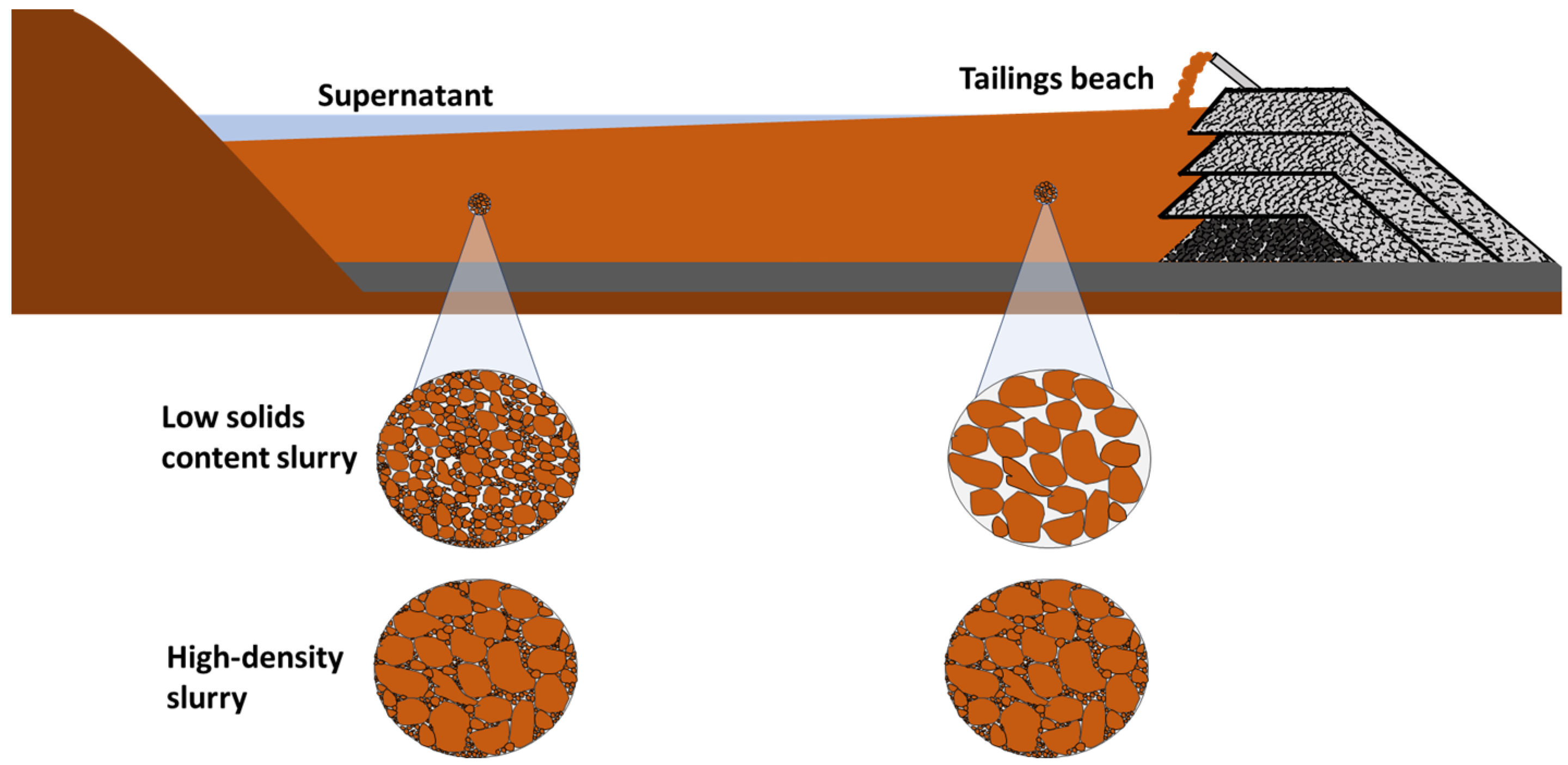
An issue with diluted slurries in dams, especially for fine and ultrafine tailings, is that they can remain in suspension, without settling, for long periods, as in the case of the “fluid fine tailings” Canadian bentonite sands that—with around 30% solids content—remain in the same state for centuries according to Wang et al. [5]. Florida phosphate tailings are a classic example, as well as bauxite tailings in Brazil. Slurries with low solids content usually have the coarser particles settled near the deposition point and the finer ones carried by the water flow, decreasing the in situ bulk density [6]. Thickening pre-treatment of tailings may create a higher density, non-segregable slurry, configuring a condition in which the coarser particles are arranged amongst the finer ones, filling the voids and preventing regions with ultrafine particle predominance, as seen in Figure 1. In the upper circles, what happens in conventional dams with low solids content slurries is presented. The inferior circles show what happens with high density slurries. The increased solids content led to an absence of size segregation along the deposit. These are innovations of this procedure, but it is important to evaluate each material characteristic and the solid liquid equipment necessary to achieve this characteristic of non-segregation.
Figure 1.
Comparison of particle behavior for diluted and high-density slurries.
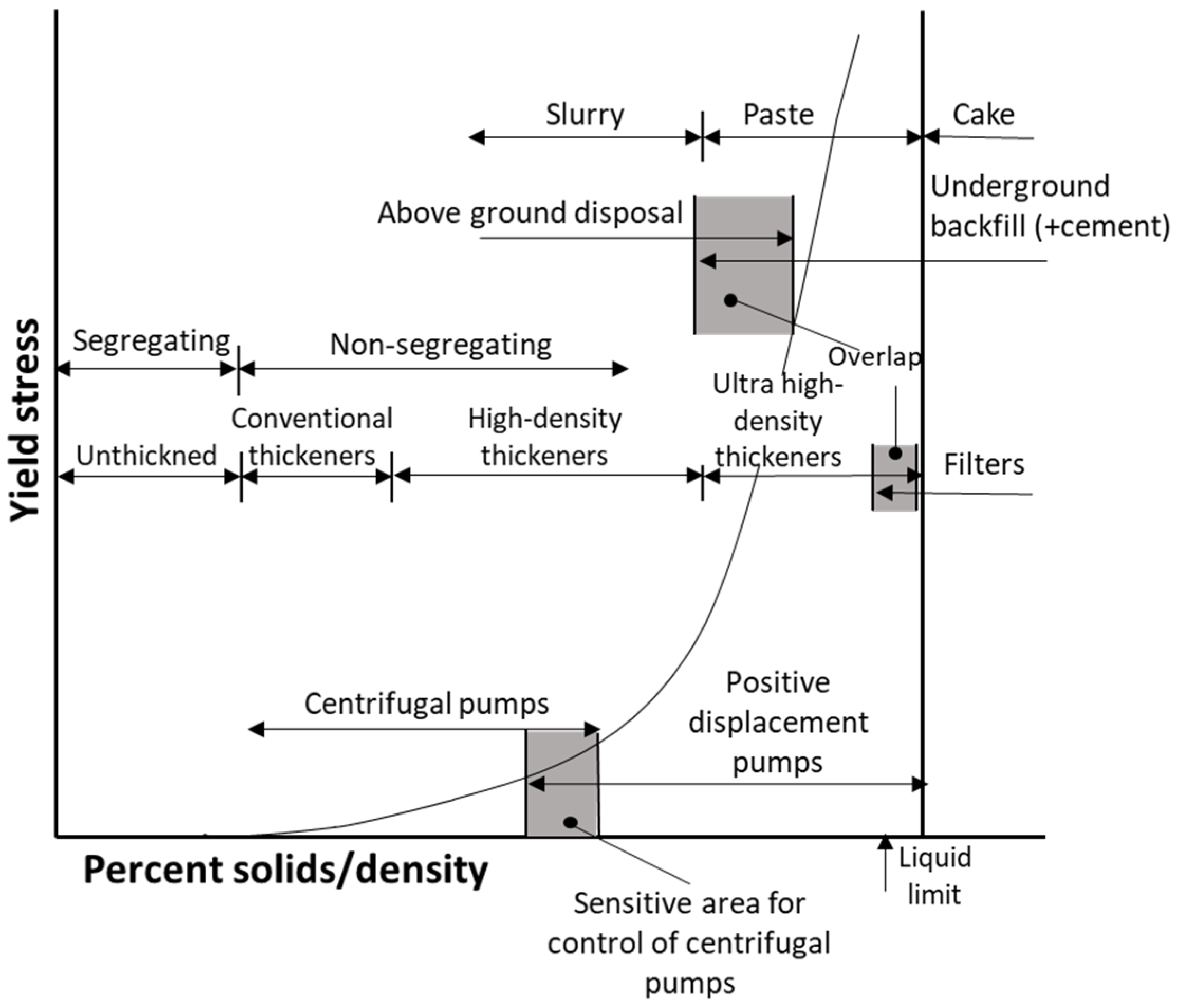
Achieving high density or thickened tailings was made possible due to the development of high compression and high-rate thickeners, as shown in Figure 2 [7]. The different types of thickener produced different characteristics of slurries, starting with diluted slurries on the left, which were not previously dewatered (unthickened) and in which particles settled as free-settling particles. Then, going to pastes on the right, highly compacted beds that settled under compression and channeling, we saw an increase in the yield stress of such slurries, leading to a non-segregating behavior. It could be achieved with ultra-high-density thickeners. Depending on the material, it may be necessary to have high bed levels and low solids flux rates to achieve this consistency or consider different equipment. In Figure 2, it is possible to observe that the increased solids percentage increases the yield stress of the settled deposit, what can contribute to its safety in geotechnical terms.
Figure 2.
Relationship between Yield Stress and Percentage of Solids (adapted from Jewell and Fourie [8] apud Jewell [1]).
According to Chaves [9], different thickening mechanisms can occur depending on the type of thickener. Conventional thickener presents a free settling mechanism with no interference of other particles. The use of flocculant and development of high-rate and high-density thickeners change the settling mechanism to phase thickening, and, with higher side walls thickeners to increase the bed height, there is also an effect of compression in settled slurry, breaking the flocs and delivering the contained water (“channeling”).
Cooling [10], Kam et al. [11], Fourie [1], Mcphail et al. [12], and Mudd and Boger [13] reported the high-density slurry advantages, such as reduced dam construction and decommissioning costs, reduce risks of failure, increased in situ density, higher yield stress, lower infiltration and leaching issues, and better water process recovery, avoiding losses with evaporation and possibilities due to the reclaim process reagents.
Studies have demonstrated the potential for increasing in situ bulk density with a higher solids content in slurry and the non-segregation of particles [1,12]. Solids content necessary to achieve this consistency can be different according to the material, particle size distribution, presence of clays, pH, use of chemicals such as flocculants, and type of water, which can affect the rheological behavior of mineral tailings [14,15].
This study aimed to evaluate the feasibility of producing high-density non-segregable slurries with fine- and ultrafine-niobium ore tailings and investigate their disposal characteristics. In addition to the relevance of the topic from an environmental and safety point of view, there is a scarcity of bibliographical references for the dewatering and disposal of niobium ore flotation tailings.
2. Materials and Methods
A sample was collected in the fine- and ultrafine-tailing stream of the niobium flotation plant; it was characterized and used for thickening and rheology, slump, and flume tests.
2.1. Solids Characterization
The characterization is essential to understand the material’s behavior; therefore, a size distribution analysis was conducted using a laser diffraction granulometer BetterSizer S3 Plus (Bettersize, Dandong, China) and tetrabasic sodium pyrophosphate as a dispersant. The solid specific weight was measured by water pycnometry. The chemical composition analysis was obtained using X-ray fluorescence with the equipment Axios (Malvern Panalytical, Almelo, The Netherlands) using molten pastilles and mineralogy with X-ray diffraction using the equipment D8 Advance (Bruker, Billerica, MA, USA) with a Cu tube, rotation speed 15 rpm, analyses between 10° and 70°, and a 0.02° increment.
2.2. Thickening Tests
The bench scale thickening test is widely used to identify the characteristics in the thickener underflow, even if approximately, but it is still recommended to carry out tests on a larger scale for a better approximation [16]. Barrera and Engels [17] also highlighted the limitations of bench scale tests with high density slurries and the importance of pilot tests.
Based on optimized parameters obtained previously through bench-scale thickening tests, used in the semi-pilot thickening scale was 5% feed solids content, a flocculant concentration of 0.05%, 60 g/t of flocculant Magnafloc® 1011, and a pH of around 5.5.
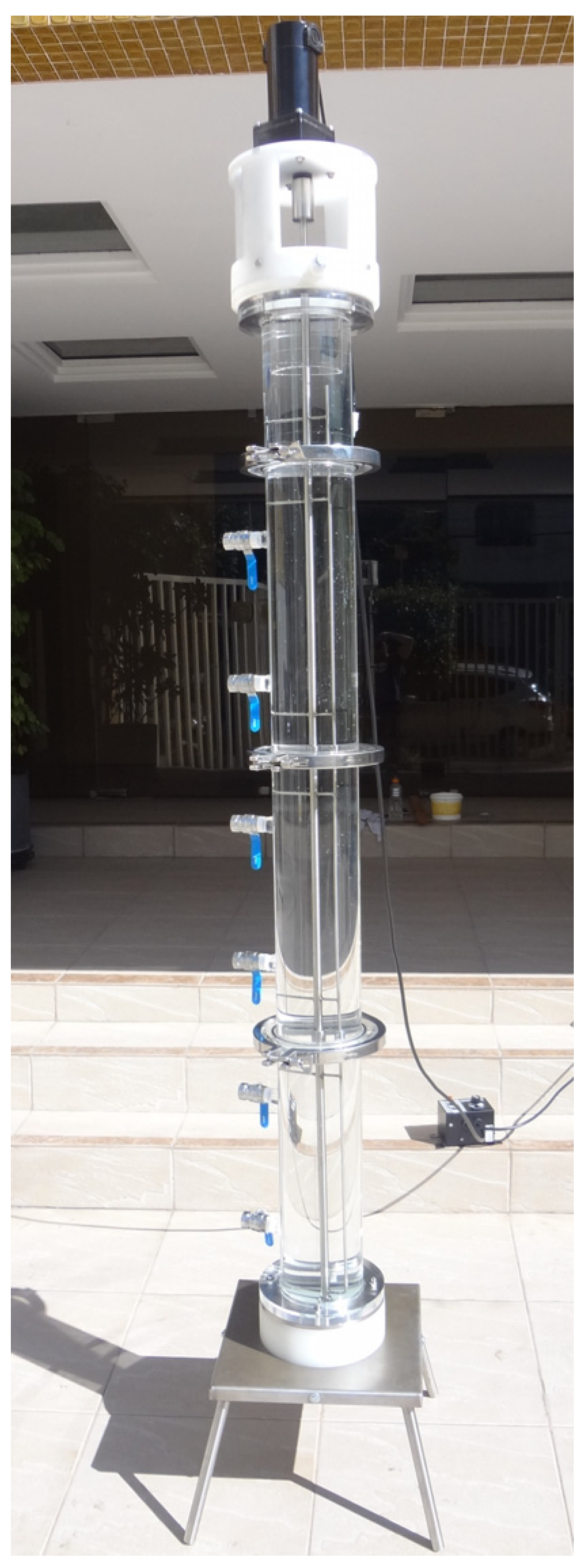
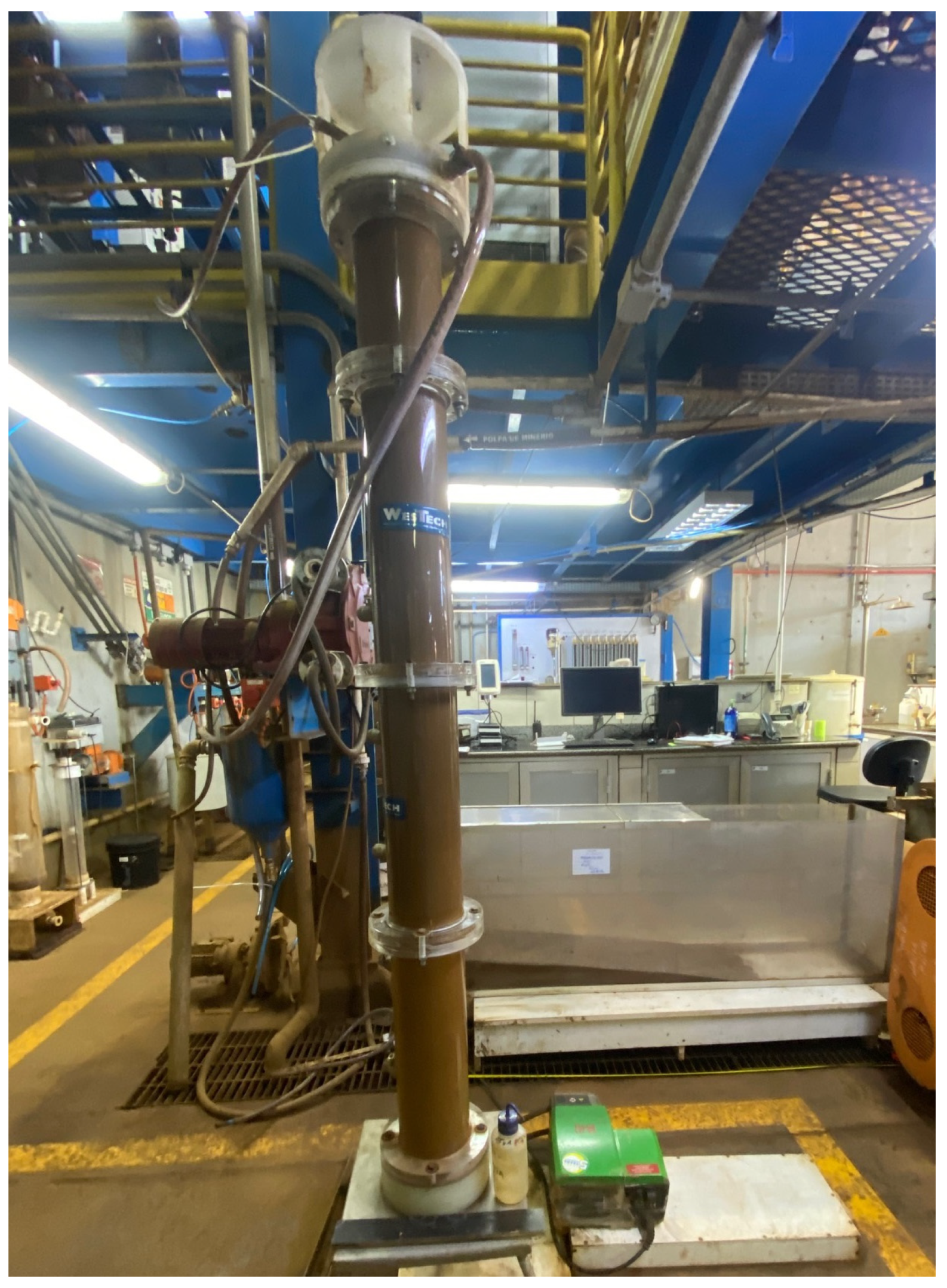
The thickener used is shown in Figure 3. It was 2 m high with 0.14 m of internal diameter; inside, there were rakes that—according to Chaves [9]—were responsible for directing the dense material to the exit point to release water from the settled material as it rearranged the settled particles by a shearing action, removing water bubbles.
Figure 3.
Semi-pilot thickener.
Semi-pilot scale thickening tests were performed with different bed heights (0.5, 1.0, and 1.5 m). Chen et al. [18] observed that the bed height, which was the level of the solid liquid interface in the bottom of the thickener, could have an effect on underflow solids content. It was observed with CT scanning tests and 3D images that the solids content in the underflow increased with a higher bed height.
The solids flux rates of 0.3, 0.5, 0.7, and 0.9 (t/h)/m2 were also evaluated. The solids flux rate was the dry solid rate (t/h) per unit of thickener area (m2). According to Schoenbrunn et al. [19], the main thickener types are conventional, high rate, high density, and paste or deep cone; they have different solids flux rates and bed heights and generated different underflow characteristics. Thus, both variables were important to evaluate. Tests were performed with industrial process water at room temperature.
The flocculant was prepared with a 1.0% (w/v) concentration at 250 rpm for 1 h, then it was diluted to 0.05% (w/v). The diluted flocculant was added into the slurry line using a peristaltic pump before the thickener feedwell. To produce enough underflow, tests were conducted dynamically with continuous slurry feed. When the settled slurry reached the defined bed level, it initiated the underflow pumping adjusting the volumetric flow to stabilize the level. After 2 h of stabilization, the underflow solids content was measured by drying it, and the overflow turbidity was measured with a Hach 2100 (Hach, Loveland, CO, USA). The pH was verified with a Mettler Toledo Seven2Go portable pH meter (Mettler-Toledo, Schwerzenbach, Switzerland).
2.3. Underflow Disposal Characteristics
The slurry behavior in the disposal was correlated with the characteristics of the thickener underflow. To characterize a high-density slurry, it was important to measure its yield stress, consistency, slump, solids content, disposal angle, and particle segregation. It could be evaluated with rheology, slump, and flume tests [20].
2.3.1. Rheology
Rheology studies have been widely used to evaluate thickened tailings and slurries to size the transport system and for the operation itself [21]. The rheology measurements were carried out using a Brookfield viscometer, model DV3T. After 2 h of stabilization in the dynamic thickener, the slurry generated in the underflow was collected with a peristaltic pump and placed in a 0.5 L beaker; the yield stress of the flocculated slurry was immediately measured in the viscometer with 0.1 rpm of speed and vane spindle V-73, which had a yield stress range from 0 to 100 Pa.
2.3.2. Slump Test
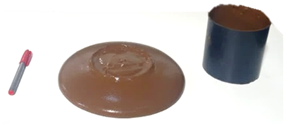
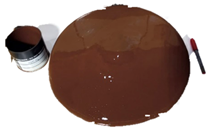
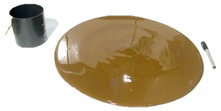
Slump tests were performed to evaluate the material’s stability and consistency. The sample was taken after 2 h of testing. The slump test was carried out by placing the sample inside a PVC cylinder immediately after removal from the semi-pilot thickener. Then, the cylinder was removed, and the final height of the sample was measured. The initial height was considered the total height of the cylinder, which had 0.10 m of height and diameter. The slump was calculated using the difference between the initial and final height divided by the initial height.
2.3.3. Flume Test
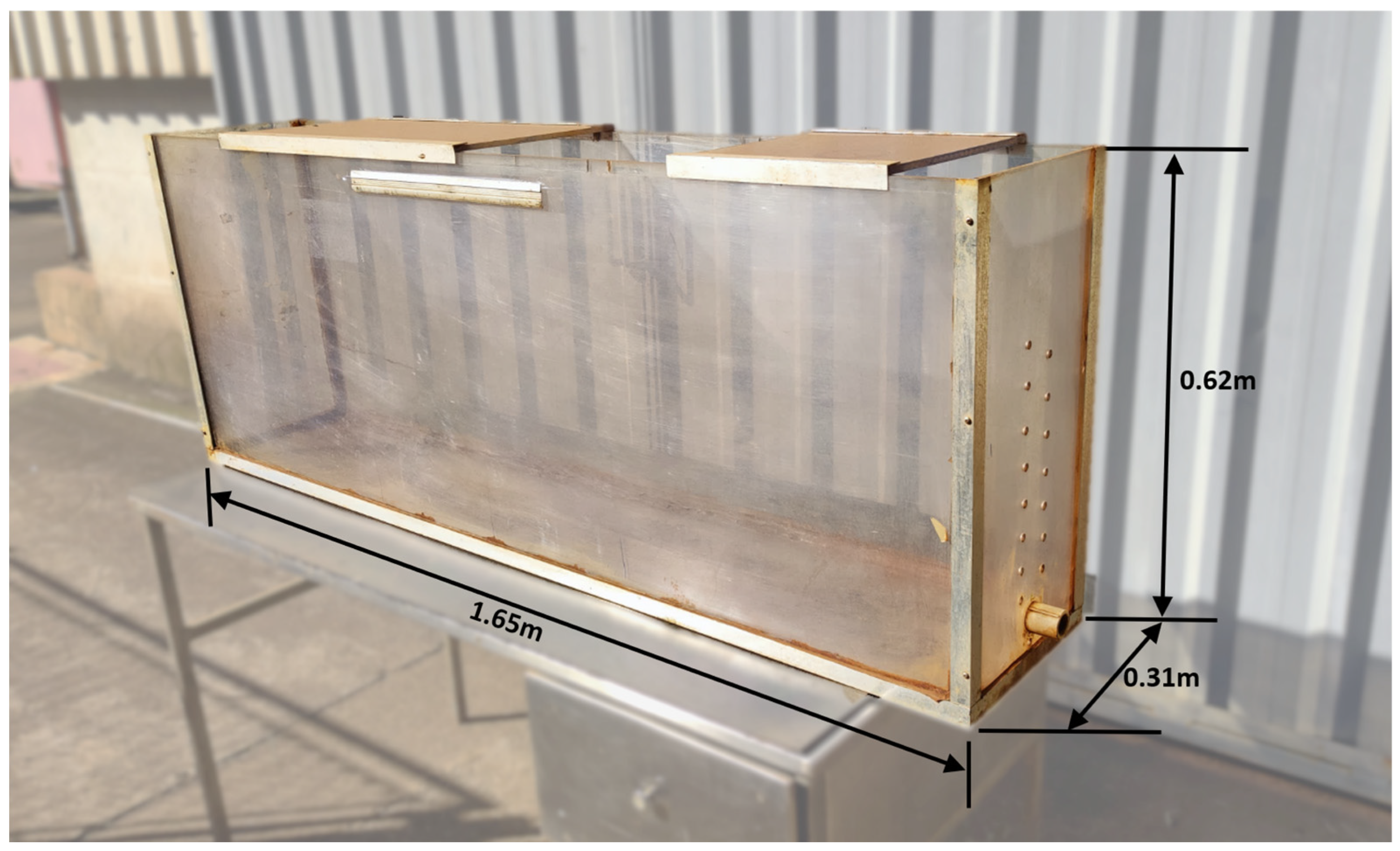
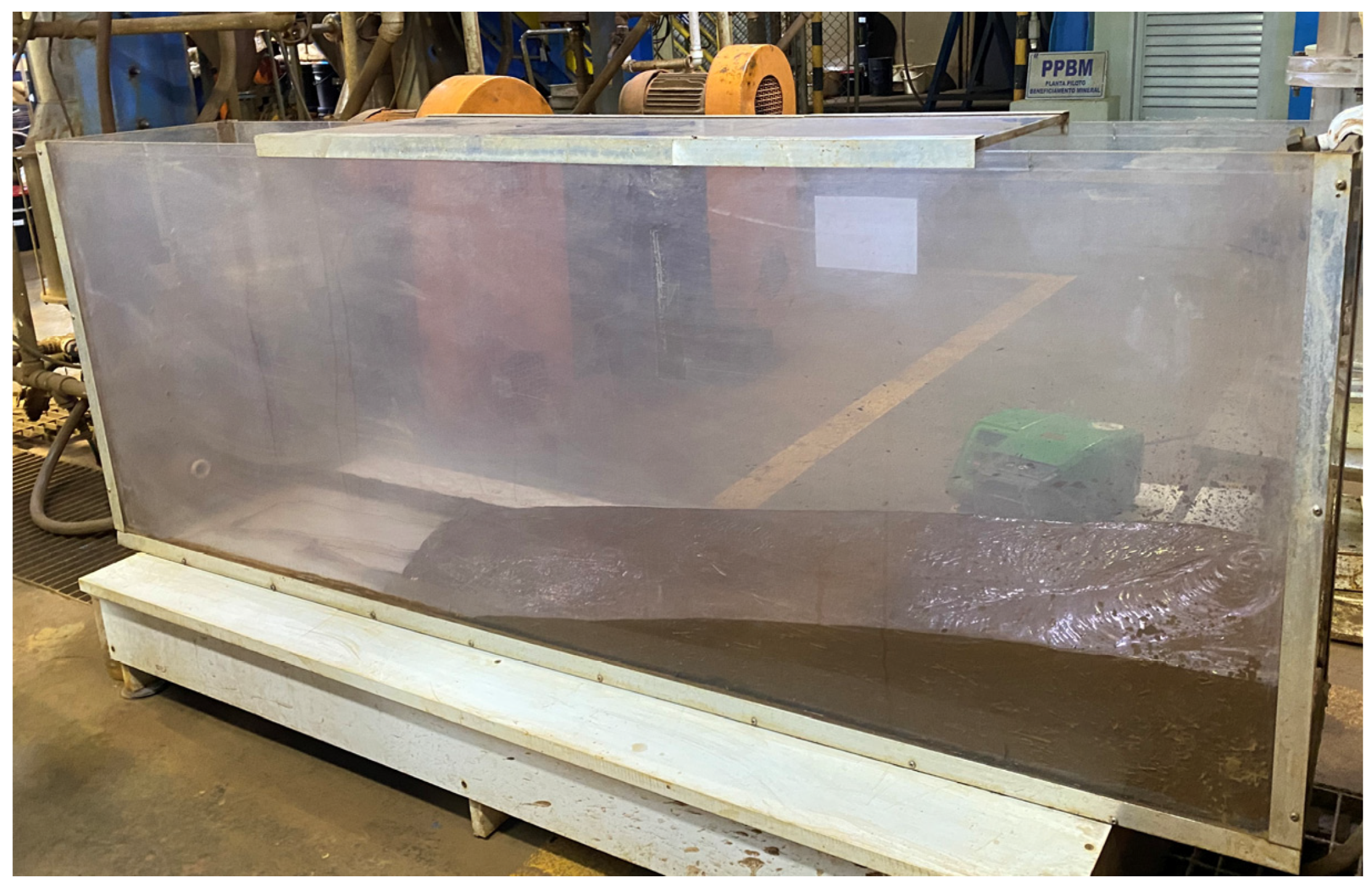
To investigate the effect of the solids content on particle segregation and the disposal angle in the tailings dam, flume tests were conducted to simulate tailings disposal. For the semi-pilot-scale tests, an acrylic vat (0.62 m high × 0.31 m wide × 1.65 m long; Figure 4) was used. In the center of the smaller sides at the top, the tailings slurry was fed with the flow controlled through a peristaltic pump with a frequency inverter.
Figure 4.
Acrylic vat used for flume tests.
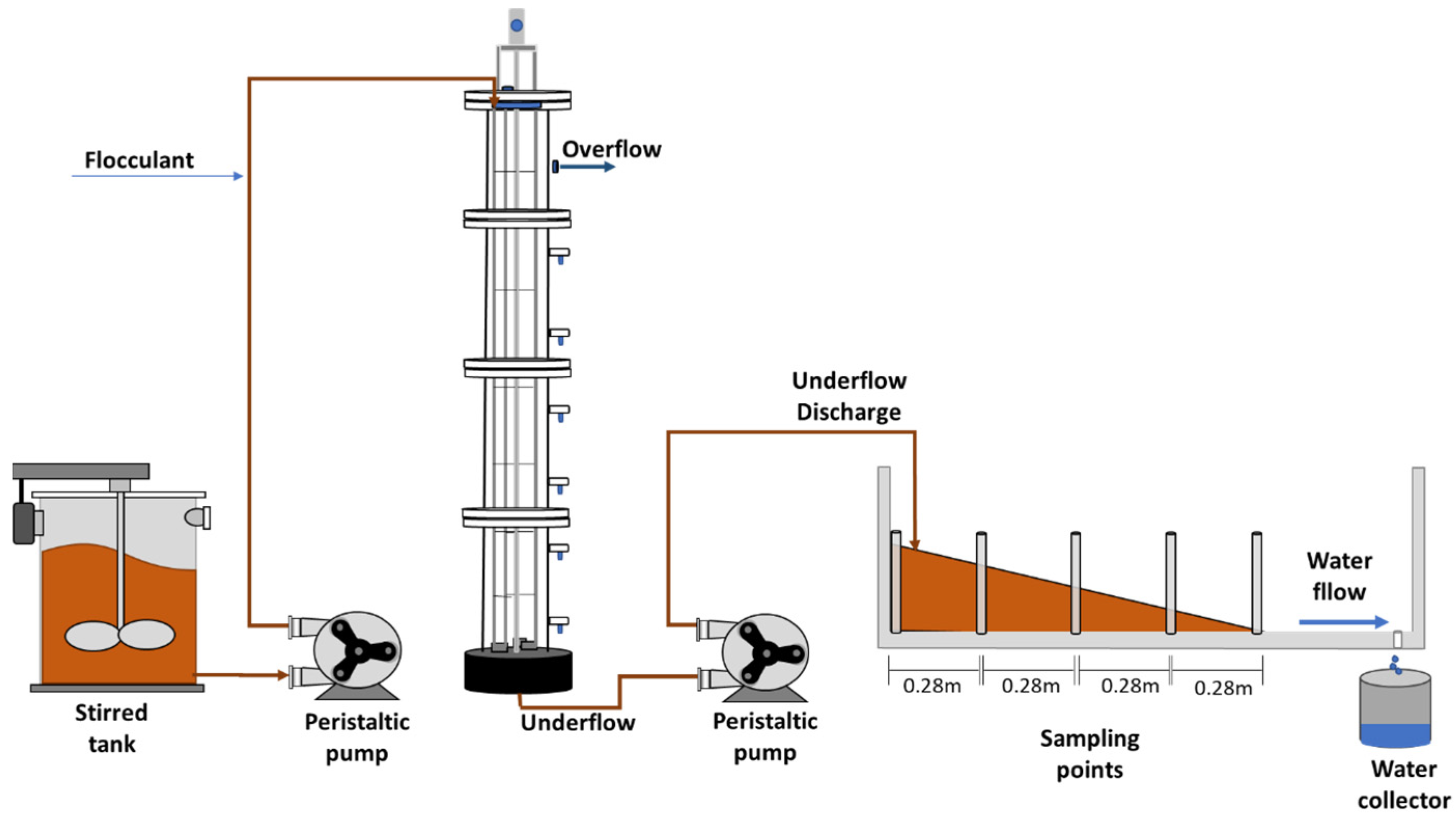
In Figure 5, the scheme used for the tests is presented. The sample was agitated in a 1.5 m3 stirred tank and pumped with a peristaltic pump Bredel Pump SPX 25 (Watson-Marlow, Germany) to the pilot thickener. In the line between the pump and the thickener, the flocculant was added with a concentration of 0.05% (m/v) using a Qdos30 metering peristaltic pump (Watson-Marlow, Falmouth, UK). The flocculated slurry was fed the thickener, and, when the thickened material reached the bed height defined in the test, it started to pump the underflow with a peristaltic pump 520S (Watson-Marlow, Falmouth, UK), using a 10 mm internal diameter tube until the bed height was stable. After stabilization, it started to dispose in the flume. The disposal velocity was low between 0.02 and 0.05 m/s, to not interfere in the influence of the solids concentration in the disposition.
Figure 5.
Flume tests scheme.
The test began with the thickener underflow pumping and ended when the slurry deposit reached 1.10–1.20 m long. The deposited material formed a beach, simulating the behavior of the tailings in a dam reservoir. The water flowed over the rest of the flume length and was collected on the opposite side. The final height and length of the material were measured to calculate the disposal angle. Once the flume test started, the material began a settling regime.
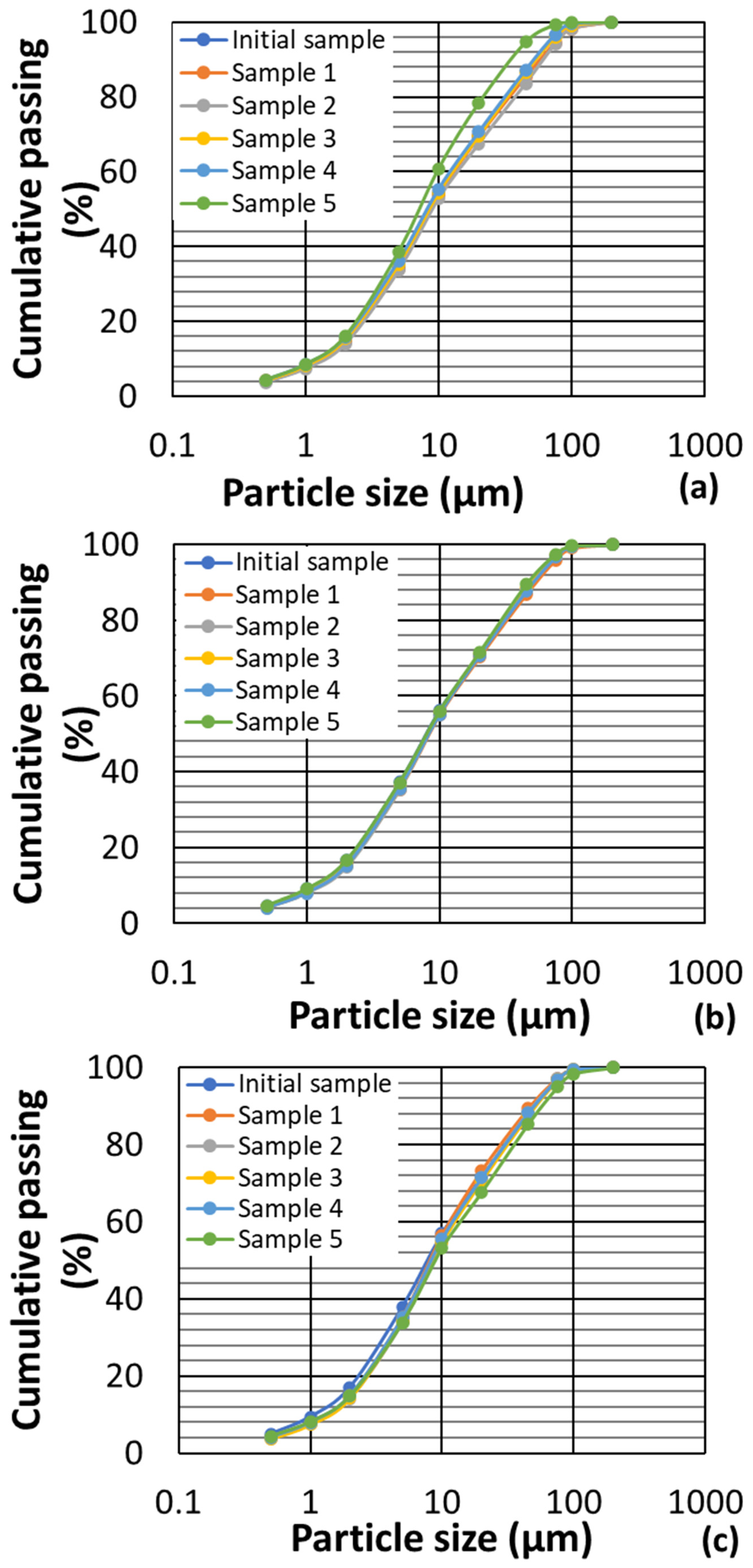
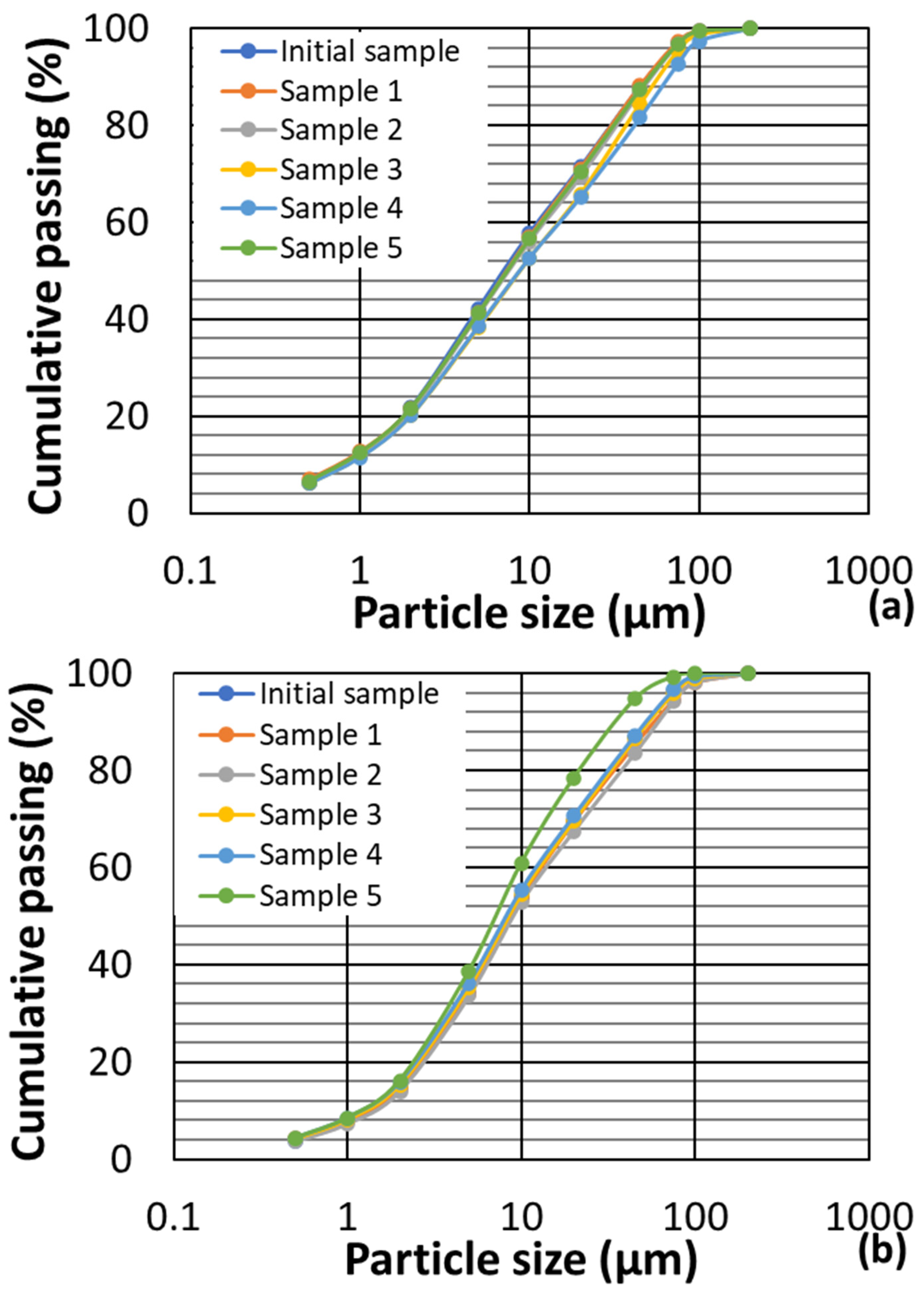
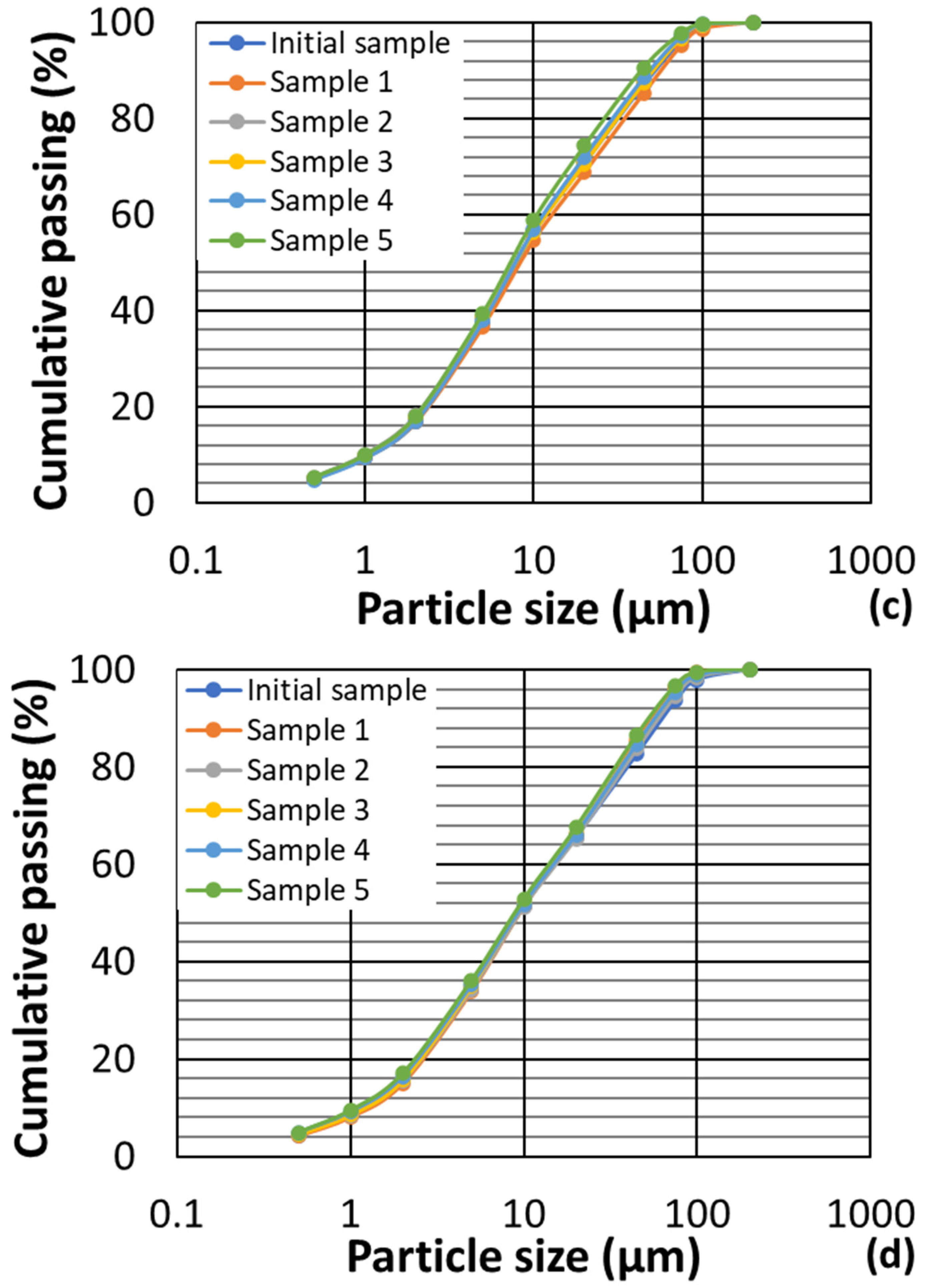
After 24 h, five samples were collected using a 0.22 m diameter PVC tube inserted top down in the center of the flume along the disposed tailings, each 0.28 m apart, beginning in the discharger side extremity. The samples were forwarded to measure the particle size distribution using a laser diffraction granulometer.
3. Results and Discussion
3.1. Solids Characterization
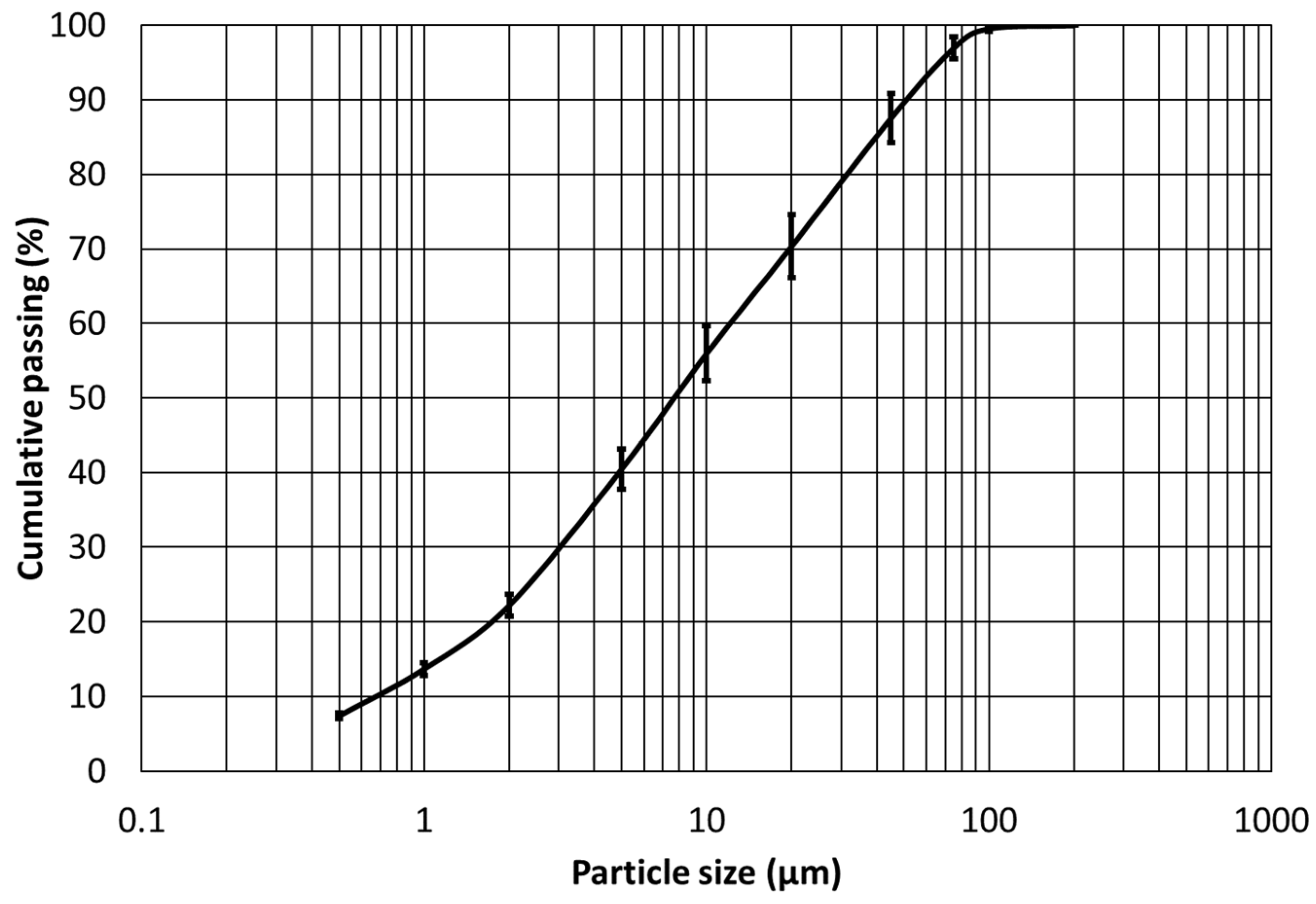
The feed was a tailing from the pyrochlore flotation process. It had a fine particle size distribution (Figure 6) with a d95 of 68.7 µm and a fraction of 13.7% of the material below 1 µm.
Figure 6.
Particle size distribution with standard deviation.
The specific weight of the solid was 3.72 t/m3. Chemical analysis of the material found 51.3% Fe2O3, 8.9% BaO, and 9.0% SiO2. Mineralogical analysis indicated that the primary minerals identified were 53.0% goethite, 11.5% gorceixite, 11.0% hematite, 7.0% barite, and 6.4% quartz.
3.2. Thickening Tests
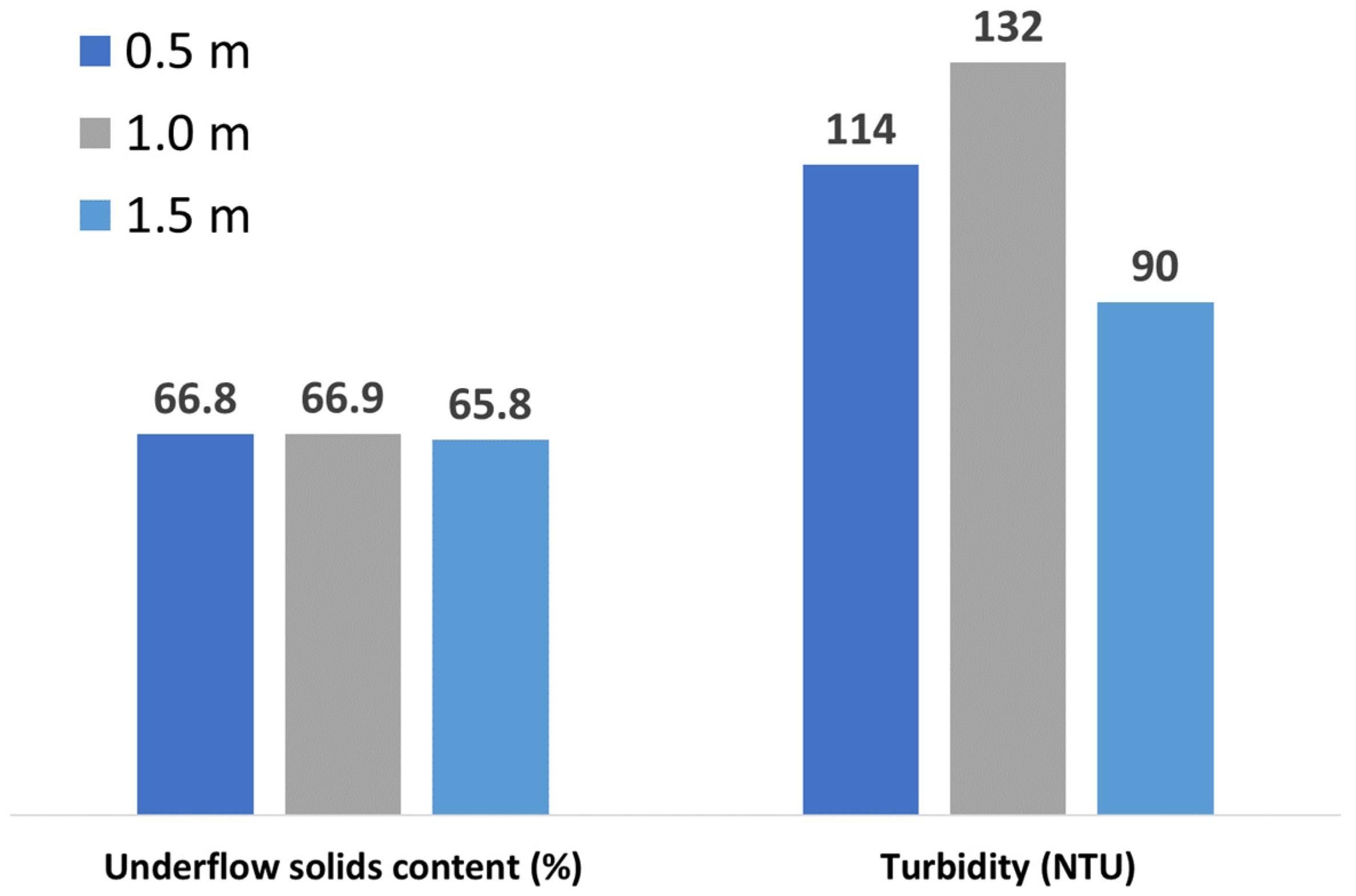
In a continuous thickening test, the bed height is an important operational parameter and cannot be properly evaluated in bench scale tests. Semi-pilot thickening tests were conducted to evaluate the effect of different bed heights on underflow solids content and overflow turbidity (Figure 7).
Figure 7.
Results of the semi-pilot thickening test with different bed heights.
The semi-pilot thickener, with a height of two meters, played a crucial role in achieving a high concentration of solids in the underflow. It was verified that the bed height variation had a minor influence on the underflow solids content. In Usher and Scales’ study [22], an algorithm was developed to predict the flux rate versus the underflow solids content. They observed that the bed height had less influence on the underflow solids content at solids flux rates between 0.1 and 3 (t/h)/m2. According to the authors, there was not enough time to transmit compressive forces on the material bed at these flux rates; the thickener operation was called permeability limited. In this condition, the underflow solids concentration depended on the solids flux alone. On the other hand, when lower flux rates were used, e.g., <0.1 (t/h)/m², the thickener operation was called compressibility limited, the bed height had a greater influence, and the compressive forces would be transmitted by the network structure of the material bed.
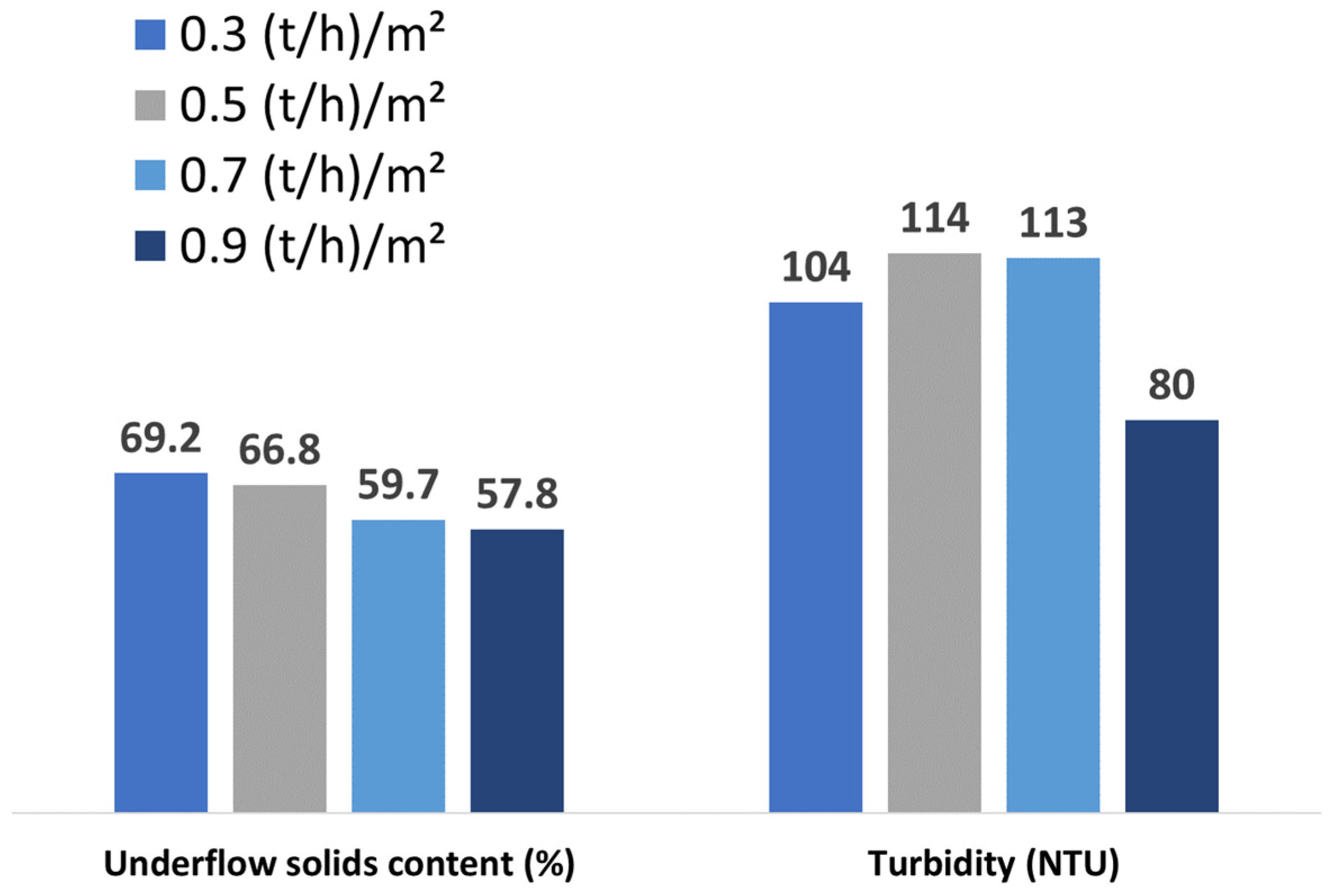
In Figure 8, the results of solids in underflow and overflow turbidity with different solids flux rates are presented. Lower flux rates resulted in higher underflow solids contents, and higher rates did not increase the overflow turbidity. Furthermore, according to Usher and Scales [22], in the evaluated flux rate range, higher concentrations of solids were found in the underflow as the rate was reduced. The velocity of the slurry was directly proportional to the flux rate. With higher solids flux rates, there was less time for the solids to settle, the residence time was reduced, and there was more probability to have solids in the overflow due to the rise rate. Lower flux rates could proportionate more residence times, better settlings, and higher solids contents in the underflow but also will require higher thickener areas.
Figure 8.
Result of the semi-pilot thickening test with solids flux rate variation.
The underflow from the semi-pilot thickener was used to investigate disposal characteristics with the different feed rates and bed heights.
3.3. Underflow Disposal Characteristics
To verify the underflow behavior with different thickening variables (bed height and solids flux rate), rheology, slump, and flume tests were performed. With rheology tests, it was possible to verify the effect of bed height variation on yield stress (Table 1). As previously noted, the variation in solids between the 0.5 m and 1.5 m bed height was low and reflected in low yield stress variations. As expected, higher underflow solids content led to higher yield stress.
Table 1.
Yield stress results with bed height variation.
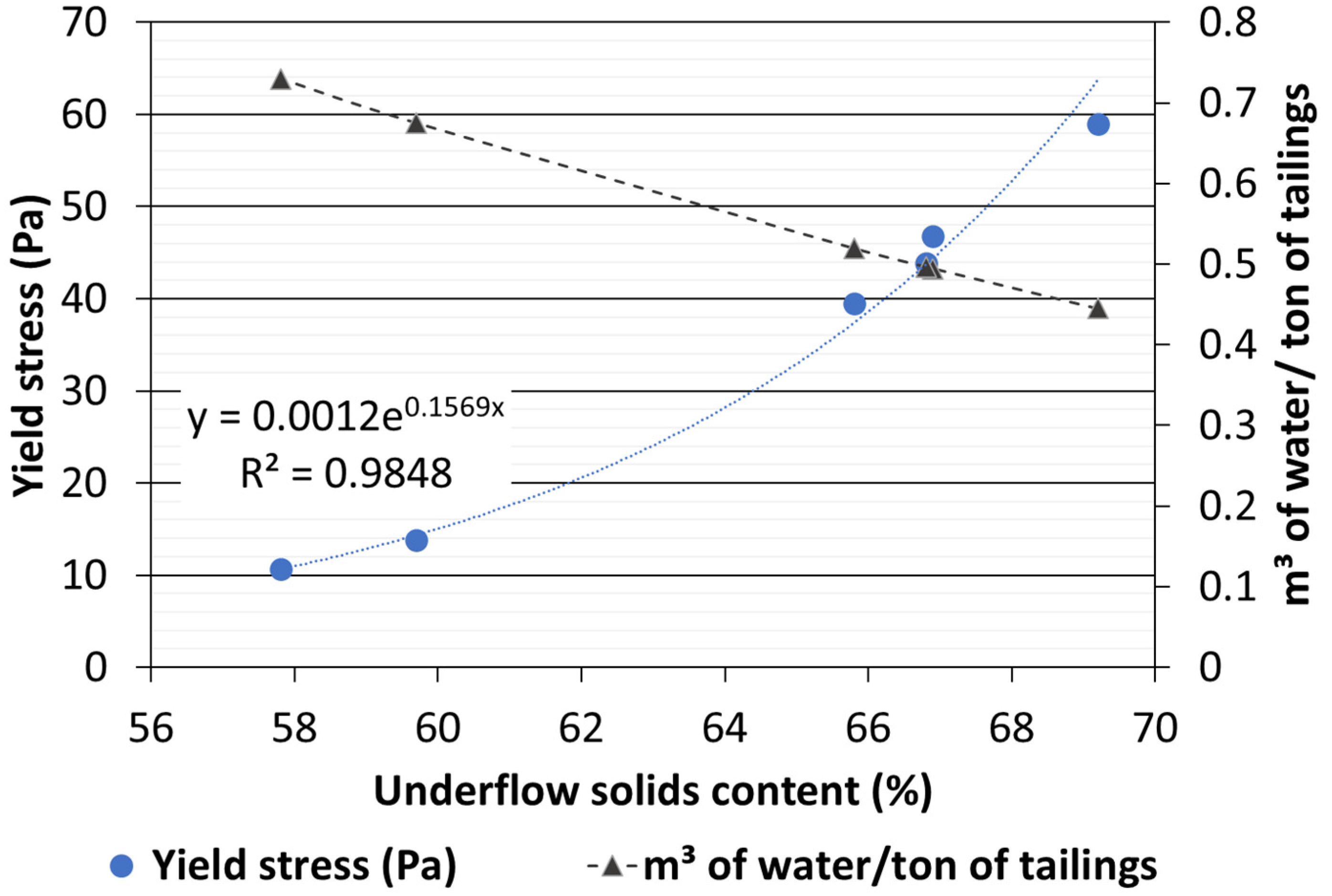
In Table 2, the effect of the solids flux rate on the yield stress is presented, which follows the variation in the percentage of solids. Higher solids flux rates led to a lower percentage of solids in the underflow and, consequently, lower yield stress. We also observed a greater variation in yield stress at a higher percentage of solids, even with minor changes, due to the exponential behavior in the curve of solids percentage versus yield stress (Figure 9).
Table 2.
Yield stress results with solids flux rate variation.
Figure 9.
Effect of solid content on niobium tailing yield stress and water content per ton of dry solids.
In the Figure 9 the relationship between the percentage of solids in the underflow and the yield stress is presented, with an increase in yield stress with higher values of underflow solids content. The higher the solids content was, the greater the water reduction in the disposal. The present tailings were disposed of in a diluted form with around 18% solids content and 4.5 m3 of water per ton of solids, with the underflow solids content obtained in the tests. Figure 9 also shows the water volume reduction for each ton of dry tailings. The yield stress is an important parameter to thickened tailings facilities because it would influence the pumping system; higher yield stress would require positive displacement pumps, for example. Additionally, there is a relation with reservoir safety because higher yield stresses meant that higher stress to start the movement of a slurry would be required, which affects the deposit’s stability.
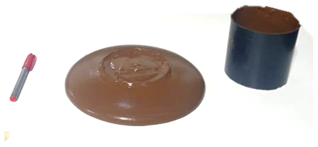
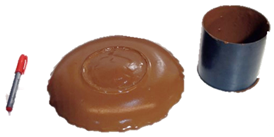
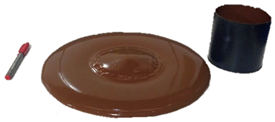
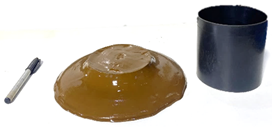
According to Boger [23], there is a wide range of references about what yield stress is considered a paste, which goes from 10 Pa to 1000 Pa. Therefore, it is important to evaluate other parameters as well. In Table 3, the slump tests conducted and the final aspect of the material with different bed heights are presented. Here, there was little difference in slump measurements, similar to underflow solids content and yield stress.
Table 3.
Slump results with variations in bed height.
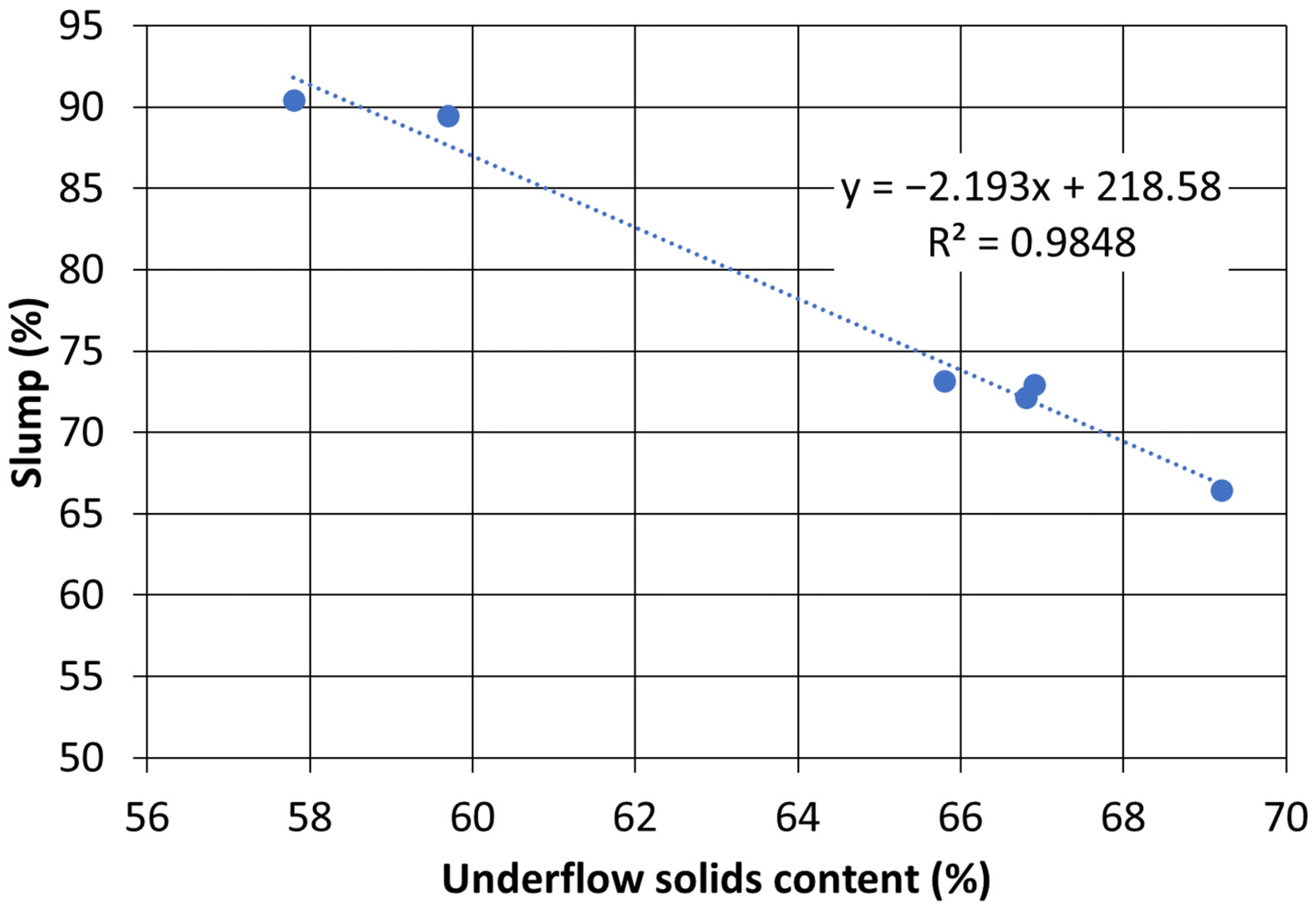
Table 4 shows the relation of slump values with the solids flux rate variations in thickening tests. At lower solids flux rates, the percentage of solids and yield stress were higher. Consequently, there was a lower slump. As the rate increased, the percentage of solids tended to reduce, as well as the yield stress, and a higher slump was observed since the sample became more fluid with less consistency. The slump test had a variation from 66.4 to 90.5%.
Table 4.
Slump results with variations in bed height.
In both cases, the tendency was for a reduction in slump with an increase in the percentage of solids in the underflow (Figure 10), which was also evidenced by Panchal et al. [24] and Yang et al. [25], who obtained linear and polynomial relationships, respectively.
Figure 10.
Relationship between slump and percentage of solids.
Flume tests were performed to evaluate disposal angle and particle segregation. In Figure 11, the thickener in operation and the slurry disposal in the flume are presented.
Figure 11.
Thickener operation with flume disposal.
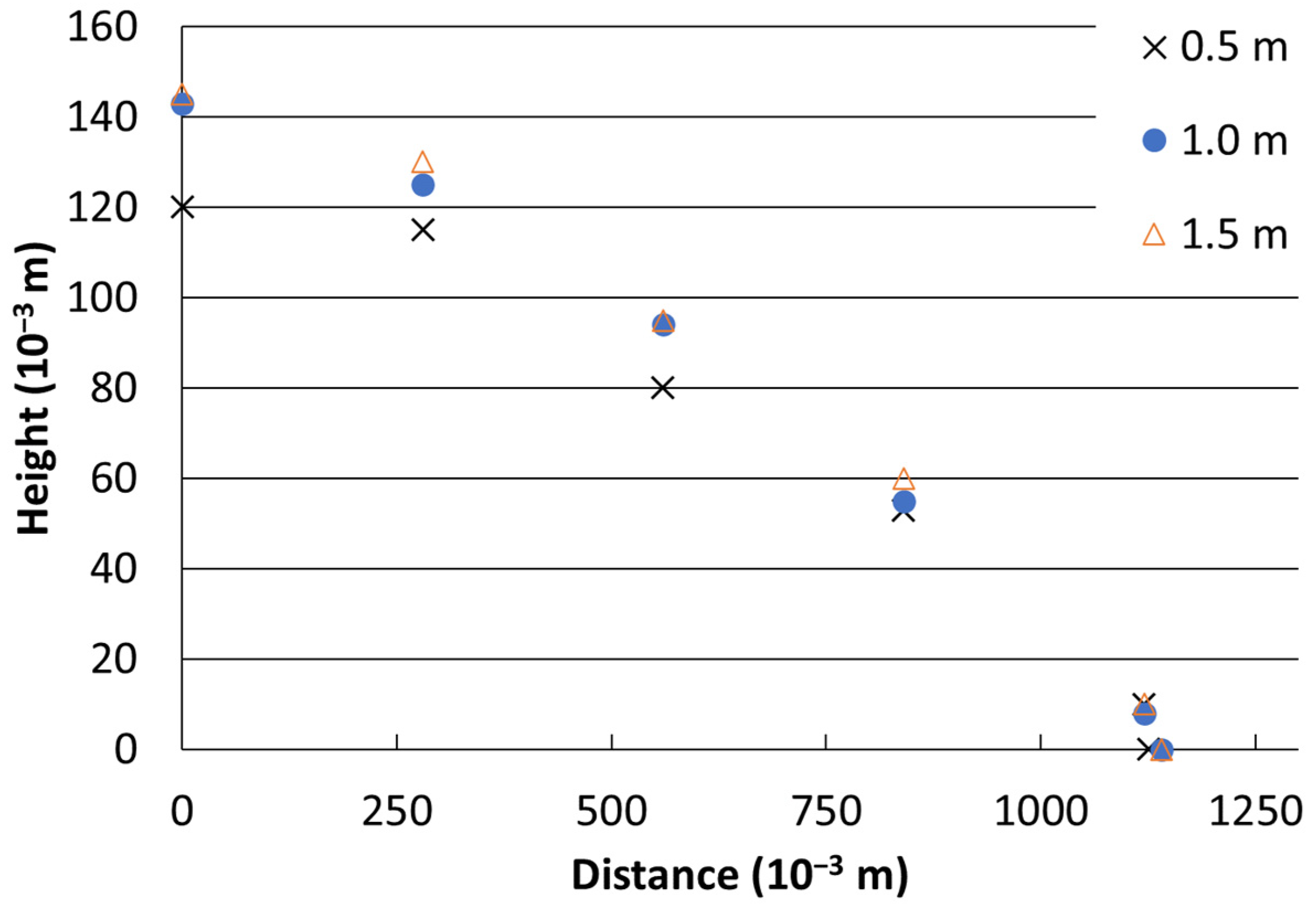
The elevation and disposal angle with bed height variation are shown in Figure 12 and Table 5. It was observed that higher values of bed height resulted in higher disposal angles.
Figure 12.
Elevations measured along the flume with underflow of different bed heights.
Table 5.
Relationship between bed height and disposal angle.
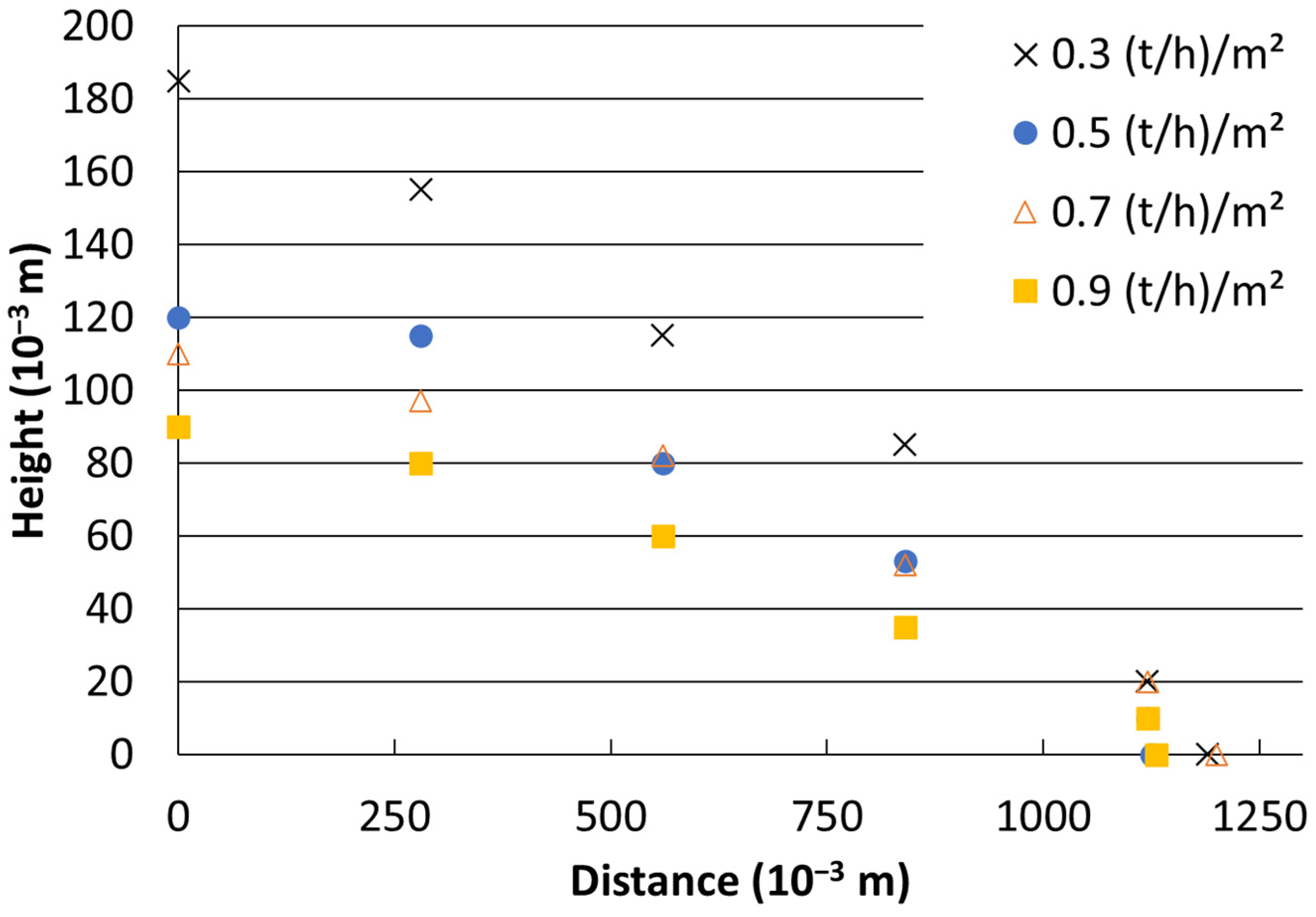
The elevation and angle of disposition obtained with the variations in the flux rate in the thickening tests are shown in Figure 13 and Table 6. The higher the solids flux rates were, the lower the disposal angles obtained, and it was observed that the solids flux rates had greater influences than the bed heights.
Figure 13.
Elevations measured along the flume with different solids flux rates.
Table 6.
Relationship between solids flux rate and disposal angle.
In Figure 14, the flume test after 24 h with 0.9 (t/h)/m2 solids flux rate with a higher disposal angle, as indicated in Table 6, is presented.
Figure 14.
Flume test after 24 h with 0.5 m bed level and 0.3 (t/h)/m2 solids flux rate.
Fitton [26] showed that there was a tendency to increase the disposal angle as the concentration of solids increased. Similar results were observed with iron ore tailings by Hernández [27], in which flume tests were performed from 58 to 65% of solids without base inclination and resulted in angles between 3.23° and 8.38°, similar to this work.
Li et al. [28] found that the slope ranged from 1.5 to 4.0% on average for the solids content used in this work (58 to 68%) in mines surveyed from different tailings, reaching a maximum of 5.7%. These values were lower than those obtained in this work, which oscillated between 8.0 and 15.5%; however, the difference was reported by Fourie and Gawu [29]. The authors highlighted the difficulty in having exact values of the disposal angle in flume tests because of the side wall friction of the flume resulting in steeper values than those obtained in practice. High values of disposal angle may require adjustments in the disposal system to spread the tailings inside the dam, for example, using more disposal points along the dam.
The particle size distribution curves to analyze segregation were conducted with the samples collected at five different points along the length of each flume deposition. In Figure 15, the results with bed height variations are presented, showing no size segregation since the curves were very close.
Figure 15.
Particle size analysis of the material along the flume with different bed heights: (a) 0.5 m; (b) 1.0 m; (c) 1.5 m.
Figure 16 shows the results of the particle size analysis from the flume tests with the underflow of the thickening varying the solids flux rate. No granulometric segregation was identified in the evaluated conditions.

Figure 16.
Particle size analysis of the material along the flume with different unit feed rates: (a) 0.3 (t/h)/m2; (b) 0.5 (t/h)/m2; (c) 0.7 (t/h)/m2; (d) 0.9 (t/h)/m2.
The results show characteristics of a high-density slurry since it was no longer possible to verify significant particle size segregation in the disposal. We did not verify the paste consistency because the measured yield stress was low for paste (<100 Pa), and verifying water release in the material was still possible.
We also observed that the bulk density as a diluted slurry—how it was disposed of by the company—increased from 1.15 t/m3 after dewatering the material to 1.96 t/m3, corresponding to an underflow with 0.5 (t/h)/m2 and 0.5 m of bed height.
4. Conclusions
This work contributes to addressing the scarcity of references on dewatering and the disposal of niobium flotation tailings by verifying the possibility to achieve non-segregable high-density slurries through the implementation of a thickener assisted by flocculant addition and with low turbidity water. Semi-pilot thickening tests were performed with previously optimized parameters on a bench scale (pH, percentage of solids in the feed, flocculant, and dosage) and variations in thickened material bed heights and solids flux rates. As for the disposal characteristics, the slump, consistency, and angle of disposition were evaluated in addition to rheology measurements.
The semi-pilot thickener made it possible to obtain more realistic underflow characteristics and to obtain high density slurries, which were not possible in glass cylinder thickening tests. The thickener underflow was used to evaluate the disposal characteristics with rheology, flume, and slump tests. The results indicated that bed height had a lower influence compared to the solids flux rates’ influences. With solids flux rate variations, it was possible to verify that higher flux rates led to lower underflow solids contents, yield stresses, and disposal angles with higher slumps; visually, the underflow had less consistency and was more fluid.
In all conditions, it was possible to obtain a settled slurry without particle segregation from 57.8 to 60.2% solids. The thickener could operate with low bed height because this parameter had a lower influence on disposal characteristics.
Although the solids flux rate conditions did not show particle segregation, the higher flux of 0.7 and 0.9 (t/h)/m2 generated low yield stress and low consistency slurries that did not correspond to a high-density slurry. On the other hand, very low flux rates could result in a thickener with a very high area. Therefore, non-segregable niobium ore tailings could be achieved with thickeners from a 0.5 (t/h)/m2 flux rate and a 0.5 m bed height, which generated an underflow with a 66.8% solids content, a yield stress higher than 40 Pa, a 67.1% slump, and a 6° disposal angle. The results corresponded to the expectations, and the scale up can be performed directly with the thickener flux rate, yield stress and slump tests. The disposal angle obtained by the flume test could have a geometrical difference due to the friction of side walls, showing steeper values, as mentioned.
One notable benefit of implementing high-density tailings disposal is the optimized utilization of dam reservoir volume. In this study, the condition of disposal with the non-segregable slurry increased the bulk density by 70%, from 1.15 to 1.96 t/m3, allowing a longer useful life of the disposal structure. High water recovery was obtained with an 89% reduction in water forwarded to the dam with its implementation.
Author Contributions
Conceptualization, R.M.F., A.P.C. and F.G.T.; Data curation, R.M.F. and P.T.d.P.; Formal analysis, R.M.F.; Investigation, P.T.d.P.; Methodology, R.M.F., A.P.C., F.G.T. and P.T.d.P.; Project administration, R.M.F.; Supervision, A.P.C. and F.G.T.; Validation, R.M.F., A.P.C. and F.G.T.; Visualization, P.T.d.P.; Writing—original draft, R.M.F.; Writing—review and editing, A.P.C., F.G.T. and P.T.d.P. All authors have read and agreed to the published version of the manuscript.
Funding
This research received no external funding.
Data Availability Statement
Data available on request due to restrictions, e.g., privacy or ethics.
Conflicts of Interest
The authors declare no conflict of interest.
References
- Fourie, A.B. Perceived and realized benefits of paste and thickened tailings for surface deposition. In Proceedings of the International Seminar on Paste and Thickened Tailings, Sun City, South Africa, 16–19 April 2012. [Google Scholar] [CrossRef]
- Qi, C.; Fourie, A. Cemented paste backfill for mineral tailings management: Review and future perspectives. Miner. Eng. 2019, 114, 106025. [Google Scholar] [CrossRef]
- Davies, M. Filtered Dry Stacked Tailings: The Fundamentals. In Proceedings of the Tailings and Mine Waste Conference, Vancouver, BC, Canada, 6–9 November 2011. [Google Scholar] [CrossRef]
- Franks, D.M.; Boger, D.V.; Cote, C.M.; Mulligan, D.R. Sustainable Development Principles for the Disposal of Mining and Mineral Processing Wastes. Resour. Policy 2011, 36, 114–122. [Google Scholar] [CrossRef]
- Wang, C.; Harbottle, D.; Liu, Q.; Xu, Z. Current state of fine mineral tailings treatment: A critical review on theory and practice. Miner. Eng. 2014, 58, 113–131. [Google Scholar] [CrossRef]
- Boger, D.V. Rheology of slurries and environmental impacts in the mining industry. Annu. Rev. Chem. Biomol. Eng. 2013, 4, 239–257. [Google Scholar] [CrossRef] [PubMed]
- Jewell, R. The Evolution of Paste and Thickened Tailings; Australian Centre for Geomechanics: Newsletter, Australia, 2010; Volume 35, pp. 1–3. [Google Scholar]
- Jewell, R.J.; Fourie, A.B. Paste and Thickened Tailings—A Guide, 2nd ed.; Australian Centre for Geomechanics: Perth, Australia, 2006; 242p. [Google Scholar]
- Chaves, A.P. Teoria e Prática do Tratamento de Minérios: Desaguamento, Espessamento e Filtragem, 4th ed.; Oficina de Textos: São Paulo, Brazil, 2013; Volume 2, pp. 1–240. [Google Scholar]
- Cooling, D.J. Improving the Sustainability of Residue Management Practices—Alcoa World Alumina Australia. In Proceedings of the 10th International Seminar on Paste and Thickened Tailings, Perth, Australia, 13–17 March 2007. [Google Scholar]
- Kam, S.; Girard, J.; Hmidi, N.; Mao, Y.; Longo, S. Thickened tailings disposal at Musselwhite Mine. In Proceedings of the 14th International Seminar on Paste and Thickened Tailings, Perth, Australia, 5–7 April 2011. [Google Scholar]
- Mcphail, G.; Noble, A.; Papageorgiou, G.; Wilkinson, D. Development and Implementation of Thickened Tailings Discharge at Osborne Mine, Queensland, Australia. In Proceedings of the International Seminar on Paste and Thickened Tailings, Cape Town, South Africa, 31 March–2 April 2004. [Google Scholar]
- Mudd, G.M.; Boger, D.V. The Ever Growing Case for Paste and Thickened Tailings—Towards More Sustainable Mine Waste Management. J. Aust. Inst. Min. Metall 2013, 2, 56–59. Available online: https://www.researchgate.net/publication/288595659_The_ever_growing_case_for_paste_and_thickened_tailings_-_Towards_more_sustainable_mine_waste_management (accessed on 5 June 2023).
- Xu, W.; Tian, M.; Li, Q. Time-dependent rheological properties and mechanical performance of fresh cementes tailings backfill containing flocculants. Miner. Eng. 2020, 145, 106064. [Google Scholar] [CrossRef]
- Reyes, C.; Álvarez, M.; Ihle, C.F.; Contreras, M.; Kracht, W. The influence of seawater on magnetite tailing rheology. Miner. Eng. 2019, 131, 363–369. [Google Scholar] [CrossRef]
- Fernández-Iglesias, A.; Araujo, A.C.; Goosens, M. Studying feasibility of paste and thickened tailings at laboratory scale—Pilot thickeners. In Proceedings of the 16th International Seminar on Paste and Thickened Tailings, Perth, Australia, 17–20 June 2013. [Google Scholar] [CrossRef]
- Barrera, S.; Engels, J. High-density thickening for large production rates: Main challenges. In Proceedings of the 21st International Seminar on Paste and Thickened Tailings, Perth, Australia, 11–13 April 2018. [Google Scholar] [CrossRef]
- Chen, X.; Zhang, J.; Jiao, H.; Hu, K.; Wan, L.; Ruan, Z.; Yang, L. Mechanism of Rake Frame Shear Drainage during Gravity De-watering of Ultrafine Unclassified Tailings for Paste Preparation. Minerals 2022, 12, 240. [Google Scholar] [CrossRef]
- Schoenbrunn, F.; Laros, T.; Henriksson, B.; Arbuthnot, I. Solid and Liquid Separation. In Mineral Processing & Extractive Metallurgy Handbook; Kawatra, S.K., Young, C.A., Eds.; Society for Mining, Metallurgy & Exploration: Englewood, CO, USA, 2019; pp. 1069–1107. [Google Scholar]
- Osorio, C.A.H.; de Araujo, A.C.; Valadão, G.E.S. Estudo de Características de Algumas Pastas Minerais. Tecnol. Metal. Mater. Min. 2008, 4, 50–55. [Google Scholar] [CrossRef]
- Sofrà, F.; Boger, D.V. Rheology for thickened tailings and paste—History, state-of-the-art and future directions. In Proceedings of the 14th International Seminar on Paste and Thickened Tailings, Perth, Australia, 5–7 April 2011. [Google Scholar] [CrossRef]
- Usher, S.P.; Scales, P.J. Steady state thickener modelling from the compressive yield stress and hindered settling function. Chem. Eng. J. 2005, 111, 253–261. [Google Scholar] [CrossRef]
- Boger, D.V. A Personal perspective on paste and thickened tailings—A decade on. In Proceedings of the 14th International Seminar on Paste and Thickened Tailings, Perth, Australia, 5–7 April 2011. [Google Scholar] [CrossRef]
- Panchal, S.; Deb, D.; Sreenivas, T. Mill tailings based composites as paste backfill in mines of U-bearing dolomitic limestone ore. J. Rock Mech. Geotech. Eng. 2018, 10, 310–322. [Google Scholar] [CrossRef]
- Yang, L.; Qiu, J.; Jiang, H.; Hu, S.; Li, H.; Li, S. Use of Cemented Super-Fine Unclassified Tailings Backfill for Control of Subsidence. Minerals 2017, 7, 216. [Google Scholar] [CrossRef]
- Fitton, T.G. Some comments on thickened tailings and beach slopes. In Proceedings of the 21st International Seminar on Paste and Thickened Tailings, Perth, Australia, 11–13 April 2018. [Google Scholar] [CrossRef]
- Hernández, C.A.; Pizarro, E.A.; Molina, J.A.; de Araujo, A.C.; Valadão, G.E.S. Mineral Paste Comparison Between Copper and Iron Tails. In Proceedings of the Twelfth International Seminar on Paste and Thickened Tailings, Perth, Australia, 21–24 April 2009. [Google Scholar] [CrossRef]
- Li, A.L.; Been, K.; Ritchie, D.; Welch, D. Stability of Large Thickened, Non-Segregated Tailings Slopes. In Proceedings of the Twelfth International Seminar on Paste and Thickened Tailings, Perth, Australia, 21–24 April 2009. [Google Scholar] [CrossRef]
- Fourie, A.B.; Gawu, S.K.Y. The validity of laboratory flume data for predicting beach slopes of thickened tailings deposits. In Proceedings of the Thirteenth International Seminar on Paste and Thickened Tailings, Toronto, Canada, 3–6 May 2010. [Google Scholar] [CrossRef]
Disclaimer/Publisher’s Note: The statements, opinions and data contained in all publications are solely those of the individual author(s) and contributor(s) and not of MDPI and/or the editor(s). MDPI and/or the editor(s) disclaim responsibility for any injury to people or property resulting from any ideas, methods, instructions or products referred to in the content. |
© 2023 by the authors. Licensee MDPI, Basel, Switzerland. This article is an open access article distributed under the terms and conditions of the Creative Commons Attribution (CC BY) license (https://creativecommons.org/licenses/by/4.0/).