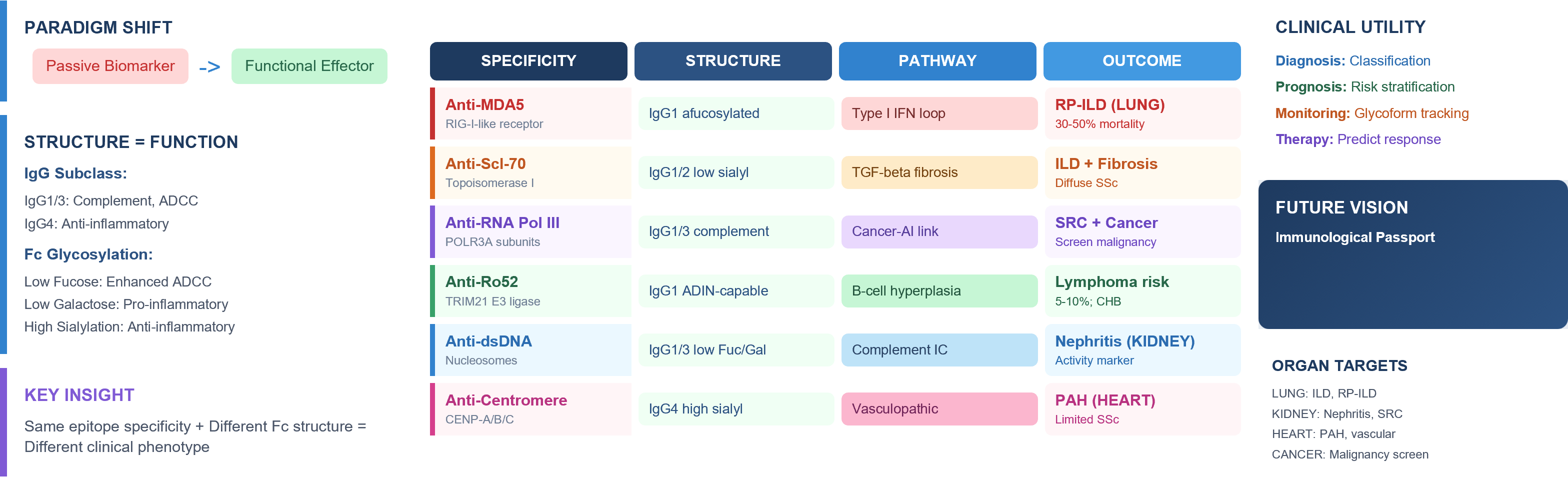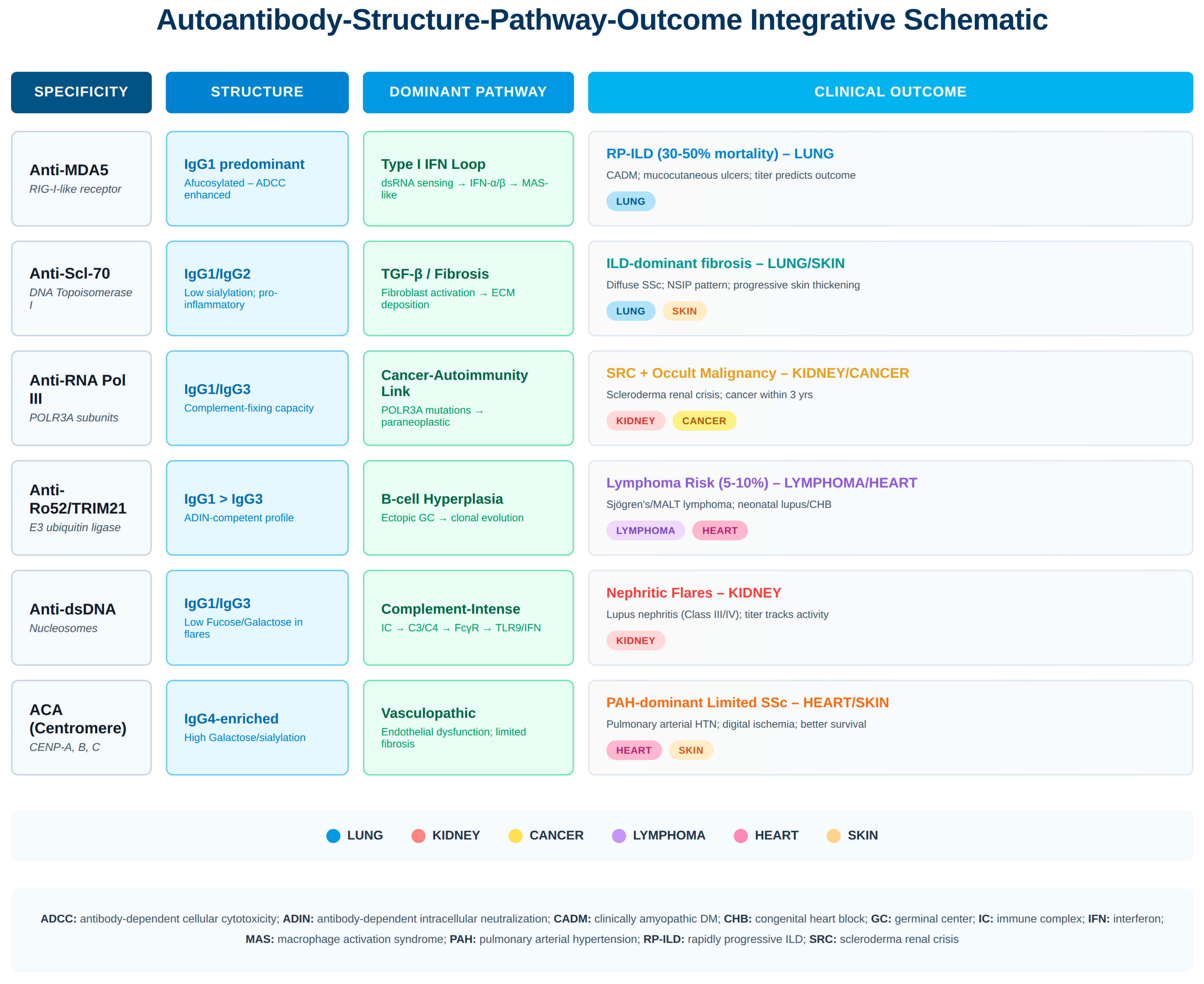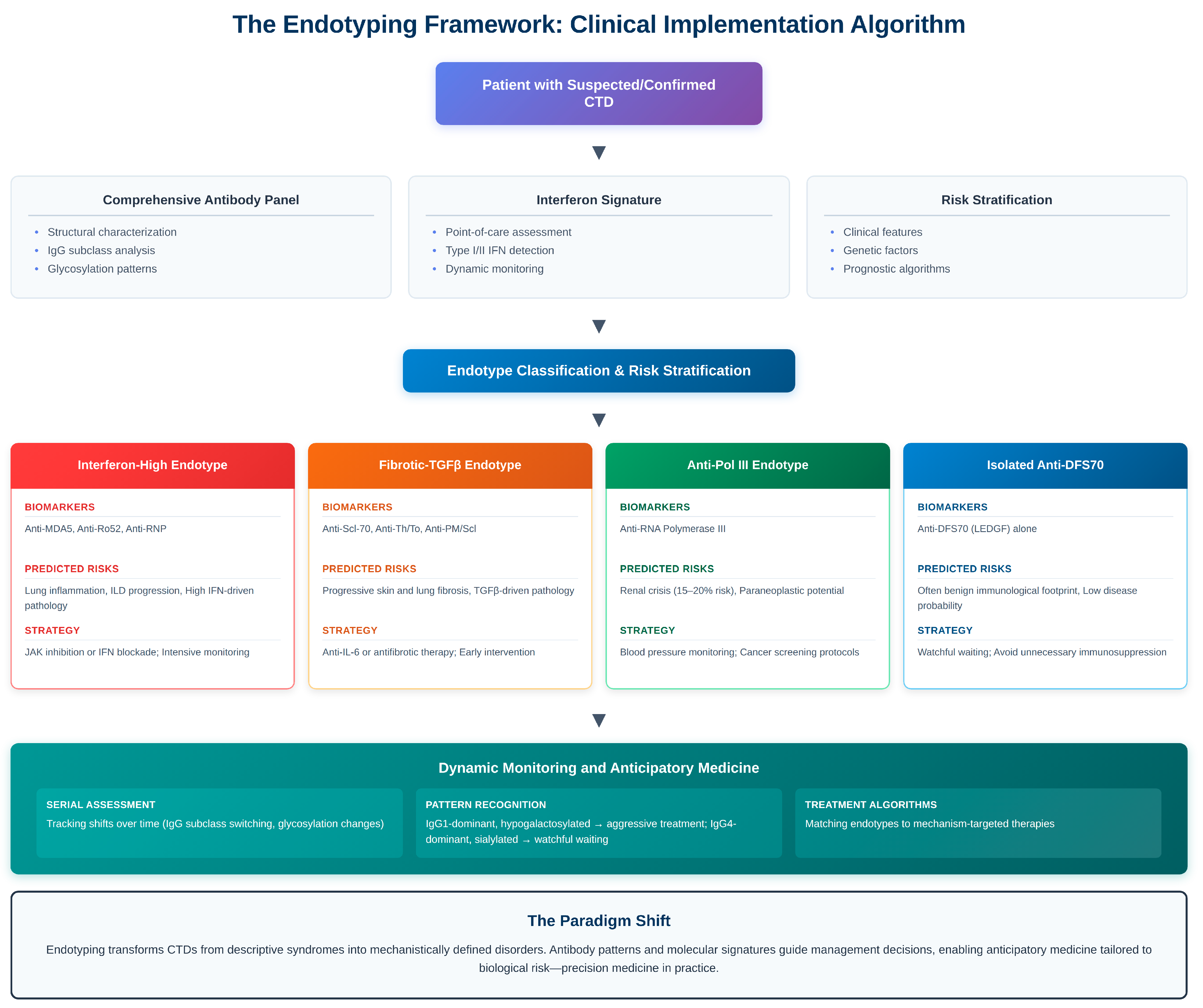


Autoantibodies as Precision Tools in Connective Tissue Diseases: From Epiphenomenon to Endophenotype

Abstract
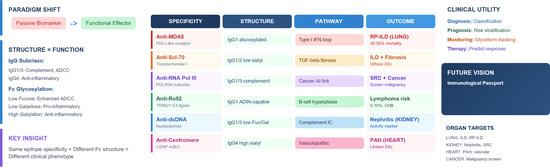
1. Introduction: The Evolution of Autoantibody Biology
1.1. From Epiphenomenon to Endophenotype
1.2. The Organizational Canvas of Humoral Autoimmunity
1.3. Conceptual Framework
2. Molecular Genesis of Autoantibody Repertoires
2.1. B-Cell Tolerance: The Fragile Equilibrium
2.2. Environmental Triggers and Molecular Mimicry
2.3. The Innate Bridge: Interferon and Nucleic Acid Sensing
2.4. Germinal Centers and Autoantibody Diversification
2.5. Epitope Spreading: The March of Specificity
2.6. B-Cell Subsets and Plasmablast Dynamics
2.7. Genetic and Epigenetic Imprinting
2.8. Structural Evolution: Glycosylation and Affinity Maturation
2.9. Synthesis: A Dynamic Immunological Ecosystem
3. Structural Modifiers of Autoantibody Function
3.1. The Fc Region: Commanding Immune Responses
3.1.1. Complement Activation
3.1.2. FcγR Engagement
3.1.3. FcRn Recycling
3.2. Glycosylation: The Functional Tuning Dial
3.2.1. Structural Glycoforms and Their Functional Consequences
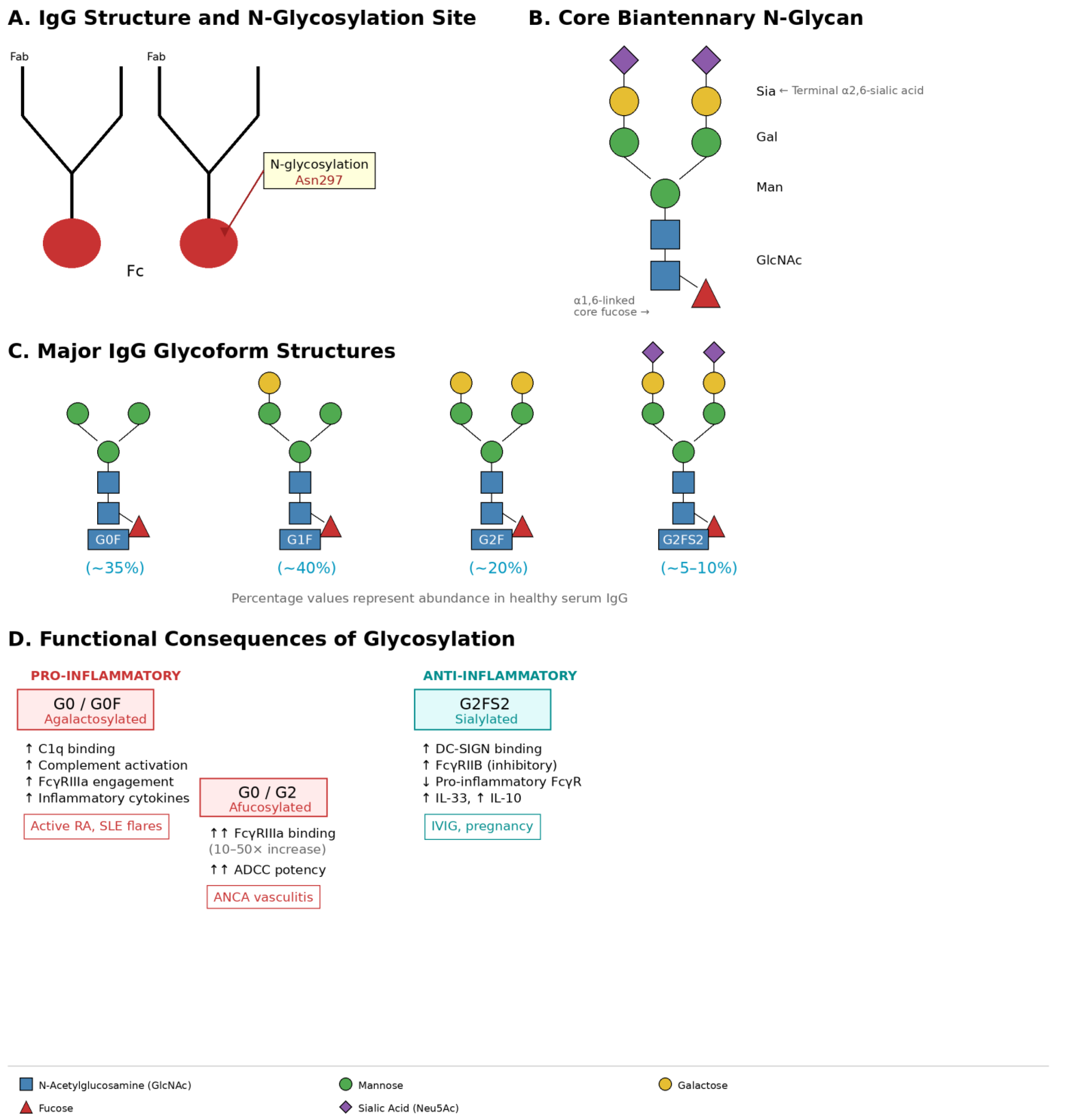
- G0F: Agalactosylated, fucosylated (most abundant in healthy individuals, ~35%);
- G1F: Mono-galactosylated, fucosylated (~40%);
- G2F: Di-galactosylated, fucosylated (~20%);
- G2FS2: Di-galactosylated, fucosylated, di-sialylated (~5–10%);
- G0: Agalactosylated, afucosylated (<5%).
3.2.2. Inflammatory Regulation of Glycosylation Machinery
3.2.3. Disease-Specific Glycosylation Signatures
- Elevated G0 structures (45–50% vs. 35% in controls);
- Markedly reduced sialylation (3–5% vs. 10% in controls);
- Variable fucosylation depending on organ involvement.
- Moderate agalactosylation (40–45% G0);
- Markedly reduced fucosylation (15–20% afucosylated vs. <5% in controls);
- Near-complete loss of sialylation (<2%).
- Moderately elevated G0 (40–42%);
- Reduced but not absent sialylation (6–8%);
- Normal fucosylation;
- Increased bisecting GlcNAc.
- Increased bisecting GlcNAc (particularly in diffuse cutaneous SSc);
- Reduced sialylation correlating with interstitial lung disease severity;
- Normal fucosylation in most patients.
3.2.4. Therapeutic Implications and Future Directions
- Galactose supplementation: Oral galactose increases UDP-galactose availability and modestly improves IgG galactosylation in some studies, though clinical efficacy remains unproven.
- Sialic acid precursors: N-acetylmannosamine increases CMP-sialic acid pools and enhances IgG sialylation in vitro; human trials are ongoing.
- Anti-inflammatory therapy timing: Early aggressive treatment may prevent the shift to pro-inflammatory glycosylation patterns, improving long-term outcomes.
- Hypersialylated IVIG preparations with enhanced anti-inflammatory activity;
- Glycan-modified biologics optimized for specific Fc-FcγR interactions;
- Small molecule modulators of glycosyltransferases to correct aberrant glycosylation.
3.3. Isotype Distribution: Reading Immunological Landscapes
3.3.1. IgG Subclasses
3.3.2. IgA: The Mucosal Signature
3.3.3. IgM: The Paradox
3.3.4. Cytokine Control
3.4. Immune Complexes: Pathogenic Scaffolds
3.5. Tissue Tropism: Glycan-Receptor Crosstalk
3.6. Post-Translational Modifications Beyond Glycosylation
3.7. B-Cell Subset Imprinting
3.8. The Pathogenic Continuum
3.9. Therapeutic Exploitation
- -
- -
- Glycoengineering of therapeutic antibodies enables anti-inflammatory variants with enhanced sialylation.
- -
- -
- Experimental strategies aim to re-educate plasma cells producing tolerogenic isotypes—“antibody rehabilitation” rather than eradication.
3.10. Integrative Perspective
4. Disease-Specific Endophenotypes
4.1. Systemic Lupus Erythematosus: The Immune Mosaic
4.1.1. Anti-dsDNA: The Nephritic Signature
4.1.2. Anti-C1q: The Complement-Intense Subset
4.1.3. Antiphospholipid Antibodies: The Thrombotic Endophenotype
4.1.4. Structural Heterogeneity
4.1.5. Therapeutic Implications
4.2. Systemic Sclerosis: Molecular Cartography
4.2.1. Anti-Centromere: The Vasculopathic Phenotype
4.2.2. Anti-Scl-70: The Fibrotic Archetype
4.2.3. Anti-RNA Polymerase III: The Paraneoplastic Cluster
4.2.4. Structural Correlates
4.2.5. Clinical Application
4.3. Idiopathic Inflammatory Myopathies: Serological Revolution
4.3.1. Antisynthetase Syndrome
4.3.2. Anti-MDA5: The Lethal ILD Phenotype
4.3.3. Anti-TIF1γ and Anti-Mi-2
4.3.4. Necrotizing Myopathy
4.3.5. Structural Insights
4.3.6. Clinical Impact
4.4. Primary Sjögren’s Disease: Beyond the Canonical Triad
4.4.1. Anti-Ro60 vs. Anti-Ro52
4.4.2. Anti-La and Congenital Heart Block
4.4.3. Novel Antibodies
4.4.4. Lymphoma Risk
4.4.5. Functional Roles
4.5. Cross-Disease Convergence
4.6. Clinical Implications
5. Toward Immuno-Molecular Taxonomy
5.1. The Endophenotype Framework
5.2. Autoantibodies as Integrative Nodes
5.3. Multi-Omic Integration
5.4. Computational Approaches
5.5. Clinical Applications
5.6. Rethinking Clinical Trials
5.7. The Mechanism-Based Vision
6. Autoantibody-Disease Associations: A Comprehensive Framework
6.1. The Unique Case of Anti-DFS70
6.2. ANCA-Associated Vasculitides
7. Plasmablasts and Antibody-Producing Niches
7.1. Plasmablast Dynamics in Systemic Autoimmunity
7.2. Plasmablasts in Vasculitis
7.3. Tissue Niches and Survival Signals
7.4. Plasmablasts as Biomarkers
8. Clinical Relevance: From Endotypes to Anticipatory Medicine
8.1. The Endotyping Framework in Practice
8.2. Anticipatory Medicine
8.3. Paradigm Shift
8.4. Clinical Case Vignettes—Endophenotype-Driven Management
- Identify hidden high-risk biology (e.g., “mild” myositis masking fatal ILD).
- Trigger anticipatory surveillance (renal crisis, cancer, lymphoma) before symptoms appear.
- Dictate mechanism-based therapy (IVIG over steroids in anti-HMGCR; upfront triple therapy in anti-MDA5).
- Prevent therapeutic futility and iatrogenic harm by avoiding ineffective default strategies.
8.5. Diagnostic Algorithms—Autoantibody-Guided Decision Trees
- ANA pattern interpretation combined with clinical context enables targeted reflex testing, avoiding indiscriminate antibody panels.
- Specific autoantibodies define prognostic endophenotypes, each associated with distinct risks that determine surveillance intensity, therapeutic urgency, and monitoring frequency.
- Negative serology does not terminate diagnostic reasoning; longitudinal evolution of antibodies and clinical features remains central to disease recognition.
- Evaluation of a positive ANA, using pattern-driven branching to guide diagnosis toward SLE, systemic sclerosis, idiopathic inflammatory myopathies, or overlap syndromes.
- Risk stratification in undifferentiated connective tissue disease (UCTD), enabling individualized follow-up schedules and early preventive intervention.
- Assessment of CTD-associated interstitial lung disease, distinguishing rheumatologic emergencies (anti-MDA5–associated RP-ILD) from more indolent fibrotic pathways (anti-Scl-70).
- Serological endophenotyping in SLE (renal-dominant, interferon-driven, antiphospholipid-associated, neuropsychiatric), aligning immune biology with contemporary targeted therapies.
- Rational use of serial autoantibody testing, applied selectively to anticipate disease flares, phenotypic transitions, or malignant transformation—never as routine, low-value testing.
9. Therapeutic Horizons: From Suppression to Recalibration
Supplementary Materials
Author Contributions
Funding
Institutional Review Board Statement
Informed Consent Statement
Data Availability Statement
Conflicts of Interest
Abbreviations
| AAV | ANCA-associated vasculitis |
| ACE | Angiotensin-converting enzyme |
| ADCC | Antibody-dependent cellular cytotoxicity |
| ANA | Antinuclear antibody |
| ANCA | Anti-neutrophil cytoplasmic antibody |
| aPL | Antiphospholipid antibodies |
| APS | Antiphospholipid syndrome |
| APRIL | A Proliferation-Inducing Ligand |
| BAFF | B-cell Activating Factor |
| CHB | Congenital heart block |
| CK | Creatine kinase |
| CTD | Connective tissue disease |
| DC-SIGN | Dendritic Cell-Specific Intercellular adhesion molecule-3-Grabbing Non-integrin |
| DFS70 | Dense fine speckled 70 |
| DLCO | Diffusing capacity of the lungs for carbon monoxide |
| EGPA | Eosinophilic granulomatosis with polyangiitis |
| ENA | Extractable nuclear antigens |
| Fc | Fragment crystallizable (region of immunoglobulin) |
| FcRn | Neonatal Fc receptor |
| FcγR | Fc gamma receptor |
| FVC | Forced vital capacity |
| GlcNAc | N-acetylglucosamine |
| GPA | Granulomatosis with polyangiitis |
| HLA | Human leukocyte antigen |
| HMGCR | 3-hydroxy-3-methylglutaryl-coenzyme A reductase |
| HR | Hazard ratio |
| HRCT | High-resolution computed tomography |
| IFN | Interferon |
| IgG | Immunoglobulin G |
| ILD | Interstitial lung disease |
| IPAF | Interstitial pneumonia with autoimmune features |
| IVIG | Intravenous immunoglobulin |
| JAK | Janus kinase |
| LEDGF | Lens epithelium-derived growth factor |
| LN | Lupus nephritis |
| MAA | Myositis-associated antibodies |
| MALT | Mucosa-associated lymphoid tissue |
| MCTD | Mixed connective tissue disease |
| MDA5 | Melanoma differentiation-associated protein 5 |
| MPA | Microscopic polyangiitis |
| MPO | Myeloperoxidase |
| MSA | Myositis-specific antibodies |
| NETosis | Neutrophil extracellular trap formation |
| NSIP | Nonspecific interstitial pneumonia |
| PAH | Pulmonary arterial hypertension |
| pDC | Plasmacytoid dendritic cell |
| PFT | Pulmonary function test |
| PR3 | Proteinase 3 |
| pSS | Primary Sjögren syndrome |
| RF | Rheumatoid factor |
| RP-ILD | Rapidly progressive interstitial lung disease |
| SCLE | Subacute cutaneous lupus erythematosus |
| SjD | Sjögren disease |
| SLE | Systemic lupus erythematosus |
| SRC | Scleroderma renal crisis |
| SRP | Signal recognition particle |
| SSc | Systemic sclerosis |
| TGF-β | Transforming growth factor beta |
| TIF1γ | Transcription intermediary factor 1 gamma |
| TLR | Toll-like receptor |
| TLS | Tertiary lymphoid structures |
| TRIM21 | Tripartite motif-containing protein 21 |
| UCTD | Undifferentiated connective tissue disease |
| UIP | Usual interstitial pneumonia |
Appendix A. Clinical Case Vignettes
Appendix B. Diagnostic Algorithms

| Pattern | Antibody Panel | Interpretation |
|---|---|---|
| Homogeneous | dsDNA, Sm, RNP, Ro/La, C3/C4 | dsDNA + Sm + low C = SLE |
| Nucleolar | Scl-70, RNA pol III, PM/Scl | Scl-70 = ILD; RNA pol III = SRC + cancer |
| Speckled + weakness | Jo-1, MDA5, TIF1g, HMGCR | MDA5 = RP-ILD EMERGENCY |
| Centromere | CENP-A/B, AMA | lcSSc; screen PAH |
| LOW | Isolated ANA 1:160–320; DFS70+ | HCQ; annual follow-up |
| MODERATE | ANA > 1:320; Ro/La+; RNP+ | HCQ mandatory; q3-6 mo; 30–40% progression |
| HIGH | dsDNA+; Sm+; low C; Ro52 > 200 | q3 mo intensive monitoring; >60% to SLE |
| Antibody | Pattern | Management |
|---|---|---|
| Anti-Scl-70 | NSIP/UIP | MMF or CYC; nintedanib if progressive |
| Anti-MDA5 | OP/DAD | EMERGENCY: Triple therapy within 48 h |
| Anti-Jo-1 | NSIP/OP | Pred + MMF; rituximab if refractory |
References
- Hargraves, M.M.; Richmond, H.; Morton, R. Presentation of two bone marrow elements: The tart cell and the LE cell. Proc. Staff. Meet. Mayo Clin. 1948, 23, 25–28. [Google Scholar] [CrossRef]
- Coons, A.H.; Kaplan, M.H. Localization of antigen in tissue cells; improvements in a method for the detection of antigen by means of fluorescent antibody. J. Exp. Med. 1950, 91, 1–13. [Google Scholar] [CrossRef]
- Tan, E.M.; Kunkel, H.G. Characteristics of a soluble nuclear antigen precipitating with sera of patients with systemic lupus erythematosus. J. Immunol. 1966, 96, 464–471. [Google Scholar] [CrossRef] [PubMed]
- Moroi, Y.; Peebles, C.; Fritzler, M.J.; Steigerwald, J.; Tan, E.M. Autoantibody to centromere (kinetochore) in scleroderma sera. Proc. Natl. Acad. Sci. USA 1980, 77, 1627–1631. [Google Scholar] [CrossRef] [PubMed]
- McHugh, N.J.; Tansley, S.L. Autoantibodies in myositis. Nat. Rev. Rheumatol. 2018, 14, 290–302. [Google Scholar] [CrossRef] [PubMed]
- Okada, N.; Mimori, T.; Mukai, R.; Kashiwagi, H.; Hardin, J.A. Characterization of human autoantibodies that selectively precipitate the 7-2 ribonucleoprotein complex. J. Immunol. 1981, 126, 1312–1315. [Google Scholar]
- Targoff, I.N.; Reichlin, M. The association between Mi-2 antibodies and dermatomyositis. Arthritis Rheum. 1985, 28, 796–803. [Google Scholar] [CrossRef]
- Sontheimer, R.D.; Maddison, P.J.; Reichlin, M.; Jordon, R.E.; Stastny, P.; Gilliam, J.N. Serologic and HLA associations in subacute cutaneous lupus erythematosus, a clinical subset of lupus erythematosus. Ann. Intern. Med. 1982, 97, 664–671. [Google Scholar] [CrossRef]
- Arnett, F.C.; Reveille, J.D.; Goldstein, R.; Pollard, K.M.; Leaird, K.; Smith, E.A.; Leroy, E.C.; Fritzler, M.J. Autoantibodies to fibrillarin in systemic sclerosis (scleroderma). An immunogenetic, serologic, and clinical analysis. Arthritis Rheum. 1996, 39, 1151–1160. [Google Scholar] [CrossRef]
- Hengstman, G.J.; ter Laak, H.J.; Vree Egberts, W.T.; Lundberg, I.E.; Moutsopoulos, H.M.; Vencovsky, J.; Doria, A.; Mosca, M.; van Venrooij, W.J.; van Engelen, B.G.M. Anti-signal recognition particle autoantibodies: Marker of a necrotising myopathy. Ann. Rheum. Dis. 2006, 65, 1635–1638. [Google Scholar] [CrossRef]
- Pisetsky, D.S.; Lipsky, P.E. New insights into the role of antinuclear antibodies in systemic lupus erythematosus. Nat. Rev. Rheumatol. 2020, 16, 565–579. [Google Scholar] [CrossRef] [PubMed]
- Wang, H.; Chen, X.; Du, Y.; Wang, L.; Wang, Q.; Wu, H.; Liu, L.; Xue, J. Mortality risk in patients with anti-MDA5 dermatomyositis is related to rapidly progressive interstitial lung disease and anti-Ro52 antibody. Arthritis Res Ther. 2023, 25, 127. [Google Scholar] [CrossRef] [PubMed]
- Kuwana, M.; Kaburaki, J.; Mimori, T.; Kawakami, Y.; Tojo, T. Enzyme-linked immunosorbent assay for detection of anti-RNA polymerase III antibody: Analytical accuracy and clinical associations in systemic sclerosis. Arthritis Rheum. 2005, 52, 2425–2432. [Google Scholar] [CrossRef] [PubMed]
- Kapsogeorgou, E.K.; Voulgarelis, M.; Tzioufas, A.G. Predictive markers of lymphomagenesis in Sjögren’s syndrome: From clinical data to molecular stratification. J. Autoimmun. 2019, 104, 102316. [Google Scholar] [CrossRef]
- Rekvig, O.P.; Van der Vlag, J. The pathogenesis and diagnosis of systemic lupus erythematosus: Still not resolved. Semin. Immunopathol. 2014, 36, 301–311. [Google Scholar] [CrossRef]
- Suurmond, J.; Diamond, B. Autoantibodies in systemic autoimmune diseases: Specificity and pathogenicity. J. Clin. Investig. 2015, 125, 2194–2202. [Google Scholar] [CrossRef]
- Leffler, J.; Martin, M.; Gullstrand, B.; Tydén, H.; Lood, C.; Truedsson, L.; Bengtsson, A.A.; Blom, A.M. Neutrophil extracellular traps that are not degraded in systemic lupus erythematosus activate complement exacerbating the disease. J. Immunol. 2012, 188, 3522–3531. [Google Scholar] [CrossRef]
- Elkon, K.B.; Casali, P. Nature and functions of autoantibodies. Nat. Clin. Pract. Rheumatol. 2008, 4, 491–498. [Google Scholar] [CrossRef]
- Arbuckle, M.R.; McClain, M.T.; Rubertone, M.V.; Scofield, R.H.; Dennis, G.J.; James, J.A.; Harley, J.B. Development of autoantibodies before the clinical onset of systemic lupus erythematosus. N. Engl. J. Med. 2003, 349, 1526–1533. [Google Scholar] [CrossRef]
- Yaniv, G.; Twig, G.; Shor, D.B.; Furer, A.; Sherer, Y.; Mozes, O.; Komisar, O.; Slonimsky, E.; Klang, E.; Lotan, E.; et al. A volcanic explosion of autoantibodies in systemic lupus erythematosus: A diversity of 180 different antibodies found in SLE patients. Autoimmun. Rev. 2015, 14, 75–79. [Google Scholar] [CrossRef]
- Liu, C.C.; Ahearn, J.M. The search for lupus biomarkers. Best Pract. Res. Clin. Rheumatol. 2009, 23, 507–523. [Google Scholar] [CrossRef] [PubMed][Green Version]
- Pisetsky, D.S. Anti-DNA antibodies—Quintessential biomarkers of SLE. Nat. Rev. Rheumatol. 2016, 12, 102–110. [Google Scholar] [CrossRef] [PubMed]
- Steen, V.D. Autoantibodies in systemic sclerosis. Semin. Arthritis Rheum. 2005, 35, 35–42. [Google Scholar] [CrossRef] [PubMed]
- Gabrielli, A.; Avvedimento, E.V.; Krieg, T. Scleroderma. N. Engl. J. Med. 2009, 360, 1989–2003. [Google Scholar] [CrossRef]
- Medsger, T.A., Jr.; Bombardieri, S.; Czirjak, L.; Scorza, R.; Della Rossa, A.; Bencivelli, W. Assessment of disease severity and prognosis. Clin. Exp. Rheumatol. 2003, 21, S42–S46. [Google Scholar]
- Nihtyanova, S.I.; Denton, C.P. Autoantibodies as predictive tools in systemic sclerosis. Nat. Rev. Rheumatol. 2010, 6, 112–116. [Google Scholar] [CrossRef]
- Assassi, S.; Sharif, R.; Lasky, R.E.; McNearney, T.A.; Estrada-Y-Martin, R.M.; Draeger, H.; Nair, D.K.; Fritzler, M.J.; Reveille, J.D.; Arnett, F.C.; et al. Predictors of interstitial lung disease in early systemic sclerosis: A prospective longitudinal study of the GENISOS cohort. Arthritis Res. Ther. 2010, 12, R166. [Google Scholar] [CrossRef]
- Hudson, M.; Fritzler, M.J.; Canadian Scleroderma Research Group. Diagnostic criteria of systemic sclerosis. J. Autoimmun. 2014, 48–49, 38–41. [Google Scholar] [CrossRef]
- Denton, C.P.; Khanna, D. Systemic sclerosis. Lancet 2017, 390, 1685–1699. [Google Scholar] [CrossRef]
- Allanore, Y.; Simms, R.; Distler, O.; Trojanowska, M.; Pope, J.; Denton, C.P.; Varga, J. Systemic sclerosis. Nat. Rev. Dis. Primers 2015, 1, 15002. [Google Scholar] [CrossRef]
- Reveille, J.D.; Solomon, D.H.; American College of Rheumatology Ad Hoc Committee on Immunologic Testing Guidelines. Evidence-based guidelines for the use of immunologic tests: Anticentromere, Scl-70, and nucleolar antibodies. Arthritis Rheum. 2003, 49, 399–412. [Google Scholar] [CrossRef]
- Hanke, K.; Brückner, C.S.; Dähnrich, C.; Huscher, D.; Komorowski, L.; Meyer, W.; Janssen, A.; Backhaus, M.; Becker, M.; Kill, A.; et al. Antibodies against PM/Scl-75 and PM/Scl-100 are independent markers for different subsets of systemic sclerosis patients. Arthritis Res. Ther. 2009, 11, R22. [Google Scholar] [CrossRef] [PubMed]
- Koenig, M.; Dieudé, M.; Senécal, J.L. Predictive value of antinuclear autoantibodies: The lessons of the systemic sclerosis autoantibodies. Autoimmun. Rev. 2008, 7, 588–593. [Google Scholar] [CrossRef] [PubMed]
- Patterson, K.A.; Roberts-Thomson, P.J.; Lester, S.; Barth Engel, B.; Goh, N.S.L.; Rischmueller, M.; Zochling, J.; Sahhar, J.; Nash, P.; Roddy, J.; et al. Interpretation of an extended autoantibody profile in a well-characterized Australian systemic sclerosis (scleroderma) cohort using principal components analysis. Arthritis Rheumatol. 2015, 67, 3234–3244. [Google Scholar] [CrossRef] [PubMed]
- Hamaguchi, Y. Autoantibody profiles in systemic sclerosis: Predictive value for clinical evaluation and prognosis. J. Dermatol. 2010, 37, 42–53. [Google Scholar] [CrossRef]
- Mammen, A.L. Autoimmune myopathies: Autoantibodies, phenotypes and pathogenesis. Nat. Rev. Neurol. 2011, 7, 343–354. [Google Scholar] [CrossRef]
- Betteridge, Z.; McHugh, N. Myositis-specific autoantibodies: An important tool to support diagnosis of myositis. J. Intern. Med. 2016, 280, 8–23. [Google Scholar] [CrossRef]
- Rider, L.G.; Nistala, K. The juvenile idiopathic inflammatory myopathies: Pathogenesis, clinical and autoantibody phenotypes, and outcomes. J. Intern. Med. 2016, 280, 24–38. [Google Scholar] [CrossRef]
- Lundberg, I.E.; Miller, F.W.; Tjärnlund, A.; Bottai, M. Diagnosis and classification of idiopathic inflammatory myopathies. J. Intern. Med. 2016, 280, 39–51. [Google Scholar] [CrossRef]
- Sato, S.; Hirakata, M.; Kuwana, M.; Suwa, A.; Inada, S.; Mimori, T.; Nishikawa, T.; Oddis, C.V.; Ikeda, Y. Autoantibodies to a 140-kd polypeptide, CADM-140, in Japanese patients with clinically amyopathic dermatomyositis. Arthritis Rheum. 2005, 52, 1571–1576. [Google Scholar] [CrossRef]
- Nakashima, R.; Imura, Y.; Kobayashi, S.; Yukawa, N.; Yoshifuji, H.; Nojima, T.; Kawabata, D.; Ohmura, K.; Usui, T.; Fujii, T.; et al. The RIG-I-like receptor IFIH1/MDA5 is a dermatomyositis-specific autoantigen identified by the anti-CADM-140 antibody. Rheumatology 2010, 49, 433–440. [Google Scholar] [CrossRef] [PubMed]
- Gono, T.; Kawaguchi, Y.; Satoh, T.; Kuwana, M.; Katsumata, Y.; Takagi, K.; Masuda, I.; Tochimoto, A.; Baba, S.; Okamoto, Y.; et al. Clinical manifestation and prognostic factor in anti-melanoma differentiation-associated gene 5 antibody-associated interstitial lung disease as a complication of dermatomyositis. Rheumatology 2010, 49, 1713–1719. [Google Scholar] [CrossRef] [PubMed]
- Cao, H.; Pan, M.; Kang, Y.; Xia, Q.; Li, X.; Zhao, X.; Shi, R.; Lou, J.; Zhou, M.; Kuwana, M.; et al. Clinical manifestations of dermatomyositis and clinically amyopathic dermatomyositis patients with positive expression of anti-melanoma differentiation-associated gene 5 antibody. Arthritis Care Res. 2012, 64, 1602–1610. [Google Scholar] [CrossRef] [PubMed]
- Chen, Z.; Cao, M.; Plana, M.N.; Liang, J.; Cai, H.; Kuwana, M.; Sun, L. Utility of anti-melanoma differentiation-associated gene 5 antibody measurement in identifying patients with dermatomyositis and a high risk for developing rapidly progressive interstitial lung disease: A review of the literature and a meta-analysis. Arthritis Care Res. 2013, 65, 1316–1324. [Google Scholar] [CrossRef]
- Christopher-Stine, L.; Casciola-Rosen, L.A.; Hong, G.; Chung, T.; Corse, A.M.; Mammen, A.L. A novel autoantibody recognizing 200-kd and 100-kd proteins is associated with an immune-mediated necrotizing myopathy. Arthritis Rheum. 2010, 62, 2757–2766. [Google Scholar] [CrossRef]
- Mammen, A.L.; Chung, T.; Christopher-Stine, L.; Rosen, P.; Rosen, A.; Doering, K.R.; Casciola-Rosen, L.A. Autoantibodies against 3-hydroxy-3-methylglutaryl-coenzyme A reductase in patients with statin-associated autoimmune myopathy. Arthritis Rheum. 2011, 63, 713–721. [Google Scholar] [CrossRef]
- Werner, J.L.; Christopher-Stine, L.; Ghazarian, S.R.; Pak, K.S.; Kus, J.E.; Daya, N.R.; Lloyd, T.E.; Mammen, A.L. Antibody levels correlate with creatine kinase levels and strength in anti-3-hydroxy-3-methylglutaryl-coenzyme A reductase-associated autoimmune myopathy. Arthritis Rheum. 2012, 64, 4087–4093. [Google Scholar] [CrossRef]
- Fiorentino, D.F.; Chung, L.S.; Christopher-Stine, L.; Zaba, L.; Li, S.; Mammen, A.L.; Rosen, A.; Casciola-Rosen, L. Most patients with cancer-associated dermatomyositis have antibodies to nuclear matrix protein NXP-2 or transcription intermediary factor 1γ. Arthritis Rheum. 2013, 65, 2954–2962. [Google Scholar] [CrossRef]
- Hirakata, M.; Okano, Y.; Pati, U.; Suwa, A.; Medsger, T.A., Jr.; Hardin, J.A.; Craft, J. Identification of autoantibodies to RNA polymerase II. Occurrence in systemic sclerosis and association with autoantibodies to RNA polymerases I and III. J. Clin. Investig. 1993, 91, 2665–2672. [Google Scholar] [CrossRef]
- Shah, A.A.; Rosen, A.; Hummers, L.; Wigley, F.; Casciola-Rosen, L. Close temporal relationship between onset of cancer and scleroderma in patients with RNA polymerase I/III antibodies. Arthritis Rheum. 2010, 62, 2787–2795. [Google Scholar] [CrossRef]
- Joseph, C.G.; Darrah, E.; Shah, A.A.; Skora, A.D.; Casciola-Rosen, L.A.; Wigley, F.M.; Boin, F.; Fava, A.; Thoburn, C.; Kinde, I.; et al. Association of the autoimmune disease scleroderma with an immunologic response to cancer. Science 2014, 343, 152–157. [Google Scholar] [CrossRef] [PubMed]
- Nihtyanova, S.I.; Schreiber, B.E.; Ong, V.H.; Rosenberg, D.; Moinzadeh, P.; Coghlan, J.G.; Wells, A.U.; Denton, C.P. Prediction of pulmonary complications and long-term survival in systemic sclerosis. Arthritis Rheumatol. 2014, 66, 1625–1635. [Google Scholar] [CrossRef] [PubMed]
- Steen, V.D.; Medsger, T.A., Jr. Severe organ involvement in systemic sclerosis with diffuse scleroderma. Arthritis Rheum. 2000, 43, 2437–2444. [Google Scholar] [CrossRef] [PubMed]
- Ramos-Casals, M.; Brito-Zerón, P.; Bombardieri, S.; Bootsma, H.; De Vita, S.; Dörner, T.; A Fisher, B.; Gottenberg, J.-E.; Hernandez-Molina, G.; Kocher, A.; et al. EULAR recommendations for the management of Sjögren’s syndrome with topical and systemic therapies. Ann. Rheum. Dis. 2020, 79, 3–18. [Google Scholar] [CrossRef]
- Shiboski, C.H.; Shiboski, S.C.; Seror, R.; Criswell, L.A.; Labetoulle, M.; Lietman, T.M.; Rasmussen, A.; Scofield, H.; Vitali, C.; Bowman, S.J.; et al. 2016 American College of Rheumatology/European League Against Rheumatism classification criteria for primary Sjögren’s syndrome. Arthritis Rheumatol. 2017, 69, 35–45. [Google Scholar] [CrossRef]
- Theander, E.; Vasaitis, L.; Baecklund, E.; Nordmark, G.; Warfvinge, G.; Liedholm, R.; Brokstad, K.; Jonsson, R.; Jonsson, M.V. Lymphoid organisation in labial salivary gland biopsies is a possible predictor for the development of malignant lymphoma in primary Sjögren’s syndrome. Ann. Rheum. Dis. 2011, 70, 1363–1368. [Google Scholar] [CrossRef]
- Gottenberg, J.E.; Busson, M.; Loiseau, P.; Cohen-Solal, J.; Lepage, V.; Charron, D.; Sibilia, J.; Mariette, X. In primary Sjögren’s syndrome, HLA class II is associated exclusively with autoantibody production and spreading of the autoimmune response. Arthritis Rheum. 2003, 48, 2240–2245. [Google Scholar] [CrossRef]
- Bombardieri, M.; Argyropoulou, O.D.; Ferro, F.; Lodetti, S.; Coleby, R.; Pontarini, E.; Governato, G.; Lucchesi, D.; Fulvio, G.; Tzioufas, A.G.; et al. One year in review 2020: Pathogenesis of primary Sjögren’s syndrome. Clin. Exp. Rheumatol. 2020, 38, 3–9. [Google Scholar]
- Aqrawi, L.A.; Galtung, H.K.; Vestad, B.; Øvstebø, R.; Thiede, B.; Rusthen, S.; Young, A.; Guerreiro, E.M.; Utheim, T.P.; Chen, X.; et al. Identification of potential saliva and tear biomarkers in primary Sjögren’s syndrome, utilising the extraction of extracellular vesicles and proteomics analysis. Arthritis Res. Ther. 2017, 19, 14. [Google Scholar] [CrossRef]
- Lessard, C.J.; Li, H.; Adrianto, I.; Ice, J.A.; Rasmussen, A.; Grundahl, K.M.; Kelly, J.A.; Dozmorov, M.G.; Miceli-Richard, C.; Bowman, S.; et al. Variants at multiple loci implicated in both innate and adaptive immune responses are associated with Sjögren’s syndrome. Nat. Genet. 2013, 45, 1284–1292. [Google Scholar] [CrossRef]
- Imgenberg-Kreuz, J.; Sandling, J.K.; Almlöf, J.C.; Nordlund, J.; Signér, L.; Norheim, K.B.; Omdal, R.; Rönnblom, L.; Eloranta, M.-L.; Syvänen, A.-C.; et al. Genome-wide DNA methylation analysis in multiple tissues in primary Sjögren’s syndrome reveals regulatory effects at interferon-induced genes. Ann. Rheum. Dis. 2016, 75, 2029–2036. [Google Scholar] [CrossRef]
- Voulgarelis, M.; Dafni, U.G.; Isenberg, D.A.; Moutsopoulos, H.M. Malignant lymphoma in primary Sjögren’s syndrome: A multicenter, retrospective, clinical study by the European Concerted Action on Sjögren’s Syndrome. Arthritis Rheum. 1999, 42, 1765–1772. [Google Scholar] [CrossRef] [PubMed]
- Quartuccio, L.; Isola, M.; Baldini, C.; Priori, R.; Bartoloni, E.; Carubbi, F.; Maset, M.; Gregoraci, G.; Della Mea, V.; Salvin, S.; et al. Biomarkers of lymphoma in Sjögren’s syndrome and evaluation of the lymphoma risk in prelymphomatous conditions: Results of a multicenter study. J. Autoimmun. 2014, 51, 75–80. [Google Scholar] [CrossRef] [PubMed]
- Nocturne, G.; Mariette, X. Advances in understanding the pathogenesis of primary Sjögren’s syndrome. Nat. Rev. Rheumatol. 2013, 9, 544–556. [Google Scholar] [CrossRef] [PubMed]
- Navratil, J.S.; Ahearn, J.M. Apoptosis, clearance mechanisms, and the development of systemic lupus erythematosus. Curr. Rheumatol. Rep. 2001, 3, 191–198. [Google Scholar] [CrossRef]
- Rahman, A.; Isenberg, D.A. Systemic lupus erythematosus. N. Engl. J. Med. 2008, 358, 929–939. [Google Scholar] [CrossRef]
- Herrmann, M.; Voll, R.E.; Zoller, O.M.; Hagenhofer, M.; Ponner, B.B.; Kalden, J.R. Impaired phagocytosis of apoptotic cell material by monocyte-derived macrophages from patients with systemic lupus erythematosus. Arthritis Rheum. 1998, 41, 1241–1250. [Google Scholar] [CrossRef]
- Munoz, L.E.; Lauber, K.; Schiller, M.; Manfredi, A.A.; Herrmann, M. The role of defective clearance of apoptotic cells in systemic autoimmunity. Nat. Rev. Rheumatol. 2010, 6, 280–289. [Google Scholar] [CrossRef]
- Walport, M.J. Complement. First of two parts. N. Engl. J. Med. 2001, 344, 1058–1066. [Google Scholar] [CrossRef]
- Pickering, M.C.; Botto, M.; Taylor, P.R.; Lachmann, P.J.; Walport, M.J. Systemic lupus erythematosus, complement deficiency, and apoptosis. Adv. Immunol. 2000, 76, 227–324. [Google Scholar] [CrossRef]
- Lande, R.; Ganguly, D.; Facchinetti, V.; Frasca, L.; Conrad, C.; Gregorio, J.; Meller, S.; Chamilos, G.; Sebasigari, R.; Riccieri, V.; et al. Neutrophils activate plasmacytoid dendritic cells by releasing self-DNA-peptide complexes in systemic lupus erythematosus. Sci. Transl. Med. 2011, 3, 73ra19. [Google Scholar] [CrossRef] [PubMed]
- Baechler, E.C.; Batliwalla, F.M.; Karypis, G.; Gaffney, P.M.; Ortmann, W.A.; Espe, K.J.; Shark, K.B.; Grande, W.J.; Hughes, K.M.; Kapur, V.; et al. Interferon-inducible gene expression signature in peripheral blood cells of patients with severe lupus. Proc. Natl. Acad. Sci. USA 2003, 100, 2610–2615. [Google Scholar] [CrossRef] [PubMed]
- Bennett, L.; Palucka, A.K.; Arce, E.; Cantrell, V.; Borvak, J.; Banchereau, J.; Pascual, V. Interferon and granulopoiesis signatures in systemic lupus erythematosus blood. J. Exp. Med. 2003, 197, 711–723. [Google Scholar] [CrossRef] [PubMed]
- Kirou, K.A.; Lee, C.; George, S.; Louca, K.; Peterson, M.G.; Crow, M.K. Activation of the interferon-alpha pathway identifies a subgroup of systemic lupus erythematosus patients with distinct serologic features and active disease. Arthritis Rheum. 2005, 52, 1491–1503. [Google Scholar] [CrossRef]
- Greisman, S.G.; Redecha, P.B.; Kimberly, R.P.; Christian, C.L. Differences among immune complexes: Association of C1q in SLE immune complexes with renal disease. J. Immunol. 1987, 138, 739–745. [Google Scholar] [CrossRef]
- Villanueva, E.; Yalavarthi, S.; Berthier, C.C.; Hodgin, J.B.; Khandpur, R.; Lin, A.M.; Rubin, C.J.; Zhao, W.; Olsen, S.H.; Klinker, M.; et al. Netting neutrophils induce endothelial damage, infiltrate tissues, and expose immunostimulatory molecules in systemic lupus erythematosus. J. Immunol. 2011, 187, 538–552. [Google Scholar] [CrossRef]
- Crow, M.K.; Olferiev, M.; Kirou, K.A. Type I interferons in autoimmune disease. Annu. Rev. Pathol. 2019, 14, 369–393. [Google Scholar] [CrossRef]
- Psarras, A.; Emery, P.; Vital, E.M. Type I interferon-mediated autoimmune diseases: Pathogenesis, diagnosis and targeted therapy. Rheumatology 2017, 56, 1662–1675. [Google Scholar] [CrossRef]
- Rönnblom, L.; Alm, G.V.; Eloranta, M.L. The type I interferon system in the development of lupus. Semin. Immunol. 2011, 23, 113–121. [Google Scholar] [CrossRef]
- Postal, M.; Vivaldo, J.F.; Fernandez-Ruiz, R.; Paredes, J.L.; Appenzeller, S.; Niewold, T.B. Type I interferon in the pathogenesis of systemic lupus erythematosus. Curr. Opin. Immunol. 2020, 67, 87–94. [Google Scholar] [CrossRef]
- Rodero, M.P.; Crow, Y.J. Type I interferon-mediated monogenic autoinflammation: The type I interferonopathies, a conceptual overview. J. Exp. Med. 2016, 213, 2527–2538. [Google Scholar] [CrossRef]
- Niewold, T.B.; Hua, J.; Lehman, T.J.; Harley, J.B.; Crow, M.K. High serum IFN-alpha activity is a heritable risk factor for systemic lupus erythematosus. Genes Immun. 2007, 8, 492–502. [Google Scholar] [CrossRef]
- Coit, P.; Yalavarthi, S.; Ognenovski, M.; Zhao, W.; Hasni, S.; Wren, J.D.; Kaplan, M.J.; Sawalha, A.H. Epigenome profiling reveals significant DNA demethylation of interferon signature genes in lupus neutrophils. J. Autoimmun. 2015, 58, 59–66. [Google Scholar] [CrossRef] [PubMed]
- Migliorini, P.; Baldini, C.; Rocchi, V.; Bombardieri, S. Anti-Sm and anti-RNP antibodies. Autoimmunity 2005, 38, 47–54. [Google Scholar] [CrossRef] [PubMed]
- Burlingame, R.W.; Boey, M.L.; Starkebaum, G.; Rubin, R.L. The central role of chromatin in autoimmune responses to histones and DNA in systemic lupus erythematosus. J. Clin. Investig. 1994, 94, 184–192. [Google Scholar] [CrossRef] [PubMed]
- Burbelo, P.D.; Gordon, S.M.; Waldman, M.; Edison, J.D.; Little, D.J.; Stitt, R.S.; Bailey, W.T.; Hughes, J.B.; Olson, S.W. Autoantibodies are present before the clinical diagnosis of systemic sclerosis. PLoS ONE 2019, 14, e0214202. [Google Scholar] [CrossRef]
- Merrill, J.T.; Neuwelt, C.M.; Wallace, D.J.; Shanahan, J.C.; Latinis, K.M.; Oates, J.C.; Utset, T.O.; Gordon, C.; Isenberg, D.A.; Hsieh, H.; et al. Efficacy and safety of rituximab in moderately-to-severely active systemic lupus erythematosus: The randomized, double-blind, phase II/III systemic lupus erythematosus evaluation of rituximab trial. Arthritis Rheum. 2010, 62, 222–233. [Google Scholar] [CrossRef]
- Rovin, B.H.; Furie, R.; Latinis, K.; Looney, R.J.; Fervenza, F.C.; Sanchez-Guerrero, J.; Maciuca, R.; Zhang, D.; Garg, J.P.; Brunetta, P.; et al. Efficacy and safety of rituximab in patients with active proliferative lupus nephritis: The Lupus Nephritis Assessment with Rituximab study. Arthritis Rheum. 2012, 64, 1215–1226. [Google Scholar] [CrossRef]
- Navarra, S.V.; Guzmán, R.M.; Gallacher, A.E.; Hall, S.; Levy, R.A.; Jimenez, R.E.; Li, E.K.-M.; Thomas, M.; Kim, H.-Y.; León, M.G.; et al. Efficacy and safety of belimumab in patients with active systemic lupus erythematosus: A randomised, placebo-controlled, phase 3 trial. Lancet 2011, 377, 721–731. [Google Scholar] [CrossRef]
- Furie, R.; Petri, M.; Zamani, O.; Cervera, R.; Wallace, D.J.; Tegzová, D.; Sanchez-Guerrero, J.; Schwarting, A.; Merrill, J.T.; Chatham, W.W.; et al. A phase III, randomized, placebo-controlled study of belimumab, a monoclonal antibody that inhibits B lymphocyte stimulator, in patients with systemic lupus erythematosus. Arthritis Rheum. 2011, 63, 3918–3930. [Google Scholar] [CrossRef]
- Edwards, J.C.; Szczepanski, L.; Szechinski, J.; Filipowicz-Sosnowska, A.; Emery, P.; Close, D.R.; Stevens, R.M.; Shaw, T. Efficacy of B-cell-targeted therapy with rituximab in patients with rheumatoid arthritis. N. Engl. J. Med. 2004, 350, 2572–2581. [Google Scholar] [CrossRef] [PubMed]
- Cambridge, G.; Leandro, M.J.; Edwards, J.C.; Ehrenstein, M.R.; Salden, M.; Bodman-Smith, M.; Webster, A.D.B. Serologic changes following B lymphocyte depletion therapy for rheumatoid arthritis. Arthritis Rheum. 2003, 48, 2146–2154. [Google Scholar] [CrossRef] [PubMed]
- Vital, E.M.; Dass, S.; Buch, M.H.; Henshaw, K.; Pease, C.T.; Martin, M.F.; Ponchel, F.; Rawstron, A.C.; Emery, P. B cell biomarkers of rituximab responses in systemic lupus erythematosus. Arthritis Rheum. 2011, 63, 3038–3047. [Google Scholar] [CrossRef] [PubMed]
- Looney, R.J.; Anolik, J.H.; Campbell, D.; Felgar, R.E.; Young, F.; Arend, L.J.; Sloand, J.A.; Rosenblatt, J.; Sanz, I. B cell depletion as a novel treatment for systemic lupus erythematosus: A phase I/II dose-escalation trial of rituximab. Arthritis Rheum. 2004, 50, 2580–2589. [Google Scholar] [CrossRef]
- Smith, K.G.C.; Jones, R.B.; Burns, S.M.; Jayne, D.R.W. Long-term comparison of rituximab treatment for refractory systemic lupus erythematosus and vasculitis: Remission, relapse, and re-treatment. Arthritis Rheum. 2006, 54, 2970–2982. [Google Scholar] [CrossRef]
- Tony, H.P.; Burmester, G.; Schulze-Koops, H.; Grunke, M.; Henes, J.; Kötter, I.; Haas, J.; Unger, L.; Lovric, S.; Haubitz, M.; et al. Safety and clinical outcomes of rituximab therapy in patients with different autoimmune diseases: Experience from a national registry (GRAID). Arthritis Res. Ther. 2011, 13, R75. [Google Scholar] [CrossRef]
- Reddy, V.; Jayne, D.; Close, D.; Isenberg, D. B-cell depletion in SLE: Clinical and trial experience with rituximab and ocrelizumab and implications for study design. Arthritis Res. Ther. 2013, 15, S2. [Google Scholar] [CrossRef]
- Md Yusof, M.Y.; Vital, E.M.; McElvenny, D.M.; Hensor, E.M.A.; Das, S.; Dass, S.; Rawstron, A.C.; Buch, M.H.; Emery, P.; Savic, S. Predicting severe infection and effects of hypogammaglobulinemia during therapy with rituximab in rheumatic and musculoskeletal diseases. Arthritis Rheumatol. 2019, 71, 1812–1823. [Google Scholar] [CrossRef]
- Roll, P.; Palanichamy, A.; Kneitz, C.; Dorner, T.; Tony, H.P. Regeneration of B cell subsets after transient B cell depletion using anti-CD20 antibodies in rheumatoid arthritis. Arthritis Rheum. 2006, 54, 2377–2386. [Google Scholar] [CrossRef]
- Anolik, J.H.; Barnard, J.; Owen, T.; Zheng, B.; Kemshetti, S.; Looney, R.J.; Sanz, I. Delayed memory B cell recovery in peripheral blood and lymphoid tissue in systemic lupus erythematosus after B cell depletion therapy. Arthritis Rheum. 2007, 56, 3044–3056. [Google Scholar] [CrossRef]
- Reddy, V.; Cambridge, G.; Isenberg, D.A.; Glennie, M.J.; Cragg, M.S.; Leandro, M.J. Internalization of rituximab and the efficiency of B Cell depletion in rheumatoid arthritis and systemic lupus erythematosus. Arthritis Rheumatol. 2015, 67, 2046–2055. [Google Scholar] [CrossRef]
- Wallace, D.J.; Ginzler, E.M.; Merrill, J.T.; Furie, R.A.; Stohl, W.; Chatham, W.W.; Weinstein, A.; McKay, J.D.; McCune, W.J.; Petri, M.; et al. Safety and efficacy of belimumab plus standard therapy for up to thirteen years in patients with systemic lupus erythematosus. Arthritis Rheumatol. 2019, 71, 1125–1134. [Google Scholar] [CrossRef] [PubMed]
- Arnold, J.N.; Wormald, M.R.; Sim, R.B.; Rudd, P.M.; Dwek, R.A. The impact of glycosylation on the biological function and structure of human immunoglobulins. Annu. Rev. Immunol. 2007, 25, 21–50. [Google Scholar] [CrossRef] [PubMed]
- Kaneko, Y.; Nimmerjahn, F.; Ravetch, J.V. Anti-inflammatory activity of immunoglobulin G resulting from Fc sialylation. Science 2006, 313, 670–673. [Google Scholar] [CrossRef] [PubMed]
- Anthony, R.M.; Kobayashi, T.; Wermeling, F.; Ravetch, J.V. Intravenous gammaglobulin suppresses inflammation through a novel T(H)2 pathway. Nature 2011, 475, 110–113. [Google Scholar] [CrossRef]
- Schroeder, H.W., Jr.; Cavacini, L. Structure and function of immunoglobulins. J. Allergy Clin. Immunol. 2010, 125, S41–S52. [Google Scholar] [CrossRef]
- Rombouts, Y.; Ewing, E.; van de Stadt, L.A.; Selman, M.H.; Trouw, L.A.; Deelder, A.M.; Huizinga, T.W.J.; Wuhrer, M.; Van Schaardenburg, D.; Toes, R.; et al. Anti-citrullinated protein antibodies acquire a pro-inflammatory Fc glycosylation phenotype prior to the onset of rheumatoid arthritis. Ann. Rheum. Dis. 2015, 74, 234–241. [Google Scholar] [CrossRef]
- Biermann, M.H.C.; Griffante, G.; Podolska, M.J.; Boeltz, S.; Stürmer, J.; Muñoz, L.E.; Bilyy, R.; Herrmann, M. Sweet but dangerous—The role of immunoglobulin G glycosylation in autoimmunity and inflammation. Lupus 2016, 25, 934–942. [Google Scholar] [CrossRef]
- Dekkers, G.; Treffers, L.; Plomp, R.; Bentlage, A.E.H.; de Boer, M.; Koeleman, C.A.M.; Lissenberg-Thunnissen, S.N.; Visser, R.; Brouwer, M.; Mok, J.Y.; et al. Decoding the human immunoglobulin G-glycan repertoire reveals a spectrum of Fc-receptor- and complement-mediated-effector activities. Front. Immunol. 2017, 8, 877. [Google Scholar] [CrossRef]
- Seeling, M.; Brückner, C.; Nimmerjahn, F. Differential antibody glycosylation in autoimmunity: Sweet biomarker or modulator of disease activity? Nat. Rev. Rheumatol. 2017, 13, 621–630. [Google Scholar] [CrossRef]
- Wang, T.T.; Ravetch, J.V. Functional diversification of IgGs through Fc glycosylation. J. Clin. Investig. 2019, 129, 3492–3498. [Google Scholar] [CrossRef] [PubMed]
- Sender, L.Y.; Gibbert, K.; Suezer, Y.; Radeke, H.H.; Kalinke, U.; Waibler, Z. Toci-transfer of autoreactive B cells: New insights into the role of autoantibodies in systemic sclerosis. Mol. Immunol. 2010, 47, 1363–1366. [Google Scholar] [CrossRef]
- Jefferis, R. Glycosylation as a strategy to improve antibody-based therapeutics. Nat. Rev. Drug Discov. 2009, 8, 226–234. [Google Scholar] [CrossRef] [PubMed]
- Liszewski, M.K.; Java, A.; Schramm, E.C.; Atkinson, J.P. Complement dysregulation and disease: Insights from contemporary genetics. Annu. Rev. Pathol. 2017, 12, 25–52. [Google Scholar] [CrossRef]
- Birmingham, D.J.; Hebert, L.A. CR1 and CR1-like: The primate immune adherence receptors. Immunol. Rev. 2001, 180, 100–111. [Google Scholar] [CrossRef]
- Trouw, L.A.; Blom, A.M.; Gasque, P. Role of complement and complement regulators in the removal of apoptotic cells. Mol. Immunol. 2008, 45, 1199–1207. [Google Scholar] [CrossRef]
- Chen, M.; Daha, M.R.; Kallenberg, C.G. The complement system in systemic autoimmune disease. J. Autoimmun. 2010, 34, J276–J286. [Google Scholar] [CrossRef]
- Vidarsson, G.; Dekkers, G.; Rispens, T. IgG subclasses and allotypes: From structure to effector functions. Front. Immunol. 2014, 5, 520. [Google Scholar] [CrossRef]
- Diebolder, C.A.; Beurskens, F.J.; de Jong, R.N.; Koning, R.I.; Strumane, K.; Lindorfer, M.A.; Voorhorst, M.; Ugurlar, D.; Rosati, S.; Heck, A.J.R.; et al. Complement is activated by IgG hexamers assembled at the cell surface. Science 2014, 343, 1260–1263. [Google Scholar] [CrossRef]
- Ricklin, D.; Reis, E.S.; Lambris, J.D. Complement in disease: A defence system turning offensive. Nat. Rev. Nephrol. 2016, 12, 383–401. [Google Scholar] [CrossRef]
- Reis, E.S.; Mastellos, D.C.; Hajishengallis, G.; Lambris, J.D. New insights into the immune functions of complement. Nat. Rev. Immunol. 2019, 19, 503–516. [Google Scholar] [CrossRef]
- Merle, N.S.; Church, S.E.; Fremeaux-Bacchi, V.; Roumenina, L.T. Complement system part I—Molecular mechanisms of activation and regulation. Front. Immunol. 2015, 6, 262. [Google Scholar] [CrossRef]
- West, E.E.; Kolev, M.; Kemper, C. Complement and the regulation of T cell responses. Annu. Rev. Immunol. 2018, 36, 309–338. [Google Scholar] [CrossRef] [PubMed]
- Roumenina, L.T.; Loirat, C.; Dragon-Durey, M.A.; Halbwachs-Mecarelli, L.; Sautes-Fridman, C.; Fremeaux-Bacchi, V. Alternative complement pathway assessment in patients with atypical HUS. J. Immunol. Methods. 2011, 365, 8–26. [Google Scholar] [CrossRef] [PubMed]
- Thurman, J.M.; Nester, C.M. All things complement. Clin. J. Am. Soc. Nephrol. 2016, 11, 1856–1866. [Google Scholar] [CrossRef] [PubMed]
- Noris, M.; Remuzzi, G. Overview of complement activation and regulation. Semin. Nephrol. 2013, 33, 479–492. [Google Scholar] [CrossRef]
- Nimmerjahn, F.; Ravetch, J.V. Fcgamma receptors as regulators of immune responses. Nat. Rev. Immunol. 2008, 8, 34–47. [Google Scholar] [CrossRef]
- Bruhns, P.; Iannascoli, B.; England, P.; Mancardi, D.A.; Fernandez, N.; Jorieux, S.; Daëron, M. Specificity and affinity of human Fcγ receptors and their polymorphic variants for human IgG subclasses. Blood 2009, 113, 3716–3725. [Google Scholar] [CrossRef]
- Hogarth, P.M.; Pietersz, G.A. Fc receptor-targeted therapies for the treatment of inflammation, cancer and beyond. Nat. Rev. Drug Discov. 2012, 11, 311–331. [Google Scholar] [CrossRef]
- Spirig, R.; Campbell, I.K.; Koernig, S.; Chen, C.G.; Lewis, B.J.B.; Butcher, R.; Muir, I.; Taylor, S.; Chia, J.; Leong, D.; et al. rIgG1 Fc hexamer inhibits antibody-mediated autoimmune disease via effects on complement and FcγRs. J. Immunol. 2018, 200, 2542–2553. [Google Scholar] [CrossRef]
- Hayes, J.M.; Cosgrave, E.F.; Struwe, W.B.; Wormald, M.; Davey, G.P.; Jefferis, R.; Rudd, P.M. Glycosylation and Fc receptors. Curr. Top Microbiol. Immunol. 2014, 382, 165–199. [Google Scholar] [CrossRef] [PubMed]
- Newland, A.C.; Sánchez-González, B.; Rejtő, L.; Egyed, M.; Romanyuk, N.; Godar, M.; Verschueren, K.; Gandini, D.; Ulrichts, P.; Beauchamp, J.; et al. Phase 2 study of efgartigimod, a novel FcRn antagonist, in adult patients with primary immune thrombocytopenia. Am. J. Hematol. 2020, 95, 178–187. [Google Scholar] [CrossRef] [PubMed]
- Howard, J.F., Jr.; Bril, V.; Burns, T.M.; Mantegazza, R.; Bilinska, M.; Szczudlik, A.; Beydoun, S.; Garrido, F.J.R.D.R.; Piehl, F.; Rottoli, M.; et al. Randomized phase 2 study of FcRn antagonist efgartigimod in generalized myasthenia gravis. Neurology 2019, 92, e2661–e2673. [Google Scholar] [CrossRef] [PubMed]
- Kiessling, P.; Lledo-Garcia, R.; Watanabe, S.; Langdon, G.; Tran, D.; Bari, M.; Christodoulou, L.; Jones, E.; Price, G.; Smith, B.; et al. The FcRn inhibitor rozanolixizumab reduces human serum IgG concentration: A randomized phase 1 study. Sci. Transl. Med. 2017, 9, eaan1208. [Google Scholar] [CrossRef]
- Ulrichts, P.; Guglietta, A.; Dreier, T.; van Bragt, T.; Hanssens, V.; Hofman, E.; Vankerckhoven, B.; Verheesen, P.; Ongenae, N.; Lykhopiy, V.; et al. Neonatal Fc receptor antagonist efgartigimod safely and sustainably reduces IgGs in humans. J. Clin. Investig. 2018, 128, 4372–4386. [Google Scholar] [CrossRef]
- Peter, H.H.; Ochs, H.D.; Cunningham-Rundles, C.; Vinh, D.C.; Kiessling, P.; Greve, B.; Jolles, S. Targeting FcRn for immunomodulation: Benefits, risks, and practical considerations. J. Allergy Clin. Immunol. 2020, 146, 479–491. [Google Scholar] [CrossRef]
- Patel, D.D.; Bussel, J.B. Neonatal Fc receptor in human immunity: Function and role in therapeutic intervention. J. Allergy Clin. Immunol. 2020, 146, 467–478. [Google Scholar] [CrossRef]
- Smith, B.; Kiessling, A.; Lledo-Garcia, R.; Dixon, K.L.; Christodoulou, L.; Catley, M.C.; Atherfold, P.; D’Hooghe, L.E.; Finney, H.; Greenslade, K.; et al. Generation and characterization of a high affinity anti-human FcRn antibody, rozanolixizumab, and the effects of different molecular formats on the reduction of plasma IgG concentration. MAbs 2018, 10, 1111–1130. [Google Scholar] [CrossRef]
- Ling, L.E.; Hillson, J.L.; Tiessen, R.G.; Bosber, T.; van Iersel, M.P.; Nix, D.J.; Markowitz, L.; Cilfone, N.A.; Duffner, J.; Streisand, J.B.; et al. M281, an anti-FcRn antibody: Pharmacodynamics, pharmacokinetics, and safety across the full range of IgG reduction in a first-in-human study. Clin. Pharmacol. Ther. 2019, 105, 1031–1039. [Google Scholar] [CrossRef]
- Challa, D.K.; Bussmeyer, U.; Khan, T.; Montoyo, H.P.; Bansal, P.; Ober, R.J.; Ward, E.S. Autoantibody depletion ameliorates disease in murine experimental autoimmune encephalomyelitis. MAbs 2013, 5, 655–659. [Google Scholar] [CrossRef]
- Sesarman, A.; Sitaru, A.G.; Olaru, F.; Zillikens, D.; Sitaru, C. Neonatal Fc receptor deficiency protects from tissue injury in experimental epidermolysis bullosa acquisita. J. Mol. Med. 2008, 86, 951–959. [Google Scholar] [CrossRef]
- Wang, X.; Yang, Z.; Xue, B.; Shi, H. Activation of the cholinergic antiinflammatory pathway ameliorates obesity-induced inflammation and insulin resistance. Endocrinology 2011, 152, 836–846. [Google Scholar] [CrossRef] [PubMed]
- Chen, N.; Wang, W.; Fauty, S.; Fang, Y.; Hamuro, L.; Hussain, A.; Prueksaritanont, T. The effect of the neonatal Fc receptor on human IgG biodistribution in mice. MAbs 2014, 6, 502–508. [Google Scholar] [CrossRef] [PubMed]
- Roopenian, D.C.; Akilesh, S. FcRn: The neonatal Fc receptor comes of age. Nat. Rev. Immunol. 2007, 7, 715–725. [Google Scholar] [CrossRef] [PubMed]
- Pyzik, M.; Sand, K.M.K.; Hubbard, J.J.; Andersen, J.T.; Sandlie, I.; Blumberg, R.S. The neonatal Fc receptor (FcRn): A misnomer? Front. Immunol. 2019, 10, 1540. [Google Scholar] [CrossRef]
- Sockolosky, J.T.; Szoka, F.C. The neonatal Fc receptor, FcRn, as a target for drug delivery and therapy. Adv. Drug Deliv. Rev. 2015, 91, 109–124. [Google Scholar] [CrossRef]
- Shields, R.L.; Lai, J.; Keck, R.; O’Connell, L.Y.; Hong, K.; Meng, Y.G.; Weikert, S.H.A.; Presta, L.G. Lack of fucose on human IgG1 N-linked oligosaccharide improves binding to human Fcγ RIII and antibody-dependent cellular toxicity. J. Biol. Chem. 2002, 277, 26733–26740. [Google Scholar] [CrossRef]
- Ferrara, C.; Grau, S.; Jäger, C.; Sondermann, P.; Brünker, P.; Waldhauer, I.; Hennig, M.; Ruf, A.; Rufer, A.C.; Stihle, M.; et al. Unique carbohydrate-carbohydrate interactions are required for high affinity binding between FcγRIII and antibodies lacking core fucose. Proc. Natl. Acad. Sci. USA 2011, 108, 12669–12674. [Google Scholar] [CrossRef]
- Anthony, R.M.; Wermeling, F.; Karlsson, M.C.; Ravetch, J.V. Identification of a receptor required for the anti-inflammatory activity of IVIG. Proc. Natl. Acad. Sci. USA 2008, 105, 19571–19578. [Google Scholar] [CrossRef]
- Ackerman, M.E.; Crispin, M.; Yu, X.; Baruah, K.; Boesch, A.W.; Harvey, D.J.; Dugast, A.-S.; Heizen, E.L.; Ercan, A.; Choi, I.; et al. Natural variation in Fc glycosylation of HIV-specific antibodies impacts antiviral activity. J. Clin. Investig. 2013, 123, 2183–2192. [Google Scholar] [CrossRef]
- Banchereau, R.; Hong, S.; Cantarel, B.; Baldwin, N.; Baisch, J.; Edens, M.; Cepika, A.-M.; Acs, P.; Turner, J.; Anguiano, E.; et al. Personalized immunomonitoring uncovers molecular networks that stratify lupus patients. Cell 2016, 165, 1548–1550. [Google Scholar] [CrossRef] [PubMed]
- Yung, S.; Chan, T.M. Anti-dsDNA antibodies and resident renal cells—Their putative roles in pathogenesis of renal lesions in lupus nephritis. Clin Immunol. 2017, 185, 40–50. [Google Scholar] [CrossRef] [PubMed]
- van Bavel, C.C.; Fenton, K.A.; Rekvig, O.P.; van der Vlag, J.; Berden, J.H. Glomerular targets of nephritogenic autoantibodies in systemic lupus erythematosus. Arthritis Rheum. 2008, 58, 1892–1899. [Google Scholar] [CrossRef] [PubMed]
- Furie, R.; Rovin, B.H.; Houssiau, F.; Malvar, A.; Teng, Y.K.O.; Contreras, G.; Amoura, Z.; Yu, X.; Mok, C.-C.; Santiago, M.B.; et al. Two-year, randomized, controlled trial of belimumab in lupus nephritis. N. Engl. J. Med. 2020, 383, 1117–1128. [Google Scholar] [CrossRef]
- Morand, E.F.; Furie, R.; Tanaka, Y.; Bruce, I.N.; Askanase, A.D.; Richez, C.; Bae, S.-C.; Brohawn, P.Z.; Pineda, L.; Berglind, A.; et al. Trial of anifrolumab in active systemic lupus erythematosus. N. Engl. J. Med. 2020, 382, 211–221. [Google Scholar] [CrossRef]
- Kraaij, T.; Huizinga, T.W.; Rabelink, T.J.; van Kooten, C.; Teng, Y.K.O. Belimumab after rituximab as maintenance therapy in lupus nephritis. Rheumatology 2014, 53, 2122–2124. [Google Scholar] [CrossRef]
- Atisha-Fregoso, Y.; Malkiel, S.; Harris, K.M.; Byron, M.; Ding, L.; Kanaparthi, S.; Barry, W.T.; Gao, W.; Ryker, K.; Tosta, P.; et al. Phase II randomized trial of rituximab plus cyclophosphamide followed by belimumab for the treatment of lupus nephritis. Arthritis Rheumatol. 2021, 73, 121–131. [Google Scholar] [CrossRef]
- Cervera, R.; Khamashta, M.A.; Font, J.; Sebastiani, G.D.; Gil, A.; Lavilla, P.; Inés, D.; Olcay, A.A.; Anna, J.-G.; Enrique de, R.; et al. Systemic lupus erythematosus: Clinical and immunologic patterns of disease expression in a cohort of 1,000 patients. Medicine 1993, 72, 113–124. [Google Scholar] [CrossRef]
- Schur, P.H.; Sandson, J. Immunologic factors and clinical activity in systemic lupus erythematosus. N. Engl. J. Med. 1968, 278, 533–538. [Google Scholar] [CrossRef]
- Dema, B.; Charles, N. Autoantibodies in SLE: Specificities, Isotypes and Receptors. Antibodies 2016, 5, 2. [Google Scholar] [CrossRef]
- Zhang, Z.; Kyttaris, V.C.; Bhargava, A.; Bhattacharya, A.; Tsokos, G.C. The role of IL-23/IL-17 axis in lupus nephritis. J. Immunol. 2009, 183, 3160–3169. [Google Scholar] [CrossRef]
- Crow, M.K. Pathogenesis of systemic lupus erythematosus: Risks, mechanisms and therapeutic targets. Ann. Rheum. Dis. 2023, 82, 999–1014. [Google Scholar] [CrossRef]
- Targoff, I.N.; Miller, F.W.; Medsger, T.A., Jr.; Oddis, C.V. Classification criteria for the idiopathic inflammatory myopathies. Curr. Opin. Rheumatol. 1997, 9, 527–535. [Google Scholar] [CrossRef] [PubMed]
- Oddis, C.V.; Rider, L.G.; Reed, A.M.; Ruperto, N.; Brunner, H.I.; Koneru, B.; Feldman, B.M.; Giannini, E.H.; Miller, F.W. International consensus guidelines for trials of therapies in the idiopathic inflammatory myopathies. Arthritis Rheum. 2005, 52, 2607–2615. [Google Scholar] [CrossRef] [PubMed]
- Tanimoto, K.; Nakano, K.; Kano, S.; Mori, S.; Ueki, H.; Nishitani, H.; Sato, T.; Kiuchi, T.; Ohashi, Y. Classification criteria for polymyositis and dermatomyositis. J. Rheumatol. 1995, 22, 668–674. [Google Scholar] [PubMed]
- Troyanov, Y.; Targoff, I.N.; Tremblay, J.L.; Goulet, J.R.; Raymond, Y.; Senécal, J.L. Novel classification of idiopathic inflammatory myopathies based on overlap syndrome features and autoantibodies: Analysis of 100 French Canadian patients. Medicine 2005, 84, 231–249. [Google Scholar] [CrossRef]
- Connors, G.R.; Christopher-Stine, L.; Oddis, C.V.; Danoff, S.K. Interstitial lung disease associated with the idiopathic inflammatory myopathies: What progress has been made in the past 35 years? Chest 2010, 138, 1464–1474. [Google Scholar] [CrossRef]
- Marie, I.; Hatron, P.Y.; Dominique, S.; Cherin, P.; Mouthon, L.; Menard, J.F. Short-term and long-term outcomes of interstitial lung disease in polymyositis and dermatomyositis: A series of 107 patients. Arthritis Rheum. 2011, 63, 3439–3447. [Google Scholar] [CrossRef]
- Mimori, T.; Nakashima, R.; Hosono, Y. Interstitial lung disease in myositis: Clinical subsets, biomarkers, and treatment. Curr. Rheumatol. Rep. 2012, 14, 264–274. [Google Scholar] [CrossRef]
- Robinson, W.H.; DiGennaro, C.; Hueber, W.; Haab, B.B.; Kamachi, M.; Dean, E.J.; Fournel, S.; Fong, D.; Genovese, M.C.; De Vegvar, H.E.N.; et al. Autoantigen microarrays for multiplex characterization of autoantibody responses. Nat. Med. 2002, 8, 295–301. [Google Scholar] [CrossRef]
- Mahler, M.; Meroni, P.L.; Bossuyt, X.; Fritzler, M.J. Current concepts and future directions for the assessment of autoantibodies to cellular antigens referred to as anti-nuclear antibodies. J. Immunol. Res. 2014, 2014, 315179. [Google Scholar] [CrossRef]
- Bruner, B.F.; Guthridge, J.M.; Lu, R.; Vidal, G.; Kelly, J.A.; Robertson, J.M.; Kamen, D.L.; Gilkeson, G.S.; Neas, B.R.; Reichlin, M.; et al. Comparison of autoantibody specificities between traditional and bead-based assays in a large, diverse collection of patients with systemic lupus erythematosus and family members. Arthritis Rheum. 2012, 64, 3677–3686. [Google Scholar] [CrossRef] [PubMed]
- Der, E.; Ranabothu, S.; Suryawanshi, H.; Akat, K.M.; Clancy, R.; Morozov, P.; Kustagi, M.; Czuppa, M.; Izmirly, P.; Belmont, H.M.; et al. Single cell RNA sequencing to dissect the molecular heterogeneity in lupus nephritis. JCI Insight 2017, 2, e93009. [Google Scholar] [CrossRef]
- Arazi, A.; Rao, D.A.; Berthier, C.C.; Davidson, A.; Liu, Y.; Hoover, P.J.; Chicoine, A.; Eisenhaure, T.M.; Jonsson, A.H.; Li, S.; et al. The immune cell landscape in kidneys of patients with lupus nephritis. Nat. Immunol. 2019, 20, 902–914. [Google Scholar] [CrossRef] [PubMed]
- Cafaro, G.; Bartoloni, E.; Baldini, C.; Franceschini, F.; Riccieri, V.; Fioravanti, A.; Fornaro, M.; Ghirardello, A.; Palterer, B.; Infantino, M.; et al. Autoantibody status according to multiparametric assay accurately estimates connective tissue disease classification and identifies clinically relevant disease clusters. Arthritis Res. Ther. 2020, 22, 151. [Google Scholar] [CrossRef] [PubMed]
- Seror, R.; Ravaud, P.; Bowman, S.J.; Baron, G.; Tzioufas, A.; Theander, E.; Gottenberg, J.-E.; Bootsma, H.; Mariette, X.; Vitali, C. EULAR Sjögren’s syndrome disease activity index: Development of a consensus systemic disease activity index for primary Sjögren’s syndrome. Ann. Rheum. Dis. 2010, 69, 1103–1109. [Google Scholar] [CrossRef]
- Brito-Zerón, P.; Baldini, C.; Bootsma, H.; Bowman, S.J.; Jonsson, R.; Mariette, X.; Sivils, K.; Theander, E.; Tzioufas, A.; Ramos-Casals, M. Sjögren syndrome. Nat. Rev. Dis. Primers 2016, 2, 16047. [Google Scholar] [CrossRef]
- Vitali, C.; Bombardieri, S.; Jonsson, R.; Moutsopoulos, H.M.; Alexander, E.L.; Carsons, S.E.; Daniels, T.E.; Fox, P.C.; Fox, R.I.; Kassan, S.S.; et al. Classification criteria for Sjögren’s syndrome: A revised version of the European criteria proposed by the American-European Consensus Group. Ann. Rheum. Dis. 2002, 61, 554–558. [Google Scholar] [CrossRef]
- Petri, M.; Brodsky, R.A. High-dose cyclophosphamide and stem cell transplantation for refractory systemic lupus erythematosus. JAMA 2006, 295, 559–560. [Google Scholar] [CrossRef]


| Autoantibody | Primary Disease(s) | Organ Tropism | Mechanistic Features | Clinical Implications | References |
|---|---|---|---|---|---|
| Anti-dsDNA | SLE | Kidney, skin | IgG1/3-mediated complement fixation; IFN signature | Nephritis risk; disease activity marker | [3,15,16,17] |
| Anti-C1q | SLE | Kidney | Amplifies complement activation | Renal flare prediction (HR 2.5–3.5) | [18,19,20] |
| Antiphospholipid (aPL) | SLE, APS | Vascular, placental | Platelet activation; NETosis | Thrombosis; pregnancy loss | [21,22,23] |
| Anti-Sm | SLE | Systemic | IFN-driven; anti-snRNP complex | High specificity (98%) for SLE | [24,25] |
| Anti-Ro60 (SSA) | SjD, SLE, SCLE | Skin, heart (fetal) | RNA quality control disruption | Photosensitivity; CHB risk (1–2%) | [26,27,28] |
| Anti-Ro52 (TRIM21) | Sjögren’s, myositis, SSc | Lung, systemic | IFN regulation; ubiquitin ligase | Extraglandular disease; lymphoma risk | [29,30,31] |
| Anti-La (SSB) | SjD, SLE | Salivary glands | Often co-occurs with anti-Ro | CHB risk; glandular disease | [32,33] |
| Anti-centromere (ACA) | SSc (limited) | Vasculature, lung | IgG4-dominant; vasculopathic | PAH risk (10–15%); low ILD risk | [34,35,36] |
| Anti-Scl-70 (topo I) | SSc (diffuse) | Skin, lung | IgG1/3; TGF-β activation | ILD (40–60%); skin fibrosis | [37,38,39] |
| Anti-RNA pol III | SSc (diffuse) | Kidney, skin | Paraneoplastic; renal crisis | SRC risk (15–20%); cancer (20–25% in 3–5 y) | [40,41,42] |
| Anti-U3-RNP (fibrillarin) | SSc | Heart, lung | Nucleolar target | Severe organ involvement; poor prognosis | [43,44] |
| Anti-Th/To | SSc (limited) | Lung | Nucleolar; fibrotic | ILD; limited skin involvement | [45,46] |
| Anti-PM/Scl | SSc-myositis overlap | Muscle, lung | Nucleolar/exosome complex | Overlap syndrome; better prognosis | [47,48] |
| Anti-Jo-1 | Antisynthetase syndrome | Lung, muscle, joints | Histidyl-tRNA synthetase; IFN-γ | ILD (60–90%); arthritis; mechanic’s hands | [49,50,51] |
| Anti-PL-7, PL-12 | Antisynthetase syndrome | Lung > muscle | Threonyl/alanyl-tRNA synthetase | ILD-predominant | [52,53] |
| Anti-MDA5 | Dermatomyositis | Lung, skin | Cytosolic RNA sensor; IFN-I loop | RP-ILD (70–90%); high mortality (40–50% at 6 mo if severe) | [54,55,56] |
| Anti-TIF1γ | Dermatomyositis | Skin > muscle | Transcription regulator | Cancer-associated (20–30% in 3 y) | [48] |
| Anti-Mi-2 | Dermatomyositis | Skin, muscle | Chromatin remodeling | Good prognosis; steroid-responsive (>80%) | [60,61] |
| Anti-SRP | Necrotizing myopathy | Muscle | Signal recognition particle | Severe weakness; statin-associated | [62,63] |
| Anti-HMGCR | Necrotizing myopathy | Muscle | HMG-CoA reductase | Statin-triggered; severe | [64,65,66] |
| Anti-NXP2 | Juvenile dermatomyositis | Muscle, skin | Nuclear matrix protein | Calcinosis; cancer in adults | [67,68] |
| Anti-SAE | Dermatomyositis | Skin | SUMO-activating enzyme | Dysphagia; skin-predominant | [69,70] |
| Anti-U1-RNP | MCTD, SLE | Systemic | spliceosome component | Overlap features; Raynaud’s | [71,72] |
| Anti-Ku | Myositis-SSc overlap | Muscle, lung | DNA repair complex | Overlap syndrome | [73,74] |
| Anti-DFS70 | Healthy individuals | None | LEDGF/p75; protective | Negative predictive value for systemic disease | [75,76] |
| Anti-PR3 (c-ANCA) | GPA | Vasculature, lung, kidney | Neutrophil priming; NETosis | Granulomatous inflammation; relapse risk | [77,78,79] |
| Anti-MPO (p-ANCA) | MPA, EGPA | Vasculature, kidney | Neutrophil activation; complement | Vasculitis; glomerulonephritis | [80,81,82] |
| Autoantibody | Primary Disease Context | Dominant Immune Pathway | Key Organ Risk | Clinical Implications |
|---|---|---|---|---|
| Anti-dsDNA | SLE | Complement activation, immune complex deposition | Kidney | Lupus nephritis risk; disease activity monitoring |
| Anti-Sm | SLE | IFN-driven autoimmunity | Systemic | High specificity for SLE; severe disease phenotype |
| Anti-Ro60 (SSA) | Sjögren’s, SLE, SCLE | RNA quality control disruption | Skin, fetal heart | Photosensitivity; congenital heart block risk |
| Anti-Ro52 (TRIM21) | Sjögren’s, myositis, SSc | Type I interferon amplification | Lung, lymphoid tissue | ILD risk; lymphoma surveillance; treatment stratification |
| Anti-centromere | Limited SSc | Vasculopathy-dominant | Pulmonary vasculature | PAH risk; relatively low ILD risk |
| Anti-Scl-70 (topo I) | Diffuse SSc | Fibrotic signaling (TGF-β) | Lung, skin | Progressive ILD; antifibrotic consideration |
| Anti–RNA polymerase III | Diffuse SSc | Paraneoplastic/vascular stress | Kidney, systemic | Scleroderma renal crisis; malignancy surveillance |
| Anti-MDA5 | Dermatomyositis | IFN-I loop, antiviral response | Lung | Rapidly progressive ILD; rheumatologic emergency |
| Anti-TIF1γ | Dermatomyositis | Tumor-associated immune response | Systemic | Cancer-associated myositis; intensive screening |
| Anti-Jo-1 | Antisynthetase syndrome | IFN-γ–skewed inflammation | Lung, muscle | ILD-predominant disease; immunosuppression escalation |
| Anti-PL-7/Anti-PL-12 | Antisynthetase syndrome | tRNA synthetase–linked immunity | Lung | Severe ILD; poorer muscle involvement |
| Anti-HMGCR | Necrotizing myopathy | Antibody-mediated myotoxicity | Muscle | IVIG-first strategy; steroid resistance |
| Anti-SRP | Necrotizing myopathy | Cytotoxic muscle injury | Muscle, bulbar | Severe weakness; aggressive therapy required |
| Anti-DFS70 | Healthy/ANA+ individuals | Non-pathogenic/protective | None | Negative predictive value for systemic CTD |
Disclaimer/Publisher’s Note: The statements, opinions and data contained in all publications are solely those of the individual author(s) and contributor(s) and not of MDPI and/or the editor(s). MDPI and/or the editor(s) disclaim responsibility for any injury to people or property resulting from any ideas, methods, instructions or products referred to in the content. |
© 2026 by the authors. Licensee MDPI, Basel, Switzerland. This article is an open access article distributed under the terms and conditions of the Creative Commons Attribution (CC BY) license.
Share and Cite
Soyfoo, M.; Sarrand, J. Autoantibodies as Precision Tools in Connective Tissue Diseases: From Epiphenomenon to Endophenotype. Antibodies 2026, 15, 7. https://doi.org/10.3390/antib15010007
Soyfoo M, Sarrand J. Autoantibodies as Precision Tools in Connective Tissue Diseases: From Epiphenomenon to Endophenotype. Antibodies. 2026; 15(1):7. https://doi.org/10.3390/antib15010007
Chicago/Turabian StyleSoyfoo, Muhammad, and Julie Sarrand. 2026. "Autoantibodies as Precision Tools in Connective Tissue Diseases: From Epiphenomenon to Endophenotype" Antibodies 15, no. 1: 7. https://doi.org/10.3390/antib15010007
APA StyleSoyfoo, M., & Sarrand, J. (2026). Autoantibodies as Precision Tools in Connective Tissue Diseases: From Epiphenomenon to Endophenotype. Antibodies, 15(1), 7. https://doi.org/10.3390/antib15010007