Article

Removal of Heavy Metal Ions from Water Using Quercus robur Leaves as a Natural Coagulant: Experimental Study and Modeling


1
Département de Chimie Physique, Ecole Normale Supérieure de Constantine, Nouvelle Ville, Constantine 25000, Algeria
2
Laboratoire de Génie des Procédés pour le Développement Durable et les Produits de Santé (GPDDPS), Département Génie des Procédés, Ecole Nationale Polytechnique de Constantine, Nouvelle Ville, Constantine 25000, Algeria
3
Laboratory LIPE, Faculty of Process Engineering, University of Constantine 3, Ali Mendjeli Nouvelle Ville, Constantine 25000, Algeria
4
Laboratoire de Recherche sur le Médicament et le Développement Durable (ReMeDD), Faculté de Génie des Procédés, Université de Salah Boubnider Constantine 3, Constantine 25000, Algeria
5
Laboratoire d’Etude et Recherche sur le Matériau Bois (LERMAB), Ecole Nationale Supérieure des Technologies et Industries du Bois (ENSTIB), University of Lorraine, 27 Rue Philippe Seguin, 88000 Epinal, France
6
Department of Civil, Architectural and Environmental Engineering, University of Naples “Federico II”, Via Claudio 21, 80125 Naples, Italy
7
Department of Engineering, University of Campania L. Vanvitelli, 81031 Aversa, Italy
*
Authors to whom correspondence should be addressed.
Water 2026, 18(6), 663; https://doi.org/10.3390/w18060663
Submission received: 13 February 2026 / Revised: 5 March 2026 / Accepted: 8 March 2026 / Published: 11 March 2026
(This article belongs to the Section Wastewater Treatment and Reuse)

Abstract

This study investigates the potential of Quercus robur leaves as a bio-coagulant for the removal of heavy metal ions, including zinc (II), iron (III), copper (II), and chromium (VI), from water. The Quercus robur leaves were used in two forms: Quercus robur powder (QRP) and Quercus robur extract (QRE). The extract was prepared using distilled water to extract the active compounds responsible for coagulation, such as proteins, polysaccharides, and total phenolics. The QRP was characterized by Fourier transform infrared spectroscopy (FTIR), scanning electron microscopy (SEM), X-ray diffraction (XRD), and zeta potential analysis to identify the active functional groups, surface morphology, crystallinity, and surface charge, all of which are key factors influencing its performance in the coagulation–flocculation process. In this work, the Response Surface Methodology (RSM)-based Central Composite Design (CCD), with two factors (bio-coagulant dosage and initial metal concentration), was used examine the effects of each factor and their interaction, while the responses were zinc (II) removal, iron (III) removal, copper (II) removal, and chromium (VI). The results revealed high removal efficiency for these metal ions, reaching up to 100% for all metal ions treated with QRP and QRE. The quality of the model predictions was evaluated using analysis of variance (ANOVA). For all metal ions, the R2 (≥97%), R2 adjusted (≥95%), and p-values (<0.05), indicating an excellent model accuracy. These results show that bio-coagulants (QRP and QRE) based a Quercus robur leaves are a promising, effective, and reliable option for removing heavy metal ions from water, and that the models developed can be used to optimize the coagulation-flocculation process.

1. Introduction

Water is an essential resource for life and necessary for almost all living organisms. However, this resource becomes very limited in its pure state due to the many anthropogenic means of contamination that result from the various industrial advances made [1,2,3]. Water pollution is a serious problem for the whole world. This pollution has contributed negative effects to the environment and human health [4,5,6]. Metal pollution is a global problem although the severity and levels of pollution differ from a place to another. At least 20 metals are classified as toxic, and about half of these are released into the environment at concentrations that present serious health hazards for humans [5]. Heavy metal pollution in the environment arises from a variety of sources, generally classified into two main categories: (1) anthropogenic sources, including industrial activities, agricultural practices, and other human interventions [7,8], (2) natural sources, such as geological formations, including source rocks and sedimentary rocks [5,7]. Heavy metal ions like iron, aluminum, nickel, chromium, arsenic, zinc, copper, lead, and cadmium can remain in natural ecosystems for long periods [5,9]. They tend to accumulate through the food chain, potentially leading to both acute and chronic health issues. For instance, exposure to cadmium and zinc can result in serious gastrointestinal and respiratory problems, and may also affect vital organs such as the brain, heart, and kidneys [10].
Various chemical and physical methods have been developed and applied to eliminate high concentrations of toxic heavy metal ions from water. Examples include precipitation, solvent extraction, chemical coagulation, adsorption, filtration, ion exchange, oxidation-reduction, reverse osmosis, sedimentation, and electrochemical techniques, etc. [2,11,12,13,14,15,16,17,18,19]. However, traditional treatment methods still face several limitations, including high operational costs, reduced effectiveness at low contaminant concentrations, and the generation of toxic sludge that necessitates further processing. These drawbacks have driven the search for alternative approaches that are more affordable, efficient, and environmentally friendly for water purification [10,20,21].
Chemical coagulation is an effective method for treating wastewater contaminated with heavy metal ions. However, it presents certain drawbacks, including the production of large volumes of sludge, production of aluminum or iron loaded sludge, production of metal ions (Fe+3 and Al+3) in the treated water [20,21]. To overcome these problems, bio-coagulation can be a better alternative than traditional coagulation because it removes colloidal particles, produces only a small amount of sludge and the products are biodegradable, thus the treated water is free of metals (iron and aluminum) [22,23]. Numerous studies have explored the use of coagulation–flocculation processes with natural coagulants, such as Moringa oleifera and cactus, for the removal of heavy metal ions like zinc, lead, iron, and nickel [21,22].
The work presented here aims at exploring the potential of using Quercus robur leaves as a bio-coagulant for removing heavy metal ions from water. Quercus robur leaves were chosen as a bio-coagulant based on our previous work, where this bio-coagulant was used for drinking water treatment, showing an improvement in the physicochemical properties of the water, namely turbidity, and suggesting its potential as a natural coagulant in the coagulation-flocculation process [24]. In addition, this plant resource is abundant, renewable, and environmentally friendly, and the leaves are often considered plant waste, making it a sustainable material for water treatment and suggesting that it could remove heavy metal ions from water.
This study was conducted with several objectives in mind, namely (i) Complete characterization of Quercus robur powder (QRP): identification of the active functional groups responsible for coagulation via FTIR, determination of surface charge by zeta potential, analysis of morphology and crystallinity by SEM and XRD, and detailed identification of the bio-coagulant extract (QRE) including proteins, polysaccharides, and total phenolics, which are recognized as coagulating agents; (ii) Optimization and modeling of the coagulation-flocculation process: study of the removal of metal ions (zinc (II), iron (III), copper (II), and chromium (VI)) in water using the response surface methodology (RSM) based on a central composite design with two-factor (bio-coagulant dosage and initial metal concentration) to determine the effectiveness of the bio-coagulants (QRP and QRE) and validate the mathematical models obtained.

2. Materials and Methods

2.1. Chemicals and Materials

For this study, the following analytical reagents were employed: ammonium iron (III) sulfate monohydrate (NH4Fe(SO4)2·H2O, 99% purity) and potassium dichromate (K2Cr2O7, 99% purity), both sourced from Biochem-Chemopharma (Montreal, QC, Canada). Zinc sulfate heptahydrate (ZnSO4·7H2O, 99% purity) was obtained from Sigma-Aldrich (Chemie GmbH, Eschenstr. 5, 82024 Taufkirchen, Germany), and copper (II) sulfate pentahydrate (CuSO4·5H2O, 88% purity) was provided by Honeywell (International Inc., Charlotte, NC, USA).

2.2. Bio-Coagulant Preparation

The Quercus robur leaves were collected in the city of Mila, Algeria (36°27′1.01″ N; 6°15′51.98″ E). The Quercus robur leaves was used as an organic coagulant after: (1) cleaning to remove impurities; (2) drying (T < 50 °C) C to preserve the active compounds responsible for coagulation, namely proteins and total phenolics; (3) grinding to reduce their size; (4) sieving (d < 0.35 mm) to obtain a homogeneous powder (QRP). This powder (QRP) was used directly in the coagulation-flocculation process.
After that, 2.5 g of Quercus robur leaves powder was added to 100 mL of distilled water and mixed for 20 min at 700 rpm to extract the active components responsible the coagulation. The stirring was carried out at a controlled temperature of approximately 21 °C. After 30 min of maceration, the coagulants agents were purified through a standard filter (Porosity < 8 μm). The filtrate obtained was used as an aqueous bio-coagulant (QRE) in the coagulation-flocculation process [24,25].

2.3. Analytical Methods

The concentrations of iron (Fe(III)), zinc (Zn(II)), and copper (Cu(II)) in the treated and untreated water samples were determined using Atomic Absorption Spectrophotometry (AAS) (AA-7000, Shimadzu Corporation, Kyoto, Japan), following standard protocols. The concentration of chromium (Cr(VI)) was determined using a standard titrimetric method, in accordance with procedures recommended by the American Public Health Association (APHA) [26].

2.4. Bio-Coagulant Characterization

Quercus robur leaves powder (QRP) was characterized using XRD, FTIR, SEM and zeta meter equipment. The functional groups of QRP were determined by the Fourier transfer infrared (FTIR) spectrum (SHIMADZU Code: HI 98713, shimadzu, Cluj napoca, Romania). The X-ray diffractometer (XRD) (D8-Discover, Bruker AXS GmbH, Karlsruhe, Germany) was performed to study the crystalline structure of QRP using Cuivre at 40 mA and 40 kV with K-Alpha = 1.54. The scanning electron microscopy (SEM) image of QRP was evaluated by scanning electron microscope (TM3400, Hitachi High-Technologies Corporation, Tokyo, Japan). The surface charge of Quercus robur leaves was measured by zeta meter (Nano ZS, Malvern Instruments Ltd., Malvern, UK).
To determine the physicochemical properties of the QRE, its density was assessed using a densimeter (APARDMA35, Anton Paar GmbH, Graz, Austria), while its pH was measured with a multi-parameter instrument (Jenway model 3540, Camlab, Cambridge, UK). Additionally, the organic and inorganic carbon contents including total organic carbon (TOC), inorganic carbon (IC), and total carbon (TC) were quantified using a TOC analyzer (multi N/C 3100, Analytik Jena AG, Jena, Germany). Samples were first filtered through a 0.45 µm membrane to remove suspended solids. For the determination of inorganic carbon, samples were acidified to convert carbonates and bicarbonates to CO2, which was subsequently removed by degassing. TOC was then determined by high-temperature catalytic oxidation (680–800 °C), and the produced CO2 was quantified using a non-dispersive infrared detector.
Total carbon (TC) was measured directly on the non-acidified sample, and TOC was calculated by subtracting IC from TC. The instrument was calibrated using standard solutions of potassium hydrogen phthalate (KHP). All measurements were performed in triplicate to ensure precision and reproducibility.
The bio-coagulant extracts were analyzed to determine their main active components, specifically polysaccharides, phenolic compounds, and proteins. Their respective concentrations were quantified using established colorimetric methods: the Dubois method for polysaccharides [27], the Folin–Ciocalteu assay for total phenolics [28] and the Bradford method for protein content [29].

2.5. Experiments Design

To create the optimal coagulation conditions, the RSM method was used. A quadratic polynomial equation was developed through RSM to predict the response as a function of the independent variables and incorporating their interactions [6].
Y i = B 0 + i = 1 k B i X i + i = 1 k B i i X i 2 + i = 1 j = 2 i j k B i j X i X j
Yi is the response variable (heavy metal removal)
K: number of factors (K = 2).
Β0: constant value.
βi, βii, βij: regression coefficients.
Xi: parameter examined.
In this study, the experimental design was carried out using the (CCD), implemented with Minitab 18 software (Minitab, LLC, State College, PA, USA). According to CCD there were two factors (k = 2), bio-coagulant dosage (X1) and initial concentration of each metal (X2), and the total number of experiments was 13. Table 1 shows the levels of the independent variables expressed in measurement units (mg/L) and coded values. These were set to five levels: −1 (minimum), −0.25 (−α), 0 (central), +0.25 (+α), and +1 (maximum).
In real terms, these levels correspond to the bio-coagulant dosage and initial metal concentration as follows:
  • For the bio-coagulant dosage: 5 mg/L (−1), 753.125 mg/L (−0.25), 1002.25 mg/L (0), 1251.875 mg/L (+0.25), 2000 mg/L (+1).
  • For the initial metal concentration: 2 mg/L (−1), 376.25 mg/L (−0.25), 501 mg/L (0), 625.25 mg/L (+0.25), 1000 mg/L (+1).
The value of α = 0.25 was deliberately chosen instead of the theoretical α = 1.41 (calculated for two factors) to avoid negative real values for the coagulant dosage and metal concentration at the extreme coded levels. This ensures that all experimental conditions remain within realistic and physically meaningful ranges.

2.6. Experiments Protocol of Coagulation Process

To assess the effectiveness of the natural coagulants QRP and QRE in removing heavy metal ions, distilled water was contaminated at the desired concentrations with selected metals, namely Zn(II), Fe(III), Cu(II), and Cr(VI). The treatment was carried out using a conventional physico-chemical process with a jar test apparatus (Flocumatic, JP SELECTA, Barcelona, Spain). All experiments were conducted at neutral pH (pH = 7) and at an initial temperature of 21 °C.
The coagulation–flocculation process was performed according to a standard protocol [30]. It involved a rapid mixing phase at 160 rpm for 3 min, followed by slow mixing at 30 rpm for 20 min to promote floc formation, and a settling period of 30 min to allow sedimentation of the flocs. After settling, the supernatants were collected from each beaker, and the residual concentrations of heavy metal ions were measured. All samples were appropriately diluted prior to analysis. The removal efficiency (R %) was calculated using Equation (2).
H e a v y   m e t a l   r e m o v a l   e f f i c i e n c y R % = I n i t i a l   c o n c e n t r a t i o n R e s i d u a l   c o n c e n t r a t i o n × 100 I n i t i a l   c o n c e n t r a t i o n
The various dosages of the bio-coagulants (QRP and QRE) applied in relation to the initial heavy metal concentrations are presented in Table 2. This table also displays the (CCD) matrix comprising 13 experimental trials, and includes 4 factorial points (−1 and +1), 4 intermediate points in the range (−α and +α, with α = 0.25), and 5 repeated central points, allowing the study of main effects, interactions, and reproducibility for coagulant dosage and initial metal concentration.

3. Results and Discussion

3.1. Characterization of Bio-Coagulant

3.1.1. Bio-Coagulant Powder

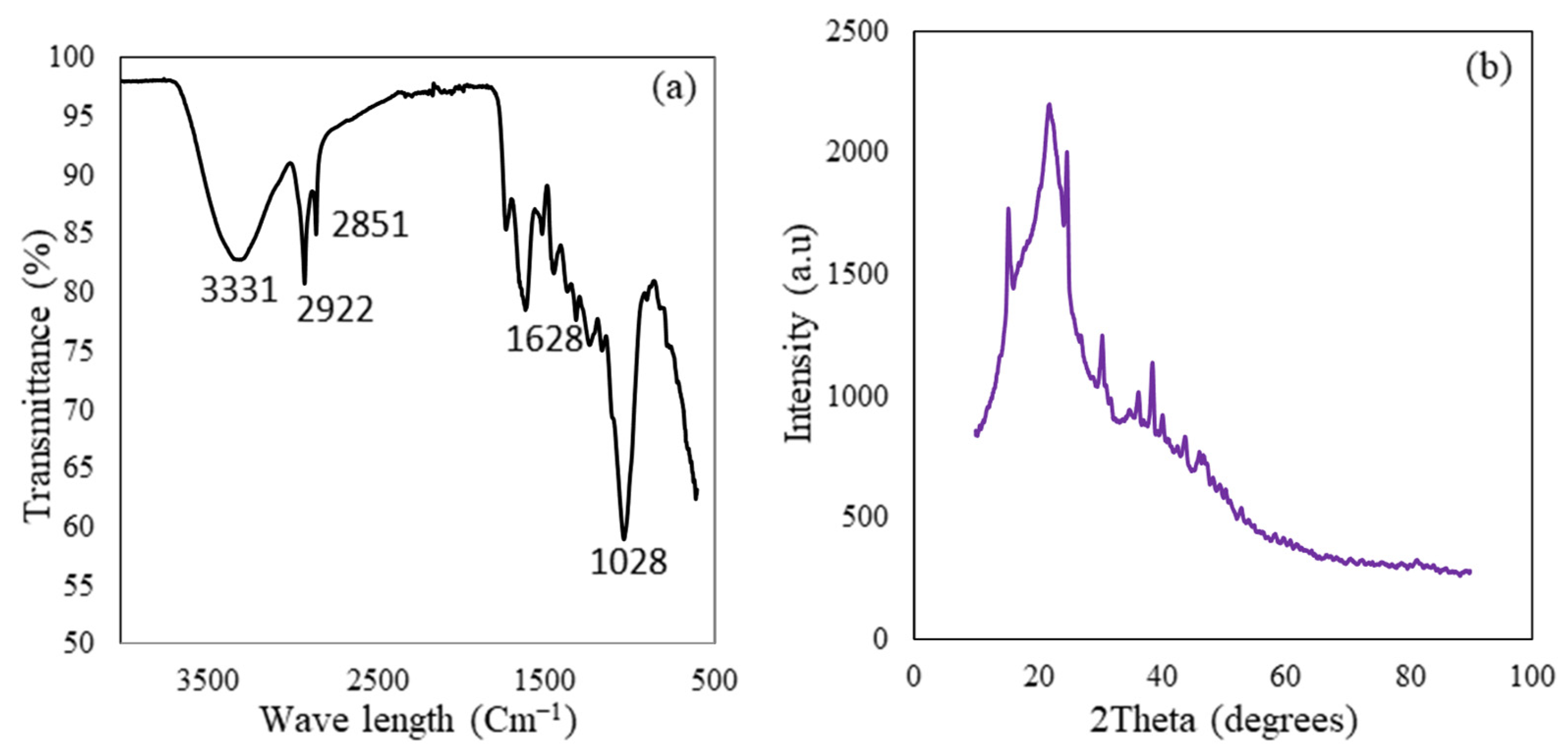
Figure 1a shows the infrared spectrum of QRP. The active functional groups in QRP are presented in Table 3.
The existence of several coagulating agents (proteins, total phenolic, and polysaccharides) in Quercus robur leaves were confirmed by the presence of certain functional groups, such as –NH and COOH groups in amide at 1628 cm−1 [31]. During coagulation flocculation, these functional groups are in charge of removing heavy metal ions [32,33].
The FTIR spectrum of the leaves also shows an intense peak at 3331 cm−1, attributed to the stretching vibrations of hydroxyl groups (–OH). These groups, present in polysaccharides, proteins, and other biomolecules, are active sites that can interact with metal ions through electrostatic adsorption and surface complexation, thereby contributing to the formation of stable flocs and the efficiency of the coagulation-flocculation process [34].
According to Figure 1b, the crystallinity of Quercus robur leaves was 29.46%. Hence, in the peaks between 15° and 40° several coagulating agents such as lipids, proteins and polysaccharides were observed, these components being capable to remove the various heavy metal in water by a coagulation flocculation process using Quercus robur leaves as a natural agent [25,34,35].
The same peaks have been obtained by previous research when using Moringa oleifera as a bio-coagulant [36].
Figure 1. Quercus robur leaves (a) Infrared spectrum and (b) X-ray diffraction pattern [37].
Water 18 00663 g001
Table 3. Active functional groups in Quercus robur powder (QRP).
Wave Number (cm−1)Functional GroupReference
1028CO group[38,39]
1628The carbonyl function C=O (primary amides)[39]
2851C-H symmetric stretching in CH2[33,40]
2922C-H asymmetric stretching in CH2[33,41,42,43]
3331Hydroxyl group OH[44,45,46]
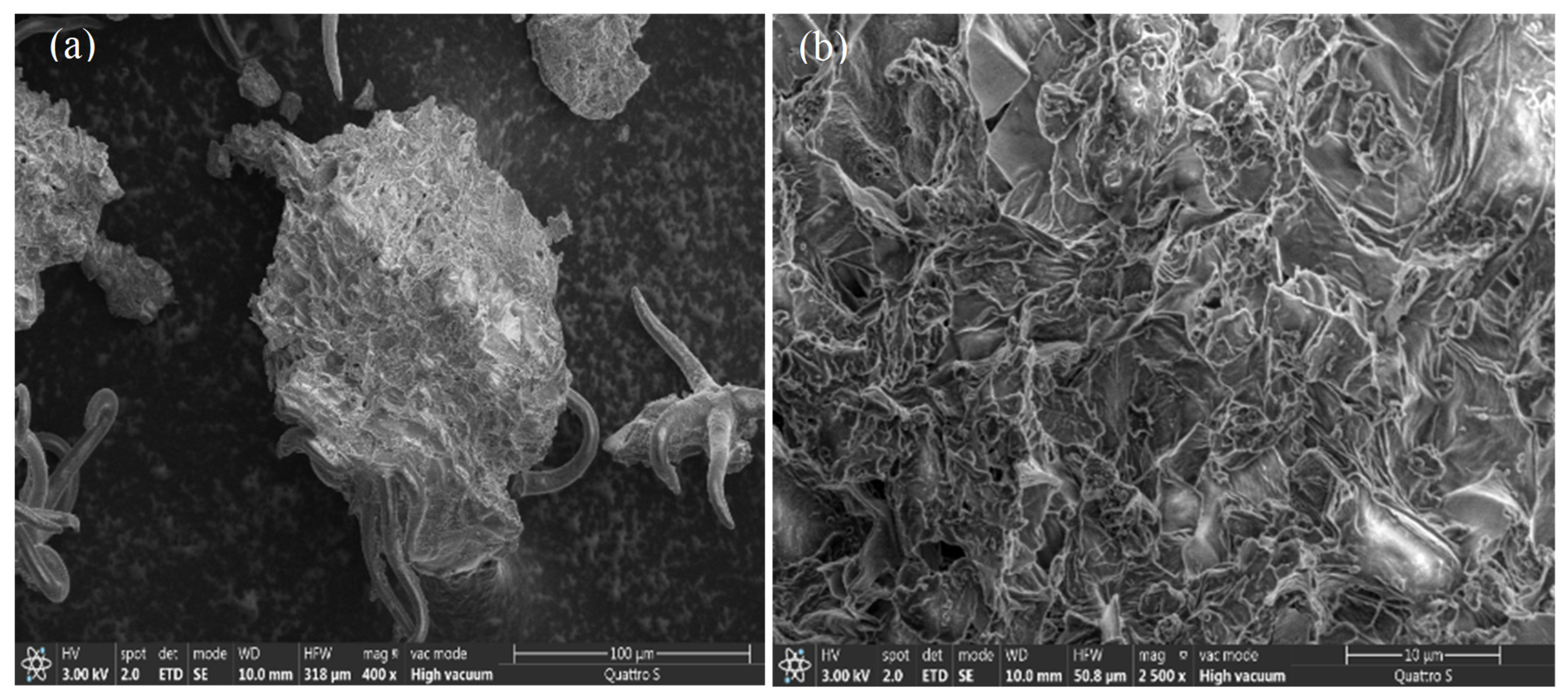
The morphology of Quercus robur leaves powder in scanning electron microscopy (SEM) shows a heterogeneous and relatively porous matrix according to Figure 2. This external surface structure imparts a coagulation effect to the bio-coagulant used, thereby facilitating the removal of various heavy metal ions such as zinc (II), iron (III), copper (II), and chromium(VI) from water [47].
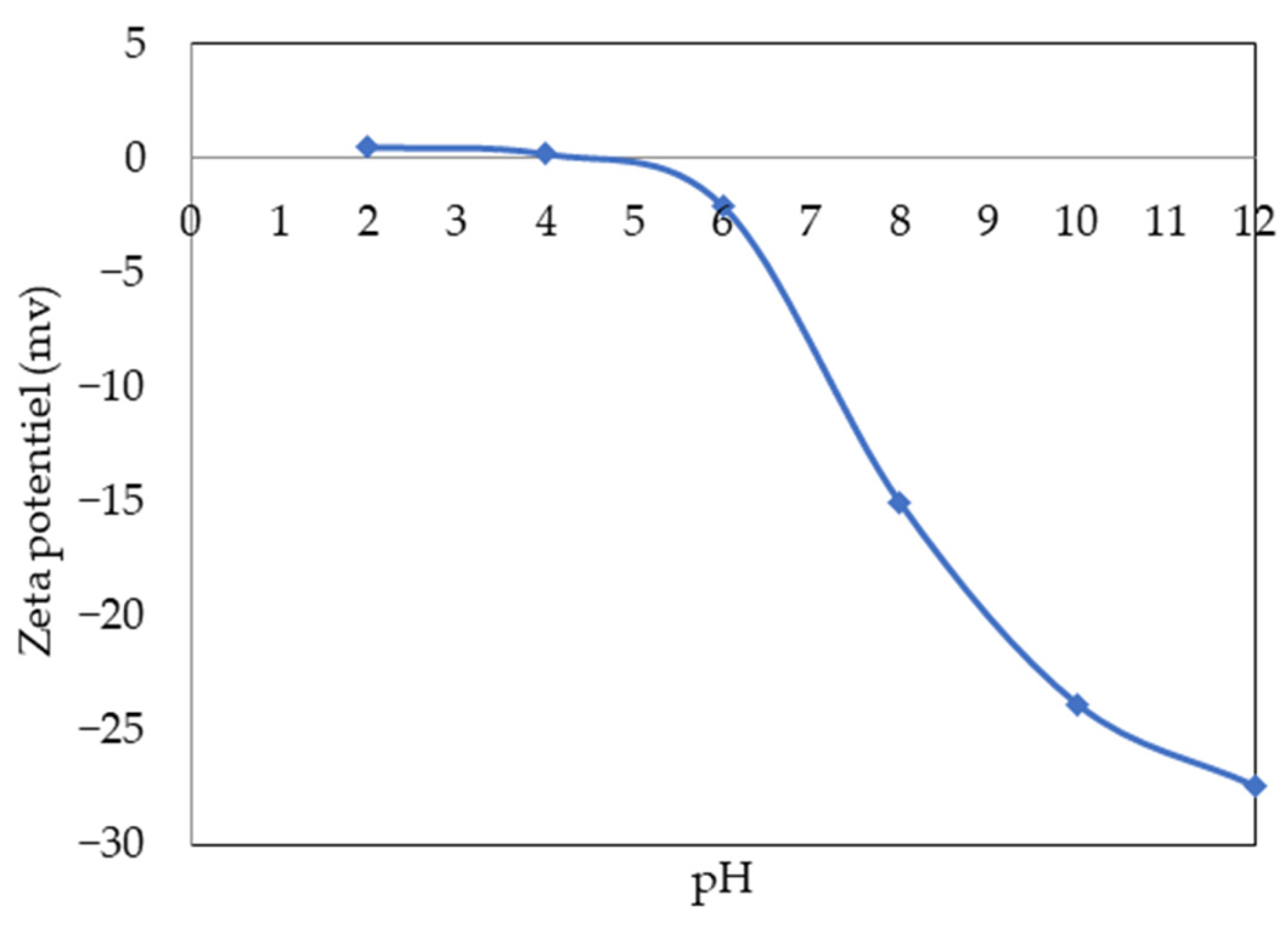
The Zeta potential of Quercus robur leaves was studied to determine their surface charge, the pH being among the well-known crucial parameters to understand the coagulation process. The surface charge of a biomaterial depends on the pH solution: (i) pH < pH pzc, surface is positively charged; (ii) pH = pH pzc, surface has no net charge (neutral); and (iii) pH > pH pzc, surface is negatively charged [48].
The pH pzc plots of Quercus robur leaves are presented in Figure 3. The pH pzc value was in the 4–5 range. For pH > pH pzc, the OH groups and other oxygenated functions deprotonate, giving the particle surface a negative charge. This charge promotes the electrostatic adsorption of cationic metal ions (zinc (II), iron (III) and copper (II)) on the surface of the bio-coagulants (QRP and QRE) [31,48,49,50].

3.1.2. Bio-Coagulant Liquid

Table 4 presents the values of the physicochemical parameters characterizing the Quercus robur leaves extract. The extract exhibited a density close to 1 g/cm3 and a slightly acidic pH of 5.05. The measurements of inorganic carbon (IC), total carbon (TC), and total organic carbon (TOC) showed a high TOC concentration (1468 ppm) compared to the IC value (7.79 ppm), indicating the predominantly organic nature of the coagulant. Additionally, the concentrations of proteins, polysaccharides, and total phenolic compounds were 2.417 mg/g, 0.017 mg/g, and 0.008 mg/g, respectively. These values indicate that proteins are the predominant bioactive components in the Quercus robur leaves extract, while polysaccharides and phenolic compounds, although present in lower amounts, may still contribute to the bio-coagulant effectiveness through complementary mechanisms such as charge neutralization and adsorption [51,52].

3.2. Factorial Design

In this study, a Central Composite Design (CCD) was used to investigate the effect of two factors, namely the dosage of natural coagulants (QRP and QRE) and the initial concentrations of selected heavy metal ions (zinc (II), iron (III), copper (II), and chromium(VI)) on metal removal effectiveness. The experimental results generated from the CCD are summarized in Table 5.
As shown in Table 5, the highest zinc (II) removal efficiencies were 94.65% with QRP and 98.36% with QRE. Both values were achieved at the same coagulant dosage of 5 mg/L, corresponding to initial zinc (II) concentrations of 2 mg/L and 1000 mg/L, respectively. For copper (II), the maximum removal efficiencies were 95.91% for QRP and 97.09% for QRE, obtained at a coagulant dosage of 1002.5 mg/L and an initial copper (II) concentration of 625.75 mg/L. Regarding chromium (Cr(VI)), both bio-coagulants demonstrated excellent performance, with removal efficiencies approaching 99%. Similarly, the highest iron (III) removal efficiencies reached 98.24% for QRP and 98.86% for QRE.
Based on the (CCD), mathematical models were developed to describe the removal efficiencies (R, %) of zinc (II), iron (III), copper (II), and chromium (VI) using the bio-coagulants QRP and QRE. The corresponding model equations for each bio-coagulant are presented below (Table 6).
The regression models describe the combined effects of bio-coagulant dosage (CD) and initial metal concentration (C0) on removal efficiency:
The linear terms (CD and C0) represent the individual influence of each factor. Positive coefficients indicate a synergistic effect, where an increase in the factor enhances removal efficiency, while negative coefficients indicate an antagonistic effect, often associated with coagulant overdosing or partial restabilization of particles;
The quadratic terms (CD2 and C02) reflect the non-linear behavior of the coagulation–flocculation process and confirm the existence of optimal operating conditions.
The interaction terms (CD × C0), when significant, demonstrate that the effect of one variable depends on the level of the other.
Overall, the mathematical models obtained for Zn(II), Fe(III), Cu(II), and Cr(VI) are statistically significant and physically consistent with the known behavior of coagulation systems [25,34]. They provide reliable predictive tools for process optimization within the investigated experimental domain and support the robustness of the proposed approach for heavy-metal removal.

3.2.1. Effect of Main Factors on Heavy Metal Removal

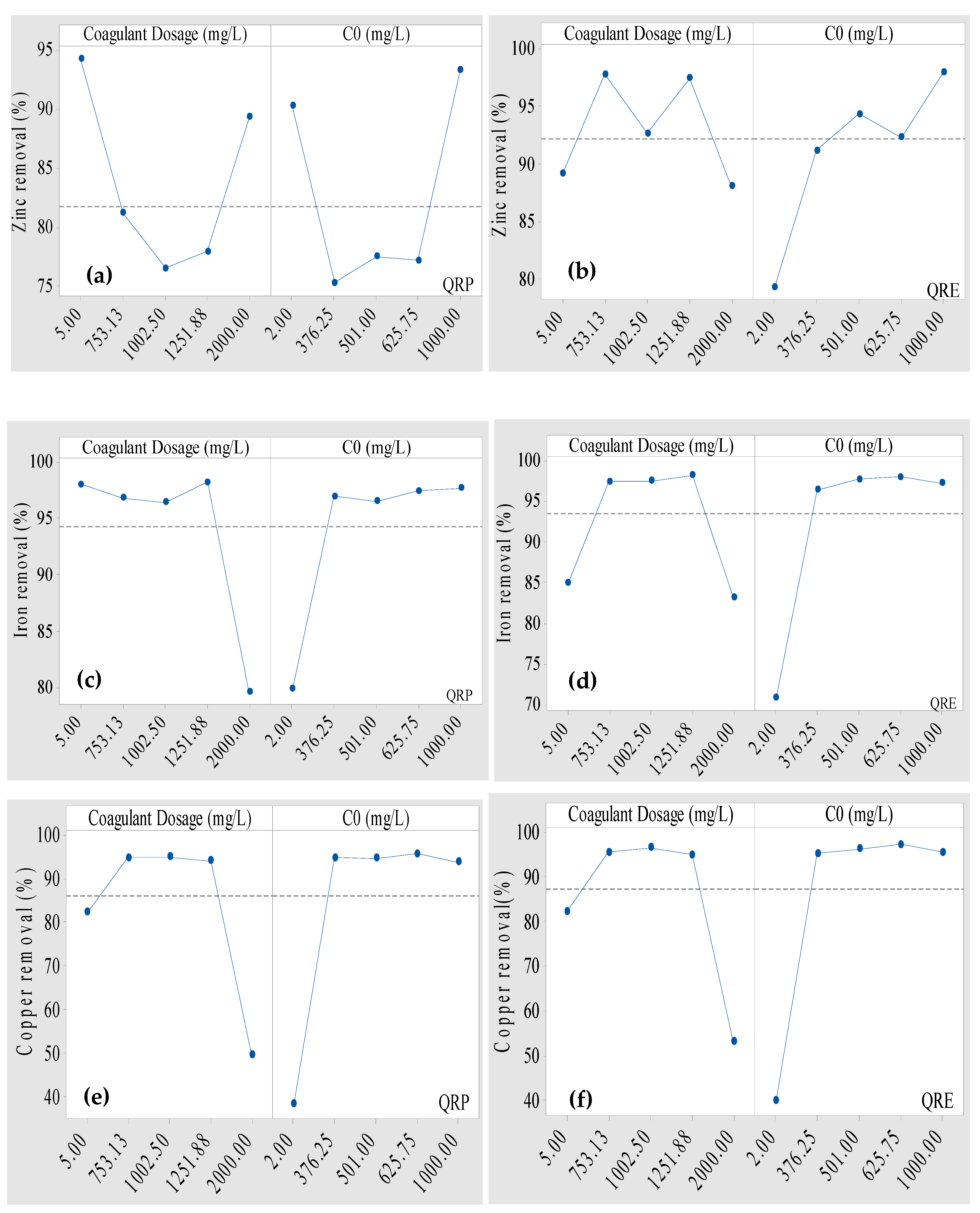
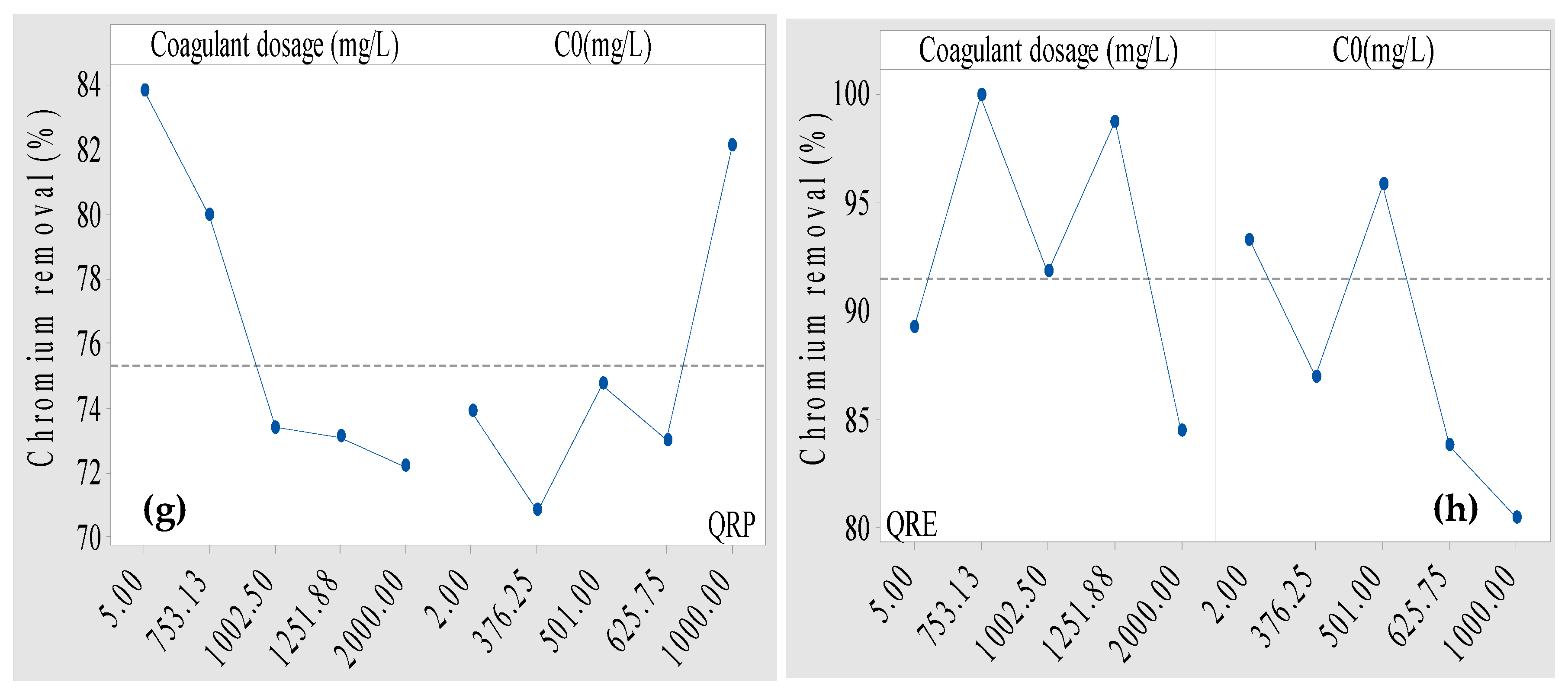
Figure 4 presents the combined effects of coagulant dosage (QRP and QRE) and initial heavy metal concentrations on the removal efficiencies of zinc (II), iron (III), copper (II), and chromium (VI). Overall, both parameters significantly influenced metal removal, though the extent and trends varied depending on the type of metal and bio-coagulant used.
For all four metals studied, an optimal coagulant dosage was observed beyond which removal efficiency either plateaued or declined. With QRP, the optimal performance was consistently achieved at the lowest tested dosage (5 mg/L) for zinc (II), iron (III), copper (II), and chromium (VI), suggesting a high affinity of its active sites for metal ions at low concentrations. This effectiveness is largely attributed to the adsorption-bridging mechanism, where functional groups such as –OH, –COOH, and –C=O on the surface of the Quercus robur leaves effectively interact with metal ions. However, at higher dosages, excess bio-coagulant likely led to particle destabilization or saturation of active binding sites [53,54], causing a decline in removal effectiveness. In contrast, QRE required higher dosages (around 753.13 mg/L) to achieve maximum removal efficiencies, particularly for zinc and chromium (VI). This trend can be attributed to a progressive increase in the availability of adsorption sites as the QRE dosage increases. This behavior may also suggest that the composition or structure of the QRE requires a higher concentration to provide a sufficient number of functional groups responsible for effective metal binding and removal [51,55]. Nevertheless, a decrease in performance was also observed at excessive concentrations, likely due to site saturation or repulsive electrostatic interactions between excess functional groups and metal cations [51,55].
The influence of the initial metal concentration also showed interesting trends. For zinc (II), iron (III), and copper (II), an increase in the initial metal concentration generally led to enhanced removal effectiveness, particularly with QRP. This can be explained by the higher driving force for mass transfer, which promotes greater interaction between metal ions and the functional groups of Quercus robur leaves, as well as an increase in the number of ions adsorbed per unit mass [56]. However, in the case of chromium (VI) removal with QRE, an inverse trend was observed, higher initial chromium (VI) concentrations resulted in a decrease in removal efficiency, possibly due to the overloading of available functional groups or competitive inhibition at active binding sites [52].
In summary, the removal performance of both QRP and QRE depends on achieving optimal conditions between coagulant dosage and initial metal concentration. QRP was more effective at low dosages, whereas QRE required higher concentrations to attain optimal performance. Adsorption capacity, electrostatic interactions, and bridging mechanisms played key roles in metal removal, with distinct behaviors observed depending on the type of metal and treatment conditions [57,58,59].

3.2.2. Counter Plotting (2D) for Evaluation of Operational Parameters

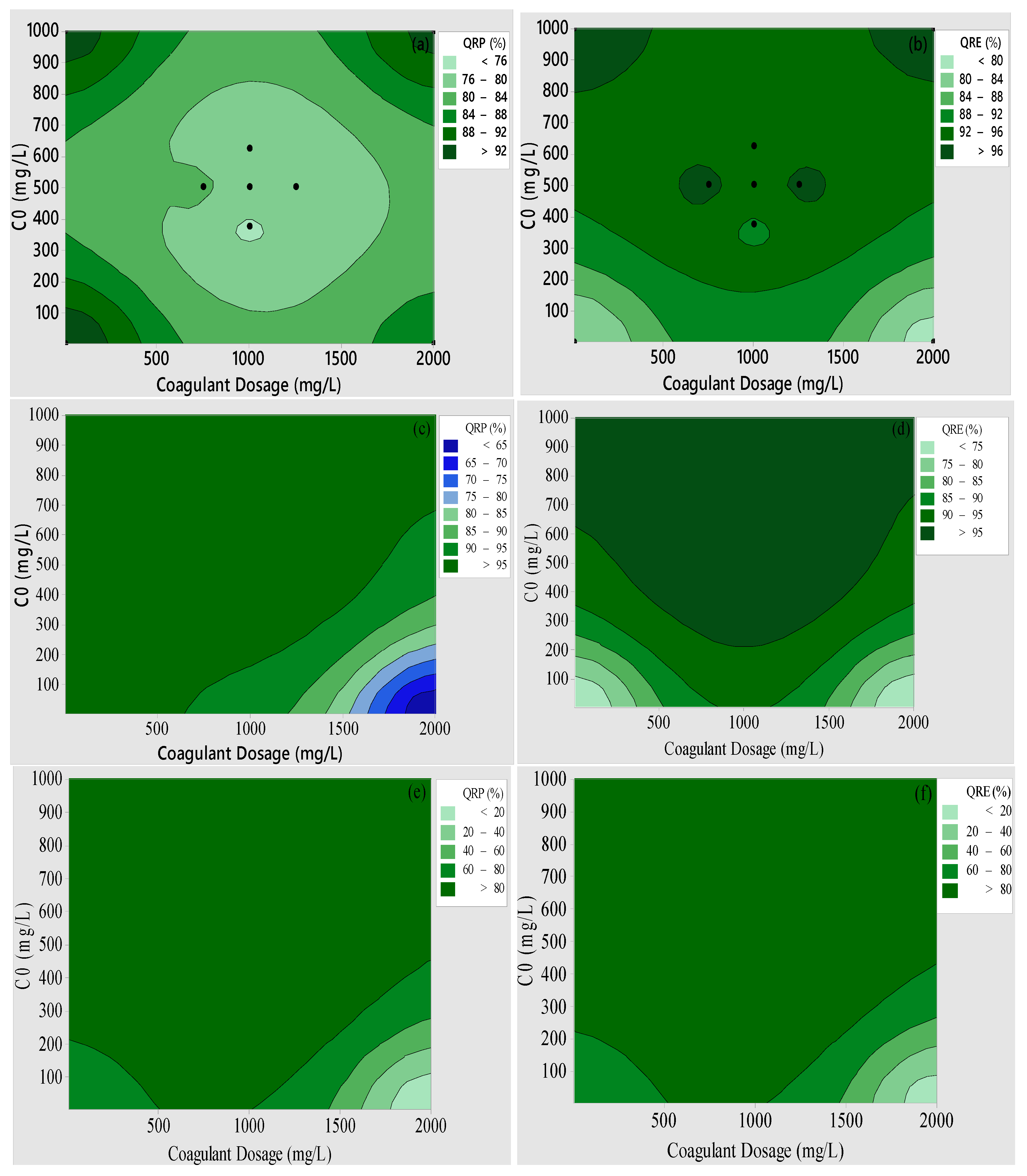
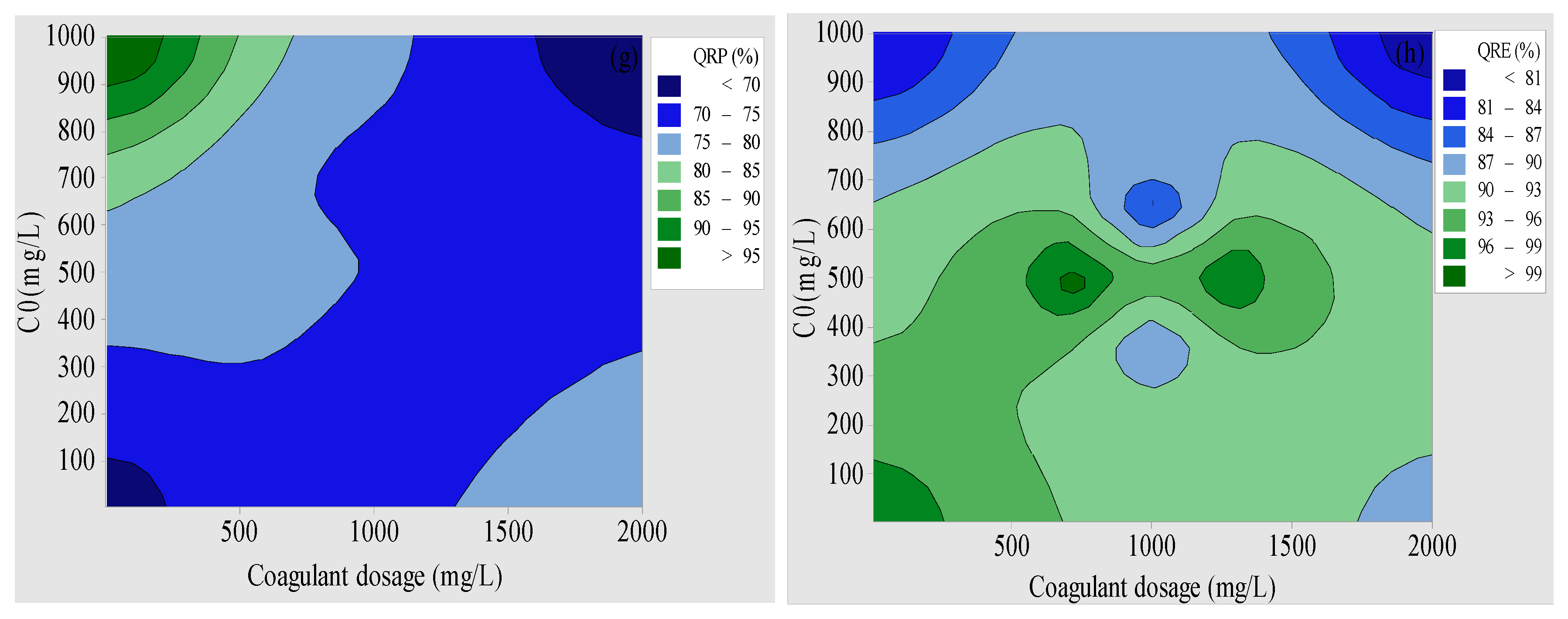
The complexity of heavy metal removal by bio-coagulation is effectively illustrated by the contour plots shown in Figure 5a–h. These diagrams were employed to identify the optimal operating conditions for the removal of zinc (II), iron (III), copper (II), and chromium (VI), based on the interaction between coagulant dosage and initial metal concentration. The dark-colored regions in the contour plots represent zones of maximum removal efficiency, indicating areas where the combined effects of the two variables are most favorable. These zones reflect the conditions under which the bio-coagulants (QRP and QRE) exhibit their highest performance, thus offering valuable insights for process optimization. The variation in contour patterns across different metals also highlights the specific adsorption behaviors and affinities of the bio-coagulants, suggesting that each metal responds differently to changes in treatment conditions due to their differences in ionic properties, charge density, and interaction with functional groups present in the bio-coagulants.
For example, Figure 5c,d show that maximum Fe(III) removal is achieved at biocoagulant doses between 500 and 1000 mg/L for both bio-coagulants (QRP and QRE). This behavior can be attributed to the strong affinity of Fe(III) for the functional groups present in plant extracts, as well as its ability to form stable complexes and hydroxides that promote the formation of dense flocs.
FTIR analyses revealed the presence of OH, COOH, and NH groups, mainly derived from polysaccharides, proteins, and phenolic compounds contained in Quercus robur leaves. These functional groups constitute active sites capable of interacting with metal ions through various mechanisms. It should be noted that the coagulation flocculation tests were carried out at pH = 7. At this pH, the surface of the bio-coagulants derived from Quercus robur leaves is predominantly negatively charged, with the zero charge point (pHzcp) being between 4 and 5. This negative charge promotes the electrostatic attraction of positive metal ions such as Zn(II), Fe(III), and Cu(II). In addition, the complexation of metal ions with oxygenated and nitrogenated functional groups enhances their immobilization on the surface of the bio-coagulants. Interparticle bridging then contributes to the aggregation of particles into larger flocs, facilitating their separation by settling during the coagulation–flocculation process. Furthermore, at neutral pH, the functional groups (–OH, –COOH, and –NH) remain stable and available to interact with metal ions, thereby reinforcing the mechanisms of adsorption and surface complexation. These conditions partly explain the high removal efficiencies observed for the various metals studied [25,60].
Several factors influence the efficiency of metal ion reduction, including the initial metal concentration, the oxidation state of the heavy metal, and the water temperature [7]. In addition, several studies have applied the coagulation–flocculation process to remove heavy metals from water using naturally sourced bio-coagulants (Moringa Oleifera, pine cone, banana, etc.). The results reported in the literature are comparable to those obtained in the present study and confirm that the coagulant dosage is a determining factor in the effectiveness of the metal reduction process [22,51,58,61].

3.2.3. Analysis of Variance (ANOVA)

The predictive quality of the mathematical models was evaluated using several statistical criteria: (i) the coefficient of determination (R2 and R2 adjusted), (ii) the p-value, and (iii) the residual plots. The objective of the response optimization was to maximize removal effectiveness with a 95% confidence level.
For all models, the R2 values exceeded 97% (see Table 7), indicating that a very large proportion of the variability in the response studied can be explained by the independent variables considered in the model [62,63]. Furthermore, the R2 adjusted, which takes into account the number of explanatory variables introduced into the model, also shows high values that are very close to those of R2 (Table 7). The difference observed between R2 and R2 adjusted remains small (<2%), which reflects the absence of overfitting of the model and confirms the relevance of the selected variables [64]. These results thus demonstrate the model’s suitability, reliability, and predictive power.
The ANOVA analysis (p value) of these models is presented in Table 8.
The p-values were used to assess the statistical significance and validity of the models developed. A model is considered statistically significant when the p-value is less than 0.05 [51,65,66]. The detailed analysis results for all models are presented in Table 8. The p-values obtained were below 0.05 for all linear and quadratic terms, confirming their significance. For the interaction terms, the p-values were 0.001, 0.839, 0.000, 0.367, 0.000, 0.000, 0.000, and 0.025 for the models RZn (QRP), RZn (QRE), RFe (QRP), RFe (QRE), RCu (QRP), RCu (QRE), RCr (QRP), and RCr (QRE), respectively.
These results confirm that the models developed are statistically significant and provide a good fit. They indicate that the relationships established between the response variable (metal removal effectiveness) and the independent variables (bio-coagulant dosage and initial metal concentration) are valid and reliable within the studied experimental range.
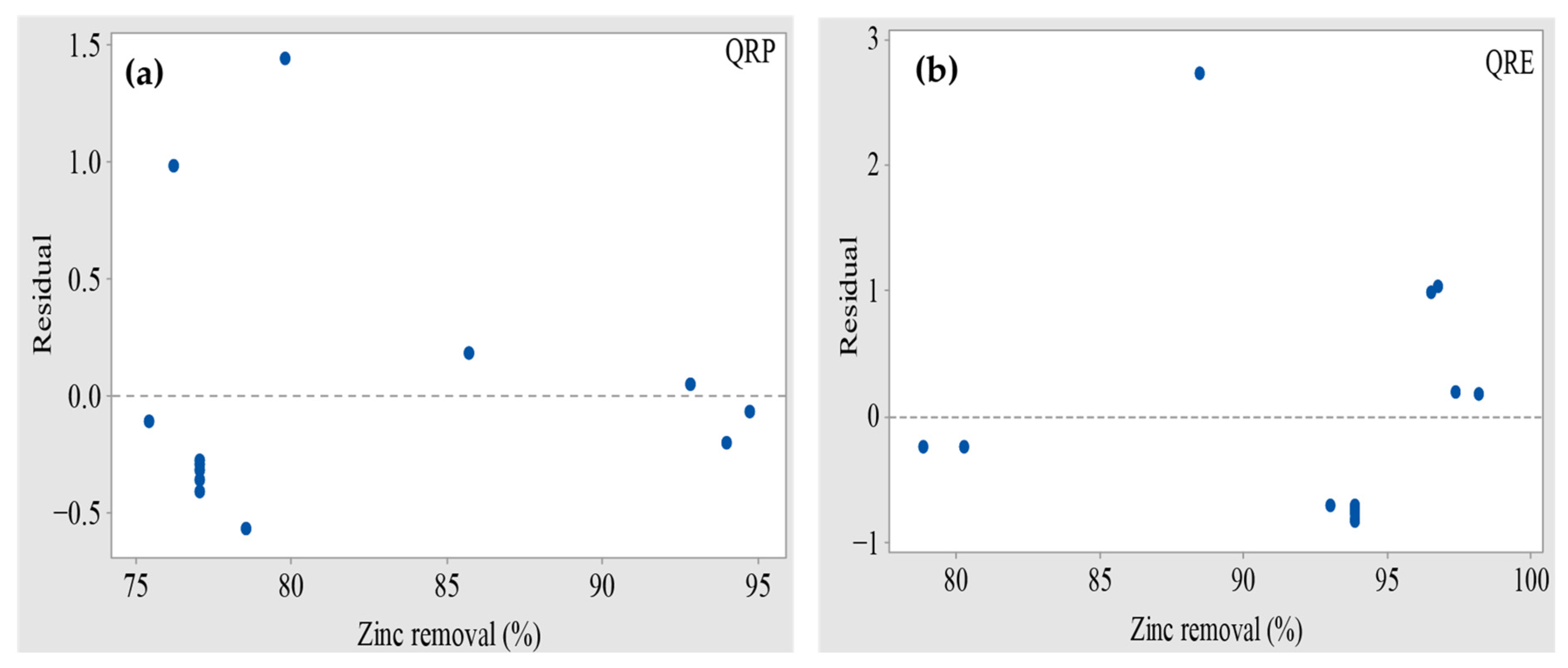
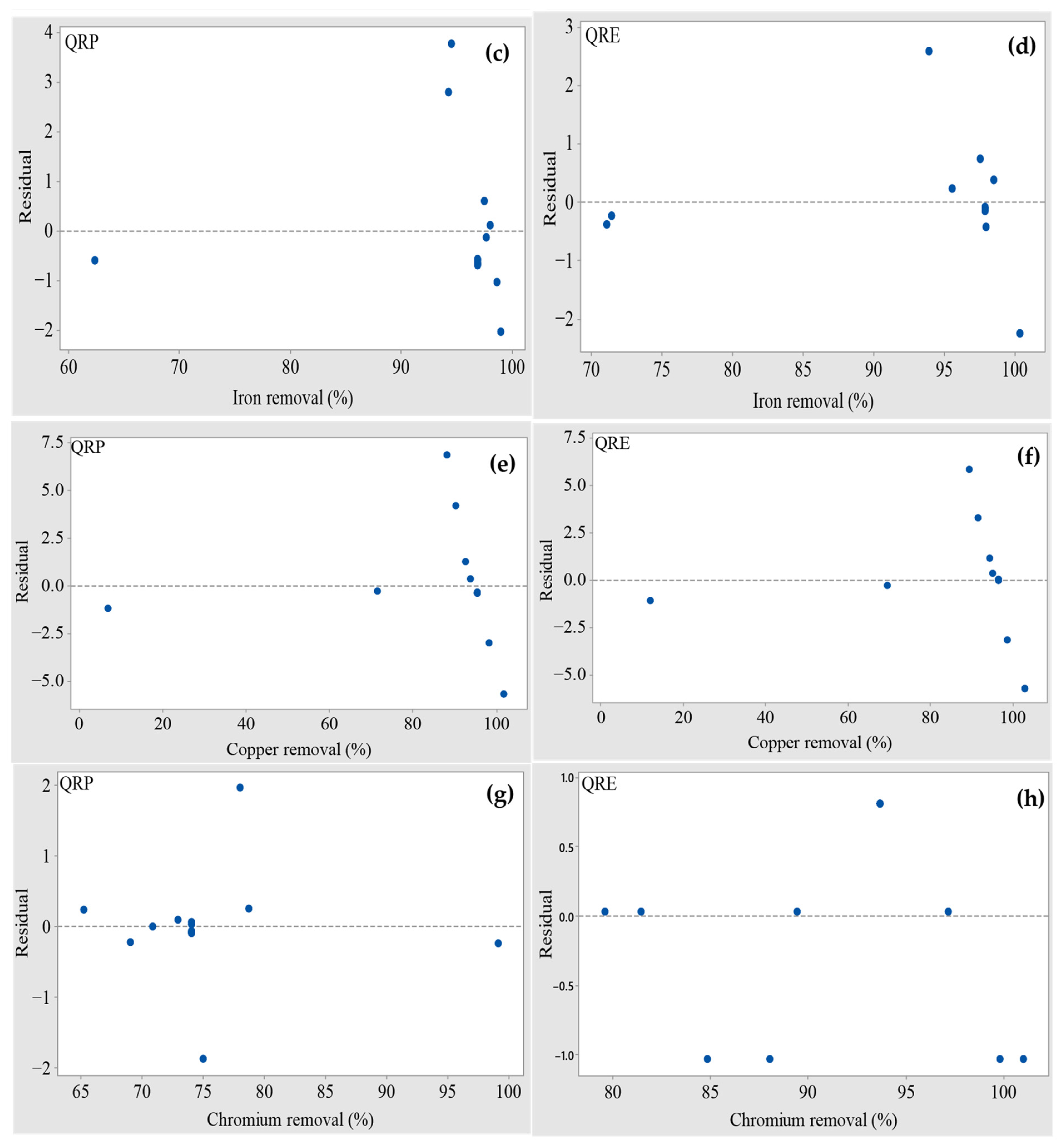
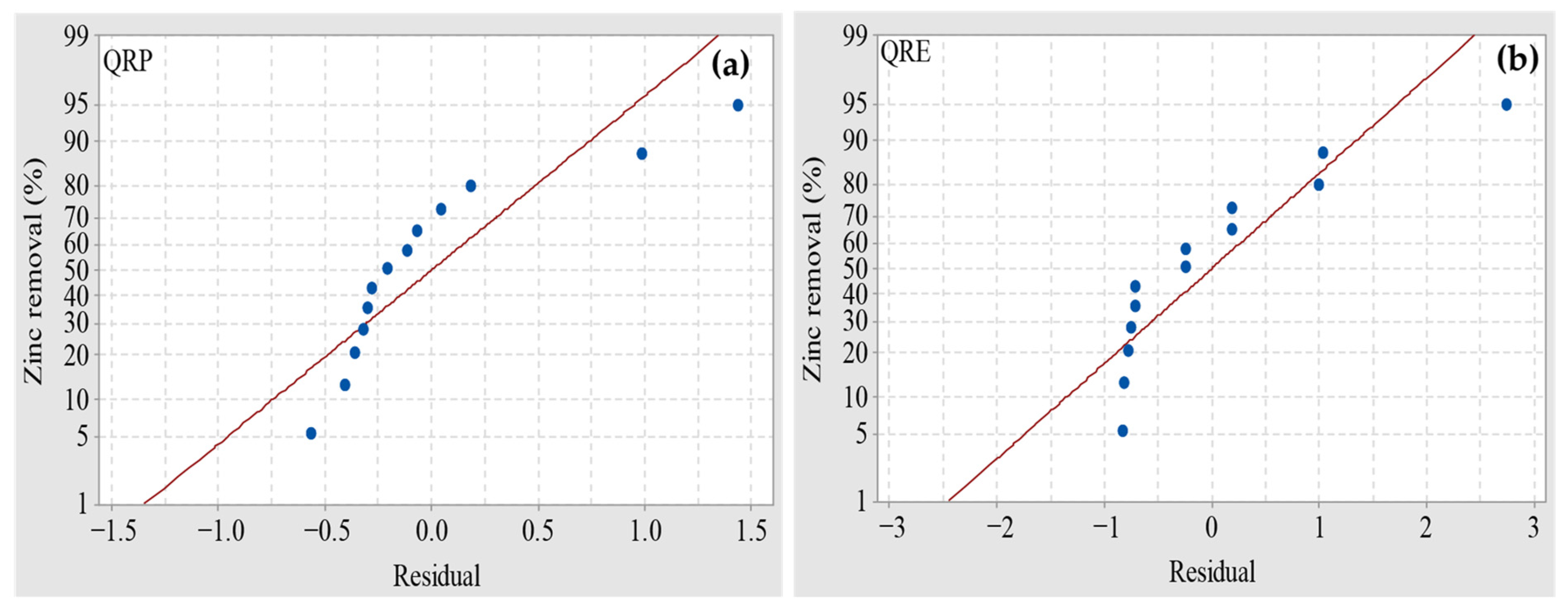
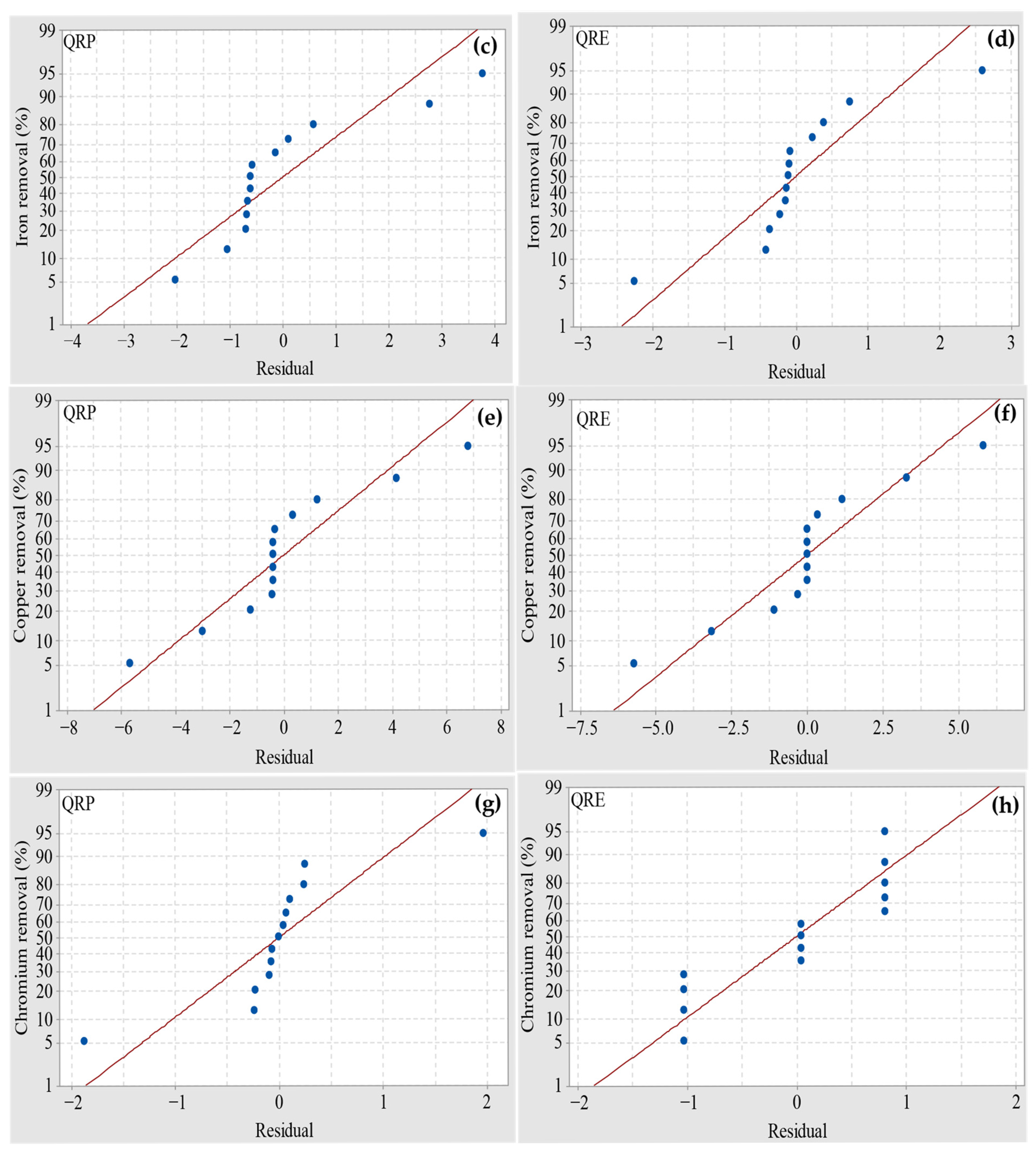
Figure 6 illustrates the interaction between residuals and fitted values. In Figure 6a–h, the maximum residual errors were 5.7%, 2.7%, 4.5%, 2.5%, 4.6%, 5.5%, 1.0%, and 0.8%, respectively. The normal probability plots of the residuals are presented in Figure 7a–h. These plots indicate that the residuals align closely with a straight line, confirming that the errors are normally distributed and exhibit a constant mean of zero [30,67,68]. This observation confirms that the CCD provides a good fit across all models, making it suitable for use in process optimization.

3.2.4. Optimization

Optimal conditions for the variables, coagulant dosage and initial metal concentration were predicted to achieve maximum removal efficiencies for all four metals (zinc (II), iron (III), copper (II), and chromium (VI). The predicted results are presented in Table 9. It was observed that the maximum removal effectiveness reached 100% for all metals, except in the case of zinc (II) removal using QRP. In this specific case, the predicted removal effectiveness was 99.79%, corresponding to a coagulant dosage of 5 mg/L and an initial zinc (II) concentration of 919.35 mg/L. These findings confirm that the models developed are reliable and accurate for predicting the removal effectiveness of heavy metal ions using organic coagulants (QRP and QRE).

3.2.5. Comparison with Other Bio-Coagulants

The effect of the bio-coagulant based on Quercus robur leaves on the removal of Zn(II), Fe(III), Cu(II), and Cr(VI) was compared to that reported in several previous studies using different natural bio-coagulants (Table 10). This comparison shows that the yields obtained in the present study are of the same order of magnitude, or even higher, than those reported for other bio-coagulants such as Moringa oleifera, Pine cones, Banana peel, and Opuntia ficus.

4. Conclusions

This study makes an original contribution to the development of sustainable solutions for treating water contaminated with heavy metals through the use of bio-coagulants derived from Quercus robur leaves (QRP and QRE).
The proposed approach offers a promising replacement for conventional methods such as oxidation–reduction, ion exchange, adsorption, chemical coagulation, and microfiltration in the treatment of heavy met-al-contaminated water. The bio-coagulants were characterized using zeta potential analysis, FTIR, SEM, and XRD techniques, and the results confirmed the presence of active coagulating agents, particularly proteins and total phenolics, along with a diversity of functional groups involved in metal binding. The application of a composite centered design (CCD) allowed the bio-coagulant dosage and initial metal concentration to be optimized for each ion studied. The results showed high and reproducible removal rates, with rates above 100% for all metals tested (zinc (II), copper (II), iron (III), and chromium (VI)).
The analysis of variance (ANOVA) showed high R2 (≥97%) and R2 adjusted (≥95%) values for all models, confirmed the reliability and predictive accuracy of the equations developed.

5. Future Prospects and Recommendations

This study opens up several avenues for research and development of natural coagulants based on Quercus robur leaves, applicable to the treatment of
  • Industrial waste containing mixtures of heavy metal ions (metallurgy, battery manufacturing, foundries, and tanning industries),
  • Textile industry wastewater,
  • Pharmaceutical industry effluents.
It also suggests ways to improve the extraction yield of coagulating agents using different methods such as ultrasound or Soxhlet, as well as ways to store and preserve bio-coagulants to ensure their long-term effectiveness.
Finally, this study highlights the importance of assessing the economic feasibility and environmental impact of using Quercus robur on an industrial scale.

Author Contributions

Conceptualization, A.B., O.B., Z.A., A.K. (Amel Khalfaoui) and K.D.; methodology, A.B., O.B., A.K. (Amel Khalfaoui), K.D. and A.K. (Aya Khebatti); formal analysis, Z.A., A.B. and K.D.; investigation, A.K. (Aya Khebatti) A.B. and K.D.; data curation, A.B., A.K. (Amel Khalfaoui), K.D. and A.P. (Antonio Panico); writing—original draft preparation, Z.A., A.B., K.D., A.P. (Antonio Pizzi) and G.T.; writing—review and editing, A.B., K.D., A.P. (Antonio Panico) and A.P. (Antonio Pizzi); supervision, K.D., A.B. and A.P. (Antonio Pizzi); project administration, A.B., K.D. and A.P. (Antonio Panico). All authors have read and agreed to the published version of the manuscript.

Funding

This research received no external funding.

Data Availability Statement

The original contributions presented in this study are included in the article. Further inquiries can be directed to the corresponding authors.

Acknowledgments

This work was supported by the École Nationale Polytechnique de Constantine (Algeria) and the Ecole Normale Supérieure de Constantine (Algeria).

Conflicts of Interest

The authors declare no conflicts of interest.

Abbreviations

The following abbreviations are used in this manuscript:
AASAtomic absorption spectrophotometer
CDCoagulant dosage
CCDCentral composite design
FTIRFourier-Transform Infrared Spectrophotometry
ICInorganic carbon
pH pzcThe point of zero charge
QrQuercus robur
QREQuercus robur extract
QRPQuercus robur powder
RHeavy metal removal efficiency
RpmRevolutions per minute
RSMResponse Surface Methodology
SEMScanning Electron Microscopy
TCTotal carbon
TOCTotal organic carbon
XRDX-ray diffractometer

References

  1. Desjardins, R. Le Traitement des Eaux; 2éme Edition Revue et Améliorée; Presses inter Polytechnique: Palaiseau, France, 1997. [Google Scholar]
  2. Hikmat, K.; Aziz, H.; Mustafa, F.S. Advanced oxidation processes for the decontamination of heavy metal complexes in aquatic systems: A review. Case Stud. Chem. Environ. Eng. 2024, 9, 100567. [Google Scholar] [CrossRef]
  3. WHO. Guidelines for Drinking-Water Quality, 4th ed.; World Health Organization: Geneva, Switzerland, 2011. [Google Scholar]
  4. Adigun, O.J. The devastating consequences of environmental pollution on human health. Br. J. Multidiscip. Adv. Stud. 2025, 6, 37–46. [Google Scholar] [CrossRef]
  5. Briffa, J.; Sinagra, E.; Blundell, R. Heavy metal pollution in the environment and their toxicological effects on humans. Heliyon 2020, 6, e04691. [Google Scholar] [CrossRef] [PubMed]
  6. Commune, M.; Basin, N.T.; Petrut, N.; Sur, I.M.; Rusu, T.A. Integrated assessment of groundwater vulnerability and drinking water quality in rural wells: Case study from ceanu. Sustainability 2025, 17, 6530. [Google Scholar] [CrossRef]
  7. Shah, M.P. Removal of Emerging Contaminants Through Microbial Processes, 1st ed.; Shah, M.P., Ed.; Springer: Singapore; New Delhi, India, 2021. [Google Scholar]
  8. Paul, D. Research on heavy metal pollution of river Ganga: A review. Ann. Agrar. Sci. 2017, 15, 278–286. [Google Scholar] [CrossRef]
  9. Teschke, R. Copper, iron, cadmium, and arsenic, all generated in the Universe: Elucidating their environmental impact risk on human health including clinical liver injury. Mol. Sci. Rev. 2024, 25, 6662. [Google Scholar] [CrossRef]
  10. Matouq, M.; Jildeh, N.; Qtaishat, M.; Hindiyeh, M.; Al, M.Q. The adsorption kinetics and modeling for heavy metals removal from wastewater by Moringa pods. J. Environ. Chem. Eng. 2015, 3, 775–784. [Google Scholar] [CrossRef]
  11. Dwivedi, A.K. Researches in water pollution: A review. Int. Res. J. Nat. Appl. Sci. 2017, 4, 118–142. [Google Scholar] [CrossRef]
  12. Vidu, R.; Matei, E.; Predescu, A.M.; Alhalaili, B.; Pantilimon, C.; Tarcea, C.; Predescu, C. Removal of heavy metals from wastewaters: A challenge from current treatment methods to nanotechnology applications. Toxics 2020, 8, 101. [Google Scholar] [CrossRef]
  13. Ibigbami, T.B.; Dawodu, F.A.; Akinyeye, O.J. Removal of heavy metals from pharmaceutical industrial wastewater effluent by combination of adsorption and chemical precipitation methods. Am. J. Appl. Chem. 2016, 4, 24–32. [Google Scholar] [CrossRef]
  14. Silva, J.E.; Paiva, A.P.; Soares, D.; Labrincha, A.; Castro, F. Solvent extraction applied to the recovery of heavy metals from galvanic sludge. J. Hazard. Mater. 2005, 120, 113–118. [Google Scholar] [CrossRef]
  15. Sis, H.; Uysal, T. Applied Clay Science Removal of heavy metal ions from aqueous medium using Kuluncak (Malatya) vermiculites and effect of precipitation on removal. Appl. Clay Sci. 2014, 95, 1–8. [Google Scholar] [CrossRef]
  16. Dohare, D.; Rekhate, C.; Kumar, A. Removal of heavy metal from electroplating wastewater using electrocoagulation: A review. Desalin. Water Treat. 2022, 267, 121–137. [Google Scholar] [CrossRef]
  17. Kapepula, V.L.; Garc, M.; Sefidi, V.S.; Buleng, E.; Tamungang, N.; Musibono, D. Evaluation of commercial reverse osmosis and nanofiltration membranes for the removal of heavy metals from surface water in the democratic republic of congo. Clean Technol. 2022, 4, 1300–1316. [Google Scholar] [CrossRef]
  18. Kapepula, V.L.; Luis, P.; Luis, P. Removal of heavy metals from wastewater using reverse osmosis. Front. Chem. Eng. 2024, 6, 1334816. [Google Scholar] [CrossRef]
  19. Alazaiza, M.Y.D.; Albahnasawi, A.; Al Maskari, O.; Al Maskari, T.; Abujazar, M.S.; Abu Amr, S.; Nassani, D.E. Role of natural coagulants in the removal of heavy metals from different wastewaters: Principal mechanisms, applications, challenges, and prospects. Glob. Nest J. 2022, 24, 594–606. [Google Scholar]
  20. Fu, F.; Wang, Q. Removal of heavy metal ions from wastewaters: A review. J. Environ. Manag. 2011, 92, 407–418. [Google Scholar] [CrossRef]
  21. Bouaouine, O.; Baudu, M.; Khalil, F.; Chtioui, H.; Zaitan, H. Comparative study between Moroccan cactus and chemicals coagulants for textile effluent treatment. J. Mater. Environ. Sci. 2017, 2, 2687–2693. [Google Scholar]
  22. Ali, E.N.; Tien Seng, H. Heavy metals (Fe, Cu, and Cr) removal from wastewater by moringa oleifera press cake. MATEC Web Conf. 2018, 150, 02008. [Google Scholar] [CrossRef][Green Version]
  23. Kurniawan, T.A.; Chan, G.Y.S.; Lo, W.H.; Babel, S. Physico-chemical treatment techniques for wastewater laden with heavy metals. Chem. Eng. J. 2006, 118, 83–98. [Google Scholar] [CrossRef]
  24. Benalia, A.; Derbal, K.; Panico, A.; Francesco, P. Use of acorn leaves as a natural coagulant in a drinking water treatment plant. Water Res. 2019, 11, 57. [Google Scholar] [CrossRef]
  25. Baatache, O.; Derbal, K.; Benalia, A.; Aberkane, I.; Guizah, Q.E.; Khalfaoui, A.; Pizzi, A. Valorization of pine cones (Pinus nigras) for industrial wastewater treatment and crystal violet removal: A sustainable approach based on bio-coagulants and a bio-adsorbent. Water 2024, 16, 260. [Google Scholar] [CrossRef]
  26. Rice, E.W.; Baird, R.B.; Eaton, A.D.; American Public Health Association (APHA) (Eds.) Standard Methods for the Examination of Water and Wastewater, 22nd ed.; American Water Works Association (AWWA) and Water Environment Federation (WEF): Washington, DC, USA, 2012. [Google Scholar]
  27. Dubois, M.; Gilles, K.A.; Hamilton, J.K.; Rebers, P.A.; Smith, F. Colorimetric method for determination of sugars and related substances. Anal. Chem. 1956, 28, 350–356. [Google Scholar] [CrossRef]
  28. Tawaha, K.; Alali, F.Q.; Gharaibeh, M.; Mohammad, M.; El-Elimat, T. Antioxidant activity and total phenolic content of selected Jordanian plant species. Food Chem. 2007, 104, 1372–1378. [Google Scholar] [CrossRef]
  29. Bradford, M.M. A rapid and sensitive method for the quantitation microgram quantities of protein utilizing the principle of protein-dye binding. Anal. Biochem. 1976, 72, 248–254. [Google Scholar] [CrossRef] [PubMed]
  30. Benalia, A.; Derbal, K. Etude Expérimentale et Modélisation du Processus de la Coagulation Floculation: Application aux Eaux Destinée a la Consommation; Université Constantine3: El Khroub, Algeria, 2015. [Google Scholar]
  31. Padhiyar, H.; Thanki, A.; Kumar, N.; Pandey, S.; Yadav, M. Parametric and kinetic investigations on segregated and mixed textile effluent streams using Moringa oleifera seed powders of different sizes. J. Water Process Eng. 2020, 34, 101159–101170. [Google Scholar] [CrossRef]
  32. Saritha, V.; Karnena, M.K.; Dwarapureddi, B.K. Exploring natural coagulants as impending alternatives towards sustainable water clarification—A comparative studies of natural coagulants with alum. J. Water Process Eng. 2019, 32, 100982. [Google Scholar] [CrossRef]
  33. Fatombi, J.K.; Lartiges, B.; Aminou, T.; Barres, O.; Caillet, C. A natural coagulant protein from copra (Cocos nucifera): Isolation, characterization, and potential for water purification. Sep. Purif. Technol. 2013, 116, 35–40. [Google Scholar] [CrossRef]
  34. Benalia, A.; Baatache, O.; Derbal, K.; Khalfaoui, A. The use of central composite design (CCD) to optimize and model the coagulation-flocculation process using a natural coagulant: Application in jar test and semi-industrial scale. J. Water Process Eng. 2024, 57, 104704. [Google Scholar] [CrossRef]
  35. Kebede, T.G.; Dube, S.; Mhuka, V.; Nindi, M.M. Bioremediation of Cd (II), Pb (II) and Cu (II) from industrial effluents by Moringa stenopetala seed husk. J. Environ. Sci. Health Part A 2019, 54, 337–351. [Google Scholar] [CrossRef]
  36. Bouchareb, R.; Derbal, K.; Benalia, A. Optimization of active coagulant agent extraction method from Moringa Oleifera seeds for municipal wastewater treatment. Water Sci. Technol. 2021, 84, 393–403. [Google Scholar] [CrossRef]
  37. Benalia, A.; Chaibraa, W.; Djeghar, S.; Derbal, K.; Khalfaoui, A.; Mahfouf, A.; Bouchareb, R.; Panico, A.; Pizzi, A. Use of extracted proteins from oak leaves as bio-coagulant for water and wastewater treatment: Optimization by a fractional factorial design. Water 2023, 15, 1984. [Google Scholar] [CrossRef]
  38. Manholer, D.D.; Tatiane, M.; De Souza, F.; Ambrosio, E.; Karoliny, T.; De Souza, F.; César, H.; Geraldino, L.; Garcia, J.C. Coagulation/flocculation of textile effluent using natural coagulants extracted from Dillenia indica. Water Sci. Technol. 2019, 80, 979–988. [Google Scholar] [CrossRef] [PubMed]
  39. Subramonian, W.; Wu, T.Y.; Chai, S. A comprehensive study on coagulant performance and floc characterization of natural Cassia obtusifolia seed gum in treatment of raw pulp and paper mill effluent. Ind. Crop. Prod. 2014, 61, 317–324. [Google Scholar] [CrossRef]
  40. Yang, Y.; Wu, Z.; Ji, L.; Lu, S.; Jing, H.; Sun, J.; Guo, J.; Song, W. Preparation of porous materials derived from waste mussel shell with high removal performance for tableware oil. J. Renew. Mater. 2021, 9, 1869–1881. [Google Scholar] [CrossRef]
  41. Choudhary, M.; Ray, M.B.; Neogi, S. Evaluation of the potential application of cactus (Opuntia ficus-indica) as a bio-coagulant for pre-treatment of oil sands process-affected water. Sep. Purif. Technol. 2019, 209, 714–724. [Google Scholar] [CrossRef]
  42. Ghahri, S.; Mohebby, B.; Pizzi, A.; Mirshokraie, A. Improving water resistance of soy-based adhesive by vegetable tannin. J. Polym. Environ. 2018, 26, 1881–1890. [Google Scholar] [CrossRef]
  43. Khalfaoui, A.; Khelifi, M.N.; Khelfaoui, A.; Benalia, A.; Derbal, K. The adsorptive removal of bengal rose by artichoke leaves: Optimization by full factorials design. Water 2022, 14, 2251. [Google Scholar] [CrossRef]
  44. Yang, W.; Shang, J.; Sharma, P.; Li, B.; Liu, K.; Flury, M. Colloidal stability and aggregation kinetics of biochar colloids: Effects of pyrolysis temperature, cation type, and humic acid concentrations. Sci. Total Environ. 2019, 658, 1306–1315. [Google Scholar] [CrossRef]
  45. Abou-zeid, R.E.; Ali, K.A.; Gawad, R.M.A.; Kamal, K.H.; Kamel, S. Removal of Cu (II), Pb (II), Mg (II), and Fe (II) by adsorption onto alginate/nanocellulose beads as bio-sorbent. J. Renew. Mater. 2021, 9, 601–613. [Google Scholar] [CrossRef]
  46. Hamadi, Z.; Chaid, R.; Kebir, M.; Amirou, S.; Hamadi, Z.; Chaid, R.; Kebir, M.; Amirou, S. Adsorption of Cr (VI) from aqueous solutions using algerian pinus halepensis tannin foam. Polymer 2020, 44, 425–435. [Google Scholar] [CrossRef]
  47. Dao, M.; Nguyen, V.; Tran, T.; Nguyen, X.; Vo, D.; Nguyen, V.; Hoang, L. Pilot-scale study of real domestic textile wastewater treatment using cassia fistula seed-derived coagulant. J. Chem. 2021, 2021, 7608856. [Google Scholar] [CrossRef]
  48. Laggoun, Z.; Khalfaoui, A.; Benalia, A.; Ghomrani, A.F.; Bouchareb, R.; Mahfouf, A.; Pizzi, A.; Panico, A.; Derbal, K. Application of response surface design for optimization of direct red dye biosorption onto cockleshells. Appl. Sci. 2023, 13, 12333. [Google Scholar] [CrossRef]
  49. Chua, S.; Malek, M.A.; Chong, F.; Sujarwo, W.; Ho, Y. Red Lentil (Lens culinaris) extract as a novel natural characterization and performance optimization study. Water 2019, 11, 1686. [Google Scholar] [CrossRef]
  50. Bounaas, M.; Bouguettoucha, A.; Chebli, D.; Derbal, K.; Benalia, A. Effect of washing temperature on adsorption of cationic dyes by raw lignocellulosic biomass. Appl. Sci. 2024, 14, 10365. [Google Scholar] [CrossRef]
  51. Baatache, O.; Derbal, K.; Benalia, A.; Khalfaoui, A.; Bouchareb, R.; Panico, A.; Pizzi, A. Use of Pine cone as bio-coagulant for heavy metal removal from industrial wastewater: Use of Box—Behnken design. Ind. Crop. Prod. 2024, 210, 118185. [Google Scholar] [CrossRef]
  52. Ouiem, B.; Kerroum, D.; Benalia, A.; Khalfaoui, A.; Pizzi, A. Optimization and modeling of bio-coagulation using pine cone as a natural coagulant: Jar test and pilot-scale applications. Water Air Soil. Pollut. 2024, 235, 770. [Google Scholar] [CrossRef]
  53. Tomasi, I.T.; Ferreira, R.M.; Boaventura, R.A.R. Natural coagulants from chestnut shells: A sustainable approach for textile wastewater treatment. Chemosphere 2025, 376, 144286. [Google Scholar] [CrossRef]
  54. Getahun, M.; Befekadu, A.; Alemayehu, E. Coagulation process for the removal of color and turbidity from wet coffee processing industry wastewater using bio-coagulant: Optimization through central composite design. Heliyon 2024, 10, e27584. [Google Scholar] [CrossRef]
  55. Martínez-velarde, R.; Vargas-solano, S.V.; Rodríguez-gonz, F.; Jonathan, M.P. Removal of heavy metals present in water from the Yautepec River Morelos México, using Opuntia ficus-indica mucilage. Environ. Adv. J. 2022, 7, 100160. [Google Scholar] [CrossRef]
  56. El-Gendy, M.M.A.A.; El-Bondkly, A.M.A. Evaluation and enhancement of heavy metals bioremediation in aqueous solutions by Nocardiopsis sp. MORSY1948, and Nocardia sp. MORSY2014. Braz. J. Microbiol. 2016, 47, 571–586. [Google Scholar] [CrossRef]
  57. Deswal, S.; Rawat, S.; Kumar, S.; Sangwan, V. Potential of Moringa oleifera and okra as coagulants in sustainable treatment of water and wastewater. Ecol. Quest. 2023, 34, 1–17. [Google Scholar] [CrossRef]
  58. An, D.; Asad, A.; Zhang, Q.; Peng, T. Application of natural coagulant for removal of heavy metals from wastewater. Int. Core J. Eng. 2021, 7, 375–381. [Google Scholar] [CrossRef]
  59. Kolya, H.; Kang, C.W. Bio-based polymeric flocculants and adsorbents for wastewater treatment. Sustainability 2023, 15, 9844. [Google Scholar] [CrossRef]
  60. Singh, K.; Sharma, S.K.; Jain, A.K.; Mandal, M.M.; Pandey, P.K. Removal of copper ion from synthetic wastewater using aloe vera as an adsorbent. Eur. J. Adv. Eng. Technol. 2017, 4, 249–254. [Google Scholar]
  61. Kouniba, S.; Benbiyi, A.; Zourif, A. Study of banana peel biocoagulant and hydroxyapatite on the removal of copper, zinc, and turbidity. Water Air Soil Pollut. 2024, 235, 484. [Google Scholar] [CrossRef]
  62. Sun, Y.; Yang, Y.; Yang, M.; Yu, F.; Ma, J. Response surface methodological evaluation and optimization for adsorption removal of ciprofloxacin onto graphene hydrogel. J. Mol. Liq. 2019, 284, 124–130. [Google Scholar] [CrossRef]
  63. Dika, F.; Riswanto, O.; Rohman, A.; Pramono, S.; Martono, S. Application of response surface methodology as mathematical and statistical tools in natural product research. J. Appl. Pharm. Sci. 2019, 9, 125–133. [Google Scholar] [CrossRef]
  64. Sibiya, N.P.; Amo-Duodu, G.; Tetteh, E.K.; Rathilal, S. Model prediction of coagulation by magnetised rice starch for wastewater treatment using response surface methodology (RSM) with artificial neural network (ANN). Sci. Afr. 2022, 17, e01282. [Google Scholar] [CrossRef]
  65. Sadri Moghaddam, S.; Alavi Moghaddam, M.R.; Arami, M. Response surface optimization of acid red 119 dye from simulated wastewater using Al based waterworks sludge and polyaluminium chloride as coagulant. J. Environ. Manag. 2011, 92, 1284–1291. [Google Scholar] [CrossRef]
  66. Yetilmezsoy, K.; Demirel, S.; Vanderbei, R.J. Response surface modeling of Pb (II) removal from aqueous solution by Pistacia vera L.: Box—Behnken experimental design. J. Hazard. Mater. 2009, 171, 551–562. [Google Scholar] [CrossRef]
  67. Zhao, Z.; Sun, W.; Ray, M.B.; Ray, A.K.; Huang, T.; Chen, J. Optimization and modeling of coagulation-flocculation to remove algae and organic matter from surface water by response surface methodology. Front. Environ. Sci. Eng. 2019, 13, 75–88. [Google Scholar] [CrossRef]
  68. Qiu, P.; Cui, M.; Kang, K.; Park, B.; Son, Y.; Khim, E.; Jang, M.; Khim, J. Application of box-behnken design with response surface methodology for modeling and optimizing ultrasonic oxidation of arsenite with H2O2. Cent. Eur. J. Chem. 2014, 12, 164–172. [Google Scholar] [CrossRef]
Figure 2. Quercus robur leaves SEM (a): 100 μm and (b): 10 μm [37].
Water 18 00663 g002
Figure 3. Zeta potential (pHpzc) of Quercus robur leaves.
Water 18 00663 g003
Figure 4. Graphs of the main factor effects on heavy metal ions removal using QRP and QRE: (a,b) zinc (II), (c,d) iron (III), (e,f) copper (II), and (g,h) chromium (VI).
Water 18 00663 g004aWater 18 00663 g004b
Figure 5. Contour plot for heavy metal ions removal using QRP and QRE: zinc (II) (a,b), iron (III) (c,d), copper (II) (e,f), chromium (VI) (g,h).
Water 18 00663 g005aWater 18 00663 g005b
Figure 6. Residuals distribution as a function of predicted metal ion removal efficiency for QRP and QRE: zinc (II) (a,b), iron (III) (c,d), copper (II) (e,f), chromium (VI) (g,h).
Water 18 00663 g006aWater 18 00663 g006b
Figure 7. Distribution of heavy metal ions residues on the Henry line using QRP and QRE: zinc (II) (a,b), iron (III) (c,d), copper (II) (e,f), chromium (VI) (g,h).
Water 18 00663 g007aWater 18 00663 g007b
Table 1. Factors’ range.
Parameters
Coded ValuesBio-Coagulant Dosage (mg/L)Initial Concentration of Metal (mg/L)
−152
−0.25753.125376.25
01002.5501
+0.251251.875625.25
+120001000
Table 2. Experiment plan in real values.
Standard RunBio-Coagulant Dosage (mg/L)Initial Concentration of Metal (mg/L)
152
220002
351000
420001000
5753.125501
61251.875501
71002.5376.25
81002.5625.25
91002.5501
101002.5501
111002.5501
121002.5501
131002.5501
Table 4. Characterization of Quercus robur leaves extract.
pHDensity (g/cm3)TOC (ppm)IC (ppm)TC (ppm)Protein
mg/g
Polysacharide
mg/g
Total Phenolic mg/g
Quercus robur extracted (QRE)5.051.00114687.7914762.4170.0170.008
Table 5. Results of (CCD) in terms of removal efficiency of Zn(II), Fe(III), Cu(II), and Cr(VI) for the QRP and QRE.
Zn(II)
Removal (%)
Fe(III)
Removal (%)
Cu(II)
Removal (%)
Cr(VI)
Removal (%)
Nber of ExpBio-Coagulant Dosage (mg/L)C0 (mg/L)QRPQREQRPQREQRPQREQRPQRE
15294.65 ± 0.28080.03 ± 0.50098.08 ± 0.25071.13 ± 0.06071.06 ± 0.28069.04 ± 0.05068.81 ± 0.10097.20 ± 0.160
22000285.85 ± 0.07078.62 ± 0.14061.72 ± 0.15070.63 ± 0.2505.57 ± 0.18010.87 ± 0.14079.00 ± 0.25089.44 ± 0.550
35100093.77 ± 0.04098.36 ± 0.04597.99 ± 0.01598.86 ± 0.06093.83 ± 0.05095.53 ± 0.00498.91 ± 0.00581.42 ± 0.007
42000100092.86 ± 0.03097.53 ± 0.02897.48 ± 0.04195.73 ± 0.00693.95 ± 0.00895.25 ± 0.00165.42 ± 0.05379.57 ± 0.022
5753.12550181.22 ± 0.08297.79 ± 0.08096.87 ± 0.06597.49 ± 0.01095.02 ± 0.02595.44 ± 0.10079.98 ± 0.10599.97 ± 0.035
61251.87550177.939 ± 0.01197.47 ± 0.07098.24 ± 0.02298.24 ± 0.08594.24 ± 0.03394.79 ± 0.01873.10 ± 0.10098.77 ± 0.004
71002.5376.2575.28 ± 0.05091.20 ± 0.01596.98 ± 0.04096.49 ± 0.00594.91 ± 0.02095.16 ± 0.02670.83 ± 0.00786.98 ± 0.016
81002.5625.7577.183 ± 0.05392.30 ± 0.00897.49 ± 0.02598.09 ± 0.02595.91 ± 0.05097.09 ± 0.00273.02 ± 0.03083.77 ± 0.009
91002.550176.65 ± 0.02893.02 ± 0.01496.12 ± 0.04297.73 ± 0.00894.96 ± 0.06896.47 ± 0.06873.98 ± 0.08294.43 ± 0.028
101002.550176.60 ± 0.02593.06 ± 0.00296.11 ± 0.00697.70 ± 0.00594.96 ± 0.00396.48 ± 0.03573.99 ± 0.01894.43 ± 0.010
111002.550176.729 ± 0.03093.09 ± 0.00796.20 ± 0.03697.69 ± 0.02694.97 ± 0.00296.48 ± 0.00874.10 ± 0.01594.43 ± 0.018
121002.550176.712 ± 0.00593.12 ± 0.02296.17 ± 0.01197.74 ± 0.00694.98 ± 0.00996.46 ± 0.04074.12 ± 0.04194.43 ± 0.039
131002.550176.69 ± 0.04593.003 ± 0.02596.08 ± 0.00297.75 ± 0.00894.95 ± 0.01096.46 ± 0.02873.96 ± 0.00294.43 ± 0.058
Table 6. Model equations for heavy metal ions when using QRP and QRE as bio-coagulants.
Complete ModelsEq Nber
RZn (QRP in %) = 94.932 − 0.0734 CD + 0.0772 C0 + 0.000034 CD × CD − 0.000078 C0 × C0 + 0.000004 CD × C0(3)
RZn (QRE in %) = 80.30 − 0.0903 CD + 0.2176 C0 + 0.000045 CD × CD − 0.000199 C0 × C0.(4)
RFe (QRP in %) = 98.01 − 0.0150 CD + 0.0256 C0 − 0.000001 CD × CD − 0.000026 C0 × C0 + 0.000018 CD × C0.(5)
RFe (QRE in %) = 71.20 + 0.0044 CD + 0.0733 C0 − 0.000002 CD × CD − 0.000046 C0 × C0 − 0.000001 CD × C0.(6)
RCu (QRP in %) = 71.25 + 0.0095 CD + 0.055 C0 − 0.000021 CD × CD − 0.000034 C0 × C0 + 0.000033 CD × C0.(7)
RCu (QRE in %) = 69.18 + 0.0165 CD + 0.050 C0 − 0.000023 CD × CD − 0.000025 C0 × C0 + 0.000029 CD × C0.(8)
RCr (QRP in %) = 69.07 − 0.0735 CD + 0.1710 C0 + 0.000039 CD × CD − 0.000140 C0 × C0 − 0.000022 CD × C0.(9)
RCr (QRE in %) = 97.38 − 0.2227 CD + 0.4483 C0 + 0.000109 CD ×CD − 0.000463 C0 × C0 + 0.000003 CD × C0.(10)
Table 7. Coefficient of determination (R2 and R2 adjusted).
MetalBio-CoagulantR2 (%)R2 Adjusted (%)
Zinc (II)QRP99.3998.95
QRE97.1395.08
Iron (III)QRP97.4095.55
QRE98.9398.16
Copper (II)QRP98.5597.52
QRE98.7197.79
Chromium (VI)QRP99.0198.30
QRE98.5797.54
Table 8. Analysis of variance (p value).
Zn(II)
Removal (%)
Fe(III)
Removal (%)
Cu(II)
Removal (%)
Cr(VI)
Removal (%)
SourceQRPQREQRPQREQRPQREQRPQRE
Model0.0000.0000.0000.0000.0000.0000.0000.000
Linear0.0000.0000.0000.0000.0000.0000.0000.000
CD0.0000.4340.0000.2540.0000.0000.0000.002
C00.0040.0000.0000.0000.0000.0000.0000.000
Square0.0000.0000.0010.0000.0000.0000.0000.000
CD × CD0.0010.0050.9330.8400.5310.4600.0020.000
C0 × C00.0150.0030.7060.3290.7970.8330.0040.000
2 factor interaction0.0010.8390.0000.3670.0000.0000.0000.025
CD × C00.0010.8390.0000.3670.0000.0000.0000.025
Table 9. Optimal values.
Bio-CoagulantMetalFactorsPredicted Removal
Efficiency (%)
Coagulant
Dosage (mg/L)
Initial Metal
Concentration
Desirability
QREZinc (II)5102.1691.0100
Iron (III)1002.5602.6261.0100
Copper (II)1002.5567.9631.0100
Chromium (VI)2000954.6361.0100
QRPZinc (II)5919.350.9999.79
Iron (III)311.34902.471.0100
Copper (II)1002.5591.3311.0100
Chromium (VI)2000679.941.0100
Table 10. Comparison of the performance of Quercus robur leaves-based coagulants and other bio-coagulants.
Bio-CoagulantTarget Metal Ion Removal Efficiency (%)Reference
Moringa oleiferaIron (III)69.99[22]
Copper (II)88.86[22]
Chromium (VI)93.73[22]
Pine conesZinc (II)98.82[51]
Iron (III)99.81[51]
Copper (II)90.58[51]
Banana peelZinc (II)86[61]
Copper (II)96[61]
Opuntia ficusIron (III)96[54]
Chromium (VI)60[54]
Quercus robur powder (QRP)Zinc (II)99.79This study
Iron (III)100This study
Copper (II)100This study
Chromium (VI)100This study
Quercus robur extract (QRE)Zinc (II)100This study
Iron (III)100This study
Copper (II)100This study
Chromium (VI)100This study
Disclaimer/Publisher’s Note: The statements, opinions and data contained in all publications are solely those of the individual author(s) and contributor(s) and not of MDPI and/or the editor(s). MDPI and/or the editor(s) disclaim responsibility for any injury to people or property resulting from any ideas, methods, instructions or products referred to in the content.