Article

Biofilm Bacterial Communities in an Aging Chlorinated Drinking Water Distribution Line in Sri Lanka: Exploratory Findings and Research Needs


by
Wasana Gunawardana
1,*,
Rasindu Galagoda
2,
Norihisa Matsuura
3,
Nipun Rathnayake
4,
Rydhnieya Vijeyakumaran
4,
Chandika D. Gamage
5,
Ruwani S. Kalupahana
6,
Yawei Wang
7 and
Rohan Weerasooriya
8
1
China Sri Lanka Joint Research and Demonstration Centre (JRDC) for Water Technology, Ministry of Urban Development, Construction, and Housing, E.O.E. Pereira Mawatha, Meewathura, Peradeniya 20400, Sri Lanka
2
Faculty of Biological Science and Technology, Kanazawa University, Kakuma-machi, Kanazawa 920-1192, Ishikawa, Japan
3
Faculty of Geoscience and Civil Engineering, Kanazawa University, Kakuma-machi, Kanazawa 920-1192, Ishikawa, Japan
4
Department of Microbiology, Faculty of Medicine, University of Peradeniya, Peradeniya 20400, Sri Lanka
5
Louisiana Animal Disease Diagnostic Laboratory (LSU Diagnostics), Louisiana State University, Baton Rouge, LA 70803, USA
6
Department of Veterinary Public Health and Pharmacology, Faculty of Veterinary Medicine and Animal Sciences, University of Peradeniya, Peradeniya 20400, Sri Lanka
7
Research Center for Eco-Environmental Sciences (RCEES), Chinese Academy of Sciences (CAS), Beijing 100085, China
8
National Institute of Fundamental Studies, Ministry of Science and Technology, Hantana Road, Kandy 20000, Sri Lanka
*
Author to whom correspondence should be addressed.
Water 2026, 18(3), 325; https://doi.org/10.3390/w18030325
Submission received: 15 December 2025 / Revised: 21 January 2026 / Accepted: 23 January 2026 / Published: 28 January 2026
(This article belongs to the Special Issue Drinking Water Quality: Monitoring, Assessment and Management)

Abstract

This study reports the incidental collection and exploratory analysis of a biofilm sample obtained from a water distribution pipeline in the Central Province of Sri Lanka, which had been in continuous service for approximately 50 years. Access to the pipe interior was achieved during a repair operation, providing a rare opportunity to directly sample an aged pipeline under the typical operating conditions of a tropical, developing country. An exploratory research design was adopted to examine the bacterial community composition and was explicitly framed as hypothesis-generating rather than testing predefined hypotheses. Bacterial community composition was analyzed using high-throughput MiSeq sequencing. At the genus level, the community was strongly enriched with Clostridium sensu stricto lineages, notably type 1 (relative abundance of 9.19%), type 12 (8.58%), and type 9 (3.09%). Several other genera, Nitrospira (4.94%), Bacillus (4.60%), Methyloligobacillus (3.75%), Hyphomicrobium (2.14%), and Haliangium (1.82%), occurred at moderate abundances, raising their potential consequences on biological and chemical water quality issues. Given the exploratory nature of the study, these findings represent site-specific biofilm characteristics in an aging drinking water distribution line in Sri Lanka. Although limited to a single biofilm sample, this study provides empirical observations from a rarely accessible environment and identifies knowledge gaps to guide future comprehensive investigations into biofilm dynamics, microbial ecology, and infrastructure management in tropical water distribution systems.

1. Introduction

Drinking water distribution networks (DWDNs) are critical components of public health infrastructure, responsible for ensuring reliable delivery of microbiologically safe potable water to communities. However, as distribution systems age, they become increasingly vulnerable to physical, chemical, and microbiological deterioration [1,2]. One of the most significant microbiological challenges in aging pipelines is the formation of biofilms on pipe surfaces [1,2,3,4,5,6,7,8,9,10].
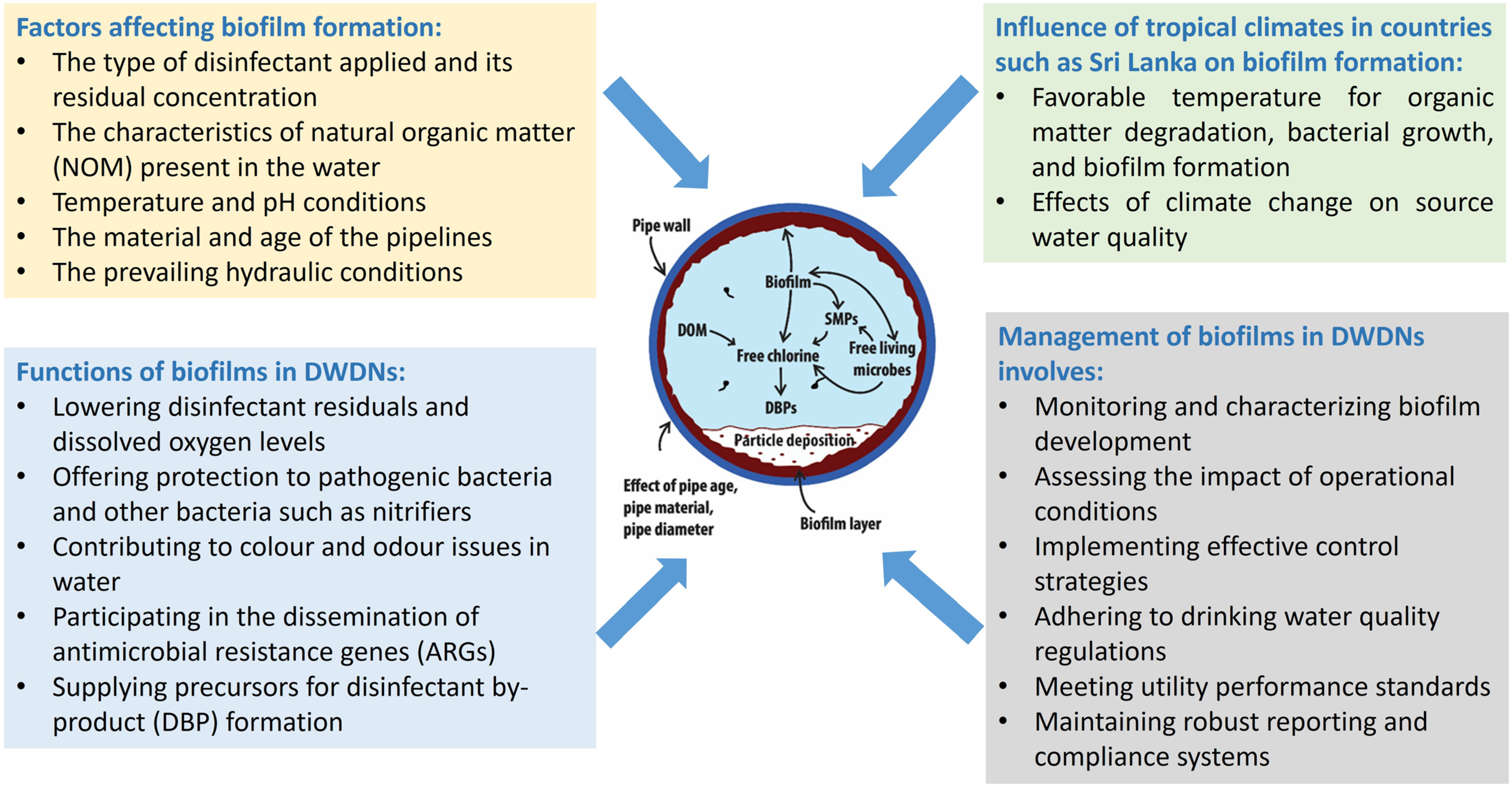
Biofilms are complex, dynamic microbial communities whose bacterial composition changes throughout different stages of biofilm development [11,12,13,14,15,16,17]. Their formation and persistence are influenced by multiple factors, including the type and residual concentration of disinfectants, the characteristics of natural organic matter present in water [7,15,18], temperature and pH conditions [19,20,21], pipe material and age [17], and prevailing hydraulic conditions within the network [1,18,22,23,24]. A summary of the factors influencing biofilm formation, the functions of drinking water biofilms, and the influence of tropical climates in countries such as Sri Lanka on biofilm formation is presented in Figure 1.
In Sri Lanka, the National Water Supply and Drainage Board (NWSDB) is the primary authority responsible for piped water supply, serving approximately 50% of the total piped water supply coverage through 339 water supply schemes [25]. By 2022, the NWSDB managed 2,905,541 service connections [25,26]. An additional 13% of piped water supply is managed by Community-Based Organizations (CBOs), predominately in rural areas [25]. The country primarily relies on conventional surface water treatment processes for river-based supplies, including the main steps of screening, coagulation, flocculation, sedimentation (clarification), sand filtration, disinfection, and distribution. Chlorination is the principal method used for treated water disinfection.
A major infrastructure challenge in Sri Lanka is the presence of aging and deteriorating pipelines, particularly in older water supply schemes. Non-revenue water losses, estimated at approximately 25%, are largely due to leaks and pipe bursts and indirectly indicate the extent of pipeline deterioration in the country. Both planned maintenance activities, including upgrades and pipe renewal, as well as emergency repairs resulting from pipe failures, are undertaken. Furthermore, DWDNs frequently experience low water pressure and intermittent supply [27,28,29], especially during peak hours [25,26].
The NWSDB routinely monitors drinking water quality for physical, chemical, and microbiological parameters in accordance with the Sri Lanka Standards for potable water—SLS 614: 2013 [30] through its decentralized laboratory network. Microbiological monitoring typically focuses on indicator organisms such as total coliforms and Escherichia coli in treated water prior to distribution. In highly populated areas, samples from raw water and the distribution networks are also occasionally tested. However, routine analysis of heterotopic plate counts (HPC), protozoa, and viruses is uncommon. The absence of real-time monitoring systems further increases the likelihood that contamination events may remain undetected for extended periods.
Despite the age and operational challenges of many drinking water pipelines in Sri Lanka, systematic research on the characterization of biofilm-associated microorganisms and their effects on water quality within DWDNs has not been reported. Consequently, microbial data on drinking water biofilms remain scarce, resulting in significant knowledge gaps regarding biofilm structure, composition, and functional roles. Limited resources for infrastructure upgrades and irregular monitoring of DWDNs further exacerbate the risks associated with biofilm formation and persistence. Although chlorination is widely practiced, targeted disinfection strategies to control biofilm development within distribution systems are lacking. A comprehensive understanding of biofilm-associated microbial communities is therefore essential for improving water safety management, informing infrastructure rehabilitation strategies, and ensuring the continued delivery of microbiologically safe drinking water [11,14,15].
Numerous international studies have demonstrated drinking water biofilms as habitats for diverse microorganisms including bacteria, fungi, protozoa, and higher organisms like nematodes, larvae, and crustaceans [1,3,9,31,32,33]. Bacteria are typically dominant in biofilms due to their high growth rates, small size, adaptation capacities, and ability to produce extracellular polymeric substances (EPSs). Biofilms can harbor a wide range of bacterial species, including opportunistic pathogens that may persist despite conventional disinfection practices [4,8,9,34]. Even when treated water leaving a treatment plant meets microbiological safety standards, biofilm detachment within the distribution system can increase planktonic bacterial concentrations [35]. The dissemination of antibiotic-resistant bacteria (ARB) and antibiotic-resistant genes (ARGs) through biofilms in aging drinking water systems has emerged as a major public health concern [36,37,38]. Biofilms provide protection from disinfectants and promote horizontal gene transfer, facilitating the persistence and spread of ARGs [39,40,41]. As a result, biofilms act as reservoirs that intermittently release bacteria into bulk water, potentially reaching consumers’ taps [4,42,43].
In addition to potential health-related concerns associated with the presence of opportunistic pathogens, biofilms in drinking water distribution systems are known to affect aesthetic and operational aspects of system performance. These effects include taste, odor, and color problems, depletion of disinfectant residuals [9], reduced dissolved oxygen levels, and pipe corrosion. More generally, biofilms provide a persistent microbial habitat that can influence overall microbial water quality and distribution system stability, although specific processes such as disinfection by-product formation or nitrification were not assessed in this study.
Accordingly, this study provides an exploratory analysis of the bacterial community structure within an incidental biofilm sample collected from an aged iron pipeline in Sri Lanka that has been in service for approximately 50 years. While limited to a descriptive assessment, the study provides baseline information on biofilm-associated bacterial communities in an aging drinking water distribution system in Sri Lanka, suggesting areas for future, more detailed investigation.

2. Materials and Methods

2.1. Sampling

A fresh biofilm sample was collected from an aged pipeline (aged over 50 years old) located in the Central Province of Sri Lanka within a DWDN during a pipeline opening conducted for repair purposes. The sampling was opportunistic, as the location, timing, and pipe material became available unexpectedly. Consequently, sampling was limited to a single biofilm sample, and the results are therefore interpreted as exploratory and hypothesis-generating rather than confirmatory. Therefore, it was not designed to test a specific hypothesis, and field blanks or environmental controls were not collected. However, sampling was performed under aseptic handling, transported to the laboratory within 15 min under at approximately 4 °C while transporting, and processed in a controlled laboratory environment.
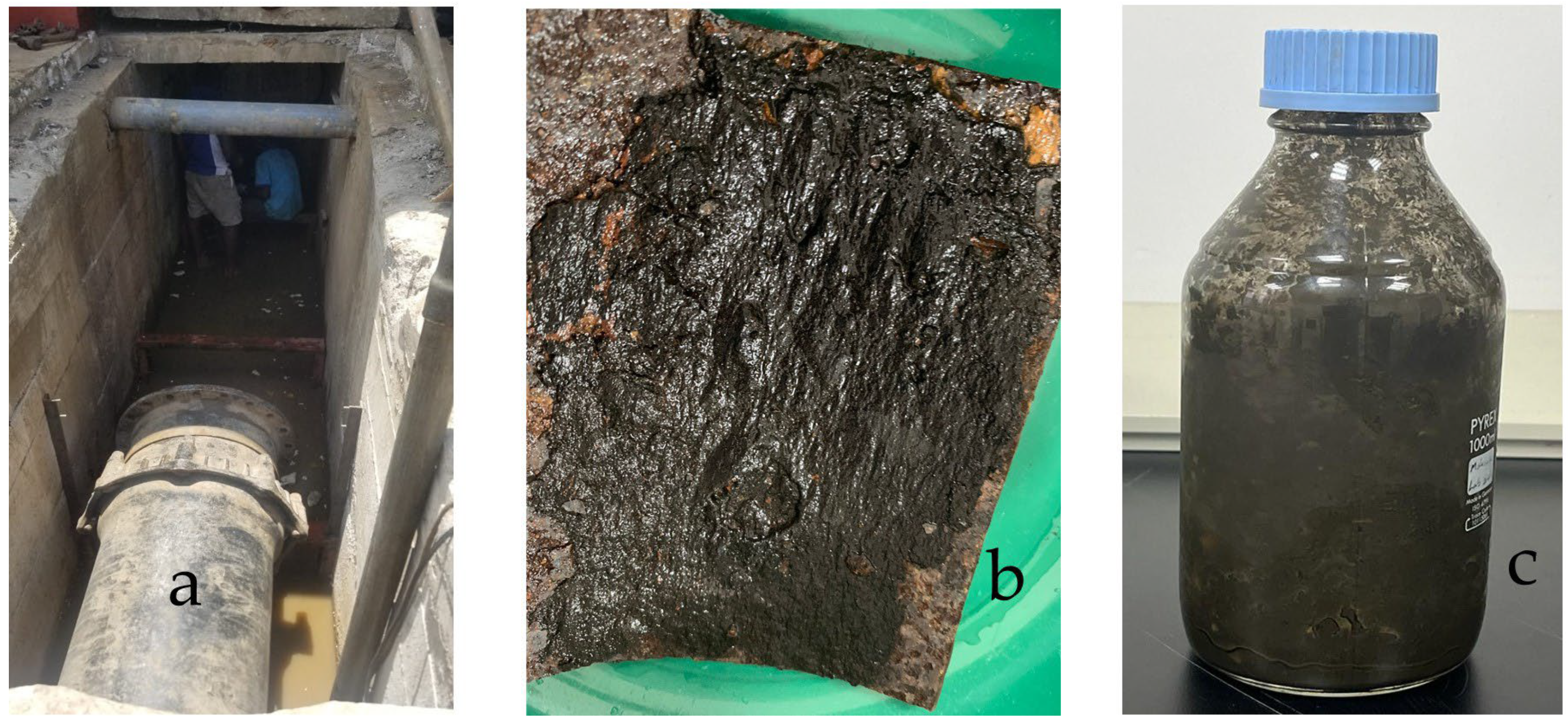
Biofilm was collected from the inner pipe surface by gently scraping an approximately 10–15 cm2 area using a sterile stainless-steel spatula and transported to a sterile screw-cap glass sampling bottle. Contact with ambient air was minimized by promptly sealing the container during and after collection. The thickness of the biofilm could not be measured in situ; however, visibly attached biofilm material was completely removed from the selected area. The sample was transported to the laboratory within 15 min in a laboratory sampling transport container under cool conditions. All sampling, transport, storage, and analytical procedures were performed under aseptic conditions to minimize the risk of external microbial contamination. Upon arrival at the laboratory, a portion of the sample was immediately processed for TPC and ARGs analysis. The remaining portion was stored at −80 °C temperature until polymerase chain reaction (PCR)-based analyses were performed. Details of the sampling location and biofilm characteristics are shown in Figure 2.

2.2. Sample Analysis

2.2.1. Total Bacterial Counts and Analysis of Antibiotic Resistance Genes

The fresh biofilm sample was analyzed for total plate count (TPC) immediately after sample collection to assess the living bacterial activity within the biofilms. The standard spread plate technique on nutrient agar was performed to see the TPC of bacteria (Oxoid, Thermo Fisher Scientific, Waltham, MA, USA), following APHA guidelines and the method described by Amandi et al. (2025) [44]. After homogenizing the biofilm sample, it was diluted 10 times with autoclaved distilled water and 0.1 mL from the diluted sample was spread on nutrient agar (Oxoid, Thermo Fisher Scientific, Waltham, MA, USA) composed of peptone (5 g/L), glucose (1 g/L), yeast extract (2.0 g/L), and agar (15 g/L) to support the growth of bacteria. Nutrient agar plates were incubated at 35 ± 2 °C for 48 h. The treated water samples were analyzed following the same procedure, but without diluting the water samples. In this study, the TPC analysis was performed to descriptively see the culturable bacteria rather than as a quantitative analysis. Because the TPC analysis was conducted as part of an exploratory study, detection limits were not formally determined at the time of analysis but need to be incorporated in future studies.
Following the standard methods, the sample was tested to detect the presence of antibiotic resistance genes targeting tetracyclines: tet(M); sulfonamides: sul1 and sul2; quinolones: qnrB and qnrS; and ampicillin: ampC. The biofilm sample was centrifuged at 500× g for 2 min to remove debris, and the supernatant was transferred into a sterile micro centrifuge tube. The supernatant was then centrifuged at 10,000× g for 10 min to pellet the bacterial cells, and the remaining supernatant was discarded. The pellet was resuspended in 100 µL of sterile phosphate-buffered saline (PBS). From the resuspended solution, 50 µL was inoculated into 2 mL of Brain Heart Infusion (BHI) broth (HiMedia, Mumbai, India). The cultures were incubated at 37 °C overnight. An enrichment step in Brain Heart Infusion (BHI) broth was used before DNA extraction to increase bacterial biomass for PCR-based detection of selected ARGs. This approach was applied to assess the presence of ARGs rather than to quantitatively characterize the full resistome of the biofilm.
DNA was extracted from the cultured samples using the QIAGEN DNeasy Blood & Tissue Kit (Qiagen, Hilden, Germany) following the manufacturer’s instructions for cultured cells. Conventional single-plex PCR was performed using the primer sequences listed in Table 1. PCR reactions were carried out using Hot Start Taq 2X Master Mix (New England Biolabs, Hitchin, UK) with a final reaction volume of 25 µL. The PCR run included a no-template negative control to check for contamination and a positive control containing previously confirmed ARG-positive DNA confirmed by sequencing. The PCR products were visualized by 1% agarose gel electrophoresis.

2.2.2. Identification of Bacterial Communities by Sequencing

The biofilm sample was transported to the microbiology laboratory at Kanazawa University, Japan, to perform bacterial community identification of the biofilm. The sample was subjected to DNA extraction by a QIAcube automated DNA extraction machine using the PowerFecalPro (Qiagen, Hilden, Germany) extraction kit according to the manufacturer’s instructions. Then, the variable region V4 of the 16S rRNA gene was amplified using PCR. The PCR was conducted with 515F forward (GTGCCAGCMGCCGCGGTAA) and 806R reverse (GACTACHVGGGTATCTAATCC) primers [48]. The PCR reagent per reaction was contained with HotStar Taq plus polymerase 0.125 μL (Qiagen, Hilden, Germany), 10× PCR Buffer 2.5 μL, F/R primers each 0.5 μL (10 pmol), 2.5 mM dNTP mix 2 μL, distilled water 18.13 μL, and 1.25 μL of the DNA sample to a total of 25 μL in duplicate with negative controls. The thermal cycle conditions were an initial heat activation at 95 °C for 5 min; amplification for 30 s at 94 °C, 30 s at 55 °C, and 60 s at 72 °C; and 10 min for final extension at 72 °C. Amplified products were confirmed with 2% gel electrophoresis, and PCR products were purified using the Agencourt AMPure XP beads (Beckman Coulter, Pasadena, CA, USA) purification technique.
A second PCR was carried out for sample analysis with Nextra indexing (Illumina, San Diego, CA, USA) and Illumina adapters (San Diego, CA, USA) by KAPA HiFi HS ReadyMix PCR kit (Kapa Biosystems, Wilmington, MA, USA). The reactions and thermal conditions were 95 °C for 3 min, 98 °C for 20 s, 60 °C for 15 s, and 72 °C for 1 min. The final concentration was measured by an Agilent 2100 Bioanalyzer (Agilent Technologies, Santa Clara, CA, USA) using the DNA1000 reagent kit (Agilent Technologies, Santa Clara, CA, USA). Extraction blanks were not included in this study. However, PCR no-template controls were routinely performed and observed no detectable amplification confirmed by gel electrophoresis and bioanalyzer profiles with an absence of detectable library peaks in controls before sequencing. Adjusted DNA samples were pooled and sequenced via MiSeq sequencing with an Illumina MiSeq Reagent Nano Kit v2 (Illumina) for 24 h according to the manufacturer’s instructions. The resulting reads by MiSeq sequencing were analyzed for quality filtering, adapter removal, ASV (amplicon sequence variant) clustering, and microbial taxonomy annotation by the DADA2 pipeline with reference to the SILVA_138 16S rRNA reference database [49]. Reads were filtered in DADA2 using maxEE=c(2,2), rm.phix=TRUE, minLen=1, and truncation lengths of 200 bp (forward) and 100 bp (reverse) based on the quality plots Q30 with matchIDs=TRUE. Error rates were learned from the filtered reads (nbases = 1 × 10¹⁰). ASVs were inferred using pooled sample inference (pool=TRUE) and merged with trimOverhang=TRUE, followed by chimera removal using removeBimeraDenovo. Taxonomy was assigned against the SILVA NR99 v138.1 training set with tryRC=TRUE and bootstrap output enabled. Biofilm sequencing was conducted on a single representative sample and is therefore interpreted as exploratory. No statistical comparisons were performed on biofilm data. The relative abundance of the microbial reads was calculated for normalization. Abundance data and ASVs (amplicon sequence variants) were used for PICRUSt2 analysis (Phylogenetic Investigation of Communities by Reconstruction of Unobserved States) to predict the functional potential of the microbial community in the biofilm sample [50]. PICRUSt2 was run with sequence placement requiring min_align=0.9; KO/EC predictions were generated using hsp.py, and ASVs exceeding the maximum NSTI cutoff of 2.0 were removed before metagenome inference. The potential pathogen-associated bacterial genera among the generated ASVs were determined using a curated full-length 16S rRNA gene based pathogenic database according to the Japan Society of Bacteriology, as described elsewhere [51]. Briefly, ASVs were queried against the pathogen database using BLAST + v2.16.0 (blastn) with stringent parameters: percent identity ≥ 99.5%, word size = 100, and query coverage ≥ 90% consistent with previously published methodology [51]. These assignments reflect taxonomic association rather than confirmed pathogenicity. Notably, only ASVs meeting the high-stringency matching criteria were classified as potential pathogen-associated bacterial genera, while all other ASVs within the same genera were treated as non-pathogenic. The illustrations and other analyses were performed with RStudio v4.1.2 [52].

3. Results and Discussion

3.1. The Total Plate Counts and Antibiotic Resistance Genes

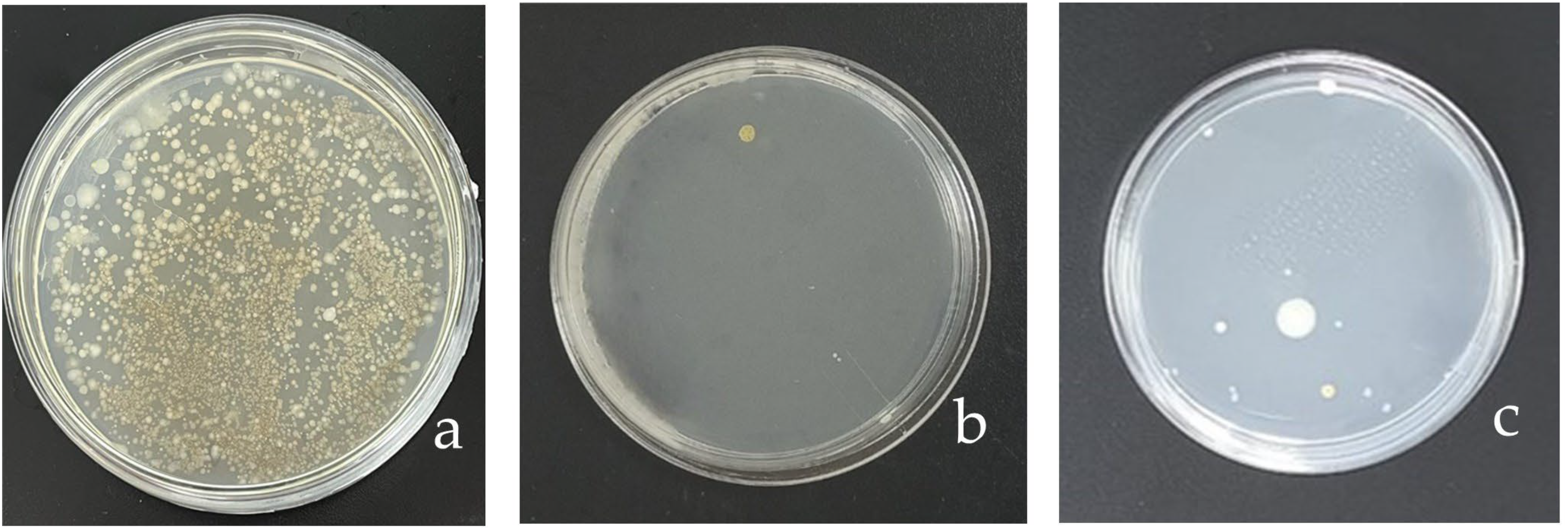
In this exploratory study, both culture-based and PCR-based methods were employed to investigate the bacterial community structure of the biofilm sample. The bacterial colonies obtained on nutrient agar from the biofilm sample, the chlorinated drinking water sample from the treatment plant, and the water sample from a consumer tap located a few kilometers downstream from the treatment plant are shown in Figure 3.
As shown in Figure 3a, the biofilm sample yielded numerous bacterial colonies on nutrient agar. The TPC analysis indicated the presence of culturable bacteria in biofilm and treated water samples. As CFU values, replicate statistics, and detection limits were not assessed, these results are presented descriptively, and no conclusions about relative abundance are drawn. Future studies should incorporate standardized quantitative TPC methods, including replicate plating and formal enumeration, to enable more robust quantitative comparisons. These findings highlight the importance of careful analysis of biofilm samples to determine the presence of pathogenic, opportunistic, or antibiotic-resistant bacteria are present. Previous studies have reported that culture-based methods commonly used to characterize DWDN biofilms often underestimate community composition and diversity, particularly with respect to potential and opportunistic pathogens and other ecologically relevant taxa [53,54].
In the present study, sequences affiliated with Clostridium and Mycobacterium were detected in the DWDN samples, underscoring the value of molecular approaches for comprehensive microbial assessment. However, even while many of the drinking water bacteria may not grow on conventional culture media, identification of the culturable members is also important for assessing the active bacterial communities. Nevertheless, these results are interesting because they suggest that these bacteria can survive with disinfectant treatments and limited nutrient conditions within DWDNs. The results also underscore the importance of monitoring not only the indicator bacteria, such as total coliforms and Escherichia coli, but also heterotrophic bacteria in DWDNs to assess microbial water quality and ensure the provision of safe, high-quality drinking water. The incorporation of more microbiological parameters into routine testing practices is important in understanding bacterial load and diversity to improve integrated strategies combining infrastructural upgrades with improved operational practices. Also, it is essential to establish efficient water quality monitoring systems in DWDNs to detect water quality issues and enable timely preventive actions. Various water quality models have been developed for improving water quality monitoring systems, such as optimal sensor placement in DWDNs [17,55,56] and the identification of stagnant areas [57]. Furthermore, as water age increases, prolonged residence time enhances interactions between the bulk water and pipe surfaces, promoting biofilm growth and associated microbial and chemical reactions. Consequently, spatial variations in water age across the network can lead to heterogeneous biofilm activity and localized water quality deterioration, highlighting the importance of integrating biofilm dynamics into distribution system water quality analyses [55].
The emergence of antibiotic resistance among pathogenic bacteria in environmental settings is a global concern, and numerous studies have reported the dissemination of ARGs through biofilms in DWDNs [58]. Due to resource constraints, the DNA extracted from the biofilm sample was analyzed for a limited number of target ARGs, including tet(M), sul1, sul2, qnrB, qnrS, and ampC. Among the analyzed ARGs, only the sul1 gene was detected and the corresponding gel electrophoresis image is provided in the Supplementary File Figure S1.
It should also be noted that the enrichment step applied in this study may have selectively favored fast-growing, culturable bacteria and, therefore, may not accurately represent the full resistome present in the original biofilm. As a result, this exploratory analysis should be interpreted with caution; the detection of ARGs following enrichment should be interpreted strictly as qualitative evidence of presence and is not suitable for inferring ARG prevalence or abundance within the native biofilm community. Accordingly, these findings should not be interpreted as evidence of ARG dissemination or chlorination failure, but rather as preliminary observations that highlight the need for future studies employing direct, quantitative, and culture-independent approaches to more accurately characterize ARGs in drinking water biofilms. Amplicon sequencing to confirm ARG identity was not performed in this preliminary study. Therefore, ARG detection was based on expected band size, and future studies incorporating sequencing-based validation are required to strengthen these findings.
Although a few studies in Sri Lanka have examined antibiotic resistance in river water [59,60], ARGs in aged drinking water biofilms have not yet been reported in the country. Nevertheless, these findings highlight the need for further in-depth studies using quantitative methods and distinguishing between viable and non-viable cells to accurately assess ARG persistence through chlorination. In addition, the presence of ARGs is of concern because even extracellular (“naked”) ARGs are not biologically inert, but can serve as genetic resources that facilitate the ongoing evolution and spread of antibiotic resistance. Further, chlorine-resistant bacteria in drinking water distribution lines have been studied in other countries [7,61].

3.2. Bacterial Community Profile of the Biofilm

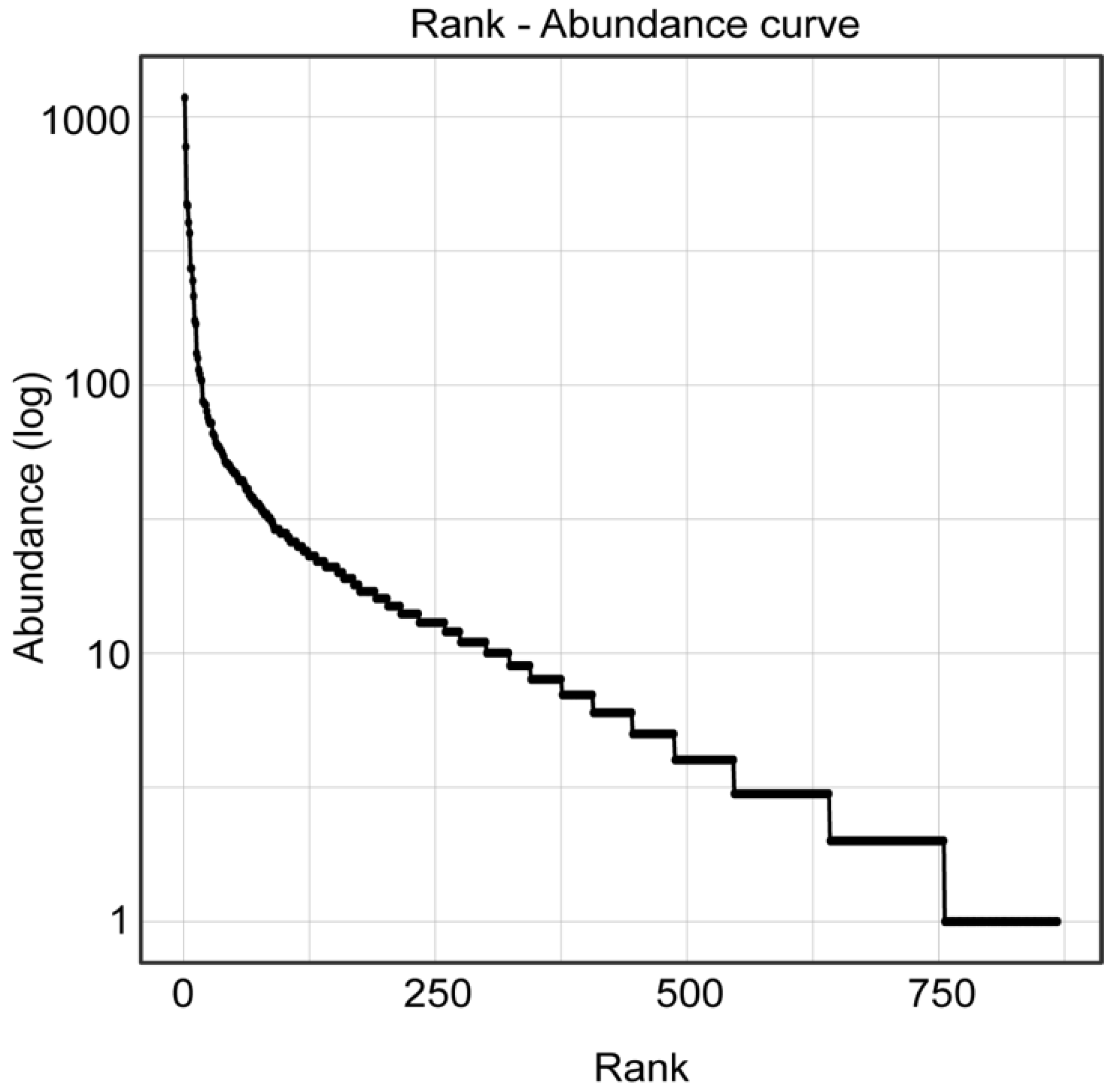
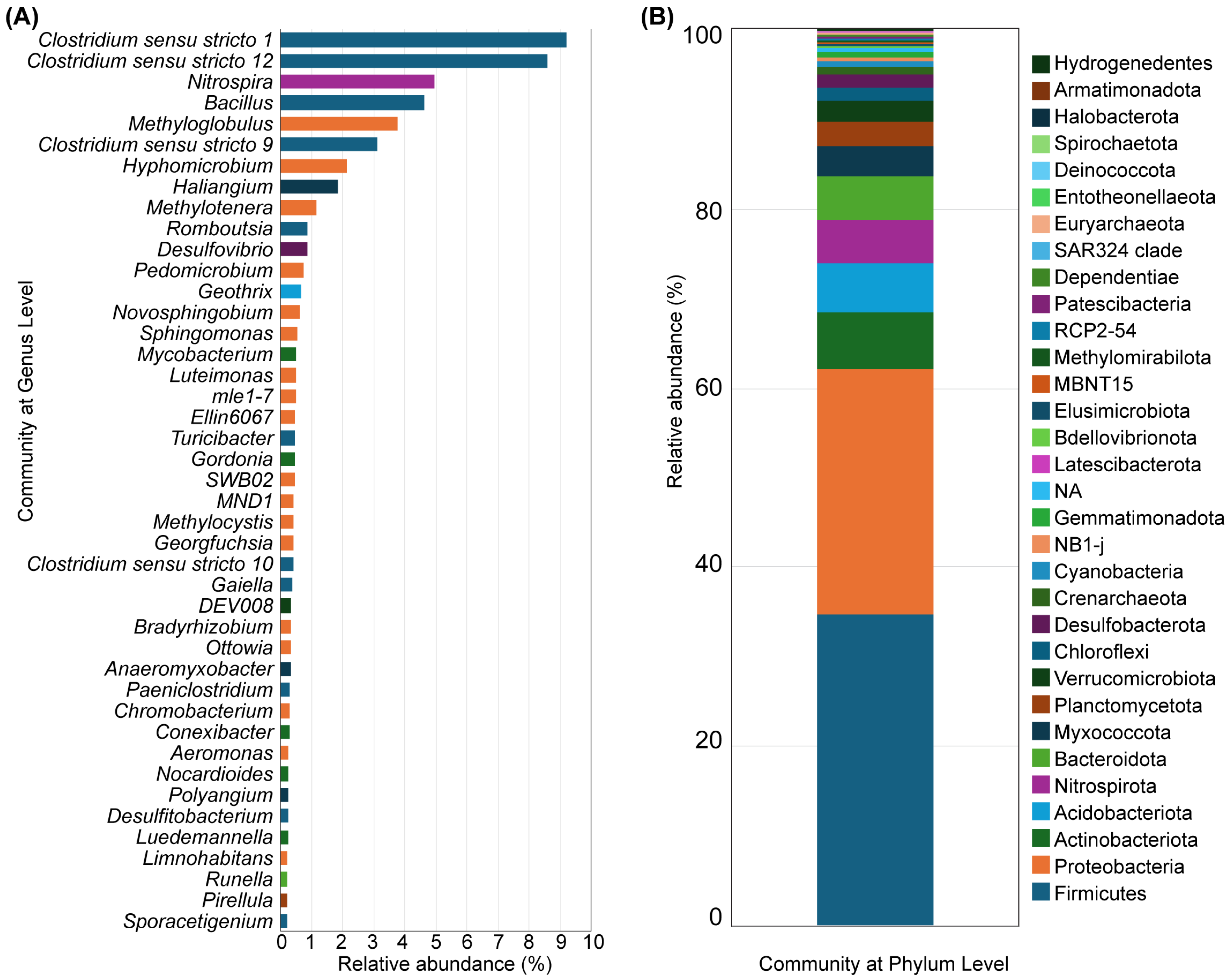
MiSeq sequencing generated 20,475 raw reads for the representative biofilm sample. After quality filtering (DADA2 default setting), 19,707 reads were retained. Following paired-end merging and chimera removal, the final sequencing depth of non-chimeric reads was 14,878 for the sample. From merged reads (15,448) to non-chimeric reads (14,878), there was a read retention rate of 96.3%. Finally, the biofilm sample resulted in 467 amplicon sequence variants (ASVs), spanning analysis resulted in 31 different phyla of the microbial community with 241 different genera within it, and the results are shown in Figure 4. The rarefaction analysis indicated adequate coverage of microbial diversity (Figure 4). Rarefaction analysis indicated that the sequencing depth was sufficient to capture the majority of the observed bacterial taxonomic richness in the biofilm sample (Figure 4). Microbial abundance data were normalized by converting to the relative abundance of the sample. The biofilm community displayed a taxonomic profile structure dominated by Firmicutes (relative abundance of 34.79%), Proteobacteria (27.43%), Actinobacteriota (6.33%), and Acidobacteriota (5.03%) at the phylum level, collectively contributing the majority of relative abundance. At the genus level, the community was strongly enriched with Clostridium sensu stricto lineages, notably type 1 (relative abundance of 9.19%, type 12 (8.58%), and type 9 (3.09%), which together represent the highest relative proportions. Several other genera, Nitrospira (4.94%), Bacillus (4.60%), Methyloligobacillus (3.75%), Hyphomicrobium (2.14%), and Haliangium (1.82%), occurred at moderate abundances, while the remainder of the community consisted of a long tail of low-abundance taxa. This pattern indicates a highly skewed biofilm community, with a few dominant genera shaping the bacterial environment and many low-abundance taxa contributing to underlying functional diversity.
As shown in Figure 5, the rank–abundance curve further illustrates the dominant/rare taxa structure of the biofilm bacterial community. The rank–abundance curve of the biofilm sample showed a steep initial decline followed by a long tail, indicating a community dominated by a few highly abundant ASVs together with a large number of low-abundance taxa. A limitation of this study is the absence of negative sequencing controls, which precluded potential reagent-derived contaminants for a low-biomass microbiome. Accordingly, interpretations focus on dominant taxa and overall community patterns rather than rare ASVs. The top-ranked ASVs show that a few taxa contribute disproportionately to the total sequence reads, consistent with the dominant Clostridium, Nitrospira, and Bacillus groups observed in the composition analysis.
After the initial steep slope, the curve transitions into a long tail of low-abundance ASVs, indicating the presence of numerous community members. This distribution qualitatively suggests a diverse biofilm community in which a limited number of taxa dominate, while the majority remain at a low relative abundance.
Aging pipes, often exhibiting corrosion, scaling, and rough internal surfaces, further promote biofilm attachment and persistence. These biofilms can protect embedded bacteria from disinfectants. The periodic shedding of bacteria from biofilms into the water supply has been reported, and this undermines the microbial safety of distributed water and raises the risk of waterborne disease, especially in vulnerable communities. International studies have reported that the significant degradation of bacterial water quality during the resumption phase of intermittent water supply (IWS) is partly due to biofilm detachment [27,62]. IWS is common in many developing regions, including Sri Lanka, to cope up with water scarcity. Microbiological risk assessments have shown that these bacteria in IWS are linked to diarrhea and other self-reported illnesses [33,62,63,64,65].
In the present study, several potential pathogen-associated bacterial genera (based on sequence similarity) were identified, including Acinetobacter, Clostridium, Aeromonas, Mycobacterium, Paeniclostridium, Bacillus, and Salmonella. Although most Bacillus species are harmless, certain members of this genus can pose risks to the skin and respiratory system. Previous investigations have reported biofilm-associated pathogens such as Campylobacter, Legionella, Pseudomonas, Mycobacterium, and Helicobacter [1,4,34,66]; however, these bacteria were not detected in the present study. Mycobacterium has been identified in some studies, and similar to the findings of this work, several previous biofilm analyses did not detect Legionella [66]. Mycobacterium species are particularly noteworthy due to their well-recognized resistance to chlorine disinfection and ability to survive and persist in water environments [67]. Differences in bacterial community profile across DWDNs are likely influenced by variations in abiotic factors such as nutrient availability, organic carbon levels, disinfectant residuals, oxygen concentrations, climate, and the specific growth requirements of the bacteria.
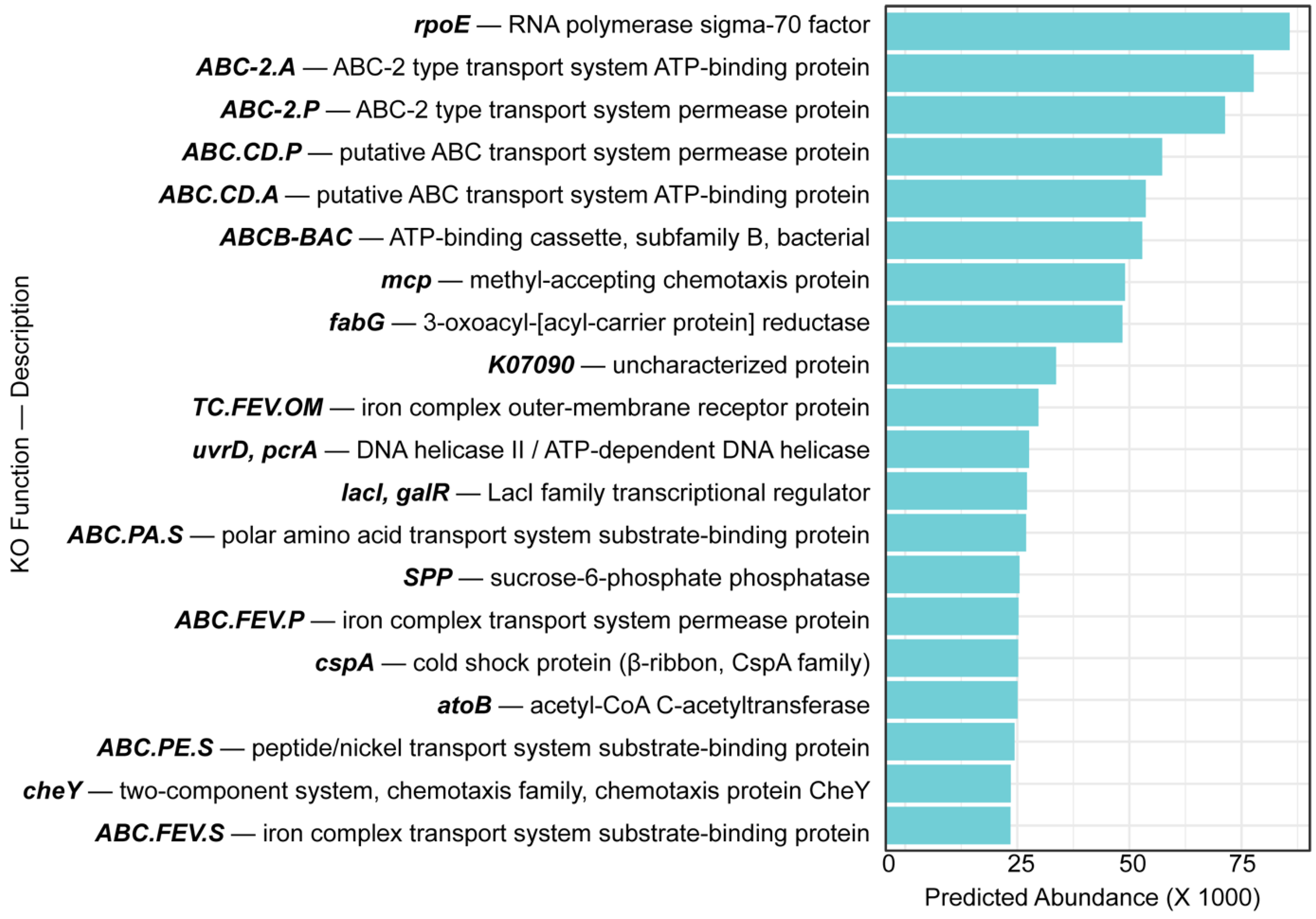
As shown in Figure 6, PICRUSt2 functional prediction revealed that the most abundant KEGG Orthology (KO) functions in the biofilm were dominated by genes involved in transport systems, environmental sensing, stress tolerance, and central metabolic processes. High-abundance functions included multiple ABC transporter proteins (e.g., ABC-2.A, ABC-2.P, ABC.CD.A), iron transport systems (ABC.FEV.P, ABC.FEV.S), chemotaxis-related proteins (mcp, cheY), and stress-response regulators such as RNA polymerase sigma factors (rpoE) and cold-shock proteins (cspA). Additional highly enriched functions included DNA helicases (uvrD/pcrA), reductases (fabG), and metabolic enzymes such as acetyl-CoA acetyltransferase (atoB). Together, these predictions suggest the biofilm bacterial community’s potential to function for nutrient uptake, environmental adaptation, oxidative and chemical stress resistance, and efficient energy metabolism, traits typical of resilient biofilm-forming bacterial populations. The high representation of transporters and response regulators further suggests enhanced environmental sensing and nutrient-scavenging capability, supporting key traits of adaptation to local ecological conditions.
Alongside potential pathogens, the authors found biofilm communities composed of non-pathogenic, environmentally important bacteria involved in organic matter cycling, nitrification, methane metabolism, sulfate reduction, metal cycling, and carbon cycling. Examples include Nitrospira (nitrite oxidation, comammox), Methyloglobulus (methane metabolism), Hyphomicrobium (denitrification), Haliangium (secondary-metabolite producing bacteria), Methylotenera (methylotrophs), Desulfovibrio (sulfate reducing), Pedomicrobium (iron/manganese oxidation), and Geothrix (metal-reducing bacteria). Because the authors did not remove extracellular DNA from the original biofilm sample, some of the detected sequences might represent dead or inactive cells, and thus future research using RNA-based methods (or approaches that remove extracellular DNA) is needed to distinguish active bacterial community structures. Further investigation is needed to understand how bacterial community structures vary across different areas of the distribution network.
In this exploratory study, the detected taxa suggest that biofilms may influence the occurrence of potentially pathogenic-associated genera, as well as broader water quality issues linked to bacterial processes such as nitrification and sulfate reduction. However, as bacterial processes or biogeochemical transformations were not directly measured, any functional interpretations are inferred solely from taxonomic affiliations and should not be considered evidence of in situ activity. The risks associated with the proliferation of nitrifying bacteria in drinking water distribution systems and storage tanks, together with the need to control nitrification and biofilm-mediated DBP formation, have been widely documented in studies worldwide. In contrast, data addressing these processes in Sri Lanka remain limited.
Due to the opportunistic nature of the sampling, this study is limited by the analysis of a single biofilm sample, the absence of biological and technical replicates, and the lack of extraction and sequencing blanks. These constraints restrict the generalizability of the findings. Nevertheless, microbial analyses were performed using well-established and rigorously validated protocols that have been consistently applied in previous studies. Accordingly, the results should be interpreted as exploratory, hypothesis-generating observations based on a single sample, as supported by prior methodological validations [68,69].

4. Conclusions

This study provides an exploratory, site-specific characterization of a biofilm opportunistically collected from a 50-year-old drinking water distribution pipeline in the Central Province of Sri Lanka during an unplanned repair event. High-throughput MiSeq sequencing revealed a taxonomically diverse bacterial community, dominated by Clostridium sensu stricto lineages and containing moderate relative abundances of genera such as Nitrospira, Bacillus, Methyloligobacillus, Hyphomicrobium, and Haliangium.
The study is subject to several important limitations, including reliance on a single, non-replicated biofilm sample, the absence of concurrent hydraulic and physicochemical water quality data and field blanks, and the opportunistic nature of the sampling. These constraints limit quantitative inference and restrict the generalization of results beyond the sampled location. In addition, because extracellular DNA and DNA from non-viable cells were not excluded, a portion of the detected genetic material may not represent active biofilm bacteria. Although this introduces uncertainty regarding bacterial viability, extracellular DNA may also provide complementary insights into biofilm microbial ecology, including potential mechanisms such as horizontal gene transfer.
Despite these limitations, the findings offer rare empirical insight into the bacterial composition of a long-operating drinking water distribution pipeline and highlight substantial knowledge gaps in Sri Lanka’s aging drinking water infrastructure. Future studies should adopt systematic and replicated sampling designs across multiple locations and seasons, coupled with hydraulic data, physicochemical water quality measurements, and direct assessments of microbial activity. Such integrated approaches are necessary to robustly evaluate biofilm community composition, functional processes, and their implications for drinking water quality and public health, distribution system performance, and management.

Supplementary Materials

The following supporting information can be downloaded at: https://www.mdpi.com/article/10.3390/w18030325/s1, Figure S1: Gel electrophoresis image showing a positive result for the sul1 gene analyzed using biofilm sample.

Author Contributions

Conceptualization and original draft writing, W.G.; sequencing, data analysis, and writing, R.G.; providing resources for DNA sequencing and assisting with data analysis, N.M.; providing resources for analysis of ARGs, C.D.G.; analysis of ARGs and assisting with formatting, N.R. and R.V.; supervision during manuscript preparation and editing, R.S.K., Y.W. and R.W. All authors have read and agreed to the published version of the manuscript.

Funding

This research received no external funding.

Data Availability Statement

All raw sequencing data generated in this study have been deposited in the NCBI Sequence Read Archive (https://www.ncbi.nlm.nih.gov/ (accessed on 5 December 2025) under the accession number PRJNA1377230.

Acknowledgments

The authors gratefully acknowledge the invaluable field assistance provided by B. M. T. I. Jayasinghe and the supportive staff of the Kandy Municipal Council, Sri Lanka in collecting the biofilm sample.

Conflicts of Interest

The authors declare that they have no conflicts of interest.

Abbreviations

The following abbreviations are used in this manuscript:
DWDNsDrinking water distribution networks
DWDNDrinking water distribution network
ARB Antibiotic-resistant bacteria
ARGsAntibiotic-resistant genes
TPC Total plate counts
PCR Polymerase chain reaction
ASVs Amplicon sequence variants
IWS Intermittent water supply
EPS Extracellular polymeric substances
DBPsDisinfection by-products

References

  1. Batté, M.; Appenzeller, B.M.R.; Grandjean, D.; Fass, S.; Gauthier, V.; Jorand, F.; Mathieu, L.; Boualam, M.; Saby, S.; Block, J.C. Biofilms in drinking water distribution systems. Rev. Environ. Sci. Biotechnol. 2003, 2, 147–168. [Google Scholar] [CrossRef]
  2. Montoya-Pachongo, C. Disinfection by-Products Formation from Biofilm Chorination in Drinking Water Pipes. Ph.D. Thesis, School of Civil Engineering, University of Leeds, Leeds, UK, 2018. [Google Scholar]
  3. Momba, M.N.B.; Kfir, R.; Venter, S.N.; Cloete, T.E. An overview of biofilm formation in distribution systems and its impact on the deterioration of water quality. Water SA 2000, 26, 59–66. [Google Scholar]
  4. Chaves Simões, L.; Simões, M. Biofilms in drinking water: Problems and solutions. RSC Adv. 2013, 3, 2520–2533. [Google Scholar] [CrossRef]
  5. Chen, H.; Wei, Z.; Sun, G.; Su, H.; Liu, J.; Hu, B.; Zhou, X.; Lou, L. Formation of biofilms from new pipelines at both ends of the drinking water distribution system and comparison of disinfection by-products formation potential. Environ. Res. 2020, 182, 109150. [Google Scholar] [CrossRef]
  6. Farkas, A.; Ciataras, D.; Bocos, B. Biofilms Impact on Drinking Water Quality. In Ecological Water Quality—Water Treatment and Reuse; InTech: London, UK, 2012; pp. 141–160. [Google Scholar] [CrossRef][Green Version]
  7. Lehtola, M.J.; Juhna, T.; Miettinen, I.T.; Vartiainen, T.; Martikainen, P.J. Formation of biofilms in drinking water distribution networks, a case study in two cities in Finland and Latvia. J. Ind. Microbiol. Biotechnol. 2004, 31, 489–494. [Google Scholar] [CrossRef]
  8. Hemdan, B.A.; El-Taweel, G.E.; Goswami, P.; Pant, D.; Sevda, S. The role of biofilm in the development and dissemination of ubiquitous pathogens in drinking water distribution systems: An overview of surveillance, outbreaks, and prevention. World J. Microbiol. Biotechnol. 2021, 37, 36. [Google Scholar] [CrossRef]
  9. Tang, W.; Li, Q.; Chen, L.; Zhang, W.X.; Wang, H. Biofilm Community Structures and Opportunistic Pathogen Gene Markers in Drinking Water Mains and the Role of Pipe Materials. ACS ES&T Water 2021, 1, 630–640. [Google Scholar] [CrossRef]
  10. Huang, J.; Chen, S.; Ma, X.; Yu, P.; Zuo, P.; Shi, B.; Wang, H.; Alvarez, P.J.J. Opportunistic pathogens and their health risk in four full-scale drinking water treatment and distribution systems. Ecol. Eng. 2021, 160, 106134. [Google Scholar] [CrossRef]
  11. Douterelo, I.; Sharpe, R.; Boxall, J. Bacterial community dynamics during the early stages of biofilm formation in a chlorinated experimental drinking water distribution system: Implications for drinking water discolouration. J. Appl. Microbiol. 2014, 117, 286–301. [Google Scholar] [CrossRef]
  12. Boxall, J.B.; Husband, S.; Neu, T.; Lawrence, J.; Simoes, M.; Pereira, M.; Vieira, M. Long-Term Succession of Structure and Diversity of a Biofilm Formed in a Model Drinking Water Distribution System. Appl. Environ. Microbiol. 2011, 45, 6899–6907. [Google Scholar] [CrossRef]
  13. Ahmad, J.I.; Dignum, M.; Liu, G.; Medema, G.; van der Hoek, J.P. Changes in biofilm composition and microbial water quality in drinking water distribution systems by temperature increase induced through thermal energy recovery. Environ. Res. 2021, 194, 110648. [Google Scholar] [CrossRef] [PubMed]
  14. Learbuch, K.L.G.; Smidt, H.; van der Wielen, P.W.J.J. Water and biofilm in drinking water distribution systems in the Netherlands. Sci. Total Environ. 2022, 831, 154940. [Google Scholar] [CrossRef] [PubMed]
  15. Fish, K.E.; Boxall, J.B. Biofilm microbiome (re)growth dynamics in drinking water distribution systems are impacted by chlorine concentration. Front. Microbiol. 2018, 9, 2519. [Google Scholar] [CrossRef] [PubMed]
  16. Wei, Y.-Y.; Liu, Y.; Zhang, Y.; Dai, R.-H.; Liu, X.; Wu, J.-J.; Zhang, Q. Influence of soluble microbial products (SMP) on wastewater disinfection byproducts: Trihalomethanes and haloacetic acid species from the chlorination of SMP. Environ. Sci. Pollut. Res. 2011, 18, 46–50. [Google Scholar] [CrossRef]
  17. Vargha, M.; Szánthó, Z.; Kós, P.B.; Makk, J.; Khayer, B.; Németh, Á.C.; Engloner, A.I. Monitoring Microbial Diversity of Biofilms in Domestic Distribution Systems Using an in Situ Device. Diversity 2024, 16, 720. [Google Scholar] [CrossRef]
  18. Liu, X.; Wang, J.; Liu, T.; Kong, W.; He, X.; Jin, Y.; Zhang, B. Effects of assimilable organic carbon and free chlorine on bacterial growth in drinking water. PLoS ONE 2015, 10, e0128825. [Google Scholar] [CrossRef]
  19. Salehi, M. Global water shortage and potable water safety: Today’s concern and tomorrow’s crisis. Environ. Int. 2022, 158, 106936. [Google Scholar] [CrossRef]
  20. Agudelo-Vera, C.; Blokker, M.; Pieterse-Quirijns, I. Early warning systems to predict temperature in the drinking water distribution network. Procedia Eng. 2014, 70, 23–30. [Google Scholar] [CrossRef]
  21. Donlan, R.M. Biofilms: Microbial Life on Surfaces. Emerg. Infect. Dis. 2002, 8, 881–890. [Google Scholar] [CrossRef]
  22. Yu, J.; Kim, D.; Lee, T. Microbial diversity in biofilms on water distribution pipes of different materials. Water Sci. Technol. 2010, 61, 163–171. [Google Scholar] [CrossRef]
  23. Liu, S.; Gunawan, C.; Barraud, N.; Rice, S.A.; Harry, E.J.; Amal, R. Understanding, monitoring, and controlling biofilm growth in drinking water distribution systems. Environ. Sci. Technol. 2016, 50, 8954–8976. [Google Scholar] [CrossRef]
  24. Douterelo, I.; Sharpe, R.L.; Boxall, J.B. Influence of hydraulic regimes on bacterial community structure and composition in an experimental drinking water distribution system. Water Res. 2013, 47, 503–516. [Google Scholar] [CrossRef] [PubMed]
  25. National Water Supply & Drainage (NWSDB) Board Annual Report. 2022. Available online: https://drive.google.com/file/d/1m3dZbix2ck5f2yChTXGhR04r8Bdc5cNK/view (accessed on 5 December 2025).
  26. National Water Supply & Drainage Board (NWSDB) Annual Report. 2016. Available online: https://www.waterboard.lk/wp-content/uploads/2022/11/Annual_Report_Eng.pdf (accessed on 5 December 2025).
  27. Calero Preciado, C.; Husband, S.; Boxall, J.; del Olmo, G.; Soria-Carrasco, V.; Maeng, S.K.; Douterelo, I. Intermittent Water Supply Impacts on Distribution System Biofilms and Water Quality. Water Res. 2021, 201, 117372. [Google Scholar] [CrossRef] [PubMed]
  28. Erickson, J.J.; Quintero, Y.C.; Nelson, K.L. Characterizing supply variability and operational challenges in an intermittentwater distribution network. Water 2020, 12, 2143. [Google Scholar] [CrossRef]
  29. Cerrato, J.M.; Reyes, L.P.; Alvarado, C.N.; Dietrich, A.M. Effect of PVC and iron materials on Mn(II) deposition in drinking water distribution systems. Water Res. 2006, 40, 2720–2726. [Google Scholar] [CrossRef]
  30. SLS 614:2013; First Revision, Drinking Water Standard of Sri Lanka. SLS (Sri Lanka Standards for Drinking Water): Colombo, Sri Lanka, 2013.
  31. Van Der Kooij, D.; Vrouwenvelder, J.S.; Veenendaal, H.R. Elucidation and control of biofilm formation processes in water treatment and distribution using the unified biofilm approach. Water Sci. Technol. 2003, 47, 83–90. [Google Scholar] [CrossRef]
  32. Evison, L.; Sunna, N. Microbial regrowth in household water storage tanks. J. Am. Water Work. Assoc. 2001, 93, 85–94. [Google Scholar] [CrossRef]
  33. Abu Amr, S.S.; Yassin, M.M. Microbial contamination of the drinking water distribution system and its impact on human health in Khan Yunis Governorate, Gaza Strip: Seven years of monitoring (2000–2006). Public Health 2008, 122, 1275–1283. [Google Scholar] [CrossRef]
  34. Wingender, J.; Flemming, H.C. Biofilms in drinking water and their role as reservoir for pathogens. Int. J. Hyg. Environ. Health 2011, 214, 417–423. [Google Scholar] [CrossRef]
  35. Dukan, S.; Levi, Y.; Piriou, P.; Guyon, F.; Villon, P. Dynamic modelling of bacterial growth in drinking water networks. Water Res. 1996, 30, 1991–2002. [Google Scholar] [CrossRef]
  36. Bergeron, S.; Boopathy, R.; Nathaniel, R.; Corbin, A.; Lafleur, G. Presence of antibiotic resistant bacteria and antibiotic resistance genes in raw source water and treated drinking water. Int. Biodeterior. Biodegrad. 2015, 102, 370–374. [Google Scholar] [CrossRef]
  37. Osińska, A.; Korzeniewska, E.; Harnisz, M.; Felis, E.; Bajkacz, S.; Jachimowicz, P.; Niestępski, S.; Konopka, I. Small-scale wastewater treatment plants as a source of the dissemination of antibiotic resistance genes in the aquatic environment. J. Hazard. Mater. 2020, 381, 121221. [Google Scholar] [CrossRef] [PubMed]
  38. Wang, R.; Ji, M.; Zhai, H.; Guo, Y.; Liu, Y. Occurrence of antibiotics and antibiotic resistance genes in WWTP effluent-receiving water bodies and reclaimed wastewater treatment plants. Sci. Total Environ. 2021, 796, 148919. [Google Scholar] [CrossRef] [PubMed]
  39. Chen, J.; Li, W.; Zhang, J.; Qi, W.; Li, Y.; Chen, S. Chemosphere Prevalence of antibiotic resistance genes in drinking water and biofilms: The correlation with the microbial community and opportunistic pathogens. Chemosphere 2020, 259, 127483. [Google Scholar] [CrossRef]
  40. Duarte, A.C.; Rodrigues, S.; Afonso, A.; Coutinho, P. Antibiotic Resistance in the Drinking Water: Old and New Strategies to Remove Antibiotics, Resistant Bacteria, and Resistance Genes. Pharmaceuticals 2022, 15, 393. [Google Scholar] [CrossRef]
  41. Ma, L. Understanding the Distribution, Sources and Risks of Antibiotic Resistance Contamination in Drinking Water Systems: Research Needs to Reduce Emerging Pollutants and Mitigate Public Health Risks. Environ. Sci. Technol. Lett. 2025, 12, 248–250. [Google Scholar] [CrossRef]
  42. Haney, E.F.; Trimble, M.J.; Cheng, J.T.; Vallé, Q.; Hancock, R.E.W. Critical assessment of methods to quantify biofilm growth and evaluate antibiofilm activity of host defence peptides. Biomolecules 2018, 8, 29. [Google Scholar] [CrossRef]
  43. Sahoo, D.; Bhatt, M.; Jena, S.; Dash, D.; Chayani, N. Study of biofilm in bacteria from water pipelines. J. Clin. Diagn. Res. 2015, 9, 9–11. [Google Scholar] [CrossRef]
  44. Amandi, P.T.; Fareed, F.; Athukorala, S.N.P.; Jinadasa, R.; Premachandra, T.; Noordeen, F.; Gamage, C.D.; Makehelwala, M.; Weragoda, S.K.; Fernando, B.R.; et al. Spatio-temporal variation of microbial indicators of river water and treatment efficiencies of drinking water treatment plants along the upper Mahaweli river segment of Sri Lanka. Environ. Pollut. 2025, 367, 125628. [Google Scholar] [CrossRef]
  45. Suzuki, S.; Makihara, N.; Kadoya, A. Tetracycline resistance gene tet(M) of a marine bacterial strain is not accumulated in bivalves from seawater in clam tank experiment and mussel monitoring. Sci. Total Environ. 2018, 634, 181–187. [Google Scholar] [CrossRef]
  46. Kerrn, M.B.; Klemmensen, T.; Frimodt-Möller, N.; Espersen, F. Susceptibility of Danish Escherichia coli strains isolated from urinary tract infections and bacteraemia, and distribution of sul genes conferring sulphonamide resistance. J. Antimicrob. Chemother. 2002, 50, 513–516. [Google Scholar] [CrossRef] [PubMed]
  47. Kumar, M.; Jaiswal, S.; Sodhi, K.K.; Shree, P.; Singh, D.K.; Agrawal, P.K.; Shukla, P. Antibiotics bioremediation: Perspectives on its ecotoxicity and resistance. Environ. Int. 2019, 124, 448–461. [Google Scholar] [CrossRef] [PubMed]
  48. Caporaso, J.G.; Lauber, C.L.; Walters, W.A.; Berg-Lyons, D.; Huntley, J.; Fierer, N.; Owens, S.M.; Betley, J.; Fraser, L.; Bauer, M.; et al. Ultra-high-throughput microbial community analysis on the Illumina HiSeq and MiSeq platforms. ISME J. 2012, 6, 1621–1624. [Google Scholar] [CrossRef] [PubMed]
  49. Callahan, B.J.; Mcmurdie, P.J.; Rosen, M.J.; Han, A.W.; Johnson, A.J.A.; Holmes, S.P. DADA2: High-resolution sample inference from Illumina amplicon data. Nat. Methods 2016, 13, 581–583. [Google Scholar] [CrossRef]
  50. Douglas, G.M.; Maffei, V.J.; Zaneveld, J.R.; Yurgel, S.N.; Brown, J.R.; Taylor, C.M.; Huttenhower, C.; Langille, M.G.I. PICRUSt2 for prediction of metagenome functions. Nat. Biotechnol. 2020, 38, 685–688. [Google Scholar] [CrossRef]
  51. Galagoda, R.; Chanto, M.; Takemura, Y.; Tomioka, N.; Syutsubo, K.; Honda, R.; Yamamoto-ikemoto, R.; Matsuura, N. Quantitative 16S rRNA Gene Amplicon Sequencing for Comprehensive Pathogenic Bacterial Tracking in a Municipal Wastewater Treatment Plant. ACS ES&T Water 2023, 3, 923–933. [Google Scholar] [CrossRef]
  52. R Foundation for Statistical Computing. R: A Language and Environment for Statistical Computing; R Foundation for Statistical Computing: Vienna, Austria, 2023; Available online: https://www.r-project.org (accessed on 5 December 2025).
  53. Mir, D.H.; Rather, M.A. Advantages and Limitations of the Biofilm Study Methods. Appl. Biochem. Microbiol. 2024, 60, 264–279. [Google Scholar] [CrossRef]
  54. Mcconn, B.R.; Kraft, A.L.; Durso, L.M.; Ibekwe, A.M.; Frye, G.; Wells, J.E.; Tobey, E.M.; Ritchie, S.; Williams, C.F.; Cook, K.L.; et al. An analysis of culture-based methods used for the detection and isolation of Salmonella spp., Escherichia coli, and Enterococcus spp. from surface water: A systematic review. Sci. Total Environ. 2024, 927, 172190. [Google Scholar] [CrossRef]
  55. Piazza, S.; Sambito, M.; Freni, G. Distribution Networks Using Different Water Quality Models. Water 2023, 15, 559. [Google Scholar] [CrossRef]
  56. Sonaje, N.P. A review of modeling and application of water distribution networks (WDN) softwares. Int. J. Tech. Res. Appl. 2015, 3, 174–178. [Google Scholar]
  57. Tsagkari, E.; Sloan, W.T. Biofilm Growth in Drinking Water Systems under Stagnant Conditions. In Proceedings of the E-Proceedings, Protection and Restoration of the Environment XIV, Thessaloniki, Greece, 3–6 July 2018; pp. 707–717. Available online: http://eprints.gla.ac.uk/164294/ (accessed on 5 December 2025).
  58. Wang, Z.; Li, L.; Ariss, R.W.; Coburn, K.M.; Behbahani, M.; Xue, Z.; Seo, Y. The role of biofilms on the formation and decay of disinfection by-products in chlor(am)inated water distribution systems. Sci. Total Environ. 2021, 753, 141606. [Google Scholar] [CrossRef] [PubMed]
  59. Kumar, M.; Sulfikar Chaminda, T.; Patel, A.K.; Sewwandi, H.; Mazumder, P.; Joshi, M.; Honda, R. Prevalence of antibiotic resistance in the tropical rivers of Sri Lanka and India. Environ. Res. 2020, 188, 109765. [Google Scholar] [CrossRef] [PubMed]
  60. Kumar, M.; Chaminda, G.G.T.; Honda, R. Seasonality impels the antibiotic resistance in Kelani River of the emerging economy of Sri Lanka. NPJ Clean Water 2020, 3, 12. [Google Scholar] [CrossRef]
  61. Zhang, J.; Li, W.; Chen, J.; Wang, F.; Qi, W.; Li, Y. Impact of disinfectant on bacterial antibiotic resistance transfer between biofilm and tap water in a simulated distribution network. Environ. Pollut. 2019, 246, 131–140. [Google Scholar] [CrossRef]
  62. Bautista-de los Santos, Q.M.; Chavarria, K.A.; Nelson, K.L. Understanding the impacts of intermittent supply on the drinking water microbiome. Curr. Opin. Biotechnol. 2019, 57, 167–174. [Google Scholar] [CrossRef]
  63. Kumpel, E.; Nelson, K.L. Mechanisms affecting water quality in an intermittent piped water supply. Environ. Sci. Technol. 2014, 48, 2766–2775. [Google Scholar] [CrossRef]
  64. Kumpel, E.; Nelson, K.L. Intermittent Water Supply: Prevalence, Practice, and Microbial Water Quality. Environ. Sci. Technol. 2016, 50, 542–553. [Google Scholar] [CrossRef]
  65. Bivins, A.W.; Sumner, T.; Kumpel, E.; Howard, G.; Cumming, O.; Ross, I.; Nelson, K.; Brown, J. Estimating Infection Risks and the Global Burden of Diarrheal Disease Attributable to Intermittent Water Supply Using QMRA. Environ. Sci. Technol. 2017, 51, 7542–7551. [Google Scholar] [CrossRef]
  66. Rosenqvist, T.; Danielsson, M.; Schleich, C.; Ahlinder, J.; Brindefalk, B.; Pullerits, K.; Dacklin, I.; Salomonsson, E.N.; Sundell, D.; Forsman, M.; et al. Succession of bacterial bio fi lm communities following removal of chloramine from a full-scale drinking water distribution system. NPJ Clean Water 2023, 6, 41. [Google Scholar] [CrossRef]
  67. Galagoda, R.; Cha, G.; Hara-yamamura, H.; Honda, R. Genomic insights into chlorine resistance of a Mycobacterium sp. strain isolated from treated wastewater effluent. Water Res. 2025, 283, 123807. [Google Scholar] [CrossRef]
  68. Hong, P.; Hwang, C.; Ling, F.; Andersen, G.L.; Lechevallier, M.W.; Liu, W. Pyrosequencing Analysis of Bacterial Biofilm Communities in Water Meters of a Drinking Water Distribution System. Appl. Environ. Microbiol. 2010, 76, 5631–5635. [Google Scholar] [CrossRef]
  69. Pin, L.; Eiler, A.; Fazi, S.; Friberg, N. Two different approaches of microbial community structure characterization in riverine epilithic biofilms under multiple stressors conditions: Developing molecular indicators. Mol. Ecol. Resour. 2021, 21, 1200–1215. [Google Scholar] [CrossRef]
Figure 1. Schematic diagram summarizing the factors that influence biofilm formation, the functions of drinking water biofilms, the effects of tropical climates on biofilm development, and the strategies used to manage biofilms in DWDNs (Source: illustrated by the authors).
Water 18 00325 g001
Figure 2. (a) A photograph taken during sampling at the old pipeline opened for repair; (b) a section of the cast iron pipe showing biofilm and extensive corrosion deposits; (c) the appearance of the fresh biofilm sample collected from the inner pipe surface.
Water 18 00325 g002
Figure 3. (a) Colonies grown on nutrient agar from the biofilm sample; (b) colonies grown on nutrient agar from a drinking water sample collected at the treatment plant after final disinfection (chlorination); (c) colonies grown on nutrient agar from a drinking water sample obtained from a consumer tap located a few kilometers downstream in the same DWDN. Individual colonies on the plate are estimated to range from 0.5 to 3 mm.
Water 18 00325 g003
Figure 4. Taxonomic composition of the drinking water biofilm bacterial community at the genus and phylum levels. (A) Bacterial genera detected with relative abundance greater than 0.2%. (B) Stacked bar plot of phylum-level composition of the biofilm sample.
Water 18 00325 g004
Figure 5. Rank–abundance distribution of ASVs in the biofilm microbiome. Rank–abundance curve illustrating the distribution of all detected ASVs sorted from most abundant to least abundant (X axis), plotted on a logarithmic abundance; actual number of reads scale (Y axis). Rank 1 = most abundant ASV; Rank N = rarest ASV detected.
Water 18 00325 g005
Figure 6. Top 20 predicted KEGG Orthology (KO) functions inferred from PICRUSt2 analysis of the biofilm bacterial community. The x-axis represents the predicted functional abundance (scaled count values), and the y-axis lists KO identifiers together with their functional descriptions. Each horizontal bar corresponds to one KO term, with bar length indicating its relative predicted abundance in the metagenome. Functional predictions were generated from ASV-based 16S rRNA profiles using PICRUSt2’s metagenome inference pipeline.
Water 18 00325 g006
Table 1. Details of the primer of targeted genes.
Antibiotic/
Group
Target GenePrimer
Pair
Primer Sequence (5′-3′)Product Size
(bp)
AnnealingReferences
Tetracyclinestet(M)tet(M)-FGTTAAATAGTGTTCTTGGAG617 bp48 °C, 1 min[45]
tet(M)-RCTAAGATATGGCTCTAACAA
Sulfonamides Sul1Sul1-FCGGCGTGGGCTACCTGAACG433 bp58 °C, 30 s[46]
Sul1-RGCCGATCGCGTGAAGTTCCG
Sul2Sul2-FGCGCTCAAGGCAGATGGCATT293 bp69 °C, 30 s[46]
Sul2-RGCGTTTGATACCGGCACCCGT
Quinolones qnrBqnrB-FGATCGTGAAAGCCAGAAAGG476 bp56 °C, 45 s[47]
qnrB-RATGAGCAACGATGCCTGGTA
qnrSqnrS-FGCAAGTTCATTGAACAGGGT428 bp54 °C, 45 s[47]
qnrS-RTCTAAACCGTCGAGTTCGGCG
AmpicillinAmpCAmpC-FCCTCTTGCTCCACATTTGCT189 bp61 °C, 30 s[47]
AmpC-RACAACGTTTGCTGTGTGACG
Disclaimer/Publisher’s Note: The statements, opinions and data contained in all publications are solely those of the individual author(s) and contributor(s) and not of MDPI and/or the editor(s). MDPI and/or the editor(s) disclaim responsibility for any injury to people or property resulting from any ideas, methods, instructions or products referred to in the content.