Article

Using Biokinetic Modeling and Dielectric Monitoring to Assess Anaerobic Digestion of Meat-Processing Sludge Pretreated with Microwave Irradiation and Magnetic Nanoparticles


by
Zoltán Péter Jákói
1,*,
Erzsébet Illés
2,
Réka Dobozi
2 and
Sándor Beszédes
1
1
Department of Biosystems Engineering, Faculty of Engineering, University of Szeged, Moszkvai krt. 9, H-6725 Szeged, Hungary
2
Department of Food Engineering, Faculty of Engineering, University of Szeged, Mars tér 7, H-6725 Szeged, Hungary
*
Author to whom correspondence should be addressed.
Water 2026, 18(3), 293; https://doi.org/10.3390/w18030293
Submission received: 12 December 2025 / Revised: 8 January 2026 / Accepted: 22 January 2026 / Published: 23 January 2026
(This article belongs to the Section Wastewater Treatment and Reuse)

Abstract

This study investigated the effects of microwave (MW) pre-treatment (45 kJ total irradiated microwave energy) and magnetic nanoparticles (MPs) on the anaerobic digestion (AD) of meat-processing sludge, integrating biokinetic modeling with dielectric parameter measurements. Five different sludge variants were examined: native (non-treated control); MP-only control; microwave pre-treated sludge, and MW + MP combination with the nanoparticles either retained in the fermentation medium or removed prior to anaerobic digestion. Cumulative biomethane production was evaluated using the modified Gompertz, Logistic, and Weibull models, and key kinetic parameters (maximum achievable methane yield, maximum rate of product formation, and λ-values) were compared across the different treatments. The results revealed that the highest production rate, along with the highest biomethane potential, could be achieved when combining MW treatment with magnetic nanoparticles which were retained in the fermentation medium during AD. Based on the biokinetic analysis, this combined method increased biomethane potential by 52% to 390 mL CH4/gVS and maximum methane production rate by 85% to 37 mL CH4/gVS/day compared to the untreated control. The measurement of relative permittivity ( ε ) exhibited progressive changes during digestion, and the maximum rate of change in ε strongly correlated with the maximum methane production rate across all samples (R2 > 0.98). These results highlight the potential of microwave–metal oxide nanoparticle pre-treatment for process enhancement and to demonstrate the suitability of dielectric parameter measurement as a rapid, non-invasive indicator of biochemical activity during anaerobic digestion.

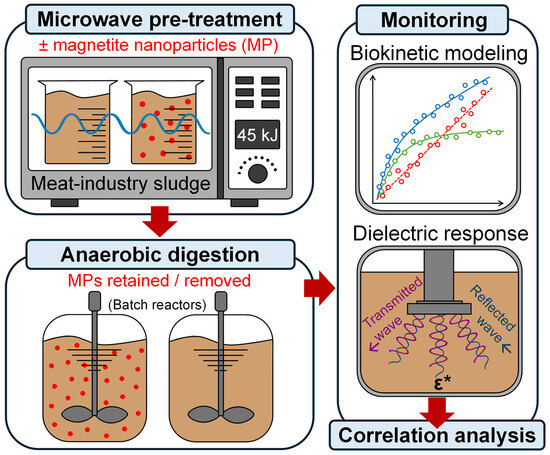
Graphical Abstract

1. Introduction

Anaerobic digestion (AD) is a widely used biotechnological process for the stabilization and energetic valorization of various organic wastes. Its applicability covers numerous sectors, including agriculture, food processing, and municipal wastewater treatment, where it enables a simultaneous reduction in environmental impact and recovery of renewable bioenergy in the form of methane-rich biogas [1,2,3]. Although anaerobic digestion (AD) is an established industrial process, its efficiency is often restricted by the rate-limiting step of hydrolyzing complex organic substrates, particularly when processing protein- and lipid-rich sludge derived from meat-processing or slaughterhouse operations. These compounds exhibit a high degree of structural persistence and often contain aggregated, slowly degradable particulate matter in the form of sludge flocs (along other materials and residuals from microbial cells) that slow down the conversion, and ultimately lower methane yield [4,5,6]. To address this issue, a variety of physical, chemical and biological pre-treatment strategies have been developed and utilized to accelerate sludge disintegration and increase the accessibility of biodegradable carbon sources. Among these, microwave (MW) irradiation has gained considerable attention recently, due to its ability to induce rapid volumetric heating, cell lysis, protein denaturation and the enhanced solubilization of organic compounds [7,8,9]. MW-based pre-treatment techniques have been shown to increase soluble chemical oxygen demand (sCOD), promote acidogenesis during AD, and improve downstream methane production in different sludge types [10,11,12]. Although promising, microwave irradiation, or more precisely, microwave heating has a crucial limitation, that is, the uneven heating capacity in heterogeneous systems (like wastewater sludge) [13]. Beyond microwave-based pre-treatments, several studies have explored ionizing radiation techniques, such as electron-beam radiation, to enhance sludge disintegration and anaerobic biodegradability. Electron-beam pretreatment induces water radiolysis and the formation of reactive species that promote cell disruption and partial depolymerization of organic matter, resulting in increased sCOD, and in some cases, improved methane yields—meaning that it can achieve outcomes comparable to MW treatment, although through a different mechanistic pathway [14,15,16].
Recently, investigations have been conducted to combine nanoscale particles that can act as local hot spots (and as such, improve dielectric heating efficiency through selective energy absorption) during microwave radiation, and thus promote a more even or homogeneous temperature profile inside the irradiated material. Among various nanomaterials, metal (oxide) nanoparticles have been shown to improve different chemical reactions [17,18]; nevertheless, their application in sludge pre-treatment has not been widely investigated. Beyond thermal effects, iron-based nanoparticles (like iron–oxide) may influence anaerobic microbial metabolism and activity, as iron (particularly Fe2+/Fe3+ redox cycling) plays an important role in the activity of hydrogenases, ferredoxins, formate-dehydrogenases, and CO-dehydrogenase/acetyl-CoA synthase complexes within methanogenic pathways [19,20,21]. Several studies have shown that iron supplementation—whether through salts, oxides, or in nanoparticulate forms—can enhance methane formation rates, shorten lag phases, and stabilize process performance during biogas fermentation [22,23].
In addition to biochemical and process engineering approaches, mathematical modeling plays a crucial role in measuring the kinetics of methane formation and evaluating how pre-treatment techniques affect this process. Among the numerous empirical and semi-empirical kinetic models used in AD research, the modified Gompertz model, the logistic model, and the Weibull function are some of the most widely applied due to their ability to capture sigmoidal biomethane accumulation profiles and provide biochemically interpretable parameters, such as maximum product (methane) potential, maximum methane production rate and lag-phase duration [24,25,26]. Comparative biokinetic modeling offers an efficient way to evaluate how pre-treatments alter substrate degradability, microbial activity, and conversion dynamics.
Although there are numerous well-established, conventional analytic techniques that can be utilized in evaluating AD efficiency, there is a growing need for real-time, non-invasive monitoring tools for anaerobic digestion systems. Conventional measurements, like COD, VFA (volatile fatty acids), TS/VS (total solids/volatiles solids), gas composition determination via gas chromatography, etc., are undoubtedly important and indispensable; however, these techniques are often destructive, cost- and/or energy-demanding, and generally poorly suited for high-frequency on-line/in-line monitoring. In contrast to these, dielectric monitoring, which measures the frequency-dependent behavior of relative permittivity ( ε ) and dielectric loss ( ε ) provides a rapid, precise, non-destructive insight into biochemical and structural changes in complex media, such as a fermentation system. These dielectric parameters, among others, depend on the applied frequency, temperature, and most importantly, the chemical and physical composition of the investigated material—this means that if these parameters change with respect to time (just like in the case of an anaerobic fermentation), this will be reflected in the change in dielectric behavior as well. Previous work has demonstrated the sensitivity of dielectric properties to macromolecular degradation, water-binding transitions and microbial metabolic activity in various biological systems [27,28,29], yet applications to AD—particularly in connection with kinetic modeling—remain limited.
Therefore, the aim of this study was to investigate the combined effects of microwave irradiation and magnetic metal oxide nanoparticles (MPs) on the anaerobic digestion of meat-processing sludge, using an integrated approach based on biokinetic modeling and dielectric analysis. The primary contribution of the work lies in demonstrating how dielectric dynamics can be quantitatively linked to biokinetic methane production parameters, and with the combined methodological framework, we aimed to investigate how MW- and MP-assisted pre-treatments modify the biochemical conversion of complex organic sludge, while exploring the applicability of dielectric properties to assess certain, biokinetics-based efficiency indicators characteristic of anaerobic digestion.

2. Materials and Methods

The wastewater sludge used for the experiments was obtained from a Hungarian meat processing plant, and prior to experiments, the fundamental analytical parameters were determined. These can be observed in Table 1.
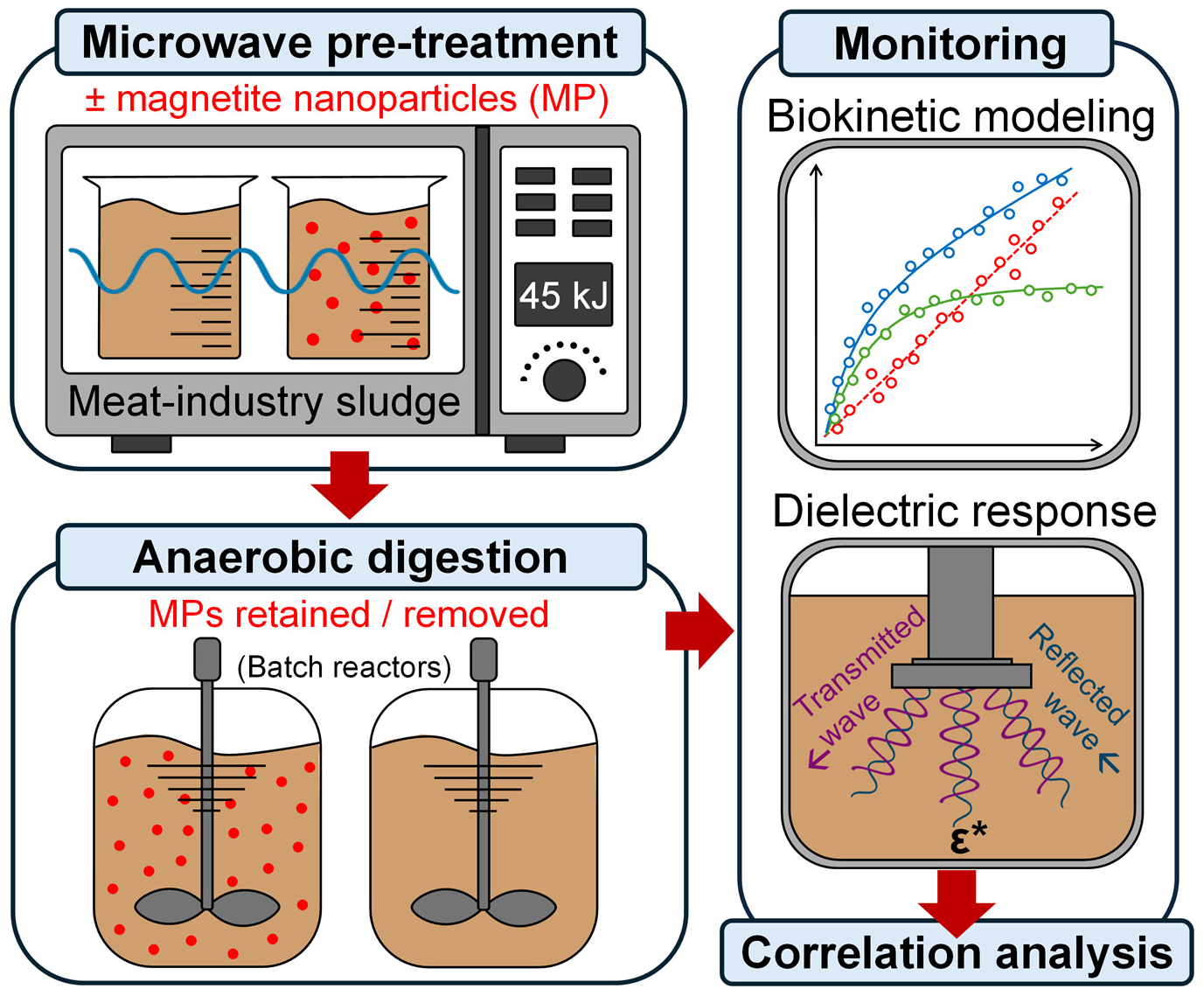
For all the experiments, 100 cm3 sludge was used in laboratory glass fermenters with a total volume of 250 cm3. Each experiment was performed in triplicate; therefore, the presented values are considered as averages, with the corresponding standard deviation (SD) values presented where applicable. Before the anaerobic digestion (AD) tests, different microwave-based pre-treatments were performed on the sludge samples. Native sludge served as an absolute control, which did not receive any pre-treatments. The combination of microwave radiation and the addition of magnetic nanoparticles (MP) were performed in two different ways: in one set of the samples, the magnetic particles were removed after the treatments (and prior to the anaerobic digestion) with magnetic separation, while in another set of samples, these MPs were kept throughout the entire AD process. In this way, we could analyze the possible effects of these nanoparticles on the kinetics of biogas fermentation as well. The experimental arrangement and the treatment parameters can be seen in Table 2.
The utilized magnetic iron oxide (magnetite) nanoparticles had a median hydrodynamic diameter of 110 nm (measured in aqueous dispersion via light scattering) and a primer size of 11 nm (based on TEM measurements) with a specific surface area of 95.3 m2/g. The crystalline structure was identified as magnetite (Fe3O4) by X-ray diffraction, and the characterization of pH-dependent surface charge measurement resulted in a PZC-value of 7.9 ± 0.1. The detailed description of the synthetization procedure, as well as particle characteristics, can be observed in recent previous articles [30,31,32,33]. Before the microwave treatments, the MPs were distributed homogeneously in the sludge samples with stirring. In those samples where the MPs were removed prior to AD, the separation was conducted via thorough magnetic stirring (mass control measurements indicated a >99% separation efficiency).
The microwave irradiation experiments were carried out in a laboratory microwave equipment equipped with a continuously radiating magnetron at an operating frequency of 2450 MHz and microwave power output of 250 W. The sample volume during MW pre-treatment was 100 cm3 in each case, and the time of irradiation was 180 s, leading to a total irradiated MWE of 45 kJ.
The anaerobic digestion tests were performed under mesophilic conditions (T = 38 ± 0.5 °C) in continuously stirred laboratory glass fermenters, the biogas yield was monitored through absolute gas pressure measurements, and the cumulative biogas yield was calculated via the modified ideal gas law. The methane content was continuously monitored with an MRU OPTIMA7 biogas analyzer (Neckarsulm, Germany), which operates with a pair of NDIR sensors to detect CH4 and CO2 (measurement accuracy: ±0.2 v/v%). The cumulative biomethane yield was calculated based on the nascent biogas volume and the concentration of CH4 in the samples.
During the AD tests, the dielectric behavior of the fermentation media was measured with a DAK 3.5 dielectric assessment kit (SPEAG, Zürich, Switzerland), equipped with an open-ended dielectric probe and connected to a ZVL-3 vector network analyzer (VNA) (Rhode & Schwarz, Munich, Germany). The operational principle of these dielectric kits is that the open-ended probe, which generates a localized electromagnetic field within the sample. The probe detects S11 reflection signals, which are subsequently transmitted to the VNA through a coaxial cable for determination of the material’s dielectric parameters. Since these parameters are temperature-dependent, the samples were kept at 38 °C during the analysis. The frequency range investigated throughout the anaerobic digestion was 200–1600 MHz.
For biokinetic modeling, three different types of kinetic models were used: the modified Gompertz model, the logistic model and the Weibull model. The modified Gompertz model is based on the following equation:
P t = P m a x · exp exp R m a x e P m a x λ 1 + 1  
In Equation (1), P(t) refers to the time-dependent product formation (i.e., biomethane yield in units of mL CH4/gVS), Pmax is the maximum achievable product content predicted by the model, Rmax is the maximum product-formation rate (mL CH4/(gVS·day)), and λ is the length of the lag phase (days). The modified Gompertz model is widely used in biokinetics when the product formation curve is sigmoidal, and—in contrast to purely mathematical models—provides useful and essential information about the biochemical process itself [32].
The logistic model (or logistic function) used is governed by the following equation:
P t = P m a x 1 + exp 4 R m a x P m a x λ t + 2    
In Equation (2), t denotes the incubation or fermentation duration, and the remaining parameters retain the same definitions as presented in Equation (1). Since the Gompertz model sometimes predicts lower initial slopes, the logistic model can provide a better fit for rising/growing phases. This makes it a potentially stronger alternative for modeling processes where hydrolysis and late-stage conversion are altered [33].
The sigmoid-type Weibull model provides a flexible empirical description of anaerobic digestion kinetics, particularly in systems where the reaction rate distribution is heterogeneous, or derivates from first-order behavior [34]. The model is based on the following equation:
P t = P m a x 1 exp k t n
In Equation (3), k is the scale parameter associated with the apparent reaction rate, and n is the dimensionless shape factor controlling the curvature of the sigmoidal trajectory, while t and Pmax are the fermentation time and maximum achievable product, respectively. Values n > 1 correspond to accelerated initial dynamics and steeper methane production, whereas n < 1 reflects a slower onset and extended hydrolysis period. When n = 1, the process basically follows standard first-order kinetics.
The kinetic modeling, statistical analysis, and the production of the Figures presented in this paper were performed in either M365 Excel (ver. 16.0.19530) or Google Colaboratory using Python programming codes (ver. Python 3.12). The dielectric data was collected from the original software of the DAK system (ver. 3.6.0.32).

3. Results and Discussion

3.1. Biomethane Production

The cumulative biomethane production curves obtained from the different (native and pre-treated) sludge samples are shown in Figure 1. Each curve displays a characteristic, saturation-like behavior, typical of anaerobic digestion processes, with an initial low-activity lag phase, a subsequent acceleration period (also referred to as exponential or lag phase), and a final steady-state phase corresponding to the exhaustion of available biodegradable substrates.
The native, non-treated sludge showed the slowest methane formation, with a lag phase of about 5 days and a maximum achievable methane content of approximately 250 mL/gVS. This corresponds to a biodegradability index (BDI) of approx. 0.55, which can be defined with the following equation:
B D I = B M P e x p   B M P t h
BMPexp is the experimental, measured biomethane potential, i.e., maximum biomethane yield (given in mL CH4/gVS), while BMPth is the theoretical maximum. Considering the initial composition of the native meat-processing sludge (Table 1), the theoretical maximum methane yield would be slightly above 500 mL CH4/gVS. Although this BDI value is not considered prominent—others have demonstrated BMPs up to 700–800 mL CH4/gVS industrial slaughterhouse sludge of roughly similar composition—the results are consistent with the high structural complexity of non-treated sludge originated from agri-food sources (including meat processing), where, usually, hydrolysis represents the rate-limiting step of the process [1,5].
Compared to untreated sludge, samples that underwent microwave pre-treatment showed a significant increase in biomethane production rate, as well as in maximum biomethane content. The 45 kJ MW treatment alone accelerated considerably the onset of methane production and increased the total achievable methane yield as well (307 mL/gVS), resulting in a BDI of 0.6. This response is usually explained by the microwave-induced cell disruption and sludge disintegration, which increases the solubility of organic matter (and, as such, the value of sCOD), and the partial breakdown of protein–lipid complexes [7,8,9].
For sludge samples that have undergone combined MW + MP pretreatments, the methane production rate, as well as the maximum achievable methane yield, was increased further (in contrast to the standalone MW treatment), especially if the MPs were kept in the system during AD (45 kJ MW + M samples). Among all treatments, this sample showed the sharpest increase in production and maximum CH4 yield (382 mL/gVS), suggesting that using both microwaves and nanoparticles together sped up the shift from hydrolysis to methanogenesis, resulting in a BDI of more than 0.75. This could be explained by the phenomenon that nanoscale metal oxide particles can act as local hot spots during microwave heating, which results in a more homogeneous temperature profile within the sludge sample, thus increasing the extent of disintegration (and consequently, leading to a higher sCOD and biodegradability) [13,18]. The enhanced performance may partly originate from these nanoparticle-mediated microwave interactions; however, since spatial temperature profiles were not resolved, these effects cannot be decoupled from purely thermal contributions. The sample from which the MPs were removed prior to anaerobic digestion (45 kJ MW + M-S) showed a lowered maximum methane yield (351 mL CH4/gVS), which suggests that the presence of magnetite nanoparticles during the AD can enhance and/or accelerate certain biochemical reactions. It has been shown that iron (more precisely, Fe2+) is a part of an enzymatic pathway utilized by anaerobic bacteria in methane production (mainly hydrogenases and CO-dehydrogenase), and thus the presence of (excess) iron can enhance the metabolic activity of these bacteria [19]. Although iron–oxide in its native form is not biologically available for these microorganisms, iron salt complexes formed in the presence of low-C-number organic acids (like acetic acid during AD) can be utilized, and thus the Fe2+ ions released from them can ensure proper enzyme function [21]. This is also supported by the experimental observation that the presence of MPs alone (without microwave pre-treatment) could enhance the maximum methane yield to a certain extent (approx. 280 mL/gVS compared to 258 mL/gVS). The beneficial use of magnetic nanoparticles in connection with sludge treatment and anaerobic digestion has recently been reported by other researchers as well, indicating the potential use of this method at larger scales [35]. It should be noted, however, that the experiments were run in batch scale with limited sample numbers in this study; therefore, the results should be regarded as proof-of-concept, and the feasibility of these methods on larger-scale operations must be supported via further research.
From an energy perspective, it should be noted that microwave pre-treatment at laboratory scale is not expected to yield a positive net energy balance when directly compared to the additional methane energy that is recovered, as batch-scale microwave irradiation is inherently inefficient and not optimized for energy recovery. In this study, MW energy input was applied as a controlled pre-treatment to induce structural and biochemical modifications in the sludge rather than as an energy-efficient operation. At larger scales, however, microwave-based pre-treatment strategies are typically implemented selectively or intermittently, and often in combination with waste heat recovery, continuous-flow operation, or the targeted treatment of recalcitrant fractions. Under such conditions, the energetic feasibility depends not only on the direct methane yield increase, but also on improved digestion kinetics, reduced HRTs, enhanced process stability and downstream operational benefits. Consequently, while a detailed energy balance was beyond the scope of this investigation, energy efficiency and scalability remain critical aspects for further research and industrial implementation.

3.2. Biokinetic Analysis

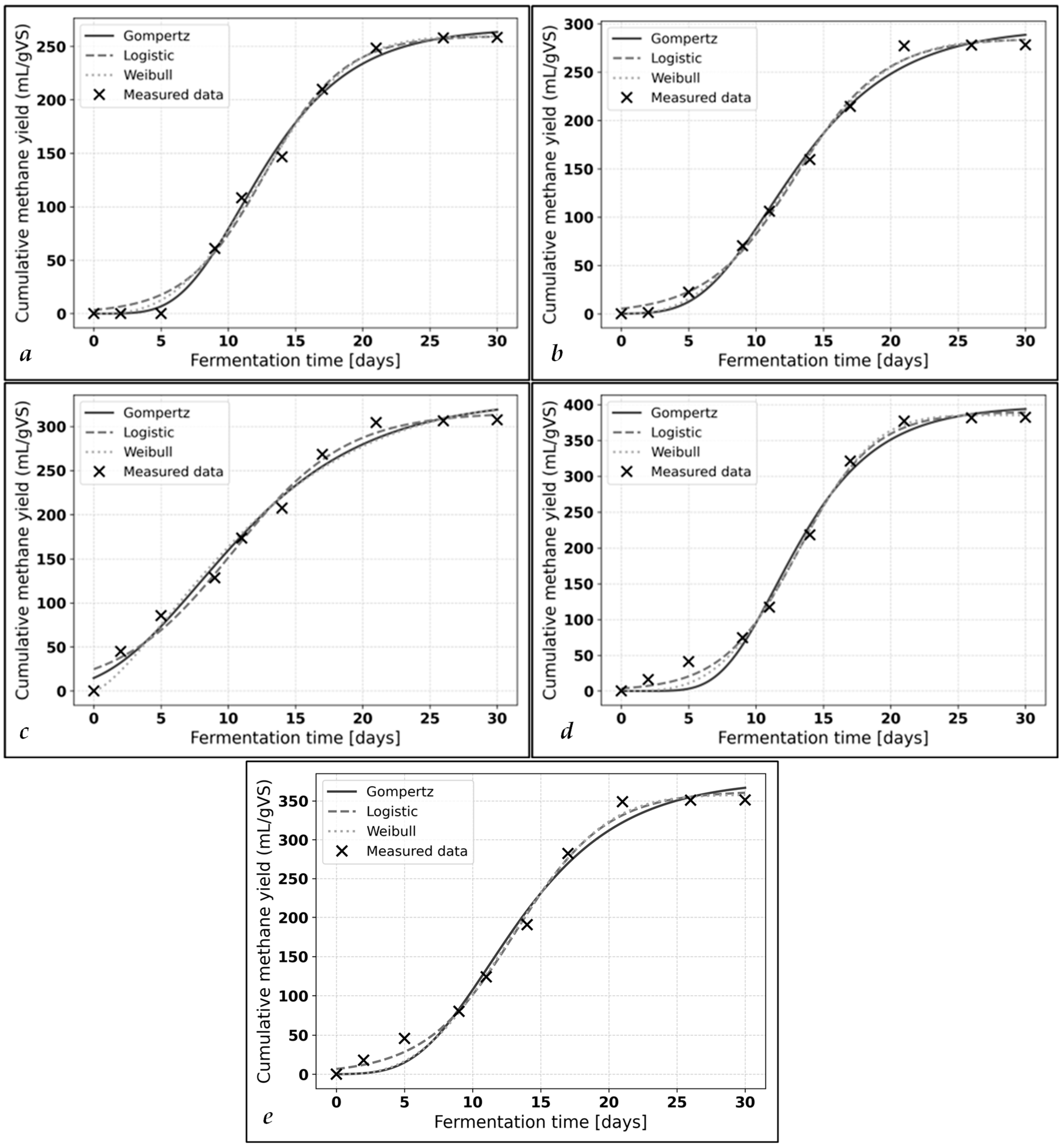
The biokinetic analysis of the anaerobic digestion process of the sludge samples was conducted with three biokinetic models: the modified Gompertz, the logistic, and the Weibull model. Model performance was evaluated using the coefficient of determination (R2), root mean square error (RMSE), and the information–theoretic criteria AIC and BIC. Since absolute AIC values are model-specific, the model ranking was based on ΔAIC (the difference between a model’s AIC and the minimum AIC among the three models). The different model fittings for each individual sample can be observed in Figure 2a–e, while the kinetic summary table (supplemented via the appropriate statistical data R2, RMSE, AIC, ΔAIC, and BIC) can be observed among the appendices (Table A1).
The optimal model for methane production dynamics varied across experimental conditions. For the untreated control sludge and the MP-only control, the Weibull model provided the best overall description (R2 = 0.9963, AIC = 71.43), consistent with the slightly more asymmetric and non-sigmoidal cumulative methane production trends. These cases showed relatively high shape factors (n), suggesting heterogeneous hydrolysis pathways and broad reaction-time distributions.
In contrast, all microwave-pretreated samples (regardless of the involvement of magnetic nanoparticles) were best fitted using the Logistic model (with R2 values of 0.989–0.996 and AIC = 81–84), which indicates that microwave energy, either with or without coupled MPs, produced more even and symmetric sigmoidal methane production curves with steeper initial rates and shortened (or effectively absent) lag phases. The logistic function assumes symmetric steepening and flattening around the inflection point, and this assumption aligned well with the experimental data obtained for the MW-treated samples.
The modified Gompertz model, although widely used in biogas kinetics, did not outperform the other models under any pre-treatment conditions in our case, but still provided relatively good fits, with R2 values around 0.98 or slightly higher.
These observations suggest that although all the investigated biokinetics models showed a good fit with the experimental data, based on the relevant and exact statistical data the Weibull model described the methane production as being the best in case of the non-irradiated samples, while the Logistic model represented the best fit in the case of the MW-treated ones. This suggests that microwave irradiation causes certain structural changes in the fermentation media (disintegration, cell disruption, partial decomposition) which alters the metabolic activity of the fermentation culture, and thus the overall kinetic behavior of the AD processes.
Based on the relevant kinetic data (Rmax, Pmax and λ) across all three models, it can be confirmed that microwave treatment with a combination of magnetic nanoparticles can significantly enhance the rate of product formation and maximum achievable biomethane yield (Table 3), especially if the MPs were kept in the fermentation media during AD. Interestingly, standalone MW treatment could not increase the maximum product formation (on the contrary, it slightly decreased it), even though the Pmax value was higher than that of the control sample. This suggests that microwave radiation may potentially expand the range of biodegradable substrates (via disintegrating the sludge flocs and thus increasing the sCOD), while also distributing their conversion more evenly over time. Although the Weibull model does not contain a kinetic term for Rmax in its original form (Equation (3)), it can be shown via mathematical analysis that the original equation can be rearranged/modified to yield this exact kinetic parameter as a result (see Appendix B).
The highest production rate and BMP could be obtained with the retained MPs during the AD according to all the kinetic models investigated, which further strengthens the fact that the presence of iron plays a significant role in the metabolic activity of the methanogen microorganisms.
It must be noted that the λ-term in the Logistic model, and the tmax in the Weibull model, correspond to the inflection point (the time when the rate is the maximum), which is usually in the middle of the curve, not near the start (as opposed to the Gompertz model, where λ is the actual length of the lag phase, when methane production begins accelerating). The value of t m a x in the Weibull model can be calculated based on the model-parameters, as shown in Appendix B. This eventually means that the λ-value in the Logistic function (and tmax in the Weibull model) is not exactly the length of the lag phase, but rather, the time point on the curve where the production rate reaches its peak. In order to see the exact differences between the actual length of the lag phase between the different samples, it is better to compare the kinetic data obtained from the modified Gompertz model across all samples (Table A1), as it is the only model among the investigated ones in which λ represents a biologically meaningful lag phase. Nevertheless, each model agrees that the use of MW-based pre-treatment on the sludge can substantially shorten the time it takes to reach Rmax (or, according to the modified Gompertz model, the time it takes for the lag phase to end), compared to the control and the MP-only samples.

3.3. Comparison with Literature Data

As shown in Table 4, the biomethane potentials obtained in this study fall within the mid–upper range of values reported for slaughterhouse-derived or protein-rich sludges subjected to physical or iron-assisted pre-treatments. The BMP of approximately 390 mL CH4/gVS achieved with the combined MW + MP treatment is comparable to values reported for iron-enhanced anaerobic digestion and thermally pre-treated slaughterhouse wastes, while the observed maximum methane production rate is at the higher end of the literature-reported ranges. This indicates that the applied pre-treatment strategy enhances conversion kinetics without exceeding realistic biodegradability limits, supporting the reliability of the obtained results.

3.4. Dielectric Analysis

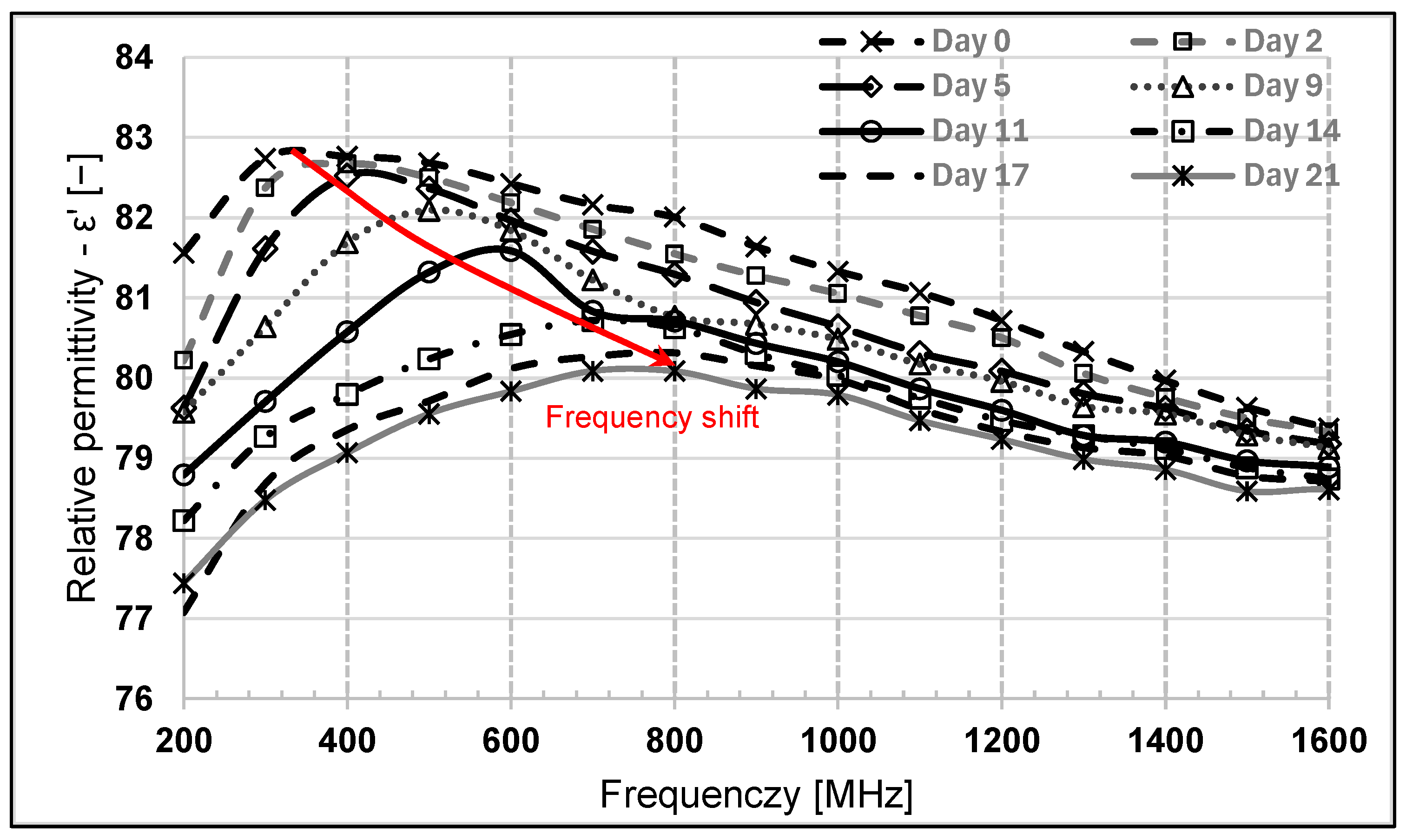
Throughout the anaerobic fermentation of the different sludge samples, the dielectric spectrum of the fermentation media was recorded at given time intervals until the start of the steady-state phase (days = 0, 2, 5, 9, 11, 14, 17, 21). The recorded values of the relative permittivity ( ε ) in the function of frequency and digestion time for the control sample can be observed in Figure 3.
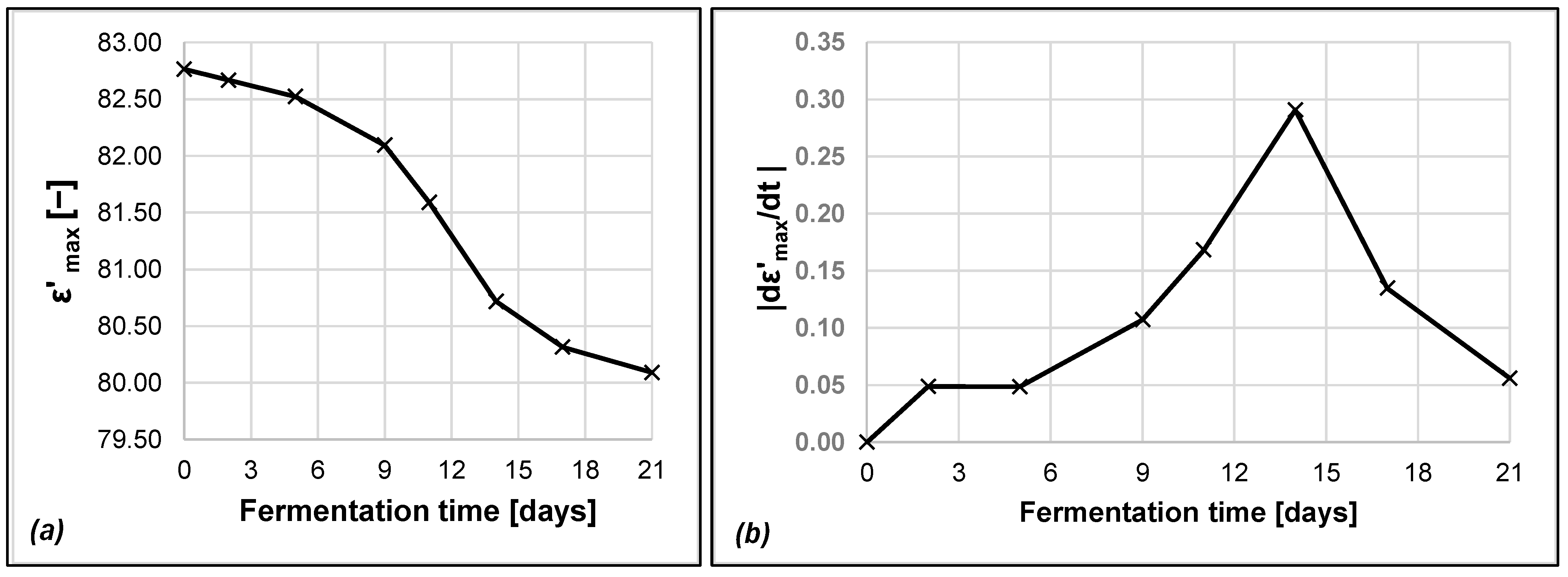
Based on the dielectric spectra, it can be seen that the values of the relative permittivity gradually lower across the entire investigated frequency range as the anaerobic fermentation progresses. Additionally, it can be clearly observed that the frequency at which the maximum value of ε (i.e., ε m a x ) occurs shifts toward higher frequencies (as indicated by the red curve in Figure 3) as the fermentation process advances. This indicates that the biochemical and structural changes that occurred in the fermentation medium (for example, the breakdown of higher-molecular-weight macromolecules, the formation of organic acids, and the overall depletion of organic sources) affected the overall polarizability of the system in such a way that the content of bounded water decreased, whilst the free water content increased, and as such, the cut-off point (where ε   reaches its maximum) shifted towards to that of pure water [36]. During the first 14 days of the fermentation, the overall differences between the relative permittivity values are generally greater than at those at the later stages of the AD—the difference between the values of the relative permittivity between Day 17 and Day 21 were clearly smaller than those at Day 5 and Day 9, for example, especially in the lower-frequency range. This suggests that the change in the dielectric behavior, albeit indirectly, corresponds to the overall dynamics of the methane production, i.e., when the methane is produced at a faster rate (and the fermentation medium is biochemically active, and thus undergoes (bio)chemical transformation constantly); then, the dielectric response of the medium also changes at a higher rate. In order to find a correlation between the change in relative permittivity and the appropriate kinetic parameters that define the “rapidity” of the product formation—that is, Rmax—we first computed the change in ε m a x with respect to fermentation time and, after that, calculated how much ε m a x changes under a given amount of dt time ( d ε m a x / d t ) for all different samples. The results can be observed in Figure 4a and Figure 4b, respectively, for the control sample.
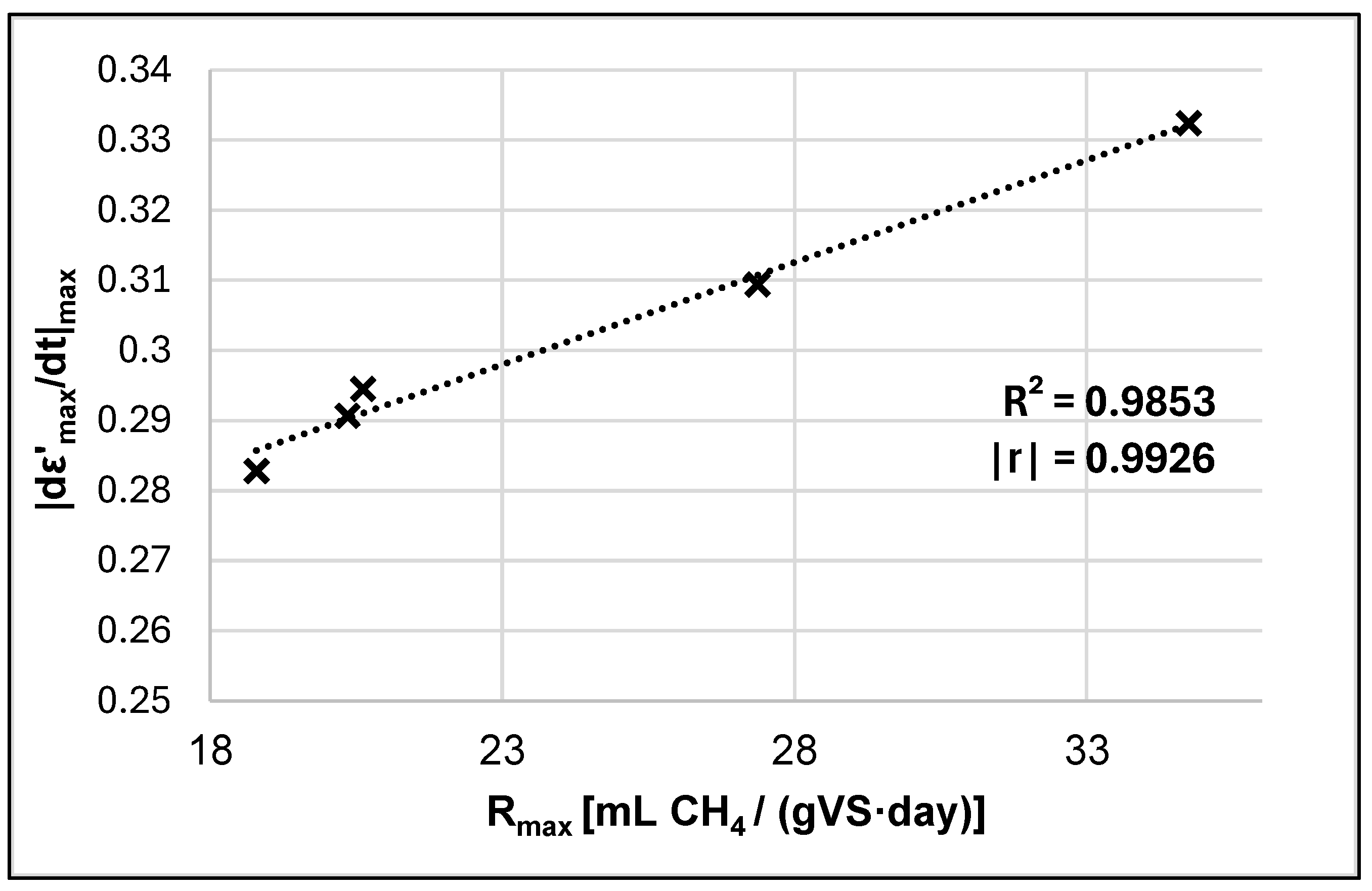
Based on the figures and calculated data, we determined the absolute value of the maximum overall change in the relative permittivity (that is, d ε m a x d t m a x , meaning the period of fermentation during which this parameter changed the most) for all samples (see Table 5), and correlated them with their respective Rmax values from the best-fitting biokinetic model (Figure 5).
The correlation analysis revealed that there is a strong linear relationship between the maximum change in the relative permittivity’s maxima and the values of Rmax—that is, the maximum methane formation rate—across the different samples, regardless of the pre-treatment method used (R2 > 0.985, |r| > 0.99). This suggests, on the one hand, that the molecular transformations and the biochemical activity occurring during the anaerobic fermentation process are naturally related to the maximal product formation rate—as an important kinetic parameter and process efficiency indicator—and on the other hand, that these changes are also reflected in the dielectric behavior (more precisely, the change in the dielectric behavior) of the fermentation medium. Based on these observations, it can be concluded that monitoring the appropriate dielectric parameter(s) across a suitable frequency range might provide an alternative, sufficiently precise method to assess the overall performance of the anaerobic digestion, provide estimates about the gas formation rate (or, indirectly, about the cumulative gas production), and show whether any intervention is needed in the process parameters (especially in industrial-scale biogas production). Since dielectric monitoring is fast, non-destructive, and generally cheaper than conventional analytical methods, with proper calibration and validation, it may become a great alternative or supporting method alongside the standardized ones currently used in anaerobic processes. Accordingly, the observed relationships between dielectric response and methane production kinetics should be interpreted as indicative trends that might warrant further validation across a broader range of substrates, operating modes, and reactor configurations.

4. Conclusions and Limitations

In this study, we investigated the effects of microwave pre-treatment and magnetic nanoparticles on the anaerobic digestion of meat-processing sludge, integrating biokinetic modeling with dielectric measurements to assess both process efficiency and real-time monitoring potential. This work primarily aimed to identify how the dielectric response of the differently pre-treated sludge samples during AD correlate with the appropriate kinetic parameters, thus quantitatively linking dielectric measurements to biokinetic methane production parameters.
Microwave irradiation alone could increase the methane content (with a slight decrease in maximum production rate) relative to the native control; however, when microwave irradiation was coupled with magnetic nanoparticles, both the methane production rate and the total methane potential were further elevated—especially when MPs were retained in the sludge samples during AD. This indicates a synergistic enhancement of hydrolysis and methanogenic conversion. These findings support the idea that metal oxide nanoparticle-assisted microwave pre-treatment represents a promising intensification strategy for protein-rich and structurally complex waste streams.
Kinetic modeling using the modified Gompertz, Logistic and Weibull functions revealed certain differences in model suitability across treatments. Those samples that received no microwave irradiation (control and MP-only) were best fitted with the Weibull model, whereas for the samples that underwent microwave treatment (alone or coupled with MPs), the Logistic model turned out to be the most appropriate—however, it should be noted that all investigated models showed a relatively good fit, with R2 values above 0.98 in every instance. The analytically derived Weibull-based maximum methane production rate—that is, Rmax—enabled direct comparison across all models and treatment conditions, and the kinetic parameters also confirmed that using MW irradiation with magnetic nanoparticles can substantially enhance the maximum production rate, as well as the overall biomethane potential (i.e., the maximum achievable biomethane content).
The integration of dielectric parameter measurement with biokinetic analysis revealed strong correlations between the maximum rate of change in ε m a x ( t ) and the maximum methane production rate across the samples. This suggests that dielectric parameters capture the underlying biochemical activity in the fermentation systems and may serve as early, non-invasive indicators of anaerobic digestion performance. Such correlations have rarely been demonstrated in the context of biogas fermentation and highlight the potential of dielectric measurements for fast, real-time process monitoring.
It should be noted, however, that the experiments were conducted in batch laboratory-scale reactors, which do not fully replicate the operational complexity of a continuous system like CSTRs or PFRs. The interactions between nanoparticles and microbial communities (e.g., enzyme activation, shifts in microbial composition, interspecies electron transfer, etc.) were not investigated here and need further research with proper microbial community analysis. Dielectric analysis, although providing valuable kinetic and structural insights, also necessitates the development of in situ conditions, and therefore the development of inline dielectric monitoring sensors and devices remains an important step toward practical application and implementation. Furthermore, the long-term environmental fate, recoverability, and potential ecotoxicological risks of magnetic nanoparticles require further assessment before wider applications—however, early studies do not show high environmental risks or toxicity for magnetite (iron–oxide) nanoparticles, especially at low concentrations. The present study should be regarded as a proof-of-concept investigation demonstrating how the temporal evolution of dielectric parameters can be quantitatively linked to key kinetic indicators of methane production during anaerobic digestion. Given the batch-scale experimental design and the finite number of treatment conditions investigated, the derived correlations are intended to illustrate methodological feasibility rather than to provide universally applicable predictive models.

Author Contributions

Conceptualization, Z.P.J. and S.B.; methodology, Z.P.J. and S.B.; software, Z.P.J. and R.D.; validation, Z.P.J. and S.B.; investigation, Z.P.J.; resources, S.B. and E.I.; data curation, Z.P.J.; writing—original draft preparation, Z.P.J.; writing—review and editing, S.B. and E.I.; visualization, Z.P.J. and R.D.; supervision, S.B.; project administration, S.B. All authors have read and agreed to the published version of the manuscript.

Funding

The research was financed by National Research, Development and Innovation Office (NKFI) FK 146344 project.

Data Availability Statement

The original contributions presented in this study are included in the article. Further inquiries can be directed to the corresponding author.

Conflicts of Interest

The authors declare no conflicts of interest.

Abbreviations

The list of the most important abbreviations used in this manuscript:
ADAnaerobic digestion
BDIBiodegradability index
BMPBiomethane potential
BMPexpMeasured BMP (i.e., maximum biomethane yield)
BMPthTheoretical maximum BMP (biomethane yield)
CODChemical oxygen demand
gVSUnit mass (gram) of volatile solids
MPMagnetic nanoparticles
mL CH4Amount (volume) of biomethane formed/produced
MWMicrowave (irradiation)
MWEMicrowave energy
PmaxMaximum product (in our case, biomethane)
RmaxMaximum product formation rate
sCODSoluble COD
tCODTotal COD
tmaxTime it takes to reach Rmax (exclusive to the Weibull model)
TSTotal solids
VSVolatile solids
λLength of the lag-phase or time it takes to reach Rmax
ε Relative permittivity
ε m a x Maximum value of the relative permittivity

Appendix A

Table A1. Summary table of the investigated biokinetic models with the relevant kinetic and statistical parameters. The rows in bold typesetting represent the best-fitting model for the given sample based on R2 and AIC/BIC values. ΔAIC is relative to the best model’s AIC value. The kinetic parameter n is exclusive to the Weibull model.
SampleModelPmaxRmaxNλ or tmaxR2RMSEAICΔAICBIC
ControlGompertz267.27621.708-6.3620.9966.61072.1500.71773.058
ControlLogistic259.88022.111-6.8220.9938.64277.5136.07978.420
ControlWeibull259.45620.3442.85212.3370.9966.37771.4330.00072.341
45 kJ MWGompertz332.21117.684-0.9420.98712.46684.8381.01385.746
45 kJ MWLogistic316.06818.794-1.9490.98811.85083.8250.00084.733
45 kJ MWWeibull334.64718.4751.3975.4090.98413.93287.0623.23787.970
45 kJ MW + MGompertz398.22235.580-7.3610.98816.68390.66711.63791.575
45 kJ MW + MLogistic390.05634.743-7.5070.9969.32479.0300.00079.937
45 kJ MW + MWeibull385.31934.0653.32713.0780.99411.85383.8314.80184.738
MGompertz296.12220.965-5.8020.9948.74677.7517.38678.658
MLogistic285.08921.886-6.4340.9966.80372.7252.36073.633
MWeibull283.56320.6152.67512.3160.9976.04570.3650.00071.273
45 kJ MW + M-SGompertz377.73426.129-5.9020.98516.65290.63010.14391.537
45 kJ MW + M-SLogistic362.66727.362-6.5230.99510.02880.4860.00081.394
45 kJ MW + M-SWeibull357.93326.8932.80812.6420.99113.05685.7635.27786.671

Appendix B

The equation for calculating the values of Rmax in case of the Weibull model is derived as follows:
R m a x W e i b u l l = P m a x n k n n 1 n k n n 1 n exp ( n 1 n )
Original equation (Equation (3)):
P t = P m a x [ 1 exp k t n ) ]
The equation used to obtain the instantaneous methane production rate is as follows:
d P d t = P m a x n k n t n 1 e x p ( k t n )
The slope is as follows:
r t = d P d t
We are looking for t m a x , where r t is maximal, and then R m a x = r ( t m a x ) .
Using logarithmic transformation, the following is attained:
ln r t = ln P m a x n k n + n 1 l n t k t n
Maximizing r(t) is equivalent to maximizing ln[r(t)]:
d d t ln r t = 0 d d t ln r t = n 1 t n k n t n 1 = 0 n 1 t = n k n t n 1
By multiplying both sides by t, we can achieve the following:
n 1 = n k n t n
Therefore,
t m a x n = n 1 n k n t m a x = n 1 n k n 1 / n
Note: this only holds for n > 1, which is almost always the case for anaerobic digestion processes modeled via Weibull (just like in our case; see Table A1).
Setting t m a x back into r(t),
k t m a x n = n 1 n exp k t m a x n = exp n 1 n   a n d   t m a x n 1 = n 1 n k n n n 1
Finally,
R m a x = P m a x n k n n 1 n k n n n 1 exp ( n 1 n )

References

  1. Appels, L.; Baeyens, J.; Degrève, J.; Dewil, R. Principles and Potential of the Anaerobic Digestion of Waste-Activated Sludge. Prog. Energy Combust. Sci. 2008, 34, 755–781. [Google Scholar] [CrossRef]
  2. Mata-Alvarez, J.; Dosta, J.; Romero-Güiza, M.S.; Fonoll, X.; Peces, M.; Astals, S. A Critical Review on Anaerobic Co-Digestion Achievements between 2010 and 2013. Renew. Sustain. Energy Rev. 2014, 36, 412–427. [Google Scholar] [CrossRef]
  3. De Vrieze, J.; Verstraete, W. Perspectives for Microbial Community Composition in Anaerobic Digestion: From Abundance and Activity to Connectivity. Environ. Microbiol. 2016, 18, 2797–2809. [Google Scholar] [CrossRef] [PubMed]
  4. Harris, P.W.; McCabe, B.K. Review of Pre-Treatments Used in Anaerobic Digestion and Their Potential Application in High-Fat Cattle Slaughterhouse Wastewater. Appl. Energy 2015, 155, 560–575. [Google Scholar] [CrossRef]
  5. Rajagopal, R.; Saady, N.M.C.; Torrijos, M.; Thanikal, J.V.; Hung, Y.-T. Sustainable Agro-Food Industrial Wastewater Treatment Using High Rate Anaerobic Process. Water 2013, 5, 292–311. [Google Scholar] [CrossRef]
  6. Pitk, P.; Kaparaju, P.; Vilu, R. Methane Potential of Sterilized Solid Slaughterhouse Wastes. Bioresour. Technol. 2012, 116, 42–46. [Google Scholar] [CrossRef]
  7. Ahn, J.-H.; Shin, S.G.; Hwang, S. Effect of Microwave Irradiation on the Disintegration and Acidogenesis of Municipal Secondary Sludge. Chem. Eng. J. 2009, 153, 145–150. [Google Scholar] [CrossRef]
  8. Jákói, Z.; Lemmer, B.; Hodúr, C.; Beszédes, S. Microwave and Ultrasound Based Methods in Sludge Treatment: A Review. Appl. Sci. 2021, 11, 7067. [Google Scholar] [CrossRef]
  9. Vialkova, E.; Obukhova, M.; Belova, L. Microwave Irradiation in Technologies of Wastewater and Wastewater Sludge Treatment: A Review. Water 2021, 13, 1784. [Google Scholar] [CrossRef]
  10. Eskicioglu, C.; Prorot, A.; Marin, J.; Droste, R.L.; Kennedy, K.J. Synergetic Pretreatment of Sewage Sludge by Microwave Irradiation in Presence of H2O2 for Enhanced Anaerobic Digestion. Water Res. 2008, 42, 4674–4682. [Google Scholar] [CrossRef]
  11. Beszédes, S.; László, Z.; Szabó, G.; Hodúr, C. Effects of Microwave Pretreatments on the Anaerobic Digestion of Food Industrial Sewage Sludge. Environ. Prog. Amp; Sustain. Energy 2010, 30, 486–492. [Google Scholar] [CrossRef]
  12. Ariunbaatar, J.; Panico, A.; Esposito, G.; Pirozzi, F.; Lens, P.N.L. Pretreatment Methods to Enhance Anaerobic Digestion of Organic Solid Waste. Appl. Energy 2014, 123, 143–156. [Google Scholar] [CrossRef]
  13. Demianchuk, B.; Guliiev, S.; Ugol’nikov, A.; Kliat, Y.; Kosenko, A. Development of Microwave Technology of Selective Heating the Components of Heterogeneous Media. East.-Eur. J. Enterp. Technol. 2022, 1, 43–52. [Google Scholar] [CrossRef]
  14. Chu, L.; Wang, J. Pretreatment of Sludge by Ionizing Radiation for Enhanced Methane Production in Anaerobic Digestion: Effect of Antibiotics and Variation in Bacterial and Archaeal Community. Radiat. Phys. Chem. 2026, 242, 113581. [Google Scholar] [CrossRef]
  15. Shin, K.-S.; Kang, H. Electron Beam Pretreatment of Sewage Sludge Before Anaerobic Digestion. Appl. Biochem. Biotechnol. 2003, 109, 227–240. [Google Scholar] [CrossRef] [PubMed]
  16. Lemée, L.; Collard, M.; Vel Leitner, N.K.; Teychené, B. Changes in Wastewater Sludge Characteristics Submitted to Thermal Drying, E-Beam Irradiation or Anaerobic Digestion. Waste Biomass Valorization 2017, 8, 1771–1780. [Google Scholar] [CrossRef]
  17. Ano, T.; Tsubaki, S.; Fujii, S.; Wada, Y. Designing Local Microwave Heating of Metal Nanoparticles/Metal Oxide Substrate Composites. J. Phys. Chem. C 2021, 125, 23720–23728. [Google Scholar] [CrossRef]
  18. Deng, Y.; Bai, X.; Abdelsayed, V.; Shekhawat, D.; Muley, P.D.; Karpe, S.; Mevawala, C.; Bhattacharyya, D.; Robinson, B.; Caiola, A.; et al. Microwave-Assisted Conversion of Methane over H-(Fe)-ZSM-5: Evidence for Formation of Hot Metal Sites. Chem. Eng. J. 2021, 420, 129670. [Google Scholar] [CrossRef]
  19. Kung, Y.; Drennan, C.L. A Role for Nickel–Iron Cofactors in Biological Carbon Monoxide and Carbon Dioxide Utilization. Curr. Opin. Chem. Biol. 2011, 15, 276–283. [Google Scholar] [CrossRef] [PubMed]
  20. Hallenbeck, P. Biological Hydrogen Production; Fundamentals and Limiting Processes. Int. J. Hydrogen Energy 2002, 27, 1185–1193. [Google Scholar] [CrossRef]
  21. Wang, S.; Yuan, R.; Liu, C.; Zhou, B. Effect of Fe2+ Adding Period on the Biogas Production and Microbial Community Distribution during the Dry Anaerobic Digestion Process. Process Saf. Environ. Prot. 2020, 136, 234–241. [Google Scholar] [CrossRef]
  22. Feng, Y.; Zhang, Y.; Quan, X.; Chen, S. Enhanced Anaerobic Digestion of Waste Activated Sludge Digestion by the Addition of Zero Valent Iron. Water Res. 2014, 52, 242–250. [Google Scholar] [CrossRef]
  23. Xu, Y.; Zhang, R.; Liu, J.; He, X.; Lu, H.; Wei, N.; Zhang, J. Effect of Iron Supplementation On The Biogas Production and Microbial Community Distribution During Anaerobic Digestion of Food Waste Process. Res. Sq. Platf. LLC 2021. [Google Scholar] [CrossRef]
  24. Mohammadianroshanfekr, M.; Pazoki, M.; Pejman, M.B.; Ghasemzadeh, R.; Pazoki, A. Kinetic Modeling and Optimization of Biogas Production from Food Waste and Cow Manure Co-Digestion. Results Eng. 2024, 24, 103477. [Google Scholar] [CrossRef]
  25. Tian, Y.; Yang, K.; Zheng, L.; Han, X.; Xu, Y.; Li, Y.; Li, S.; Xu, X.; Zhang, H.; Zhao, L. Modelling Biogas Production Kinetics of Various Heavy Metals Exposed Anaerobic Fermentation Process Using Sigmoidal Growth Functions. Waste Biomass Valorization 2019, 11, 4837–4848. [Google Scholar] [CrossRef]
  26. Kelif Ibro, M.; Ramayya Ancha, V.; Beyene Lemma, D. Biogas Production Optimization in the Anaerobic Codigestion Process: A Critical Review on Process Parameters Modeling and Simulation Tools. J. Chem. 2024, 2024, 4599371. [Google Scholar] [CrossRef]
  27. Flores-Cosío, G.; Herrera-López, E.J.; Arellano-Plaza, M.; Gschaedler-Mathis, A.; Kirchmayr, M.; Amaya-Delgado, L. Application of Dielectric Spectroscopy to Unravel the Physiological State of Microorganisms: Current State, Prospects and Limits. Appl. Microbiol. Biotechnol. 2020, 104, 6101–6113. [Google Scholar] [CrossRef] [PubMed]
  28. Guo, C.; Xin, L.; Dong, Y.; Zhang, X.; Wang, X.; Fu, H.; Wang, Y. Dielectric Properties of Yogurt for Online Monitoring of Fermentation Process. Food Bioprocess Technol. 2018, 11, 1096–1100. [Google Scholar] [CrossRef]
  29. Dobozi, R.; Jákói, Z.P.; Csanádi, J.; Beszédes, S. Investigating the Acid- and Enzyme-Induced Coagulation of Raw Milk Using Dielectric and Rheological Measurements. Appl. Sci. 2023, 13, 6185. [Google Scholar] [CrossRef]
  30. Illés, E.; Szekeres, M.; Tóth, I.Y.; Szabó, Á.; Iván, B.; Turcu, R.; Vékás, L.; Zupkó, I.; Jaics, G.; Tombácz, E. Multifunctional PEG-Carboxylate Copolymer Coated Superparamagnetic Iron Oxide Nanoparticles for Biomedical Application. J. Magn. Magn. Mater. 2018, 451, 710–720. [Google Scholar] [CrossRef]
  31. Illés, E.; Tombácz, E. The Effect of Humic Acid Adsorption on pH-Dependent Surface Charging and Aggregation of Magnetite Nanoparticles. J. Colloid Interface Sci. 2006, 295, 115–123. [Google Scholar] [CrossRef]
  32. Iqbal Syaichurrozi, B.; Sumardiono, S. Kinetic Model of Biogas Yield Production from Vinasse at Various Initial pH: Comparison between Modified Gompertz Model and First Order Kinetic Model. Res. J. Appl. Sci. Eng. Technol. 2014, 7, 2798–2805. [Google Scholar] [CrossRef]
  33. Ware, A.; Power, N. Modelling Methane Production Kinetics of Complex Poultry Slaughterhouse Wastes Using Sigmoidal Growth Functions. Renew. Energy 2017, 104, 50–59. [Google Scholar] [CrossRef]
  34. Santos, A.D.; Silva, J.R.; Castro, L.M.; Quinta-Ferreira, R.M. Kinetic Prediction of Biochemical Methane Potential of Pig Slurry. Energy Rep. 2022, 8, 159–165. [Google Scholar] [CrossRef]
  35. Madondo, N.I.; Rathilal, S.; Bakare, B.F.; Tetteh, E.K. Application of Magnetite-Nanoparticles and Microbial Fuel Cell on Anaerobic Digestion: Influence of External Resistance. Microorganisms 2023, 11, 643. [Google Scholar] [CrossRef] [PubMed]
  36. Bakam Nguenouho, O.S.; Chevalier, A.; Potelon, B.; Benedicto, J.; Quendo, C. Dielectric Characterization and Modelling of Aqueous Solutions Involving Sodium Chloride and Sucrose and Application to the Design of a Bi-Parameter RF-Sensor. Sci. Rep. 2022, 12, 7209. [Google Scholar] [CrossRef] [PubMed]
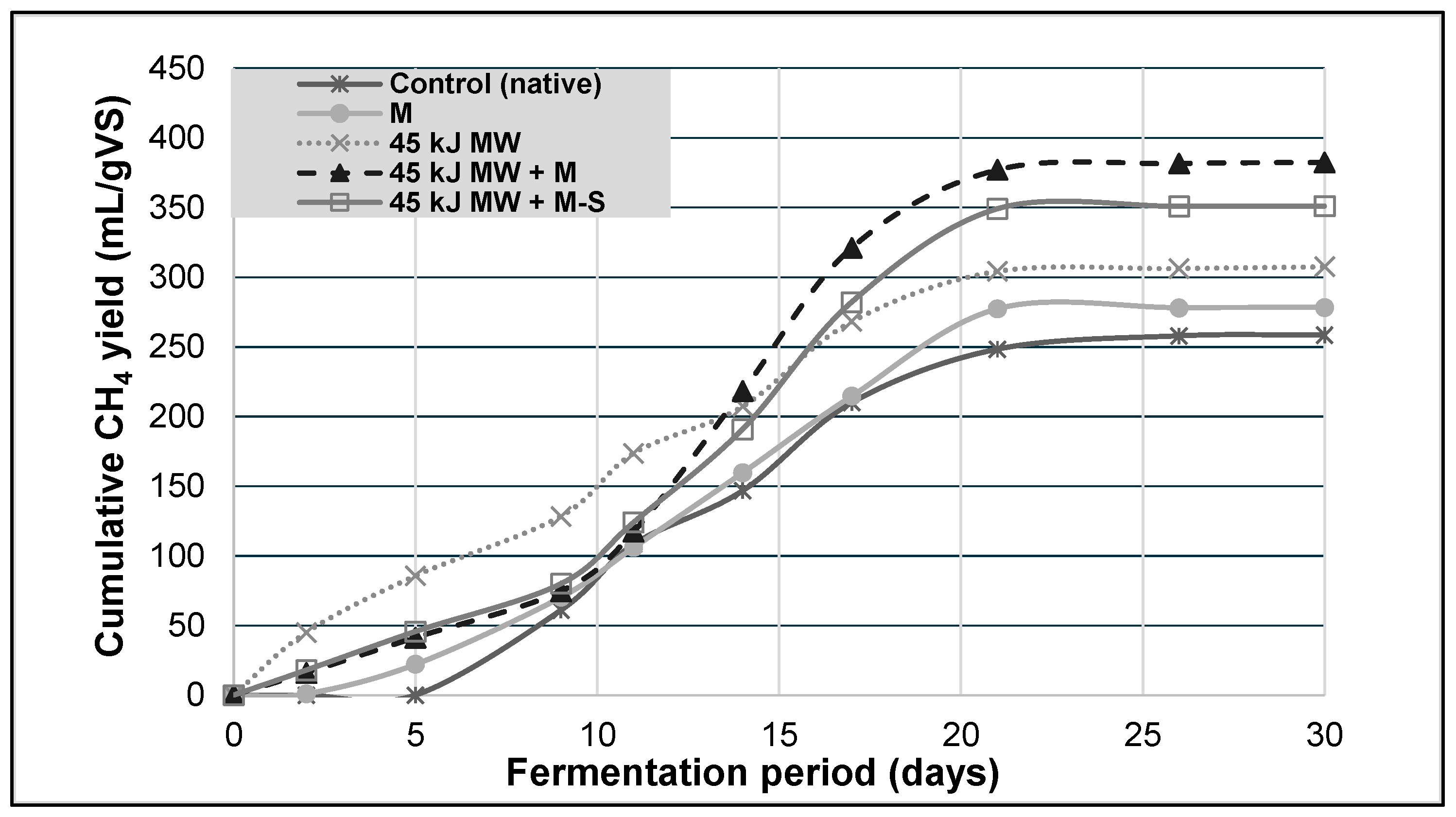
Figure 1. Cumulative biomethane yield (expressed in mL CH4/gVS) of the different sludge samples.
Water 18 00293 g001
Figure 2. The kinetic model fitting of the different samples ((a)—native/control, (b)—MPs only, (c)—MW only, (d)—MW + MP; MPs kept during AD, (e)—MW + MP; MPs removed prior AD).
Water 18 00293 g002
Figure 3. The obtained dielectric spectra of the control sample at different days of anaerobic digestion.
Water 18 00293 g003
Figure 4. The variations in ε m a x with respect to fermentation time (a), and the overall change ( d ε m a x / d t ) during the fermentation period (b) in the control sample.
Water 18 00293 g004
Figure 5. The correlation between d ε m a x d t m a x and Rmax for the different samples.
Water 18 00293 g005
Table 1. Analytical parameters of the meat-processing sludge.
ParameterMeasured Value
Total solids (TS)89.1 ± 2.1 g/L (8.91 w/w%)
Volatile solids (VS)67.6 ± 1.9 g/L (6.76 w/w%)
pH6.1 ± 0.2
Total chemical oxygen demand (tCOD)97.17 ± 3.8 g/L
Soluble COD (sCOD)19.2 ± 0.8 g/L
Table 2. Different pre-treatment methods used on the sludge samples.
Irradiated Total Microwave Energy (MWE)Magnetic NanoparticlesSample Code Name
--Control
-5 mg, kept during the ADM
45 kJ-45 kJ MW
45 kJ5 mg, removed prior to AD45 kJ MW + M-S 1
45 kJ5 mg, kept during the AD45 kJ MW + M
Notes: 1 M, as in magnetic (nanoparticle); S as in separated.
Table 3. Best kinetic model across the investigated samples with the corresponding relevant kinetic data.
SampleBest Kinetic ModelRmax [mL CH4/gVS·Day]Pmax [mL CH4/gVS] t m a x * or λ ** [Days]
ControlWeibull20.344259.45612.337
MWeibull20.615283.56312.315
45 kJ MWLogistic18.798316.0681.949
45 kJ MW + MLogistic37.743390.0567.507
45 kJ MW + M-SLogistic27.361362.6676.522
Notes: * Corresponds to the Weibull model; ** Corresponds to the Logistic model.
Table 4. Comparison of biomethane potential and kinetic parameters obtained in this study with selected data from the literature on slaughterhouse or protein-rich sludge AD (n.r. = non-reported data).
StudySubstratePre-Treatment/AdditiveBMP (mL CH4/gVS) R m a x
[mL CH4/gVS/Day]
Notes
This studyMeat-processing sludge45 kJ MW + magnetite MPs (retained in AD)39038Best fit: logistic model
Ware & Power, 2017 [33]Poultry slaughterhouse wasteNone (control AD)260–59532–46Sigmoidal kinetic modeling
Pitk et al., 2012 [6] Flotation sludgeThermal sterilization650n.r.131 m3 CH4/t production
Feng et al., 2014 [22]Waste activated sludgeZero-valent iron (ZVI)193—276n.r.Iron-mediated enhancement
Wang et al., 2020 [21]Dry AD sludgeFe2+ supplementation220–6857–24Iron-driven microbial effects
Table 5. The maximum change in ε m a x with respect to fermentation time and the corresponding Rmax values for the different samples.
Sample d ε m a x d t m a x Rmax [mL CH4/(gVS·Day)]
Control0.290720.344
MP only (M)0.294520.615
45 kJ MW0.281818.798
45 kJ MW + M0.332437.743
45 kJ MW + M-S0.309427.361
Disclaimer/Publisher’s Note: The statements, opinions and data contained in all publications are solely those of the individual author(s) and contributor(s) and not of MDPI and/or the editor(s). MDPI and/or the editor(s) disclaim responsibility for any injury to people or property resulting from any ideas, methods, instructions or products referred to in the content.