Article

Winners and Losers of River Morphological Change: Species- and Trait-Specific Fish Responses in Carpathian Rivers

by
Stelian-Valentin Stănescu
and
Geta Rîșnoveanu
*
Doctoral School in Ecology, Faculty of Biology, University of Bucharest, 050663 Bucharest, Romania
*
Author to whom correspondence should be addressed.
Water 2026, 18(2), 216; https://doi.org/10.3390/w18020216
Submission received: 28 October 2025 / Revised: 8 January 2026 / Accepted: 10 January 2026 / Published: 14 January 2026

Abstract

Anthropogenic stressors increasingly threaten freshwater biodiversity, with fish communities particularly sensitive to habitat modification. This study evaluates how river morphological alterations influence fish assemblage structure in 114 mountain rivers of the Southern Carpathians, assessing whether such changes cause species loss or drive shifts toward disturbance-tolerant communities. Using a multi-scale analytical framework integrating non-metric multidimensional scaling, redundancy analysis, and variance partitioning, we quantified the contributions of spatial, catchment, and local habitat variables to community patterns. Spatial- and catchment-scale factors explained the largest variance in fish assemblages (12% in adults and 17% in small-bodied fish). However, morphological pressures proved significant in shaping community structure with clear ecological consequences. Weirs and embankments reduced abundances of rheophilic species (flow-dependent) by 27–38%, potamodromous by 23–42%, invertivorous by 26–49%, benthic by 40–46% and lithophilic taxa by 27–41%, indicating the loss of habitat specialists. In contrast, limnophilic taxa (preferring slow or still water) increased 25 times, phytophilic spawners by 17–41%, and tolerant species by 10%, reflecting biotic homogenization. By integrating a trait-based approach, this study highlights functional shifts that may be overlooked in species-level assessments. It underscores the need to couple local habitat restoration with catchment-scale management to conserve fish biodiversity and maintain natural ecological gradients in mountain river systems.

1. Introduction

Watercourses fulfill a variety of essential functions, including the provision of drinking water, hydroelectric energy generation, navigation, and agricultural irrigation. However, these systems are increasingly subjected to a range of anthropogenic stressors [1,2,3] such as flow regulation, physical and morphological modifications, habitat fragmentation [4], eutrophication, and chemical pollution. These pressures exert substantial adverse effects on aquatic biodiversity, with fish populations being particularly vulnerable. Across Europe, a total of 532 freshwater fish species have been identified, of which approximately 37% are currently classified as threatened with extinction categorized as critically endangered, endangered, or vulnerable according to the International Union for Conservation of Nature (IUCN) Red List [5].
The Habitats Directive [6] and the Water Framework Directive [7] both aim to achieve or preserve the favorable status of fish populations, albeit through different approaches and assessment indicators, while accounting for pressures that negatively affect species. The spatial scale at which threats to fish species are analyzed differs between the two directives. The Water Framework Directive (WFD) assesses ecological status at the level of the waterbody—defined as a specific river segment, an entire river, or a network of rivers [7]. In contrast, the Habitats Directive requires species-specific assessments at the biogeographical region level, which may span multiple watercourses or water bodies [6,7].
Alterations in the structure of fish communities are closely linked to changes in the morphological characteristics of river systems [3,8,9,10]. The construction of hydrotechnical structures, such as dams and weirs, can act as physical barriers that disrupt fish movement and migration within lotic environments, particularly by restricting access to critical spawning habitats. This fragmentation affects the longitudinal connectivity of river systems and alters species distribution patterns. Rheophilic species, which rely on flowing water and often require long-distance migrations for reproduction, are particularly vulnerable to these disruptions [11]. In contrast, river systems dominated by non-migratory species tend to experience less pronounced impacts [12].
Water intake structures directly reduce flow availability in downstream sections [13], leading to alterations in river depth, width, and the temporal distribution of discharge. Mountain rivers, characterized by high hydrological variability, have often been channelized or straightened to protect infrastructure such as roads from floods and flash floods [14]. These modifications significantly reduce the availability of critical habitats for both invertebrate and fish communities [15]. The resulting loss or degradation of habitats, altered flow regimes, and reduced food availability can lead to local or regional extinctions of sensitive species. Rheophilic fish species are particularly susceptible to the impacts of dam construction, though facultative rheophilic species may also experience severe population declines or local extinctions as spawning habitats become unreachable [8,16,17].
Conversely, the implementation of aquatic habitat restoration measures has led to an increase in species diversity, favoring rheophilic species over eurytopic ones. These efforts have also resulted in higher population densities of rheophilic species, including increased abundance of juvenile individuals [18].
We hypothesize that changes in fish community composition within the Carpathian region are correlated with the extent of river morphological alteration. Specifically, we expect a decline in taxonomic richness and diversity in rivers subjected to higher degrees of anthropogenic modification, compared to natural or near-natural systems—particularly among rheophilic species. By analyzing fish community composition across rivers exhibiting varying levels of morphological alteration, this study aims to determine how such human-induced changes influence the distribution and structure of fish assemblages in mountain rivers. Furthermore, we investigate whether these alterations result in a significant loss of species diversity or cause a marked shift in trait-based community structure, favoring species adapted to modified habitats at the expense of those reliant on natural flow and habitat conditions.

2. Materials and Methods

2.1. Study Area

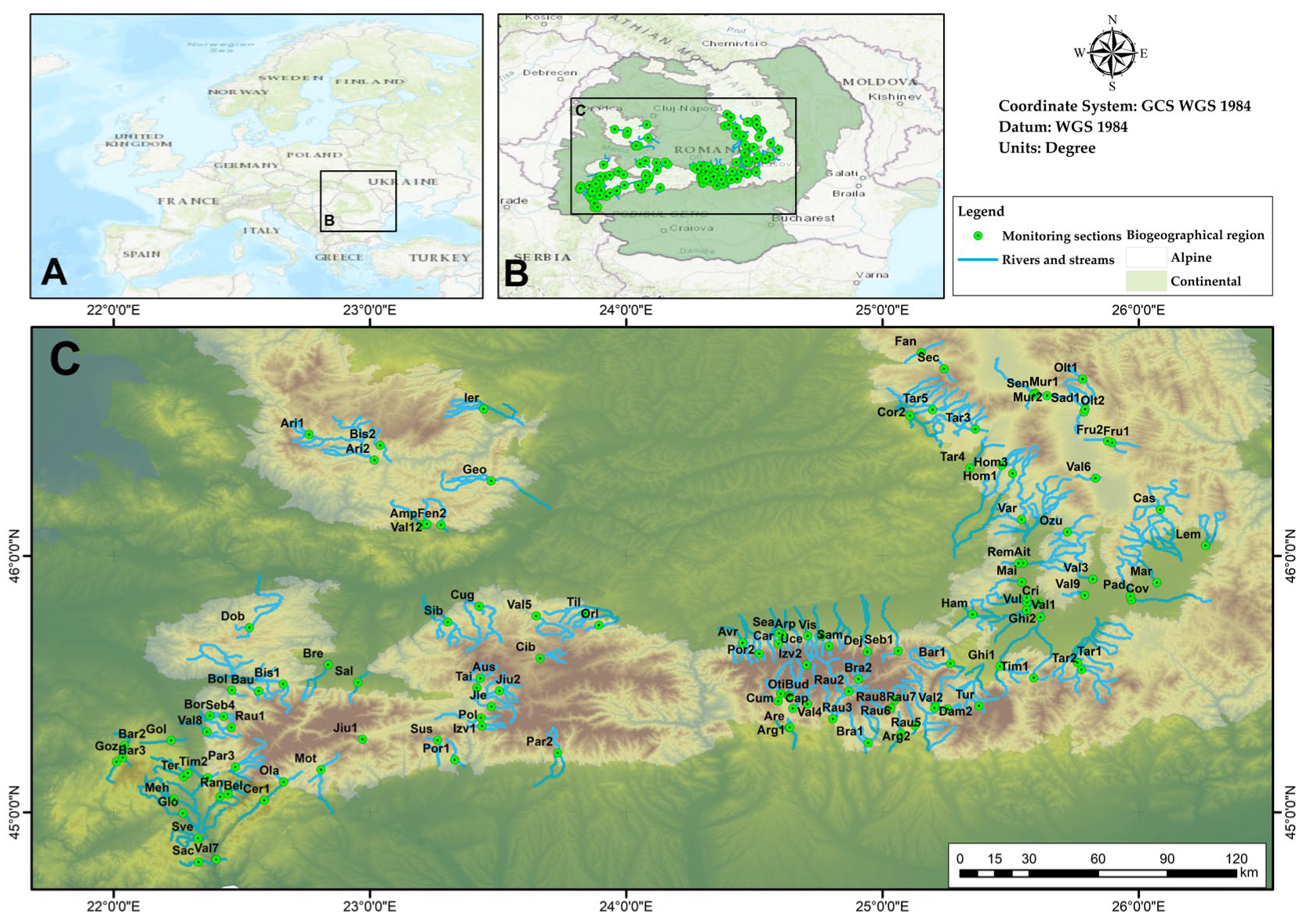
The study area encompasses the Romanian Carpathians within the Danube River basin, focusing on high-altitude river systems across five water management units: Mureș, Banat, Jiu, Olt, and Argeș-Vedea. This mountainous region contains a dense network of watercourses, both officially registered (cadastral) and unregistered. However, only water bodies designated under the Water Framework Directive are subject to systematic monitoring for hydromorphological conditions and fish fauna. Fishing in the study area is present mainly on the lower reaches of the watercourses and it is predominantly recreational. For this study, we utilized data from 124 monitoring sections, covering 114 distinct rivers (Figure 1).
Of the 124 monitoring stations included in this study (site codes are listed in Supplementary Materials Table S1), 82 are situated within the Alpine biogeographical region and 42 within the Continental region. Additionally, 61 of these stations are located within Natura 2000 protected areas.

2.2. Physical and River Morphological Data

To determine the key drivers shaping fish community structure, we selected eight explanatory variables encompassing spatial location (latitude and longitude), catchment characteristics, and morphological pressures (see Table 1).
Altitude, slope, and Strahler stream order data were derived from the Digital Elevation Model (DEM) provided by the European Environment Agency, utilizing QGIS Desktop version 3.18.3, and land cover was obtained from the Corine Land Cover 2018 dataset [19].
Data on morphological pressures within the analyzed rivers—including the number of weirs and other transverse structures, as well as the extent of embankments and channelization—were obtained from official reports compiled in accordance with the Water Framework Directive and River Basin Management Plans [20,21,22,23,24], and complemented by field surveys. The level of anthropogenic influence on these rivers ranged from near-natural conditions, with minimal or no morphological pressures, to varying degrees of human-induced alteration [25].
Rivers were classified into three categories based on the number and intensity of morphological pressures, following Romanian national methodology [26] and consistent with other studies [25,27]. Classification considered transverse structures and longitudinal waterworks (embankment or channelization), with no modifications along reference waterbodies, and a 30% threshold of the waterbody length used to distinguish slight- and moderate-intensity longitudinal modifications. Thresholds for transverse structures were: Reference—no transverse structures; Slightly impacted—one transverse structure; Moderately impacted—more than one transverse structure. Accordingly, in Reference rivers no morphological pressures were identified, slightly impacted rivers had ≤30% of their length modified or one transverse structure, and moderately impacted rivers had >30% of their length modified, both types of longitudinal modifications present, or more than one transverse structure.

2.3. Fish Data

Data were compiled from multiple sources. The National Administration “Romanian Waters” provided information for 108 rivers. Additionally, supplementary monitoring data collected upstream and downstream of small hydropower plants—conducted as part of environmental impact assessment study—were incorporated for 20 rivers. To further supplement data from rivers exhibiting minimal or no morphological pressures, our own monitoring efforts contributed information for 5 rivers. Some rivers were surveyed using data from 2 or more of these sources, resulting in a total of 114 rivers analyzed. Fish sampling was conducted using the standardized wading electrofishing methodology (EN 14011:2003 [28]) during one or two campaigns per site between June 2016 and September 2021. Along transects, the operator moved in a zigzag pattern across the riverbed. Fish were captured using a SAMUS RICH P2000 electrofisher (manufacturer: Samus Co., Warsaw, Poland) and scooping nets with a 10 mm × 10 mm mesh size. All individuals were identified to the species level, measured for total length, and subsequently released. At each sampling location, river length and width were recorded. To account for variations in river width and to ensure comparable sampled surface area, the lengths of sampling transects ranged from 50 to 500 m. Each transect encompassed a variety of mesohabitats, with substrates ranging from sand to boulders and bedrock. For each site, the number and size of individuals captured per species were documented. For all identified species, the conservation status was identified according to latest European IUCN classification [5] and the Romanian Red List of Vertebrates [29]. Additionally, protection status under the Habitats Directive [6] and trait-based classification [30,31,32] were compiled.

2.4. Data Analysis

(a) Taxonomic composition
To enable comparisons across study sites, all fish data were standardized and expressed as catch per unit effort (CPUE individuals per 100 m2). In cases where multiple water bodies were delineated within a single river, analyses were primarily conducted at the waterbody level. However, when data granularity permitted, finer-scale analyses were performed at the river level. Specifically, for major rivers comprising multiple water bodies, the assessment was carried out at the water body scale, whereas for smaller rivers, where several rivers collectively form a single water body, the analysis was conducted at the river level.
Fish-related analyses primarily focused on density (individuals/100 m2) [33,34,35], species richness, and diversity, using response variables recognized in the literature as sensitive indicators of hydromorphological pressures [34,35,36,37] (see Table 2). To assess significant differences in biodiversity indices among the three impact categories, one-way analysis of variance (ANOVA) was applied.
(b) Functional traits composition
Relevant research [30,31,32,42,43,44,45] was reviewed to classify the identified fish species according to key functional traits, including overall tolerance (tolerant vs. intolerant), feeding habitat (benthic vs. pelagic), general habitat preference (rheophilic vs. limnophilic), reproductive habitat (lithophilic vs. phytophilic), feeding behavior (invertivorous, omnivorous, planktivorous, piscivorous), and migratory behavior (long-distance migratory, potamodromous, non-migratory). These selected traits provide insight into species’ vulnerability to various anthropogenic and environmental stressors [46,47]. For instance, river hydrological characteristics—such as water depth—and the presence, size, and frequency of transverse structures can differentially impact species depending on their feeding strategies and habitat preferences [48].
(c) Effects of environmental variables on fish community structure
To visualize patterns of morphological changes among reference, slightly impacted and moderately impacted sites, non-metric Multi-Dimensional-Scaling (NMDS) was performed following the approach of Popescu et al. [46]. The analysis incorporated spatial, morphological and catchment variables and was conducted in R studio using the “metaMDS” function from the “vegan” package. Plots were generated using “scatterplot3d” package.
The dissimilarity in fish composition and structure, and the species contributing most to this variation were assessed using Similarity Percentage (SIMPER) analysis. Statistical significance of differences among impact categories was tested with one-way Analysis of Similarities (ANOSIM) [46,49]. Both analyses were performed in R studio using the “simper” and “anosim” functions from the “vegan” package. To compare variation in fish taxa composition and associated functional traits across reference, slightly impacted and moderately impacted rivers, the data were standardized using the “decostand” function.
Fish species and traits densities were analyzed using redundancy analysis (RDA) and variance partitioning in R Studio, version 2024.12.1 employing the “vegan” and “adespatial” packages and related functions such as “pcnm” and “rda” [15,49,50,51]. To identify spatial patterns within fish communities, spatial predictors were explicitly incorporated into the statistical models. Additionally, variation partitioning analysis (VPA, implemented via the “varpart” function in R) was used to quantify the proportion of variation in taxonomic and trait differences explained by each set of explanatory variables [51].

3. Results

3.1. Morphological Differences Between Site Groups

The average slope of the analyzed rivers was 14.93%, ranging from 1.7% to 31.9%. The Strahler order values varied from 1 to 6. Of the total, 67 sites were located on rivers with no significant transversal structures either reported or observed during field surveys, and were thus classified as reference sites. The remaining 57 sites were located on rivers containing between 1 and 13 transversal structures of varying heights. In the mountain areas, embankments are typically limited in extent; thus, 104 sites were located on rivers that had no embankment across the study area, while the remaining 20 featured embankment works ranging from 0.24 km to 37 km per river. Channelization was also infrequent, absent in 94 sites, and, where present, ranged from 1.6 km to 47.9 km. Only seven sites were located on rivers that exhibited all three types of morphological pressures: transversal structures, embankments and channelization. Based on the criteria outlined in Section 2.2. Physical and morphological data, the rivers were categorized as follows: 47 reference rivers, 40 slightly impacted rivers (Impact 1, I1) and 37 moderately impacted rivers (Impact 2, I2) (Table S2).
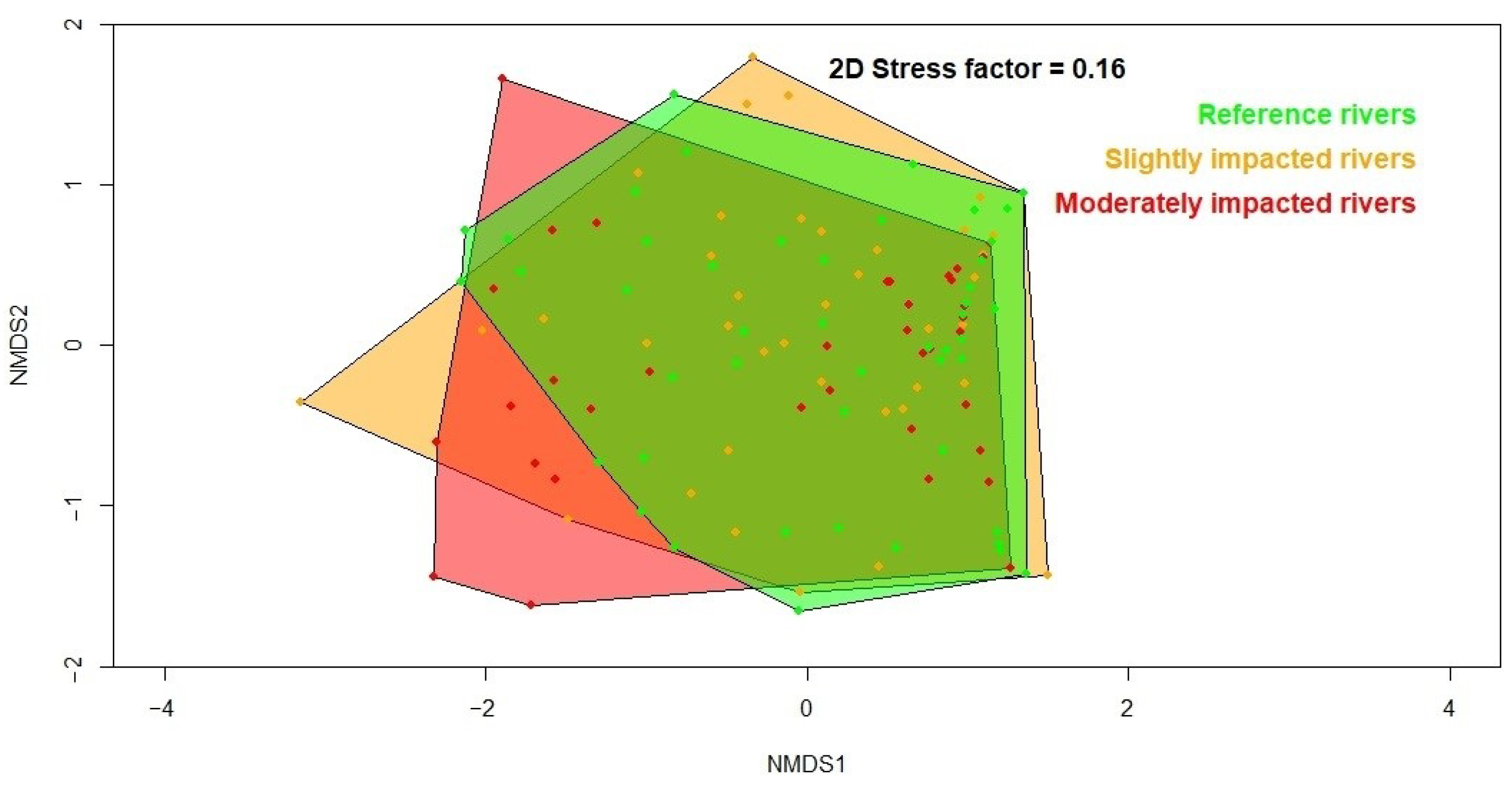
The non-metric Multi-Dimensional-Scaling (nMDS) analysis revealed differences in morphological conditions between sites classified as slightly and moderately impacted and reference sites (Figure 2), justifying our approach.
The overall average dissimilarity revealed a significant difference in morphological characteristics among the three analyzed classes (p = 0.001). Transversal structures accounted for the highest proportion of dissimilarity (41.7–68.6%) across impact categories (Table 3).

3.2. Variation in Fish Species Composition and Structure

A total of 24 species were identified across the 124 sites sampled (Table 4), comprising 14,632 individuals (Supplementary Materials, Table S1). The density of individuals per site ranged from 0.082ind./100 m2 (e.g., in the Ghimbasel and Lotrioara rivers) to 161.6 ind./100 m2 (in Aita River). The majority of species are native to the Romanian section of the Danube River basin, except for C. gibelio, which originates from the Amur basin. According to the IUCN Red List, 20 species are classified as Least Concern (LC), two species are classified as Near Threatened (NT), and two species have not been evaluated (NE) by the IUCN (Table 4).
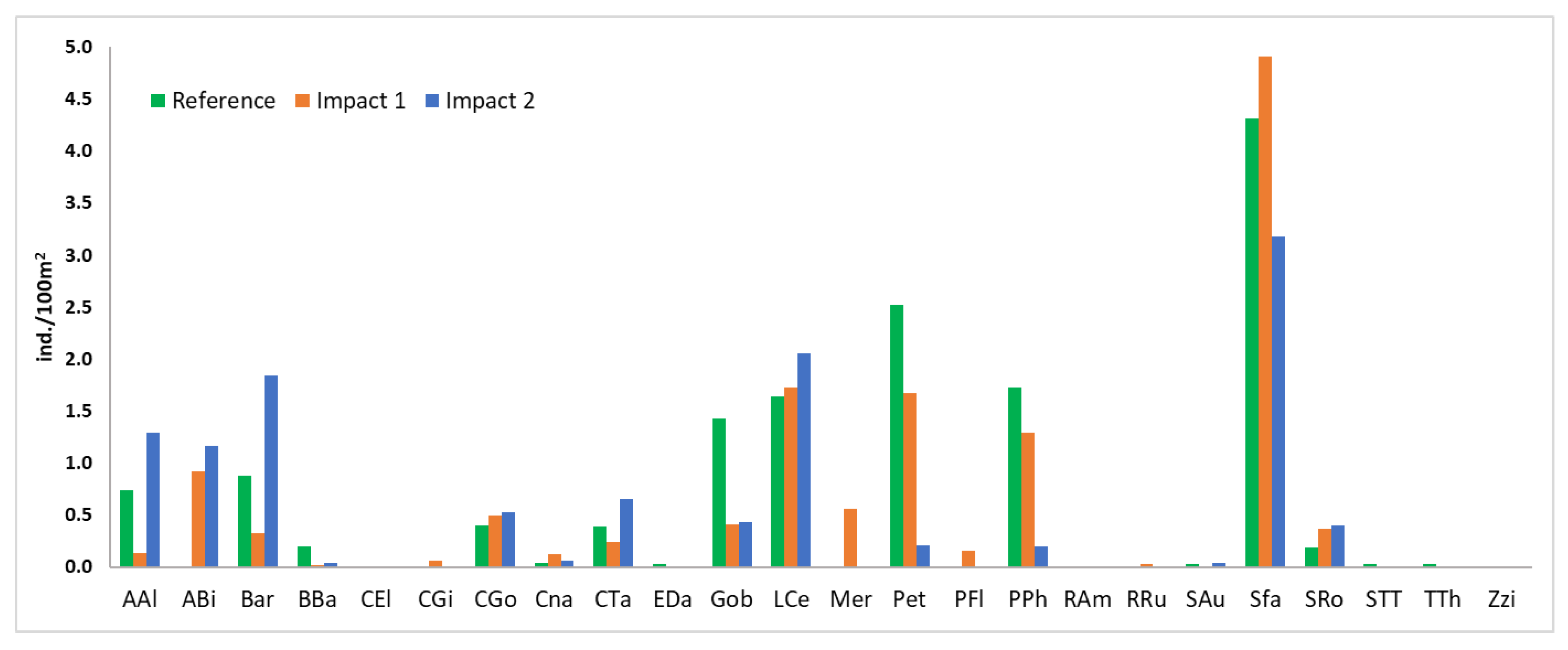
Uncommon or rare species in mountain rivers, like Salmo trutta sea trout form [5] (n = 4) and Eudontomyzon danfordi (n = 3), were exclusively recorded in reference rivers, and species like Cobitis elongata (n = 6), Perca fluviatilis (n = 40), Rutilus rutilus (n = 7) were exclusively recorded in slightly impacted rivers. Additionally, the reference rivers sheltered higher densities of the two characteristic species of mountain rivers, Barbus petenyi and Phoxinus phoxinus, whereas the lowest densities were observed in moderately impacted rivers. Three other species, Thymallus thymallus, Barbatula barbatula and Gobio gobio, also exhibited their highest densities in reference rivers but the lowest in slightly impacted ones. Some species showed peak densities in slightly impacted rivers and the lowest densities recorded either in moderately impacted (e.g., Barbus meridionalis, Salmo trutta fario) or reference rivers (Carassius gibelio, Chondostroma nasus and Zingel zingel). Conversely, some species had their highest densities in moderately impacted rivers and the lowest densities in either reference (Alburnoides bipunctatus, Cottus gobio, Squalius cephalus, Rhodeus amarus, Sabanejewia aurata, Sabanejewia romanica,) or slightly impacted rivers (Alburnus alburnus, Barbus barbus, Cobitis taenia) (Figure 3).
The most abundant fish species recorded were Salmo trutta fario, present in 89 rivers with an average CPUE of 4.13 ind/100 m2, Cottus gobio found in 49 rivers with an average CPUE of 0.48 ind/100 m2, Squalius cephalus found in 42 rivers with a CPUE of 1.81 ind/100 m2, Barbus petenyi occurring in 30 rivers with a CPUE of 1.47 ind/100 m2, Phoxinus phoxinus in 35 rivers with a CPUE of 1.07 ind/100 m2), Barbus barbus in 26 rivers with a CPUE of 1.02 ind/100 m2, Alburnoides bipunctatus in 19 rivers with a CPUE of 0.93 ind/100 m2) and Alburnus alburnus in 14 rivers with a CPUE of 0.72 ind/100 m2).
The dissimilarity analysis (SIMPER) of fish community composition between the two impact categories and the reference sites identified Salmo trutta fario, Squalius cephalus, Barbus petenyi, Phoxinus phoxinus, Barbus barbus and Cottus gobio as the most influential species, each contributing over 5% to the dissimilarity among the three impact classes. Together, these species accounted for over 75.8% of the cumulative contribution to the overall dissimilarity among the three classes of morphological impact (Table 5).
Species richness varied from 1 to 10 taxa, with an average of 3. The highest average values of species richness, Margalef species richness index, Shannon Diversity Index and Pielou index were observed in slightly impacted rivers. Intermediate values were recorded in the reference rivers, while the lowest values occurred in the moderately impacted rivers, except for those of the Pielou evenness index. The highest value of average fish densities was recorded in reference and the lowest in moderately impacted rivers (Table 6). However, the ANOVA results showed that the differences were not statistically significant.
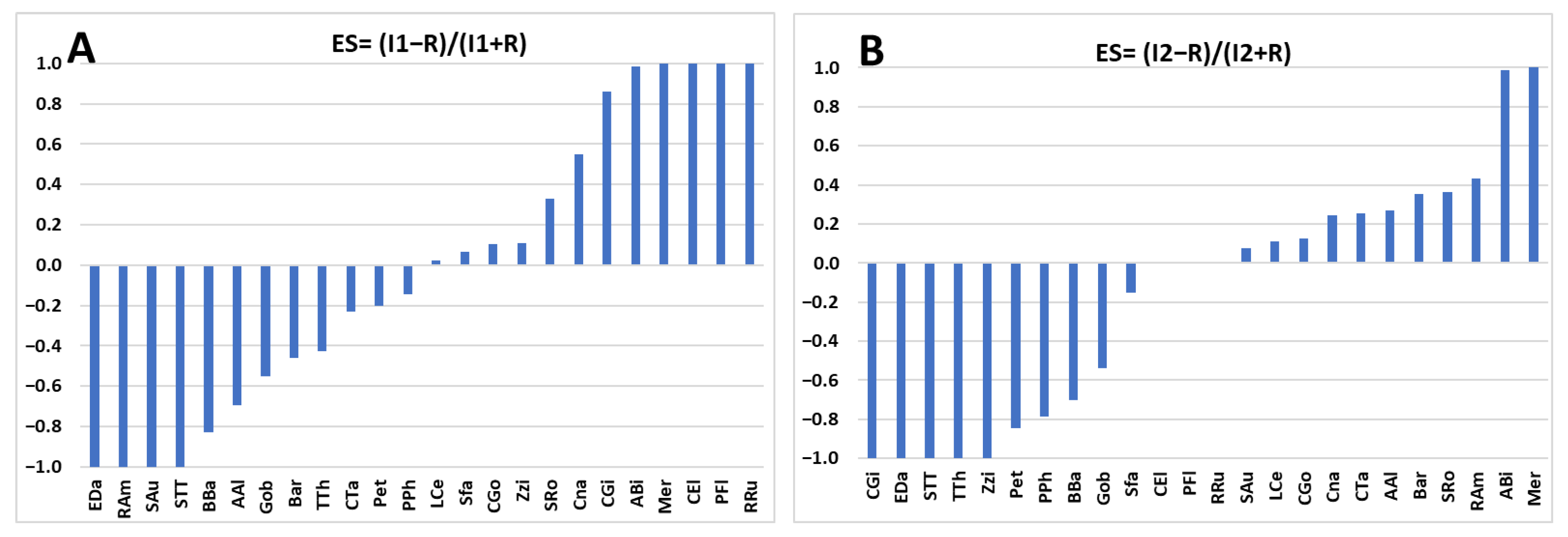
The effect size of species’ densities in slightly (Figure 4A) and moderately impacted sites (Figure 4B), relative to reference sites, revealed contrasting patterns across taxa. Several species, including Salmo trutta sea trout form (ES1: −1, ES2: −1), Barbatula barbatula (ES1: −0.83, ES2: −0.70), Gobio gobio (ES1: −0.55, ES2: −0.54), and the endangered Eudontomyzon danfordi (ES1: −1, ES2: −1), exhibited a highly negative effect size (i.e., lower abundance) even in slightly impacted sites. Other species exhibited smaller negative effect sizes in slightly altered rivers than in moderately altered ones, including endangered Thymallus thymallus (ES1: −0.43, ES2: −1), Barbus petenyi (ES1: −0.20, ES2: −0.84), Zingel zingel (ES1: 0.11, ES2: −1) and Phoxinus phoxinus (ES1: −0.15, ES2: −0.79), indicating a further decline in abundance as the level of impact increased. Some species showed contrasting effect size patterns, with negative values in slightly altered rivers but positive values (i.e., higher abundance) in moderately altered ones, including Alburnus alburnus (ES1: −0.70, ES2: 0.27), Cobitis taenia (ES1: −0.23, ES2: 0.25), Rhodeus amarus (ES1: −1.00, ES2: 0.44), Barbus barbus (ES1: −0.46, ES2: 0.35) and Sabanejewia aurata (ES1: −1.00, ES2: 0.07). In contrast, species like Carassius gibelio (ES1: 0.86, ES2: −1) and Perca fluviatilis (ES1: 1, ES2: 0), Rutilus rutilus (ES1: 1, ES2: 0) and the vulnerable Cobitis elongata (ES1: 1, ES2: 0) exhibited a positive effect size in slightly impacted streams but no effect in moderately impacted ones. Barbus meridionalis (ES1: 1, ES2: 1), Alburnoides bipunctatus (ES1: 0.98, ES2: 0.99), Sabanejewia romanica (ES1: 0.33, ES2: 0.36), Chondrostoma nasus (ES1: 0.55, ES2: 0.25) exhibited positive effects in both slightly and moderately impacted streams.

3.3. Variation in Fish Traits in Relation to River Morphological Alterations

With respect to functional traits, five species are considered tolerant to low oxygen levels or polluted water. Most species (14) are benthic feeders, while 10 predominantly feed in the water column [30,31,32,42,43,44,45]. The majority of species are lithophilic spawners (17 species). Six species spawn in vegetation and one species (Rhodeus amarus) uses a highly specific spawning strategy, depositing eggs in the exhalant siphon of bivalves [30] (Table 4). Fourteen species were classified as predominantly invertivorous, six exhibited relative omnivorous feeding behavior and four were specialists: three planktivorous feeders and one parasitic/scavenger species. Only one long-distance migratory species, Salmo trutta sea trout form, was recorded, represented by just four individuals. The majority of the species are either non-migratory (12 species) or potamodromous (11 species) (Table 4). All piscivorous and long migrant individuals were only recorded in reference sites (Table 4).
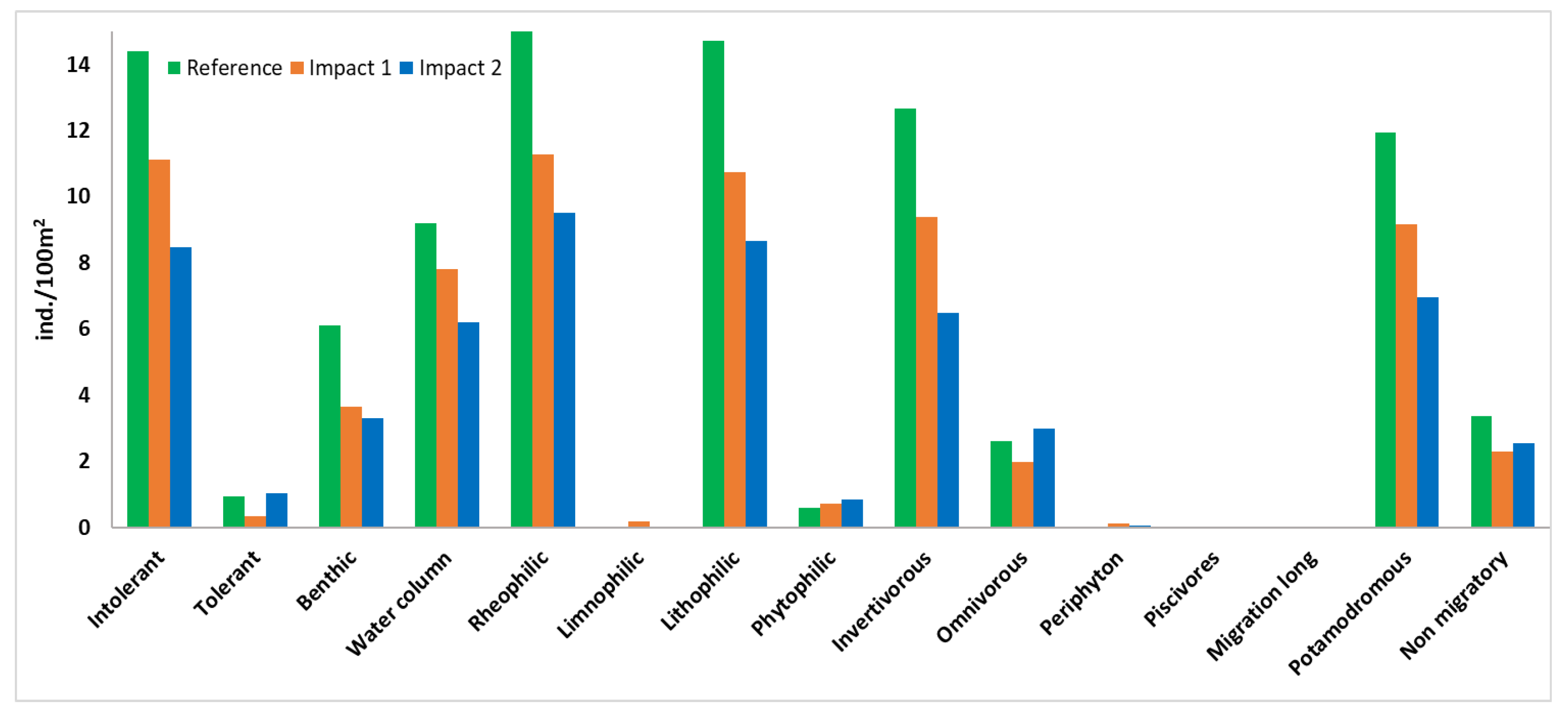
Overall intolerant, benthic and water column feeders, rheophilic, lithophilic spawners, invertivorous and potamodromous species showed decreasing densities with increasing levels of impact; in turn, phytophilic spawners showed increasing densities with increasing levels of impact. Overall tolerant species and omnivorous species exhibited higher densities in moderately impacted than in reference rivers. Feeding specialists, such as periphyton-feeders, showed elevated densities in slightly impacted sites. Conversely, omnivorous species demonstrated highest densities in moderately impacted sites and lower values in reference and slightly impacted sites (Figure 5).

3.4. Effects of Selected Variables on Fish Community Structure

Redundancy analysis (RDA) was conducted separately for large-bodied and small-bodied individuals, as well as for trait-based community structure. Spatial- (PCNM) and catchment-scale (altitude) predictors significantly influenced community structure across sites, regardless of the community metric, whereas river morphology predictors had effects only when taxonomic structure was considered. Moreover, adults were significantly influenced by embankments, while juveniles were affected by both embankments and weirs, although these effects were only marginally significant (Table 7). Because several spatial predictors were strongly correlated with altitude, they were excluded from subsequent analyses.
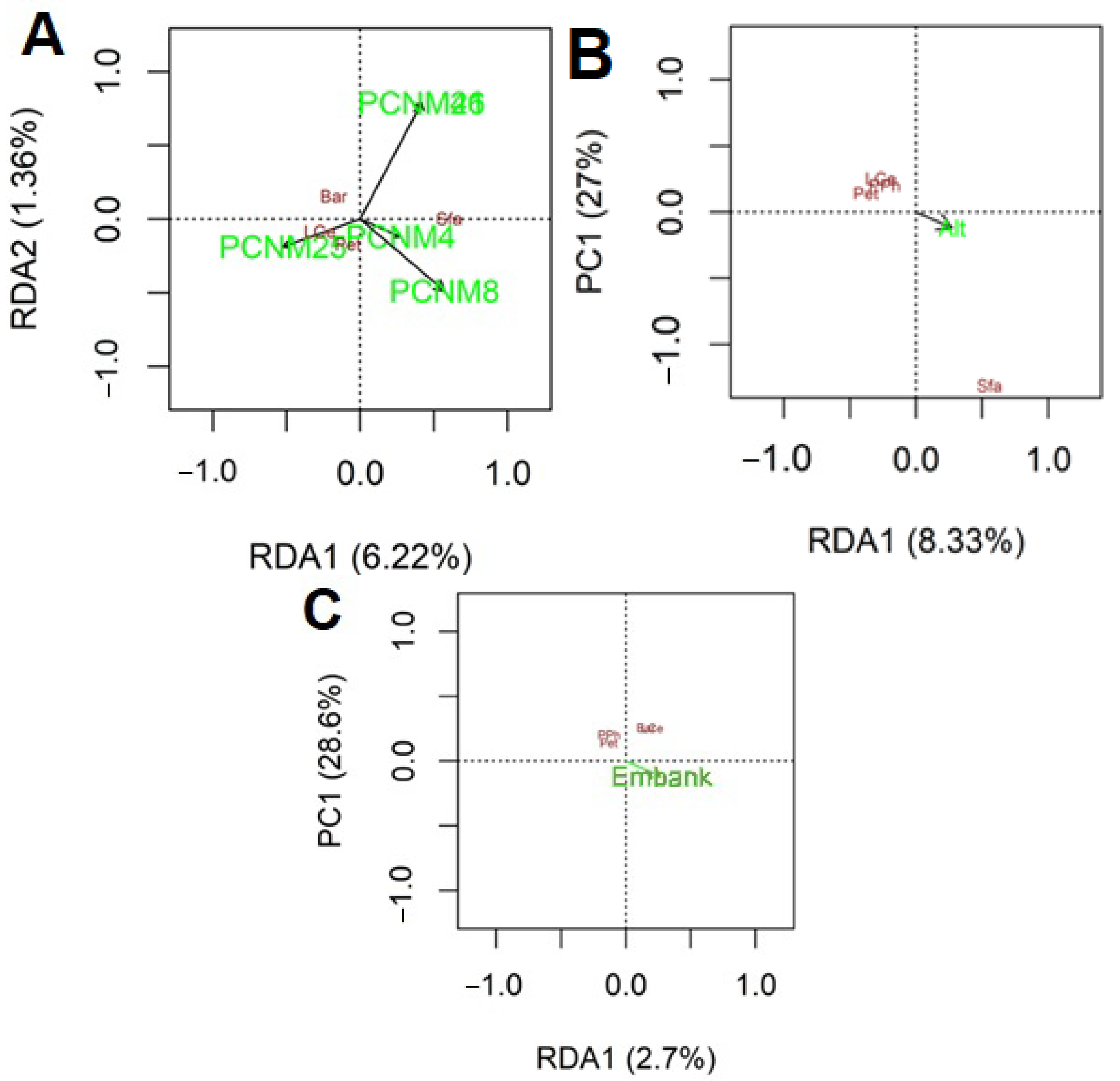
For adult individuals, spatial predictors explained over 7.5% of the variation along the first two RDA axis of the redundancy analysis (Figure 6A). Altitude and embankment accounted for 8.33% and 2.7% of the variation, respectively, along the first RDA axis. Salmo trutta fario, Barbus barbus, Barbus petenyi, and Squalius cephalus showed strong associations with spatial gradients (Figure 6A, Table S4). Negative associations with altitude were observed for Barbus petenyi, Squalius cephalus, and Phoxinus phoxinus (Figure 6B, Table S4). Moreover, Barbus barbus, Squalius cephalus, Barbus petenyi, and Phoxinus phoxinus exhibited notable responses to river morphology alterations (Figure 6C, Table S3).
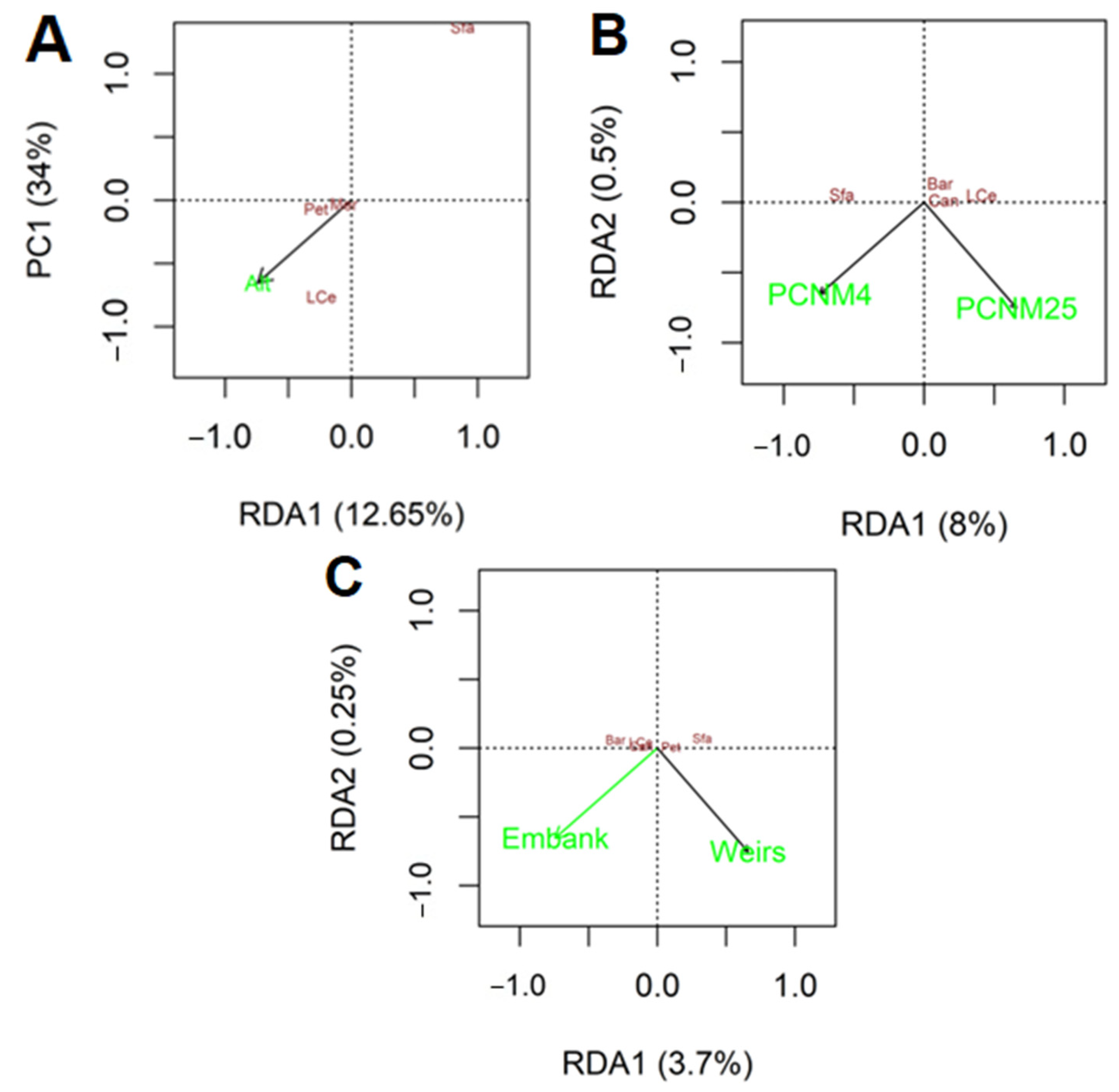
Figure 6. RDA results of the catchment (A), spatial (B) and river morphology (C) predictors on large-sized/adult individuals. Explanatory variables (light green) are represented by arrows. Species with the highest RDA scores are shown in dark brown. Species codes are as in Table 4. For small-bodied individuals, altitude explained 12.65% of the variation, while spatial and river morphology metrics accounted for 8.5% and 3.95%, respectively (RDA1 and RDA2; Figure 7). Altitude primarily influenced Barbus meridionalis, Barbus petenyi, Squalius cephalus (Figure 7A). Spatial gradients were associated with Barbus barbus, Chondrostoma nasus, Squalius cephalus, and Salmo trutta fario (Figure 7B). Barbus barbus, Chondrostoma nasus, Barbus petenyi, and Squalius cephalus showed negative associations with both embankments and weirs, whereas Salmo trutta fario and Barbus petenyi showed positive associations (Figure 7C).
Water 18 00216 g006
Figure 7. RDA results of the catchment (A), spatial (B) and river morphology (C) predictors on juvenile individuals. Explanatory variables (light green) are represented by arrows. Species with the highest RDA scores are shown in dark brown. Species codes are as in Table 4.
Water 18 00216 g007
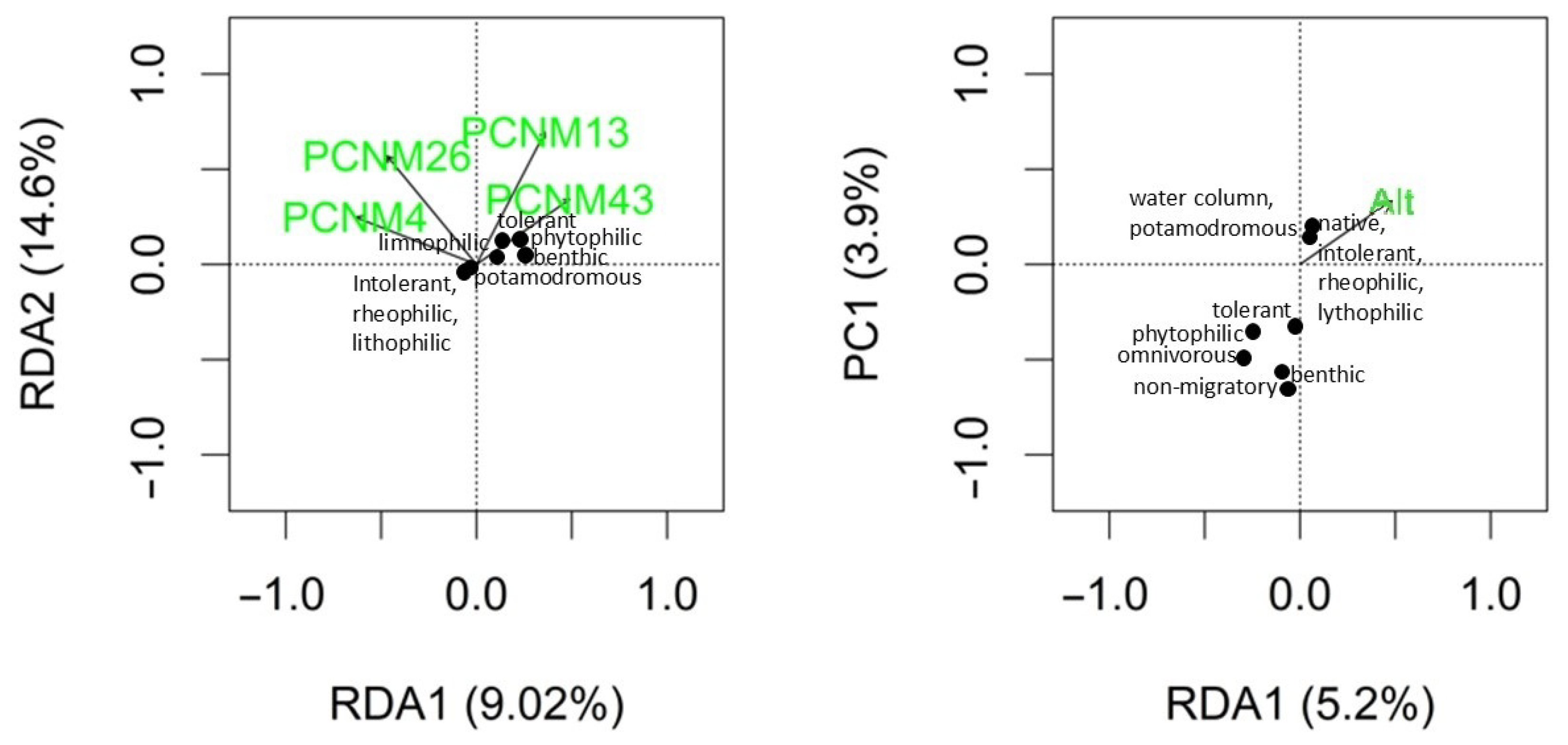
For trait-based community structure, spatial variables accounted for 23.62% of the variation, while catchment-scale variables accounted for 9.1% (Figure 8). Traits such as tolerance, phytophily, and limnophily showed strong positive loadings on the RDA axes, indicating associations with spatial gradients, whereas nativeness, intolerance, rheophily, lithophily, and potamodromy showed negative loadings, reflecting their distribution in distinct parts of the river network (Figure 8 left, Table S4). Catchment variables, particularly altitude, were negatively associated with tolerant, benthic, phytophilic, omnivorous, and non-migratory groups, while they were positively associated with native, intolerant, water-column feeding, rheophilic, lithophilic, and potamodromous traits (Figure 8 right, Table S4).
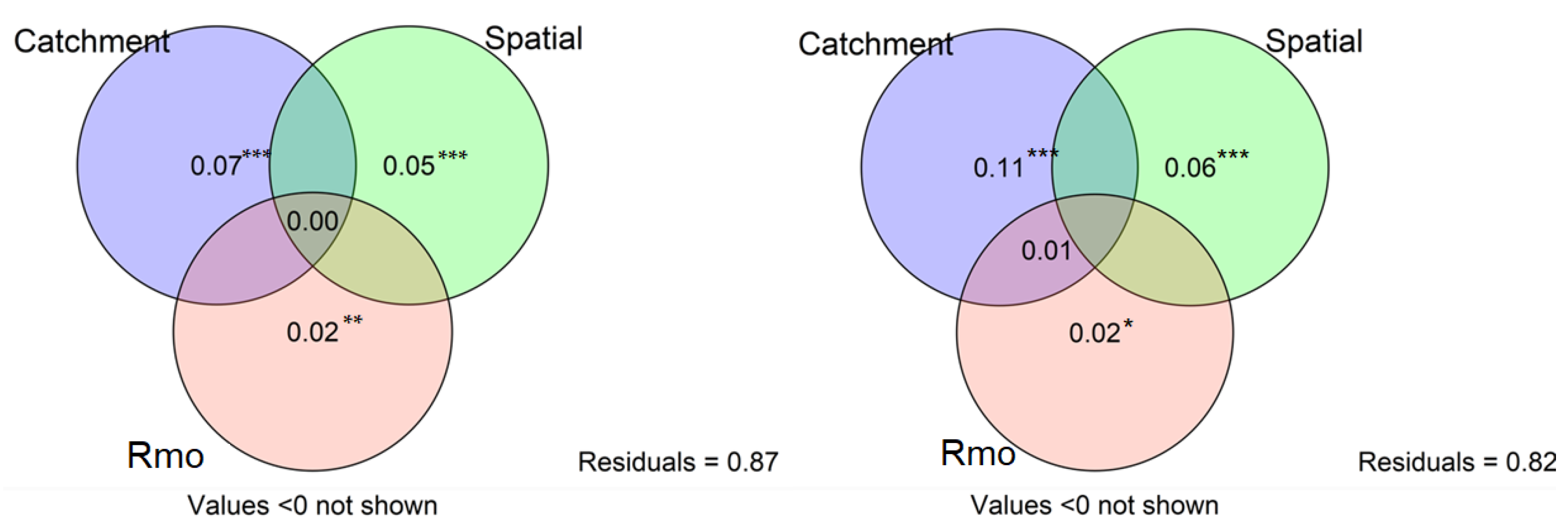
Variation partitioning analysis for large- and small-sized fish produced statistically significant models. Spatial structure accounted for 5% and 6% of the adjusted variance, respectively, while catchment predictors explained 7% and 11%. River morphology contributed a smaller fraction (~2%) but remained statistically significant (Figure 9).
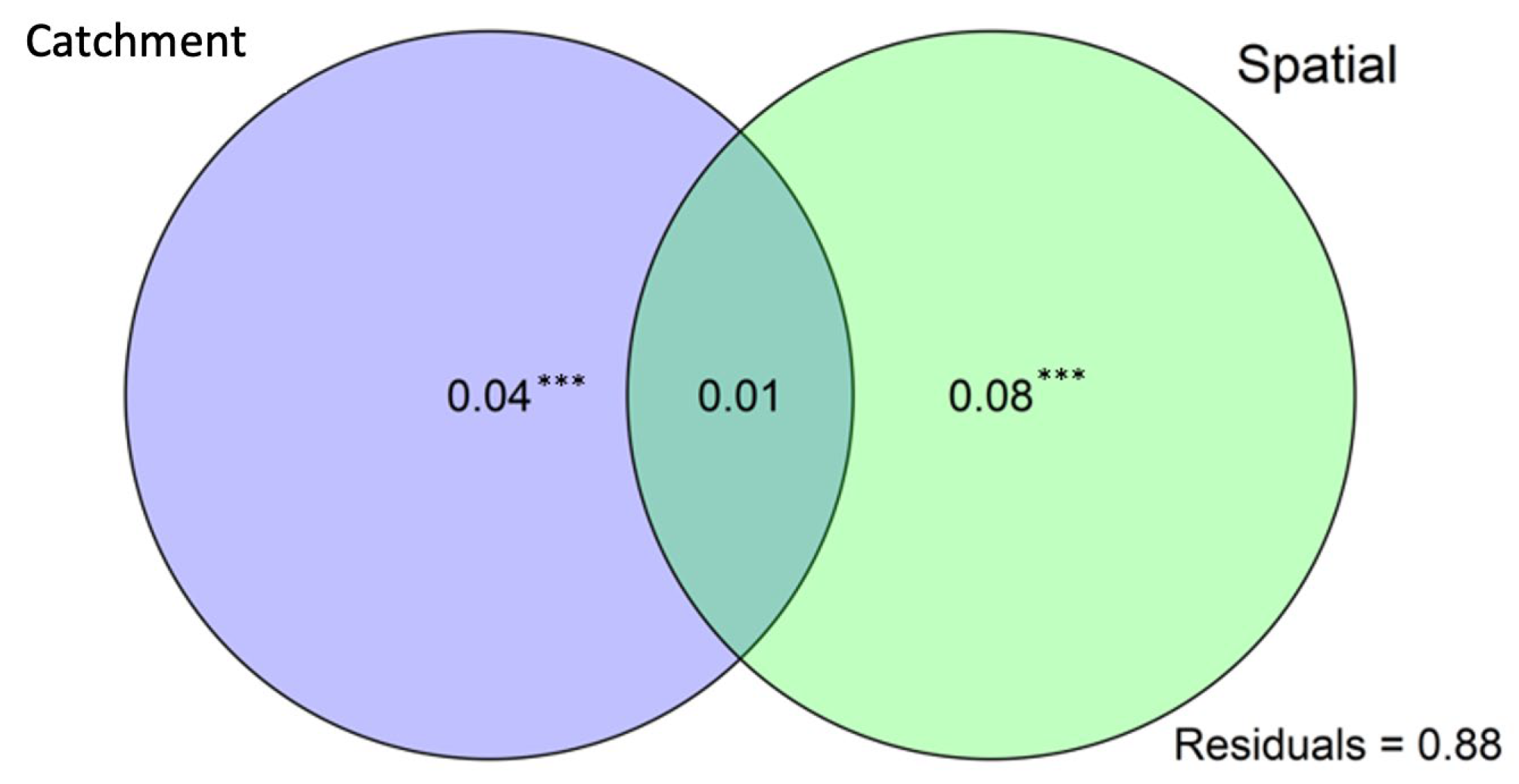
When trait-based community structure was considered, the model also remained significant (F = 6.128, p = 0.001), with catchment and spatial variables explaining 4% and 8% of the variance, respectively (Figure 10).

4. Discussion

This study provides strong evidence that river morphological alterations—such as weirs, channelization, and embankments—exert measurable ecological impacts on fish communities, supporting the hypothesis that such degradation drives ecological shifts [8,9,52,53,54,55,56,57,58,59,60]. While catchment- and spatial-scale predictors (e.g., altitude, latitude, longitude) explained a larger share of the variance in community structure, morphological pressures played a critical role in shaping species composition and functional traits.
Trait analysis reveals an overall decrease in intolerant, benthic and water column feeders, rheophilic, lithophilic spawners, invertivorous and potamodromous species but an overall increase in phytophilic spawners; high density values were also recorded for tolerant and omnivorous species in moderately impacted sites.
Highly specialized taxa (e.g., Eudontomyzon danfordi), and long-distance migratory species (e.g., Salmo trutta sea trout form) showed a strong decline in both slightly and moderately impacted sites. Species dependent on natural flow and substrate conditions, lithophilic spawners and rheophilic species (e.g., Barbus petenyi, Barbatula barbatula, Phoxinus phoxinus, Gobio gobio, Phoxinus phoxinus, Thymallus thymallus, Zingel zingel) declined even in slightly altered habitats, whereas other rheophilic and lithophilic spawners increased in density (e.g., Alburoides bipunctatus, Barbus meridionalis, Chondrostoma nasus, Cottus gobio, Squalius cephalus, Sabanejewia romanica), indicating biotic homogenization. Phytophillic spawners and limnophillic species such as Carassius gibelio and Perca fluviatilis also increased in density.
Conservation efforts for habitats supporting species such as Eudontomyzon danfordi, Barbus meridionalis, Sabanejewia aurata, Cottus gobio, Cobitis elongata, Zingel zingel focus on the designation of Special Areas of Conservation (SACs) and the implementation of management measures aimed at maintaining or restoring a favorable conservation status for these species, whilst species such as Thymallus thymallus are subject to management measures that regulate harvesting from natural habitats. However, for several of these taxa, even low-intensity anthropogenic pressures may lead to disproportionate declines in population size, and increasing levels of impact substantially elevate the risk of population collapse or local extinction.
Species such as Barbus petenyi, Carassius gibelio, Gobio gobio, Phoxinus phoxinus, Alburnoides bipunctatus, Chondrostoma nasus, Squalius cephalus, Perca fluviatilis and Sabanejewia romanica are not subject to any specific conservation measures, although the latter is considered vulnerable at the national level.
Barriers that disrupt longitudinal connectivity restricted access to spawning habitats and contributed to local declines, consistent with earlier reports across Europe [9,60,61]. Species richness and diversity indices peaked in a slightly impacted river (Timiș, RORW5.2_B2), consistent with the works of Wolter [9] and Theis [62], who showed that regulated rivers can support higher richness under intermediate disturbance. Similar patterns were reported in the Iberian Peninsula, where macroinvertebrate richness and diversity declined in highly impacted rivers [62,63,64,65,66]. The highest Margalef Index, recorded in a near-natural reference river (Globul, RORW6.2.12_B1), reflects the absence of major hydromorphological alterations and possibly the larger catchment area.
However, recent research challenges this conventional view; a recent study by Šlapanský [67] found that certain river modifications, when accompanied by suitable habitat features and water quality, can support healthy brown trout populations. This underscores the importance of context in assessing the ecological impacts of river modifications, providing a balanced perspective, acknowledging both the potential negative and positive impacts of river modifications on brown trout populations.
Our RDA analyses confirmed that selected explanatory variables together explained 12–19% of the fish community variance. These findings align with previous studies highlighting the dominant influence of regional-scale factors over local habitat conditions [68]. Nonetheless, our results support earlier work showing that species respond differently to similar morphological constraints [4,69,70,71,72,73,74] and highlight species-specific sensitivities: rheophilic, invertivorous and benthic taxa were most affected, while generalists benefited from habitat simplification. Eudontomyzon danfordi, Salmo trutta sea trout form, Barbatula barbatula, Gobio gobio, Thymallus thymallus, Barbus petenyi and Phoxinus Phoxinus, rheophilic species, were most sensitive to river morphology alterations, whereas Barbus meridionalis, Alburnoides bipunctatus, Chondrostoma nasus, Sabanejewia romanica and Cottus gobio benefited. These findings reinforce evidence that even slight hydromorphological degradation surpasses ecological thresholds, leading to measurable biodiversity losses, particularly among lithophilic and rheophilic guilds. Moreover, our results highlight that the ecological effects of weirs become more evident when considering fish size structure, as juveniles are more vulnerable to the presence of barriers.
Species density patterns further reinforced this trend. Reference rivers supported slightly higher average densities than slightly impacted rivers and markedly higher than moderately impacted ones. Rheophilic taxa (B. petenyi, P. phoxinus, S. trutta fario) reached their lowest densities in moderately altered rivers, whereas tolerant species (A. alburnus, B. barbatula, C. gibelio, P. fluviatilis, R. rutilus) were abundant in slightly or even moderately impacted sites, consistent with shifts observed after damming and channelization [59,75,76,77,78]. Limnophilic species also showed higher densities in slightly impacted rivers than in reference or moderately impacted ones, highlighting how low disturbance may create temporary opportunities for generalist or non-native taxa [59,75,76,77,78,79,80]. Moderately impacted rivers exhibited higher densities of omnivorous species, as noted in other European systems [80].
Overall, slightly impacted rivers exhibited the highest diversity indices, whereas moderate hydromorphological degradation was associated with marked declines in species richness and abundance, indicating that ecological thresholds are exceeded at this level of impact. Functional specialists were disproportionately affected, with substantial reductions observed among rheophilic (27–38%), potamodromous (23–42%), invertivorous (26–49%), benthic (40–46%), and lithophilic taxa (27–41%). In contrast, non-migratory species showed comparatively minor declines (24–32%).
Conversely, increased dominance was recorded for phytophilic spawners (17–41%), limnophilic species (up to 25-fold higher densities in slightly impacted sites), and periphyton feeders (36–194% increase). Omnivorous and tolerant species exhibited non-linear responses, declining in slightly impacted sites (by 25% and 65%, respectively) but increasing under moderate impact (by 14% and 10%). Intolerant species declined consistently across impacted sites, with density reductions ranging from 23 to 41% and reaching up to 65% in the most degraded systems.
Invertivorous taxa were most abundant at reference sites and progressively declined with increasing hydromorphological alteration, reflecting the higher habitat heterogeneity characteristic of near-natural systems [81,82]. Feeding specialists such as planktivores were primarily associated with slightly impacted rivers and streams, where weirs and other transverse structures dampen flash-flood effects and enhance primary production.
Although spatial- and catchment-scale factors account for the largest share of the explained variance in fish community structure within the study area, even subtle hydromorphological alterations can induce functional simplification and directional shifts toward disturbance-tolerant assemblages. This underscores their crucial ecological role despite contributing a smaller proportion of the total variance. Altitudinal gradients, in particular, influence species composition through correlated changes in flow, temperature, and habitat complexity [83,84].
Overall, hydromorphological variables remain essential as they capture key habitat mechanisms driving species responses. Other pressures, such as fishing in the lower reaches of the study area, which affect different species in different ways, could also be the subject of further research if quantitative data are available.
This study demonstrates that river morphological alterations induce measurable and functionally relevant changes in fish community structure, even at low to moderate levels of impact. The pronounced sensitivity of juvenile individuals highlights the size-dependent nature of morphological pressures and suggests that early life stages may act as sentinels of habitat degradation. Functional trait responses showed clear contrasts among ecological groups. Phytophilic spawners benefited from simplified habitats and altered hydrological conditions, making them the “winners” of morphological changes. In contrast, rheophilic, lithophilic, potamodromous, invertivorous, and benthic specialists consistently declined, representing the “losers.” These responses are closely linked to channelization, impaired longitudinal connectivity, and the loss of habitat heterogeneity.
Importantly, trait-based patterns captured ecological shifts that are likely to remain undetected by taxonomic metrics alone. While species richness may appear stable or even temporarily elevated at low impact levels, functional reorganization indicates a progressive simplification of ecosystem functioning. The transient increase in generalist species observed in slightly impacted rivers illustrates how early-stage hydromorphological modifications can mask underlying degradation processes and potentially accelerate long-term biotic homogenization.
The strong negative responses of threatened and vulnerable species to even minor habitat alterations further emphasize the ecological costs of morphological modification. Disrupted connectivity, altered flow regimes, and reduced availability of spawning and refuge habitats appear to be key mechanisms driving these declines. Collectively, these findings underline the importance of incorporating functional indicators into river assessment frameworks to better detect early degradation and to anticipate long-term ecological consequences.
Our results highlight the need for integrated river management strategies that move beyond local-scale restoration actions. Although reach-scale hydromorphological improvements remain essential, their long-term effectiveness depends on basin-wide approaches that preserve longitudinal connectivity, maintain natural altitudinal gradients, and account for dispersal processes. Coordinated planning and systematic monitoring of transversal structures are therefore critical to limit cumulative impacts across catchments. Adopting a multi-scale management framework is essential for safeguarding both taxonomic and functional diversity in morphologically altered river systems. Without such integrated efforts, continued habitat simplification is likely to promote irreversible ecological homogenization and further compromise the persistence of sensitive and threatened fish species.

Supplementary Materials

The following supporting information can be downloaded at: https://www.mdpi.com/article/10.3390/w18020216/s1, Table S1: Distribution of individuals and species for each of the analyzed rivers; Table S2: Morphological conditions of each of the analyzed rivers; Table S3: RDA results of adult and juvenile individuals carried out over the catchment, spatial and morphological predictors; Table S4: RDA results over the catchment and spatial predictors.

Author Contributions

Conceptualization, G.R. and S.-V.S.; methodology, G.R. and S.-V.S.; software, S.-V.S. and G.R.; validation, G.R.; formal analysis, S.-V.S. and G.R.; investigation, S.-V.S.; resources, S.-V.S. and G.R.; data curation, S.-V.S. and G.R.; writing—original draft preparation, S.-V.S. and G.R.; writing—review and editing, G.R.; visualization, S.-V.S. and G.R.; supervision, G.R.; project administration, S.-V.S.; funding acquisition, S.-V.S. All authors have read and agreed to the published version of the manuscript.

Funding

This research was funded by the University of Bucharest through a doctoral grant awarded to Stelian-Valentin Stănescu.

Data Availability Statement

The original contributions presented in this study are included in this article/Supplementary Materials. Further inquiries can be directed to the corresponding author.

Acknowledgments

The authors appreciate the National Administration “Romanian Waters” and the Ministry of Waters and Forests for providing raw data resulted from monitoring of Romanian water bodies.

Conflicts of Interest

The authors declare no conflicts of interest.

References

  1. Schinegger, R.; Palt, M.; Segurado, P.; Schmutz, S. Untangling the effects of multiple human stressors and their impacts on fish assemblages in European running waters. Sci. Total Environ. 2016, 573, 1079–1088. [Google Scholar] [CrossRef] [PubMed]
  2. Tickner, D.; Opperman, J.J.; Abell, R.; Acreman, M.; Arthington, A.H.; Bunn, S.E.; Cooke, S.J.; Dalton, J.; Darwall, W.; Edwards, G.; et al. Bending the Curve of Global Freshwater Biodiversity Loss: An Emergency Recovery Plan. Bioscience 2020, 70, 330–342. [Google Scholar] [CrossRef]
  3. Bower, L.M.; Marion, C.A.; Scott, M.; Kubach, K.; Gelder, A. Fish assemblage and functional trait responses to small-dam removal. Freshw. Biol. 2024, 69, 1043–1056. [Google Scholar] [CrossRef]
  4. Belletti, B.; Garcia de Leaniz, C.; Jones, J.; Bizzi, S.; Börger, L.; Segura, G.; Castelletti, A.; van de Bund, W.; Aarestrup, K.; Barry, J.; et al. More than one million barriers fragment Europe’s rivers. Nature 2020, 588, 436–441. [Google Scholar] [CrossRef]
  5. Freyhof, J.; Brooks, E. European Red List of Freshwater Fishes; European Union: Brussels, Belgium, 2011. [Google Scholar] [CrossRef]
  6. European Commission. Council Directive 92/43/ECC. Off. J. Eur. Union 1992, 94, 40–52. [Google Scholar]
  7. European Union. DIRECTIVE 2000/60/EC of The European Parliament and of the Councilof 23 October 2000 establishing a framework for Community action in the field of water policy. Off. J. Eur. Communities 2000, 327, 1–73. [Google Scholar]
  8. Hladík, M.; Kubečka, J.; Mrkvička, T.; Čech, M.; Draštík, V.; Frouzová, J.; Hohausová, E.; Matěna, J.; Matěnová, V.; Kratochvíl, M.; et al. Effects of the construction of a reservoir on the fish assemblage in an inflow river. Czech J. Anim. Sci. 2008, 53, 537–547. [Google Scholar] [CrossRef]
  9. Wolter, C.; Vilcinskas, A. Characterization of the typical fish community of inland waterways of the north-eastern lowlands in Germany. Regul. Rivers Res. Manag. 1997, 13, 335–343. [Google Scholar] [CrossRef]
  10. Olaya-Marín, E.J.; Martínez-Capel, F.; Soares Costa, R.M.; Alcaraz-Hernández, J.D. Modelling native fish richness to evaluate the effects of hydromorphological changes and river restoration (Júcar River Basin, Spain). Sci. Total Environ. 2012, 440, 95–105. [Google Scholar] [CrossRef] [PubMed]
  11. Milan, P.; Vlastimil, B.; Miroslav, P.; Homolka, M. Movements of barbel, Barbus barbus (Pisces: Cyprinidae). Folia Zool. 2002, 51, 55–66. [Google Scholar]
  12. Faucheux, N.M.; Miranda, L.E.; Taylor, J.M.; Farris, J. Impact of Dams on Stream Fish Diversity: A Different Result. Diversity 2023, 15, 728. [Google Scholar] [CrossRef]
  13. Zhao, M.; Cao, G.; Cao, S.; Zhao, Q.; Han, G.; Yan, X. Quantifying impact of climatic and anthropogenic factors on runoff in the source region of Alpine River in northeast Qinghai-Tibetan Plateau. J. Hydrol. Reg. Stud. 2023, 47, 101423. [Google Scholar] [CrossRef]
  14. Garack, S.; Ortlepp, R. Using hydro-morphological assessment parameters to estimate the flood-induced vulnerability of watercourses—A methodological approach across three spatial scales in Germany and the Czech Republic. River Res. Appl. 2022, 39, 1399–1424. [Google Scholar] [CrossRef]
  15. Sargac, J.; Johnson, R.K.; Burdon, F.J.; Truchy, A.; Rîşnoveanu, G.; Goethals, P.; McKie, B.G. Forested riparian buffers change the taxonomic and functional composition of stream invertebrate communities in agricultural catchments. Water 2021, 13, 1028. [Google Scholar] [CrossRef]
  16. Larsen, N.E.; Simkins, R.M.; Wesner, J.S.; Tuckfield, R.C.; Belk, M.C. Species-Specific Abundance Response of Montane Stream Fishes to Drought-Induced Variation in Streamflow. Water 2022, 14, 2467. [Google Scholar] [CrossRef]
  17. Cheng, Y.; Nijssen, B.; Holtgrieve, G.W.; Olden, J.D. Modeling the freshwater ecological response to changes in flow and thermal regimes influenced by reservoir dynamics. J. Hydrol. 2022, 608, 127591. [Google Scholar] [CrossRef]
  18. Schmutz, S.; Jurajda, P.; Kaufmann, S.; Lorenz, A.W.; Muhar, S.; Paillex, A.; Poppe, M.; Wolter, C. Response of fish assemblages to hydromorphological restoration in central and northern European rivers. Hydrobiologia 2016, 769, 67–78. [Google Scholar] [CrossRef]
  19. CORINE Land Cover 2018 (Raster 100 m). Available online: https://doi.org/10.2909/960998c1-1870-4e82-8051-6485205ebbac (accessed on 1 November 2020).
  20. Administrația Națională “Apele Române”. Planul de Management Actualizat (2021) al Bazinului Hidrografic Mures; Administrația Națională “Apele Române”: Bucharest, Romania, 2021. [Google Scholar]
  21. Administrația Națională “Apele Române”. Planul de Management Actualizat (2021) al Spatiului Hidrografic Banat; Administrația Națională “Apele Române”: Bucharest, Romania, 2021. [Google Scholar]
  22. Administraţia Naţională “Apele Române”. Planul de Management Actualizat (2021) al Bazinului Hidrografic Jiu; Administrația Națională “Apele Române”: Bucharest, Romania, 2021. [Google Scholar]
  23. Administrația Națională “Apele Române”. Apele Planul de Management Actualizat (2021) al Bazinului Hidrografic Olt; Administrația Națională “Apele Române”: Bucharest, Romania, 2011; pp. 1–7. [Google Scholar]
  24. Administrația Națională “Apele Române”. Apele Planul de Management Actualizat (2021) al Spaţiului Hidrografic Argeș-Vedea; Administrația Națională “Apele Române”: Bucharest, Romania, 2021. [Google Scholar]
  25. El Hourani, M.; Härtling, J.; Broll, G. Hydromorphological Assessment as a Tool for River Basin Management: Problems with the German Field Survey Method at the Transition of Two Ecoregions. Hydrology 2022, 9, 120. [Google Scholar] [CrossRef]
  26. Administrația Națională “Apele Române”. Planul Național de Management Actualizat Aferent Porțiunii din Bazinul Hidrografic Internațional al Fluviului Dunărea Care Este Cuprinsă în Teritoriul României; DCA 2000-60-CE; Administrația Națională “Apele Române”: Bucharest, Romania, 2021; pp. 53–85. [Google Scholar]
  27. Pont, D.; Rogers, C. Development of a fish-based index for the assessment of river health in Europe: The European Fish Index. Fish. Manag. Ecol. 2007, 14, 427–439. [Google Scholar] [CrossRef]
  28. SR EN 14011:2003; Calitatea apei. Prelevarea peștilor cu ajutorul electricității. ASRO: București, Romania, 2003.
  29. Muzeul Național de Istorie Naturală “Grigore Antipa”. Cartea Rosie a Vertebratelor Din Romania; Botnariuc, N., Tatole, V., Eds.; Muzeul Național de Istorie Naturală “Grigore Antipa”: București, Romania, 2005. [Google Scholar]
  30. Kottelat, M.; Freyhof, J. Handbook of European Freshwater Fishes; Kottelat: Cormol, Switzerland; Freyhof: Berlin, Germany, 2007; ISBN 978-2-8399-0298-4. [Google Scholar]
  31. Banarescu, P. Fauna Republicii Populare Romine; Editura Academiei Republicii Populare Romîne: București, Romania, 1964. [Google Scholar]
  32. FAME Consortium. Manual for the Application of the European Fish Index—EFI: A Fish-Based Method to Assess the Ecological Status of European Rivers in Support of the Water Framework Directive. 2005. Available online: https://pureportal.inbo.be/en/publications/manual-for-application-of-the-european-fish-index-efi-a-fish-base/ (accessed on 9 January 2026).
  33. Pander, J.; Geist, J. Can fish habitat restoration for rheophilic species in highly modified rivers be sustainable in the long run? Ecol. Eng. 2016, 88, 28–38. [Google Scholar] [CrossRef]
  34. Penczak, T.; Głowacki, Ł.; Galicka, W.; Koszaliński, H. A long-term study (1985–1995) of fish populations in the impounded Warta River, Poland. Hydrobiologia 1998, 368, 157–173. [Google Scholar] [CrossRef]
  35. Musil, J.; Horký, P.; Slavík, O.; Zbořil, A.; Horká, P. The response of the young of the year fish to river obstacles: Functional and numerical linkages between dams, weirs, fish habitat guilds and biotic integrity across large spatial scale. Ecol. Indic. 2012, 23, 634–640. [Google Scholar] [CrossRef]
  36. Gozlan, R.E.; Mastrorillo, S.; Copp, G.H.; Lek, S. Predicting the structure and diversity of young-of-the-year fish assemblages in large rivers. Freshw. Biol. 1999, 41, 809–820. [Google Scholar] [CrossRef]
  37. Riera, R.; Tuset, V.M.; Rodríguez, M.; Monterroso, Ó.; Lombarte, A. Analyzing functional diversity to determine the effects of fish cages in insular coastal wild fish assemblages. Aquaculture 2017, 479, 384–395. [Google Scholar] [CrossRef]
  38. Legendre, P.; Legendre, L. Numerical Ecology, 3rd ed.; Elsevier Science B.V.: Amsterdam, The Netherlands, 2003; ISBN 978-0444538680. Available online: https://files.cercomp.ufg.br/weby/up/417/o/Numerical_Ecology.pdf?1458165083=&utm_source=chatgpt.com (accessed on 9 January 2026).
  39. Spellerberg, I.F. Ecological Indicators-Shannon–Wiener Index. In Encyclopedia of Ecology; Academic Press: New York, NY, USA, 2008; pp. 3249–3252. Available online: http://www.sciencedirect.com/science/article/pii/B9780080454054001324 (accessed on 9 January 2026).
  40. Zajicek, P.; Wolter, C. The gain of additional sampling methods for the fish-based assessment of large rivers. Fish. Res. 2018, 197, 15–24. [Google Scholar] [CrossRef]
  41. Zare-Shahraki, M.; Ebrahimi-Dorche, E.; Bruder, A.; Flotemersch, J.; Blocksom, K.; Bănăduc, D. Fish Species Composition, Distribution and Community Structure in Relation to Environmental Variation in a Semi-Arid Mountainous River Basin, Iran. Water 2022, 14, 2226. [Google Scholar] [CrossRef] [PubMed]
  42. Legendre, P. Numerical Ecology. Encycl. Ecol. (Second Ed.) 2019, 3, 487–493. [Google Scholar] [CrossRef]
  43. Balon, E.K. Epigenesis of An Epigeneticist: The Development of Some Alternative Concepts on the Early Ontogeny and Evo-Lution of Fishes; Institute of Ichtyology, University of Guelph: Guelph, ON, Canada, 1990; ISSN 1181-8549. [Google Scholar]
  44. Noble, R.A.A.; Cowx, I.G.; Goffaux, D.; Kestemont, P. Assessing the health of European rivers using functional ecological guilds of fish communities: Standardising species classification and approaches to metric selection. Fish. Manag. Ecol. 2007, 14, 381–392. [Google Scholar] [CrossRef]
  45. O’Hare, M.T.; Gunn, I.D.M.; McDonald, C.; Hutchins, M.; Cisowska, I.; Baattrup-Pedersen, A.; Göthe, E.; Riis, T.; Larsen, S.E.; Lorenz, A.; et al. REstoring rivers FOR effective catchment Management. In Inventory of River Restoration Measures: Effects, Costs and Benefits; EU Seventh Framework Programme: Brussels, Belgium, 2015; pp. 1–109. [Google Scholar]
  46. Popescu, C.; Oprina-Pavelescu, M.; Dinu, V.; Cazacu, C.; Burdon, F.J.; Forio, M.A.E.; Kupilas, B.; Friberg, N.; Goethals, P.; McKie, B.G.; et al. Article riparian vegetation structure influences terrestrial invertebrate communities in an agricultural landscape. Water 2021, 13, 188. [Google Scholar] [CrossRef]
  47. Sáinz-Bariáin, M.; Polo, J.; Punzón, A.; Hidalgo, M.; García-Rodríguez, E.; Vivas, M.; Esteban, A.; López-López, L. Sensitivity of communities’ trait-based indices to species selection. Mar. Pollut. Bull. 2025, 213, 117620. [Google Scholar] [CrossRef]
  48. Chardon, V.; Schmitt, L.; Piégay, H.; Beisel, J.N.; Staentzel, C.; Barillier, A.; Clutier, A. Effects of transverse groynes on meso-habitat suitability for native fish species on a regulated by-passed large river: A case study along the Rhine River. Water 2020, 12, 987. [Google Scholar] [CrossRef]
  49. CLARKE, K.R. Non-parametric multivariate analyses of changes in community structure. Aust. J. Ecol. 1993, 18, 117–143. [Google Scholar] [CrossRef]
  50. Jo, H.; Jeppesen, E.; Ventura, M.; Buchaca, T.; Gim, J.-S.; Yoon, J.-D.; Kim, D.-H.; Joo, G.-J. Science of the Total Environment Responses of fi sh assemblage structure to large-scale weir construction in riverine ecosystems. Sci. Total Environ. 2019, 657, 1334–1342. [Google Scholar] [CrossRef]
  51. Ter Braak, C.J.F. Canonical community ordination. Part I: Basic theory and linear methods. Ecoscience 1994, 1, 127–140. [Google Scholar] [CrossRef]
  52. Oksanen, J.; Simpson, G.L.; Blanchet, F.G.; Kindt, R.; Legendre, P.; Minchin, P.R.; O’Hara, R.B.; Solymos, P.; Stevens, M.H.H.; Szoecs, E.; et al. Package ‘vegan’. In Community Ecology Package; The Comprehensive R Archive Network: Vienna, Austria, 2022. [Google Scholar]
  53. Manfrin, A.; Bunzel-Drüke, M.; Lorenz, A.W.; Maire, A.; Scharf, M.; Zimball, O.; Stoll, S. The effect of lateral connectedness on the taxonomic and functional structure of fish communities in a lowland river floodplain. Sci. Total Environ. 2020, 719, 137169. [Google Scholar] [CrossRef]
  54. Wyzga, B.; Amirowicz, A.; Radecki-Pawlik, A.; Zawiejska, J. Hydromorphological conditions, potential fish habitats and the fish community in a mountain river subjected to variable human impacts, the Czarny Dunajec, polish Carpathians. River Res. Appl. 2009, 25, 517–536. [Google Scholar] [CrossRef]
  55. Mueller, M.; Pander, J.; Geist, J. Comprehensive analysis of >30 years of data on stream fish population trends and conservation status in Bavaria, Germany. Biol. Conserv. 2018, 226, 311–320. [Google Scholar] [CrossRef]
  56. Benejam, L.; Saura-Mas, S.; Bardina, M.; Solà, C.; Munné, A.; García-Berthou, E. Ecological impacts of small hydropower plants on headwater stream fish: From individual to community effects. Ecol. Freshw. Fish 2016, 25, 295–306. [Google Scholar] [CrossRef]
  57. Dolédec, S.; Castella, E.; Forcellini, M.; Olivier, J.M.; Paillex, A.; Sagnes, P. The generality of changes in the trait composition of fish and invertebrate communities after flow restoration in a large river (French Rhône). Freshw. Biol. 2015, 60, 1147–1161. [Google Scholar] [CrossRef]
  58. Franchi, E.; Carosi, A.; Ghetti, L.; Giannetto, D.; Pedicillo, G.; Pompei, L.; Lorenzoni, M. Changes in the fish community of the upper Tiber River after construction of a hydro-dam. J. Limnol. 2014, 73, 203–210. [Google Scholar] [CrossRef]
  59. Alexandre, C.M.; Ferreira, T.F.; Almeida, P.R. Fish assemblages in non-regulated and regulated rivers from permanent and temporary iberian systems. River Res. Appl. 2013, 29, 1042–1058. [Google Scholar] [CrossRef]
  60. Miranda, R.; Oscoz, J.; Leunda, P.M.; García-Fresca, C.; Escala, M.C. Effects of weir construction on fish population structure in the River Erro (North of Spain). Ann. Limnol. 2005, 41, 7–13. [Google Scholar] [CrossRef]
  61. Radinger, J.; Essl, F.; Hölker, F.; Horký, P.; Slavík, O.; Wolter, C. The future distribution of river fish: The complex interplay of climate and land use changes, species dispersal and movement barriers. Glob. Change Biol. 2017, 23, 4970–4986. [Google Scholar] [CrossRef] [PubMed]
  62. Theis, S.; Chin, A.T.M.; Wallace, A.; Cartwright, L.A.; Fortin, M.J.; Poesch, M.S.; Ruppert, J.L.W. Complexity and spatial structuring of fish communities across urbanized watersheds and waterfronts. Urban Ecosyst. 2025, 28, 55. [Google Scholar] [CrossRef]
  63. Ladrera, R.; Prat, N. Changes in macroinvertebrate community and biotic indices associated with streamflow regulation and wastewater inputs in Sierra Cebollera Natural Park (La Rioja, Northern Spain). Limnetica 2013, 32, 353–372. [Google Scholar] [CrossRef]
  64. Quevedo, L.; Ibáñez, C.; Caiola, N.; Cid, N.; Hampel, H. Impact of a reservoir system on benthic macroinvertebrate and diatom communities of a large Mediterranean river (Lower Ebro river, Catalonia, Spain). Limnetica 2018, 37, 209–228. [Google Scholar] [CrossRef]
  65. Mellado-Díaz, A.; Sánchez-González, J.R.; Guareschi, S.; Magdaleno, F.; Toro Velasco, M. Exploring longitudinal trends and recovery gradients in macroinvertebrate communities and biomonitoring tools along regulated rivers. Sci. Total Environ. 2019, 695, 133774. [Google Scholar] [CrossRef]
  66. Pompeu, C.R.; Peñas, F.J.; Goldenberg-Vilar, A.; Álvarez-Cabria, M.; Barquín, J. Assessing the effects of irrigation and hydropower dams on river communities using taxonomic and multiple trait-based approaches. Ecol. Indic. 2022, 145, 109662. [Google Scholar] [CrossRef]
  67. Rocha Pompeu, C.; Peñas, F.J.; Barquín, J. Effects of irrigation dams on riverine biota in mountain streams. Front. Environ. Sci. 2024, 12, 1332268. [Google Scholar] [CrossRef]
  68. Šlapanský, L.; Janáč, M.; Jurajda, P.; Roche, K.; Hnilička, M. River modifications and brown trout: It’s not all bad news. Ecohydrol. Hydrobiol. 2025, 25, 100701. [Google Scholar] [CrossRef]
  69. Blanchet, S.; Helmus, M.R.; Brosse, S.; Grenouillet, G. Regional vs local drivers of phylogenetic and species diversity in stream fish communities. Freshw. Biol. 2014, 59, 450–462. [Google Scholar] [CrossRef]
  70. Fjeldstad, H.P.; Pulg, U.; Forseth, T. Safe two-way migration for salmonids and eel past hydropower structures in Europe: A review and recommendations for best-practice solutions. Mar. Freshw. Res. 2018, 69, 1834–1847. [Google Scholar] [CrossRef]
  71. Roscoe, D.W.; Hinch, S.G. Effectiveness monitoring of fish passage facilities: Historical trends, geographic patterns and future directions. Fish Fish. 2010, 11, 12–33. [Google Scholar] [CrossRef]
  72. Rincón, G.; Solana-Gutiérrez, J.; Alonso, C.; Saura, S.; García de Jalón, D. Longitudinal connectivity loss in a riverine network: Accounting for the likelihood of upstream and downstream movement across dams. Aquat. Sci. 2017, 79, 573–585. [Google Scholar] [CrossRef]
  73. Knaepkens, G.; Baekelandt, K.; Eens, M. Fish pass effectiveness for bullhead (Cottus gobio), perch (Perca fluviatilis) and roach (Rutilus rutilus) in a regulated lowland river. Ecol. Freshw. Fish 2006, 15, 20–29. [Google Scholar] [CrossRef]
  74. Silva, A.T.; Lucas, M.C.; Castro-Santos, T.; Katopodis, C.; Baumgartner, L.J.; Thiem, J.D.; Aarestrup, K.; Pompeu, P.S.; O’Brien, G.C.; Braun, D.C.; et al. The future of fish passage science, engineering, and practice. Fish Fish. 2018, 19, 340–362. [Google Scholar] [CrossRef]
  75. Alcaraz-Hernández, J.D.; Radinger, J.; Luque, Y.; García-Berthou, E. Response of a pan-European fish index (EFI+) to multiple pressures in rivers across Spain. J. Environ. Manag. 2024, 352, 120043. [Google Scholar]
  76. Černý, J.; Copp, G.H.; Kováč, V.; Gozlan, R.; Vilizzi, L. Initial impact of the Gabčíkovo hydroelectric scheme on the species richness and composition of 0+ fish assemblages in the Slovak flood plain, River Danube. River Res. Appl. 2003, 19, 749–766. [Google Scholar] [CrossRef]
  77. Lamouroux, N.; Olivier, J.M.; Capra, H.; Zylberblat, M.; Chandesris, A.; Roger, P. Fish community changes after minimum flow increase: Testing quantitative predictions in the Rhône River at Pierre-Bénite, France. Freshw. Biol. 2006, 51, 1730–1743. [Google Scholar] [CrossRef]
  78. Grzybkowska, M.; Dukowska, M.; Penczak, T. Effects of Damming a Large Lowland River on Chironomids and Fish Assessed with the (Multiplicative Partitioning of) True/Hill Biodiversity Measure. River Res. Appl. 2011, 27, 612–629. [Google Scholar] [CrossRef]
  79. Boët, P.; Belliard, J.; Berrebi-dit-Thomas, R.; Tales, E. Multiple human impacts by the City of Paris on fish communities in the Seine river basin, France. Hydrobiologia 1999, 410, 59–68. [Google Scholar] [CrossRef]
  80. Gavriloaie, I.-C. Survey on the alien freshwater fish species entered into Romania’s fauna. Acta Ichtiol. Rom. 2007, 2, 69–78. [Google Scholar]
  81. Piria, M.; Simonović, P.; Zanella, D.; Ćaleta, M.; Šprem, N.; Paunović, M.; Tomljanović, T.; Gavrilović, A.; Pecina, M.; Špelić, I.; et al. Long-term analysis of fish assemblage structure in the middle section of the Sava River–The impact of pollution, flood protection and dam construction. Sci. Total Environ. 2019, 651, 143–153. [Google Scholar] [CrossRef]
  82. Coeck, J.; Vandelannoote, A.; Yseboodt, R.; Verheyen, R.F. Use of the abundance/biomass method for comparison of fish communities in regulated and unregulated lowland rivers in Belgium. Regul. Rivers Res. Manag. 1993, 8, 73–82. [Google Scholar] [CrossRef]
  83. Mastrorillo, S.; Dauba, F. Short-term impact of reservoir cleaning on the microhabitat use of three non-salmonid fishes in a piedmont river in south west France. Aquat. Sci. 1999, 61, 323–336. [Google Scholar] [CrossRef]
  84. Castro-Fernández, J.; Terrados, J.; Hinz, H.; Castejón-Silvo, I.; Moksnes, P.O.; Infantes, E. Fish Community Structure and Habitat Complexity in Restored and Natural Eelgrass Meadows. Aquat. Conserv. Mar. Freshw. Ecosyst. 2025, 35, e70092. [Google Scholar] [CrossRef]
Figure 1. Location of the sampling sites along the analyzed rivers in (A) Europe, (B) Romania, and (C) the Carpathian region.
Water 18 00216 g001
Figure 2. The unconstrained (nMDS) ordination of rivers based on values of spatial, catchment and morphological variables.
Water 18 00216 g002
Figure 3. Species densities in reference, slightly (Impact 1) and moderately impacted (Impact 2) rivers (see Table 4 for species code).
Water 18 00216 g003
Figure 4. Effect size in slightly (A) and moderately (B) impacted rivers (see Table 4 for species code).
Water 18 00216 g004
Figure 5. Fish traits density (in ind./100 m2) in reference, slightly (Impact 1) and moderately impacted (Impact 2) rivers.
Water 18 00216 g005
Figure 8. Trait-based RDA results over the spatial (left) and morphological predictors (right). Explanatory variables (light green) are represented by arrows. Species traits with the highest RDA scores are shown by black bullets.
Water 18 00216 g008
Figure 9. Variation partitioning of large-sized (left) and small-sized (right) fish communities’ composition among catchment, spatial and river morphology (Rmo) predictors (Significance codes: *** p ≤ 0.001, ** p ≤ 0.01, * p ≤ 0.05).
Water 18 00216 g009
Figure 10. Variation partitioning analysis of trait-based community composition among the catchment and spatial predictors (Significance code: *** p ≤ 0.001).
Water 18 00216 g010
Table 1. Explanatory variables of fish community structure in the studied rivers.
Category of Explanatory VariablesData SourceVariables
SpatialGeographical Information System (GIS) dataLatitude
Longitude
CatchmentGIS data: Digital Elevation Model (DEM)Altitude
Slope
Strahler order
Land cover
Morphological pressuresReports under the Water Framework DirectiveNumber of weirs or other transverse structures (No.)
Embankments (km)
Channelization (km)
Table 2. Response variables of the fish communities in the mountain rivers analyzed.
Response VariablesFormula *Motivation
Total abundance D = N A reflects the impact over the entire fish fauna
Abundance for each recorded species D s = N s A highlights sensitive species
Abundance for each recorded trait D g = N g A highlights functional sensitivity
Shannon–Weaver Diversity Index [38,39,40] H’ = P i ln ( P i ) allows for comparison between communities
Margalef species richness index [41]DM = (S − 1)/lnNreflects species richness adjusted for sample size
Pielou evenness index [42]   J = H l n   S shows the evenness of species distribution
Effect size for each recorded speciesESs = (Is − Rs)/(Is + Rs)identifies the sensible species to morphological pressures
Effect size for adult (>15 cm) individuals for each recorded speciesESsa = (Isa − Rsa)/(Isa + Rsa)identifies the vulnerable life stages of the species
Effect size for juvenile individuals (<15 cm) for each recorded speciesESsj = (Isj − Rsj)/(Isj + Rsj)
Note(s): * D—density; N—number of individuals; A—sampling area in square meters; Ds—Density per species; Ns—number of individuals of analyzed species; Dg—density per traits; Ng—number of individuals with a certain trait; H’—Shannon–Weaver Diversity Index; P i —proportion of the total sample represented by species i; ln P i —natural logarithm of P i ; S—total number of species in the community; DM—Margalef species richness index; lnN—natural logarithm of N; ESs—effect size for species s; Is—density of analyzed species in impacted rivers; Rs—density of analyzed species in reference rivers; ESsj—effect size on juvenile individuals of species s; ESsj—effect size on all juvenile individuals; ESsa—effect size on adult individuals of species s; Isj—density of juvenile individuals of species s in impacted rivers; Isa—density of adult individuals of species s in impacted rivers; Rsj—density of juvenile individuals of species s in impacted rivers; Rsa—density of adult individuals of analyzed species in reference rivers.
Table 3. Contributions of morphological variables to dissimilarity between the three analyzed classes: reference, Impact 1 and Impact 2.
Impact 1–Impact 2Impact 1–ReferenceImpact 2–Reference
Embankment0.220.0870.173
Transversal structures0.4170.6860.55
Channelization0.3630.2270.277
Table 4. The identified fish species, conservation status and traits classification.
Crt. No.Species (Code)IUCN
Red List
Category
(Europe) *
Romanian Red List of VertebratesHabitats Directive (92/43/EEC) **Overall Tolerance Feeding HabitatFeeding BehaviorReproductive HabitatGeneral HabitatMigration
1Alburnoides bipunctatus (ABi)LC--IntolerantWater columnInvertivorousLithophilicRheophilicNon-migratory
2Alburnus alburnus (AAl)LC--TolerantWater columnOmnivorousLithophilicRheophilicPotamodromous
3Barbatula barbatula (BBa)LC--TolerantBenthicInvertivorousLithophilicRheophilicNon-migratory
4Barbus barbus (Bar)LC-Annex VIntolerantBenthicInvertivorousLithophilicRheophilicPotamodromous
5Barbus meridionalis (Mer)NT-Annex IIIntolerantBenthicInvertivorousLithophilicRheophilicPotamodromous
6Barbus petenyi (Pet)LC--IntolerantBenthicInvertivorousLithophilicRheophilicPotamodromous
7Carassius gibelio (CGi)NE--TolerantBenthicOmnivorousPhytophilicLimnophilicNon-migratory
8Chondrostoma nasus (Cna)LC--IntolerantBenthicPlanktivoreLithophilicRheophilicPotamodromous
9Cobitis elongata (CEl)LCVulnerableAnnex IIIntolerantBenthicPlanktivorePhytophilicRheophilicNon-migratory
10Cobitis taenia (CTa)LC--IntolerantBenthicInvertivorousPhytophilicRheophilicNon-migratory
11Cottus gobio (CGo)LC-Annex IIIntolerantBenthicInvertivorousLithophilicRheophilicNon-migratory
12Eudontomyzon danfordi (EDa)LCEndangeredAnnex IIIntolerantBenthicPiscivoresLithophilicRheophilicPotamodromous
13Gobio gobio (Gob)LC--IntolerantBenthicInvertivorousLithophilicRheophilicNon-migratory
14Squalius cephalus (LCe)LC--IntolerantWater columnOmnivorousLithophilicRheophilicPotamodromous
15Perca fluviatilis (PFl)LC--TolerantWater columnInvertivorousPhytophilicLimnophilicNon-migratory
16Phoxinus phoxinus (PPh)LC--IntolerantWater columnInvertivorousLithophilicRheophilicPotamodromous
17Rhodeus amarus (RAm)LC--IntolerantWater columnPlanktivoreN/A (Specific)LimnophilicNon-migratory
18Rutilus rutilus (RRu)LC--TolerantWater columnOmnivorousLithophilicLimnophilicPotamodromous
19Sabanejewia aurata (SAu)LC-Annex IIIntolerantBenthicOmnivorousPhytophilicRheophilicNon-migratory
20Sabanejewia romanica (SRo)NTVulnerable-IntolerantBenthicOmnivorousPhytophilicRheophilicNon-migratory
21Salmo trutta fario (Sfa)LC--IntolerantWater columnInvertivorousLithophilicRheophilicPotamodromous
22Salmo trutta sea trout form (STT)NA--IntolerantWater columnInvertivorousLithophilicRheophilicLong distance migration
23Thymallus thymallus (TTh)LCEndangeredAnnex VIntolerantWater columnInvertivorousLithophilicRheophilicPotamodromous
24Zingel zingel (ZZi)LCVulnerableAnnex II, Annex IVIntolerantBenthicInvertivorousLithophilicRheophilicNon-migratory
Note(s): * IUCN Red List Category (Europe): LC—Least Concern; NT—Near Threatened; NA—Not Assessed. ** Habitats Directive (92/43/EEC): Annex II—animal and plant species of community interest whose conservation requires the designation of special areas of conservation; Annex IV—animal and plant species of community interest in need of strict protection; Annex V—animal and plant species of community interest whose taking in the wild and exploitation may be subject to management measures.
Table 5. Species contributions (%) to the dissimilarity of fish community composition among the three impact classes of sites.
Impact 1–Impact 2Impact 1–ReferenceImpact 2–Reference
Salmo trutta fario35.732.835.6
Squalius cephalus9.910.910.8
Barbus petenyi8.512.79
Phoxinus phoxinus810.26.8
Barbus barbus7.15.008.5
Cottus gobio6.66.36
Table 6. The values of analyzed diversity indices in the three morphological pressures classes.
SD (ind./100 m2)H’DMJ’
MinAvrMaxMinAvrMaxMinAvrMaxMinAvrMaxMinAvrMax
Reference13.2190.115.391.70.00.71.90.00.511.60.00.5001.00
Impact 113.50100.113.582.50.00.82.00.00.521.50.00.5690.99
Impact 213.0580.112.1161.60.00.61.70.00.471.20.00.5011.00
Note(s): S—species richness; D—Density; H’—Shannon–Weaver Diversity Index; DM—Margalef species richness index; J’—Pielou evenness index.
Table 7. Variables with a significant contribution to the structure of the fish communities in the mountain rivers.
Category of Explanatory Variables.Significant VariablesR2 Adjusted CummFp
Large-sized individuals/AdultsSpatial predictorsPCNM3 Altitude-correlated0.068.100.001
PCNM2 Altitude-correlated0.117.540.001
PCNM1 Altitude-correlated0.167.020.001
PCNM40.194.640.003
PCNM260.213.010.006
PCNM80.232.970.003
PCNM250.252.900.009
PCNM12 Altitude-correlated0.272.580.011
PCNM6 Altitude-correlated0.282.530.020
PCNM410.302.190.033
Catchment predictorsAltitude0.069.820.001
River morphology predictorsEmbankment0.0092.170.036
Small-sized individuals/
Juveniles
Spatial predictorsPCNM1 Altitude-correlated0.0517.670.001
PCNM3 Altitude-correlated0.0855.480.003
PCNM6 Altitude-correlated0.1114.530.008
PCNM40.1344.240.008
PCNM250.1584.340.005
Catchment predictorsAltitude0.10916.120.001
River morphology predictorsEmbankment0.0082.020.082
Weirs0.0172.190.052
TraitsSpatial predictorsPCNM430.144.370.006
PCNM40.104.680.005
PCNM3 Altitude-correlated0.074.620.001
PCNM260.163.610.011
PCNM130.183.350.007
PCNM1 Altitude-correlated0.034.880.005
Catchment predictorsAltitude0.056.570.001
Note(s): PCNM = Principal Coordinates of Neighborhoods Matrix.
Disclaimer/Publisher’s Note: The statements, opinions and data contained in all publications are solely those of the individual author(s) and contributor(s) and not of MDPI and/or the editor(s). MDPI and/or the editor(s) disclaim responsibility for any injury to people or property resulting from any ideas, methods, instructions or products referred to in the content.