Article

Hydrogeochemistry of Thermal Water from Lindian Geothermal Field, Songliao Basin, NE China: Implications for Water–Rock Interactions

1
School of Geomatics and Prospecting Engineering, Jilin Juanzhu Universiy, Changchun 130118, China
2
Key Laboratory of Groundwater Resources and Environment, Ministry of Education, Jilin University, Changchun 130021, China
3
The Institute of Ecological Geology Survey and Research of Heilongjiang Province, Harbin 150030, China
4
Heilongjiang Agricultural Reclamation Survey and Design Research Institute Co., Ltd., Harbin 150090, China
5
Chinese Academy of Natural Resources Economics, Beijing 101149, China
*
Authors to whom correspondence should be addressed.
Water 2026, 18(1), 90; https://doi.org/10.3390/w18010090 (registering DOI)
Submission received: 26 November 2025 / Revised: 18 December 2025 / Accepted: 21 December 2025 / Published: 30 December 2025
(This article belongs to the Special Issue Groundwater Environment Evolution and Early Risk-Warning)

Abstract

To explore the hydrogeochemical characteristics and dominant water–rock interaction processes of thermal water in Lindian geothermal field (northern Songliao Basin, NE China), this study analyzed 16 thermal water samples (1900–3000 m depth) and 3 shallow groundwater samples using hydrochemical indices, water isotopes, and statistical methods (Pearson Correlation and Principle Component Analysis). Results show that the thermal water originates from precipitation and exhibits an “oxygen shift” indicating a long-time water–rock interaction under low to medium reservoir temperature. The thermal water is alkaline with a high TDS and dominated by Na+, Cl, and HCO3, and its hydrochemical facies changes from HCO3·Cl–Na to Cl·HCO3–Na and Cl–Na along the groundwater flow path. Leaching of halite, silicates, and carbonates is the primary process controlling solute accumulation. The geothermal reservoir is in a relatively closed, strong reducing environment, and thermal water reached water–rock equilibrium with respect to Na-, K-, Ca-, and Mg-alumino silicates. Principle Component Analysis identifies three key controlling factors, including mineral leaching, organic matter degradation, and sulfate reduction/mineral precipitation. This study establishes a hydrogeochemical baseline for the initial exploitation stage, providing a scientific basis for predicting long-term water quality changes and formulating differentiated sustainable development strategies for the Lindian geothermal field.

1. Introduction

The exploitation and utilization of geothermal resources have attracted increasing global attention as a means to reduce carbon emissions and air pollution caused by winter heating based on fossil energy combustion. Low- to medium-temperature geothermal resources can be directly applied in building, industrial and agricultural heating, aquaculture, medical treatment, bathing, etc., and thus are a highly promising low-carbon energy source. Uncovering the water–rock interaction processes in geothermal fields is crucial for analyzing the genesis of the geothermal systems, and thus is of great significance for the exploration and development of geothermal resources.
Lindian geothermal field, which is located near the sedimentary center of the north Songliao Basin in northeastern China, is the only geothermal field subjected to large-scale development in the basin and has a development history of nearly 30 years. At present, there are 27 operational production wells, mainly used for heating and domestic water supply (including bathing), with an annual extraction volume of 1.518 × 10⁶ m3/a. Due to long-term overexploitation, a thermal water cone of depression has formed, and certain changes have taken place in the water chemistry, e.g., the concentration of Na+, Cl, HCO3, SO42−, soluble SiO2, and TDS in some thermal wells (Jl2, LR10, LR11, LR12, LR16, LR41, and LSR1) has changed significantly (Table S1). This may compromise one of its primary uses, bathing, which accounts for an extraction volume of ca. 194,000 m3/a. To predict the future evolution of the water chemistry, it is necessary to understand the hydrochemical baseline and key water–rock interaction processes at the initial exploitation stage of the geothermal field, and further compare and analyze the driving factors behand the observed hydrochemical variations.
The hydrochemistry of thermal water in the Lindian geothermal field has been investigated in recent decades. For instance, the Heilongjiang Institute of Hydrogeology and Engineering Geology (HIHEG) conducted surveys of four key geothermal zones in Lindian, assessed the thermal water quality, and concluded that the water is suitable for physiotherapy, bathing, greenhouse cultivation, and space heating [1,2,3]. Ji et al. (2023) [4] analyzed the hydrochemical characteristics of thermal water from five thermal wells in Lindian and identified the water as fluorine- and metasilicic acid-bearing medical geothermal water with significant therapeutic benefits for certain ailments. They further noted that the water is classified as saline–alkali water and highly saline–alkali water, rendering it unsuitable for direct agricultural irrigation [4]. However, the datasets employed in these prior evaluations are limited in scope, and a number of the water samples were collected after years of sustained exploitation. In this study, we utilize hydrogeochemical data obtained at the initial exploitation stage of Lindian geothermal field to elucidate the dominant water–rock interaction processes, using both geochemical diagrams and statistical analysis methods as the main tools, to provide a basis for the evolution of thermal water chemistry throughout the development of the Lindian geothermal field.

2. Study Area

The Lindian geothermal field spans the entire administrative jurisdiction of Lindian County. It is situated on the northern margin of the sedimentary center of north Songliao Basin, NE China. It features a flat and open terrain, with slightly undulating landforms in localized areas. The land surface slopes gently from northeast to southwest, with an elevation range of 149–162 m; the northeast part has a slightly higher elevation, and the overall terrain gradient is 2–4‰.
The study area falls within a northern temperate continental monsoon climate zone, which is marked by distinct temperature variations across the four seasons. The mean annual temperature is 3.6 °C, with an extreme minimum of −37.2 °C and an extreme maximum of 35.6 °C. The average annual precipitation and potential evaporation are 480 mm and 1537 mm, respectively.
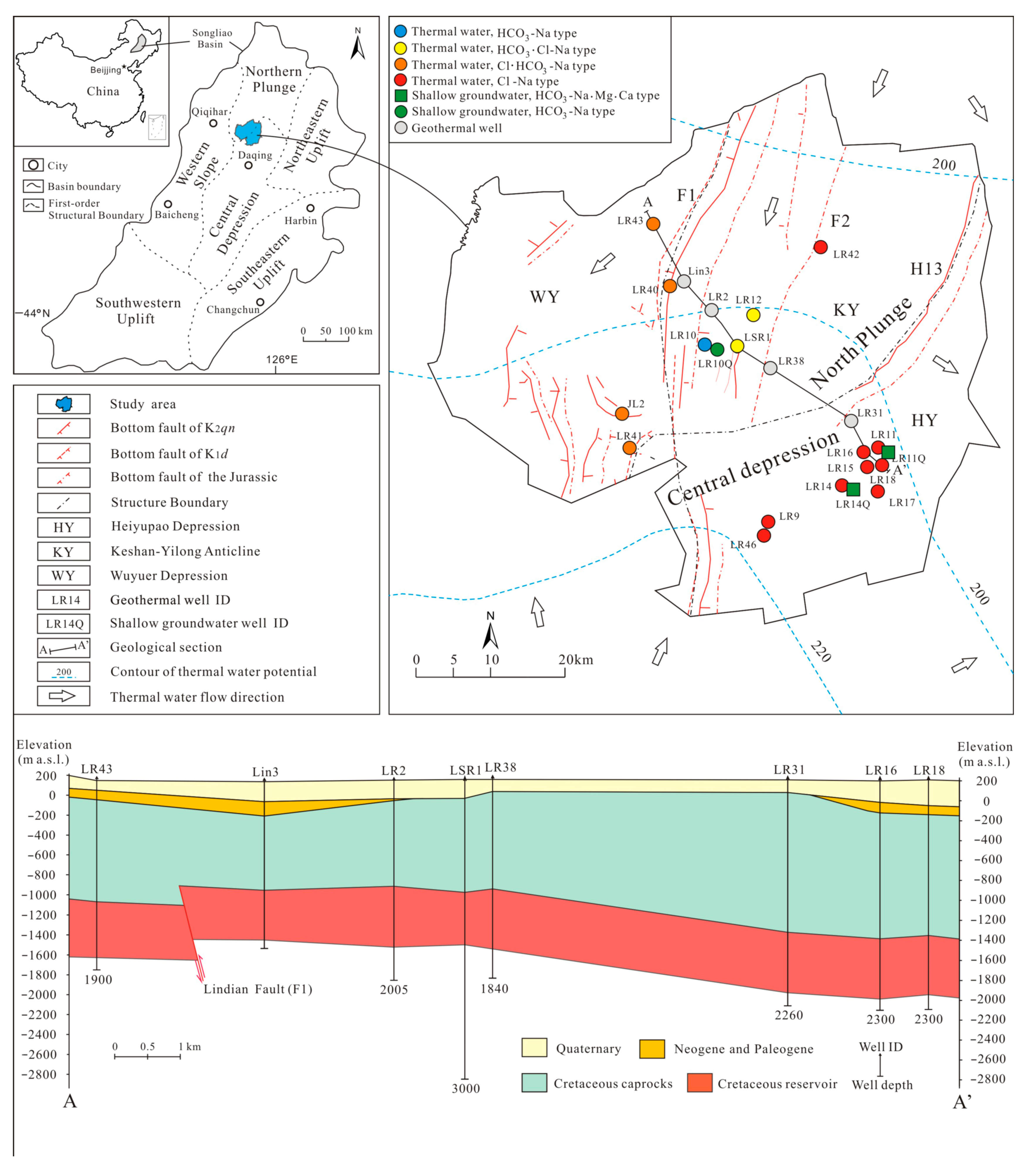
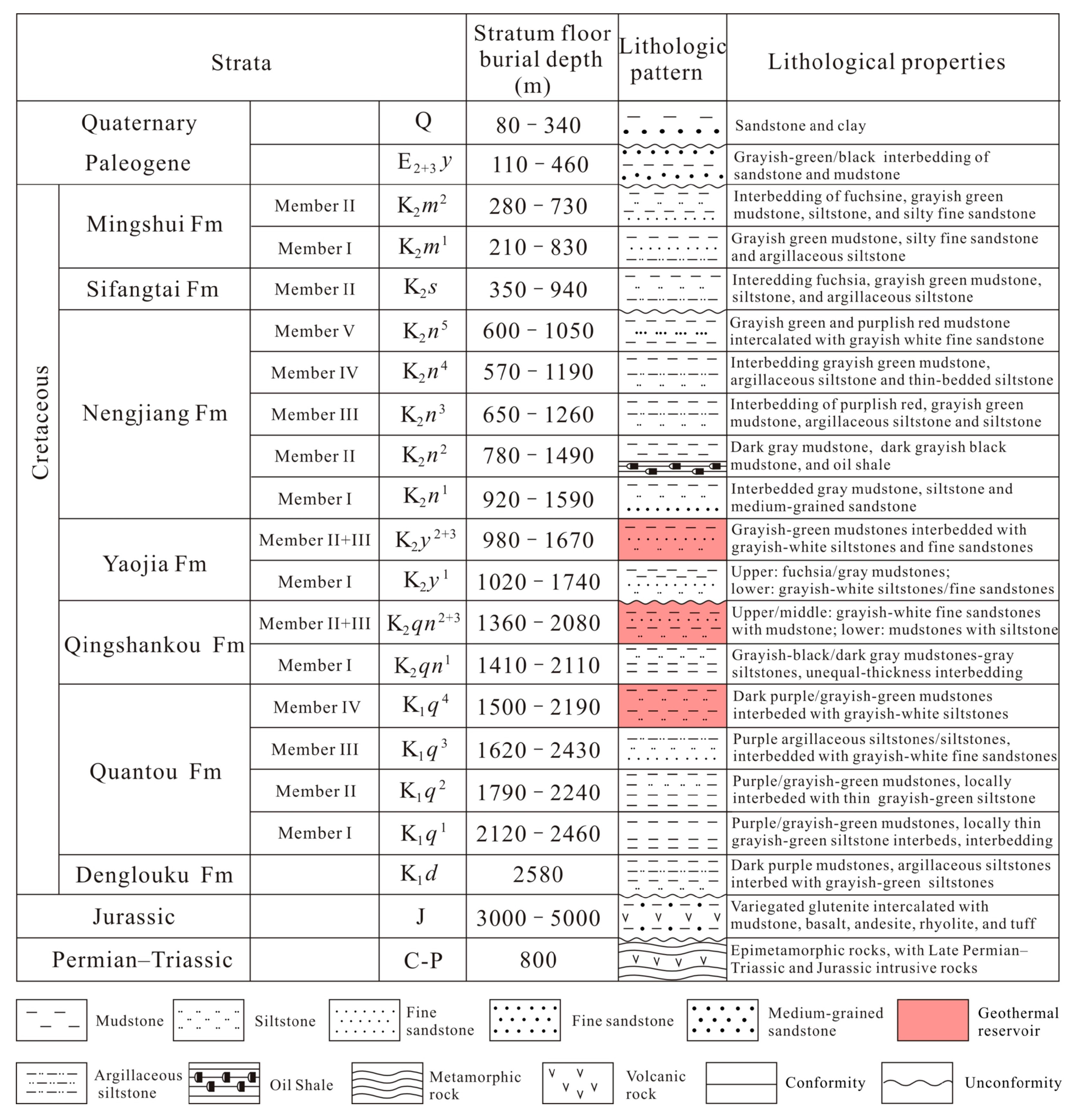
Tectonically, the study area is situated at the junction of the Northern Subsidence Zone and the Central Depression Zone, two first-order tectonic units of the Songliao Basin. The secondary tectonic units within the area are divided into three parts: the Wuyuer Depression (WY) in the west, the Keshan–Yilong Anticline (KY) in the center, and the Heiyupao Depression (HY) in the east (Figure 1), These units are divided by three NNE trending faults, namely the Lindian Fault (F1), the East Lindian Fault (F2), and the Western Boundary Fault of the HY (H13). Among these faults, F2 and F3 are mantle faults, while F1 is a crustal fault. In WY and KY, sediment thickness is relatively large in the western part and gradually decreases in the eastward direction [5]. HY was formed during the Paleogene, characterized by relatively complete sedimentary strata and a deep burial depth. Together with HY and WY, it constitutes the deepest depressions in the North Songliao Basin, serving as a key convergence zone for groundwater recharge from the east, west, and north directions. The maximum depth of the basement top surface in HY reaches 2000 m, whereas that in WY extends to 4000 m [3]. From oldest to youngest, the strata in Lindian County consists of the Carboniferous–Permian basement, Jurassic, Cretaceous, Paleogene, and Quaternary (Figure 2), which are described in detail as follows:
  • The Carboniferous–Permian forms the basement of the Songliao Basin. A suite of bedrocks dominated by weakly metamorphosed marine clastic sediments, intermediate-acid intrusive rocks, and metamorphic rocks has developed [6], with a maximum thickness of 800 m [3].
  • The Jurassic overlies the Carboniferous–Permian basement in unconformity, with significant thickness variation. The burial depth of its top exceeds 3000 m, while the maximum burial depth of its base ranges from 4000 to 5000 m. The sedimentary lithology is complex, dominated by variegated glutenite, conglomerate, and sandstone, and intercalated with mudstone, as well as basalt, andesite, rhyolite, and tuff [6].
  • The Cretaceous was deposited during the peak sedimentary period of the Songliao Basin. It is characterized by substantial sedimentary thickness and extensive distribution, with a total thickness exceeding 3000 m. It comprises the Denglouku (K1d), Quantou (K1q), Qingshankou (K2qn), Yaojia (K2y), Nenjiang (K2n), Sifangtai (K2s), and Mingshui Formation (K2m). Among these units, Members III and IV of K1q, Members II and III of K2qn, and Members II and III of K2y in the middle and lower parts of the Cretaceous constitute the primary geothermal reservoirs in the area [7].
  • K1q is widely distributed in the study area and is in unconformable contact with the underlying strata. Drilling data indicate a general thickening trend from north to south, with an average thickness of approximately 700 m and a maximum thickness of 1200 m. The formation is subdivided into four members, with detailed characteristics as follows: (i) Member I: The average burial depth of the base is 2120 to 2456 m, with a thickness of 221 m. It is a fluvial sand–mudstone deposit, where mudstone is relatively well-developed vertically; (ii) Member II: Extensively distributed across the study area, the average burial depth of the base is 1790–2235 m, with a thickness of 110–190 m. The lithology is dominated by glutenite and dark mudstone—glutenite is primarily developed in WY and KY, while dark mudstone is mainly deposited in HY; (iii) Member III: Widely distributed in the area, the average burial depth of the base is 1618–2426 m, with a thickness of 58–383 m. Dark mudstone abundant in organic matter is mainly distributed in HY, with a local sedimentary thickness of up to 100 m; (iv) Member IV: Widely distributed in the study area, the average burial depth of the base is 1500–2190 m, with a thickness of 65–146 m. Sandstone deposits during this period is relatively thin, and dark mudstone is mainly distributed in the HY [6,8]. The sandstone of K1q is the thickest in the urban area of Lindian County (Central KY), while it is relatively thinner near F1 and F2 [7].
  • K2qn is divided into three members: (i) Member I: Generally distributed in the area, the average burial depth of the bottom is 1400–2100 m, with a thickness of 28–130 m. The thickness of the sandstone is relatively thin, and the mudstone thickness is 25–45 m, showing a trend of being higher in the south and lower in the north, and higher in the east and lower in the west dark mudstone is mainly distributed in HY; (ii) Members II and III: Widely distributed in the area, the average burial depth of the bottom is 1360–2080 m, with a thickness of 270–445 m. The reservoir lithology is mainly siltstone and fine sandstone, dominated by fine sandstone. The sandstone sedimentary thickness is 90–130 m, increasing from northwest to southeast. The mudstone thickness is greater in the southeast than in the northwest, with the mudstone thickness in WY exceeding 80 m and that in HY exceeding 120 m. Dark mudstone is mainly distributed in the HY [3,6,7].
  • K2y is divided into the following: (i) Member I: The average burial depth of the base is 1020–1740 m, with a thickness of 20–160 m. The thickness of the sandstone is small with limited distribution; (ii) Members II and III: The average burial depth of the base is 980–670 m, with a thickness of 35–155 m. The lithology is dominated by medium sandstone, siltstone, and fine sandstone. The distribution of the sandstone is relatively limited, and dark mudstone is mainly distributed in HY [3,6,7].
  • The strata overlying the Craterous are mainly fluvio-lacustrine deposits, which consist of mudstone, fine sandstone, siltstone, argillaceous siltstone, sandstone, and clay. The total thickness is ca. 900–1600 m, serving as a good caprock with relatively low thermal conductivity and permeability [6,7].
The geothermal reservoirs in the study area include K2y2+3, K2qn2+3, and K1q3+4. Their lithology is characterized by the interbedding of sandstone, siltstone, and mudstone. Reservoir distribution is mainly controlled by regional tectonic structures, with the major reservoirs generally exhibiting a gradual thickening trend from west to east. Specifically, the sandstone layers of K2y2+3 thicken gradually from 7 to 46 m; they are primarily distributed in the central part of KY, while in other regions, their thickness is relatively small, making them unable to form major reservoirs. The sandstone layers of K2qn2+3 thicken gradually from 35 to 200 m, and those of K1q3+4 thicken gradually from 10 to 86 m. Among the aforementioned units, K2qn2+3 and K1q3+4 are recognized as the primary reservoirs. Due to the continuous distribution of mudstone layers between the reservoirs, there is no significant hydraulic connection among them [3]. However, geothermal wells extract thermal water from all these reservoirs simultaneously. The burial depth of the reservoirs mainly ranges from 700 to 2000 m, and the reservoir temperature varies from 47.4 to 89 °C, with an average of 63.5 °C (based on data from 63 geothermal wells) [7].
Based on thin section data of the reservoir sandstone, the sandstone is mainly composed of quartz (26–41%) and feldspar (35–44%), with feldspar dominated by orthoclase. The secondary component is lithic fragments, which are primarily composed of igneous rock components accounting for 12–28% of the total lithic fragments. The sandstones have a relatively high cement content (5–18%), which is mainly argillaceous cements with a small amount of calcareous cements. Among these cements, argillaceous materials include clay matrix and authigenic clay minerals, with an average content of 5–12%. Calcareous materials are mainly calcite, which are only present in K1q3+4, with a content of 5–10%.

3. Materials and Methods

This study utilizes hydrochemical data from the initial exploration stage (2002–2012) of Lindian geothermal field. A total of 16 thermal water samples were collected from geothermal wells with depths ranging from 1900 to 3000 m (Figure 1), and the thickness of the geothermal reservoir ranges from 410 to 907 m. The analytical items include pH, total dissolved solids (TDS), SiO2, major ions, trace components (F, Br, and I), and water isotopes. Additionally, three shallow groundwater samples (GW) were collected (Figure 1), with analytical items including major ions and SiO2.
In situ measurements of water temperature (T), pH, and TDS were carried out using a portable multiparameter analyzer (HI98129, HANNA Instrument, Woonsocket, RI, USA), with resolutions of 0.1 °C, 0.01 pH units, and 1 mg/L, respectively. Water samples for anion and cation analysis were filtered through a 0.22 μm membrane filter and collected in 500 mL high-density polyethylene (HDPE) bottles. Samples for cation analysis were subsequently acidified with HNO3 to pH < 2. Ions were determined using an ion chromatograph (881, Metrohm, Herisau, Switzerland) with a precision better than 5%, while alkalinity was determined via titration. The charge balance error was less than 10%. SiO2 was analyzed by the silicon molybdenum blue colorimetry method using an ultraviolet–visible spectrophotometer (U-T6, Yipu Inc., Shanghai, China), with a detection limit of 0.03 μg/L. All these measurements were conducted in HIHEG. Water isotopes (18O and D) of the thermal water samples were determined at the Institute of Hydrogeology and Environmental Geology, using an isotope ratio mass spectrometry (Mat253, Thermo Fisher Scientific Inc., Bremen, Germany), with typical precision of 0.05‰ for δ18O and 0.4‰ for δD, respectively.

4. Results and Discussion

4.1. Hydrogeochemical Characteristics of Groundwaters

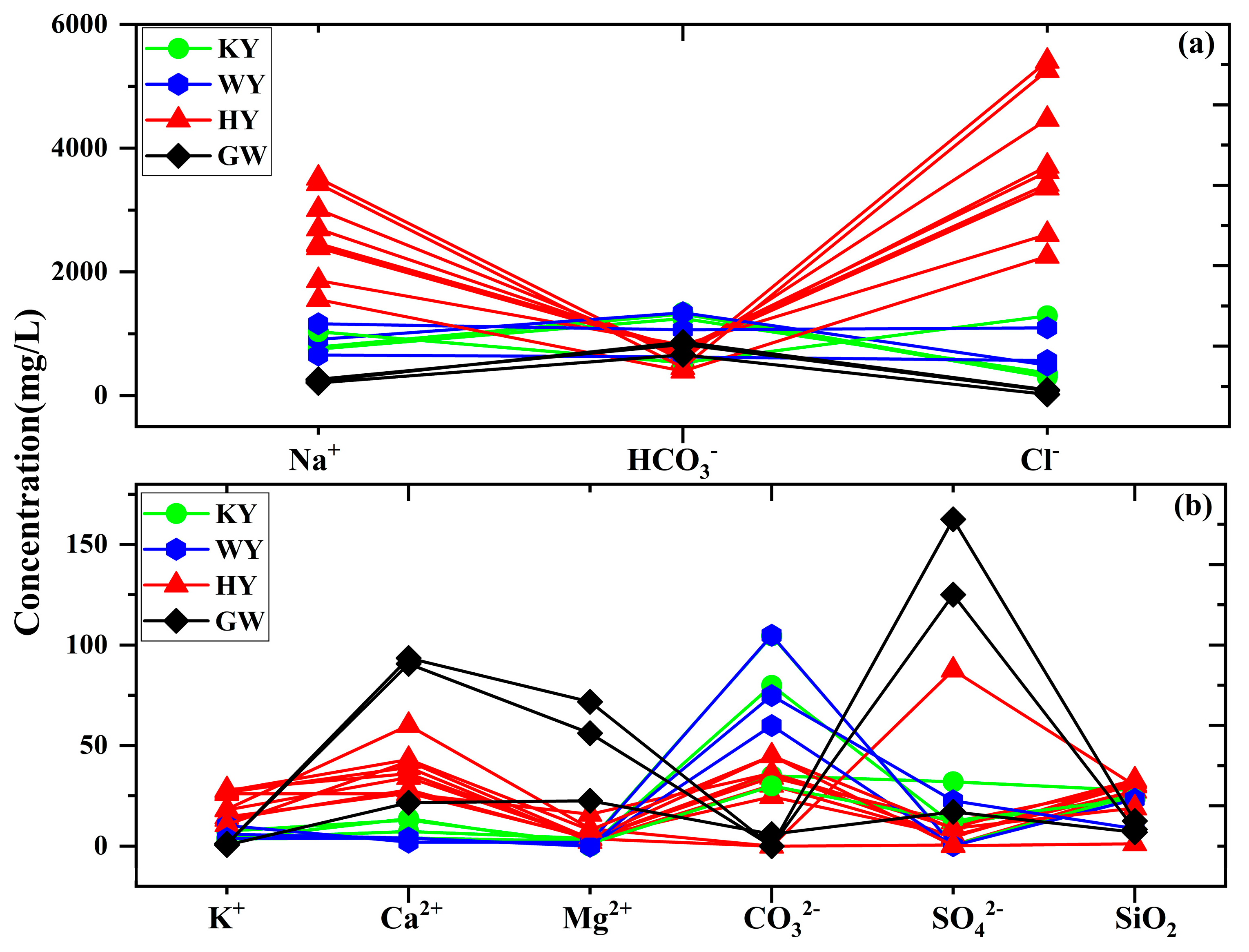
The Schöeller diagram was used to analyze the variation in cation and anion concentrations of the water samples (Figure 3). The results show that the thermal water is generally depleted in Mg2+ and K+ but enriched in Na+, HCO3, and Cl. Additionally, the plot also indicates that the thermal water has higher major ions concentrations compared to the groundwater samples. Specifically, the concentrations of Na+, HCO3, and Cl in the thermal waters range from 659.0 to 3515.0 mg/L, 395.8 to 1343.4 mg/L, and 298.4 to 5407.3 mg/L, respectively. Mg2+ is only present in trace amounts (0.0–15.8 mg/L). The concentrations of major ions and their intercorrelations can help clarify the geochemical processes caused by water–rock interactions that groundwater undergoes along its flow path [9]. The thermal waters contain a significant amount of Na+, which accounts for an average of 97.9% (in milliequivalent concentration) of the total mineral content, with little difference among different tectonic units. However, there are significant differences in anion concentrations in the study area. HCO3 is the dominant anion in the anticline area, while Cl is dominant in the depression areas.
The pH of the thermal water samples is alkaline, ranging from 7.6 to 9.2. The TDS of the thermal water and groundwater range from 1872.0 to 9782.8 mg/L and 629.7 to 956.5 mg/L, respectively. In nearly all water samples, anions are dominated by Cl and HCO3, with the abundance order of Cl > HCO3 > CO32− > SO42−. Among the cations, Na+ is the dominant ion, and the abundance order is Na+ > Ca2+ > K+ > Mg2+.
Ion concentrations in the depression areas (HY and WY) are higher than those in the anticline area (KY), which indicates that groundwater flows from the anticline area to the depression areas. The strata in the depression areas are deeply buried and situated at the terminal of the groundwater flow path. Here, groundwater flow is sluggish, and the duration of water–rock interactions is prolonged, ultimately leading to higher ion concentrations.
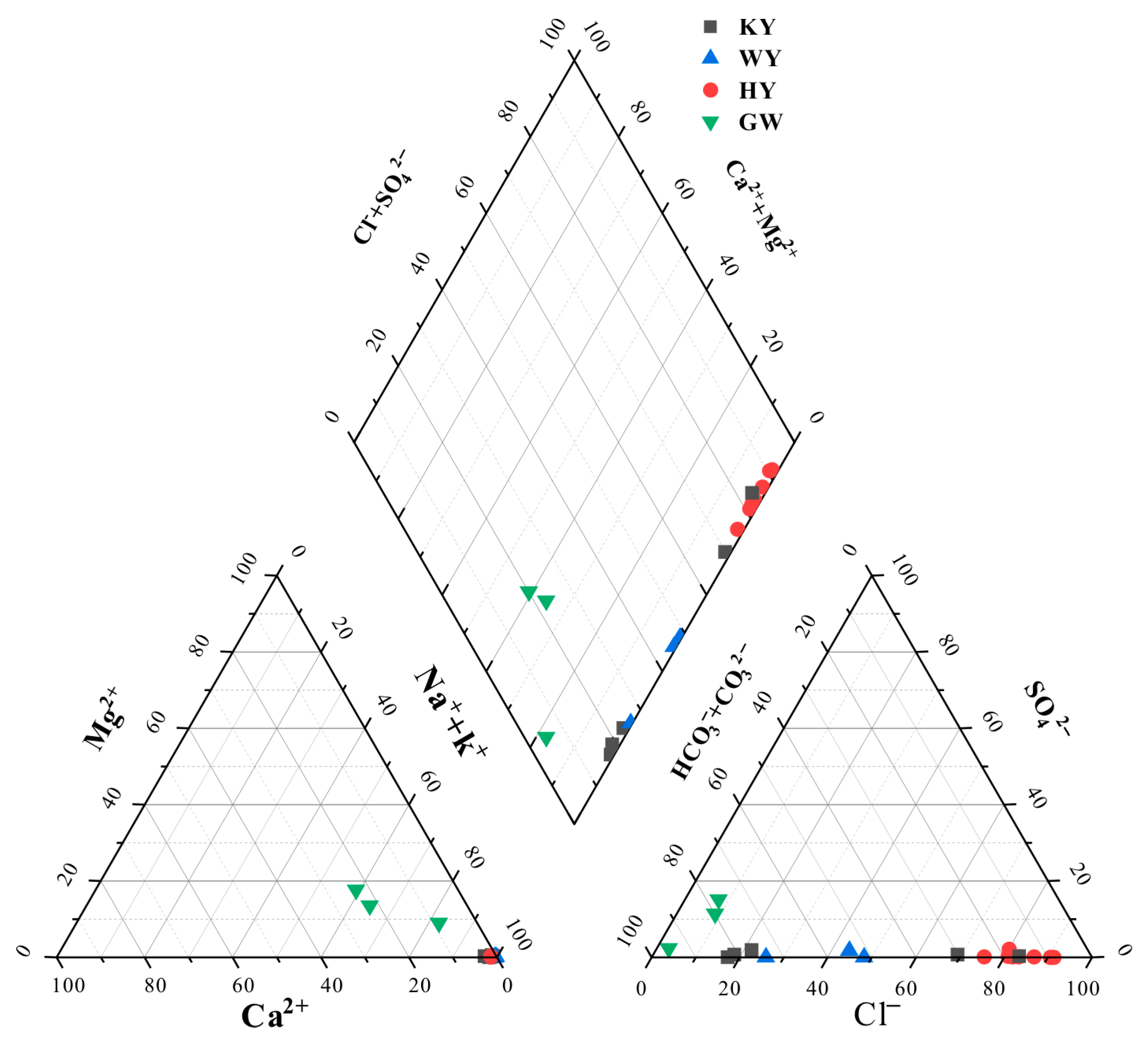
The Piper diagram illustrates the interrelationships between cations (Na+ + K+, Ca2+, and Mg2+) and anions (HCO3, Cl, and SO42−). As shown in Figure 4, thermal water samples are classified into four hydrochemical facies: HCO3·Cl–Na, Cl·HCO3–Na, Cl–Na, and HCO3–Na. In contrast, shallow groundwater samples fall into HCO3–Na·Mg·Ca and HCO3–Na hydrochemical facies.
Significant variations in hydrochemical facies are observed across different tectonic units. Specifically, thermal water in KY is predominantly of the HCO3·Cl–Na type, while that in WY is dominated by Cl–Na and Cl·HCO3–Na types, and thermal water t in HY is dominated by Cl–Na type, respectively (Figure 1). The higher major ion concentrations (and consequently higher TDS) in thermal water indicate more intense water–rock interactions and greater ion dissolution from host rocks under the high-temperature conditions along the thermal fluid flow paths.

4.2. Origin of Thermal Water

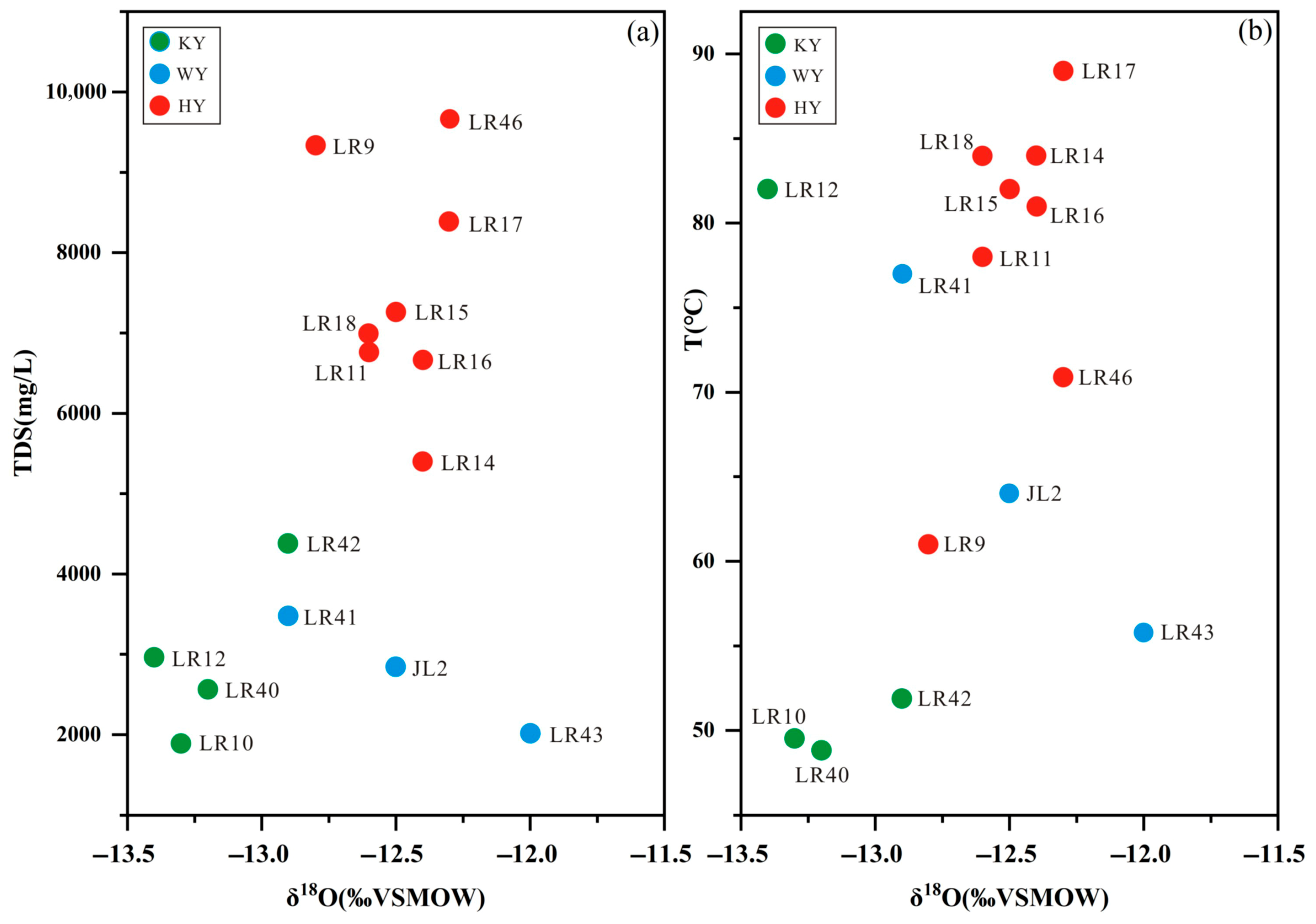
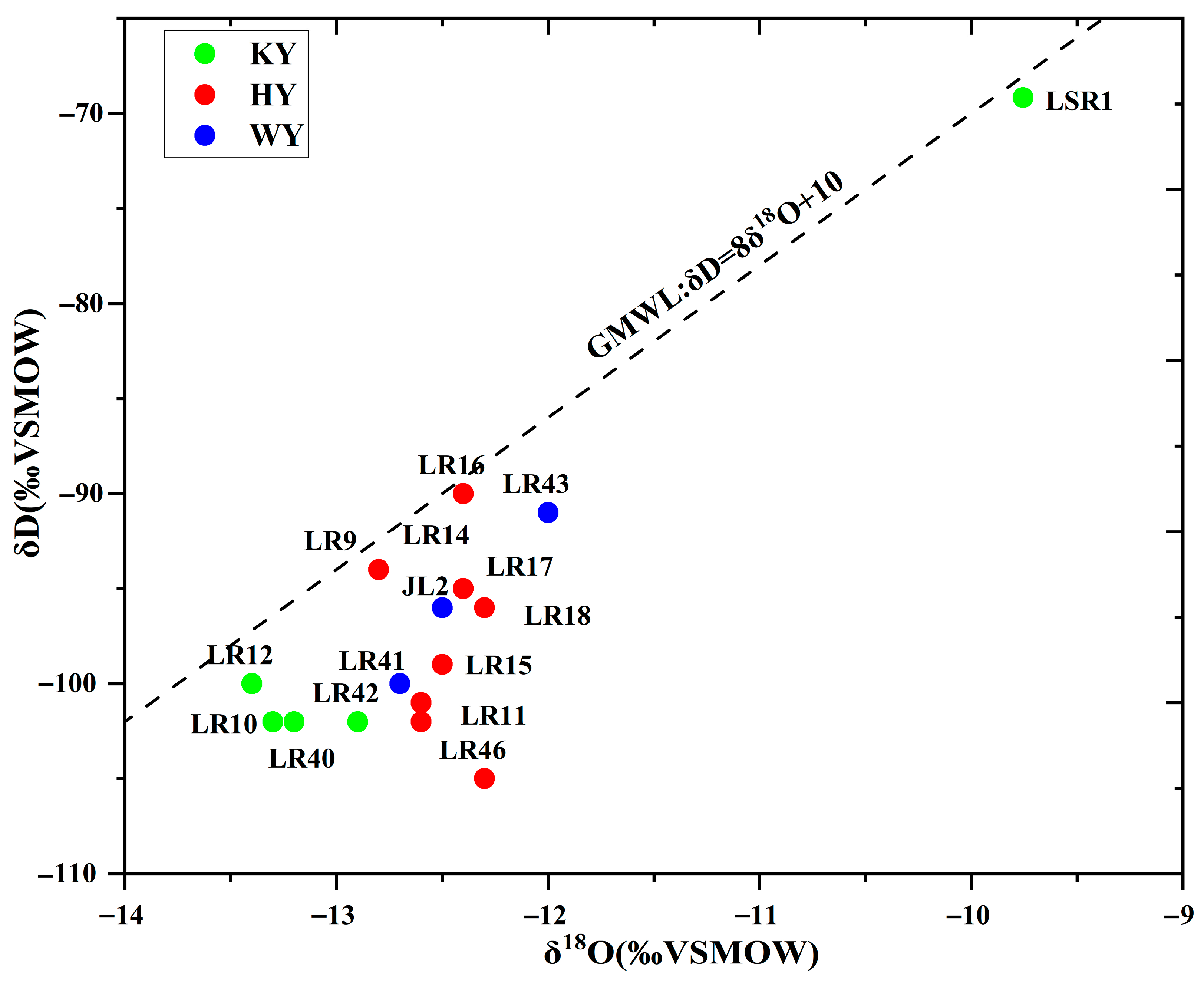
The δD and δ18O of thermal water can be used to distinguish various sources of thermal water sources, such as the magmatic, oceanic, and meteoric origins. Except for the minor influence of mixing, the δD and δ18O of groundwater mainly depend on the precipitation processes, while δ18O may be changed by the degree of water–rock interaction exchange and the water–rock ratio [10]. As shown in Figure 5, all thermal water samples plot near the Global Meteoric Water Line (GMWL), slightly to the right, indicating that the thermal water originates from precipitation. From the anticline to the depressions on both sides, i.e., from the upstream to the downstream of the groundwater flow path, the δD of the thermal water remains basically unchanged, while δ18O is enriched. Based on this, it can be judged that “oxygen shift” has occurred, and the degree of enrichment in HY is higher than that in WY. This is consistent with the changes in the hydrochemical field and geothermal field (Table S1). It can be inferred that due to the slow flow of groundwater towards the HY, the oxygen isotope exchange time between water and rock is longer, and the exchange rate increases due to the higher reservoir temperature (T) in HY, resulting in a stronger oxygen shift (Figure 6). However, since the exchange occurs between water and silicate minerals and the geothermal reservoir temperature is in the low-temperature range, the intensity of the oxygen shift is much lower than that of the exchange with carbonate minerals, resulting in a relatively small oxygen shift [10].

4.3. Genesis of Thermal Water Chemistry

4.3.1. Leaching

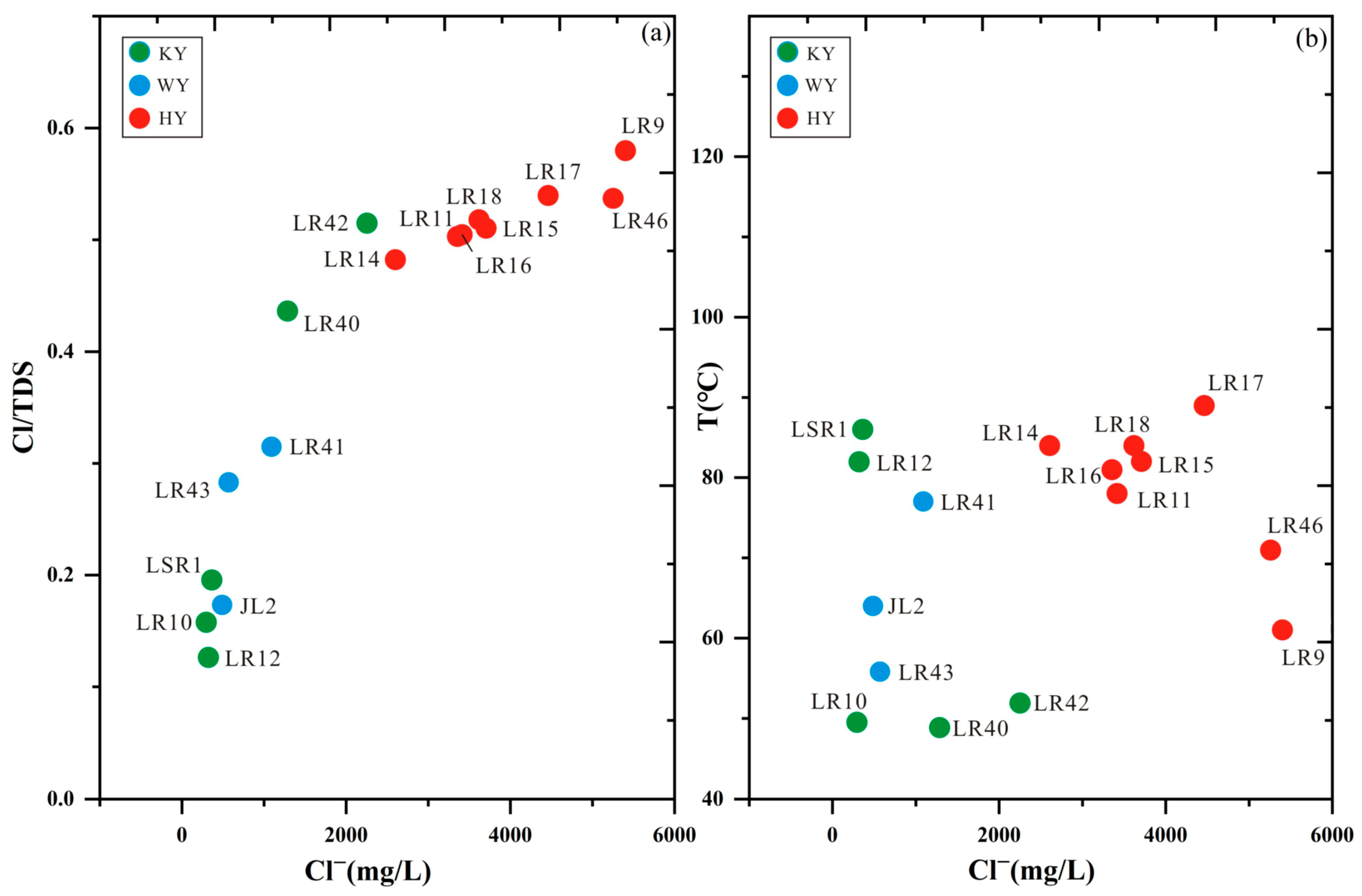
As Cl does not undergo chemical reactions with the sedimentary strata, the relationship between Cl and TDS can reflect the possible dissolution processes. Figure 7 shows that the Cl/TDS ratio increases with the increase in Cl and reservoir temperature (T). The reason is that leaching occurs along the flow path, resulting in an increase in Cl, and the leaching effect is enhanced as the reservoir temperature rises (Figure 7). In HY, groundwater flow is sluggish [6], the water–rock interaction time is long, the intensity of leaching is relatively high, and the concentrations of K+, Na+, Ca2+, Cl, and SiO2 in HY are the highest (Figure 3).
  • Identification from major chemical components
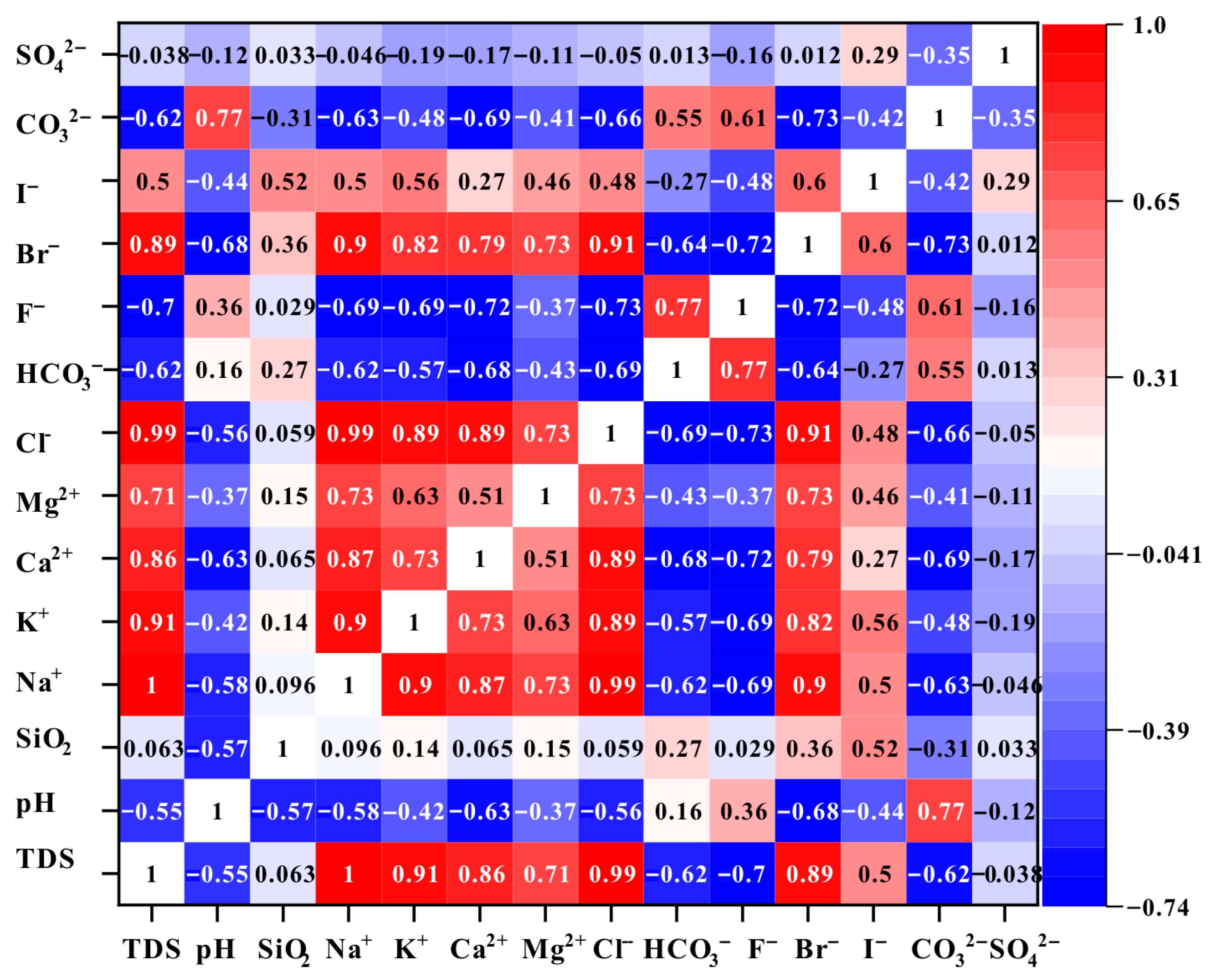
The correlations between major components can also indicate the leaching processes. The results of the Pearson Correlation show that there are significant positive correlations between the main cations (K+, Na+, Ca2+, Mg2+) and Cl in the thermal water, with most correlation coefficients being above 0.9 (Figure 8). Particularly, the correlations between Na and Cl and between Mg and K are the most significant (correlation coefficients > 0.95). This indicates that these ions are obtained through similar hydrogeochemical processes. Since Cl mainly comes from leaching, Na+, K+, Ca2+, and Mg2+ also come from leaching. There is a significant negative correlation between HCO3 and Ca2+, and between HCO3 and Cl, indicating that the accumulation of HCO3 in groundwater is limited by Ca2+ through the precipitation of aragonite or calcite. Most of the freshwater is of the bicarbonate type, while most of the water with high Cl content is brackish water or saltwater. Therefore, HCO3 and Cl show a negative correlation. The concentration of SO42− has no obvious relationship with salinity; it may be affected by desulfurization and the precipitation of authigenic minerals such as anhydrite and barite. Na and Cl show a significant positive correlation, indicating that the main ions in the study area come from leaching.
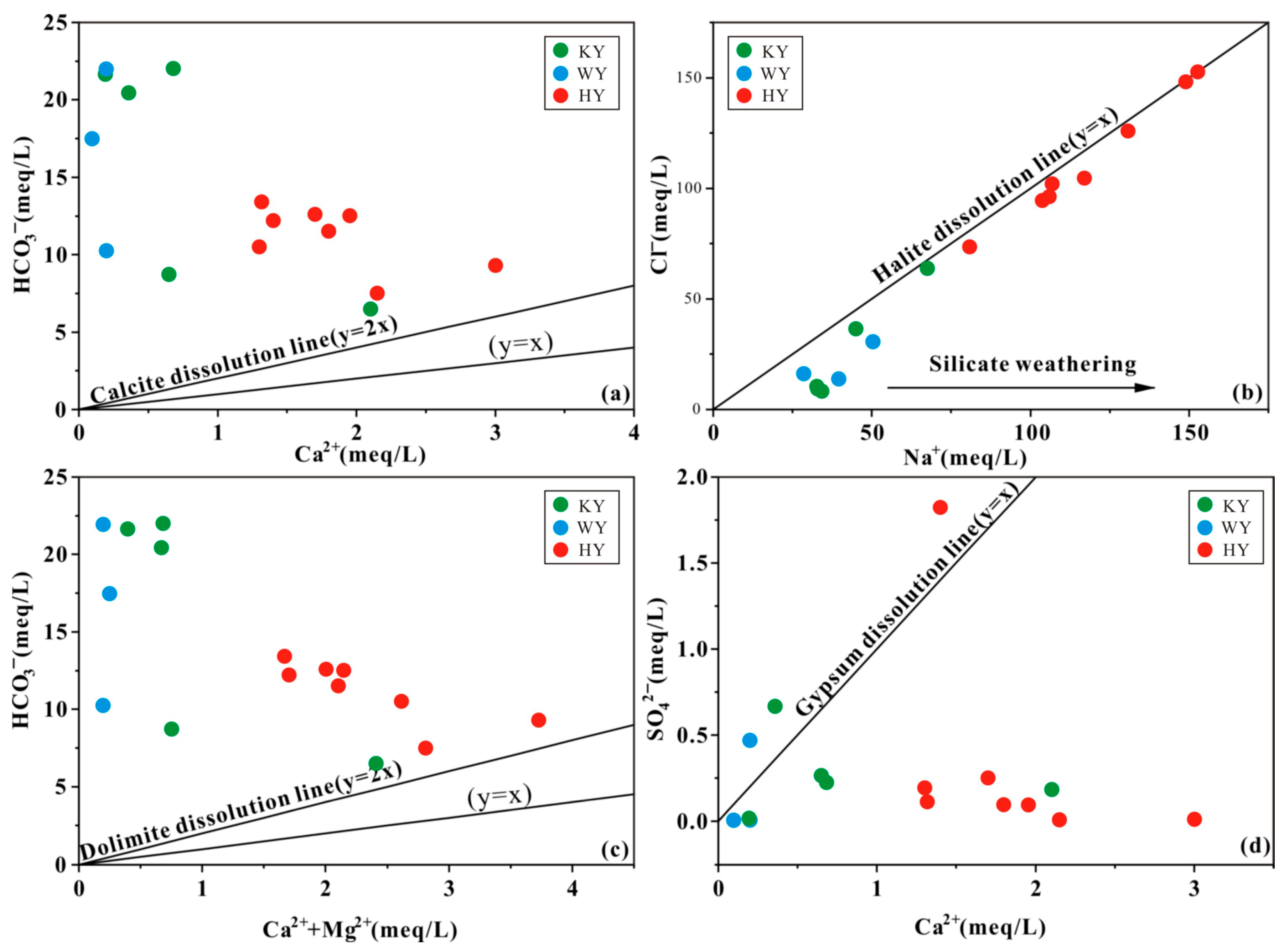
The sources of Ca2+, Mg2+, SO42−, and HCO3 can be analyzed through the cross-plots of (Ca2++Mg2+) vs. HCO3, (Ca2++Mg2+) vs. SO42−. As shown in Figure 9a,c, the thermal water samples are above the calcite and dolomite dissolution line, indicating that HCO3 in the water samples has other sources besides the dissolution of carbonates. Based on a microbial community analysis of the bacterial and archaeal population, geothermal gas composition, and isotopes of CH4, CO2, and He, Su (2021) [7] concluded that, in the Lindian geothermal field, both hydrogenotrophic and acetolactic methanogenesis processes occur simultaneously, which indicates that the organic matter in the dark mudstone in the geothermal reservoir is decomposed by fermentative bacteria into substrates (including CO2, H2, acetic acid, etc.) that are utilizable by methanogens. The CO2 produced through this methanogenesis path dissolves into the thermal water and forms “excess” HCO3 [6]. SO42− has no significant correlation with other ions, reflecting that SO42− has different sources. Figure 9b,d show that most thermal water samples fall below the halite and gypsum dissolution line, indicating a contribution of Ca2+ and Na+ from the dissolution of silicate minerals.
2.
Identification from ion ratios
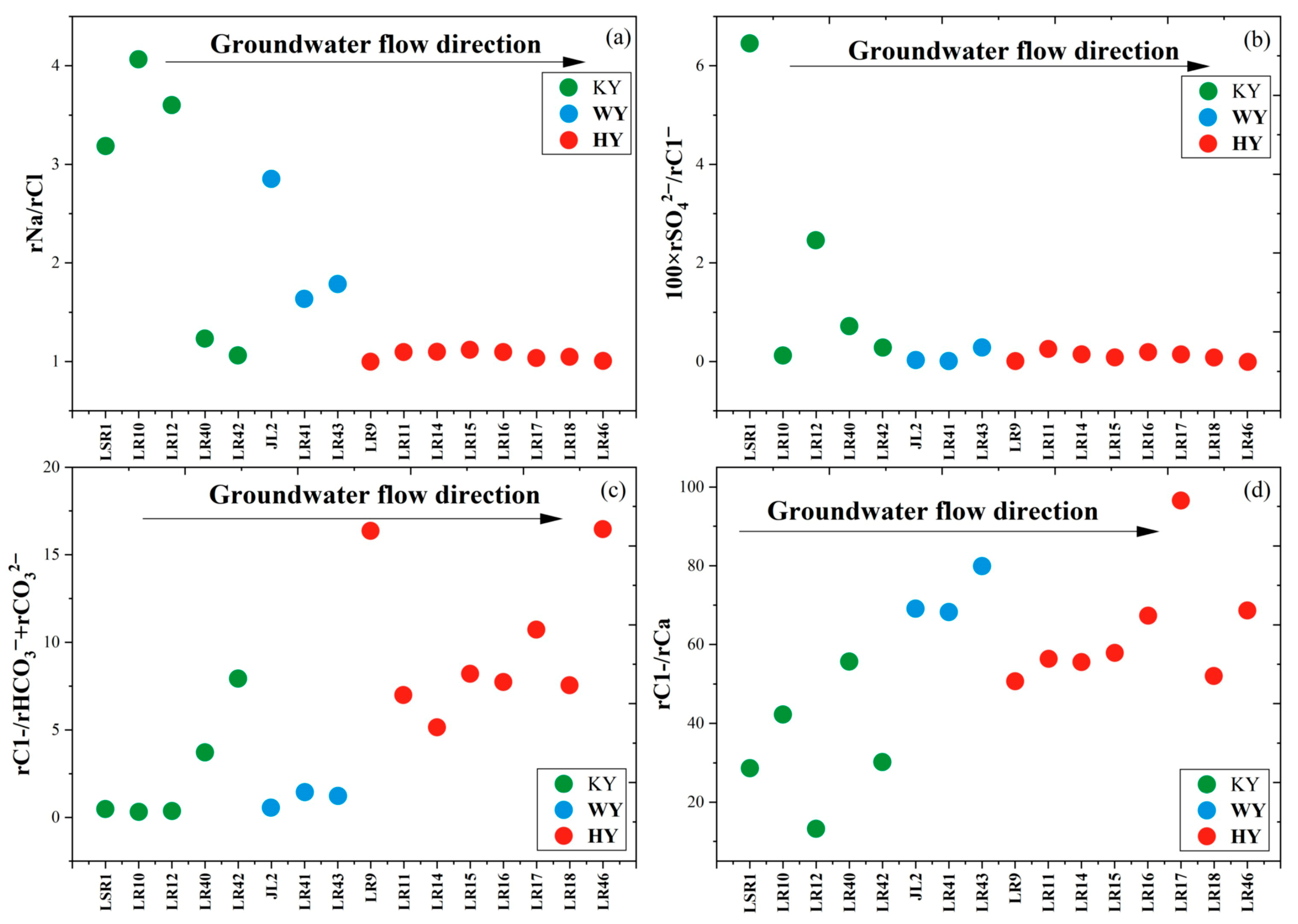
Various parameters of the thermal water chemical characteristics, such as the metamorphic coefficient (rNa+/rCl), desulfurization coefficient (100 × rSO42−/rCl), salinization coefficient (rCl/(rHCO3 + rCO32−)), and rCl/rCa2+, can reflect the hydrogeochemical environment to a certain extent. The ion ratios are listed in Table 1.
If the groundwater chemistry is mainly formed by the leaching of halite-bearing strata, the metamorphic coefficient should be close to 1 [11]. Figure 10a shows that the metamorphic coefficient (1–1.12) of the thermal water in HY is close to 1, indicating that the main process occurring in this area is halite leaching. The Na/Cl ratio of the thermal water in WY and KY are both greater than 1, indicating that Na+ is more abundant. In addition to the source from the leaching of halite, there may also be the dissolution of plagioclase; the smaller the desulfurization coefficient, the more closed the reservoir and the stronger the reducing environment. Figure 10b shows that the desulfurization coefficient of the thermal water is much less than 1, indicating that the thermal water in this area is in a strong reducing environment and the reducibility increases along the groundwater flow direction; Figure 10c shows that the salinization coefficient (rCl/(rHCO3 + rCO32−)) of the thermal water in HY is much higher than that in other areas, with the highest TDS and the longest residence time, which is consistent with the inference that the thermal water in this area is at the end of the flow path. Along the groundwater flow direction, the groundwater flow slows down and the flow path becomes longer; the rCl/rCa2+ of the thermal water characterizes the hydrodynamic characteristics of the groundwater. The larger its value, the slower the groundwater flow. Figure 10d shows that rCl/rCa2+ in WY is generally large, indicating that the groundwater flow is slow.
In conclusion, the thermal water is recharged from KY to WY and HY. Along the recharge direction, the metamorphic coefficient and desulfurization coefficient gradually decrease, while the salinization coefficient gradually increases, indicating that along the groundwater flow path, the geological environment becomes more closed, the reducibility of the reservoir becomes stronger, the groundwater flow becomes slower, and the water–rock interaction becomes more intense.
3.
Identification from mineral stability diagram
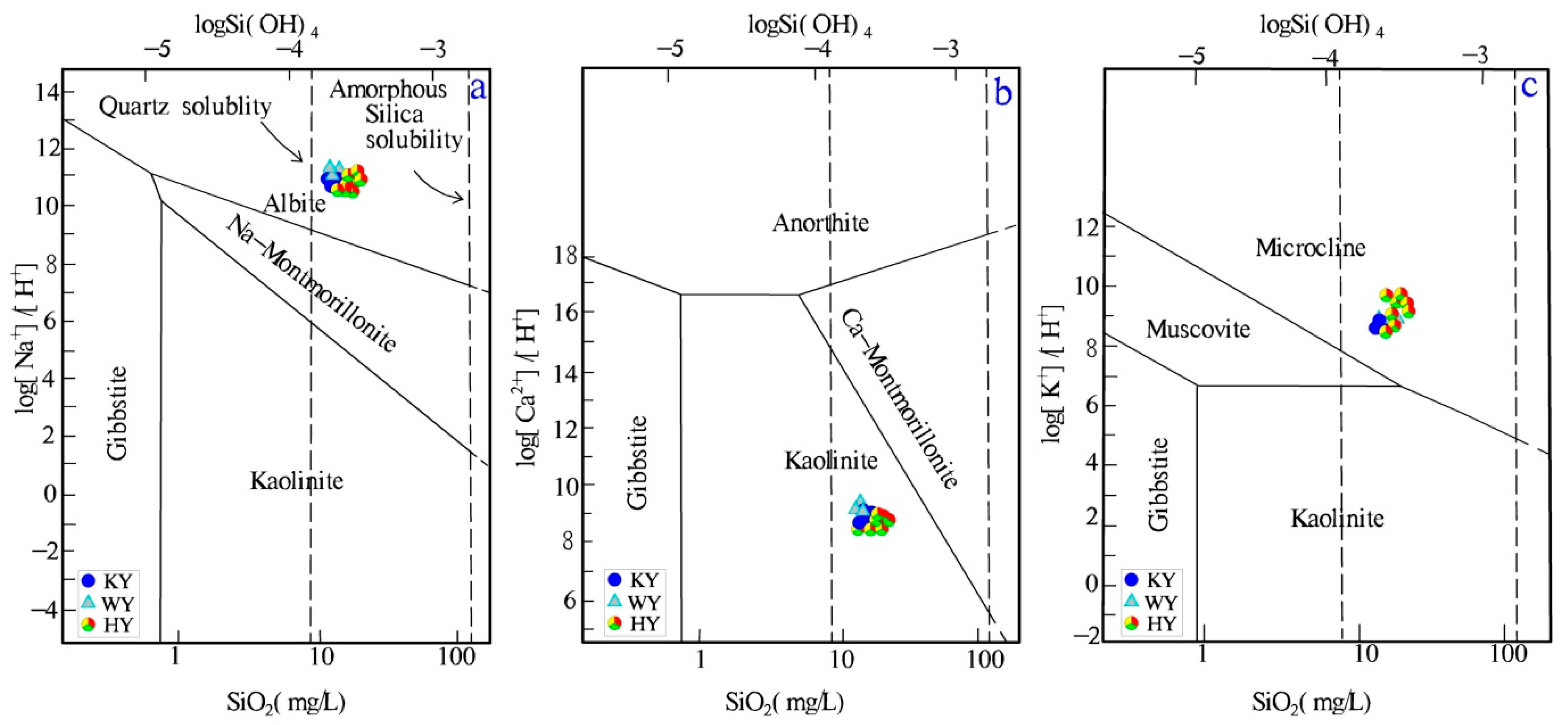
The dissolution of aluminosilicates and the hydrogen ion activity of the water–rock interaction system were used to determine the stable mineral phases in the thermal waters at the reservoir temperature. As shown in Figure 11 the identified stable mineral phases include amorphous silica, kaolinite, and microcline. In the Na2O–Al2O3–SiO2–H2O system, the samples fall in the stability field of albite, indicating that the groundwater tends to dissolve albite to reach equilibrium with amorphous silica (Figure 11a). In the CaO–Al2O3–SiO2–H2O system, the samples are concentrated in the stability field of kaolinite (Figure 11b), indicating that the hydrochemical environment of the groundwater is favorable for the formation of kaolinite. In the K2O–Al2O3–SiO2–H2O system, the samples are concentrated in the stability field of microcline (Figure 11c), suggesting that the concentration of K+ in the groundwater of the study area is mainly controlled by microcline.

4.3.2. Cation Exchange

Cation exchange is a reversible process that widely occurs in aquifers by which cations in groundwater exchange with cations adsorbed on the surface of solid geological media (e.g., clay minerals, zeolites, and organic matter) in the aquifer:
2NaX + Ca2+/Mg2+ = CaX2/MgX2 + 2Na+
Cation exchange can be identified by Chlorine-base Exchange Indices (CAI1 and CAI2) [12], which are defined as
CAI1 = [Cl − (Na+ + K+)]/Cl
CAI2 = [Cl − (Na+ + K+)]/(SO42− + HCO3 + CO32− + NO3)
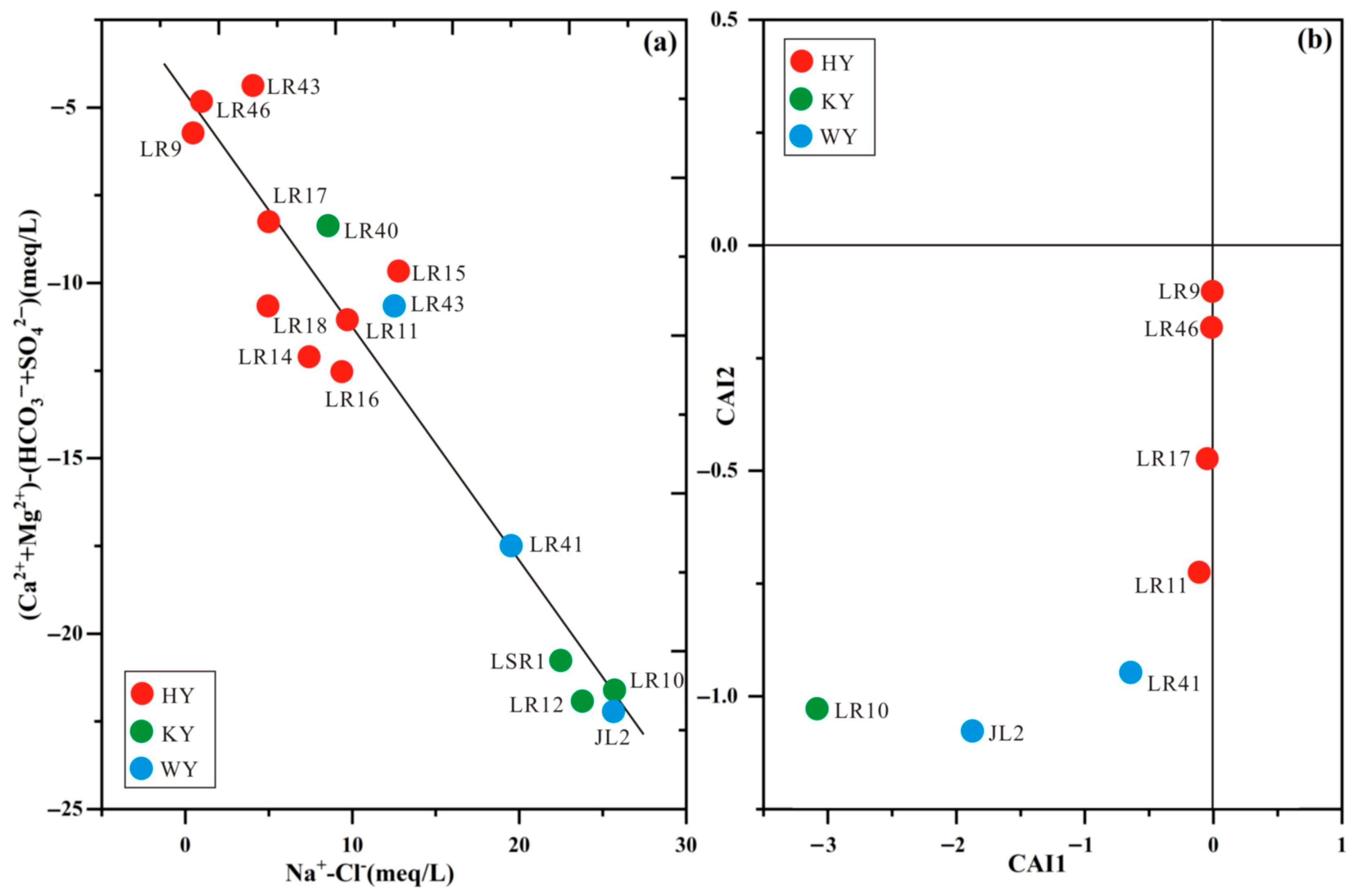
Positive indices indicate that Na+ and K+ adsorbed on the host rock are replaced by dissolved Ca2+ and Mg2+, while negative indices indicate reverse ion exchange. The absolute values of the indices are positively related to the likelihood of cation exchange. However, the concentration of cations is also controlled by the dissolution of silicate, carbonate and sulfate minerals. Therefore, when using the Chlorine-base Exchange Indices, it is first necessary to determine whether there is interference from mineral dissolution. This can be achieved by using the (Ca + Mg)–(SO4 + HCO3) vs. (Na+K)–Cl diagram. As Figure 12a shows, JL2, LR9, LR10, LR11, LR17, LR41, LR46, and LSR1 fall on the 1:1 line in the diagram, indicating the occurrence of ion exchange. The other samples deviate from the 1:1 line, indicating the occurrence of silicate dissolution.
The CAI1 and CAI2 values calculated for the thermal waters fall in the third quadrant (Figure 12b), indicating that ion exchange occurs. After excluding the samples affected by silicate dissolution, the absolute values of CAI1 and CAI2 for the thermal waters in KY are larger, indicating more significant ion exchange. However, most of the water samples in the study area are located on the intersection line, especially those in HY. The reason for this is that the groundwater in the sedimentary basin is in a relatively closed environment, with sluggish groundwater flow; thus, the water–rock equilibrium of the thermal water has reached or exceeded saturation, and the cation exchange adsorption has basically completed. The thermal water samples of WY fall between KY and HY, indicating that the cation exchange intensity is between the two structural units.

4.3.3. Equilibrium of Water–Rock Interaction

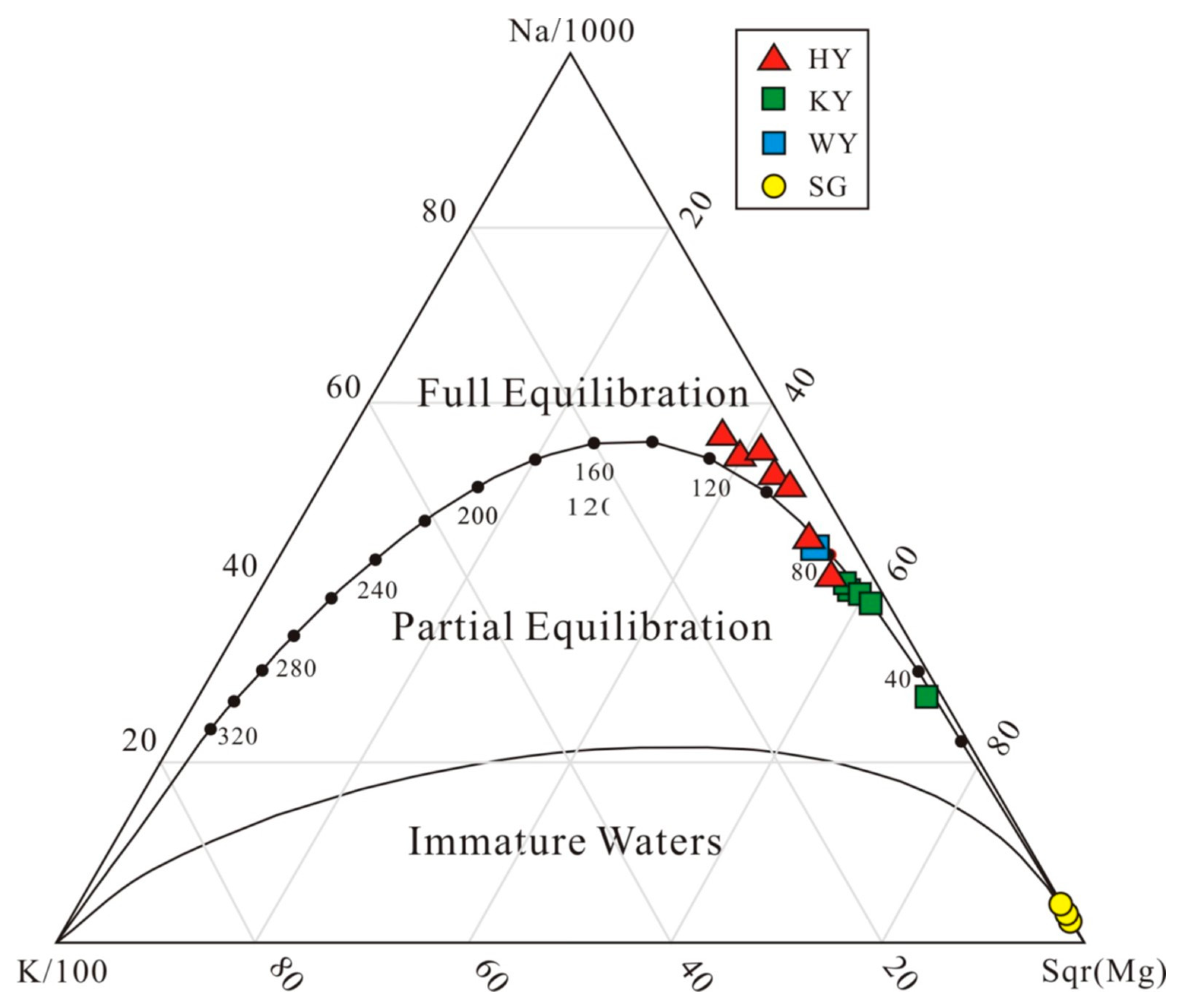
The Giggenbach Na–K–Mg ternary diagram [13] is used to determine the degree of equilibrium between water and rock. As shown in Figure 13, all shallow groundwater samples (SG) in the study area are located at the immature water area, indicating that the shallow groundwater is in the primary stage of water–rock interaction. All thermal water samples plot along the full equilibration line, indicating that the thermal waters are in an equilibrium condition controlled by Na-, K-, Ca-, and Mg-alumino silicates, such as albite, k-feldspar, K-mica, Mg-chlorite, and quartz [14,15,16]. This indicates that the geothermal reservoir environment in this area is relatively closed and the thermal water and host rock has reacted for a rather long time. During the long-term exploitation of thermal water, the thermal water is not affected by shallow groundwater [15].

4.3.4. Contribution of Various Water–Rock Interactions

To identify the main factors affecting the chemical composition of the thermal water, Principal Component Analysis (PCA) was conducted on T, pH, TDS, SiO2, and major ions in the thermal water. A total of three principal components were extracted (Table 2). The cumulative variance contribution rate of the first, second, and third principal components (F1 to F3) is 84.818%, indicating that they can represent the hydrochemical characteristics of the thermal water. The variance contribution of F1 was 57.213%. Therefore, F1 is the primary factor influencing the chemical composition of the thermal water. F1 shows the positive effects of TDS, Na+, K+, Ca2+, Mg2+, and Cl on the chemical composition of the thermal water, and these parameters are correlated with each other (CC > 0.732). Thus, F1 can be interpreted as the influence of the leaching of host rocks, indicating that mineral dissolution is the main process contributing to the chemical composition of the thermal water in the study area. This result is consistent with that of the Pearson Correlation analysis.
The variance contribution of F2 is 16.848%. F2 shows a positive effect of HCO3 on the chemical composition of the thermal water. Thus, F2 can be interpreted as the effect of organic matter degradation [7,17], and this result is consistent with that of the Pearson Correlation analysis. The variance contribution of F3 is 10.757%. F3 shows a strong negative correlation of SO42− with the other chemical composition of the thermal water. Thus, F3 can be interpreted as the concentration of SO42− being affected by desulfurization and the precipitation of authigenic minerals such as anhydrite and barite, and this result is also consistent with that of the Pearson Correlation analysis. This indicates that the thermal water in the study area is in a relatively closed environment, especially in HY, where groundwater flow is sluggish and water–rock has reached nearly equilibrium. Therefore, the contribution of cation exchange to thermal water chemistry is not significant.

5. Conclusions

This study investigates the hydrogeochemistry of the thermal water in the Lindian geothermal field, aiming to clarify the origin of thermal water, identify its solute end-members, and elucidate the water–rock interaction processes controlling hydrochemical characteristics. The main conclusions are as follows.
The thermal water originates from meteoric precipitation, as indicated by its water isotopes. The “oxygen shift” phenomenon indicates prolonged water–rock interactions under medium to low reservoir temperatures. Notably, isotopic exchange is more intense in the Heiyupao Depression (HY) due to the higher temperatures and slower groundwater flow velocities.
The thermal water is characterized by alkaline pH (7.6–9.2) and high TDS content (1872.0–9782.8 mg/L), with Na+, Cl, and HCO3 as the dominant ions. Along the groundwater flow path, hydrochemical facies transitions from HCO3·Cl–Na (KY) to Cl·HCO3–Na and Cl–Na (WY) and Cl–Na (HY). This facies evolution reflects the increasing intensity of water–rock interaction from the anticline to the depressions.
Leaching is the primary process controlling thermal water chemistry. The leaching of halite, silicates (albite, microcline, etc.), and carbonates significantly contributes to major ions, as evidenced by the strong positive correlations between these ions and TDS.
The geothermal reservoir is in a relatively closed, strong reducing environment. Along the groundwater flow path, the desulfurization coefficients decrease while the salinization coefficient increases. The Giggenbach Na–K–Mg ternary diagram confirms that thermal water has reached water–rock equilibrium with respect to Na-, K-, Ca-, and Mg-alumino silicates, whereas shallow groundwater remains in the early stage of interaction. PCA identifies mineral leaching as the dominant factor controlling water chemistry, followed by organic matter degradation and sulfate reduction/mineral precipitation, while cation exchange makes a minor contribution to hydrochemistry.
The hydrogeochemical baseline established in this study provides a scientific reference for assessing long-term changes in thermal water quality induced by overexploitation. Additionally, the spatial variability of the water–rock interactions that were processed highlights the necessity of implementing differentiated management strategies across different tectonic units, thereby ensuring the sustainable utilization of geothermal resources in the Lindian geothermal field.

Supplementary Materials

The following supporting information can be downloaded at: https://www.mdpi.com/article/10.3390/w18010090/s1, Table S1: Historical hydrochemical data of thermal water in Lindian geothermal field.

Author Contributions

Data curation, writing—original draft, formal analysis: Y.S. and F.Y.; Methodology: Y.S.; Investigation: X.Z., J.D. and L.L.; writing—review and editing: M.C. and C.Z.; Funding acquisition: Y.M. and Y.S. All authors have read and agreed to the published version of the manuscript.

Funding

This research was funded by Jilin Provincial Science and Technology Development Plan Project, grant number YDZJ202501ZYTS526, and Open Research Fund of the Key Laboratory of Groundwater Resources and Environment, Ministry of Education, Jilin University, grant number 202306ZDKF17.

Data Availability Statement

The original contributions presented in this study are included in the article. Further inquiries can be directed to the corresponding authors.

Conflicts of Interest

Author Minghua Chen was employed by the company Heilongjiang Agricultural Reclamation Survey and Design Research Institute Co., Ltd. The remaining authors declare that the research was conducted in the absence of any commercial or financial relationships that could be construed as a potential conflict of interest. The authors declare that they have no known competing financial interests or personal relationships that could have appeared to influence the work reported in this paper.

References

  1. Liu, Y.; Yang, X.; Sui, X.W. Evaluation of the Geothermic Water Quality in Lindian geothermic town of Songliao Basin. J. Heilongjiang Hydraul. Eng. 2010, 37, 78–82. [Google Scholar] [CrossRef]
  2. Mei, J.S. Study on Geothermal Resources and Tourism Development Planning of Lindian County, Daqing City. Master’s Thesis, Harbin Institute of Technology, Harbin, China, 2002. [Google Scholar]
  3. HIHEG (Heilongjiang Institute of Hydrogeology and Engineering Geology). Report on Geothermal Energy Investigation of Lindian Geothermal Field; HIHEG: Harbin, China, 2017. [Google Scholar]
  4. Ji, H.; Zhu, H.L.; Shi, S.M.; Du, X.L. Quality Evaluation of Geothermal Fluid in the Lindian Area of the Songliao Basin. Int. Energy 2023, 2, 21–26. [Google Scholar] [CrossRef]
  5. Wang, J. A Study on Seismogenic Structure of LinDian Earthquake. Master’s Thesis, Jilin University, Changchun, China, 2021. [Google Scholar]
  6. He, Y.M. Study on Sedimentary Facies of Low Cretaceous in Binbei, Songliao Basin. Master’s Thesis, Xi’an Shiyou University, Xi’an, China, 2014. [Google Scholar]
  7. Su, Y.J. Genesis and Rational Development of Typical Geothermal Field in the Songliao Basin: A Case Study of Lindian Geothermal Field. Ph.D. Thesis, Jilin University, Changchun, China, 2021. [Google Scholar]
  8. Chen, X.N. Analysis of High Resolution Sequence Stratigraphy and Sedimentary System of Qingshankou Formatin in Heiyupao Depression and Mingshui Terrace of Songliao Basin. Master’s Thesis, China University of Geosciences, Wuhan, China, 2008. [Google Scholar]
  9. Shuaibu, A.; Kalin, R.M.; Phoenix, V.; Lawal, I.M. Geochemical evolution and mechanisms controlling groundwater chemistry in the transboundary Komadugu–Yobe Basin, Lake Chad region: An integrated approach of chemometric analysis and geochemical modeling. J. Hydrol. Reg. Stud. 2025, 57, 102098. [Google Scholar] [CrossRef]
  10. Pang, Z.H.; Yang, F.T. Genesis analysis of geothermal systems in Guanzhong Basin of China with implications on sustainable geothermal resources development. In Proceedings of the World Geothermal Congress, Bali, Indonesia, 25–30 April 2010. [Google Scholar]
  11. Zhu, C.Q.; Xu, T.; Qiu, N.S.; Zhang, H.Z.; Wang, X.; Wang, B. Chemical characteristics and fluid origin of formation water of Bashijiqike Formation in Kelasu structure belt, Tarim basin. Acta Geol. Sin. 2023, 97, 250–261. [Google Scholar] [CrossRef]
  12. Schoeller, H. Qualitative evaluation of groundwater resources. In Methods and Techniques of Groundwater Investigations and Development; UNESCO: New York, NY, USA, 1965; pp. 54–83. [Google Scholar]
  13. Giggenbach, W.F. Geothermal solute equilibria. Derivation of Na-K-Mg-Ca geoindicators. Geochim. Cosmochim. Acta 1988, 52, 2749–2765. [Google Scholar] [CrossRef]
  14. Romano, P.; Liotta, M. Using and abusing Giggenbach ternary Na-K-Mg diagram. Chem. Geol. 2020, 541, 119577. [Google Scholar] [CrossRef]
  15. Simmons, S.F. Fluid-mineral equilibria in great basin geothermal systems: Implications for chemical geothermometry. In Proceedings of Thirty-Eighth Workshop on Geothermal Reservoir Engineering Stanford University; Stanford University: Stanford, CA, USA, 2013. [Google Scholar]
  16. Arnórsson, S.; Gunnlaugsson, E.; Svavarsson, H. The chemistry of geothermal waters in Iceland. II. Mineral equilibria and independent variables controlling water compositions. Geochim. Cosmochim. Acta 1983, 47, 547–566. [Google Scholar] [CrossRef]
  17. Zuo, Y.H.; Zheng, Z.Y.; Shao, D.L.; Wang, H.P.; Yang, L.; Wang, C.F.; Zhang, Y.G. Reviews on CO2 genesis, controlling factors of hydrocarbon and degassing model. Sci. Technol. Eng. 2021, 21, 12356–12367. [Google Scholar]
Figure 1. Schematic geological map of Lindian geothermal field and distribution of sampling wells.
Water 18 00090 g001
Figure 2. A stratigraphic column of Lindian geothermal field.
Water 18 00090 g002
Figure 3. Schoeller diagram for the water samples from Lindian geothermal field. (a) Major ions; (b) minor components.
Water 18 00090 g003
Figure 4. Piper diagram for the water samples from Lindian geothermal field.
Water 18 00090 g004
Figure 5. δD–δ18O relationship of the water samples from the Lindian geothermal field.
Water 18 00090 g005
Figure 6. Relationships between δ18O, TDS (a), and T (b) of the water samples from the Lindian geothermal field.
Water 18 00090 g006
Figure 7. (a) Cl vs. Cl/TDS, and (b) Na vs. Cl vs. T for the thermal waters from the Lindian geothermal field.
Water 18 00090 g007
Figure 8. Pearson Correlation of the physiochemical parameters of the thermal waters from Lindian geothermal field.
Water 18 00090 g008
Figure 9. (a) Plots of Ca2+ vs. HCO3, (b) Na vs. Cl, (c) HCO3 vs. (Ca2+ + Mg2+), and (d) Ca2+ vs. SO42− for the thermal waters from the study area.
Water 18 00090 g009
Figure 10. Ion ratio variation along groundwater flow path in the Lindian geothermal field. (a) rNa/rCl; (b) 100 × SO42−/rCl; (c) rCl/(rHCO3 + rCO32−); (d) rCl/rCa2+.
Water 18 00090 g010
Figure 11. Stability diagram for thermal water from the Lindian geothermal field. (a) Log[Na+]/[H+] vs. SiO2, and (b) Log[Ca2+]/[H+] vs. SiO2, and (c) Log[K+]/[H+] vs. SiO2.
Water 18 00090 g011
Figure 12. (a) CAI1 vs. CAI2 diagrams, and (b) (Ca + Mg)–(SO4 + HCO3) vs. (Na + K)–Cl of the thermal waters from the Lindian geothermal field.
Water 18 00090 g012
Figure 13. Na–K–Mg diagram for thermal waters from the Lindian geothermal field.
Water 18 00090 g013
Table 1. Ion ratios of thermal water from the Lindian geothermal field.
Structural UnitSalinity
(g/L)
Main ions
(meq%)
Ion Ratio (Min–Max), Average
Na/Cl100 × SO4/C1Cl/(HCO3 + CO3)C1/Ca
HY5.40–9.78Na+ (97.62%)
Cl (89.41%)
HCO3 (9.59%)
1.00–1.12, 1.070.00–0.26, 0.125.16–16.47, 9.9150.69–96.63, 63.19
WY2.01–3.47Na+ (99.03%)
Cl (50.35%)
HCO3 (42.26%)
1.64–2.85, 2.090.01–0.29, 0.110.58–1.47, 1.1068.34–79.97, 72.49
KY1.87–4.38Na+ (97.62%)
Cl (50.13%)
HCO3 (43.96%)
1.06–4.07, 2.630.12–1.09, 0.570.33–7.95, 2.5713.37–55.85, 34.08
Note: ion concentration is in meq/L.
Table 2. Hydrochemistry principal component rotation factor loading matrix.
Physiochemical ParameterF1F2F3
T0.1620.843−0.033
TDS0.984−0.0800.029
pH−0.806−0.3870.005
SiO20.6850.5940.238
Na+0.985−0.0730.043
K+0.878−0.0450.218
Ca2+0.853−0.290−0.010
Mg2+0.6770.0590.235
Cl0.983−0.0152−0.002
HCO3−0.5000.7300.348
CO32−−0.779−0.0800.519
SO42−−0.0160.381−0.859
Eigenvalue6.8662.0221.291
Variance%57.21316.84810.757
The cumulative variance%57.21374.06184.818
Disclaimer/Publisher’s Note: The statements, opinions and data contained in all publications are solely those of the individual author(s) and contributor(s) and not of MDPI and/or the editor(s). MDPI and/or the editor(s) disclaim responsibility for any injury to people or property resulting from any ideas, methods, instructions or products referred to in the content.