


Abstract
Circular economy emphasizes sustainability and resource efficiency by extending product life cycles and minimizing waste. This study explores the reuse of polyamide press felts from the paper industry for removing endocrine disruptors (EDCs) from water, aligning with circular economy principles. EDCs, as defined by the WHO, are external substances that disrupt endocrine functions and can cause adverse health effects even at very low concentrations. Common EDCs include industrial chemicals, pesticides, pharmaceuticals, and natural hormones, with bisphenol A (BPA) and 17β-estradiol (E2) being particularly problematic in water due to their health risks. Polyamide, valued for its strength and durability, is widely used in press felts but becomes waste after its industrial use. Reusing these felts is both environmentally and economically beneficial, as the production of polyamide involves high costs and significant impacts. This study investigates the adsorption capacity of polyamide felts for BPA and E2, a process favored for its simplicity, cost-effectiveness, and efficiency in water treatment. Results show that polyamide felts achieve a 75% initial deposition efficiency, adsorbing up to 135 μg BPA and 130 μg E2 per gram of felt. Thus, reusing polyamide felts effectively reduces EDCs in water, supporting water security and advancing the circular economy.
1. Introduction
The use of waste fibers in water treatment to remove pollutants from water is in line with the principles of the circular economy, which is a framework that focuses on sustainability and resource efficiency. The aim is to use products, materials and raw materials for the longest feasible duration in order to minimize waste and the associated negative impact on the environment [1,2]. It also promotes innovation in waste recycling, where materials that would otherwise be discarded and end up in the waste stream are instead converted into functional products. This contributes to a more sustainable industrial ecosystem [3,4]. Over the years, water quality has progressively deteriorated, mainly due to anthropogenic activities, population growth, unplanned urbanization, rapid industrialization, and inappropriate use of natural water resources.
According to the WHO’s definition, an endocrine disruptor (EDC) is an exogenous substance or an exogenous mixture that alters the function(s) of the endocrine system and subsequently has harmful effects on an intact organism, its offspring, or (sub-)populations [5]. Essentially, endocrine disruptors are substances that can influence or disrupt the hormonal activity in humans and animals, which can lead to harmful health effects such as abnormalities in the reproductive system, numerous types of cancer, and a reduction in male fertility [6,7]. Many substances from a variety of chemical classes have been considered and suspected to be potentially endocrine-disrupting chemicals [8]. These include industrial chemicals, pesticides, heavy metals, pharmaceuticals, and various types of natural hormones and substances produced by plants and animals. These substances can have harmful effects on exposed organisms even in very low concentrations of less than 1 ng/L [7]. There are thousands of potential EDCs that can enter the aquatic environment via wastewater or other pollutants. However, only limited data are available on the occurrence of these compounds in drinking water. Many of these compounds are very stable and resistant to water treatment methods, posing a risk of contamination to drinking water sources [9]. In the European Union, drinking water is classified as food, and its quality is ensured by various standards, directives, and laws—in particular the European Drinking Water Directive [10,11], which sets very strict requirements for the quality and for the monitoring of drinking water in order to minimize or prevent any health problems. The new Drinking Water Directive, which came into effect on 12 January 2021, now also defines guidelines for assessing the presence of endocrine-active substances for various endocrine disruptors such as bisphenol A (BPA) and 17β-estradiol (E2), for which the recommended limit is 2.5 µg/L and 1 ng/L, respectively [11]. These two substances are often detected in wastewater worldwide [12]. E2 is a naturally occurring endogenous steroid hormone. BPA is mainly used in the plastics industry as a monomer in the production of polycarbonate and epoxy resins. These chemicals have adverse effects on the endocrine system of humans and animals, leading to developmental disorders and inhibitions of embryonic development, for example. Human exposure to these EDCs in the environment is a matter of significant concern due to their potential long-term effects on humans [13].
There is a growing demand for sustainable, cost-effective solutions for removing organic pollutants from water and wastewater to enable the safe reuse of this vital resource [13,14,15]. Adsorption is one of the most widely used technologies in water and wastewater treatment because of its advantages, such as simple design, low price, easy maintenance, and high efficiency [16]. EDCs can be removed from water using various adsorption techniques. A general overview of a wide range of adsorbents, their properties, and their efficiency for the adsorption of EDCs is described by Adegoke et al. [17].
Nylons, also known as polyamides, including PA 6 (Perlon) and PA 66, are among the most commonly used polymers for a variety of applications due to their superior chemical and physical properties, such as high tensile strength, stiffness and durability [18]. Among many other applications, polyamide fibers are also used in the paper industry as press felts for paper machines. The press felts cover the press rollers through which the water is squeezed out of the paper webs and drained. Over time, the press felts accumulate as a waste material. Since the production of polyamide is expensive and energy-intensive, and polyamide is mainly produced from limited, non-renewable fossil fuels, the reuse of polyamide waste is of crucial importance [19]. Considering that the press felts employed in paper machines are high-grade technical polyamide materials, their potential reuse as adsorbents in water treatment is currently under investigation. Several studies indicate the suitability of polyamides to remove endocrine disruptors from water [20,21,22,23]. This study aims to investigate whether used polyamide felts can be used to remove endocrine disruptors from water with the aid of an innovative filter system, thereby extending the lifespan of these products [24].
A direct comparison of the separation efficiency of the polyamide press felts with values from the literature is challenging, as the adsorption efficiency depends largely on factors such as the specific type of polyamide polymer used, the concentration of EDCs in the feed solution, and the conditions of use during filtration. Han et al. [21] measured a 100% separation efficiency for BPA and E2 using polyamide microfiltration membranes. Retention decreases with subsequent cycles due to saturation and diffusion of the EDCs through the membrane, reaching almost 0% after filtration of 400 mL of E2 solution (0.2 μM) or 200 mL of BPA solution (0.2 μM). For other membranes and other experimental setups, efficiencies in the range of about 30% to more than 90% are reported [25]. The press felts for paper machines used in this study showed a separation efficiency of 75% with a continuously decreasing retention rate down to values of around 25% after filtering a volume of 600 mL. Influencing parameters are the structure of the felts, the concentration of the analytes in the feed solution, and the flow rate.
This study demonstrates that the endocrine disruptors BPA and E2 can be effectively removed from water with the help of polyamide waste from the paper industry, thereby making an important contribution to the protection and preservation of this vital resource and supporting a sustainable, environmentally conscious circular economy.
2. Materials and Methods
2.1. Press Felts
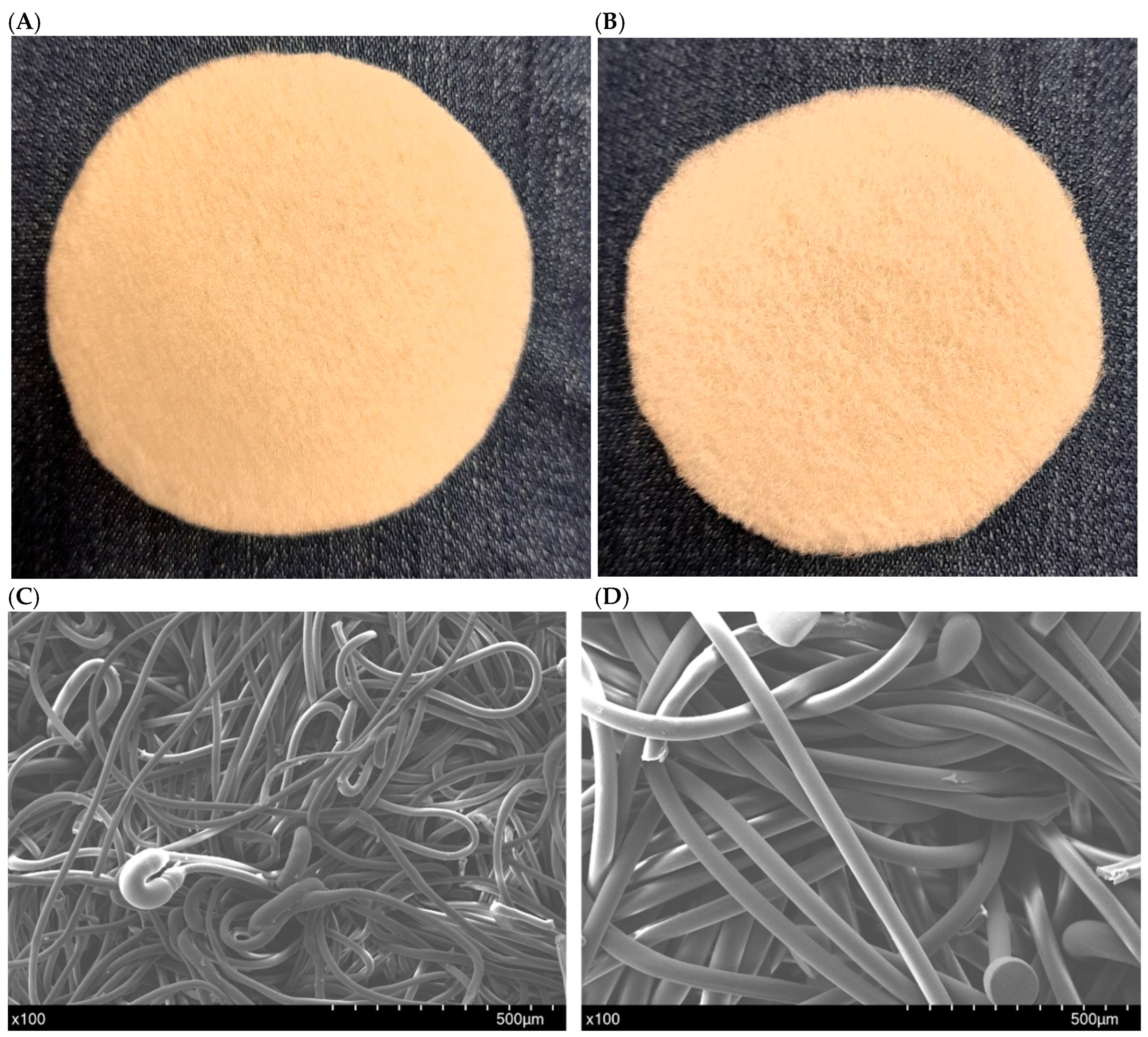
The press felts were supplied from a manufacturer of paper machines clothings (Andritz Fabrics and Rolls GmbH, Gloggnitz, Austria). Two different press felts (designations PF1 and PF2) were examined in the study (Figure 1. Both press felts are made of 100% polyamide fibers (polyamide 6—PA6). Andritz procures the PA6 fibers from EMS-Chemie (EMS-Chemie AG, Domat/Ems, Switzerland) and then processes them internally. Monofilament yarns are twisted and woven in different thicknesses into base fabrics. Batt layers are made from some of the fibers, which are then are needled into the fabrics, which creates the very dense structure of the press felts, and the fibers are mechanically anchored very strongly in the fabric. The two press felts (PF1 and PF2) differ in strength and fiber thickness. The press felts are cut by hand for the filter holder in the test setup. The filter holders were ordered from Carl Roth (Carl Roth GmbH, Karlsruhe, Germany). They are made of polysulfone and a silicone O-ring. They are suitable for multiple use with membrane, paper or glass fiber round filters with a maximum pressure load of 7 kg/cm2. The diameter of the hand-cut press felts is approx. 50 mm. The morphology of the felts was investigated using scanning electron microscopy. To prepare for the experiment, the cut-out felts were rinsed with deionized water at a flow rate of 100 mL/min for 10 min and then placed in open Petri dishes to dry at room temperature in a sterile workbench. After drying, the Petri dishes were sealed and stored at room temperature until an experiment was conducted.
2.2. Optical Analysis
The analysis of the scanning electron microscope (SEM) was carried out with a FlexSEM 1000 (Hitachi High-Tech Corporation, Tokyo, Japan). An acceleration voltage of 15 kV and a working distance of 10 mm were used for imaging. Prior to SEM analysis, all samples were coated with a thin layer of gold using a sputtering system to prepare a conductive surface. The obtained images (Figure 1) were analyzed with the open-source software ImageJ and the average fiber thicknesses of the two press felts were determined.
2.3. Preparation of EDC Core Solutions
Bisphenol A (BPA, Sigma-Aldrich, Burlington, MA, USA, No. E9750) and 17β-estradiol (E2, Sigma-Aldrich, No. E8875) were obtained from Sigma-Aldrich (powder form). Known amounts were weighed and dissolved in acetonitrile (BPA: 10 mg/mL, E2: 1 mg/mL). The solutions were stored in amber glass at +4 °C. To prepare the working solutions, the desired amount was applied with a pipette and diluted with deionized water.
2.4. High Performance Liquid Chromatography (HPLC)
The sample solutions were analyzed on an Agilent 1260 Infinity II HPLC system (Agilent, Santa Clara, CA, USA) equipped with a DAD detector. The analyses were performed at room temperature utilizing a C18 reversed-phase column (Shim-pack GIST, 5 μm, 250 × 4.6 mm, No. 227-30017-08, Shimadzu, Kyoto, Japan) with a 50 µL sample injection volume. Acetonitrile and deionized water (both HPLC grade) were used as a mobile phase with the ratio of 50/50 (v/v) and a flow rate of 1 mL/min. The retention time of BPA was determined to be 8.37 min and for E2 9.46 min. The wavelength of 205 nm used by the DAD detector showed a high signal strength without any noticeable interference from the solvents.
Figure 1.
Pictures of PF1 (A) and PF2 (B) press felts, and corresponding SEM images (100× magnification) for PF1 (C) and PF2 (D).
2.5. Experimental Setup
2.5.1. Setup for Cross-Flow Filtration
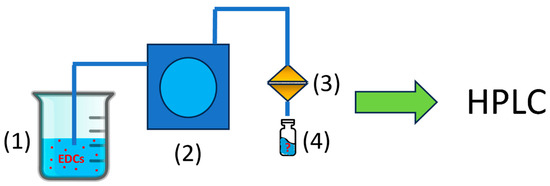
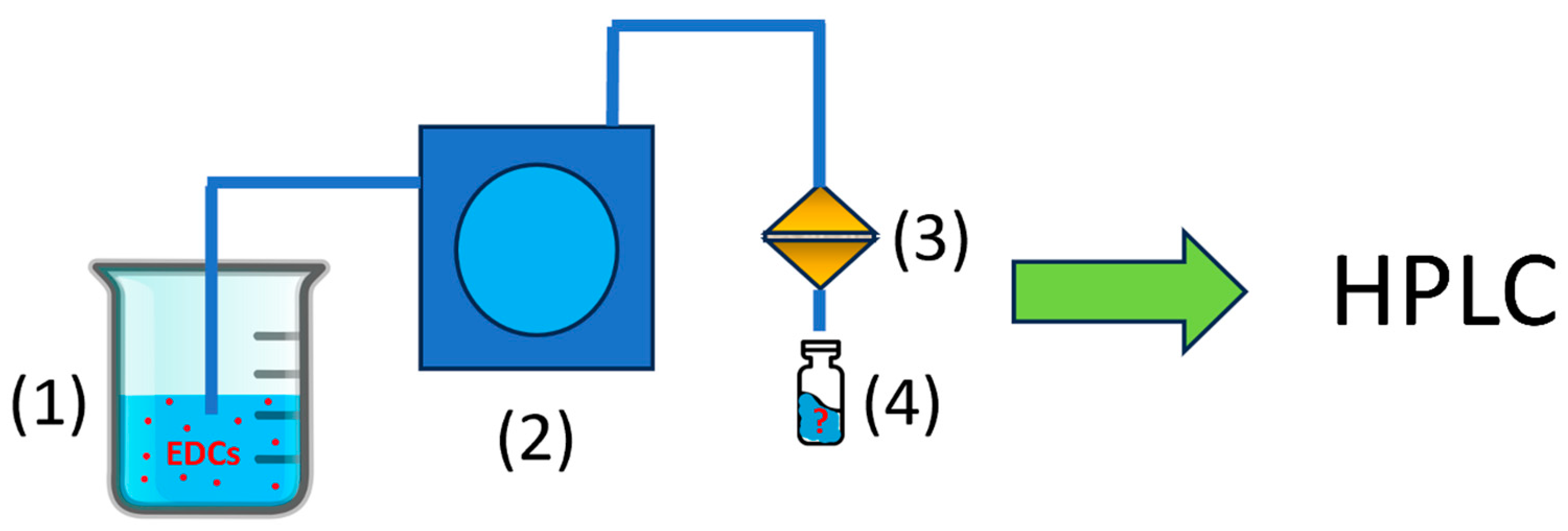
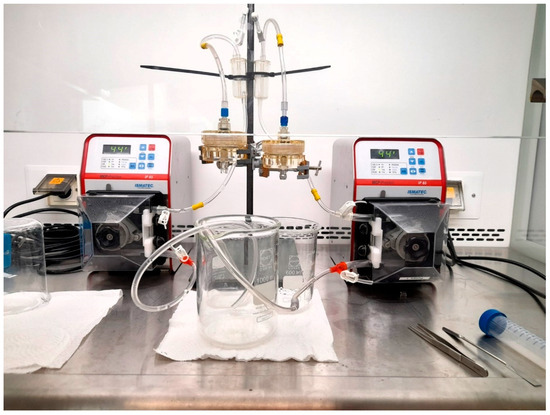
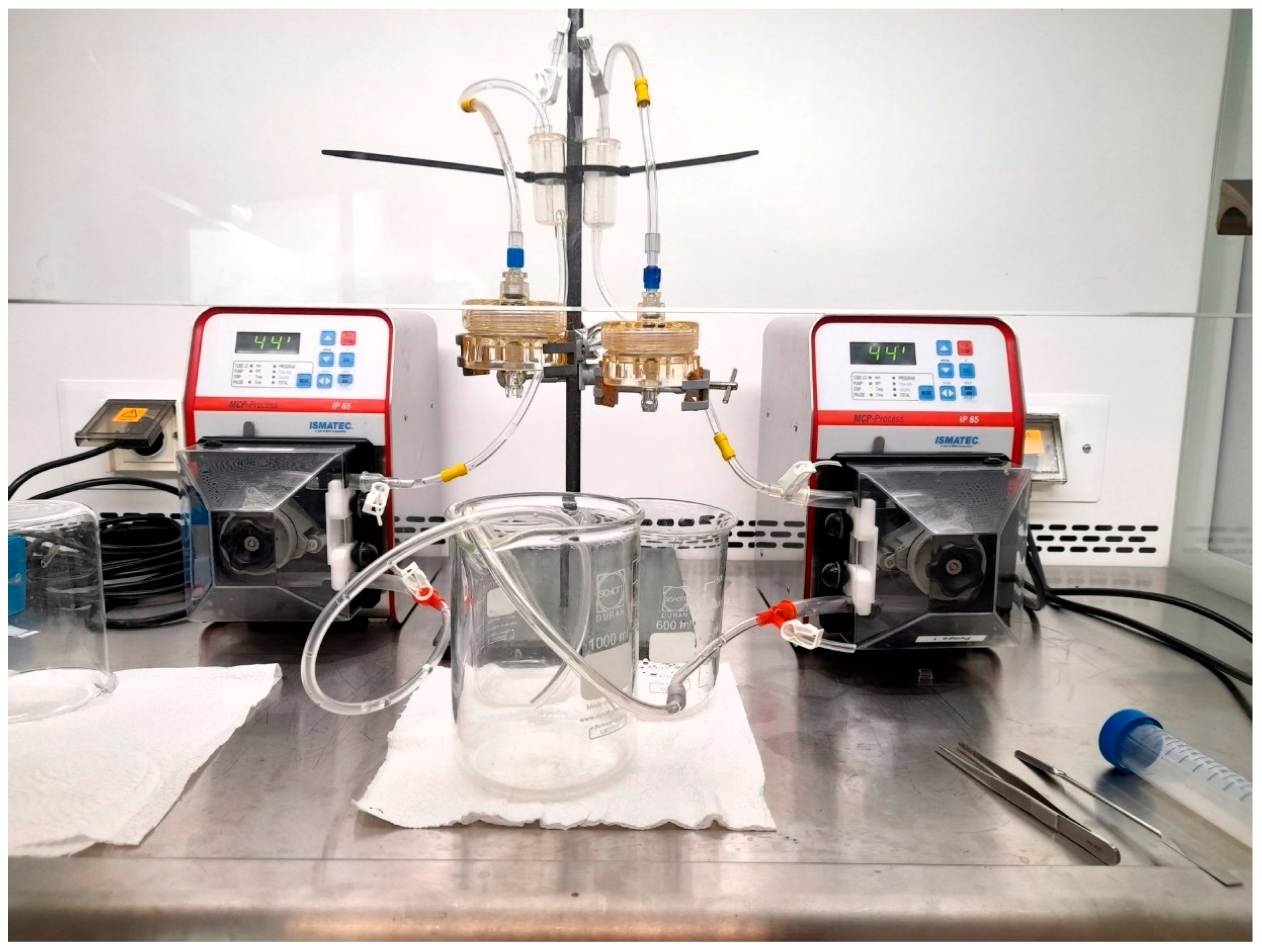
A cross-flow filtration system was put together to investigate the separation efficiency of the polyamide press felts for the BPA and E2 target compounds. The experimental setup is shown in Figure 2 and Figure 3. An Ismatec peristaltic pump (Cole-Parmer, Wertheim am Main, Germany) continuously pumped water with a known EDC concentration (feed solution) through a circular filter holder with a diameter of 50 mm (Whatman 10461400 FP 050/1 Polysulfone Filter Bracket for Inline Filtration) into which a circular piece of the preconditioned press felts was inserted. To produce feed solutions, deionized water was mixed with EDC stock solution to a predetermined concentration of 0.1 μg/mL to 1.5 μg/L. The feeding solution was not recirculated but passed through the press felts in a single pass, whereby the EDC concentration flowing into the filter remained constant over time. All experiments were conducted under neutral pH conditions. The cross-flow rates were set to 10 and 20 mL/min, respectively, and the volume filtered through the felts was monitored using a measuring beaker. Intermittently, samples were taken directly into amber glass vials at the outlet of the filter holder at certain times. The EDC concentration of the individual samples was measured with HPLC-DAD. At the end of each run, the entire filtrate volume was mixed by manual stirring, a sample was taken and transferred to a vial, and the EDC concentration was measured with HPLC. The system was set up twice next to each other, so that two tests could be carried out in parallel. All experiments were performed in duplicate. The systems were placed in a chemical fume hood to avoid health hazards from inhaling possible aerosols. Before and after each experiment, the system was flushed with deionized water. For this purpose, the flow rate was set to 100 mL/min and 500 mL of water was pumped through the hoses and the empty filter holders. Complete purification was regularly checked with HPLC samples of the water at the end of a purification cycle, and no contamination was detected. A separate control experiment, conducted without press felts, demonstrated that the experimental setup (tubing, filter holders, etc.) exhibited negligible sorption of EDCs.
Figure 2.
Schematic representation of the experimental setup, sampling and analysis: (1) reservoir with water and endocrine disruptors (EDCs) in known concentrations (red dots), (2) peristaltic pump, (3) filter holder with press felt, (4) sampling at specific time points directly in amber glass vials. The samples are then analyzed using HPLC.
Figure 3.
Photo of the double experimental cross-flow setup inside the chemical fume hood with peristaltic pumps, filter holders and glass cups for the feed solution and filtrate volume.
2.5.2. Setup for Batch Experiments
In addition to the cross-flow filtration tests, batch tests were performed. For this purpose, the cut press felts are placed in 100 mL Schott flasks containing 60 mL of the feed solution with concentrations of BPA 1 μg/mL and E2 1.5 μg/mL. Samples were taken at defined intervals over a period of at least 24 h, transferred into amber glass vials and subsequently analyzed using HPLC.
2.6. Determination of Digital Pore Size
The digital porosity (DP) was determined from the SEM images of the press felts. The free software ImageJ was used for digital image processing and image analysis. The DP was determined according to the protocol of Cuahuizo-Huitzil et al. [26]. In the first step, the size of the SEM image was calibrated in ImageJ using the SEM scale bar. This was followed by conversion to a black-and-white image, using a threshold value of 75% in the histogram to display the fibers in black and the pores in white. In the next step, a particle analysis of the white areas (pores) was performed, where the particle size and total area of the particles (pores) were determined. The DP can be determined from the ratio of the pore area to the total area using Equation (6). In this step, the average pore size can be calculated too using ImageJ. The determined DP and the average pore size for each press felt are given in Table 1.
Table 1.
Properties of PF1 and PF2 press felts used in the filtration tests.
2.7. Mathematical Calculations
All used mathematical equations and corresponding parameters are listed in Table 2.
Table 2.
Mathematical equations.
3. Results
3.1. Properties and Optical Analysis of Press Felts
The two press felts differ from each other in their overall thickness, fiber thickness and weight. The images taken with the SEM are shown in Figure 1. From these images, it is evident that PF1 was produced from thinner fibers, with an average diameter of approximately 22 μm. PF2 consists of thicker fibers with an average fiber thickness of about 52 μm. For the tests, the press felts were cut into a circle with a diameter of about 50 mm to fit the filter holder. The properties of the cut press felts are listed in Table 1. The values given are an average of the felts used. Since thinner fibers result in a higher number of fiber surfaces per unit volume, PF1 has a larger adsorber surface area compared to PF2. A larger surface area can improve the efficiency of processes such as mass transfer and chemical reactions because there is more contact surface available.
3.2. Cross-Flow Filtration
Efficiency of Removal
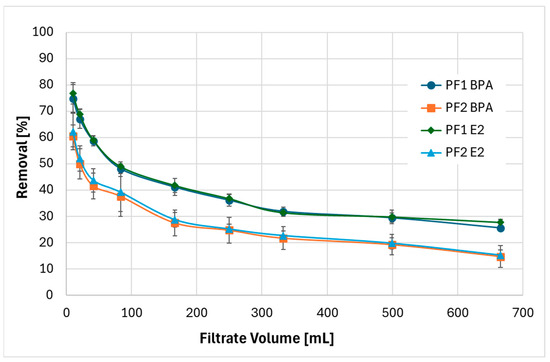
The percentage adsorption of BPA and E2 per press felt (diameter 49 mm) was calculated using Equation (1) and its progression over the flow volume was plotted graphically. The results are shown in Figure 4. The figure demonstrates that both felts are capable of adsorbing BPA and E2. The adsorption is the highest at the beginning and continuously decreases as more volume flows through the felts. The experiments show that PF1 is better suited for the removal of the substances from the water. The uptake is initially approximately 75% and decreases to 25% after 640 mL of the sample solution has flown through the felt. The intake of PF2 is initially around 60% and tends toward 15%. The curves exhibit a similar profile, but the values of PF2 are always 10 to 15% lower than those for PF1. It was observed that BPA and E2 are adsorbed in approximately equal amounts by each press felt. By measuring a sample of the total filtrate, it was possible to calculate the adsorption capacity for a volume of 640 mL, i.e., by what percentage the press felts can reduce the exposure to BPA and E2. This resulted in a 35% reduction in BPA and a 39% reduction in E2 for PF1. For PF2, as expected from Figure 4, the reduction was significantly lower at 23% for BPA and 19% for E2. These values and the corresponding calculated quantities and standard deviations of the adsorbed substances are listed in Table 3.
Figure 4.
Adsorption of BPA and E2 from water by the press felts PF1 and PF2 in cross-flow filtration (no recirculation). Feed solution concentration: 0.15 μg/mL; Flow rate: 10 mL/min; Diameter of the press felts: 49 mm.
Table 3.
Absolut adsorption rates and quantities at the end of cross-flow filtration, where 640 mL of water with 0.15 μg/mL BPA and E2 had passed through the press felts at a flow rate of 10 mL/min (standard deviations of measurements in parentheses).
In subsequent experiments, as already mentioned in Section 2.5.1, the concentrations of the working solution and the flow rate were changed. From the samples of the total filtrate, the percentage of total intake of the felts was first calculated, followed by the adsorbed amount per 1 g of press felt. The values are listed in Table 3. In all measurements, PF1 shows higher uptake of the substances BPA and E2. At an initial concentration of 0.15 μg/mL BPA and E2 and a flow rate of 10 mL/min, the amount adsorbed by PF1 is approximately twice that adsorbed by PF2. The percentage of total intake of BPA and E2 is very similar at the same initial concentration. The calculated values of the desorbed quantity should be interpreted with caution when initial concentrations of 1.5 μg/mL BPA and 1 μg/mL E2 differ from each other.
3.3. Effect of Flow Rate
Fixed Initial Concentration
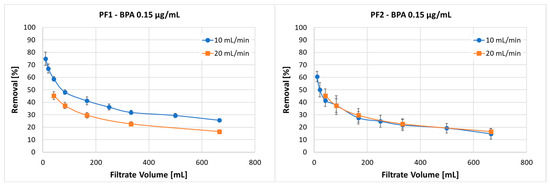
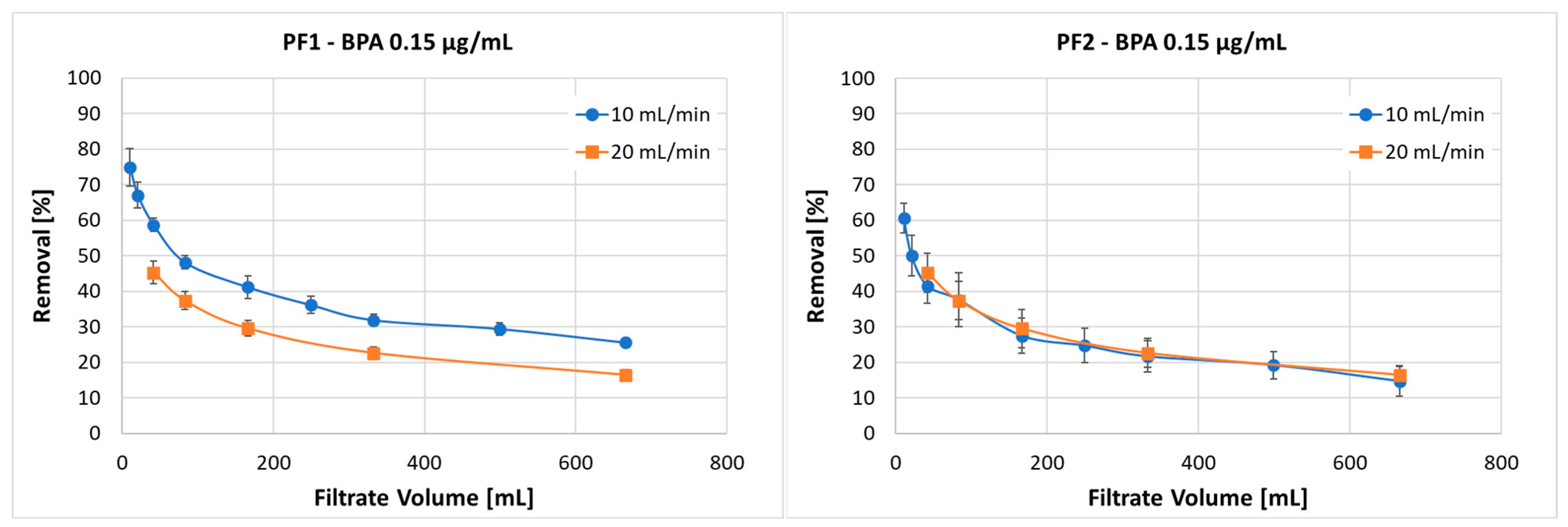
At the same initial concentration of the working solution, doubling the flow rate from 10 to 20 mL/min for both press felts PF1 and PF2 causes a reduction in the uptake of the substances BPA and E2, see Figure 5 for selected values and Table 4, demonstrating all aforementioned values where for lower initial concentrations, this effect is stronger. For PF1 at the initial concentration of 0.15 μg/mL, doubling the flow rate causes a change in total uptake from 35 to 27% for BPA and from 39 to 24% for E2. For PF2, the total intake of BPA changes from 23 to 19% and for E2 from 19 to 17%. A similar trend is observed with the doubling of the flow rates at the initial concentration of 1.5 µg/mL. An increase in the flow rate causes a reduced total adsorption of the substances BPA and E2 (Table 4).
Figure 5.
Total BPA uptake of PF1 (left) and PF2 (right) at different flow rates and the initial concentration of 0.15 μg/mL BPA.
Table 4.
Compilation of the adsorbed amounts of BPA and E2 as a function of the initial concentration and the press felt.
3.4. Effect of Initial Concentration
Fixed Flow Rate at 10 mL/min
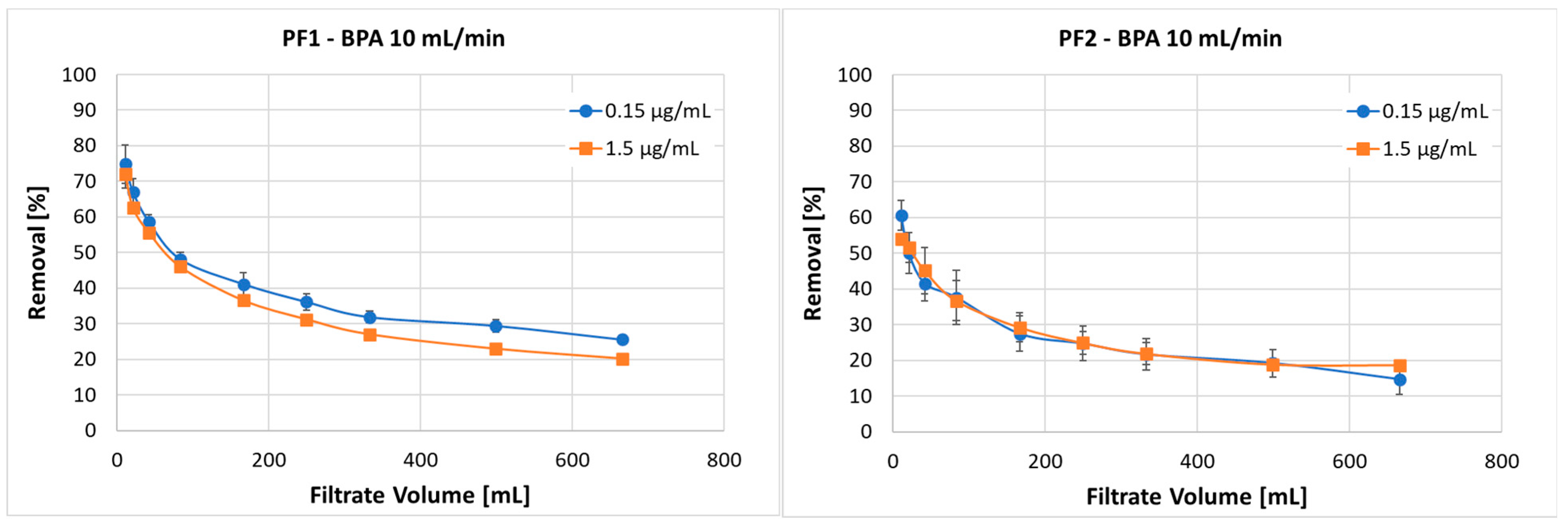
An increase in the initial concentration C0, tenfold for BPA and sevenfold for E2, results in a decrease in the adsorption capacity of PF1 (removal efficiency), which could indicate a saturation of the felts under these conditions. For PF2, the percentage of total intake does not change when the concentrations increase. The amount adsorbed per 1 g of felt material increases with an increase in concentration for both press felts, see Table 4. For BPA, a 10-fold increase in concentration from 0.15 to 1.5 μg/mL results in an increase in the amount of BPA adsorbed per 1 g of felt from 13.39 to 134.3 μg/g for PF1 and from 7.19 to 80.3 μg/g for PF2. For E2, a 6.7-fold increase in concentration from 0.15 to 1.0 μg/mL results in an increase in the amount of E2 adsorbed per 1 g of felt from 15.2 to 89.3 μg/g for PF1 and from 7.33 to 54.7 μg/g for PF2. For PF1, saturation is indicated here, as the adsorbed amount increases by a smaller factor than the initial concentration. With PF2, such saturation is not observed. Both the concentration and the adsorbed amount increase proportionally by the same factor. The test results are summarized in Table 4 and shown in Figure 6 for BPA.
Figure 6.
BPA uptake of PF1 and PF2 at different BPA initial concentrations and a flow rate of 10 mL/min.
3.5. Modeling of Adsorption Performance
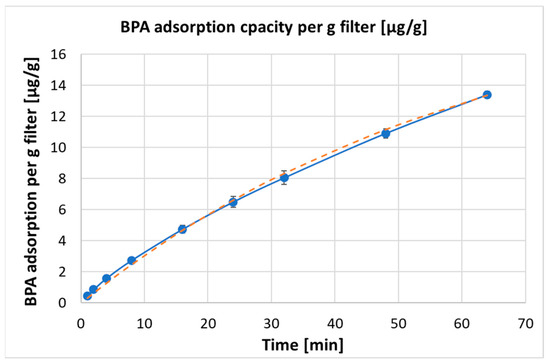
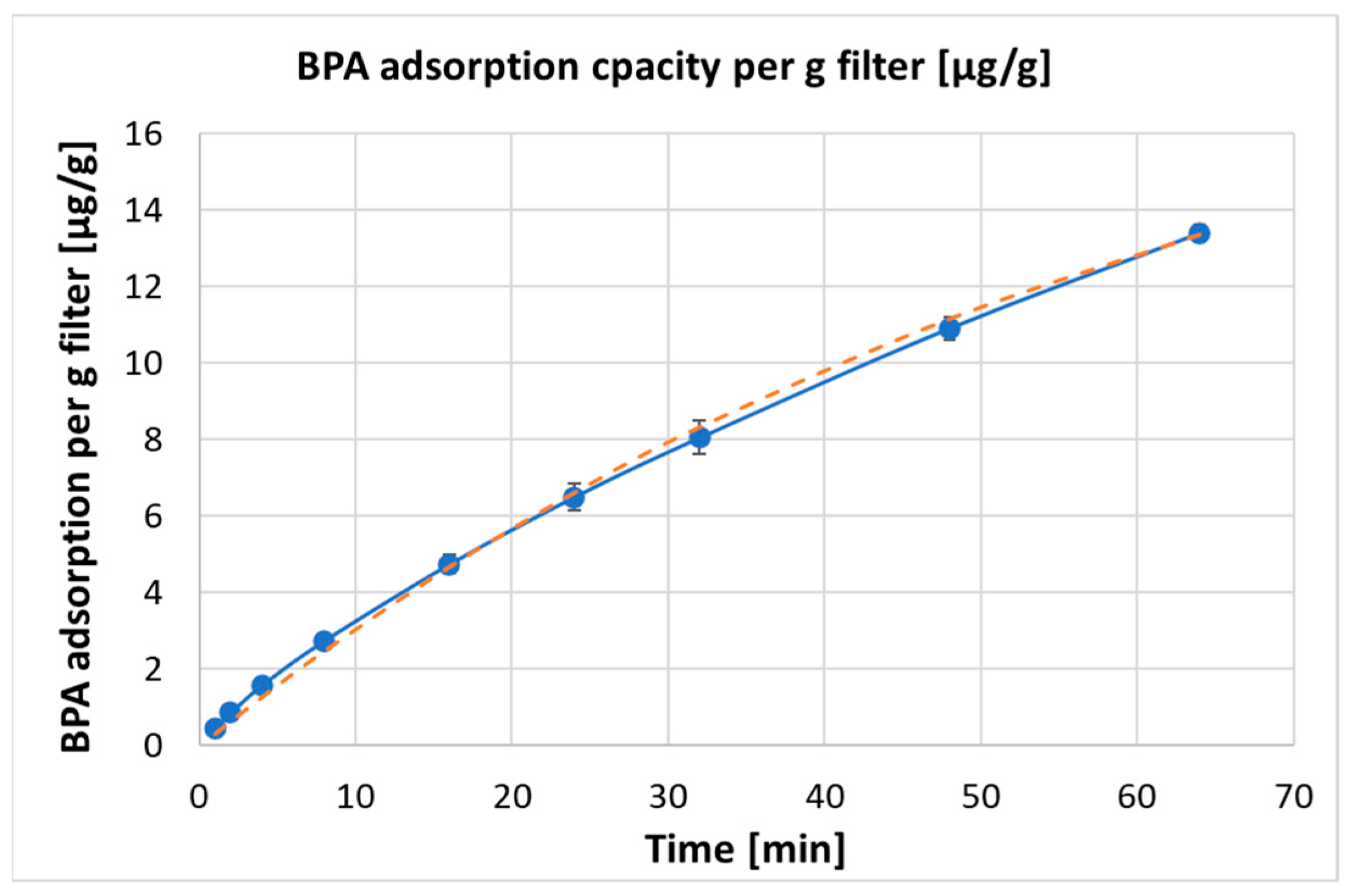
From the series of experiments, the adsorption capacity or the amount of adsorbate per unit mass of the adsorbent qt at timepoint t was calculated according to Equation (2) where V is the volume of the solution, m the mass of the dry adsorbent, C0 the initial concentration of the adsorbate (e.g., pollutant) in the solution and Ct the concentration of the adsorbate in the solution. From the data, the adsorbed quantity q for BPA or E2 was calculated for each measuring point of a pump run. As an example, Figure 7 shows the temporal course of qt for PF1 for a working solution of 0.15 μg/mL BPA with a flow rate of 10 mL/min, whereby the adsorption capacity decreases over time and, thus, a saturation of the adsorbent occurs. In order to estimate the maximum adsorbable amount qt_max the felts PF1 and PF2 for BPA and E2, the qt diagrams (Figure 7) were fitted with the Formula (3) using Sigma Plot V11 (Alfasoft, Frankfurt am Main, Germany).
Figure 7.
Time course of the BPA adsorption capacity qt per gram of press felt (PF1) at a working solution of 0.15 μg/mL and a flow rate of 10 mL/min (dashed line shows the modeling (Equation (2), constants from Table 5) with R2 = 0.99.
As time t approaches infinity, qt asymptotically tends toward qt_max, thus describing the maximum adsorbable amount qt_max of BPA or E2. The values for the maximum adsorbable amount of BPA or E2 calculated with this model are shown in Table 5 for the different experiments.
Table 5.
Values calculated from the model for qt_max for two press felts PF1 and PF2 at different concentrations of the working solutions and flow rates.
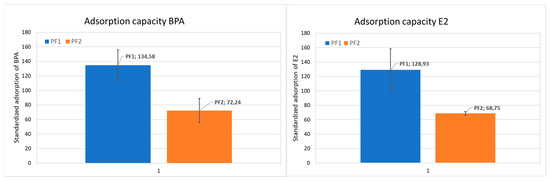
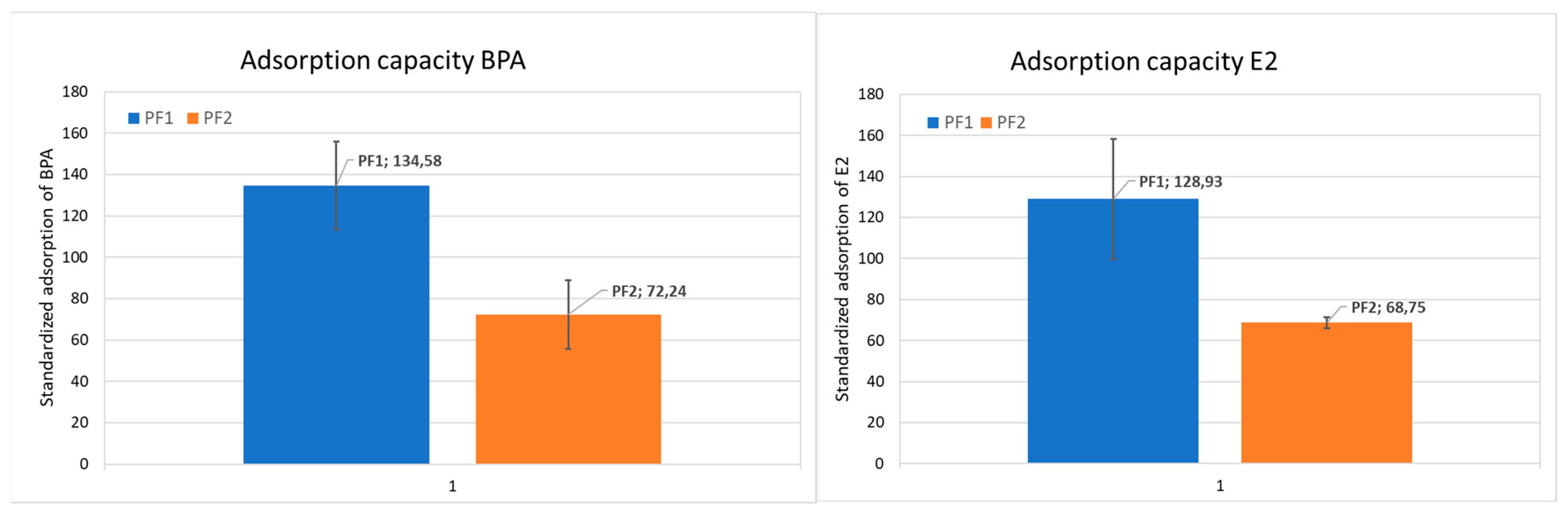
The maximum adsorption capacity qt_max of BPA and E2 depends on the initial concentration, whereby after about time 3 ∙ b−1 an equilibrium state is established at which qt_max can be determined. In order to determine the adsorption capacity of the press felts independent of the initial concentration, qt_max is normalized to the initial concentration of the working solution (Equation (4)). The normalized adsorption capacities (Equation (4)) for BPA and E2 at PF1 and PF2 at a flow rate of 10 mL/min are summarized in Table 6 and shown in Figure 8.
Table 6.
Mean values and standard deviations of the normalized adsorption capacities of PF1 and PF2 for BPA and E2.
Figure 8.
Normalized adsorption capacity of press felts PF1 and PF2 for BPA and E2 at a flow rate of 10 mL/min.
The data demonstrate that the adsorption capacity depends only weakly on the working-solution concentration at the investigated flow rate. The normalized adsorption capacities of BPA and E2 are approximately the same for PF1 and PF2, but the absolute adsorption capacities differ significantly from PF1 to PF2, approximately by a factor of 2. The higher adsorption capacity of PF1 compared to PF2 can be explained by the larger adsorption surface area available due to the thinner fibers and denser felt.
Batch Experiments
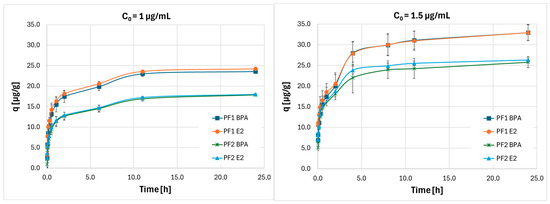
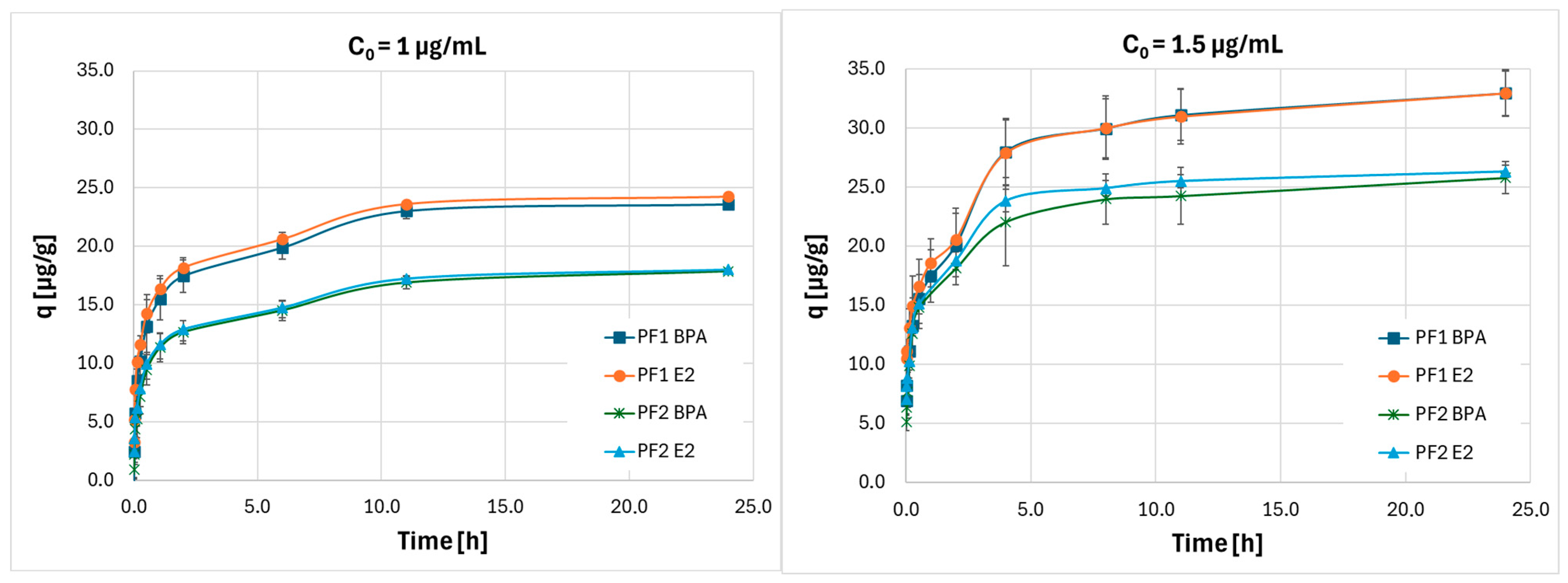
The adsorption kinetics of the ingested amount q per 1 g of felt material were determined for the two felts in the batch test and are shown for BPA and E2 in Figure 9. In batch experiments, both felts are also able to adsorb the two substances BPA and E2. The time course of adsorption increases sharply at first and flattens out after about 4 h, which means that the majority of the uptake happens within the first few hours. The state of equilibrium is reached after about 10 h. The adsorption kinetics for BPA and E2 are approximately the same for both felts. PF1 can adsorb more per 1 g of felt material than PF2; the difference in adsorption capacity between the two felts is about 7 μg/g at C0 = 1.5 μg/mL (see Figure 9, left) and at C0 = 1 μg/mL, about 9 μg/g (see Figure 9, right). The higher the initial concentration, the more the felt material adsorbs.
Figure 9.
Time course (adsorption kinetics) of the ingested amount q per gram of felt material for PF1 and PF2 at different initial concentrations C0. Left: C0 = 1.5 μg/mL BPA/E2, right: C0 = 1 μg/mL BPA/E2.
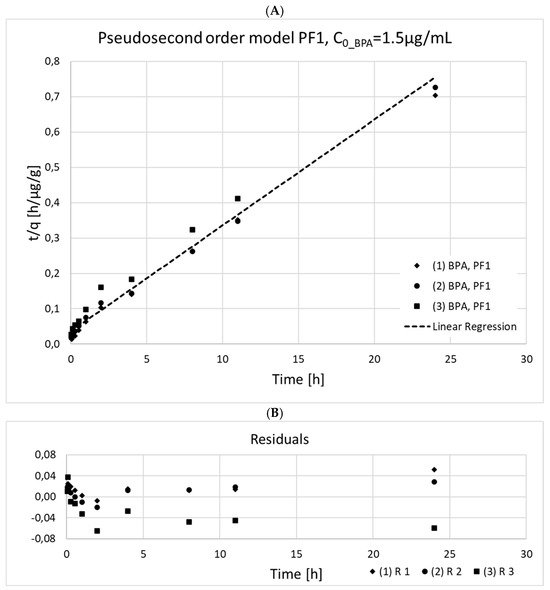
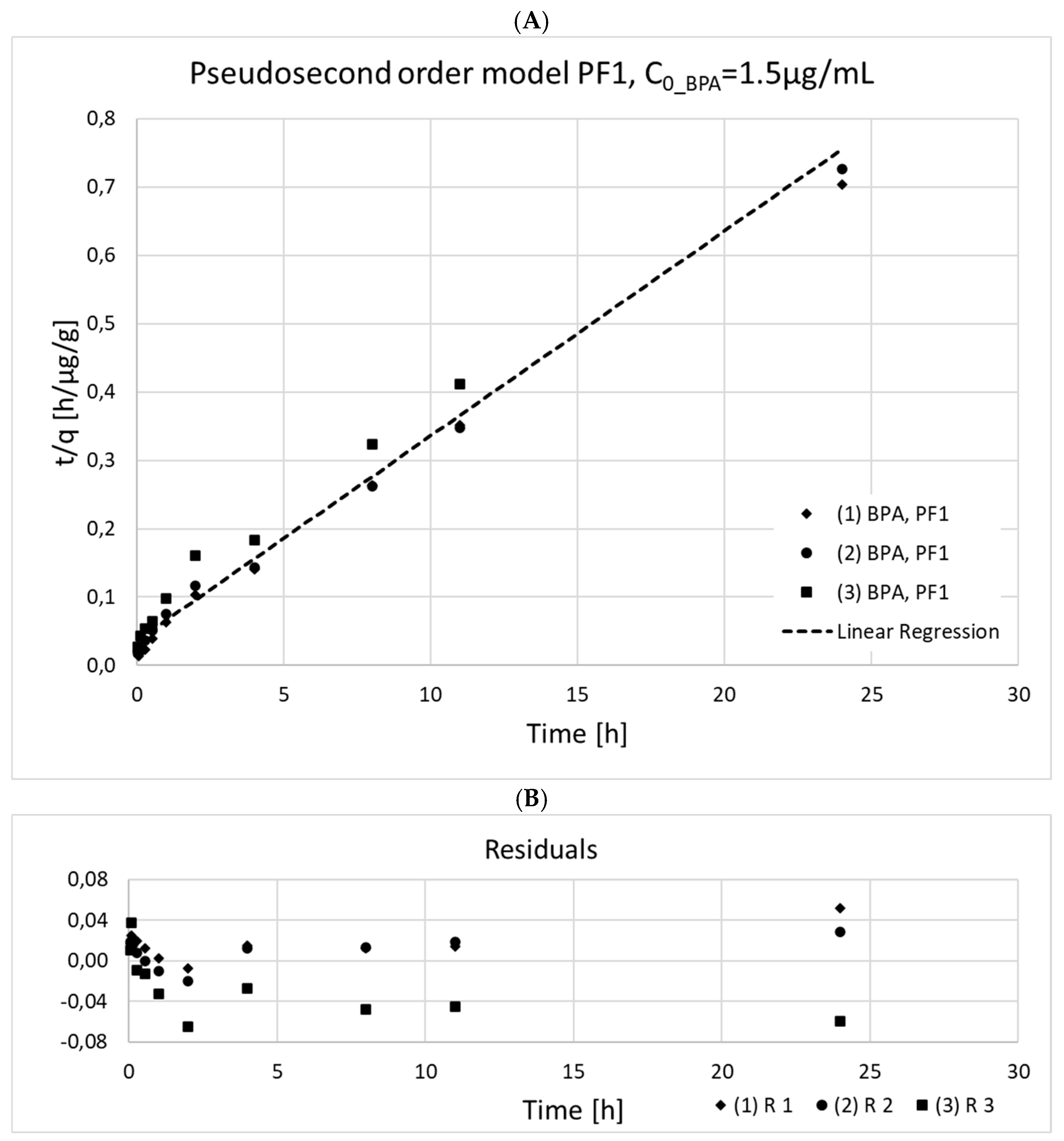
The adsorption kinetics of the felts PF1 and PF2 can be represented as a pseudo-second-order model for the initial concentrations of BPA and E2 used in the batch experiment. References [27,28] report that the kinetics of sorption processes subject to Langmuir adsorption can be effectively formulated as pseudo-second-order models at low initial concentrations. This behavior was investigated as an example for the adsorption kinetics of BPA (1.5 μg/mL) on press felt PF1 and calculated for the mean value of 3 batch tests (Equation (5)). The plot of t/q versus time t gives a straight line with slope of 1/qe and intercept of 1/k2∙qe2 (Figure 10A). Thus, the equilibrium adsorption capacity (qe) and the sorption rate constant (k2) could be obtained from the slope and intercept of the corresponding linear fit, respectively. The equilibria qe for felts PF1 and PF2 in batch with PBA and E2 are shown in Table 7. From Equation (5), the rate constant pseudo-second-order k2 results in 0.028 g μg−1 h−1. The pseudo-second-order model was created based on the assumption that, as described by Westrup [29], chemisorption may be the rate-determining mechanism and that the adsorption capacity is proportional to the number of active centers on the surface of the adsorption material. Therefore, these substances are mainly adsorbed onto the microfiber surfaces through chemical interactions, such as π-π and hydrophobic interactions and hydrogen bonding. However, the current literature recommends verifying the pseudo-second-order model assumption and performing a residual analysis to demonstrate the validity of the model [28]. To this end, the residuals of the three independent experiments (Figure 10B) were examined using the Shapiro–Wilk normality test, and the normal distribution of the residuals was confirmed, justifying the assumption of a pseudo-second-order model [28]. The regression for the pseudo-second-order model was performed using SigmaPlot V11 and is shown in Figure 10 (Regression: y = 0.030 x + 0.036, R2 = 0.985).
Figure 10.
(A) Pseudo-second-order model of BPA adsorption by PF1 in batch experiments, (B) Residuals of pseudo-second-order model, (N = 3, C0_BPA = 1.5 μg/mL).
Table 7.
Equilibria qe [μg/g] per 1 g of press felt for BPA and E2 (Number of experiments: N = 3).
4. Discussion
The results of this study demonstrate the effectiveness of polyamide felts in removing endocrine disruptors (EDCs) from water by cross-flow filtration. The initial removal efficiency of 75% for contaminants such as bisphenol A (BPA) and 17β-estradiol (E2) is remarkable, especially when compared to other materials and methods reported in the literature. Cross-flow filtration is known for its benefits in minimizing contamination and maintaining high filtration efficiency. The overview study [17] provides a comprehensive overview of the current state of research on the adsorptive removal of EDCs from aqueous environments using alternative adsorption materials from natural sources, thus pointing to another path for the circular economy. A high potential for EDC removal with agricultural waste-derived adsorbents is shown, offering a sustainable alternative to commercial materials. However, challenges remain in scaling up these methods, ensuring adsorbent regeneration, and maintaining performance under real-world conditions. In a comparative study, Ghosh et al. [30] used microbial polymers and activated carbon to remove EDCs from surface water. They reported effective removal rates for various pollutants, including BPA, using modified materials. These results are in agreement with the findings of this study, which suggest that polyamide felts can serve as an effective adsorbent for EDCs and potentially provide a sustainable alternative to traditional materials. In addition, Cheng et al. [31] highlight the challenges associated with traditional wastewater treatment methods, which are often unable to sufficiently remove EDCs, requiring advanced treatment technologies. This highlights the importance of innovative approaches, such as the use of polyamide felts in cross-flow filtration, to improve the removal of these pollutants from water sources. The study shows that the polyamide felts can have a high initial removal efficiency, which is crucial for overcoming the limitations of existing treatment technologies. When comparing batch experiments with cross-flow filtration, it is important to note that batch systems often have a higher removal efficiency due to the longer contact time between the adsorbent and the pollutants. Studies have shown that activated carbon can achieve a removal efficiency of over 90% in batch experiments [32,33]. However, the dynamic nature of cross-flow filtration allows for continuous operation, which can be beneficial in real-world applications. In practical use, the described press felts could supplement water treatment plants based on membrane technology. Membrane bioreactors (MBRs) represent an advanced wastewater treatment technology that combines biological degradation processes with membrane filtration to achieve high-quality water for reuse. In MBR systems, activated sludge processes are integrated with filtration membranes, removing suspended solids, bacteria, and most viruses [34]. These membranes can be combined with the investigated press felts, resulting in additional removal of EDCs and further improving the properties of MBR systems. The results of this study suggest that while the cleaning performance of polyamide felts decreases after prolonged use, the initial performance remains competitive, indicating a potential for optimizing operating conditions to maintain efficiency over a longer period of time. In addition, research by Rivollier et al. [35] describes the importance of understanding the long-term health effects of EDCs, further highlighting the need for effective cleaning technologies. The ability of polyamide felts to reduce EDC levels in water not only contributes to immediate water safety but also addresses broader public health concerns associated with prolonged exposure to these pollutants. In summary, the results of this study contribute to the expanding literature on the removal of EDCs from water using innovative filtration technologies. The effectiveness of polyamide felts in cross-flow filtration is comparable to other materials and methods, highlighting their potential as a sustainable solution for combating water pollution. Future research should focus on optimizing operating parameters and studying the long-term performance of polyamide felts to improve their applicability in water treatment processes.
5. Conclusions
This study examines the reuse of polyamide felts from the paper industry to remove endocrine disruptors (EDCs) from water in line with circular economy principles. Polyamide, valued for its strength and durability, is used in the paper industry to make press felts, which eventually become waste. Given the high cost and environmental impact of polyamide production, reuse is both sustainable and economically beneficial. This study investigates the effectiveness of polyamide felts in removing BPA and E2 from water through adsorption, a process in which impurities from the liquid phase are transferred to a solid adsorbent. Adsorption is preferred because of its simplicity, cost-effectiveness, and high efficiency in water treatment. Our experimental results show that polyamide felts can achieve an initial adsorption efficiency of 75%, which decreases to 25% after filtering 600 mL of water spiked with concentrations of BPA and E2 ranging from 0.15 μg/mL up to 1.5 μg/mL. The adsorption capacities for BPA and E2 standardized to the working solutions are approximately 135 µg and 130 µg per gram of press felt PF1, respectively, at a flow rate of 10 mL/min. This research shows that felts made from polyamide waste can effectively reduce EDC levels in the water, which contributes to water security and supports a sustainable circular economy. The reuse of polyamide felts not only solves the challenges of waste management but also improves water treatment processes and ensures the protection and preservation of vital water resources.
Author Contributions
Conceptualization, A.K. and M.B.; methodology, A.K., A.M., L.M. and U.R.; validation, A.K., A.M., L.M. and U.R.; formal analysis, A.K., A.M. and L.M.; investigation, A.K. and M.B.; data curation, A.K., A.M. and L.M.; writing—original draft preparation, A.K. and M.B.; writing—review and editing, A.K., A.M., L.M., U.R. and M.B.; project administration, A.K. and M.B.; funding acquisition, M.B. All authors have read and agreed to the published version of the manuscript.
Funding
This research was funded by the Lower Austrian Government and the European Regional Development Fund (ERDF) under grant number WST3-F-5030664/033-2022 and Andritz Fabrics and Rolls Austria GmbH.
Data Availability Statement
The original contributions presented in this study are included in the article. Further inquiries can be directed to the corresponding author.
Acknowledgments
Open Access Funding by the University for Continuing Education Krems.
Conflicts of Interest
The authors declare that this study received funding from Andritz Fabrics and Rolls GmbH, Huyckstrasse 1, 2640 Gloggnitz, Austria. The funder was not involved in the study design, collection, analysis, interpretation of data, the writing of this article or the decision to submit it for publication.
References
- Yilmaz, B.; Terekeci, H.; Sandal, S.; Kelestimur, F. Endocrine disrupting chemicals: Exposure, effects on human health, mechanism of action, models for testing and strategies for prevention. Rev. Endocr. Metab. Disord. 2020, 21, 127–147. [Google Scholar] [CrossRef] [Scilit]
- Lusher, A.L.; Pope, N.; Handy, R.D. Reproductive effects of endocrine disrupting chemicals, bisphenol-A and 17β-oestradiol, on Cerastoderma edule from south-west England: Field study and laboratory exposure. J. Mar. Biol. Assoc. United Kingd. 2017, 97, 347–357. [Google Scholar] [CrossRef] [Scilit]
- Norouzi, N. A Practical and Analytical View of the Legal Framework of the Circular Economy as One of the Recent Economic Law Findings: A Comparative Legal Study. Circ. Econ. Sustain. 2022, 2, 961–986. [Google Scholar] [CrossRef] [Scilit]
- Romero-Hernández, O.; Romero, S. Maximizing the Value of Waste: From Waste Management to the Circular Economy. Thunderbird Int. Bus. Rev. 2018, 60, 757–764. [Google Scholar] [CrossRef] [Scilit]
- International Programme on Chemical Safety. Global Assessment of the State of the Science in the Field of Endocrine Disruptors. No. WHO/PCS/EDC/02.2, 2002. Available online: https://iris.who.int/handle/10665/67357 (accessed on 26 September 2025).
- AGES—Information on Risk Assessment. AGES. Available online: https://www.ages.at/mensch/ernaehrung-lebensmittel/risiko-bewertung-wahrnehmung/informationen-zur-risikobewertung (accessed on 19 July 2022).
- Bila, D.; Montalvão, A.F.; Azevedo, D.d.A.; Dezotti, M. Estrogenic activity removal of 17β-estradiol by ozonation and identification of mo-products. Chemosphere 2007, 69, 736–746. [Google Scholar] [CrossRef] [Scilit]
- Burkhardt-Holm, P. Endocrine disruptors and water quality: A state-of-the-art review. Int. J. Water Resour. Dev. 2010, 26, 477–493. [Google Scholar] [CrossRef] [Scilit]
- Brueller, W.; Inreiter, N.; Boegl, T.; Rubasch, M.; Saner, S.; Humer, F.; Moche, W.; Schuhmann, A.; Hartl, W.; Brezinka, C.; et al. Occurrence of chemicals with known or suspected endocrine action in drinking water, groundwater and surface water, Austria 2017/2018. Bodenkult. J. Land Manag. Food Environ. 2018, 69, 155–173. [Google Scholar] [CrossRef] [Scilit]
- Forum Drinking Water Hygiene. Drinking Water Book 2017; CRC Press: Boca Raton, FL, USA, 2017. [Google Scholar]
- Directive (EU) 2020/2184 of the European Parliament and of the Council of 16 December 2020 on the Quality of Water Intended for Human Consumption. Available online: https://eur-lex.europa.eu/eli/dir/2020/2184/oj/eng (accessed on 26 September 2025).
- Pironti, C.; Ricciardi, M.; Proto, A.; Bianco, P.M.; Montano, L.; Motta, O. Endocrine-disrupting compounds: An overview on their occurrence in the aquatic environment and human exposure. Water 2021, 13, 1347. [Google Scholar] [CrossRef] [Scilit]
- Ifelebuegu, A.; Ukpebor, J.; Obidiegwu, C.; Kwofi, B. Comparative potential of black tea leaves waste to granular activated carbon in the adsorption of endocrine active compounds from aqueous solution. Glob. J. Environ. Sci. Manag. 2015, 1, 205–214. [Google Scholar]
- De Gisi, S.; Lofrano, G.; Grassi, M.; Notarnicola, M. Properties and Adsorption Capacities of Low-Cost Sorbents for Wastewater Treatment: An Overview. Sustain. Mater. Technol. 2016, 9, 10–40. [Google Scholar] [CrossRef] [Scilit]
- Samadi, A.; Gao, L.; Kong, L.; Orooji, Y.; Zhao, S. Low-Cost Ceramic Membranes for Water Treatment Derived from Waste: Opportunities, Challenges, and Future Directions. Resour. Conserv. Recycl. 2022, 185, 106497. [Google Scholar] [CrossRef] [Scilit]
- Wang, J.; Guo, X. Adsorption Kinetic Models: Physical Meanings, Applications, and Solution Methods. J. Hazard. Mater. 2020, 390, 122156. [Google Scholar] [CrossRef] [Scilit]
- Adegoke, K.A.; Olagunju, A.O.; Alagbada, T.C.; Alao, O.C.; Adesina, M.O.; Afolabi, I.C.; Adegoke, R.O.; Bello, O.S. Adsorptive removal of endocrine-disrupting chemicals from aqueous solutions: A review. Water Air Soil Pollut. 2022, 233, 38. [Google Scholar] [CrossRef] [Scilit]
- Zheng, L.; Wang, M.; Li, Y.; Xiong, Y.; Wu, C. Recycling and Degradation of Polyamides. Molecules 2024, 29, 1742. [Google Scholar] [CrossRef] [Scilit] [PubMed]
- Maniar, D.; Hohmann, K.F.; Jiao, Y.; Woortman, A.J.J.; van Dijken, J.; Loos, K. Enzymatic polymerization of dimethyl-2,5-furandicarboxylate and heteroatom diamines. ACS Omega 2018, 3, 7077–7085. [Google Scholar] [CrossRef] [Scilit] [PubMed]
- Liu, M.; Lai, E.P.; Yang, Y. Removal of 17β-Estradiol by Nylon Filter Membrane: Adsorption Kinetics and Thermodynamics. Int. J. Res. Rev. Appl. Sci. 2012, 11, 67–73. [Google Scholar]
- Han, J.; Meng, S.; Dong, Y.; Hu, J.; Gao, W. Capturing hormones and bisphenol A from water via sustained hydrogen bond driven sorption in polyamide microfiltration membranes. Water Res. 2013, 47, 197–208. [Google Scholar] [CrossRef] [Scilit] [PubMed]
- Lara, L.Z.; Bertoldi, C.; Alves, N.M.; Fernandes, A.N. Sorption of endocrine disrupting compounds on polyamide microplastics under different environmental conditions: Behavior and mechanism. Sci. Total Environ. 2021, 796, 148983. [Google Scholar] [CrossRef] [Scilit]
- Tizaoui, C.; Fredj, S.B.; Monser, L. Polyamide-6 for the removal and recovery of the estrogenic endocrine disruptors estrone, 17β-estradiol, 17α-ethinyl estradiol and the oxidation product 2-hydroxyestradiol in water. Chem. Eng. J. 2017, 328, 98–105. [Google Scholar] [CrossRef] [Scilit]
- Auvinen, S.; Auvinen, H. Life cycle assessment of press felt and filtration products. Mater. Sci. Eng. 2020. [Google Scholar]
- Muhamad, M.S.; Salim, M.R.; Lau, W.J.; Yusop, Z. A review on bisphenol A occurrences, health effects and treatment process via membrane technology for drinking water. Environ. Sci. Pollut. Res. 2016, 23, 11549–11567. [Google Scholar] [CrossRef] [Scilit]
- Cuahuizo-Huitzil, G.; Olivares-Xometl, O.; Arellanes-Lozada, P.; Laguna Cortés, J.O.; Arriola Morales, J.; Santacruz-Vázquez, C.; Santacruz-Vázquez, V. Estimation of digital porosity of electrospun veils by image analysis. Polymers 2024, 16, 300. [Google Scholar] [CrossRef] [Scilit]
- Azizian, S. Kinetic models of sorption: A theoretical analysis. J. Colloid Interface Sci. 2004, 276, 47–52. [Google Scholar] [CrossRef] [Scilit]
- Revellame, E.D.; Fortela, D.L.; Sharp, W.; Hernandez, R.; Zappi, M.E. Adsorption kinetic modeling using pseudo-first order and pseudo-second order rate laws: A review. Clean. Eng. Technol. 2020, 1, 100032. [Google Scholar] [CrossRef] [Scilit]
- Westrup, J.L.; Bertoldi, C.; Cercena, R.; Dal-Bó, A.G.; Soares, R.M.D.; Fernandes, A.N. Adsorption of endocrine disrupting compounds from aqueous solution in poly (butyleneadipate-co-terephthalate) electrospun microfibers. Colloids Surf. A Physicochem. Eng. Asp. 2021, 611, 125800. [Google Scholar] [CrossRef] [Scilit]
- Ghosh, M.; Balamurugan, K.; Sharma, V. Microbial polymers as sustainable agents for mitigating health risks of plant-based endocrine disruptors in surface water. Int. J. Environ. Res. Public Health 2021, 18, 10040. [Google Scholar] [CrossRef] [Scilit]
- Cheng, J. Study on removal of endocrine disruptors in water bodies by advanced persulfate oxidation technology: A review. Appl. Comput. Eng. 2023, 3, 190–194. [Google Scholar] [CrossRef] [Scilit]
- Choi, K.J.; Kim, S.G.; Kim, C.W.; Kim, S.H. Effects of activated carbon types and service life on removal of endocrine disrupting chemicals: Amitrol, nonylphenol, and bisphenol-A. Chemosphere 2005, 58, 1535–1545. [Google Scholar] [CrossRef] [Scilit]
- Snyder, S.A.; Adham, S.; Redding, A.M.; Cannon, F.S.; DeCarolis, J.; Oppenheimer, J.; Wert, E.C.; Yoon, Y. Role of membranes and activated carbon in the removal of endocrine disruptors and pharmaceuticals. Desalination 2007, 202, 156–181. [Google Scholar] [CrossRef] [Scilit]
- Shukla, B.K.; Parashar, B.; Patel, T.; Gupta, Y.; Verma, S.; Singh, S. Polymeric Membranes in Water Treatment: Insights into Contaminant Removal Mechanisms and Advanced Processes. Eng. Proc. 2025, 87, 69. [Google Scholar]
- Rivollier, F.; Krebs, M.; Kébir, O. Perinatal exposure to environmental endocrine disruptors in the emergence of neurodevelopmental psychiatric diseases: A systematic review. Int. J. Environ. Res. Public Health 2019, 16, 1318. [Google Scholar] [CrossRef] [Scilit] [PubMed]

Disclaimer/Publisher’s Note: The statements, opinions and data contained in all publications are solely those of the individual author(s) and contributor(s) and not of MDPI and/or the editor(s). MDPI and/or the editor(s) disclaim responsibility for any injury to people or property resulting from any ideas, methods, instructions or products referred to in the content. |
© 2025 by the authors. Licensee MDPI, Basel, Switzerland. This article is an open access article distributed under the terms and conditions of the Creative Commons Attribution (CC BY) license.