Article

Seasonal Changes of Extreme Precipitation in Relation to Circulation Conditions in the Sudetes Mountains


Institute of Meteorology and Water Management—National Research Institute, ul. Podleśna 61, 01-673 Warszawa, Poland
*
Author to whom correspondence should be addressed.
Water 2026, 18(1), 103; https://doi.org/10.3390/w18010103 (registering DOI)
Submission received: 18 October 2025 / Revised: 3 November 2025 / Accepted: 8 November 2025 / Published: 1 January 2026
(This article belongs to the Special Issue Analysis of Extreme Precipitation Under Climate Change)

Abstract

Heavy precipitation, and its dependence on atmospheric circulation, is one of the most important weather features in Central Europe. The Polish–Czech Sudetes Mountains and their northern foreland are one of the regions where such precipitation, under certain circulation conditions, often results in floods. The main goal of this paper is to examine multiannual changes in seasonal heavy precipitation between 1961–2020 and to assess their relationship with atmospheric circulation. The data were derived from the Polish and Czech meteorological stations, representing various altitudes and geographical regions. For the purposes of the study, several indices were used, including 1-, 3-, and 5-day maximum precipitation, as well as two indices based on the 90th and 95th percentile thresholds. In the analysis concerning atmospheric circulation, the Lityński classification was considered. The results show that the changes in heavy precipitation usually do not indicate homogeneous directions and are strongly affected by applied indices, seasons, and various geographic factors. Those include the northern/southern slope exposition, which significantly determines heavy precipitation under circulation conditions typical for individual seasons. This particularly concerns heavy precipitation for the north and northeast types, which contribute to higher rates of the considered index, especially in the northern part of the mountains.

1. Introduction

Precipitation is one of the most important variables that affects both the natural environment and human activity. In the case of the latter, the most significant influence is related to droughts and heavy precipitation, which are responsible for noticeable economic losses in Europe [1]. While droughts develop slowly and usually have an impact on such sectors as water resources, agriculture, and the natural environment, extreme precipitation is a rapid phenomenon that affects not only economic sectors but can also be a risk for human life and health. It can result in river floods that currently account for almost 43% of hazards in Europe [1]. Furthermore, heavy rains can contribute to flash floods occurring, especially in urban areas [2,3], consequently triggering local floods and relatively high losses due to damage in municipal infrastructure. Research carried out for Czechia indicated that, according to some climate change patterns, losses related to minor floods can increase in the future, while those resulting from the largest events might be reduced [4]. Besides economic issues, heavy precipitation is a serious risk factor for humans due to both river and flash floods (i.e., [5,6]), as well as negatively affecting weather suitability for tourism purposes [7]. Studies on the influence of heavy precipitation and floods on various sectors in Central Europe indicate that water management, agriculture, public health, transport, spatial management, and tourism are the most vulnerable sectors [8,9,10].
In recent decades, heavy precipitation has become a significant issue, especially in mountain and submountain regions, which are often characterized by high dynamics. These events have been frequent in such regions as the Sudetes Mountains and their foreland, located in the Polish–Czech border area, where several catastrophic floods (caused by heavy rains) have been observed in the past, particularly in 1902, 1903, 1977, 1997, 2010 [11,12], and 2024. It should be emphasized that this region is one of the most vulnerable Polish regions in terms of floods triggered by extreme precipitation [11,12,13,14].
The most disastrous event occurred in July 1997, when daily precipitation totals exceeded 200 mm, while the amounts for three consecutive days (5–7 July) reached as much as 456 mm [12,15]. Such conditions consequently caused numerous deaths and significant material losses. In August 2010, daily precipitation locally amounting to 180 mm contributed to a severe flash flood in the Lusatian Neisse River basin in the western part of the region. This episode resulted in the destruction of a local dam [16] and material losses of 225 mln PLN (ca. 50 mln €) [17]. The most recent flood episode in southwest Poland and Czechia occurred in September 2024 and was the consequence of the Genoa low activity in Central Europe. The total losses related to this flood amounted to more than 1.6 bln €, including 285 mln € in Poland [18]. Such events in mountain areas can also contribute to intensive landslide activity, which is relatively often observed in the southern, mountainous part of Poland [19].
In the case of multiannual changes of precipitation conditions, the analysis for both Poland and Czechia usually indicated insignificant trends for precipitation totals [20,21,22,23,24,25,26,27,28,29,30,31,32,33]. However, some research carried out for this part of Europe showed a growth for winter totals and negative trends for the summer season [34,35,36,37]. Furthermore, several studies concerning the regions of southern Poland indicated slight negative trends for both summer [38] and annual precipitation totals [21,22,29]. These analyses also included southwest Poland and the Sudetes Mountains, where a decrease of precipitation was found for the spring-summer period at some stations representing this region [29,30]. Regarding seasonal variability in Czechia, positive trends were predominant, either for most of the seasons [39] or in winter and summer [40], depending on the considered period. A significant variability was also noticed in Saxony (Germany), where opposite trends were observed for winter (positive) and summer (negative) seasons [41,42,43,44].
The changes in the number of days with precipitation in southwest Poland were characterized by statistically significant, positive trends, especially in the Sudetes Mountains and their foreland, where their frequency in 1951–2018 increased by 2% [22]. In Czechia, the changes in 1961–2019 depended on the season and reflected negative trends in the April–June period and the positive ones in July–September [33].
In the case of heavy precipitation, the recent Polish studies showed that the most extreme events, defined by daily totals exceeding 100 mm and 30 mm, mainly occur in the May–August period and in July, respectively [45]. The research carried out for Czechia indicated an essential role of large-scale heavy precipitation and its seasonal differences [46], whereas the analysis for the Czech–German–Polish border area examined the frequency of heavy precipitation in various hypsometric zones of the Sudetes [47,48].
Although the changes in precipitation totals in Central Europe are not as evident as in the northern and southern regions of the continent [49,50], the occurrence of extreme events can still increase even in areas characterized by negative trends for precipitation totals [19,51,52]. According to Zeder and Fischer [53], short- and long-lasting extreme precipitation events have become more intense in recent years for most of Central Europe, exhibiting notable seasonal variations. Some Czech and German research on multiannual changes of extreme precipitation indices [24,54] did not show statistically significant trends. On the other hand, analysis carried out for Saxony reported an increase in heavy rainfall for early summer [41]. In the Czech–German–Polish border area, a positive tendency was found for all hypsometric zones for daily precipitation totals exceeding 10 mm [47]. Simultaneously, the maximum daily precipitation index in this region rose at the rate of 6–8 mm per decade, whereas the maximum five-day totals were usually defined by a negative tendency [47]. A decline in the maximum five-day precipitation was also found for the majority of Poland in 1951–2010, with the rate of decrease in the southwest regions exceeding 2 mm per decade [55]. Additionally, a negative tendency was observed in the summits of the Sudetes for daily precipitation totals above 20 mm [56].
Such different trends regarding extreme precipitation are also projected for the following decades. According to some climate scenarios, heavy summer rainfall in Czechia is projected to rise by as much as 25% in the upcoming decades [57], while maximum daily precipitation is expected to increase significantly in Central Poland and decline by 10–20% in the eastern part of the Sudetes [58]. Furthermore, the frequency of daily precipitation exceeding 10 mm is likely to increase by the end of the current century [59,60], although the intensity of these changes can strongly depend on the adopted scenarios [48].
The structure and frequency of intensive precipitation are also affected by the circulation factor. The Polish studies related to this problem examined this phenomenon using various synoptic classifications [61,62,63] and presented the impact of circulation on mountain/submountain [64,65,66] and urban regions [67,68], emphasizing the role of cyclonic circulation in heavy rainfall occurring. In the Sudetes Mountains, the analysis mainly focused on the influence of circulation conditions on pluvial floods [69,70,71]. Simultaneously, some Czech studies evaluated the influence of circulation conditions on large-scale heavy precipitation [46], presented the spatial distribution of intensive rainfall affected by the circulation factor using various classifications [72], examined the relationship between selected synoptic types and particular precipitation events [73], and assessed the dependence of flash floods on atmospheric circulation [74].
Because of a relatively low number of studies concerning heavy precipitation in the Sudetes Mountains, as well as potential risk concerning the impact of this phenomenon on this region [75], the main goal of the paper is to evaluate multiannual changes of seasonal heavy precipitation in both the Czech and Polish parts of the Sudetes and their northern foreland. As such, precipitation is often related to particular weather types; the analysis also includes the aspect of atmospheric circulation and its influence on the selected indices. The results of the study can serve as a source of information for bodies dealing with the flash flood problem in the considered region and provide data for further research concerning flood risk analysis in the Sudetes Mountains.

2. Materials and Methods

In this study, specific regional conditions of extreme precipitation and the changes of different extreme precipitation indices in the Sudetes Mountains were investigated. The mountain ridge forms a significant orographic barrier in Central Europe, vulnerable to the advections of humid air masses, especially from the western and northern sectors. Therefore, this geographical region is important in terms of generating floods. The complex terrain and a significant frequency of high precipitation result in various hydrological hazards, not only in the mountain catchments but also in the entire upper and middle Odra River basin in southwest Poland.
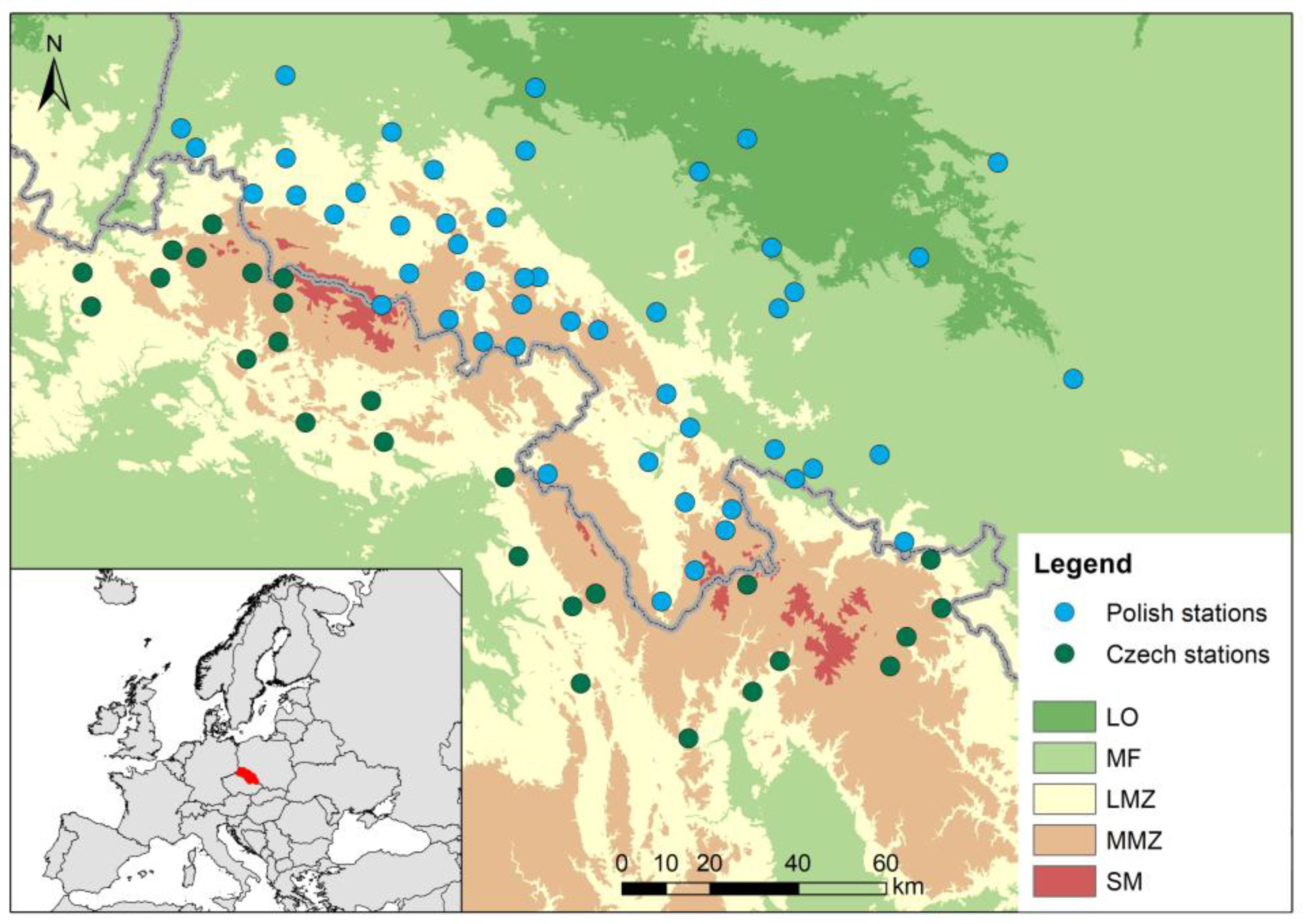
The analysis was carried out for both the Polish and Czech parts of the Sudetes Mountains and their northern (Polish) foreland (Figure 1). The mountain ridge forms a natural border between these two countries and stretches from northwest to southeast, reaching 1603 m asl at its highest peak (Śnieżka Mountain). Agriculture and urban areas cover the majority of the regions located lower down, whereas forests are predominant in the mountain zones. Because of significant hypsometric and morphologic variability, as well as a relatively long distance between its western and eastern areas, the region is characterized by noticeable differentiation in climate conditions, especially in terms of thermal and precipitation regimes. Regarding precipitation, their totals, frequency, and intensity are mainly determined by altitude, terrain form, and exposition to the predominant advections of humid air masses [76,77].
The meteorological data used in the analysis were derived from 50 Polish and 27 Czech stations located in the Sudetes Mountains and their northern foreland (Figure 1). They represented various geographical regions and hypsometric zones, reaching from 120 m asl to 1603 m asl. Due to the number of the stations and their different altitude, they were classified to the following hypsometric zones: lowlands (≤150 m asl), mountain foreland (151–300 m asl), lower mountain zone (301–500 m asl), middle mountain zone (501–1000 m asl) and the summits (>1000 m asl) (Table 1). This classification refers to the similar classes defined for the analysis concerning the Polish–German border region, which also included the Western Sudetes [47,48]. The collected meteorological data consisted of daily precipitation totals for 1961–2020 from the stations of the Institute of Meteorology and Water Management–National Research Institute (IMGW-PIB) and the Czech Hydrometeorological Institute (ČHMÚ).
As the original records of IMGW-PIB and CHMU were already regularly verified by the weather services of both Institutes, the verification for this paper consisted of checking for missing data (i.e., computing the percentage of missing data per station), gross errors, and duplicated dates. In the analysis, complete data series were used. They also included records that were characterized by very short periods (several days) with measurement gaps. In this case, the missing data were calculated by applying data interpolation for neighboring stations, based on the Inverse Distance Weighting (IDW) method. To detect possible inhomogeneities (resulting from station relocations or changes in measurement devices), all data series were subjected to homogeneity testing. The Standard Normal Homogeneity Test (SNHT) developed by Alexandersson [78] was used to assess the homogeneity of the data. This method was applied using the Climatol package (version 3.1.1) developed by Guijarro [79,80]. The package was previously used to evaluate the homogeneity of precipitation series, i.e., in Ireland and Norway [81,82]. In this paper, data homogeneity was examined for monthly precipitation values, based on daily totals. All examined data series were considered reliable for further analysis.
The intensity of precipitation was evaluated using various indices related to assessments for different time scales. Those included the calculations of maximum totals for one-, three-, and five-day periods (RX1, RX3, RX5), as well as the fraction of precipitation totals exceeding the 90th (%R90p) and 95th (%R95p) percentile thresholds (very wet and extremely wet days) (Table 2). According to one of the latest IPCC reports [83], these indices are among those recommended for evaluating extreme precipitation conditions [84,85].
The analysis was carried out for the 1961–2020 period, for individual seasons: winter (December–February), spring (March–May), summer (June–August), and autumn (September–November). In the case of RX3 and RX5 noticed at the turn of two different seasons, they were classified to the season with the higher number of days for a given period.
The RX1 index is often associated with short-duration convective rainfall events that can cause flash or local floods. On the other hand, RX3 and RX5 are considered reliable for long-lasting extreme precipitation events that may lead to widespread floods. To assess the contribution of extreme precipitation events to seasonal precipitation totals and their multiannual trends, the indices of %R90p and %R95p were applied [40,86]. The thresholds (90th and 95th percentiles) for extreme precipitation were calculated for each season individually, based on the reference period (1961–1990). According to one of the three methods of their evaluation [87], these percentile indices were calculated for wet days, defined as those with daily precipitation totals ≥1 mm. Subsequently, precipitation totals for amounts exceeding the already calculated 90th and 95th percentiles (for 1961–1990) for individual seasons of 1961–2020 for each station were calculated. Finally, the calculations of the percentage of precipitation totals above the 90th and 95th percentiles (for 1961–1990) in precipitation totals during a given season were carried out.
Furthermore, to present the general precipitation conditions in the discussed region, an analysis of precipitation totals (RR) was also carried out.
The non-parametric Mann-Kendall test [88] was applied to assess the statistical significance of the detected trends. The significance level was evaluated for the 0.1 threshold (90% confidence level). This method is particularly suitable for trend analysis in climatological data, as it does not require any assumptions regarding the distribution of the variables. To assess the direction and intensity (per year) of the examined trends, the Sen’s slope (Q) was calculated and presented in the tables showing the changes in selected indices in 1961–2020. The analysis concerning the Mann-Kendall test and Sen’s slope was carried out using the R environment (trend package in R, version 1.1.6).
For the evaluation of circulation conditions and their influence on extreme precipitation, the Lityński classification [89] and its modification [90] were applied. This is an objective method that considers both zonal and meridional indices, calculated based on geostrophic wind velocity within 40–65° N and 0–35° E. Regarding the principles of the classification, the calculations are carried out using the following formulas:
Ws = 6.1 (P40 − P65)/25     Wp = 10.0 (P35 − P0)/35
where:
  • Ws—zonal index.
  • Wp—meridional index.
  • P40, P65—mean air pressure at the parallels of 40° N and 65° N, calculated with a 5° step for the 0–35° E zone.
  • P35, P0—mean air pressure at the meridians of 0° and 35° E, calculated with a 5° step for the 40–65° N zone.
The positive (negative) Ws refers to the western (eastern) circulation, while positive (negative) values of Wp indicate southern (northern) advections. Depending on these indices, nine classes of circulation can be defined—eight related to the main directions (N, NE, E, SE, S, SW, NW) and one indeterminate class (0) for non-advection conditions. Furthermore, the Lityński classification also specifies the cyclonality index, based on air pressure in Warsaw (Poland). This adds three additional types of circulation—anticyclonic (a), cyclonic (c), and transitional (o), which can be assigned to the eight main advection directions and to the indeterminate class. Consequently, according to the discussed classification, 27 types in total can be specified: northern (Na, Nc, No), northeastern (NEa, NEc, NEo), eastern (Ea, Ec, Eo), southeastern (SEa, SEc, SEo); southern (Sa, Sc, So), southwestern (SWa, SWc, SWo), western (Wa, Wc, Wo), north-western (NWa, NWc, NWo), and indeterminate (0a, 0c, 0o) [89].
In the analysis, the calendar of daily circulation conditions according to the Lityński method was used [91], carried out based on the modified version of the classification [90]. This modification considers the NCEP/NCAR reanalysis of sea level pressure for 12:00 UTC, defines the central point as the grid closest to Warsaw (52.5° N, 20.0° E), and introduces certain changes to the calculation of thresholds related to the circulation index classes.
Based on this calendar, calculations of maximum daily precipitation totals (RX1) were carried out along with the estimation of the most significant circulation types affecting this index. The values of RX1 were calculated for the selected direction of advections and vorticity types for each hypsometric zone and season. The evaluation of the structure of RX1, depending on the circulation factor, concerned the analysis for the N-types (N, NE, NW), E-types (E, NE, SE), S-types (S, SE, SW), W-types (W, NW, SW), and O-types.
The Lityński classification is one of the most popular Polish classifications, accounting for approximately 15% of all studies concerning both national and regional analyses devoted to circulation issues [92,93]. The spatial range of this classification covers the region of Poland and the neighboring areas, also including the Polish and Czech Sudetes Mountains and their foreland. Therefore, the results obtained in this paper can eventually be compared to some previous outcomes related to the aspects of circulation conditions in this European region.

3. Results

3.1. Seasonal Changes in Extreme Precipitation Conditions

3.1.1. Spring

In 1961–2020, RR in spring ranged from 129 mm in LO to 264 mm in SM, indicating slightly higher values (2–5%) in the northern part of the mountains (Table 3). The predominance of negative changes for most of the considered precipitation indices characterized this season. In terms of RR, the fraction of downward trends varied from 71% in the northern part of LMZ to 100% in LO, MMZ (north), and SM. Simultaneously, 56% and 75% of the trends noticed for both the Czech and Polish parts of MMZ were statistically significant. The most intensive decline of RR was noticed in SM, as well as in the south of MMZ and in the northern part of LMZ.
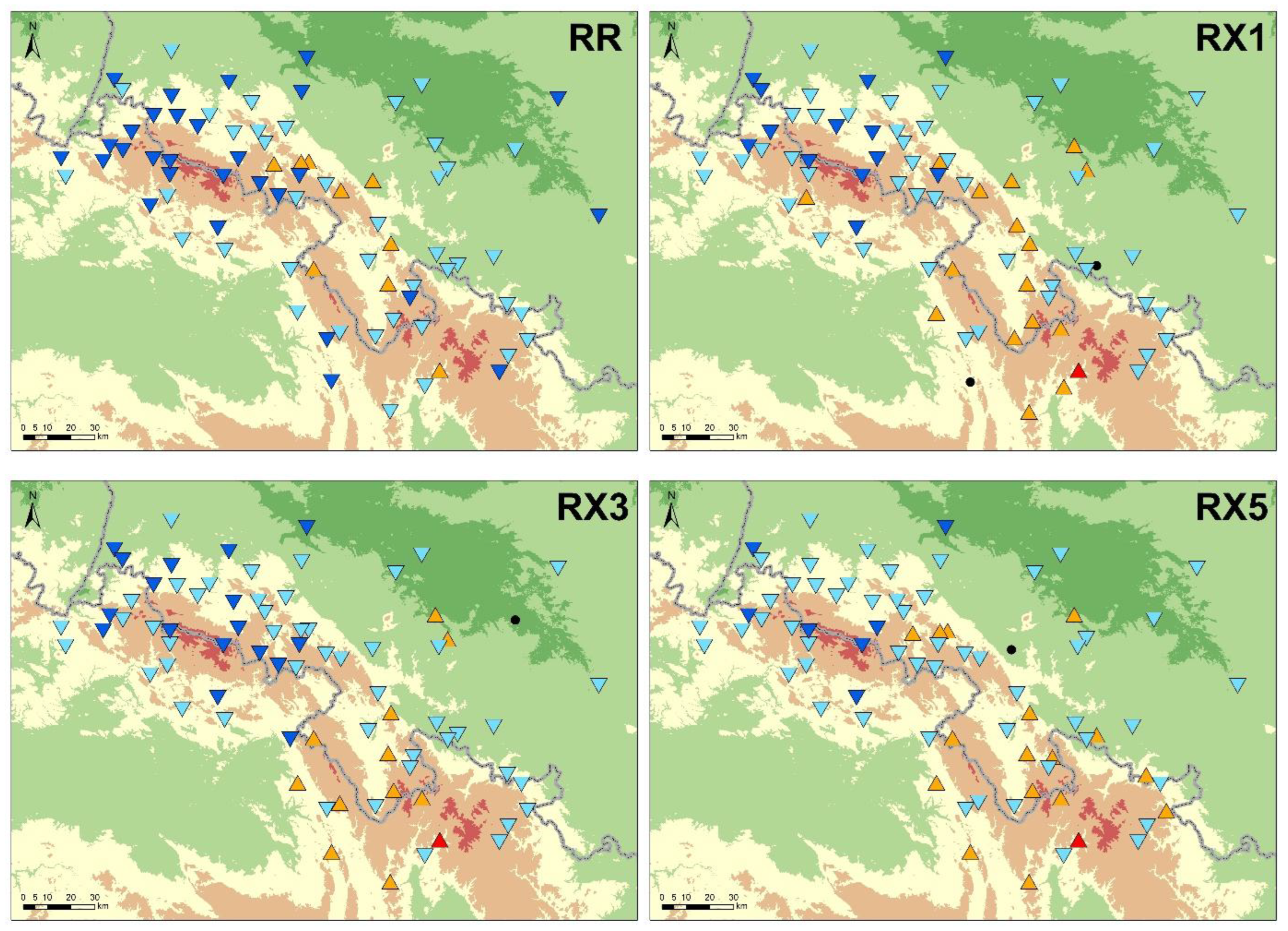
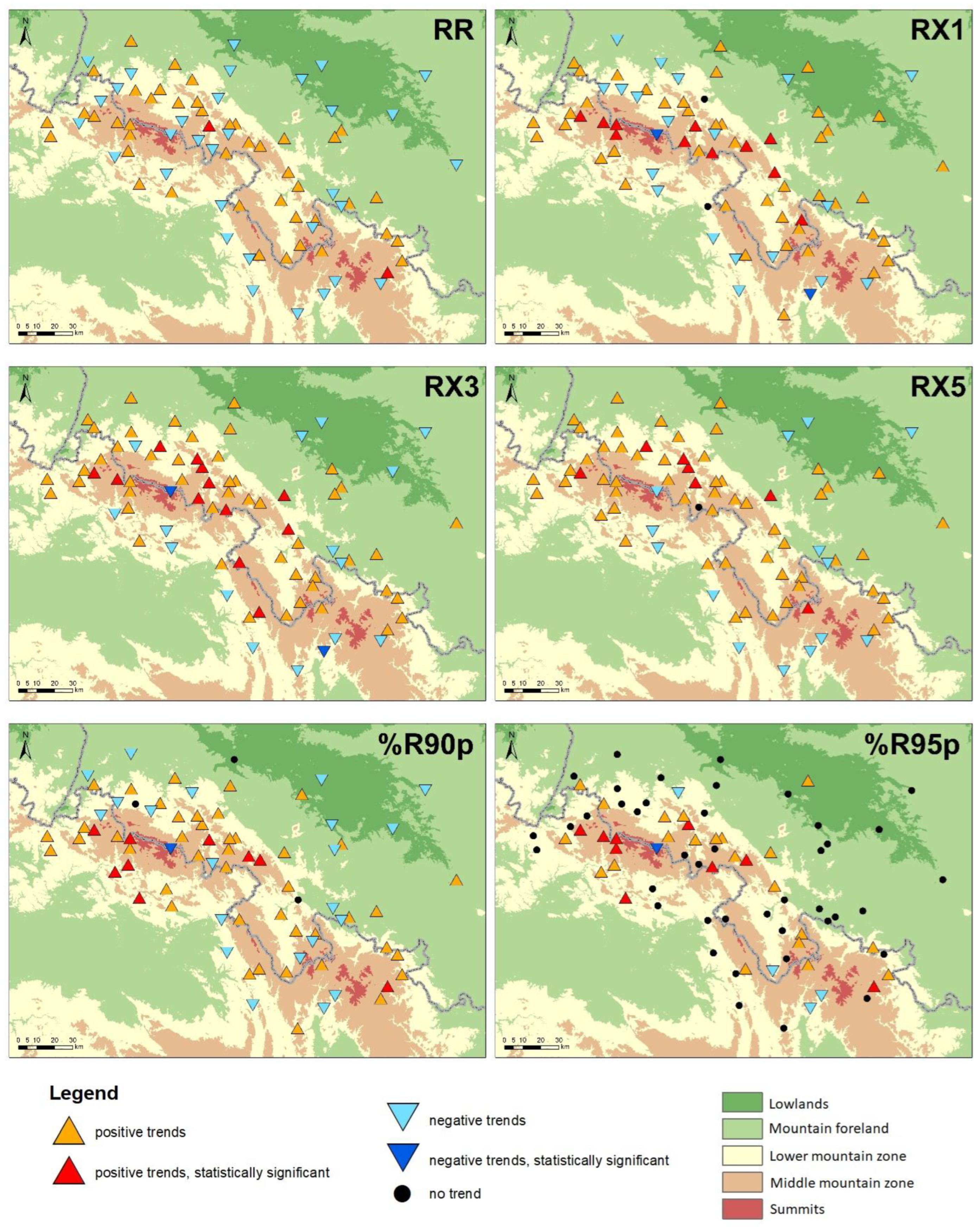
Such a structure and changes in RR had a noticeable impact on the indices defining maximum one-, three-, and five-day precipitation totals (RX1, RX3, RX5). The multiannual changes of RX1 were most often negative and characterized by a relatively high number of statistically significant trends (Figure 2). The relevant tendencies were noticed for SM and for 11–25% of the remaining stations. Similar to RX1, the most intensive decrease was observed on Śnieżka (3.2 mm per decade), whereas the dynamics in the northern (Polish) foreland reached as much as 1.1–1.7 mm per decade. Slightly more intensive changes, amounting to 1.3–1.9 mm per decade, were observed in the Czech Sudetes. Comparable changes in spring were also noted for RX3. Most of the stations in the entire hypsometric profile were characterized by negative trends, which were, in some cases, statistically significant. The rate of decline (per decade) in the lowest zones was equal to 1.5–2.8 mm, while the magnitude in LMZ and MMZ was higher and reached 1.6–2.8 mm (north) and 1.1–3.6 mm (south). As with RR and RX1, the most dynamic changes were found for SM. The predominance of negative tendencies was also noticed for RX5, particularly in the lowest and the highest hypsometric zones. Negative and statistically significant trends were observed throughout the hypsometric profile, with a more pronounced intensity in the higher zones. Their magnitude varied from 1.8–2.5 mm per decade in LO and MF to 7.9 mm per decade in SM.
Besides the negative trends, the station of Velke Losiny (411 m asl), located in the Eastern Sudetes, was the only site characterized by a statistically significant positive tendency for RX1, RX3, and RX5. In this case, the values of these indices rose at rates of 1.3, 1.8, and 2.4 mm per decade, respectively.
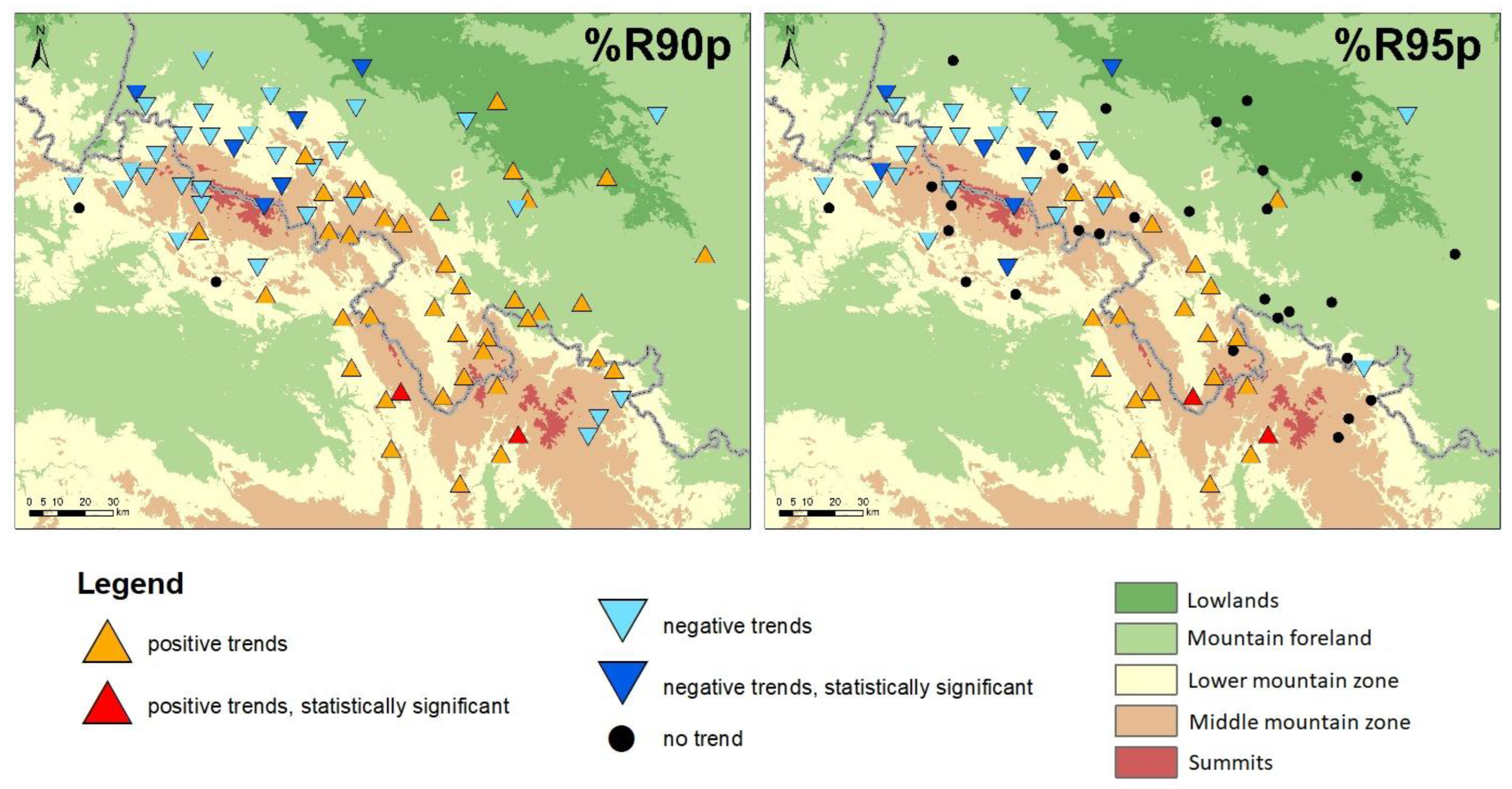
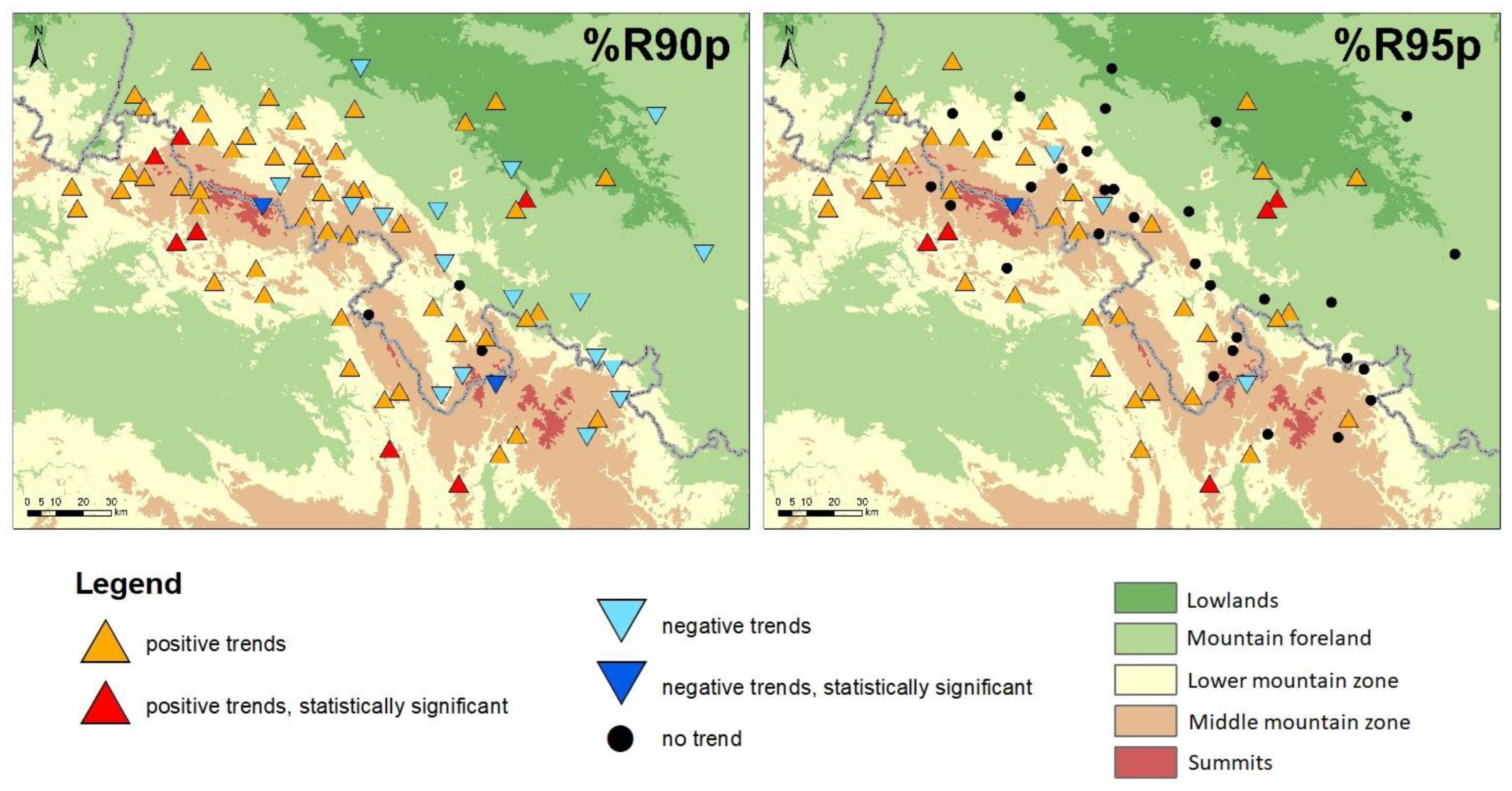
In terms of extreme precipitation defined by %R90p and %R95p, their mean values in most of the region amounted to 31–33% and 18–20%, while lower rates were observed for SM (26% and 13%). The highest fraction reached 61–65% and 51–63%, respectively. Unlike the previously discussed indices, changes in %R90p and %R95p were defined by a high spatial variability. The positive trends of %R90p were predominant in LO (60%) and LMZ (61–67%), also indicating their high percentage in the other zones (33–44%), except for SM. Some statistically significant tendencies were found for the southern parts of LMZ and MMZ, where %R90p rose with the intensity of 2–3% per decade. Simultaneously, negative changes were predominant in MF and SM, while a statistically significant decrease was reported for the stations representing LO and LMZ (north). In these zones, the dynamics ranged from about 2% in LO to 6% in SM. In the case of %R95p, a relevant increase was noted for some stations located in LMZ (2–3% per decade), whereas significant negative tendencies were found for most of the region, except for MMZ. Both parts of LMZ and SM were the zones defined by the most intensive changes.
The decreasing rates of extreme precipitation indices in the Western Sudetes can be attributed to the changes in circulation patterns in spring. Since the precipitation regime of this region is vulnerable to the advections of humid air masses from the west, potential modification of the western circulation structure can critically affect precipitation, including extreme events. According to the research carried out for the Czech–Slovak region [94], westerly and northwesterly types become less frequent in the discussed season. Therefore, such changes primarily impact the Western Sudetes, contributing to the decrease in RR and extreme precipitation.
Table 3, Table 4, Table 5 and Table 6 present mean and mean maximum values of the considered indices, along with information on their multiannual changes. The Q values define the intensity of trends and were calculated for each station individually. They indicate the range of changes for each hypsometric zone, considering only statistically significant trends. A single Q value means that only one relevant trend was reported in a given zone. The bases for assessing the mean maximum values of the discussed indices were the maximum seasonal rates in 1961–2020, calculated for each station individually. Subsequently, mean values for particular hypsometric zones were computed, based on these maxima.

3.1.2. Summer

The summertime was characterized by the highest precipitation in terms of both totals and intensity. RR in this season varied from approximately 230 mm in LO to 364 mm in the summits, indicating higher totals in the northern part of LMZ and MMZ (Table 4). In the case of RX1, the differences between the northern (Polish) and southern (Czech) mountain zones were also significant, amounting to 13% in LMZ and 6% in MMZ, in favor of the northern areas. Such a distribution could result from more extreme precipitation observed under the northern circulation types, supported by the orographic effect. A similar situation refers to extreme several-day precipitation (RX3, RX5), which in the past has resulted in disastrous flood events during this type of circulation [15].
In summer, negative tendencies of RR were predominant in the entire region, except for MF, where the fractions of stations defined by positive and negative trends were comparable. Statistically significant changes were observed at individual stations representing particular zones, including positive tendencies for MF and LMZ (south) and negative ones for MF, LMZ (south), MMZ (north), and SM. Compared to spring, the most dynamic trends were observed for SM, while the other areas were characterized by the rates reaching 11–16 mm per decade.
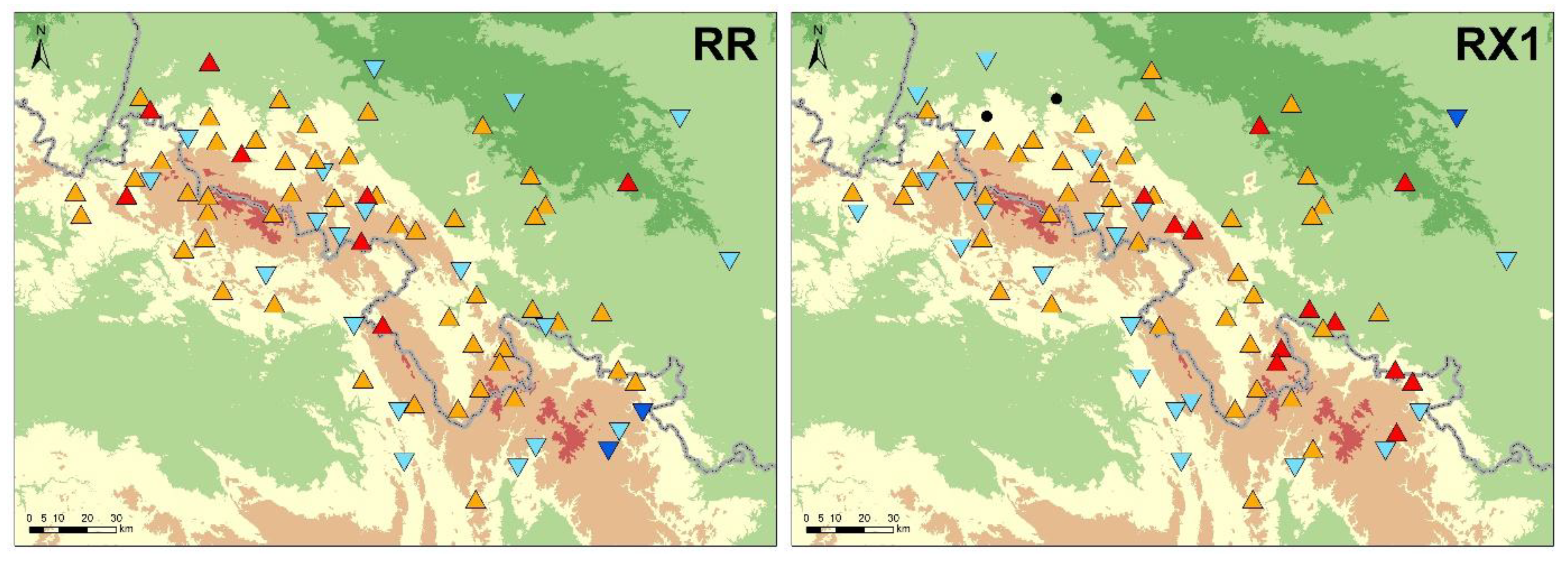
In terms of RX1, the summer season was defined by less distinctive changes compared to spring (Figure 3). Most of the considered trends were usually positive, especially in the lower zones. However, statistically significant changes were limited to several cases in MF and MMZ (south). In MF, RX1 rose with the magnitude of 1.8–2.3 mm per decade, while opposite directions were noticed for the stations located in the southern part of MMZ. In this zone, Roprachtice (550 m asl) and Staré Město pod Sněžníkem (658 m asl), representing the Western and Eastern Sudetes, respectively, were characterized by the rate of 1.5 mm and −2.8 mm per decade. A similar situation was observed for RX3 and RX5. In this case, significant changes of RX3 concerned the increase of 2.1 mm per decade in Stráž pod Ralskem (Western Sudetes) and the decline of 2.3–4.0 mm per decade for two stations representing the Eastern Sudetes. Regarding RX5, the only statistically significant positive tendency was found in Stráž pod Ralskem, whereas negative changes were noticed for SM and the Czech part of the Middle and Eastern Sudetes. Such opposite directions in the Western and Eastern Sudetes may suggest that the regime of intensive precipitation can significantly differ depending on longitude in the discussed region. The Western Sudetes are characterized by specific precipitation features, related to their temporal and spatial distribution, resulting from their closer proximity to the advections of humid air masses from the west, as well as from their specific terrain relief [77,95]. It is also worth emphasizing that SM was characterized by notable downward trends for all these indices, indicating a decrease of 4.7 mm (RX1), 9.1 mm (RX3), and 10.4 mm (RX5) per decade.
The summer season was also defined by the highest fraction of precipitation related to %R90p and %R95p, which in LO, MF, LMZ, and MMZ amounted to 34–36% (%R90p) and 21–23% (%R95p). On the other hand, lower values were noticed for SM (31% and 17%).
Most of the analyzed region was characterized by positive trends of %R90p and %R95p, especially in the southern parts, where 17% and 11% of the stations located in LMZ and MMZ were characterized by upward tendencies. In this case, the rate of increase was comparable to the dynamics observed for spring (2–3% per decade). On the other hand, 11% of the stations representing the south of MMZ were characterized by a decreasing tendency. In terms of %R95p, positive and statistically relevant trends were observed in MF (13% of the stations) and in the southern parts of LMZ and MMZ (11%), where their intensity was similar to the rate noticed for %R90p. Compared to spring and the previously discussed extreme precipitation indices, the series for SM in summer indicated a downward trend for both %R90p and %R95p.
The predominance of negative trends of RR, along with positive ones for extreme precipitation indices (RX1, RX3, RX5), confirms the tendencies observed in this European region, as mentioned in the Introduction section. They generally indicate no clear direction or slightly negative changes in RR for this season, accompanied by an increase in extreme precipitation. Such conditions are a consequence of continental and regional changes in precipitation regimes, which in the discussed region can result in more frequent droughts, with a simultaneous increase in the frequency of extreme rainfall and floods. The increasing importance of convective precipitation is another factor favoring short-lasting and intense rainfall events.
The downward trends in the Eastern Sudetes and positive tendencies at some stations representing the Western Sudetes suggest that the direction of changes can significantly depend on potential modification of atmospheric circulation, which noticeably affects the variability of precipitation conditions in this mountain region. More intensive changes in the areas located at higher altitudes mainly result from higher RR observed in these zones.

3.1.3. Autumn

Unlike in spring, the RR values in autumn in the southern part of the Sudetes exceeded the rates for the northern areas by 5% and were characterized by mean seasonal totals varying from 126 mm in LO to 257 mm in SM (Table 5). Changes in RR in the discussed season indicated a high spatial variability and reflected the predominance of negative tendencies in LO, LMZ (south), MMZ (north), and SM, as well as positive trends for MF, LMZ (north), and MMZ (south). Statistically significant changes were reported only for two stations located in MF and the southern part of MMZ, indicating an increase of 9 mm and 5 mm per decade, respectively.
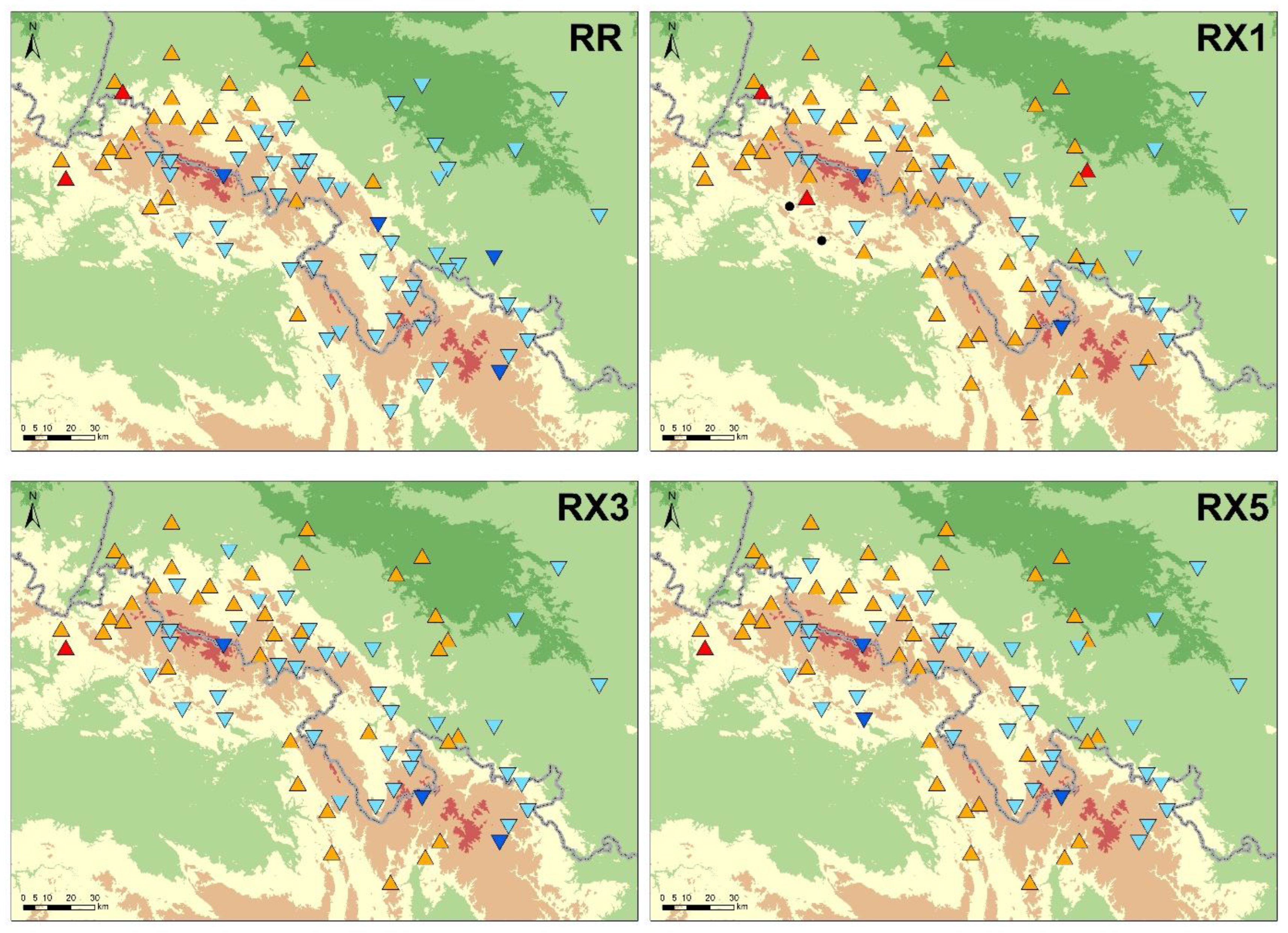
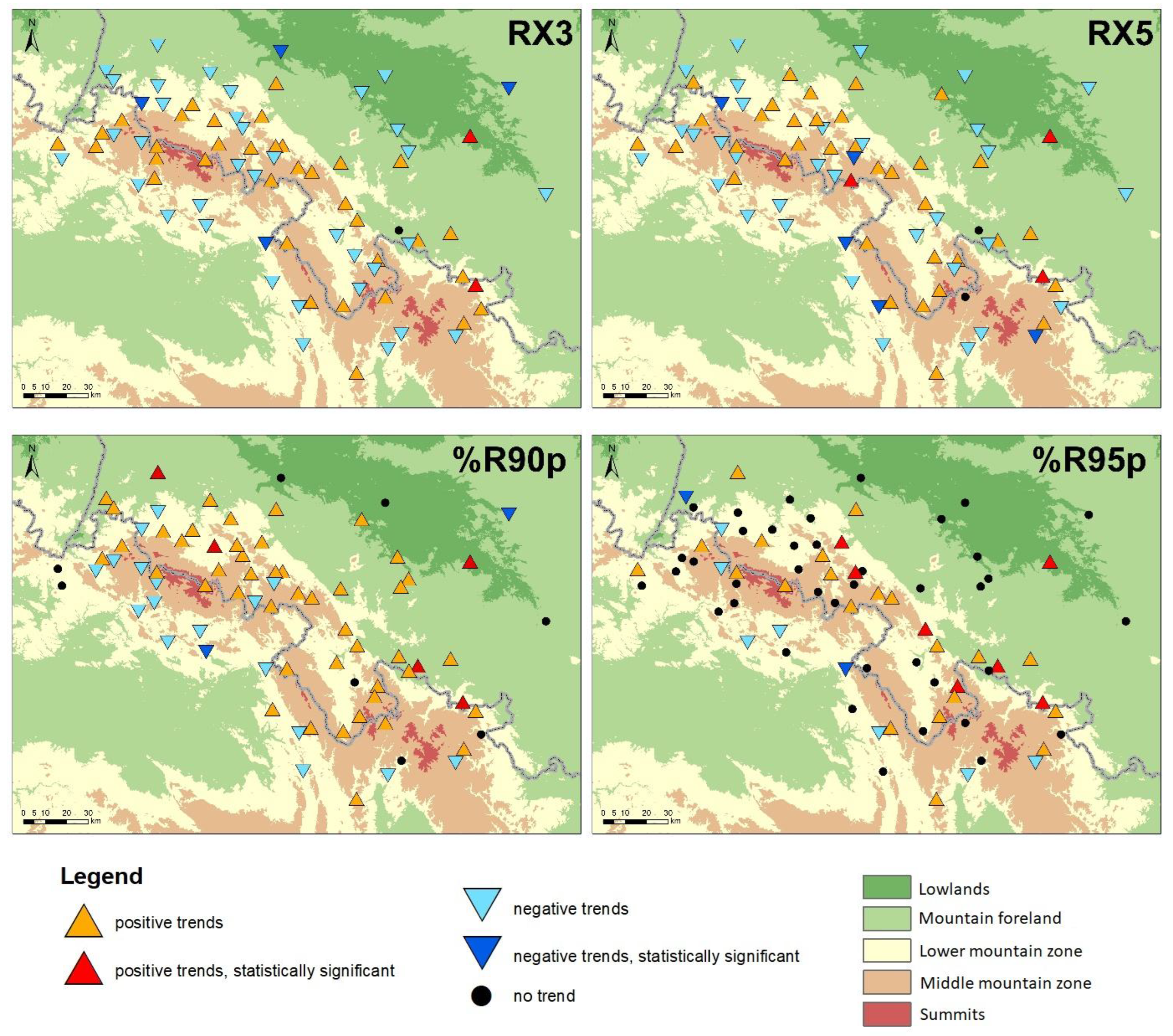
Although RR values were higher in the southern part of the mountains, the rates of RX1 in the Polish Sudetes exceeded those for the Czech area by 6–7 mm. The changes in this index in 1961–2020 were characterized by high variability and often indicated opposite directions (Figure 4). In general, rising trends were predominant, particularly in the south of MMZ. In this zone, 89% of the stations exhibited a positive tendency, including 44% of statistically significant changes observed in both the western and eastern parts of the region. Upward trends, occasionally characterized by statistical significance, were also noticed in the northern areas (MF, LMZ, and MMZ), while relevant negative tendencies were reported for the south of LMZ and in SM. Similar changes also occurred for RX3. The predominance of positive tendencies was reflected in statistically significant trends for the Polish (northern) part of the region (MF, LMZ, and MMZ) and for the Czech (southern) MMZ. In this case, the rate of increase was noticeably higher than for RX1, amounting to 1.1–3.9 mm per decade, depending on altitude. Similar to RX1, negative trends were reported for one station located in the south of LMZ and for SM, where RX3 declined with the intensity of 2.0–2.6 mm per decade. In the case of RX5, statistically significant changes referred only to the positive trends and indicated an increase for MF, LMZ (north), and MMZ (south). Their dynamics increased with altitude and varied between 2.0 and 3.6 mm per decade.
Mean values of %R90p and %R95p in autumn were comparable to those observed in spring and amounted to 30–34% and 18–21%, whereas the mean maximum rates reached 61–72% and 54–60%, respectively. In accordance with the already discussed indices, changes in %R90p and %R95p were most often positive, especially in the south of MMZ. In this zone, all stations exhibited rising tendencies, with 44–56% of the changes characterized by relevant trends. Furthermore, a statistically significant increase was noted for the stations representing both LMZ regions. All these changes were characterized by similar rates, reaching approximately 2–3% per decade. On the other hand, the courses of %R90p and %R95p on Śnieżka indicated a downward trend with dynamics of −2% and −1% per decade, respectively.
As with the previously discussed seasons, changes in precipitation structure could also be triggered by the circulation factor. The recent research for the considered region indicates that autumn is the season characterized by a decreasing number of anticyclonic types and an increase in the frequency of western circulation [94]. Such changes can contribute to the intensification of RR and extreme precipitation in the Sudetes. Contrary to the summer season, extreme precipitation in autumn is often triggered by mid-latitude cyclones, mainly related to the western circulation. As a result, the upward trends of extreme precipitation indices are particularly pronounced in the Western Sudetes, which are most vulnerable to the activity of this type of circulation.

3.1.4. Winter

In winter, mean RR in the region ranged from 86 mm in LO to almost 300 mm in SM, indicating noticeably higher values in the southern part of the mountains (Table 6). In LMZ and MMF, RR in the Czech Sudetes exceeded the totals for the Polish part by 21% and 64%. Such high differences, especially in MMZ, were the consequence of high RR in winter in the Western Sudetes, which mainly concerned the Czech stations located at high altitudes (i.e., Destna-Souš, Bedřichov). This phenomenon is typical for this part of the Sudetes and is characterized by high rates of winter precipitation, in some cases even comparable to those observed in the summer [95]. High RR in the Czech region during the cold season also resulted from the predominance of western and southwestern advections, which contributed to the increase of precipitation on the windward slopes of the mountains [77]. Such a structure of RR was reflected in the distribution of RX1, RX3, and RX5 indices, which indicated higher totals for the southern part, especially in MMZ. In the summits, the values were comparable to those observed in MMZ. However, it should be remembered that the measurements of precipitation totals in this area are underestimated due to high wind speed [96], which is typically characterized by the highest rates during the winter season.
Because of low RR, the magnitude of changes of the selected indices in winter was less distinctive than in the other seasons (Figure 5). In terms of RR, increasing tendencies were predominant throughout the region, particularly in MF and MMZ (north), where more than 80% of trends were positive. The changes in the lower zones (LO, MF, LMZ) were occasionally statistically significant and characterized by an intensity of 5.6–8.4 mm per decade. In the Czech (southern) part of LMZ MMZ, relevant negative trends were found for two stations representing the Eastern Sudetes, where RR decreased at the rate of 6.1 mm and 7.9 mm per decade.
The changes of RX1, RX3, and RX5 varied more than for RR and often indicated opposite directions for significant trends within the same zone. In the case of RX1, relevant positive tendencies were noted for most of the region, except for SM. The rate of increase ranged from 0.7 to 1.2 mm per decade and did not show any dependence on altitude. Simultaneously, negative tendencies were noticed for two Polish stations representing MF and LMZ, where RX1 declined with the intensity of 0.6–0.8 mm per decade. Statistically significant downward trends were more frequent for RX3 and RX5. In the zones located lower down (LO to LMZ), the relevant negative changes of RX3 amounted to 0.6–2.2 mm per decade, whereas the decrease of RX5 in the mountain zones (LMZ, MMZ) reached as much as 1.6–2.9 mm per decade. On the other hand, positive changes were also noted for these two indices, particularly in the lower zones. They were concerned with the upward trend of RX3 in LO and in the south of LMZ (1.1 mm per decade), as well as the increase of RX5 in LO and the northern part of LMZ (1.3–1.6 mm per decade).
Similar to the indices discussed above, the lowest fraction of precipitation examined using %R90p and %R95p was observed in winter. Their mean values ranged from 25 to 29% and from 14 to 17%, while the mean maximum rates reached 56–63% and 44–50%, respectively. The predominance of rising trends characterized the changes of %R90p and %R95p in the northern areas. The most frequent positive changes were observed in LO and MF (%R90p), as well as in the Czech part of MMZ (%R95p). Statistically significant upward trends for these indices were noticed in LO, MF, and in the north of LMS, where they rose with an intensity of 1–3% per decade. Furthermore, relevant negative changes were found for individual stations located in MF and in the south of LMZ.
The increase in RR in the wintertime aligns with other results for Central Europe (mentioned in the Introduction section), which indicate possible upward trends for some regions. The reason for such changes can be a positive tendency of westerly and northwesterly types of circulation [94], which are typically associated with cyclonic circulation and consequently contribute to higher precipitation. In the discussed region, more pronounced changes in RR are observed in the Western Sudetes, where the significance of the western circulation is the highest.

3.2. Circulation Conditions and Their Impact on RX1

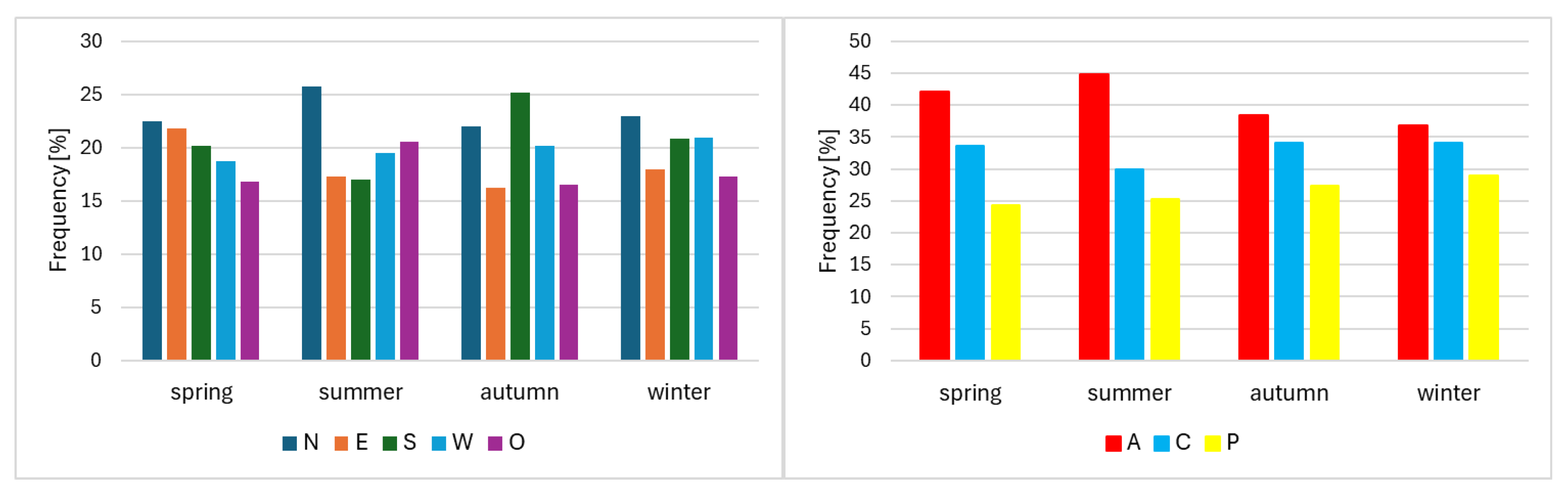
According to the calendar of synoptic conditions [91], the northern types of circulation (N, NE, NW) were the most frequent, occurring on 23% of days in 1961–2020 (Figure 6). The advectives from these directions mainly dominated in the summer months when they accounted for more than 25% of all considered circulation types. Their frequency was also high in the remaining seasons, reaching about 22–23%. Furthermore, the high number of days with S-circulation (S, SE, SW) in autumn and the O-types in summer are also worth mentioning. Such conditions are often the consequence of a weak longitudinal pressure gradient in the autumn months and a high frequency of stationary baric systems in the summertime over the discussed region. In the case of the W-types (W, NW, SW), they were most often observed in winter, when the activity of cyclonic systems is at its peak. They are particularly concerned with the mid-latitude cyclones over western and northern Europe, which generate advections of polar maritime air masses from the western sectors.
In terms of vorticity types, the anticyclonic circulation was characterized by the highest frequency throughout the year, particularly in spring and summer, when its number accounted for 42% and 45% of all days, respectively. On the other hand, these types were relatively rare in winter, when the activity of cyclonic systems reduced the impact of anticyclonic conditions. The cyclonic types in spring, autumn, and winter were defined by a similar number of days (34%), which is significantly higher than in the summer season. The transitional types of weather varied from 24% in spring to 29% in winter [91].
Regarding the impact of circulation conditions on RX1, the rates for the anticyclonic weather were 2–3 times lower compared to the ones observed during the cyclonic circulation. The highest values of this index for both vorticity types were usually noticed under the N- and E-circulation (Table 7). The predominance of these types, especially under the cyclonic conditions, was observed throughout the region, except for the southern part of LMZ and MMZ in some seasons.
Generally, the values of the considered index during the N- and E-circulation, for both anticyclonic and cyclonic weather, were typically higher in the Polish LMZ and MMZ, while the S- and W-circulation contributed to the increase in the southern part of the region. The predominance of N- and E-types was the most significant in summer, while high RX1 during the S- and W advections (if compared to the rates for the N- and E-circulation) was usually noticed in winter, particularly in the mountain zones and for the cyclonic circulation. Such a situation is a result of different circulation patterns in the warm and cold periods, which consequently lead to differing precipitation conditions on the windward and leeward slopes of the Sudetes Mountains. In the warm period, Mediterranean cyclonic systems, which often generate advections from the north and east, play a crucial role in the occurrence of heavy precipitation, especially in the windward (northern, Polish) part of the mountains. In the cold season, mid-latitude cyclones are predominant and contribute to the advections of air masses from the western sectors. Therefore, the Czech part of the Sudetes (exposed to the south and southwest) is considered to be the leeward side this season and consequently characterized by more intense precipitation.
In the case of both anticyclonic and cyclonic types, RX1 indicated a high dependence on altitude. Nevertheless, the values of RX1 in the summit were in some cases lower than in the other zones, especially if compared to the Czech MMZ. Such a distribution resulted from both the underestimation of RR on Śnieżka due to the wind factor and significant precipitation in the higher zones of the Czech Giant and Isera Mountains (Western Sudetes), particularly in the winter period.
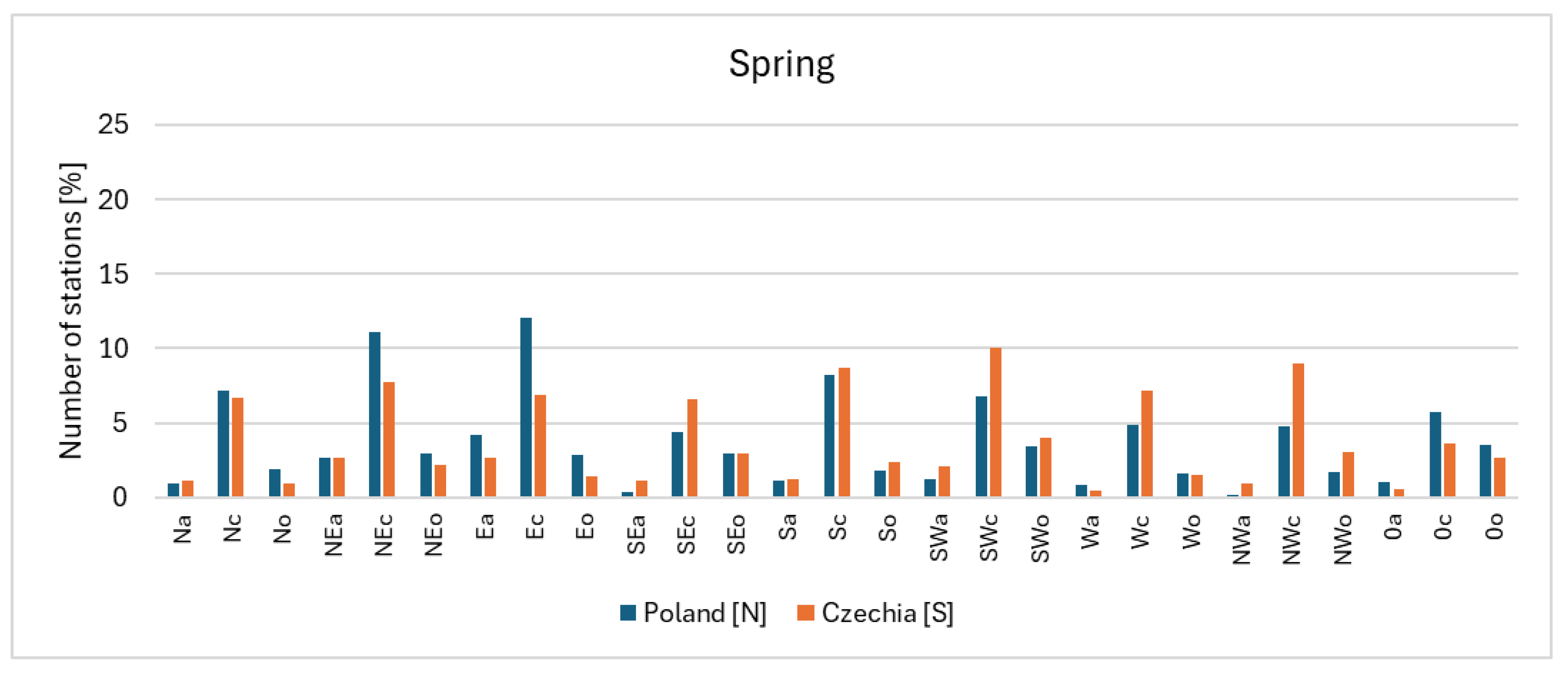
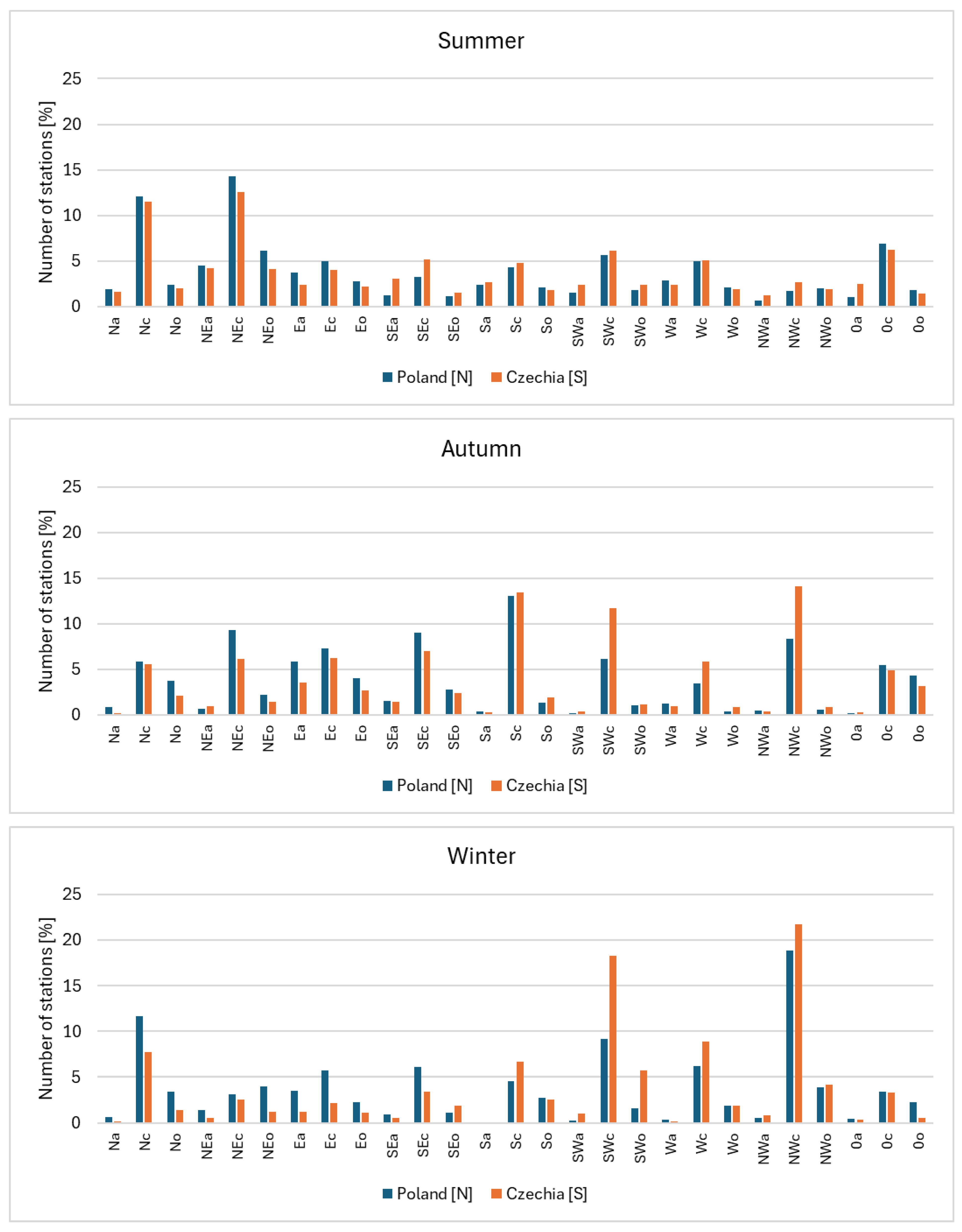
Considering the percentage of stations characterized by the highest seasonal rates of RX1, the northern cyclonic circulation was crucial in the Polish part of the region, especially in spring and summer (Figure 7). This particularly referred to the Nc and NEc types, which were responsible for RX1 in the case of 7–12% and 12–14% of the Polish stations in these seasons. Additionally, high values of this index were also frequently noticed during the Ec circulation. Such a structure could result from the activity of Mediterranean low-pressure systems that move from southern Europe to the north and often generate advections from the northern and eastern sectors [68,97]. These conditions were particularly notable in the summertime, when RX1 under the Nc and NEc circulation for both Polish and Czech regions significantly exceeded the rates for the remaining types of circulation.
In autumn and winter, the most significant circulation conditions, in terms of generating high RX1, were related to the Sc, SWc, and NWc types. Furthermore, the advectives from these sectors also contributed to frequent maximum rates for the Czech region in spring. Unlike in summer, this situation was usually the consequence of mid-latitude cyclone activity that plays a more important role in the cold season. In the southern part of the Sudetes, maximum rates of RX1 for these types of circulation occurred more frequently than in the Polish area because of both the orographic effect and the spatial distribution of meteorological stations. Regarding the first factor, the location of the Sudetes, stretching from NW to SE, favors precipitation generated by advections from the southern and western sectors, which are predominant in the cold season [77]. Therefore, the areas representing the southern slopes of the mountains were usually characterized by a higher frequency of maximum rates of RX1. Considering the second factor, the high number of Czech stations located in the Western Sudetes also contributed to high RX1 due to the significant vulnerability of this region to the advections of humid air masses from the western sector in the cold season [95]. The predominance of SWc and NWc types in the Czech part of the Sudetes was particularly pronounced in winter, when maximum seasonal RX1 was noticed for 22% and 18% of the stations, respectively.

4. Discussion

Changes in extreme precipitation in Europe were the subject of numerous studies (i.e., [51,53,98,99,100,101]), which indicated that trends of extreme precipitation were characterized by low levels of both spatial coherence and statistical significance. This suggests that the changes in extreme precipitation in Europe can be highly dependent on specific regions, the considered data series, and selected indices. A similar situation was observed in the Sudetes Mountains and their northern foreland. The results presented in this study show that the trends of extreme precipitation conditions in the discussed region can differ significantly depending on the season, altitude, exposition, longitude, and considered indices. Generally, the changes of RR in 1961–2020 were, in most cases, statistically insignificant and characterized by different trend directions. They confirm the results obtained in previous research for the Polish and Czech regions, which indicated the predominance of irrelevant changes [20,21,22,23,24,25,26,27,28,29,30,31,32,33], including those for the mountainous Carpathian region (i.e., [27,64,102,103]). During the spring-summer period, a high number of stations exhibited negative tendencies, indicating statistical significance in some areas, especially in spring. On the other hand, positive changes were predominant in winter and autumn, supported by relevant trends, particularly in the western part of the region. Such a situation was consistent with most outcomes observed for different periods in various central European regions, where the tendencies indicated opposite directions for the warm (negative) and cold (positive) seasons [29,30,38,41,42,43,44]. The rate of decrease in spring and summer in the lower zones of the Sudetes and in their northern foreland varied between 5 and 16 mm per decade and exceeded the mean annual magnitude noticed for the entire Poland in 1966–2024 [104]. The intensive decline in the summits confirmed its high rate found in some previous studies for other multiannual periods [22,29,30,104]. It should also be emphasized that the trends for summer were less expressed than in spring because of more frequent conditions for free convection [22,105]. Simultaneously, the predominance of positive changes of RR in winter and autumn was coherent with the results for 1991–2017, when the mean RR for some Polish regions increased by more than 2% [30]. In 1951–2018, mean rates in Poland for autumn and winter reached as high as 7.7–21.0 mm and 3.4–6.3 mm per decade, respectively [22].
Different changes in particular seasons can also be observed for the frequency of heavy several-day precipitation. Positive trends of RX1, RX3, and RX5 were expressed in autumn, while spring was characterized by a course similar to that observed for RR. In summer, trend directions noticeably varied, often indicating growth in the Western Sudetes and a decline in the eastern part of the region. The magnitude of changes in particular seasons usually rose with increasing altitudes, reaching its maximum on the summits. In this zone, negative tendencies were noticed for most seasons and indices, particularly in summer, when RX1, RX3, and RX5 declined with the intensity of 4.7–10.4 mm per decade. A strong, negative trend of RX1 and RX5 on Śnieżka was also observed in 1961–1990, when their values for the warm half-year (RX1) and the annual period (RX5) decreased by 28% and 21%, respectively [56]. In the regions located lower down, the maximum intensity (per decade) for both positive and negative changes reached as much as 2.5 mm for LO and MF, 3 mm in LMZ, and 5 mm in MMZ. The negative trends for RX5 in spring and summer corresponded to the findings carried out for southwest Poland in 1951–2010 [55], where annual RX5 declined with an intensity of 2 mm per decade. A decrease in this index was also noticed for 1971–2010 in the Polish–Czech–German region for both warm and cold seasons. In this case, the dynamics for most of the hypsometric zones reached 5–7 mm per decade in the summer half-year and 1–2 mm in the cold period [47]. Downward trends of extreme precipitation were also indicated in some previous studies for both half-year periods in southern Poland [61,106] and for winter in western Czechia [107].
The multiannual changes in RR and maximum several-day precipitation were usually more dynamic in the higher hypsometric zones, due to higher totals observed in these areas. In this case, the results correspond to the outcomes for Czechia in 1961–2012, when trend intensity related to mean precipitation and seasonal maxima rose with altitude, also indicating some dependence on longitude [40]. Nevertheless, unlike the relationship between the northern and southern or western and eastern parts of the Sudetes, potential differences in the changes of these indices between selected elevation zones were less pronounced.
The trends of %R90p and %R95p indices were also characterized by a high variability and occasionally did not indicate any changes, especially in the case of %R95p. Negative tendencies in the Western Sudetes and positive ones in the eastern regions in spring and autumn confirmed the high significance of longitude in terms of its influence on the changes in extreme precipitation in the discussed region. In summer, positive trends were predominant, indicating an increase of 2–3% per decade. Such changes corresponded to the results for the warm half-year observed in the Polish–Czech–German region [47], where positive trends were predominant in the entire hypsometric profile, except for the summits. In this zone, a statistically significant decline in the considered indices was noticed for most of the year, which also confirmed the previous research for 1971–2010 [47]. Simultaneously, the values of the 95th percentile for Saxony (1951–2012) indicated an increase for autumn and winter, along with a decline for spring and summer [44]. Furthermore, downward trends were also reported for April and June in Poland in 1966–2024 [104]. It should also be emphasized that mean seasonal rates of %R90p and %R95p in the lower zones exceeded the values noted for the summits. A lower dependence of the percentiles on altitude was also observed in the Polish–Czech–German region for 1971–2010 [47].
Differences in the indices between the northern and southern parts of the mountains are also one of the most characteristic features of the considered region. The impact of atmospheric circulation, along with the orographic effect, contributes to more intensive precipitation in the Polish areas in the spring-summer period and higher rates in the Czech region in autumn and winter. Such distribution is caused by differences in the circulation patterns for both warm and cold seasons, which are characterized by the predominance of northern/northwestern/northeastern and western/southwestern advections of humid air masses, respectively [77]. Consequently, precipitation in the Western Sudetes for the cold season and winter is 25% and 41% higher in the Czech area, while RR in the Polish region in the warm half-year exceeds the totals for the Czech Sudetes by 15% [77]. Such features were confirmed in the current analysis. RR in summer were noticeably higher in the northern part of LMZ and MMZ, whereas more intensive precipitation defined the southern areas in winter. These differences are reflected in the values of extreme precipitation indices for both sides of the mountains. In the Polish area, mean summer RX1, RX3, and RX5 were about 18–23% (LMZ) and 7–8% (MMZ) higher than in Czechia, while their values in winter accounted for 84–85% (LMZ) and 61–66% (MMZ) of the rates observed in the Czech region.
The changes in the discussed precipitation indices, as well as their variability in the Sudetes Mountains, can also be significantly influenced by circulation conditions and their multiannual fluctuations. They particularly refer to such processes as a rising tendency of westerly and northwesterly types in autumn and winter, a decrease in those types in spring, as well as negative trends of anticyclonic weather in autumn [94]. Therefore, atmospheric circulation can be assumed as one of the most critical factors affecting the precipitation regime in the discussed region. In the Polish–Czech Sudetes, heavy precipitation observed under the cyclonic circulation significantly exceeded the rates for the anticyclonic weather, which confirms other outcomes for Poland and Czechia [64,66,72,74].
Relatively high values of RX1 for the anticyclonic circulation in summer may result from frequent convective precipitation. Local conditions significantly influence the spatial variability of extreme rainfall during this season, when the highest precipitation occurs [108]. Extreme daily precipitation in the discussed region during the summertime is noticeably affected by regional atmospheric circulation patterns. A high significance of convective precipitation was confirmed for both Czechia and Poland, where positive trends for this season were reported [39,63,105].
In terms of the cyclonic weather, the influence of N and NE circulation on RX1 in the Polish part of the region confirmed the research carried out for the Carpathians, where these types often contributed to extreme rainfall occurring [45,61,64,66,68]. A strong relationship between heavy precipitation and Nc/NEc circulation was found using different circulation classifications. Depending on applied methods, the probability of heavy precipitation occurring in southwest Poland under these types of circulation can reach as much as 10–40% [61]. A relatively high RX1, especially in the Polish part, was also noticed for the Ec circulation, which was similar to the results obtained for the Carpathians [61,68]. This type of circulation can occasionally be related to the activity of Mediterranean low-pressure systems, which move from the south to the north of the continent and are reflected in heavy rainfall occurring under the northern or eastern advections [97]. It is worth mentioning that such cyclones not only affect the northern (Polish) part of the region but can also trigger extreme precipitation and flood events in the Czech mountain and submountain regions [74,109,110]. In winter, the values of RX1 were primarily related to the activity of mid-latitude cyclones and the advections of humid air masses from the southern, western, and northern sectors. Consequently, numerous cases of RX1 were noticed for the NWc and SWc circulation, especially in the Czech region, which align with previous observations for the Western Sudetes [77].

5. Conclusions

Based on the results presented above, the following conclusions can be expressed:
  • Changes in extreme precipitation conditions do not indicate homogeneous directions and are strongly influenced by various geographic factors, such as longitude, altitude, and northern or southern slope exposition. They also depend on the season and applied indices.
  • Multiannual changes in precipitation totals and heavy precipitation are, to a certain extent, affected by fluctuations in circulation conditions. They determine both the direction of changes and their spatial variability in the Sudetes Mountains.
  • Autumn is the season with the most pronounced positive trends of extreme precipitation defined by RX1, RX3, and RX5. Such changes can indicate that heavy rainfall can become a crucial factor in this season, especially in its early phase. These conditions can be confirmed by a flood episode that occurred in September 2024 in Central and Eastern Europe.
  • Differences in the changes in extreme precipitation between the Western and Eastern Sudetes in particular seasons confirm distinct precipitation regimes for these two regions. This is particularly evident in spring and summer when more pronounced negative (spring) or positive (summer) trends were observed in the western areas.
  • The distribution of heavy precipitation on the northern and southern slopes of the Sudetes varies depending on different circulation patterns in particular seasons. This is reflected in the predominance of heavy precipitation under the northern and eastern circulation in the spring-summer period (especially in the northern regions) and a high frequency of such events under the southern, western, and northwestern types in autumn and winter (particularly in the southern areas).
  • The crucial role of cyclonic N and NE circulation, often related to the Mediterranean low-pressure systems, is reflected in the values and the percentage of maximum seasonal RX1, especially in the northern areas. Such conditions particularly refer to the warm season, when extreme rainfall is most frequent and disastrous flood events occur most often.
  • The results of this research can be applied to further investigations, such as the development of new regionalization methods related to extreme precipitation issues in morphologically varied regions. Consequently, the outcomes can serve as a source of information for planning activities aimed at mitigating the effects of extreme precipitation.

Author Contributions

Conceptualization, I.O. and B.M.; investigation, I.O. and B.M.; writing—original draft preparation, B.M. and I.O.; writing—review and editing, B.M. and I.O. All authors have read and agreed to the published version of the manuscript.

Funding

Internal IMGW-PIB project DS-6/2024–2025 ‘Temporal and spatial variability of heavy precipitation in southern Poland’.

Data Availability Statement

The original contributions presented in this study are included in the article. Further inquiries can be directed to the corresponding author.

Conflicts of Interest

The authors declare no conflicts of interest.

Abbreviations

The following abbreviations are used in this manuscript:
LOLowlands (≤150 m asl)
MFMountain foreland (151–300 m asl)
LMZLower mountain zone (301–500 m asl)
MMZMiddle mountain zone (501–1000 m asl)
SMSummits (>1000 m asl)
RRPrecipitation totals
RX1Maximum one-day precipitation totals
RX3Maximum consecutive three-day precipitation totals
RX5Maximum consecutive five-day precipitation totals
%R90pFraction of precipitation totals exceeding the 90th percentile threshold, calculated for days with precipitation ≥ 1 mm (very wet days)
%R95pFraction of precipitation totals exceeding the 90th percentile threshold, calculated for days with precipitation ≥ 1 mm (extremely wet days)

References

  1. Economic Losses from Weather- and Climate-Related Extremes in Europe. European Environment Agency. 2023. Available online: https://www.eea.europa.eu/en/analysis/indicators/economic-losses-from-climate-related (accessed on 24 June 2024).
  2. Majewski, W. Urban flash flood in Gdańsk, 2001. Ann. Wars. Univ. Life Sci. 2008, 39, 129–137. [Google Scholar] [CrossRef]
  3. Knozová, G. Heavy rains in Brno Region (The Czech Republic). Environ. Socio-Econ. Stud. 2015, 3, 2–21. [Google Scholar] [CrossRef]
  4. Palán, L.; Matyáš, M.; Vál’ková, M.; Kovačka, V.; Pažourková, E.; Punčochář, P. Accessing Insurance Flood Losses Using a Catastrophe Model and Climate Change Scenarios. Climate 2022, 10, 67. [Google Scholar] [CrossRef]
  5. Ruin, I.; Creutin, J.-D.; Anquetin, S.; Gruntfest, E.; Lutoff, C. Human vulnerability to flash floods: Addressing physical exposure and behavioural questions. In Flood Risk Management: Research and Practice; Samuels, P., Huntington, S., Allsop, W., Harrop, J., Eds.; Taylor & Francis Group: London, UK, 2009; pp. 1005–1012. [Google Scholar]
  6. Arnell, N.; Gosling, S. The impacts of climate change on river flood risk at the global scale. Clim. Change 2014, 134, 387–401. [Google Scholar] [CrossRef]
  7. Błażejczyk, K. Bioklimatyczne Uwarunkowania Turystyki w Polsce (Bioclimtic Principles of Recreation and Tourism in Poland); Prace Geograficzne IGiPZ PAN: Warsaw, Poland, 2004; p. 293. [Google Scholar]
  8. Schröter, D.; Zebisch, M.; Grothmann, T. Climate Change in Germany—Vulnerability and Adaptation of climate sensitive Sectors. Klimastatusbericht Des DWD 2005, 2005, 44–56. [Google Scholar]
  9. Kundzewicz, Z.W.; Hov, Ø.; Okruszko, T. (Eds.) Zmiany klimatu i ich wpływ na wybrane sektory w Polsce (Climate Changes and Their Impact on Selected Sectors in Poland); Instytut Środowiska Rolniczego i Leśnego Polskiej Akademii Nauk, Ridero IT Publishing: Poznań, Poland, 2017; p. 274. [Google Scholar]
  10. Climate Change Adaptation Plans in 44 Polish Cities; Summary Report; Instytut Ochrony Środowiska: Warsaw, Poland, 2018; p. 30.
  11. Migoń, P. (Ed.) Wyjątkowe zdarzenia przyrodnicze na Dolnym Śląsku i ich skutki (Exceptional Natural Events and Their Effects in the Lower Silesia); Rozprawy Naukowe; Instytutu Geografii i Rozwoju Regionalnego Uniwersytet Wrocławski: Wrocław, Poland, 2010; Volume 14, p. 319. [Google Scholar]
  12. Ligenza, P.; Tokarczyk, T.; Adynkiewicz-Piragas, M. (Eds.) Przebieg i skutki wybranych powodzi w dorzeczu Odry od XIX wieku do czasów współczesnych; IMGW-PIB: Warsaw, Poland, 2021; p. 132. [Google Scholar]
  13. Dubicki, A.; Malinowska-Małek, J.; Strońska, K. Flood hazards in the upper and middle Odra River basin—A short review over the last century. Limnologica 2005, 35, 123–131. [Google Scholar] [CrossRef]
  14. Bednorz, E.; Wrzesiński, D.; Tomczyk, A.M.; Jasik, D. Classification of Synoptic Conditions of Summer Floods in Polish Sudeten Mountains. Water 2019, 11, 1450. [Google Scholar] [CrossRef]
  15. Dubicki, A.; Słota, H.; Zieliński, J. (Eds.) Dorzecze Odry. Monografia powodzi—Lipiec 1997; IMGW: Warsaw, Poland, 1999; p. 241. [Google Scholar]
  16. Kostecki, S.; Banasiak, R. The Catastrophe of the Niedów Dam—The Causes of the Dam’s Breach, Its Development, and Consequences. Water 2021, 13, 3254. [Google Scholar] [CrossRef]
  17. Franczak, P.; Listwan-Franczak, K. Występowanie powodzi błyskawicznych w miastach położonych na przedpolu gór na przykładzie Bogatyni (Sudety) (The occurrence of flash floods in the cites situated in the forland of the mountains, for example of Bogatynia (Sudeten)). In Hydrologia Zlewni Zurbanizowanych; Hajduk, E., Kaznowska, E., Eds.; Monografie Komitetu Gospodarki Wodnej Polskiej Akademii Nauk, 39: Warsaw, Poland, 2016; pp. 125–137. [Google Scholar]
  18. AON. Central Europe Floods of September 2024. Event Response. 2024. Available online: https://img.clients.aonunited.com/Web/Aon5/%7Bc0a15226-066f-4c48-ab34-3753611f47d1%7D_impact-forecasting-flooding-CentralEurope-response-sep-2024.pdf?utm_source=slipcase&utm_medium=affiliate&utm_campaign=slipcase (accessed on 31 January 2025).
  19. Kundzewicz, Z.W.; Jania, J.A. Extreme Hydro-meteorological Events and their Impacts. From the Global down to the Regional Scale. Pr. I Stud. Geogr. 2007, 75, 9–24. [Google Scholar]
  20. Marosz, M.; Wójcik, R.; Biernacik, D.; Jakusik, E.; Pilarski, M.; Owczarek, M.; Miętus, M. Zmienność klimatu Polski od połowy XX wieku. Rezultaty projektu Klimat (Poland’s climate variability 1951–2008. KLIMAT project’s results). Pr. I Stud. Geogr. 2011, 47, 51–66. [Google Scholar]
  21. Ziernicka-Wojtaszek, A.; Kopcińska, J. Variation in Atmospheric Precipitation in Poland in the Years 2001–2018. Atmosphere 2020, 11, 794. [Google Scholar] [CrossRef]
  22. Łupikasza, E.; Małarzewski, Ł. Precipitation change. In Climate Change in Poland; Falarz, M., Ed.; Springer Science and Business Media B.V.: Cham, Switzerland, 2021; pp. 349–373. [Google Scholar] [CrossRef]
  23. Bodri, L.; Cermak, V.; Kresl, M. Trends in Precipitation Variability: Prague (The Czech Republic). Clim. Change 2005, 72, 151–170. [Google Scholar] [CrossRef]
  24. Kveton, V.; Zak, M. Extreme precipitation events in the Czech Republic in the context of climate change. Adv. Geosci. 2008, 14, 251–255. [Google Scholar]
  25. Brázdil, R.; Zahradnícek, P.; Pišoft, P.; Štepánek, P.; Belínová, M.; Dobrovolný, P. Temperature and precipitation fluctuations in the Czech Republic during the period of instrumental measurements. Theor. Appl. Climatol. 2012, 110, 17–34. [Google Scholar] [CrossRef]
  26. Brázdil, R.; Zahradnícek, P.; Dobrovolný, P.; Rehor, J.; Trnka, M.; Lhotka, O.; Štěpánek, P. Circulation and Climate Variability in the Czech Republic between 1961 and 2020: A Comparison of Changes for Two “Normal” Periods. Atmosphere 2022, 13, 137. [Google Scholar] [CrossRef]
  27. Łupikasza, E.; Niedźwiedź, T.; Pinskwar, I.; Ruiz-Villanueva, V.; Kundzewicz, Z.W. Observed Changes in Air Temperature and Precipitation and Relationship between them, in the Upper Vistula Basin. In Flood Risk in the Upper Vistula Basin; Kundzewicz, Z., Stoffel, M., Niedźwiedź, T., Wyżga, B., Eds.; GeoPlanet: Earth and Planetary Sciences; Springer: Cham, Switzerland, 2016; pp. 155–187. [Google Scholar] [CrossRef]
  28. Tomczyk, A.M.; Szyga-Pluta, K. Variability of thermal and precipitation conditions in the growing season in Poland in the years 1966–2015. Theor. Appl. Clim. 2018, 135, 1517–1530. [Google Scholar] [CrossRef]
  29. Błażejczyk, K. Sezonowa i wieloletnia zmienność niektórych elementów klimatu w Tatrach i Karkonoszach w latach 1951–2015 (Seasonal and multiannual variability of selected elements of climate in the Tatra and Karkonosze Mts over the 1951–2015 period). Przegl. Geogr. 2019, 91, 41–62. [Google Scholar] [CrossRef]
  30. Pińskwar, I.; Choryński, A.; Graczyk, D.; Kundzewicz, Z. Observed changes in precipitation totals in Poland. Geografie 2019, 124, 237–264. [Google Scholar] [CrossRef]
  31. Krajewski, A.; Sikorska-Senoner, A.E.; Ranzi, R.; Banasik, K. Long-Term Changes of Hydrological Variables in a Small Lowland Watershed in Central Poland. Water 2019, 11, 564. [Google Scholar] [CrossRef]
  32. Brázdil, R.; Chromá, K.; Dobrovolný, P.; Tolasz, R. Climate fluctuations in the Czech Republic during the period 1961–2005. Int. J. Clim. 2008, 29, 223–242. [Google Scholar] [CrossRef]
  33. Brázdil, R.; Zahradnícek, P.; Dobrovolný, P.; Štepánek, P.; Trnka, M. Observed changes in precipitation during recent warming: The Czech Republic, 1961–2019. Int. J. Clim. 2021, 41, 3881–3902. [Google Scholar] [CrossRef]
  34. Dankers, R.; Hiederer, R. Extreme Temperatures and Precipitation in Europe: Analysis of a High-Resolution Climate Change Scenario; European Commission, Institute for Environment and Sustainability: Luxembourg, 2008; p. 82. [Google Scholar]
  35. Anders, I.; Stagl, J.; Auer, I.; Pavlik, D. Climate Change in Central and Eastern Europe. In Managing Protected Areas in Central and Eastern Europe Under Climate Change; Rannov, S., Neubert, M., Eds.; Advances in Global Change Research, 58; Springer: Dordrecht, The Netherlands, 2014; pp. 17–30. [Google Scholar]
  36. Nilsen, I.B.; Fleig, A.K.; Tallaksen, M.; Hisdal, H. Recent trends in monthly temperature and precipitation patterns in Europe. In Hydrology in a Changing World: Environmental and Human Dimensions, Proceedings of the FRIEND-Water, Montpellier, France, 7–10 October 2014; Ben Ammar, S., Taupin, J.D., Zouari, K., Eds.; IAHS Publication: Wallingford, UK, 2014; pp. 132–137. [Google Scholar]
  37. Jaagus, J.; Aasa, A.; Aniskevich, S.; Boincean, B.; Bojariu, R.; Briede, A.; Danilovich, I.; Castro, F.D.; Dumitrescu, A.; Labuda, M.; et al. Long-term changes in drought indices in eastern and central Europe. Int. J. Climatol. 2022, 42, 225–249. [Google Scholar] [CrossRef]
  38. Szwed, M. Variability of precipitation in Poland under climate change. Theor. Appl. Clim. 2018, 135, 1003–1015. [Google Scholar] [CrossRef]
  39. Rulfová, Z.; Kyselý, J. Trends of Convective and Stratiform Precipitation in the Czech Republic, 1982–2010. Adv. Meteorol. 2014, 2014, 1–11. [Google Scholar] [CrossRef]
  40. Beranová, R.; Kyselý, J. Trends of precipitation characteristics in the Czech Republic over 1961–2012, their spatial patterns and links to temperature and the North Atlantic Oscillation. Int. J. Clim. 2017, 38, E596–E606. [Google Scholar] [CrossRef]
  41. Franke, J.; Goldberg, V.; Freydank, E.; Eichelmann, U. Statistical analysis of regional climate trends in Saxony, Germany. Clim. Res. 2004, 27, 145–150. [Google Scholar] [CrossRef]
  42. Hänsel, S.; Petzold, S.; Matschullat, J. Precipitation trend analysis for Central Eastern Germany. In Bioclimatology and Natural Hazards, Proceedings of the International Scientific Conference, Poľana nad Detvou, Slovakia, 17–20 September 2007; Střelcová, K., Škvarenina, J., Blaženec, M., Eds.; Springer: Malacky, Slovakia, 2007; pp. 29–38. [Google Scholar]
  43. Hänsel, S.; Matschullat, J. Monthly trends of daily heavy precipitation indicators from lowland to mountainous regions in Saxony, Germany. In Proceedings of the Conference: Sustainable Development and Bioclimate, Stará Lesna, Slovakia, 5–9 October 2009; Pribullová, A., Bičárová, S., Eds.; Slovak Bioclimatological Society: Stará Lesna, Slovakia, 2009; pp. 22–23. [Google Scholar]
  44. Hänsel, S.; Matschullat, J. Precipitation variability and changes in Saxony between 1901 and 2012. In Proceedings of the International Scientific Conference Environmental Changes and Adaptation Strategies, Skalica, Slovakia, 9–11 September 2013; Šiška, B., Nejedlík, P., Hájková, L., Kožnarová, V., Eds.; Available online: http://cbks.cz/SbornikSkalice2013/pdf/H%C3%A4nsel1.pdf (accessed on 14 October 2025).
  45. Kalbarczyk, R.; Kalbarczyk, E. Risk of Natural Hazards Caused by Extreme Precipitation in Poland in 1951–2020. Water 2024, 16, 1705. [Google Scholar] [CrossRef]
  46. Beranová, R.; Kyselý, J. Large-scale heavy precipitation over the Czech Republic and its link to atmospheric circulation in CORDEX regional climate models. Theor. Appl. Clim. 2024, 155, 4737–4748. [Google Scholar] [CrossRef]
  47. Lünich, K.; Pluntke, T.; Niemand, C.; Adynkiewicz-Piragas, M.; Zdralewicz, I.; Otop, I.; Miszuk, B.; Kryza, J.; Lejcuś, I.; Strońska, M. Lausitzer Neiße—Charakteristik und Klima der Region (Lausitzer Neisse—Characteristics and Climate of the Region); Sachsisches Landesamt fur Umwelt, Landwirtschaft und Geologie: Dresden, Germany, 2014; p. 75. [Google Scholar]
  48. Pluntke, T.; Schwarzak, S.; Kuhn, K.; Lunich, K.; Adynkiewicz-Piragas, M.; Otop, I.; Miszuk, B. Climate analysis as a basis for a sustainable water management at the Lusatian Neisse. Meteorol. Hydrol. Water Manag. 2016, 4, 3–11. [Google Scholar] [CrossRef]
  49. AR5 Synthesis Report: Climate Change 2014; Contribution of Working Groups I, II and III to the Fifth Assessment Report of the Intergovernmental Panel on Climate Change; Intergovernmental Panel on Climate Change: Geneva, Switzerland, 2014; p. 151. Available online: https://archive.ipcc.ch/report/ar5/syr/ (accessed on 24 July 2024).
  50. Regions 2020. The Climate Change Challenge for European Regions; European Commission, Directorate-General Regional Policy: Brussels, Belgium, 2009; p. 27. Available online: https://ec.europa.eu/regional_policy/sources/studies/regions2020/regions2020_climat.pdf (accessed on 24 July 2024).
  51. Kundzewicz, Z.W.; Radziejowski, M.; Pińskwar, I. Precipitation extremes in the changing climate of Europe. Cilm. Res. 2006, 31, 51–58. [Google Scholar] [CrossRef]
  52. Schwarzak, S.; Hänsel, S.; Matschullat, J. Projected changes in extreme precipitation characteristics for Central Eastern Germany (21st century, model-based analysis). Int. J. Clim. 2015, 35, 2724–2734. [Google Scholar] [CrossRef]
  53. Zeder, J.; Fischer, E.M. Observed extreme precipitation trends and scaling in Central Europe. Weather Clim. Extrem. 2020, 29, 100266. [Google Scholar] [CrossRef]
  54. Nationaler Klimareport. Klima—Gestern, Heute und in der Zukunft; DWD: Nationaler Klimareport; 6. überarbeitete Auflage, Deutscher Wetterdienst: Offenbach am Main, Germany, 2022; p. 53. Available online: https://www.dwd.de/DE/leistungen/nationalerklimareport/download_report.pdf (accessed on 23 July 2024).
  55. Malinowska, M. Extreme Precipitation in Poland in the Years 1951–2010. OP Conf. Ser. Earth Environ. Sci. 2017, 95, 062012. [Google Scholar] [CrossRef]
  56. Pińskwar, I.; Choryński, A.; Graczyk, D.; Kundzewicz, Z.W. Observed changes in extreme precipitation in Poland: 1991–2015 versus 1961–1990. Theor. Appl. Clim. 2019, 135, 773–787. [Google Scholar] [CrossRef]
  57. Van Maanem, N.; Theokritoff, E.; Menke, I.; Schleussner, C.-F. Climate Impacts in the Czech Republic. Clim. Anal. 2021, 37. Available online: https://www.klimazaloba.cz/wp-content/uploads/2021/03/FINAL_impact-profile-Czech-Republic.pdf (accessed on 23 July 2024).
  58. Szwed, M.; Graczyk, D.; Pińskwar, I.; Kundzewicz, Z.W. Projections of climate extreme in Poland. Geogr. Pol. 2007, 80, 191–202. [Google Scholar]
  59. Pińskwar, I.; Choryński, A. Projections of Precipitation Changes in Poland. In Climate Change in Poland; Falarz, M., Ed.; Springer Science and Business Media B.V.: Cham, Switzerland, 2021; pp. 529–544. [Google Scholar]
  60. Ghazi, B.; Przybylak, R.; Pospieszyńska, A. Projection of climate change impacts on extreme temperature and precipitation in Central Poland. Sci. Rep. 2023, 13, 18772. [Google Scholar] [CrossRef]
  61. Łupikasza, E. Relationships between occurrence of high precipitation and atmospheric circulation in Poland using different classifications of circulation types. Phys. Chem. Earth Parts A/B/C 2010, 35, 448–455. [Google Scholar] [CrossRef]
  62. Ustrnul, Z.; Wypych, A.; Czekierda, D. Composite circulation index of weather extremes (the example for Poland). Meteorol. Z. 2013, 22, 551–559. [Google Scholar] [CrossRef]
  63. Nowosad, M.; Stach, A. Relation between extensive extreme precipitation in Poland and atmospheric circulation. Quaest. Geogr. 2014, 33, 115–129. Available online: http://hdl.handle.net/10593/15931 (accessed on 23 July 2024). [CrossRef]
  64. Niedźwiedź, T.; Łupikasza, E.; Pińskwar, I.; Kundzewicz, Z.W.; Stoffel, M.; Małarzewski, Ł. Variability of high rainfalls and related synoptic situations causing heavy floods at the northern foothills of the Tatra Mountains. Theor. Appl. Clim. 2015, 119, 273–284. [Google Scholar] [CrossRef]
  65. Młyński, D.; Cebulska, M.; Wałęga, A. Trends, Variability, and Seasonality of Maximum Annual Daily Precipitation in the Upper Vistula Basin, Poland. Atmosphere 2018, 9, 313. [Google Scholar] [CrossRef]
  66. Wypych, A.; Ustrnul, Z.; Czekierda, D.; Palarz, A.; Sulikowska, A. Extreme precipitation events in the Polish Carpathians and their synoptic determinants. Időjárás 2018, 122, 145–158. [Google Scholar] [CrossRef]
  67. Twardosz, R.; Niedźwiedź, T. Influence of synoptic situations on the precipitation in Kraków (Poland). Int. J. Clim. 2001, 21, 467–481. [Google Scholar] [CrossRef]
  68. Twardosz, R.; Cebulska, M.; Guzik, I. The Variability of Maximum Daily Precipitation and the Underlying Circulation Conditions in Kraków, Southern Poland. Water 2023, 15, 3772. [Google Scholar] [CrossRef]
  69. Świątek, M. Advection of air masses responsible for extreme rainfall totals in Poland, as exemplified by catastrophic floods in Racibórz (July 1997) and Dobczyce (May 2010). Acta Agrophys. 2013, 20, 481–494. [Google Scholar]
  70. Szalińska, W.; Otop, I.; Tokarczyk, T. Precipitation extremes during flooding in the Odra River Basin in May–June 2010. Meteorol. Hydrol. Water Manag. 2014, 2, 13–20. [Google Scholar] [CrossRef]
  71. Wrona, B. Meteorologiczne i morfologiczne uwarunkowania ekstremalnych opadów atmosferycznych w dorzeczu górnej i środkowej Odry (Meteorological and Morphological Conditions of Extreme Precipitation in the Upper and Middle Odra River Basin); Materiały badawcze IMGW, Meteorologia: Warsaw, Poland, 2008; p. 120. [Google Scholar]
  72. Rehor, J.; Brazdil, R.; Lhotka, O.; Trnka, M.; Balek, J.; Stepanek, P.; Zahradnicek, P. Precipitation in the Czech Republic in Light of Subjective and Objective Classifications of Circulation Types. Atmosphere 2021, 12, 1536. [Google Scholar] [CrossRef]
  73. Rulfová, Z.; Beranová, R.; Plavcová, E. Compound Temperature and Precipitation Events in the Czech Republic: Differences of Stratiform versus Convective Precipitation in Station and Reanalysis Data. Atmosphere 2021, 12, 87. [Google Scholar] [CrossRef]
  74. Brázdil, R.; Faturová, D.; Šulc Michalková, M.; Řehoř, J.; Caletka, M.; Zahradníček, P. Spatiotemporal variability of flash floods and their human impacts in the Czech Republic during the 2001–2023 period. Nat. Hazards Earth Syst. Sci. 2024, 24, 3663–3682. [Google Scholar] [CrossRef]
  75. Kasprzak, M.; Migoń, P. Historical and recent floods in the West Sudetes, Central Europe—The geomorphological dimension. Z. Geomorph. Suppl. Iss. 2015, 59, 73–97. [Google Scholar] [CrossRef]
  76. Schmuck, A. Klimat Sudetów (Climate of the Sudetes). Probl. Zagospod. Ziem Górskich 1969, 5, 93–154. [Google Scholar]
  77. Sobik, M.; Błaś, M.; Migała, K.; Godek, M.; Nasiółkowski, T. Klimat (Climate). In Przyroda Karkonoskiego Parku Narodowego; Knapik, R., Raj, A., Eds.; PN Jelenia Góra, DIMOGRAF: Bielsko-Biała, Poland, 2013; pp. 147–186. [Google Scholar]
  78. Alexandersson, H. A homogeneity test applied to precipitation data. Int. J. Clim. 1986, 6, 661–675. [Google Scholar] [CrossRef]
  79. Guijarro, J.A. Homogenization of Climatic Series with Climatol. Ver. 3.1.1. 2018. Available online: https://www.researchgate.net/profile/Jose-Guijarro-2/publication/325203476_Homogenization_of_climatic_series_with_Climatol/links/5afda3fea6fdcc3a5a90bd5b/Homogenization-of-climatic-series-with-Climatol.pdf (accessed on 14 October 2024).
  80. Guijarro, J.A. Climatol: Climate Tools (Series Homogenization and Derived Products). R Package Ver. 3.1.2. 2019. Available online: https://cran.r-project.org/web/packages/climatol/index.html (accessed on 10 September 2024).
  81. Coll, J.; Domonkos, P.; Guijarro, J.; Curley, M.; Rustemeier, E.; Aguilar, E.; Walsh, S.; Sweeney, J. Application of homogenization methods for Ireland’s monthly precipitation records: Comparison of break detection results. Int. J. Clim. 2020, 40, 6169–6188. [Google Scholar] [CrossRef]
  82. Kuya, E.K.; Gjelten, H.M.; Tveito, O.E. Homogenization of Norwegian monthly precipitation series for the period 1961–2018. Adv. Sci. Res. 2020, 19, 73–80. [Google Scholar] [CrossRef]
  83. Annex VI: Climatic Impact-driver and Extreme Indices. In Climate Change 2021: The Physical Science Basis; Contribution of Working Group I to the Sixth Assessment Report of the Intergovernmental Panel on Climate Change; Cambridge University Press: Cambridge, UK; New York, NY, USA, 2021; pp. 2205–2214. [CrossRef]
  84. Guidelines on Analysis of extremes in a changing climate in support of informed decisions for adaptation. In Climate Data and Monitoring; WCDMP-No. 72; WMO: Geneva, Switzerland, 2009; p. 55.
  85. Indices of Daily Temperature and Precipitation Extremes. Available online: https://www.ecad.eu/documents/ETCCDMIndicesComparison.pdf (accessed on 16 October 2025).
  86. Hänsel, S.; Ustrnul, Z.; Łupikasza, E.; Skalak, P. Assessing seasonal drought variations and trends over Central Europe. Adv. Water Resour. 2019, 127, 53–75. [Google Scholar] [CrossRef]
  87. Schär, C.; Ban, N.; Fischer, E.M.; Rajczak, J.; Schmidli, J.; Frei, C.; Giorgi, F.; Thomas, R.K.; Kendon, E.J.; Tank, A.M.G.K.; et al. Percentile indices for assessing changes in heavy precipitation events. Clim. Change 2016, 137, 201–216. [Google Scholar] [CrossRef]
  88. Sen, P.K. Estimates of the regression coefficient based on Kendall’s tau. J. Am. Stat. Assoc. 1968, 63, 1379–1389. [Google Scholar] [CrossRef]
  89. Lityński, J. Liczbowa klasyfikacja typów cyrkulacji i typów pogody dla Polski (A numerical classification of circulation types and weather types for Poland). Pr. PIHM 1969, 97, 3–14. [Google Scholar]
  90. Pianko-Kluczyńska, K. Nowy kalendarz typów cyrkulacji atmosfery według J. Lityńskiego (New calendar of atmosphere circulation types according to J. Lityński). Wiadomości Meteorol. Hydrol. Gospod. Wodnej 2007, I, 65–85. [Google Scholar]
  91. Pianko-Kluczyńska, K.; Ustrnul, Z. Calendar of the circulation conditions, according to the Lityński classification. 2022; Unpublished work; obtained directly from the authors. [Google Scholar]
  92. Kaszewski, B. Wykorzystanie Typologii Cyrkulacji Atmosfery w Badaniach Klimatologicznych (The Use of Typology of Atmospheric Circulation in Climatological Research). Rocznik FG UG 2001, 6, 13–26. [Google Scholar]
  93. Nowosad, M. O problemach związanych z wyznaczaniem typów cyrkulacji Lityńskiego (Problems related to the determination of Litynski atmospheric circulation types). Przegl. Geogr. 2019, 159, 49–66. [Google Scholar] [CrossRef]
  94. Kučerová, M.; Huth, R. Changes of atmospheric circulation in central Europe and their influence on climate trends in the Czech Republic. Theor. Appl. Climatol. 2009, 96, 57–68. [Google Scholar] [CrossRef]
  95. Błaś, M.; Sobik, M. Osobliwości klimatu Karkonoszy i Gór Izerskich (Climatic peculiarities of the Izera and Giant Mountains (Western Sudetes)). In Rola Stacji Terenowych w Badaniach Geograficznych; Krzemień, K., Trepińska, J., Bokwa, A., Eds.; IGIGP UJ: Cracow, Poland, 2005; pp. 109–121. [Google Scholar]
  96. Kwiatkowski, J. Opady rzeczywiste w Sudetach (Actual precipitations in the Sudetes Mountains). Przegl. Geofiz. 1978, 23, 35–44. [Google Scholar]
  97. Degirmendžić, J.; Kożuchowski, K. Niże śródziemnomorskie jako czynnik klimatu Polski (Mediterranean Cyclones as a Factor of the Climate of Poland); Wydawnictwo UŁ: Łódź, Poland, 2016; p. 166. [Google Scholar]
  98. Klein Tank, A.M.G.; Können, G.P. Trends in indices of daily temperature and precipitation extremes in Europe, 1946−99. J. Clim. 2003, 16, 3665–3680. [Google Scholar] [CrossRef]
  99. Karagiannidis, A.; Karacostas, T.; Maheras, P.; Makrogiannis, T. Trends and seasonality of extreme precipitation characteristics related to mid-latitude cyclones in Europe. Adv. Geosci. 2009, 20, 39–43. [Google Scholar] [CrossRef]
  100. Casanueva, A.; Rodríguez-Puebla, C.; Frías, M.D.; González-Reviriego, N. Variability of extreme precipitation over Europe and its relationships with teleconnection patterns. Hydrol. Earth Syst. Sci. 2014, 18, 709–725. [Google Scholar] [CrossRef]
  101. Łupikasza, E. Seasonal patterns and consistency of extreme precipitation trends in Europe, December 1950 to February 2008. Clim. Res. 2017, 72, 217–237. [Google Scholar] [CrossRef]
  102. Skowera, B.; Kopcińska, J.; Bokwa, A. Changes in the structure of days with precipitation in southern Poland in 1971–2010. Időjárás 2016, 120, 365–381. [Google Scholar]
  103. Pińskwar, I.; Kundzewicz, Z.W.; Choryński, A. Projections of changes in heavy precipitation in the northern foothills of the Tatra Mountains. Meteorol. Hydrol. Water Manag. 2017, 5, 21–30. [Google Scholar] [CrossRef]
  104. Wibig, J.; Jędruszkiewicz, J. Changes in the Intra-Annual Precipitation Regime in Poland from 1966 to 2024. Atmosphere 2025, 16, 813. [Google Scholar] [CrossRef]
  105. Martinkova, M.; Hanel, M. Evaluation of relations between extreme precipitation and temperature in observational time series from the Czech Republic. Adv. Meteorol. 2016, 2016, 2975380. [Google Scholar] [CrossRef]
  106. Łupikasza, E.; Hänsel, S.; Matschullat, J. Regional and seasonal variability of extreme precipitation trends in southern Poland and central-eastern Germany 1951–2006. Int. J. Climatol. 2011, 31, 2249–2271. [Google Scholar] [CrossRef]
  107. Kyselý, J. Trends in heavy precipitation in the Czech Republic over 1961–2005. Int. J. Climatol. 2009, 29, 1745–1758. [Google Scholar] [CrossRef]
  108. Marosz, M.; Wójcik, R.; Pilarski, M.; Miętus, M. Extreme daily precipitation totals in Poland during summer: The role of regional atmospheric circulation. Clim. Res. 2013, 56, 245–259. [Google Scholar] [CrossRef]
  109. Daňhelka, J. The August 2002 flood in the Czech Republic. Meteorological caused and hydrological response. Geografie 2004, 109, 84–92. [Google Scholar] [CrossRef]
  110. Šír, M.; Tesař, M.; Fišák, J.; Lichner, L. Extreme floods in the Krkonoše Mts. (Czech Republic) in summer 2002 and 2006. In Hydro-Meteorological Extremes, Floods and Droughts; 2008; Available online: http://ksh.fgg.uni-lj.si/bled2008/cd_2008/02_Hydro-meteorological%20extremes,%20floods%20and%20droughts/right.html (accessed on 24 July 2025).
Figure 1. Location of the Polish and Czech meteorological stations in the Sudetes Mountains and their northern foreland (LO—lowlands, MF—mountain foreland, LMZ—lower mountain zone, MMZ—middle mountain zone, SM—summits).
Water 18 00103 g001
Figure 2. Changes of selected precipitation indices in spring in the Sudetes Mountains and their northern foreland in 1961–2020.
Water 18 00103 g002aWater 18 00103 g002b
Figure 3. Changes of selected precipitation indices in summer in the Sudetes Mountains and their northern foreland in 1961–2020.
Water 18 00103 g003aWater 18 00103 g003b
Figure 4. Changes of selected precipitation indices in autumn in the Sudetes Mountains and their northern foreland in 1961–2020.
Water 18 00103 g004
Figure 5. Changes of selected precipitation indices in winter in the Sudetes Mountains and their northern foreland in 1961–2020.
Water 18 00103 g005aWater 18 00103 g005b
Figure 6. Frequency of particular types of atmospheric circulation in 1961–2020 (A-anticyclonic, C-cyclonic, P-transitional), according to the calendar of synoptic conditions [91].
Water 18 00103 g006
Figure 7. Percentage of the stations with maximum seasonal RX1 under particular types of circulation in the Sudetes Mountains and their northern foreland in 1961–2020 (N, NE, E, SE, S, SW, W, NW, O—main directions; a, c, o—cyclonality).
Water 18 00103 g007aWater 18 00103 g007b
Table 1. Classification of the Polish and Czech meteorological stations in the Sudetes Mountains and their northern foreland.
RegionAcronymAltitude
[m asl]
Poland
[N]
Czechia
[S]
LowlandsLO≤1505-
Mountain forelandMF151–30016-
Lower mountain zoneLMZ301–5002418
Middle mountain zoneMMZ501–100049
SummitsSM>10001-
Table 2. Precipitation-related extreme indices used for the study.
No.AcronymDescriptionUnit
1RRPrecipitation totalsmm
2RX1Maximum one-day precipitation totalsmm
3RX3Maximum consecutive three-day precipitation totalsmm
4RX5Maximum consecutive five-day precipitation totalsmm
5%R90pFraction of precipitation totals exceeding the 90th percentile threshold, calculated for days with precipitation ≥1 mm (very wet days)%
6%R95pFraction of precipitation totals exceeding the 95th percentile threshold, calculated for days with precipitation ≥1 mm (very wet days) (extremely wet days)%
Table 3. Mean and mean maximum values of particular precipitation indices in individual hypsometric zones in spring and their changes in 1961–2020 (LO—lowlands, MF—mountain foreland, LMZ—lower mountain zone, MMZ—middle mountain zone, SM—summits).
IndexParameterLOMFLMZMMZSM
NNNSNSN
RRMean [mm]129.0150.5180.8169.8199.4222.2264.4
Intensity of changes (Q)−0.52−0.71 to −0.49−1.41 to −0.70−1.05 to −0.12−0.76 to −0.67−1.37 to −0.65−3.05
RX1Mean (Mean maximum) [mm]20.8 (47.6)23.0 (61.4)25.8 (66.5)23.2 (64.6)27.3 (66.5)27 (66.8)30.3 (92.6)
Intensity of changes (Q)−0.11−0.17 to −0.13−0.17 to −0.12−0.19 to 0.13−0.13−0.16−0.32
RX3Mean (Mean maximum) [mm]30.9 (72.1)34.7 (82.5)39.9 (96.4)35.0 (79.6)42.1 (96.6)44.1 (106.0)51.5 (163.4)
Intensity of changes (Q)−0.15−0.28 to −0.18−0.28 to −0.16−0.36 to 0.18−0.21 to −0.18−0.28−0.69
RX5Mean (mean maximum) [mm]35.6 (78.7)40.5 (95.2)46.9 (112.3)41.5 (93)49.8 (108.8)53.1 (122.9)61.7 (190.3)
Intensity of changes (Q)−0.18−0.25−0.32−0.35 to 0.24.−0.27−0.79
%R90pMean (Mean maximum) [%]30.8 (64.5)30.5 (65.0)32.8 (64.7)30.7 (61.6)33.0 (61.2)30.5 (61.0)25.7 (63.3)
Intensity of changes (Q)−0.19−0.30 to −0.23−0.25 to −0.240.34.0.22−0.61
%R95pMean (Mean maximum) [%]17.6 (62.5)18.2 (52.3)20.3 (56.0)18.3 (50.6)19.6 (53.0)18.4 (51.4)12.7 (54.9)
Intensity of changes (Q)−0.05−0.03−0.22 to 0.19−0.26 to 0.29..−0.28
Note: Intensity of changes (Q) for the trends statistically significant at the level 0.1.
Table 4. Mean and mean maximum values of particular precipitation indices in individual hypsometric zones in summer and their changes in 1961–2020 (LO—lowlands, MF—mountain foreland, LMZ—lower mountain zone, MMZ—middle mountain zone, SM—summits).
IndexParameterLOMFLMZMMZSM
NNNSNSN
RRMean [mm]230.0253.5295.1263.7321.9317.7364.0
Intensity of changes (Q) −1.23 to 1.57−1.120.89.−1.13−2.61
RX1Mean (Mean maximum) [mm]39.8 (102.1)40.7 (103.5)45.8 (124.4)38.6 (109.8)46.9 (150.0)43.8 (131.6)51.4 (149.7)
Intensity of changes (Q).0.18 to 0.23...−0.29 to 0.15−0.47
RX3Mean (Mean maximum) [mm]55.8 (145.9)60.1 (173.0)68.5 (199.0)55.7 (166.1)71.6 (288.6)66.3 (212.4)80.8 (339.6)
Intensity of changes (Q)...0.21.−0.40 to −0.23−0.91
RX5Mean (Mean maximum) [mm]54.5 (166.1)69.5 (189.4)79.8 (233.5)65.5 (182.5)84.1 (324.0)77.6 (235.4)92.9 (350.0)
Intensity of changes (Q)...−0.24 to 0.29.−0.53−1.04
%R90pMean (Mean maximum) [%]35.4 (71.7)35.3 (70.2)35.8 (71.0)35.1 (70.1)33.8 (75.8)33.7 (67.8)30.6 (72.6)
Intensity of changes (Q) 0.300.200.23 to 0.30.−0.24 to 0.25−0.36
%R95pMean (Mean maximum) [%]22.6 (53.9)22.7 (62.3)22.8 (61.7)22.6 (61.4)21.3 (68.5)21.7 (58.5)17.2 (52.5)
Intensity of changes (Q).0.27 to 0.31.0.20 to 0.26.0.21−0.36
Note(s): Intensity of changes (Q) for the trends statistically significant at the level 0.1.
Table 5. Mean and mean maximum values of particular precipitation indices in individual hypsometric zones in autumn and their changes in 1961–2020 (LO—lowlands, MF—mountain foreland, LMZ—lower mountain zone, MMZ—middle mountain zone, SM—summits).
IndexParameterLOMFLMZMMZSM
NNNSNSN
RRMean [mm]125.8143.3171.4172.3193.7239.8256.7
Intensity of changes (Q) 0.53 0.86.
RX1Mean (Mean maximum) [mm]21.6 (58.7)23.8 (59.1)26.9 (68.1)24.1 (61.8)29.7 (76.5)30.7 (69.2)30.8 (78.9)
Intensity of changes (Q).0.160.12 to 0.18−0.100.110.16 to 0.26−0.20
RX3Mean (Mean maximum) [mm]31.0 (81.8)35.1 (88.3)40.8 (106.0)38.2 (109.4)45.2 (123.7)51.0 (118.0)50.9 (129.5)
Intensity of changes (Q).0.17 to 0.200.17 to 0.28−0.200.170.16 to 0.39−0.26
RX5Mean (Mean maximum) [mm]37.0 (89.9)42.0 (101.1)49.1 (122.7)47.4 (125.0)54.4 (139.5)64.1 (138.4)63.8 (139.1)
Intensity of changes (Q).0.20 to 0.230.22 to 0.26..0.29 to 0.36.
%R90pMean (Mean maximum) [%]30.2 (68.4)31.5 (67.3)33.4 (67.7)31.2 (62.5)32.7 (72.4)32.8 (61.2)30.7 (70.7)
Intensity of changes (Q)..0.21 to 0.290.19 to 0.29.0.23 to 0.28)−0.24
%R95pMean (Mean maximum) [%]18.3 (57.1)19.2 (57.6)20.9 (56.9)18.4 (54.1)20.2 (60.0)21.1 (55.4)17.8 (50.6)
Intensity of changes (Q)..0.21 to 0.270.21.0.21 to 0.32−0.14
Note: Intensity of changes (Q) for the trends statistically significant at the level 0.1.
Table 6. Mean and mean maximum values of particular precipitation indices in individual hypsometric zones in winter and their changes in 1961–2020 (LO—lowlands, MF—mountain foreland, LMZ—lower mountain zone, MMZ—middle mountain zone, SM—summits).
IndexParameterLOMFLMZMMZSM
NNNSNSN
RRMean [mm]86.3103.7136.2165.4161.0263.5292.2
Intensity of changes (Q)0.650.62 to 0.770.56 to 0.84−0.61 to 0.77.−0.79.
RX1Mean (Mean maximum) [mm]11.2 (27.9)13.0 (30.7)16.1 (37.9)18.9 (38.7)17.9 (37.4)27.0 (57.2)24.1 (49.8)
Intensity of changes (Q)0.06 to 0.09−0.06 to 0.09−0.08 to 0.120.080.090.07.
RX3Mean (Mean maximum) [mm]16.9 (35.9)20.3 (48.3)26.2 (61.6)31.3 (64.3)29.1 (52.8)47.5 (103.9)46.3 (94.2)
Intensity of changes (Q)−0.07 to 0.11−0.06−0.19−0.22 to 0.11...
RX5Mean (Mean maximum) [mm]20.9 (46.9)25.7 (62.2)32.7 (76.5)38.8 (83.1)37.2 (69.5)59.8 (136.0)61.3 (112.1)
Intensity of changes (Q)0.13.−0.17 to 0.16−0.29 to −0.18−0.13−0.16.
%R90pMean (Mean maximum) [%]24.8 (56.4)26.2 (58.3)27.7 (59.7)27.2 (57.9)27.9 (60.3)29.1 (62.8)31.2 (71.6)
Intensity of changes (Q)0.27−0.04 to 0.340.22 to 0.24−0.19...
%R95pMean (Mean maximum) [%]14.4 (44.2)15.9 (49.9)16.9 (48.3)15.9 (47.2)17.3 (44.2)17.2 (48.9)19.7 (48.5)
Intensity of changes (Q)0.22−0.10 to 0.320.13 to 0.25−0.15...
Note: Intensity of changes (Q) for the trends statistically significant at the level 0.1.
Table 7. Mean seasonal values of RX1 for particular types of circulation (directions under particular vorticity types) in individual hypsometric zones in 1961–2020 (LO—lowlands, MF—mountain foreland, LMZ—lower mountain zone, MMZ—middle mountain zone, SM—summits).
AnticyclonicCyclonic
SpringNESWONESWO
LO5.16.13.93.81.511.712.710.710.04.5
MF6.27.34.43.81.612.913.611.611.15.5
LMZ-N6.98.55.34.22.214.415.113.013.36.4
LMZ-S5.96.95.54.41.712.912.213.913.75.8
MMZ-N7.69.36.04.32.214.615.714.314.47.2
MMZ-S7.78.26.35.51.917.014.116.317.96.8
SM11.112.75.63.82.719.217.715.416.09.0
SummerNESWONESWO
LO10.812.08.07.94.123.019.417.217.610.4
MF11.712.58.79.14.724.921.118.117.611.1
LMZ-N13.214.310.810.75.729.124.320.319.912.1
LMZ-S11.512.711.910.75.822.319.519.518.110.9
MMZ-N14.616.211.111.46.232.026.620.620.212.5
MMZ-S12.813.210.811.56.929.724.421.220.413.5
SM16.618.211.410.57.931.929.920.218.714.6
AutumnNESWONESWO
LO3.65.63.13.31.411.111.212.610.34.0
MF4.16.23.43.21.412.412.213.611.34.5
LMZ-N4.97.13.73.41.614.814.015.113.75.1
LMZ-S4.05.53.93.51.613.611.315.714.95.4
MMZ-N5.98.24.13.71.615.615.717.715.65.9
MMZ-S5.86.94.84.81.920.613.919.221.96.6
SM7.59.15.73.92.617.416.420.417.27.5
WinterNESWONESWO
LO2.62.92.22.00.76.84.76.17.12.7
MF3.23.52.22.10.98.45.36.88.33.1
LMZ-N4.04.52.52.31.011.16.29.111.53.6
LMZ-S3.73.33.93.60.912.45.712.614.94.9
MMZ-N4.64.82.62.51.111.87.412.413.94.1
MMZ-S6.04.34.95.41.219.48.317.722.77.2
SM8.78.44.44.11.618.811.115.017.26.6
Disclaimer/Publisher’s Note: The statements, opinions and data contained in all publications are solely those of the individual author(s) and contributor(s) and not of MDPI and/or the editor(s). MDPI and/or the editor(s) disclaim responsibility for any injury to people or property resulting from any ideas, methods, instructions or products referred to in the content.