Review

Microplastic Removal by Flotation: Systematic Review, Meta-Analysis, and Research Trends

by
Theerayut Phengsaart
1,2,*,
Palot Srichonphaisarn
1,
Mylah Villacorte-Tabelin
3,4,5,
Marthias Silwamba
6,7,
Dao Janjaroen
8,
Carlito Baltazar Tabelin
9,10,
Dennis Alonzo
11,
Anh Tuan Ta
12 and
Onchanok Juntarasakul
1,*
1
Department of Mining and Petroleum Engineering, Faculty of Engineering, Chulalongkorn University, Bangkok 10330, Thailand
2
Applied Mineral and Petrology Research Unit (AMP RU), Department of Geology, Faculty of Science, Chulalongkorn University, Bangkok 10330, Thailand
3
Department of Biological Sciences, College of Science and Mathematics, Mindanao State University—Iligan Institute of Technology, Iligan City 9200, Philippines
4
Center for Microbial Genomics and Proteomics Innovation, Premier Research Institute of Science and Mathematics (PRISM), Mindanao State University—Iligan Institute of Technology, Iligan City 9200, Philippines
5
Center for Natural Products and Drug Discovery, Premier Research Institute of Science and Mathematics (PRISM), Mindanao State University—Iligan Institute of Technology, Iligan City 9200, Philippines
6
Department of Mining and Explosives Engineering, Missouri University of Science and Technology, Rolla, MO 65409, USA
7
Department of Metallurgical Engineering, School of Mines, The University of Zambia, Lusaka 32379, Zambia
8
Department of Environmental and Sustainable Engineering, Faculty of Engineering, Chulalongkorn University, Bangkok 10330, Thailand
9
Department of Materials and Resources Engineering and Technology, College of Engineering, Mindanao State University—Iligan Institute of Technology, Iligan City 9200, Philippines
10
Resource Processing and Technology Center, Research Institute of Engineering and Innovative Technology, Mindanao State University—Iligan Institute of Technology, Iligan City 9200, Philippines
11
School of Education, University of New South Wales, Sydney 2052, Australia
12
Department of Sanitary Engineering, Faculty of Public Health, Mahidol University, Bangkok 10400, Thailand
*
Authors to whom correspondence should be addressed.
Water 2025, 17(23), 3394; https://doi.org/10.3390/w17233394
Submission received: 30 September 2025 / Revised: 24 November 2025 / Accepted: 25 November 2025 / Published: 28 November 2025
(This article belongs to the Special Issue Aquatic Microplastic Pollution: Occurrence and Removal)

Abstract

Microplastic (MP) pollution is a global concern due to its persistence, ubiquity, and potential ecological and health risks. Although various MP separation techniques exist, flotation has gained attention as a promising approach adapted from mineral processing. This study provides a systematic review, bibliometric analysis, and meta-analysis of MP removal using flotation, covering 31 papers published between 2015 and 2024. Research output has grown rapidly since 2020, with China (including Hong Kong) as the leading contributor with strong international collaborations. Bibliometric mapping highlighted hotspots such as polymer type, particle size, contact angle, and nanobubbles. Meta-analysis showed that flotation achieved high removal efficiencies across water and solid matrices, though performance varies with polymer properties, surfactants used, and experimental design. Studies focused on solid particles remain limited, reflecting greater methodological challenges than in water systems. Critical discussion emphasized the need for standardized protocols, scaling from laboratory to field applications, and integration with wastewater treatment. This review identified knowledge gaps and emerging trends that can inform the future development of flotation as an effective technology for mitigating MP pollution.

1. Introduction

Plastics are among the most widely used materials in modern society, valued for their durability, lightweight nature, corrosion resistance, and hydrophobic properties [1,2]. These attributes, combined with low production costs, have driven their rapid global adoption, particularly for short-lived applications such as single-use packaging [1,3]. Polyethylene (PE) and polypropylene (PP) dominate global plastics production, while polyethylene terephthalate (PET), polyvinyl chloride (PVC), polystyrene (PS), and acrylonitrile butadiene styrene (ABS) are also widely used [4,5,6]. Current waste management strategies—mechanical recycling, chemical recycling, incineration, and landfilling—are insufficient to prevent plastic leakage into the environment [7]. Inefficient collection systems, poor waste management, and the persistence of plastics in the environment have led to a continuous accumulation in terrestrial, freshwater, and marine ecosystems.
Once released, plastics undergo fragmentation through mechanical abrasion, thermal stress, and photochemical degradation, generating microplastics (MPs), defined as plastic particles smaller than 5 mm [8]. Primary MPs are produced directly in micro-sized form, such as nurdles, synthetic textile fibers, and cosmetic microbeads [9]. Secondary MPs result from the breakdown of larger debris promoted by environmental factors such as wave action, wind erosion, and ultraviolet (UV) radiation [9]. MPs are now ubiquitous, having been detected in soils, rivers, estuaries, deep-sea sediments, atmospheric fallout, and biota. Their high surface-area-to-volume ratio and hydrophobicity enable them to adsorb hydrophobic organic contaminants, heavy metals, and other pollutants [10]. Ingestion of these pollutant-laden MPs by aquatic organisms can lead to bioaccumulation and biomagnification through the food chain, posing potential risks to human health via seafood consumption. Beyond adsorption, MPs may leach toxic additives such as bisphenol A (BPA), phthalates, and brominated flame retardants into aquatic environments, further increasing ecological risk [11]. Their small size also facilitates translocation across biological barriers. In laboratory studies, for example, MP have been shown to move from the gut into the circulatory and lymphatic systems in fish and mammals, raising concerns for human health [12,13]. Sub-lethal effects, including oxidative stress, inflammation, and altered feeding behavior, have also been documented in aquatic organisms [14].
Globally, it is estimated that between 4.8 and 12.7 million tonnes of plastic waste enter the oceans annually [3]. Sediments act as major sinks for MPs, especially for denser polymers such as PET and PVC. In comparison, lighter polymers like PE and PP tend to remain buoyant in surface waters until biofouling increases their density, causing them to settle. Wastewater treatment plants (WWTPs) represent important interception points before MPs enter natural waters. Conventional WWTP processes—coagulation/flocculation, sedimentation, filtration, and chlorination—can partially remove MPs, but complete elimination is challenging, particularly for particles smaller than 300 µm [15]. Because of the important role of WWTPs in removing MPs from water, several review papers have been published over the last 5 years. Many of these previous review papers focused on WWTP as a whole [16,17,18,19,20] while others focused on the two major unit operations in WWTP where the bulk of MPs are captured: (i) coagulation/electrocoagulation [21,22], and (ii) membrane separation [23,24,25]. In the review of Padervand et al. [20], for example, they highlighted that MP removal from water of advanced electrocoagulation (90–99%) was more effective than conventional coagulation (up to 61%). Similarly, high MP removal efficiencies have been reported for advanced techniques used in WWTPs, such as membrane separation technologies. In the review of Acarer [23], for example, they noted MP removal efficiencies of 81–99.6% for microfiltration (MF), 81–99.6% for membrane bioreactors (MBR), 37–99 for ultrafiltration, ~99% for nanofiltration and ~99% for reverse osmosis (RO). Although effective, the costs and rapid membrane fouling limit the widespread adoption of these advanced technologies.
Separation efficiency is strongly influenced by polymer density, particle shape, and surface chemistry, which determine whether MPs remain suspended, float, or settle in natural and engineered systems [5]. Fibers, for example, resist sedimentation and are more difficult to capture than fragments or pellets [26]. To address these challenges, advanced physicochemical techniques such as density separation with zinc chloride (ZnCl2), enzymatic digestion of organic matter, and flotation using surfactants or nanobubbles have been increasingly applied in laboratory protocols [27,28]. These methods aim to isolate MPs with high recovery efficiency while minimizing contamination, but the lack of standardized protocols remains a critical barrier, limiting comparability across studies and hindering global monitoring [29].
Accurate analysis also depends on tailoring separation methods to the target matrix. Commonly used techniques—including sieving, density separation, and flotation—are often coupled with chemical or enzymatic digestion, but they show variable recovery efficiencies in complex sediment–sludge systems and fine particle fractions [30]. Previous reviews have emphasized the urgent need for methodological harmonization to improve reproducibility. Sharma et al. [31], for example, highlighted that adapting separation strategies to specific matrices, such as water, soil, or wastewater, is essential to balance efficiency, comparability, and practicality in large-scale monitoring.
At the industrial scale, WWTPs play a central role as barriers to MPs entering aquatic systems. Although conventional processes can achieve partial removal, advanced separation technologies—such as dissolved air flotation (DAF), membrane bioreactors, and electrocoagulation—have demonstrated higher efficiencies, with overall removal rates reaching up to 90% depending on the polymer type and treatment configuration [15].
In laboratory research, controlled separation experiments provide insights into MPs behavior and removal efficiency. Density separation with ZnCl2, flotation with surfactants, and agglomeration with kerosene are widely used to recover MPs from artificial water and sediment samples, often achieving recoveries above 90% under optimized conditions. These studies enable systematic evaluation of variables such as particle size, surface chemistry, and collector dosage. However, laboratory protocols frequently diverge from real environmental conditions, highlighting the need to bridge experimental research with field-scale applications [31,32].
Among available MP separation methods, flotation, a popular technique in mineral processing, has emerged as particularly promising due to its flexibility and adaptability. Mechanical and column flotation differ in bubble generation and chamber design, with column flotation offering longer bubble–particle contact times and higher recovery efficiency [33]. Flotation can be direct, where hydrophobic MPs are collected in the froth, or reverse, where hydrophilic particles are floated away to isolate the target fraction [34,35]. Despite advances, challenges remain in the flotation of fine particles due to reduced collision and attachment efficiency.
The main research question guiding this review is: “What is the current state of flotation techniques for MP removal in the last ten years (2015–2024)?” Addressing this question is vital because, although numerous studies report flotation as a promising method for removing MPs, no systematic synthesis has yet consolidated advances across water and sediment matrices. The research gap lies in the lack of comparative evaluation of different flotation configurations—including mechanical, column, agglomeration, carrier, and nanobubble-assisted flotation—under varied conditions of polymer type, particle size, and matrix complexity. Previous studies often focus on isolated setups without broader comparison, limiting understanding of scalability and applicability to real-world systems. Research trends, however, indicate a steady rise in flotation-focused publications over the past decade, with increasing emphasis on nanobubbles, hybrid processes, and surface modification. These developments underscore flotation as a rapidly evolving approach, adapted from mineral processing to environmental remediation, and justify the need for a systematic review to synthesize progress, identify challenges, and guide future directions.

2. Methodology

2.1. Systematic Review and Meta-Analysis

The literature was systematically reviewed using the research question: “What is the current state of flotation techniques for MP removal in the last ten years (2015–2024)?” The review followed the Preferred Reporting Items for Systematic Reviews and Meta-Analyses (PRISMA) guidelines [36] and those recommended by Andrews [37]. Peer-reviewed journal publications were identified using the keywords “Microplastics” and “Flotation.” The databases of Scopus and Web of Science (WoS) were utilized, and the publication dates were restricted to 2015–2024. This range was selected to capture two significant events that happened in the last 10 years: (i) ratification of UN-SDGs, and (ii) spread of COVID-19 and rise of online shopping. These two events have significantly contributed to the current global MP pollution problem.
The process began with searches in Scopus and WoS. Duplicate records were removed, and the remaining articles were then screened. Screening involved examining titles, highlights, abstracts, and keywords to eliminate articles that did not focus on MPs. The papers that passed this stage were further subjected to an eligibility evaluation. Exclusions were made for articles that were not peer-reviewed, not written in English, classified as review papers, technical notes, features, focuses, letters, erratum, or case studies, and papers unrelated to flotation. Following this systematic process, the remaining papers were included in the final review dataset.

2.2. Bibliometrics Analysis

The bibliometric analysis in this study was conducted using the Bibliometrix R-package (version 4.5.1) [38]. The records were analyzed in Bibliometrix to generate descriptive indicators, including annual scientific production, most relevant sources, and most relevant affiliations, as well as visualization tools such as word clouds. In addition, science mapping outputs were produced, including keyword co-occurrence networks and international collaboration maps, to provide a comprehensive overview of the research landscape, technological progress, and emerging themes in MPs flotation research.

3. Results

3.1. Systematic Review Results

Figure 1 shows the result of the systematic review. A total of 473 articles were obtained: 270 from Scopus and 203 from WoS. After removing duplicates, 320 articles underwent screening. Of the screened papers, 29 were excluded, leaving 292 for eligibility evaluation. During full-text assessment [39], exclusions were made as follows: 1 article was inaccessible, 8 were not peer-reviewed, 28 were not written in English, 71 were classified as review papers, technical notes, features, focuses, letters, or case studies, and 13 were unrelated to flotation. Following this systematic process, 31 papers remained and were included in the final review dataset. After the analysis, the papers were categorized into water (25) and solid (6) matrices.

3.2. Bibliometric Results

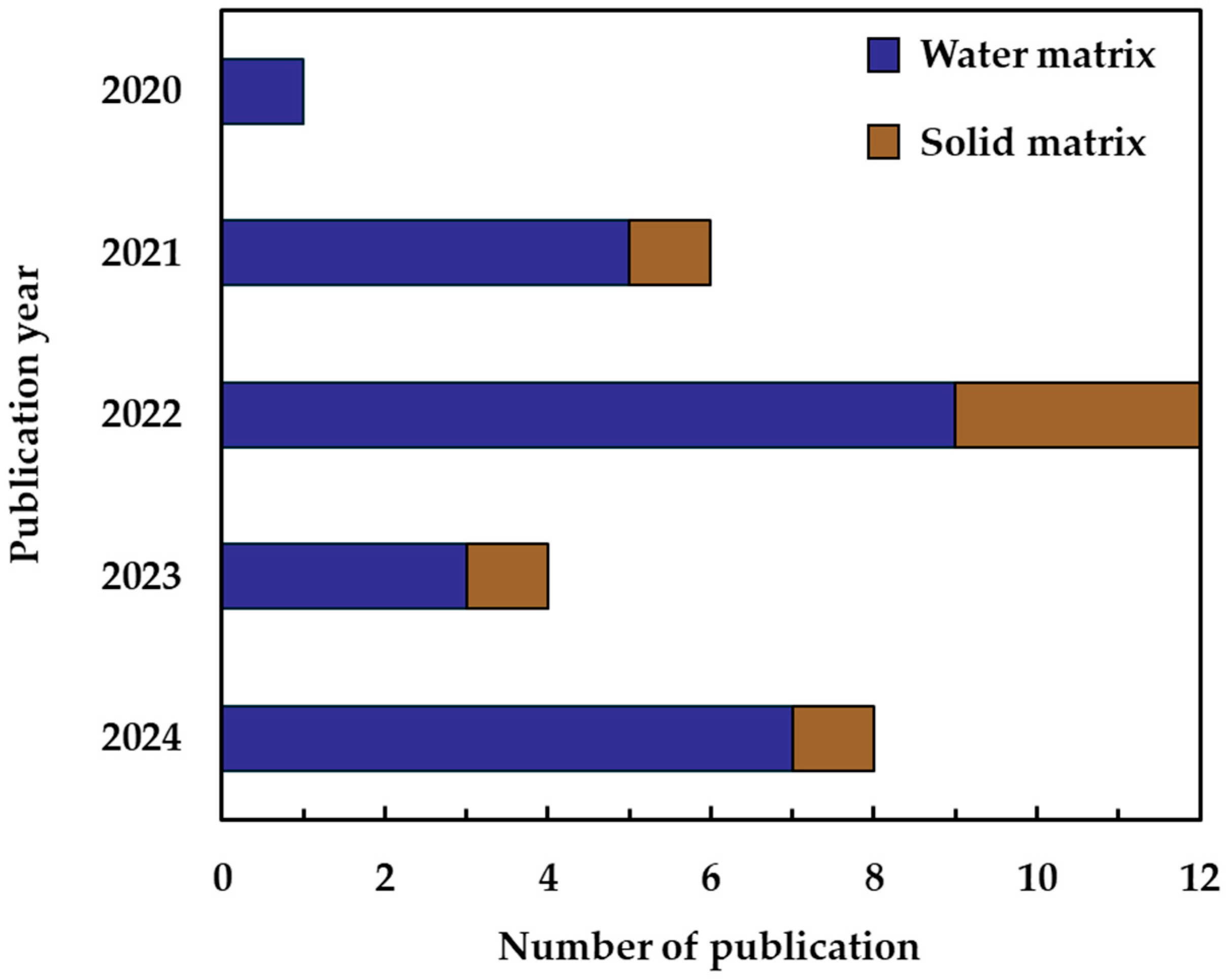
The bibliometric analysis was performed based on the 31 articles identified in the systematic review, including 25 studies addressing MP removal from water matrix and 6 from solid matrix. Although the review period covers 2015–2024, which is a decade after the announcement of the United Nations Sustainable Development Goals (UN-SDGs), flotation-related studies on MP removal were not published until 2020 (Figure 2).
In 2020, the first paper on this topic was published by Wang et al. [40] from Tsinghua University and Central South University in China, focusing on MP removal from water. The following year, the number of publications increased to six, comprising five studies on water [41,42,43,44,45] and the first study on solid matrix, also reported by Wang et al. [46], the same research group that pioneered the initial water-focused work.
Between 2022 and 2024, publication numbers fluctuated: 12 in 2022, 4 in 2023, and 8 in 2024. Despite this variability, a consistent trend was observed across all years: research on water environments substantially outnumbered studies on solid matrices. This imbalance is likely due to the relative simplicity of water matrices, in which recovery can be quantified more reliably, and results can inform wastewater treatment applications directly. In contrast, solid matrix studies remain limited, as their heterogeneous composition introduces analytical and technological complexities, keeping this subfield at a more exploratory stage.
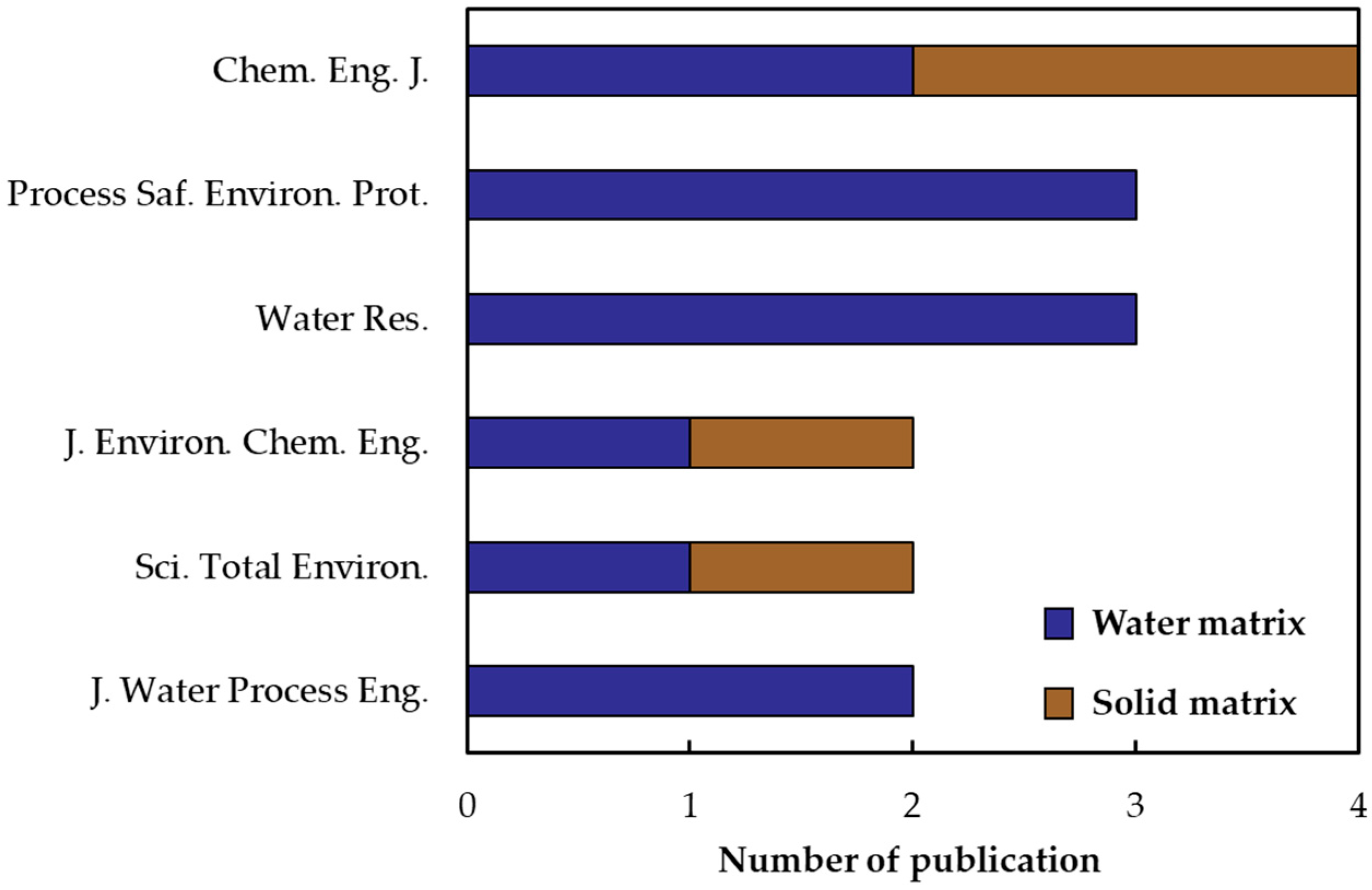
Figure 3 presents the distribution of publications across the top six journals, each with at least two articles on microplastic removal using flotation. The highest number of articles was published in Chemical Engineering Journal (4 papers), followed by Process Safety and Environmental Protection (3 papers) and Water Research (3 papers). These leading outlets are recognized high-impact journals in chemical engineering and water treatment, underscoring both the novelty and practical significance of MP removal using flotation. In addition, the Journal of Environmental Chemical Engineering, Science of the Total Environment, and the Journal of Water Process Engineering each published two articles. Collectively, these six journals accounted for 16 papers, representing more than half (51.6%) of the total publications included in this review.
Aside from these six journals, the remaining contributions were dispersed across a long tail of outlets, each publishing only a single article. This pattern indicates that research on flotation for MP removal is still at a relatively exploratory stage, with findings disseminated across a wide range of environmental and engineering journals rather than concentrated within a single “home” journal.
Across all journals, water-focused studies consistently outnumbered solid matrix-focused studies, even within multidisciplinary journals such as Science of the Total Environment and Journal of Environmental Chemical Engineering. This imbalance highlights that flotation research has thus far been driven primarily by wastewater treatment and water engineering applications, while solid matrix-focused studies remain niche and emerging. In particular, three of the top six journals—Process Safety and Environmental Protection, Water Research, and Journal of Water Process Engineering—published exclusively water-related studies, which is consistent with their titles and scope emphasizing water systems.
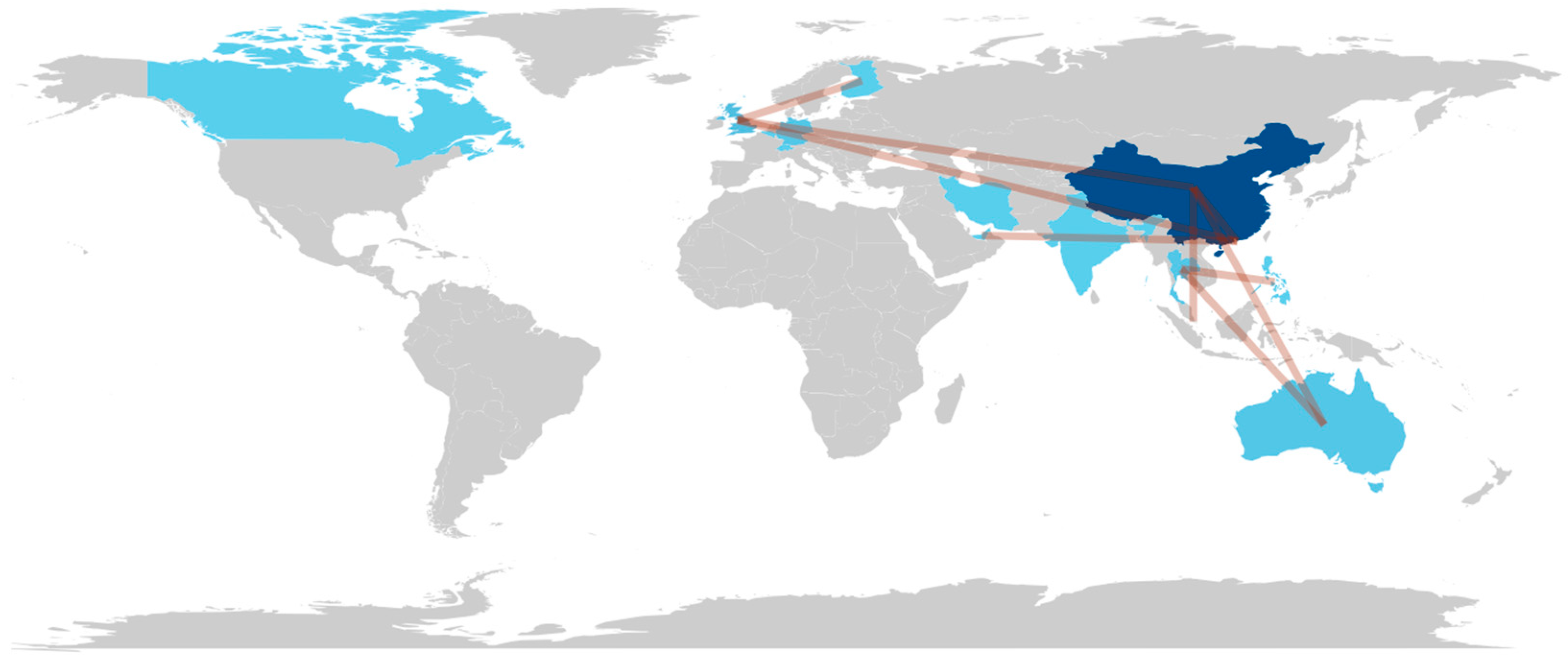
Figure 4 presents the global distribution of research output and collaboration networks on microplastic removal using flotation. Countries shaded in dark blue represent higher numbers of publications, light blue indicates lower numbers, and gray denotes no publications. The results show that China (17 articles) and Hong Kong (4 articles), totaling 20 articles including one co-authored study between the two, clearly dominate the field. This strong representation highlights China, including Hong Kong, as the central hub of research activity in this area.
By comparison, a smaller number of publications originated from Australia, Belgium, Canada, Finland, Germany, India, Iran, the Philippines, Singapore, Switzerland, Thailand, the United Arab Emirates (UAE), and the United Kingdom (UK). This long-tail distribution suggests that flotation research on MP removal is still in its early stages, with only a limited number of active contributors outside China.
The red lines in Figure 4 illustrate international collaboration links. China not only leads in terms of publication volume but also serves as the primary hub for cross-border cooperation, collaborating extensively with Australia, Hong Kong, Singapore, and the UK. Hong Kong, in turn, maintains collaborations with mainland China, the UAE, and the UK. The UK plays an additional role by linking with both China and Hong Kong, as well as collaborating with Finland. Australia demonstrates strong ties with both China and Thailand, while Thailand collaborates regionally with the Philippines, reflecting the gradual emergence of Southeast Asia within this research landscape.
When focusing on solid matrix-related studies, out of the six articles identified, four were published by China, including one co-authored study with Australia. The remaining two were published by Belgium and Germany (one each). This indicates that, while China is dominant in both water and solid matrix studies, contributions from Europe have begun to emerge in niche areas, albeit at a much smaller scale.
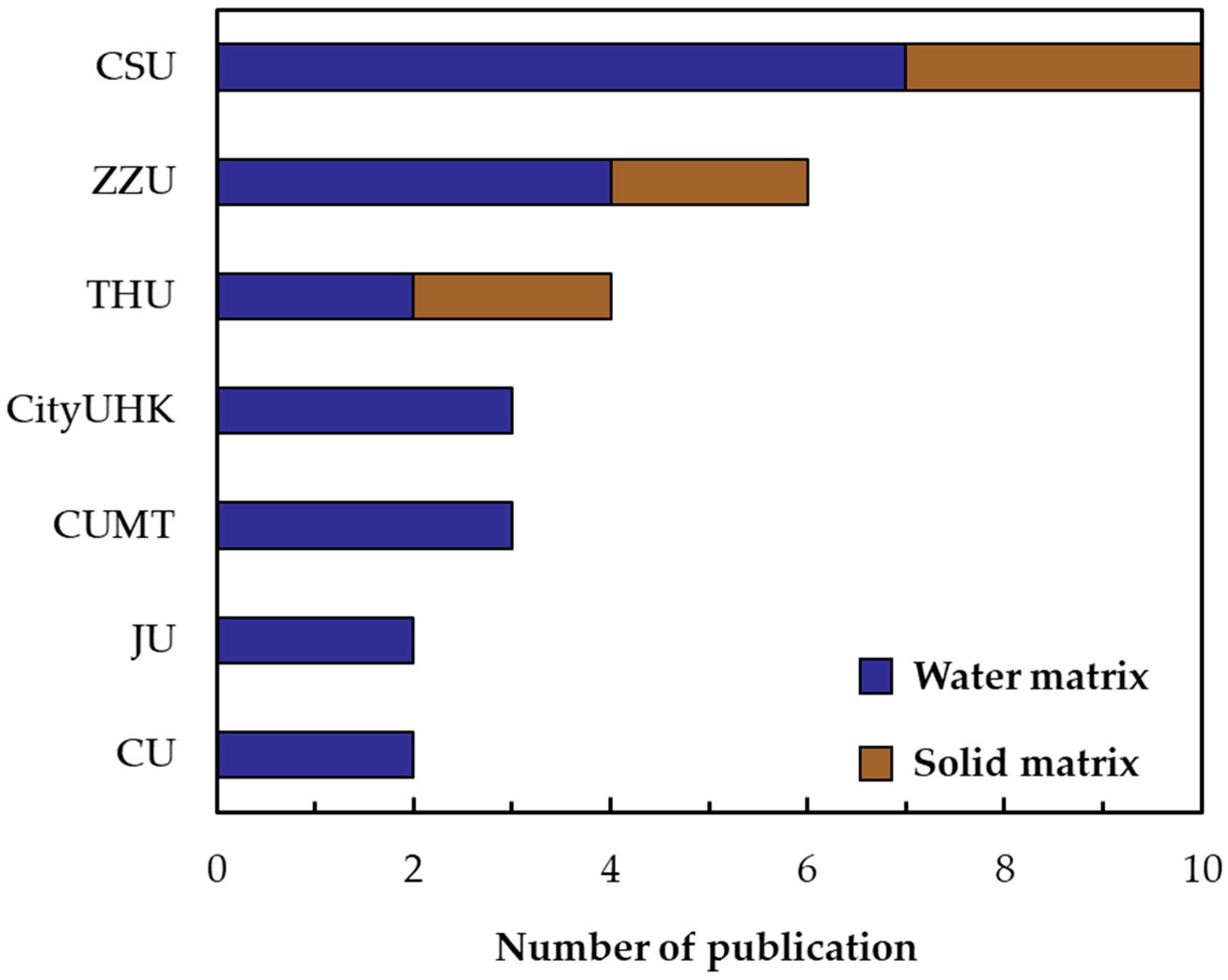
Figure 5 illustrates the institutional distribution of publications on microplastic removal using flotation. The top seven institutions with at least two publications accounted for 58.1% of the total output (18 of 31 articles), underscoring the concentration of research activity in this field. Central South University (CSU, China) was by far the most productive institution, contributing nearly ten articles spanning both water (7) and solid particles (3) environments. Zhengzhou University (ZZU, China) and Tsinghua University (THU, China) followed in output; notably, all their articles were co-authored with CSU, indicating that CSU serves as the leading institution driving this topic while maintaining strong domestic collaborations.
City University of Hong Kong (CityUHK) and China University of Mining and Technology (CUMT) each produced three papers, both focusing exclusively on water systems. Jiangnan University (China) and Chulalongkorn University (Thailand) contributed two papers each, representing the growing participation of institutions outside of CSU’s immediate network.
Although these seven institutions collectively published more than half of all identified articles, the remaining contributions were widely dispersed across numerous universities and research institutes worldwide, each with only a single publication. This long-tail distribution highlights the relatively fragmented nature of microplastic removal using flotation research outside of China and emphasizes the need for broader institutional engagement and international collaboration.
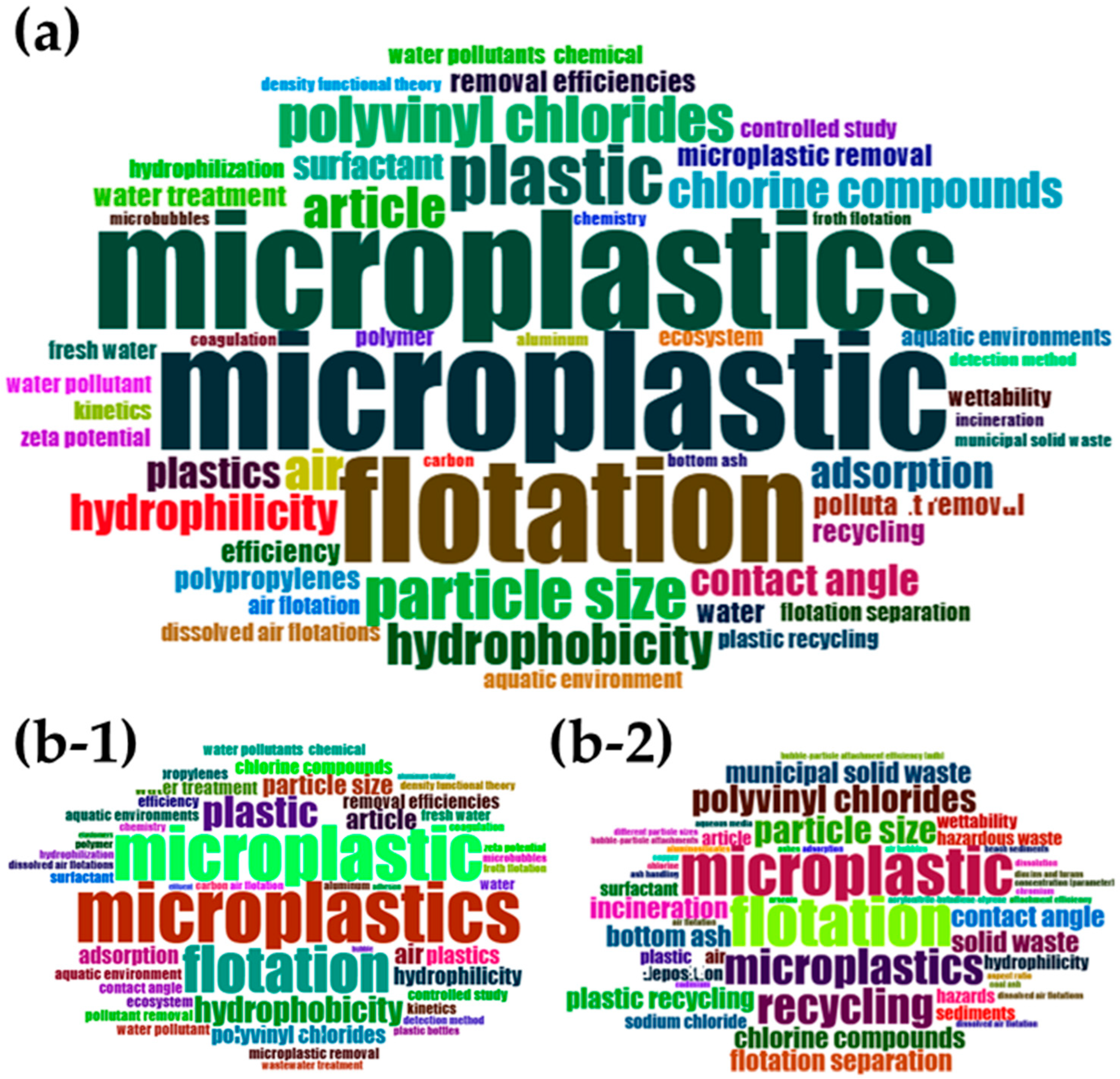
Figure 6 presents keyword co-occurrence word clouds. Across all studies (n = 31), the most dominant keywords were microplastics (n = 26)/microplastic (n = 21), and flotation (n = 23). These terms were expected, as they were also used as search keywords and appeared in more than half of the included articles (Figure 6a).
Other frequent keywords included plastic (n = 11)/plastics (n = 7), polyvinyl chlorides (n = 10), particle size (n = 9), chlorine compounds (n = 8), air (n = 7), and contact angle (n = 7). The relatively high frequency of “polyvinyl chloride (PVC)” and “chlorine compounds” suggests that PVC has received more attention compared to other polymer types, possibly due to the adverse effects of chlorine-containing plastics. The prominence of “particle size” highlights the challenge posed by small MPs, which are more difficult to remove. The keyword “air” refers to bubble generation, a critical mechanism in flotation, while “contact angle” represents surface wettability, a key parameter governing attachment and separation efficiency.
When focusing on water-related studies (Figure 6b-1) and solid matrix-related studies (Figure 6b-2), broadly similar keyword patterns were observed. However, in particles-related studies (n = 6), terms such as plastic recycling (n = 3) and recycling (n = 2) became more prominent. This shift suggests that, while water-focused studies typically emphasize environmental treatment and removal efficiency, solid matrix-focused studies often link MP removal with plastic recycling and resource recovery objectives, reflecting a broader waste management perspective.
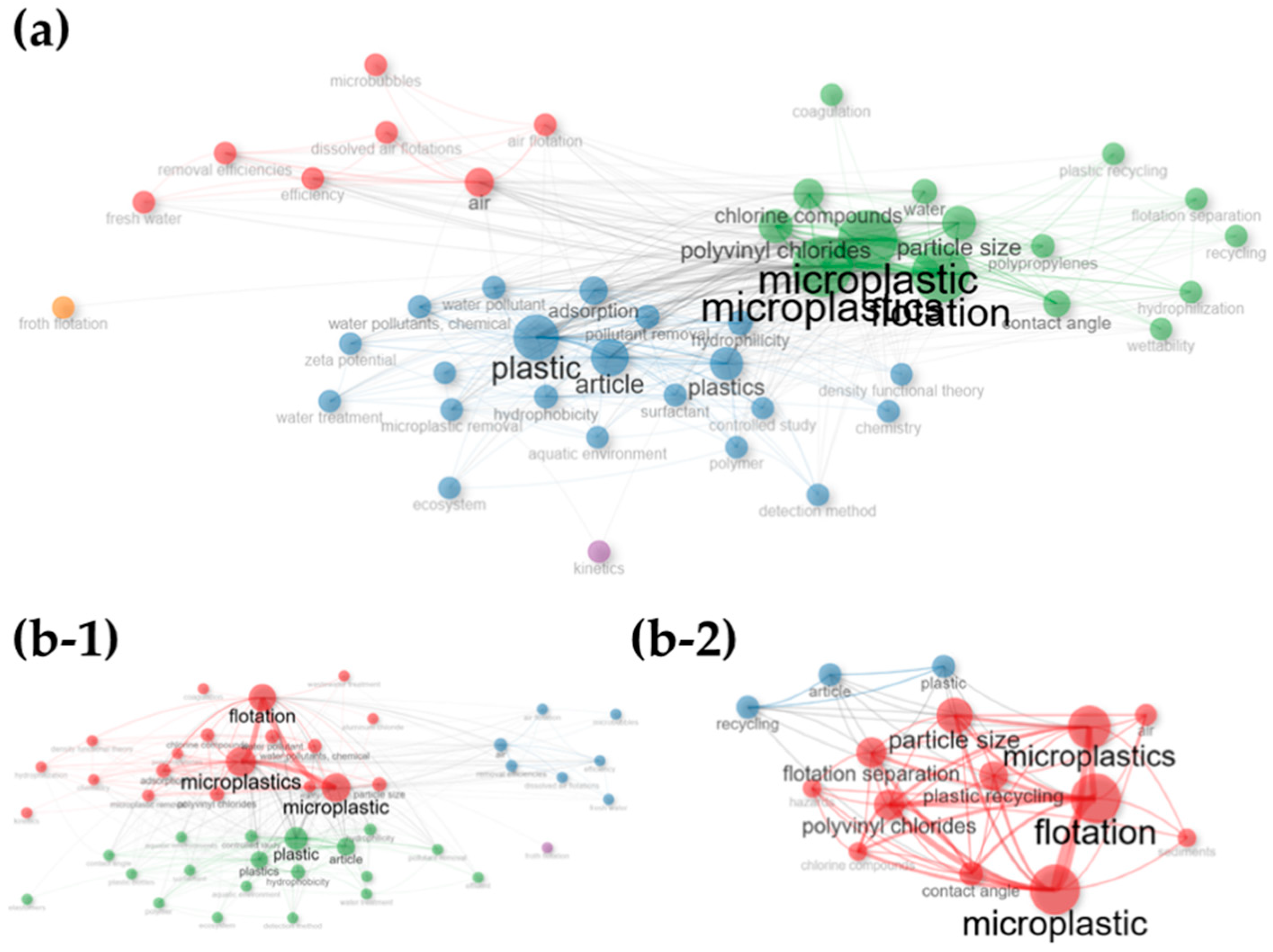
Figure 7 shows the keyword co-occurrence networks of MP removal using flotation research. In the overall dataset (Figure 7a), three main clusters can be observed: (i) surface and particle properties (e.g., particle size, contact angle, hydrophobicity, PVC), (ii) environmental and pollutant context (e.g., water pollutants, adsorption, aquatic environment), and (iii) process-related terms (e.g., air, microbubbles, dissolved air flotation, efficiency). Together, these clusters highlight that flotation research integrates surface chemistry, environmental relevance, and engineering optimization.
Water-related studies (Figure 7b-1) revealed a broader and more diverse keyword structure, reflecting both mechanistic studies and practical wastewater treatment applications. In contrast, solid matrix-related studies (Figure 7b-2) showed a smaller and more tightly connected network, dominated by terms such as flotation, particle size, PVC, and recycling. This pattern indicates that research on MP removal from solid matrices is still emerging, with a narrower focus on optimizing flotation for complex matrices and linking removal to recycling objectives. The absence of frontier terms such as nanoplastics or pilot-scale validation underscores key knowledge gaps that future studies could address.

3.3. Meta-Analysis Results

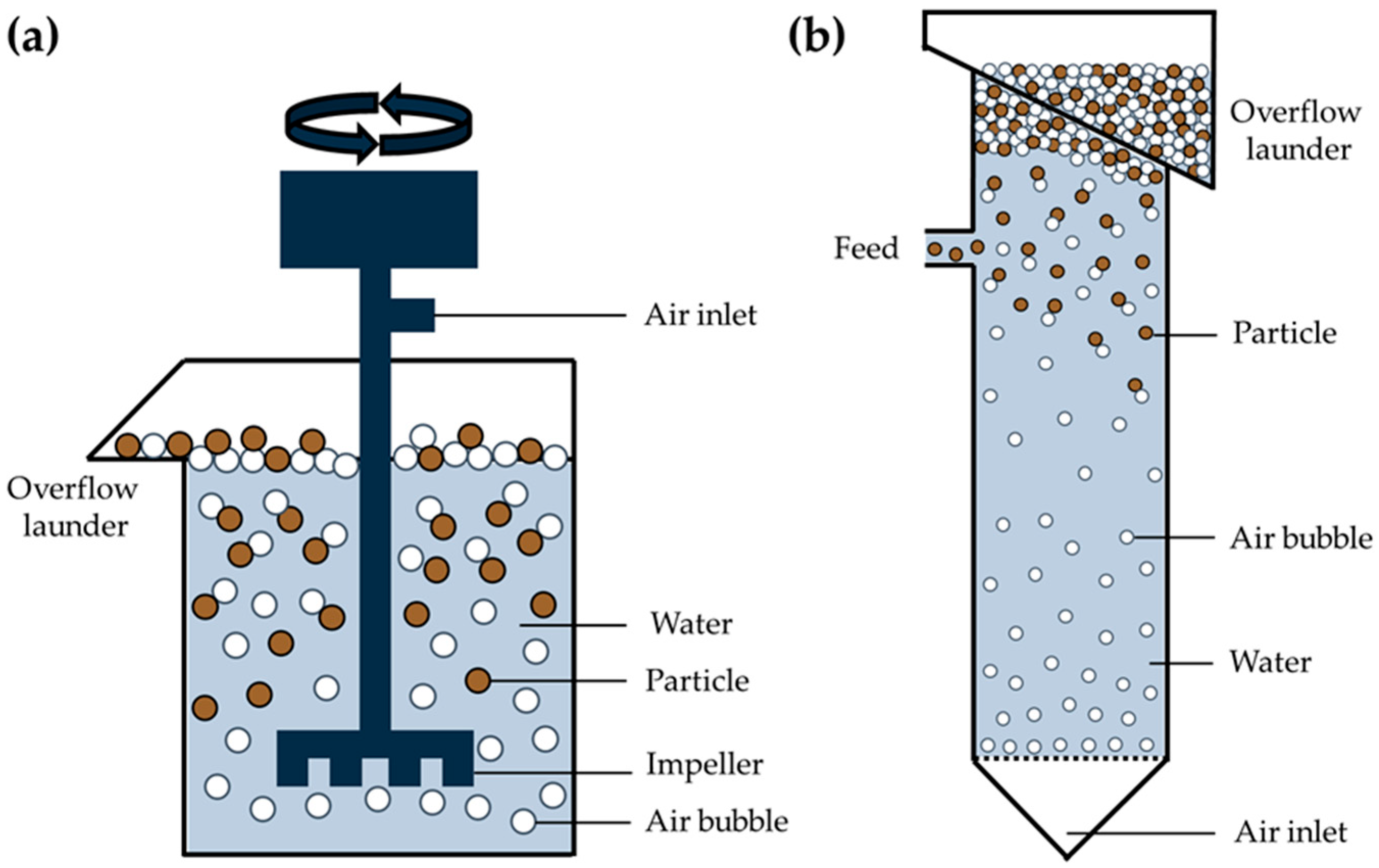
Flotation, a surface-based separation method, has strong potential for removing MPs because most polymers are naturally hydrophobic. In this process, hydrophobic particles suspended in water attach to rising air bubbles and are transported to the froth layer for recovery [47]. The two most common configurations are mechanical flotation (Figure 8a) and column flotation (Figure 8b), both widely applied in mineral processing. Mechanical cells are typically cubic or cylindrical tanks in which an impeller provides intense agitation, dispersing air into relatively coarse bubbles that promote particle–bubble collisions [48]. In contrast, column flotation offers a longer separation space and a more stable flow field, generating finer bubbles and extending bubble–particle contact times, making it particularly suitable for MP removal [42]. Dissolved air flotation (DAF), although conceptually similar to column flotation, is more commonly applied in environmental engineering than in mineral processing. In DAF, air is dissolved at high pressure in a saturator tank and released at atmospheric pressure, forming microbubbles that adhere to plastic particles, increasing their buoyancy and causing them to float to the liquid surface. This process has been successfully used for oil and grease recovery, sludge thickening, and wastewater treatment in industries such as paper production, refineries, food processing, and chemical manufacturing [41,48].

3.3.1. Removal of Microplastics from Water Using Flotation

From the total of 25 studies on MP removal from water using flotation, 15 papers generally reported the application of flotation techniques, without specifying a particular flotation configuration. In addition, 3 studies specifically employed dissolved air flotation (DAF). Other flotation-based approaches included microbubble flotation, nanobubble flotation, micro–nanobubble flotation, carrier flotation, and foam flotation.
Both mechanical and column flotation cells have been applied for MP removal. However, most studies focused on column flotation due to its finer bubble size and longer bubble–particle contact time, which are advantageous for capturing small-sized MPs. Nevertheless, mechanical flotation can still be effectively applied for MP removal, as demonstrated in several studies [49].
Due to the diversity and number of studies, this section categorizes flotation-based MP removal from water into two main groups: (i) studies conducted using artificial or synthetic water matrices, and (ii) studies utilizing real wastewater samples from wastewater treatment systems.
For the artificial water (Table 1), flotation without assisted techniques or chemical use, and column flotation using chemical assistance, achieved 100% removal efficiency [49]. The other chemical used was terpineol [50], vegetable oil [51], and sodium oleate and dodecyl trimethylammonium chloride [52], which achieved optimal removal rates of 98–100%. Several advanced strategies have also been applied. Colloidal gas aphrons (CGA), a form of stable microbubbles consisting of a gas core surrounded by surfactant and water layers, offered a solution to the limitations of conventional flotation, achieving 99% removal with Sapindus mukorossi soap nuts (SMSN) [47]. Hydrophilization of polymers using α-terpineol increased their reactivity with flotation reagents and improved recovery to 99.8% [51].
In addition, coagulation (Figure 9a) flotation has been reported, where chemical coagulants are added to destabilize MPs by neutralizing their surface charges, thereby reducing electrostatic repulsion and promoting aggregation into larger flocs that attach more easily to bubbles and float to the surface. This mechanism is widely applied in water treatment, as coagulants such as aluminum salts, ferric salts, or cationic polymers can bridge and bind dispersed particles into larger, recoverable aggregates. Using polydimethyl diallyl ammonium chloride (PDAC) and polyaluminum ferric chloride (PAFC), recoveries of up to 99% were achieved [53].
Table 1. A summary of recent studies on removal of microplastics from artificial water using flotation.
Size [µm]Polymer TypesFlotation TechniquesAssisted TechniquesChemicals UsedRemoval Efficiency [%]Ref.
PPPEPSPETPVCOthers
<5000 FlotationCGASMSN99.0[47]
<5000 FlotationTerpineol98.2[50]
50–5000FlotationVegetable oil≥98.0[51]
2000–3000 FlotationHydrophilizationα-Terpineol99.8[40]
500–1000 FlotationNaOL and DTAC100[52]
100–1000FlotationAgglomerationKerosene96.0–99.0[49]
100–500FlotationTEOS sol–gelTEOS95.0–100.0[54]
40–100FlotationTEOS sol–gelTEOS82.0–98.0[54]
<105 FlotationHydrocyclone26.0[44]
10–100.79 FlotationHydrocyclone90.0[55]
FlotationGel coagulation–spontaneousPAC and PAFC93.0–99.0[53]
Flotation100.0[42]
<106 DAFPositive modificationCTAB and PDAC48.7[45]
10–600 MB flotation83.3 [56]
1–50 MNBs flotation~92.6[57]
<10 MNBs flotation36.0[58]
<1000 Carrier flotationIonized air>90.0[59]
300 Foam FlotationCarbonate-modified nonionic surfactants40.0[60]
Note: “–” means “not specified”; “√” means “included in the experiments”; “SMSN” means “sapindus mukorossi soap nuts”; “NaOL” means “sodium oleate”; “DTAC” means “dodecyl trimethyl ammonium chloride”; “CTAB” means “cetyltrimethy lammonium bromide”; “PDAC” means “polydimethyl diallyl ammonium chloride”; “CGA” means “colloidal gas aphrons”; “DAF” means “dissolved air flotation”; “MDAF” means “modified dissolved air flotation”; “SOPC” means “oscillating pulsed cavitation-impinging”; “NB” means “nanobubble”; “MB” means “microbubble”; “TEOS” means “tetraethyl orthosilicate”; “GCSF” means “gel coagulation–spontaneous flotation”; “PAC” means “polyaluminum chloride”; “PAFC” means “polyaluminum ferric chloride”; “MNBs” means “micro-nanobubbles”.
Another widely studied approach is agglomeration (Figure 9b) flotation, which uses a hydrophobic bridging agent, such as kerosene, to bind fine MPs into larger aggregates, thereby enhancing bubble attachment and floatability. This method achieved up to 99% removal efficiency with mechanical flotation [49]. Similarly, gel-assisted flotation using tetraethyl orthosilicate (TEOS) formed a sol–gel network that aggregated MPs, achieving 100% recovery for 100–500 µm particles and 98% for 40–100 µm MPs [54]. The combination of a hydrocyclone with air flotation improved removal of fine MPs (<105 µm), with 26% efficiency in laboratory tests [44] and 90% in numerical modeling [55].
The DAF process has also been applied with modifications. A study using cationic surfactants, such as cetyltrimethylammonium bromide (CTAB), in combination with PDAC achieved 48.7% removal efficiency of fine MPs [45]. Microbubble flotation using detergents reached 83.3% removal [56], while micro-nanobubble flotation removed MPs sized 1–50 µm with ~92.6% efficiency [57], but recovery dropped to 36% for MPs smaller than 10 µm [58].
Another approach is carrier (Figure 9c) flotation, where fine MPs attach to larger, easily floatable particles or ionized bubbles that serve as “carriers,” improving the capture of particles that are otherwise too small to float. This method reached up to 90% removal efficiency [59]. In contrast, foam flotation, which relies on carbonate-modified nonionic surfactants to trap MPs in a foam layer, achieved a lower recovery of ~40% [60].
For wastewater studies (Table 2), it should be noted that two different experimental approaches have been adopted. Some studies directly used real collected wastewater, while others first collected and characterized real wastewater and then prepared synthetic or simulated wastewater to mimic its physicochemical properties. This approach differs from the artificial water section discussed above, in which no actual wastewater was involved.
In flotation using collectors for surface modification, MP removal efficiencies of 93.3% and 92.4% were achieved using diesel oil and sec-octyl alcohol, respectively [61]. In comparison, CGA flotation using SMSN as a surfactant achieved 89% efficiency [47]. Flotation with AlCl3-induced surface modification achieved removal efficiencies of up to 99% [43], while hydrophilization treatment using K2FeO4 resulted in complete (100%) removal of MPs [62]. In addition, a hybrid hydrocyclone–flotation process demonstrated high performance, achieving removal efficiencies up to 92% [63].
For DAF, conventional DAF achieved 81–86% MP removal without coagulant addition [64]. The performance was further enhanced to 96% with AlCl3·6H2O and 70% with FeCl3·6H2O as coagulants [41]. Moreover, modified DAF (MDAF), incorporating self-excited oscillating pulsed cavitation-impinging (SPOC) flows, achieved 81% removal using cetyltrimethylammonium bromide (CTAB) and 88% using polydimethyldiallylammonium chloride (PDAC) [65]. Finally, microbubble flotation with a commercial detergent achieved 98% removal [66], whereas nanobubble flotation reached 88% without chemical additives [64].
Table 2. A summary of recent studies on removal of microplastics from wastewater using flotation.
Size [µm]Polymer TypesFlotation TechniquesAssisted TechniquesChemicals UsedRemoval Efficiency [%]Ref.
PPPEPSPETPVCOthers
<5000 FlotationCGASMSN89.0[47]
2000–3000 FlotationHydrophilizationK2FeO4100.0[62]
FlotationHydrocyclone>92.0[63]
Flotationdiesel oil93.9[61]
FlotationSec-octyl alcohol92.4[61]
FlotationSurface modificationAlCl3>99.7[43]
DAFCoagulationAlCl3·6H2O96.1[41]
DAFCoagulationFeCl3·6H2O70.6[41]
DAF81.0–86.0[64]
MDAFSOPCCTAB81.6[65]
MDAFSOPCPDAC88.3[65]
MB flotationCommercial detergent>98.0[66]
NB flotation86.0–88.0[64]
Note: “–” means “not specified”; “√” means “included in the experiments”; “SMSN” means “sapindus mukorossi soap nuts”; “CTAB” means “cetyltrimethy lammonium bromide”; “PDAC” means “polydimethyl diallyl ammonium chloride”; “CGA” means “colloidal gas aphrons”; “DAF” means “dissolved air flotation”; “MDAF” means “modified dissolved air flotation”; “SOPC” means “self-excited oscillating pulsed cavitation-impinging”; “NB” means “nanobubble”; “MB” means “microbubble”.
Beyond flotation configurations, assisted techniques, and the use of surfactants or other chemicals, a number of operational and physicochemical parameters also play critical roles in determining microplastic (MP) removal efficiency. These key parameters, as summarized and discussed below, significantly influence bubble–particle interactions, attachment probability, and overall separation performance:
(a)
Concentration of surface modifying agents: Across studies, higher dosages of surface-modification and collector agents generally improved MP flotation. AlCl3 enhanced removal efficiency of 1–50 µm MPs from 50–90% to 85–95% [57]. SMSN similarly showed improved removal with increasing dosage [47]. Cationic agents such as CTAB and PDAC increased recovery from about 40% at 0 mg/L to approximately 80% (CTAB) and 90% (PDAC) at higher dosages [49], while CTAB was most effective up to 1.2 mg/L, decreasing beyond 1.4 mg/L [45]. Hydrocarbon collectors, including kerosene, diesel oil, and sec-octyl alcohol, also showed positive dosage–removal trends, rising from around 80–88% at low doses to >90% at higher concentrations up to 0.665 mL/L [49,61].
(b)
pH: Most chemical agents showed a strong pH dependence in MP removal. Coagulation using PAC and PAFC achieved the highest efficiency at pH 6 (≈90%), with performance decreasing at both lower and higher pH values, reaching about 75% at pH 10 [53]. Similarly, flotation with AlCl3 and FeCl3 also peaked at pH 6, with removal rates of about 60% and 30%, respectively, before declining to 40% and 15% at pH 8 [41]. In contrast, some agents—such as SOPC—showed no significant pH influence, indicating that pH sensitivity depends strongly on the type of chemical used [65].
(c)
Salinity: In general, salinity slightly enhanced MP removal, with saline water achieving around 89%, compared with 85% in deionized water [47]. However, the effect differed by polymer type: PA and PVC showed slightly lower removal efficiencies in saline conditions. At the same time, PS and PET exhibited slight increases compared with their performance in non-saline water [51].
(d)
Temperature: Temperature had no significant effect on MP flotation within the tested range of 10–40 °C, with removal efficiency remaining stable across conditions [50]. However, in some treatment processes, thermal exposure can indirectly reduce the floatability of certain polymers, such as PC, by hydrophilizing them, leading to lower removal rates [62].
(e)
Treatment time: Studies showed that treatment duration had minimal influence on flotation performance. Extended bubble-generation time did not alter bubble size or concentration, indicating unstable or time-independent bubble characteristics [57,64]. For SOPC, reaction times longer than 5 min produced a stable removal rate, with no further improvement at longer durations [65]. Similarly, DTAC treatment showed no additional benefit beyond 2 min, indicating that prolonged treatment does not enhance MP removal [52].

3.3.2. Removal of Microplastics from Solid Particles Using Flotation

For solid matrices such as soils, sediments, and incineration residues, flotation has been the most frequently applied separation technique, reported in four studies, followed by one study each on DAF and carrier flotation. As summarized in Table 3, these results confirm flotation as a viable method for sediment-associated MPs, though further development is needed to optimize recovery across diverse polymer types and complex environmental conditions.
In sediment systems, flotation using sodium oleate (NaOL) demonstrated strong dosage dependence, achieving nearly complete (100%) recovery of MPs smaller than 5000 µm [67]. A novel approach using the microplastic-separator (μSEP) system achieved 77% efficiency by circulating samples through fine air bubbles in a closed-loop column. Hydrophobic MPs attached to bubbles and rose to the overflow for collection, while large bubbles in a bypass recirculated the sample, enabling multiple bubble–particle interactions and enhancing recovery [68]. In addition, a DAF study applied the White-Water Blanket Model (WWBM), a simplified flotation framework that describes bubble–particle aggregates based on empirical attachment efficiency, to evaluate MP recovery in sediments [48].
Flotation has also been tested in plastic-rich and industrial waste matrices. For plastic waste, hydrophilization using FeCl3 prior to flotation yielded complete (100%) recovery [69]. Carrier flotation, in which fine MPs are attached to larger floatable surfaces, was demonstrated using a Fe3O4 magnetic coating, achieving 100% recovery [46]. In municipal particles waste incineration (MSWI) fly ash, flotation with NaCl achieved ~70% recovery for MPs sized 0–5000 µm, ~60% for 0–300 µm, and complete (100%) recovery for the 300–5000 µm fraction [70].

4. Critical Discussion, Future Perspectives, and Conclusions

4.1. Critical Discussion of Technical Findings

The systematic review and meta-analysis (Section 3.3) demonstrate that flotation-based approaches are highly effective for removing microplastics (MPs), particularly under controlled laboratory conditions. In water environments, reported recovery efficiencies frequently exceeded 90%, especially when assisted by coagulants, surfactants, or agglomerating agents. For example, column flotation and dissolved air flotation (DAF) consistently achieved near-complete recovery of low-density polymers such as polyethylene (PE) and polypropylene (PP). By contrast, denser polymers such as polyvinyl chloride (PVC) and polyethylene terephthalate (PET) showed variable performance, highlighting the importance of surface modification and the application of agglomeration or carrier flotation.
Sediment environments present additional challenges. Efficiencies ranged more widely (60–100%) due to sediment heterogeneity and interference from organic matter and mineral matrices. Agglomeration flotation and carrier flotation have shown promise in improving recovery of fine and dense MPs from sediments; however, concerns remain regarding reagent toxicity (e.g., kerosene, magnetic coatings) and the complexity of recycling carrier particles. Moreover, while nanobubble flotation has emerged as a novel strategy for sub-100 µm MPs, efficiencies remain inconsistent (36–92%), underscoring the difficulty of capturing fine MPs under environmentally relevant conditions.
The results reinforced that flotation performance is highly dependent on (i) polymer type and density, (ii) particle size and morphology, and (iii) matrix complexity. Laboratory protocols often reported nearly ideal efficiencies in simplified artificial waters, but these outcomes diverge from real wastewater or sediment systems, where competing particles and fouling effects lower reproducibility. This discrepancy highlights the current research gap between laboratory-scale optimization and field-scale applicability.

4.2. Policy, Economic, and Social Perspectives

Although technical advances demonstrate the potential of flotation for MPs removal, broader policy and socio-economic contexts remain underdeveloped. Many national and local governments have introduced measures to limit plastic pollution. However, microplastics remain a low-priority pollutant compared to other classes such as heavy metals or persistent organic pollutants. Existing policies often lack scientific grounding, and when evidence is used, it primarily focuses on life-cycle and distribution data, with insufficient integration of socio-economic perspectives such as public perceptions, behaviors, and responsibilities [71].
Several key policy gaps were evident. First, regulations remain fragmented and inconsistent across regions. For example, the EU lacks consensus on definitions and categories for MP restrictions [72]. Second, most policies focused narrowly on marine litter, overlooking terrestrial and freshwater pathways [73]. Third, producer accountability remained weak, with limited frameworks for extended producer responsibility [74]. To address these challenges, policies must evolve to encompass the entire plastic life cycle, with harmonized international standards and enforceable treaties [72].
Public awareness and stakeholder engagement are equally critical. Despite rising scientific publications, surveys indicate that public knowledge of MPs remains limited, although risk perception increases once health impacts are communicated [75]. Education, outreach, and citizen science programs can enhance understanding and participation in monitoring [76]. The media also plays a pivotal role in shaping narratives: while most scientific articles frame MPs risks as uncertain, media coverage often presents them as established threats [77]. This discrepancy underscores the importance of harmonized risk communication strategies to ensure that public discourse aligns with scientific evidence.
The integration of technical solutions such as flotation into real-world management will require socio-political acceptance and institutional support. For example, adoption in wastewater treatment plants (WWTPs) could be incentivized by policies that prioritize MPs monitoring and removal, supported by funding schemes for technology demonstration. Similarly, aligning flotation technologies with circular economy principles—e.g., enabling MPs recovery for recycling or energy valorization—could enhance economic feasibility and social acceptance [78].

4.3. Future Perspectives

Based on current findings, several directions emerge for future research and practice:
  • Standardization of protocols: Current studies employ diverse reagents, particle sizes, operating conditions, and matrices, which limit data comparability. Harmonized experimental and reporting guidelines, such as those proposed by Cowger et al. [79], are urgently needed to improve reproducibility, enable cross-study synthesis, and support reliable technology benchmarking.
  • Nanoplastics: Most flotation studies still focus on MPs (>1 µm), while systematic investigations on nanoplastics remain limited. Given their higher mobility, bioavailability, and potential toxicity, further research is required to adapt flotation principles and detection methods for nano-sized plastic particles.
  • Eco-friendly reagents: Many flotation studies rely on kerosene, synthetic surfactants, or chemical coagulants, raising concerns over secondary pollution and sustainability. Future research should prioritize the development and application of biodegradable, low-toxicity, and biomass-derived collectors or modifiers suitable for environmental systems.
  • Pilot and full-scale validation: Nearly all existing studies are conducted at laboratory scale using simplified or synthetic matrices. Pilot-scale demonstrations under realistic wastewater and sediment conditions are essential to evaluate process stability, robustness against matrix complexity, and operational challenges prior to industrial deployment.
  • Scale-up and industrial implementation: Transitioning flotation from laboratory to full-scale systems involves challenges related to hydrodynamics, bubble size control, continuous operation, energy demand, froth handling, and integration with existing WWTP units. Future studies should address process optimization, techno-economic assessment, and life-cycle analysis to support feasible large-scale application.
  • Hybrid processes: Integrating flotation with other treatment processes such as coagulation, membrane filtration, or advanced oxidation may provide synergistic improvements in efficiency. Systematic evaluation of hybrid flowsheets is needed to determine optimal configurations for different water and sediment scenarios.
  • Interdisciplinary integration: Progress in MP flotation requires closer collaboration between mineral processing, environmental engineering, toxicology, and social sciences. Such integration is necessary to develop technically effective solutions that are also environmentally safe and socially acceptable.
  • Global governance and treaties: Beyond technical development, effective mitigation of MP pollution requires international policy coordination and legally binding frameworks. Global agreements, similar to climate or hazardous waste treaties, are crucial for controlling transboundary plastic contamination [80].

4.4. Conclusions

This systematic review, bibliometric analysis, and meta-analysis collectively highlight flotation as one of the most promising techniques for MP removal. Technical advances showed high removal efficiencies under controlled conditions, but challenges remain in treating complex sediments, scaling up to WWTP applications, and addressing nanoplastics. Bibliometric evidence points to strong research leadership by Chinese institutions, though global contributions remain fragmented.
At the same time, policy frameworks, economic strategies, and public engagement lag behind technical progress. Effective mitigation of MP pollution requires not only improved flotation technologies but also harmonized international policies, producer accountability, and active public participation. Embedding flotation into broader circular economy and waste-management strategies will be critical to ensure both environmental and societal benefits.
In summary, flotation is a rapidly evolving, adaptable approach with strong potential to address MP pollution. However, realizing its full impact demands interdisciplinary research, eco-friendly innovations, pilot-scale validation, and coordinated global governance. These combined efforts will be essential for translating promising laboratory results into real-world solutions for a cleaner, more sustainable future.

Author Contributions

Conceptualization, T.P., P.S., M.V.-T., M.S., C.B.T., D.A. and O.J.; methodology, T.P., P.S., M.V.-T., M.S., C.B.T., D.A. and O.J.; software, P.S.; validation, T.P., P.S., A.T.T. and O.J.; formal analysis, T.P., P.S., A.T.T. and O.J.; data curation, P.S.; writing—original draft preparation, T.P., P.S., D.J., A.T.T. and O.J.; writing—review and editing, T.P., P.S., M.V.-T., M.S., D.J., C.B.T., D.A., A.T.T. and O.J.; visualization, T.P. and P.S.; supervision, T.P., D.J. and O.J.; project administration, P.S., A.T.T. and O.J.; funding acquisition, O.J. All authors have read and agreed to the published version of the manuscript.

Funding

This research was (partially) supported by the Ratchadapisek Sompoch Endowment Fund (2023), Chulalongkorn University (Sys_66_002_2100_001).

Data Availability Statement

The original contributions presented in this study are included in the article. Further inquiries can be directed at the corresponding authors.

Acknowledgments

This research was (partially) supported by the Ratchadapisek Sompoch Endowment Fund (2023), Chulalongkorn University (Sys_66_002_2100_001). The authors wish to thank the members of the Faculty of Engineering, Chulalongkorn University, for their support to this project and gratefully acknowledge the editors and anonymous reviewers for their valuable input to this paper.

Conflicts of Interest

The authors declare no conflicts of interest.

References

  1. Andrady, A.L. Persistence of plastic litter in the oceans. In Marine Anthropogenic Litter; Springer International Publishing: Cham, Switzerland, 2015; pp. 57–72. [Google Scholar]
  2. Rodrigues, M.O.; Abrantes, N.; Gonçalves, F.J.M.; Nogueira, H.; Marques, J.C.; Gonçalves, A.M.M. Impacts of plastic products used in daily life on the environment and human health: What is known? Environ. Toxicol. Pharmacol. 2019, 72, 103239. [Google Scholar] [CrossRef]
  3. Jambeck, J.R.; Geyer, R.; Wilcox, C.; Siegler, T.R.; Perryman, M.; Andrady, A.; Narayan, R.; Law, K.L. Plastic waste inputs from land into the ocean. Science 2015, 347, 768–771. [Google Scholar] [CrossRef]
  4. Ito, M.; Takeuchi, M.; Saito, A.; Murase, N.; Phengsaart, T.; Tabelin, C.B.; Hiroyoshi, N.; Tsunekawa, M. Improvement of hybrid jig separation efficiency using wetting agents for the recycling of mixed-plastic wastes. J. Mater. Cycles Waste Manag. 2019, 21, 1376–1383. [Google Scholar] [CrossRef]
  5. Prata, J.C.; Silva, A.L.P.; da Costa, J.P.; Mouneyrac, C.; Walker, T.R.; Duarte, A.C.; Rocha-Santos, T. Solutions and Integrated Strategies for the Control and Mitigation of Plastic and Microplastic Pollution. Int. J. Environ. Res. Public Health 2019, 16, 2411. [Google Scholar] [CrossRef]
  6. Villanueva, K.A. End-of-Waste Criteria for Waste Plastic for Conversion. Technical Proposals. Publications Office of the European Union. 2014. Available online: https://publications.jrc.ec.europa.eu/repository/handle/JRC91637 (accessed on 13 June 2025).
  7. Evode, N.; Qamar, S.A.; Bilal, M.; Barceló, D.; Iqbal, H.M. Plastic waste and its management strategies for environmental sustainability. Case Stud. Chem. Environ. Eng. 2021, 4, 100142. [Google Scholar] [CrossRef]
  8. Ali, N.; Khan, M.H.; Ali, M.; Ahmad, S.; Khan, A.; Nabi, G.; Ali, F.; Bououdina, M.; Kyzas, G.Z. Insight into microplastics in the aquatic ecosystem: Properties, sources, threats and mitigation strategies. Sci. Total Environ. 2023, 913, 169489. [Google Scholar] [CrossRef]
  9. Andrady, A.L. Microplastics in the marine environment. Mar. Pollut. Bull. 2011, 62, 1596–1605. [Google Scholar] [CrossRef]
  10. Teuten, E.L.; Saquing, J.M.; Knappe, D.R.; Barlaz, M.A.; Jonsson, S.; Björn, A.; Rowland, S.J.; Thompson, R.C.; Galloway, T.S.; Yamashita, R. Transport and release of chemicals from plastics to the environment and to wildlife. Philos. Trans. R. Soc. B Biol. Sci. 2009, 364, 2027–2045. [Google Scholar] [CrossRef] [PubMed]
  11. Hermabessiere, L.; Dehaut, A.; Paul-Pont, I.; Lacroix, C.; Jezequel, R.; Soudant, P.; Duflos, G. Occurrence and effects of plastic additives on marine environments and organisms: A review. Chemosphere 2017, 182, 781–793. [Google Scholar] [CrossRef] [PubMed]
  12. Li, J.; Liu, H.; Chen, J.P. Microplastics in freshwater systems: A review on occurrence, environmental effects, and methods for microplastics detection. Water Res. 2018, 137, 362–374. [Google Scholar] [CrossRef] [PubMed]
  13. Yong, C.Q.Y.; Valiyaveettil, S.; Tang, B.L. Toxicity of microplastics and nanoplastics in mammalian systems. Int. J. Environ. Res. Public Health 2020, 17, 1509. [Google Scholar] [CrossRef]
  14. Wright, S.L.; Kelly, F.J. Plastic and human health: A micro issue? Environ. Sci. Technol. 2017, 51, 6634–6647. [Google Scholar] [CrossRef] [PubMed]
  15. Sun, J.; Dai, X.; Wang Qvan Loosdrecht, M.C.M.; Ni, B.J. Microplastics in wastewater treatment plants: Detection, occurrence and removal. Water Res. 2019, 152, 21–37. [Google Scholar] [CrossRef]
  16. Ahmed, S.F.; Islam, N.; Tasannum, N.; Mehjabin, A.; Momtahin, A.; Chowdhury, A.A.; Almomani, F.; Mofijur, M. Microplastic removal and management strategies for wastewater treatment plants. Chemosphere 2024, 347, 140648. [Google Scholar] [CrossRef]
  17. Cristaldi, A.; Fiore, M.; Zuccarello, P.; Oliveri Conti, G.; Grasso, A.; Nicolosi, I.; Copat, C.; Ferrante, M. Efficiency of wastewater treatment plants (WWTPs) for microplastic removal: A systematic review. Int. J. Environ. Res. Public Health 2020, 17, 8014. [Google Scholar] [CrossRef] [PubMed]
  18. Dayal, L.; Yadav, K.; Dey, U.; Das, K.; Kumari, P.; Raj, D.; Mandal, R.R. Recent advancement in microplastic removal process from wastewater—A critical review. J. Hazard. Mater. Adv. 2024, 16, 100460. [Google Scholar] [CrossRef]
  19. Iyare, P.U.; Ouki, S.K.; Bond, T. Microplastics removal in wastewater treatment plants: A critical review. Environ. Sci. Water Res. Technol. 2020, 6, 2664–2675. [Google Scholar] [CrossRef]
  20. Padervand, M.; Lichtfouse, E.; Robert, D.; Wang, C. Removal of microplastics from the environment. Rev. Environ. Chem. Lett. 2020, 18, 807–828. [Google Scholar] [CrossRef]
  21. Girish, N.; Parashar, N.; Hait, S. Coagulative removal of microplastics from aqueous matrices: Recent progresses and future perspectives. Sci. Total Environ. 2023, 899, 165723. [Google Scholar] [CrossRef]
  22. Reza, T.; Mohamad Riza, Z.H.; Sheikh Abdullah, S.R.; Abu Hasan, H.; Ismail, N.I.; Othman, A.R. Microplastic removal in wastewater treatment plants (WWTPs) by natural coagulation: A literature review. Toxics 2023, 12, 12. [Google Scholar] [CrossRef]
  23. Acarer, S. A review of microplastic removal from water and wastewater by membrane technologies. Water Sci. Technol. 2023, 88, 199–219. [Google Scholar] [CrossRef]
  24. Poerio, T.; Piacentini, E.; Mazzei, R. Membrane processes for microplastic removal. Molecules 2019, 24, 4148. [Google Scholar] [CrossRef]
  25. Lin, Z.; Hu, X.; Lin, H.; Yu, G.; Shen, L.; Yu, W.; Li, B.; Zhao, L.; Ying, M. Membrane technology for microplastic removal: Microplastic occurrence, challenges, and innovations of process and materials. Chem. Eng. J. 2025, 520, 166183. [Google Scholar] [CrossRef]
  26. Dittmar, S.; Happel, C.M.; Taeger, M.; Flora, G. Settling velocities of small microplastic fragments and fibers. Environ. Sci. Technol. 2024, 58, 5653–5664. [Google Scholar] [CrossRef] [PubMed]
  27. Lee, H.; Kim, S.; Sin, A.; Kim, G.; Khan, S.; Nadagouda, M.N.; Sahle-Demessie, E.; Han, C. Pretreatment methods for monitoring microplastics in soil and freshwater sediment samples: A comprehensive review. Sci. Total Environ. 2023, 871, 161718. [Google Scholar] [CrossRef] [PubMed]
  28. Möller, J.N.; Heisel, I.; Satzger, A.; Vizsolyi, E.C.; Oster, S.J.; Agarwal, S.; Laforsch, C.; Löder, M.G. Tackling the challenge of extracting microplastics from soils: A protocol to purify soil samples for spectroscopic analysis. Environ. Toxicol. Chem. 2022, 41, 844–857. [Google Scholar] [CrossRef]
  29. Rani, M.; Ducoli, S.; Tubić, A.; Pustisek, A.; Doletek, D.; Tkalec, Ž. A complete guide to extraction methods of microplastics from complex environmental matrices. Molecules 2023, 28, 5710. [Google Scholar] [CrossRef] [PubMed]
  30. Nabi, I.; Bacha, A.U.R.; Zhang, L. A review on microplastics separation techniques from environmental media. J. Clean. Prod. 2022, 337, 130458. [Google Scholar] [CrossRef]
  31. Sharma, P.; Sharma, P.; Abhishek, K. Sampling, separation, and characterization methodology for quantification of microplastic from the environment. J. Hazard. Mater. Adv. 2024, 14, 100416. [Google Scholar] [CrossRef]
  32. Torkashvand, M.; Hasan-Zadeh, A. Mini review on physical microplastic separation methods in the marine ecosystem. J. Mater. Environ. Sci. 2022, 5, 5. [Google Scholar]
  33. Finch, J.A.; Dobby, G. Column flotation: A selected review. Part I. Int. J. Miner. Process. 1991, 33, 343–354. [Google Scholar] [CrossRef]
  34. Jaiswal, S.; Tripathy, S.K.; Banerjee, P. An overview of reverse flotation process for coal. Int. J. Miner. Process. 2015, 134, 97–110. [Google Scholar] [CrossRef]
  35. Shean, B.; Cilliers, J. A review of froth flotation control. Int. J. Miner. Process. 2011, 100, 57–71. [Google Scholar] [CrossRef]
  36. Moher, D.; Liberati, A.; Tetzlaff, J.; Altman, D.G. Preferred reporting items for systematic reviews and meta-analyses: The PRISMA statement. BMJ 2009, 339, b2535. [Google Scholar] [CrossRef] [PubMed]
  37. Andrews, R. The place of systematic reviews in education research. Br. J. Educ. Stud. 2005, 53, 399–416. [Google Scholar] [CrossRef]
  38. Aria, M.; Cuccurullo, C. Bibliometrix: An R-tool for comprehensive science mapping analysis. J. Informetr. 2017, 11, 959–975. [Google Scholar] [CrossRef]
  39. Jindal-Snape, D.; Hannah, E.F.S.; Cantali, D.; Barlow, W.; MacGillivray, S. Systematic literature review of primary–secondary transitions: International research. Rev. Educ. 2020, 8, 526–566. [Google Scholar] [CrossRef]
  40. Wang, J.; Yue, D.; Wang, H. Insights into mechanism of hypochlorite—Induced functionalization of polymers toward separating BFR—Containing components from microplastics. ACS Appl. Mater. Interfaces 2020, 12, 36755–36767. [Google Scholar] [CrossRef]
  41. Esfandiari, A.; Mowla, D. Investigation of microplastic removal from greywater by coagulation and dissolved air flotation. Process Saf. Environ. Prot. 2021, 151, 341–354. [Google Scholar] [CrossRef]
  42. Zhang, Y.; Jiang, H.; Bian, K.; Wang, H.; Wang, C.; Zhao, H. Is froth flotation a potential scheme for microplastics removal? Analysis on flotation kinetics and surface characteristics. Sci. Total Environ. 2021, 792, 148345. [Google Scholar] [CrossRef]
  43. Jiang, H.; Zhang, Y.; Wang, C.; Wang, H. A clean and efficient flotation towards recovery of hazardous polyvinyl chloride and polycarbonate microplastics through selective aluminum coating: Process, mechanism and optimization. J. Environ. Manag. 2021, 299, 113626. [Google Scholar] [CrossRef]
  44. Grob, L.; Zeneli, L.; Ott, E.; Vialetto, J.; Junginger, M.; Hoffmann, T.; Pauer, W. Filter-less separation technique for micronized anthropogenic polymers from artificial seawater. Environ. Sci. Water Res. Technol. 2021, 7, 2280–2294. [Google Scholar] [CrossRef]
  45. Wang, Y.; Wang, X.; Wang, J.; Zhang, S. The removal efficiency and mechanism of microplastic enhancement by positive modification dissolved air flotation. Water Environ. Res. 2021, 93, 693–703. [Google Scholar] [CrossRef]
  46. Wang, J.; Yue, D.; Wang, H. In situ Fe3O4 nanoparticles coating of polymers for separating hazardous PVC from microplastic mixtures. Chem. Eng. J. 2021, 407, 127170. [Google Scholar] [CrossRef]
  47. Priyanka, M.; Pitchumani, B. A sustainable approach for removal of microplastics from water matrix using colloidal gas aphrons: New insights on flotation potential and interfacial mechanism. J. Clean. Prod. 2022, 334, 130198. [Google Scholar] [CrossRef]
  48. De Somer, T.; Van Melkebeke, M.; Goethals, B.; Gusev, S.; Van der Meeren, P.; Van Geem, K.; De Meester, S. Modelling and application of dissolved air flotation for efficient separation of microplastics from sludges and sediments. J. Environ. Chem. Eng. 2024, 12, 112864. [Google Scholar] [CrossRef]
  49. Julapong, P.; Ekasin, J.; Katethol, P.; Srichonphaisarn, P.; Juntarasakul, O.; Numprasanthai, A.; Tabelin, C.B.; Phengsaart, T. Agglomeration–flotation of microplastics using kerosene as bridging liquid. Sustainability 2022, 14, 15584. [Google Scholar] [CrossRef]
  50. Jiang, H.; Zhang, Y.; Bian, K.; Wang, H.; Wang, C. Insight into the effect of aqueous species on microplastics removal by froth flotation: Kinetics and mechanism. J. Environ. Chem. Eng. 2022, 10, 107834. [Google Scholar] [CrossRef]
  51. Saczek, J.; Yao, X.; Zivkovic, V.; Mamlouk, M.; Wang, S.; Pramana, S.S. Utilization of bubbles and oil for microplastic capture from water. Engineering 2024, 20, 167–175. [Google Scholar] [CrossRef]
  52. Jiang, H.; Bu, J.; Bian, K.; Su, J.; Wang, Z.; Sun, H.; Wang, H.; Zhang, Y.; Wang, C. Surface change of microplastics in aquatic environment and the removal by froth flotation assisted with cationic and anionic surfactants. Water Res. 2023, 233, 119794. [Google Scholar] [CrossRef]
  53. Li, P.; Zhang, J.; Shen, Y.; Feng, X.; Jia, W.; Liu, M.; Zhao, S. Efficient, quick, and low-carbon removal mechanism of microplastics based on integrated gel coagulation-spontaneous flotation process. Water Res. 2024, 259, 121906. [Google Scholar] [CrossRef]
  54. Pacaphol, K.; Aht-Ong, D.; Coughlan, D.; Hoogewerff, J. Oleo-extraction of microplastics using flotation plus sol-gel technique to confine small particles in silicon dioxide gel. Environ. Sci. Pollut. Res. 2024, 31, 104212. [Google Scholar] [CrossRef]
  55. Yuan, F.; Yuan, H.; Zhang, X.; Yu, W.; Du, J.; Yang, X.; Wang, D. Numerical study on the mechanism of microplastic separation from water by cyclonic air flotation. Water Res. 2024, 247, 122338. [Google Scholar] [CrossRef]
  56. Swart, B.; Pihlajamäki, A.; Chew, Y.M.J.; Wenk, J. Microbubble–microplastic interactions in batch air flotation. Chem. Eng. J. 2022, 449, 137866. [Google Scholar] [CrossRef]
  57. Jia, M.; Farid, M.U.; Ho, Y.W.; Ma, X.; Wong, P.W.; Nah, T.; He, Y.; Boey, M.W.; Lu, G.; Fang, J.K.H.; et al. Advanced nanobubble flotation for enhanced removal of sub-10 μm microplastics from wastewater. Nat. Commun. 2024, 15, 6558. [Google Scholar] [CrossRef]
  58. Wang, J.; Wang, Z.; Pei, F.; Wang, X. Enrichment of microplastic pollution by micro-nanobubbles. Chin. Phys. B 2022, 31, 118104. [Google Scholar] [CrossRef]
  59. Feilin, H.; Mingwei, S. Ecofriendly removing microplastics from rivers: A novel air flotation approach crafted with positively charged carrier. Process Saf. Environ. Prot. 2022, 168, 613–622. [Google Scholar] [CrossRef]
  60. Brüggemann, D.; Shojamejer, T.; Tupinamba Lima, M.; Zukova, D.; Marschall, R.; Schomäcker, R. The performance of carbonate-modified nonionic surfactants in microplastic flotation. Water 2023, 15, 1000. [Google Scholar] [CrossRef]
  61. Wu, Y.; Xu, E.; Liu, X.; Miao, Z.; Jiang, X.; Han, Y. Flotation and separation of microplastics from the eye-glass polishing wastewater using sec-octyl alcohol and diesel oil. Process Saf. Environ. Prot. 2022, 164, 291–298. [Google Scholar] [CrossRef]
  62. Wang, J.; Wang, C.; Cheng, Z.; Wang, C.; Yue, D.; Wang, H.; Jiang, H.; Jiang, B.; Zhang, L. Exploring flotation separation of polycarbonate from multi-microplastic mixtures via experiment and numerical simulation. Chem. Eng. J. 2023, 474, 145854. [Google Scholar] [CrossRef]
  63. Yuan, F.; Li, X.; Yu, W.; Du, J.; Wang, D.; Yang, X.; Zhou, C.; Wang, J.; Yuan, H. A high-efficiency mini-hydrocyclone for microplastic separation from water via air flotation. J. Water Process Eng. 2022, 49, 103084. [Google Scholar] [CrossRef]
  64. Kharraz, J.A.; Jia, M.; Farid, M.U.; Khanzada, N.K.; Hilal, N.; Hasan, S.W.; An, A.K. Determination of microplastic pollution in marine ecosystems and its effective removal using an advanced nanobubble flotation technique. J. Water Process Eng. 2024, 57, 104637. [Google Scholar] [CrossRef]
  65. Zhu, Y.; Ma, J.; Zeng, S.; Li, X.; Lisak, G.; Chen, F. Advanced treatment of microplastics and antibiotic-containing wastewater using integrated modified dissolved air flotation and pulsed cavitation-impinging stream processes. J. Hazard. Mater. Adv. 2022, 7, 100139. [Google Scholar] [CrossRef]
  66. Zhao, H.; Helgason, A.; Leng, R.; Chowdhury, S.; Clermont, N.; Dinh, J.; Aldebasi, R.; Zhang, X.; Gattrell, M.; Lockhart, J.; et al. Removal of microplastics/microfibers and detergents from laundry wastewater by microbubble flotation. ACS EST Water 2024, 4, 1819–1833. [Google Scholar] [CrossRef]
  67. Jiang, H.; Zhang, Y.; Bian, K.; Wang, C.; Xie, X.; Wang, H.; Zhao, H. Is it possible to efficiently and sustainably remove microplastics from sediments using froth flotation? Chem. Eng. J. 2022, 448, 137692. [Google Scholar] [CrossRef]
  68. Wenzel, M.; Fischer, B.; Renner, G.; Schoettl, J.; Wolf, C.; Schram, J.; Schmidt, T.C.; Tuerk, J. Efficient and sustainable microplastics analysis for environmental samples using flotation for sample pre-treatment. Green Anal. Chem. 2022, 3, 100044. [Google Scholar] [CrossRef]
  69. Zhang, Y.; Jiang, H.; Bian, K.; Wang, H.; Wang, C. Flotation separation of hazardous polyvinyl chloride towards source control of microplastics based on selective hydrophilization of plasticizer-doping surfaces. J. Hazard. Mater. 2022, 423 Pt A, 127095. [Google Scholar] [CrossRef]
  70. Chai, J.; Shi, Y.; Wang, Y.; Yang, X.; Pi, K.; Gerson, A.R. Surfactant-assisted air flotation: A novel approach for the removal of microplastics from municipal solid waste incineration bottom ash. Sci. Total Environ. 2023, 884, 163841. [Google Scholar] [CrossRef]
  71. Usman, S.; Abdull Razis, A.F.; Shaari, K.; Azmai, M.N.A.; Saad, M.Z.; Mat Isa, N.; Nazarudin, M.F. The Burden of Microplastics Pollution and Contending Policies and Regulations. Int. J. Environ. Res. Public Health 2022, 19, 6773. [Google Scholar] [CrossRef]
  72. Ho, K.T.; Bjorkland, R.; Burgess, R.M. Comparing the definitions of microplastics based on size range: Scientific and policy implications. Mar. Pollut. Bull. 2024, 207, 116907. [Google Scholar] [CrossRef]
  73. Xu, Y.; Chan, F.K.S.; He, J.; Johnson, M.; Gibbins, C.; Kay, P.; Stanton, T.; Xu, Y.; Li, G.; Feng, M.; et al. A critical review of microplastic pollution in urban freshwater environments and legislative progress in China: Recommendations and insights. Crit. Rev. Environ. Sci. Technol. 2021, 51, 2637–2680. [Google Scholar] [CrossRef]
  74. Cowger, W.; Willis, K.A.; Bullock, S.; Conlon, K.; Emmanuel, J.; Erdle, L.M.; Eriksen, M.; Farrelly, T.A.; Hardesty, B.D.; Kerge, K.; et al. Global producer responsibility for plastic pollution. Sci. Adv. 2024, 10, eadj8275. [Google Scholar] [CrossRef] [PubMed]
  75. Deng, L.; Cai, L.; Sun, F.; Li, G.; Che, Y. Public attitudes towards microplastics: Perceptions, behaviors and policy implications. Resour. Conserv. Recycl. 2020, 163, 105096. [Google Scholar] [CrossRef]
  76. Setälä, O.; Tirroniemi, J.; Lehtiniemi, M. Testing citizen science as a tool for monitoring surface water microplastics. Environ. Monit. Assess. 2022, 194, 851. [Google Scholar] [CrossRef] [PubMed]
  77. Pop, V.; Ozunu, A.; Petrescu, D.C.; Stan, A.-D.; Petrescu-Mag, R.M. The influence of media narratives on microplastics risk perception. PeerJ 2023, 11, e16338. [Google Scholar] [CrossRef]
  78. Eriksen, M.; Borgogno, F.; Villarrubia-Gómez, P.; Anderson, E.; Box, C.; Trenholm, N. Mitigation strategies to reverse the rising trend of plastics in Polar Regions. Environ. Int. 2020, 139, 105704. [Google Scholar] [CrossRef]
  79. Cowger, W.; Booth, A.M.; Hamilton, B.M.; Thaysen, C.; Primpke, S.; Munno, K.; Lusher, A.L.; Dehaut, A.; Vaz, V.P.; Liboiron, M.; et al. Reporting Guidelines to Increase the Reproducibility and Comparability of Research on Microplastics. Appl. Spectrosc. 2020, 74, 1066–1077. [Google Scholar] [CrossRef]
  80. Lebreton, L.; Egger, M.; Slat, B. A global mass budget for positively buoyant macroplastic debris in the ocean. Sci. Rep. 2019, 9, 12922. [Google Scholar] [CrossRef]
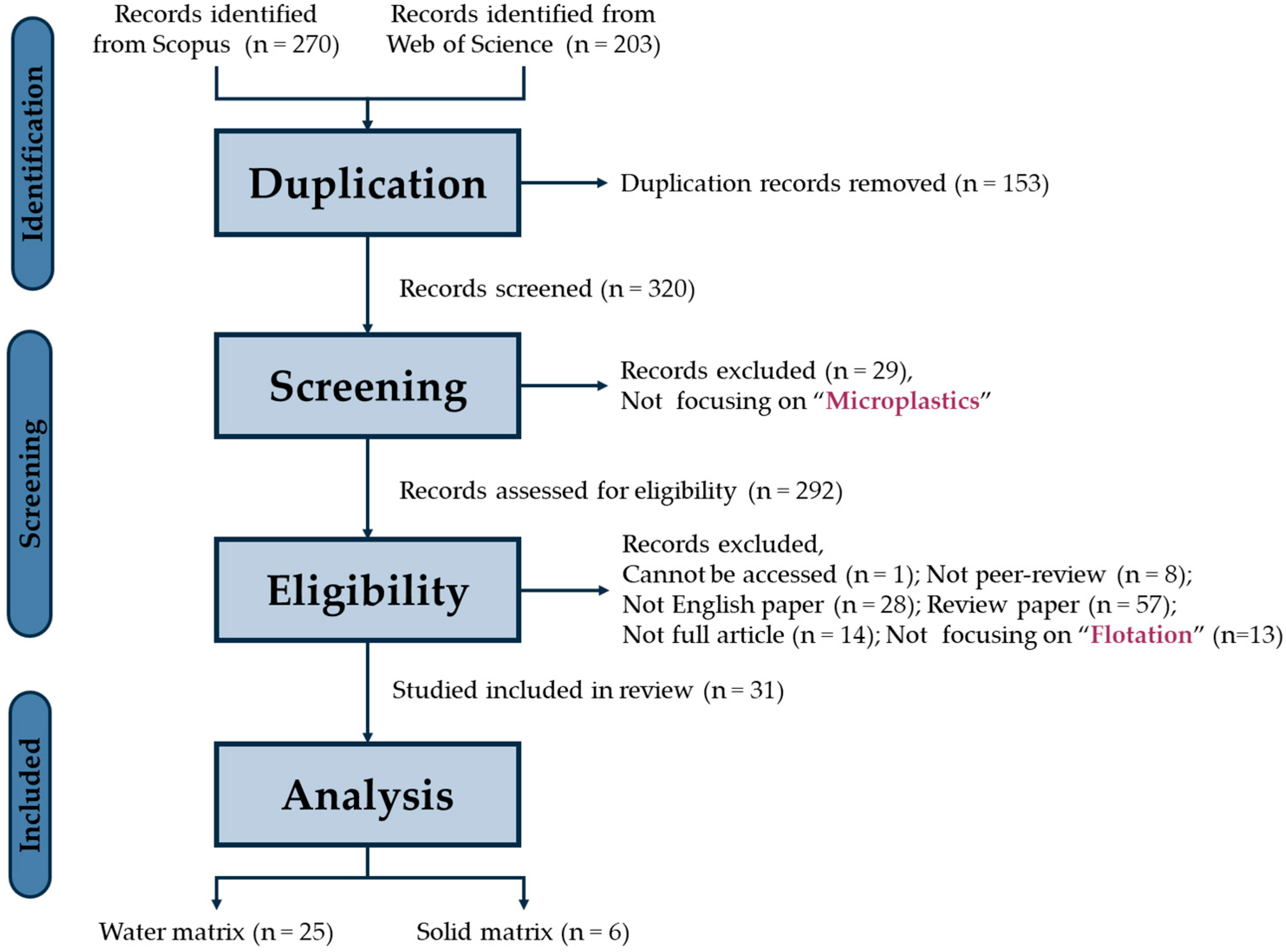
Figure 1. A schematic diagram of the study selection criteria and methodology to identify related research for this systematic review based on the PRISMA Guidelines.
Water 17 03394 g001
Figure 2. Annual distribution of publications (2020–2024) on MP removal using flotation, categorized into water and solid matrices.
Water 17 03394 g002
Figure 3. Distribution of publications across the top six journals (≥2 articles) publishing on microplastic removal using flotation. Note: “Chem. Eng. J.” means “Chemical Engineering Journal”; “Process Saf. Environ. Prot.” means “Process Safety and Environmental Protection”; “Water Res.” means “Water Research”; “J. Environ. Chem. Eng.” means “Journal of Environmental Chemical Engineering”; “Sci. Total. Environ.” means “Science of the Total Environment”; “J. Water Process Eng.” means “Journal of Water Process Engineering”.
Water 17 03394 g003
Figure 4. Global distribution of research output and international collaborations related to flotation-based MP removal, showing publication density and co-authorship networks among contributing countries.
Water 17 03394 g004
Figure 5. Institutional distribution of publications, highlighting the top seven institutions (≥2 articles) contributing to microplastic removal using flotation.
Water 17 03394 g005
Figure 6. Keyword co-occurrence word clouds of flotation-based microplastic removal: (a) all studies, (b-1) water matrix-related studies, and (b-2) solid matrix-related studies.
Water 17 03394 g006
Figure 7. Keyword co-occurrence networks of flotation-based microplastic removal: (a) all studies, (b-1) water matrix -related studies, and (b-2) solid matrix-related studies.
Water 17 03394 g007
Figure 8. Schematic illustrations of flotation (a) mechanical flotation, and (b) column flotation.
Water 17 03394 g008
Figure 9. Schematic diagrams of particle enlargement via (a) coagulation, (b) agglomeration, and (c) carrier.
Water 17 03394 g009
Table 3. A summary of recent studies on removal of microplastics from solid matrices using flotation.
Type of MatrixSize [µm]Polymer TypesFlotation TechniquesAssisted TechniquesChemicals UsedRemoval Efficiency [%]Ref.
PPPEPSPETPVCOthers
Soil and sediment<5000 FlotationNaOL100.0[67]
62–206 FlotationµSEP65.0–77.0[68]
100–2300 DAF[48]
Plastic waste2000–4000 FlotationHydrophilizationFeCl3100.0[69]
Carrier flotationMagnetic coatingFe3O4100.0[46]
MSWI bottom ash0–5000 FlotationNaCl~70.95[70]
0–300 FlotationNaCl~60.06[70]
300–5000 FlotationNaCl~100.00[70]
Note: “–” means “not specified”; “√” means “included in the experiments”; “DAF” means “dissolved air flotation”; “MSWI” means “municipal solid waste incineration”.
Disclaimer/Publisher’s Note: The statements, opinions and data contained in all publications are solely those of the individual author(s) and contributor(s) and not of MDPI and/or the editor(s). MDPI and/or the editor(s) disclaim responsibility for any injury to people or property resulting from any ideas, methods, instructions or products referred to in the content.