


Abstract
The present research evaluates the simulation of a system for transforming inland-fisheries wastewater into sustainable fish feed using Designer® software. The data required were obtained from the experimental cultivation of Chlorella sp. in wastewater supplemented with N and P. According to the results, it is possible to produce up to 11,875 kg/year (31.3 kg/d) with a production cost of up to 18 (USD/kg) for dry biomass and 0.19 (USD/bottle) for concentrated biomass. Similarly, it was possible to establish the kinetics of growth of substrate-dependent biomass with a maximum production of 1.25 g/L after 15 days and 98% removal of available N coupled with 20% of P. It is essential to note the final production efficiency may vary depending on uncontrollable variables such as climate and quality of wastewater, among others.
1. Introduction
Aquaculture is now the world’s fastest-expanding food-production sector, accounting for more than half of all fish consumed by humans [1], surpassing catch-fisheries production by 18.32 million tons, with a total value over USD 250 billion [2]. However, once considered a sustainable solution to fight malnutrition in low-income economies [3,4], its global growth has increased the demand for feed and water and generated new problems, such as high levels of untreated liquid and solid wastes [5,6].
Conventional methods for wastewater treatment, such as chemical flocculation, can generate other compounds in sewage sludge that are not effectively treated, eventually increasing their environmental impact. Therefore, it is essential to identify natural, biodegradable, nontoxic, affordable, and efficient alternatives for wastewater treatment [7]. The application of algae and cyanobacteria on wastewater treatment systems is one of the most innovative and sustainable alternatives for the sequestration of hazardous components [8] and reduction of environmental CO2 [9], which are converted into biomass composed of industrially relevant metabolites, such as carbohydrates, proteins, lipids, carotenoids, and others [10]. Over the last ten years, different genera, including Chlorella, Chlamydomonas, and Spirulina, have proven effective for the removal of organic matter [11,12], heavy metal ions [13], and phenolic compounds [14].
The global market for algal biomass and metabolites is expected to reach USD 1.143 billion by 2024, with a yearly growth rate of 7.39 percent [15]. Due to their natural colors, antioxidants, and other bioactive chemicals with valuable qualities, these microorganisms are effectively used in aquaculture hatcheries as animal-feed supplements [16]. However, their use can increase final-product prices due to species selection and expensive culture media. Using microalgae in a circular-bioeconomic approach for the aquaculture industry will deliver a twofold benefit: low-cost wastewater treatment and biomass for animal feed [17,18]. However, the operating conditions, biomass-production efficiency, and the effect of the concentration of N, P, and other nutrients on cell growth must be identified and analyzed.
In recent years, the application of specialized software, such as Aspen Plus, SuperPro, and MATLAB have made it possible to analyze the different processes of nutrient consumption and their transformation into total biomass and metabolites of interest [19]. Recent studies, such as the BIO_ALGAE model [20], address critical physical, chemical, and kinetic parameters governing the production of microalgae and bacteria in wastewater. This model has proven helpful in simulating bioremediation and microalgal production in aquacultural wastewater in a semicontinuous system with different environmental factors [21]. However, the different works in this field employ data from temperate production systems. To the best of the authors’ knowledge, there are no available data from tropical areas. The present work focuses on the simulation analysis of a microalgal-production plant under different scenarios for transforming inland-fisheries wastewater into sustainable feed with a circular-economical approach.
2. Materials and Methods
2.1. Strain
Chlorella sp. (CHLO_UFPS010) from INNOValgae collection (Universidad Francisco de Paula Santander, Cúcuta, Colombia) was used in this study. C. vulgaris was grown in a 2 L glass flask with a working volume of 1.2 L containing Bold Basal medium [22]. The medium was mixed through the injection of filtered air with 0.5% (v/v) CO2 at a flow rate of 0.78 L/min, 25 °C, and light–dark cycle of 12:12 h at 100 µmol/m2 s for 30 days.
2.2. Experimental Design
Fisheries wastewater obtained from local Oreochromis sp. farmers (El Zulia, Norte de Santander, Colombia) was filtered twice and UV-sterilized [23]. After sterilization, the wastewater was supplemented with a known amount of biofertilizer until a concentration of NO3 and PO4 was reached (0.1 and 0.24 g/L, respectively). The alga was cultured (by triplicate) in a 9 L glass flask with a working volume of 7 L of UV-sterile supplemented wastewater. Each flask was mixed by injection of filtered air at a flow rate of 4.2 L/min and light–dark cycle of 12:12 h at 100 µmol/m2 s for 40 days. Every five days, 50 mL of medium were axenically removed, and the biomass was concentrated using electroflotator equipment [24]. The recovered biomass was dried (50 °C, 12 h) and weighed. The cell-free medium was filtered and used for determination of NO3 (HI 93728-01, HANNA) and PO4 (HI 93713-01, HANNA). Kinetic constants for biomass production and NO3 and PO4 consumption were obtained from the results. The constants were described by linearizing the Monod equation:
2.3. Process Description and Plant Simulation
The microalgal-production plant using fisheries wastewater was simulated using SuperPro Designer® software v8.0. (Intelligen, Inc., Scotch Plains, NJ, USA). In the upstream stage, Chlorella sp. was grown in Bold Basal Medium with the selected culture variables shown in Table 1. Once the desired cell concentration was obtained, the cells (10% v/v) were transferred to photobioreactors (PBR) with higher working volumes (preinoculum). Once the PBR reached the optimal cell density, the cells were transferred (10% v/v) into two 5 m3 raceways (20 d, (30 ± 2) °C).
Table 1.
Biomass production variables.
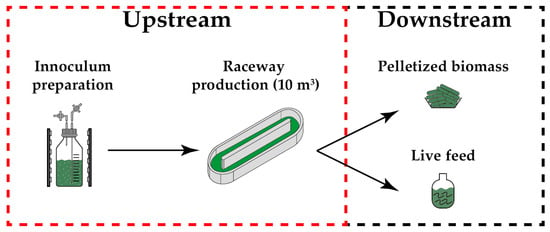
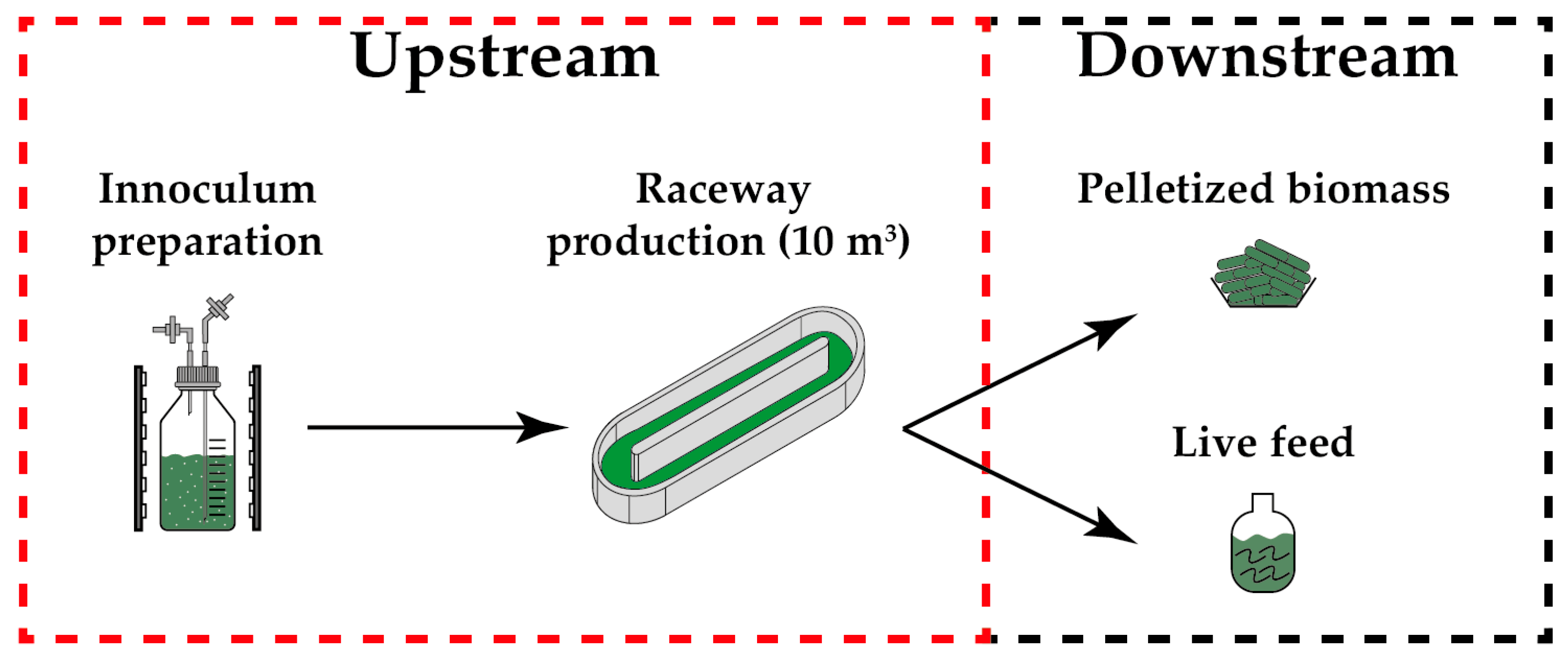
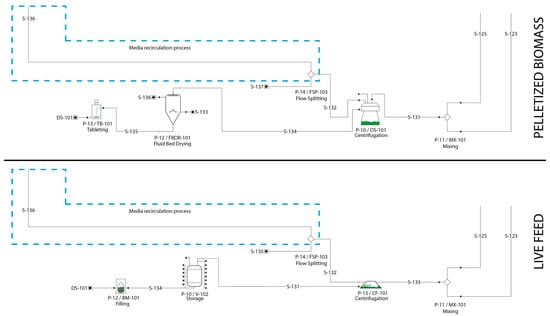
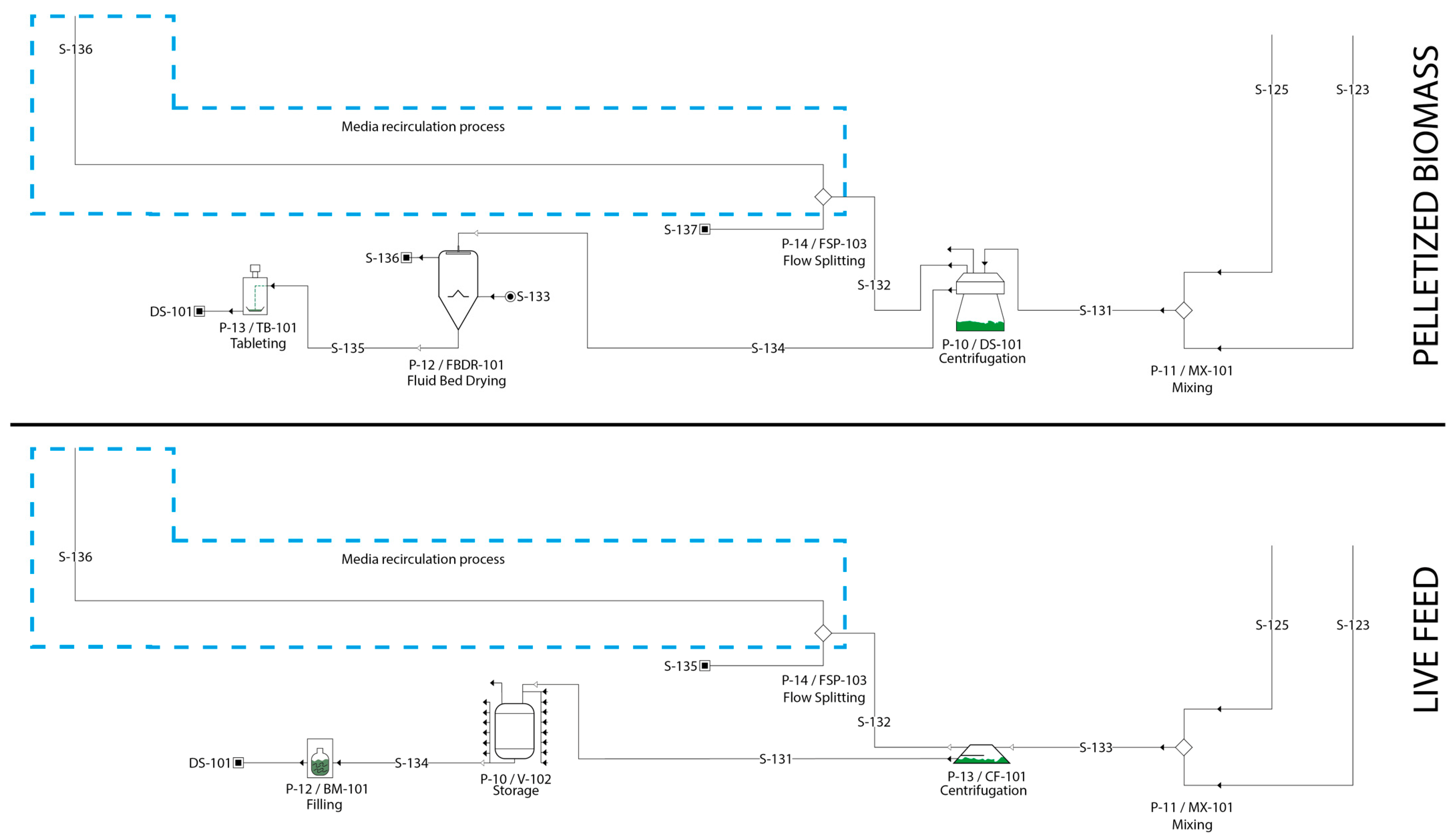
In the downstream process, the biomass produced was harvested by centrifugation and used to produce fish feed in two forms: pelletized biomass (dry) and live feed (liquid), depicted in Figure 1.
Figure 1.
Process description of algal-based feed.
The production of Chlorella sp. biomass (Equation (2)) its consumption rate of NO3 (Equation (3)), and its consumption rate of PO4 (Equation (4)) were modeled by linearizing the Monod kinetics equation [25].
3. Results
3.1. Kinetics Constants for NO3 and PO4 Consumption
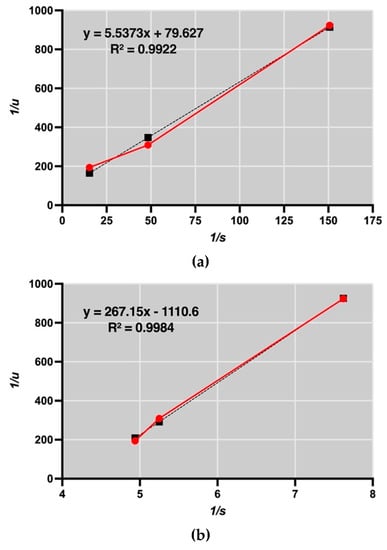
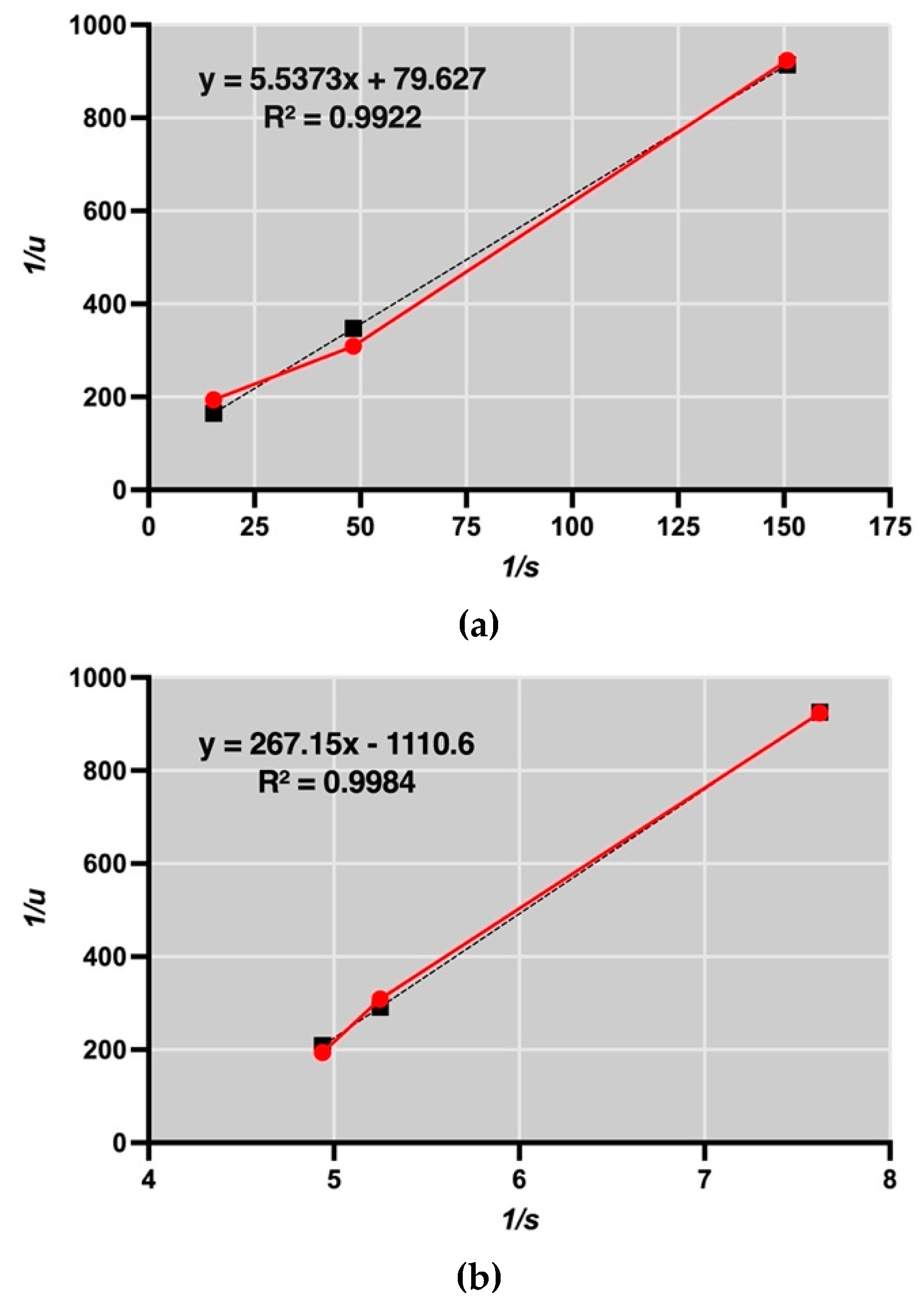
A computational model contains many factors that influence the development of the system to be evaluated. In this case, the simulation of a microalgal cultivation system using fisheries allows us to understand the behavior of this microorganism. According to experimental results, it was possible to obtain the NO3− and PO4− consumption constants that can be found in Figure 2, where the slope and intercept refer to ks/μmax and 1/μmax, respectively.
Figure 2.
Consumption constant rates for NO3 (a) and PO4 (b).
Table 2 presents the results for the kinetic variables of the experimental culture of Chlorella sp. in fisheries wastewater. The effect of variables, such as light quality (light intensity and light–dark cycle) [26], pH [27], temperature [28], and the availability of carbon, nitrogen, and phosphorus [29,30], play a critical role in the productivity of biomass and specific metabolites, such as carbohydrates, proteins, and lipids [31,32]. According to Park et al. [33], the availability of these elements is fundamental in synthesizing diverse molecules that play an essential role in cellular metabolism.
Table 2.
Kinetic variables from the experimental culture of Chlorella sp.
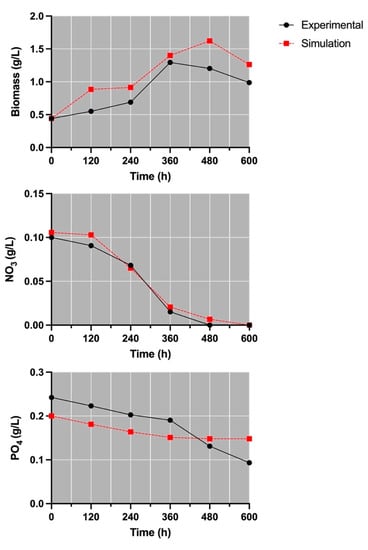
By correctly establishing the critical variables of the microalgal-growth process, it is possible to improve the precision between the experimental data and the data obtained through simulation, which establishes a reliable point for the optimization of the different processes in the cultivation of photosynthetic microorganisms [34,35]. Figure 3 shows the behavior of biomass production and NO3 and PO4 consumption according to the equations previously established. The results show the deviation between experimental and theoretical data is relatively low (0.29, 0.03, and 0.08 for biomass, NO3, and PO4, respectively). However, it is worth mentioning that, for this case, inhibition by cell density, CO2, light, and other variables that can have a positive or negative impact within the process were not considered.
Figure 3.
Graphical comparison between experimental and simulated data for biomass concentration and NO3 and PO4 uptakes by Chlorella sp.
3.2. Upstream
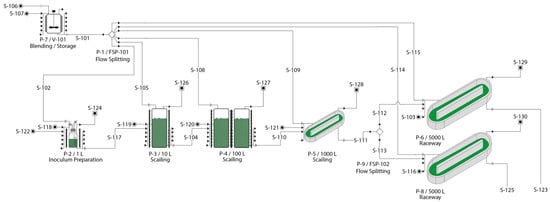
Figure 4 presents the upstream process of Chlorella sp.-biomass production using fish-farming wastewater supplemented with biofertilizer. This system consisted of preparing the culture medium, adaptation, scaling, and production of the microalgae in raceway reactors and has an annual production capacity of up to 180 m3. The growth phase comprises seven reactors (four photobioreactors and three raceways) with residence times of 20 days and a final concentration of 0.8 g/L. This system was designed to operate in parallel to maintain a constant biomass production. Each reactor was inoculated using a concentration of 10% (v/v) of algae, except for the final product, which had an inoculum of 20% (v/v).
Figure 4.
Flow diagram of the upstream-process production of Chlorella sp.
3.3. Downstream
Figure 5 shows the downstream process to produce pelletized biomass and live feed from Chlorella sp. Biomass harvesting is one of the critical points in microalgal production since this stage can consume up to 40% of the total production costs [36,37,38,39]. The live-feed process employs a solid-liquid separation system (centrifuge) that removes up to 40% of the total moisture. The concentrated biomass is then bottled (50 mL per unit) and distributed as feed for different types of fish requiring live phytoplankton diets. This process generates up to 64,697 bottles of feed every 20 days. For the dry-feed-production system, a centrifuge was used to remove up to 60% of the total humidity; the concentrated biomass passes through a fluidized bed dryer, allowing the relative humidity of the product to be reduced by up to 6%. Finally, the biomass is pelletized (1mg per pellet), reaching a final production of 5875 pellets per hour. To improve the impact on the water footprint of these processes, post-harvest water recirculation (highlighted in blue) was implemented for each system evaluated. This alternative allows a substantial reduction in production costs since not all nutrients are completely consumed [40,41,42].
Figure 5.
Flow diagram of the downstream process of pelletized biomass and live feed from Chlorella sp.
3.4. Fixed Capital
The production costs (DFC) define the economic destiny of any production plant; they include the necessary expenses for the processing guidelines and functionality of each system involved [43]. Consequently, it defines the technical-economic feasibility of the process. Within the DFC, we can find the direct costs (TPDC), which refer to the acquisition, equipment, and functionality of the plant; the indirect costs (TPIC), which are the variables related to the construction; and, finally, the CFC, which are responsible for the safety and assurance of the project. Table 3 shows an increase in costs due to the inclusion of the medium recirculation. This increase is due to adding new equipment, which requires new spaces, materials, and trained personnel for its correct operation. In each process, other equipment is used, resulting in space, materials, and operational consumption demands.
Table 3.
Fixed capital estimate for two scenarios of biomass production using Chlorella sp.
4. Discussion
The growth of the microalgae maintained a sigmoidal behavior typical of the implementation of kinetics with limited resources. The stationary phase took place between 0 and 120 h, at which time the cells had a process of adaptation to the available resources within the medium established in the experiment. Once this stage was completed, exponential growth began with approximately 360 h, reaching its maximum doubling rate of 1.2 g/L of biomass. Due to depletion of available nutrients and high cell density in the late exponential growth phase, the algal-growth rate reduced to a linear function, stabilizing at 0.8 g/L and reaching its stationary phase [32].
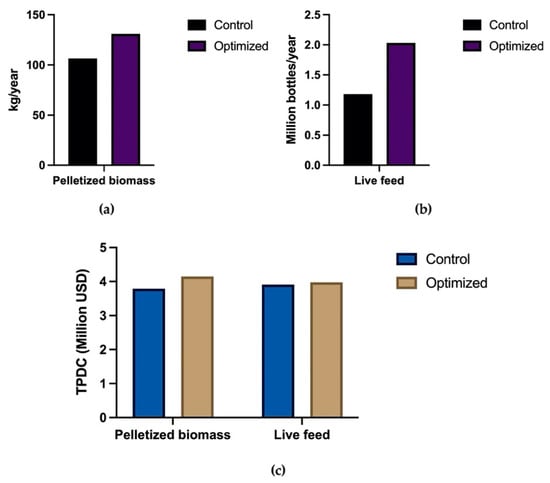
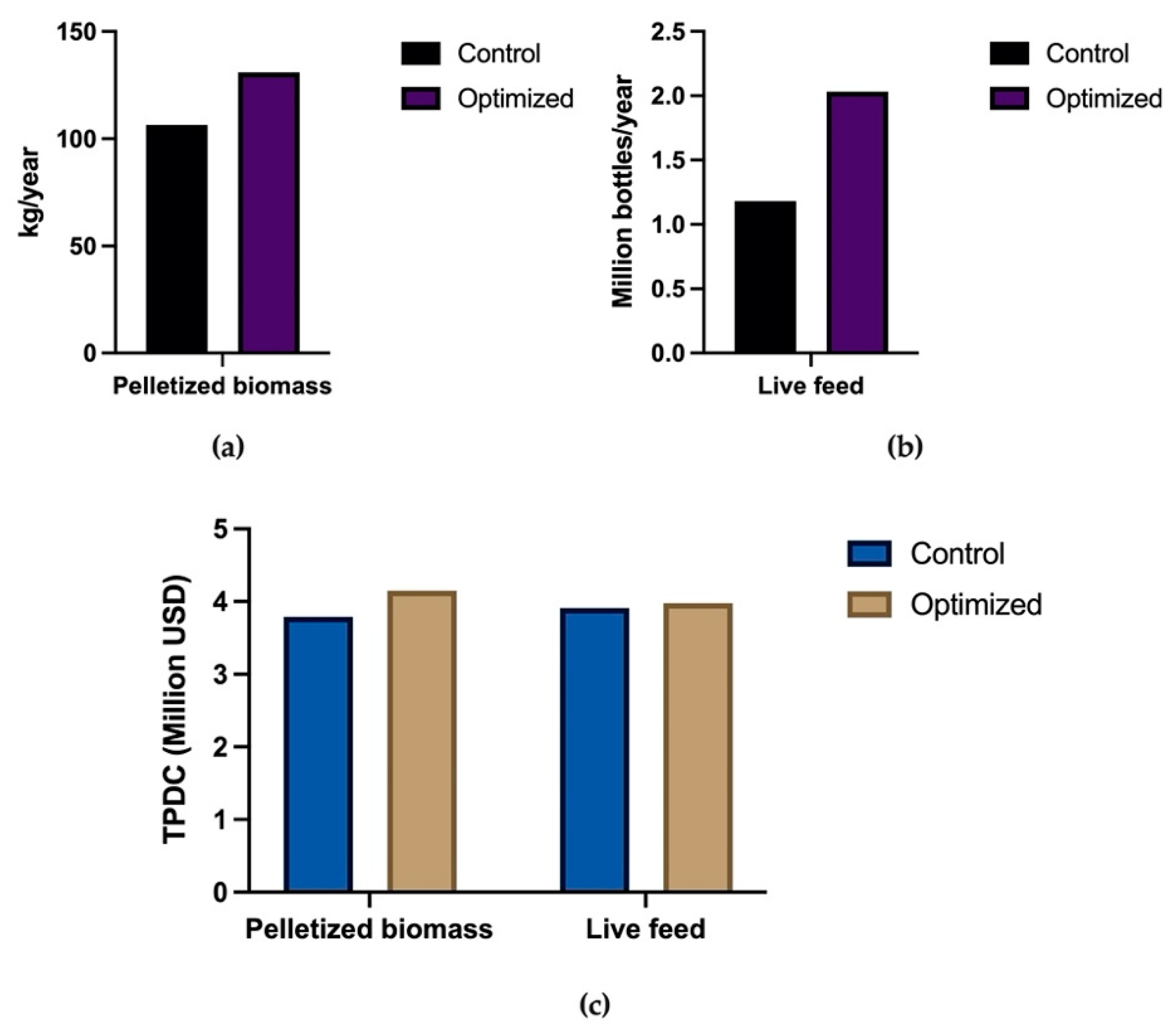
The application of simulations on industrial processes is an efficient solution for modeling and optimizing specific routes [44,45]. These techniques are based on predicting the behavior of the desired process through the calculation of the mass and energy balance of each section of the system [46]. By analyzing the different processes and their respective optimization, it is possible to develop new and better products that are economically competitive, as seen in Figure 6, where the optimization of the recirculation of the culture medium provides substantial improvement in its production of up to 20% for pelletized biomass and up to 80% for live feed. A significant result is a slight increase in TPDC for each process. This increase occurs because nutrients are still available in the culture medium, which decreases the production cost per cubic meter and improves the conversion rate of the nutrients present in the medium into usable biomass.
Figure 6.
Biomass production for year-pelletized biomass (a) and live feed (b); total plant direct cost for two scenarios of biomass production (c).
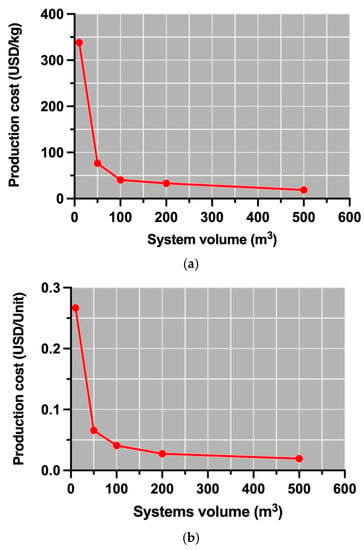
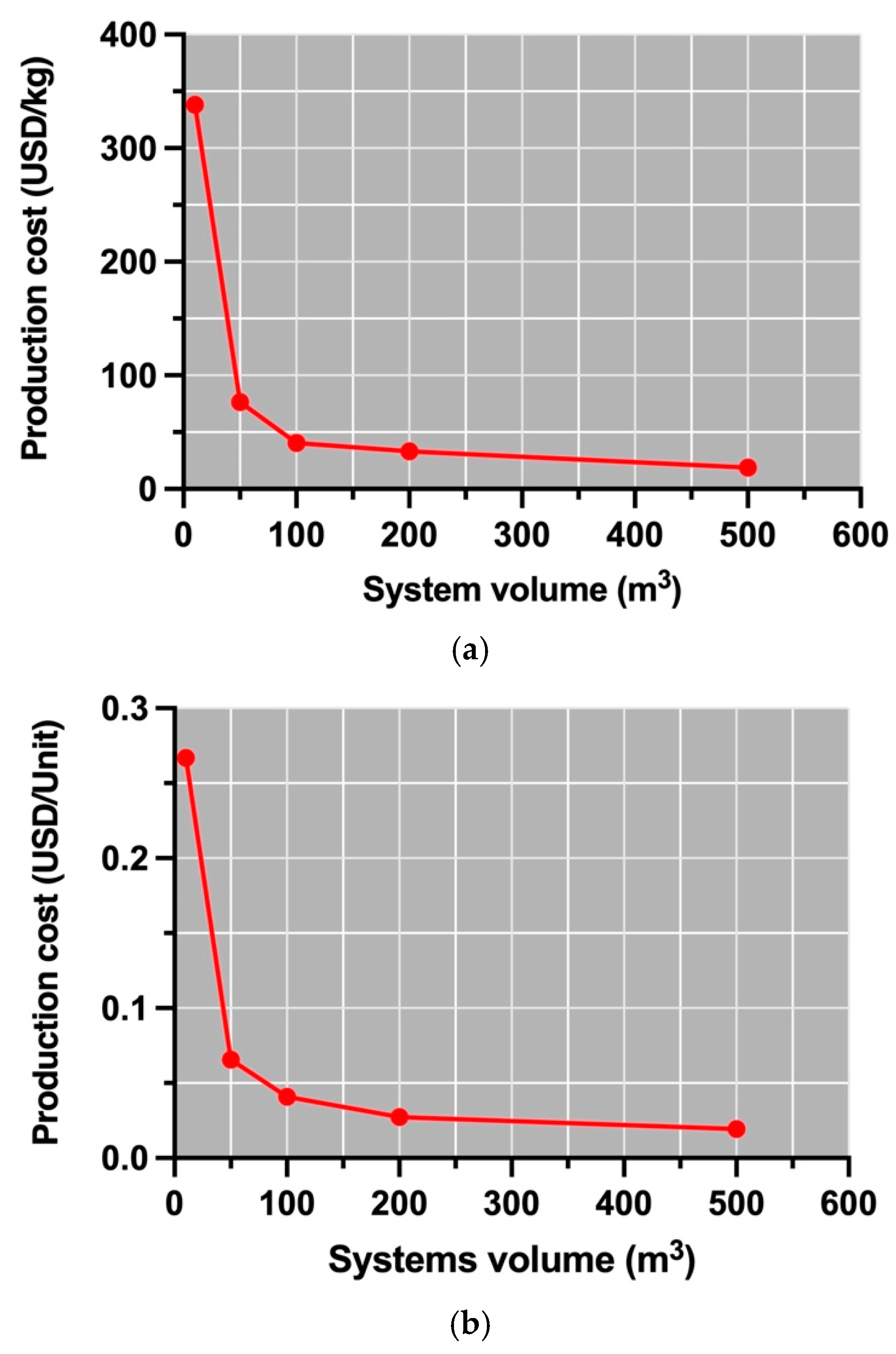
According to Ruiz et al. [47], the most critical variable that favors the profitability of products derived from microalgal biomass is the scale of the system, since increasing the capacity of the plant reduces the costs associated with production. Figure 7 summarizes the cost per kg/unit of biomass processed. Scaling defines the system’s profitability for the two evaluated scenarios (pelletized biomass and live feed) using five different production capacities (10, 50, 100, 200, and 500 m3). The production cost was calculated according to Equation (5).
Figure 7.
Production cost dependence on system volume for two scenarios of biomass production: (a) pelletized biomass and (b) live feed.
According to the results, in low scale systems (<50 m3), the production costs are very high for pelletized-biomass- and live-feed-production systems (up to 338 USD/kg and 0.26 USD/unit, respectively) compared to those with operating volumes up to 500 m3, of which biomass cost can be a fraction (18 USD/kg and 0.019 USD/unit, respectively). Finally, it is essential to highlight that other factors, such as pH, temperature, and light scattering in the reactor will affect the final productivity of the system [48,49,50].
5. Conclusions
The application of microalgae as a biotechnological tool for pollutant removal and water reuse in fish-farming systems is an essential strategy to increase the industrial sector’s sustainability. According to the results of the SuperPro Designer software, by cultivating Chlorella sp. in fish-farming wastewater supplemented with N and P, it is possible to produce up to 11,875 kg/yr (31.3 kg/d) with a production cost of up to 18 (USD/kg) for dry biomass and 0.19 (USD/bottle) for concentrated biomass. Similarly, it was possible to establish the kinetics of growth of substrate-dependent biomass with a maximum production of 1.25 g/L after 15 days and partial consumption of 98% of N and 20% of P. However, it is essential to note the final production efficiency may vary depending on uncontrollable variables, such as climate and quality of wastewater.
Author Contributions
Conceptualization, J.B.G.-M., A.Z., and D.M.I.-M.; methodology, A.F.B.-S., G.L.L.-B. and A.Z.; software, J.E.C.-R. and N.A.U.-S.; validation, V.K. and J.B.G.-M.; formal analysis, A.Z.; investigation J.E.C.-R. and N.A.U.-S.; resources, A.F.B.-S. and C.B.-F.; data curation, A.Z. and D.M.I.-M.; writing—original draft preparation, J.B.G.-M. and D.M.I.-M.; writing—review and editing, A.F.B.-S. and A.Z.; visualization, C.B.-F.; supervision, V.K. and A.Z.; project administration, A.F.B.-S. and C.B.-F.; funding acquisition, A.F.B.-S. and A.Z. All authors have read and agreed to the published version of the manuscript.
Funding
This paper was partially supported by grants from Universidad Industrial de Santander (Colombia), Universidad Francisco de Paula Santander, and Newton-Caldas Fund Institutional Links with the project “ALGALCOLOR: BIO-PLATFORM FOR THE SUSTAINABLE PRODUCTION OF CYANOBACTERIAL-BASED COLOURS AND FINE CHEMICALS” (ID 527624805).
Institutional Review Board Statement
Not applicable.
Informed Consent Statement
Not applicable.
Data Availability Statement
Not applicable.
Acknowledgments
We would like to express our sincere gratitude to Universidad Francisco de Paula Santander (Colombia) for providing the equipment for this research and the Colombian Ministry of Science, Technology, and Innovation MINCIENCIAS for the support to national Ph.D. Doctorates through the Francisco José de Caldas scholarship program.
Conflicts of Interest
The authors declare no conflict of interest.
References
- FAO. The State of World Fisheries and Aquaculture 2020. Sustainability in Action; FAO: Rome, Italy, 2020. [Google Scholar] [CrossRef] [Scilit]
- Tacon, A.G.J. Trends in Global Aquaculture and Aquafeed Production: 2000–2017. Rev. Fish. Sci. Aquac. 2020, 28, 43–56. [Google Scholar] [CrossRef] [Scilit]
- Agnew, D.J.; Pearce, J.; Pramod, G.; Peatman, T.; Watson, R.; Beddington, J.R.; Pitcher, T.J. Estimating the Worldwide Extent of Illegal Fishing. PLoS ONE 2009, 4, e4570. [Google Scholar] [CrossRef] [Scilit] [PubMed]
- Han, P.; Lu, Q.; Fan, L.; Zhou, W. A Review on the Use of Microalgae for Sustainable Aquaculture. Appl. Sci. 2019, 9, 2377. [Google Scholar] [CrossRef] [Scilit]
- Wang, Y.-C.; Hu, S.-Y.; Chiu, C.-S.; Liu, C.-H. Multiple-strain probiotics appear to be more effective in improving the growth performance and health status of white shrimp, Litopenaeus vannamei, than single probiotic strains. Fish Shellfish Immunol. 2019, 84, 1050–1058. [Google Scholar] [CrossRef] [Scilit] [PubMed]
- Henriksson, P.J.G.; Belton, B.; Jahan, K.M.-E.; Rico, A. Measuring the potential for sustainable intensification of aquaculture in Bangladesh using life cycle assessment. Proc. Natl. Acad. Sci. USA 2018, 115, 2958–2963. [Google Scholar] [CrossRef] [Scilit]
- Iber, B.T.; Okomoda, V.T.; Rozaimah, S.A.; Kasan, N.A. Eco-friendly approaches to aquaculture wastewater treatment: Assessment of natural coagulants vis-a-vis chitosan. Bioresour. Technol. Rep. 2021, 15, 100702. [Google Scholar] [CrossRef] [Scilit]
- Zuorro, A.; Maffei, G.; Lavecchia, R. Kinetic Modeling of Azo Dye Adsorption on Non-Living Cells of Nannochloropsis Oceanica. J. Environ. Chem. Eng. 2017, 5, 4121–4127. [Google Scholar] [CrossRef] [Scilit]
- Zuorro, A.; Malavasi, V.; Cao, G.; Lavecchia, R. Use of Cell Wall Degrading Enzymes to Improve the Recovery of Lipids from Chlorella sorokiniana. Chem. Eng. J. 2019, 377, 120325. [Google Scholar] [CrossRef] [Scilit]
- Pessôa, L.C.; Deamici, K.M.; Pontes, L.A.M.; Druzian, J.I.; Assis, D.D.J. Technological prospection of microalgae-based biorefinery approach for effluent treatment. Algal Res. 2021, 60, 102504. [Google Scholar] [CrossRef] [Scilit]
- Mujtaba, G.; Lee, K. Treatment of real wastewater using co-culture of immobilized Chlorella vulgaris and suspended activated sludge. Water Res. 2017, 120, 174–184. [Google Scholar] [CrossRef] [Scilit]
- Zhu, L.; Hu, T.; Li, S.; Nugroho, Y.K.; Li, B.; Cao, J.; Show, P.-L.; Hiltunen, E. Effects of operating parameters on algae Chlorella vulgaris biomass harvesting and lipid extraction using metal sulfates as flocculants. Biomass Bioenergy 2020, 132, 105433. [Google Scholar] [CrossRef] [Scilit]
- Martínez-Macias, M.D.R.; Correa-Murrieta, M.A.; Villegas-Peralta, Y.; Dévora-Isiordia, G.E.; Álvarez-Sánchez, J.; Saldivar-Cabrales, J.; Sánchez-Duarte, R.G. Uptake of copper from acid mine drainage by the microalgae Nannochloropsis oculata. Environ. Sci. Pollut. Res. 2019, 26, 6311–6318. [Google Scholar] [CrossRef] [Scilit] [PubMed]
- Surkatti, R.; Al-Zuhair, S. Microalgae cultivation for phenolic compounds removal. Environ. Sci. Pollut. Res. 2018, 25, 33936–33956. [Google Scholar] [CrossRef] [Scilit] [PubMed]
- Yellapu, S.K.; Klai, N.; Kaur, R.; Tyagi, R.D.; Surampalli, R.Y. Oleaginous yeast biomass flocculation using bioflocculant produced in wastewater sludge and transesterification using petroleum diesel as a co-solvent. Renew. Energy 2019, 131, 217–228. [Google Scholar] [CrossRef] [Scilit]
- Spolaore, P.; Joannis-Cassan, C.; Duran, E.; Isambert, A. Commercial applications of microalgae. J. Biosci. Bioeng. 2006, 101, 87–96. [Google Scholar] [CrossRef] [Scilit]
- Guzmán, J.L.; Acién, F.G.; Berenguel, M. Modelado y control de la producción de microalgas en fotobiorreactores industriales. Rev. Iberoam. Automática Informática Ind. 2020, 18, 1–18. [Google Scholar] [CrossRef] [Scilit]
- Apandi, N.M.; Mohamed, R.M.S.R.; Al-Gheethi, A.; Kassim, A.H.M. Microalgal biomass production through phycoremediation of fresh market wastewater and potential applications as aquaculture feeds. Environ. Sci. Pollut. Res. 2019, 26, 3226–3242. [Google Scholar] [CrossRef] [Scilit]
- Bitog, J.; Lee, I.-B.; Lee, C.-G.; Kim, K.-S.; Hwang, H.-S.; Hong, S.-W.; Seo, I.-H.; Kwon, K.-S.; Mostafa, E. Application of computational fluid dynamics for modeling and designing photobioreactors for microalgae production: A review. Comput. Electron. Agric. 2011, 76, 131–147. [Google Scholar] [CrossRef] [Scilit]
- Solimeno, A.; Parker, L.; Lundquist, T.; García, J. Integral microalgae-bacteria model (BIO_ALGAE): Application to wastewater high rate algal ponds. Sci. Total Environ. 2017, 601–602, 646–657. [Google Scholar] [CrossRef] [Scilit]
- Andreotti, V.; Solimeno, A.; Rossi, S.; Ficara, E.; Marazzi, F.; Mezzanotte, V.; García, J. Bioremediation of aquaculture wastewater with the microalgae Tetraselmis suecica: Semi-continuous experiments, simulation and photo-respirometric tests. Sci. Total Environ. 2020, 738, 139859. [Google Scholar] [CrossRef] [Scilit]
- Andersen, R.A.; Berges, J.A.; Harrison, P.J.; Watanabe, M.M. Appendix A—Recipes for freshwater and seawater media. In Algal Culturing Techniques; Andersen, R.A., Ed.; Elsevier Academic Press: Burlington, MA, USA, 2005; pp. 429–538. [Google Scholar]
- Guiza-Franco, L.; Orozco-Rojas, L.G.; Sánchez-Galvis, E.M.; García-Martínez, J.B.; Barajas-Ferreira, C.; Zuorro, A.; Barajas-Solano, A.F. Production of Chlorella vulgaris biomass on UV-treated wastewater as an alternative for environmental sustainability on high-mountain fisheries. Chem. Eng. Trans. 2018, 64, 517–522. [Google Scholar] [CrossRef] [Scilit]
- Sanchez-Galvis, E.M.; Cardenas-Gutierrez, I.Y.; Contreras-Ropero, J.E.; García-Martínez, J.B.; Barajas-Solano, A.F.; Zuorro, A. An innovative low-cost equipment for electro-concentration of microalgal biomass. Appl. Sci. 2020, 10, 4841. [Google Scholar] [CrossRef] [Scilit]
- Monod, J. The Growth of Bacterial Cultures. Annu. Rev. Microbiol. 1949, 3, 371–394. [Google Scholar] [CrossRef] [Scilit]
- Ma, R.; Zhang, Z.; Tang, Z.; Ho, S.-H.; Shi, X.; Liu, L.; Xie, Y.; Chen, J. Enhancement of co-production of lutein and protein in Chlorella sorokiniana FZU60 using different bioprocess operation strategies. Bioresour. Bioprocess. 2021, 8, 82. [Google Scholar] [CrossRef] [Scilit]
- Montanaro, D.; Lavecchia, R.; Petrucci, E.; Zuorro, A. UV-Assisted Electrochemical Degradation of Coumarin on Boron-Doped Diamond Electrodes. Chem. Eng. J. 2017, 323, 512–519. [Google Scholar] [CrossRef] [Scilit]
- Ho, S.-H.; Huang, S.-W.; Chen, C.-Y.; Hasunuma, T.; Kondo, A.; Chang, J.-S. Characterization and optimization of carbohydrate production from an indigenous microalga Chlorella vulgaris FSP-E. Bioresour. Technol. 2012, 135, 157–165. [Google Scholar] [CrossRef] [Scilit]
- Garcia-Martinez, J.B.; Urbina-Suarez, N.A.; Zuorro, A.; Barajas-Solano, A.F.; Kafarov, V. Fisheries Wastewater as a Sustainable Media for the Production of Algae-Based Products. Chem. Eng. Trans. 2019, 76, 1339–1344. [Google Scholar] [CrossRef] [Scilit]
- Cuéllar-García, D.J.; Rangel-Basto, Y.A.; Urbina-Suarez, N.A.; Barajas-Solano, A.F.; Muñoz-Peñaloza, Y.A. Lipids production from Scenedesmus obliquus through carbon/nitrogen ratio optimization. J. Phys. Conf. Ser. 2019, 1388, 012043. [Google Scholar] [CrossRef] [Scilit]
- Barajas-Solano, A.F.; Gonzalez-Delgado, A.D.; Kafarov, V. Effect of thermal pre-treatment on fermentable sugar production of Chlorella vulgaris. Chem. Eng. Trans. 2014, 37, 655–660. [Google Scholar] [CrossRef] [Scilit]
- Garcia-Martinez, B.; Ayala-Torres, E.; Reyes-Gomez, O.; Zuorro, A.; Barajas-Solano, A.; Barajas-Ferreira, C. Evaluation of a two-phase extraction system of carbohydrates and proteins from Chlorella vulgaris utex 1803. Chem. Eng. Trans. 2016, 49, 355–360. [Google Scholar] [CrossRef] [Scilit]
- Park, J.; Craggs, R.; Shilton, A. Wastewater treatment high rate algal ponds for biofuel production. Bioresour. Technol. 2011, 102, 35–42. [Google Scholar] [CrossRef] [Scilit]
- Huaynate, A.I.O.; Huamán, G.A.Y.; Ávila, I.L.C.; Samanamud, C.P.A. Impacto del CO2 sobre la densidad celular en seis cepas de microalgas marinas. Rev. ION 2015, 28, 23–32. [Google Scholar] [CrossRef] [Scilit]
- Zuorro, A. Optimization of Polyphenol Recovery from Espresso Coffee Residues Using Factorial Design and Response Surface Methodology. Sep. Purif. Technol. 2015, 152, 64–69. [Google Scholar] [CrossRef] [Scilit]
- Iasimone, F.; Panico, A.; De Felice, V.; Fantasma, F.; Iorizzi, M.; Pirozzi, F. Effect of light intensity and nutrients supply on microalgae cultivated in urban wastewater: Biomass production, lipids accumulation and settleability characteristics. J. Environ. Manag. 2018, 223, 1078–1085. [Google Scholar] [CrossRef] [Scilit] [PubMed]
- Lu, W.; Alam, A.; Liu, S.; Xu, J.; Saldivar, R.P.; Lu, W.; Alam, A.; Liu, S.; Xu, J.; Saldivar, R.P. Critical processes and variables in microalgae biomass production coupled with bioremediation of nutrients and CO2 from livestock farms: A review. Sci. Total Environ. 2020, 716, 135247. [Google Scholar] [CrossRef] [Scilit]
- Zhu, L.; Li, S.; Hu, T.; Nugroho, Y.K.; Yin, Z.; Hu, D.; Chu, R.; Mo, F.; Liu, C.; Hiltunen, E. Effects of nitrogen source heterogeneity on nutrient removal and biodiesel production of mono- and mix-cultured microalgae. Energy Convers. Manag. 2019, 201, 112144. [Google Scholar] [CrossRef] [Scilit]
- Castellaños-Estupiñan, M.A.; Sánchez-Galvis, E.M.; García-Martínez, J.B.; Barajas-Ferreira, C.; Zuorro, A.; Barajas-Solano, A.F. Design of an electroflotation system for the concentration and harvesting of freshwater microalgae. Chem. Eng. Trans. 2018, 64, 1–6. [Google Scholar] [CrossRef] [Scilit]
- Wang, T.; Yabar, H.; Higano, Y. Perspective assessment of algae-based biofuel production using recycled nutrient sources: The case of Japan. Bioresour. Technol. 2013, 128, 688–696. [Google Scholar] [CrossRef] [Scilit] [PubMed]
- Zuorro, A.; Iannone, A.; Natali, S.; Lavecchia, R. Green Synthesis of Silver Nanoparticles Using Bilberry and Red Currant Waste Extracts. Processes 2019, 7, 193. [Google Scholar] [CrossRef] [Scilit]
- Huang, Y.; Sun, Y.; Liao, Q.; Fu, Q.; Xia, A.; Zhu, X. Improvement on light penetrability and microalgae biomass production by periodically pre-harvesting Chlorella vulgaris cells with culture medium recycling. Bioresour. Technol. 2016, 216, 669–676. [Google Scholar] [CrossRef] [Scilit] [PubMed]
- Zuorro, A. Water Activity Prediction in Sugar and Polyol Systems Using Theoretical Molecular Descriptors. Int. J. Mol. Sci. 2021, 22, 11044. [Google Scholar] [CrossRef] [Scilit] [PubMed]
- Zuorro, A. Enhanced Lycopene Extraction from Tomato Peels by Optimized Mixed-Polarity Solvent Mixtures. Molecules 2020, 25, 2038. [Google Scholar] [CrossRef] [Scilit] [PubMed]
- Limonta, M.; Krajnc, N.L.; Vidic, U.; Zumalacárregui, L. Simulation for the recovery of plasmid for a DNA vaccine. Biochem. Eng. J. 2013, 80, 14–18. [Google Scholar] [CrossRef] [Scilit]
- Petrides, D.; Carmichael, D.; Siletti, C.; Koulouris, A. Biopharmaceutical Process Optimization with Simulation and Scheduling Tools. Bioengineering 2014, 1, 154–187. [Google Scholar] [CrossRef] [Scilit] [PubMed]
- Ruiz, J.; Olivieri, G.; de Vree, J.; Bosma, R.; Willems, P.; Reith, J.H.; Eppink, M.H.M.; Kleinegris, D.M.M.; Wijffels, R.H.; Barbosa, M.J. Towards industrial products from microalgae. Energy Environ. Sci. 2016, 9, 3036–3043. [Google Scholar] [CrossRef] [Scilit]
- Acién, F.; Fernandez, F.G.A.; Magán, J.; Molina, E. Production cost of a real microalgae production plant and strategies to reduce it. Biotechnol. Adv. 2012, 30, 1344–1353. [Google Scholar] [CrossRef] [Scilit]
- Bernard, O.; Rémond, B. Validation of a simple model accounting for light and temperature effect on microalgal growth. Bioresour. Technol. 2012, 123, 520–527. [Google Scholar] [CrossRef] [Scilit]
- Blanken, W.; Cuaresma, M.; Wijffels, R.H.; Janssen, M. Cultivation of microalgae on artificial light comes at a cost. Algal Res. 2013, 2, 333–340. [Google Scholar] [CrossRef] [Scilit]

Publisher’s Note: MDPI stays neutral with regard to jurisdictional claims in published maps and institutional affiliations. |
© 2022 by the authors. Licensee MDPI, Basel, Switzerland. This article is an open access article distributed under the terms and conditions of the Creative Commons Attribution (CC BY) license (https://creativecommons.org/licenses/by/4.0/).