Abstract
Sorbents based on Fe(OH)3 and aluminum oxide are widely used in oceanology for the recovery of cosmogenic radionuclides 7Be, 32Si, 32P, and 33P from the seawater. It is also possible to use them for the recovery of the natural radionuclides 210Pb, 234Th. A comparative study of the sorbents based on Fe(OH)3 and acrylic fiber obtained through various impregnation methods was carried out, and their comparison with granulated aluminum oxide. The possibility of extracting trace amounts of phosphorus and beryllium under laboratory and field conditions with these sorbents was studied. The sorption of 7Be, 210Pb, and 234Th on the natural content by the two-column method was investigated. It is shown that fiber samples obtained by oxidation with sodium ferrate and the “classical” method have the highest sorption characteristics.
Keywords:
Fe(OH)3-fiber; sorption; marine radiochemistry; natural; cosmogenic radionuclides; 7Be; 32P; 33P; 210Pb; 234Th 1. Introduction
About 50 years ago, the sorbent in the form of an acrylic fiber impregnated with Fe(OH)3 was proposed for extracting radionuclides of natural and cosmogenic origin from seawater [1]. This material has been widely used to study mass transfer processes in the ocean using 32Si [2], 32P, 33P [3,4,5] radiotracers, as well as 7Be and 234Th [6], and it can also extract 210Pb [1]. Its advantage is cheapness. Since the activities are low (typical concentrations of the target isotopes in seawater: 7Be 1–12 Bk/m3 [7,8,9], 32P, 33P 1–5 dpm/m3 [9,10], 234Th 1–3 dpm/L [1,11], 210Pb 0,1–3 Bk/m3 [1,12]), samples with a volume of more than 1 m3 are used for concentration of 7Be and 32P, 33P, such sample volumes require a large amount of sorbent (more than 100 g). Since in oceanology it is preferable to obtain a large amount of field data, this implies a requirement for the cost of the sorbent.
In the last decades, fibers based on Fe(OH)3 [7] and aluminum oxide (Silker method) [8,13,14] have been widely used for the recovery 7Be from seawater. The main disadvantage of aluminum oxide is the low efficiency of extracting 7Be from seawater [13].
For the preconcentration of 32P, 33P, more efficient materials are used cartridges based on Fe(OH)3 [9,10], 234Th, and 210Pb–precipitation methods [11,12]. The use of Fe(OH)3-based fiber makes it possible to obtain information on the concentration of radionuclides dissolved in seawater and to assess the processes in the ocean.
Cosmogenic radionuclides 32P (14.3 days), 33P (25.3 days), and 7Be (53.3 days) are among the most difficult to study due to their low activities in seawater and short half-lives. It is important to study the methods and materials for their recovery.
Cartridges impregnated with Fe(OH)3 have not become widespread in research because they are quite difficult to produce, process, and further use. There are difficulties in obtaining cartridges with reproducible properties (containing Fe(OH)3), which leads to errors when using the two-column method for determining the efficiency of radionuclide sorption. In addition to this, due to significant hydrodynamic resistance, powerful pumps are needed to pass the sample, which leads to the washing out of the active component. The ashing of the cartridge produces a large amount of ash–Fe2O3 (filters contain 25–30% Fe2O3), and while it is not a problem to measure γ-radionuclides, the analysis of α- and β-radionuclides is also complicated due to the high content of Fe3+ in the solutions, which form after the ash is dissolved. At the same time, fiber based on Fe(OH)3 contains 2.5–4 times less Fe(OH)3 and has less hydrodynamic resistance when passing large volumes of water, so even a peristaltic pump can handle it. However, several authors note that the properties of the fiber obtained by the method [10] are not reproduced, the fiber obtained has different content of Fe(OH)3, a large part of which is washed out during washing after precipitation of FeCl3 with ammonia.
Table 1 lists the published data on the sorption of natural and cosmogenic radionuclides from seawater under dynamic conditions by various sorbents based on Fe(OH)3 and other active phases.
Table 1.
Sorption parameters of natural and cosmogenic radionuclides from seawater under dynamic conditions.
Several papers give the results of experiments on passing large volumes of seawater through the fiber, but there are no data on the weight of the fiber used for the experiments, which are essential for evaluating the efficiency [5,10]. In these works, the authors use the values of column volumes; however, for fibrous sorbents, this value is not objective because up to 100 g of fiber can be packed into a 700 mL column.
Literary methods for obtaining fibers contain various stages and conditions for obtaining. Different authors use different process parameters. This also applies to all stages—the immersion in a solution of FeCl3, alkaline hydrolysis, and precipitation of iron hydroxide.
The problem is that the main studies were carried out by oceanologists. For them, the efficiency of sorption was important. They did not delve into the chemical specifics of obtaining and characterizing sorbents. This is being performed for the first time.
The purpose of this article is a comparative study of the methods for obtaining sorbents based on polyacrylonitrile (PAN) fiber and Fe(OH)3, their testing in the laboratory, and field conditions for the sorption of 7Be, 32P, 33P, 210Pb, 234Th.
For the first time in this work, a method was proposed for fiber impregnation with iron hydroxide using sodium ferrate in an alkaline medium. For the first time, the structure and composition of sorbents obtained by various methods were characterized using physicochemical research methods.
2. Materials and Methods
2.1. Materials
We used sodium hydroxide (pure), iron chloride (III) (pure), ammonia (pure), hydrochloric acid (pure), sulfuric acid (pure), sulfosalicylic acid (pure), beryllium sulfate tetrahydrate (pure), and potassium dihydro orthophosphate (pure) produced by LLC “AO ReaChem” (Moscow, Russia).
Fernel reagent manufactured by LLC “Ural Process Engineering Company (UPEC)” (Yekaterinburg, Russia) [17]. The main components of the Fernel reagent are sodium ferrate (25.2–40.3 wt.%) and sodium hydroxide (47.2–68.1 wt.%).
PAN fiber is produced by the Moscow wool factory, which is pure 100% polyacrylonitrile without oxygen, as follows from the analysis data below, with a 19 µm thread thickness (3 denier).
2.2. Preparation of PAN-Fe(OH)3 by Various Methods
Sorbents obtained by various methods were named: using non-hydrolyzed PAN and precipitation of Fe(OH)3 with ammonia Fe-NH (non-hydrolyzed) [18]; obtained using electrochemically generated Na2FeO4–Fe-EGSF (electrochemically generated sodium ferrate); ready-made Na2FeO4–Fe-SF (sodium ferrate); pre-hydrolyzed PAN with precipitation of Fe(OH)3 by ammonia–Fe-H (hydrolyzed) [1], pre-hydrolyzed PAN treated with an alkaline solution of Na2FeO4–Fe-H-SF. All sorbent samples are yellow. The content of Fe(OH)3 in all types of fiber is about 10% by weight, except for Fe-H-SF. The content of iron hydroxide was determined by calcining fiber samples weighing 1 g in a muffle furnace to a final temperature of 800 °C to constant weight. Further, the content of iron oxide was converted to iron hydroxide.
2.2.1. Preparation of Fe-NH
Fe-NH was obtained similarly [18]. An amount of 100 g acrylic fiber with a 19 µm thread thickness was soaked under continuous stirring in a 2 L 25% FeCl3 solution at 80–85 °C for 1–2 h. The hot fiber was squeezed out and immersed in 1 L 25% NH3 for 1–2 h. After that, the fiber impregnated with ammonia was squeezed out again. The impregnated fiber was washed with distilled water until the washings were clear. The fiber was dried at room temperature or in a stream of warm air, to avoid overheating. The dry fiber was fluffed.
2.2.2. Preparation of Fe-EGSF Using Na2FeO4 Generated Electrochemically
For electrolysis, a semi-permeable cathode space was placed in a cylindrical container, which was also a cylinder, and occupied 10% of the volume of the original container. A 40 × 8 cm2 strip of transformer iron was used as an anode, and a graphite rod with a diameter of 1.5 cm was used as a cathode. The finished installation was filled with 2 L 40% sodium hydroxide solution.
Before the start of the experiment, the anode was washed with dilute hydrochloric acid (1:1) and then with water.
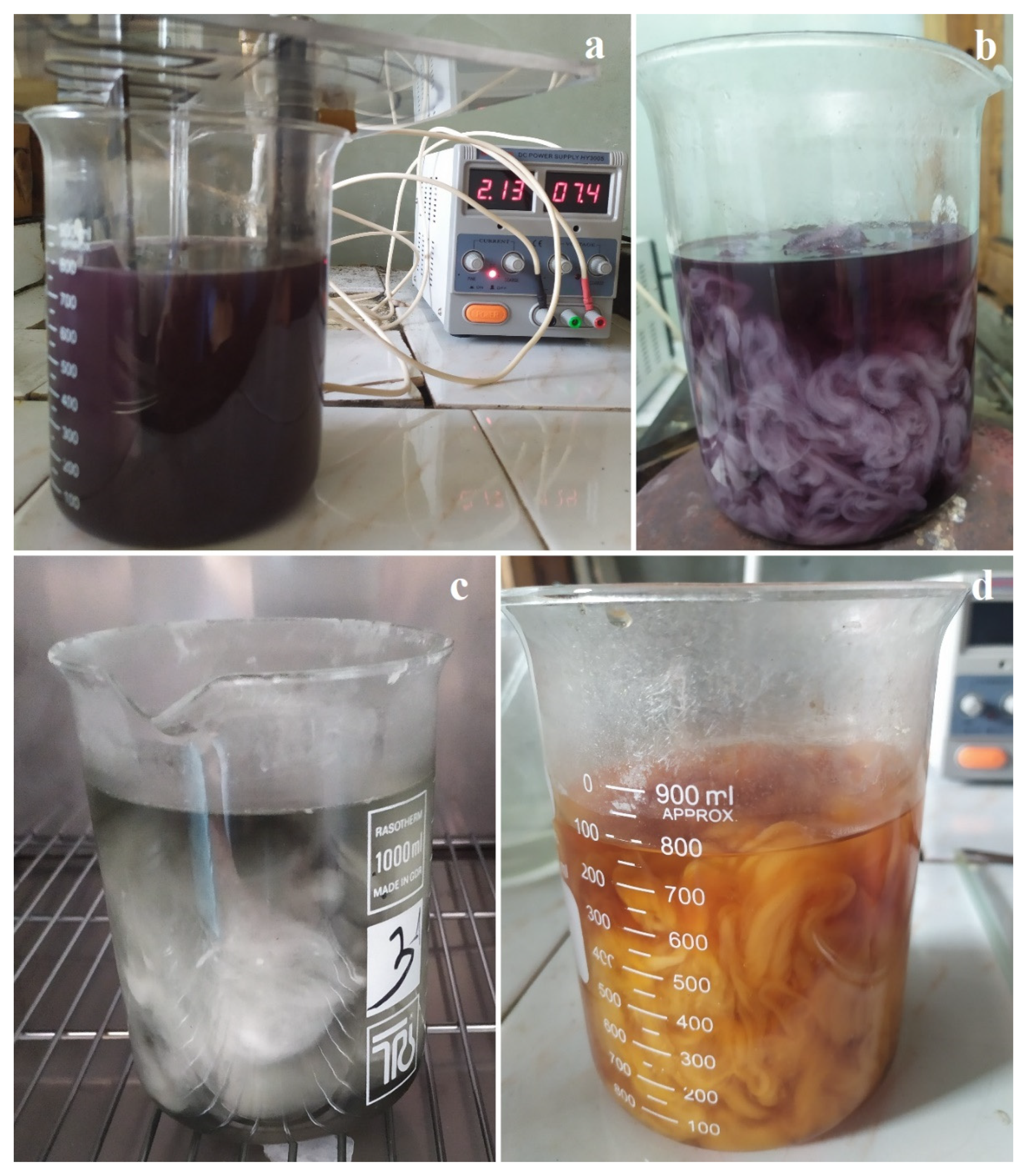
The anode and cathode were changed in places for 5 min, the current was set to 1.5 A, and the voltage was 6–7 V. Then, the anode and cathode were returned to their normal position, the current was set to 3 A, the voltage was 4–6 V. Ferrate began to form, the color changed to purple. Ferrate production took 2–2.5 h.
The amount of formed ferrate was controlled by iodometric titration [19].
An amount of 100 g acrylic fiber with a thread thickness of 19 µm was added to a solution with the produced ferrate and soaked at 60–65 °C overnight until the purple color turned orange. The ready fiber was squeezed out. After that, the impregnated fiber was washed with distilled water until the washings were clear. The fiber was dried at room temperature or in a stream of warm air, to avoid overheating. The dry fiber was fluffed.
2.2.3. Preparation of Fe-SF Using Prepared Na2FeO4
A 2 L 10% sodium hydroxide solution was heated to a temperature of 60 °C. The Fernel reagent was added to the heated solution until sodium ferrate concentration reached 0.5 mol/L and stirred.
After that, 100 g acrylic fiber with a thread thickness of 19 µm was added to the resulting mixture and soaked at 60–65 °C overnight until the purple color turned orange. The finished fiber was squeezed out. After that, the impregnated fiber was washed with distilled water until the washings were clear. The fiber was dried at room temperature or in a stream of warm air, to avoid overheating. The dry fiber was fluffed.
2.2.4. Preparation of Fe-H
Fe-H was obtained similarly [1]. An amount of 100 g acrylic fiber with a thread thickness of 19 μm was heated in a 2 L 20% sodium hydroxide solution to a temperature of 60–70 °C for 2–3 h. After that, the fiber was washed and squeezed out. Next, the impregnation was carried out similarly to the procedure for Fe-NH.
2.2.5. Preparation of Fe-H-SF
An amount of 100 g acrylic fiber with a thread thickness of 19 μm was heated in a 2 L 20% sodium hydroxide solution to a temperature of 60–70 °C for 2–3 h. After that, the fiber was washed and squeezed out.
Next, a 2 L 10% sodium hydroxide solution was heated to a temperature of 60 °C. Fernel reagent was added to the heated solution until sodium ferrate concentration reached 0.5 mol/L and stirred.
After that, acrylic fiber was added to the mixture and soaked at 60–65 °C overnight until the purple color turned orange.
2.3. Study of the Sorbent by Structural Methods
Diffractograms were recorded on an X-ray diffractometer Advance D8 (Bruker, Billerica, MA, USA) using Cu-Kα-radiation, in the angle range 2° < 2θ < 90°, with a step of 0.02°, counting at a point of 0.6 s. The fibers were finely cut, then pressed in a mold 1 × 1 × 0.5 cm in size.
The infrared spectra of the compounds were recorded on a Spectrum 1000 spectrometer (PerkinElmer, Waltham, MA, USA) using KBr pellets.
The thermogravimetric analysis of the materials was carried out using a differential thermal analyzer DTG-60H (Shimadzu, Kyoto, Japan). The analysis was carried out in an argon atmosphere, with a heating rate of 10 °C/min.
Images of the structure of the studied materials were obtained by scanning electron microscopy on a Carl Zeiss CrossBeam the XB 1540 instrument (Zeiss Int., Oberkochen, Germany) with an attachment for energy dispersive analysis.
2.4. Study of the Fe(OH)3 Washout from the Sorbent
Seawater samples were taken during cruise 116 of the R/V Professor Vodyanitsky (5 May 2021, station coordinates 43.49772, 36.50107). The approximate composition of seawater is provided in [20], the salinity was 18.1%, and the pH was 8.2.
An amount of 60 L of seawater were passed through 5 g of the sorbent at a rate of 50 mL/min. The samples were acidified with sulfuric acid until pH 1. The concentration of Fe3+ in the sample was determined photometrically with sulfosalicylic acid [21].
2.5. Determining the Sorption Parameters of Phosphorus and Beryllium under Static Conditions
Sorption was carried out by mixing 0.1 g of the sorbent with 10 mL of seawater with the addition of stable phosphorus and beryllium until concentrations of 0.1 and 0.3 mg/L, respectively, for 48 h. After that, the resulting mixtures were separated by filtration. Each experiment was repeated at least three times.
The efficiency of sorption was determined as (1) [20]:
where C0 is the initial concentration of the element in the solution, mg/L; C is the equilibrium concentration of the element in solution, mg/L.
The sorbent capacity was determined as (2):
where Vs is the volume of the liquid phase, mL; m is the mass of the sorbent, g; 10−3 is the conversion factor mL to L for the volume of the solution.
The distribution coefficient was calculated as (3):
2.6. Sorption of Phosphorus and Beryllium under Dynamic Conditions
During dynamic experiments, a peristaltic pump was used to pass the seawater with the addition of stable phosphorus and beryllium until 0.1 and 0.3 mg/L concentrations, respectively, through a column with an inner diameter of 1 cm filled with 3 g of the sorbent. After the column, the filtrates were collected in fractions and analyzed for the content of phosphorus and beryllium. Sorption was carried out at a rate of 3 mL/min until the composition of the filtrate equalized with the composition of the initial solution.
The concentration of phosphorus and beryllium in solutions was determined on the KFK-3-01 photometer (Zagorsk Optical and Mechanical Plant, Sergiev Posad, Russia). Based on the results of the filtrate analyses, the output sorption curves were plotted in the C/C0–Vf coordinates and the values of the dynamic exchange capacity (DEC) up to 1% breakthrough and the total dynamic exchange capacity (TDEC) were calculated using Formulas (4) and (5) [20]:
where Vf is the total volume of the filtrate by the time the phosphorus or beryllium ions appear in it, L; C0 is the concentration of phosphorus or beryllium in the initial solution, mg/L; V is the total volume of the filtrate at the time of leveling with the composition of the original solution, L; Vp is the volume of portions of the filtrate after the phosphorus or beryllium ions appear in them, L; Cp is the concentration of the portions of the filtrate after the phosphorus or beryllium ions appear in them, mg/L.
2.7. Recovery of the Radionuclides from Large-Volume Samples
Seawater samples were taken during cruise 116 of the R/V Professor Vodyanitsky (5 May 2021, station coordinates 43.49772, 36.50107) to study the recovery of the radionuclides. The samples were passed through a system of two columns, each filled with 100 g (700 mL) of Fe-SF or Fe-H sorbents, and 1000 L of seawater at a rate of 1000 mL/min (10 sorbent masses/min). Potassium dihydrogen phosphate was preliminarily added to the seawater as a release tracer to a concentration of 1 µmol/L.
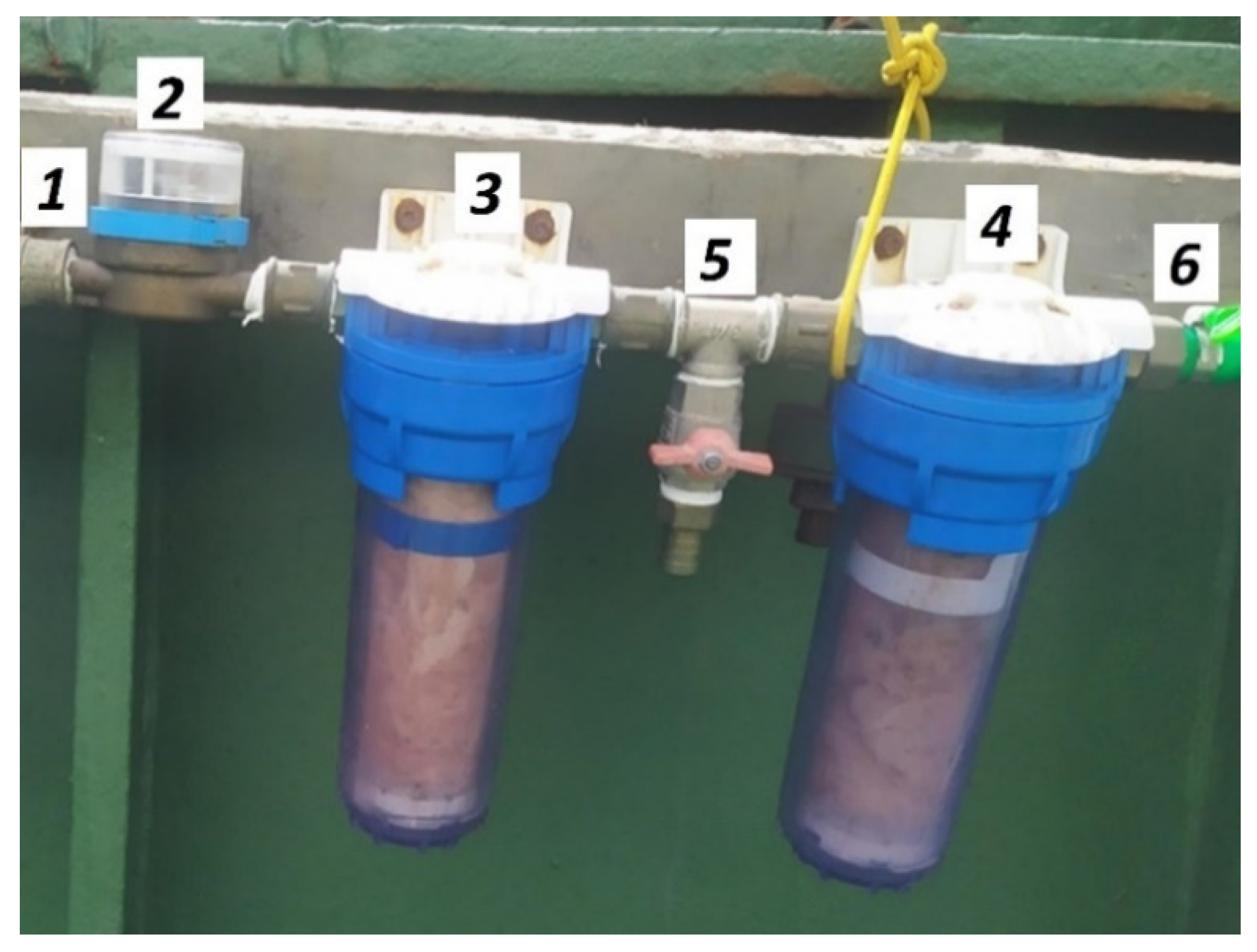
A photograph of the installation for treatment is shown in Figure 1.
Figure 1.
Installation for sorption of radionuclides from large samples (more than 1 m3) of pre-filtered seawater: 1—water inlet pipe; 2—water meter; 3, 4—first and second stages of sorption (cartridge volume 700 mL); 5—sample pipe after the first stage; 6—pipe for water outlet after sorption.
2.8. Measurement of Gamma Radionuclides
After passing the seawater, the sorbent was squeezed out to remove excess seawater and ashed at 800 °C for 8 h.
Next, the ash was placed in Petri dishes (60 mm in diameter). The activity of γ-radionuclides was measured on a CANBERRA multi-channel gamma spectrometer for measuring X-ray and gamma radiation with a BE3825 detection (Canberra, Meridian, CT, USA) unit for at least 48 h.
The gamma spectrometer was calibrated with certified sources.
The efficiency of radionuclide recovery from seawater was determined as [14]:
where A and B are the activities of the radionuclide on the sorbent in the first and second adsorbers.
Next, the radionuclide activity was calculated on the first adsorber:
3. Results and Discussion
3.1. Obtaining Sorbents
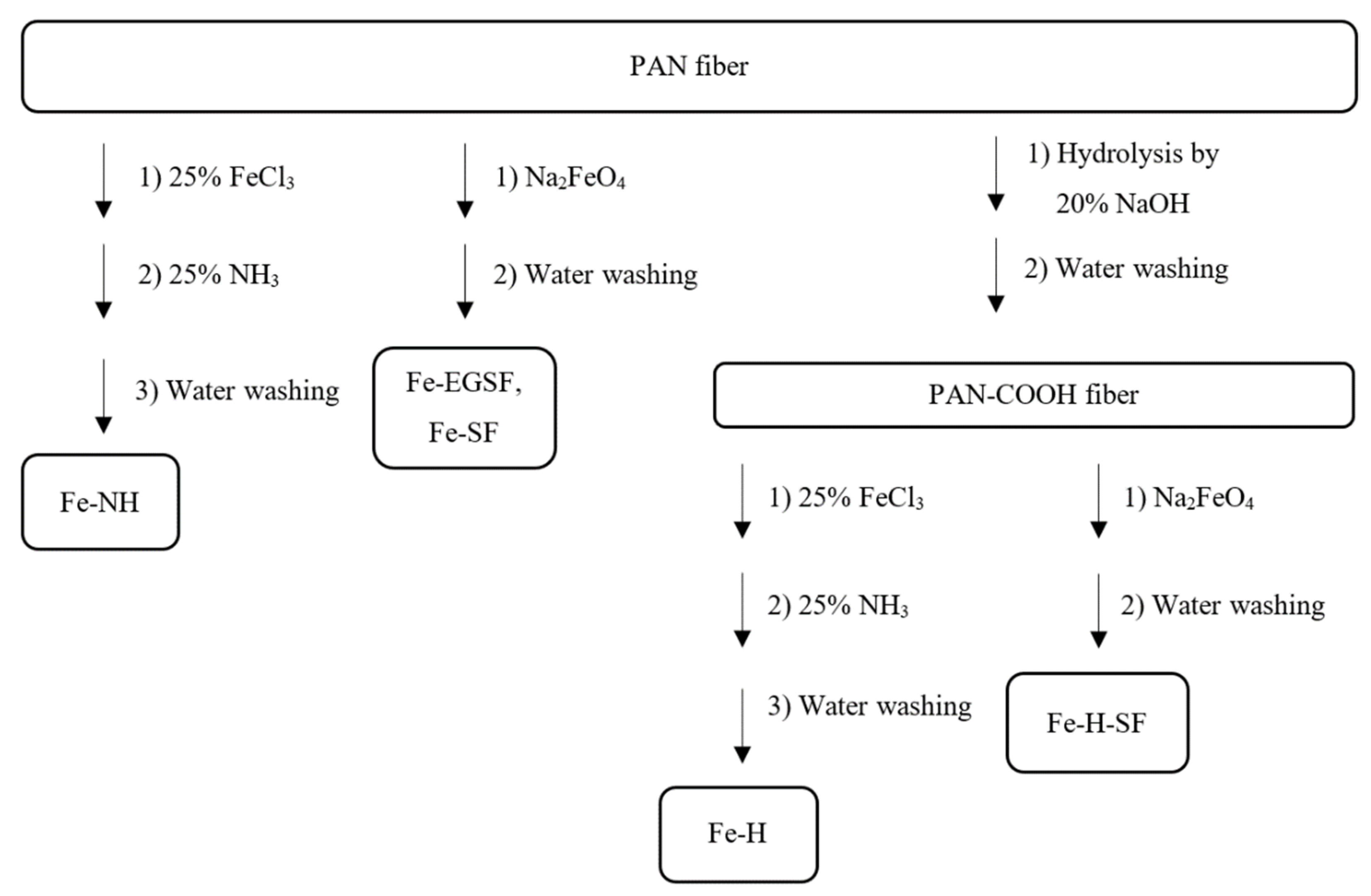
The general scheme for obtaining various types of sorbent based on PAN and Fe(OH)3 is shown in Figure 2.
Figure 2.
Scheme for obtaining sorbents based on PAN and Fe(OH)3 using various methods.
3.1.1. Preparation of Fe-NH Sorbent
According to the procedure described in [18], Fe(OH)3 is directly deposited on acrylic fiber with a solution of NH3. We obtained the sorbent by this method.
3.1.2. Preparation of Fe-EGSF Sorbent Using Electrochemically Generated Na2FeO4
Some research papers describe the possibility of obtaining sorbents containing chemically fixed Fe(OH)3 on support. This method was used for the preparation of the ANFEZH sorbent, which is Prussian blue on a cellulose carrier [22]. In the first step, the sawdust (cellulose carrier) was mercerized, i.e., treated with 5% alkali. Further processing was carried out with 0.015 mol/L Na2FeO4 obtained electrochemically. At the same time, sodium ferrate easily oxidizes glucose residues with the formation of chemically fixed iron hydroxide. Acrylic fiber has also proven to be a good carrier in the production of several sorbents for marine radiochemistry. Therefore, we carried out experiments on obtaining a sorbent based on acrylic fiber and Fe(OH)3 using electrochemically generated Na2FeO4.
Fe-EGSF fiber production stages are shown in Figure 3.
Figure 3.
Fe-EGSF fiber production stages: (a)—electrochemical production of Na2FeO4; (b)—fiber in the initial solution; (c)—fiber during oxidation; (d)—the final stage of oxidation.
3.1.3. Preparation of Fe-SF Sorbent Using Ready-Made Na2FeO4
Ready-made Na2FeO4 was used because this method is faster and does not require time for the production of Na2FeO4 as in the electrochemical method.
3.1.4. Preparation of Fe-H Sorbent
To obtain the sorbent, we used the classical technique proposed in [1] and widely used in [2,3,4,5,6]. The first stage of this technique is the conversion of the fiber into a carboxyl form according to the reaction:
–C≡N + H2O + NaOH → –COONa + NH3.
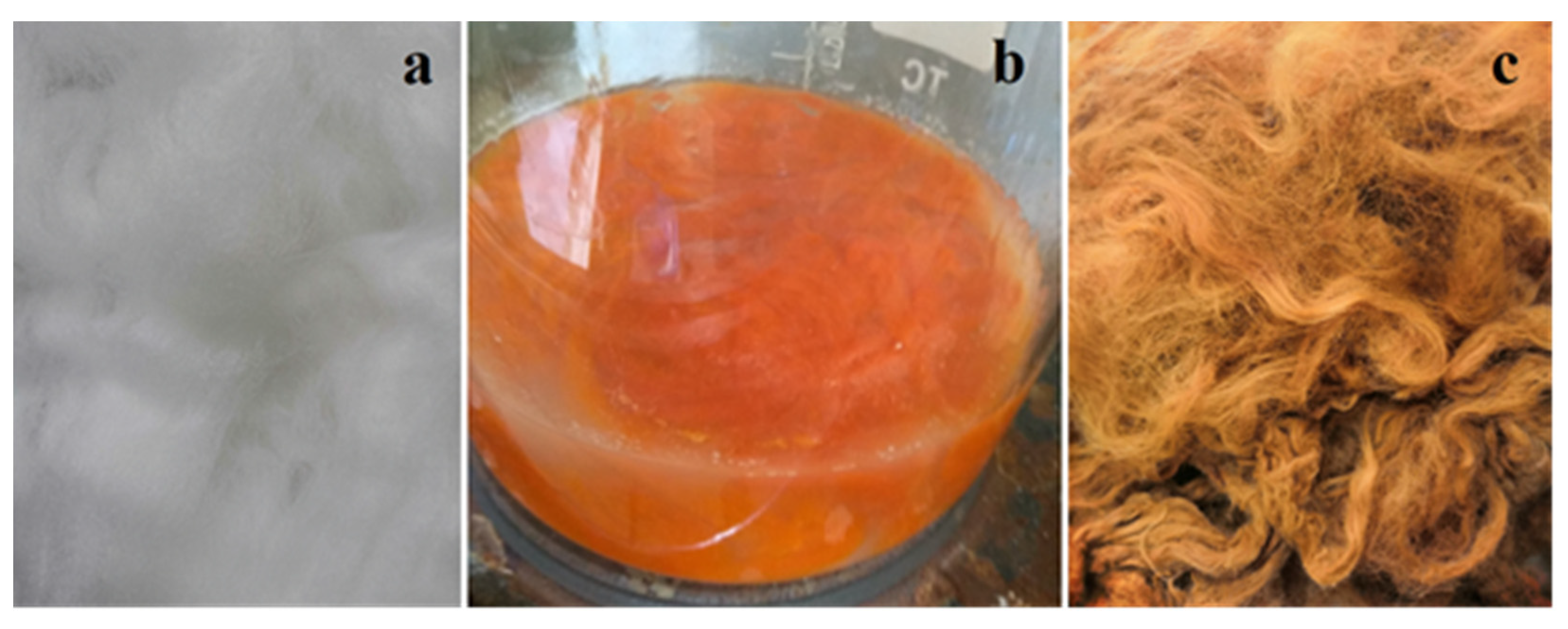
This step is still widely used to convert a nitrile fiber into a carboxyl form [23,24]. The release of ammonia is detected by a characteristic odor. In this case, the fiber turns orange-red (Figure 4). Earlier, we found a mention of this in [25]. Nitrile groups do not convert into carboxyl ones to the full extent, so according to elemental analysis in [23], the nitrogen content during the transition from the nitrile to the carboxyl form changes from 41.89 to 39.33 wt.%. To determine the number of carboxyl groups, we converted the hydrolyzed fiber into an acidic form with 0.1 mol/L hydrochloric acid and washed it with water. Next, the fiber was titrated with 0.01 mol/L alkalis in the presence of phenolphthalein. The calculation results show that the content of carboxyl groups is 0.0768 mmol/g or 0.4% of the maximum degree of conversion in terms of pure PAN.
Figure 4.
PAN fiber: (a)—initial before treatment with NaOH; (b)—after treatment with NaOH (red fiber); (c)—ready product.
Further, the fiber passes in an excess of iron into the form:
and Fe(OH)3 is precipitated by 25% ammonia:
3 –COONa + Fe3+ → (–COO)3Fe + 3Na+,
(–COO)3Fe + 3NH3·H2O → 3 –COONH4 + Fe(OH)3 ↓.
3.1.5. Preparation of Fe-H-SF Sorbent
We investigated the possibility of impregnating NaOH-hydrolyzed acrylic fiber with ready-made Na2FeO4. Experiments showed that Fe(OH)3 does not fix on the hydrolyzed acrylic fiber, and is almost completely washed off when the product is washed with water. This results in a fiber that is slimy to the touch. No further studies were carried out.
3.2. The Structure of the Obtained Sorbents
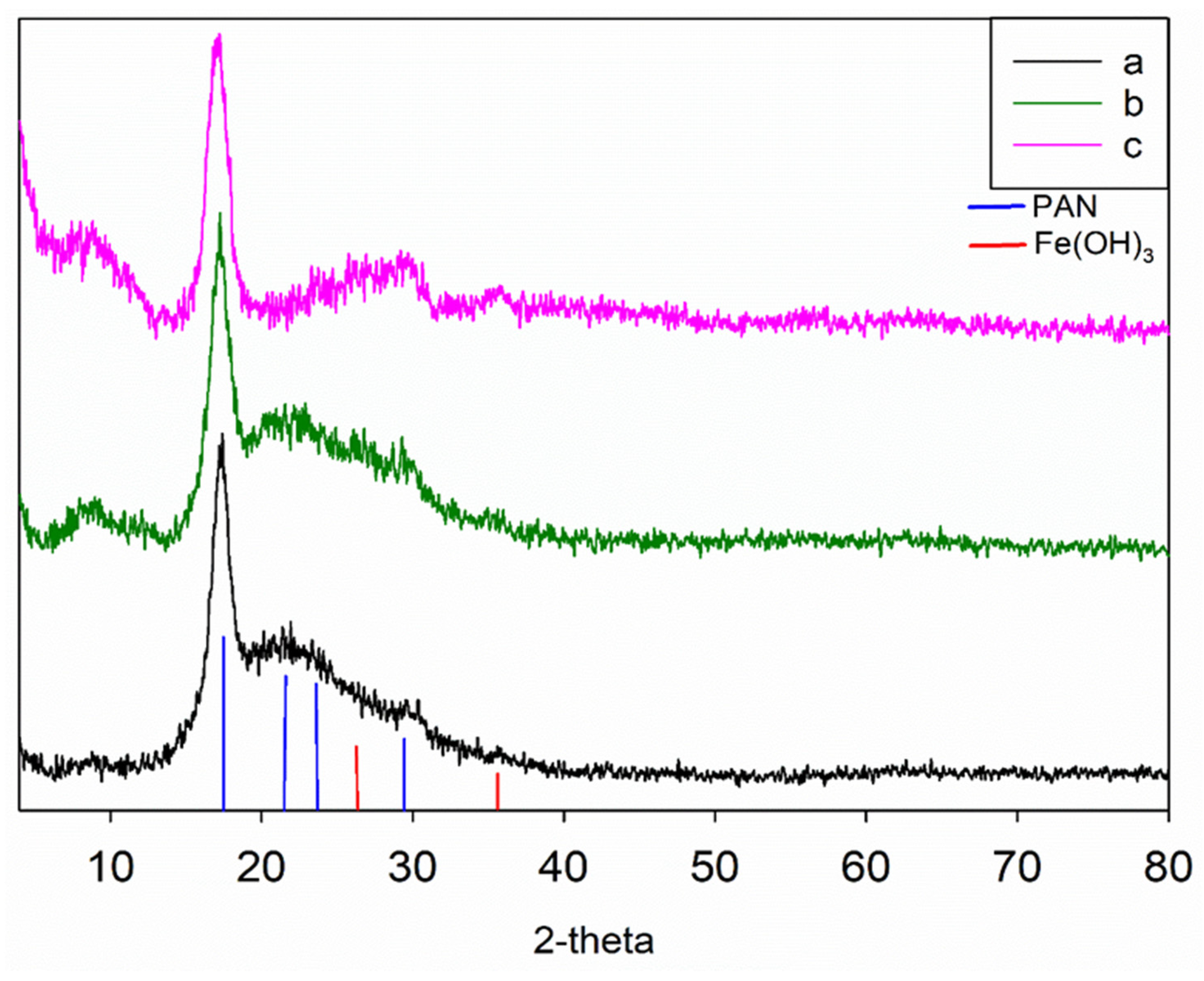
On the diffractograms of the obtained composites (Figure 5), there is a characteristic peak 2Ɵ = 17° corresponding to the rhombic structure of PAN. Weak reflections corresponding to amorphous iron oxide are also observed. In this case, depending on the degree and type of heating of the finished fiber, the composition of the iron oxide component can vary from Fe(OH)3, through Fe2O3⋅2FeOOH⋅2.5H2O, and up to α-Fe2O3. The characteristic signal corresponding to iron oxide has a low intensity, which may be due to the overlap of this phase by a wide amorphous PAN peak, as well as the formation of ultrafine iron oxide, with coherent scattering domains ~2 nm in size.
Figure 5.
Diffractograms of the sorbents: (a)—Fe-NH, (b)—Fe-SF, (c)—Fe-H.
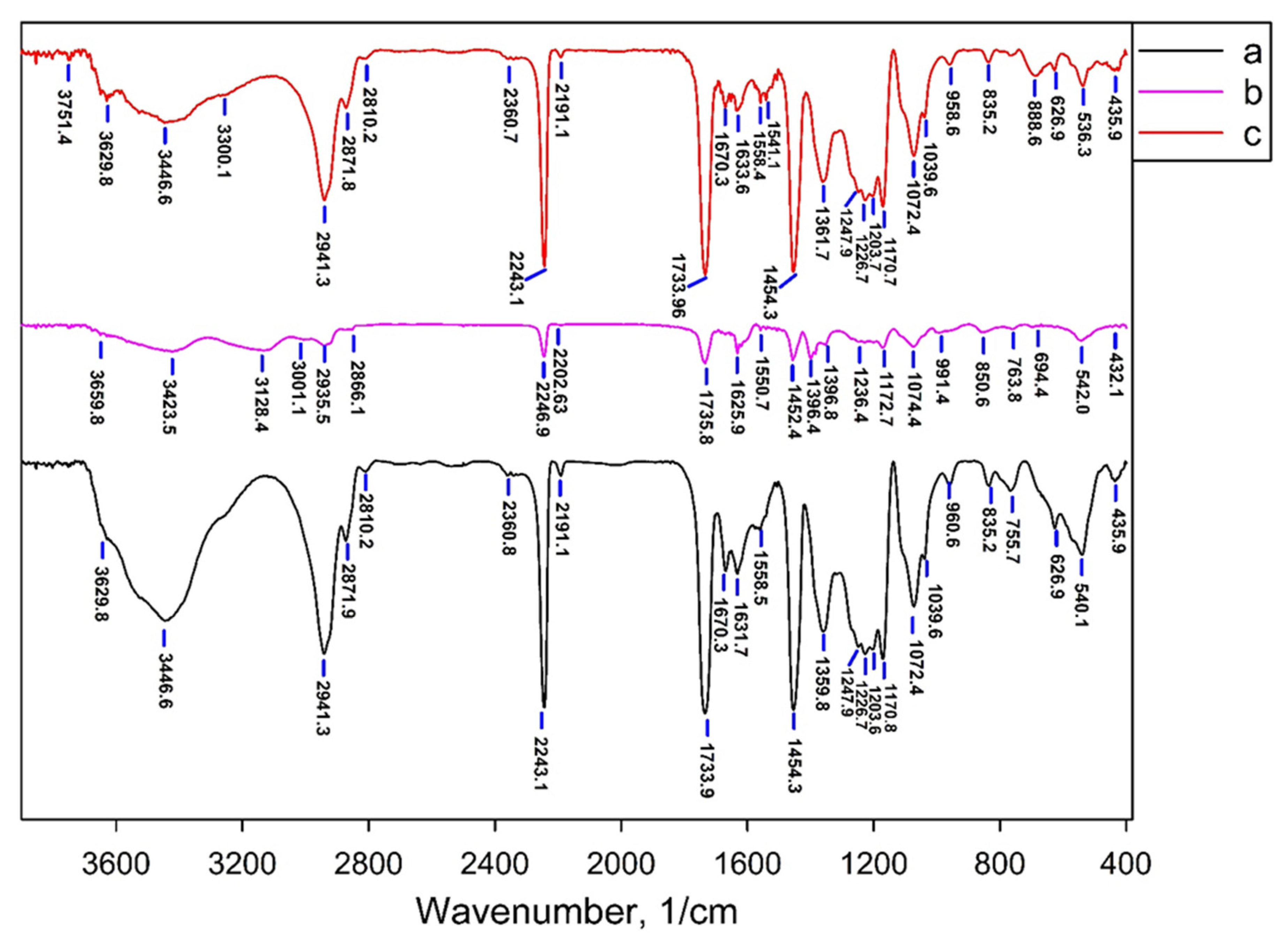
The IR spectra of the sorbents are shown in Figure 6.
Figure 6.
IR spectra of the sorbents: (a)—Fe-NH, (b)—Fe-SF, (c)—Fe-H.
Most of the cited papers state that the carrier is a polyacrylonitrile fiber. However, several works indicate that the fibers are a copolymer with methyl acrylate. Thus, the paper [23] indicates that the original PAN fiber contains a significant amount of oxygen, 8.3 wt.%. Our study also shows that in the IR spectrum of the Fe-NH sorbent there are intense bands of the COOH group at 3200–3400 cm−1, as well as the ester group at 1735 cm−1. Since alkali was not used in the preparation of the sorbent, and ammonia is a weak base that does not hydrolyze the nitrile group, the presence of the COOH band is associated with the hydrolysis of the ester group present in the initial carrier. In [24], despite the low intensity of the lines in the IR spectrum of the original PAN fiber, there are absorption bands of the carboxyl group at 3200–3400 cm−1 and the ester group at 1735 cm−1.
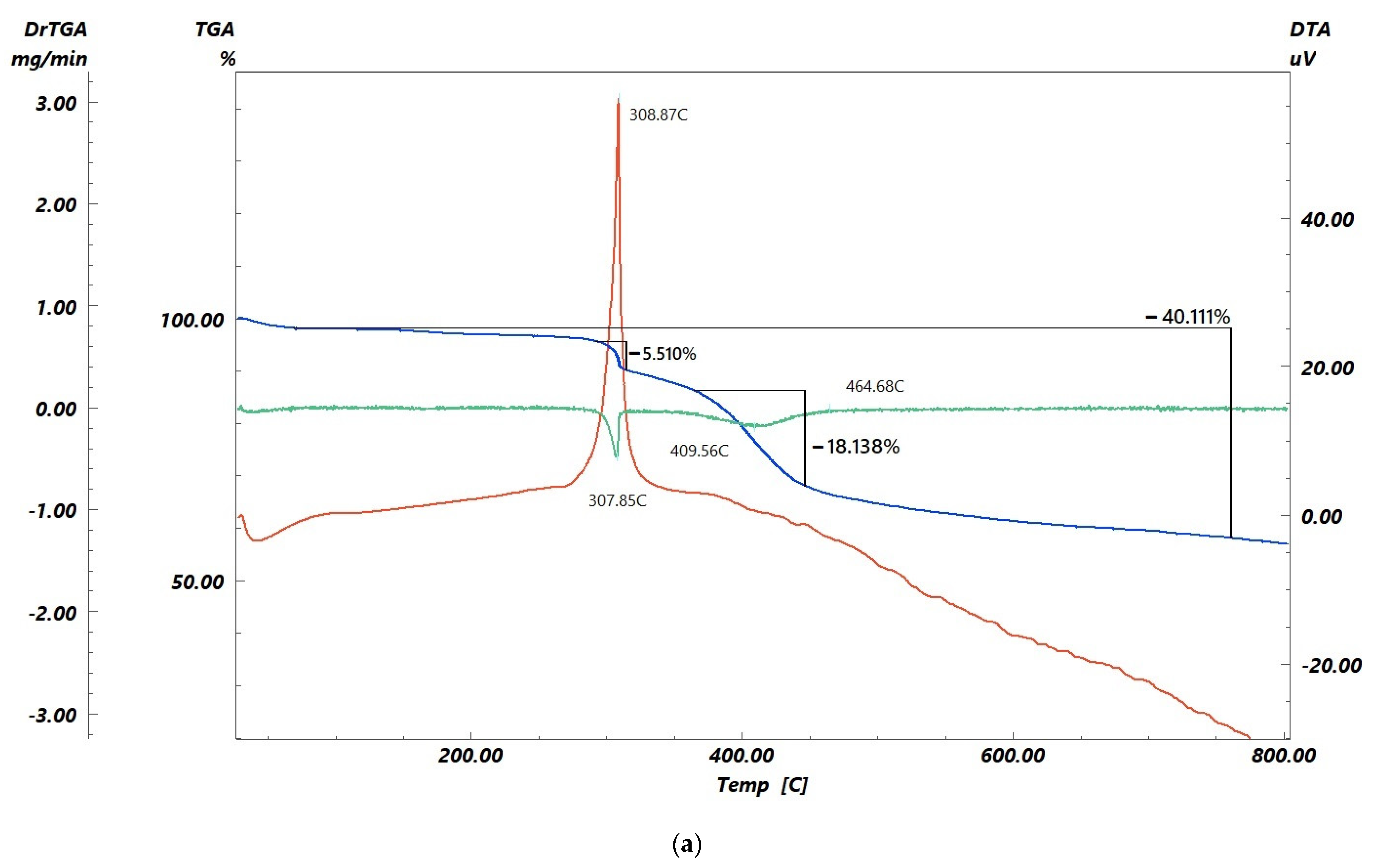
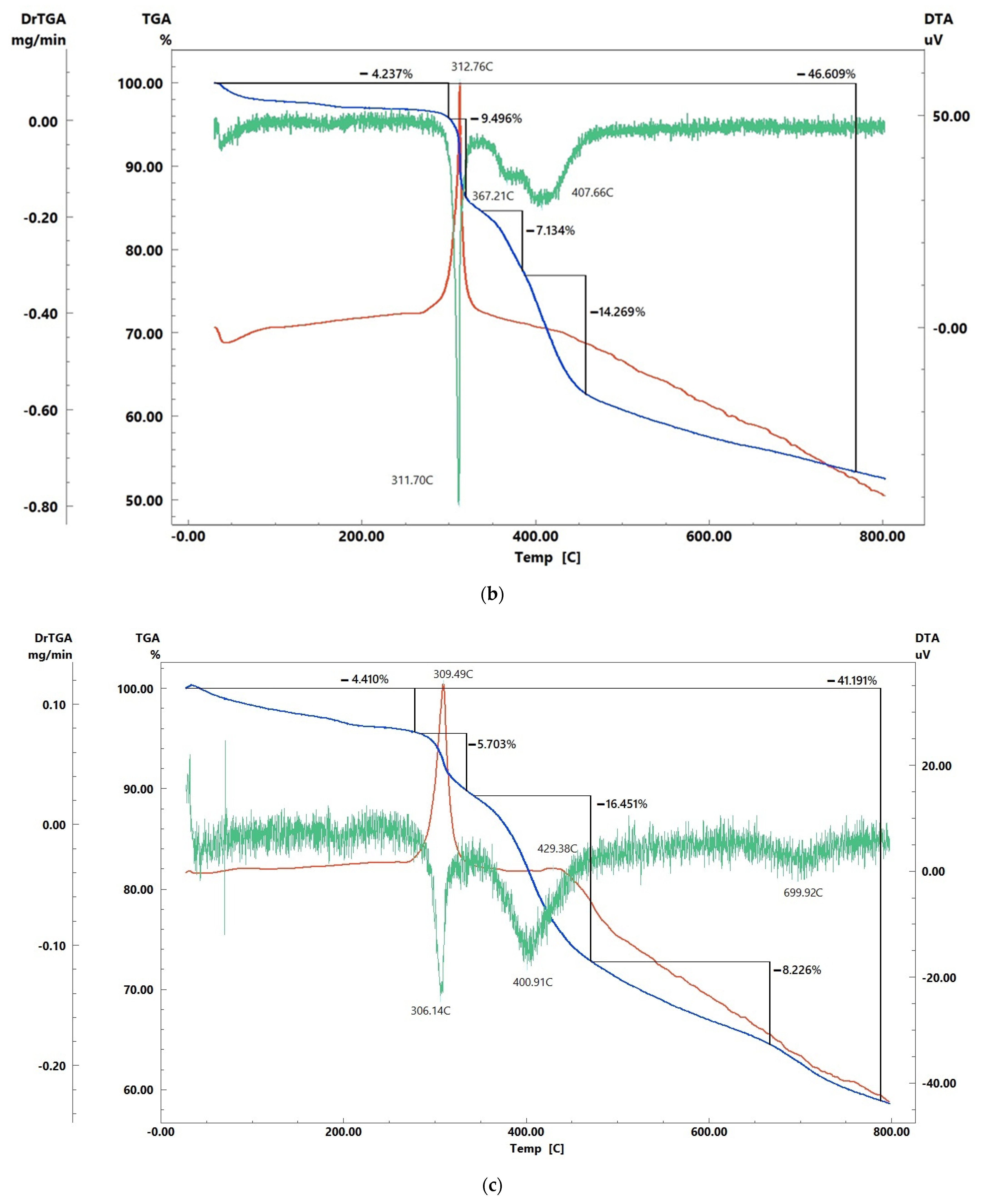
Figure 7 shows thermograms of fibrous composites, in which three main temperature ranges of weight loss can be distinguished. In particular, heating to 280 °C is accompanied by a slight weight loss of up to 5% and corresponds to the process of dehydration of crystallization and molecular water.

Figure 7.
Thermograms of the sorbents: (a)—Fe-NH, (b)—Fe-SF, (c)—Fe-H.
The second stage, 280–330 °C with a weight loss of about 9–15%, is due to the process of polycyclization of nitrile groups in PAN [26] accompanied by dehydrogenation, oxidation, denitrogenation, elimination of hydrocyanic acid, etc. The maximum effect is observed at 307.85 °C (Fe-NH, Figure 7b), 311.7 °C (Fe-SF, Figure 7b), and 306.14 °C (Fe-H, Figure 7c) and correlates with the melting point of PAN. At the same time, in several studied materials Fe-SF ≤ Fe-NH < Fe-H, a decrease in the intensity of the exothermic effect is observed, which is probably due to an increase in the content of iron oxide formations on the PAN surface formed during synthesis.
The third stage in the temperature range of 330–490 °C with a weight loss in the range of 16–22% indicates the decomposition of PAN. At this stage, there is an increase in the percentage yield of dry coke with iron oxide in the series Fe-SF < Fe-NH < Fe-H and is 65%, 69%, and 74%, respectively, which is probably due to an increase in the mass content of iron oxide in the composite. With further heating to 800 ℃, the weight curve gradually reaches a plateau, while maintaining the difference in values between the materials observed at the previous stage, due to the different content of iron oxide (Table 2).
Table 2.
Elemental composition of the surface of materials, obtained on an SEM equipped with an EDS attachment.
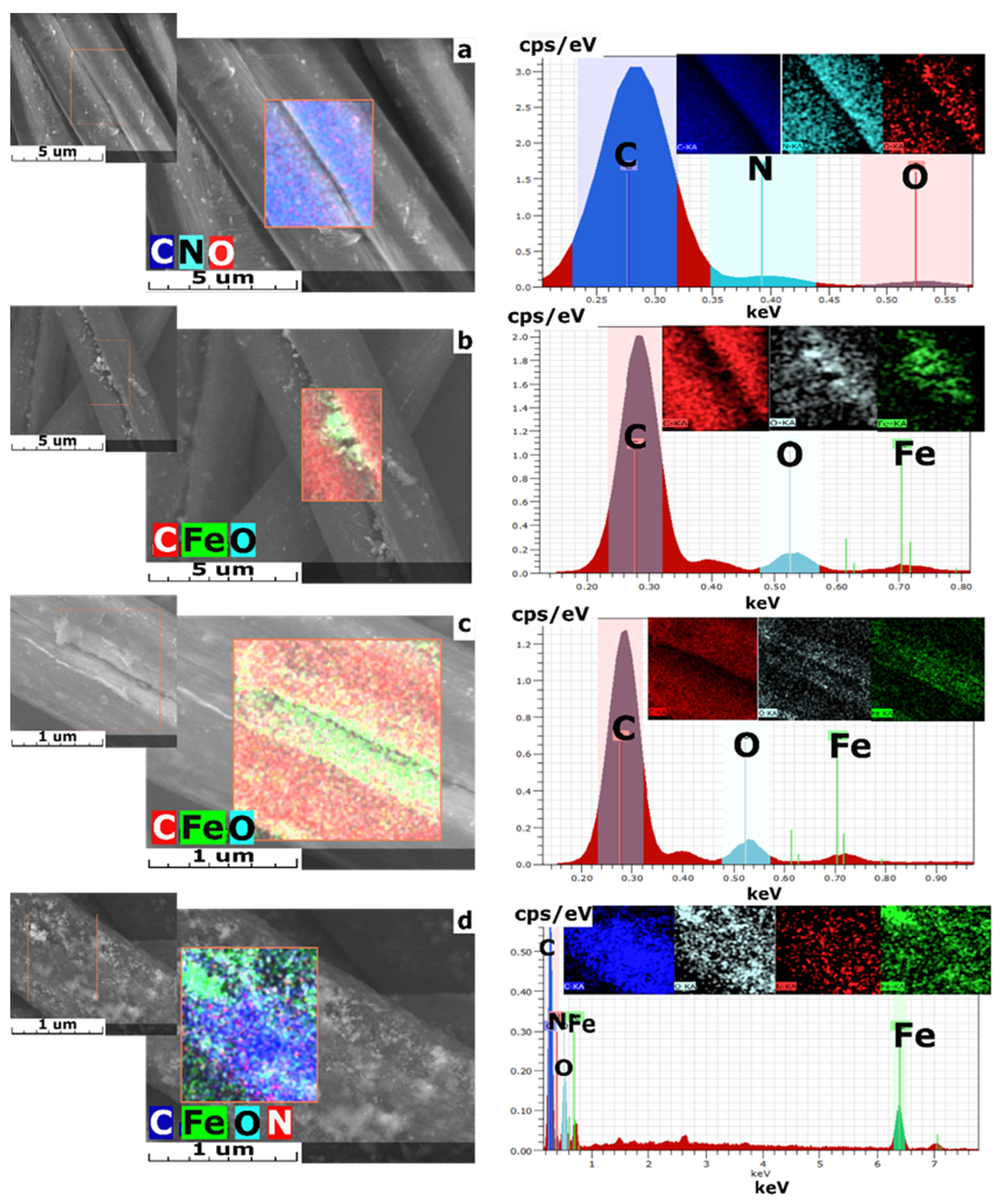
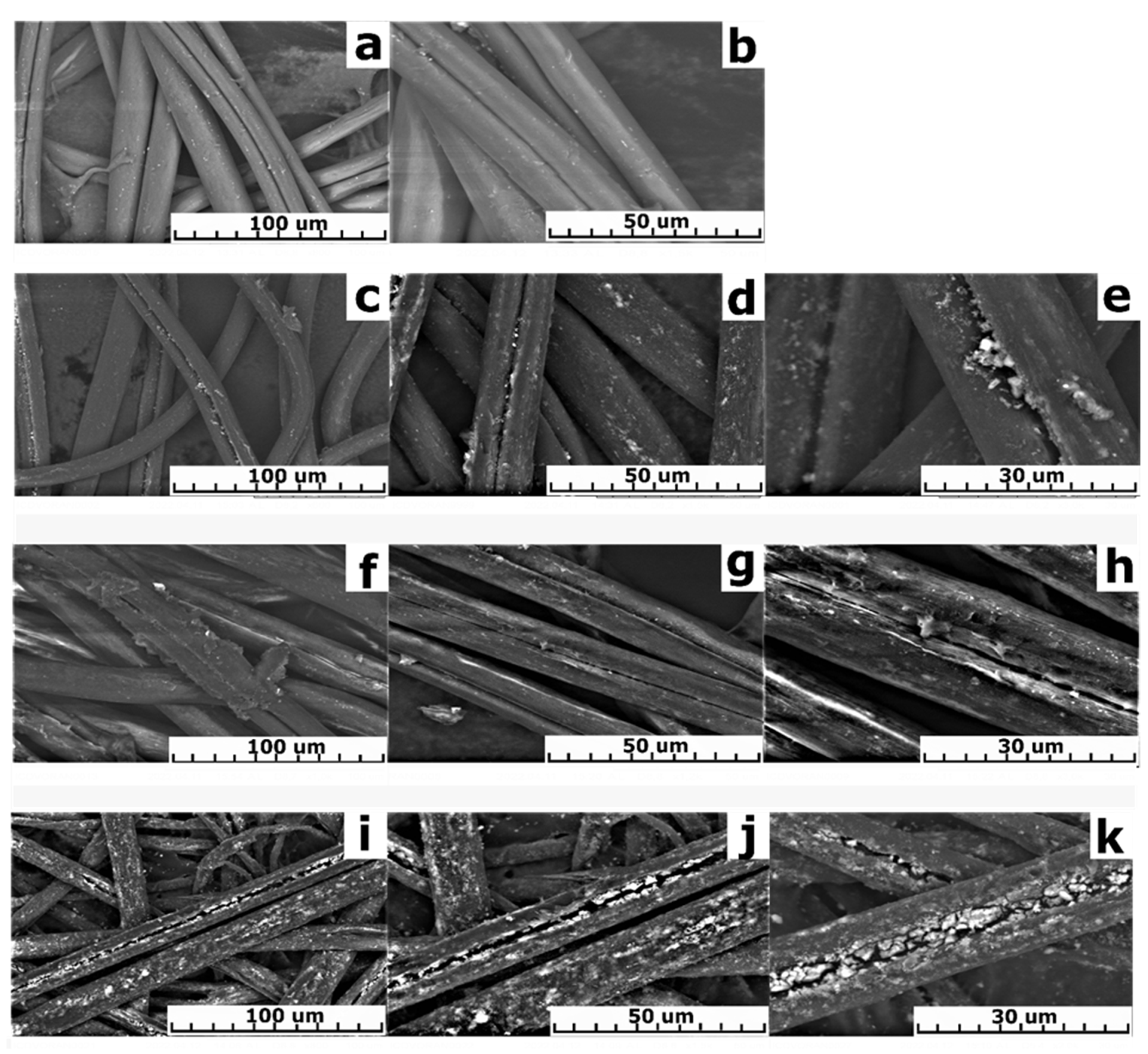
The SEM image (Figure 8) of PAN shows the presence of interlayer spaces in which the formation of coarse-grained deposits formed during the modification of these fibers is possible. The formation of iron oxide deposits on the Fe-H sample occurs both in the interfiber spaces and on the surface of individual fibers, in contrast to other samples, where the formation occurs only in the interlayers of threads. This fact is also reflected in the SEM images containing the results of a study of the distribution of elements on the surface of composite materials obtained using energy dispersive analysis (Figure 9, Table 2).
Figure 8.
SEM images: (a,b)—PAN; (c–e)—Fe-SF; (f–h)—Fe-NH; (i–k)—Fe-H (100–50–30 microns).
Figure 9.
EDS analysis: (a)—PAN; (b)—Fe-SF, (c)—Fe-NH; (d)—Fe-H (100–50–30 microns).
3.3. Fe(OH)3 Washout from the Sorbent
When passing 60 L through 5 g of fiber, leaching is estimated at 0.1wt.% of the sorption-active component from the content of iron hydroxide in the fiber. Samples were acidified and analyzed spectrophotometrically with sulfosalicylic acid [21].
3.4. Determining the Parameters of Sorption of Phosphorus and Beryllium under Static Conditions
The efficiency of sorption of stable beryllium and phosphorus by the obtained sorbents and granular alumina was compared. Aluminum oxide was chosen because it was previously used for recovery 7Be from seawater [13] and 32P, 33P from rainwater [27].
The results of studying the sorption of phosphorus and beryllium under static conditions are shown in Table 3.
Table 3.
Sorption parameters of phosphorus and beryllium under static conditions.
The coefficients of distribution of phosphorus by the Fe-H sorbent proved to be an order of magnitude higher than by other sorbents. This is because the carboxyl groups attached to the polymer chain serve as centers of the formation of Fe(OH)3 [24]. They also bind Fe(OH)3 to the polymer carrier preventing agglomeration and washout of Fe(OH)3 from the fiber. The high content of carboxyl groups (~3.5 mmol/g) also makes the fiber hydrophilic, which facilitates the access of Fe3+ ions for adsorption. The washout experiment showed that the washout of the Fe(OH)3 active component was about 0.1%.
3.5. Sorption Curves for Stable Isotopes of Phosphorus and Beryllium under Laboratory Conditions
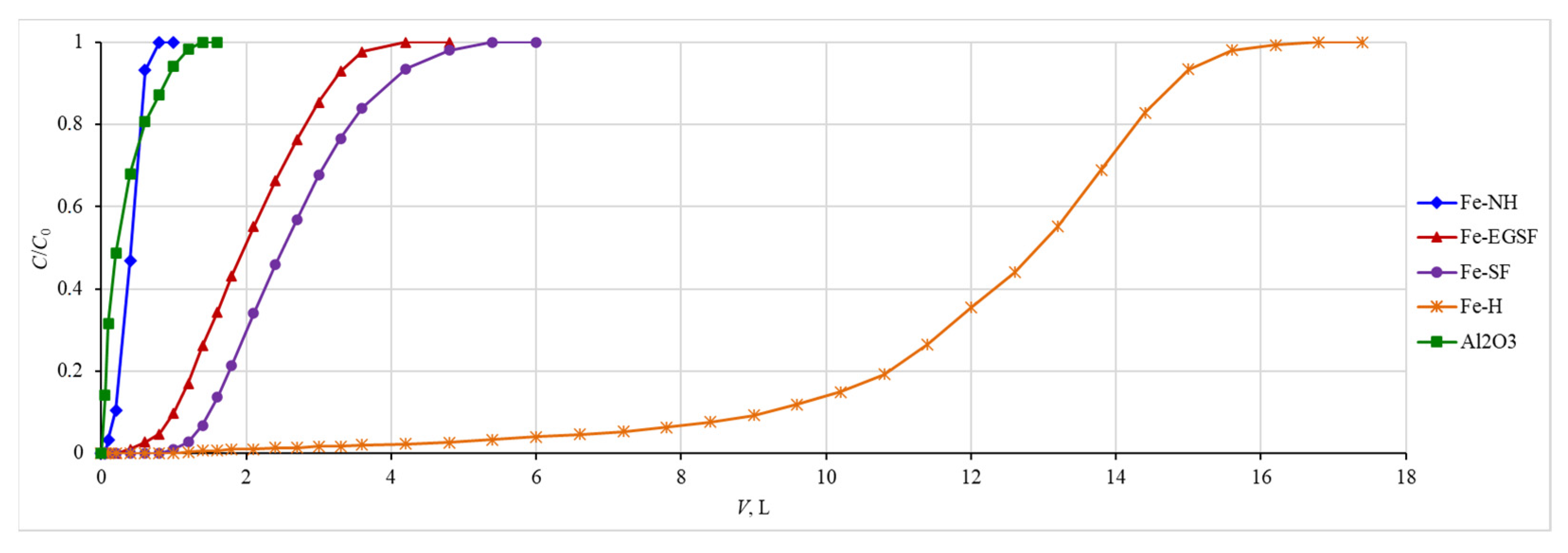
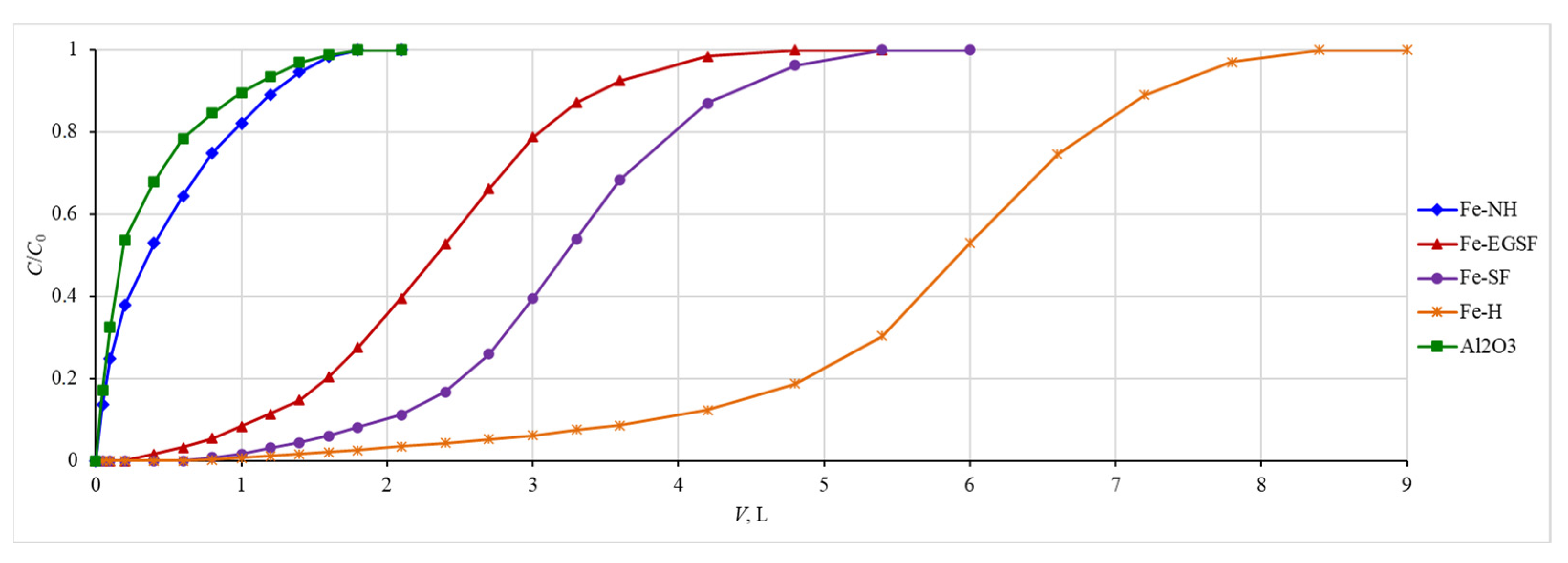
The dynamic curves of sorption of phosphorus under dynamic conditions are shown in Figure 10, and beryllium in Figure 11.
Figure 10.
Dynamic curves of sorption of stable phosphorus as a tracer of sorption efficiency.
Figure 11.
Dynamic curves of sorption of stable beryllium as a tracer of sorption efficiency.
The DEC and TDEC determined for the studied sorbents are shown in Table 4.
Table 4.
Values of DEC and TDEC of various sorbents for phosphorus or beryllium.
Fe-SF and Fe-H sorbents show the best DEC results for stable phosphorus and beryllium, and the DEC of the Fe-H sorbent is several times higher than the others. These data make it possible to calculate the amount of sorbent required for the recovery 7Be, 32P, 33P from seawater, when stable isotopes are used as tracers.
3.6. Sorption of Radionuclides from Large-Volume Samples
To test the sorbents on large volumes of water and obtain data on the efficiency of sorption of the radionuclides from seawater and their recovery, we selected the sorbents that showed the best results in laboratory tests, including the highest values of DEC and Kd–Fe-SF and Fe-H. Table 5 shows the results of the experiments. Two columns with 100 g of sorbents each were used. Sorption was studied on the natural content of 7Be, 210Pb, 234Th. To determine the efficiency of sorption of 32P, 33P, the KH2PO4 standard was added to seawater samples up to a concentration of 1 µmol/L, while in papers [5,10], seawater with a phosphorus concentration of 0.3 µmol/L was used.
Table 5.
Sorption efficiency of radionuclides in seawater when using Fe-SF and Fe-H sorbents.
The phosphorus concentration after sorption was determined after the second column, thus the data on the efficiency of phosphorus sorption is for 200 g of the sorbent. Fe-H sorbent showed the highest efficiency of sorption of radionuclides, and the efficiency of recovery of stable phosphorus as a tracer was more than 90%. These materials can be successfully used to study many oceanological processes, such as vertical transport [28], and phosphorus biodynamics [29] by radiotracer methods.
4. Conclusions
For the first time, a comparative test of sorbents based on Fe(OH)3 and acrylic fiber obtained using various impregnation methods was carried out.
For the first time in this work, a method was proposed for fiber impregnation with iron hydroxide using sodium ferrate in an alkaline medium. For the first time, the structure and composition of sorbents obtained by various methods were characterized using physicochemical research methods.
The obtained sorbents were tested in laboratory and field conditions. It is shown that fiber samples obtained by oxidation with sodium ferrate and the “classical” method have the highest sorption characteristics.
It was found that this fiber can be effectively used for the recovery of various isotopes of natural, technogenic, and cosmogenic origin (7Be, 32P, 33P, 210Pb, 234Th) from seawater.
Author Contributions
N.A.B., I.I.D.—obtaining sorbents, sorption experiments, participation in expeditionary work, discussion of the results, preparation of an article; M.A.F.—obtaining sorbents, sorption experiments; O.N.K.—measurement of stable phosphorus; E.V.S., I.G.S.—measurement of stable beryllium, participation in expeditionary work; V.A.K.—work on obtaining fiber by the electrochemical method; E.A.T., I.G.T.—measurement and interpretation of IR spectra and derivatograms of sorbents. All authors have read and agreed to the published version of the manuscript.
Funding
Obtaining sorbents, and studying the sorption of beryllium and phosphorus under static and dynamic conditions was funded by RFBR within the framework Project Number 19-33-60007 (competition “Perspective”), selection and measurement of large volume samples within the framework of the state assignment of the Ministry of Science and Higher Education of the Russian Federation (theme “Oceanological processes” No. 0555-2022-0004), measurement of IR spectra and derivatograms within the framework of the Sevastopol State University Project No. 42-01-09/169/2021-7.
Institutional Review Board Statement
Not applicable.
Informed Consent Statement
Not applicable.
Data Availability Statement
Not applicable.
Acknowledgments
Not applicable.
Conflicts of Interest
The authors declare no conflict of interest.
References
- Krishnaswami, S.; Lal, D.; Somayajulu, B.L.K.; Dixon, F.S.; Stonecipher, S.A.; Craig, H. Silicon, radium, thorium, and lead in seawater: In-situ extraction by synthetic fibre. Earth Planet. Sci. Lett. 1972, 16, 84–90. [Google Scholar] [CrossRef]
- Somayajulu, B.L.K.; Rengarajan, R.; Lal, D.; Weiss, R.F.; Craig, H. GEOSECS Atlantic 32Si profiles. Earth Planet. Sci. Lett. 1987, 85, 329–342. [Google Scholar] [CrossRef] [Green Version]
- Lal, D.; Chung, Y.; Platt, T.; Lee, T. Twin cosmogenic radiotracer studies of phosphorus recycling and chemical fluxes in the upper ocean. Limnol. Oceanogr. 1988, 33 Pt 2, 1559–1567. [Google Scholar] [CrossRef]
- Lal, D.; Lee, T. Cosmogenic 32P and 33P used as tracers to study phosphorus recycling in the upper ocean. Nature 1988, 333, 752–754. [Google Scholar] [CrossRef]
- Lee, T.; Lal, D. Techniques for extraction of dissolved inorganic and organic phosphorus from large volumes of sea water. Anal. Chim. Acta 1992, 260, 113–121. [Google Scholar] [CrossRef]
- Lee, T.; Barg, E.; Lal, D. Studies of vertical mixing in the Southern California Bight with cosmogenic radionuclides 32P and 7Be. Limnol. Oceanogr. 1991, 36, 1044–1052. [Google Scholar] [CrossRef]
- Haskell, W.Z.; Kadko, D.; Hammond, D.E.; Knapp, A.N.; Prokopenko, M.G.; Berelson, W.M.; Capone, D.G. Upwelling velocity and eddy diffusivity from 7Be measurements used to compare vertical nutrient flux to export POC flux in the Eastern Tropical South Pacific. Mar. Chem. 2015, 168, 140–150. [Google Scholar] [CrossRef]
- Kremenchutskii, D.A.; Batrakov, G.F.; Dovhyi, I.I.; Sapozhnikov, Y.A. The role of suspended matter in transformation of beryllium-7 (7Be) field in the Black Sea surface layer. Mar. Syst. 2021, 217, 10351. [Google Scholar] [CrossRef]
- Nakanishi, T.; Kusakabe, M.; Aono, T.; Yamada, M. Simultaneous measurements of cosmogenic radionuclides 32P, 33P and 7Be in dissolved and particulate forms in the upper ocean. J. Radioanal. Nucl. Chem. 2009, 279, 769–776. [Google Scholar] [CrossRef]
- Benitez-Nelson, C.R.; Buesseler, K.O. Measurement of Cosmogenic 32P and 33P Activities in Rainwater and Seawater. Anal. Chem. 1998, 70, 64–72. [Google Scholar] [CrossRef]
- Clevenger, S.J.; Benitez-Nelson, C.R.; Drysdale, J.; Pike, S.; Puigcorbé, V.; Buesseler, K.O. Review of the analysis of 234Th in small volume (2–4 L) seawater samples: Improvements and recommendations. J. Radioanal. Nucl. Chem. 2021, 329, 1–13. [Google Scholar] [CrossRef] [PubMed]
- Roca-Martí, M.; Puigcorbé, V.; Castrillejo, M.; Casacuberta, N.; Garcia-Orellana, J.; Cochran, J.K.; Masqué, P. Quantifying 210Po/210Pb Disequilibrium in Seawater: A Comparison of Two Precipitation Methods with Differing Results. Front. Mar. Sci. 2021, 8, 70. [Google Scholar] [CrossRef]
- Silker, W.B.; Robertson, D.E.; Rieck, H.G., Jr.; Perkins, R.W.; Prospero, J.M. Beryllium-7 in Ocean Water. Science 1968, 161, 879–880. [Google Scholar] [CrossRef] [PubMed] [Green Version]
- Bezhin, N.A.; Dovhyi, I.I.; Tananaev, I.G. Sorption methods in marine radiochemistry. Russ. Chem. Rev. 2021, 90, 1544–1565. [Google Scholar] [CrossRef]
- Colley, S.; Thomson, J. Particulate/solution analysis of 226Ra, 230Th and 210Pb in sea water sampled by in-situ large volume filtration and sorption by manganese oxyhydroxide. Sci. Total Environ. 1994, 155, 273–283. [Google Scholar] [CrossRef]
- Hartman, M.C.; Buesseler, K.O. Adsorbers for In-Situ Collection and At-Sea Gamma Analysis of Dissolved Thorium-234 in Seawater; Technical Report; Woods Hole Oceano-Graphic Institution: Falmouth, MA, USA, 1994. [Google Scholar]
- LLC “Ural Process Engineering Company (UPEC)”. Trade Mark RU 377834. 2009. Available online: https://www1.fips.ru/fips_servl/fips_servlet?DB=RUTM&DocNumber=377834 (accessed on 1 May 2022). (In Russian).
- CMER. Extraction of 7Be from Seawater Using Fe-Fibers. Available online: https://cmer.whoi.edu/recipe/extraction-of-7be-from-seawater-using-fe-fibers/ (accessed on 28 May 2022). (In Russian).
- Harvey, D. Modern Analytical Chemistry; McGraw-Hill Higher Education: New York, NY, USA, 2000. [Google Scholar]
- Bezhin, N.A.; Dovhyi, I.I.; Milyutin, V.V.; Kaptakov, V.O.; Kozlitin, E.A.; Egorin, A.M.; Tokar’, E.A.; Tananaev, I.G. Study of sorbents for analysis of radiocesium in seawater samples by one-column method. J. Radioanal. Nucl. Chem. 2021, 327, 1095–1103. [Google Scholar] [CrossRef]
- Karamanev, D.G.; Nikolov, L.N.; Mamatarkova, V. Rapid simultaneous quantitative determination of ferric and ferrous ions in drainage waters and similar solutions. Miner. Eng. 2002, 15, 341–346. [Google Scholar] [CrossRef]
- Remez, V.P.; Zelenin, V.I.; Smirnov, A.L.; Raspopin, S.P.; Matern, A.I.; Morzherin, Y.Y. Cellulose-inorganic sorbents in radiochemical analysis I. Promising sorbents for radiochemical analysis. Sorpt. Chromatogr. Process. 2009, 9, 627–632. (In Russian) [Google Scholar]
- Xia, X.; Dong, F.; Nie, X.; Pan, N.; Liu, C.; Ding, C.; Wang, J.; Cheng, W.; He, H.; Sun, S.; et al. Efficient adsorption of U(VI) using in low-level radioactive wastewater containing organic matter by amino groups modified polyacrylonitrile fibers. J. Radioanal. Nucl. Chem. 2022, 331, 921–936. [Google Scholar] [CrossRef]
- Bondar, Y.; Olkhovyk, Y.; Kuzenko, S. Nanocomposite adsorbent based on polyacrylonitrile fibers for rapid and selective removal of Cs radionuclides. J. Radioanal. Nucl. Chem. 2021, 330, 1221–1231. [Google Scholar] [CrossRef]
- Moore, W.S.; Reid, D.F. Extraction of radium from natural waters using manganese-impregnated acrylic fibers. J. Geophys. Res. 1973, 78, 8880–8886. [Google Scholar] [CrossRef]
- Karki, H.P.; Kafle, L.; Ojha, D.P.; Song, J.H.; Kim, H.J. Cellulose/polyacrylonitrile electrospun composite fiber for effective separation of the surfactant-free oil-inwater mixture under a versatile condition. Sep. Purif. Technol. 2019, 210, 913–919. [Google Scholar] [CrossRef]
- Waser, N.A.; Fleer, A.P.; Hammar, T.R.; Buesseler, K.O.; Bacon, M.P. Determination of natural 32P and 33P in rainwater, marine particles and plankton by low-level beta counting. Nucl. Instrum. Methods Phys. Res. Sect. A Accel. Spectrom. Detect. Assoc. Equip. 1994, 338, 560–567. [Google Scholar] [CrossRef]
- Samodurov, A.S.; Chukharev, A.M.; Kazakov, D.A. Basic Regularities of Vertical Turbulent Exchange in the Mixed and Stratified Layers of the Black Sea. Phys. Oceanogr. 2021, 28, 405–422. [Google Scholar] [CrossRef]
- Orekhova, N.A. Nutrients Dynamics in the Surface Waters of the Black Sea. Phys. Oceanogr. 2021, 28, 660–676. [Google Scholar] [CrossRef]
Publisher’s Note: MDPI stays neutral with regard to jurisdictional claims in published maps and institutional affiliations. |
© 2022 by the authors. Licensee MDPI, Basel, Switzerland. This article is an open access article distributed under the terms and conditions of the Creative Commons Attribution (CC BY) license (https://creativecommons.org/licenses/by/4.0/).