Article

Genome-Wide Identification and Expression Profiling of the PYL Gene Family in Watermelon Under Abiotic Stresses


1
Hainan Institute of Northwest A&F University, Sanya 572024, China
2
State Key Laboratory of Crop Stress Biology in Arid Areas, College of Horticulture, Northwest A&F University, Yangling 121100, China
3
College of Biological and Agricultural Sciences, Honghe University, Mengzi 661199, China
*
Authors to whom correspondence should be addressed.
Genes 2026, 17(4), 426; https://doi.org/10.3390/genes17040426
Submission received: 14 February 2026 / Revised: 27 March 2026 / Accepted: 1 April 2026 / Published: 4 April 2026
(This article belongs to the Topic Vegetable Breeding, Genetics and Genomics, 2nd Volume)

Abstract

Background: PYR/PYL/RCAR proteins are core abscisic acid (ABA) receptors that play essential roles in ABA signal transduction, plant growth and development, and abiotic stress responses. However, the PYL gene family in watermelon (Citrullus lanatus) has not been systematically characterized, limiting our understanding of ABA-mediated stress adaptation in this economically important crop. Methods: A genome-wide analysis was performed to identify ClPYL genes in watermelon using a hidden Markov model search. Phylogenetic relationships were reconstructed using the maximum likelihood method. Segmental duplication events were analyzed using synteny analysis. Conserved motifs, gene structures, and promoter cis-acting elements were characterized using MEME and PlantCARE. Expression profiles under drought, salt, and cold stresses were examined by quantitative real-time PCR (qRT-PCR) with three biological replicates. Results: In this study, 15 ClPYL genes were identified in watermelon through genome-wide analysis. Phylogenetic reconstruction classified these genes into four subfamilies, with subfamily II being exclusively present in cucurbits—a lineage-specific feature not observed in Arabidopsis. Synteny analysis revealed eight segmental duplication events involving members of subfamilies I, III, and IV, while subfamily II members were not associated with these duplications. Members within the same subfamily share similar exon-intron structures and conserved motifs. Promoter analysis revealed that ClPYL genes are enriched with various cis-acting elements associated with hormone signaling and abiotic stress responses. Expression profiling demonstrated that ClPYL genes exhibit diverse and dynamic expression patterns under drought, high-salinity, and cold stresses. Notably, genes such as ClPYL5 under drought, ClPYL02 under salt, and ClPYL15 under cold stress displayed persistent stress-responsive expression. Conclusions: These findings reveal the evolutionary conservation and diversification of the PYL family in watermelon and provide a set of candidate genes for functional studies aimed at dissecting ABA-mediated stress adaptation. This work establishes a genomic framework for developing stress-resilient watermelon varieties through molecular breeding.

1. Introduction

Abscisic acid (ABA) was initially discovered in the 1960s in some woody perennials and cotton, where it was found to significantly induce bud dormancy in the woody plants and promote abscission of both fruits and leaves in cotton (Gossypium hirsutum) [1]. ABA is recognized as a key phytohormone in plants, plays a critical role in seed dormancy, growth inhibition, and leaf senescence, as well as serving as an integral component of plant defense mechanisms [2,3]. Notably, under adverse conditions such as drought, high salinity, and low temperature, ABA levels rapidly increase, leading to growth inhibition and prioritized resource allocation to cope with stress [4,5,6].
Under stress conditions, elevated ABA levels trigger a signaling cascade that enables plants to adapt and survive, making ABA signaling a critical pathway for stress tolerance [7]. ABA receptor PYR/PYL/RCAR belongs to the START domain superfamily, featuring a conserved hydrophobic ligand-binding pocket [8,9]. Upon ABA binding, PYL receptors undergo conformational changes that enable their interaction with type 2C protein phosphatases (PP2Cs), thereby relieving the inhibition of SNF1-related protein kinases (SnRK2s) and activating downstream stress-responsive transcription factors and physiological responses [8,10,11,12]. Structural analyses have revealed that PYL receptors exhibit diverse oligomeric states which contribute to their functional versatility in regulating plant growth and stress adaptation [13,14,15,16]. Due to their pivotal position in the ABA signaling cascade, PYL genes have emerged as critical targets for understanding and improving plant stress tolerance.
This 14-member gene family (Pyr1 and Pyl1 to Pyl13) has been independently identified, and mutant lines reveal ABA insensitivity in Arabidopsis [9]. The PYL gene family has been identified in multiple species, with wheat (Triticum aestivum) containing 38 members [17], cotton (Gossypium hirsutum) 27 members [18], tomato (Solanum lycopersicum) 22 members [19], luffa (Luffa cylindrica) 14 members [20], cucumber (Cucumis sativus) 14 members [21], and melon (Cucumis melo) 13 members [22].
Watermelon (Citrullus lanatus L.) is an economically important crop cultivated worldwide, yet its production is threatened by climate change-induced abiotic stresses such as drought, salinity, and extreme temperatures. While ABA receptor PYL genes have been extensively studied in numerous plant species, no systematic investigation exists for the watermelon PYL family, including its evolutionary dynamics, structural features, and expression patterns under stress conditions. This knowledge gap limits our understanding of how watermelon perceives and transduces stress signals through the ABA pathway and hinders the exploitation of PYL genes for crop improvement. Here, we identified 15 ClPYL genes and analyzed their phylogenetic relationships, chromosomal distributions, gene structures, conserved motifs, and promoter cis-elements. Expression profiling of ClPYLs under various abiotic stresses was further performed. Our results reveal that ClPYL genes exhibit subfamily-specific structural features and stress-responsive expression patterns. This work provides a foundational resource for elucidating the molecular functions of PYL genes in watermelon stress responses and offers valuable targets for breeding stress-tolerant varieties.

2. Materials and Methods

2.1. Identification and Chromosomal Distribution of ClPYL Genes

To identify the PYL gene family in watermelon, the complete protein sequence file of the Citrullus lanatus line “97103” (V2) was downloaded from the Cucurbit Genomics Database (CuGenDB; http://cucurbitgenomics.org/, accessed on 15 October 2024). The hidden Markov model (HMM) profile corresponding to the PYL domain (Pfam accession: PF10604) was obtained from the Pfam database (http://pfam.xfam.org/, accessed on 15 October 2024). A genome-wide search was then performed using the hmmsearch program (v3.3.2) against the watermelon protein dataset with an E-value threshold of 1× 10⁻⁵. All candidate sequences were verified by searching against the Pfam and NCBI Conserved Domain Database (CDD) to confirm the presence of the complete PYL domain. Redundant sequences were manually removed based on gene IDs and chromosomal locations. Finally, the chromosomal locations of the identified ClPYL genes were determined and visualized using the software TBtools (v2.206).

2.2. Analysis of Gene Structure, Syntenic, and Phylogenetic Evolution of ClPYL Genes

To investigate the gene structure of the ClPYLs, conserved motifs were predicted using the protein sequences of ClPYLs via the online tool MEME (https://meme-suite.org/, accessed on 30 October 2024). The analysis was configured to identify 10 motifs with widths ranging from 6 to 50 amino acids [23]. Gene structure information (exon-intron organization) was extracted and visualized using the software TBtools.
The protein sequences of previously reported PYL genes from Arabidopsis (14 AtPYLs) and melon (13 CmPYLs) were retrieved from the Arabidopsis Information Resource (TAIR; https://www.arabidopsis.org/) (accessed on 30 October 2024) and the CuGenDB database accessed on 30 October 2024, respectively. Protein sequences were used for phylogenetic reconstruction due to their higher evolutionary conservation, lower susceptibility to saturation and homoplasy, and greater phylogenetic informativeness compared to nucleotide sequences, particularly for distantly related species [24]. A multiple sequence alignment was performed using ClustalW default parameters, followed by manual trimming to remove poorly aligned regions and gap-rich positions using MEGA 7.0 software [25]. A phylogenetic tree was constructed using the maximum likelihood method in MEGA with 1000 bootstrap values to assess the robustness of the tree topology.
To investigate syntenic relationships within the ClPYL gene family, genome-wide collinearity analysis was performed using MCScanX [26]. The input files were prepared based on BlastP alignment results with an E-value threshold of 1 × 10⁻⁵ and the corresponding GFF annotation file. Segmental duplication events were identified by evaluating syntenic blocks containing at least five collinear gene pairs. The resulting collinear relationships were visualized using CIRCOS (http://circos.ca/, accessed on 30 October 2024).

2.3. Prediction of Cis-Acting Elements in ClPYL Promoters

To identify potential cis-acting elements within the promoters of ClPYL genes, the 2.0 Kb genomic sequences upstream of the transcription start site of each ClPYL were extracted. Promoter analysis was performed using the online database PlantCARE (https://bioinformatics.psb.ugent.be/webtools/plantcare/html/) (accessed on 30 October 2024) to predict putative cis-regulatory elements [27]. Following the prediction, the distribution of selected elements was visualized using TBtools.

2.4. Expression Profiling of ClPYLs Under Drought, Cold, and Salt Stresses

The experiment was conducted in a sunlight greenhouse using the watermelon male-fertile inbred line ‘YL’ as the plant material. This line is widely used in genetic and breeding studies due to its stable agronomic traits and suitability for stress physiology research [28,29]. Seeds were first treated with hot water (55–65 °C) for 4 h, then germinated in a dark incubator at 28 °C with high humidity for 30–48 h until radicle emergence. Germinated seeds were sown in nutrient pots (8 × 7 × 7 cm 3) and grown on a culture shelf under an 18 h/6 h light/dark cycle with temperatures of 30 °C (light) and 16 °C (dark). Plants were watered routinely until they reached the four-leaf stage.
In total, 90 uniform seedlings per treatment were selected. Drought stress was imposed by withholding water for 8 days, with sampling at 0, 2, 4, 6, and 8 days. To ensure uniform and consistent drought conditions, all pots were filled with equal amounts of homogenized substrate, and the substrate water content was maintained at approximately 75% of field capacity before stress initiation. Drought severity was assessed based on the duration of water withholding and the appearance of visible wilting symptoms at each sampling time point. Salt stress was applied by irrigating each seedling with 100 mL of 300 mM NaCl solution, and samples were collected at 0, 8, 18, 30, 42, and 54 h after treatment. The concentration of 300 mM NaCl was selected based on its widespread use in salt stress studies in watermelon [30,31]. For cold stress, seedlings were transferred to a 4 °C chamber and sampled at 0, 6, 12, 24, and 48 h. Each treatment included three biological replicates. The second true leaf from the growing point was collected per seedling. Leaves from the same replicate were pooled, immediately frozen in liquid nitrogen, and stored at –80 °C for subsequent RNA extraction.
Total RNA was extracted using the RNA Simple Total RNA Kit (TIANGEN, Beijing, China). cDNA synthesis was performed with the FastKing RT Kit (TIANGEN, Beijing, China), and quantitative real-time PCR (qRT-PCR) was carried out using SYBR Green Master Mix (Vazyme Nanjing, China). Three biological replicates were performed for each time point, with three technical replicates per biological replicate. The watermelon Actin gene (Cla97C02G026960) was used as an internal control, and relative expression levels were calculated using the 2−ΔΔCt method [32]. For heatmap visualization, the relative expression values were transformed to log2 scale. Genes were considered to be differentially expressed if they met the criteria of p < 0.05 or p < 0.01, as determined by Student’s t-test comparing each time point to the respective control in SPSS 19.0 software. All primers used in this study are listed in Table 1.

3. Result

3.1. Identification and Chromosomal Distribution of ClPYL Genes in Watermelon

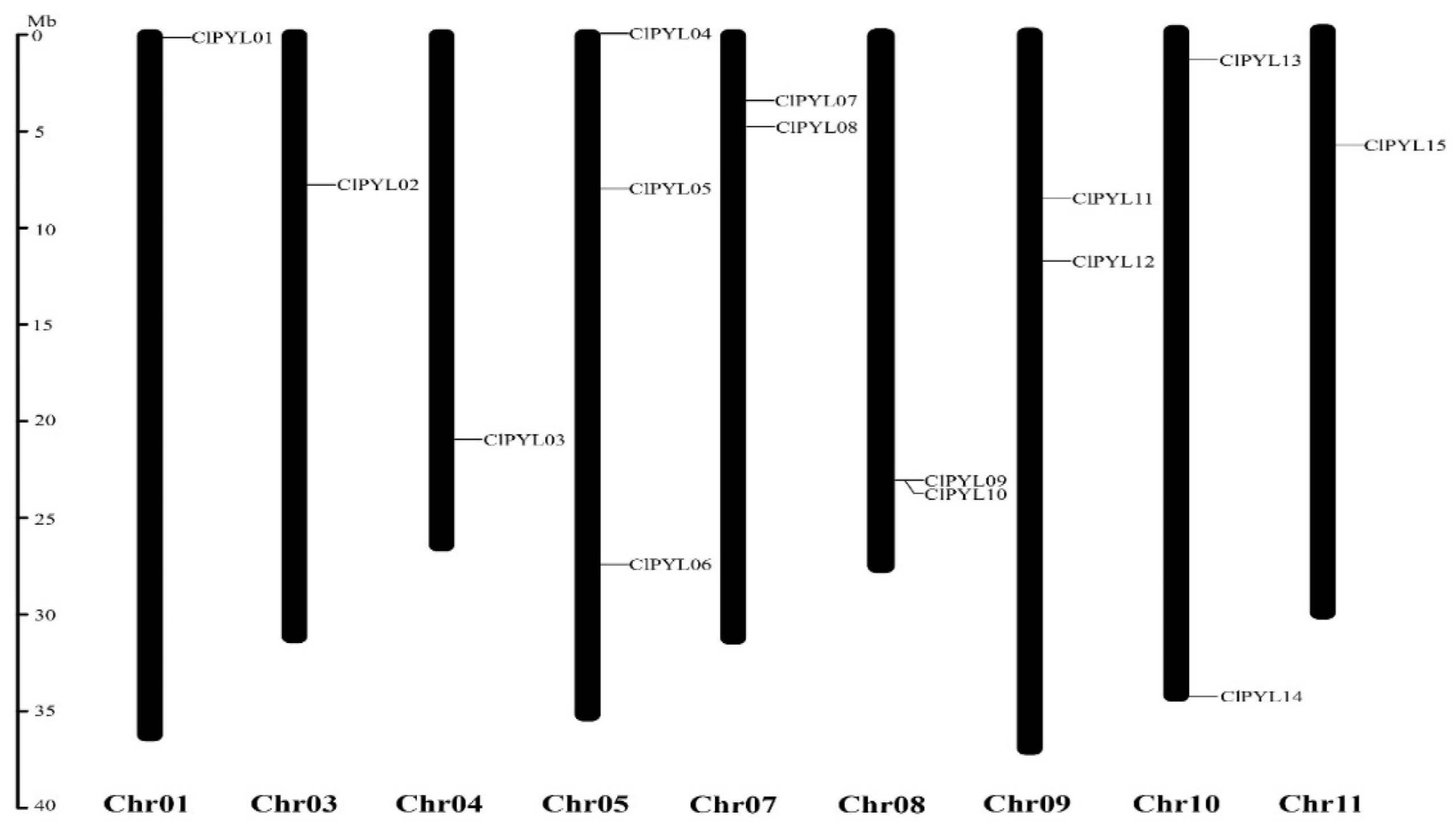
Using a Hidden Markov Model (HMM), we identified 15 candidate ClPYL genes in the watermelon genome. Chromosomal position-based nomenclature designated these as ClPYL01~ClPYL15, with corresponding gene IDs and locations detailed (Table 2). The encoded proteins range from 162 to 233 amino acids in length, corresponding to molecular masses of 17.7~25.4 kDa. While the majority (13 of 15) have an acidic isoelectric point (pI < 7), the remaining two proteins exhibit a basic pI (>7) (Table 2). Chromosomal distribution analysis revealed that ClPYL genes are localized to nine chromosomes. Chromosomes 1, 3, 4, and 11 each contain a single ClPYL gene, while chromosomes 7, 8, 9, and 10 each carry two. Notably, chromosome 5 harbors the highest number, with three ClPYL genes (Figure 1). Thus, the 15 ClPYL genes are unevenly distributed across nine watermelon chromosomes.

3.2. Phylogenetic and Synteny Analysis of ClPYLs

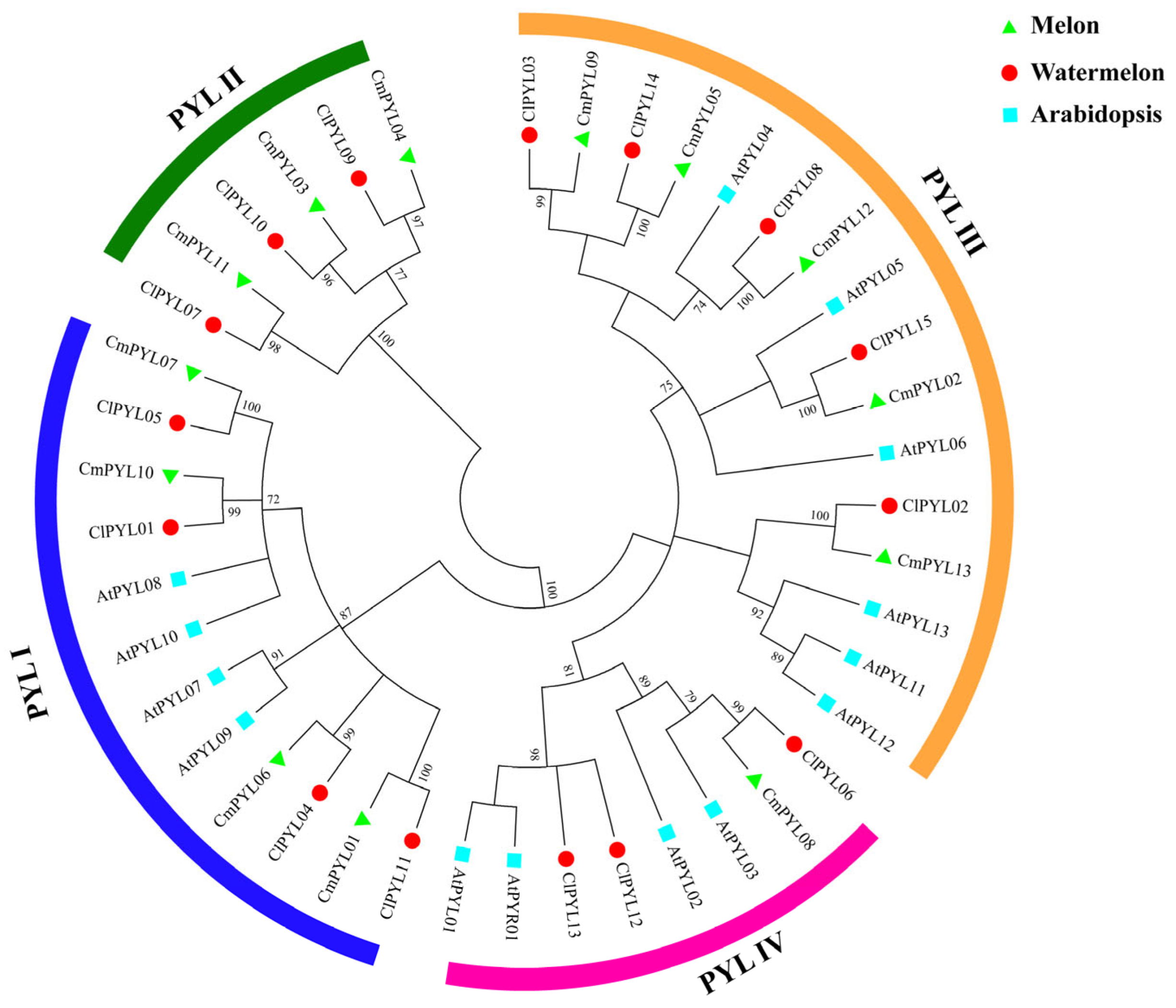
To elucidate the evolutionary relationships of ClPYLs with other species, we constructed a phylogenetic tree using protein sequences of the 15 ClPYLs, together with 13 CmPYLs from melon, and 14 AtPYLs from Arabidopsis (Figure 2). The PYL family segregates into four monophyletic clades (I–IV) for high bootstrap support (≥70% for most major branches), where clade III represents the largest subgroup and clade II the smallest. The clade I consisted of four ClPYLs, four CmPYLs, and four AtPYLs. The clade II consisted of three ClPYLs and three CmPYLs. The clade III consisted of five ClPYLs, five CmPYLs, and six AtPYLs. The clade IV consisted of three ClPYLs, one CmPYL, and four AtPYLs. A particularly noteworthy finding is that clade II contains exclusively cucurbit PYLs, comprising three orthologous pairs: ClPYL10-CmPYL3, ClPYL09-CmPYL4, and ClPYL07-CmPYL11 with no representatives from Arabidopsis. This cucurbit-specific subfamily (II) represents a lineage-restricted subfamily that distinguishes it from the three subfamilies (I, III, and IV) shared more broadly across angiosperms. Phylogenetic reconstruction reveals stronger conservation between watermelon and melon of PYLs than with Arabidopsis. Collectively, these results reveal the presence of a cucurbit-specific PYL subfamily alongside three subfamilies shared with Arabidopsis, highlighting both conserved and lineage-specific phylogenetic patterns of the PYL gene family.
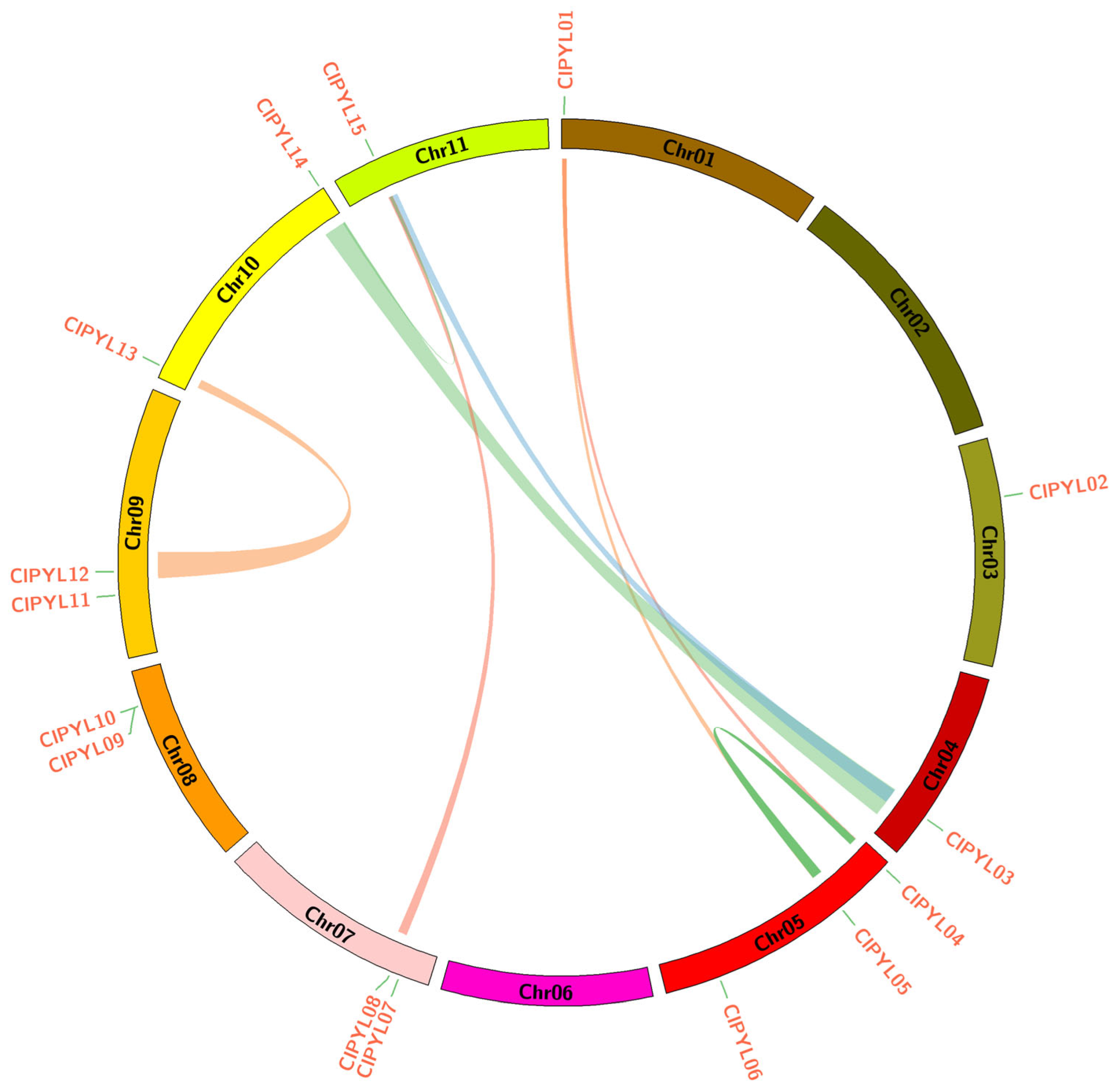
Synteny analysis using MCScanX revealed that the 15 ClPYL genes are unevenly distributed across 11 chromosomes (Chr01–Chr11) in watermelon, with Chr05 harboring the largest number (three genes). A total of eight pairs of segmental duplication events were identified, and 9 ClPYL genes from subfamilies I, Ⅲ, and IV were located within collinear regions (Figure 3). These duplications occurred both interchromosomally (seven events) and intrachromosomally (one event on Chr05), suggesting that segmental duplication is the primary driver of expansion for these three subfamilies and has contributed substantially to the structural diversification of the ClPYL gene family.

3.3. Structure and Conserved Domain Analysis of ClPYLs

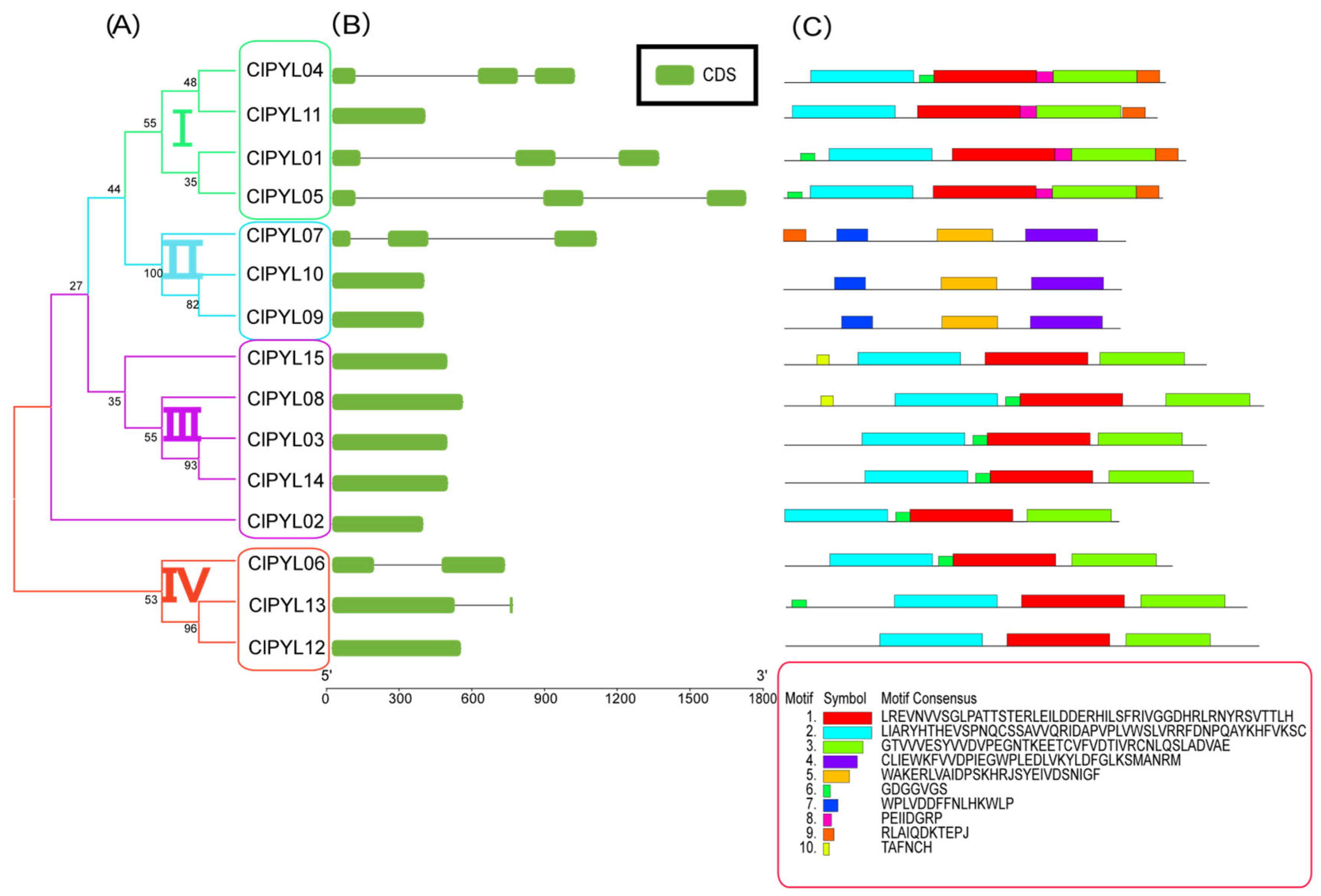
Phylogenetic analysis classified the ClPYLs into four subfamilies, each containing at least three members (Figure 4A). Gene structure analysis revealed variation in exon number across subfamilies (Figure 4B). Subfamily I members predominantly contain three exons, with the exception of ClPYL11, which has only one. In Subfamily II, ClPYL07 contains three exons, whereas ClPYL09 and ClPYL10 each contain only one. All members of subfamily III feature a single exon. Subfamily IV includes ClPYL06 and ClPYL13 with two exons and ClPYL12 with one. To identify the characteristic regions of ClPYLs, we employed the online tool MEME and identified ten conserved motifs (Figure 4C). The number of motifs in ClPYL proteins ranges from three to six. Motifs 1~3 were present in all ClPYLs except those in subfamily II, which uniquely contained motifs 4, 5, and 7. Based on Pfam database alignment, motifs 3 and 5 were annotated as part of the START domain, supporting the typical structural architecture of the ClPYL family. Additionally, all members of subfamily I contain motif 8 and motif 9. Except for ClPYL11, ClPYL12, ClPYL15, and subfamily II, all members contain motif 6. Only ClPYL08 and ClPYL15 contain the motif 10. Overall, these results reveal that exon-intron organization and conserved motif composition are largely consistent within each subfamily but differ among subfamilies.

3.4. Analysis of Cis-Acting Elements in the Promoters of ClPYLs

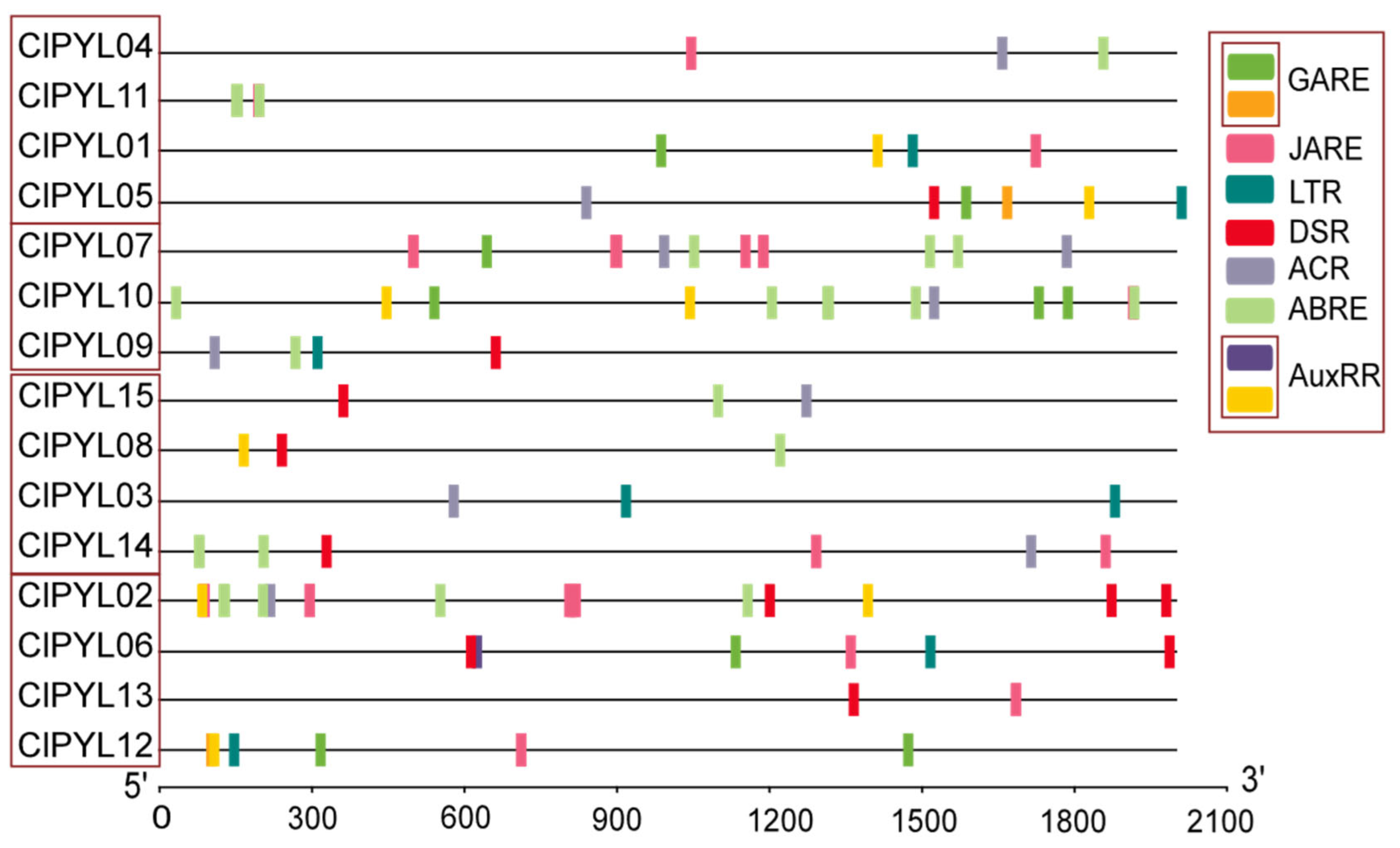
To further predict the potential regulatory pathways involving ClPYLs, we analyzed the cis-acting elements within their 2.0 Kb promoter regions (Figure 5). The results revealed an abundance of cis-acting elements, with nine types occurring at high frequency, most of which are responsive to phytohormones and stress. These include the gibberellin-responsive elements (GARE), JA-responsive element (JARE), auxin-responsive element (AuxRR), abscisic acid-responsive element (ABRE), low-temperature-responsive element (LTR), anaerobic response element (ACR), and stress-responsive element (DSR). Notably, the promoters of ClPYL02, ClPYL07, and ClPYL10 were identified to contain more than ten cis-acting elements each, while those of ClPYL05, ClPYL06, ClPYL12, and ClPYL14 were found to harbor more than five. This suggests that ClPYLs may function in hormone signaling pathways and/or stress responses. Subfamily I promoters were dominated by ABRE and GARE elements, while subfamily II was mainly enriched in ABRE, JARE, and ACR elements. Subfamily III consistently showed high abundance of DSR and ABRE elements, and subfamily IV was characterized by enriched DSR and JARE elements. These results highlight the diversity and subfamily-specific distribution of cis-acting elements within the ClPYL promoter regions.

3.5. Expression Analysis of ClPYLs in Response to Low-Temperature, Salt, and Drought Stresses

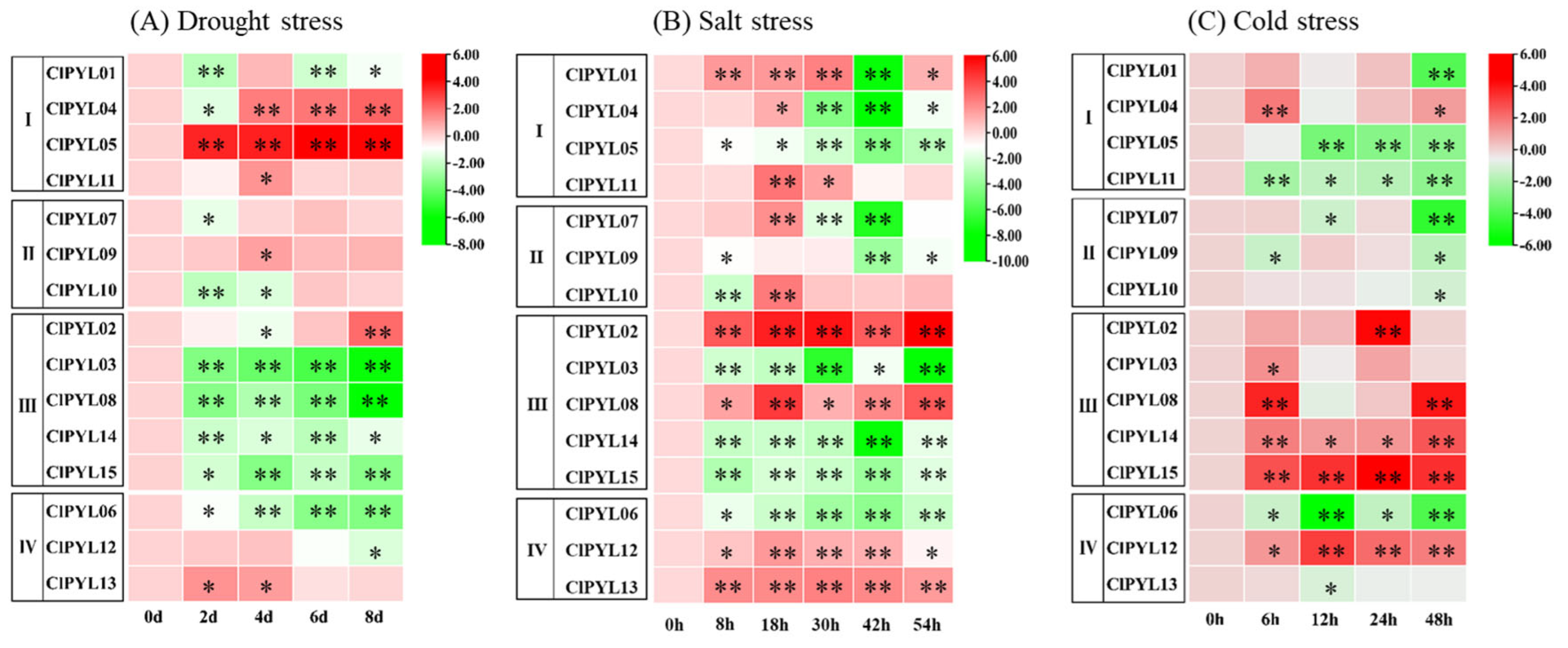
We profiled the expression of ClPYL genes in watermelon seedlings undergoing drought, high-salinity, and low-temperature stresses. Under drought conditions (Figure 6A), the ClPYL02, ClPYL04, ClPYL05, ClPYL09, ClPYL11, and ClPYL13 were observed to exhibit increased expression levels. It is noteworthy that ClPYL05 exhibited induction at all time points. ClPYL04 showed induction at 4, 6, and 8 days of stress, and ClPYL02 was markedly induced specifically at day 8. Additionally, ClPYL09, ClPYL11, and ClPYL13 were induced at either day 2 or day 4. In contrast, the ClPYL06 and all members of Subfamily III, except for the ClPYL02, were down-regulated under stress.
Exposure to salt stress for 54 h elicited diverse transcriptional responses of the CIPYL genes (Figure 6B). The expressions of ClPYL02, ClPYL08, ClPYL12, and ClPYL13 were significantly up-regulated throughout the stress period. In contrast, ClPYL01 showed transient induction between 8 and 30 h, followed by a sharp decline at 42 h. An expression up-regulated was observed at 18 h for ClPYL04, ClPYL07, ClPYL10, and ClPYL11. Conversely, ClPYL03, ClPYL05, ClPYL06, ClPYL09, ClPYL14, and ClPYL15 displayed down-regulation under salt stress.
Under cold stress, distinct expression patterns were observed among ClPYL subfamilies (Figure 6C). In subfamily I, all members were down-regulated except for ClPYL04, which was up-regulated at 6 h. All members of subfamily II exhibited down-regulation. In subfamily III, all members showed up-regulation, with ClPYL02 displaying peak expression at 24 h, ClPYL08 showing the highest expression level at 6 h and 48 h, and ClPYL15 maintaining consistently high expression throughout the stress period. Within subfamily IV, ClPYL06 and ClPYL13 were significantly down-regulated, while the ClPYL12 was markedly up-regulated. The expression of ClPYL genes under diverse abiotic stresses provides candidates for functional validation in plant stress responses.
Notably, the stress-responsive expression patterns of ClPYL genes showed some correspondence with their promoter cis-element compositions. For example, ClPYL05—which exhibited upregulation under drought stress—contains ABRE and DSR elements in its promoter, while ClPYL12, which maintained high expression in cold stress, harbors LTR elements. ClPYL02, which was upregulated under all three stresses, contains more than ten cis-elements in its promoter. These observations suggest a possible association between promoter architecture and stress-responsive expression, although functional validation is required to determine whether these cis-elements are directly responsible for the observed transcriptional regulation.

4. Discussion

Plants are frequently exposed to various abiotic stresses such as drought, high salinity, and low temperature during their growth and development, which can significantly inhibit growth and cause physiological damage [33]. The ABA signaling pathway is recognized as one of the key mechanisms enabling plants to cope with these stresses [7]. Within this pathway, PYL (PYR/PYL/RCAR) receptors function as core components that perceive ABA and initiate downstream signaling. Therefore, characterizing the PYL gene family in plants is of great importance for identifying stress tolerance-related genes.
This study identified a total of 15 ClPYL members in the watermelon genome, which are unevenly distributed across nine chromosomes (Figure 1). The number of identified ClPYL genes is comparable to that in other economically important cucurbits, such as melon (13 CmPYLs) and cucumber (14 CsPYLs) [21,22], yet shows variation when compared to more distantly related species like wheat (38 TaPYLs) and cotton (27 GhPYLs) [17,18]. The difference in PYL gene numbers among species is consistent with the broader evolutionary diversity observed in plant gene families. In previous studies, the PYL gene family has been classified differently across species. For example, in wheat [17], soybean (Glycine max) [34], and sweet potato (Ipomoea batatas) [35], PYL genes are divided into three subgroups, while in the tea plant [36], they are categorized into five subfamilies, reflecting functional diversity among species. Phylogenetic analysis of the PYL genes from watermelon, melon, and Arabidopsis classified the ClPYL family into four subfamilies (Figure 2). Synteny analysis identified eight segmental duplication events, involving members of subfamilies I and IV, while subfamily II members were not associated with these duplications (Figure 3). While subfamilies I–III comprise members from all three species, subfamily II is exclusively composed of genes from watermelon and melon. This cucurbit-specific clustering highlights the evolutionary distinctiveness of subfamily II genes following the divergence of the cucurbit lineage from Arabidopsis. Notably, these members exhibit several distinctive features. First, they possess unique motif compositions (motifs 4, 5, and 7) that are not present in other subfamilies (Figure 4C). Second, their promoter regions are enriched with multiple hormone-responsive elements, including ABRE (Figure 5). However, their expression patterns under abiotic stresses did not reveal consistent or uniform trends across members; instead, individual genes within subfamily II displayed divergent responses (Figure 6). Together, these observations highlight the structural and regulatory distinctiveness of subfamily II members. Further functional studies—including tissue-specific expression analysis and genetic manipulation in watermelon or related cucurbits—are needed to elucidate the roles of this lineage-restricted subfamily.
Analysis of gene structure and conserved motifs provided further insights into the potential functional divergence among ClPYL subfamilies (Figure 4). The variation in exon-intron structure, particularly the presence of single-exon genes in subfamily III, suggests distinct evolutionary paths and possible differences in transcriptional or post-transcriptional regulation compared to multi-exon members in other subfamilies. Consistently, all identified ClPYL proteins contain the canonical START domain (represented by motifs 3 and 5), confirming their fundamental role as ABA receptors [9]. Notably, the distribution of other conserved motifs is closely aligned with subfamily classification. For instance, the unique presence of motifs 4, 5, and 7 in the subfamily II and motifs 8 and 9 in the subfamily I. The observed conservation within and divergence between subfamilies suggests the possibility of functional specialization within the ClPYL family, although this hypothesis awaits confirmation through targeted functional assays.
The interplay between cis-acting elements and the core promoter region plays a critical role in regulating gene expression, serving as an important pathway for biological signal transduction [37]. For instance, OsPYL8 and OsPYL9 are specifically expressed in the endosperm, and their promoters contain multiple motifs associated with endosperm-specific expression in rice (Oryza sativa) [38]. The transcription factor ABI5 mediates seed germination in Arabidopsis by directly binding to the promoters of PYL11 and PYL12 to regulate their expression [39]. The promoter activity of StPYL16 was significantly enhanced under drought stress in potato (Solanum tuberosum) [40]. As a preliminary indication, promoter analysis of ClPYLs revealed multiple stress- and hormone-responsive elements, suggesting a potential but yet-to-be-confirmed involvement of the ClPYL family in growth, development, and abiotic stress adaptation (Figure 4). Thus, these predictions require experimental validation to determine whether these cis-elements are functionally active under specific conditions.
Our expression profiling under drought, salt, and cold stress revealed that ClPYL genes exhibit diverse and dynamic transcriptional responses, providing candidate genes for further functional studies aimed at elucidating their potential involvement in watermelon’s abiotic stress signaling networks (Figure 6). The response is often subfamily-associated but stress-specific. For instance, while most members of subfamily III were upregulated under cold stress, they were largely downregulated under drought. ClPYL05 under drought, ClPYL02 and ClPYL08 under salt, and ClPYL12, ClPYL14, and ClPYL15 under cold were significantly upregulated at all time points examined, emerging as candidate stress responders potentially involved in long-term adaptive responses. The conserved core function of PYL genes in abiotic stress response is further underscored by functional studies in other species. StPYL8-like not only robustly responds to abiotic stresses, but also enhances drought resistance in both transiently and stably transformed tobacco plants by upregulating key stress-responsive genes in potato [41]. Grapevine (Vitis amurensis) VaPYL4 promotes plant growth and development under conditions of cold, salt, and drought stress [42]. Overexpression of common vetch (Vicia sativa) VsPYL5 in transgenic Arabidopsis enhanced salt tolerance, which was associated with altered Na+ and K+ levels resulting from the upregulation of genes involved in ion homeostasis [43]. CmPYL7 positively regulates cold tolerance in oriental melon by interacting with CmPP2C24-like within the ABA signaling pathway, modulating antioxidant defense and osmolyte accumulation [44]. ClPYL genes exhibit diverse and stress-specific transcriptional responses to drought, salt, and cold stresses at the gene expression level, which requires further investigation through genetic and biochemical approaches.

5. Conclusions

This study established a comprehensive genomic framework for the PYL gene family in watermelon, systematically characterizing 15 ClPYL members in terms of their chromosomal distribution, evolutionary relationships, gene structures, conserved motifs, promoter cis-elements, and expression profiles under drought, salt, and cold stresses. Key findings include the identification of four subfamilies, with subfamily II being uniquely present in cucurbits; subfamily-specific patterns in exon-intron organization and motif composition; distinct distributions of stress- and hormone-responsive cis-elements across subfamilies; and diverse, stress-specific transcriptional responses, with ClPYL02, ClPYL05, and ClPYL15 emerging as candidate stress-responsive genes. Collectively, these results provide a foundation for functional studies. Future work will focus on validating the roles of candidate genes—particularly the cucurbit-specific subfamily II—through genetic transformation, protein interaction assays, and phenotypic analyses under stress conditions, thereby enabling the development of stress-tolerant watermelon varieties.

Author Contributions

G.L., Y.Y., Z.W. and C.W. conceptualized the study. G.L., Y.G., J.H. (Jun Hu), J.H. (Jincan Huang) and Z.P. performed the experiments and analyzed the data. Y.C., G.L., Y.G., X.Z., Y.Y., Z.W. and C.W. wrote and revised the manuscript. All authors have read and agreed to the published version of the manuscript.

Funding

This work was financially supported by the Yunnan Provincial Program for Scientific and Technological Talents and Platforms (No.202505AF350087) and the Earmarked fund for China Agriculture Research System (CARS-25).

Institutional Review Board Statement

Not applicable.

Informed Consent Statement

Not applicable.

Data Availability Statement

All relevant data can be found within this manuscript.

Acknowledgments

We are grateful to Huaying Wei and Jinjin Wei (Anhui Province DiSiKangRui Biotechnology Co., Ltd., Dangshan County, Suzhou City, Anhui Province, China) for their valuable contributions to this research.

Conflicts of Interest

The authors declare no competing interests.

References

  1. Cornforth, J.W.; Milborrow, B.V.; Ryback, G.; Wareing, P.F. Chemistry and physiology of ‘Dormins’ In sycamore: Identity of sycamore ‘Dormin’ with Abscisin II. Nature 1965, 205, 1269–1270. [Google Scholar] [CrossRef]
  2. Ali, F.; Qanmber, G.; Li, F.; Wang, Z. Updated role of ABA in seed maturation, dormancy, and germination. J. Adv. Res. 2022, 35, 199–214. [Google Scholar] [CrossRef] [PubMed]
  3. Lim, C.W.; Baek, W.; Jung, J.; Kim, J.-H.; Lee, S.C. Function of ABA in Stomatal Defense against Biotic and Drought Stresses. Int. J. Mol. Sci. 2015, 16, 15251–15270. [Google Scholar] [CrossRef]
  4. Zareen, S.; Ali, A.; Yun, D.-J. Significance of ABA biosynthesis in plant adaptation to drought stress. J. Plant Biol. 2024, 67, 175–184. [Google Scholar] [CrossRef]
  5. Huang, B.; Fan, Y.; Cui, L.; Li, C.; Guo, C. Cold stress response mechanisms in anther development. Int. J. Mol. Sci. 2023, 24, 30. [Google Scholar] [CrossRef]
  6. Jiang, L.; Xiao, W.; Chen, H.; Qi, Y.; Kuang, X.; Shi, J.; Liu, Z.; Cao, J.; Lin, Q.; Yu, F.; et al. The OsGAPC1-OsSGL module negatively regulates salt tolerance by mediating abscisic acid biosynthesis in rice. New Phytol. 2024, 244, 825–839. [Google Scholar] [CrossRef]
  7. Zha, D.; He, Y.; Song, J. Regulatory role of ABA-responsive element binding factors in plant abiotic stress response. Physiol. Plant. 2025, 177, e70233. [Google Scholar] [CrossRef]
  8. Ma, Y.; Szostkiewicz, I.; Korte, A.; Moes, D.; Yang, Y.; Christmann, A.; Grill, E. Regulators of PP2C phosphatase activity function as abscisic acid sensors. Science 2009, 324, 1064–1068. [Google Scholar] [CrossRef]
  9. Park, S.Y.; Fung, P.; Nishimura, N.; Jensen, D.R.; Fujii, H.; Zhao, Y.; Lumba, S.; Santiago, J.; Rodrigues, A.; Chow, T.F.F.; et al. Abscisic acid inhibits type 2C protein phosphatases via the PYR/PYL family of START proteins. Science 2009, 324, 1068–1071. [Google Scholar] [CrossRef] [PubMed]
  10. de Zelicourt, A.; Colcombet, J.; Hirt, H. The role of MAPK modules and ABA during abiotic stress signaling. Trends Plant Sci. 2016, 21, 677–685. [Google Scholar] [CrossRef]
  11. Fujii, H.; Chinnusamy, V.; Rodrigues, A.; Rubio, S.; Antoni, R.; Park, S.Y.; Cutler, S.R.; Sheen, J.; Rodriguez, P.L.; Zhu, J.K. In vitro reconstitution of an abscisic acid signalling pathway. Nature 2009, 462, 660–664. [Google Scholar] [CrossRef]
  12. Fujii, H.; Zhu, J.-K. Arabidopsis mutant deficient in 3 abscisic acid-activated protein kinases reveals critical roles in growth, reproduction, and stress. Proc. Natl. Acad. Sci. USA 2009, 106, 8380–8385. [Google Scholar] [CrossRef]
  13. Yin, P.; Fan, H.; Hao, Q.; Yuan, X.; Wu, D.; Pang, Y.; Yan, C.; Li, W.; Wang, J.; Yan, N. Structural insights into the mechanism of abscisic acid signaling by PYL proteins. Nat. Struct. Mol. Biol. 2009, 16, 1230–1236. [Google Scholar] [CrossRef]
  14. Hao, Q.; Yin, P.; Li, W.; Wang, L.; Yan, C.; Lin, Z.; Wu, J.Z.; Wang, J.; Yan, S.F.; Yan, N. The molecular basis of ABA-independent inhibition of PP2Cs by a subclass of PYL proteins. Mol. Cell 2011, 42, 662–672. [Google Scholar] [CrossRef]
  15. Dupeux, F.; Santiago, J.; Betz, K.; Twycross, J.; Park, S.Y.; Rodriguez, L.; Gonzalez-Guzman, M.; Jensen, M.R.; Krasnogor, N.; Blackledge, M.; et al. A thermodynamic switch modulates abscisic acid receptor sensitivity. EMBO J. 2011, 30, 4171–4184. [Google Scholar] [CrossRef]
  16. Antoni, R.; Gonzalez-Guzman, M.; Rodriguez, L.; Peirats-Llobet, M.; Pizzio, G.A.; Fernandez, M.A.; De Winne, N.; De Jaeger, G.; Dietrich, D.; Bennett, M.J.; et al. PYRABACTIN RESISTANCE1-LIKE8 plays an important role for the regulation of abscisic acid signaling in root. Plant Physiol. 2013, 161, 931–941. [Google Scholar] [CrossRef] [PubMed]
  17. Lei, P.; Wei, X.; Gao, R.; Huo, F.; Nie, X.; Tong, W.; Song, W. Genome-wide identification of PYL gene family in wheat: Evolution, expression and 3D structure analysis. Genomics 2021, 113, 854–866. [Google Scholar] [CrossRef] [PubMed]
  18. Chen, Y.; Feng, L.; Wei, N.; Liu, Z.-H.; Hu, S.; Li, X.-B. Overexpression of cotton PYL genes in Arabidopsis enhances the transgenic plant tolerance to drought stress. Plant Physiol. Bioch. 2017, 115, 229–238. [Google Scholar] [CrossRef]
  19. Sun, L.; Wang, Y.-P.; Chen, P.; Ren, J.; Ji, K.; Li, Q.; Li, P.; Dai, S.-J.; Leng, P. Transcriptional regulation of SlPYL, SlPP2C, and SlSnRK2 gene families encoding ABA signal core components during tomato fruit development and drought stress. J. Exp. Bot. 2011, 62, 5659–5669. [Google Scholar] [CrossRef]
  20. Liu, J.; Wang, Y.; Li, Z.; Wen, Q.; Zhu, H.; He, S. Genome-wide identification and expression analyses of the abscisic acid receptor PYR/PYL gene family in response to fruit development and exogenous abscisic acid in luffa (Luffa cylindrica L.). Agronomy 2025, 15, 598. [Google Scholar] [CrossRef]
  21. Zhang, Z.; Luo, S.; Liu, Z.; Wan, Z.; Gao, X.; Qiao, Y.; Yu, J.; Zhang, G. Genome-wide identification and expression analysis of the cucumber PYL gene family. PeerJ 2022, 10, e12786. [Google Scholar] [CrossRef]
  22. Chen, L.; Jin, J.; Zhao, G.; Zhou, L.; Zhang, F.; Wang, F.; Ye, F. Identification of ABA receptor CmPYL genes in melon and their expression patterns to various diseases. Mol. Plant Breed. 2022, 1–9. [Google Scholar]
  23. Dong, X.; Zhu, H.; Hao, X.; Wang, Y.; Ma, X.; Zhao, J.; Chang, J. Genome-wide identification of common bean PvLTP family genes and expression profiling analysis in response to drought stress. Genes 2022, 13, 2394. [Google Scholar] [CrossRef]
  24. Kapli, P.; Kotari, I.; Telford, M.J.; Goldman, N.; Yang, Z. DNA sequences are as useful as protein sequences for inferring deep phylogenies. Syst. Biol. 2023, 72, 1119–1135. [Google Scholar] [CrossRef]
  25. Yu, Y.; Chang, Q.; Li, C.; Wu, K.; Wang, Y.; Guo, C.; Shu, Y.; Bai, Y. Genome-wide identification of SRS gene family in wheat and expression analysis under abiotic stress. Int. J. Mol. Sci. 2025, 26, 6289. [Google Scholar] [CrossRef] [PubMed]
  26. Yan, X.; Yue, Z.; Pan, X.; Si, F.; Li, J.; Chen, X.; Li, X.; Luan, F.; Yang, J.; Zhang, X.; et al. The HD-ZIP gene family in watermelon: Genome-wide identification and expression analysis under abiotic stresses. Genes 2022, 13, 2242. [Google Scholar] [CrossRef] [PubMed]
  27. Liu, Z.; Zheng, X.; Yang, D.; Li, L.; Yin, H. Genome-wide identification of the nuclear redox protein gene family revealed its potential role in drought stress tolerance in rice. Front. Plant Sci. 2025, 16, 1562718. [Google Scholar] [CrossRef] [PubMed]
  28. Zheng, J.; Ying, Q.; Fang, C.; Sun, N.; Si, M.; Yang, J.; Zhu, B.; Ruan, Y.-L.; Zhu, Z.; He, Y. Alternative oxidase pathway is likely involved in waterlogging tolerance of watermelon. Sci. Hortic. 2021, 278, 109831. [Google Scholar] [CrossRef]
  29. Feng, Q.; Xiao, L.; Wang, J.; Wang, J.; Chen, C.; Sun, J.; Wu, X.; Liu, M.; Zhang, X.; Tian, S.; et al. Genome-wide analysis of nuclear factor Y genes and functional investigation of watermelon ClNF-YB9 during seed development. Crop J. 2023, 11, 1469–1479. [Google Scholar] [CrossRef]
  30. Li, H.; Chang, J.; Chen, H.; Wang, Z.; Gu, X.; Wei, C.; Zhang, Y.; Ma, J.; Yang, J.; Zhang, X. Exogenous melatonin confers salt stress tolerance to watermelon by improving photosynthesis and redox homeostasis. Front. Plant Sci. 2017, 8, 295. [Google Scholar] [CrossRef]
  31. Yang, X.; Li, H.; Yang, Y.; Wang, Y.; Mo, Y.; Zhang, R.; Zhang, Y.; Ma, J.; Wei, C.; Zhang, X. Identification and expression analyses of WRKY genes reveal their involvement in growth and abiotic stress response in watermelon (Citrullus lanatus). PLoS ONE 2018, 13, e0191308. [Google Scholar] [CrossRef]
  32. Xuan, C.; Lan, G.; Si, F.; Zeng, Z.; Wang, C.; Yadav, V.; Wei, C.; Zhang, X. Systematic genome-wide study and expression analysis of SWEET gene family: Sugar transporter family contributes to biotic and abiotic stimuli in watermelon. Int. J. Mol. Sci. 2021, 22, 8407. [Google Scholar] [CrossRef]
  33. Han, R.; Ma, L.; Terzaghi, W.; Guo, Y.; Li, J. Molecular mechanisms underlying coordinated responses of plants to shade and environmental stresses. Plant J. 2024, 117, 1893–1913. [Google Scholar] [CrossRef]
  34. Zhang, Z.; Ali, S.; Zhang, T.; Wang, W.; Xie, L. Identification, evolutionary and expression analysis of PYL-PP2C-SnRK2s gene families in soybean. Plants 2020, 9, 1356. [Google Scholar] [CrossRef]
  35. Mathura, S.R.; Sutton, F.; Bowrin, V. Characterization and expression analysis of SnRK2, PYL, and ABF/AREB/ABI5 gene families in sweet potato. PLoS ONE 2023, 18, e0288481. [Google Scholar] [CrossRef] [PubMed]
  36. An, Y.; Mi, X.; Xia, X.; Qiao, D.; Yu, S.; Zheng, H.; Jing, T.; Zhang, F. Genome-wide identification of the PYL gene family of tea plants (Camellia sinensis) revealed its expression profiles under different stress and tissues. BMC Genom. 2023, 24, 362. [Google Scholar] [CrossRef] [PubMed]
  37. Wittkopp, P.J.; Kalay, G. Cis-regulatory elements: Molecular mechanisms and evolutionary processes underlying divergence. Nat. Rev. Genet. 2012, 13, 59–69. [Google Scholar] [CrossRef] [PubMed]
  38. Chen, Z.; Kong, L.; Zhou, Y.; Chen, Z.; Tian, D.; Lin, Y.; Wang, F.; Chen, S. Endosperm-specific OsPYL8 and OsPYL9 act as positive regulators of the ABA signaling pathway in rice seed germination. Funct. Plant Biol. 2017, 44, 635–645. [Google Scholar] [CrossRef]
  39. Zhao, H.; Nie, K.; Zhou, H.; Yan, X.; Zhan, Q.; Zheng, Y.; Song, C.-P. ABI5 modulates seed germination via feedback regulation of the expression of the PYR/PYL/RCAR ABA receptor genes. New Phytol. 2020, 228, 596–608. [Google Scholar] [CrossRef]
  40. Yao, P.; Zhang, C.; Bi, Z.; Liu, Y.; Liu, Z.; Wei, J.; Su, X.; Bai, J.; Cui, J.; Sun, C. Overexpression of potato PYL16 gene in tobacco enhances the transgenic plant tolerance to drought stress. Int. J. Mol. Sci. 2024, 25, 8644. [Google Scholar] [CrossRef]
  41. Yao, P.; Zhang, C.; Sun, C.; Liu, Y.; Liu, Z.; Wei, J.; Su, X.; Bai, J.; Cui, J.; Bi, Z. The abscisic acid receptor gene StPYL8-like from Solanum tuberosum confers tolerance to drought stress in transgenic plants. Antioxidants 2024, 13, 1088. [Google Scholar] [CrossRef] [PubMed]
  42. Ren, C.; Kuang, Y.; Lin, Y.; Guo, Y.; Li, H.; Fan, P.; Li, S.; Liang, Z. Overexpression of grape ABA receptor gene VaPYL4 enhances tolerance to multiple abiotic stresses in Arabidopsis. BMC Plant Biol. 2022, 22, 271. [Google Scholar] [CrossRef] [PubMed]
  43. Sun, Y.; Geng, B.; Sun, H.; You, J.; Guo, Z.; Shi, H. Overexpression of ABA receptor gene VsPYL5 from common vetch enhances salt and cold tolerance in Arabidopsis. Environ. Exp. Bot. 2024, 220, 105706. [Google Scholar] [CrossRef]
  44. Liu, W.; Jiang, Y.; Lv, Y.; Zhang, L.; Liu, S.; Wang, Z.; He, M.; Zhang, J. CmPYL7 positively regulates the cold tolerance via interacting with CmPP2C24-like in oriental melon. Physiol. Plant. 2024, 176, e14628. [Google Scholar] [CrossRef] [PubMed]
Figure 1. Chromosome distribution of ClPYLs in watermelon. The relative positions of ClPYLs are marked on the chromosomes. According to their physical location on the chromosomes, the PYL genes of watermelon are named from ClPYL01 to ClPYL15, which corresponds to the gene’s ID.
Genes 17 00426 g001
Figure 2. Phylogenetic tree of the PYL genes in watermelon, melon, and Arabidopsis by the maximum likelihood (ML) method using MEGA software. The PYL members were categorized into four clades and labeled as I, II, III, and IV. Cl: Watermelon (red circle), Cm: Melon (green triangle), At: Arabidopsis thaliana (blue square).
Genes 17 00426 g002
Figure 3. Segmental duplication events of CIPYL genes in watermelon. The Circos plot visualizes the genomic localization of 15 CIPYL genes across 11 chromosomes (colored blocks). Segmental duplication pairs are represented by connecting lines between collinear chromosomal regions, revealing 8 pairs of duplication events.
Genes 17 00426 g003
Figure 4. Motifs and gene structure analysis of the ClPYL gene family. (A) The phylogenetic tree of ClPYLs using the neighbor-joining method. (B) The PYL gene family structure of watermelon. The green squares are CDS. (C) Conserved sequence analysis of the PYL gene family in watermelon.
Genes 17 00426 g004
Figure 5. The cis-acting element prediction of ClPYLs. The promoters of ClPYLs include gibberellin-responsive elements (GARE), JA-responsive element (JARE), auxin-responsive element (AuxRR), abscisic acid-responsive element (ABRE), low-temperature-responsive element (LTR), anaerobic response element (ACR), and stress-responsive element (DSR).
Genes 17 00426 g005
Figure 6. Gene expression heatmap of the ClPYL genes in the watermelon leaf under drought (A), salt (B), and cold stress (C). Red: up-regulated. Green: down-regulated. Statistical significance was determined using Student’s t-test comparing each time point to the control. Asterisks indicate significant differences: * p < 0.05, ** p < 0.01.
Genes 17 00426 g006
Table 1. qRT-PCR primers.
Primer NamePrimer Sequence (5′-3′)
qRTPCR-ClACT-FGTCGTACAACAGGTATTGTG
qRTPCR-ClACT-RAAGGTCCAGACGGAGGATAG
qRTPCR-ClPYL1-FTTGTGGTGGATGTGCCTGAAGGA
qRTPCR-ClPYL1-RGCACTGCAAGCCGCTCTGAA
qRTPCR-ClPYL2-FCGAATTACCGCTCCACCACCAC
qRTPCR-ClPYL2-RTGTACGAGCCAGCCACTTGAGA
qRTPCR-ClPYL3-FTGCTCCGCCGTCGTTCAAGA
qRTPCR-ClPYL3-RTCTCAAGCCGCTCGGTACTGTT
qRTPCR-ClPYL4-FAGGCATCACCGTCACCATCC
qRTPCR-ClPYL4-RTGTGATCTCCACCGACGATTCT
qRTPCR-ClPYL5-FGGCTCCTGTTCCTCTTGTTTGG
qRTPCR-ClPYL5-RTTCGGTGCTTGTGGTGGCT
qRTPCR-ClPYL6-FTCGTTCGCAGCTTCGATAATCC
qRTPCR-ClPYL6-RACCACCGTCACCTCTCTAATGC
qRTPCR-ClPYL7-FACGGGTTGTTTCGGGCTTCA
qRTPCR-ClPYL7-RCCCACATTGCTTGCTTCCAGTT
qRTPCR-ClPYL8-FGCCGCCGCAACTGCTATGAA
qRTPCR-ClPYL8-RATTGTCGAACCGTCGCACCAC
qRTPCR-ClPYL9-FCCTCCACCGACACGATGTTGT
qRTPCR-ClPYL9-RGCCACGAACGACCACACGAT
qRTPCR-ClPYL10-FAACTCTACGGCGAAGTGGGAAG
qRTPCR-ClPYL10-RTGGACCAGCTAACGACGGAATC
qRTPCR-ClPYL11-FCCACAGCCACAATCCCACAGAT
qRTPCR-ClPYL11-RCCCTCACCACACACCGACTAAC
qRTPCR-ClPYL12-FCGACCACCACCAGCACGATT
qRTPCR-ClPYL12-RGCGACGGTACAGCTCTTGATGA
qRTPCR-ClPYL13-FAGAGCTGTACGGTGAGCGAAGG
qRTPCR-ClPYL13-RCGCCTCCGATGATGCTGAATCC
qRTPCR-ClPYL14-FTCCGATTCAGTCACCGCCTCAA
qRTPCR-ClPYL14-RAGCGTTCCGACGTTGCCATC
qRTPCR-ClPYL15-FGCCGTGGTATGGTCGTTAGTCC
qRTPCR-ClPYL15-RCTTCAGCCTGTGGTCTCCTCCT
Table 2. Information on PYL gene family members in watermelon.
Gene
Name
Gene IDLocation (Strand)Number of
Amino Acid
Molecular
Weight (Da)
Isoelectric
Point
ClPYL01Cla97C01G000570.1Chr01: 398587–400340 (+)19521,852.896.44
ClPYL02Cla97C03G058970.1Chr03: 8287359–8287847 (−)16217,696.165.67
ClPYL03Cla97C04G073350.1Chr04: 21016155–21016772 (−)20522,338.226.44
ClPYL04Cla97C05G081110.1Chr05: 915813–917114 (+)18520,777.767.69
ClPYL05Cla97C05G090960.1Chr05: 8965533–8967752 (−)18420,612.505.98
ClPYL06Cla97C05G099080.1Chr05: 28240188–28241114 (−)18820,916.535.25
ClPYL07Cla97C07G132410.1Chr07: 4148872–4149372 (+)16618,721.434.76
ClPYL08Cla97C07G133100.1Chr07: 5508171–5508872 (−)23324,916.916.78
ClPYL09Cla97C08G155310.1Chr08: 23334045–23334536 (−)16318,297.824.83
ClPYL10Cla97C08G155320.1Chr08: 23338046–23338540 (−)16418,123.414.89
ClPYL11Cla97C09G172410.1Chr09: 8805878–8807296 (−)18120,352.176.13
ClPYL12Cla97C09G174770.1Chr09: 12072602–12073294 (−)23025,469.505.32
ClPYL13Cla97C10G186260.1Chr10: 1618804–1619772 (−)22424,987.694.97
ClPYL14Cla97C10G205730.1Chr10: 34694402–34695022 (+)20622,466.366.54
ClPYL15Cla97C11G212910.1Chr11: 6257955–6258572 (+)20522,393.458.22
Disclaimer/Publisher’s Note: The statements, opinions and data contained in all publications are solely those of the individual author(s) and contributor(s) and not of MDPI and/or the editor(s). MDPI and/or the editor(s) disclaim responsibility for any injury to people or property resulting from any ideas, methods, instructions or products referred to in the content.