Article

Zeb2 DNA-Binding Sites in Neuroprogenitor Cells Reveal Autoregulation and Affirm Neurodevelopmental Defects, Including in Mowat-Wilson Syndrome

by
Judith C. Birkhoff
1,†,
Anne L. Korporaal
1,
Rutger W. W. Brouwer
2,†,
Karol Nowosad
1,3,4,†,
Claudia Milazzo
1,†,
Lidia Mouratidou
1,
Mirjam C. G. N. van den Hout
2,
Wilfred F. J. van IJcken
1,2,
Danny Huylebroeck
1,5,‡ and
Andrea Conidi
1,*,‡
1
Department of Cell Biology, Erasmus University Medical Center, 3015 Rotterdam, The Netherlands
2
Center for Biomics-Genomics, Erasmus University Medical Center, 3015 Rotterdam, The Netherlands
3
Department of Biochemistry and Molecular Biology, Medical University of Lublin, 20-093 Lublin, Poland
4
The Postgraduate School of Molecular Medicine, Medical University of Warsaw, 02-091 Warsaw, Poland
5
Department of Development and Regeneration, KU Leuven, 3000 Leuven, Belgium
*
Author to whom correspondence should be addressed.
Current address: J.C.B.: Institute of Translational Stem Cell Research, Helmholtz Munich, 85764 Neuherberg, Germany; K.N.: Genome Biology Unit, European Molecular Biology Laboratory, 69117 Heidelberg, Germany; R.W.W.B.: Future Facts, 1013 Amsterdam, The Netherlands; C.M.: Department Neuroscience, Erasmus University Medical Center, 3015 Rotterdam, The Netherlands; L.M.: First Department of Psychiatry, Medical School, National and Kapodistrian University of Athens, 157 72 Athens, Greece, and University Mental Health, Neurosciences and Precision Medicine Research Institute “Costas Stefanis”, 115 27 Athens, Greece; A.C.: Cergentis B.V., 3584 Utrecht, The Netherlands, andrea.conidi@cergentis.com.
Shared senior authors.
Genes 2023, 14(3), 629; https://doi.org/10.3390/genes14030629
Submission received: 20 January 2023 / Revised: 16 February 2023 / Accepted: 27 February 2023 / Published: 2 March 2023
(This article belongs to the Special Issue Molecular Mechanisms in Neurodevelopmental Disorders)

Abstract

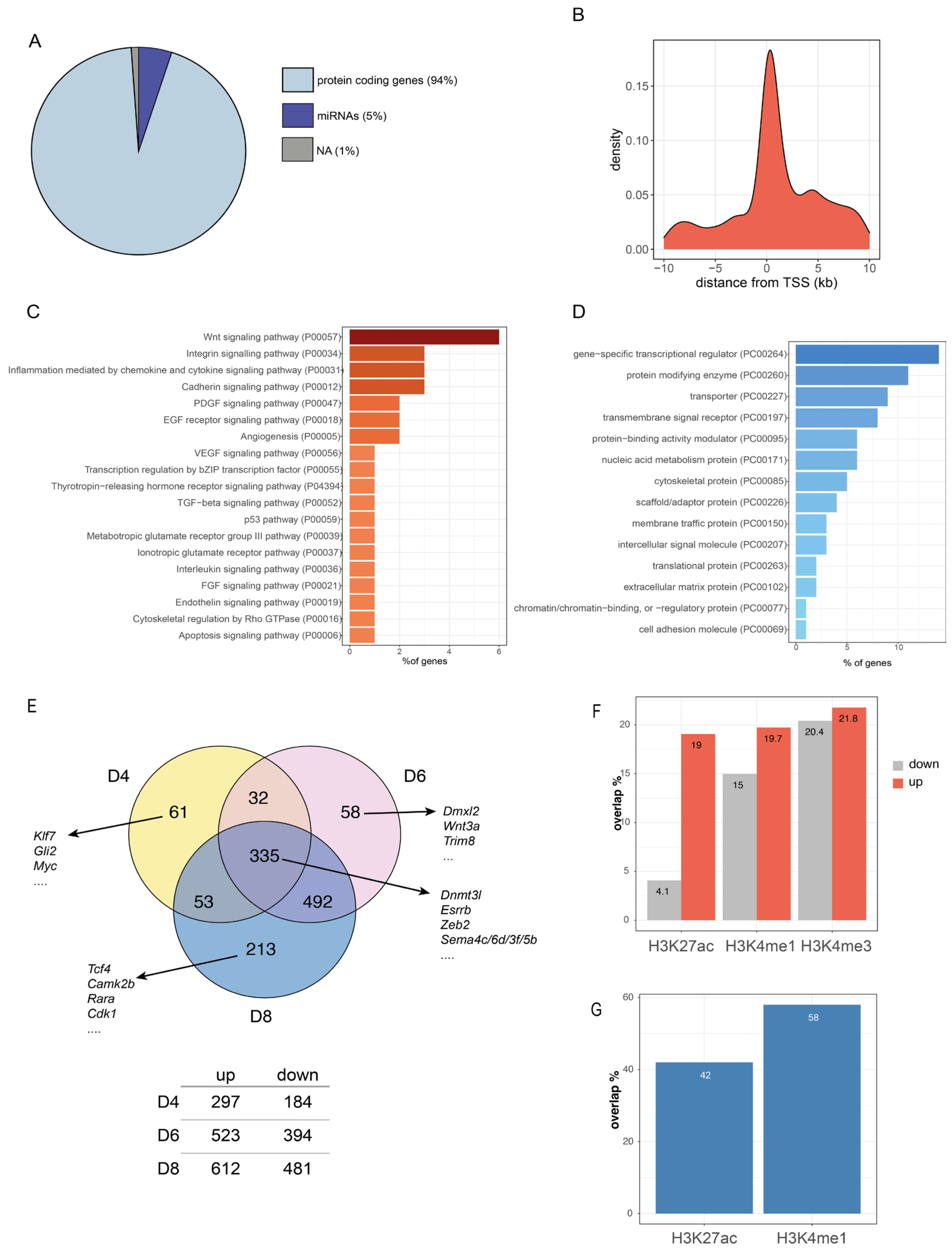
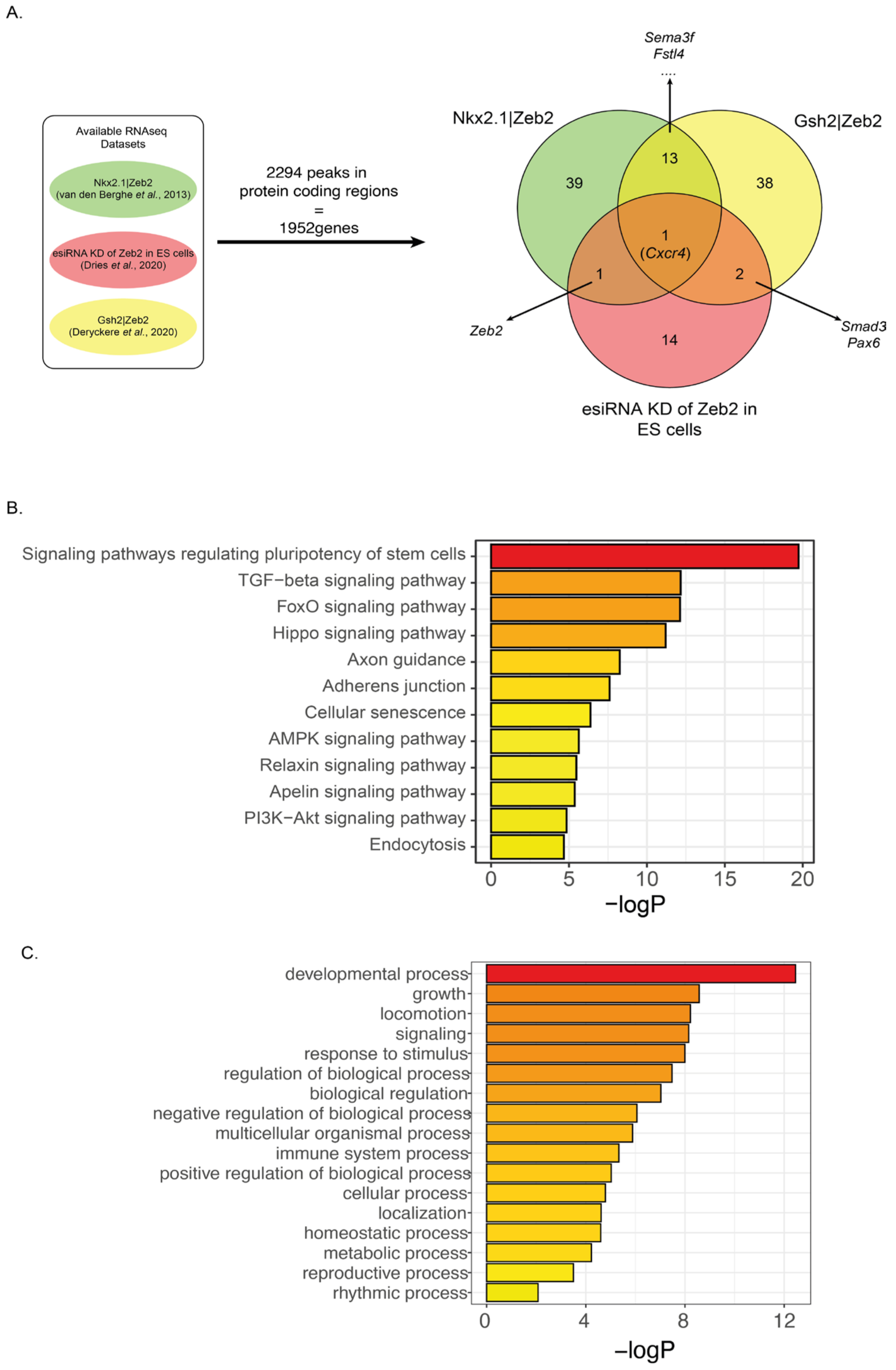
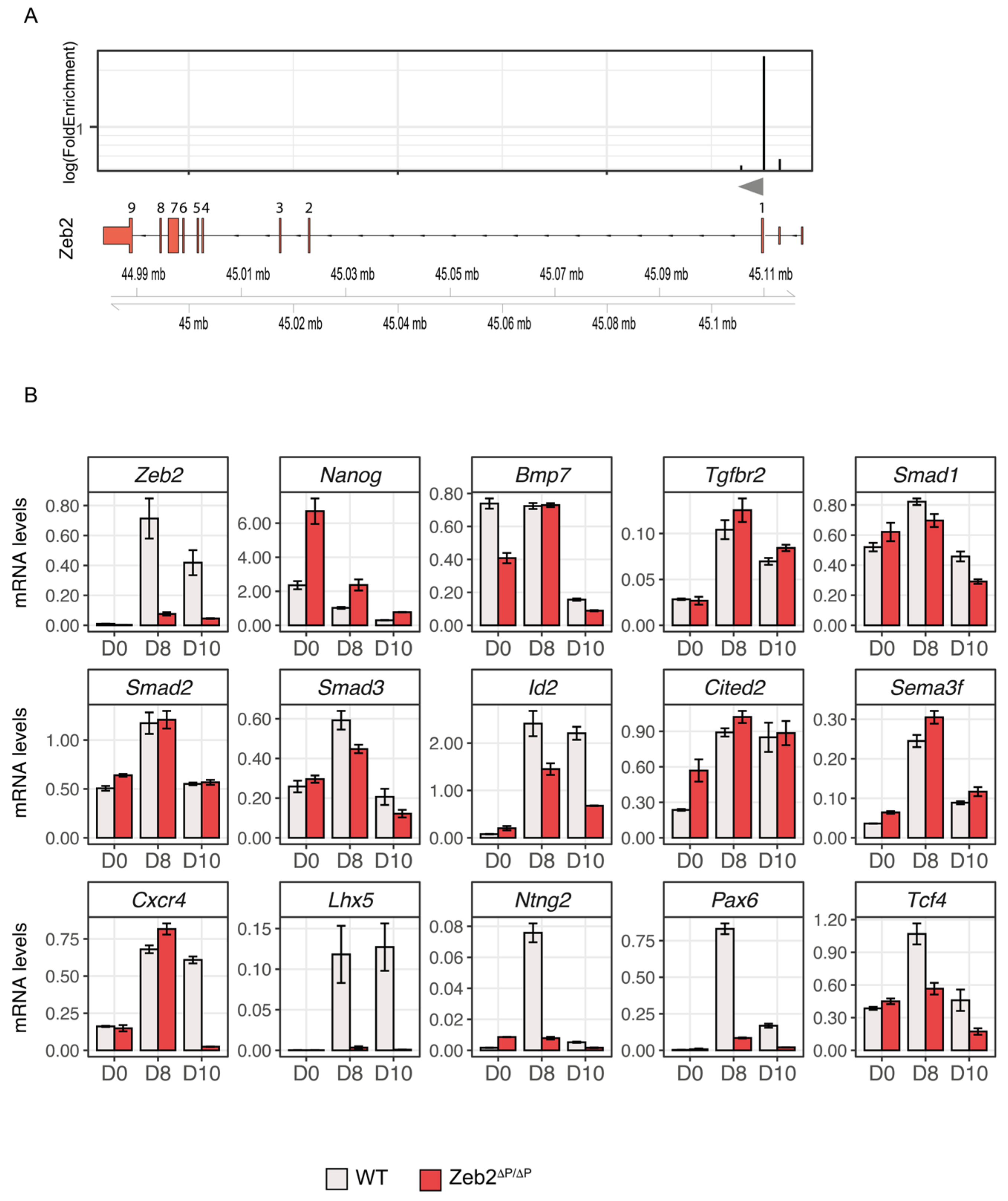
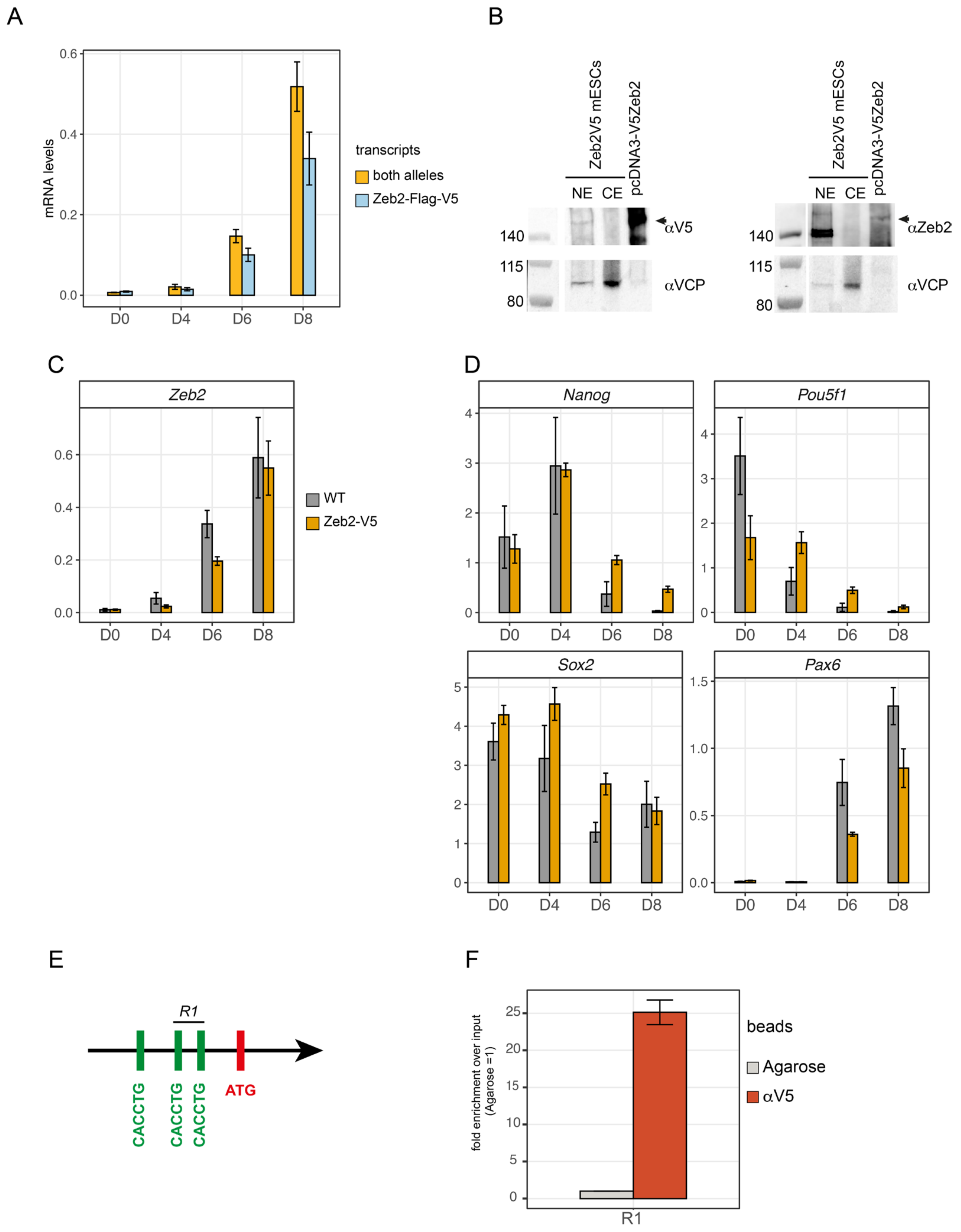
Functional perturbation and action mechanism studies have shown that the transcription factor Zeb2 controls cell fate decisions, differentiation, and/or maturation in multiple cell lineages in embryos and after birth. In cultured embryonic stem cells (ESCs), Zeb2’s mRNA/protein upregulation is necessary for the exit from primed pluripotency and for entering general and neural differentiation. We edited mouse ESCs to produce Flag-V5 epitope-tagged Zeb2 protein from one endogenous allele. Using chromatin immunoprecipitation coupled with sequencing (ChIP-seq), we mapped 2432 DNA-binding sites for this tagged Zeb2 in ESC-derived neuroprogenitor cells (NPCs). A new, major binding site maps promoter-proximal to Zeb2 itself. The homozygous deletion of this site demonstrates that autoregulation of Zeb2 is necessary to elicit the appropriate Zeb2-dependent effects in ESC-to-NPC differentiation. We have also cross-referenced all the mapped Zeb2 binding sites with previously obtained transcriptome data from Zeb2 perturbations in ESC-derived NPCs, GABAergic interneurons from the ventral forebrain of mouse embryos, and stem/progenitor cells from the post-natal ventricular-subventricular zone (V-SVZ) in mouse forebrain, respectively. Despite the different characteristics of each of these neurogenic systems, we found interesting target gene overlaps. In addition, our study also contributes to explaining developmental disorders, including Mowat-Wilson syndrome caused by ZEB2 deficiency, and also other monogenic syndromes.
Keywords: chromatin immunoprecipitation sequencing; embryonic stem cells; Mowat-Wilson syndrome; neural differentiation; neurodevelopmental disorder; syndromes; target genes; transcription factor; transcriptomics; Zeb2 chromatin immunoprecipitation sequencing; embryonic stem cells; Mowat-Wilson syndrome; neural differentiation; neurodevelopmental disorder; syndromes; target genes; transcription factor; transcriptomics; Zeb2