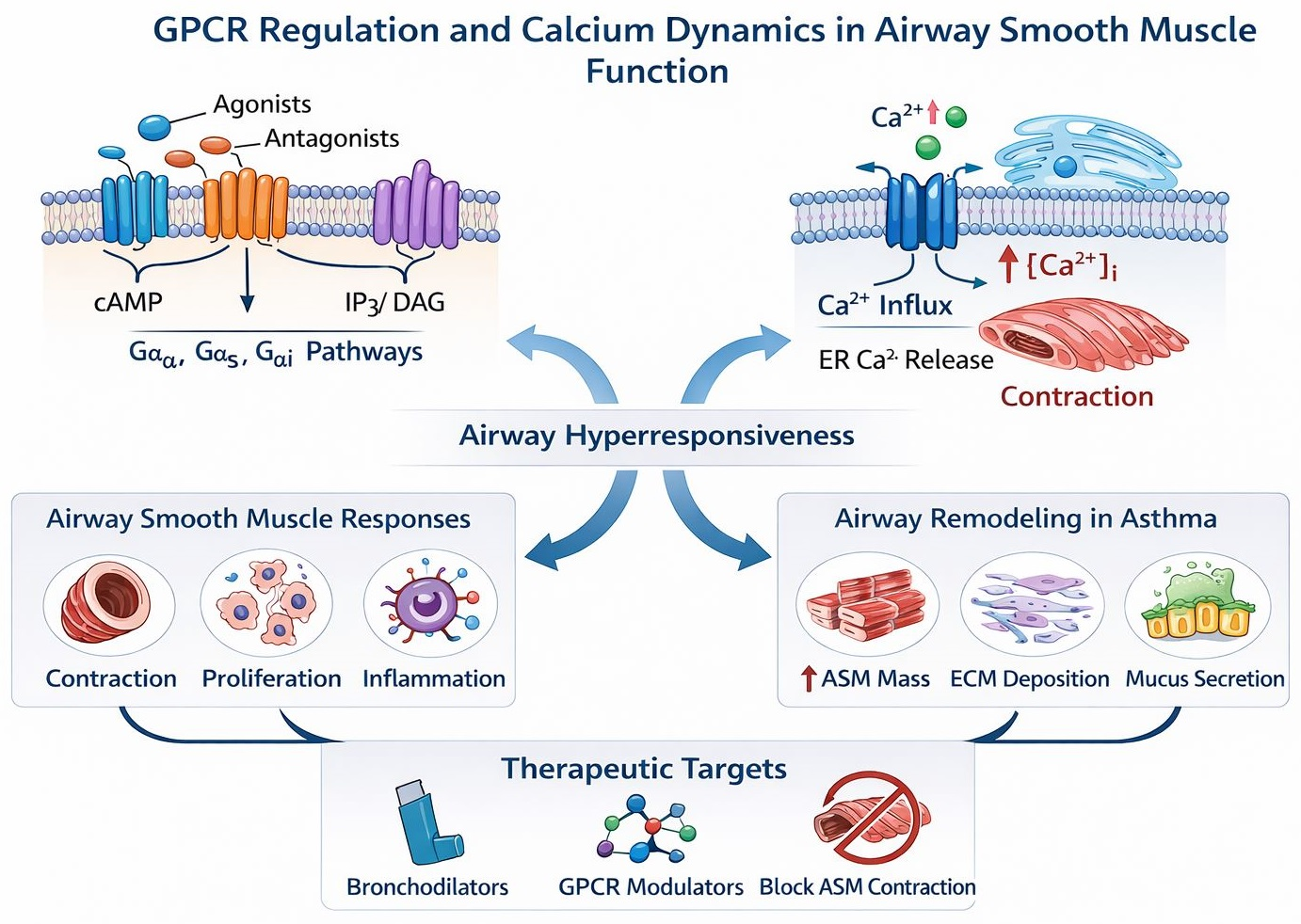
Integrating GPCR Regulation and Calcium Dynamics in Airway Smooth Muscle Function: A Comprehensive Review

 ,
,
Abstract
1. Introduction
2. Airway Smooth Muscle Cells in Asthma
2.1. Phenotypes
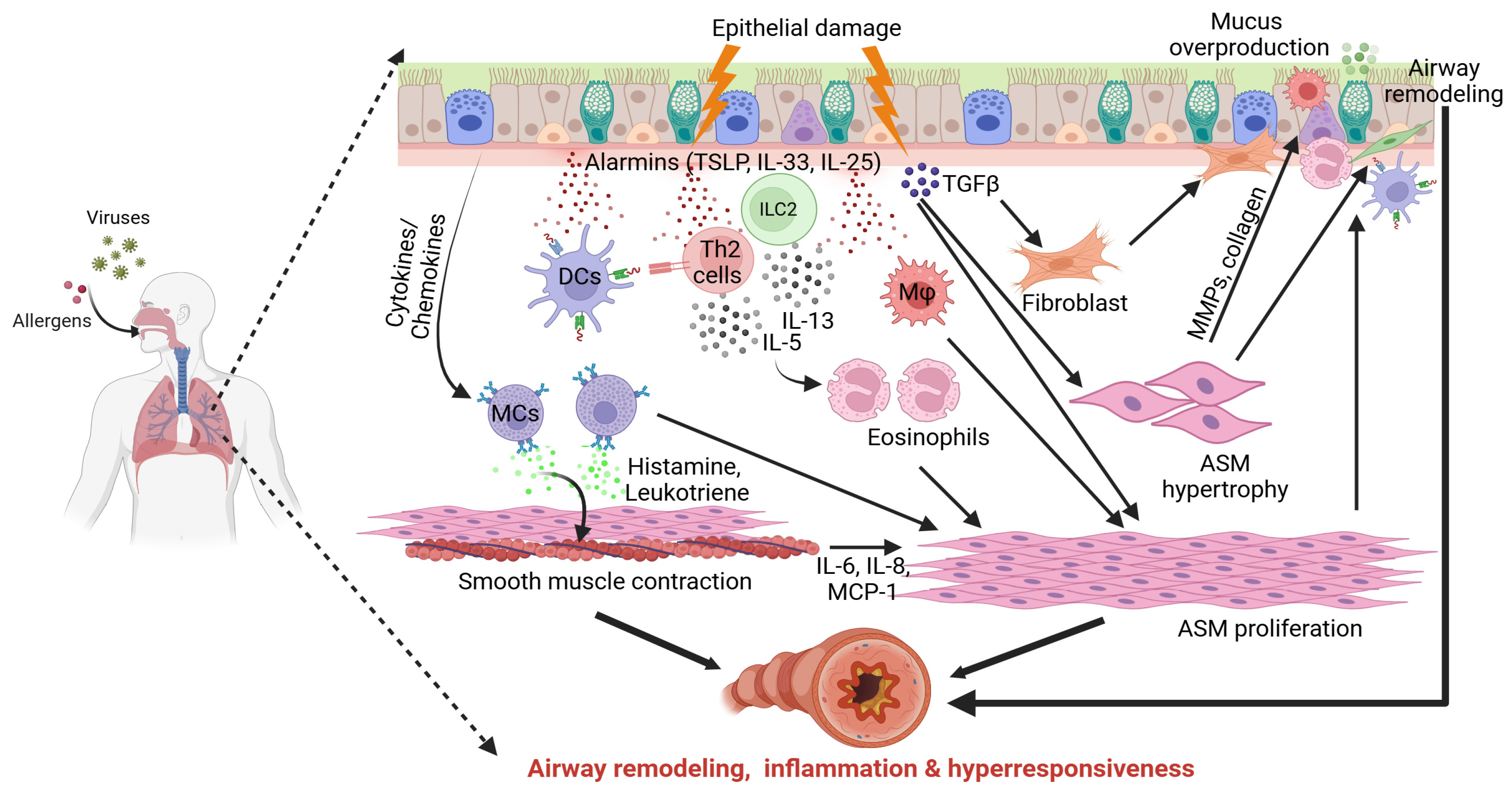
2.2. Airway Remodeling
2.3. Airway Hyperresponsiveness (AHR)
2.4. ASM Beyond Contraction
3. Receptors Regulating Airway Smooth Muscle Function
3.1. Muscarinic Receptor
3.2. Histamine Receptor
3.3. Leukotriene Receptor
3.4. Prostaglandin Receptor
3.5. Bitter Taste Receptor
3.6. Ion Channels
3.7. Nuclear Receptors
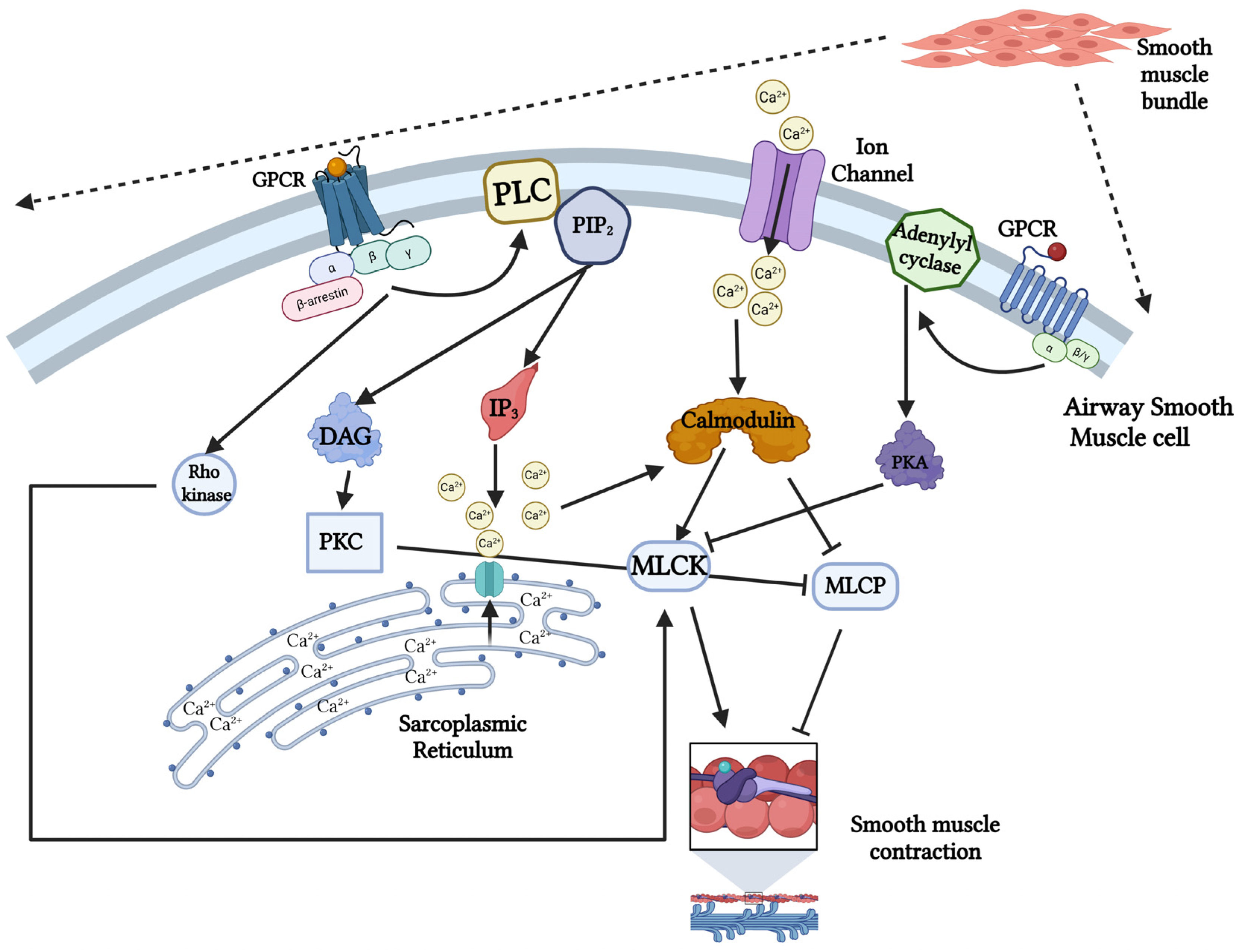
4. Role of Calcium Signaling in Airway Smooth Muscle Contraction
4.1. G Protein Coupling and Signal Transduction
4.2. Increase in Intracellular Calcium Level and Activation of Calmodulin
4.3. Myosin Phosphorylation, Dephosphorylation, and Contraction of Smooth Muscle
4.4. Subcellular and Microdomain Calcium Localization in ASM
4.5. Spatiotemporal Microdomains and Paradoxical Relaxation
5. Therapeutic Approach Targeting GPCR Signaling
5.1. Muscarinic and Leukotriene Receptor Antagonists
5.2. Adrenergic Agonists
5.3. Corticosteroids
5.4. Mast Cell Stabilizers
5.5. Biologic Therapies and Emerging Interventions
6. Conclusions
Author Contributions
Funding
Institutional Review Board Statement
Informed Consent Statement
Data Availability Statement
Acknowledgments
Conflicts of Interest
Abbreviations
| AC | adenylyl cyclase; |
| Ach | acetylcholine; |
| AECs | airway epithelial cells; |
| ASM | airway smooth muscle; |
| AR | airway remodeling; |
| AHR | airway hyperresponsiveness; |
| αSMA | α-smooth muscle actin; |
| BLTR | BLT receptor; |
| cAMP | cyclic AMP; |
| COPD | chronic obstructive pulmonary disease; |
| Ca2+ | calcium; |
| [Ca2+]i | intracellular calcium; |
| CaM | calmodulin; |
| COX | cyclooxygenase; |
| Cys-LTs | Cysteinyl Leukotrienes; |
| DAG | diacylglycerol; |
| ECM | extracellular matrix; |
| GPCR | G protein-coupled receptor; |
| GR | glucocorticoid receptor; |
| H1R | Histamine-1 receptor; |
| IP3 | inositol trisphosphate; |
| LAMAs | long-acting muscarinic antagonists; |
| LABA | long-acting β2-agonist; |
| MLCK | myosin light chain kinase; |
| MLCP | myosin light chain phosphatase; |
| MMPs | matrix metalloproteinases; |
| NRs | nuclear receptors; |
| PLC | phospholipase C; |
| PPAR-γ | proliferator-activated receptor gamma; |
| PKC | protein kinase C; |
| PKA | protein kinase A; |
| RBM | reticular basement membrane; |
| SR | sarcoplasmic reticulum; |
| smMHC | smooth muscle myosin heavy chain; |
| SABAs | short-acting β-2 agonists; |
| SOCE | store-operated calcium entry; |
| T2Rs | type 2 taste receptors; |
| ILC2 | type 2 innate lymphoid cells; |
| TGF-β | transforming growth factor-beta; |
| TRP | Transient Receptor Potential |
References
- Holgate, S.T.; Wenzel, S.; Postma, D.S.; Weiss, S.T.; Renz, H.; Sly, P.D. Asthma. Nat. Rev. Dis. Primers 2015, 1, 15025. [Google Scholar] [CrossRef]
- Porsbjerg, C.; Melén, E.; Lehtimäki, L.; Shaw, D. Asthma. Lancet 2023, 401, 858–873. [Google Scholar] [CrossRef] [PubMed]
- GBD 2019 Diseases and Injuries Collaborators. Global burden of 369 diseases and injuries in 204 countries and territories, 1990–2019: A systematic analysis for the Global Burden of Disease Study 2019. Lancet 2020, 396, 1204–1222. [Google Scholar] [CrossRef] [PubMed]
- Xie, C.; Yang, J.; Gul, A.; Li, Y.; Zhang, R.; Yalikun, M.; Lv, X.; Lin, Y.; Luo, Q.; Gao, H. Immunologic aspects of asthma: From molecular mechanisms to disease pathophysiology and clinical translation. Front. Immunol. 2024, 15, 1478624. [Google Scholar] [CrossRef] [PubMed]
- Lambrecht, B.N.; Hammad, H. The immunology of asthma. Nat. Immunol. 2015, 16, 45–56. [Google Scholar] [CrossRef]
- Hammad, H.; Lambrecht, B.N. The basic immunology of asthma. Cell 2021, 184, 2521–2522. [Google Scholar] [CrossRef]
- Zhou, M.; Sun, R.; Jang, J.; Martin, J.G. T cell and airway smooth muscle interaction: A key driver of asthmatic airway inflammation and remodeling. Am. J. Physiol.-Lung Cell. Mol. Physiol. 2024, 327, L382–L394. [Google Scholar] [CrossRef]
- Simpson, A.; Tan, V.Y.; Winn, J.; Svensén, M.; Bishop, C.M.; Heckerman, D.E.; Buchan, I.; Custovic, A. Beyond atopy: Multiple patterns of sensitization in relation to asthma in a birth cohort study. Am. J. Respir. Crit. Care Med. 2010, 181, 1200–1206. [Google Scholar] [CrossRef]
- Custovic, A. To what extent is allergen exposure a risk factor for the development of allergic disease? Clin. Exp. Allergy 2015, 45, 54–62. [Google Scholar] [CrossRef]
- Wadhwa, R.; Dua, K.; Adcock, I.M.; Horvat, J.C.; Kim, R.Y.; Hansbro, P.M. Cellular mechanisms underlying steroid-resistant asthma. Eur. Respir. Rev. 2019, 28, 190096. [Google Scholar] [CrossRef]
- Nayak, A.P.; Deshpande, D.A.; Penn, R.B. New targets for resolution of airway remodeling in obstructive lung diseases. F1000Research 2018, 7, 680. [Google Scholar] [CrossRef] [PubMed]
- Camoretti-Mercado, B.; Lockey, R.F. Airway smooth muscle pathophysiology in asthma. J. Allergy Clin. Immunol. 2021, 147, 1983–1995. [Google Scholar] [CrossRef] [PubMed]
- Xiong, D.J.P.; Martin, J.G.; Lauzon, A.M. Airway smooth muscle function in asthma. Front. Physiol. 2022, 13, 993406. [Google Scholar] [CrossRef] [PubMed]
- Lambert, R.K.; Wiggs, B.R.; Kuwano, K.; Hogg, J.C.; Paré, P.D. Functional significance of increased airway smooth muscle in asthma and COPD. J. Appl. Physiol. 1993, 74, 2771–2781. [Google Scholar] [CrossRef]
- O’Sullivan, M.J.; Jang, J.H.; Panariti, A.; Bedrat, A.; Ijpma, G.; Lemos, B.; Park, J.A.; Lauzon, A.M.; Martin, J.G. Airway Epithelial Cells Drive Airway Smooth Muscle Cell Phenotype Switching to the Proliferative and Pro-inflammatory Phenotype. Front. Physiol. 2021, 12, 687654. [Google Scholar] [CrossRef]
- Deshpande, D.A.; Penn, R.B. Targeting G protein-coupled receptor signaling in asthma. Cell. Signal. 2006, 18, 2105–2120. [Google Scholar] [CrossRef]
- Billington, C.K.; Penn, R.B. Signaling and regulation of G protein-coupled receptors in airway smooth muscle. Respir. Res. 2003, 4, 2. [Google Scholar] [CrossRef]
- Penn, R.B. Embracing emerging paradigms of G protein-coupled receptor agonism and signaling to address airway smooth muscle pathobiology in asthma. Naunyn-Schmiedeberg’s Arch. Pharmacol. 2008, 378, 149–169. [Google Scholar] [CrossRef]
- Amrani, Y.; Panettieri, R.A. Airway smooth muscle: Contraction and beyond. Int. J. Biochem. Cell Biol. 2003, 35, 272–276. [Google Scholar] [CrossRef]
- Hanusrichterova, J.; Mokry, J.; Al-Saiedy, M.R.; Koetzler, R.; Amrein, M.W.; Green, F.H.Y.; Calkovska, A. Factors influencing airway smooth muscle tone: A comprehensive review with a special emphasis on pulmonary surfactant. Am. J. Physiol.-Cell Physiol. 2024, 327, C798–C816. [Google Scholar] [CrossRef]
- Small, J.V.; Gimona, M. The cytoskeleton of the vertebrate smooth muscle cell. Acta Physiol. Scand. 1998, 164, 341–348. [Google Scholar] [CrossRef] [PubMed]
- Gunst, S.J.; Tang, D.D. The contractile apparatus and mechanical properties of airway smooth muscle. Eur. Respir. J. 2000, 15, 600–616. [Google Scholar] [CrossRef] [PubMed]
- Ding, D.J.; Martin, J.G.; Macklem, P.T. Effects of lung volume on maximal methacholine-induced bronchoconstriction in normal humans. J. Appl. Physiol. 1987, 62, 1324–1330. [Google Scholar] [CrossRef] [PubMed]
- Halayko, A.J.; Amrani, Y. Mechanisms of inflammation-mediated airway smooth muscle plasticity and airways remodeling in asthma. Respir. Physiol. Neurobiol. 2003, 137, 209–222. [Google Scholar] [CrossRef]
- Zuyderduyn, S.; Sukkar, M.B.; Fust, A.; Dhaliwal, S.; Burgess, J.K. Treating asthma means treating airway smooth muscle cells. Eur. Respir. J. 2008, 32, 265–274. [Google Scholar] [CrossRef]
- Halayko, A.J.; Camoretti-Mercado, B.; Forsythe, S.M.; Vieira, J.E.; Mitchell, R.W.; Wylam, M.E.; Hershenson, M.B.; Solway, J. Divergent differentiation paths in airway smooth muscle culture: Induction of functionally contractile myocytes. Am. J. Physiol. 1999, 276, L197–L206. [Google Scholar] [CrossRef]
- Wright, D.B.; Trian, T.; Siddiqui, S.; Pascoe, C.D.; Johnson, J.R.; Dekkers, B.G.; Dakshinamurti, S.; Bagchi, R.; Burgess, J.K.; Kanabar, V.; et al. Phenotype modulation of airway smooth muscle in asthma. Pulm. Pharmacol. Ther. 2013, 26, 42–49. [Google Scholar] [CrossRef]
- James, A.L.; Maxwell, P.S.; Pearce-Pinto, G.; Elliot, J.G.; Carroll, N.G. The relationship of reticular basement membrane thickness to airway wall remodeling in asthma. Am. J. Respir. Crit. Care Med. 2002, 166, 1590–1595. [Google Scholar] [CrossRef]
- Joseph, C.; Tatler, A.L. Pathobiology of Airway Remodeling in Asthma: The Emerging Role of Integrins. J. Asthma Allergy 2022, 15, 595–610. [Google Scholar] [CrossRef]
- Huber, H.L.; Koessler, K.K. The Pathology of Bronchial Asthma. Arch. Intern. Med. 1922, 30, 689–760. [Google Scholar] [CrossRef]
- Varricchi, G.; Ferri, S.; Pepys, J.; Poto, R.; Spadaro, G.; Nappi, E.; Paoletti, G.; Virchow, J.C.; Heffler, E.; Canonica, W.G. Biologics and airway remodeling in severe asthma. Allergy 2022, 77, 3538–3552. [Google Scholar] [CrossRef] [PubMed]
- Bazan-Socha, S.; Jakiela, B.; Zuk, J.; Zarychta, J.; Soja, J.; Okon, K.; Dziedzina, S.; Zareba, L.; Dropinski, J.; Wojcik, K.; et al. Interactions via α2β1 Cell Integrin May Protect against the Progression of Airway Structural Changes in Asthma. Int. J. Mol. Sci. 2021, 22, 6315. [Google Scholar] [CrossRef] [PubMed]
- Black, J.L.; Burgess, J.K.; Johnson, P.R. Airway smooth muscle—Its relationship to the extracellular matrix. Respir. Physiol. Neurobiol. 2003, 137, 339–346. [Google Scholar] [CrossRef] [PubMed]
- Prakash, Y.S.; Pabelick, C.M.; Sieck, G.C. Mitochondrial Dysfunction in Airway Disease. Chest 2017, 152, 618–626. [Google Scholar] [CrossRef]
- Saglani, S.; Lloyd, C.M. Novel concepts in airway inflammation and remodelling in asthma. Eur. Respir. J. 2015, 46, 1796–1804. [Google Scholar] [CrossRef]
- Hough, K.P.; Curtiss, M.L.; Blain, T.J.; Liu, R.M.; Trevor, J.; Deshane, J.S.; Thannickal, V.J. Airway Remodeling in Asthma. Front. Med. 2020, 7, 191. [Google Scholar] [CrossRef]
- Nedeva, D.; Kowal, K.; Mihaicuta, S.; Guidos Fogelbach, G.; Steiropoulos, P.; Jose Chong-Neto, H.; Tiotiu, A. Epithelial alarmins: A new target to treat chronic respiratory diseases. Expert Rev. Respir. Med. 2023, 17, 773–786. [Google Scholar] [CrossRef]
- James, A.L.; Bai, T.R.; Mauad, T.; Abramson, M.J.; Dolhnikoff, M.; McKay, K.O.; Maxwell, P.S.; Elliot, J.G.; Green, F.H. Airway smooth muscle thickness in asthma is related to severity but not duration of asthma. Eur. Respir. J. 2009, 34, 1040–1045. [Google Scholar] [CrossRef]
- Ferreira, D.S.; Carvalho-Pinto, R.M.; Gregório, M.G.; Annoni, R.; Teles, A.M.; Buttignol, M.; Araújo-Paulino, B.B.; Katayama, E.H.; Oliveira, B.L.; Del Frari, H.S.; et al. Airway pathology in severe asthma is related to airflow obstruction but not symptom control. Allergy 2018, 73, 635–643. [Google Scholar] [CrossRef]
- Cohen, P.; Rajah, R.; Rosenbloom, J.; Herrick, D.J. IGFBP-3 mediates TGF-beta1-induced cell growth in human airway smooth muscle cells. Am. J. Physiol.-Lung Cell. Mol. Physiol. 2000, 278, L545–L551. [Google Scholar] [CrossRef]
- Hirst, S.J.; Barnes, P.J.; Twort, C.H. PDGF isoform-induced proliferation and receptor expression in human cultured airway smooth muscle cells. Am. J. Physiol. 1996, 270, L415–L428. [Google Scholar] [CrossRef] [PubMed]
- Redington, A.E.; Madden, J.; Frew, A.J.; Djukanovic, R.; Roche, W.R.; Holgate, S.T.; Howarth, P.H. Transforming growth factor-beta 1 in asthma. Measurement in bronchoalveolar lavage fluid. Am. J. Respir. Crit. Care Med. 1997, 156, 642–647. [Google Scholar] [CrossRef] [PubMed]
- Roth, M.; Johnson, P.R.; Borger, P.; Bihl, M.P.; Rüdiger, J.J.; King, G.G.; Ge, Q.; Hostettler, K.; Burgess, J.K.; Black, J.L.; et al. Dysfunctional interaction of C/EBPalpha and the glucocorticoid receptor in asthmatic bronchial smooth-muscle cells. N. Engl. J. Med. 2004, 351, 560–574. [Google Scholar] [CrossRef] [PubMed]
- Zhou, L.; Goldsmith, A.M.; Bentley, J.K.; Jia, Y.; Rodriguez, M.L.; Abe, M.K.; Fingar, D.C.; Hershenson, M.B. 4E-binding protein phosphorylation and eukaryotic initiation factor-4E release are required for airway smooth muscle hypertrophy. Am. J. Respir. Cell Mol. Biol. 2005, 33, 195–202. [Google Scholar] [CrossRef]
- Deng, H.; Hershenson, M.B.; Lei, J.; Bitar, K.N.; Fingar, D.C.; Solway, J.; Bentley, J.K. p70 Ribosomal S6 kinase is required for airway smooth muscle cell size enlargement but not increased contractile protein expression. Am. J. Respir. Cell Mol. Biol. 2010, 42, 744–752. [Google Scholar] [CrossRef]
- Moreno, R.H.; Hogg, J.C.; Paré, P.D. Mechanics of airway narrowing. Am. Rev. Respir. Dis. 1986, 133, 1171–1180. [Google Scholar]
- Doeing, D.C.; Solway, J. Airway smooth muscle in the pathophysiology and treatment of asthma. J. Appl. Physiol. 2013, 114, 834–843. [Google Scholar] [CrossRef]
- Jude, J.A.; Panettieri, R.A., Jr. Bronchomotor tone imbalance evokes airway hyperresponsiveness. Expert Rev. Respir. Med. 2024, 18, 835–841. [Google Scholar] [CrossRef]
- Khalfaoui, L.; Pabelick, C.M. Airway smooth muscle in contractility and remodeling of asthma: Potential drug target mechanisms. Expert Opin. Ther. Targets 2023, 27, 19–29. [Google Scholar] [CrossRef]
- Canning, B.J.; Fischer, A. Neural regulation of airway smooth muscle tone. Respir. Physiol. 2001, 125, 113–127. [Google Scholar] [CrossRef]
- Tang, D.D. Critical role of actin-associated proteins in smooth muscle contraction, cell proliferation, airway hyperresponsiveness and airway remodeling. Respir. Res. 2015, 16, 134. [Google Scholar] [CrossRef]
- Gunst, S.J.; Zhang, W. Actin cytoskeletal dynamics in smooth muscle: A new paradigm for the regulation of smooth muscle contraction. Am. J. Physiol.-Cell Physiol. 2008, 295, C576–C587. [Google Scholar] [CrossRef] [PubMed]
- Álvarez-Santos, M.D.; Álvarez-González, M.; Estrada-Soto, S.; Bazán-Perkins, B. Regulation of Myosin Light-Chain Phosphatase Activity to Generate Airway Smooth Muscle Hypercontractility. Front. Physiol. 2020, 11, 701. [Google Scholar] [CrossRef] [PubMed]
- Dogan, M.; Han, Y.S.; Delmotte, P.; Sieck, G.C. TNFα enhances force generation in airway smooth muscle. Am. J. Physiol.-Lung Cell. Mol. Physiol. 2017, 312, L994–L1002. [Google Scholar] [CrossRef] [PubMed]
- Chai, H.; Farr, R.S.; Froehlich, L.A.; Mathison, D.A.; McLean, J.A.; Rosenthal, R.R.; Sheffer, A.L.; Spector, S.L.; Townley, R.G. Standardization of bronchial inhalation challenge procedures. J. Allergy Clin. Immunol. 1975, 56, 323–327. [Google Scholar] [CrossRef]
- Panettieri, R.A., Jr. Airway smooth muscle: An immunomodulatory cell. J. Allergy Clin. Immunol. 2002, 110, S269–S274. [Google Scholar] [CrossRef]
- Tliba, O.; Panettieri, R.A., Jr. Noncontractile functions of airway smooth muscle cells in asthma. Annu. Rev. Physiol. 2009, 71, 509–535. [Google Scholar] [CrossRef]
- Xia, Y.C.; Redhu, N.S.; Moir, L.M.; Koziol-White, C.; Ammit, A.J.; Al-Alwan, L.; Camoretti-Mercado, B.; Clifford, R.L. Pro-inflammatory and immunomodulatory functions of airway smooth muscle: Emerging concepts. Pulm. Pharmacol. Ther. 2013, 26, 64–74. [Google Scholar] [CrossRef]
- Brightling, C.E.; Ammit, A.J.; Kaur, D.; Black, J.L.; Wardlaw, A.J.; Hughes, J.M.; Bradding, P. The CXCL10/CXCR3 axis mediates human lung mast cell migration to asthmatic airway smooth muscle. Am. J. Respir. Crit. Care Med. 2005, 171, 1103–1108. [Google Scholar] [CrossRef]
- El-Shazly, A.; Berger, P.; Girodet, P.O.; Ousova, O.; Fayon, M.; Vernejoux, J.M.; Marthan, R.; Tunon-de-Lara, J.M. Fraktalkine produced by airway smooth muscle cells contributes to mast cell recruitment in asthma. J. Immunol. 2006, 176, 1860–1868. [Google Scholar] [CrossRef]
- Begueret, H.; Berger, P.; Vernejoux, J.M.; Dubuisson, L.; Marthan, R.; Tunon-de-Lara, J.M. Inflammation of bronchial smooth muscle in allergic asthma. Thorax 2007, 62, 8–15. [Google Scholar] [CrossRef] [PubMed]
- Hirota, N.; Martin, J.G. Mechanisms of airway remodeling. Chest 2013, 144, 1026–1032. [Google Scholar] [CrossRef] [PubMed]
- Campbell, A.P.; Smrcka, A.V. Targeting G protein-coupled receptor signalling by blocking G proteins. Nat. Rev. Drug Discov. 2018, 17, 789–803. [Google Scholar] [CrossRef] [PubMed]
- Tiwari, D.; Gupta, P. Nuclear Receptors in Asthma: Empowering Classical Molecules Against a Contemporary Ailment. Front. Immunol. 2020, 11, 594433. [Google Scholar] [CrossRef]
- White, M.V. Muscarinic receptors in human airways. J. Allergy Clin. Immunol. 1995, 95, 1065–1068. [Google Scholar] [CrossRef]
- Kudlak, M.; Tadi, P. Physiology, Muscarinic Receptor. In StatPearls; StatPearls Publishing LLC.: Treasure Island, FL, USA, 2025. [Google Scholar]
- Barnes, P.J. Muscarinic receptor subtypes in airways. Life Sci. 1993, 52, 521–527. [Google Scholar] [CrossRef]
- Eglen, R.M.; Reddy, H.; Watson, N.; Challiss, R.A. Muscarinic acetylcholine receptor subtypes in smooth muscle. Trends Pharmacol. Sci. 1994, 15, 114–119. [Google Scholar] [CrossRef]
- Karakiulakis, G.; Roth, M. Muscarinic receptors and their antagonists in COPD: Anti-inflammatory and antiremodeling effects. Mediat. Inflamm. 2012, 2012, 409580. [Google Scholar] [CrossRef]
- Billington, C.K.; Penn, R.B. m3 muscarinic acetylcholine receptor regulation in the airway. Am. J. Respir. Cell Mol. Biol. 2002, 26, 269–272. [Google Scholar] [CrossRef]
- Gosens, R.; Zaagsma, J.; Meurs, H.; Halayko, A.J. Muscarinic receptor signaling in the pathophysiology of asthma and COPD. Respir. Res. 2006, 7, 73. [Google Scholar] [CrossRef]
- Patel, K.R.; Bai, Y.; Trieu, K.G.; Barrios, J.; Ai, X. Targeting acetylcholine receptor M3 prevents the progression of airway hyperreactivity in a mouse model of childhood asthma. FASEB J. 2017, 31, 4335–4346. [Google Scholar] [CrossRef]
- Buels, K.S.; Fryer, A.D. Muscarinic receptor antagonists: Effects on pulmonary function. In Handbook of Experimental Pharmacology; Springer: Berlin/Heidelberg, Germany, 2012; pp. 317–341. [Google Scholar] [CrossRef]
- Meurs, H.; Dekkers, B.G.; Maarsingh, H.; Halayko, A.J.; Zaagsma, J.; Gosens, R. Muscarinic receptors on airway mesenchymal cells: Novel findings for an ancient target. Pulm. Pharmacol. Ther. 2013, 26, 145–155. [Google Scholar] [CrossRef]
- Castro, J.M.; Resende, R.R.; Mirotti, L.; Florsheim, E.; Albuquerque, L.L.; Lino-dos-Santos-Franco, A.; Gomes, E.; de Lima, W.T.; de Franco, M.; Ribeiro, O.G.; et al. Role of m2 muscarinic receptor in the airway response to methacholine of mice selected for minimal or maximal acute inflammatory response. BioMed. Res. Int. 2013, 2013, 805627. [Google Scholar] [CrossRef] [PubMed]
- Fryer, A.D.; Jacoby, D.B. Muscarinic receptors and control of airway smooth muscle. Am. J. Respir. Crit. Care Med. 1998, 158, S154–S160. [Google Scholar] [CrossRef]
- Cataldi, M.; Borriello, F.; Granata, F.; Annunziato, L.; Marone, G. Histamine receptors and antihistamines: From discovery to clinical applications. Chem. Immunol. Allergy 2014, 100, 214–226. [Google Scholar] [CrossRef] [PubMed]
- Akdis, C.A.; Simons, F.E. Histamine receptors are hot in immunopharmacology. Eur. J. Pharmacol. 2006, 533, 69–76. [Google Scholar] [CrossRef] [PubMed]
- Thangam, E.B.; Jemima, E.A.; Singh, H.; Baig, M.S.; Khan, M.; Mathias, C.B.; Church, M.K.; Saluja, R. The Role of Histamine and Histamine Receptors in Mast Cell-Mediated Allergy and Inflammation: The Hunt for New Therapeutic Targets. Front. Immunol. 2018, 9, 1873. [Google Scholar] [CrossRef]
- Simons, F.E.; Simons, K.J. Histamine and H1-antihistamines: Celebrating a century of progress. J. Allergy Clin. Immunol. 2011, 128, 1139–1150.e4. [Google Scholar] [CrossRef]
- Yamauchi, K.; Ogasawara, M. The Role of Histamine in the Pathophysiology of Asthma and the Clinical Efficacy of Antihistamines in Asthma Therapy. Int. J. Mol. Sci. 2019, 20, 1733. [Google Scholar] [CrossRef]
- Greasley, P.J.; Clapham, J.C. Inverse agonism or neutral antagonism at G-protein coupled receptors: A medicinal chemistry challenge worth pursuing? Eur. J. Pharmacol. 2006, 553, 1–9. [Google Scholar] [CrossRef]
- Dimitriadou, V.; Rouleau, A.; Dam Trung Tuong, M.; Newlands, G.J.; Miller, H.R.; Luffau, G.; Schwartz, J.C.; Garbarg, M. Functional relationship between mast cells and C-sensitive nerve fibres evidenced by histamine H3-receptor modulation in rat lung and spleen. Clin. Sci. 1994, 87, 151–163. [Google Scholar] [CrossRef] [PubMed]
- Toyota, H.; Dugovic, C.; Koehl, M.; Laposky, A.D.; Weber, C.; Ngo, K.; Wu, Y.; Lee, D.H.; Yanai, K.; Sakurai, E.; et al. Behavioral characterization of mice lacking histamine H3 receptors. Mol. Pharmacol. 2002, 62, 389–397. [Google Scholar] [CrossRef] [PubMed]
- de Esch, I.J.; Thurmond, R.L.; Jongejan, A.; Leurs, R. The histamine H4 receptor as a new therapeutic target for inflammation. Trends Pharmacol. Sci. 2005, 26, 462–469. [Google Scholar] [CrossRef] [PubMed]
- Pniewska, E.; Pawliczak, R. The involvement of phospholipases A2 in asthma and chronic obstructive pulmonary disease. Mediat. Inflamm. 2013, 2013, 793505. [Google Scholar] [CrossRef]
- Gijón, M.A.; Leslie, C.C. Regulation of arachidonic acid release and cytosolic phospholipase A2 activation. J. Leukoc. Biol. 1999, 65, 330–336. [Google Scholar] [CrossRef]
- Tsuda, S.; Shinohara, M.; Oshita, T.; Nagao, M.; Tanaka, N.; Mori, T.; Hara, T.; Irino, Y.; Toh, R.; Ishida, T.; et al. Novel mechanism of regulation of the 5-lipoxygenase/leukotriene B4 pathway by high-density lipoprotein in macrophages. Sci. Rep. 2017, 7, 12989. [Google Scholar] [CrossRef]
- Haeggström, J.Z.; Funk, C.D. Lipoxygenase and leukotriene pathways: Biochemistry, biology, and roles in disease. Chem. Rev. 2011, 111, 5866–5898. [Google Scholar] [CrossRef]
- Zabel, B.A.; Rott, A.; Butcher, E.C. Leukocyte chemoattractant receptors in human disease pathogenesis. Annu. Rev. Pathol. 2015, 10, 51–81. [Google Scholar] [CrossRef]
- Luginina, A.; Gusach, A.; Lyapina, E.; Khorn, P.; Safronova, N.; Shevtsov, M.; Dmitirieva, D.; Dashevskii, D.; Kotova, T.; Smirnova, E.; et al. Structural diversity of leukotriene G-protein coupled receptors. J. Biol. Chem. 2023, 299, 105247. [Google Scholar] [CrossRef]
- Uzonyi, B.; Lötzer, K.; Jahn, S.; Kramer, C.; Hildner, M.; Bretschneider, E.; Radke, D.; Beer, M.; Vollandt, R.; Evans, J.F.; et al. Cysteinyl leukotriene 2 receptor and protease-activated receptor 1 activate strongly correlated early genes in human endothelial cells. Proc. Natl. Acad. Sci. USA 2006, 103, 6326–6331. [Google Scholar] [CrossRef]
- Rovati, G.E.; Capra, V. Cysteinyl-leukotriene receptors and cellular signals. Sci. World J. 2007, 7, 1375–1392. [Google Scholar] [CrossRef]
- Pierzchalska, M.; Szabó, Z.; Sanak, M.; Soja, J.; Szczeklik, A. Deficient prostaglandin E2 production by bronchial fibroblasts of asthmatic patients, with special reference to aspirin-induced asthma. J. Allergy Clin. Immunol. 2003, 111, 1041–1048. [Google Scholar] [CrossRef] [PubMed]
- Lee, K.; Lee, S.H.; Kim, T.H. The Biology of Prostaglandins and Their Role as a Target for Allergic Airway Disease Therapy. Int. J. Mol. Sci. 2020, 21, 1851. [Google Scholar] [CrossRef] [PubMed]
- Khalil, N.A.; Ahmed, E.M.; Tharwat, T.; Mahmoud, Z. NSAIDs between past and present; a long journey towards an ideal COX-2 inhibitor lead. RSC Adv. 2024, 14, 30647–30661. [Google Scholar] [CrossRef] [PubMed]
- Michael, J.V.; Gavrila, A.; Nayak, A.P.; Pera, T.; Liberato, J.R.; Polischak, S.R.; Shah, S.D.; Deshpande, D.A.; Penn, R.B. Cooperativity of E-prostanoid receptor subtypes in regulating signaling and growth inhibition in human airway smooth muscle. FASEB J. 2019, 33, 4780–4789. [Google Scholar] [CrossRef]
- Sastre, B.; del Pozo, V. Role of PGE2 in asthma and nonasthmatic eosinophilic bronchitis. Mediat. Inflamm. 2012, 2012, 645383. [Google Scholar] [CrossRef]
- Barnes, N.; Pavord, I.; Chuchalin, A.; Bell, J.; Hunter, M.; Lewis, T.; Parker, D.; Payton, M.; Collins, L.P.; Pettipher, R.; et al. A randomized, double-blind, placebo-controlled study of the CRTH2 antagonist OC000459 in moderate persistent asthma. Clin. Exp. Allergy 2012, 42, 38–48. [Google Scholar] [CrossRef]
- Woodward, D.F.; Jones, R.L.; Narumiya, S. International Union of Basic and Clinical Pharmacology. LXXXIII: Classification of prostanoid receptors, updating 15 years of progress. Pharmacol. Rev. 2011, 63, 471–538. [Google Scholar] [CrossRef]
- Schuligoi, R.; Sturm, E.; Luschnig, P.; Konya, V.; Philipose, S.; Sedej, M.; Waldhoer, M.; Peskar, B.A.; Heinemann, A. CRTH2 and D-type prostanoid receptor antagonists as novel therapeutic agents for inflammatory diseases. Pharmacology 2010, 85, 372–382. [Google Scholar] [CrossRef]
- Woo, S.D.; Park, H.S.; Yang, E.M.; Ban, G.Y.; Park, H.S. 8-Iso-prostaglandin F2α as a biomarker of type 2 low airway inflammation and remodeling in adult asthma. Ann. Allergy Asthma Immunol. 2024, 133, 73–80.e2. [Google Scholar] [CrossRef]
- Wu, C.; Xu, Y.; He, Q.; Li, D.; Duan, J.; Li, C.; You, C.; Chen, H.; Fan, W.; Jiang, Y.; et al. Ligand-induced activation and G protein coupling of prostaglandin F2α receptor. Nat. Commun. 2023, 14, 2668. [Google Scholar] [CrossRef]
- Chaudhari, N.; Roper, S.D. The cell biology of taste. J. Cell Biol. 2010, 190, 285–296. [Google Scholar] [CrossRef]
- Zhang, Y.; Hoon, M.A.; Chandrashekar, J.; Mueller, K.L.; Cook, B.; Wu, D.; Zuker, C.S.; Ryba, N.J. Coding of sweet, bitter, and umami tastes: Different receptor cells sharing similar signaling pathways. Cell 2003, 112, 293–301. [Google Scholar] [CrossRef]
- Deshpande, D.A.; Wang, W.C.; McIlmoyle, E.L.; Robinett, K.S.; Schillinger, R.M.; An, S.S.; Sham, J.S.; Liggett, S.B. Bitter taste receptors on airway smooth muscle bronchodilate by localized calcium signaling and reverse obstruction. Nat. Med. 2010, 16, 1299–1304. [Google Scholar] [CrossRef] [PubMed]
- Robinett, K.S.; Koziol-White, C.J.; Akoluk, A.; An, S.S.; Panettieri, R.A., Jr.; Liggett, S.B. Bitter taste receptor function in asthmatic and nonasthmatic human airway smooth muscle cells. Am. J. Respir. Cell Mol. Biol. 2014, 50, 678–683. [Google Scholar] [CrossRef] [PubMed]
- Orsmark-Pietras, C.; James, A.; Konradsen, J.R.; Nordlund, B.; Söderhäll, C.; Pulkkinen, V.; Pedroletti, C.; Daham, K.; Kupczyk, M.; Dahlén, B.; et al. Transcriptome analysis reveals upregulation of bitter taste receptors in severe asthmatics. Eur. Respir. J. 2013, 42, 65–78. [Google Scholar] [CrossRef] [PubMed]
- Ekoff, M.; Choi, J.H.; James, A.; Dahlén, B.; Nilsson, G.; Dahlén, S.E. Bitter taste receptor (TAS2R) agonists inhibit IgE-dependent mast cell activation. J. Allergy Clin. Immunol. 2014, 134, 475–478. [Google Scholar] [CrossRef]
- Figueiredo, I.A.D.; Ferreira, S.R.D.; Fernandes, J.M.; Silva, B.A.D.; Vasconcelos, L.H.C.; Cavalcante, F.A. A review of the pathophysiology and the role of ion channels on bronchial asthma. Front. Pharmacol. 2023, 14, 1236550. [Google Scholar] [CrossRef]
- Zholos, A.V. TRP Channels in Respiratory Pathophysiology: The Role of Oxidative, Chemical Irritant and Temperature Stimuli. Curr. Neuropharmacol. 2015, 13, 279–291. [Google Scholar] [CrossRef]
- Müller, I.; Alt, P.; Rajan, S.; Schaller, L.; Geiger, F.; Dietrich, A. Transient Receptor Potential (TRP) Channels in Airway Toxicity and Disease: An Update. Cells 2022, 11, 2907. [Google Scholar] [CrossRef]
- Stark, J.M.; Coquet, J.M.; Tibbitt, C.A. The Role of PPAR-γ in Allergic Disease. Curr. Allergy Asthma Rep. 2021, 21, 45. [Google Scholar] [CrossRef]
- Yang, K.; Lu, W.; Jiang, Q.; Yun, X.; Zhao, M.; Jiang, H.; Wang, J. Peroxisome Proliferator-Activated Receptor γ-Mediated Inhibition on Hypoxia-Triggered Store-Operated Calcium Entry. A Caveolin-1-Dependent Mechanism. Am. J. Respir. Cell Mol. Biol. 2015, 53, 882–892. [Google Scholar] [CrossRef] [PubMed]
- Lehman, A.M.; Montford, J.R.; Horita, H.; Ostriker, A.C.; Weiser-Evans, M.C.; Nemenoff, R.A.; Furgeson, S.B. Activation of the retinoid X receptor modulates angiotensin II-induced smooth muscle gene expression and inflammation in vascular smooth muscle cells. Mol. Pharmacol. 2014, 86, 570–579. [Google Scholar] [CrossRef] [PubMed]
- Donovan, C.; Tan, X.; Bourke, J.E. PPARγ Ligands Regulate Noncontractile and Contractile Functions of Airway Smooth Muscle: Implications for Asthma Therapy. PPAR Res. 2012, 2012, 809164. [Google Scholar] [CrossRef]
- Conaway, S., Jr.; Huang, W.; Hernandez-Lara, M.A.; Kane, M.A.; Penn, R.B.; Deshpande, D.A. Molecular mechanism of bitter taste receptor agonist-mediated relaxation of airway smooth muscle. FASEB J. 2024, 38, e23842. [Google Scholar] [CrossRef] [PubMed]
- McDuffie, E.L.; Panettieri, R.A., Jr.; Scott, C.P. G12/13 signaling in asthma. Respir. Res. 2024, 25, 295. [Google Scholar] [CrossRef]
- Saunders, R.; Kaul, H.; Berair, R.; Gonem, S.; Singapuri, A.; Sutcliffe, A.J.; Chachi, L.; Biddle, M.S.; Kaur, D.; Bourne, M.; et al. DP2 antagonism reduces airway smooth muscle mass in asthma by decreasing eosinophilia and myofibroblast recruitment. Sci. Transl. Med. 2019, 11, eaao6451. [Google Scholar] [CrossRef]
- Tuteja, N. Signaling through G protein coupled receptors. Plant Signal. Behav. 2009, 4, 942–947. [Google Scholar] [CrossRef]
- Grace, M.S.; Baxter, M.; Dubuis, E.; Birrell, M.A.; Belvisi, M.G. Transient receptor potential (TRP) channels in the airway: Role in airway disease. Br. J. Pharmacol. 2014, 171, 2593–2607. [Google Scholar] [CrossRef]
- Chachi, L.; Shikotra, A.; Duffy, S.M.; Tliba, O.; Brightling, C.; Bradding, P.; Amrani, Y. Functional KCa3.1 channels regulate steroid insensitivity in bronchial smooth muscle cells. J. Immunol. 2013, 191, 2624–2636. [Google Scholar] [CrossRef]
- Girodet, P.O.; Ozier, A.; Carvalho, G.; Ilina, O.; Ousova, O.; Gadeau, A.P.; Begueret, H.; Wulff, H.; Marthan, R.; Bradding, P.; et al. Ca2+-activated K+ channel-3.1 blocker TRAM-34 attenuates airway remodeling and eosinophilia in a murine asthma model. Am. J. Respir. Cell Mol. Biol. 2013, 48, 212–219. [Google Scholar] [CrossRef] [PubMed]
- Berridge, M.J. Inositol trisphosphate and calcium signalling. Nature 1993, 361, 315–325. [Google Scholar] [CrossRef] [PubMed]
- Borchers, M.T.; Biechele, T.; Justice, J.P.; Ansay, T.; Cormier, S.; Mancino, V.; Wilkie, T.M.; Simon, M.I.; Lee, N.A.; Lee, J.J. Methacholine-induced airway hyperresponsiveness is dependent on Galphaq signaling. Am. J. Physiol.-Lung Cell. Mol. Physiol. 2003, 285, L114–L120. [Google Scholar] [CrossRef] [PubMed]
- Struckmann, N.; Schwering, S.; Wiegand, S.; Gschnell, A.; Yamada, M.; Kummer, W.; Wess, J.; Haberberger, R.V. Role of muscarinic receptor subtypes in the constriction of peripheral airways: Studies on receptor-deficient mice. Mol. Pharmacol. 2003, 64, 1444–1451. [Google Scholar] [CrossRef]
- Eto, M.; Ohmori, T.; Suzuki, M.; Furuya, K.; Morita, F. A novel protein phosphatase-1 inhibitory protein potentiated by protein kinase C. Isolation from porcine aorta media and characterization. J. Biochem. 1995, 118, 1104–1107. [Google Scholar] [CrossRef]
- Hakonarson, H.; Grunstein, M.M. Regulation of second messengers associated with airway smooth muscle contraction and relaxation. Am. J. Respir. Crit. Care Med. 1998, 158, S115–S122. [Google Scholar] [CrossRef]
- Swulius, M.T.; Waxham, M.N. Ca2+/calmodulin-dependent protein kinases. Cell Mol. Life Sci. 2008, 65, 2637–2657. [Google Scholar] [CrossRef]
- Wendell, S.G.; Fan, H.; Zhang, C. G Protein-Coupled Receptors in Asthma Therapy: Pharmacology and Drug Action. Pharmacol. Rev. 2020, 72, 1–49. [Google Scholar] [CrossRef]
- Hoeflich, K.P.; Ikura, M. Calmodulin in action: Diversity in target recognition and activation mechanisms. Cell 2002, 108, 739–742. [Google Scholar] [CrossRef]
- Mizuno, Y.; Isotani, E.; Huang, J.; Ding, H.; Stull, J.T.; Kamm, K.E. Myosin light chain kinase activation and calcium sensitization in smooth muscle in vivo. Am. J. Physiol.-Cell Physiol. 2008, 295, C358–C364. [Google Scholar] [CrossRef]
- Sharma, P.; Yadav, S.K.; Shah, S.D.; Javed, E.; Lim, J.M.; Pan, S.; Nayak, A.P.; Panettieri, R.A., Jr.; Penn, R.B.; Kambayashi, T.; et al. Diacylglycerol Kinase Inhibition Reduces Airway Contraction by Negative Feedback Regulation of Gq-Signaling. Am. J. Respir. Cell Mol. Biol. 2021, 65, 658–671. [Google Scholar] [CrossRef]
- Sathish, V.; Abcejo, A.J.; Thompson, M.A.; Sieck, G.C.; Prakash, Y.S.; Pabelick, C.M. Caveolin-1 regulation of store-operated Ca2+ influx in human airway smooth muscle. Eur. Respir. J. 2012, 40, 470–478. [Google Scholar] [CrossRef]
- Prakash, Y.S.; Thompson, M.A.; Vaa, B.; Matabdin, I.; Peterson, T.E.; He, T.; Pabelick, C.M. Caveolins and intracellular calcium regulation in human airway smooth muscle. Am. J. Physiol.-Lung Cell. Mol. Physiol. 2007, 293, L1118–L1126. [Google Scholar] [CrossRef] [PubMed]
- Bai, Y.; Edelmann, M.; Sanderson, M.J. The contribution of inositol 1,4,5-trisphosphate and ryanodine receptors to agonist-induced Ca2+ signaling of airway smooth muscle cells. Am. J. Physiol.-Lung Cell. Mol. Physiol. 2009, 297, L347–L361. [Google Scholar] [CrossRef] [PubMed]
- Zhuge, R.; Bao, R.; Fogarty, K.E.; Lifshitz, L.M. Ca2+ sparks act as potent regulators of excitation-contraction coupling in airway smooth muscle. J. Biol. Chem. 2010, 285, 2203–2210. [Google Scholar] [CrossRef] [PubMed]
- Sancho, M.; Kyle, B.D. The Large-Conductance, Calcium-Activated Potassium Channel: A Big Key Regulator of Cell Physiology. Front. Physiol. 2021, 12, 750615. [Google Scholar] [CrossRef]
- Prakash, Y.S.; Kannan, M.S.; Sieck, G.C. Regulation of intracellular calcium oscillations in porcine tracheal smooth muscle cells. Am. J. Physiol. 1997, 272, C966–C975. [Google Scholar] [CrossRef]
- Sieck, G.C.; Han, Y.S.; Pabelick, C.M.; Prakash, Y.S. Temporal aspects of excitation-contraction coupling in airway smooth muscle. J. Appl. Physiol. 2001, 91, 2266–2274. [Google Scholar] [CrossRef]
- Conaway, S., Jr.; Richard, J.; Deshpande, D.A. Spatiotemporal calcium signaling patterns underlying opposing effects of histamine and TAS2R agonists in airway smooth muscle. Am. J. Physiol.-Lung Cell. Mol. Physiol. 2025, 329, L70–L83. [Google Scholar] [CrossRef]
- Yao, Y.; Borkar, N.A.; Zheng, M.; Wang, S.; Pabelick, C.M.; Vogel, E.R.; Prakash, Y.S. Interactions between calcium regulatory pathways and mechanosensitive channels in airways. Expert Rev. Respir. Med. 2023, 17, 903–917. [Google Scholar] [CrossRef]
- Tompkins, E.; Mimic, B.; Cuevas-Mora, K.; Schorsch, H.; Shah, S.D.; Deshpande, D.A.; Benovic, J.L.; Penn, R.B.; Pera, T. PD 102807 Induces M3 mAChR-Dependent GRK-/Arrestin-Biased Signaling in Airway Smooth Muscle Cells. Am. J. Respir. Cell Mol. Biol. 2022, 67, 550–561. [Google Scholar] [CrossRef] [PubMed]
- Berair, R.; Hollins, F.; Brightling, C. Airway smooth muscle hypercontractility in asthma. J. Allergy 2013, 2013, 185971. [Google Scholar] [CrossRef] [PubMed]
- Pfaff, M.; Powaga, N.; Akinci, S.; Schütz, W.; Banno, Y.; Wiegand, S.; Kummer, W.; Wess, J.; Haberberger, R.V. Activation of the SPHK/S1P signalling pathway is coupled to muscarinic receptor-dependent regulation of peripheral airways. Respir. Res. 2005, 6, 48. [Google Scholar] [CrossRef] [PubMed]
- Luo, M.; Zhang, X.; Guo, J.; Gu, R.; Qin, Y.; Ni, K.; Liu, L.; Pan, Y.; Li, J.; Shi, H.; et al. Piezo1 Agonist Yoda1 Induces Rapid Relaxation in Cultured Airway Smooth Muscle Cells and Bronchodilation in Mouse Models. Am. J. Respir. Cell Mol. Biol. 2025, 73, 849–858. [Google Scholar] [CrossRef]
- Yarova, P.L.; Stewart, A.L.; Sathish, V.; Britt, R.D., Jr.; Thompson, M.A.; AP, P.L.; Freeman, M.; Aravamudan, B.; Kita, H.; Brennan, S.C.; et al. Calcium-sensing receptor antagonists abrogate airway hyperresponsiveness and inflammation in allergic asthma. Sci. Transl. Med. 2015, 7, 284ra60. [Google Scholar] [CrossRef]
- Yarova, P.L.; Huang, P.; Schepelmann, M.W.; Bruce, R.; Ecker, R.; Nica, R.; Telezhkin, V.; Traini, D.; Gomes Dos Reis, L.; Kidd, E.J.; et al. Characterization of Negative Allosteric Modulators of the Calcium-Sensing Receptor for Repurposing as a Treatment of Asthma. J. Pharmacol. Exp. Ther. 2021, 376, 51–63. [Google Scholar] [CrossRef]
- Henderson, I.; Caiazzo, E.; McSharry, C.; Guzik, T.J.; Maffia, P. Why do some asthma patients respond poorly to glucocorticoid therapy? Pharmacol. Res. 2020, 160, 105189. [Google Scholar] [CrossRef]
- Mahay, G.; Zysman, M.; Guibert, N.; Barnig, C.; Guilleminault, L.; Dupin, C. Long-acting muscarinic antagonists (LAMA) in asthma: What is the best strategy? Respir. Med. Res. 2025, 87, 101157. [Google Scholar] [CrossRef]
- Rhoads, S.L.; Seluk, L.; Wechsler, M.E. Asthma therapeutics: Past, present, and future. Pharmacol. Rev. 2025, 77, 100062. [Google Scholar] [CrossRef]
- Gosens, R.; Gross, N. The mode of action of anticholinergics in asthma. Eur. Respir. J. 2018, 52, 1701247. [Google Scholar] [CrossRef]
- Conolly, M.E.; Warrell, D.A.; Howes, J.A.; Paterson, J.W.; Beilin, L.J.; Robertson, D.G.; Dollery, C.T. A comparison of the cardiorespiratory effects of isoprenaline and salbutamol in patients with bronchial asthma. Postgrad. Med. J. 1971, 47, S77–S81. [Google Scholar]
- Holgate, S.T. A brief history of asthma and its mechanisms to modern concepts of disease pathogenesis. Allergy Asthma Immunol. Res. 2010, 2, 165–171. [Google Scholar] [CrossRef] [PubMed]
- Alangari, A.A. Corticosteroids in the treatment of acute asthma. Ann. Thorac. Med. 2014, 9, 187–192. [Google Scholar] [CrossRef] [PubMed]
- Coutinho, A.E.; Chapman, K.E. The anti-inflammatory and immunosuppressive effects of glucocorticoids, recent developments and mechanistic insights. Mol. Cell Endocrinol. 2011, 335, 2–13. [Google Scholar] [CrossRef]
- Banafea, G.H.; Bakhashab, S.; Alshaibi, H.F.; Natesan Pushparaj, P.; Rasool, M. The role of human mast cells in allergy and asthma. Bioengineered 2022, 13, 7049–7064. [Google Scholar] [CrossRef]
- Diamant, Z.; Boot, J.D.; Virchow, J.C. Summing up 100 years of asthma. Respir. Med. 2007, 101, 378–388. [Google Scholar] [CrossRef]
- Pelaia, C.; Calabrese, C.; Terracciano, R.; de Blasio, F.; Vatrella, A.; Pelaia, G. Omalizumab, the first available antibody for biological treatment of severe asthma: More than a decade of real-life effectiveness. Ther. Adv. Respir. Dis. 2018, 12, 1753466618810192. [Google Scholar] [CrossRef]
- Humbert, M.; Busse, W.; Hanania, N.A.; Lowe, P.J.; Canvin, J.; Erpenbeck, V.J.; Holgate, S. Omalizumab in asthma: An update on recent developments. J. Allergy Clin. Immunol. Pract. 2014, 2, 525–536.e1. [Google Scholar] [CrossRef]
- Manson, M.L.; Säfholm, J.; James, A.; Johnsson, A.K.; Bergman, P.; Al-Ameri, M.; Orre, A.C.; Kärrman-Mårdh, C.; Dahlén, S.E.; Adner, M. IL-13 and IL-4, but not IL-5 nor IL-17A, induce hyperresponsiveness in isolated human small airways. J. Allergy Clin. Immunol. 2020, 145, 808–817.e2. [Google Scholar] [CrossRef]
- Wenzel, S.; Castro, M.; Corren, J.; Maspero, J.; Wang, L.; Zhang, B.; Pirozzi, G.; Sutherland, E.R.; Evans, R.R.; Joish, V.N.; et al. Dupilumab efficacy and safety in adults with uncontrolled persistent asthma despite use of medium-to-high-dose inhaled corticosteroids plus a long-acting β2 agonist: A randomised double-blind placebo-controlled pivotal phase 2b dose-ranging trial. Lancet 2016, 388, 31–44. [Google Scholar] [CrossRef]
- Menzies-Gow, A.; Corren, J.; Bourdin, A.; Chupp, G.; Israel, E.; Wechsler, M.E.; Brightling, C.E.; Griffiths, J.M.; Hellqvist, Å.; Bowen, K.; et al. Tezepelumab in Adults and Adolescents with Severe, Uncontrolled Asthma. N. Engl. J. Med. 2021, 384, 1800–1809. [Google Scholar] [CrossRef]
- Castro, M.; Mathur, S.; Hargreave, F.; Boulet, L.P.; Xie, F.; Young, J.; Wilkins, H.J.; Henkel, T.; Nair, P. Reslizumab for poorly controlled, eosinophilic asthma: A randomized, placebo-controlled study. Am. J. Respir. Crit. Care Med. 2011, 184, 1125–1132. [Google Scholar] [CrossRef]
- Nair, P.; Pizzichini, M.M.; Kjarsgaard, M.; Inman, M.D.; Efthimiadis, A.; Pizzichini, E.; Hargreave, F.E.; O’Byrne, P.M. Mepolizumab for prednisone-dependent asthma with sputum eosinophilia. N. Engl. J. Med. 2009, 360, 985–993. [Google Scholar] [CrossRef]
- Dombret, M.C.; Alagha, K.; Boulet, L.P.; Brillet, P.Y.; Joos, G.; Laviolette, M.; Louis, R.; Rochat, T.; Soccal, P.; Aubier, M.; et al. Bronchial thermoplasty: A new therapeutic option for the treatment of severe, uncontrolled asthma in adults. Eur. Respir. Rev. 2014, 23, 510–518. [Google Scholar] [CrossRef]
- Cox, G.; Miller, J.D.; McWilliams, A.; Fitzgerald, J.M.; Lam, S. Bronchial thermoplasty for asthma. Am. J. Respir. Crit. Care Med. 2006, 173, 965–969. [Google Scholar] [CrossRef]



| Receptor Type | Examples/Ligand | Signaling Mechanism | Key Second Messengers/Effectors | Role in Airway Hyperresponsiveness (AHR) | References |
|---|---|---|---|---|---|
| Muscarinic receptors | M1, M2, M3; ligand: Acetylcholine | Gq (M1, M3) → PLC → IP3/DAG → Ca2+/PKC; Gi (M2) → inhibits AC | ↑ Ca2+, ↑ PKC, ↓ cAMP (M2) | M3 mediates bronchoconstriction, mucus secretion; contributes to AHR | [65,66,67,68,69,70,71,72,73,74,75,76] |
| Histamine receptors | H1, H2, H3, H4; ligand: Histamine | H1: Gq → PLC → IP3/DAG → Ca2+/PKC H2: Gs → AC → cAMP → PKA | ↑ Ca2+ (H1), ↑ cAMP (H2) | H1: bronchoconstriction, vascular permeability; H2: bronchodilation | [77,78,79,80,81,82,83,84,85] |
| Leukotriene receptors | CysLT1, CysLT2; ligand: LTC4, LTD4, LTE4 | Gq → PLC → IP3/DAG → Ca2+/PKC | ↑ Ca2+, PKC activation | Airway smooth muscle contraction, inflammatory cell recruitment → AHR | [86,87,88,89,90,91,92,93] |
| Prostaglandin receptors | EP1-4, DP1-2, FP, TP, IP; ligand: PGE2, PGD2, PGF2α, TXA2, PGI2 | EP1, FP, TP: Gq → PLC → IP3/DAG → Ca2+/PKC EP2, EP4, IP: Gs → AC → cAMP → PKA | ↑ Ca2+ or ↑ cAMP depending on subtype | EP1/FP/TP: bronchoconstriction; EP2/EP4: bronchodilation | [94,95,96,97,98,99,100,101,102,103] |
| Bitter taste receptors (T2Rs) | T2R family; ligand: bitter compounds | Gi → inhibits AC → ↓ cAMP; some Gβγ → PLC → IP3/DAG → ↑ Ca2+ | ↓ cAMP, ↑ Ca2+ locally in cilia | Bronchodilation via local Ca2+-dependent NO release; protective against AHR | [104,105,106,107,108,109] |
| Ion channels | TRPV1, CFTR, BK channels | Direct ion flux (Ca2+, Cl−, K+) | ↑ Ca2+ (TRPV1), Cl− transport (CFTR), K+ efflux (BK) | TRPV1: sensory nerve activation → bronchoconstriction, cough; CFTR/BK: regulate airway tone | [110,111,112] |
| Nuclear receptors | Glucocorticoid receptor, Vitamin D receptor, PPARγ | Ligand diffuses → receptor-ligand complex binds DNA → transcription | Gene expression changes | Anti-inflammatory effects, reduce AHR | [113,114,115,116] |
| Model | GPCR/Pathway | ASM-Related Finding | Asthma Relevance | References |
|---|---|---|---|---|
| Cell culture (human ASM) | M3 (Gq–PLC–IP3–Ca2+) | ↑ Ca2+, MLCK activation → contraction & proliferation | Pro-contractile signaling in AHR | [65,66,67,68,69,70,71,72] |
| Histamine H1 (Gq) | Ca2+-mediated contraction | Bronchospasm in allergic asthma | [77,78,79,80,81] | |
| CysLT1 (Gq/Gi) | Ca2+ rise → contraction & inflammatory mediator effects | Leukotriene-driven AHR | [86,87,88,89,90,91,92,93] | |
| EP2/EP4 (Gs) | ↑ cAMP → ASM relaxation & anti-inflammatory effects | Endogenous bronchodilation | [96,97,98] | |
| Bitter taste receptors (TAS2Rs) | Distinct Ca2+ signaling + RhoA/MYPT1 regulation → relaxation despite Ca2+ rise | Novel bronchodilation independent of β-agonists; potential target | [117] | |
| G12/13-linked signaling | RhoA/ROCK-mediated Ca2+ sensitization and contraction | Alternative pro-contractile pathway beyond classical Gq | [118] | |
| Animal models | M3, CysLT1 | Enhanced airway resistance, AHR | Validates contractile GPCR roles in vivo | [70,72,93] |
| DP2 (CRTH2) | Promotes eosinophilia & Th2 inflammation | Pathogenic inflammation linked to remodeling | [99,100,101] | |
| TAS2R activation | Bronchodilation & inhibition of Ca2+-induced contraction | Emerging therapeutic mechanism in vivo | [106] | |
| Clinical/Translational | Antimuscarinics (M3 blockers) | Improved airflow, reduced bronchoconstriction | Established therapeutic target | [69,73] |
| Leukotriene antagonists | Reduced AHR & symptoms | Confirms leukotriene role | [93] | |
| DP2 antagonists | ↓ ASM mass, ↓ eosinophilia | Potential remodeling modulation | [101,119] | |
| β2-agonists | cAMP-mediated bronchodilation | Standard therapy targeting Gs signaling | [17,120] | |
| Novel bitter TAS2R agonists | Potent bronchodilation with distinct pathway | Potential new class of bronchodilators | [106] |
Disclaimer/Publisher’s Note: The statements, opinions and data contained in all publications are solely those of the individual author(s) and contributor(s) and not of MDPI and/or the editor(s). MDPI and/or the editor(s) disclaim responsibility for any injury to people or property resulting from any ideas, methods, instructions or products referred to in the content. |
© 2026 by the authors. Licensee MDPI, Basel, Switzerland. This article is an open access article distributed under the terms and conditions of the Creative Commons Attribution (CC BY) license.
Share and Cite
Roy, S.; Gangipangi, V.K.; Sharma, P.; Hancock, R.E.; Sharma, P. Integrating GPCR Regulation and Calcium Dynamics in Airway Smooth Muscle Function: A Comprehensive Review. Cells 2026, 15, 203. https://doi.org/10.3390/cells15020203
Roy S, Gangipangi VK, Sharma P, Hancock RE, Sharma P. Integrating GPCR Regulation and Calcium Dynamics in Airway Smooth Muscle Function: A Comprehensive Review. Cells. 2026; 15(2):203. https://doi.org/10.3390/cells15020203
Chicago/Turabian StyleRoy, Saptarshi, Vijaya Kumar Gangipangi, Pravesh Sharma, Rebecca E. Hancock, and Pawan Sharma. 2026. "Integrating GPCR Regulation and Calcium Dynamics in Airway Smooth Muscle Function: A Comprehensive Review" Cells 15, no. 2: 203. https://doi.org/10.3390/cells15020203
APA StyleRoy, S., Gangipangi, V. K., Sharma, P., Hancock, R. E., & Sharma, P. (2026). Integrating GPCR Regulation and Calcium Dynamics in Airway Smooth Muscle Function: A Comprehensive Review. Cells, 15(2), 203. https://doi.org/10.3390/cells15020203