Article

SnRK1α Restricts Tomato Spotted Wilt Virus Infection by Targeting the Viral Silencing Suppressor NSs for 26S Proteasome-Mediated Degradation


1
State Key Laboratory of Agricultural and Forestry Biosecurity, Nanjing Agricultural University, Nanjing 210095, China
2
Department of Plant Pathology, Nanjing Agricultural University, Nanjing 210095, China
3
Institute of Plant Protection, Jiangsu Academy of Agricultural Sciences, Nanjing 210014, China
*
Author to whom correspondence should be addressed.
Agronomy 2026, 16(3), 284; https://doi.org/10.3390/agronomy16030284
Submission received: 7 December 2025 / Revised: 14 January 2026 / Accepted: 22 January 2026 / Published: 23 January 2026
(This article belongs to the Special Issue Crop Antiviral Immunity and Viral Counter-Defense Strategies)

Abstract

Tomato spotted wilt virus (TSWV) is one of the most important plants segmented negative-strand RNA viruses (NSVs). Plants employ the ubiquitin–proteasome system (UPS) and autophagy pathways to degrade viral effector proteins, forming a key antiviral defense layer. SnRK1 functions as a central energy sensor and plays pivotal roles in plant growth and development, as well as immune defense. However, whether SnRK1 modulates the infection of plant segmented NSVs and the underlying regulatory mechanisms remains elusive. In this study, we found that nonstructural protein NSs, a viral suppressor of RNA silencing (VSR) encoded by TSWV, specifically interacts with the catalytic α subunit of host SnRK1 (SnRK1α). NbSnRK1α promotes the degradation of NSs via the 26S proteasome pathway, independently of autophagy. Transient silencing of NbSnRK1α led to increased accumulation of the NSs protein. Furthermore, we found that NbSnRK1α significantly impairs the VSR activity of NSs by promoting its degradation, thereby restoring the host’s RNAi-mediated antiviral defense. Subsequent viral infection assays confirmed that NbSnRK1α inhibits TSWV replication, whereas silencing NbSnRK1α enhances the susceptibility of Nicotiana benthamiana to TSWV infection and facilitates systemic viral spread and disease symptom development. Our study uncovers a new antiviral defense case by which NbSnRK1α enhances host antiviral immunity through targeting a segmented negative-strand RNA viral effector for 26S proteasomal degradation, broadening the understanding of the NbSnRK1’s role in broad-spectrum antiviral defense.

1. Introduction

Tomato spotted wilt virus (TSWV) is one of the most important and destructive segmented negative-sense RNA plant viruses, and causes severe diseases and significant yield losses in many agricultural, horticultural, and ornamental crops, posing a threat to global food security [1,2]. First identified in Australia in 1930 [3], TSWV possesses an extremely broad host range, infecting over 1000 plant species across more than 80 families [2,4]. Its primary hosts include major crops such as tomato, pepper, potato, peanut, and lettuce, as well as numerous ornamental plants, resulting in substantial yield losses at harvest [5]. TSWV is transmitted by the vector insect thrips in a persistent and propagative manner under natural field conditions, and further exacerbates its destructive impact [6,7].
TSWV is a representative member in the genus Orthotospovirus (family Tospoviridae, order Bunyavirales) [8]. It is an enveloped, spherical virion (80–120 nm) with a tripartite negative-sense/ambisense RNA genome, consisting of small (S), medium (M), and large (L) RNA segments [9]. L RNA segment is negative-stranded, but M and S RNA segments exhibit an ambisense gene organization [10]. The L segment only encodes the RNA-dependent RNA polymerase (RdRp) on the antigenomic (ag) RNA strand, which is essential for the assembly of ribonucleoprotein complexes (RNPs) that mediate viral RNA replication and transcription [11,12,13]. The M segment encodes the movement protein (NSm) on the genomic (g) RNA strand and a glycoprotein precursor (GP; Gn and Gc, where “n” and “c” denote the amino- and carboxy-terminal ends of the precursor, respectively) on the agRNA strand [3,14]. The NSm is essential for viral cell-to-cell movement and long-distance spread [15]. The Gn and Gc together form spikes on the surface of the virus envelope membrane [3,16], and are required for virus acquisition and transmission by thrips [17]. Similarly, the S segment encodes the nucleocapsid (N) protein on the agRNA strand and a nonstructural protein (NSs) on the gRNA strand [18]. The N protein and RdRp mediate the assembly of RNPs, which serve as the minimal infectious units required for viral RNA replication and transcription [13,19,20]. As a viral suppressor of RNA silencing (VSR), the NSs protein functions as a viral effector to counteract the host plant’s RNAi-mediated antiviral defense and innate immune responses [21,22,23,24].
Sucrose non-fermenting-1-related kinase 1 (SnRK1) is crucial for metabolic homeostasis, growth development, and response to biotic and abiotic stress in plants [25]. SnRK1 has been reported to be a heterotrimer containing a catalytic subunit a and two regulatory subunits (b and g) [26,27]. In plants, SnRK1 phosphorylates numerous enzymes directly involved in carbon and nitrogen metabolism to alter their catalytic activity, transcriptionally regulates hundreds of genes engaged in diverse biological processes and represses global protein synthesis [28,29]. SnRK1 not only senses the cellular energy status but also plays an important role in plant immunity [30]. Previous studies demonstrated that SnRK1 is modulated by geminivirus infection to limit the virus replication [31,32]. SnRK1 has also been reported to regulate plant immune responses against bacterial and fungal infections. The effector protein AvrBsT from Xanthomonas campestris pv. vesicatoria (Xcv) interacts with plant SnRK1α to suppress HR and promote Xcv pathogenicity [30]. SnRK1b interacts with AvrPto-dependent Pto-interacting protein3 (Adi3) to regulate the plant cell death suppression during Pseudomonas syringae pv tomato [33]. SnRK1α interacts with TaFROG protein, promoting host wheat resistance to Fusarium graminearum and mycotoxin deoxynivalenol (DON) [34]. In rice, overexpression of SnRK1α confers enhanced resistance to Xanthomonas oryzae pv. oryzae (Xoo) [35]. SnRK1α up-regulation led to resistance against the rice blast pathogen Magnaporthe oryzae, the necrotrophic pathogens Cochliobolus miyabeanus and Rhizoctonia solani [36].
In this study, we used the TSWV-encoded NSs protein as bait to screen for its interacting host factor, SnRK1α. The direct interaction between NSs and NbSnRK1α in vivo and in vitro was further verified using multiple protein–protein interaction assays. Subcellular localization analysis showed that co-expression of NbSnRK1α with NSs did not alter the cytoplasmic localization pattern of NSs, but significantly reduced the accumulation level of the NSs protein. Subsequently, treatment with autophagy inhibitor (E64D) and 26S proteasome inhibitor (MG132) revealed that NbSnRK1α mediates the degradation of NSs through the 26S proteasome pathway; transient silencing of NbSnRK1α mediated by dsRNA significantly stabilized the NSs protein. Viral suppressor of RNA silencing (VSR) activity assays demonstrated that NbSnRK1α co-expressed with NSs significantly attenuated the VSR activity of NSs. Finally, tobacco rattle virus (TRV)-mediated NbSnRK1α silencing assays indicated that NbSnRK1α positively regulates TSWV infection. These findings provide a novel case illustrating the role of SnRK1α in the plant–pathogen arms race.

2. Materials and Methods

2.1. Plants and Virus Source Inoculum

Nicotiana benthamiana plants were cultivated in a growth chamber with controlled conditions, constant temperature of 23 °C, and a photoperiod of 16 h light/8 h dark. All agro-infiltration assays were performed using N. benthamiana plants at the seven-leaf stage. The TSWV isolate employed in this study was TSWV-LE, which was originally isolated from asparagus lettuce. This TSWV-LE isolate was propagated and maintained in N. benthamiana plants. For long-term preservation, infected leaves of N. benthamiana were stored at −80 °C.

2.2. Plasmid Sources and Construction

The DNA-based TSWV subgenomic replicon plasmid pCB301-2×35S-HH-SR(+)eGFP-RZ-NOS [SR(+)eGFP], pCB301-2×35S-HH-M(-)opt-RZ-NOS [M(-)opt] and pCB301-2×35S-HH-L(+)opt-RZ-NOS [L(+)opt] were constructed using the strategy described previously [10]. For the transient expression analysis, the full-length NSs and NbSnRK1α genes were cloned into the binary vectors generate p2300-Flag-NSs, p2300-NSs-mCherry, p2300-NSs-YFP, p2300-Flag-NbSnRK1α, p2300-mCherry-NbSnRK1α, and p2300-YFP-NbSnRK1α. All primers used in this study are listed in Table A1.

2.3. Yeast Two-Hybrid Assay

Yeast two-hybrid screen was performed as described [37]. In brief, Yeast cells (strain Y2H Gold) harboring the pGAD-NSs and pGBK-NbSnRK1 plasmids were plated on a selective medium lacking tryptophan and leucine (SD/–Trp/–Leu) to verify successful transformation, followed by screening on a high-stringency medium lacking tryptophan, leucine, and histidine (SD/–Trp/–Leu/–His) supplemented with 4 mM 3-AT to analyze protein interaction.

2.4. Immunoblot and Immunoprecipitation Assay

Immunoblot and co-immunoprecipitation (Co-IP) were carried out following a previously reported protocol [38]. Briefly, total protein was extracted from 1.0 g of N. benthamiana leaves using 2 mL of extraction buffer. After centrifugation at 12,000× g for 30 min at 4 °C, the supernatant was incubated with 25 μL anti-GFP Trap-A beads (Chromotek, Planegg-Martinsried, Germany) for 60 min at 4 °C. The beads were washed six times with IP buffer. Proteins were then denatured at 95 °C for 5 min and separated by SDS-PAGE. The membranes were probed with the following primary antibodies: anti-FLAG-HRP (Sigma-Aldrich #A8592, clone M2, 1:10,000, St. Louis, MO, USA), anti-YFP (Sigma-Aldrich #SAB4301138, 1:10,000, St. Louis, MO, USA), anti-GST (Sigma-Aldrich #SAB1305539, clone 9AT106, 1:5000, St. Louis, MO, USA), or anti-RFP (produced in-house, 1:5000). The blots were detected by the ECL Substrate Kit (Thermo Scientific, Hudson, NH, USA). To assess equal loading, membranes were stained with Ponceau S, and protein band intensity was quantified with ImageJ (version 5.2.1).

2.5. GST-Pull Down Assay

GST pull-down assays were performed according to a previously described method [39]. Recombinant GST or GST-NSs protein was incubated with 30 μL glutathione-agarose beads at 4 °C for 1 h. After washing the beads four times with IP buffer, Flag-NbSnRK1α was added and incubated at 4 °C for 2 h. Following another four washes, proteins bound to the beads were separated by SDS-PAGE and detected using anti-GST and anti-Flag antibodies.

2.6. Bimolecular Fluorescence Complementation (BiFC) Assay

Mixed A. tumefaciens strain GV3101 cultures carrying pCV-nYFP-NbSnRK1α or pCV-cYFP-NSs of expression vectors were individually infiltrated into N. benthamiana leaves. Fluorescence in the infiltrated leaf was examined under a confocal laser microscopy (Zeiss LSM 900, Oberkochen, Germany). The YFP signals were detected at 488 nm/490 nm to 552 nm.

2.7. Agrobacterium Infiltration

Agrobacterium tumefaciens strain GV3101 carrying the indicated constructs was grown overnight under appropriate antibiotics, harvested by centrifugation, and resuspended in infiltration buffer (10 mM MES, 10 mM MgCl2, 100 μM acetosyringone, pH 5.6) as described previously [40].

2.8. RNA Isolation and RT-qPCR Analysis

To assess the mRNA levels of the relevant genes in N. benthamiana plants infiltrated with the VIGS constructs, leaf samples were collected from upper, fresh leaves approximately three weeks after infiltration. These samples were then used for RNA extraction, reverse transcription, and real-time PCR, as described previously [10]. NbActin was used as the internal control for N. benthamiana, and all primers are listed in Table A1.

2.9. dsRNA-Induced Gene Silencing (DIGS) and Virus-Induced Gene Silencing (VIGS)

DIGS and VIGS assays were performed as described [41]. To silence NbSnRK1α in N. benthamiana leaves, a 300 bp fragment derived from its coding sequence was cloned in sense and antisense orientations into the pCambia1300S-intron vector, generating p1300S-intron-NbSnRK1α for expression of an inverted RNA repeat. Agrobacterium strains carrying pTRV1 together with TRV2-GUS (control) or TRV2-NbSnRK1α were mixed at a 1:1 ratio and infiltrated into leaves of 6-week-old plants. Silencing efficiency was assessed by RT-qPCR, and the VIGS system was validated using silencing of the Phytoene desaturase (PDS) gene, which typically produces a photobleaching phenotype in upper leaves by 7 dpi.

2.10. Fluorescence Microscopy

Fluorescence microscopy was performed as previously described [41]. Agro-infiltrated leaves of N. benthamiana were examined for fluorescence expression using a fluorescence microscope (OLYMPUS IX71-F22FL/DIC, Tokyo, Japan) equipped with a green barrier filter. For eGFP fluorescence detection, samples were mounted in water on glass slides and covered with coverslips. The captured images were further analyzed using Image-Pro software (v11.0.4, OLYMPUS).

2.11. Imaging eGFP in Infected Plant Using Hand-Held UV Lamp

eGFP fluorescence in the infiltrated leaves was monitored using a hand-held 100 W long-wave UV lamp (UV Products, Upland, CA, USA) and subsequently photographed with a Canon EOS 70D digital camera (Canon, Tokyo, Japan) equipped with a 58 mm UV filter. Viral RNA from the infiltrated leaves was extracted as previously described [10].

3. Results

3.1. NSs Interacts with NbSnRK1α Both In Vivo and In Vitro

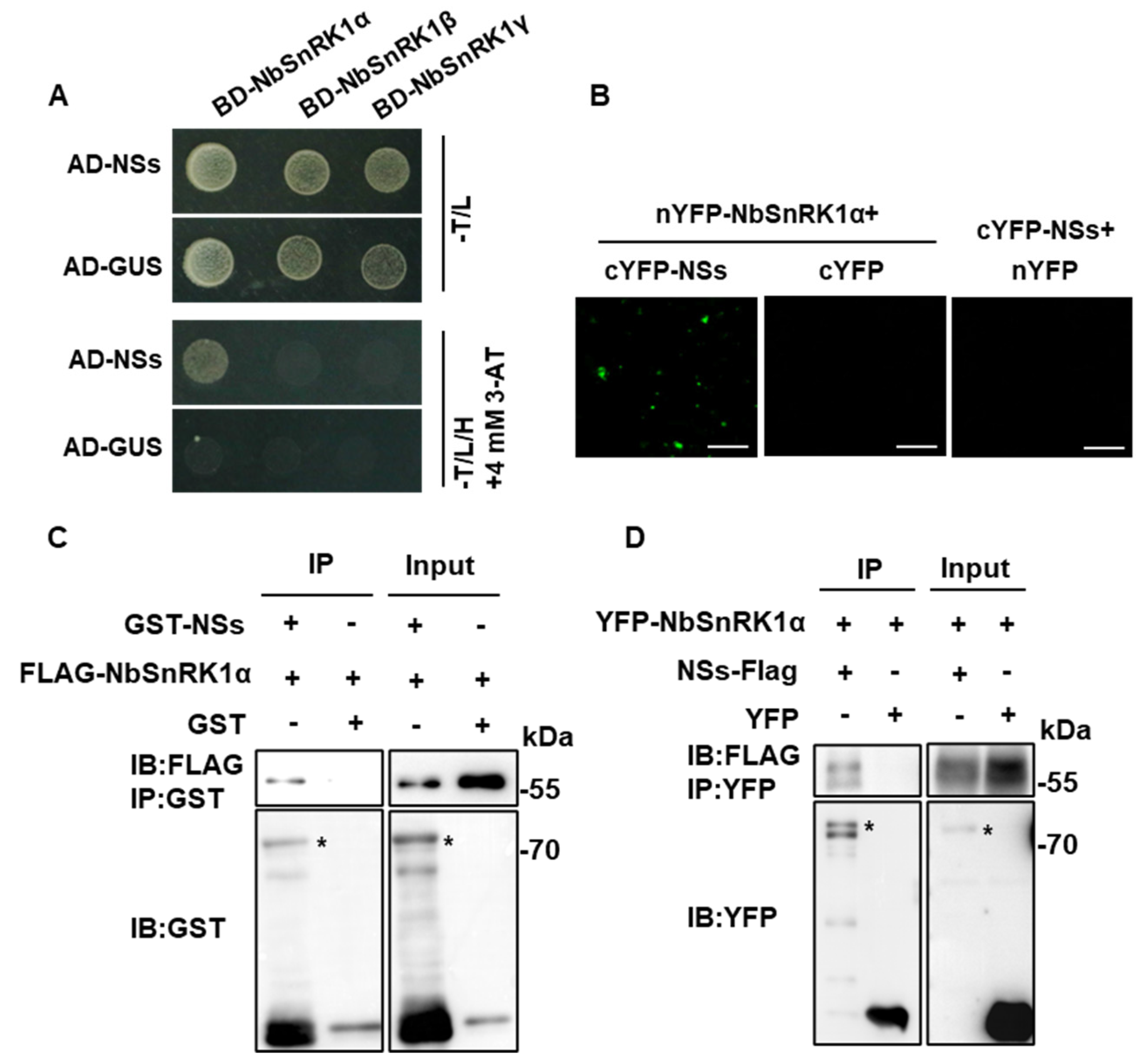
The nonstructural protein (NSs), an effector protein encoded by TSWV, plays a critical role in viral pathogenesis. To identify host proteins that interact with NSs, we screened a N. benthamiana cDNA library using yeast two-hybrid (Y2H) system with TSWV NSs as bait. This screen identified the catalytic α subunit of SnRK1 (SnRK1α) as a specific interacting partner (Figure S1). The plant SnRK1 complex functions as a heterotrimeric energy sensor and signaling hub, consisting of one catalytic α subunit and two regulatory β and γ subunits [25]. To determine the specificity of this interaction, we performed Y2H assays, which demonstrated that NSs interacts directly with NbSnRK1α, but not with NbSnRK1β or NbSnRK1γ subunits (Figure 1A). To validate this interaction in plants, we conducted a BiFC assay. Co-expression of cYFP-NSs and nYFP-NbSnRK1α in N. benthamiana leaves resulted in strong YFP fluorescence in the cytoplasm, forming irregular punctate structures, whereas no YFP fluorescent signal was detected in the negative control (nYFP-NbSnRK1α+cYFP) (Figure 1B). Furthermore, Co-IP assays using proteins extracted from leaves co-expressing Flag-NbSnRK1α and Myc-NSs confirmed their physical association in vivo (Figure 1C). This direct interaction was corroborated by an in vitro GST pull-down assay, where GST-NbSnRK1α, but not GST alone, specifically pulled down His-NSs (Figure 1D). Collectively, these results demonstrate that TSWV NSs directly interacts with NbSnRK1α in vivo and in vitro.

3.2. NbSnRK1α Negatively Regulates NSs Protein Stability

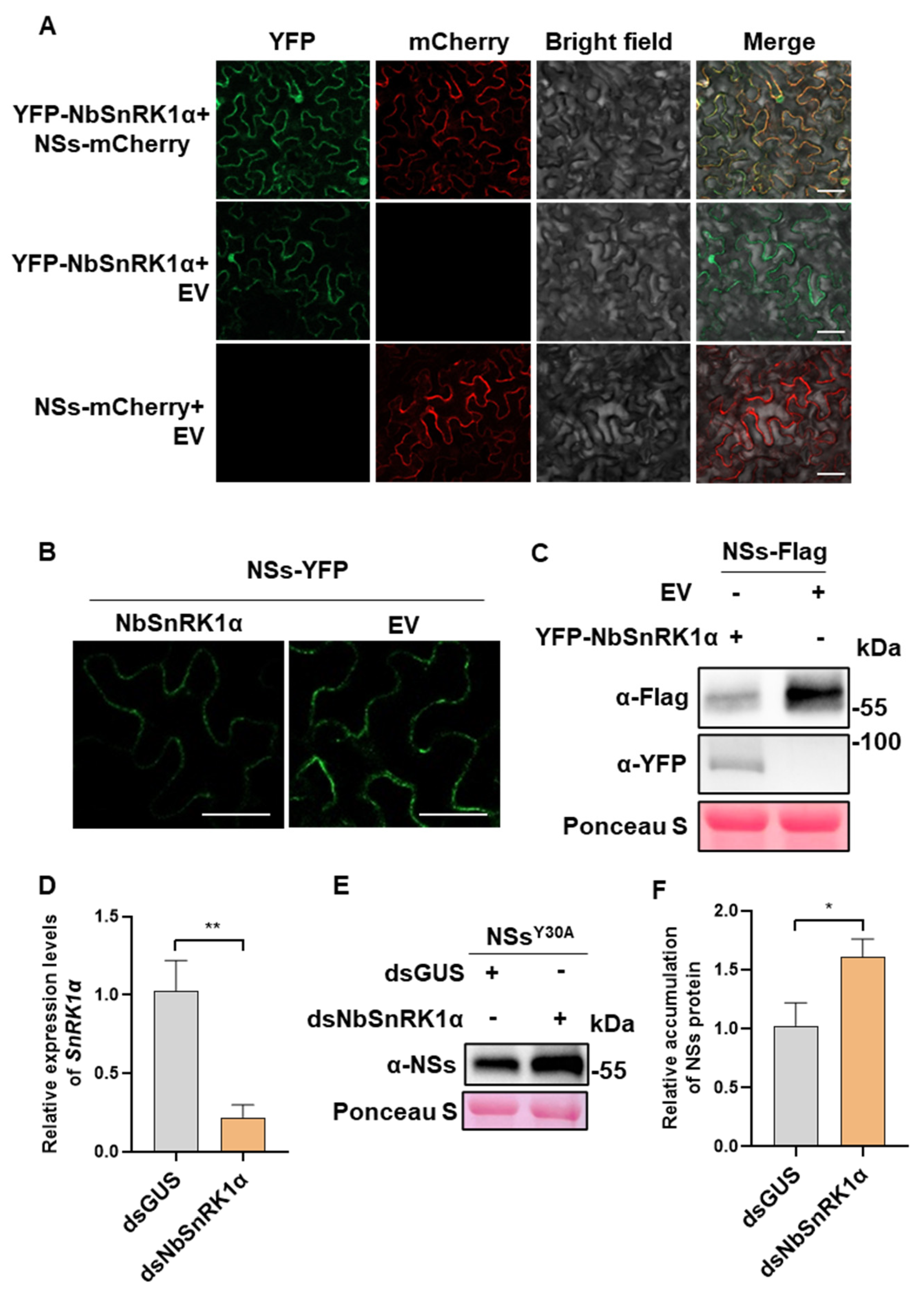
To explore the biological significance of the interaction between NbSnRK1α and TSWV NSs, we first examined their subcellular localization and the impact of NbSnRK1α on NSs protein stability. When YFP-NbSnRK1α and NSs-mCherry were co-expressed in N. benthamiana leaves, YFP-NbSnRK1α localized to both the cytoplasm and nucleus, while NSs-mCherry was exclusively cytoplasmic. Notably, their co-expression did not alter these localization patterns (Figure 2A). We next assessed whether NbSnRK1α influences NSs protein accumulation. Co-expression of NSs-YFP with Flag-NbSnRK1α drastically reduced YFP fluorescence signal compared to the empty vector (EV) control (Figure 2B). Consistently, Western blot analysis verified that co-expression with YFP-NbSnRK1α significantly decreased the accumulation of NSs-Flag (Figure 2C). In the control group, YFP did not affect NSs expression (Figure S2). To further corroborate these observations, we transiently silenced NbSnRK1α via a double-stranded RNA (dsRNA)-mediated method (dsNbSnRK1α), using dsGUS as a negative control (Figure S3). qRT-PCR confirmed efficient silencing of NbSnRK1α at 30 h post-infiltration (hpi) (Figure 2D). Subsequently, the VSR-deficient mutant NSsY30A was infiltrated into these pre-silenced leaves, to preclude potential restoration of silencing, and the results revealed that NSsY30A accumulation was significantly higher in NbSnRK1α-silenced leaves than in the dsGUS control (Figure 2E,F and Figure S4). Collectively, these results demonstrate that NbSnRK1α negatively regulates the stability of TSWV NSs in host plants.

3.3. NbSnRK1α Promotes NSs Degradation via the 26S Proteasome System

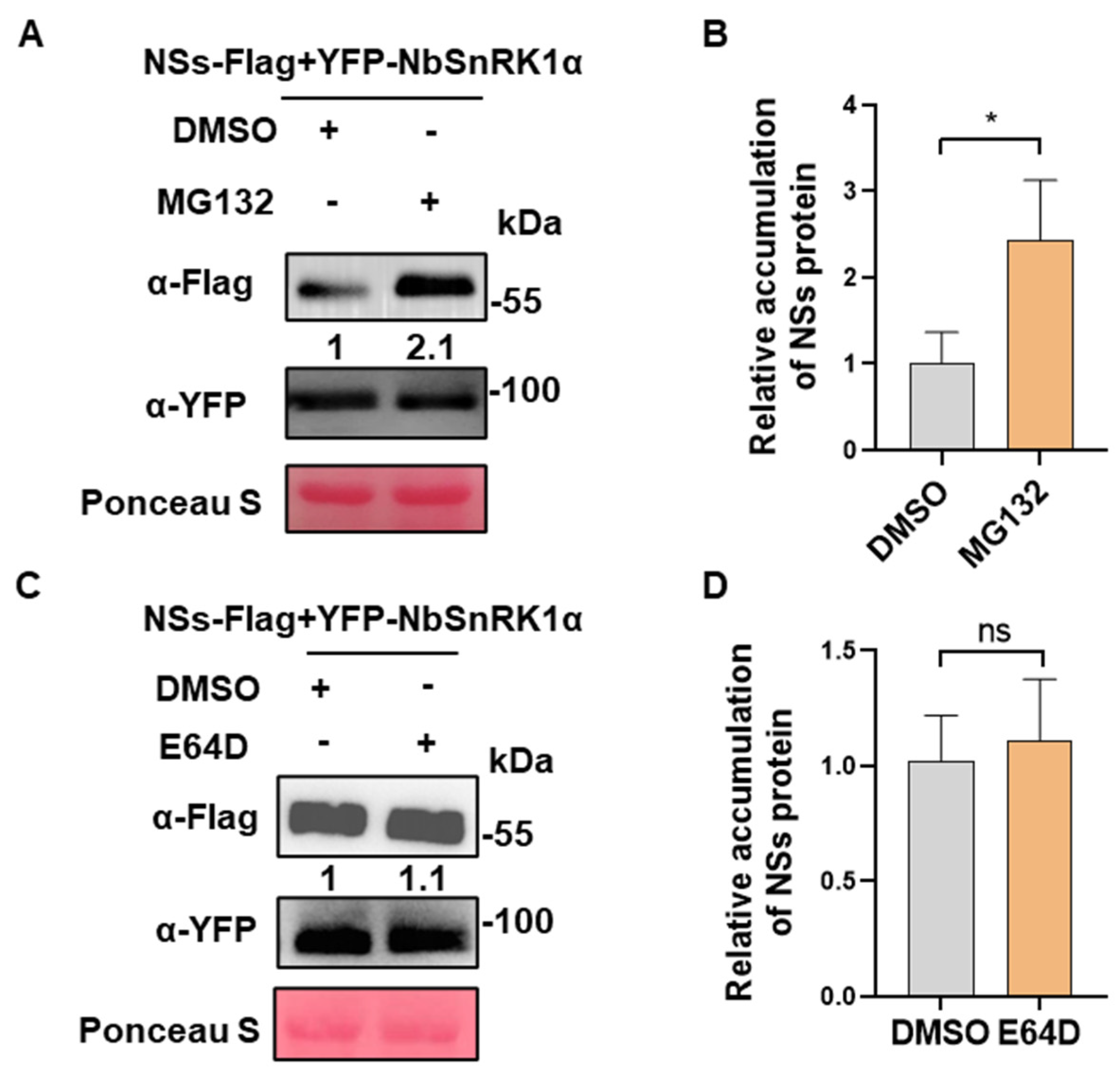
In eukaryotic cells, the ubiquitin-26S proteasome pathway and the autophagy pathway are two major mechanisms for selective protein degradation [42]. To identify the pathway mediating NbSnRK1α-dependent NSs degradation, we treated N. benthamiana leaves co-expressing YFP-NbSnRK1α and NSs-Flag with the proteasome inhibitor MG132 or the autophagy inhibitor E64D. Western blot analysis revealed that MG132 treatment significantly elevated the accumulation of NSs-Flag compared to the dimethyl sulfoxide (DMSO) control, confirming that MG132 abrogated NbSnRK1α-mediated NSs degradation (Figure 3A,B). In contrast, E64D treatment exerted no significant impact on NSs-Flag accumulation (Figure 3C,D). Collectively, these findings demonstrate that NbSnRK1α specifically promotes the degradation of NSs via the 26S proteasomal pathway.

3.4. NbSnRK1α Impairs the RNA Silencing Suppressor Activity of NSs

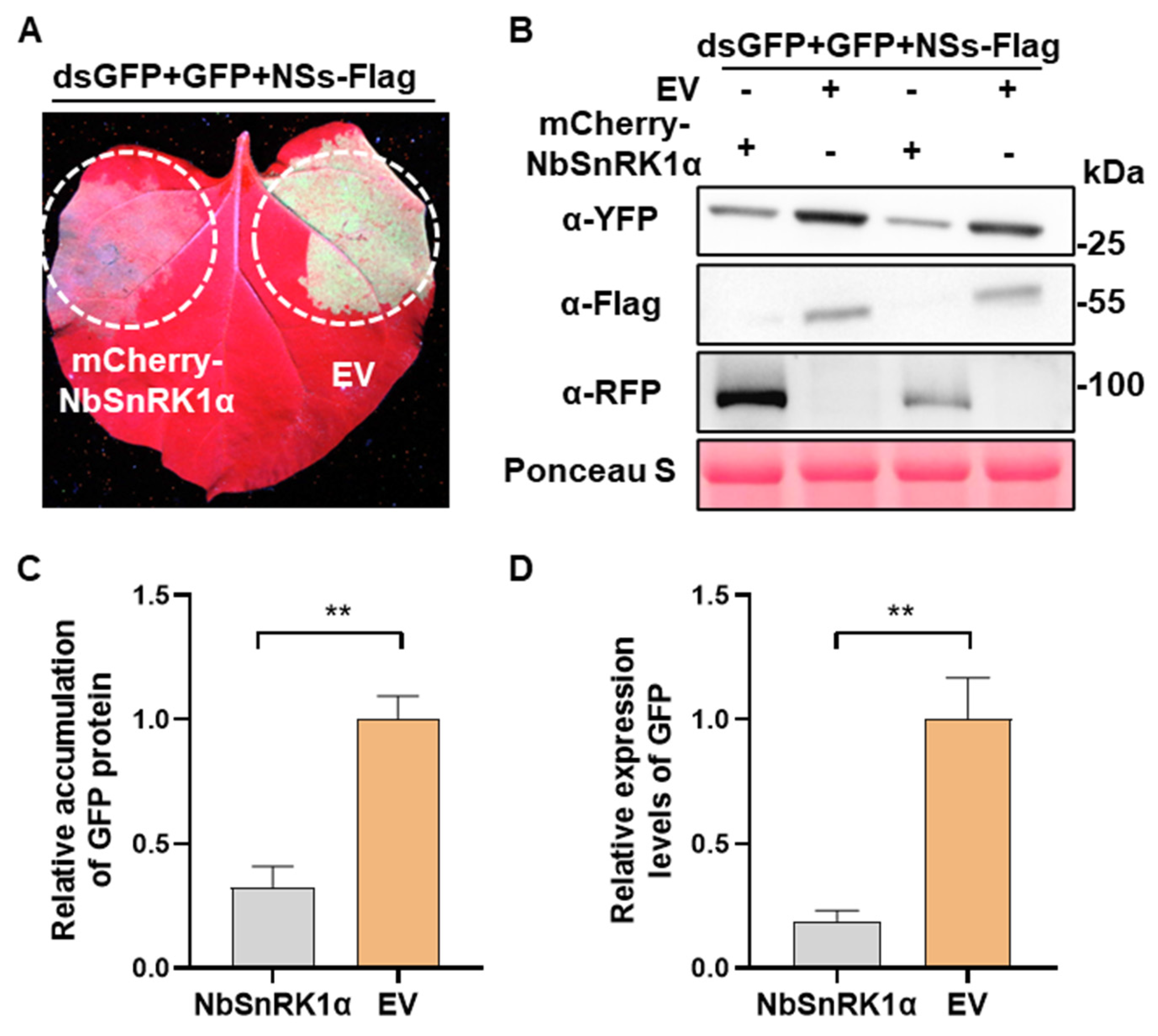
TSWV-encoded NSs serves as a VSR that antagonizes host RNAi-mediated defenses [21,23]. Given that NbSnRK1α promotes NSs degradation, we hypothesized that NbSnRK1α might compromise the VSR activity of NSs. To test this hypothesis, we employed a half-leaf assay by co-infiltrating dsGFP, serves as a silencing inducer, the GFP reporter, and NSs-Flag, together with either mCherry-NbSnRK1α or an empty vector (EV) control. At 48 hpi, a strong GFP fluorescence in the EV control leaf half indicated that NSs effectively suppressed GFP gene silencing. In contrast, GFP fluorescence was significantly attenuated in the leaf half co-expressing mCherry-NbSnRK1α (Figure 4A). Consistent with this observation, both GFP protein accumulation and GFP mRNA transcript levels were significantly decreased in the presence of mCherry-NbSnRK1α (Figure 4B–D). In the control group, RFP did not affect GFP and NSs expression (Figure S5). These results demonstrate that NbSnRK1α compromises the VSR activity of NSs by reducing its cellular abundance.

3.5. NbSnRK1α Confers Antiviral Defense Against TSWV

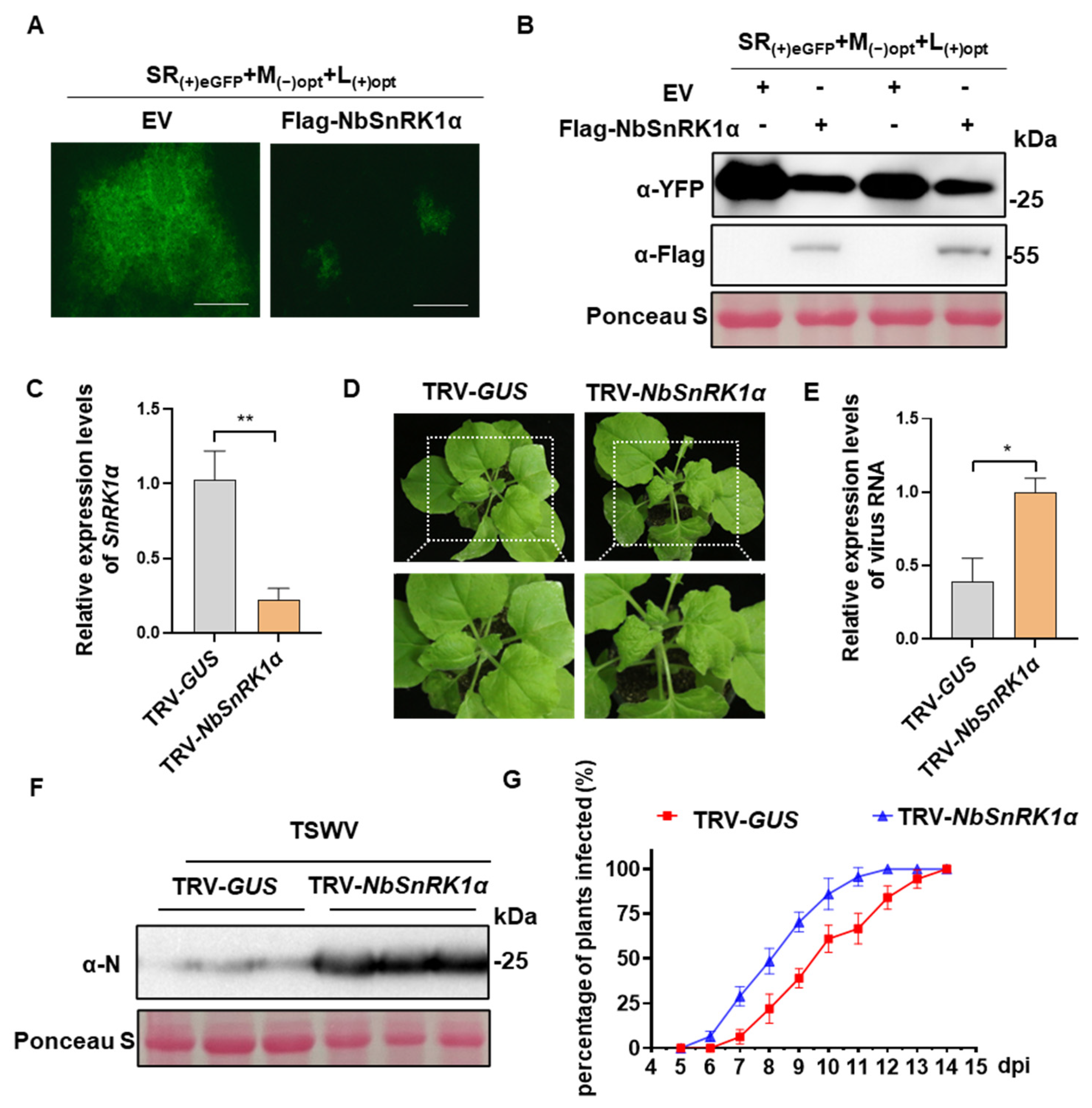
To elucidate the role of NbSnRK1α in TSWV infection, we first assessed its effect on viral replication using a TSWV mini-replicon system [10]. Co-expression of Flag-NbSnRK1α with the TSWV SR(+)eGFP mini-replicon significantly suppressed eGFP fluorescence compared to the EV control (Figure 5A). Western blot analysis further confirmed a substantial reduction in eGFP reporter protein accumulation (Figure 5B), indicating that NbSnRK1α inhibits TSWV replication. To investigate the role of NbSnRK1α during authentic viral infection, we silenced NbSnRK1α expression through TRV-induced gene silencing assay. At 14 dpi, qRT-PCR analysis confirmed that NbSnRK1α transcript levels in TRV-NbSnRK1α plants were reduced to approximately 22% of those in TRV-GUS control plants (Figure 5C). Subsequent mechanical inoculation with TSWV showed that NbSnRK1α-silenced plants developed more severe systemic symptoms, including leaf mosaic and curling, compared to TRV-GUS controls (Figure 5D). Western blot and qRT-PCR analyses confirmed that the accumulation of TSWV nucleocapsid (N) protein and viral RNA was significantly higher in NbSnRK1α-silenced plants (Figure 5E,F). Compared to the TRV-GUS controls, the NbSnRK1α-silenced plants exhibited markedly accelerated symptom progression upon TSWV infection (Figure 5G). These findings suggest that NbSnRK1α functions as an antiviral factor, restraining TSWV replication and systemic spread in N. benthamiana.

4. Discussion

Tomato spotted wilt virus (TSWV) is a highly destructive plant pathogen, responsible for significant global economic losses [1,8]. In the ongoing evolutionary arms race between plants and viruses, hosts have evolved multifaceted defense strategies targeting various stages of the viral life cycle. Conversely, viruses have co-evolved effector proteins that disrupt or hijack specific host components to counteract these defenses [43]. TSWV encodes multifunctional effector proteins, including NSs, which target host factors to antagonize immune responses [14,24]. Functioning as a viral suppressor of RNA silencing (VSR), NSs interferes with siRNA biogenesis to inhibit the host’s RNA interference (RNAi) antiviral machinery. NSs also subverts host immunity by interacting with the transcription factor TCP17 to disrupt auxin biosynthesis signaling, thereby facilitating viral infection [24]. Furthermore, NSs inhibits ATG6-mediated autophagy induction, thereby promoting viral infection [41]. Here, we identified the NbSnRK1α as a novel host interactor of TSWV NSs. This interaction was confirmed both in vitro and in vivo using multiple complementary approaches by Y2H, BiFC, GST pull-down, and Co-IP. We further demonstrated that NbSnRK1α mediates NSs degradation via the 26S proteasome pathway. This degradation alleviates the suppression of host RNAi machinery by NSs. Consistently, VIGS assays demonstrated that NbSnRK1α acts as a host defense factor, restricting TSWV infection.
SnRK1 is a central energy sensor activated under energy-deficient conditions caused by biotic or abiotic stress. It maintains cellular energy homeostasis by promoting catabolic processes and inhibiting anabolism [28]. Besides its role in energy balance, SnRK1 also contributes to plant antiviral immunity [31,32,44]. For example, overexpression of the SnRK1α subunit enhances plant resistance to geminivirus infection in tobacco [31]. During geminivirus infection, the C2 protein of Beet curly top virus (BCTV) indirectly suppresses SnRK1α-mediated antiviral defense by interacting with and inactivating adenosine kinase (ADK) [45]. SnRK1 also attenuates geminivirus infection by interacting with the βC1 protein of Tomato yellow leaf curl China betasatellite (TYLCCNB) and mediating its phosphorylation [46]. Furthermore, the AL2/C2 proteins of several geminiviruses, including Tomato yellow leaf curl virus (TYLCV), Tomato golden mosaic virus (TGMV), Tomato mottle virus (ToMoV), and BCTV, are substrates for SnRK1α phosphorylation, which delays infection [32,44,45]. Collectively, these prior studies primarily delineate a role for SnRK1 in regulating DNA virus infections. In contrast, TSWV is a model segmented negative-strand RNA virus, with a tripartite genome consisting of S, M, and L RNA segments. Our study demonstrates that TSWV NSs interacts with SnRK1α and provides evidence that SnRK1α negatively regulates the infection of segmented negative-strand RNA virus (Figure 1 and Figure 5). This finding implies that the antiviral function of SnRK1 may have broad-spectrum applicability.
Host plants employ protein quality control mechanisms, including the ubiquitin-proteasome system and autophagy, to degrade viral effector proteins, representing a key battleground in the plant–virus arms race [47,48]. For instance, the C4 protein of tobacco leaf curl Yunnan virus (TbLCYnV) promotes autophagic degradation of SnRK1β2 to enhance viral infection [44]. Similarly, the glycoprotein (G) of rice stripe mosaic cytorhabdovirus (RSMV) interacts with SnRK1β to induce autophagy, resulting in its subsequent autophagic degradation [49]. We found that interaction with NbSnRK1α does not alter the subcellular localization of NSs but is sufficient to mediate its degradation (Figure 2). The appearance of additional bands in vivo could be due to protein-specific modifications in plant cells (Figure 2C). Using MG132 and E64D inhibitors, we determined that SnRK1α-mediated NSs degradation is dependent on the 26S proteasome pathway but independent of the autophagy pathway (Figure 3). Accordingly, transient silencing of SnRK1α via dsRNA resulted in significantly increased accumulation of the subsequently expressed NSs protein (Figure 2E,F). VSRs potently inhibit host RNAi to facilitate viral infection. Co-expression of SnRK1α with NSs potently impaired the VSR activity of NSs. Consistently, the NSs protein became undetectable in the presence of SnRK1α, indicative of highly efficient SnRK1α-mediated degradation (Figure 4). Taken together, our findings uncover an antiviral defense mechanism wherein the host energy sensor SnRK1α directly targets and destabilizes a key viral effector via the 26S proteasome degradation system (Figure S6). This pathway promotes the host’s RNAi-based antiviral immunity against a segmented negative-sense RNA virus.

5. Conclusions

This study identifies NbSnRK1α as a key antiviral factor that restricts TSWV infection. We show that NbSnRK1α directly interacts with the viral silencing suppressor NSs and promotes its degradation via the 26S proteasome pathway, independently of autophagy. This degradation alleviates suppression of host RNAi, thereby restoring antiviral defense and limiting viral replication and systemic spread. Transient silencing of NbSnRK1α enhances viral NSs protein accumulation, further confirming its role in plant resistance to TSWV. These findings reveal that NbSnRK1α exerts broad-spectrum antiviral defense by degrading a critical viral effector. This work not only expands our understanding of plant–virus interactions but also highlights potential targets for engineering resistance against segmented negative-strand RNA viruses.

Supplementary Materials

The following supporting information can be downloaded at: https://www.mdpi.com/article/10.3390/agronomy16030284/s1, Figure S1: Screening of proteins interacting with NSs from N. benthamiana cDNA library by yeast two-hybrid; Figure S2: Western blot detection of YFP and mCherry accumulation. Figure S3: Schematic representation of the half-leaf agroinfiltration assay; Figure S4: The NSsY30A mutant lacks VSR activity; Figure S5: Western blot detection of YFP and mCherry accumulation. Figure S6: Schematic model of SnRK1α-mediated degradation of TSWV NSs protein.

Author Contributions

Data curation, X.Z., Y.Y., Q.L., T.Z., S.Z. and M.F.; Investigation, Y.G. and J.T.; Validation, A.L.; Writing—original draft, X.Z. and M.F.; Writing—review and editing, J.L., M.Z., Y.J. and X.T. All authors have read and agreed to the published version of the manuscript.

Funding

This work was supported by grants from the Joint Research Program of State Key Laboratory of Agricultural and Forestry Biosecurity (SKLJRP2506), the National Natural Science Foundation of China (32470165, 32430088, and 32220103008), the National Key Research and Development Program of China (2022YFD1401200), the Fundamental and Interdisciplinary Disciplines Breakthrough Plan of the Ministry of Education of China (JYB2025XDXM703), the Fundamental Research Funds for the Central Universities (KJYQ2025048),the funds from the National Watermelon and Melon Industry Technology System (CARS-25-2025-G20), Yunnan Seed Laboratory (Grant No. 202205AR070001), the key projects of YNTC (2025530000241001).

Data Availability Statement

The original contributions presented in this study are included in the article/Supplementary Materials. Further inquiries can be directed to the corresponding author.

Conflicts of Interest

The authors declare no conflicts of interest.

Abbreviations

The following abbreviations are used in this manuscript:
TSWVTomato spotted wilt virus
NSVsnegative-strand RNA viruses
UPSUbiquitin-proteasome system
VSRViral suppressor of RNA silencing
SnRK1SNF (Sucrose non-fermenting)-1-related protein kinase1
RdRpRNA-dependent RNA polymerase
RNPsRibonucleoprotein complexes
NSmMovement protein
NSsNonstructural protein
Adi3vrPto-dependent Pto-interacting protein3
TRVTobacco rattle virus
PDSPhytoene desaturase
DIGSdsRNA-induced gene silencing
VIGSVirus-induced gene silencing
N. benthamianaNicotiana benthamiana
qPCRQuantitative polymerase chain reaction
dpiDays post-inoculation
HRPHorseradish peroxidase
Y2HYeast two-hybrid
BiFCBimolecular fluorescence complementation
CoIPCo-immunoprecipitation assay
RNAiRNA interference
TYLCCNBTomato yellow leaf curl China betasatellite
TYLCVTomato yellow leaf curl virus
TGMVTomato golden mosaic virus
ToMoVTomato mottle virus
TbLCYnVTobacco leaf curl Yunnan virus
RSMVRice stripe mosaic cytorhabdovirus

Appendix A

Table A1. Primers used in the study.
ConstructPrimer Sequence (5′ to 3′)
p2300-intron-NbSnRK1αF: TTTGCAGGTATTTCTAGACAATAAGGTTGCTCCTGTCA
R: GAGCTTGCATGCCTGCAGCCATTTGACGATGAAAACAT
F: TTTCGCGAGCTCGGTACCCCATTTGACGATGAAAACAT
R: TCTTACACATTTGGATCCCAATAAGGTTGCTCCTGTCA
pCV-NbSnRK1α-nYFPF: GGGGACGAGCTCGGTACCATGGATGGATCAACAGTCCA
R: GTACGAGATCTGGTCGACAAGGACTCGAAGCTGAGCAA
pCV–NbSnRK1α -cYFPF: GGCGGTACCCGGGATCCAATGGATGGATCAACAGTCCA
R: AAAGCTCTGCAGGTCGACTCAAAGGACTCGAAGCTGAG
p2300-flag-NbSnRK1αF: TTTCGCGAGCTCGGTACCATGGATGGATCAACAGTCCA
R: GTCTTTGTAGTCTCTAGAAAGGACTCGAAGCTGAGCAA
p2300-mCherry-NbSnRK1αF: ATGGATGGATCAACAGTCCATACAGATCTGGATCC
R: CAGGTCGACTCTAGACTCAAAGGACTCGAAGCTGAG
p2300-YFP-NbSnRK1αF: ATGGATGGATCAACAGTCCATACAGATCTGGATCC
R: CAGGTCGACTCTAGACTCAAAGGACTCGAAGCTGAG
pTRV2-NbSnRK1αF: TTTGCAGGTATTTCTAGACAATAAGGTTGCTCCTGTCA
R: GAGCTTGCATGCCTGCAGCCATTTGACGATGAAAACAT
qRT-PCR-NbActinF: GGCATTCATGAAACCACATACA
R: AGGACAATGTTTCCGTACAGAT
qRT-PCR-NbSnRK1αF: ATTTATCAGCTGGTGCAAGG
R: AATTCAGCTCCCATGTAGCC
qRT-PCR-GFPF: GCTGGACGGCGACGTAAACG
R: GGGTGTCGCCCTCGAACTTC
F: Forward Primer, R: Reverse Primer.

References

  1. Pappu, H.R.; Jones, R.A.C.; Jain, R.K. Global status of tospovirus epidemics in diverse cropping systems: Successes achieved and challenges ahead. Virus Res. 2009, 141, 219–236. [Google Scholar] [CrossRef] [PubMed]
  2. Oliver, J.E.; Whitfield, A.E. The genus tospovirus: Emerging bunyaviruses that threaten good decurity. Annu. Rev. Virol. 2016, 3, 101–124. [Google Scholar] [CrossRef] [PubMed]
  3. Bahat, Y.; Alter, J.; Dessau, M. Crystal structure of tomato spotted wilt virus Gn reveals a dimer complex formation and evolutionary link to animal-infecting viruses. Proc. Natl. Acad. Sci. USA 2020, 117, 26237–26244. [Google Scholar] [CrossRef] [PubMed]
  4. Parrella, G.; Gognalons, P.; Gebre-Selassiè, K.; Vovlas, C.; Marchoux, G. An update of the host range of tomato spotted wilt virus. J. Plant Pathol. 2003, 85, 227–264. [Google Scholar]
  5. Turina, M.; Kormelink, R.; Resende, R.O. Resistance to tospoviruses in vegetable crops: Epidemiological and molecular aspects. Annu. Rev. Phytopathol. 2016, 54, 347–371. [Google Scholar] [CrossRef]
  6. Rotenberg, D.; Jacobson, A.L.; Schneweis, D.J.; Whiffleld, A.E. Thrips transmission of tospoviruses. Curr. Opin. Virol. 2015, 15, 80–89. [Google Scholar] [CrossRef]
  7. Gilbertson, R.L.; Batuman, O.; Webster, C.G.; Adkins, S. Role of the insect supervectors Bemisia tabaci and Frankliniella occidentalis in the emergence and global spread of plant viruses. Annu. Rev. Virol. 2015, 2, 67–93. [Google Scholar] [CrossRef]
  8. Scholthof, K.B.G.; Adkins, S.; Czosnek, H.; Palukaitis, P.; Jacquot, E.; Hohn, T.; Hohn, B.; Saunders, K.; Candresse, T.; Ahlquist, P.; et al. Top 10 plant viruses in molecular plant pathology. Mol. Plant Pathol. 2011, 12, 938–954. [Google Scholar] [CrossRef]
  9. Kormelink, R.; Garcia, M.L.; Goodin, M.; Sasaya, T.; Haenni, A.L. Negative-strand RNA viruses: The plant-infecting counterparts. Virus Res. 2011, 162, 184–202. [Google Scholar] [CrossRef]
  10. Feng, M.F.; Cheng, R.X.; Chen, M.L.; Guo, R.; Li, L.Y.; Feng, Z.K.; Wu, J.Y.; Xie, L.; Hong, J.; Zhang, Z.K.; et al. Rescue of tomato spotted wilt virus entirely from complementary DNA clones. Proc. Natl. Acad. Sci. USA 2020, 117, 1181–1190. [Google Scholar] [CrossRef]
  11. Adkins, S.; Quadt, R.; Choi, T.J.; Ahlquist, P.; German, T. An RNA-dependent RNA polymerase activity associated with virions of tomato spotted wilt virus, a plant- and insect-infecting bunyavirus. Virology 1995, 207, 308–311. [Google Scholar] [CrossRef]
  12. Chapman, E.J.; Hilson, P.; German, T.L. Association of L protein and in vitro tomato spotted wilt virus RNA-dependent RNA polymerase activity. Intervirology 2003, 46, 177–181. [Google Scholar] [CrossRef] [PubMed]
  13. Li, J.; Cao, L.; Zhao, Y.Q.; Shen, J.H.; Wang, L.; Feng, M.F.; Zhu, M.; Ye, Y.H.; Kormelink, R.; Tao, X.R.; et al. Structural basis for the activation of plant bunyavirus replication machinery and its dual-targeted inhibition by ribavirin. Nat. Plants 2025, 11, 518–530. [Google Scholar] [CrossRef] [PubMed]
  14. Zhu, M.; van Grinsven, I.L.; Kormelink, R.; Tao, X.R. Paving the way to tospovirus infection: Multilined interplays with plant innate immunity. Annu. Rev. Phytopathol. 2019, 57, 41–62. [Google Scholar] [CrossRef] [PubMed]
  15. Soellick, T.R.; Uhrig, J.F.; Bucher, G.L.; Kellmann, J.W.; Schreier, P.H. The movement protein NSm of tomato spotted wilt tospovirus (TSWV): RNA binding, interaction with the TSWV N protein, and identification of interacting plant proteins. Proc. Natl. Acad. Sci. USA 2000, 97, 2373–2378. [Google Scholar] [CrossRef]
  16. Ribeiro, D.; Foresti, O.; Denecke, J.; Wellink, J.; Goldbach, R.; Kormelink, R.J.M. Tomato spotted wilt virus glycoproteins induce the formation of endoplasmic reticulum- and Golgi-derived pleomorphic membrane structures in plant cells. J. Gen. Virol. 2008, 89, 1811–1818. [Google Scholar] [CrossRef]
  17. Sin, S.H.; McNulty, B.C.; Kennedy, G.G.; Moyer, J.W. Viral genetic determinants for thrips transmission of Tomato spotted wilt virus. Proc. Natl. Acad. Sci. USA 2005, 102, 5168–5173. [Google Scholar] [CrossRef]
  18. Dehaan, P.; Wagemakers, L.; Peters, D.; Goldbach, R. The S RNA segment of tomato spotted wilt virus has an ambisense character. J. Gen. Virol. 1990, 71, 1001–1007. [Google Scholar] [CrossRef]
  19. Komoda, K.; Narita, M.; Yamashita, K.; Tanaka, I.; Yao, M. Asymmetric trimeric ring structure of the nucleocapsid protein of tospovirus. J. Virol. 2017, 91, e01002-17. [Google Scholar] [CrossRef]
  20. Guo, Y.; Liu, B.C.; Ding, Z.Z.; Li, G.B.; Liu, M.Z.; Zhu, D.T.; Sun, Y.N.; Dong, S.S.; Lou, Z.Y. Distinct mechanism for the formation of the ribonucleoprotein complex of tomato spotted wilt virus. J. Virol. 2017, 91, e00892-17. [Google Scholar] [CrossRef]
  21. Takeda, A.; Sugiyama, K.; Nagano, H.; Mori, M.; Kaido, M.; Mise, K.; Tsuda, S.; Okuno, T. Identification of a novel RNA silencing suppressor, NSs protein of Tomato spotted wilt virus. Febs Lett. 2002, 532, 75–79. [Google Scholar] [CrossRef]
  22. Bucher, E.; Sijen, T.; de Haan, P.; Goldbach, R.; Prins, M. Negative-strand tospoviruses and tenuiviruses carry a gene for a suppressor of gene silencing at analogous genomic positions. J. Virol. 2003, 77, 1329–1336. [Google Scholar] [CrossRef] [PubMed]
  23. Schnettler, E.; Hemmes, H.; Huismann, R.; Goldbach, R.; Prins, M.; Kormelink, R. Diverging affinity of tospovirus RNA silencing suppressor proteins, NSs, for various RNA duplex molecules. J. Virol. 2010, 84, 11542–11554. [Google Scholar] [CrossRef] [PubMed]
  24. Chen, J.; Zhao, Y.X.; Luo, X.J.; Hong, H.; Yang, T.Q.; Huang, S.; Wang, C.L.; Chen, H.Y.; Qian, X.; Feng, M.F.; et al. NLR surveillance of pathogen interference with hormone receptors induces immunity. Nature 2023, 613, 145–152. [Google Scholar] [CrossRef] [PubMed]
  25. Crepin, N.; Rolland, F. SnRK1 activation, signaling, and networking for energy homeostasis. Curr. Opin. Plant Biol. 2019, 51, 29–36. [Google Scholar] [CrossRef]
  26. Polge, C.; Thomas, M. SNF1/AMPK/SnRK1 kinases, global regulators at the heart of energy control? Trends Plant Sci. 2007, 12, 20–28. [Google Scholar] [CrossRef]
  27. Broeckx, T.; Hulsmans, S.; Rolland, F. The plant energy sensor: Evolutionary conservation and divergence of SnRK1 structure, regulation, and function. J. Exp. Bot. 2016, 67, 6215–6252. [Google Scholar] [CrossRef]
  28. Baena-González, E.; Rolland, F.; Thevelein, J.M.; Sheen, J. A central integrator of transcription networks in plant stress and energy signalling. Nature 2007, 448, 938–942. [Google Scholar] [CrossRef]
  29. Bruns, A.N.; Li, S.Z.; Mohannath, G.; Bisaro, D.M. Phosphorylation of Arabidopsis eIF4E and eIFiso4E by SnRK1 inhibits translation. FEBS J. 2019, 286, 3778–3796. [Google Scholar] [CrossRef]
  30. Szczesny, R.; Büttner, D.; Escolar, L.; Schulze, S.; Seiferth, A.; Bonas, U. Suppression of the AvrBs1-specific hypersensitive response by the YopJ effector homolog AvrBsT from depends on a SNF1-related kinase. New Phytol. 2010, 187, 1058–1074. [Google Scholar] [CrossRef]
  31. Hao, L.H.; Wang, H.; Sunter, G.; Bisaro, D.M. Geminivirus AL2 and L2 proteins interact with and inactivate SNF1 kinase. Plant Cell 2003, 15, 1034–1048. [Google Scholar] [CrossRef]
  32. Shen, W.; Hanley-Bowdoin, L. SnRK1: A versatile plant protein kinase that limits geminivirus infection. Curr. Opin. Virol. 2021, 47, 18–24. [Google Scholar] [CrossRef]
  33. Avila, J.; Gregory, O.G.; Su, D.Y.; Deeter, T.A.; Chen, S.X.; Silva-Sanchez, C.; Xu, S.L.; Martin, G.B.; Devarenne, T.P. The β-subunit of the SnRK1 complex is phosphorylated by the plant cell death suppressor Adi3. Plant Physiol. 2012, 159, 1277–1290. [Google Scholar] [CrossRef] [PubMed]
  34. Perochon, A.; Jia, J.G.; Kahla, A.; Arunachalam, C.; Scofield, S.R.; Bowden, S.; Wallington, E.; Doohan, F.M. TaFROG encodes a pooideae orphan protein that interacts with SnRK1 and enhances resistance to the mycotoxigenic fungus Fusarium graminearum. Plant Physiol. 2015, 169, 2895–2906. [Google Scholar] [CrossRef] [PubMed]
  35. Margalha, L.; Confraria, A.; Baena-González, E. SnRK1 and TOR: Modulating growth-defense trade-offs in plant stress responses. J. Exp. Bot. 2019, 70, 2261–2274. [Google Scholar] [CrossRef] [PubMed]
  36. Filipe, O.; De Vleesschauwer, D.; Haeck, A.; Demeestere, K.; Höfte, M. The energy sensor OsSnRK1α confers broad-spectrum disease resistance in rice. Sci. Rep. 2018, 8, 3864. [Google Scholar] [CrossRef]
  37. Zeng, M.; Fu, S.; Xu, Y.; Li, L.; Wang, D.; Gao, S.B.; Zheng, L.; Zhang, Y.; Zhang, C.; Fei, S.; et al. Viral proteins suppress rice defenses by boosting OsTSN1 RNA decay via phase separation and multimerization. Nat. Commun. 2025, 16, 7481. [Google Scholar] [CrossRef]
  38. Jiang, L.; Lu, Y.; Zheng, X.; Yang, X.; Chen, Y.; Zhang, T.; Zhao, X.; Wang, S.; Zhao, X.; Song, X.; et al. The plant protein NbP3IP directs degradation of Rice stripe virus p3 silencing suppressor protein to limit virus infection through interaction with the autophagy-related protein NbATG8. New Phytol. 2021, 229, 1036–1051. [Google Scholar] [CrossRef]
  39. Wang, Y.; Li, J.; Wang, J.; Han, P.; Miao, S.; Zheng, X.; Han, M.; Shen, X.; Li, H.; Wu, M.; et al. Plant UVRAG interacts with ATG14 to regulate autophagosome maturation and geminivirus infection. New Phytol. 2022, 236, 1358–1374. [Google Scholar] [CrossRef]
  40. Feng, M.F.; Chen, M.L.; Yuan, Y.L.; Liu, Q.H.; Cheng, R.X.; Yang, T.Q.; Li, L.Y.; Guo, R.; Dong, Y.X.; Chen, J.; et al. Interspecies/intergroup complementation of orthotospovirus replication and movement through reverse genetics systems. J. Virol. 2023, 97, e0180922. [Google Scholar] [CrossRef]
  41. Zhang, X.W.; Hong, H.; Yan, J.L.; Yuan, Y.L.; Feng, M.F.; Liu, Q.H.; Zhao, Y.X.; Yang, T.Q.; Huang, S.; Wang, C.L.; et al. Autophagy plays an antiviral defence role against tomato spotted wilt orthotospovirus and is counteracted by viral effector NSs. Mol. Plant Pathol. 2024, 25, e70012. [Google Scholar] [CrossRef]
  42. Wang, Y.; Le, W.D. Autophagy and Ubiquitin-Proteasome System. Adv. Exp. Med. Biol. 2019, 1206, 527–550. [Google Scholar] [PubMed]
  43. Wu, J.; Zhang, Y.; Li, F.; Zhang, X.; Ye, J.; Wei, T.; Li, Z.; Tao, X.; Cui, F.; Wang, X.; et al. Plant virology in the 21st century in China: Recent advances and future directions. J. Integr. Plant Biol. 2024, 66, 579–622. [Google Scholar] [CrossRef] [PubMed]
  44. Li, X.Q.; Zhao, M.; Yang, W.Y.; Zhou, X.P.; Xie, Y. The C4 protein of TbLCYnV promotes SnRK1 β2 degradation via the autophagy pathway to enhance viral infection in N. benthamiana. Viruses 2024, 16, 234. [Google Scholar] [CrossRef]
  45. Guerrero, J.; Regedanz, E.; Lu, L.; Ruan, J.H.; Bisaro, D.M.; Sunter, G. Manipulation of the plant host by the geminivirus AC2/C2 protein, a central player in the infection cycle. Front. Plant Sci. 2020, 11, 591. [Google Scholar] [CrossRef] [PubMed]
  46. Shen, Q.T.; Liu, Z.; Song, F.M.; Xie, Q.; Hanley-Bowdoin, L.; Zhou, X.P. Tomato SlSnRK1 protein interacts with and phosphorylates βC1, a pathogenesis protein encoded by a geminivirus β-satellite. Plant Physiol. 2011, 157, 1394–1406. [Google Scholar] [CrossRef]
  47. Ge, L.; Zhou, X.; Li, F. Plant-virus arms race beyond RNA interference. Trends Plant Sci. 2024, 29, 16–19. [Google Scholar] [CrossRef]
  48. Dubiella, U.; Serrano, I. The Ubiquitin Proteasome System as a Double Agent in Plant-Virus Interactions. Plants 2021, 10, 928. [Google Scholar] [CrossRef]
  49. Huang, X.Q.; Wang, J.K.; Chen, S.P.; Liu, S.Y.; Li, Z.B.; Wang, Z.Y.; Chen, B.; Zhang, C.; Zhang, Y.F.; Wu, J.H.; et al. Rhabdovirus encoded glycoprotein induces and harnesses host antiviral autophagy for maintaining its compatible infection. Autophagy 2024, 20, 275–294. [Google Scholar]
Figure 1. Interaction between TSWV NSs and NbSnRK1α in vitro and in vivo. (A) Yeast two-hybrid assays for the interaction between NSs and NbSnRK1 from N. benthamiana. NbSnRK1α, NbSnRK1β, and NbSnRK1γ were used for testing the interaction with NSs in yeast cells on SD/-Trp/-Leu and SD/-Trp/-Leu/-His/4 mM 3-MA media. (B) BiFC assay for the interaction between NbSnRK1α and NSs in N. benthamiana at 48 hpi. Bar, 50 μm. (C) In vitro pull-down assay showed that NbSnRK1α interacts with NSs. Anti-Flag and anti-GST antibodies were used for immunoblot analysis. GST alone was used as the negative control. (D) Co-IP assay for the interaction between NSs and NbSnRK1α. NSs-Flag was used to immunoprecipitated YFP-NbSnRK1α that was transiently expressed in N. benthamiana leaves. Statistical analysis was performed using a two-tailed unpaired Student’s t test, * p < 0.05.
Agronomy 16 00284 g001
Figure 2. NbSnRK1α co-localizes with NSs and inhibits its accumulation in plants. (A) Subcellular localization of YFP-NbSnRK1α and NSs-mCherry. mCherry empty vectors control is localized in the nucleus and cytoplasm. Bar, 50 μm. (B) Fluorescence accumulation of YFP in N. benthamiana leaves co-expressing NbSnRK1α and NSs-YFP, with empty vector (EV) as the control. Bar, 50 μm. (C) Western blot detection of NSs-Flag and YFP-NbSnRK1α accumulation using Flag-/YFP-specific antibodies. Ponceau S staining was used as protein loading control. (D,F) Quantification of band signal intensities from (C,E) (n = 3) using ImageJ (version 5.2.1). Statistical analysis was performed using a two-tailed unpaired Student’s t test, * p < 0.05, ** p < 0.01. (D) Relative expression levels of NbSnRK1α in N. benthamiana plants pre-treated with silencing NbSnRK1α by hairpin RNA construct (dsNbSnRK1α) (means ± SD, n = 3). (E) Western blot detection of NSsY30A accumulation with silencing NbSnRK1α in N. benthamiana leaves using NS-specific antibodies. Ponceau S staining was used as protein loading control.
Agronomy 16 00284 g002
Figure 3. NbSnRK1α promotes NSs degradation through the 26S proteasome pathway. (A,C) Western blot detection of N. benthamiana plant leaves treated with MG132 (A) or E64D (C) were co-infiltration YFP-NbSnRK1α and NSs-Flag, with DMSO as the control. Ponceau S staining was used as protein loading control. (B,D) Quantification of band signal intensities from (A,C) (n = 3) using ImageJ (version 5.2.1). Statistical analysis was performed using a two-tailed unpaired Student’s t test, * p < 0.05; ns, not significant.
Agronomy 16 00284 g003
Figure 4. NbSnRK1α compromises the RNA silencing suppressor activity of TSWV NSs. (A) Phenotype of N. benthamiana plants under UV light at 4 dpi following co-infiltration with dsGFP, GFP and NSs, EV control or NbSnRK1α. (B) Western blot detection of N. benthamiana plant leaves was co-infiltration dsGFP, GFP, NbSnRK1α, and NSs-Flag, with EV as the control. Ponceau S staining was used as protein loading control. (C) Quantification of band signal intensities from (B) (n = 3) using ImageJ (version 5.2.1). Statistical analysis was performed using a two-tailed unpaired Student’s t test, ** p < 0.01. (D) Relative expression levels of GFP from (B) (means ± SD, n = 3). Statistical analysis was performed using a two-tailed unpaired Student’s t test; ** p < 0.01.
Agronomy 16 00284 g004
Figure 5. NbSnRK1α-silenced N. benthamiana plants were susceptible to TSWV infection. (A) N. benthamiana leaves expressing empty vector (EV) or Flag-NbSnRK1α were inoculated with TSWV infectious clones SR(+)eGFP+M(−)opt+L(+)opt. eGFP fluorescence expressed by TSWV was observed under an inverted fluorescence microscope at 48 hpi. Bars, 200 μm. (B) Western blot analysis showing the accumulation levels of TSWV infectious clones and NbSnRK1α protein in agroinfiltrated N. benthamiana leaves using GFP- and Flag-specific antibodies, respectively. Ponceau S staining was used to verify equal protein loading. (C) Relative expression levels of NbSnRK1α in N. benthamiana plants pre-treated with TRV-NbSnRK1α, by quantitative RT-PCR (means ± SD, n = 3). (D) TSWV-infected NbSnRK1α-silenced plants, phenotypes of TSWV-infected plants observed at 6 dpi. Magnified views of the boxed areas (upper panels) are displayed below. (E) Relative expression levels of TSWV N from (D) (means ± SD, n = 3). Statistical analysis was performed using a two-tailed unpaired Student’s t test, * p < 0.05, ** p < 0.01. (F) Accumulation of TSWV in NbSnRK1α-silenced plants analyzed by Western blot using N-specific antibodies at 6 dpi. (G) Line chart of disease symptom development of N. benthamiana plants pre-treated with TRV-NbSnRK1α infected with TSWV.
Agronomy 16 00284 g005
Disclaimer/Publisher’s Note: The statements, opinions and data contained in all publications are solely those of the individual author(s) and contributor(s) and not of MDPI and/or the editor(s). MDPI and/or the editor(s) disclaim responsibility for any injury to people or property resulting from any ideas, methods, instructions or products referred to in the content.