Effect of Fiber Surface Characteristics on the Interfacial Properties of T1100-Grade Carbon Fiber Bismaleimide Composites


Abstract
1. Introduction
2. Experimental Materials and Methods
2.1. Materials
2.2. Preparation of Composites
2.3. Performance Characterization Methods
3. Results and Discussion
3.1. Surface Morphology and Physical Properties of Different T1100-Grade CFs
3.2. Surface Chemical Characteristics of Different T1100-Grade CFs
3.3. Reaction Characteristics of Sizing Agents of Different T1100-Grade CFs with Resin
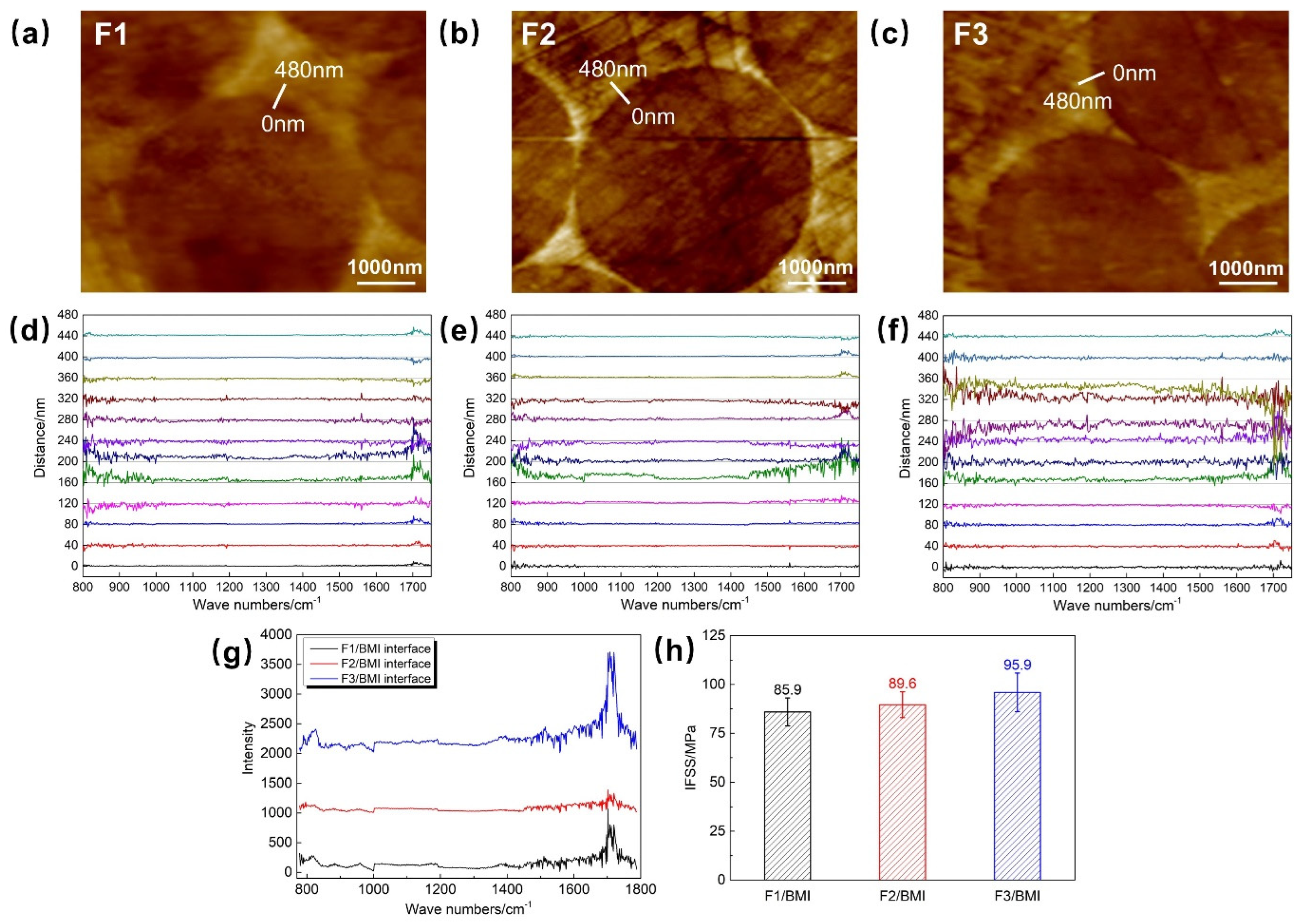
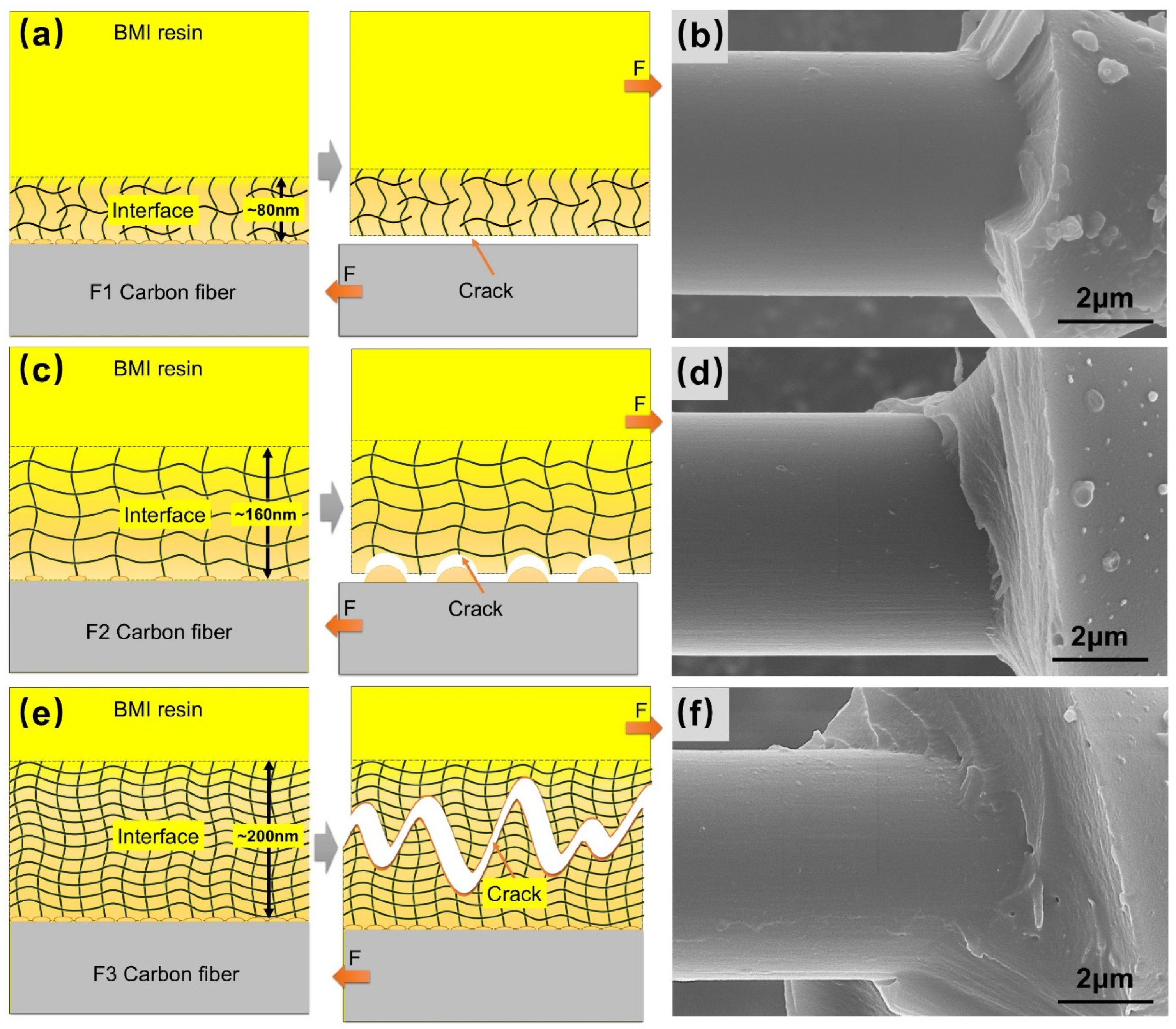
3.4. Interfacial Characteristics of T1100-Grade CF/Resin and Their Influence on Interfacial Strength
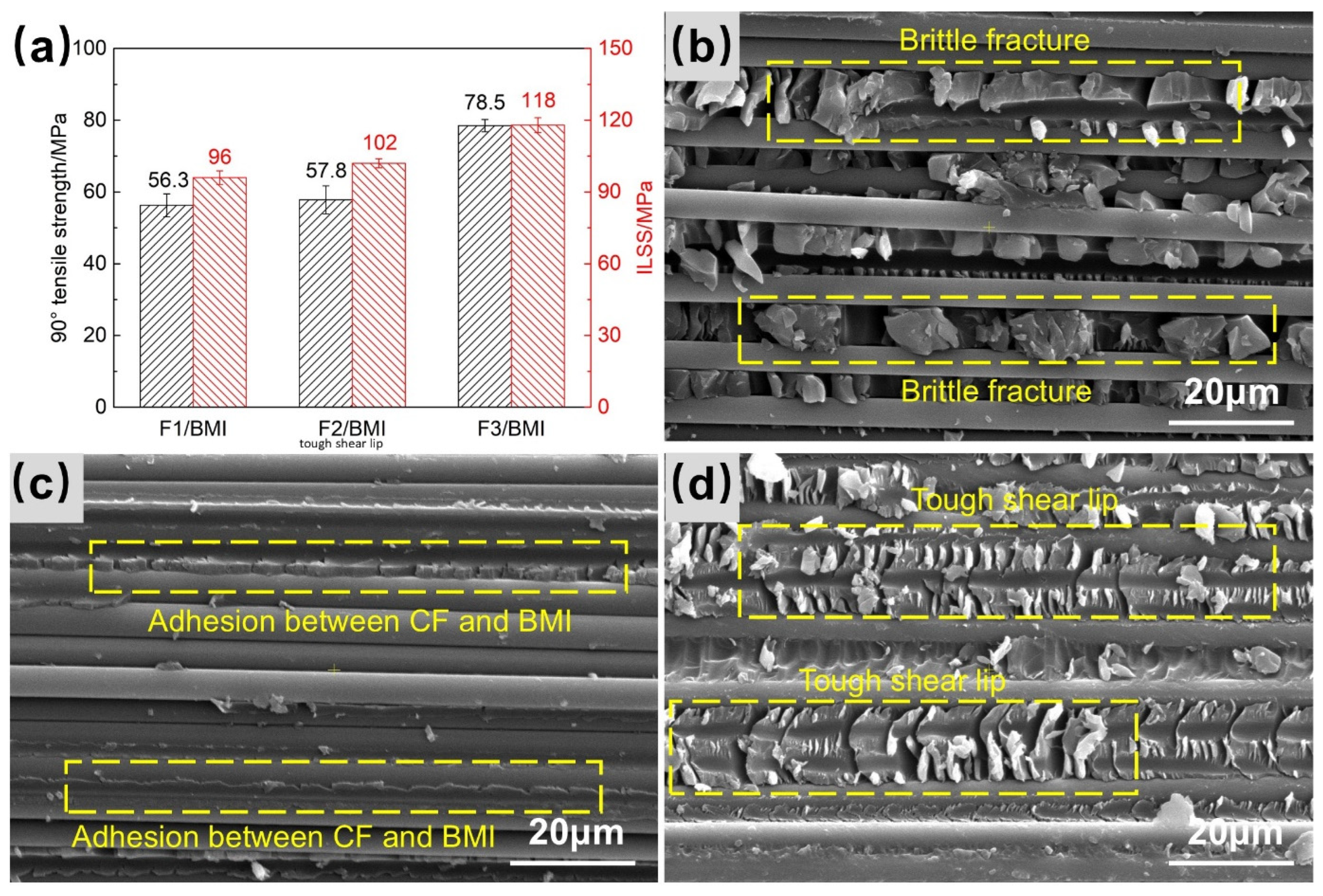
3.5. Influence of Interfacial Properties on the Performance of T1100-Grade CF/BMI Composites
4. Conclusions
- (1)
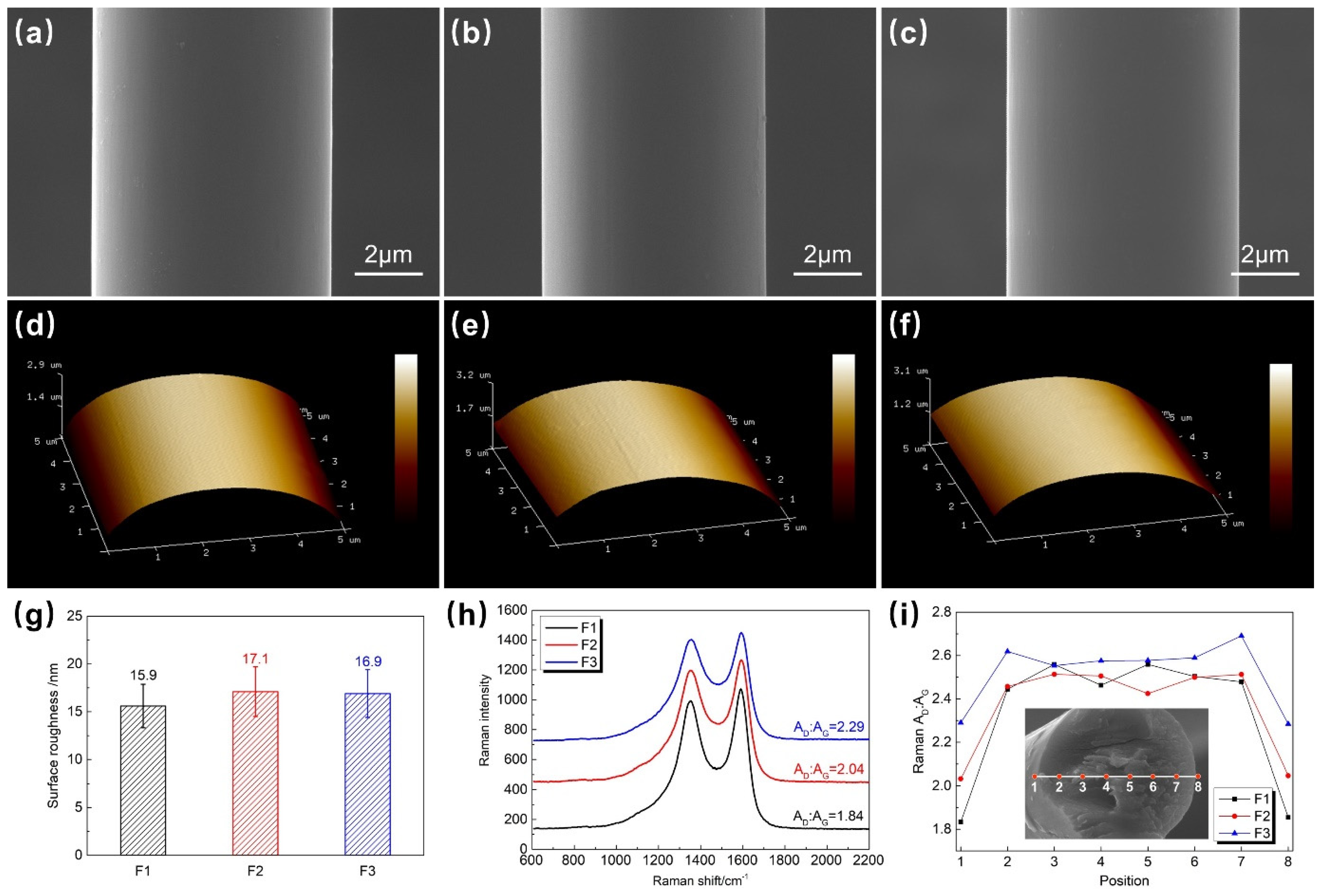
- Dry-jet wet-spun T1100-grade CFs exhibit a smooth surface with no obvious grooves and similar surface roughness (approximately 16~17 nm). Thus, the contribution of mechanical interlocking to the CF/BMI interfacial bonding is negligible.
- (2)
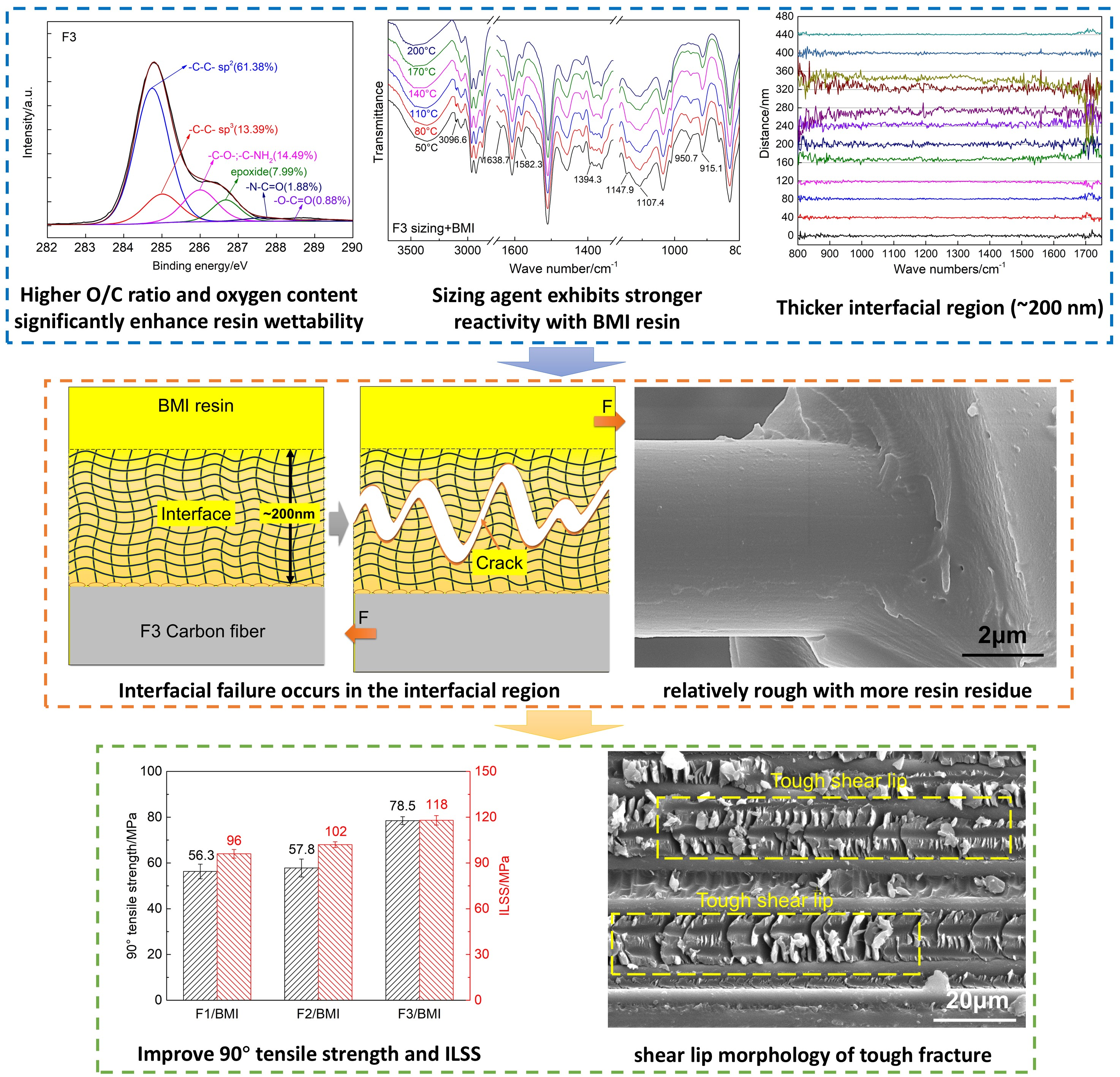
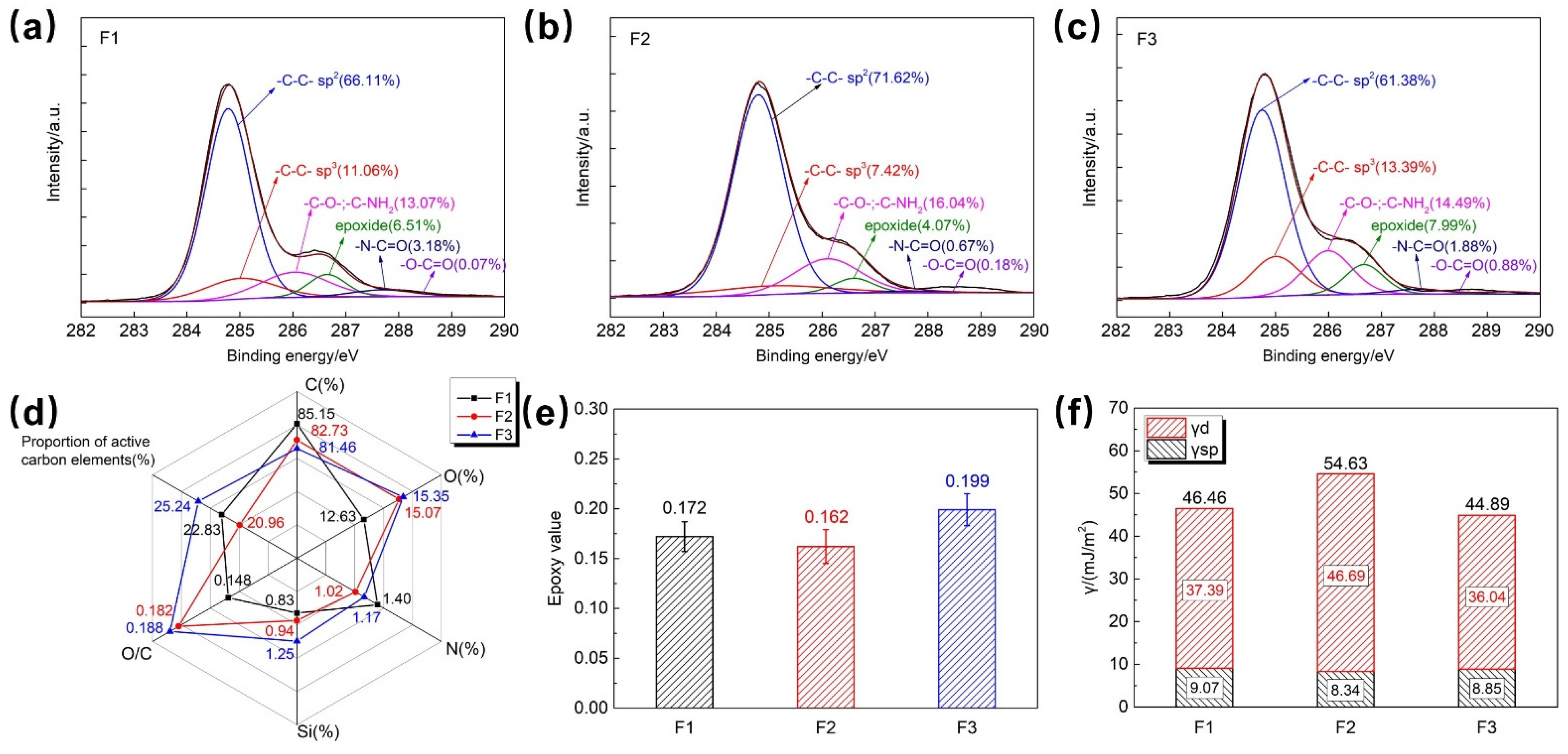
- The three T1100-grade CFs display distinct surface chemical properties. F3 shows the highest active carbon content (25.24%), oxygen content, O/C ratio (0.188), and epoxy value, which effectively promote resin wetting and the formation of a thicker interfacial region.
- (3)
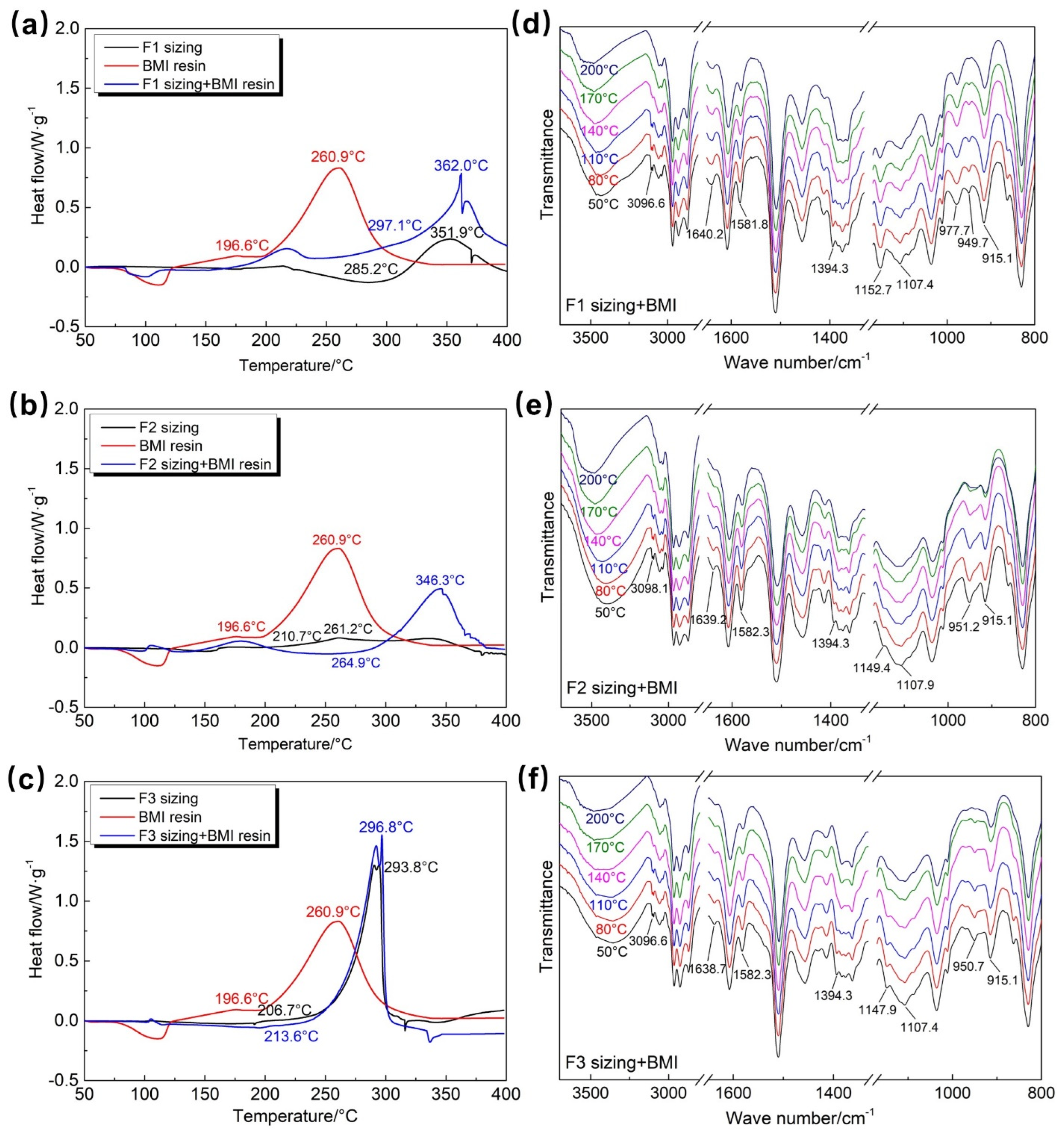
- The reactivity between different sizing agents and BMI resin varies considerably. F1 sizing neither cures nor participates in resin curing; F2 sizing shows low self-curing reactivity, with a reaction enthalpy of only 13.1 J/g and weak reaction with the resin; F3 sizing exhibits strong self-curing reactivity, with a reaction enthalpy of 183.8 J/g and high reactivity with the resin, which effectively improves interfacial bonding strength.
- (4)
- The interfacial region was innovatively characterized by nano-infrared spectroscopy. The interfacial thicknesses are approximately 80 nm for F1, 160 nm for F2, and 200 nm for F3. Interfacial shear strength (IFSS) follows the order F3 (95.9 MPa) > F2 (89.6 MPa) > F1 (85.9 MPa), showing a positive quantitative correlation with interfacial thickness and chemical bonding strength.
- (5)
- The quantitative correlation among fiber surface characteristics, interfacial structure, and macro-mechanical properties was established. Constructing a “thick and strong” interfacial region increases IFSS by 11.6% from F1 (85.9 MPa) to F3 (95.9 MPa) and significantly enhances the 90° tensile strength up to 78.5 MPa and interlaminar shear strength (ILSS) up to 118 MPa, driving the failure mode from brittle to ductile.
- (6)
- Sufficient oxygen-containing polar groups and a high O/C ratio are critical to enhancing resin wetting and interfacial compatibility. Abundant epoxy and hydroxyl groups on the fiber surface serve as the key functional groups, which form covalent bonds with BMI resin via epoxy ring-opening and Diels–Alder addition reactions. A high-performance sizing agent should contain sufficient amine curing agent to ensure strong self-curing reactivity and high chemical reactivity with BMI resin, thus contributing to the construction of a “thick and strong” interfacial region and superior interfacial bonding.
- (7)
- The composites show promising applications in aerospace primary load-bearing structures and high-end lightweight equipment. This work promotes the development of high-performance, lightweight, and reliable advanced composites, contributing to lower energy consumption, longer flight endurance, and low-carbon sustainable development of the aerospace industry.
Supplementary Materials
Author Contributions
Funding
Data Availability Statement
Acknowledgments
Conflicts of Interest
References
- Yang, H.S.; Kim, Y.M.; Choi, H.; Jang, J.; Yu, W.R. Electrochemical wet-spinning process for fabricating strong PAN fibers via an in situ induced plasticizing effect. Polymer 2020, 202, 122641. [Google Scholar] [CrossRef]
- Das, T.K.; Ghosh, P.; Das, N.C. Preparation, development, outcomes, and application versatility of carbon fiber-based polymer composites: A review. Adv. Compos. Hybrid Mater. 2019, 2, 214–233. [Google Scholar] [CrossRef]
- Date, S.; Abe, Y.; Okabe, T. Effects of fiber properties on aerodynamic performance and structural sizing of composite aircraft wings. Aerosp. Sci. Technol. 2022, 124, 107565. [Google Scholar] [CrossRef]
- Yao, S.-S.; Jin, F.-L.; Rhee, K.Y.; Hui, D.; Park, S.-J. Recent advances in carbon-fiber-reinforced thermoplastic composites: A review. Compos. Part B Eng. 2018, 142, 241–250. [Google Scholar] [CrossRef]
- Dai, Z.; Shi, F.; Zhang, B.; Li, M.; Zhang, Z. Effect of sizing on carbon fiber surface properties and fibers/epoxy interfacial adhesion. Appl. Surf. Sci. 2011, 257, 6980–6985. [Google Scholar] [CrossRef]
- Karger-Kocsis, J.; Mahmood, H.; Pegoretti, A. All-carbon multi-scale and hierarchical fibers and related structural composites: A review. Compos. Sci. Technol. 2019, 186, 107932. [Google Scholar] [CrossRef]
- Hung, P.Y.; Lau, K.T.; Fox, B.; Hameed, N.; Lee, J.H.; Hui, D. Surface modification of carbon fibre using graphene–related materials for multifunctional composites. Compos. Part B Eng. 2017, 133, 240–257. [Google Scholar] [CrossRef]
- Wang, H.; Jin, K.; Tao, J. Improving the interfacial shear strength of carbon fibre and epoxy via mechanical interlocking effect. Compos. Sci. Technol. 2020, 200, 108423. [Google Scholar] [CrossRef]
- Sun, Z.; Luo, Y.; Chen, C.; Dong, Z.; Jiang, G.; Chen, F.; Ma, P. Mechanical enhancement of carbon fiber-reinforced polymers: From interfacial regulating strategies to advanced processing technologies. Prog. Mater. Sci. 2024, 142, 101221. [Google Scholar] [CrossRef]
- Ding, R.; Sun, Y.; Lee, J.; Nam, J.D.; Suhr, J. Enhancing interfacial properties of carbon fiber reinforced epoxy composites by grafting MXene sheets (Ti2C). Compos. Part B Eng. 2020, 207, 108580. [Google Scholar] [CrossRef]
- Zisman, W.A. Surface Chemistry of Plastics Reinforced by Strong Fibers. Ind. Eng. Chem. Prod. Res. Dev. 1969, 8, 98–111. [Google Scholar] [CrossRef]
- Sun, N.; Zhu, B.; Gao, X.; Qiao, K.; Zhang, Y.; Wang, B.; Fan, J.; Yu, K.; Liu, C.; Li, C.; et al. Improved the interfacial characteristics of carbon fiber/polyamide 6 composites by synthesizing polydopamine rapidly on the carbon fiber surface with ultrasound-assisted. Compos. Sci. Technol. 2023, 234, 109950. [Google Scholar] [CrossRef]
- Li, Y.; Li, H.; Dong, J.; Chen, Z.; Zhao, J.; Huan, X.; Jia, X.; Ge, L.; Yang, X.; Zu, L. Revisiting the sequential evolution of sizing agents in CFRP manufacturing to guide cross-scale synergistic optimization of interphase gradient and infiltration. Compos. Part B Eng. 2024, 287, 111825. [Google Scholar] [CrossRef]
- Zhu, J.; Song, G.; Wang, C.; Li, L.; Zheng, H.; Zhang, W.; Li, B.; Ma, L. Controllable construction of “degressive gradient” transition layer on carbon fibers surface to enhance interfacial properties of carbon fiber/epoxy composites by layer upon layer assembly of carbon nano tubes. J. Appl. Polym. Sci. 2023, 140, e54431. [Google Scholar] [CrossRef]
- Hu, S.; Zhu, B.; Zhang, G.; Jiang, W.; Zhou, J.; Di, C.; Yu, J.; Qiao, K. Recent Developments at the Interface of Carbon Fiber-Reinforced Polymer Composites Theory, Modification and Interfacial Properties. Polym. Compos. 2026, 47, 1995–2023. [Google Scholar] [CrossRef]
- Park, S.J.; Kim, B.J. Roles of acidic functional groups of carbon fiber surfaces in enhancing interfacial adhesion behavior. Mater. Sci. Eng. A 2005, 408, 269–273. [Google Scholar] [CrossRef]
- Wang, Z.M.; Yamashita, N.; Wang, Z.X.; Hoshinoo, K.; Kanoh, H. Air oxidation effects on microporosity, surface property, and CH4 adsorptivity of pitch-based activated carbon fibers. J. Colloid Interface Sci. 2004, 276, 143–150. [Google Scholar] [CrossRef]
- Hui, C.; Qingyu, C.; Jing, W.; Xiaohong, X.; Liu, H.; Zhanjun, L. Interfacial enhancement of carbon fiber/nylon 12 composites by grafting nylon 6 to the surface of carbon fiber. Appl. Surf. Sci. 2018, 441, 538–545. [Google Scholar] [CrossRef]
- Zhang, S.; Han, P.; Yang, L.; Hu, S.; Wang, J.; Gu, Z. Constructing a Double Alternant “Rigid-Flexible” Structure for Simultaneously Strengthening and Toughening the Interface of Carbon Fiber/Epoxy Composites. Nanomaterials 2022, 12, 3056. [Google Scholar] [CrossRef]
- Sun, N.; Zhu, B.; Cai, X.; Yu, L.; Yuan, X.; Zhang, Y. Enhanced interfacial properties of carbon Fiber/Polyamide composites by In-situ synthesis of polyamide 6 on carbon fiber surface. Appl. Surf. Sci. 2022, 599, 153889. [Google Scholar] [CrossRef]
- Kaveh, A.; Jazani, O.M.; Jafari, M.; Ardebili, A.; Ghaderi, H. Design, preparation and characterization of modified PAN-based carbon fiber by an anodic oxidation process: What is the electrolyte role on the morphology and surface properties? J. Iran. Chem. Soc. 2024, 21, 549–559. [Google Scholar] [CrossRef]
- He, D.; Yao, Y.; Cai, X.Q. Effect of anodization on the graphitization of PAN-based carbon fibers of PAN-based carbon fibers. J. Wuhan Univ. Technol.-Mater. Sci. Ed. 2011, 26, 926–930. [Google Scholar] [CrossRef]
- Pawar, S.S.; Hutchinson, S.A.; Eyckens, D.J.; Stojcevski, F.; Hayne, D.J.; Gengenbach, T.R.; Razal, J.M.; Henderson, L.C. Carbon fiber sizing agents based on renewable terpenes. Compos. Sci. Technol. 2022, 220, 109280. [Google Scholar] [CrossRef]
- Bowman, S.; Jiang, Q.; Memon, H.; Qiu, Y.; Liu, W.; Wei, Y. Effects of Styrene-Acrylic Sizing on the Mechanical Properties of Carbon Fiber Thermoplastic Towpregs and Their Composites. Molecules 2018, 23, 547. [Google Scholar] [CrossRef]
- Liu, J.; Ge, H.; Chen, J.; Wang, D.; Liu, H. The preparation of emulsion type sizing agent for carbon fiber and the properties of carbon fiber/vinyl ester resin composites. J. Appl. Polym. Sci. 2012, 124, 864–872. [Google Scholar] [CrossRef]
- Luo, Y.; Zhao, Y.; Duan, Y.; Du, S. Surface and wettability property analysis of CCF300 carbon fibers with different sizing or without sizing. Mater. Des. 2011, 32, 941–946. [Google Scholar] [CrossRef]
- Ren, P.; Liang, G.; Zhang, Z. Influence of epoxy sizing of carbon-fiber on the properties of carbon fiber/cyanate ester composites. Polym. Compos. 2006, 27, 591–598. [Google Scholar] [CrossRef]
- Hu, S.; Han, P.; Meng, C.; Yu, Y.; Han, S.; Wang, H.; Wei, G.; Gu, Z. Comparative study of different bonding interactions on the interfacial adhesion and mechanical properties of MXene-decorated carbon fiber/epoxy resin composites. Compos. Sci. Technol. 2024, 245, 110352. [Google Scholar] [CrossRef]
- Zhu, C.; Li, S.; Cong, X.; Rudd, C.; Liu, X. Effect of Silane Coupling Agent on the Properties of Recycled Carbon Fibers Reinforced Bio-based Epoxy Composites. Fibers Polym. 2021, 22, 1976–1985. [Google Scholar] [CrossRef]
- Yan, F.; Wang, J.; Li, G.; Dai, S.; Ao, Y.; Liu, L. Biomimetic mineralization of silicon dioxide onto carbon fiber for elevated interfacial properties and hydrothermal aging resistance of carbon fiber/epoxy composites. Polym. Compos. 2024, 45, 7530–7540. [Google Scholar] [CrossRef]
- Wu, Q.; Bai, H.; Zhao, R.; Ye, Z.; Deng, H.; Xiao, B.; Zhu, J. Amine-caged ZrO2@GO multilayer core-shell hybrids in epoxy matrix for enhancing interfacial adhesion of carbon fiber composites. Compos. Part B Eng. 2022, 245, 110207. [Google Scholar] [CrossRef]
- Quan, G.; Wu, Y.; Li, W.; Li, D.; Liu, X.; Wang, K.; Dai, S.; Xiao, L.; Ao, Y. Construction of cellulose nanofiber/carbon nanotube synergistic network on carbon fiber surface to enhance mechanical properties and thermal conductivity of composites. Compos. Sci. Technol. 2024, 248, 110454. [Google Scholar] [CrossRef]
- Hu, S.; Han, P.; Zhang, S.; Wang, J.; Meng, C.; Wei, G.; Gu, Z. Layer-by-layer assembling MXene/poly(3-glycidyloxypropyldimethoxymethylsilane) hierarchical structure onto carbon fibers for high-performance carbon fiber/epoxy composites. Compos. Sci. Technol. 2023, 241, 110149. [Google Scholar] [CrossRef]
- Demchuk, Z.; Zhu, J.; Li, B.; Zhao, X.; Islam, N.M.; Bocharova, V.; Yang, G.; Zhou, H.; Jiang, Y.; Choi, W.; et al. Unravelling the Influence of Surface Modification on the Ultimate Performance of Carbon Fiber/Epoxy Composites. ACS Appl. Mater. Interfaces 2022, 14, 45775–45787. [Google Scholar] [CrossRef]
- Zhang, L.; De Greef, N.; Kalinka, G.; Van Bilzen, B.; Locquet, J.P.; Verpoest, I.; Seo, J.W. Carbon nanotube-grafted carbon fiber polymer composites: Damage characterization on the micro-scale. Compos. Part B Eng. 2017, 126, 202–210. [Google Scholar] [CrossRef]
- Egoshi, T.; Ishikawa, T.; Tezura, M.; Kizuka, T. Transmission electron microscopy of unidirectional carbon fiber reinforced plastics at on-axis tension. Materialia 2020, 14, 100907. [Google Scholar] [CrossRef]
- Yang, C.; Zhu, D.; Yang, F.; Liu, Q.; Sun, C.; Lei, K.; Zheng, Z.; Wang, X. Quantitative analysis based on atomic force microscopy characterization of interfacial properties between carbon fibers and epoxy resin subjected to hygrothermal and thermal treatments. Compos. Sci. Technol. 2020, 198, 108278. [Google Scholar] [CrossRef]
- Florek, P.; Król, M.; Jeleń, P.; Mozgawa, W. Carbon Fiber Reinforced Polymer Composites Doped with Graphene Oxide in Light of Spectroscopic Studies. Materials 2021, 8, 1835. [Google Scholar] [CrossRef]
- ASTM D3039/D3039M-23; Standard Test Method for Tensile Properties of Polymer Matrix Composite Materials. ASTM International: West Conshohocken, PA, USA, 2023.
- ASTM D2344/D2344M-22; Standard Test Method for Short-Beam Shear Strength of Polymer Matrix Composite Materials and Their Laminates. ASTM International: West Conshohocken, PA, USA, 2022.




| Sample | Curing Onset Temperature (°C) | Peak Temperature (°C) | Enthalpy (J/g) |
|---|---|---|---|
| BMI resin | 196.6 | 260.9 | 245.1 |
| F1 sizing agent | 285.2 | 351.9 | 98.1 |
| F1 sizing agent + BMI resin | 297.1 | 362 | 152.2 |
| F2 sizing agent | 210.7 | 261.2 | 13.1 |
| F2 sizing agent + BMI resin | 264.9 | 346.3 | 132.7 |
| F3 sizing agent | 206.7 | 293.8 | 183.8 |
| F3 sizing agent + BMI resin | 213.6 | 296.8 | 225.9 |
Disclaimer/Publisher’s Note: The statements, opinions and data contained in all publications are solely those of the individual author(s) and contributor(s) and not of MDPI and/or the editor(s). MDPI and/or the editor(s) disclaim responsibility for any injury to people or property resulting from any ideas, methods, instructions or products referred to in the content. |
© 2026 by the authors. Licensee MDPI, Basel, Switzerland. This article is an open access article distributed under the terms and conditions of the Creative Commons Attribution (CC BY) license.
Share and Cite
Li, T.; Shi, F.; Wang, W.; Yan, H.; Xu, X.; Zhang, B. Effect of Fiber Surface Characteristics on the Interfacial Properties of T1100-Grade Carbon Fiber Bismaleimide Composites. Polymers 2026, 18, 887. https://doi.org/10.3390/polym18070887
Li T, Shi F, Wang W, Yan H, Xu X, Zhang B. Effect of Fiber Surface Characteristics on the Interfacial Properties of T1100-Grade Carbon Fiber Bismaleimide Composites. Polymers. 2026; 18(7):887. https://doi.org/10.3390/polym18070887
Chicago/Turabian StyleLi, Tianshu, Fenghui Shi, Weihan Wang, Hongchen Yan, Xiangyu Xu, and Baoyan Zhang. 2026. "Effect of Fiber Surface Characteristics on the Interfacial Properties of T1100-Grade Carbon Fiber Bismaleimide Composites" Polymers 18, no. 7: 887. https://doi.org/10.3390/polym18070887
APA StyleLi, T., Shi, F., Wang, W., Yan, H., Xu, X., & Zhang, B. (2026). Effect of Fiber Surface Characteristics on the Interfacial Properties of T1100-Grade Carbon Fiber Bismaleimide Composites. Polymers, 18(7), 887. https://doi.org/10.3390/polym18070887