Interfacial Phenomena of Cotton/Polyester Blended Fabric Modified with Enzyme and Chitosan




Abstract
1. Introduction
2. Materials and Methods
2.1. Materials
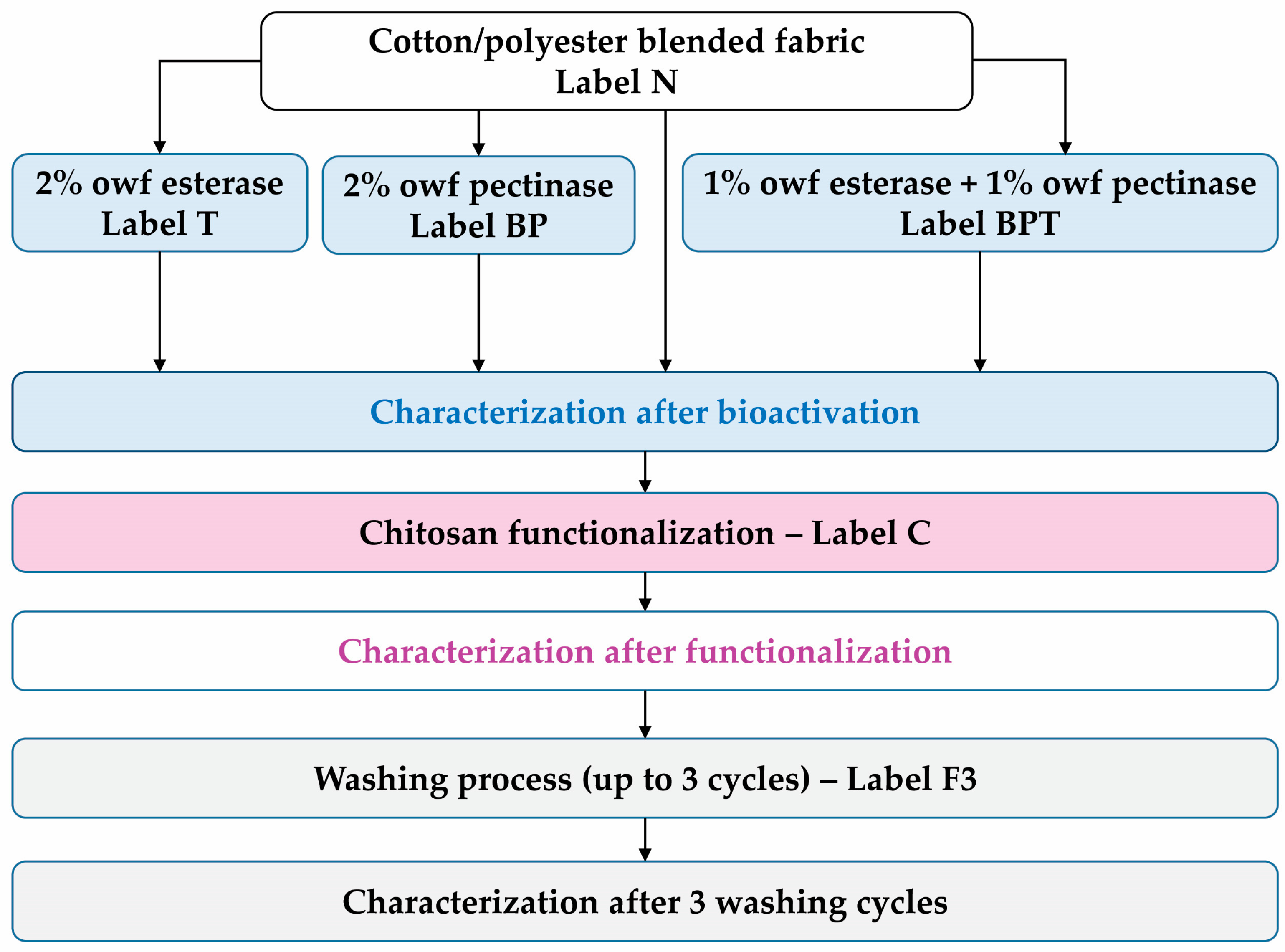
2.2. Treatment Procedures
2.3. Characterization Methods
3. Results and Discussion
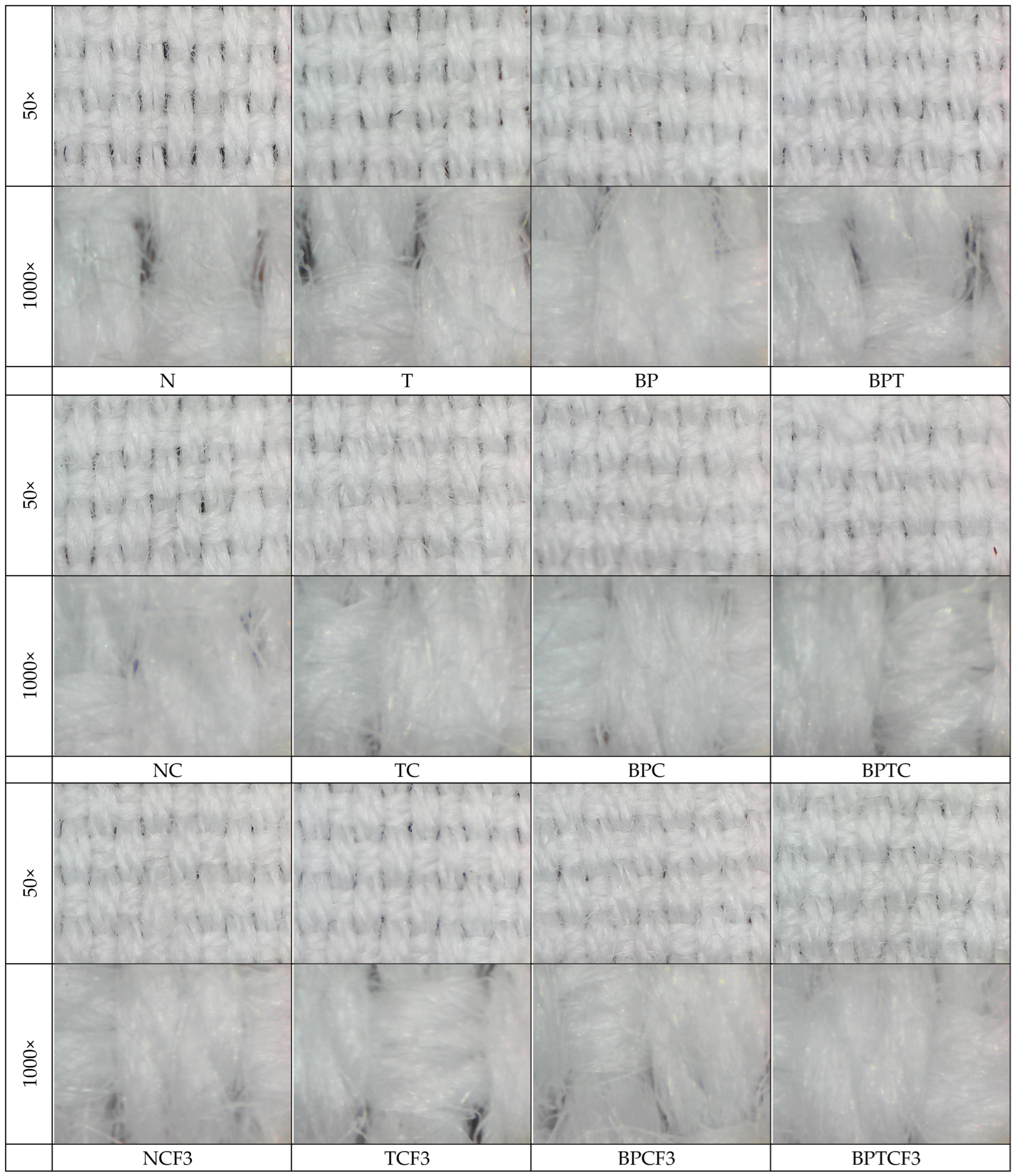
3.1. Mechanical and Spectral Properties
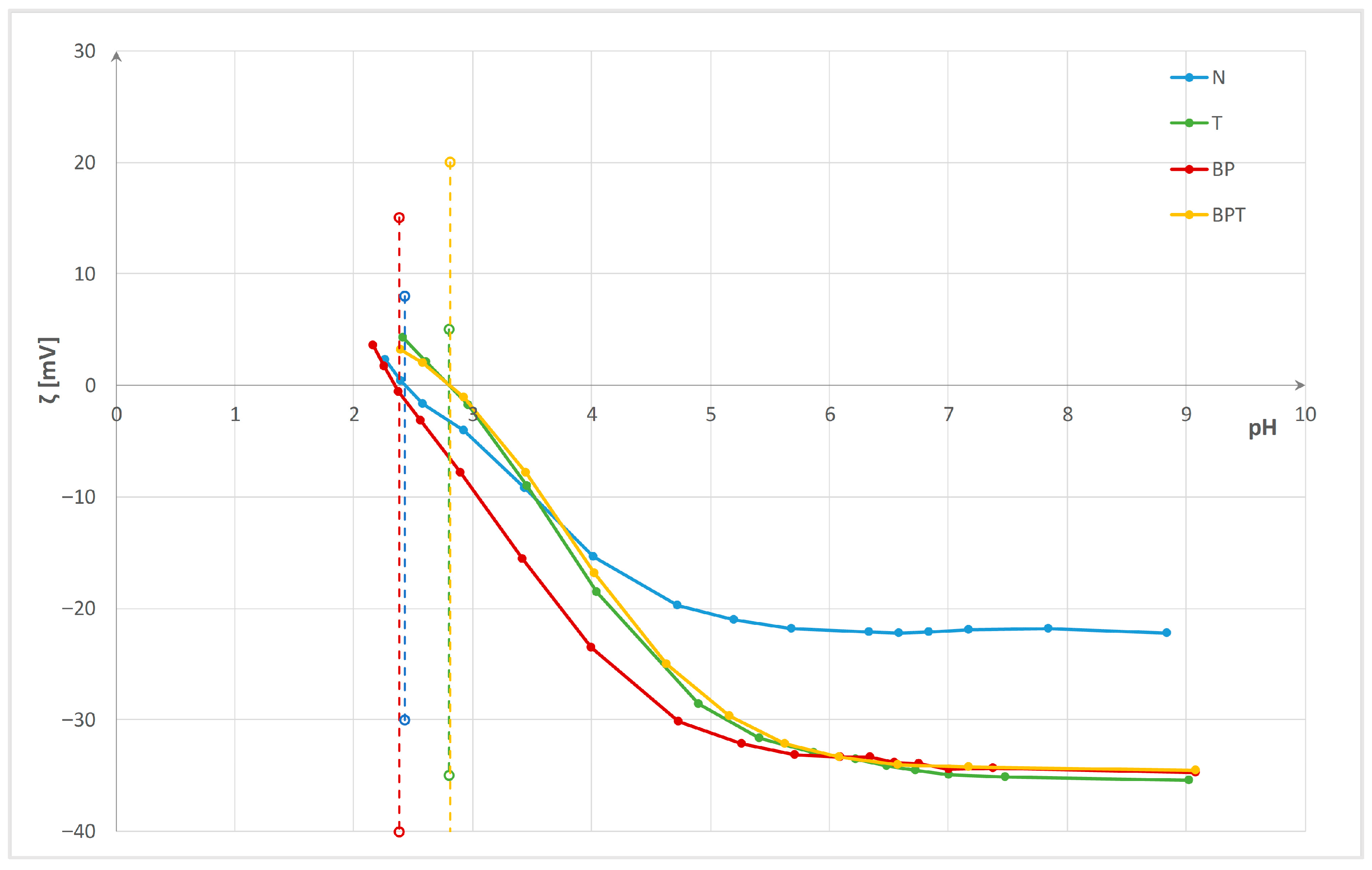
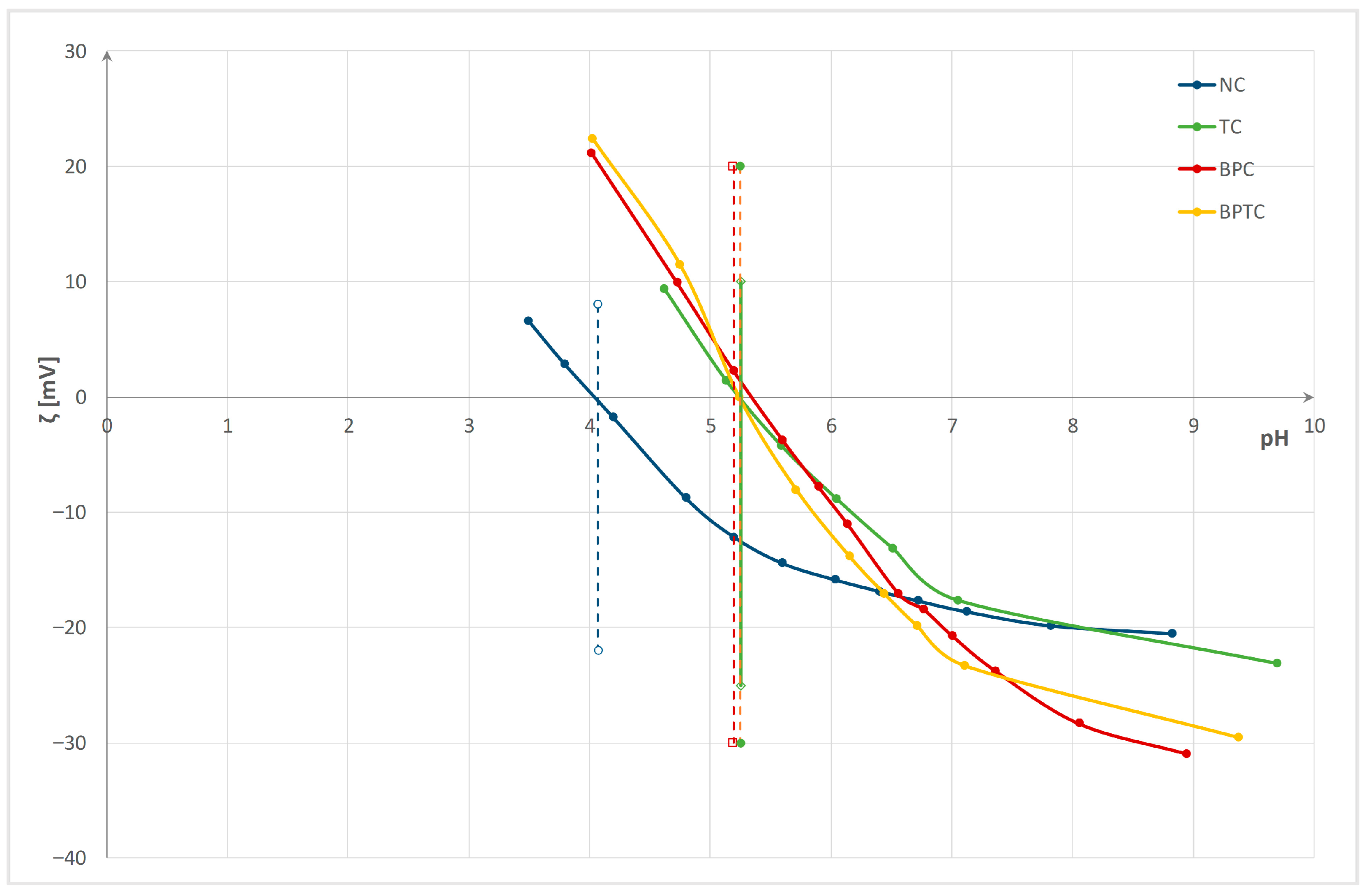
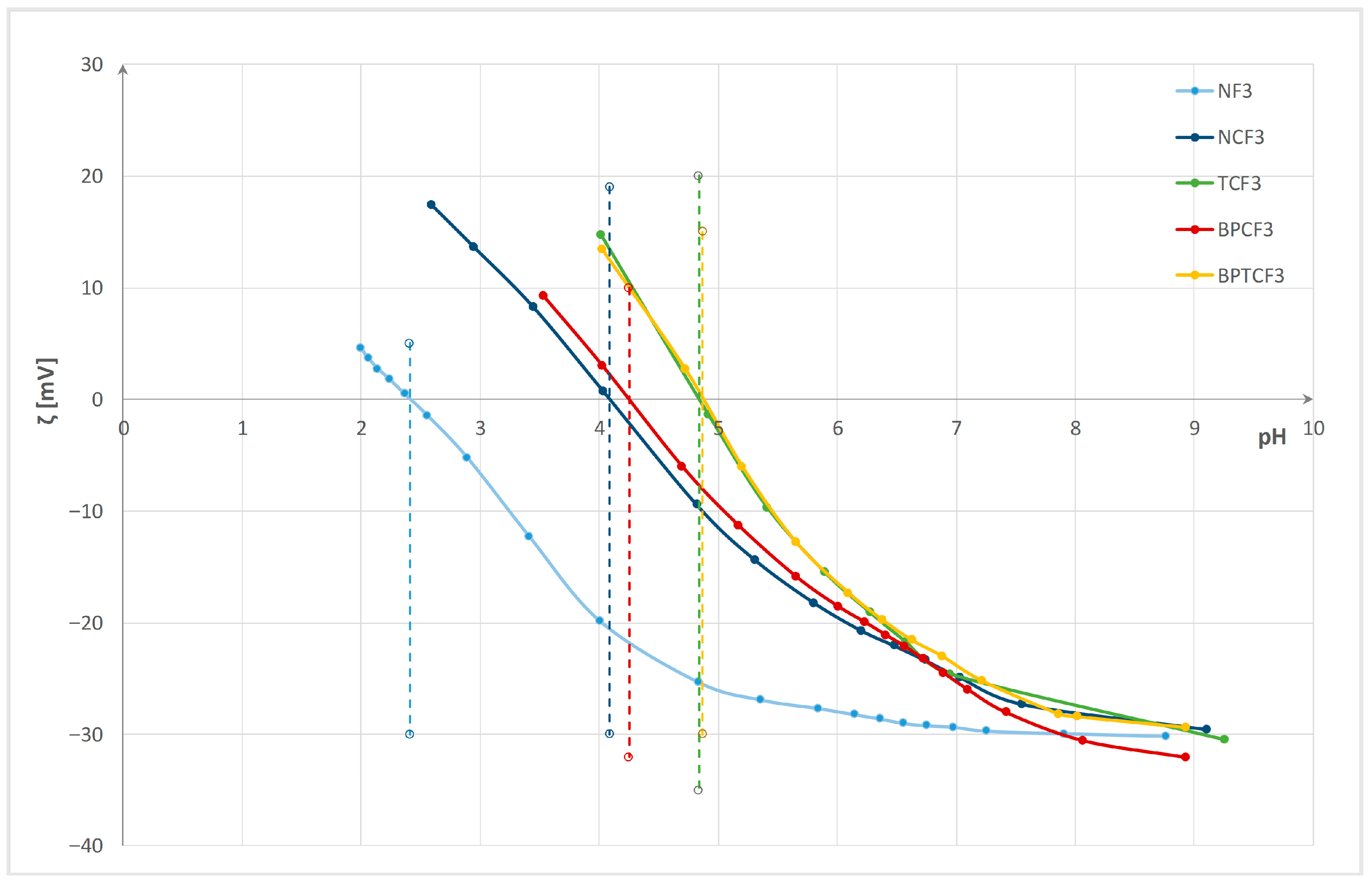
3.2. Interfacial Phenomena
3.3. The Antimicrobial Efficacy
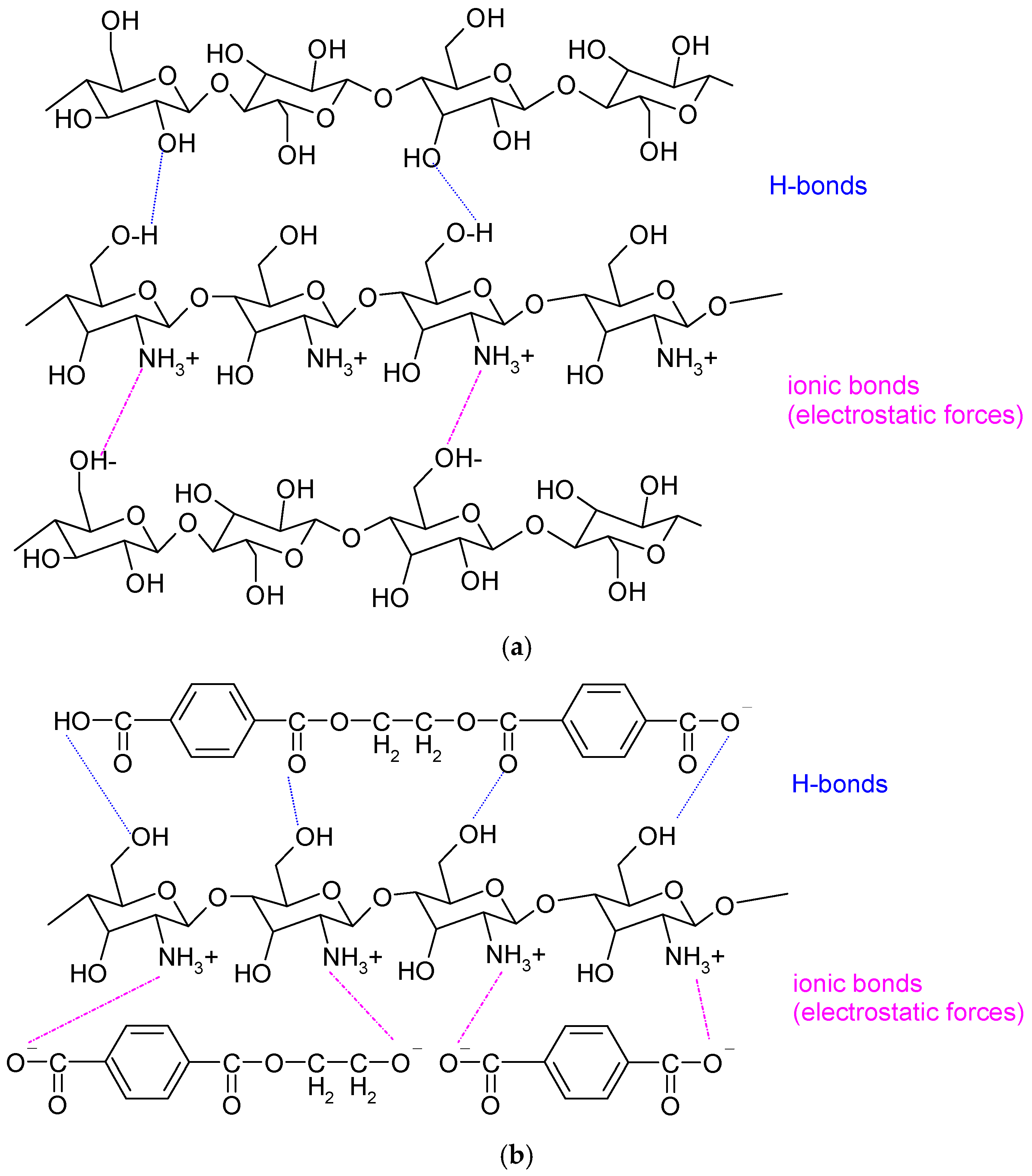
3.4. The Interactions Between Chitosan and Cotton/Polyester Blended Fabric
4. Conclusions
Author Contributions
Funding
Institutional Review Board Statement
Informed Consent Statement
Data Availability Statement
Acknowledgments
Conflicts of Interest
References
- Gulzar, T.; Farooq, T.; Kiran, S.; Ahmad, I.; Hameed, A. 1—Green chemistry in the wet processing of textiles. In The Impact and Prospects of Green Chemistry for Textile Technology; Shahidul, I., Butola, B.S., Eds.; Woodhead Publishing: Sawston, Cambridge, UK, 2019; pp. 1–20. [Google Scholar] [CrossRef]
- Sheikh, J.; Bramhecha, I. 6—Enzymes for green chemical processing of cotton. In The Impact and Prospects of Green Chemistry for Textile Technology; Shahidul, I., Butola, B.S., Eds.; Woodhead Publishing: Sawston, Cambridge, UK, 2019; pp. 135–160. [Google Scholar] [CrossRef]
- Araújo, R.; Casal, M.; Cavaco-Paulo, A. Application of enzymes for textile fibres processing. Biocatal. Biotransform. 2008, 26, 332–349. [Google Scholar] [CrossRef]
- Kumar, D.; Bhardwaj, R.; Jassal, S.; Goyal, T.; Khullar, A.; Gupta, N. Application of enzymes for an eco-friendly approach to textile processing. Environ. Sci. Pollut. Res. 2023, 30, 71838–71848. [Google Scholar] [CrossRef]
- Mamun Kabir, S.; Koh, J. Sustainable Textile Processing by Enzyme Applications. In Biodegradation Technology of Organic and Inorganic Pollutants; Ferreira Mendes, K., Nogueira de Sousa, R., Cabral Mielke, K., Eds.; IntechOpen: London, UK, 2022; pp. 1–27. [Google Scholar] [CrossRef]
- Quartinello, F.; Guebitz, G.M.; Ribitsch, D. Surface functionalization of polyester. Meth. Enzymol. 2019, 627, 339–360. [Google Scholar] [CrossRef]
- Čorak, I.; Pušić, T.; Tarbuk, A. Enzimi za hidrolizu poliestera. Tekstil 2019, 68, 142–151. Available online: https://hrcak.srce.hr/251219 (accessed on 29 March 2026). (In Croatian)
- Houde, A.; Kademi, A.; Leblanc, D. Lipases and Their Industrial Applications: An Overview. Appl. Biochem. Biotechnol. 2004, 118, 155–170. [Google Scholar] [CrossRef] [PubMed]
- Chen, S.; Su, L.; Chen, J.; Wu, J. Cutinase: Characteristics, preparation, and application. Biotechnol. Adv. 2013, 31, 1754–1767. [Google Scholar] [CrossRef]
- Guebitz, G.M.; Cavaco-Paulo, A. Enzymes go big: Surface hydrolysis and functionalization of synthetic polymers. Trends Biotechnol. 2008, 26, 32–38. [Google Scholar] [CrossRef]
- Bristi, U.; Pias, A.; Lavlu, F.H. A sustainable process by bio-scouring for cotton knitted fabric suitable for next generation. J. Text. Eng. Fash. Technol. 2019, 5, 41–48. [Google Scholar] [CrossRef]
- Niaz, A.; Malik, Q.J.; Muhammad, S.; Shamim, T.; Asghar, S. Bioscouring of cellulosic textiles. Color. Technol. 2011, 127, 211–216. [Google Scholar] [CrossRef]
- Hardin, I.R.; Li, Y. Enzymatic Scouring of Cotton: Effects of Structure and Properties. Text. Chem. Color. 1997, 29, 71–76. [Google Scholar]
- Grancarić, A.M.; Pušić, T.; Lesić-Domšić, B.; Plantić, L. The Impact of Treating Cotton with Alkali Pectinases on Cotton Knitted Fabric Sewability. Tekstil 2001, 50, 55–62. Available online: https://tekstil.hist.hr/index.php/tekstil/article/view/2375 (accessed on 29 March 2026). (In Croatian)
- Jordanov, I.; Mangovska, B. Optimal Parameters of Enzymatic Scouring and Compared with Alkaline Scouring. Tekstil 2001, 50, 501–508. Available online: https://tekstil.hist.hr/index.php/tekstil/article/view/2490 (accessed on 29 March 2026). (In Croatian)
- Zulić, D.; Grancarić, A.M. Alkali Pectinases Used in Cotton Scouring. Tekstil 2002, 51, 128–132. Available online: https://www.tekstil.hist.hr/index.php/tekstil/article/view/2568 (accessed on 29 March 2026). (In Croatian)
- Forte-Tavčer, P.; Preša, P. Pretreatment of Cotton with Pectinases and Peracetic Acid. Tekstil 2004, 53, 110–118. Available online: https://www.tekstil.hist.hr/index.php/tekstil/article/view/2883 (accessed on 29 March 2026). (In Croatian)
- Grancarić, A.M.; Pušić, T.; Tarbuk, A. Enzymatic Scouring for Better Textile Properties of Knitted Cotton Fabrics. J. Nat. Fibers 2006, 3, 189–197. [Google Scholar] [CrossRef]
- Kalantzi, S.; Mamma, D.; Christakopoulos, P.; Kekos, D. Effect of pectate lyase bioscouring on physical, chemical and low-stress mechanical properties of cotton fabrics. Bioresour. Technol. 2008, 99, 8185–8192. [Google Scholar] [CrossRef]
- Pušić, T.; Tarbuk, A.; Dekanić, T. Bio-innovation in cotton fabric scouring—Acid and neutral pectinases. Fibres Text. East. Eur. 2015, 109, 98–103. [Google Scholar]
- Guo, Z.; Zhou, Y.; Wang, P.; Wang, Q.; Xu, B.; Zhou, M.; Cui, L.; Zhang, L.; Yu, Y. An innovative method for the removal of impurities and bleaching of cotton fabrics by UV/H2O2/pectinase: Intrinsic mechanisms and treatment effects. Int. J. Biol. Macromol. 2026, 339, 149722. [Google Scholar] [CrossRef]
- Degani, O.; Gepstein, S.; Dosoretz, C.G. Potential use of cutinase in enzymatic scouring of cotton fiber cuticle. Biochem. Biotechnol. 2002, 102, 277–289. [Google Scholar] [CrossRef] [PubMed]
- Agrawal, P.B.; Nierstrasz, V.A.; Bouwhuis, G.H.; Warmoeskerken, M.M.C.G. Cutinase and pectinase in cotton bioscouring: An innovative and fast bioscouring process. Biocatal. Biotransform. 2008, 26, 412–421. [Google Scholar] [CrossRef]
- Agrawal, P.B.; Nierstrasz, V.A.; Warmoeskerken, M.M.C.G. Role of mechanical action in low-temperature cotton scouring with F. solani pisi cutinase and pectate lyase. Enzym. Microb. Technol. 2008, 42, 473–482. [Google Scholar] [CrossRef]
- Degani, O. Synergism between Cutinase and Pectinase in the Hydrolysis of Cotton Fibers’ Cuticle. Catalysts 2021, 11, 84. [Google Scholar] [CrossRef]
- Hsieh, Y.L. Surface Characteristics of Polyester Fibers. In Surface Characteristics of Fibers and Textiles, 1st ed.; Pastore, C., Kiekens, P., Eds.; Marcel Dekker: Basel, Switzerland, 2001; pp. 33–58. [Google Scholar]
- Gawish, S.M.; Bourgeois, M.; Ambroise, G. Effect of Cationic Surfactants on the Alkaline Hydrolysis of Polyester Fabrics. Am. Dyest. Report. 1986, 75, 19–24. [Google Scholar]
- Grancarić, A.M.; Soljačić, I.; Rukavina, I.; Čavar, T. Influence of the Procedure of Treatment on the Effects of Alkaline Hydrolysis of Polyester. Tekstil 1988, 37, 689–694. Available online: https://tekstil.hist.hr/index.php/tekstil/article/view/288 (accessed on 29 March 2026). (In Croatian)
- Zeronian, S.H.; Collins, M.J. Surface Modification of Polyester by Alkaline Treatments. Text. Prog. 1989, 20, 1–26. [Google Scholar] [CrossRef]
- Kallay, N.; Grancarić, A.M.; Tomić, M. Kinetics of Polyester Fibre Dissolution. Text. Res. J. 1990, 60, 663–668. [Google Scholar] [CrossRef]
- Grancarić, A.M.; Kallay, N. Kinetics of polyester fiber alkaline hydrolysis: Effect of temperature and cationic surfactants. J. Appl. Polym. Sci. 1993, 49, 175–181. [Google Scholar] [CrossRef]
- Čorak, I.; Tarbuk, A.; Đorđević, D.; Višić, K.; Botteri, L. Sustainable Alkaline Hydrolysis of Polyester Fabric at Low Temperature. Materials 2022, 15, 1530. [Google Scholar] [CrossRef]
- Dong, Z.Q.; Chen, G.Q. Alkaline Hydrolysis of Polyester in the Presence of Ionic Liquids. Adv. Mater. Res. 2012, 441, 661–665. [Google Scholar] [CrossRef]
- Tkavc, T.; Vesel, A.; Acero, E.H.; Fras Zemljič, L. Comparison of oxygen plasma and cutinase effect on polyethylene terephthalate surface. J. Appl. Polym. Sci. 2012, 128, 3570–3575. [Google Scholar] [CrossRef]
- Alisch, M.; Feuerhack, A.; Müller, H.; Mensak, B.; Andreaus, J.; Zimmermann, W. Biocatalytic modification of polyethylene terephthalate fibres by esterases from actinomycete isolates. Biocatal. Biotransform. 2004, 22, 347–351. [Google Scholar] [CrossRef]
- Wu, J.; Cai, G.; Liu, J.; Ge, H.; Wang, J. Eco-friendly surface modification on polyester fabrics by esterase treatment. Appl. Surf. Sci. 2014, 295, 150–157. [Google Scholar] [CrossRef]
- Kardas, I.; Lipp.-Symonowicz, B.; Sztajnowski, S.; Wojciechowska, D. The influence of PET fibres surface enzymatic modification on the selected properties. Autex Res. J. 2014, 14, 179–186. [Google Scholar] [CrossRef]
- Donelli, I.; Taddei, P.; Smet, P.F.; Poelman, D.; Nierstrasz, V.A.; Freddi, G. Enzymatic surface modification and functionalization of PET: A water contact angle, FTIR, and fluorescence spectroscopy study. Biotechnol. Bioeng. 2009, 103, 845–856. [Google Scholar] [CrossRef] [PubMed]
- Abo El-Ola, S.M.; Moharam, M.E.; El-Bendary, M.A. Optimum conditions for surface modification of PET by lipase enzymes produced by Egyptian bacilli in comparison with standard one. Indian J. Fibre Text. Res. 2013, 38, 165–172. [Google Scholar]
- Eberl, A.; Heumann, S.; Brückner, T.; Araujo, R.; Cavaco-Paulo, A.; Kaufmann, F.; Kroutil, W.; Guebitz, G.M. Enzymatic surface hydrolysis of poly(ethylene terephthalate) and bis(benzoyloxyethyl) terephthalate by lipase and cutinase in the presence of surface active molecules. J. Biotechnol. 2009, 143, 207–212. [Google Scholar] [CrossRef]
- Frasoński, T.; Tarbuk, A.; Matyjas-Zgondek, E. Bio-innovative functionalization of knitted polyester fabrics using enzyme, TiO2 and fluorescent whitening agents for sustainable architectural textiles. Holist. Approach Environ. 2025, 15, 157–168. [Google Scholar] [CrossRef]
- Shabbir, M.; Rather, L.J.; Mohammad, F. Chitosan: Sustainable and Environmental-Friendly Resource for Textile Industry. In Chitosan: Derivatives, Composites and Applications; Chapter 9; Ahmed, S., Ikram, S., Eds.; Scrivener Publishing: Beverly, MA, USA, 2017; pp. 233–252. [Google Scholar] [CrossRef]
- El Knidri, H.; Belaabed, R.; Addaou, A.; Laajeb, A.; Lahsini, A. Extraction, chemical modification and characterization of chitin and chitosan. Int. J. Biol. Macromol. 2018, 120, 1181–1189. [Google Scholar] [CrossRef]
- Furuike, T.; Komoto, D.; Hashimoto, H.; Tamura, H. Preparation of chitosan hydrogel and its solubility in organic acids. Int. J. Biol. Macromol. 2017, 104, 1620–1625. [Google Scholar] [CrossRef] [PubMed]
- Sikorski, D.; Gzyra-Jagiela, K.; Draczynski, Z. The Kinetics of Chitosan Degradation in Organic Acid Solutions. Mar. Drugs 2021, 19, 236. [Google Scholar] [CrossRef]
- Hahn, T.; Bossog, L.; Hager, T.; Wunderlich, W.; Breier, R.; Stegmaier, T.; Zibek, S. Chitosan Application in Textile Processing and Fabric Coating. In Chitin and Chitosan: Properties and Applications; Chapter 16; van den Broek, L.A.M., Boeriu, C.G., Eds.; John Wiley & Sons Ltd.: Hoboken, NJ, USA, 2019. [Google Scholar] [CrossRef]
- Bakshi, P.S.; Selvakumar, D.; Kadirvelu, K.; Kumar, N.S. Chitosan as an environment friendly biomaterial—A review on recent modifications and applications. Int. J. Biol. Macromol. 2020, 150, 1072–1083. [Google Scholar] [CrossRef]
- Islam, S.U.; Butola, B.S. Recent advances in chitosan polysaccharide and its derivatives in antimicrobial modification of textile materials. Int. J. Biol. Macromol. 2019, 121, 905–912. [Google Scholar] [CrossRef] [PubMed]
- Latańska, I.; Kolesińska, B.; Draczyński, Z.; Sujka, W. The use of chitin and chitosan in manufacturing dressing materials. Prog. Chem. Appl. Chitin Its Deriv. 2020, 25, 16–36. [Google Scholar] [CrossRef]
- Sikorski, D.; Bauer, M.; Frączyk, J.; Draczyński, Z. Antibacterial and Antifungal Properties of Modified Chitosan Nonwovens. Polymers 2022, 14, 1690. [Google Scholar] [CrossRef] [PubMed]
- Zhang, Z.; Chen, L.; Ji, J.; Huang, Y.; Chen, D. Antibacterial Properties of Cotton Fabrics Treated with Chitosan. Text. Res. J. 2003, 73, 1103–1106. [Google Scholar] [CrossRef]
- Ke, C.L.; Deng, F.S.; Chuang, C.Y.; Lin, C.H. Antimicrobial actions and applications of chitosan. Polymers 2021, 13, 904. [Google Scholar] [CrossRef]
- Rabea, E.I.; Badawy, M.E.T.; Stevens, C.V.; Smagghe, G.; Steurbaut, W. Chitosan as antimicrobial agent: Applications and mode of action. Biomacromolecules 2003, 4, 1457–1465. [Google Scholar] [CrossRef]
- Verlee, A.; Mincke, S.; Stevens, C.V. Recent development in antibacterial and antifungal chitosan and its derivatives. Carbohydr. Polym. 2017, 164, 268–283. [Google Scholar] [CrossRef]
- Hsieh, S.H.; Chen, W.H.; Wei, L.L. A spectroscopic analysis of the reaction mechanism of polycarboxylic acids’ crosslinking with chitosan and cotton fabric. Cellul. Chem. Technol. 2003, 37, 359–369. [Google Scholar]
- Chung, Y.-S.; Lee, K.-K.; Kim, J.-W. Durable Press and Antimicrobial Finishing of Cotton Fabrics with a Citric Acid and Chitosan Treatment. Text. Res. J. 1998, 68, 772–775. [Google Scholar] [CrossRef]
- Sunder, E.; Nalankilli, G. Croslinking of Chitosan with Cotton using Polycarboxylic Acids. Int. J. Eng. Res. Technol. 2014, 3, 1769–1774. [Google Scholar]
- Draczyński, Z.; Flinčec Grgac, S.; Dekanić, T.; Tarbuk, A.; Boguń, M. Implementation of Chitosan into Cotton Fabric. Tekstilec 2017, 60, 296–301. [Google Scholar] [CrossRef]
- Flinčec Grgac, S.; Tarbuk, A.; Dekanić, T.; Sujka, W.; Draczyński, Z. The Chitosan Implementation into Cotton and Polyester/Cotton Blend Fabrics. Materials 2020, 13, 1616. [Google Scholar] [CrossRef] [PubMed]
- Flinčec Grgac, S.; Biruš, T.-D.; Tarbuk, A.; Dekanić, T.; Palčić, A. The Durable Chitosan Functionalization of Cellulosic Fabrics. Polymers 2023, 15, 3829. [Google Scholar] [CrossRef] [PubMed]
- Tarbuk, A.; Flinčec Grgac, S.; Dekanić, T.; Čorak, I.; Begović, S. The Influence of Cotton/Polyester Blend Fabric Pre-treatment on Chitosan Functionalization. Eng. Power 2023, 18, 6–12. Available online: https://hrcak.srce.hr/315585 (accessed on 29 March 2026).
- Čorak, I.; Tarbuk, A.; Flinčec Grgac, S.; Dekanić, T. Bio-Innovative Modification of Poly(Ethylene Terephthalate) Fabric Using Enzymes and Chitosan. Polymers 2024, 16, 2532. [Google Scholar] [CrossRef]
- Čorak, I.; Tarbuk, A.; Dekanić, T.; Sikorski, D.; Draczyński, Z. The Functionalization of Activated Polyester Fabrics with Chitosan—Changes in Zeta Potential and Moisture Management. Materials 2024, 17, 5987. [Google Scholar] [CrossRef]
- Pušić, T.; Kaurin, T.; Liplin, M.; Budimir, A.; Čurlin, M.; Grgić, K.; Sutlović, A.; Volmajer Valh, J. The Stability of the Chitosan Coating on Polyester Fabric in the Washing Process. Tekstilec 2023, 66, 85–104. [Google Scholar] [CrossRef]
- Grancarić, A.M.; Tarbuk, A.; Pušić, T. Electrokinetic properties of textile fabrics. Color. Technol. 2005, 121, 221–227. [Google Scholar] [CrossRef]
- Luxbacher, T.; Pušić, T.; Bukšek, H.; Petrinić, I. The zeta potential of textile fabrics: A review. Tekstil 2016, 65, 346–351. Available online: https://hrcak.srce.hr/186570 (accessed on 29 March 2026).
- Luxbacher, T. Electrokinetic Properties of Natural Fibres. In Handbook of Natural Fibres, 2nd ed.; Kozłowski, R.M., Mackiewicz-Talarczyk, M., Eds.; Volume 2: Processing and Applications; The Textile Institute Book Series; Woodhead Publishing: Cambridge, UK, 2020; pp. 323–353. [Google Scholar] [CrossRef]
- Stana-Kleinschek, K.; Strnad, S.; Ribitsch, V. Surface characterization and adsorption abilities of cellulose fibers. Polym. Eng. Sci. 1999, 39, 1412–1424. [Google Scholar] [CrossRef]
- Tarbuk, A.; Grancarić, A.M.; Leskovac, M. Novel cotton cellulose by cationization during mercerization—Part 2: The interface phenomena. Cellulose 2014, 21, 2089–2099. [Google Scholar] [CrossRef]
- Grancarić, A.M.; Tarbuk, A.; Hadžić, S.; Simončič, B. From Raw to Finished Cotton—Characterization by Interface Phenomena. AUTEX Res. J. 2023, 23, 184–192. [Google Scholar] [CrossRef]
- Peršin, Z.; Stana-Kleinschek, K.; Sfiligoj-Smoje, M.; Kreže, T.; Ribitsch, V. Determining the Surface Free Energy of Cellulose Materials with the Power Contact Angle Measurement. Text. Res. J. 2004, 74, 55–62. [Google Scholar] [CrossRef]
- ISO 3801:1977; Textiles—Woven fabrics—Determination of Mass per Unit Length and Mass per Unit Area. International Organization for Standardization: Geneva, Switzerland, 1977.
- ISO 13934-1:2013; Textiles—Tensile Properties of Fabrics—Part 1: Determination of Maximum Force and Elongation at Maximum Force Using the Strip Method. International Organization for Standardization: Geneva, Switzerland, 2013.
- ISO 4312:1989; Surface Active Agents—Evaluation of Certain Effects of Laundering—Methods of Analysis and Test for Unsoiled Cotton Control Cloth. International Organization for Standardization: Geneva, Switzerland, 1989.
- ISO 105-J02:1997; Textiles—Tests for Colour Fastness—Part J02: Instrumental Assessment of Relative Whiteness. International Organization for Standardization: Geneva, Switzerland, 1997.
- ISO 19403-6:2024; Paints and Varnishes—Wettability—Part 6: Measurement of Dynamic Advancing and Receding Angle by Changing the Volume of a Drop. International Organization for Standardization: Geneva, Switzerland, 2024.
- AATCC TM 195-2017; Liquid Moisture Management Properties of Textile Fabrics. American Association of Textile Chemists and Colorists: Research Triangle Park, NC, USA, 2017.
- ISO 20645:2004; Textile Fabrics—Determination of Antibacterial Activity—Agar Diffusion Plate Test. International Organization for Standardization: Geneva, Switzerland, 2004.
- Omerogullari Basyigit, Z. Application Technologies for Functional Finishing of Textile Materials. In Textiles for Functional Applications; IntechOpen: London, UK, 2021. [Google Scholar] [CrossRef]
- Schindler, W.D.; Hauser, P.J. 2—Chemical finishing processes. In Woodhead Publishing Series in Textiles, Chemical Finishing of Textiles; Schindler, W.D., Hauser, P.J., Eds.; Woodhead Publishing: Cambridge, UK, 2004; pp. 7–28. [Google Scholar] [CrossRef]
- Jakobi, G. Detergents and Textile Washing; VCH GmbH: Weinheim, Germany, 1987. [Google Scholar]
- Smulders, E. Laundry Detergents; Wiley-VCH Verlag GmbH: Weinheim, Germany, 2002. [Google Scholar]
- Soljačić, I.; Pušić, T. Textile Care, Book 1: Water Medium Cleaning; Sveučilište u Zagrebu, Tekstilno-tehnološki fakultet: Zagreb, Croatia, 2005. (In Croatian) [Google Scholar]
- Čorak, I.; Tarbuk, A.; Marković, J.; Grgić, K. Changes in sorption properties due to multiple washing processes. Tekstil 2021, 70, 125–135. Available online: https://hrcak.srce.hr/322836 (accessed on 29 March 2026).
- Pepić, I.; Filipović-Grčić, J.; Jalšenjak, I. Bulk properties of nonionic surfactant and chitosan mixtures. Colloids Surf. A Physicochem. Eng. Asp. 2009, 336, 135–141. [Google Scholar] [CrossRef]
- El Mogahzy, Y.E. (Ed.) 11—Finishing processes for fibrous assemblies in textile product design. In Woodhead Publishing Series in Textiles, Engineering Textiles; Woodhead Publishing: Cambridge, UK, 2009; pp. 300–326. [Google Scholar] [CrossRef]
- Tarbuk, A.; Flinčec Grgac, S.; Dekanić, T. Wetting and wicking of hospital protective textiles. Adv. Technol. 2019, 8, 5–15. [Google Scholar] [CrossRef]
- Tegegne, W.; Haile, A. Improving hydrophilicity and comfort characteristics of polyester/cotton blend fabric through lipase enzyme treatment. Clean Technol. Environ. Policy 2025, 27, 3–16. [Google Scholar] [CrossRef]
- Tarbuk, A.; Begović, S. Comfort Properties of Enzymatically Pretreated Cotton-Polyester Blended Fabrics. In Proceedings of the Joint International Conference: 5th Conference on Engineering and Entrepreneurship and 11th Textile Conference, ITC-ICEE 2025, Tirana, Albania, 23–24 October 2025; Guxho, G., Spahiu, T.K., Xhafka, E., Gjeta, A., Sulejmani, A., Eds.; Lecture Notes on Multidisciplinary Industrial Engineering; Springer: Cham, Switzerland, 2026. [Google Scholar] [CrossRef]
- Šaravanja, A.; Dekanić, T.; Pušić, T.; Volmajer Valh, J. The effect of accelerated ageing simulation on the properties of polyester fabrics. Tekstil 2023. Epub ahead of printing. Available online: https://hrcak.srce.hr/328067 (accessed on 21 October 2025).
- SDL Atlas—MMT®: (Moisture Management Tester), M290. Brochure. Available online: https://sdlatlas.com/products/mmt-moisture-management-tester (accessed on 21 October 2025).
- Yao, B.; Li, Y.; Hu, J.; Kwok, Y.; Yeung, K. An improved test method for characterizing the dynamic liquid moisture transfer in porous polymeric materials. Polym. Test. 2006, 25, 677–689. [Google Scholar] [CrossRef]
- Romero-Cano, M.S.; Martín-Rodríguez, A.; de las Nieves, F.J. Adsorption and Desorption of Triton X-100 in Polystyrene Particles with Different Functionality: II. Desorption Study. J. Colloid Interface Sci. 2000, 227, 329–333. [Google Scholar] [CrossRef]
- Rahman Bhuiyan, M.A.; Hossain, M.A.; Zakaria, M.; Islam, M.N.; Zulhash Uddin, M. Chitosan Coated Cotton Fiber: Physical and Antimicrobial Properties for Apparel Use. J. Polym. Environ. 2017, 25, 334–342. [Google Scholar] [CrossRef]
- Tobe, S.; Majima, T.; Tadenuma, H.; Suekuni, T.; Sakai, K.; Sakai, H.; Abe, M. Nonionic Surfactants Enhancing Bactericidal Activity at Their Critical Micelle Concentrations. J. Oleo Sci. 2015, 64, 61–68. [Google Scholar] [CrossRef] [PubMed]
- Adewuyi, A.; Ayodele Oderinde, R.; Ololade Ademisoye, A. Antibacterial Activities of Nonionic and Anionic Surfactants From the Seed Oil of Citrullus lanatus. Jundishapur J. Microbiol. 2013, 6, 205–208. [Google Scholar] [CrossRef]
- Hetrick, K.J.; Raines, R.T. Assessing and utilizing esterase specificity in antimicrobial prodrug development. Methods Enzymol. 2022, 664, 199–220. [Google Scholar] [CrossRef]
- Hetrick, K.J.; Aguilar Ramos, M.A.; Raines, R.T. Endogenous Enzymes Enable Antimicrobial Activity. ACS Chem. Biol. 2021, 16, 800–805. [Google Scholar] [CrossRef]
- Prabhawathi, V.; Boobalan, T.; Sivakumar, P.M.; Doble, M. Antibiofilm Properties of Interfacially Active Lipase Immobilized Porous Polycaprolactam Prepared by LB Technique. PLoS ONE 2014, 9, e96152. [Google Scholar] [CrossRef]



| Fabric | F [N] | CV [%] | Um [%] | Um pairs [%] | ε [%] | CV [%] | Δε [%] | Δεpairs [%] |
|---|---|---|---|---|---|---|---|---|
| N | 1096.0 | 2.53 | 0.00 | 11.55 | 1.837 | 0.00 | ||
| T | 1016.0 | 1.23 | 7.30 | 12.60 | 3.367 | 9.09 | ||
| BP | 1031.0 | 2.02 | 5.93 | 14.25 | 1.489 | 23.38 | ||
| BPT | 1068.0 | 0.39 | 2.55 | 14.50 | 1.439 | 25.54 | ||
| NC | 1077.0 | 3.61 | 1.73 | 15.45 | 1.373 | 33.77 | ||
| TC | 1089.0 | 1.66 | 0.64 | −7.19 | 14.85 | 4.285 | 28.57 | 17.86 |
| BPC | 1104.0 | 1.01 | −0.73 | −7.08 | 16.20 | 5.238 | 40.26 | 13.68 |
| BPTC | 1110.0 | 0.00 | −1.28 | −3.93 | 15.15 | 4.201 | 31.17 | 4.48 |
| NF3 | 1012.0 | 2.06 | 7.66 | 13.93 | 1.692 | 20.63 | ||
| NCF3 | 1079.0 | 4.31 | 1.55 | −0.19 | 19.33 | 3.170 | 67.39 | |
| TCF3 | 1048.0 | 0.86 | 4.38 | 3.76 | 18.90 | 0.000 | 63.64 | 27.27 |
| BPCF3 | 1067.0 | 2.14 | 2.65 | 3.35 | 21.15 | 5.015 | 83.12 | 30.56 |
| BPTCF3 | 1033.0 | 5.84 | 5.75 | 6.94 | 17.70 | 11.985 | 53.25 | 16.83 |
| Fabric | m [g/m2] | Δm [%] | Δmpairs [%] | Rmax at 700 nm [%] | WCIE |
|---|---|---|---|---|---|
| N | 169.81 | 0.00 | 89.71 | 86.8 | |
| T | 171.38 | 0.92 | 87.68 | 86.1 | |
| BP | 173.06 | 1.91 | 88.00 | 86.3 | |
| BPT | 176.43 | 3.90 | 88.22 | 86.5 | |
| NC | 179.96 | 5.98 | 88.27 | 85.7 | |
| TC | 180.67 | 6.40 | 5.42 | 88.14 | 81.4 |
| BPC | 181.74 | 7.03 | 5.02 | 87.83 | 84.7 |
| BPTC | 179.45 | 5.68 | 1.71 | 88.55 | 84.1 |
| NF3 | 172.96 | 1.86 | 88.33 | 86.5 | |
| NCF3 | 184.92 | 8.90 | 2.76 | 87.35 | 85.5 |
| TCF3 | 181.37 | 6.81 | 0.39 | 87.40 | 83.0 |
| BPCF3 | 182.78 | 7.64 | 0.57 | 87.73 | 85.1 |
| BPTCF3 | 183.29 | 7.94 | 2.14 | 87.92 | 84.6 |
| Fabric | IEP | q [mC] | CA [°] | StDev CA [°] |
|---|---|---|---|---|
| N | 2.43 | −0.917 | 41.28 | 22.44 |
| T | 2.80 | −0.766 | 20.04 | 17.53 |
| BP | 2.38 | −0.660 | 24.04 | 25.89 |
| BPT | 2.81 | −0.718 | 0.00 | 0.00 |
| NC | 4.07 | 0.853 | 126.26 | 7.89 |
| TC | 5.25 | 1.606 | 83.26 | 16.96 |
| BPC | 5.19 | 1.202 | 125.31 | 4.72 |
| BPTC | 5.25 | 1.361 | 107.77 | 23.92 |
| NF3 | 2.41 | −0.831 | 0.00 | 0.00 |
| NCF3 | 4.09 | 0.728 | 0.00 | 0.00 |
| TCF3 | 4.84 | 1.424 | 0.00 | 0.00 |
| BPCF3 | 4.25 | 1.019 | 0.00 | 0.00 |
| BPTCF3 | 4.87 | 0.954 | 0.00 | 0.00 |
| Fabric | WTMMT [s] | CV | MWR [mm] | CV | MMT Type |
|---|---|---|---|---|---|
| N | 5.351 | 0.544 | 23.75 | 0.105 | Moisture Management Fabric |
| T | 2.390 | 0.068 | 25.00 | 0 | Fast-Absorbing and Quick-Drying Fabric |
| BP | 2.437 | 0.063 | 25.00 | 0 | Moisture Management Fabric |
| BPT | 2.461 | 0.078 | 25.00 | 0 | Fast-Absorbing and Quick-Drying Fabric |
| NC | 14.750 | 0.576 | 7.50 | 1.150 | Water Penetration Fabric |
| TC | 10.762 | 0.255 | 21.25 | 0.120 | Moisture Management Fabric |
| BPC | 4.246 | 0.484 | 21.25 | 0.210 | Moisture Management Fabric |
| BPTC | 12.801 | 0.105 | 11.25 | 0.220 | Moisture Management Fabric |
| NF3 | 2.391 | 0.104 | 25.00 | 0 | Moisture Management Fabric |
| NCF3 | 2.648 | 0.053 | 25.00 | 0 | Fast-Absorbing and Quick-Drying Fabric |
| TCF3 | 2.547 | 0.023 | 25.00 | 0 | Fast-Absorbing and Quick-Drying Fabric |
| BPCF3 | 2.582 | 0.023 | 25.00 | 0 | Fast-Absorbing and Quick-Drying Fabric |
| BPTCF3 | 3.289 | 1.890 | 18.75 | 0.667 | Fast-Absorbing and Quick-Drying Fabric |
| Fabric | S. aureus | E. coli | C. albicans |
|---|---|---|---|
| N | − | − | − |
| T | +/− | − | − |
| BP | − | − | − |
| BPT | +/− | − | − |
| NC | +/− | +/− | +/− |
| TC | +/− | +/− | +/− |
| BPC | +/− | +/− | +/− |
| BPTC | +/− | +/− | +/− |
| NF3 | +/− | +/− | − |
| NCF3 | +/− | +/− | +/− |
| TCF3 | +/− | +/− | +/− |
| BPCF3 | +/− | +/− | +/− |
| BPTCF3 | +/− | +/− | +/− |
Disclaimer/Publisher’s Note: The statements, opinions and data contained in all publications are solely those of the individual author(s) and contributor(s) and not of MDPI and/or the editor(s). MDPI and/or the editor(s) disclaim responsibility for any injury to people or property resulting from any ideas, methods, instructions or products referred to in the content. |
© 2026 by the authors. Licensee MDPI, Basel, Switzerland. This article is an open access article distributed under the terms and conditions of the Creative Commons Attribution (CC BY) license.
Share and Cite
Tarbuk, A.; Grancarić, A.M.; Begović, S.; Dekanić, T. Interfacial Phenomena of Cotton/Polyester Blended Fabric Modified with Enzyme and Chitosan. Polymers 2026, 18, 867. https://doi.org/10.3390/polym18070867
Tarbuk A, Grancarić AM, Begović S, Dekanić T. Interfacial Phenomena of Cotton/Polyester Blended Fabric Modified with Enzyme and Chitosan. Polymers. 2026; 18(7):867. https://doi.org/10.3390/polym18070867
Chicago/Turabian StyleTarbuk, Anita, Ana Marija Grancarić, Stefana Begović, and Tihana Dekanić. 2026. "Interfacial Phenomena of Cotton/Polyester Blended Fabric Modified with Enzyme and Chitosan" Polymers 18, no. 7: 867. https://doi.org/10.3390/polym18070867
APA StyleTarbuk, A., Grancarić, A. M., Begović, S., & Dekanić, T. (2026). Interfacial Phenomena of Cotton/Polyester Blended Fabric Modified with Enzyme and Chitosan. Polymers, 18(7), 867. https://doi.org/10.3390/polym18070867