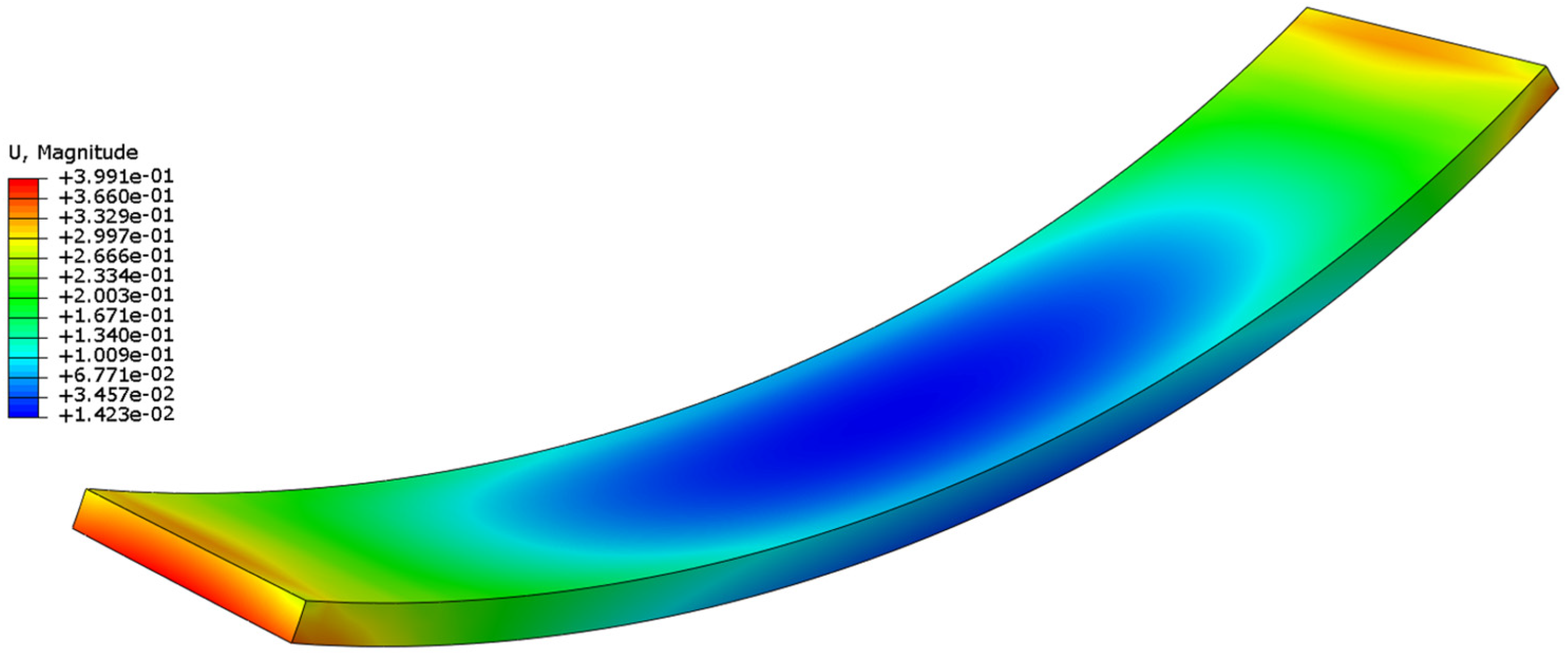
Simulation of Curing Deformation in Curved Composite Plates via Pultrusion Based on Thermal-Chemical-Structural Coupling

Abstract
1. Introduction
2. Theoretical Analysis of Bending and Pultrusion Curing Process in Composite
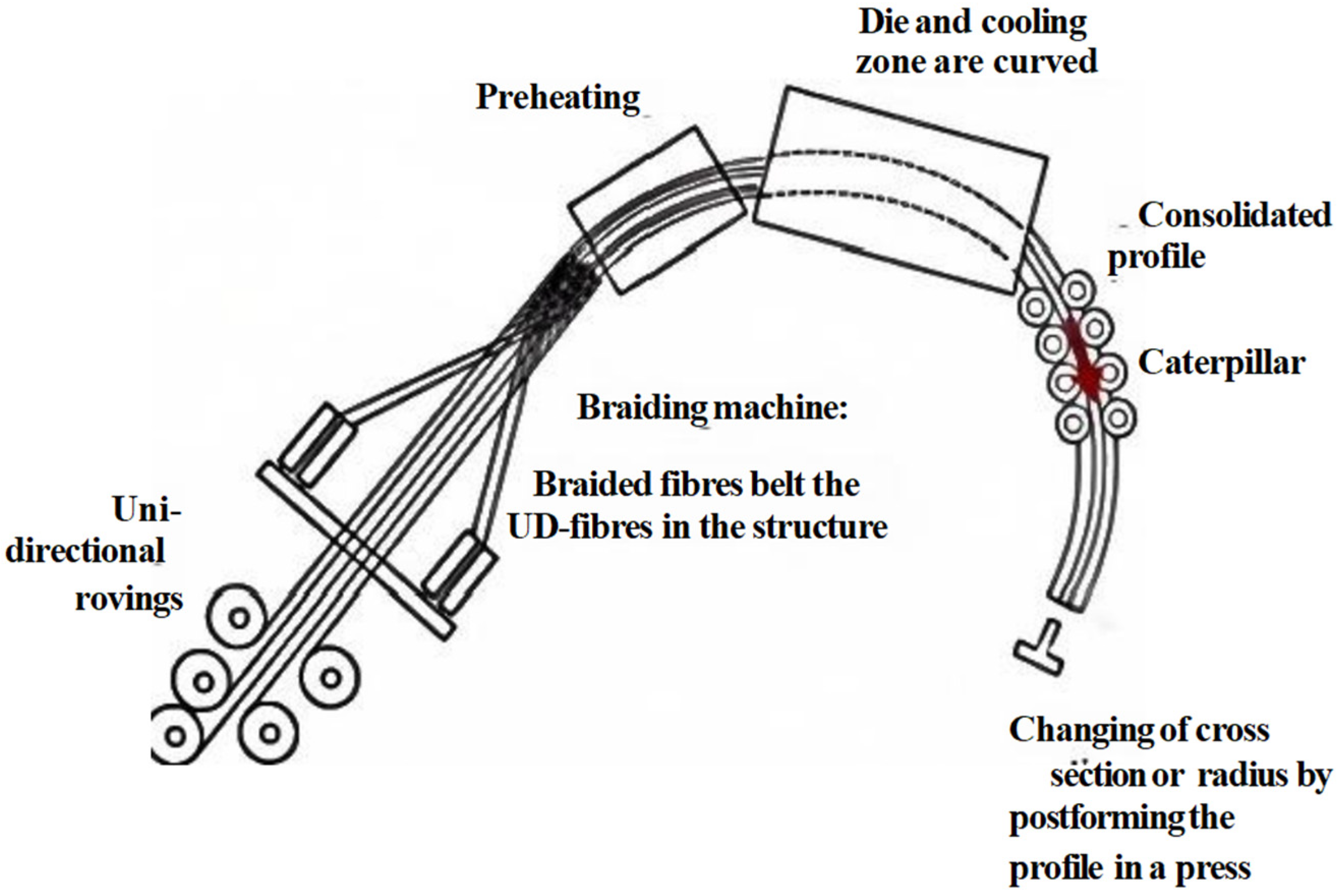
2.1. Bending and Pultrusion Molding Process and Key Variables Analysis
- (1)
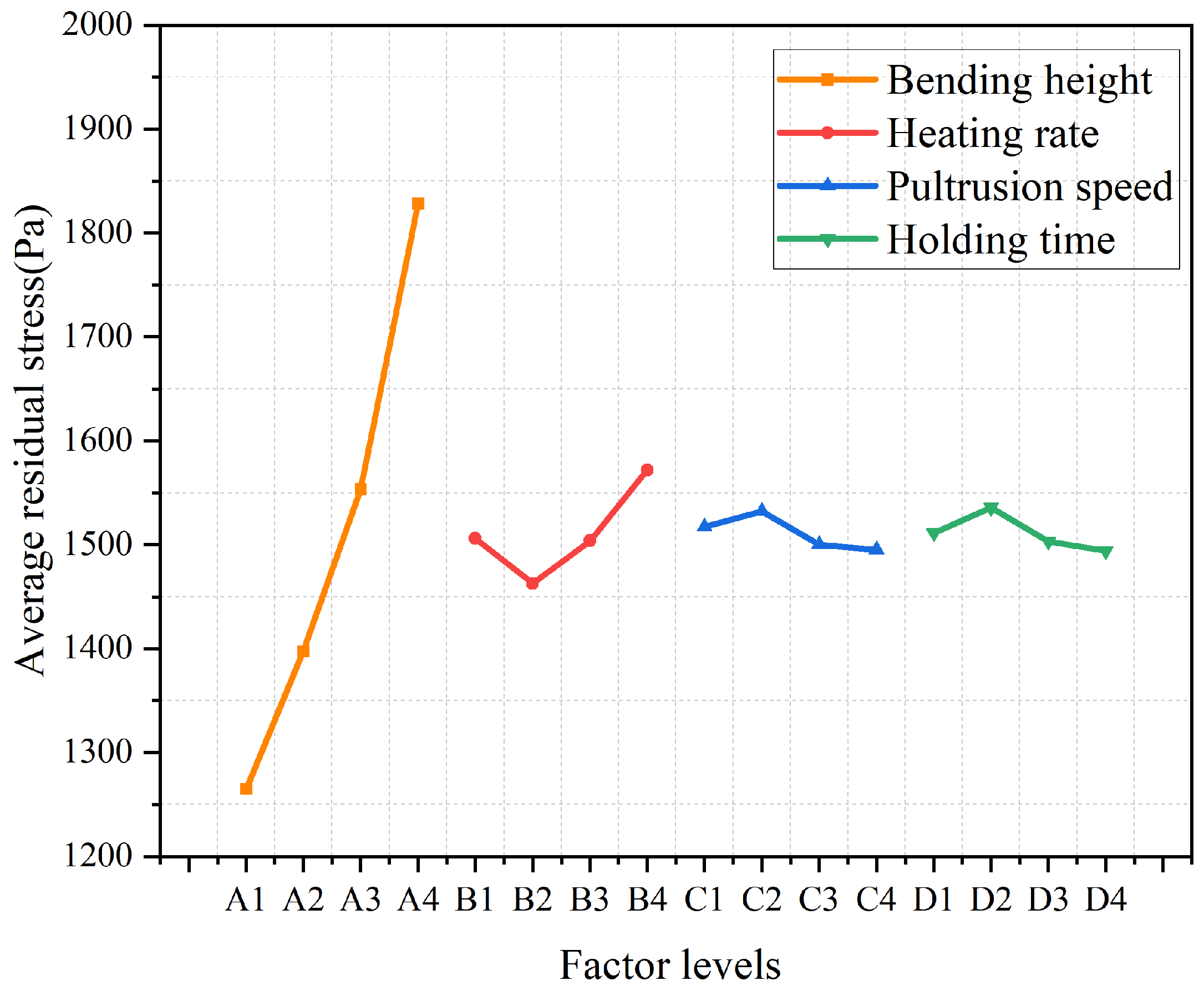
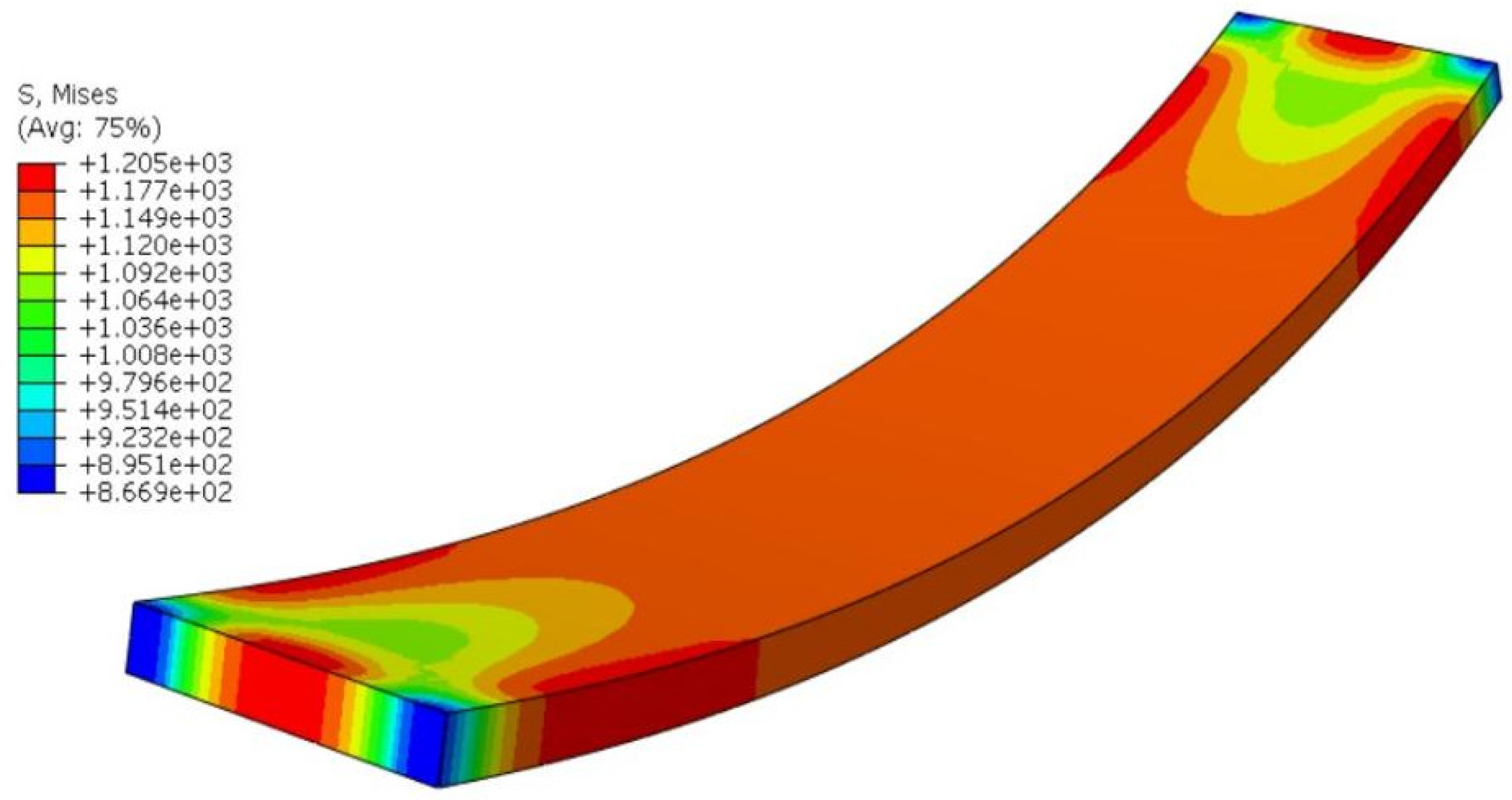
- Bending height, as a direct indicator of mold curvature, dominates the asymmetric stress distribution induced by the curved geometry [13];
- (2)
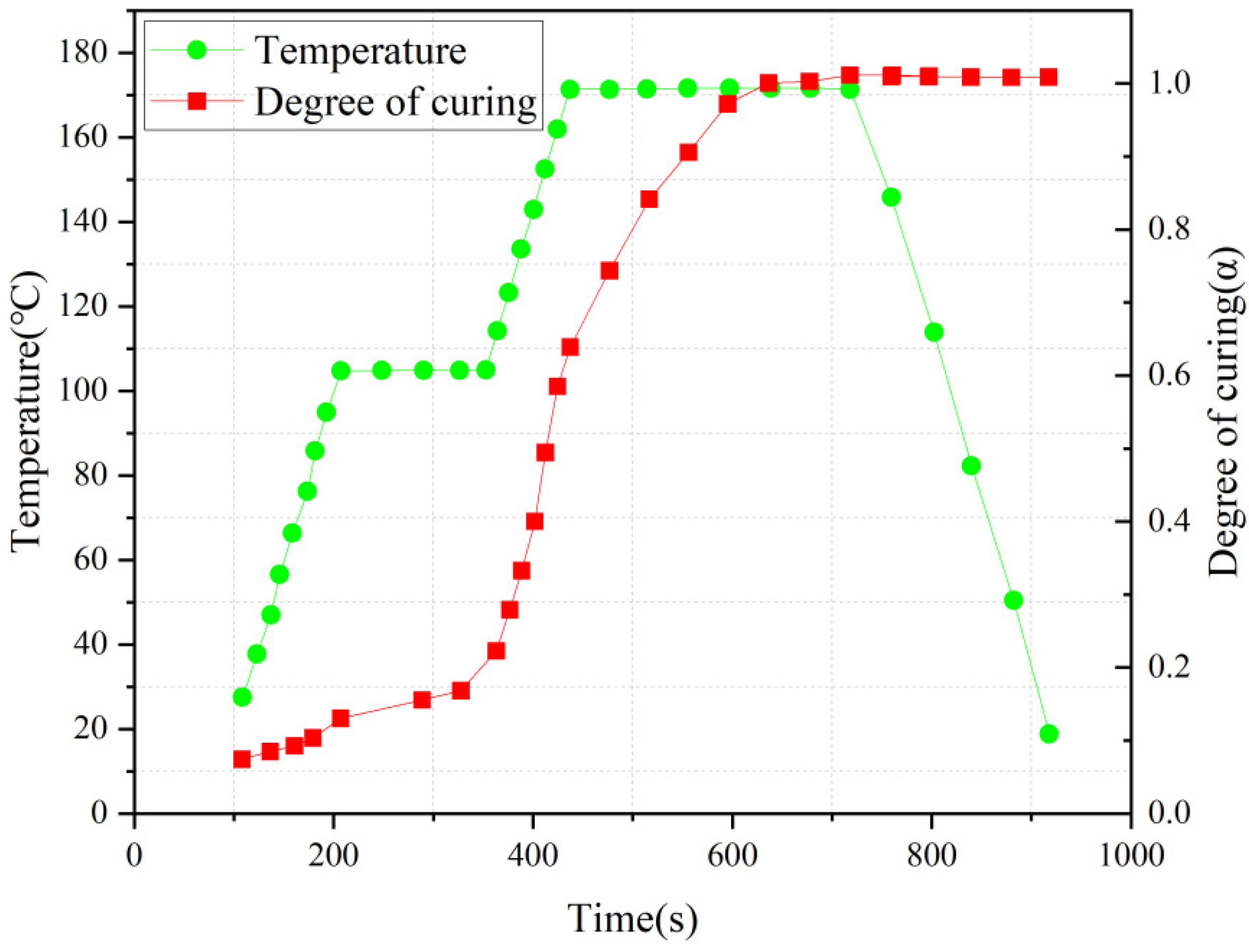
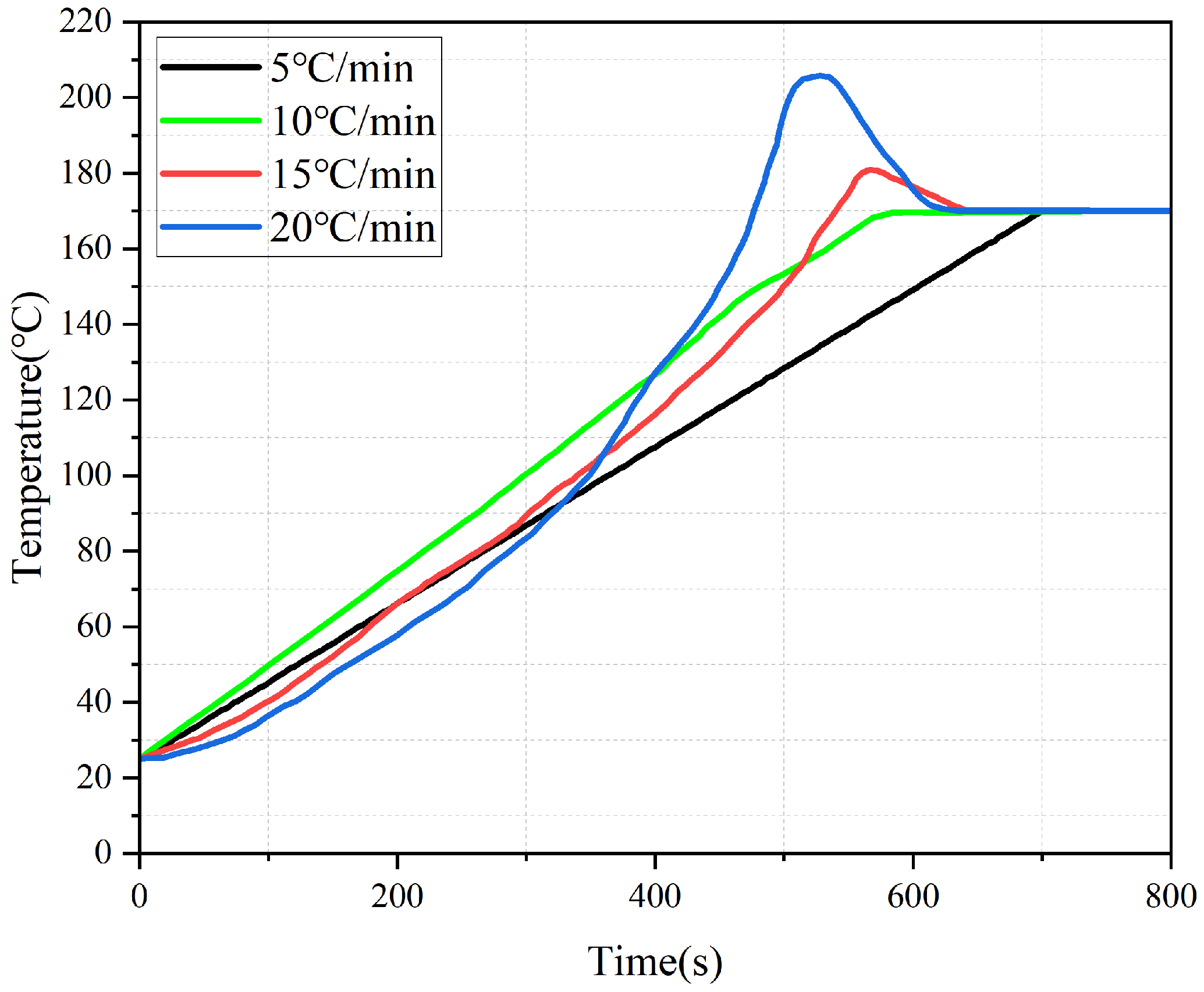
- Heating rate, a crucial factor affecting curing uniformity, was set within the range of 5–20 °C/min, which was confirmed as the effective curing rate for the glass fiber/epoxy resin system by differential scanning calorimetry (DSC) tests.
- (3)
- Holding time was designed to match real industrial production rates (4–16 cm/min), so as to balance manufacturing efficiency and the cure degree of components.
- (4)
- Pultrusion Speed was adjusted to the resin gelation cycle (40–70 s) at the mold curing temperature of 170 °C, according to the cure kinetics of the resin system.
2.2. Thermochemical Analysis Model
2.2.1. Heat Transfer Model
2.2.2. Curing Kinetics Model
2.3. Curing Intrinsic Modeling
2.3.1. Thermal Analysis Model
2.3.2. Cured Intrinsic Model
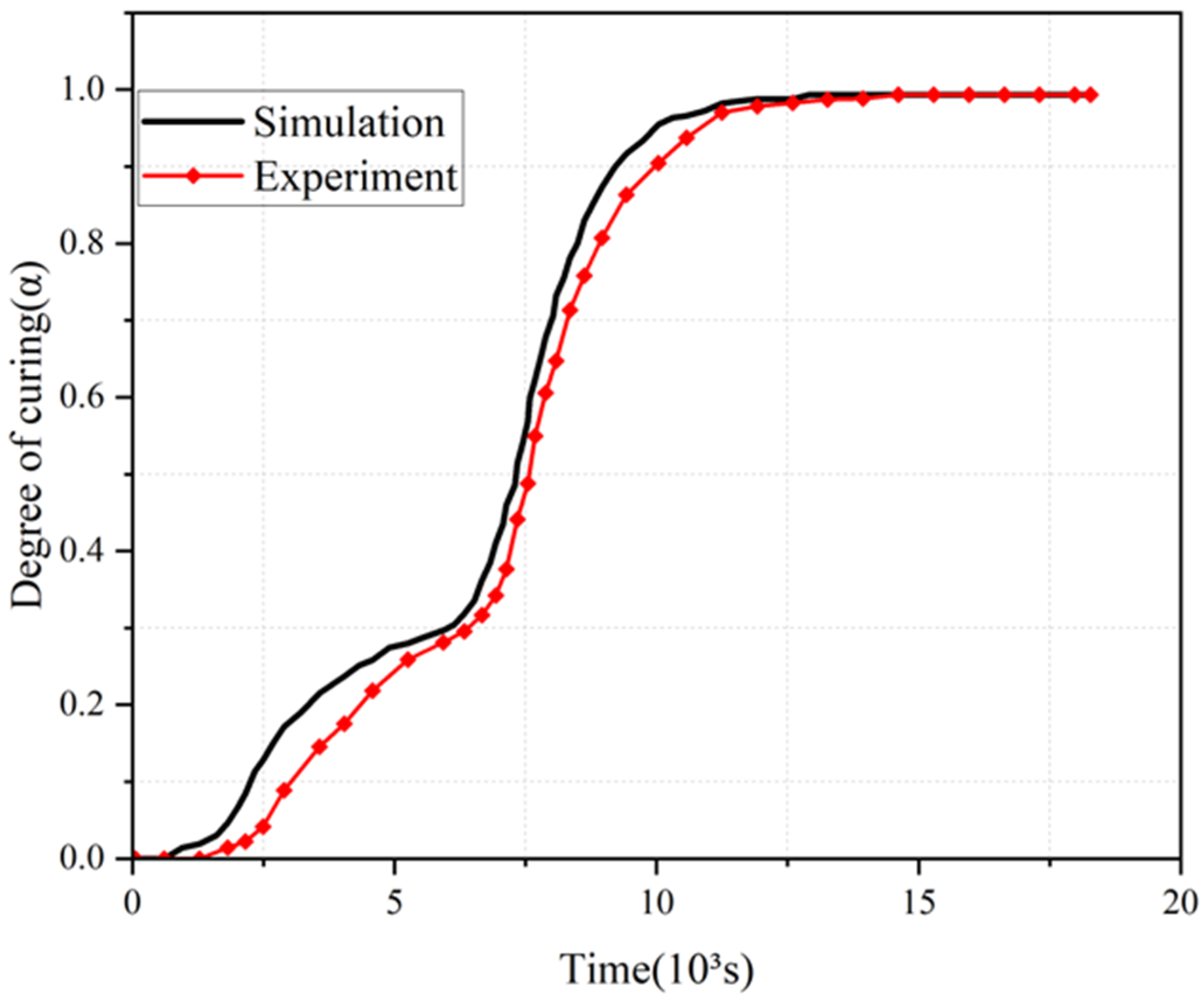
2.3.3. Simulation Model Verification
3. Curing Process Simulation Analysis
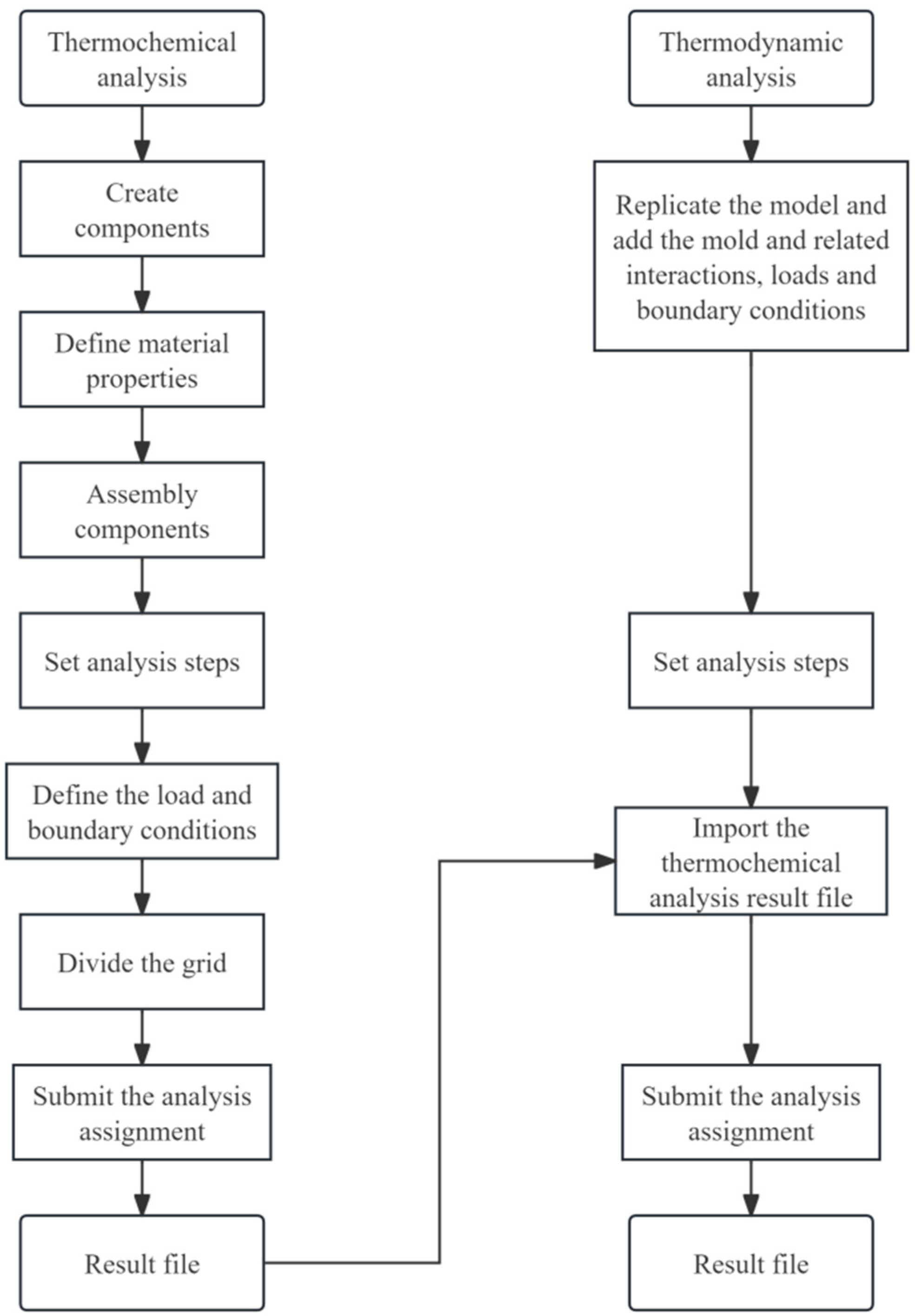
3.1. Finite Element Modeling
3.1.1. Boundary Conditions for Thermo-Chemical Analysis
3.1.2. Boundary Conditions for Thermo–Mechanical Analysis
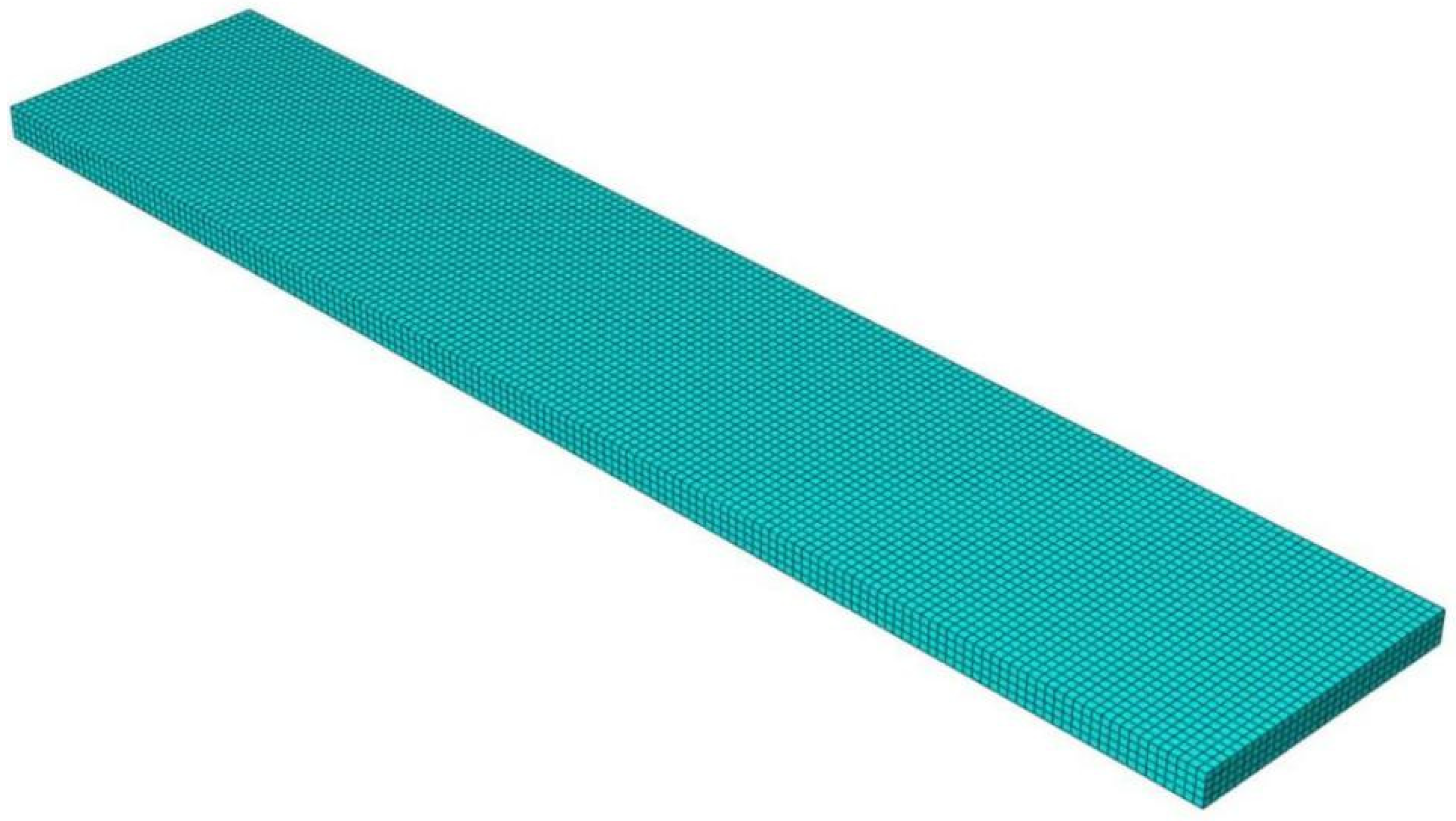
3.1.3. Mesh Generation
3.2. Analysis of Field Variables During Curing
3.3. Analysis of Factor Impacts
4. Conclusions
Author Contributions
Funding
Institutional Review Board Statement
Data Availability Statement
Conflicts of Interest
References
- He, D.; Tang, T. Analysis of the Properties and Effective Applications of Resin Matrix Composites. Adhesion 2019, 40, 66–68. [Google Scholar]
- Cui, J.; Shi, Z.; Cao, Y.Z.; Ge, J.W.; Chen, X. Research Status of Resin Matrix Composites in Pultrusion Molding Process. Pet. Chem. Technol. 2022, 29, 33–35. [Google Scholar]
- Cheng, J.S. Preparation and Properties of Glass Fiber Reinforced Polypropylene Composites. Synt. Resins Plast. 2022, 39, 29–34. [Google Scholar]
- Vedernikov, A.; Nasonov, Y.; Korotkov, R.; Gusev, S.; Akhatov, I.; Safonov, A. Effects of Additives on the Cure Kinetics of Vinyl Ester Pultrusion Resins. J. Compos. Mater. 2021, 55, 2921–2937. [Google Scholar] [CrossRef]
- Safonov, A.A.; Carlone, P.; Akhatov, I. Mathematical Simulation of Pultrusion Processes: A Review. Compos. Struct. 2018, 184, 153–177. [Google Scholar] [CrossRef]
- Liu, T.; Liu, X.; Feng, P. A Comprehensive Review on Mechanical Properties of Pultruded FRP Composites Subjected to Long-Term Environmental Effects. Compos. Part B Eng. 2020, 191, 107958. [Google Scholar] [CrossRef]
- Jiang, K.B.; Chen, L.; Zhao, Q.L. Research on Molding Process and Bending Performance of Multidirectional Ply Pultruded FRP Thin-Walled Beams. Eng. Plast. Appl. 2011, 39, 42–46. [Google Scholar]
- Zhao, D.H.; Yang, J.Q.; Meng, X.M.; Li, X.Y.; Zhang, L.; Wang, H.F. Experimental Study on Bending Performance of New Pultruded Sandwich Beam Cap for Wind Turbine Blades. Acta Mater. Compos. Sin. 2022, 39, 5264–5274. [Google Scholar]
- Chen, B.Y.; Qi, J.W.; Wang, Y.Q.; Shi, J.Q. Optimal Reconstruction of Hat-Shaped Stringer Preforming Mold Based on Advanced Pultrusion Process. Compos. Sci. Eng. 2023, 1, 59–67. [Google Scholar]
- Li, F.L.; Yang, Z.F.; Chen, Y.Q.; Xiao, J.; Feng, X. Study on Curing Kinetics and Dynamic Mechanical Properties of Epoxy Resin for Rapid Pultrusion. China Plast. 2023, 37, 66–73. [Google Scholar]
- Barkanov, E.; Akishin, P.; Namsone-Sile, E. Effectiveness and Productivity Improvement of Conventional Pultrusion Processes. Polymers 2022, 14, 841. [Google Scholar] [CrossRef] [PubMed]
- Jiang, B.Y.; Qi, J.W.; Liu, X.L. Numerical Simulation of Curing Heat Transfer Process in Advanced Prepreg Pultrusion. Acta Mater. Compos. Sin. 2020, 37, 1496–1504. [Google Scholar]
- Struzziero, G.; Maistros, G.M.; Hartley, J.; Skordos, A.A. Materials Modelling and Process Simulation of the Pultrusion of Curved Parts. Compos. Part A Appl. Sci. Manuf. 2021, 144, 106328. [Google Scholar] [CrossRef]
- Kilian, B.; Fröbel, S.; Brüning, D. Towards Process Optimisation of Polyurethane Pultrusion Using 3D Simulation. In Advances in Polymer Processing 2020; Hopmann, C., Dahlmann, R., Eds.; Springer: Berlin/Heidelberg, Germany, 2020. [Google Scholar]
- Wang, D.; Zheng, X.; Cao, X.; Cheng, X.H.; Han, J.L.; Liu, D.X. Multi-Objective Optimization of Pultrusion Process Parameters Based on Numerical Simulation. Mod. Manuf. Technol. Equip. 2020, 56, 19–20, 23. [Google Scholar]
- Yang, J.; Li, Q.Y.; Ji, X.; Zhang, S.L.; Wang, Y.; Liu, H.B.; Zhao, P.; Chen, L.; Hu, X.F.; Ma, W.J.; et al. Modeling and Control Strategy of Composite Material Weaving-Winding-Pultrusion System. J. Text. Res. 2023, 44, 199–206. [Google Scholar]
- Baran, I.; Cinar, K.; Ersoy, N.; Akkerman, R.; Hattel, J.H. A Review on the Mechanical Modeling of Composite Manufacturing Processes. Arch. Comput. Methods Eng. 2017, 24, 365–395. [Google Scholar] [CrossRef]
- Ding, A.X.; Li, S.X.; Ni, A.Q.; Wang, J.H. Review on numerical simulation of cure-induced deformation and residual stress in thermosetting resin matrix composites. Acta Mater. Compos. Sin. 2017, 34, 471–485. [Google Scholar]
- GB/T 2577-2005; Test method for density of glass fiber reinforced plastics. Standards Press of China: Beijing, China, 2005.
- Johnston, A.A. An Integrated Model of the Development of Process-Induced Deformation in Autoclave Processing of Composite Structure. Ph.D. Thesis, The University of New Brunswick, Saint John, NB, Canada, 1997. [Google Scholar]
- Sorrentino, L.; Bellini, C. Validation of a methodology for cure process optimization of thick composite laminates. Polym.-Plast. Technol. Eng. 2015, 54, 1803–1811. [Google Scholar] [CrossRef]
- Bellini, C.; Sorrentino, L. Analysis of cure-induced deformation of CFRP U-shaped laminates. Compos. Struct. 2018, 197, 1–9. [Google Scholar] [CrossRef]
- Bogetti, T.A.; Gillespie, J.W., Jr. Two-dimensional cure simulation of thick thermosetting composites. J. Compos. Mater. 1991, 25, 239–273. [Google Scholar] [CrossRef]
- Bogetti, T.A.; Gillespie, J.W.; McCullough, R.L. Influence of processing on the development of residual stresses in thick-section thermoset composites. Int. J. Mater. Prod. Technol. 1994, 9, 170–182. [Google Scholar] [CrossRef]
- Svanberg, J.M.; Holmberg, J.A. Prediction of shape distortions. Part II: Experimental validation and analysis of boundary conditions. Compos. Part A Appl. Sci. Manuf. 2004, 35, 723–734. [Google Scholar] [CrossRef]
- ISO 11357-5; Plastics—Differential scanning calorimetry (DSC)—Part 5: Determination of characteristic reaction times and isothermal reaction enthalpy. International Organization for Standardization: Geneva, Switzerland, 2014.
- DiBenedetto, A.T. Prediction of the glass transition temperature of polymers: A model based on the principle of corresponding states. J. Polym. Sci. Part B Polym. Phys. 1987, 25, 1949–1969. [Google Scholar] [CrossRef]
- ISO 11357-2:2020; Plastics—Differential Scanning Calorimetry (DSC)—Part 2: Determination of Glass Transition Temperature. International Organization for Standardization: Geneva, Switzerland, 2020.
- Kessler, M.R.; Tsai, S.W. A constitutive model for fiber-reinforced composites under thermomechanical loading. J. Appl. Phys. 2009, 105, 103511. [Google Scholar]
- Gupta, P.K.; Mauro, J.C. Composition dependence of glass transition temperature and fragility. I. A topological model incorporating temperature-dependent constraints. J. Chem. Phys. 2009, 130, 094505. [Google Scholar] [CrossRef]
- Ma, Y.R.; He, J.L.; Li, D.; Tan, Y.; Xu, L. Numerical simulation of cure-induced deformation for curved resin matrix composite components. Acta Mater. Compos. Sin. 2015, 32, 874–880. [Google Scholar]



| Factor (Letter, Unit) | Horizontal Number | Level Value |
|---|---|---|
| Bending Height (A, mm) | 4 | 20, 30, 40, 50 |
| Heating rate (B, °C/min) | 4 | 5, 10, 15, 20 |
| Holding Time (C, s) | 4 | 4, 8, 12, 16 |
| Pultrusion Speed (D, cm/min) | 4 | 40, 50, 60, 70 |
| Property | Glass Fiber | Resin Matrix |
|---|---|---|
| /GPa | 80 | 3.35 |
| /GPa | 12 | 3.35 |
| 0.2 | 0.35 | |
| 0.2 | 0.35 | |
| 0.5 | 0.35 | |
| /GPa | 33.33 | 1.24 |
| /GPa | 33.33 | 1.24 |
| /GPa | 8.33 | 1.24 |
| XT/MPa | 2150 | 80 |
| XC/MPa | 1450 | 120 |
| S/MPa | 1200 | 70 |
| 2.6 | 1.2 | |
| 1.2 | 0.2 | |
| 1 | 0.2 | |
| 750 | 1100 | |
| 5 | 60 | |
| 5 | 60 | |
| - | 216 | |
| - | 4.6 | |
| - | 0.85 | |
| - | 0.63 | |
| - | 170 |
| Number | (A, mm) | (B, °C/min) | (C, s) | (D, cm/min) | Residual Stress/Pa | Deformation/mm |
|---|---|---|---|---|---|---|
| 1 | 20 | 5 | 4 | 40 | 1273.8 | 0.4953 |
| 2 | 20 | 10 | 8 | 50 | 1240.2 | 0.4437 |
| 3 | 20 | 15 | 12 | 60 | 1251.6 | 0.4493 |
| 4 | 20 | 20 | 16 | 70 | 1294.3 | 0.5199 |
| 5 | 30 | 5 | 12 | 50 | 1427.1 | 0.615 |
| 6 | 30 | 10 | 16 | 40 | 1326.7 | 0.5505 |
| 7 | 30 | 15 | 4 | 70 | 1357.2 | 0.5611 |
| 8 | 30 | 20 | 8 | 60 | 1479.5 | 0.5849 |
| 9 | 40 | 5 | 16 | 60 | 1492.8 | 0.573 |
| 10 | 40 | 10 | 12 | 70 | 1494.4 | 0.5743 |
| 11 | 40 | 15 | 8 | 40 | 1579.5 | 0.5889 |
| 12 | 40 | 20 | 4 | 50 | 1647.8 | 0.6398 |
| 13 | 50 | 5 | 8 | 70 | 1830.2 | 0.6547 |
| 14 | 50 | 10 | 4 | 60 | 1789.7 | 0.6322 |
| 15 | 50 | 15 | 16 | 50 | 1827.4 | 0.6787 |
| 16 | 50 | 20 | 12 | 40 | 1866.5 | 0.7934 |
| Number | (A, mm) | (B, °C/min) | (C, s) | (D, cm/min) |
|---|---|---|---|---|
| K1 | 5060.0 | 6023.9 | 6068.5 | 6046.5 |
| K2 | 5590.5 | 5851.0 | 6129.4 | 6142.5 |
| K3 | 6214.5 | 6015.7 | 6000.5 | 6013.6 |
| K4 | 7313.8 | 6288.1 | 5980.3 | 5176.1 |
| 1265.0 | 1506.0 | 1517.1 | 1511.6 | |
| 1397.6 | 1462.8 | 1532.4 | 1535.6 | |
| 1553.6 | 1503.9 | 1500.1 | 1503.4 | |
| 1828.5 | 1572.0 | 1495.1 | 1494.0 | |
| R | 563.5 | 109.2 | 37.3 | 41.6 |
| Optimal Level of Factors | 20 | 10 | 16 | 70 |
| Considerations | SST | DOF | MSR | F | P | Significance Level |
|---|---|---|---|---|---|---|
| Bending height | 633,985.88 | 3 | 211,328.63 | 8.827 | 0.003 | * |
| Heating rate | 24,478.20 | 3 | 8159.40 | 0.341 | 0.796 | |
| Holding time | 3808.84 | 3 | 1269.61 | 0.053 | 0.983 | |
| Pultrusion speed | 3466.76 | 3 | 1155.59 | 0.048 | 0.985 | |
| Error | 71,821.98 | 3 | 23,940.66 | |||
| Total | 737,561.66 | 15 |
Disclaimer/Publisher’s Note: The statements, opinions and data contained in all publications are solely those of the individual author(s) and contributor(s) and not of MDPI and/or the editor(s). MDPI and/or the editor(s) disclaim responsibility for any injury to people or property resulting from any ideas, methods, instructions or products referred to in the content. |
© 2026 by the authors. Licensee MDPI, Basel, Switzerland. This article is an open access article distributed under the terms and conditions of the Creative Commons Attribution (CC BY) license.
Share and Cite
Wu, R.; Huang, R.; Wang, X.; Fan, Z.; Ma, Y. Simulation of Curing Deformation in Curved Composite Plates via Pultrusion Based on Thermal-Chemical-Structural Coupling. Polymers 2026, 18, 724. https://doi.org/10.3390/polym18060724
Wu R, Huang R, Wang X, Fan Z, Ma Y. Simulation of Curing Deformation in Curved Composite Plates via Pultrusion Based on Thermal-Chemical-Structural Coupling. Polymers. 2026; 18(6):724. https://doi.org/10.3390/polym18060724
Chicago/Turabian StyleWu, Rui, Ruifan Huang, Xianchao Wang, Zhenhua Fan, and Yannan Ma. 2026. "Simulation of Curing Deformation in Curved Composite Plates via Pultrusion Based on Thermal-Chemical-Structural Coupling" Polymers 18, no. 6: 724. https://doi.org/10.3390/polym18060724
APA StyleWu, R., Huang, R., Wang, X., Fan, Z., & Ma, Y. (2026). Simulation of Curing Deformation in Curved Composite Plates via Pultrusion Based on Thermal-Chemical-Structural Coupling. Polymers, 18(6), 724. https://doi.org/10.3390/polym18060724