3.1. PBAT Characterization
Prior to irradiation, the unirradiated material was characterized for its chemical structure, thermal properties and mechanical properties.
A singlet at 8.09 ppm corresponds to the four protons of the terephthalic ring (T).
The signals in the interval 4–4.5 ppm are due to butylene (B) units. The signals correspond to two pseudo-singlets and two triplets. The pseudo-singlet at 4.43 ppm corresponds to methylene units linked to the oxygen when butylene is in between two terephthalate units (1); the triplet at 4.37 ppm corresponds to methylene units linked to the oxygen of terephthalate unit when butylene is in between one terephthalate unit and one adipate unit (A) (3); the triplet at 4.14 ppm corresponds to methylene units linked to the oxygen of adipate unit when butylene is in between one terephthalate unit and one adipate unit (6); and the pseudo-singlet at 4.08 ppm corresponds to the methylene units linked to the oxygen of adipate unit when butylene is in between two adipate units (9).
The pseudo-singlet at 2.32 ppm corresponds to the methylene units linked to the carbonyl of adipate units (7).
The pseudo-singlet at 1.97 ppm corresponds to the internal methylene units of butylene when in between two terephthalate units (2).
The multiplets at 1.84 and 1.81 ppm correspond to the internal methylene units of butylene when in between one terephthalate unit and one adipate unit (4,5).
The pseudo-singlet at 1.68 ppm, merged with the pseudo-singlet at 1.65 ppm, correspond to the internal methylene units of butylene when in between two adipate units (10), and to the internal methylene units of the adipate units, respectively (8).
From the areas of the integral at 8.09 ppm (T) and 2.32 ppm (7, A), a composition of 52% mol adipate units and 48% mol of terephthalate units in the copolymer is calculated; thus, they are almost equimolecular.
From the areas of the peaks at 4.43 (1), 4.37 (3), 4.14 (6) and 4.08 (9) ppm, the ratios of the butylene units in between terephthalic units (1, T-B-T), in between one terephthalate unit and one adipate unit (3,6, T-B-A and A-B-T) and in between adipate units (9, A-B-A) were calculated: 16.4%, 65.8% and 17.8% mol, respectively.
Following the method reported in the literature [
44], the block lengths of terephthalate units (BT) and adipate units (BA) were calculated, with values of 1.46 and 1.58 respectively; thus, they are very short sequences, and the degree of randomness had a value of 1.31, which means that the copolymer is mainly random.
From the spectrum it can be concluded that PBAT is a random copolymer that has almost a 50:50 mol ratio of terephthalate: adipate (48:52 actually), and that more than half (65.8% mol) of the butylene units are in between the terephthalate and adipate units, which will not be able to crystallize, limiting the crystallization ability of the copolymer, which could have very short pure butylene–terephthalate (BT) and pure butylene–adipate (BA) sequences that could form crystals in a phase-separated phase.
From thermogravimetric analysis it was found that all the material degraded without any significant amounts of residue; thus, the PBAT copolymer is a pure polymeric material without fillers. Decomposition started at temperatures above 300 °C; thus, at the processing temperature, the material is thermally stable.
SEC analysis provided a number average molecular weight (Mn) of 46,400 Da, and a weight average molecular weight (Mw) of 104,000 Da with a polydispersity index (PI) of 2.2. The PI is wide, as expected for a polycondensation polymer, and the high molecular weight assures its good mechanical properties.
In the first heating (black colour in
Figure S3), from 25 to 180 °C, a very broad melting endotherm spanning the whole interval is found, with the main maximum at approximately 117 °C, and another smaller maximum at approximately 50 °C. The presence of the endotherm means that the material is phase separated with a pure crystalline phase.
In Reference [
44] the first maximum is attributed to the melting of BA blocks, and the second maximum to the melting of BT blocks. We do not agree, and we consider that the whole endotherm is due to the melting of BT blocks, with two populations of crystal sizes that melt at different temperatures (lower for smaller crystals). The block length is very short, and for this reason the melting point for the BT blocks, 117 °C, is much lower than the melting point for high-molecular-weight poly(butylene–terephthalate) (PBT), approximately 225 °C [
42,
45]. For the short BA blocks, the same trend is expected, and taking into account that the melting point for high-molecular-weight poly(butylene adipate) (PBA) is in the range 50–60 °C depending on the crystal form (α or β) [
46,
47], the very short BA blocks are expected to melt at temperatures well below ambient temperature.
The melting enthalpy is found to be around 28 J·g
−1. In order to calculate the crystallinity degree, the enthalpy value for 100% crystalline material has to be known. In the literature, a value of 114 J·g
−1 for 100% crystalline PBAT is accepted [
22,
33,
37,
44,
48]. However, if the origin of the value is tracked, it is found that most of the works refer to other works, with the result being that the value was theoretically calculated from ester, methylene and aromatic ring contributions [
49]. This calculation assumes that all PBAT chain crystallizes, which is not correct. In this copolymer, the crystallization takes place in the phase-separated short blocks of BT, and the enthalpy value for 100% crystalline PBT experimentally calculated is 145 J·g
−1 [
50], a 27% higher value than the 114 J·g
−1 assumed for 100% crystalline PBAT. The value for 100% crystalline PBT that is experimentally determined is close to the theoretically calculated value (150 J·g
−1) [
49]. Surprisingly, the authors in Reference [
44], despite admitting that in the second heating step the melting endotherm is only due to butylene–terephthalate blocks, confirmed by X-ray patterns, use the calculated 100% crystalline PBAT value instead of the 100% crystalline PBT value.
We will use the value of PBT 100% crystalline enthalpy for the calculations, which will produce lower crystalline values than in the literature. From proton NMR, PBAT has a 48% mol of terephthalate, and therefore 50% of the weight of BT segments, although most parts of them are alternating with butylene–adipate segments instead of forming blocks, and will not be able to crystallize. The calculated crystallinity for the unirradiated PBAT, after processing and storage, is approximately 38% with respect to the total butylene–terephthalate in the copolymer, and 19% with respect to the total copolymer.
In the cooling step from the melt (red colour in
Figure S3), a single broad crystallization peak is found with a minimum at approximately 70.5 °C, followed by a T
g at low temperature. The enthalpy of crystallization, with a value of approximately 22 J·g
−1 is slightly lower than the melting enthalpy, because the material does not have enough time to develop a full crystallization.
In the second heating step (blue colour in
Figure S3), a T
g is found at low temperature, approximately −34 °C, followed by an extremely wide melting endotherm (from 4 to 149 °C) with the maximum at approximately 120 °C. Usually, when the copolymer is precipitated from solution [
44] or annealed from the melt, the melting point in the second heating step results in a lower melting temperature, but in this case, due to the processing in the melt with relatively fast cooling in the casting rollers, the formation of the crystals has been stopped and the melting point in the second heating step is higher. For the melting enthalpy, the value is similar to the crystallization enthalpy, as expected, and slightly lower than the melting enthalpy in the first heating step, because the material is not given enough time for the full development of crystallization. Still, the difference in crystallinity is not very high, a 19% reduction with respect to the first heating step, showing that in the testing conditions, most of the crystallinity is recovered, which differs from the authors from Reference [
44], who found a much higher crystallinity reduction in the second heating step, when samples were cooled at −10 °C·min
−1 from the melt, compared to our experiments. No cold crystallization was found.
Summarizing the thermal properties, only the butylene–terephthalate segments are able to crystallize, with melting at approximately 117 °C, well below (−108 °C approximately) that of the high-molecular-weight PBT. Due to the relatively short length of the butylene–terephthalate blocks, PBAT crystallization is low, 19% with respect to the total weight of the material, with a high recrystallization recovery from the melt, circa 80%. The amorphous phase, accounting for most of the material, produced a Tg at a low temperature, approximately −34 °C.
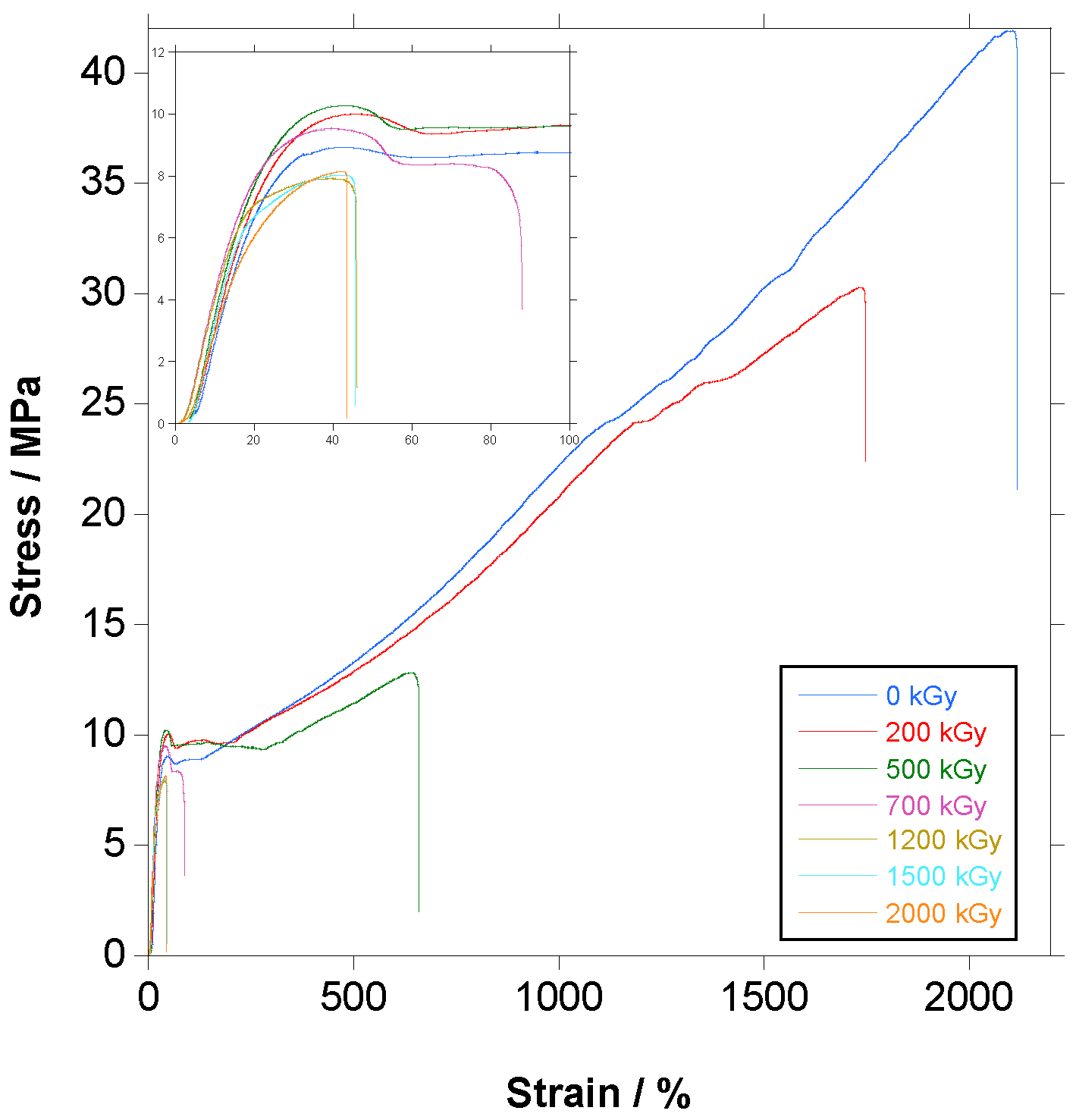
The shape of the curve is typical for a tough thermoplastic, similar to polyethylene. After a fast increase in stress at low strain, producing a Young’s Modulus of approximately 38 ± 2 MPa, the material yields at approximately 44% strain and 9 MPa stress, with a slight decrease in stress afterwards, producing a neck, followed by a very narrow pseudo-plateau from 60 to 130% strain approximately, where stress does not change significantly with strain. Above 130% strain, stress increases constantly and linearly with strain until rupture at high strain, approximately 2100 ± 30%, reaching a high tensile strength of 41 ± 3 MPa. The calculated values for the mechanical properties show that, because the material is highly amorphous but with high molecular weight, it reaches high tensile strength and high strain at break with a relatively low modulus. Compared with the data found in the literature for PBAT with a similar terephthalate/adipate molar ratio (around 50:50) [
19,
44], the tensile strength and strain at break are higher and the Young’s Modulus is lower for the PBAT material in this work.
3.2. Gel Content
Gel content was measured to determine the degree of crosslinking caused by gamma radiation, producing a three-dimensional network that makes the polymer insoluble. PBAT samples were irradiated, by duplicate, at 0 (unirradiated) 10, 20, 30, 50, 100, 200, 500, 700, 1000, 1200, 1500 and 2000 kGy for gel content testing.
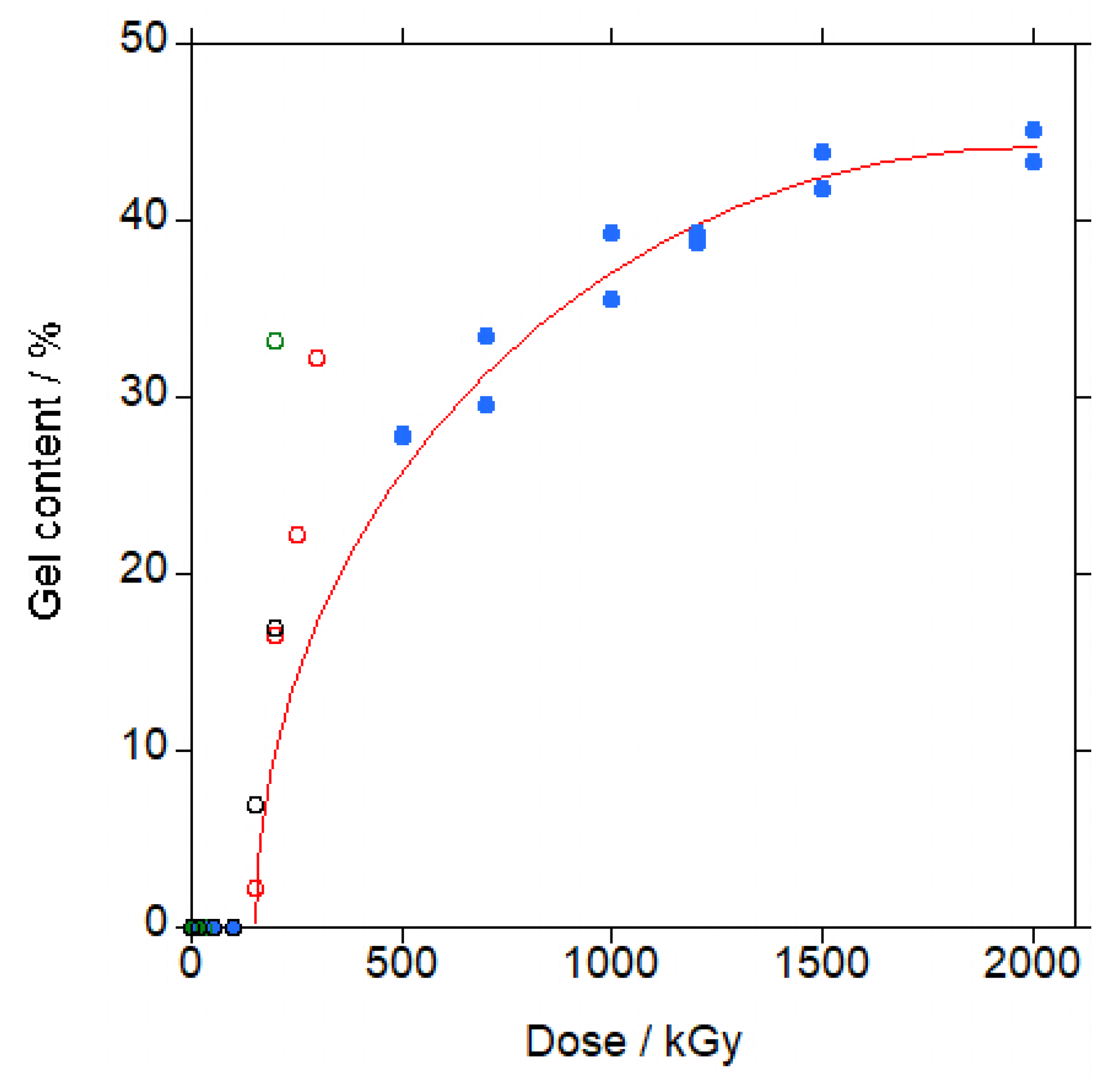
In
Figure 2, the data for the gel content of the irradiated samples of PBAT are shown (filled blue circles; the red line is not a curve fitting, it is just a guide to the eye).
Up to 100 kGy, no gel was found. For 200 kGy, gel was present, as proven by the impossibility to filter the solution because the filter clogged, and could not be separated. Above 200 kGy, the gel content initially increased rapidly, and more slowly at increased doses, with a maximum gel content of approximately 44% weight at 2000 kGy.
The gel content appeared in between 100 and 200 kGy, in agreement with the literature’s data (open circles in
Figure 2) [
19,
26,
27]. At increased doses, up to 200 kGy, the gel content seems to be higher for the PBAT copolymers in the literature, of an undisclosed terephthalate/adipate molar ratio except for one work with similar ratio (47.4% mol adipate) [
19], for which the gel content was 33.2% at 200 kGy, significantly above our 500 kGy gel content of 28%. This difference could be due to a higher initial molecular weight of the PBAT in Reference [
19] that would result in a higher gel content at the same dose, as found for PCL [
39].
In Reference [
27], the data for supposedly pure PBAT, are completely different from
Figure 2, as it can be seen in
Figure S5. Gel appeared already at 20 kGy and gel content was much higher at the same dose for the other data found in the bibliography. Furthermore, the same authors provided completely different data, for the same PBAT, in Reference [
28] (see
Figure S5). In addition, the trend is suspiciously similar to the trend found in other works where a crosslinker was added to PBAT, shown in
Figure S6 [
26]. Thus, clearly, the data from Reference [
27] are obtained from a PBAT blended with a crosslinker although the authors do not mention any crosslinker in the paper and, therefore, gel data from Reference [
27] cannot be compared with the data for pure PBAT.
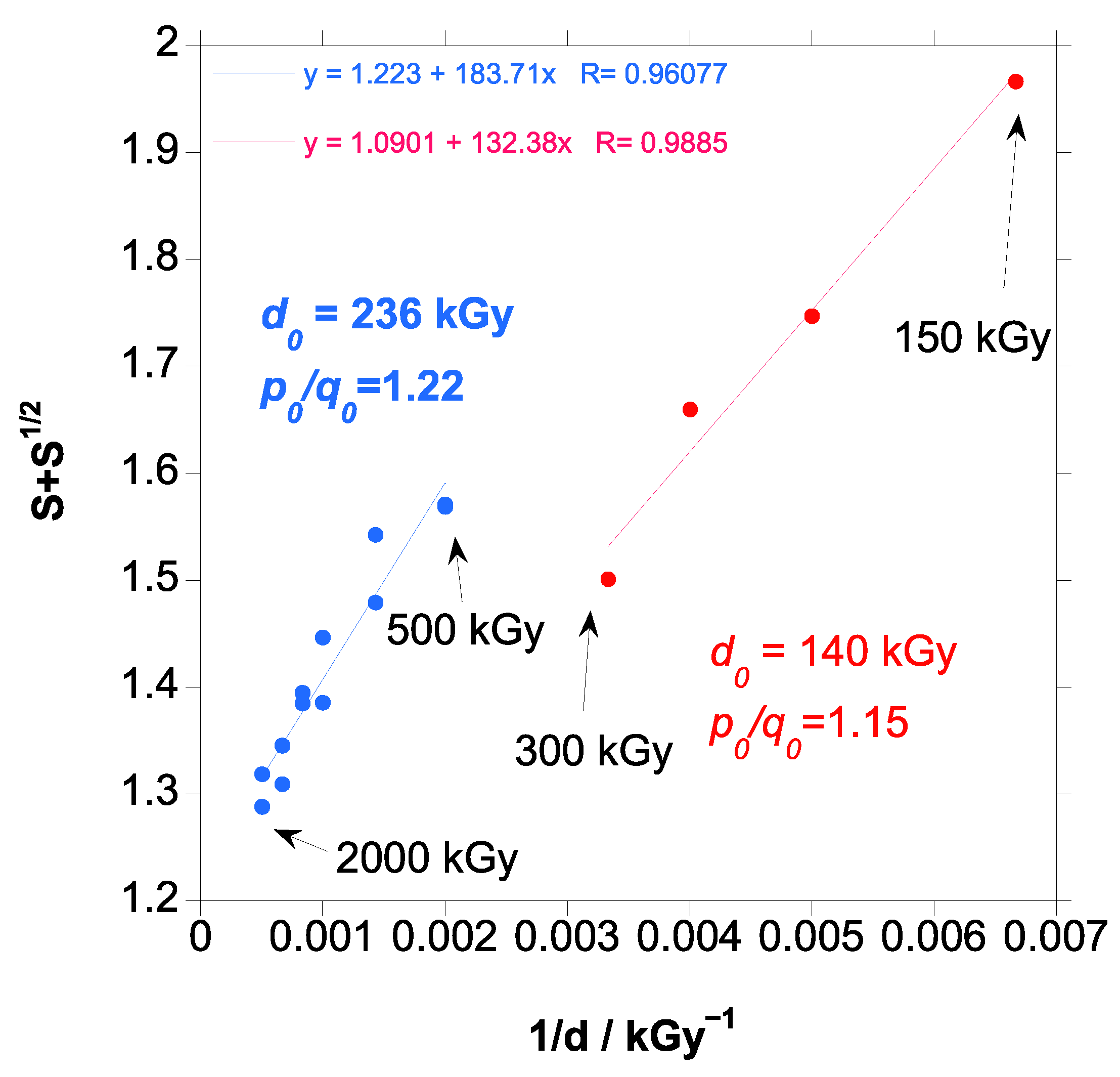
When the data were plotted in a classical Charlesby–Pinner graph,
Figure 3 (blue line), a linear trend was observed.
From the Charlesby–Pinner equation, a minimum dose for gelation d
o of 236 kGy was calculated, which is slightly higher that the experimental value found (in the range 100 to 200 kGy) and the value of 140 kGy found in the literature [
19] for a PBAT with similar adipate content (47.4% mol) as the PBAT in this work.
A linear fitting means that crosslinking is at random, and that the crosslinking ratio does not change when the material crosslinking increases with the increase in dose. Deviation from linearity in a Charlesby–Pinner plot indicates that crosslinking events are occurring in a less random and more directed manner, and, therefore, when crosslinking increases, the efficiency of further irradiation to crosslinking increases. In this case, it is usual to fit to a straight line the data at lower doses [
30,
51]. If the data are compared with the data from the literature [
19],
Figure 3 (red circles), it can be clearly seen that the missing data in our work from 150 to 500 kGy are key to determining precisely the minimum dose of gelation (intercept with s + s
1/2 = 0). The higher gel content found for the sample in Reference [
19], attributed to a higher initial molecular weight of the PBAT, allowed for a more precise calculation of d
o on the Charlesby–Pinner with the gel content data at lower doses than in our study. If our data from 500 kGy to 2000 kGy were slightly curved with respect to the missing data from 150 to 500 kGy, the minimum dose for gelation would be overestimated and would explain the difference with the experimental value found (in the range 100 to 200 kGy) and the value of 140 kGy given in the literature.
The value for the crosslinking efficiency (q
o/p
o) of 0.82 is similar to the value of 0.87 found in the literature [
19]; thus, chain scission slightly predominates over crosslinking.
3.3. Molecular Weight
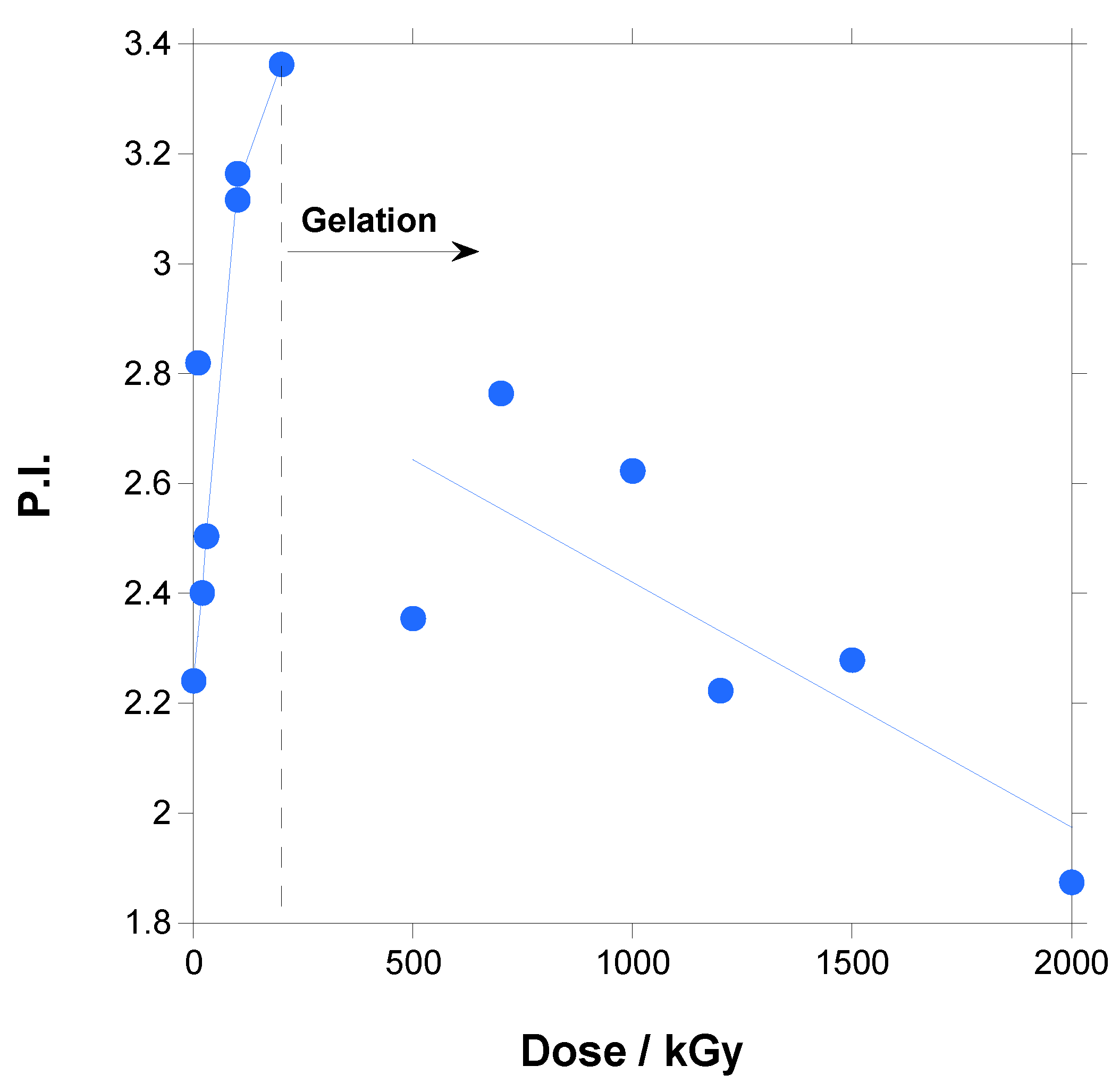
Size Exclusion Chromatography (SEC) was used to determine the changes in molecular weight caused by gamma irradiation. PBAT samples were irradiated at 0 (unirradiated) 10, 20, 30, 50, 100, 200, 500, 700, 1000, 1200, 1500 and 2000 kGy for molecular weight determination. From 0 to 100 kGy, the measured molecular weight corresponds to the whole sample, whereas at 200 kGy and above, because of the existence of a crosslinked and therefore insoluble material, the measured molecular weight corresponds only to the soluble part of the material.
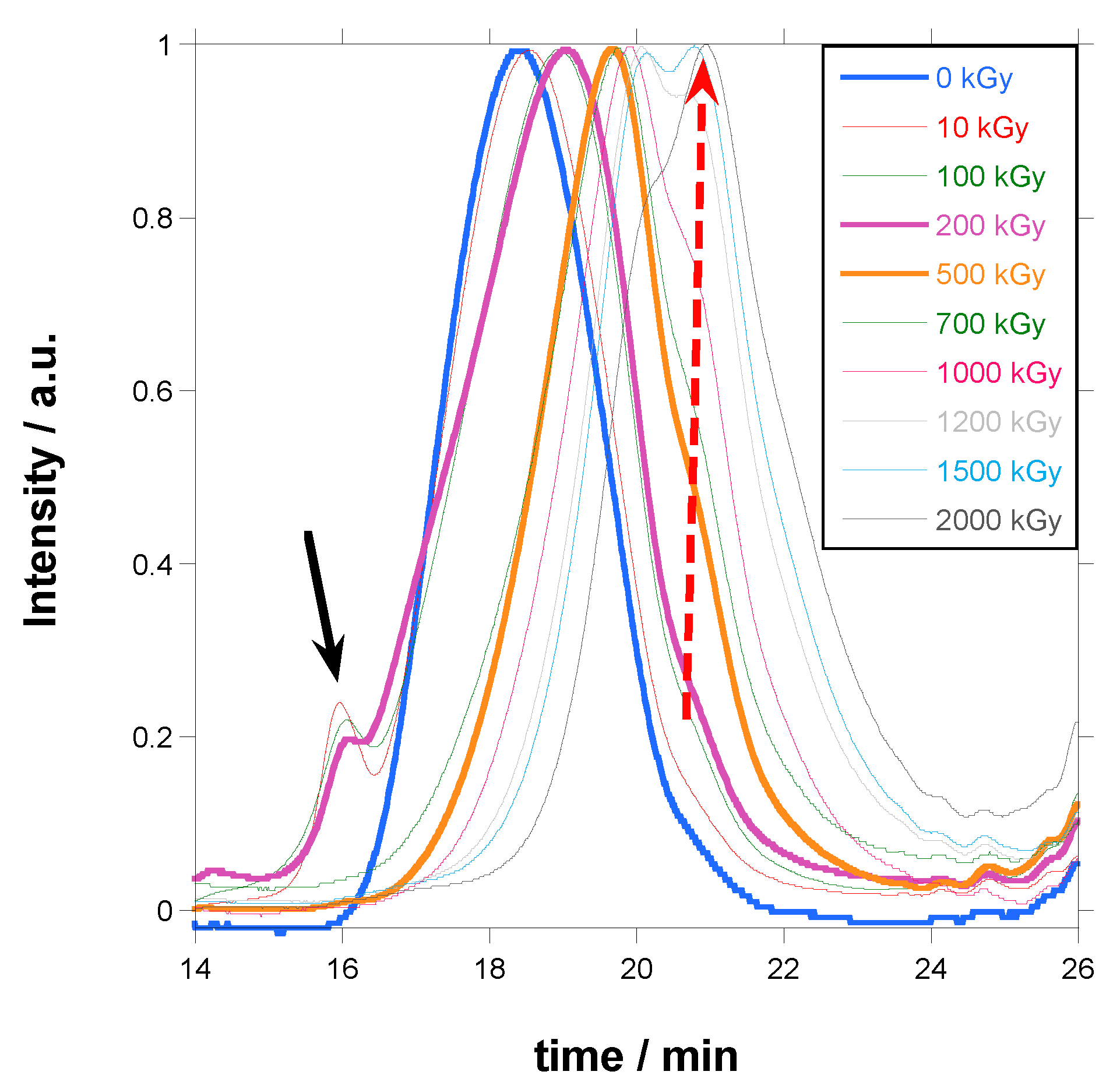
In
Figure 4, the normalized curves for irradiated PBAT are shown.
Several details can be appreciated in the graph. The main peak (M
p), initially at 82,000 Da for the unirradiated PBAT, moves to longer times and lower molecular weights when irradiation dose increases, which could lead one to think that molecular weight decreases continuously. However, a small peak at short times due to chains of molecular weight higher than the exclusion limit of the columns (pointed out by a black arrow in
Figure 4) appears at 10 kGy and completely disappears at 500 kGy. At high irradiation doses, a shoulder at long times due to low molecular weight chains develops to a peak at 1200 kGy and becomes the main peak in 2000 kGy (pointed out by a red dashed arrow in
Figure 4), with a molecular weight of 8700 Da. At the same time, the width of the peak increases with the increase in dose.
These results can be explained by the crosslinking of molecules, producing branching that increases molecular weight (peak at shorter times), and by the simultaneous scission of chains that produces shorter fragments and therefore a decrease in molecular weight (peak at longer times). Both effects lead to a broadening of the molecular weight distribution.
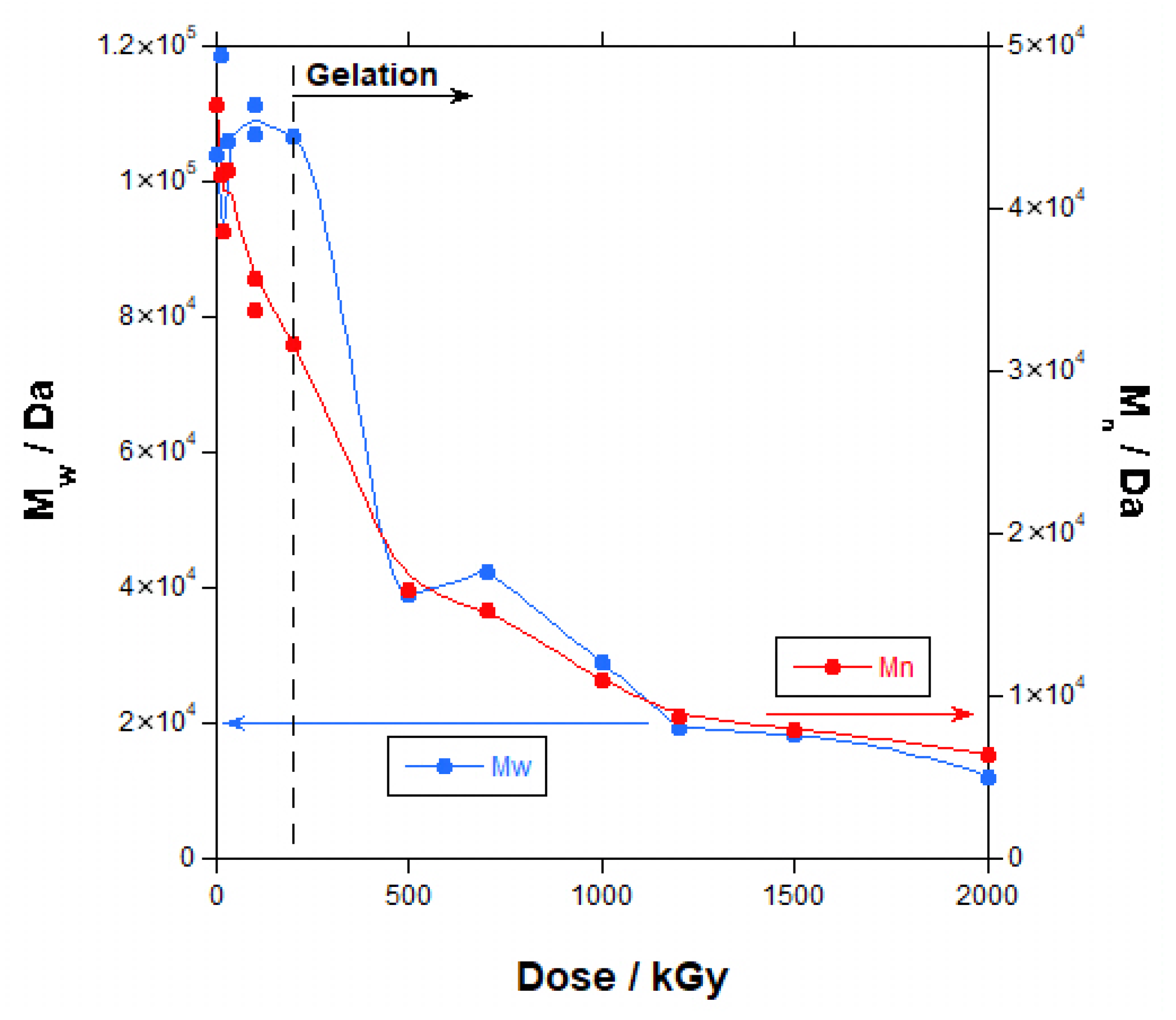
These conclusions can be better justified when the data for the number average molecular weight (M
n), weight average molecular weight (M
w) and polydispersity index (PI) are represented, as in
Figure 5 and
Figure 6 (the lines are not curve fittings; they are just a guide to the eye).
Until gelation, Mn decreased continuously with the increase in dose, whereas Mw did not change significantly with the increase in dose and then decreased. The polydispersity index, being the ratio Mw/Mn, logically increased.
Thus, until gelation, branching produced by crosslinking reactions that increase molecular weight compensated the decrease in molecular weight caused by chain scission, leading to a fairly constant Mw with the increase in dose, whereas the shorter chains caused by chain scission dominated the Mn value with a decrease with the increase in dose. Additionally, there was a simultaneous increase in high-molecular-weight and low-molecular-weight species, produced an increase in polydispersity with the increase in dose. In other words, the occurrence of intermolecular crosslinking that generates high-molecular-weight branched or networked structures, coexists with degraded chains, broadening the distribution. After gelation, only the fragments produced by scission are soluble and could be measured by SEC, and a decrease in molecular weight was found as a consequence of the increase in the fraction of low-molecular-weight species.
Only two works in the literature measured molecular weight by SEC in irradiated PBAT. In one of them [
29], M
n, M
w and PI increased with the dose until a maximum of 90 kGy, and, in the other work [
32], M
n, M
w and PI stayed fairly constant until a maximum of 100 kGy. In both cases, measurements were taken before gelation. At these low doses, as seen in
Figure 5, M
n and M
w present certain dispersions, and this could explain the difference in results. When compared with the results for other polymers, our results for PBAT are similar to the results found for other polyesters such as the aliphatic polycaprolactone [
39] and poly(butylene succinate-co-adipate) [
52], and for a poly(ether-urethane) [
51].
3.4. Proton NMR
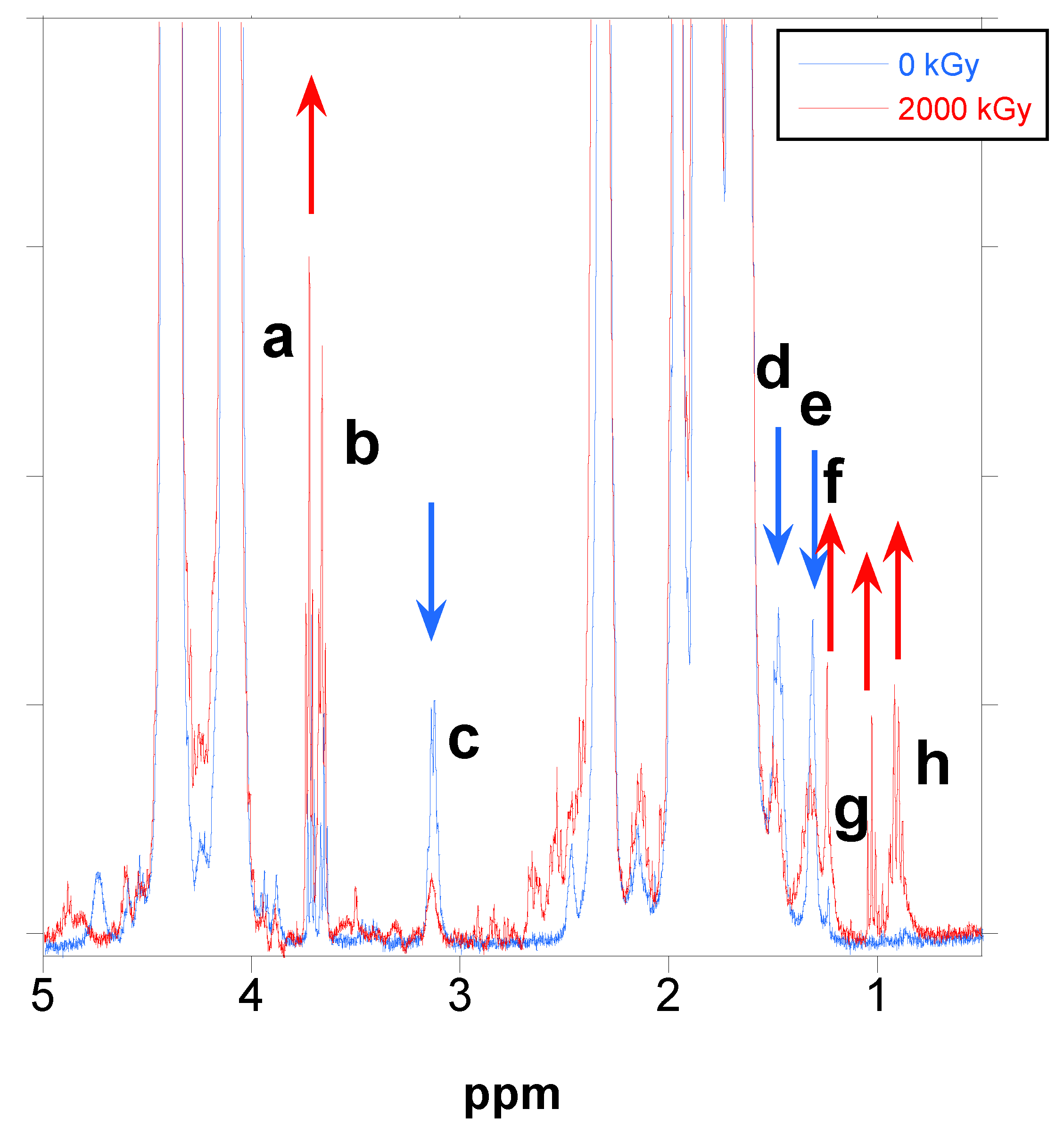
In the following figure (
Figure 7), the changes in the proton NMR spectra between the unirradiated PBAT and the soluble part of PBAT irradiated at 2000 kGy are shown. In
Figure S2 in the Supplementary Materials, the main peaks for PBAT are described. However, some other minor peaks are found in the spectrum that are important for the comprehension of the interaction of gamma radiation with PBAT.
As seen in
Figure 7, there are some minor peaks in the aliphatics region. These peaks (blue spectrum in
Figure 7) are the following:
- -
Triplets at 3.73 (a) and 3.66 (b) ppm;
- -
Quadruplet at 3.14 (c) ppm;
- -
Multiplets at 1.48 (d) and 1.32 (e) ppm.
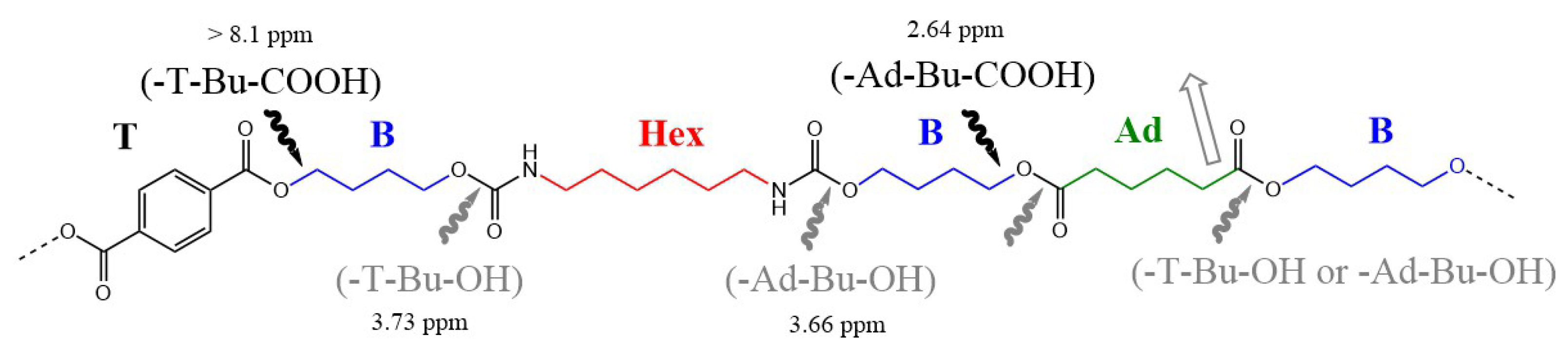
The triplets at 3.73 and 3.66 ppm are due to terminal methylene being linked to a hydroxyl group (-CH
2-OH), for terephthalate (-T-Bu-OH) and adipate (-Ad-Bu-OH) respectively. This triplet can be seen for PBAT in Reference [
44] (
Figure S7 in the Supplementary Materials), although the authors did not mention it.
The rest of the signals (c, d, and e), are assigned to the protons of hexamethylene diurethane. Diisocyanates such as hexamethylene diisocyanate (HDI) have been used as chain extenders in hydroxyl-terminated polymers to increase their molecular weight [
53,
54]. The signals for hexamethylene diurethane when PBTA/PEG diols are chain extended [
53] or when PCL is chain extended [
54] are coincident with the signals in
Figure 7 for unirradiated PBAT, as seen in
Figure S8 in the Supplementary Materials. In addition, the signals are also coincident with the signals for hexamethylene diurethane in a polycarbonate diol chain extended with HDI synthesized at our laboratory, shown in
Figure S9 in the Supplementary Materials.
The proton–proton homonuclear correlation spectrum confirmed that signals (c), (d) and (e) are correlated.
As seen in
Figure 7 (red spectrum), the signals related to terminal hydroxyl groups increased with irradiation, whereas the signals for the hexamethylene diurethane groups decreased with irradiation. In addition, new signals appeared at 1.24 (f), 1.03 (g) (triplet) and 0.92 (h) (multiplet) ppm, related to terminal aliphatic chains such as butyl (-O-CH
2-CH
2-CH
2-CH
3).
When the integrals of the signals were measured and normalized to the number of protons in each signal, it was found that the ratio of the signals adipate/butylene (A/B) was almost constant with the increase in dose, whereas the ratio of aromatic signals for terephthalate to adipate (T/A) or butylene (T/B), increased slightly (5–6%); thus, the soluble part of PBAT after gelation was enriched for terephthalate, which would be consistent with the preferential rupture of bonds in the adipate units.
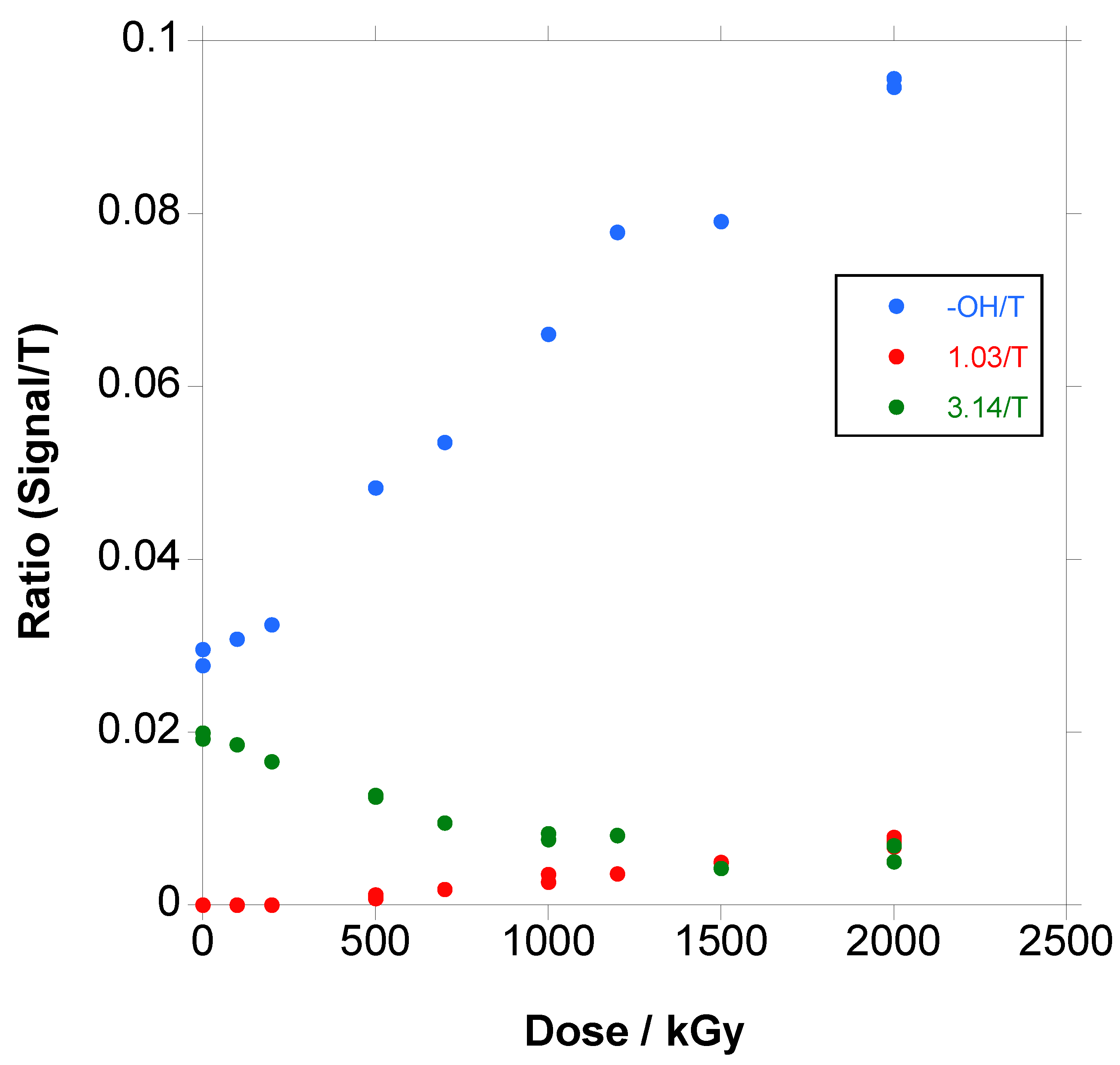
If the ratio of the methylene linked to hydroxyl (a) + (b), the signal at 3.24 ppm for hexamethylene diurethane (c) and the signal at 1.23 (g) for aliphatic terminal chains to the terephthalate signal, is plotted, as in
Figure 8, the terminal hydroxyl groups are apparently the main groups formed with irradiation, with an increase of almost 250% at 2000 kGy, and, at the same time, the diurethane groups disappear and aliphatic terminal chains appear with the increase in dose, although in less proportion.
It is very important to point out that the ratio of the groups does not vary significantly with the increase in dose when gelation is reached and only the soluble part of the polymer is analyzed above gelation (see
Figure 7); thus, it seems that the mechanism of degradation is independent of the dose.
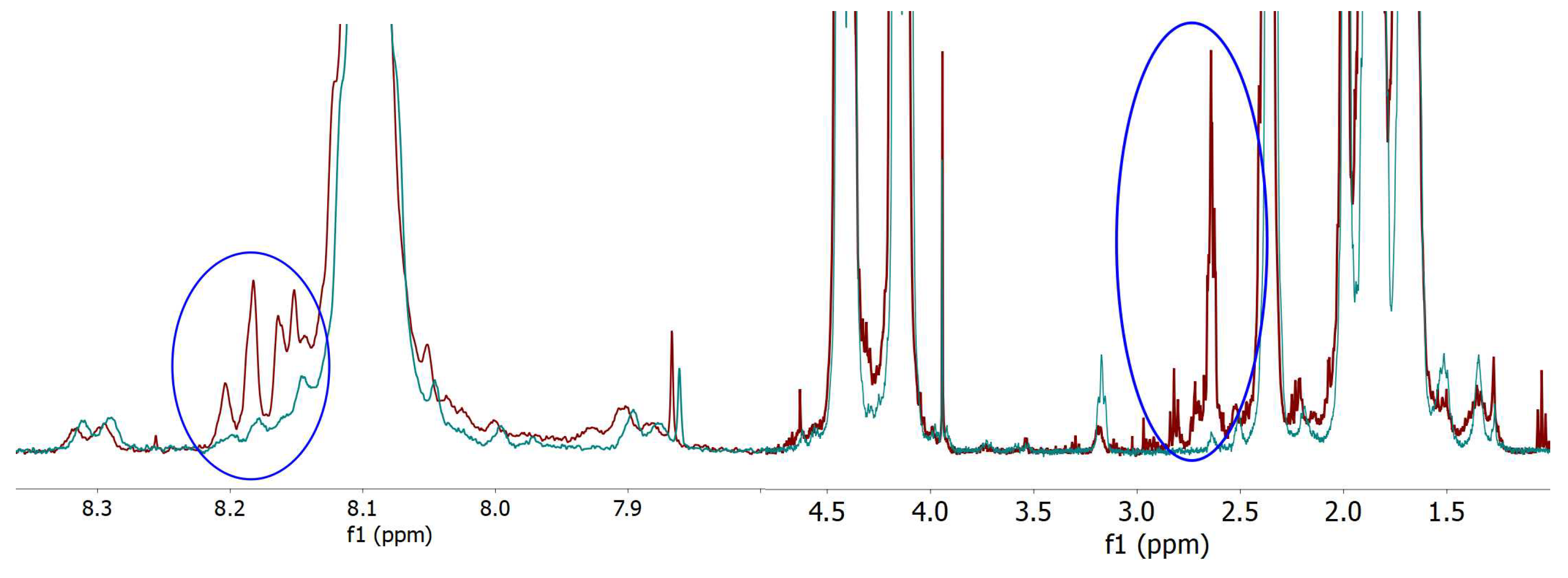
When the unirradiated PBAT and the PBAT irradiated at 2000 kGy are in situ derivatized with trifluoroacetic anhydride, the hydroxyl groups are esterified and the carboxylic groups form anhydride groups. In
Figure 9, the spectra for the derivatized materials are shown.
The signals for terminal hydroxyl groups, because they are esterified, were submerged in the big signals at 4–5.5 ppm and could not be seen, and new signals appeared in the aromatic region (
Figure 9 left) and in the aliphatics region (
Figure 9 right). These new signals at above 8.1 ppm and at 2.64 ppm are consistent with the formation of terephthalic and adipic anhydrides by reactions with trifluoroacetic anhydride. The aromatic signals are partially submerged in the big terephthalate signal and cannot be integrated separately, but the signal at 2.64 ppm can be integrated. The integral for the 2.64 ppm, taking the adipate signal at 2.3 ppm as a reference for normalization, is almost a 50% bigger that the signal for hydroxyl group. If we add the signal for aromatic carboxylic groups, it is clear that the rupture of the -COO-CH
2 bond is more likely than the rupture of the -CO-O bond, and both seems to be the preferred broken bonds. The rupture of these bonds should produce a corresponding amount of aliphatic chain ends, but the signals f, g and h (
Figure 7) are much smaller. This result is explained by the preference of the generated aliphatic radicals (-CH
2·) to recombine with another radical from another chain leading to a branching point (crosslink) instead of abstracting a hydrogen radical to produce a saturated chain end. These crosslinks will finally produce the insoluble network and will not be detected in the soluble part of the material.
From these data, it is proposed that the links between the ester group and the aliphatic chain, leading to carboxylic groups, and the ester and urethane bonds, leading to hydroxyl groups, are preferentially broken by gamma radiation, as shown in
Figure 10.
3.5. Thermal Properties
Because gamma irradiation causes structural changes at the molecular level, it can have a substantial impact on the crystallinity of PBAT. PBAT samples were irradiated at 0 (unirradiated) 10, 20, 30, 50, 100, 200, 500, 700, 1000, 1200, 1500 and 2000 kGy for thermal properties evaluation. Differential Scanning Calorimetry (DSC) was used to examine how gamma radiation affected the thermal behaviour of PBAT. In the first heating step, from 25 °C to 180 °C at 10 °C min−1, the melting point and the crystallinity of the irradiated material were calculated. The crystallinity of the material is one of the most important parameters influencing mechanical properties, and therefore it is important to evaluate this crystallinity to relate it with the determined tensile properties. In the second and third step, cooling from 180 °C to −80 °C at a rate of −10 °C min−1 and heating from −80 °C to 180 °C at 10 °C min−1, respectively, the effect of irradiation on the crystallization, glass transition temperature and melting was evaluated.
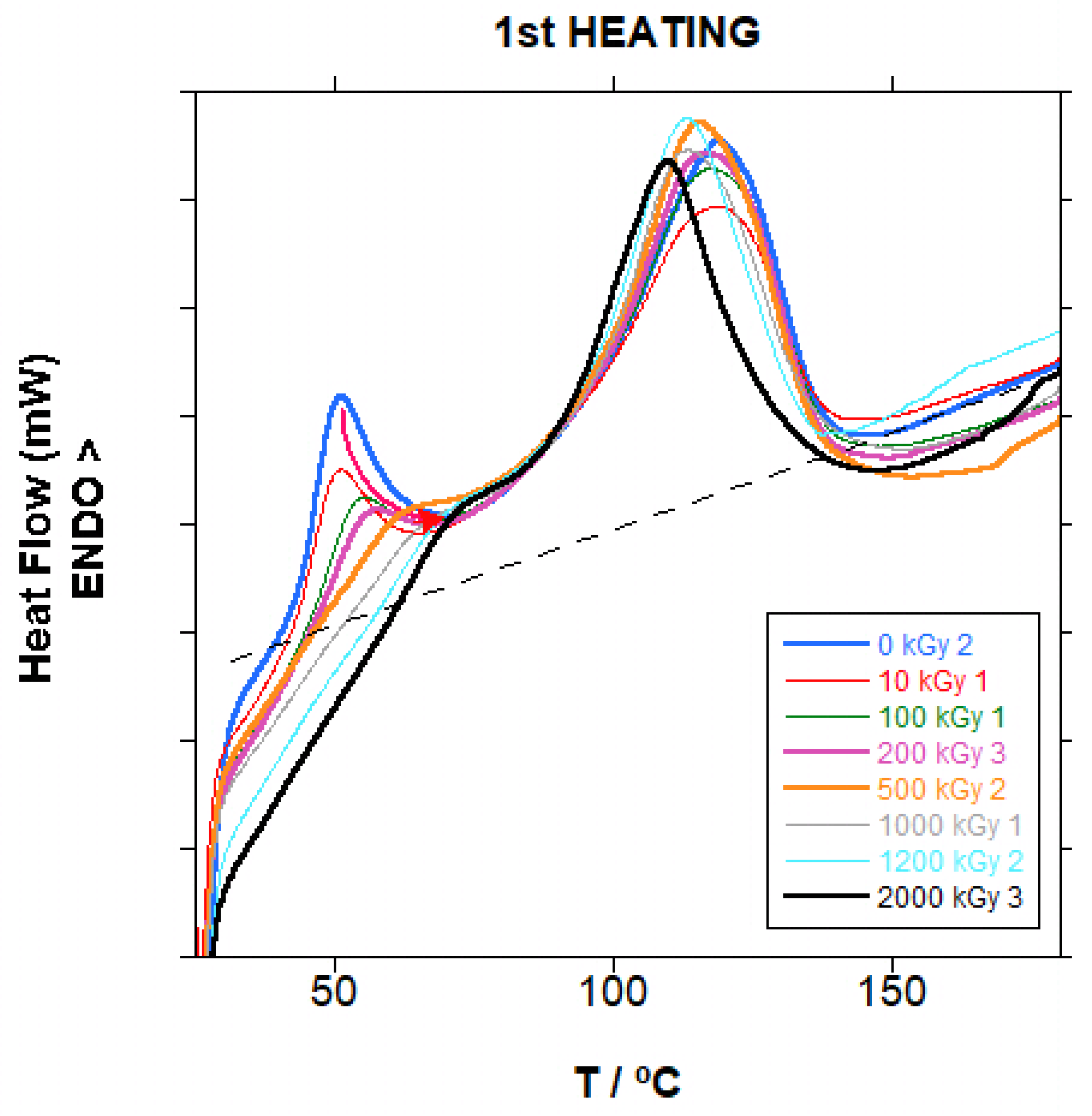
In
Figure 11, the curves for the first heating cycle for PBAT irradiated at different doses are presented. The first heating cycle provides the degree of crystallinity of PBAT, a very important parameter for the mechanical properties. Before irradiation, the curve presents a main peak (T
m1) at approximately 118 °C, and a smaller peak (T
m0) at lower temperatures, 51 °C approximately. When the irradiation dose increased, the main peak slightly shifted linearly to lower temperatures (−7 °C approximately) whereas the smaller peak shifted to slightly higher temperatures and finally disappeared in the main peak, as seen in
Figure S10 in the Supplementary Materials. The dispersion of T
m1 and T
m0 results is relatively low and the trends are considered significant. The melting peak is very broad, from above ambient temperature to around 145 °C, which makes it difficult to draw the baseline (dashed line in
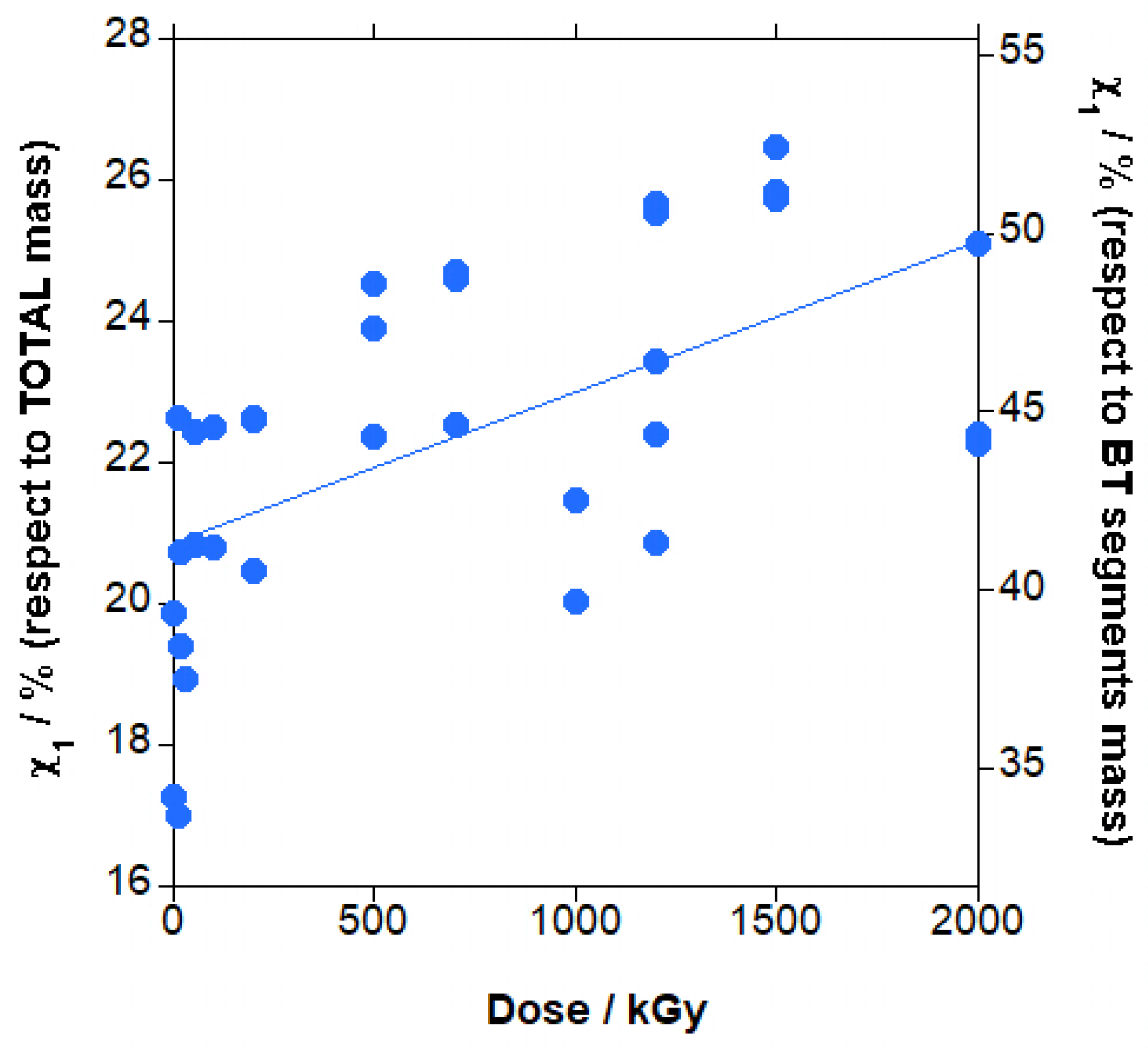
Figure 11) and leads to the very wide dispersion of the data, as seen in
Figure 12, for the calculated crystallinity (χ
1). A trend to slightly increase the crystallinity is found, although because of the dispersion of the data, the trend cannot be considered significant.
It is accepted that ionizing radiation affects more strongly the amorphous phase than the crystalline phase in semicrystalline polymers, and that crystals are affected, especially in the boundaries of the crystals. If we consider that the higher the melting point, the bigger and more perfect are the polymeric crystals, the lower temperature peak is due to small crystals with a larger interface with the amorphous phase. Additionally, the disappearance of this peak shows that these smaller crystals, with a higher surface/volume ratio (that is, a larger boundary than bigger crystals), are more strongly affected than the larger crystals melting at higher temperatures, which are also affected, as shown by the decrease in the melting temperature. The predominant effect of radiation is chain scission, as shown by the Charlesby–Pinner analysis, and the resulting shorter chains, with higher mobility, can rearrange into larger crystals, resulting in the slight increase in crystallinity. If crosslinking was dominant, the crosslinked chains would not be able to align and pack into a regular crystalline lattice and crystallinity would decrease with the increase in dose. The amount of crystallized BT sequences in PBAT copolymer is relatively high, 40–50% weight, taking into account the copolymer structure of PBAT, which makes more difficult the arrangement of these sequences into crystals. For the total amount of material, crystallinity is low, at 20 to 25% weight.
After melting PBAT, its thermal history is erased, and the material can be studied in a standardized manner with the same conditions, at the cooling and the second heating steps.
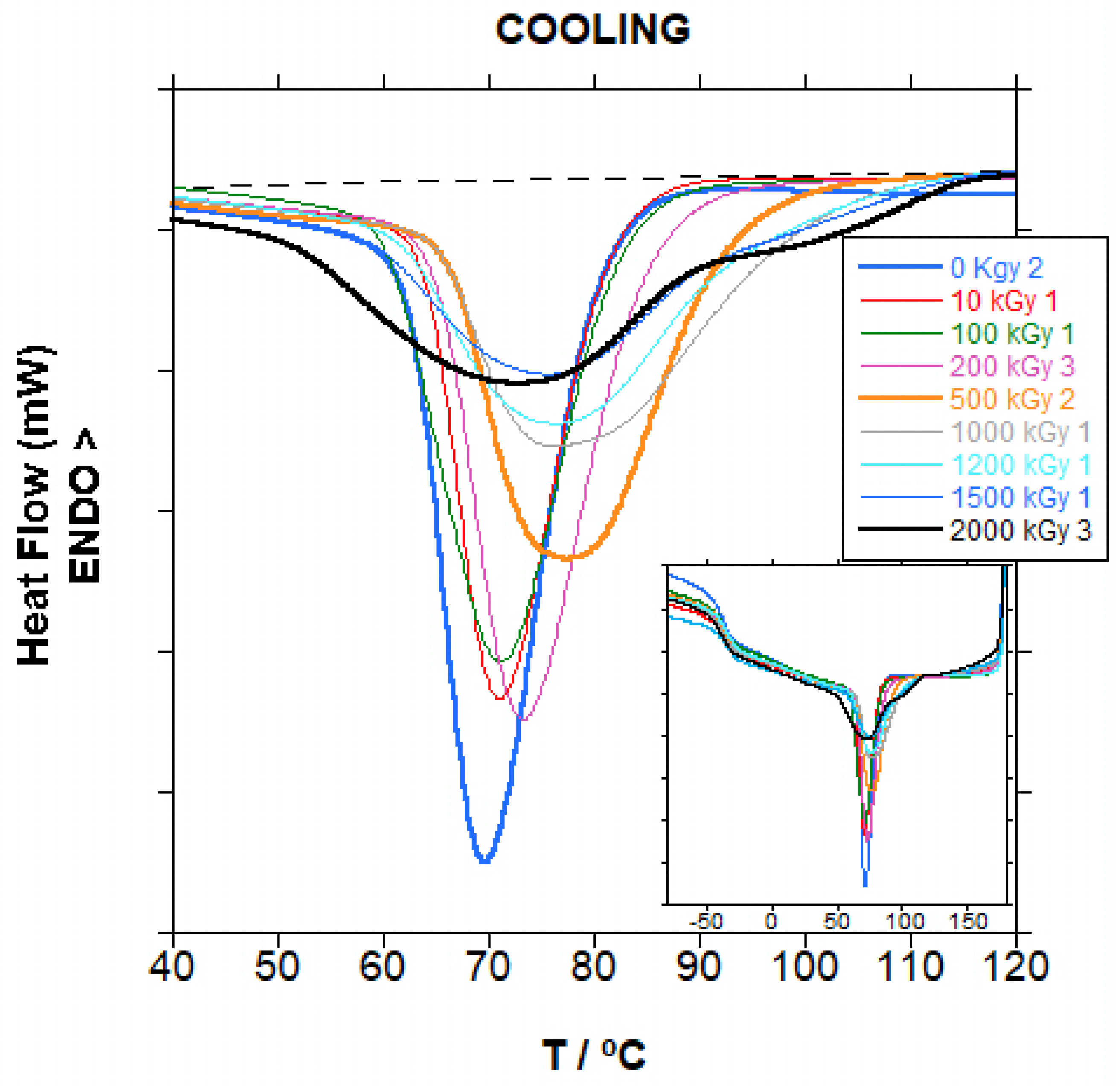
When irradiated PBT is cooled from the melt, as in
Figure 13, the effect of radiation in the amorphous region is reflected. Because the chain scission and crosslinking taking place in the amorphous region are distributed to the complete material in the homogeneous melted state, crystallization behaviour is modified. As seen in
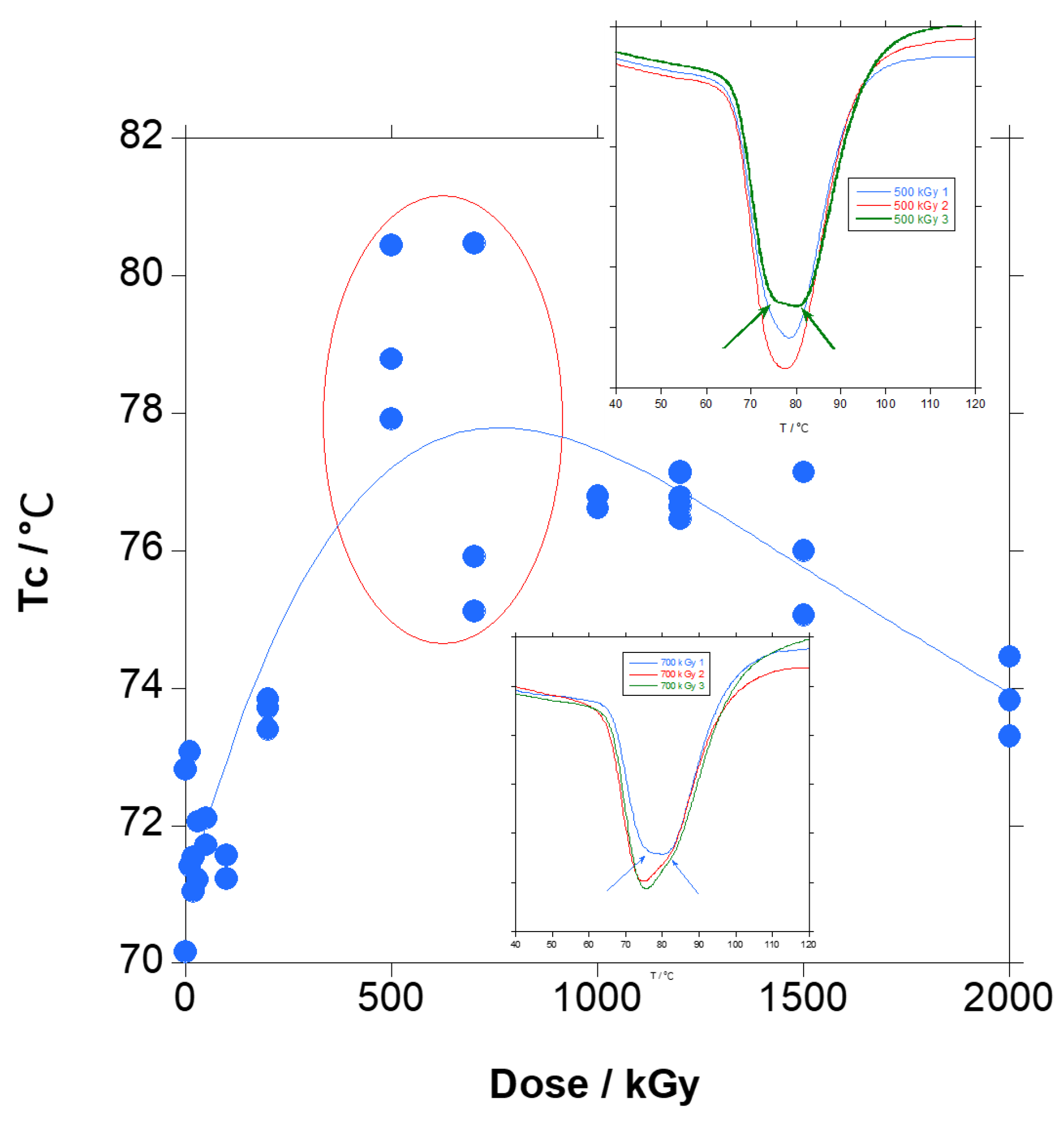
Figure 13, the temperature of the crystallization peak, initially at approximately 71 °C, increased and the peak became broader with the increase in dose. And at very high doses, above 500 kGy, a shoulder appeared at higher temperatures, and the peak became even much broader and developed into a second peak at 2000 kGy.
When the temperature of the crystallization peak is plotted vs. the dose, as in
Figure 14, despite the dispersion due to the difficulty to draw the base line, it seems that the peak temperature increased slightly until approximately 500 kGy and then it slightly decreased, a trend that we consider significant. Up to 500 kGy, when the amount of gel is already significant, the effect of chain scission dominates, and crystallization is favoured by the shorter chains. At 500 and 700 kGy, the dispersion is at its maximum. If the peak is looked at closer, shown in the insets in
Figure 14, it seems that the maximum is composed of two similar peaks with close maxima, and sometimes the maximum of the peak at lower temperature slightly dominates and sometimes the maximum of the peak at higher temperature slightly dominates. The presence of two populations of crystals is coincident with the appearance of gelation. When gelation occurs, part of the material, which is crosslinked, crystallizes with more difficulty, resulting in the peak at lower temperatures, whereas part of the material, not crosslinked, and with shorter chains due to chain scission, crystallizes more easily, resulting in the peak at higher temperatures. When the dose increases at even higher values, the amount of crosslinked material increases and the degree of crosslinking increases, and the amount of not-crosslinked material decreases, and the chains became even shorter. Thus, the crystallinity is further delayed and favoured respectively, and the crystallization peaks are more separated with the integral biassed to the crosslinked material, and therefore the maximum shifts to lower temperatures.
The opposite effect of crosslinking and chain scission did not produce a significant effect in the amount of crystallinity. In
Figure S11 in the Supplementary Materials, it can be seen that for crystallinity in the first heating step dispersion is very high, which makes the trend statistically not significant, and the value for crystallinity is virtually unchanged with dose; thus, the effect of both effects compensates in the material crystallized from the melt.
The value for crystallinity in the cooling step is lower than crystallinity in the first heating step, as expected, because the material is not given enough time to fully develop its crystallinity before Tg is reached, freezing the material.
In
Figure S12 in the Supplementary Materials, the curves for the second heating for PBAT vs. irradiation dose are shown. After the T
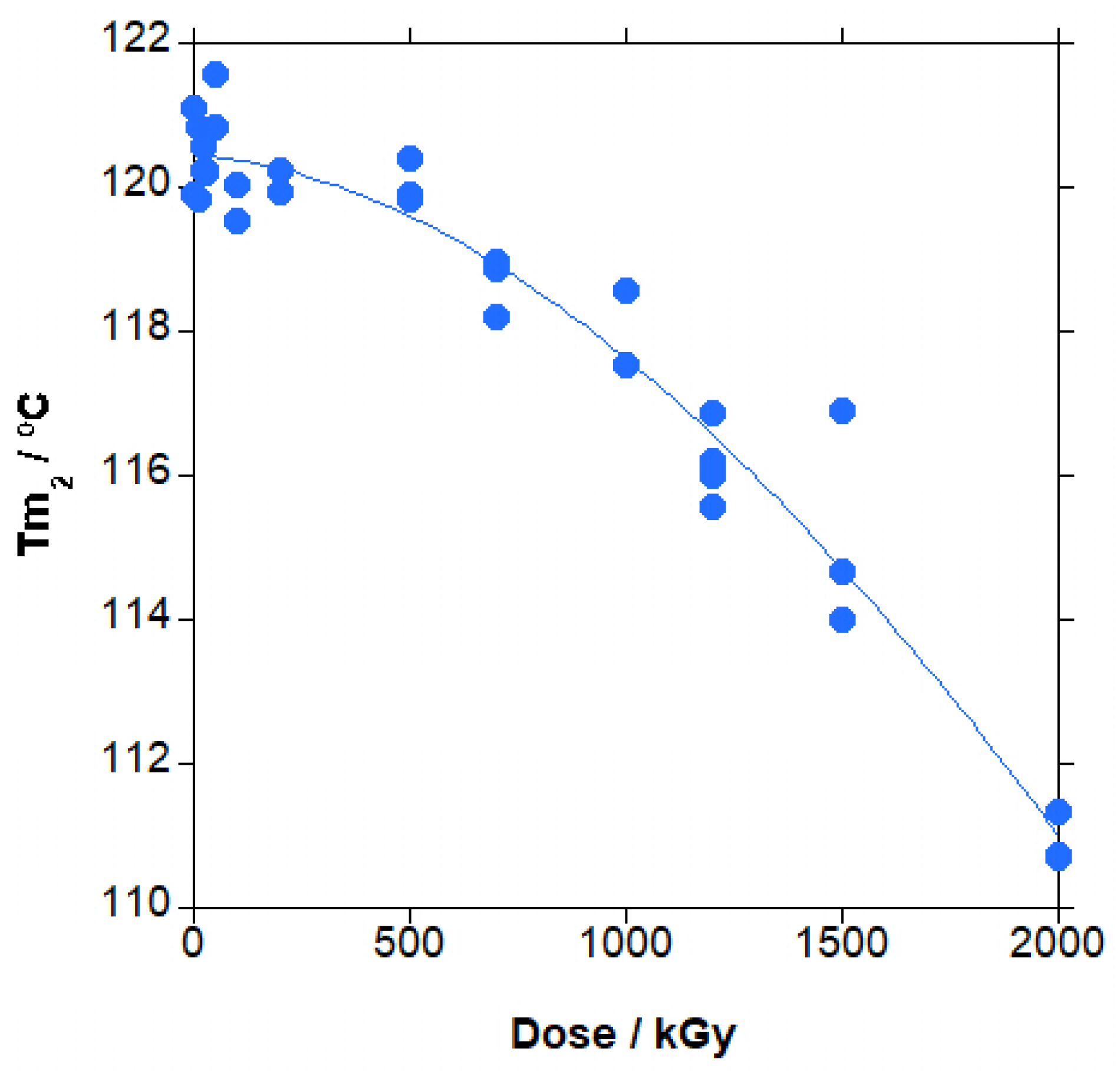
g at low temperature, around −33 °C, an extremely broad melting endotherm, spanning from 0 to 150 °C, is found, with a maximum at approximately 112–120 °C and a secondary maximum at around 70 °C. The main melting peak decreased with temperature, whereas T
g apparently did not change significantly. The secondary melting maximum, because main melting peak shifted at a lower temperature, eventually became a shoulder. The extremely broad melting endotherm indicates that the formed crystals are extremely broad in size. In
Figure 15 and
Figures S13 and S14, the changes in T
g, the maximum of the melting peak, and the percentage of crystallinity vs. irradiation dose are shown respectively.
T
g values show a dispersity on the data of 2–3 °C, and remain virtually unchanged with the increase in dose. In gel data, crosslinking increased with dose, which would increase the T
g. Crystallinity, as shown in
Figure S14, is almost constant and only at very high doses decreases slightly; thus, only at very high doses would it decrease the T
g very slightly. Additionally, chain scission would generate shorter chains with increased mobility that would decrease T
g. These facts lead to the conclusion that the increase due to crosslinking and the decrease due to chain scission compensates and T
g remains unchanged.
The main effect on the second heating cycle is found for the maximum of the melting peak, as in
Figure 15, with a very significant decrease (9 °C at 2000 kGy; a bit larger than for the first heating cycle) above 500 kG with the increase in dose (the blue line is not a curve fitting, it is just a guide to the eye.). This effect is due to both crosslinking and chain scission. Crosslinking makes more difficult the arrangement of the chains to form crystals, and chain scission leaves shorter chains and a larger amount of chain ends that do not enter crystals, producing smaller crystals that melt at lower temperatures.
Crystallinity, as in
Figure S14, with a high dispersion of the data, only shows a slight, not significant decrease at very high doses. The amount of crystallinity in the second heating cycle is very low, around 17% of the weight of the material, similarly to the crystallinity in the cooling step. The reason is the same as is given for the cooling step: because the material is not given enough time to fully develop its crystallinity before T
g is reached, freezing the material.
In summary, for the PBAT irradiated in the solid state, the boundaries of the crystals are affected by chain scission leaving smaller crystals and shorter chains with higher mobility that crystallize more easily, leading to a significant melting point decrease and a slight increase in the amount of crystallinity (first heating step). From the melt (cooling step), the crystallization temperature is mainly influenced by chain scission until gelation and increases, and then it is mainly influenced by crosslinking and decreases. The amount of crystallization is virtually unchanged, with both effects compensating for each other. After crystallization, T
g is virtually unchanged (
Figure S13; high dispersion of the data; trend statistically not significant), chain scission and crosslinking decrease the size of the crystals and therefore the melting point, and crystallinity is almost unchanged because the effect of crosslinking and chain scission compensate, as for T
g.
When our results are compared with data in the literature for the melting point in the first heating cycle, the results in the literature (
Figure S15 in the Supplementary Materials) showed a similar dispersion to our data with no trend at the ranges measured, up to 100 [
32] and 300 kGy [
19], and the same for the melting enthalpy (
Figure S16 in the Supplementary Materials) [
19]. The absolute values for melting point are higher and for melting endotherm are much lower for the PBAT with slightly lower adipate content (47.2% mol vs. our 52% mol) in Reference [
19], which could be due to differences in the thermal history, in the block length for BT sequences and in molecular weight.
In the only work measuring crystallization [
24], with a maximum dose of 50 kGy, crystallization temperature decreased (5.5 °C) and crystallization enthalpy increased (3.5 J·g
−1) (
Figure S17 in the Supplementary Materials). In the same range, it was not possible to find a trend in our results, with a maximum dispersion of the data of 3 °C for the crystallization temperature and 2 kJ·g
−1 for the crystallization enthalpy, of the order of the maximum change in the literature data. We have shown that dispersion of the data is high, and authors in Reference [
24] only performed a measurement per dose; thus, we think that the trends in Reference [
24] cannot be taken as real, and more samples per dose and higher doses have to be measured, as in our work, to be able to recognize any trend on the data.
In the second heating cycle, the T
g value (
Figure S18 in the Supplementary Materials), measured by DMTA and not DSC did not significantly change in doses up to 300 kGy [
19,
28], in agreement with our results, with the absolute values higher for the literature data due to the difference in the experimental technique. For the melting point (
Figure S19 in the Supplementary Materials), starting at 120–123 °C at 0 kGy, similarly to our value of approximately 121 °C, its value decreased by 1.5 °C in doses up to 50 kGy [
24] so that it is on the order of the maximum dispersion of our data (1.1 °C). We found that this decrease is significant only above gelation; thus, we think that with only one measurement for each dose, the decrease found in Reference [
24] is not really significant. In doses up to 300 kGy [
19], the melting point is similar for 0 and 100 kGy and for 200 and 300 kGy, with a sudden and very big decrease of 13 °C from 100 to 200 kGy. This result is absolutely abnormal. In our material, irradiated up to 2000 kGy (more than six times higher), the maximum decrease is 11 °C, and the decrease is progressive with dose. We think that, because of the difficulty on the drawing of the baseline, the calculated integrals in this reference are erroneous for 200 and 300 kGy. Finally, for the melting enthalpy, the literature provides absolute values much lower than in our results (8 to 13 J·g
−1 vs. 25 J·g
−1 respectively) and the trend is to increase in one case (3.5 J·g
−1, 0 to 50 kGy) [
24] and to decrease in other case (1.5 J·g
−1 maximum, 0 to 300 kGy) [
19] (
Figure S20 in the Supplementary Materials). Our data, with a maximum dispersion of the data of 4.5 J·g
−1, of the order of the changes in the literature, virtually do not change with dose up to very high doses; thus, again, we consider that with only one measurement at each dose and the limited range of irradiation, the contradictory trends found in the literature are not significant.
If the results for PBAT are compared with the results for other aromatic and aliphatic polyesters obtained by our group, such as aromatic PET (no gel up to 3000 kGy) [
55], aliphatic PBS homopolymer (less than 20% gel at 400 kGy) and PBSA copolymer (30% gel at 400 kGy) [
52], and aliphatic PCL (50% gel at 300 kGy for 80K molecular weight) [
39], it is found that for the first heating cycle, melting temperature slightly decreased (PBS and PBSA) or remained constant (PCL) for the aliphatic polyesters and significantly decreased for the aromatic PET, as for aromatic PBAT, despite the difference in the crosslinking (not significant for PET with no gel up to 3000 kGy). The melting enthalpy for the first cycle remained constant (PBS; PBSA) or slightly increased (PCL; PET), as for PBAT (slight increase). In the second heating cycle, T
g remained constant (PBSA; PET) or slightly increased (PBS; PCL), melting temperature decreased for all, and melting enthalpy remained constant (PBS; PBSA) as for PBAT or slightly increased (PCL; PET). In the cooling cycle, crystallization enthalpy remained constant (PBS) as for PBAT or slightly increased (PBSA, PCL, and PET). It is noticeable that the trends in the thermal properties are very similar for polyesters irrespective of the chemical composition and the crosslinking/chain scission ratio.
The main difference is found in the crystallization temperature (Tc), which decreased for the aliphatic polyesters and increased for PET, whereas for PBAT it increased until gelation and decreased after gelation. The difference in behaviour seems to be related to both chemical structure and gel formation. For PET, no gel is found and Tc increased because chain scission was highly predominant, and for aliphatic polyesters, Tc decreased before and after gelation. For PBAT, with aromatic rings in its chemical structure, and crosslinking efficiency of the order of the other aliphatic polyesters (0.82 for PBAT, 0.97 for PCL 80K, 0.64 for PBSA and <0.64 for PBS), the chain scission effect is predominant before gelation and the crosslinking effect is predominant after gelation.
It has to be pointed out that the shape of the cooling curve for PBAT is very similar to the copolymer PBSA, where aromatic terephthalate is substituted by aliphatic succinate and the adipate content is 26% mol (29% weight) instead of 52% mol (50% weight) in PBAT. When the irradiation dose increased, the crystallization peak split into two due to the fact that crosslinks are mainly in the amorphous PBA segments, whereas in homopolymers, crosslinking is homogeneous in the whole material.
3.6. Mechanical Properties
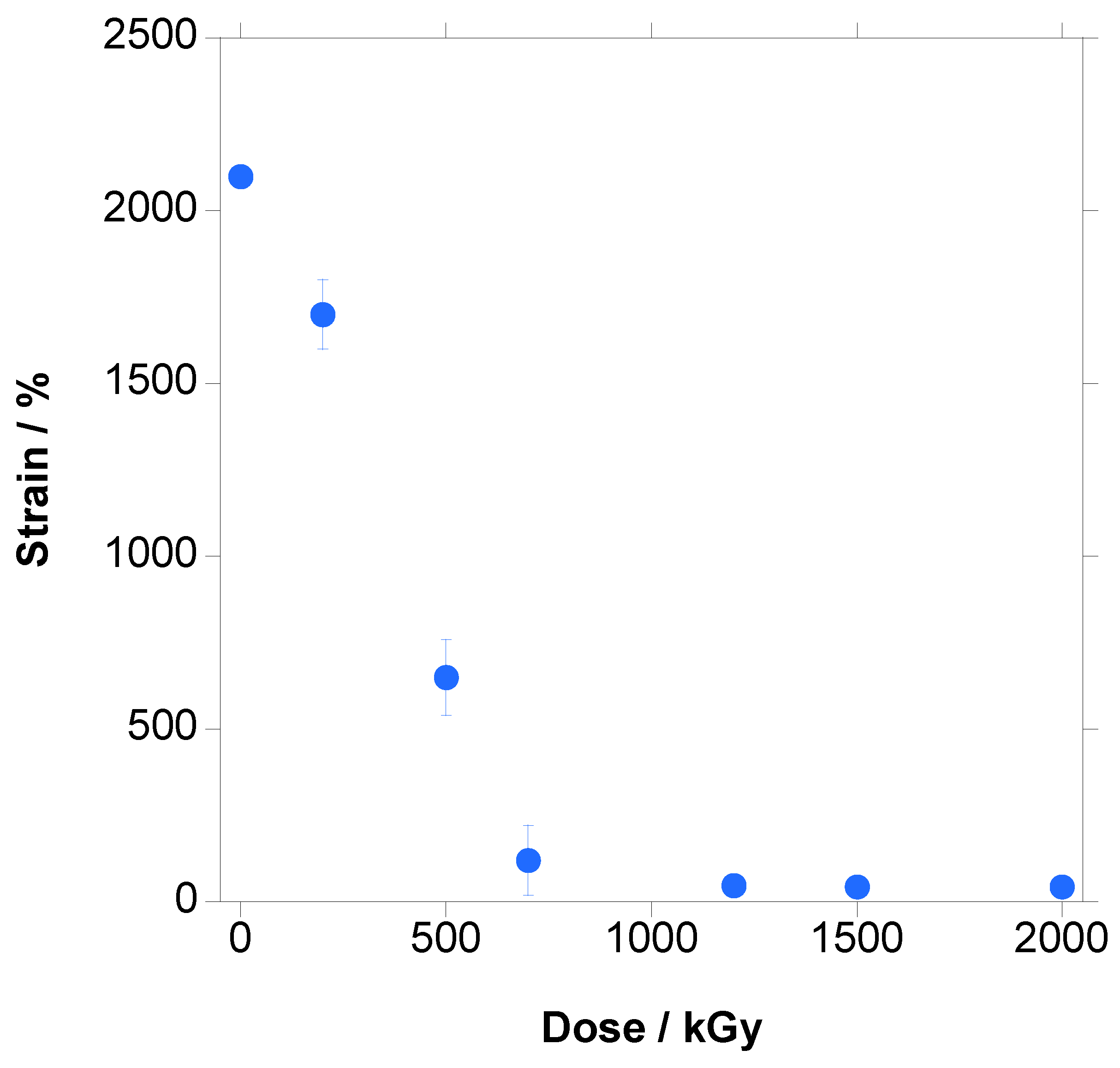
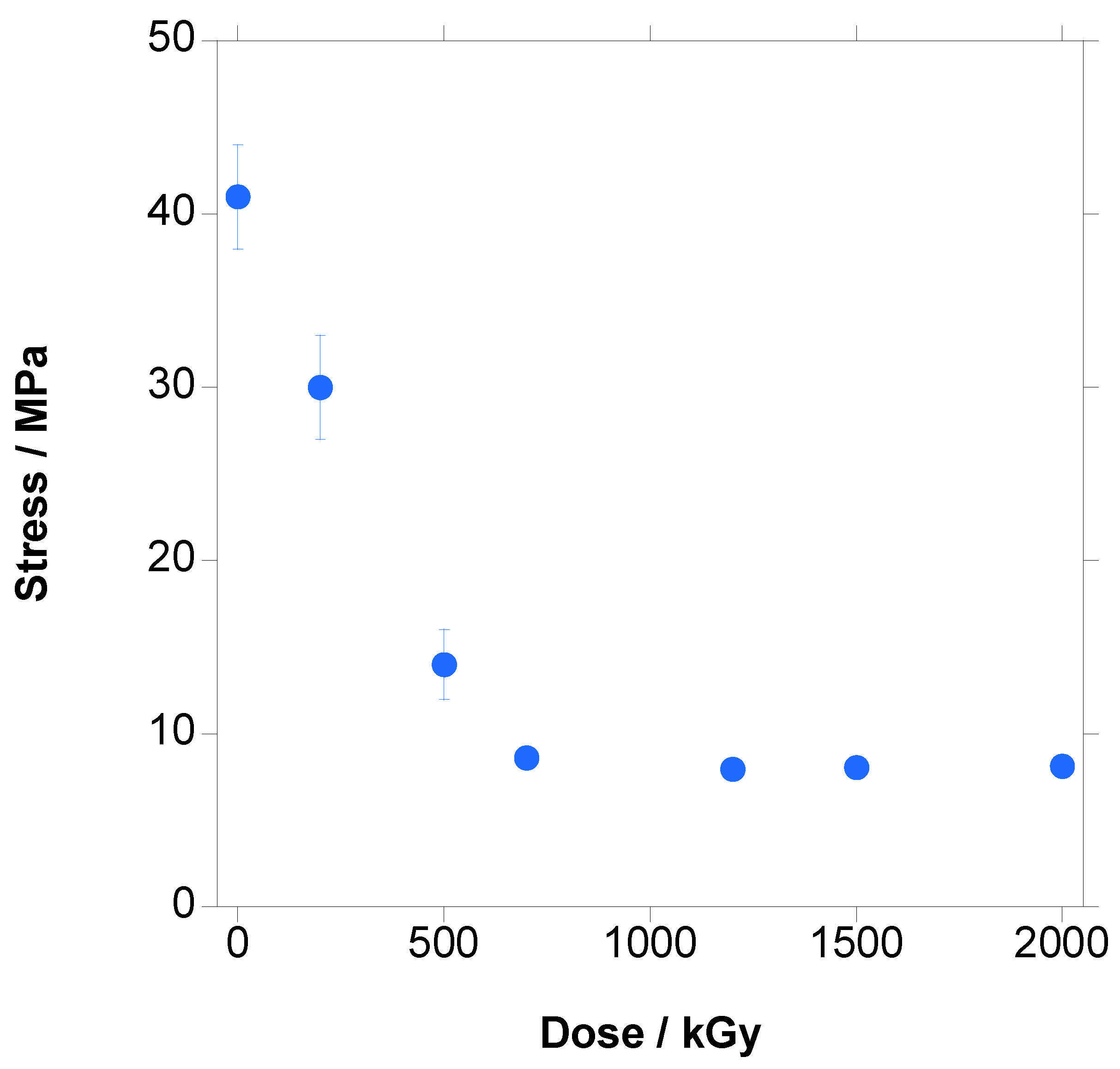
After PBAT was exposed to gamma irradiation at doses 0, 200, 500, 700, 1200, 1500, and 2000 kGy, its mechanical characteristics were examined. Young’s modulus, tensile strength (stress), and elongation at break (strain) were the three main mechanical characteristics that were measured.
In
Figure 16, the changes in the stress–strain curves with the increase in dose are shown.
The shape of the curve did not change with respect to the unirradiated material, and the main effect was the decrease in strain leading to a decrease in the ultimate strength.
In
Figure 17,
Figure 18 and
Figure 19, the variation in Young’s Modulus, ultimate strain and tensile strength with the increase in dose are presented, respectively. It has to be emphasized that crystallinity, which is a key parameter for mechanical properties, has to be taken from the first heating step because it is the crystallinity of the tested material.
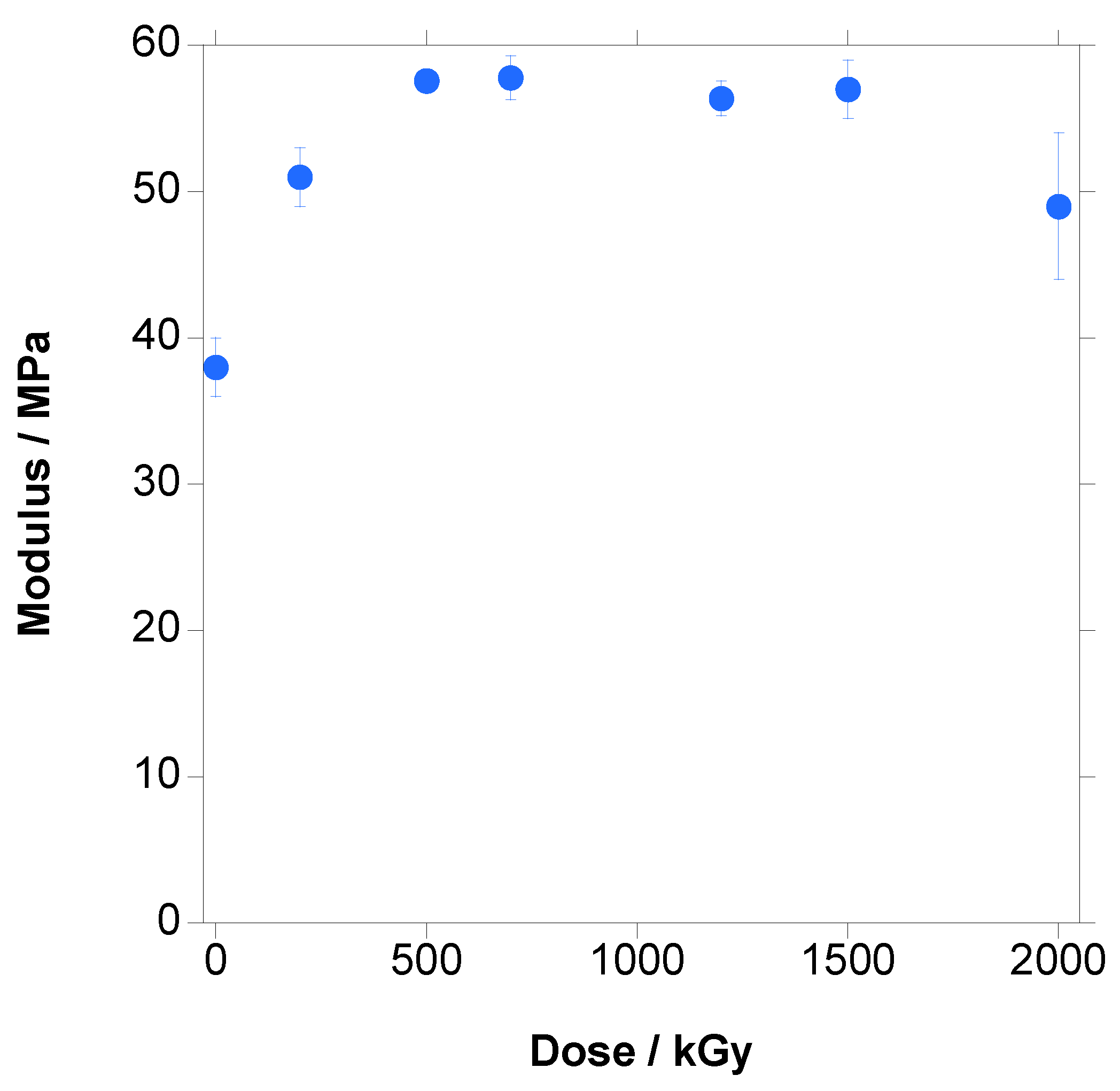
Young’s Modulus, shown in
Figure 17, increased initially and then remained constant, with an apparently slight decrease at 2000 kGy. This increase was related to the increase in crystallinity measured in DSC (
Figure 12) that increases the stiffness of the material. If we look closely at
Figure 12, the increase could be considered to be mainly up to 500 kGy, the dose for which a significant amount of crosslinked material is found, and at higher doses, crystallinity is practically constant, in coincidence with the trend of Young’s Modulus (
Figure 17).
Elongation at break, shown in
Figure 18, is a measure of a material’s ability to undergo plastic deformation before failure. It suffers a sharp, continuous quasi-linear decline from approximately 2100% for the unirradiated PBAT to less than 50% at 700 kGy. At doses above 700 kGy, the material becomes fragile and yielding is not reached any more. The effect on ultimate strain can be explained by the combined effect of crosslinking and chains scission, both deleterious for the strain. Crosslinking reduces the slippage of the chains when stretched, reducing the strain, and chain scission, which takes place preferentially in the amorphous phase and the boundaries of the crystals, reduces the connections between the crystals and amorphous phase, reducing the load-bearing capacity of the material and anticipating the rupture to lower strains.
The same trend is found for the tensile strength, shown in
Figure 19, with a quasi-linear decrease until 700 kGy (from 41 to 8.6 MPa), followed by a constant value; the explanation is the same as for strain, pertaining to the combined harmful effect of crosslinking and chain scission.
When the literature’s data for PBAT are compared, Young’s Modulus, measured up to 300 kGy [
19,
24,
29,
31,
32], does not show an increasing trend in any of the works (
Figure S21 in the Supplementary Materials), as found for our results. Mostly, the trend was a fairly constant value or a slight decrease with the increase in dose. We have no explanation for the discrepancy, and we are fairly sure that our data and the trend are correct.
For tensile strength and ultimate strain, leaving apart the difference in absolute values that can be due to many factors (the adipate content in PBAT and testing procedure among them), when maximum dose is below 100 kGy (we have no data at these low doses), no obvious trend is found [
24,
29,
31,
32], but when the maximum dose is 200 [
26] or 300 kGy [
19], both parameters decreased with the increase in dose (
Figures S22 and S23 in the Supplementary Materials), in coincidence with this study.
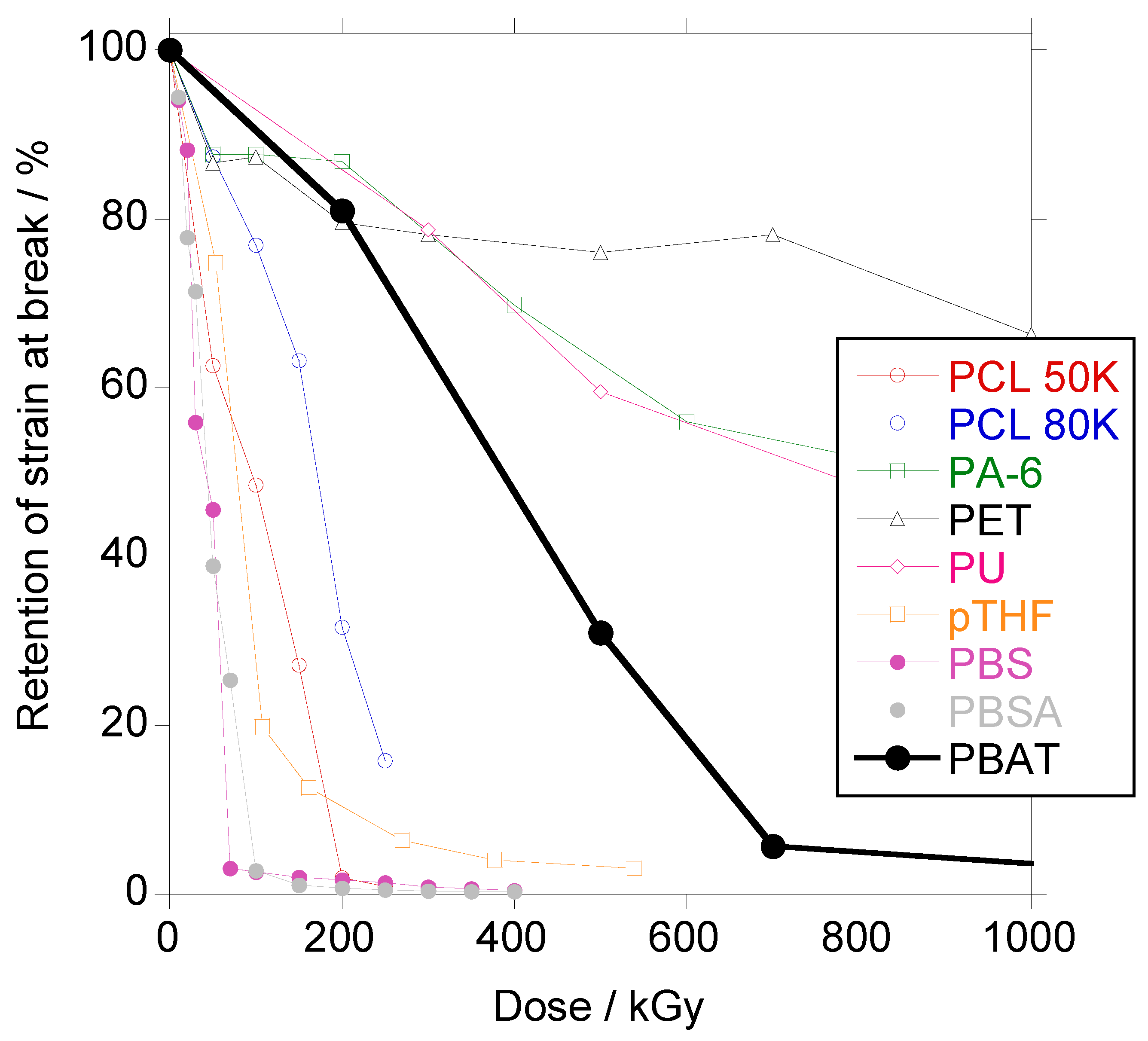
In
Figure S24 in the Supplementary Materials and in
Figure 20, the results for tensile strength and elongation at break for PBAT, in terms of the retention of the property in comparison with other irradiated materials studied in the Elastomers’ group in Spain, are presented, respectively. PBAT shows a fairly good resistance to ionizing radiation, only below PU [
55], PA-6 [
56] and PET [
57], and better than aliphatic polyesters (PCL, PBS, and PBSA) [
32,
52] and aliphatic polyether (pTHF) [
51].






 ,
,