Review of Polymer Drug Therapy for Cancer Driven by Artificial Intelligence


Abstract
1. Introduction
2. Applications of Artificial Intelligence in Polymer Synthesis Design and Performance Prediction
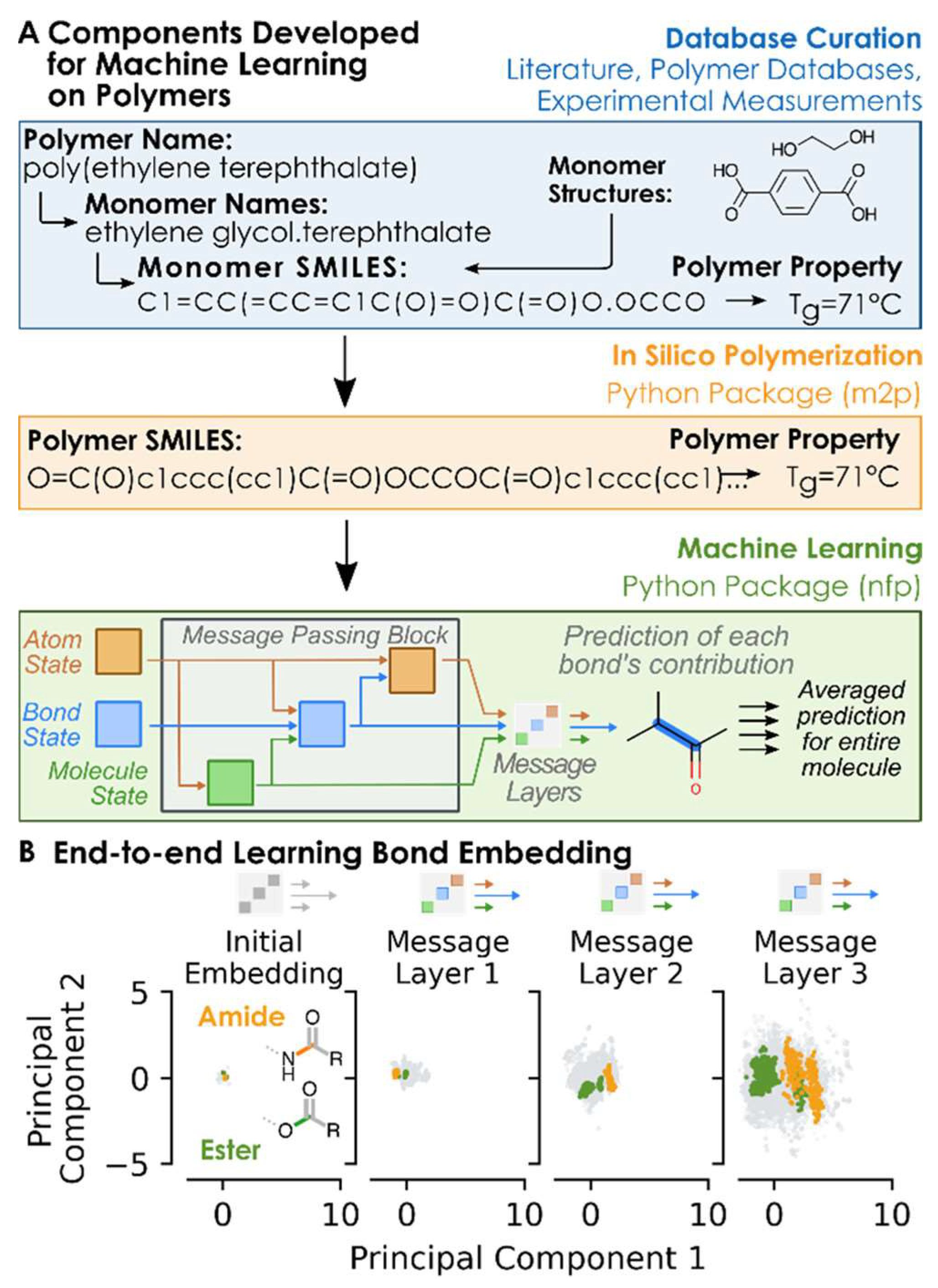
2.1. Utilizing Machine Learning to Optimize Polymer Synthesis Pathways
2.2. AI-Predicted Biocompatibility of Polymer Materials
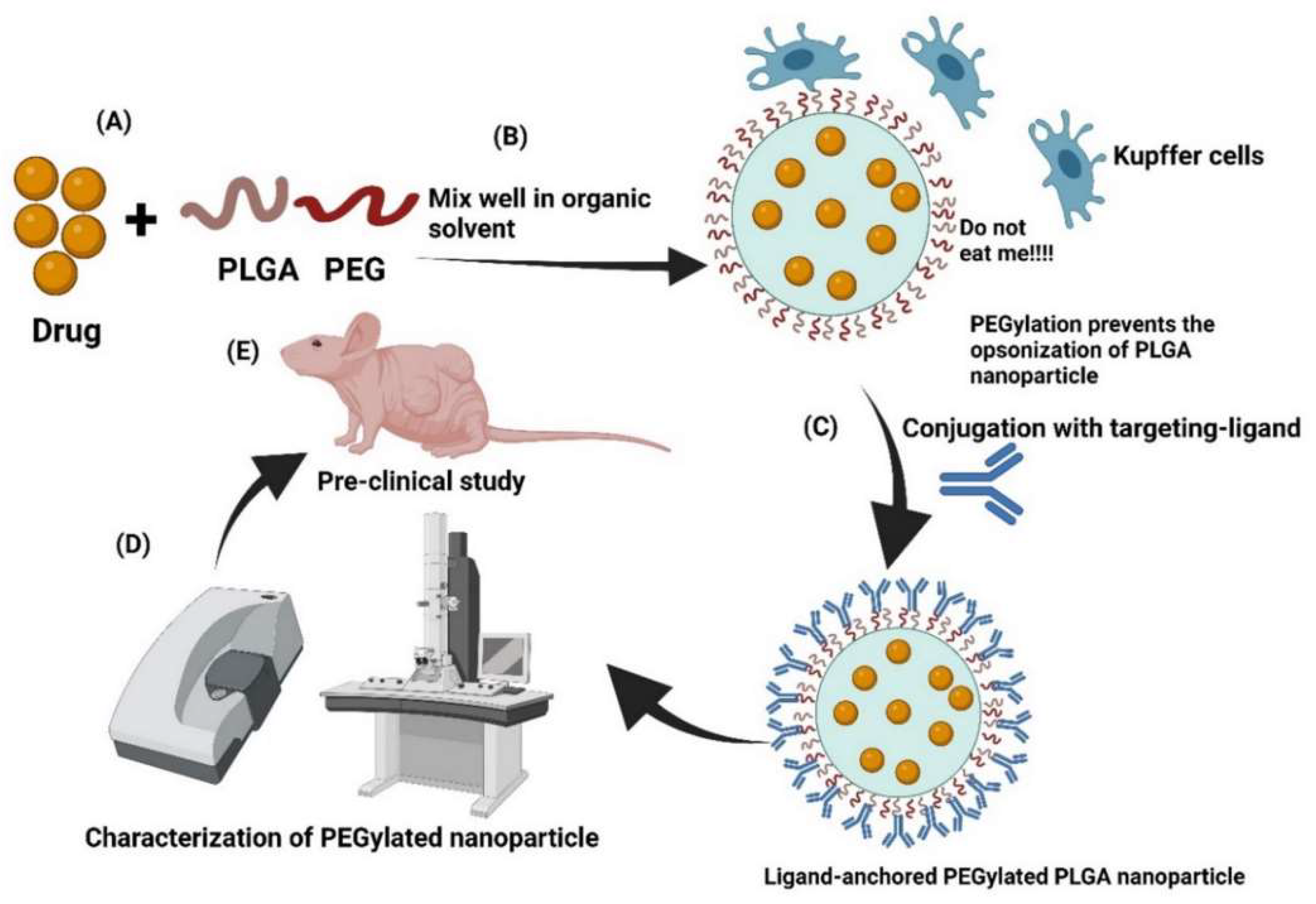
2.3. Basic Functions and Targeting Strategies of Polymer Carriers
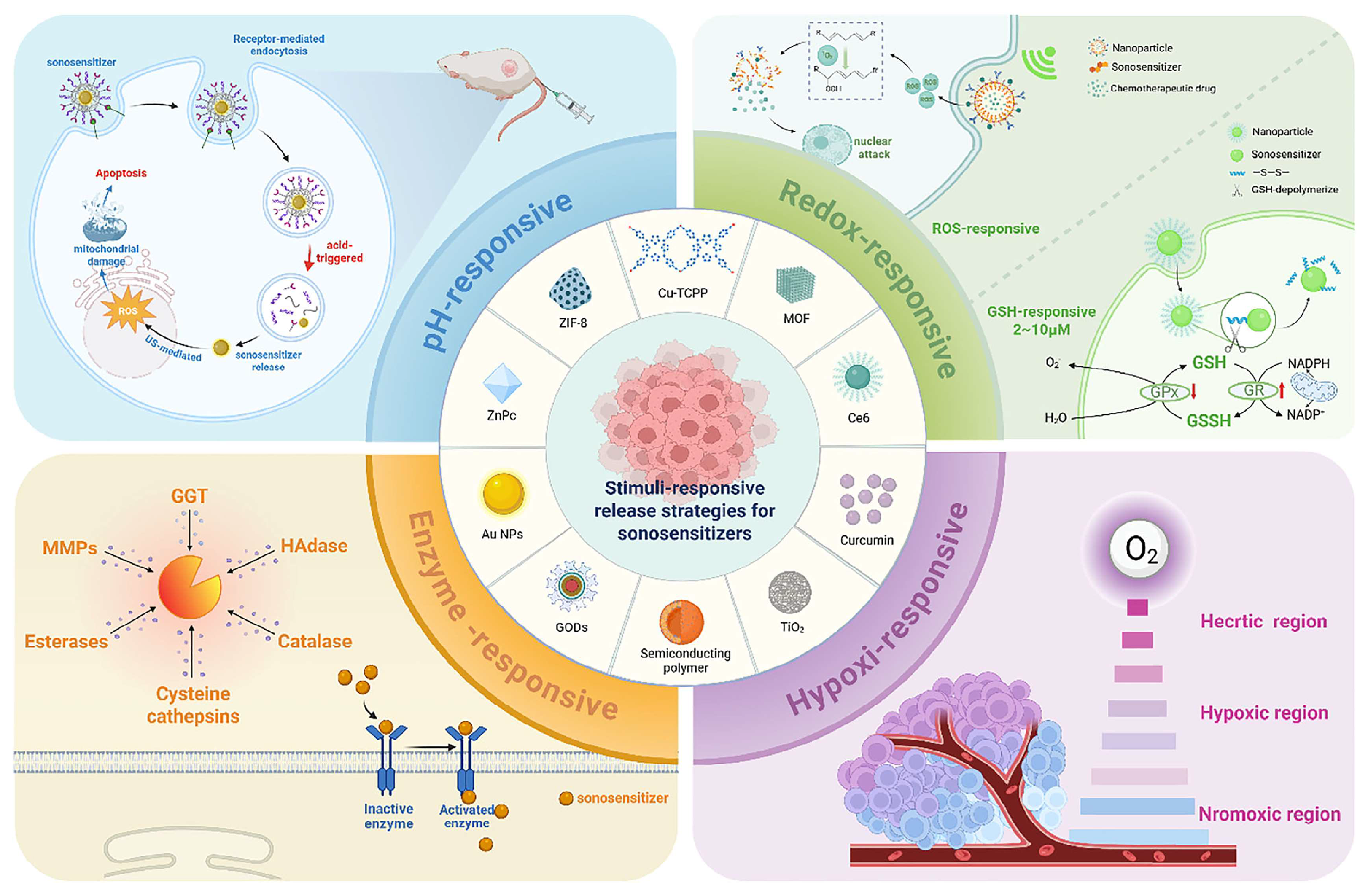
3. Chemical Design and Mechanism of TME-Responsive Polymer Drugs
3.1. pH-Responsive Mechanism of Polymer Materials
3.2. ROS-Responsive Mechanism of Polymer Materials
3.3. Hypoxia-Responsive Mechanisms of Polymer Materials

3.4. Enzyme-Responsive Mechanisms of Polymer Materials
3.5. Multi-Responsive Mechanism of Polymer Materials
4. AI-Assisted Precision Oncology Treatment Strategies
4.1. Artificial Intelligence Optimization of Polymer Drug Release Kinetics
4.2. Artificial Intelligence for Optimizing Pharmacokinetics and Efficacy Prediction
4.3. Artificial Intelligence for Predicting Biodegradation of Polymer Materials
5. Summary and Outlook
Author Contributions
Funding
Institutional Review Board Statement
Data Availability Statement
Acknowledgments
Conflicts of Interest
References
- Yuan, X.; Zhou, J.-L.; Yuan, L.; Fan, J.; Yoon, J.; Zhang, X.-B.; Peng, X.; Tan, W. Phototherapy: Progress, challenges, and opportunities. Sci. China Chem. 2025, 68, 826–865. [Google Scholar] [CrossRef]
- Force, L.M.; Kocarnik, J.M.; May, M.L.; Bhangdia, K.; Crist, A.; Penberthy, L.; Pritchett, N.; Acheson, A.; Deitesfeld, L.; Aalruz, H.; et al. The global, regional, and national burden of cancer, 1990–2023, with forecasts to 2050: A systematic analysis for the Global Burden of Disease Study 2023. Lancet 2025, 406, 1565–1586. [Google Scholar] [CrossRef] [PubMed]
- Wang, W.; Yang, F.; Zhang, L.; Wang, M.; Yin, L.; Dong, X.; Xiao, H.; Xing, N. Targeting DNA Damage and Repair Machinery via Delivering WEE1 Inhibitor and Platinum (IV) Prodrugs to Stimulate STING Pathway for Maximizing Chemo-Immunotherapy in Bladder Cancer. Adv. Mater. 2024, 36, 2308762. [Google Scholar] [CrossRef] [PubMed]
- Liu, J.C.-T.; De La Peña, R.; Tocol, C.; Sattely, E.S. Reconstitution of early paclitaxel biosynthetic network. Nat. Commun. 2024, 15, 1419. [Google Scholar] [CrossRef]
- Oudin, A.; Papon, N.; Courdavault, V. Metabolic engineering of the paclitaxel anticancer drug. Cell Res. 2024, 34, 475–476. [Google Scholar] [CrossRef]
- Le, C.M. A hot take on glucose. Nat. Chem. 2022, 14, 476. [Google Scholar] [CrossRef]
- Chen, X.; Teng, S.; Li, J.; Qiao, X.; Zhao, W.; Xue, Z.; Shi, X.; Wang, Y.; Yang, W.; Wang, T. Gadolinium (III)-Chelated Deformable Mesoporous Organosilica Nanoparticles as Magnetic Resonance Imaging Contrast Agent. Adv. Mater. 2023, 35, 2211578. [Google Scholar] [CrossRef]
- Zhang, X.; Zhao, Q.; Yang, J.; Wang, T.; Chen, F.; Zhang, K. Tumor microenvironment-triggered intratumoral in-situ biosynthesis of inorganic nanomaterials for precise tumor diagnostics. Coord. Chem. Rev. 2023, 484, 215115. [Google Scholar] [CrossRef]
- Zhang, Z.; Du, Y.; Shi, X.; Wang, K.; Qu, Q.; Liang, Q.; Ma, X.; He, K.; Chi, C.; Tang, J.; et al. NIR-II light in clinical oncology: Opportunities and challenges. Nat. Rev. Clin. Oncol. 2024, 21, 449–467. [Google Scholar] [CrossRef]
- Mc Larney, B.E.; Sonay, A.Y.; Apfelbaum, E.; Mostafa, N.; Monette, S.; Goerzen, D.; Aguirre, N.; Exner, R.M.; Habjan, C.; Isaac, E.; et al. A pan-cancer dye for solid-tumour screening, resection and wound monitoring via short-wave and near-infrared fluorescence imaging. Nat. Biomed. Eng. 2024, 8, 1092–1108. [Google Scholar] [CrossRef]
- Wang, Q.; Zhang, X.; Liao, H.; Sun, Y.; Ding, L.; Teng, Y.; Zhu, W.-H.; Zhang, Z.; Duan, Y. Multifunctional Shell–Core Nanoparticles for Treatment of Multidrug Resistance Hepatocellular Carcinoma. Adv. Funct. Mater. 2018, 28, 1706124. [Google Scholar] [CrossRef]
- Dong, Y.; Liao, H.; Fu, H.; Yu, J.; Guo, Q.; Wang, Q.; Duan, Y. pH-Sensitive Shell–Core Platform Block DNA Repair Pathway To Amplify Irreversible DNA Damage of Triple Negative Breast Cancer. ACS Appl. Mater. Interfaces 2019, 11, 38417–38428. [Google Scholar] [CrossRef] [PubMed]
- Hosseinzadeh, H.; Vahdatkhah, A.; Javanbakht, S.; Mohammadi, R. Synthesis of pH-Responsive Hollow Molecularly Imprinted Polymers for Enhanced Doxorubicin Delivery in Cancer Therapy. J. Pharm. Sci. 2025, 114, 103993. [Google Scholar] [CrossRef] [PubMed]
- Patroklou, G.; Triantafyllopoulou, E.; Goula, P.-E.; Karali, V.; Chountoulesi, M.; Valsami, G.; Pispas, S.; Pippa, N. pH-Responsive Hydrogels: Recent Advances in Pharmaceutical Applications. Polymers 2025, 17, 1451. [Google Scholar] [CrossRef]
- Zhu, Z.; Liu, S.; Wu, X.; Yu, Q.; Duan, Y.; Hu, S.; Zhu, W.-H.; Wang, Q. An azo substituted quinoline-malononitrile enzyme-activable aggregation-induced emission nanoprobe for hypoxia imaging. Smart Mol. 2025, 3, e20240028. [Google Scholar] [CrossRef]
- Kesharwani, P.; Kumar, V.; Goh, K.W.; Gupta, G.; Alsayari, A.; Wahab, S.; Sahebkar, A. PEGylated PLGA nanoparticles: Unlocking advanced strategies for cancer therapy. Mol. Cancer 2025, 24, 205. [Google Scholar] [CrossRef]
- Blasiak, A.; Truong, A.T.L.; Foo, N.; Tan, L.W.J.; Kumar, K.S.; Tan, S.-B.; Teo, C.B.; Tan, B.K.J.; Tadeo, X.; Tan, H.L.; et al. Personalized dose selection platform for patients with solid tumors in the PRECISE CURATE.AI feasibility trial. npj Precis. Oncol. 2025, 9, 49. [Google Scholar] [CrossRef]
- Ly, P.-D.; Ly, K.-N.; Phan, H.-L.; Nguyen, H.H.; Duong, V.-A.; Nguyen, H.V. Recent advances in surface decoration of nanoparticles in drug delivery. Front. Nanotechnol. 2024, 6, 1456939. [Google Scholar] [CrossRef]
- Clothier, G.K.K.; Taton, D.; Harrisson, S. Exploiting Machine Learning and Automated Synthesis in Continuous Flow for Process Optimization of the Organocatalyzed Ring-Opening Polymerization of l-Lactide. ACS Polym. Au 2025, 5, 603–612. [Google Scholar] [CrossRef]
- Wu, J.; Wang, X.; Wang, Y.; Xun, Z.; Li, S. Application of PLGA in tumor immunotherapy. Polymers 2024, 16, 1253. [Google Scholar] [CrossRef]
- Aghajanpour, S.; Amiriara, H.; Esfandyari-Manesh, M.; Ebrahimnejad, P.; Jeelani, H.; Henschel, A.; Singh, H.; Dinarvand, R.; Hassan, S. Utilizing machine learning for predicting drug release from polymeric drug delivery systems. Comput. Biol. Med. 2025, 188, 109756. [Google Scholar] [CrossRef] [PubMed]
- Chu, S.; Shi, X.; Tian, Y.; Gao, F. pH-responsive polymer nanomaterials for tumor therapy. Front. Oncol. 2022, 12, 855019. [Google Scholar] [CrossRef] [PubMed]
- Han, X.-W.; Zhang, G.-L.; Chen, P.; Zhang, J.; Shan, G.; Qi, C.; Tang, B.Z.; Feng, H.-T. Self-reporting hypoxia-responsive supramolecular phototheranostic nanomaterials based on AIEgen and azocalixarene. Sci. China Chem. 2025, 68, 1550–1562. [Google Scholar] [CrossRef]
- Wang, Q.; Liu, Y.; Li, C.; Xu, B.; Xu, S.; Liu, B. Machine Learning-Enhanced Nanoparticle Design for Precision Cancer Drug Delivery. Adv. Sci. 2025, 12, e03138. [Google Scholar] [CrossRef]
- Zhang, J.; Wu, G.; Bobrin, V.A. Nanocarrier strategies for deep tumour penetration. RSC Appl. Polym. 2025, 3, 1403–1427. [Google Scholar] [CrossRef]
- Li, H.; Ning, S.; Ghandi, M.; Kryukov, G.V.; Gopal, S.; Deik, A.; Souza, A.; Pierce, K.; Keskula, P.; Hernandez, D.; et al. The landscape of cancer cell line metabolism. Nat. Med. 2019, 25, 850–860. [Google Scholar] [CrossRef]
- Huang, J.; Yao, Y.; Zhang, L.; Yan, C.; Guo, Z. “Crossbreeding” NIR-II flavchromene for PSMA-positive prostate cancer detection and image-guided surgery. Smart Mol. 2024, 2, e20240020. [Google Scholar] [CrossRef]
- Liu, G.W.; Pickett, M.J.; Kuosmanen, J.L.P.; Ishida, K.; Madani, W.A.M.; White, G.N.; Jenkins, J.; Park, S.; Feig, V.R.; Jimenez, M.; et al. Drinkable in situ-forming tough hydrogels for gastrointestinal therapeutics. Nat. Mater. 2024, 23, 1292–1299. [Google Scholar] [CrossRef]
- Hunt, N.J.; Lockwood, G.P.; Heffernan, S.J.; Daymond, J.; Ngu, M.; Narayanan, R.K.; Westwood, L.J.; Mohanty, B.; Esser, L.; Williams, C.C.; et al. Oral nanotherapeutic formulation of insulin with reduced episodes of hypoglycaemia. Nat. Nanotechnol. 2024, 19, 534–544. [Google Scholar] [CrossRef]
- Gu, Y.; Lin, P.; Zhou, C.; Chen, M. Machine learning-assisted systematical polymerization planning: Case studies on reversible-deactivation radical polymerization. Sci. China Chem. 2021, 64, 1039–1046. [Google Scholar] [CrossRef]
- Jiang, S.; Dieng, A.B.; Webb, M.A. Property-guided generation of complex polymer topologies using variational autoencoders. npj Comput. Mater. 2024, 10, 139. [Google Scholar] [CrossRef]
- Zhang, Z.; Xiang, Y.; Laforet, J., Jr.; Spasojevic, I.; Fan, P.; Heffernan, A.; Eyler, C.E.; Wood, K.C.; Hartman, Z.C.; Reker, D. TuNa-AI: A Hybrid Kernel Machine To Design Tunable Nanoparticles for Drug Delivery. ACS Nano 2025, 19, 33288–33296. [Google Scholar] [CrossRef]
- Takasuka, S.; Ito, S.; Oikawa, S.; Harashima, Y.; Takayama, T.; Nag, A.; Wakiuchi, A.; Ando, T.; Sugawara, T.; Hatanaka, M.; et al. Bayesian optimization of radical polymerization reactions in a flow synthesis system. Sci. Technol. Adv. Mater. Methods 2024, 4, 2425178. [Google Scholar] [CrossRef]
- McDonald, S.M.; Augustine, E.K.; Lanners, Q.; Rudin, C.; Catherine Brinson, L.; Becker, M.L. Applied machine learning as a driver for polymeric biomaterials design. Nat. Commun. 2023, 14, 4838. [Google Scholar] [CrossRef] [PubMed]
- Gokcekuyu, Y.; Ekinci, F.; Guzel, M.S.; Acici, K.; Aydin, S.; Asuroglu, T. Artificial Intelligence in Biomaterials: A Comprehensive Review. Appl. Sci. 2024, 14, 6590. [Google Scholar] [CrossRef]
- Wilson, A.N.; St John, P.C.; Marin, D.H.; Hoyt, C.B.; Rognerud, E.G.; Nimlos, M.R.; Cywar, R.M.; Rorrer, N.A.; Shebek, K.M.; Broadbelt, L.J. PolyID: Artificial intelligence for discovering performance-advantaged and sustainable polymers. Macromolecules 2023, 56, 8547–8557. [Google Scholar] [CrossRef]
- Rahman, M.A.; Jalouli, M.; Bhajan, S.K.; Al-Zharani, M.; Harrath, A.H. A Comprehensive Review of Nanoparticle-Based Drug Delivery for Modulating PI3K/AKT/mTOR-Mediated Autophagy in Cancer. Int. J. Mol. Sci. 2025, 26, 1868. [Google Scholar] [CrossRef]
- Shahbazi, R.; Mirjafary, Z.; Zarghami, N.; Saeidian, H. Efficient PEGylated magnetic nanoniosomes for co-delivery of artemisinin and metformin: A new frontier in chemotherapeutic efficacy and cancer therapy. Sci. Rep. 2024, 14, 27380. [Google Scholar] [CrossRef]
- Sun, L.; Liu, H.; Ye, Y.; Lei, Y.; Islam, R.; Tan, S.; Tong, R.; Miao, Y.-B.; Cai, L. Smart nanoparticles for cancer therapy. Signal Transduct. Target. Ther. 2023, 8, 418. [Google Scholar] [CrossRef]
- Ding, R.; Yang, H.; Wang, J.; Liu, Y.; Mu, S.; Wang, D.; Li, J. Advances in Stimuli-Responsive Release Strategies for Sonosensitizers in Synergistic Sonodynamic Immunotherapy against Tumors. Adv. Healthc. Mater. 2025, 14, 2502183. [Google Scholar] [CrossRef]
- Sabit, H.; Pawlik, T.M.; Radwan, F.; Abdel-Hakeem, M.; Abdel-Ghany, S.; Wadan, A.-H.S.; Elzawahri, M.; El-Hashash, A.; Arneth, B. Precision nanomedicine: Navigating the tumor microenvironment for enhanced cancer immunotherapy and targeted drug delivery. Mol. Cancer 2025, 24, 160. [Google Scholar] [CrossRef] [PubMed]
- Guo, Y.; He, X.; Williams, G.R.; Zhou, Y.; Liao, X.; Xiao, Z.; Yu, C.; Liu, Y. Tumor microenvironment-responsive hyperbranched polymers for controlled drug delivery. J. Pharm. Anal. 2024, 14, 101003. [Google Scholar] [CrossRef] [PubMed]
- Chen, Z.; Wang, X.; Zhao, N.; Chen, H.; Guo, G. Advancements in pH-responsive nanocarriers: Enhancing drug delivery for tumor therapy. Expert Opin. Drug Deliv. 2023, 20, 1623–1642. [Google Scholar] [CrossRef] [PubMed]
- Zhu, Y.; Zhang, L.; Zhang, R.; He, C.; Yang, H.; Liu, Y.; Kwok, R.T.K.; Lam, J.W.Y.; Sun, J.; Feng, J.; et al. pH-responsive AIE nanogels for synergistic chemo-photodynamic cancer therapy with imaging guidance. Sci. China Chem. 2025, 68, 1445–1455. [Google Scholar] [CrossRef]
- Su, T.; Cheng, F.; Pu, Y.; Cao, J.; Lin, S.; Zhu, G.; He, B. Polymeric micelles amplify tumor oxidative stresses through combining PDT and glutathione depletion for synergistic cancer chemotherapy. Chem. Eng. J. 2021, 411, 128561. [Google Scholar] [CrossRef]
- Li, D.; Zhou, X.; Zhang, W.; Xu, H.; Xiao, B.; Xu, X.; Shi, X.; Wang, R.; Yao, S.; Zhou, Z.; et al. A tyrosinase-responsive tumor-specific cascade amplification drug release system for melanoma therapy. J. Mater. Chem. B 2021, 9, 9406–9412. [Google Scholar] [CrossRef]
- Guo, X.; Liu, F.; Deng, J.; Dai, P.; Qin, Y.; Li, Z.; Wang, B.; Fan, A.; Wang, Z.; Zhao, Y. Electron-Accepting Micelles Deplete Reduced Nicotinamide Adenine Dinucleotide Phosphate and Impair Two Antioxidant Cascades for Ferroptosis-Induced Tumor Eradication. ACS Nano 2020, 14, 14715–14730. [Google Scholar] [CrossRef]
- Gao, M.; Song, Y.; Liang, J.; Chen, T.; Luo, J.; Du, P.; Wang, H.; Leng, H.; Wang, Z.; Ma, X.; et al. Sensitizing ferroptotic and apoptotic cancer therapy via tailored micelles-mediated coenzyme and ATP depletion under hypoxia. J. Control. Release 2025, 381, 113572. [Google Scholar] [CrossRef]
- Cai, H.; Xiang, Y.; Zeng, Y.; Li, Z.; Zheng, X.; Luo, Q.; Zhu, H.; Gong, Q.; Gu, Z.; Liu, Y.; et al. Cathepsin B-responsive and gadolinium-labeled branched glycopolymer-PTX conjugate-derived nanotheranostics for cancer treatment. Acta Pharm. Sin. B 2021, 11, 544–559. [Google Scholar] [CrossRef]
- Nunziata, G.; Pollonio, D.; Lacroce, E.; Rossi, F. Smart pH-Responsive polymers in biomedical Applications: Nanoparticles, hydrogels, and emerging hybrid platforms. Mater. Today Chem. 2025, 49, 103063. [Google Scholar] [CrossRef]
- Shi, Y.; Yu, Q.; Tan, L.; Wang, Q.; Zhu, W.-H. Tumor Microenvironment-Responsive Polymer Delivery Platforms for Cancer Therapy. Angew. Chem. Int. Ed. 2025, 64, e202503776. [Google Scholar] [CrossRef]
- Su, M.; Xiao, S.; Shu, M.; Lu, Y.; Zeng, Q.; Xie, J.; Jiang, Z.; Liu, J. Enzymatic multifunctional biodegradable polymers for pH- and ROS-responsive anticancer drug delivery. Colloids Surf. B Biointerfaces 2020, 193, 111067. [Google Scholar] [CrossRef]
- Shu, M.; Tang, J.; Chen, L.; Zeng, Q.; Li, C.; Xiao, S.; Jiang, Z.; Liu, J. Tumor microenvironment triple-responsive nanoparticles enable enhanced tumor penetration and synergetic chemo-photodynamic therapy. Biomaterials 2021, 268, 120574. [Google Scholar] [CrossRef]
- Bannigan, P.; Bao, Z.; Hickman, R.J.; Aldeghi, M.; Häse, F.; Aspuru-Guzik, A.; Allen, C. Machine learning models to accelerate the design of polymeric long-acting injectables. Nat. Commun. 2023, 14, 35. [Google Scholar] [CrossRef]
- Makalew, B.A.; Abrori, S.A. Material informatics-driven insights into brain cancer nanocarriers: A bibliometric comparison of PLGA vs. liposomes. OpenNano 2025, 21, 100225. [Google Scholar] [CrossRef]







| Methodology | Primary Applications | Input Features | Dataset Scale | Validation & Performance | Validation | Ref. |
|---|---|---|---|---|---|---|
| Machine Learning (ML) | Degradation & Biocompatibility prediction. | Molecular descriptors, SMILES fingerprints. | Small (102–103) | K-fold cross-validation; R2 > 0.85, RMSE ~ 10%. | Mostly In vitro | [18,19] |
| Deep Learning (DL) | Synthesis optimization; Multi-omics integration. | Molecular graphs, 3D grids, genomic data. | Medium/Large (103–105) | Internal split-sets; <5% error in curve fitting. | In vitro & In vivo | [20,21] |
| Generative Adversarial Networks (GANs) | De novo polymer design. | Structural templates, target properties. | Medium (103–104) | Validity/Novelty scores; >90% structural novelty. | In silico/In vitro | [22,23] |
| Reinforcement Learning (RL) | Dynamic release & Treatment planning. | TME states, dose–response history. | Simulation-driven | Reward convergence; Optimized therapeutic window. | Pre-clinical | [24,25] |
Disclaimer/Publisher’s Note: The statements, opinions and data contained in all publications are solely those of the individual author(s) and contributor(s) and not of MDPI and/or the editor(s). MDPI and/or the editor(s) disclaim responsibility for any injury to people or property resulting from any ideas, methods, instructions or products referred to in the content. |
© 2026 by the authors. Licensee MDPI, Basel, Switzerland. This article is an open access article distributed under the terms and conditions of the Creative Commons Attribution (CC BY) license.
Share and Cite
Zheng, J.; Ye, Y. Review of Polymer Drug Therapy for Cancer Driven by Artificial Intelligence. Polymers 2026, 18, 677. https://doi.org/10.3390/polym18060677
Zheng J, Ye Y. Review of Polymer Drug Therapy for Cancer Driven by Artificial Intelligence. Polymers. 2026; 18(6):677. https://doi.org/10.3390/polym18060677
Chicago/Turabian StyleZheng, Jie, and Yuanlv Ye. 2026. "Review of Polymer Drug Therapy for Cancer Driven by Artificial Intelligence" Polymers 18, no. 6: 677. https://doi.org/10.3390/polym18060677
APA StyleZheng, J., & Ye, Y. (2026). Review of Polymer Drug Therapy for Cancer Driven by Artificial Intelligence. Polymers, 18(6), 677. https://doi.org/10.3390/polym18060677