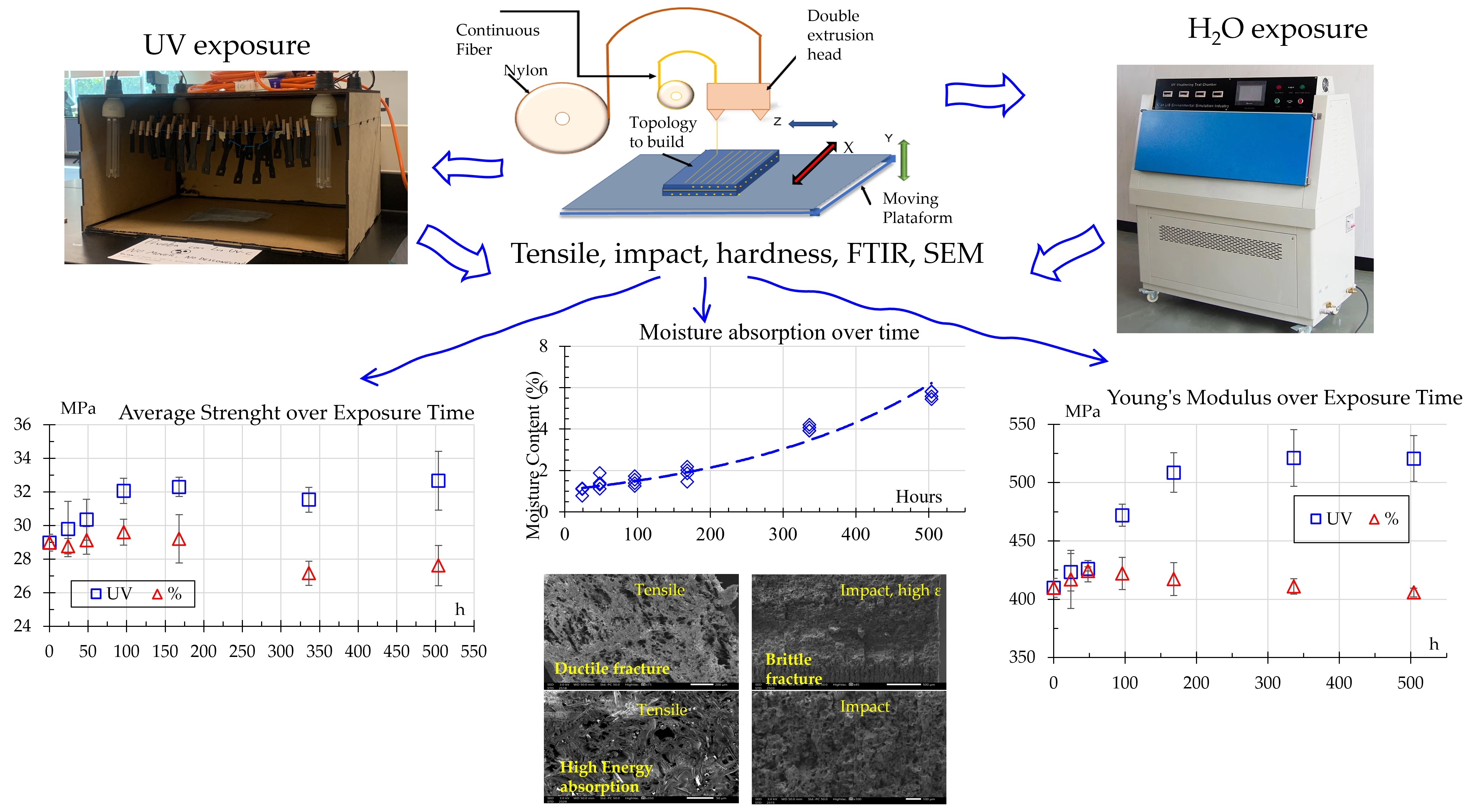
The Effect of Humidity and UV Light Exposure on the Mechanical Properties of PA6 Matrix Reinforced with Short Carbon Fibers and Built by Additive Manufacturing
 ,
,  and
and
Abstract
1. Introduction
2. Materials and Experimental Methods
2.1. Material
2.2. Sample Preparation
2.2.1. Test Conditions
2.2.2. Humidity Conditions and Water Absorption Methodology
2.2.3. UV
2.3. Impact and Hardness Testing
2.4. Tensile Testing
2.5. FTIR
2.6. Microscopy
3. Results
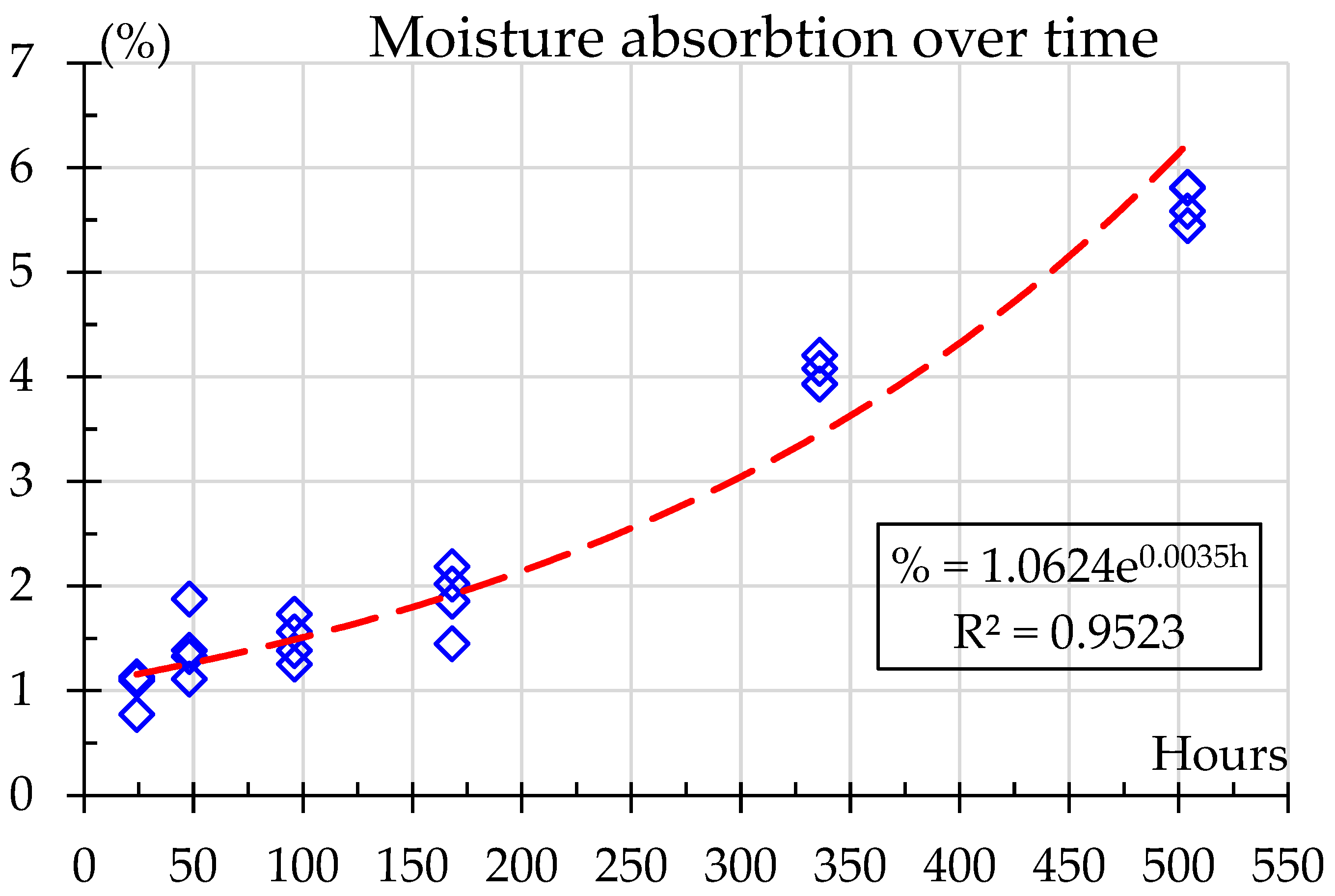
3.1. Moisture Absorption
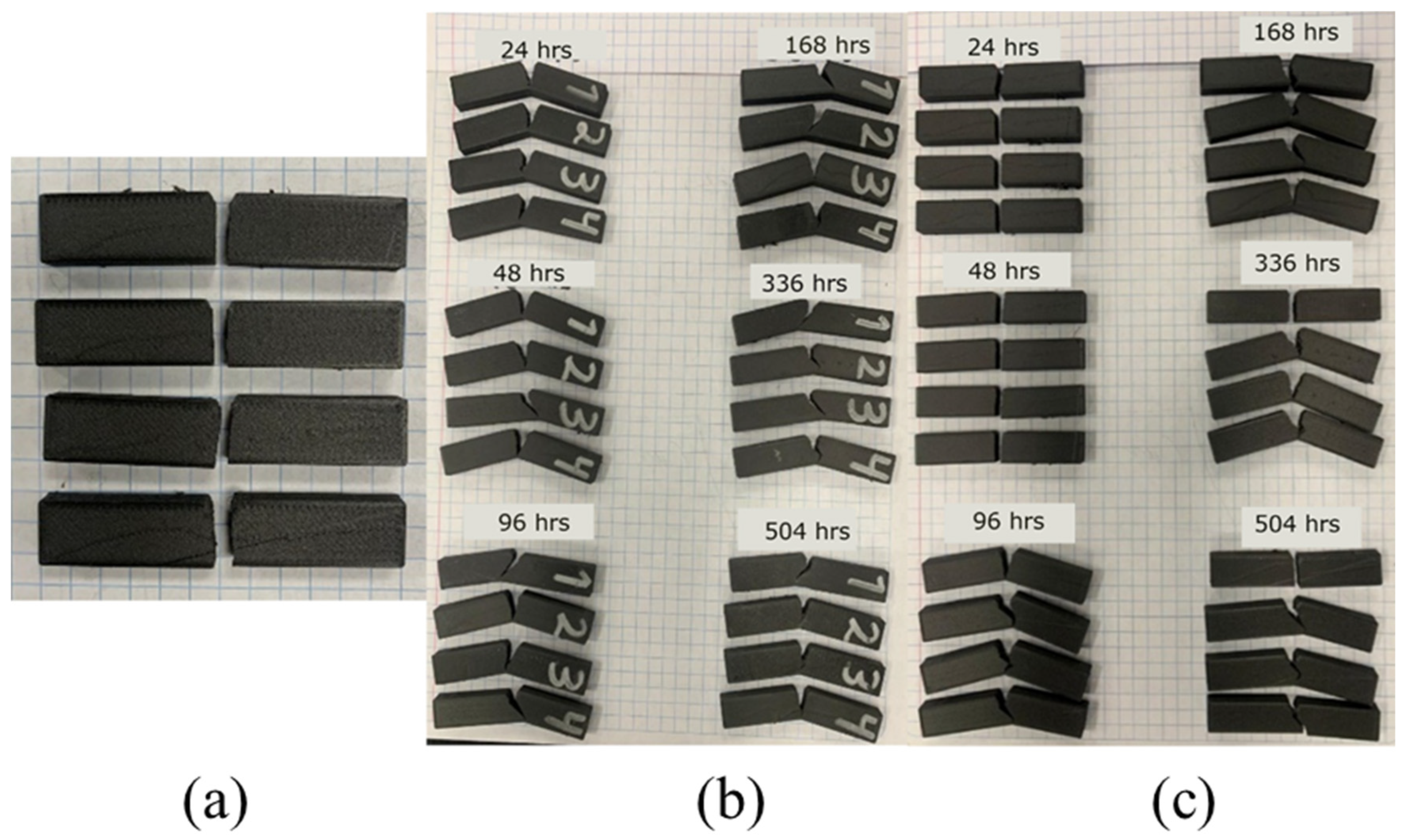
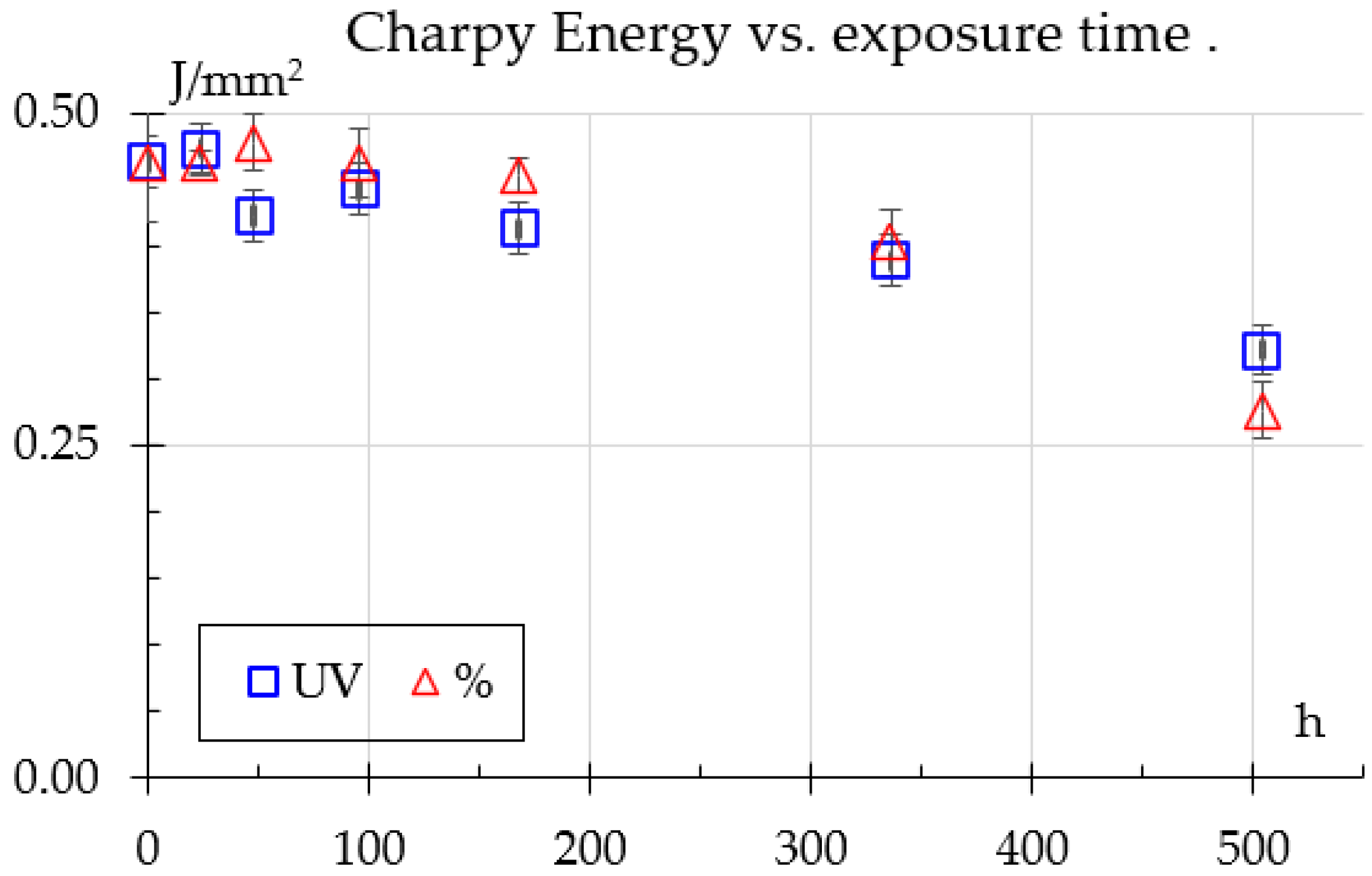
3.2. Impact Results
3.3. Hardness Testing Results
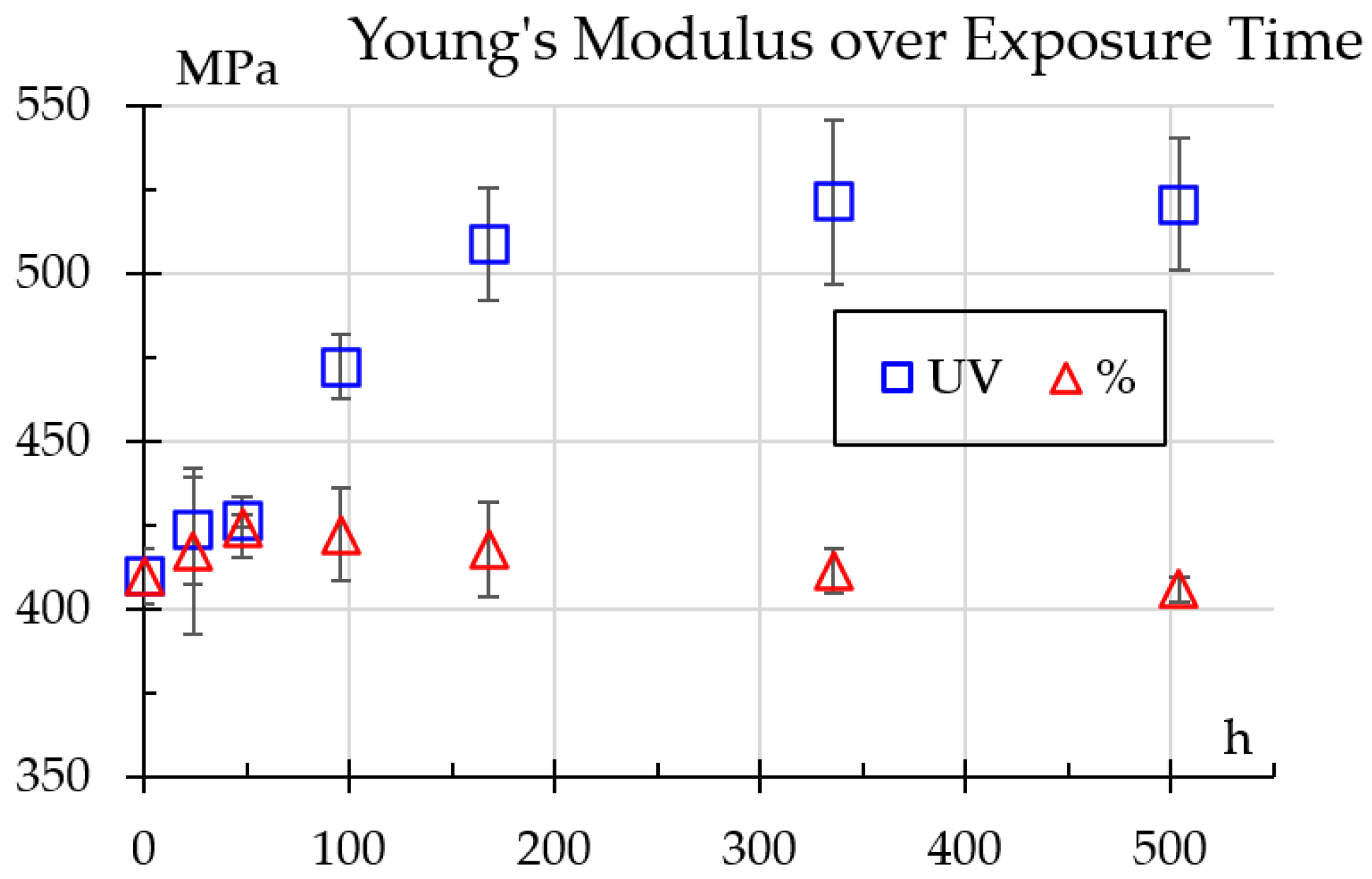
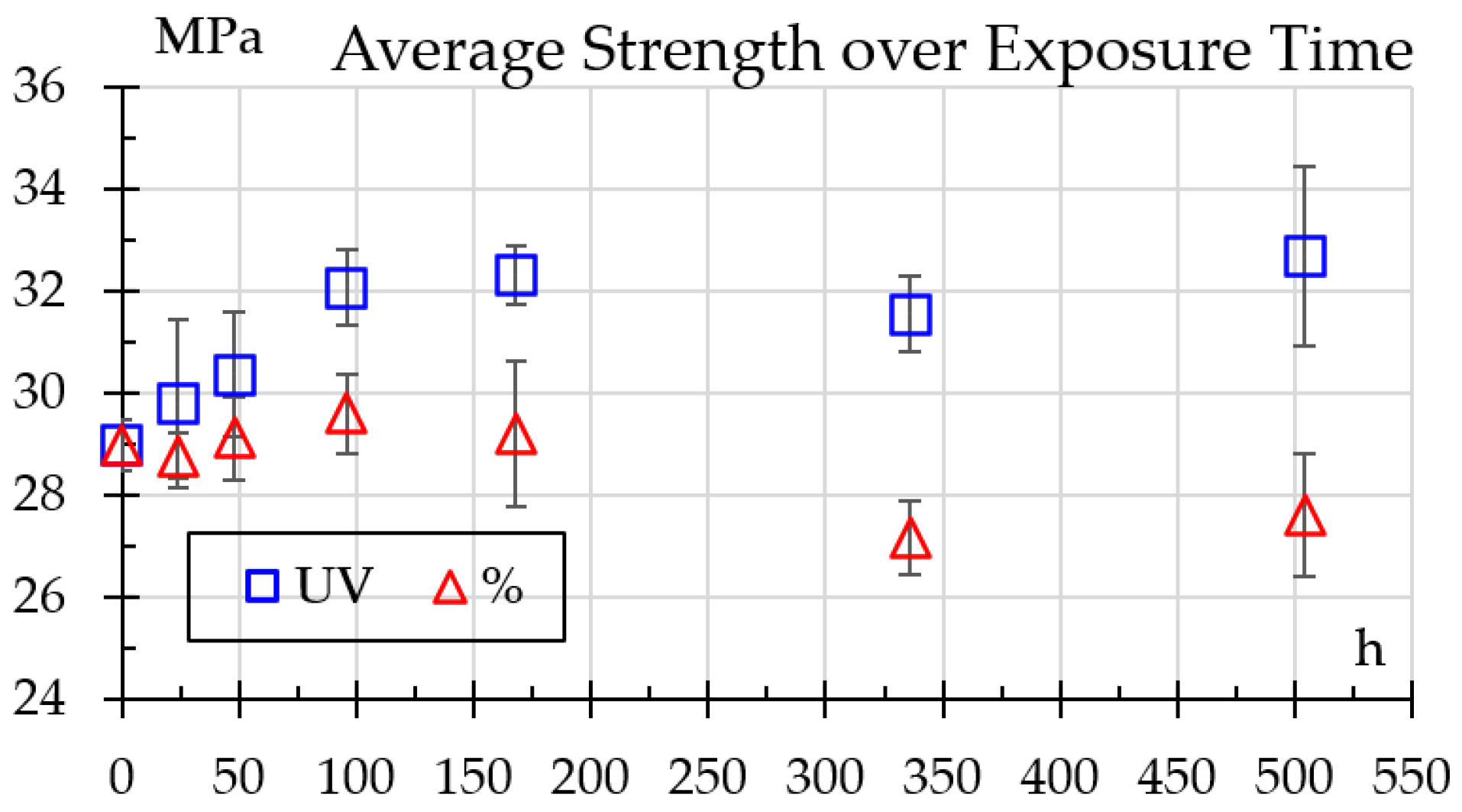
3.4. Tensile Testing
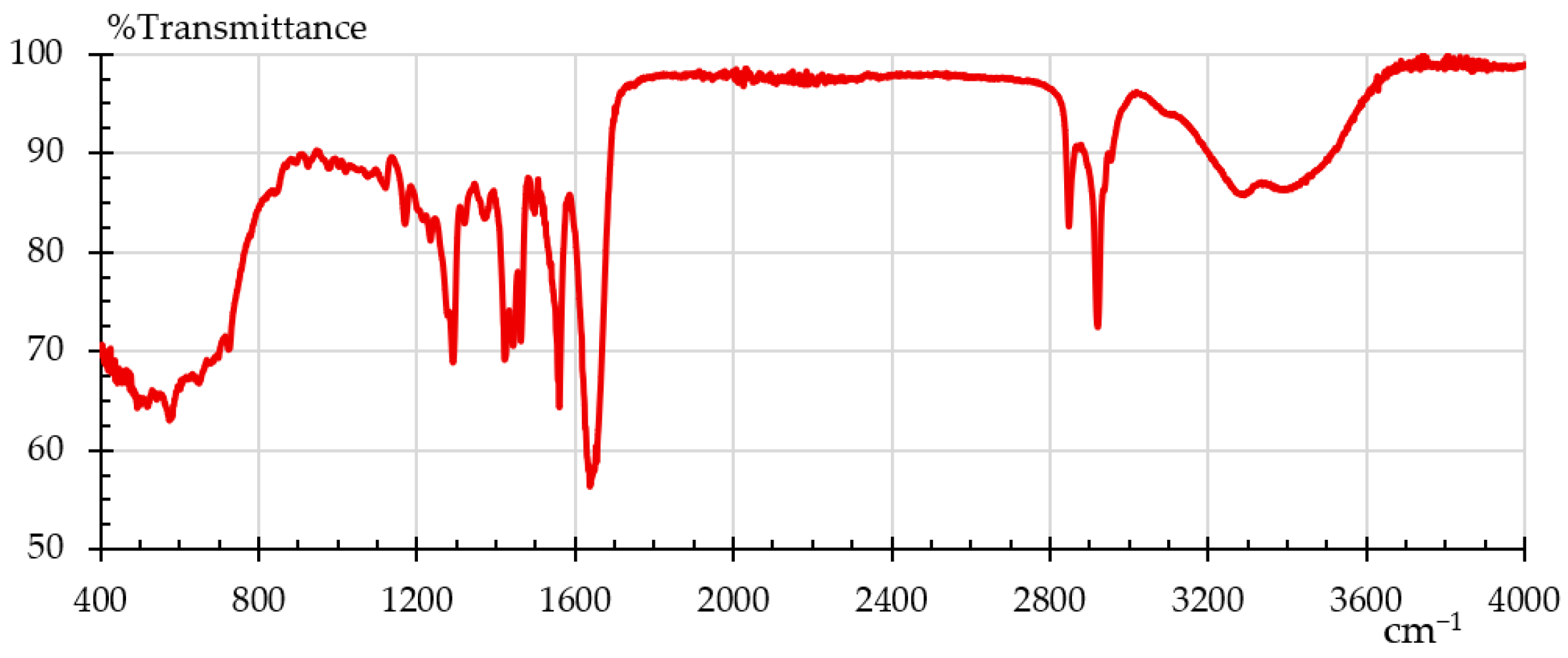
3.5. FTIR
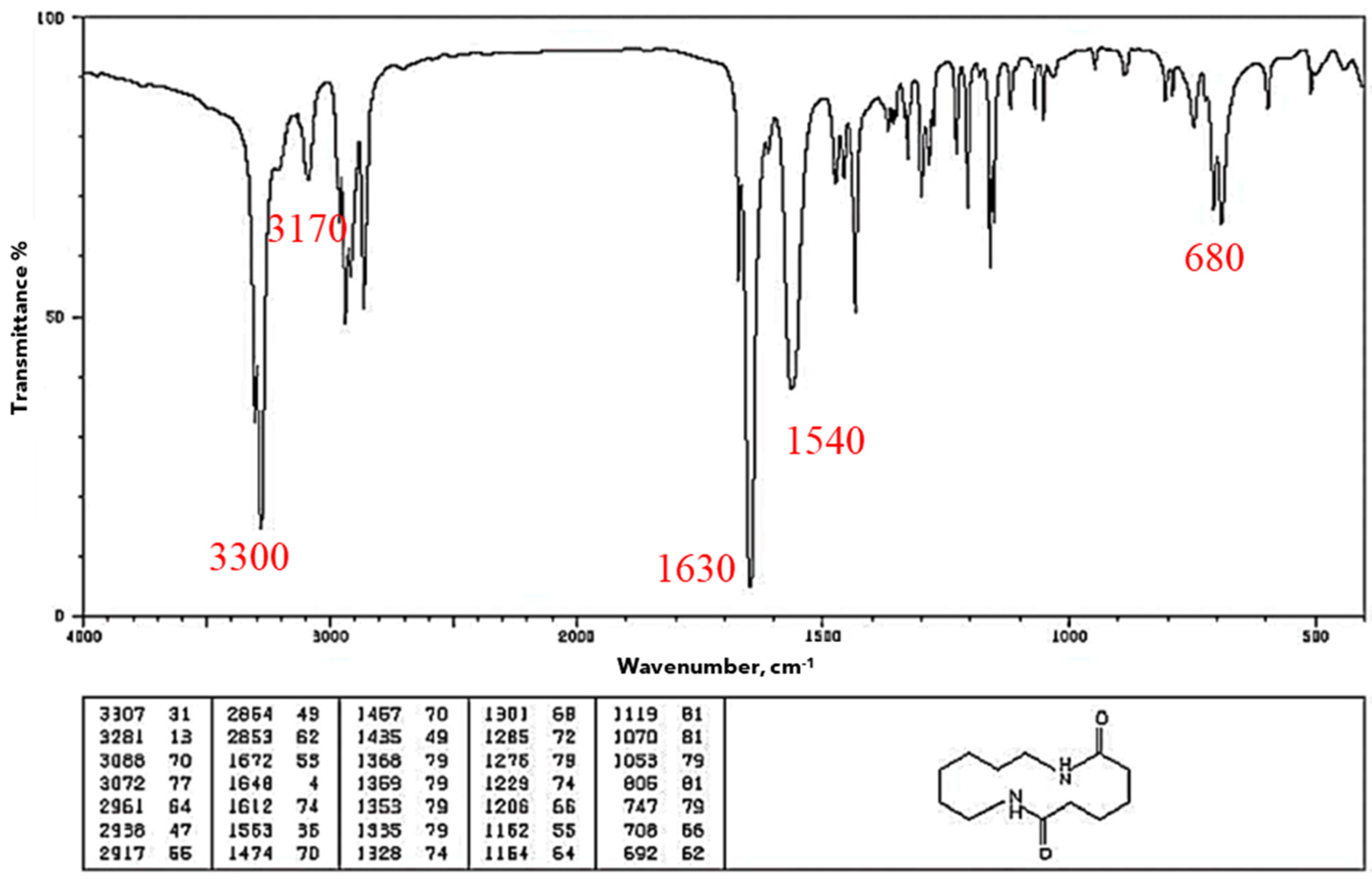
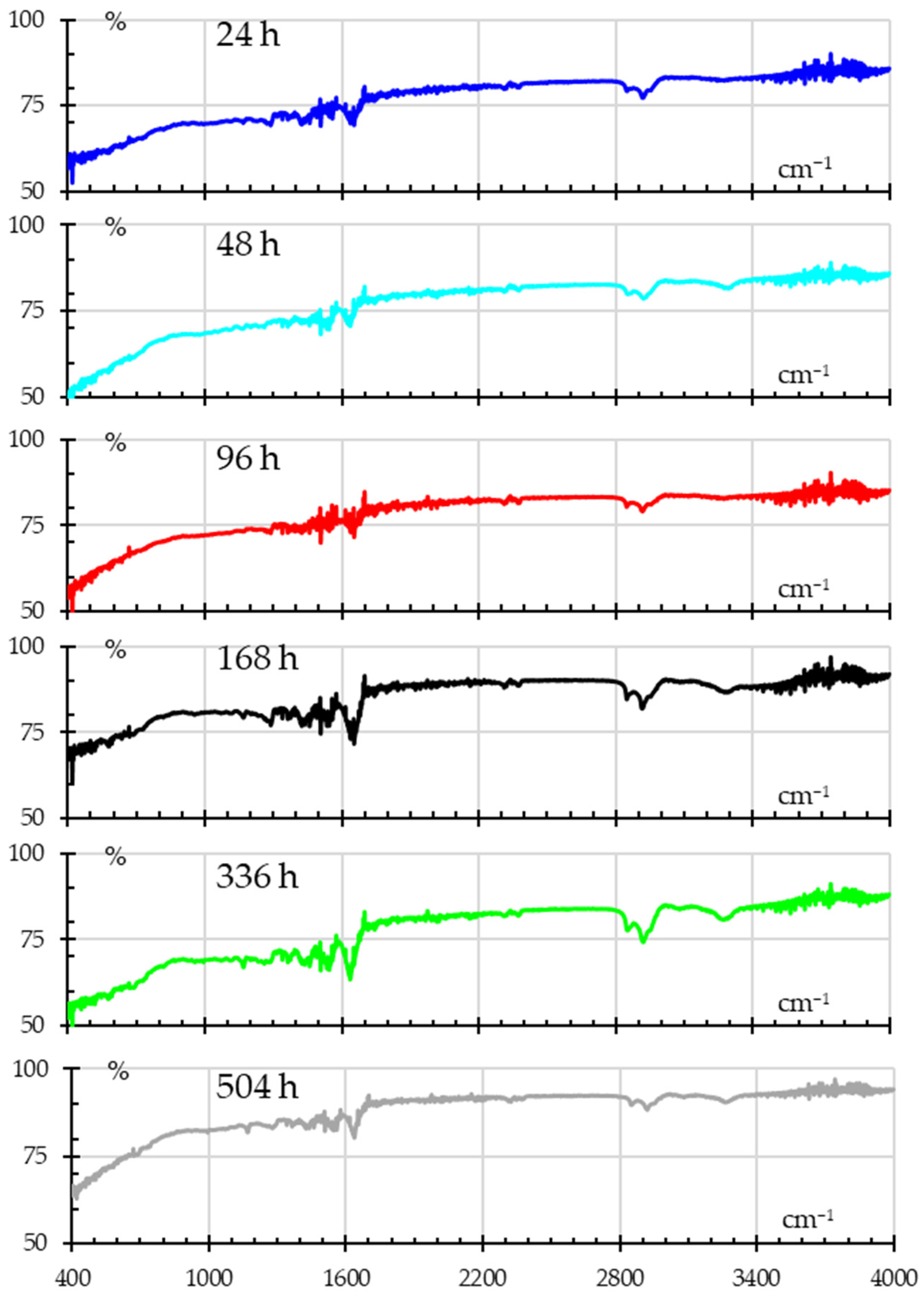
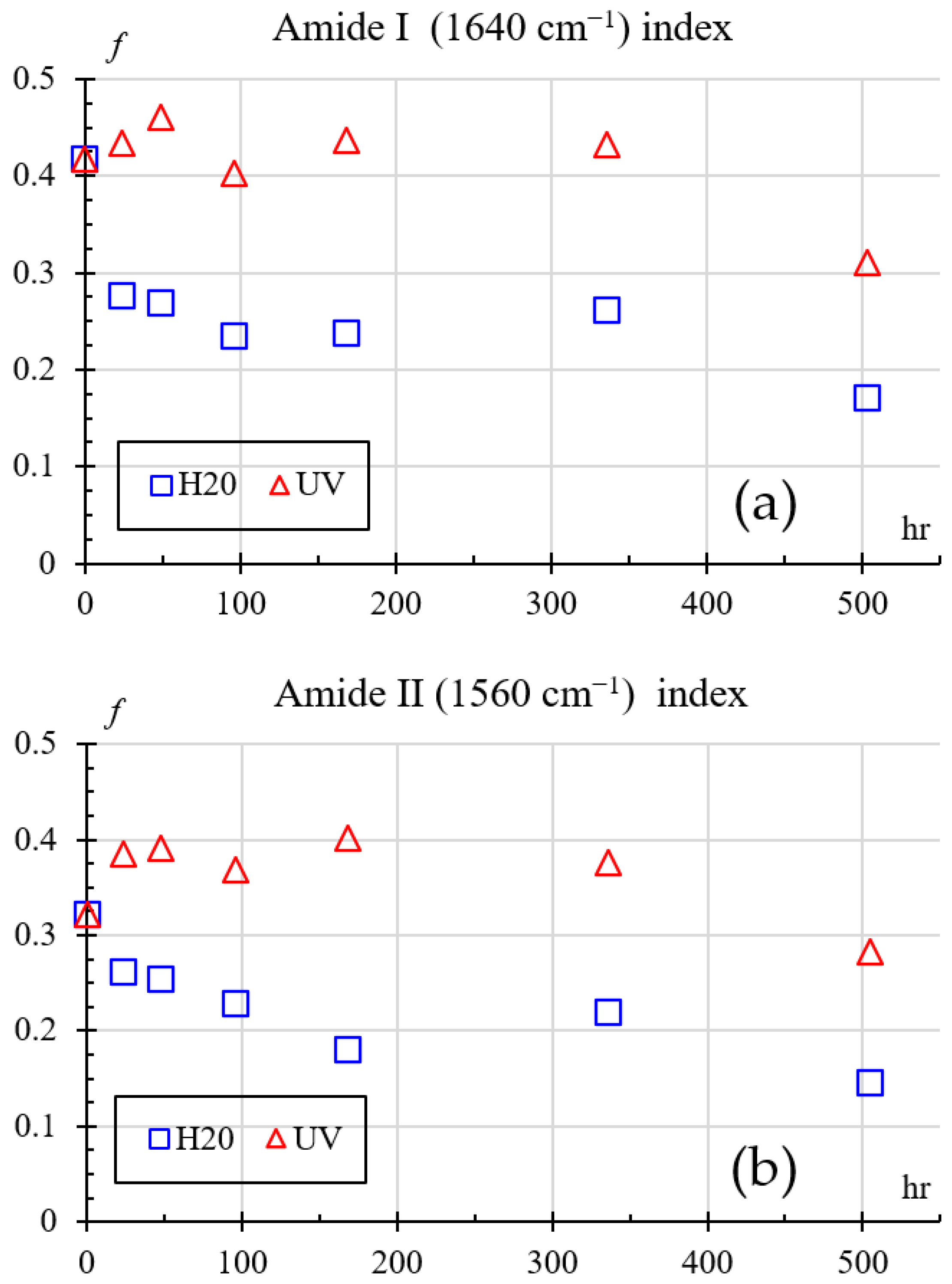
- There are minor variations in the absorbance values throughout the spectra over the first 24 to 96 h of humidity exposure. These could point to subtle interactions between the functional groups of nylon and water molecules. The existence of O–H stretching from absorbed water is often indicated by increases in absorbance around 3300–3500 cm−1;
- The FTIR spectrum exhibits an increase in peak intensities after 168 h, indicating increased water absorption and possible nylon material expansion. This may be due to how water interacts with the amide groups (about 1640 cm−1 and 1500 cm−1), signifying H bonding and physical alterations in the nylon;
- Considerable water absorption is indicated by notable variations in the spectra for the 336 and 504 h exposures. Peaks that correspond to amide I (C=O stretching) at around 1640 cm−1 and O–H stretching at about 3300–3500 cm−1 intensified. This would suggest that the water molecules and the nylon polymer chains have formed a stronger hydrogen-bonded network. Furthermore, modifications in the 600–800 cm−1 area (linked to the C–H bending vibrations) may indicate changes in the molecular interactions within the polymer matrix because of extended exposure to water.
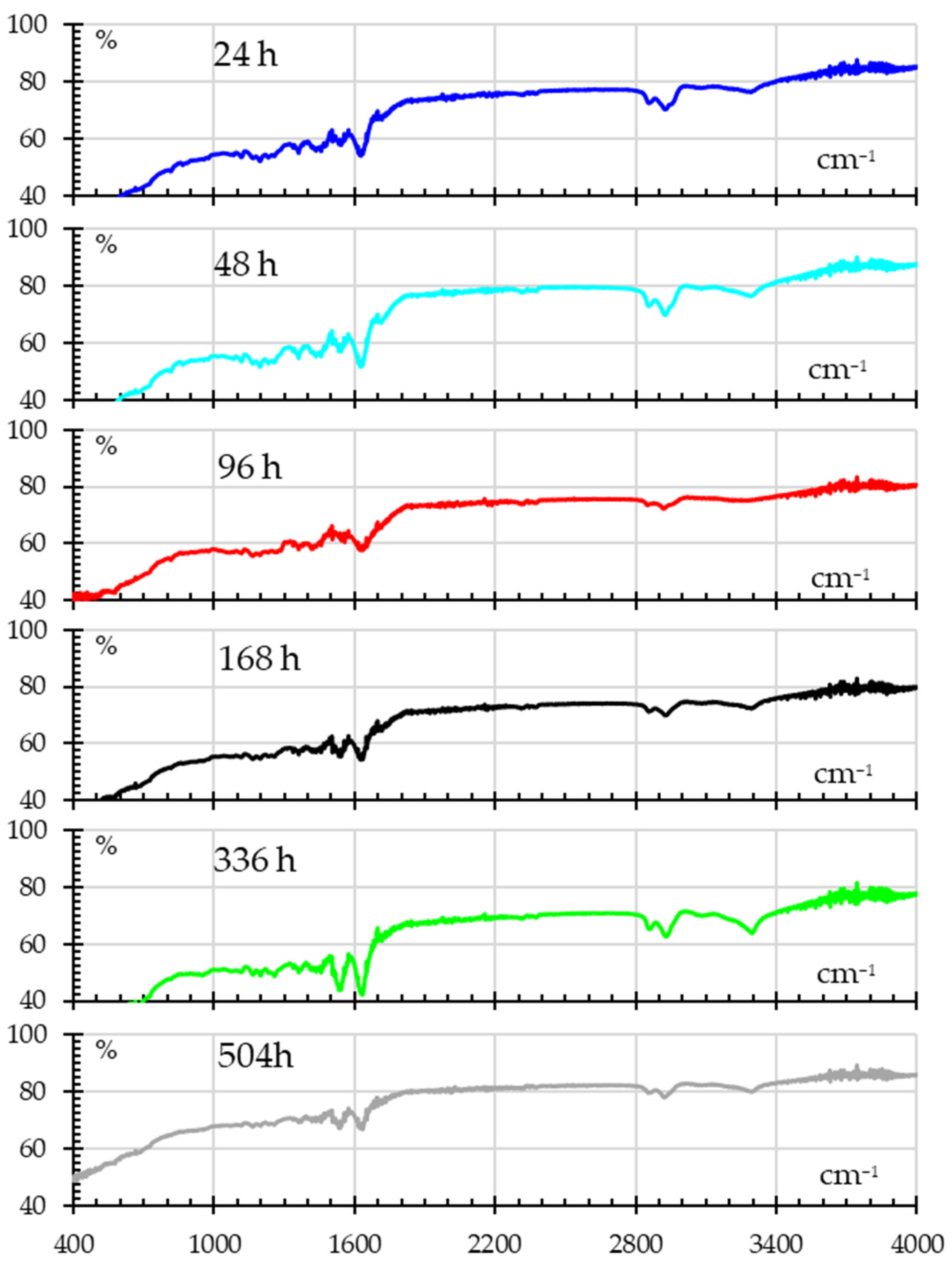
- The spectra show slight variations in absorbance throughout the first 24 to 96 h of UV exposure. Early stages of photodegradation, in which UV radiation breaks chemical bonds in the nylon and modifies peak intensities slightly, may be the cause of these changes. The production of carbonyl groups (C=O stretching), which are common by-products of photodegradation, may be indicated by modest increases or shifts in absorbance around 1700 cm−1;
- There are noticeable alterations in the spectra at 336 and 504 h, indicating significant photodegradation. Significant increases in the carbonyl peaks’ intensity (~1700 cm−1) indicate a substantial buildup of degraded byproducts, agreeing with Rajendran [23]. Changes in the O–H stretching areas about 3300–3500 cm−1 could be a sign that hydroxyl-containing groups are forming. Changes may also be seen in areas linked to C–H stretching (~2900 cm−1) and bending (~1400 cm−1), which demonstrate the disintegration of the polymer backbone and the creation of smaller molecules;
- There are noticeable alterations in the spectra at 336 and 504 h, indicating significant photodegradation. Significant increases in the carbonyl peaks’ intensity (~1700 cm−1) indicate a substantial buildup of degraded byproducts. Changes in the O–H stretching areas about 3300–3500 cm−1 could be a sign that hydroxyl-containing groups are forming. Changes may also be seen in areas linked to C–H stretching (~2900 cm−1) and bending (~1400 cm−1), which demonstrate the disintegration of the polymer backbone and the creation of smaller molecules.
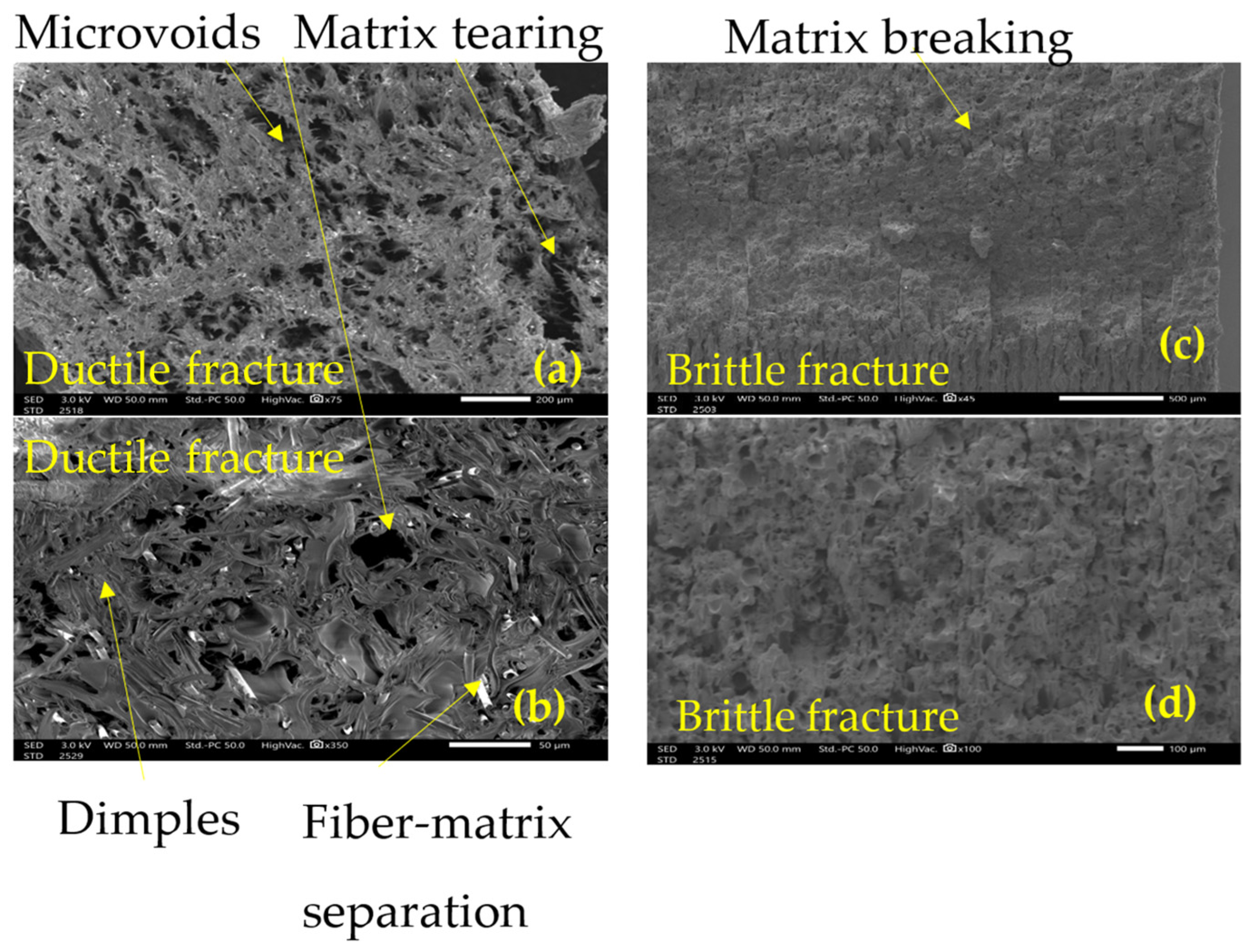
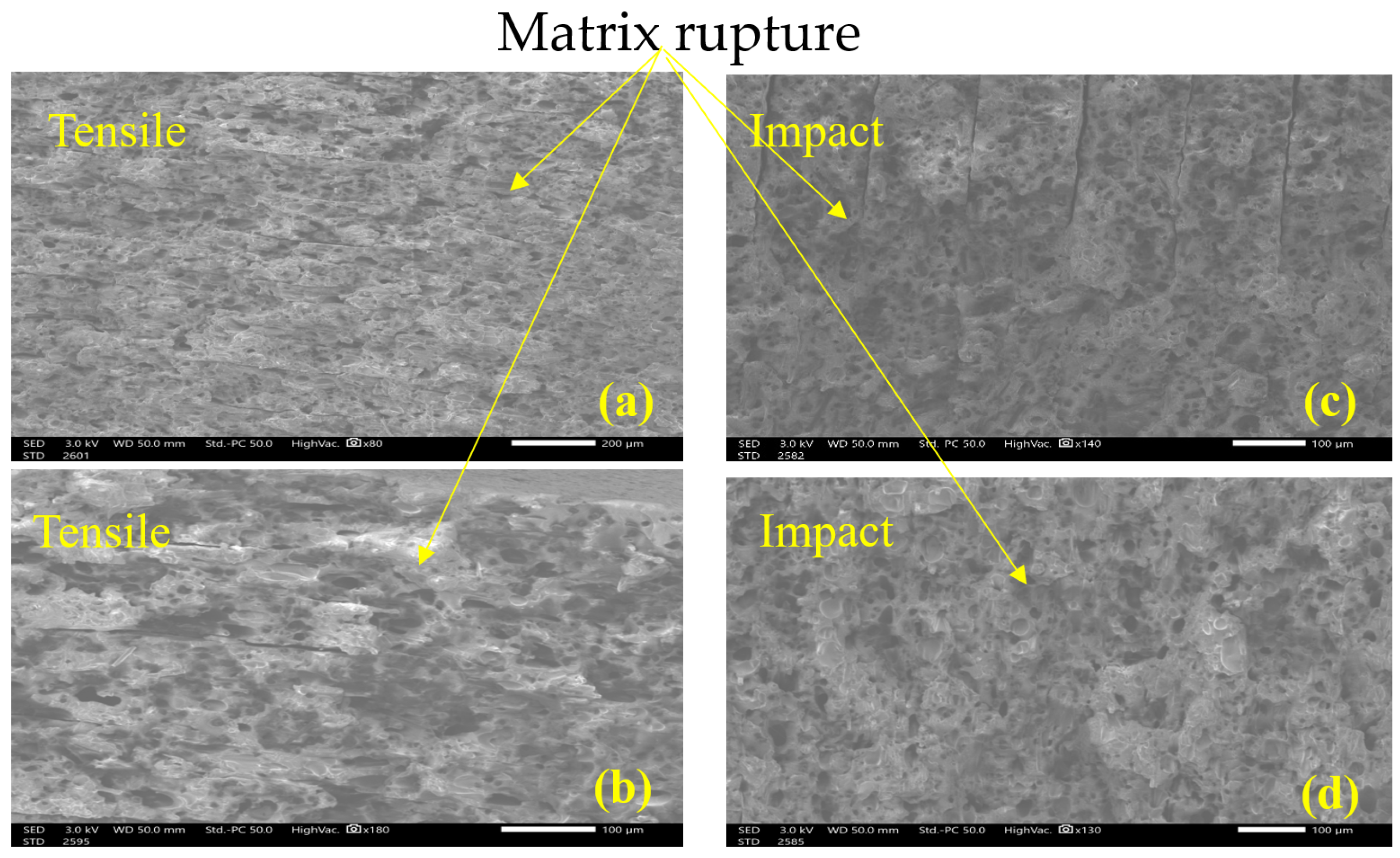
3.6. Electron Microscopy
4. Discussion
5. Conclusions
Author Contributions
Funding
Institutional Review Board Statement
Informed Consent Statement
Data Availability Statement
Acknowledgments
Conflicts of Interest
References
- ISO/ASTM 52900:2021; Additive Manufacturing—General Principles—Fundamentals and Vocabulary. ISO: Geneva, Switzerland, 2021.
- Cano-Vicent, A.; Tambuwala, M.M.; Hassan, S.S.; Barh, D.; Aljabali, A.A.A.; Birkett, M.; Arjunan, A.; Serrano-Aroca, Á. Fused Deposition Modelling: Current Status, Methodology, Applications and Future Prospects. Addit. Manuf. 2021, 47, 102378. [Google Scholar] [CrossRef]
- Ferreira, L.M.; Aranda, M.T.; Muñoz-Reja, M.; Coelho, C.A.C.P.; Távara, L. Ageing Effect on the Low-Velocity Impact Response of 3D Printed Continuous Fibre Reinforced Composites. Compos. B Eng. 2023, 267, 111031. [Google Scholar] [CrossRef]
- Morales, M.A.; Lawrence, B.D.; Henry, T.C. Impact of Moisture and Temperature on the Flexural Properties of 3D-Printed Carbon Fiber-Reinforced Polyamide Composites. J. Compos. Mater. 2025, 59, 2905–2918. [Google Scholar] [CrossRef]
- Finazzi, D.; Seychal, G.; Raquez, J.-M.; Robert, G.; De Clerck, K.; Daelemans, L.; Van Paepegem, W. Study of the Temperature-Humidity Equivalence and the Time-Temperature Superposition Principle in the Finite-Strain Response of Polyamide-6 and Short Glass Fibre-Reinforced Polyamide-6. Polym. Test. 2024, 141, 108653. [Google Scholar] [CrossRef]
- Nairn, J.A. Matrix Microcracking in Composites. In Comprehensive Composite Materials; Elsevier: Amsterdam, The Netherlands, 2000; pp. 403–432. [Google Scholar]
- Humeau, C.; Davies, P.; LeGac, P.-Y.; Jacquemin, F. Influence of Water on the Short and Long Term Mechanical Behaviour of Polyamide 6 (Nylon) Fibres and Yarns. Multiscale Multidiscip. Model. Exp. Des. 2018, 1, 317–327. [Google Scholar] [CrossRef]
- Bergeret, A.; Pires, I.; Foulc, M.P.; Abadie, B.; Ferry, L.; Crespy, A. The Hygrothermal Behaviour of Glass-Fibre-Reinforced Thermoplastic Composites: A Prediction of the Composite Lifetime. Polym. Test. 2001, 20, 753–763. [Google Scholar] [CrossRef]
- Hernández, J.L.M.; d’Almeida, J.R.M. Aging of Polyamide 12 in Oil at Different Temperatures and Pressures. Polym. Adv. Technol. 2017, 28, 1778–1786. [Google Scholar] [CrossRef]
- Sang, J.; Orimoto, Y.; Aoki, Y. Photodegradation Pathways of Aliphatic Polyamide through Conical Intersection between Ground and Excited States. J. Phys. Chem. A 2024, 128, 8865–8877. [Google Scholar] [CrossRef]
- Zhong, Y.; Zhuo, L.; Lu, W. Analysis of Photocatalytic Degradation of Polyamide Microplastics in Metal Salt Solution by High Resolution Mass Spectrometry. J. Environ. Sci. 2024, 139, 473–482. [Google Scholar] [CrossRef]
- Díaz-Rodríguez, J.G.; Pertúz-Comas, A.D.; González-Estrada, O.A. Mechanical Properties for Long Fibre Reinforced Fused Deposition Manufactured Composites. Compos. B Eng. 2021, 211, 108657. [Google Scholar] [CrossRef]
- Guo, K.; Ren, Y.; Han, G.; Xie, T.; Jiang, H. Hygrothermal Aging and Durability Prediction of 3D-Printed Hybrid Fiber Composites with Continuous Carbon/Kevlar-Fiber and Short Carbon-Fiber. Eng. Fail. Anal. 2025, 167, 108958. [Google Scholar] [CrossRef]
- Shirinbayan, M.; Benfriha, K.; Ahmadifar, M.; Penavayre, C.; Nouira, S.; Fitoussi, J. Effects of Hygrothermal Aging on the Physicochemical and Mechanical Properties of 3D-Printed PA6. Int. J. Adv. Manuf. Technol. 2024, 131, 4811–4823. [Google Scholar] [CrossRef]
- Moreno-Núñez, B.A.; Abarca-Vidal, C.G.; Treviño-Quintanilla, C.D.; Sánchez-Santana, U.; Cuan-Urquizo, E.; Uribe-Lam, E. Experimental Analysis of Fiber Reinforcement Rings’ Effect on Tensile and Flexural Properties of OnyxTM–Kevlar® Composites Manufactured by Continuous Fiber Reinforcement. Polymers 2023, 15, 1252. [Google Scholar] [CrossRef]
- Wickramasinghe, S.; Do, T.; Tran, P. FDM-Based 3D Printing of Polymer and Associated Composite: A Review on Mechanical Properties, Defects and Treatments. Polymers 2020, 12, 1529. [Google Scholar] [CrossRef]
- Kikuchi, B.C.; de S. Bussamra, F.L.; Donadon, M.V.; Ferreira, R.T.L.; de C. M. Sales, R. Moisture Effect on the Mechanical Properties of Additively Manufactured Continuous Carbon Fiber-reinforced Nylon-based Thermoplastic. Polym. Compos. 2020, 41, 5227–5245. [Google Scholar] [CrossRef]
- García-León, R.A.; Rodríguez-Castilla, M.; Quintero-Quintero, W. Experimental Analysis of Impact Resistance of 3D Polycarbonate and Nylon + Carbon Fiber Specimens. J. Mater. Eng. Perform. 2021, 30, 4837–4847. [Google Scholar] [CrossRef]
- Paredes, A.C.; Bohórquez, O.; Pertuz, A.; Rueda, Y.; González-Estrada, O.A. Interlaminar Tensile Strength for Composite Materials Made by Additive Manufacturing. J. Phys. Conf. Ser. 2019, 1386, 012002. [Google Scholar] [CrossRef]
- Cuan-Urquizo, E.; Barocio, E.; Tejada-Ortigoza, V.; Pipes, R.B.; Rodriguez, C.A.; Roman-Flores, A. Characterization of the Mechanical Properties of FFF Structures and Materials: A Review on the Experimental, Computational and Theoretical Approaches. Materials 2019, 12, 895. [Google Scholar] [CrossRef]
- Moezzi, M.; Yekrang, J.; Ghane, M.; Hatami, M. The Effects of UV Degradation on the Physical, Thermal, and Morphological Properties of Industrial Nylon 66 Conveyor Belt Fabrics. J. Ind. Text. 2020, 50, 240–260. [Google Scholar] [CrossRef]
- Martínez-Romo, A.; González-Mota, R.; Soto-Bernal, J.J.; Rosales-Candelas, I. Investigating the Degradability of HDPE, LDPE, PE-BIO, and PE-OXO Films under UV-B Radiation. J. Spectrosc. 2015, 2015, 586514. [Google Scholar] [CrossRef]
- Rajendran, N.; DenHartog, E. Accelerated UV Degradation Behavior of High Tensile Nylon 6, 6 Webbings. J. Polym. Res. 2025, 32, 374. [Google Scholar] [CrossRef]
- Moazzami, M.; Ayatollahi, M.R.; Akhavan-Safar, A.; Teixeira De Freitas, S.; Poulis, J.A.; da Silva, L.F.M. Effect of Cyclic Aging on Mode I Fracture Energy of Dissimilar Metal/Composite DCB Adhesive Joints. Eng. Fract. Mech. 2022, 271, 108675. [Google Scholar] [CrossRef]
- Guo, R.; Li, C.; Niu, Y.; Xian, G. The Fatigue Performances of Carbon Fiber Reinforced Polymer Composites—A Review. J. Mater. Res. Technol. 2022, 21, 4773–4789. [Google Scholar] [CrossRef]
- Goodwin, D.G.; Lai, T.; Lyu, Y.; Lu, C.Y.; Campos, A.; Reipa, V.; Nguyen, T.; Sung, L. The Impacts of Moisture and Ultraviolet Light on the Degradation of Graphene Oxide/Polymer Nanocomposites. NanoImpact 2020, 19, 100249. [Google Scholar] [CrossRef]
- Bartosz, C.; Chen, F. Acceleration Factor for Polymer Degradation by UV Light Exposure. In Proceedings of the 2021 IEEE 23rd Electronics Packaging Technology Conference (EPTC), Singapore, 7–9 December 2021; pp. 170–175. [Google Scholar]
- Blok, L.G.; Longana, M.L.; Yu, H.; Woods, B.K.S. An Investigation into 3D Printing of Fibre Reinforced Thermoplastic Composites. Addit. Manuf. 2018, 22, 176–186. [Google Scholar] [CrossRef]
- Zakaria, Z.; Izzah, Z.; Jawaid, M.; Hassan, A. Effect of Degree of Deacetylation of Chitosan on Thermal Stability and Compatibility of Chitosan-Polyamide Blend. Bioresources 2012, 7, 5568–5580. [Google Scholar] [CrossRef]
- REV 5.0—08/01/2021 Markforged Composites Mechanical Properties. Available online: https://static.markforged.com/downloads/composites-data-sheet.pdf (accessed on 8 September 2025).
- ASTM D638; Test Method for Tensile Properties of Plastics. ASTM: West Conshohocken, PA, USA, 2014.
- ASTM D6110; Test Method for Determining the Charpy Impact Resistance of Notched Specimens of Plastics. ASTM: West Conshohocken, PA, USA, 2018.
- Bernhard, G.H.; Bais, A.F.; Aucamp, P.J.; Klekociuk, A.R.; Liley, J.B.; McKenzie, R.L. Stratospheric Ozone, UV Radiation, and Climate Interactions. Photochem. Photobiol. Sci. 2023, 22, 937–989. [Google Scholar] [CrossRef]
- Doğan, M. Ultraviolet Light Accelerates the Degradation of Polyethylene Plastics. Microsc. Res. Tech. 2021, 84, 2774–2783. [Google Scholar] [CrossRef]
- ASTM D-618; Practice for Conditioning Plastics for Testing. ASTM: West Conshohocken, PA, USA, 2021.
- ASTM D2240; Test Method for Rubber PropertyDurometer Hardness. ASTM: West Conshohocken, PA, USA, 2021.
- National Institute of Advanced Industrial Science and Technology (AIST). Spectral Database for Organic Compounds, SDBS. Tokyo, Japan. Available online: https://sdbs.db.aist.go.jp/SearchInformation.aspx (accessed on 1 May 2025).
- Smith, B.C. Infrared Spectroscopy of Polymers, XI: Introduction to Organic Nitrogen Polymers. Spectroscopy 2023, 38, 14–18. [Google Scholar] [CrossRef]
- Tujmer, M.; Pilipović, A. Effect of Annealing on Tensile Properties of Carbon Fiber Reinforced PA 6 Manufactured by Fused Deposition Modeling. Eur. Mech. Sci. 2025, 9, 8–15. [Google Scholar] [CrossRef]
- Díaz-Rodríguez, J.G.; Pertuz-Comas, A.D.; Bohórquez-Becerra, O.R. Impact Strength for 3D-Printed PA6 Polymer Composites under Temperature Changes. J. Manuf. Mater. Process. 2023, 7, 178. [Google Scholar] [CrossRef]
- Díaz, J.G.; León-Becerra, J.; Pertuz, A.D.; González-Estrada, O.A.; Jaramillo-Gutiérrez, M.I. Evaluation Through SEM Image Processing of the Volumetric Fiber Content in Continuos Fiber-Reinforced Additive Manufacturing Composites. Mater. Res. 2022, 25, 20220049. [Google Scholar] [CrossRef]
- Liu, K.; Li, Y.; Tao, L.; Xiao, R. Preparation and Characterization of Polyamide 6 Fibre Based on a Phosphorus-Containing Flame Retardant. RSC Adv. 2018, 8, 9261–9271. [Google Scholar] [CrossRef]
- Díaz-Rodríguez, J.G.; Pertuz-Comas, A.D.; Bohorquez-Becerra, O.R. Fatigue Endurance of Continuous Fiber-Reinforced Polymer Matrix Composites Manufactured by 3D Printing. Eng 2025, 6, 277. [Google Scholar] [CrossRef]
- Dai, G.; Liang, Y.; Sun, Z.; Zhang, M.; Guo, Y.; Liu, J.; Li, X. Influence of Process Parameters on Microscopic Morphology and Mechanical Properties of 3D Printed Continuous Carbon Fiber Reinforced Polyamide6 Composites. J. Mater. Res. Technol. 2025, 39, 9070–9082. [Google Scholar] [CrossRef]
- Ding, H.; Zhang, Y.; He, Z. Fracture Failure Mechanisms of Long Single PA6 Fibers. Polymers 2017, 9, 243. [Google Scholar] [CrossRef]
- Laot, R.; Le Gac, P.-Y.; Le Gall, M.; Broudin, M.; Ovalle, C.; Laiarinandrasana, L. Embrittlement Induced by Oxidation in Polyethylene: Role of Initial Bimodality. Polym. Degrad. Stab. 2024, 230, 111025. [Google Scholar] [CrossRef]







| Reference | Humidity | Temp., °C | UV Wavelength, nm |
|---|---|---|---|
| Humeau [7,8] | 10 to 80% | 25 | N/A |
| Bergeret [8] | 100% | 135 | N/A |
| Shirinbayan [14] | 100% | 20 to 70 | N/A |
| Kikuchi [17] | 95% | 70 | N/A |
| Guo [25] | 100% | 60 | N/A |
| Moezzi [21] | N/A | N/A | 253.7 |
| Goodwin [26] | N/A | 75 | 295 to 400 |
| Bartosz [27] | N/A | N/A | 300 |
| Rajendran [23] | 30% | 43 | 340 |
| Strength | Elasticity | Hardness | Impact | |
| Strength | + | + | − | |
| Elasticity | + | + | + | |
| Hardness | + | + | + | |
| Impact | − | + | + |
Disclaimer/Publisher’s Note: The statements, opinions and data contained in all publications are solely those of the individual author(s) and contributor(s) and not of MDPI and/or the editor(s). MDPI and/or the editor(s) disclaim responsibility for any injury to people or property resulting from any ideas, methods, instructions or products referred to in the content. |
© 2026 by the authors. Licensee MDPI, Basel, Switzerland. This article is an open access article distributed under the terms and conditions of the Creative Commons Attribution (CC BY) license.
Share and Cite
Reyes-Flores, B.; Díaz-Rodríguez, J.G.; Uribe-Beas, E.; López-Mena, E.R.; Guajardo-Cuéllar, A. The Effect of Humidity and UV Light Exposure on the Mechanical Properties of PA6 Matrix Reinforced with Short Carbon Fibers and Built by Additive Manufacturing. Polymers 2026, 18, 164. https://doi.org/10.3390/polym18020164
Reyes-Flores B, Díaz-Rodríguez JG, Uribe-Beas E, López-Mena ER, Guajardo-Cuéllar A. The Effect of Humidity and UV Light Exposure on the Mechanical Properties of PA6 Matrix Reinforced with Short Carbon Fibers and Built by Additive Manufacturing. Polymers. 2026; 18(2):164. https://doi.org/10.3390/polym18020164
Chicago/Turabian StyleReyes-Flores, Bernardo, Jorge Guillermo Díaz-Rodríguez, Efrain Uribe-Beas, Edgar R. López-Mena, and Alejandro Guajardo-Cuéllar. 2026. "The Effect of Humidity and UV Light Exposure on the Mechanical Properties of PA6 Matrix Reinforced with Short Carbon Fibers and Built by Additive Manufacturing" Polymers 18, no. 2: 164. https://doi.org/10.3390/polym18020164
APA StyleReyes-Flores, B., Díaz-Rodríguez, J. G., Uribe-Beas, E., López-Mena, E. R., & Guajardo-Cuéllar, A. (2026). The Effect of Humidity and UV Light Exposure on the Mechanical Properties of PA6 Matrix Reinforced with Short Carbon Fibers and Built by Additive Manufacturing. Polymers, 18(2), 164. https://doi.org/10.3390/polym18020164