1. Introduction
Petroleum-based polymeric materials offer various advantages over other materials, such as low cost, ease of processing, light weight, mechanical strength, etc. However, traditional synthetic polymeric materials are the root cause of the various environmental issues, e.g., the pollution from microplastics and the difficulty of recyclability (polymers, in order to be recycled, must fulfill some minimum requirements, and even in the case they do, the recycling is typically related to deteriorated properties). Thus, alternative renewable, natural, and bio-based polymers are needed so as to replace traditional plastics in numerous applications, including food packaging materials. Cutin is such a polymer.
Cutin is a cross-linked natural polyester found in plants, coating their leaves, fruits, flowers, and non-woody stems as a major structural constituent of their outer cell walls. This cuticular layer plays a central role in the terrestrial adaptation of plants by regulating aspiration and moisture transfer of their epidermal tissues [
1,
2]. Structurally, the plant cuticle is a hydrophobic composite material consisting of polysaccharides, waxes, polyesters, pectin, phenolic compounds, and flavonoids [
3]. Among plant-derived biopolymers, cutin, as part of the plant cell walls, is an abundant biopolyester with a more complex and intricate chemical structure compared to other polymers such as cellulose or lignin. It is water-insoluble, composed of oxygenated long-chain epoxy- and hydroxy-fatty acids, commonly C16- or C18-, with a terminal hydroxyl group (ω-OH) and one or more unsaturated bonds [
4,
5]. Other monomers such as unsubstituted fatty acids, dicarboxylic acids, primary alcohols, and aldehyde derivatives of fatty acids are also present, further diversifying the polymer [
1,
6]. With concentrations ranging from ~0.5 to 1500 μg/cm
2 of plant surface [
1], cutin is widespread in nature, underscoring its ubiquity across agricultural crops. Observations of plant tissues using X-ray diffraction (XRD) and transmission electron microscopy (TEM) showed cutin to be amorphous, elastic, and reticulated, with these forms usually coexisting in layered arrangements, intermixed and interacting with the other structural components of the cell walls. Within these structures, cutin undergoes esterification, producing linear chains, with branching at intermediate hydroxyl groups and cross-linking between chains due to dicarboxylic acids. This creates a polymeric network that interacts with or entraps other components of the epidermis of plant cells [
1,
6].
Cutin can be extracted from various sources such as tomatoes (
Solanum lycopersicum), peppers (
Capsicum annuum), lime (
Citrus aurantifolia), cherries (
Prunus avium), lotus fruits (
Nelumbo nucifera), and apples (
Malus pumila) using a variety of methods described in the literature [
3,
7,
8]. Due to the complexity of cuticular tissues, where cutin, waxes, and polysaccharides are intermixed into a dense matrix, the cutin isolation methodologies presented in the literature typically involve dewaxing with organic solvents and acidic polysaccharide hydrolysis prior to cutin depolymerization using a variety of approaches, such as aqueous alkaline hydrolysis, methanol transesterification with BF
3 or NaOCH
3, reductive cleavage by treatment with LiAlH
4 in tetrahydrofuran, or trimethylsilyl iodide in organic solvents [
3]. Among the proposed methodologies, the one employed in the presented study, described in the following section, was chosen based on its simplicity and potential applicability on a large scale.
The development of biodegradable packaging materials, as a partial replacement for petroleum-based synthetic polymers, presents a significant challenge. Given the pressing environmental need to promote a circular economy and sustainability, it is essential to design innovative materials derived from renewable natural resources such as starch, collagen, chitosan, proteins, polysaccharides, aliphatic polyesters, and others. However, natural raw materials are not inherently structured for direct use and therefore require appropriate pretreatment to render them processable and suitable for the fabrication of new materials—and consequently, new packaging products. Similarly, synthetic polymers also require modification during their formulation with the incorporation of various additives—such as antioxidants, anti-aging agents, plasticizers, structural stabilizers, surface modifiers, and pigments—to tailor their properties for specific applications. Many of these additives have been associated with potential adverse effects on human health following prolonged exposure. Moreover, any material intended for packaging applications, particularly within the food industry, must comply with strict requirements regarding its physicochemical characteristics—including mechanical, thermal, and barrier properties—as well as its potential interactions with the packaged food. Cutin is a non-toxic, biodegradable, insoluble, amorphous substance that provides UV protection and is regarded as a promising alternative to conventional plastics for certain applications [
9]. Cutin, on its own or combined with other ingredients, mainly biopolymers, such as pectin, chitin/chitosan, and zein, but also with smaller-sized constituents such as glycerol, has been investigated for the development of biodegradable materials either in the form of self-standing membranes or as lacquers of glass or metal containers [
8,
10,
11,
12,
13,
14]. In most cases, for the preparation of cutin-based materials, the hydrolyzed cutin, as extracted from the plant cell walls, undergoes a heat condensation polymerization process, which, when completed, results in a polyester material with good flexibility, hydrophobicity, mechanical stability, and controlled permeability characteristics.
The Hansen Solubility Parameters (HSPs) are widely used in academia and industry for finding suitable solvents for various applications. The total HSP is calculated from three partial HSPs, one accounting for dispersion forces, one for polar interactions, and one for hydrogen bonding [
15]. The concept of HSPs is rather simple and is based on the basic rule of chemistry that “like dissolves like”. Substances with similar HSPs are likely to exhibit mutual solubility and compatibility. HSPs have been used for numerous applications, e.g., for finding solvents for extraction purposes, including analytical purposes [
16,
17,
18]; finding solvents for depolymerization of lignocellulosic biomass [
19]; and finding good solvents for polymers [
20], paints, pharmaceuticals, and other [
15]. Solvent screening is perhaps the most traditional application of HSP. However, HSP actually predicts the compatibility/miscibility of two substances and thus indirectly can predict the existence of favorable interactions between two substances. Thus, besides solvent screening, HSPs have been used for other applications, e.g., permeation, including skin permeation, composite materials, polymer adhesion, and others [
15,
21].
Despite their broad range of applications, the use of HSP in the field of packaging is rather limited. HSPs have been used for finding suitable solvents for the recycling of food packaging containers [
22,
23]. Also, HSPs, along with molecular dynamics simulations and artificial neural networks, have been used to study migration in food simulants [
24]. HSPs have also been used to study the permeation of migrants through polymeric films [
25]. In the webpage for the HSP, the use of HSP for studying flavor losses is discussed [
21].
In order for a material to be used in food packaging, it must exhibit certain properties, e.g., suitable mechanical strength, low permeability, etc. Ideally, the material should be inert for the food; that is, there should not exist any interaction between the packaging material and the food in order to avoid problems of migration from the packaging to the food and problems of sorption and permeation from the food out of the packaging. Favorable interactions between the potential migrants and food suggest compatibility, and consequently, a high solubility and a high tendency for solubility of the migrant into food are expected. On the contrary, in the case of poor interactions between migrants and food, a low risk of migration is expected. Similarly, if some of the food’s volatile compounds exhibit favorable interactions and compatibility with the packaging polymeric material, then there is a high probability that they will be adsorbed/absorbed in the polymer. This (the trapping of food compounds into packaging material) can cause considerable flavor losses. In the webpage of HSP [
21], a real case of considerable flavor losses in a natural juice is discussed in detail. In addition, the adsorption of food compounds into the packaging material is the first stage for the occurrence of permeation. Adsorption occurs for enthalpic reasons while diffusion is an entropy-driven process. Thus, small molecules, due to the driving force of entropy, will diffuse from the surface into the bulk of the material and finally permeate it.
Migration risk can be evaluated both experimentally and theoretically. In the 10/2011 European regulation about plastic materials in contact with foods, six food simulants are proposed to study migration. The material is immersed in the food simulant (mixtures of water and ethanol or acetic acid for hydrophilic foods and vegetable oils and an aqueous mixture of 50%
v/
v ethanol for lipophilic foods), and the migration is assessed by the mass loss. This concerns the overall migration evaluation. Evaluation of the specific migration of some substance or group of similar substances is performed by appropriate analytical procedures (e.g., photometry, chromatography, etc.). Theoretically, the study of migration is typically performed by models based on diffusion [
26,
27]. This requires the knowledge of the diffusion coefficient of various substances; however, such reliable data are not always available. As mentioned above, there is a limited number of studies where HSPs have been used to predict or study migration or permeation effects [
21,
24,
25]. In addition, these methodologies are not solely based on HSP but were used in combination with other theoretical approaches, e.g., molecular dynamics. Such approaches, as well as the diffusion-based models, are complex and require a rather strong background in Physical Chemistry, Transport Phenomena, etc., and thus can be used only by experts. In addition, in such sophisticated modeling, typically, various assumptions are needed; thus, the predictive ability of such approaches heavily depends on parameter fitting on related available experimental data. However, accurate data for the diffusion of substances into foods or of food components into polymers is rather limited. Also, such models are very useful for studying specific cases, but any general applicability should be handled with care. On the contrary, the prediction of substance compatibility with HSP is a very simple and rapid procedure that can be used by non-experts in Physical Chemistry, etc. Also, for various polymer materials and common food components (fats, carbohydrates, etc.), the values of HSPs have been derived from actual thermodynamic (solubility or swelling) data. Thus, despite their simplicity, HSPs exhibit a remarkable predictive ability.
HSPs could be very effective for a general applicability initial screening of migration and permeation risks. For example, if the HSP of the polymeric packaging material is very close to the HSP of some group components, e.g., fats, this suggests that it would not be a good idea to package fatty foods in this material. Thus, the scope of this work is to propose a simple methodology of general applicability for initial screening of migration/permeation risks in polymeric materials. The methodology is simply based on considering various groups of food components and using their average values of HSP for comparison with the HSP of the candidate packaging material. The methodology is applied to explore the potential of the bio-based polymer cutin as food packaging in terms of migration/permeation. For this purpose, the HSP of cutin is firstly determined from swelling data by various solvents. Then, these are compared with the HSP of numerous food components in order to predict with which substances favorable interactions (and thus migration) are likely to exist. Experimental confirmation for one of the predictions, as well as comparison with other bio-based polyesters, is also provided.
2. Materials and Methods
2.1. Materials
Diethyl ether, hexane, ethyl acetate, isopropanol, acetone, and chloroform were all of analytical grade purity purchased either from Carlo Erba Reagenti (Italy), Fisher Scientific (Germany), or Sigma-Aldrich Chemie GmbH (Germany).
2.2. Cutin Extraction and Preparation of Films
The cutin used in the present study was extracted from pepper peels, the outer skin of the pepper fruit, using non-marketable, substandard mixed-type peppers with the following methodology. Non-marketable peppers were immersed in a 2% w/w citric acid solution and heated in a static vertical autoclave (Korimat, Mittenaar, Germany) at 125 °C for 2 h. The liquefied flesh of the peppers was then separated from the peels, stems, and seeds using a refiner equipped with 0.5 mm pore diameter sieves (Henri Biaugeaud, France). Subsequently, the collected peels were washed with potable water to remove flesh residues and separated/collected free from stems and seeds by gravitational separation in a water tank. The clean peels were then dried in a tray dryer (APEX Construction Ltd., Uxbridge, UK) at 25–30 °C before any further processing.
Cutin was isolated from the dried peels with alkaline hydrolysis according to the method described in the literature [
6,
7] with some modifications. Briefly, the dehydrated pepper skins were impregnated in an aqueous sodium hydroxide solution (NaOH, 3%
w/
w), at a peel-to-solution weight ratio of ≈1:10, and heated at 125 °C for 2 h. The solid peel residue was then removed by filtration and discarded, while the filtrate was further clarified from the suspended solids by centrifugation (Sorvall RC-7, Thermo Scientific, Waltham, MA, USA) at 4000×
g. The hydrolyzed cutin, present in the alkaline supernatant solution, was then precipitated and separated as solid residue after neutralization and slight acidification of the solution between pH 5 and 4.5, with concentrated hydrochloric acid (33%
w/
w). The precipitate was then recovered by centrifugation at 4500×
g and washed from salts and other water-soluble components with distilled water. Crude cutin was then freeze-dried (Gamma 1–20, Martin Christ, Osterode am Harz, Germany) prior to any further processing for the purposes of the present work. For the crude pepper cutin,
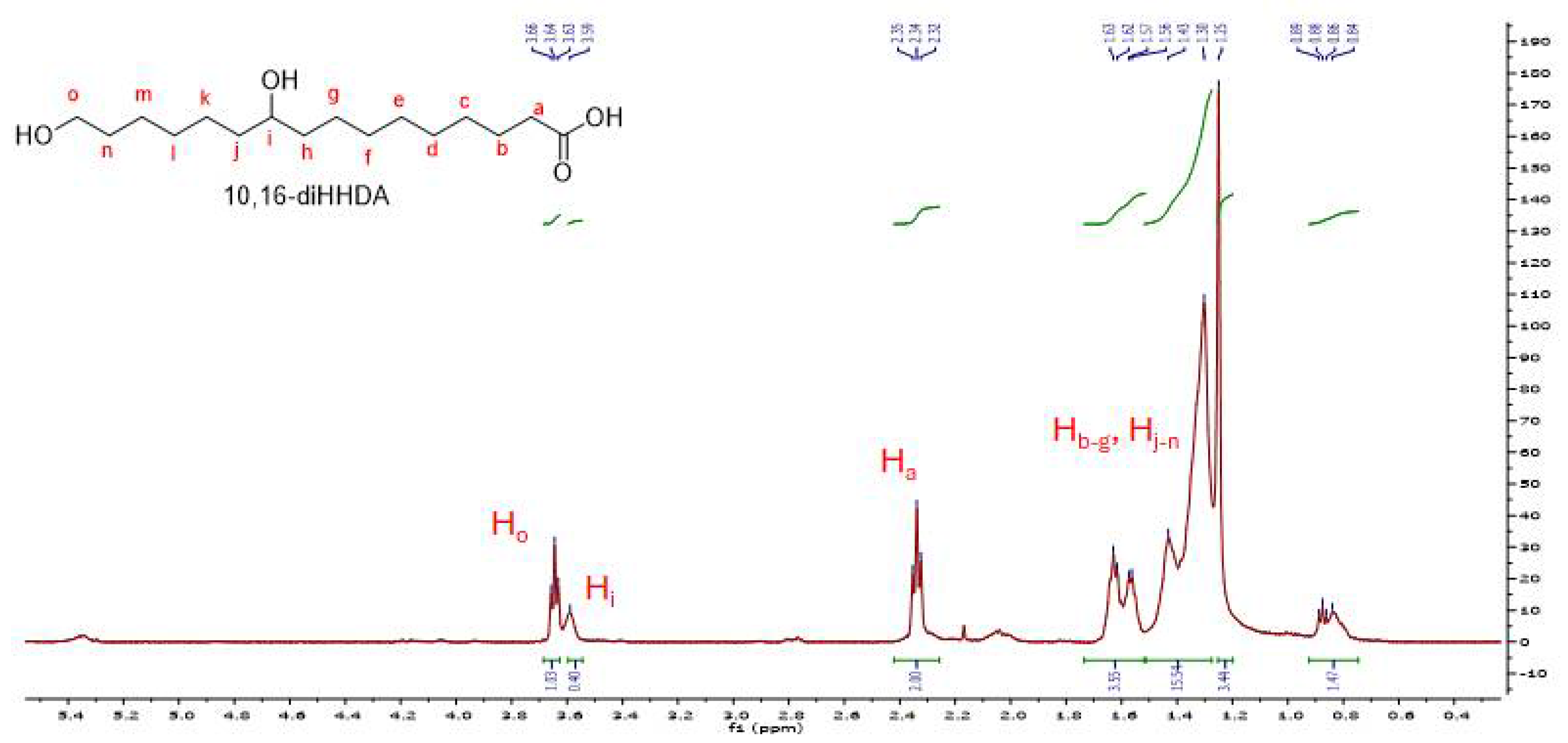
1H-NMR spectra were recorded on an Agilent 500 spectrometer (DD2) with
1H at 500 MHz and
13C at 126 MHz, using the TMS internal standard and deuterated chloroform as the solvent at 13 °C.
Cutin film preparation was performed via a heat condensation polymerization process at 150 °C, in polytetrafluoroethylene (PTFE) containers, where 0.093 g of cutin/cm
2 of surface was weighted and heated in an oven (Gallenkamp, model OV-160, Cambridge, Cambridgeshire, UK) for a period of 6 h. The monomer of cutin is a dihydroxy acid with the OH groups at positions 10 and 16 (which is the end group). The polymerization reaction is based on the esterification reaction between COOH at position 1 with the two OH groups. This leads to the formation of a cross-linked polyester. A scheme for the polymerization reaction is presented in
Figure S1 of the Supplementary Materials.
2.3. Swelling Experiments
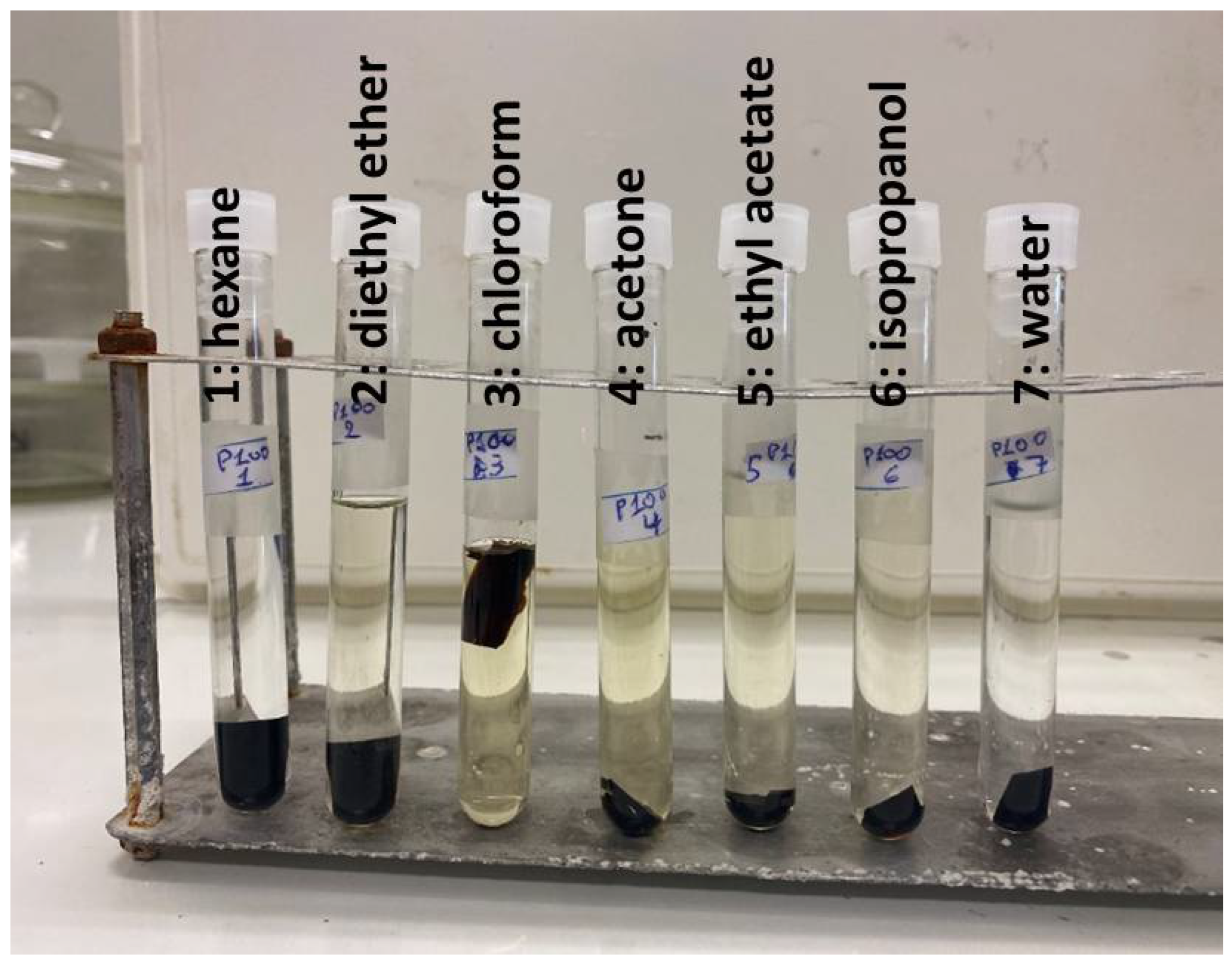
Pieces of cutin with dimensions of around 1 cm length, 0.6 cm width, and 0.1 cm thickness were immersed in excess (~10 mL) of seven different solvents (hexane, diethyl ether, chloroform, acetone, ethyl acetate, isopropanol, and water) for 24 h at room temperature. The exact dimensions of the samples before and after, the immersion were measured with a caliper (±0.01 mm). The volume of the samples was calculated by the dimensions. The degree of swelling (% Swelling) in each solvent was calculated from the following equation:
where
is the volume of the dry sample before the immersion;
is the volume of the wet sample after the immersion.
The swelling experiments were performed in two independent replicate experiments.
2.4. Spectroscopic Measurements
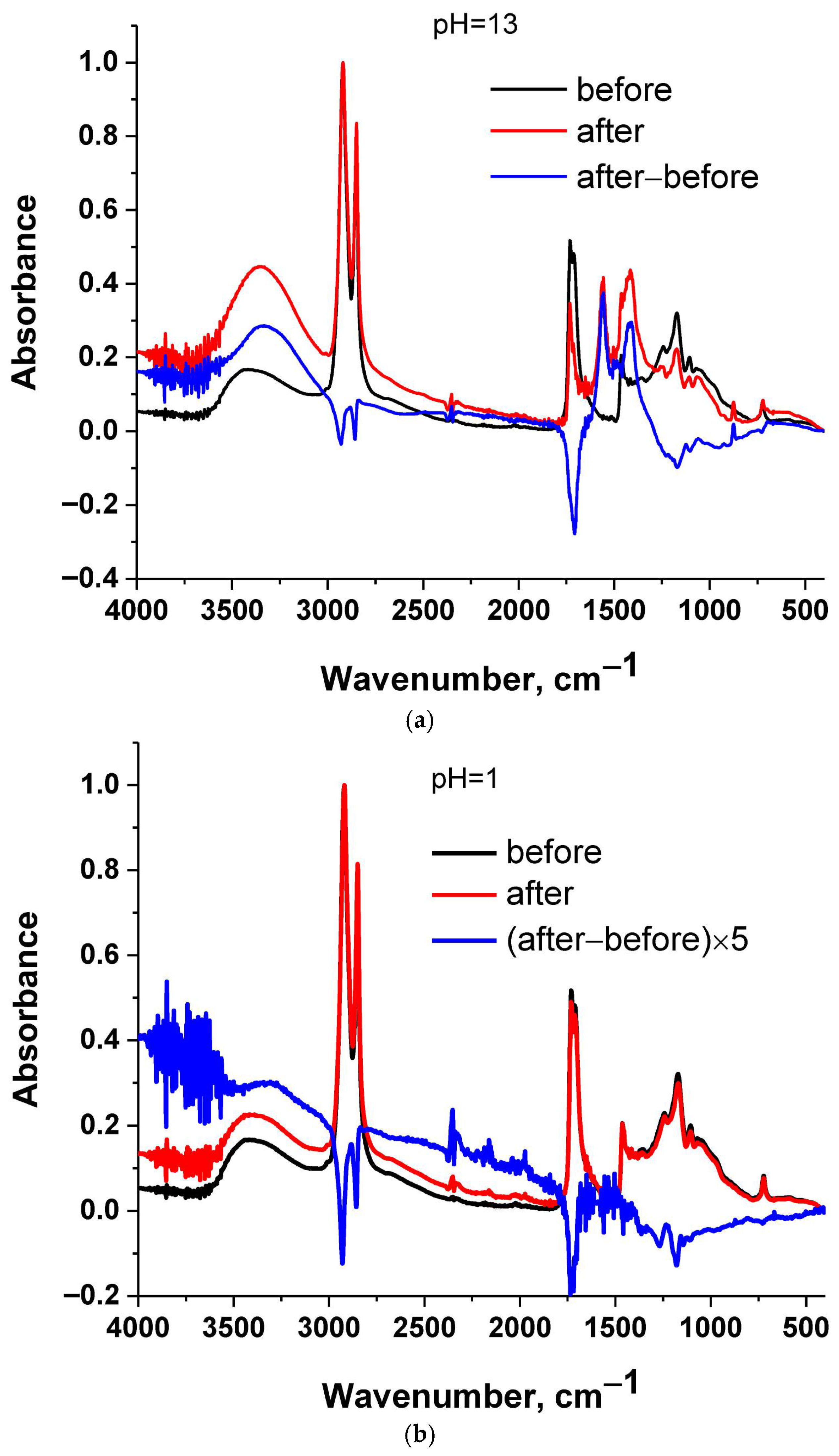
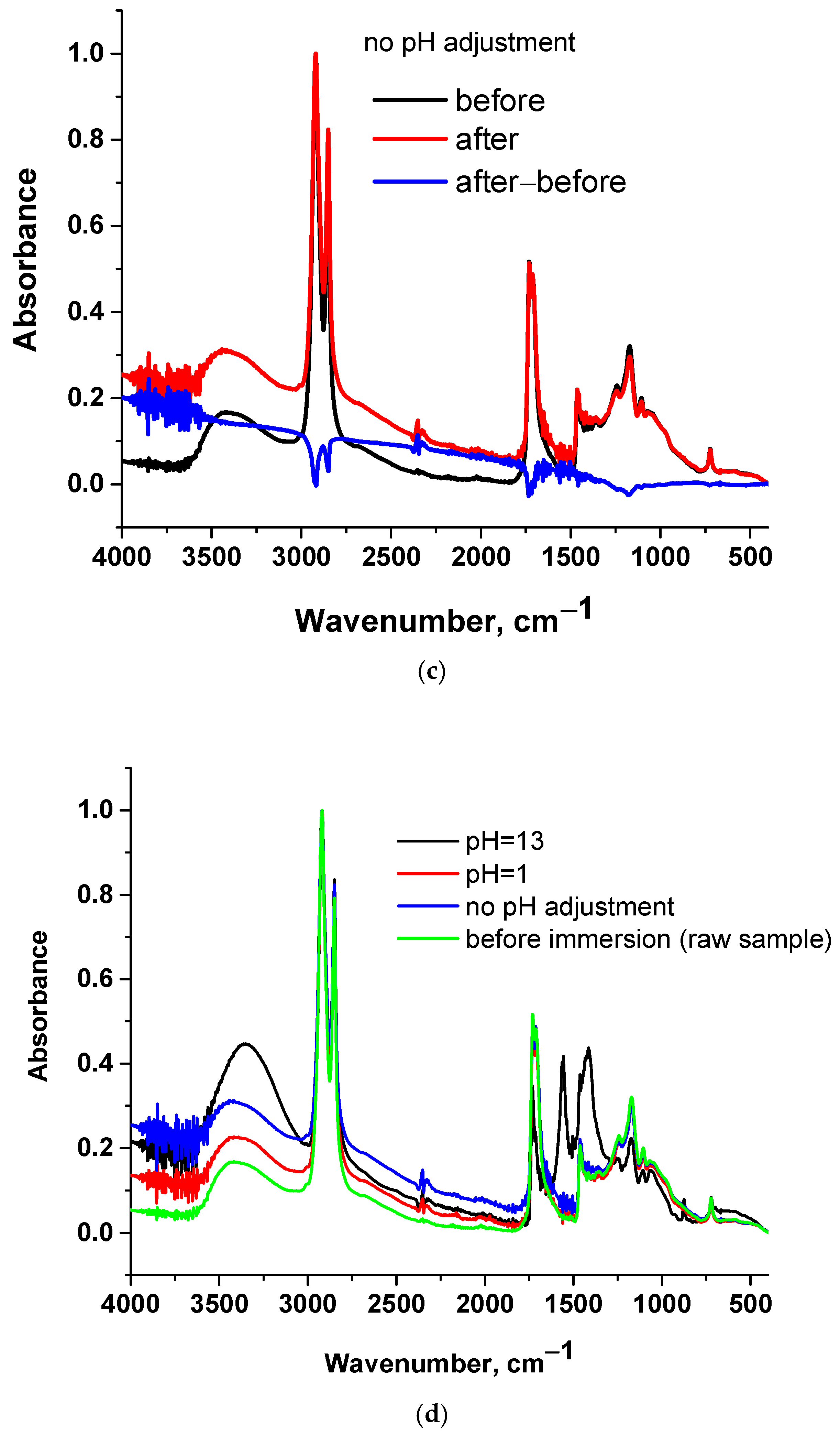
In order to examine the interactions of cutin with water, small pieces of cutin membranes (after polymerization) were immersed in excess of water of three different pH values: (a) one sample was immersed in water of pH = 1 adjusted by the addition of concentrated HCl acid solution, (b) one sample was immersed in water of pH = 13 adjusted by the addition of NaOH and (c) one sample was immersed in distilled water without any pH adjustment. After immersion for 24 h at room temperature, these samples were air-dried and along with a non-immersed cutin membrane sample, were examined by a Nicolet 380 Attenuated Total Reflectance Fourier Transform Infrared (ATR-FTIR, Waltham, MA, USA) spectrometer with a resolution of 4 cm−1 and 32 scans.
Finally, in order to examine possible interaction of cutin with fats, a piece of cutin film was immersed in sunflower oil (food grade purchased from the local market) and kept airtight for a 6-month period at room temperature. A reference sample (pure sunflower oil) was also kept sealed under identical conditions. After six months the pure sunflower oil was used as the blank sample for measuring the light absorbance of the sunflower oil that was in contact with the cutin membrane in a HACH DR 3900 UV-VIS spectrophotometer (Loveland, CO, USA). The absorbance of the sample was measured at 400, 550, and 700 nm in order to examine wavelengths over the entire range of the visible spectrum.
2.5. Estimation of the HSP of Cutin
Cutin is a cross-linked polymer and as such, it is not dissolved, but it can be swelled by good solvents. HSPs, besides solubility data, can be estimated from swelling data [
15]. The R
a distance (same units as the HSP) between cutin and a good solvent will be low while the R
a value between cutin and a bad solvent will be higher. The R
a distance is calculated by the following equation [
15]:
where
is the dispersion Hansen Solubility Parameter (of the substance 1 and 2, respectively, according to the subscript) in MPa1/2.
is the polar Hansen Solubility Parameter in MPa1/2.
is the hydrogen bonding Hansen Solubility Parameter in MPa1/2.
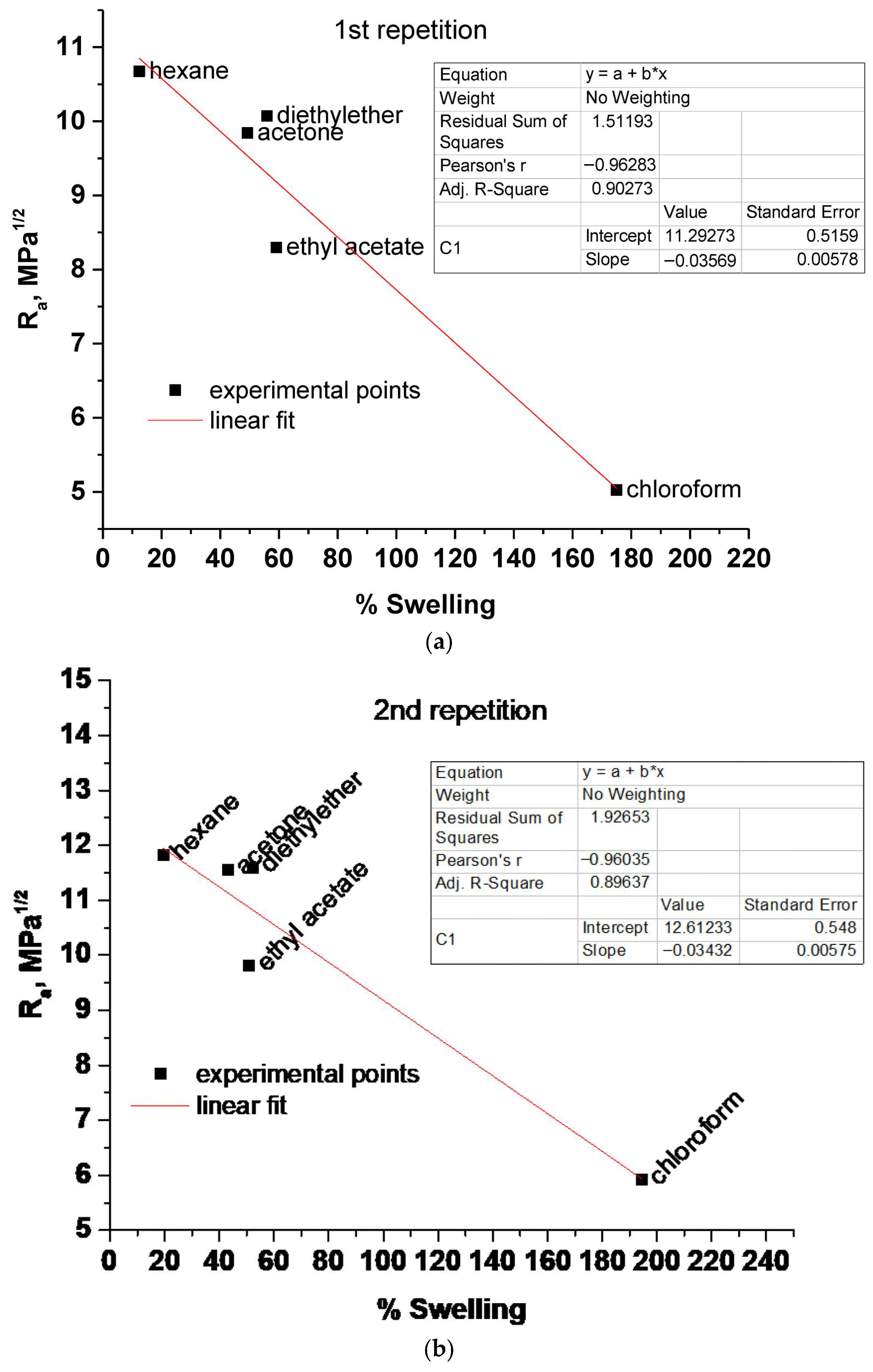
Thus, we use the following concept in order to estimate the HSP of cutin: the % degree of swelling and the R
a should be negatively correlated. The subscript 1 in Equation (2) refers to cutin, and the subscript 2 refers to the solvent. Initially the values of the three HSP of cutin are set arbitrarily equal to 5. Then, the six values of R
a distance are calculated for the six solvents [
15] (for reasons discussed in detail in
Section 3.1, water was not included). The R
a values are plotted against the % degree of swelling, and then linear regression is performed and the R
2 value is calculated. Then the values of HSP of cutin are altered, and by trial and error the values of HSP that lead to the maximization of R
2 are obtained. In order to facilitate the optimization procedure, we used the constraint that the values of HSP of cutin should be in the range of 2.5 to 40 (this is the range of the typical values of HSP for the vast majority of substances). For reasons that will be discussed in detail in
Section 3.1, the above procedure was performed two times in total: one time with six solvents (water was excluded) and one time with five solvents (water and isopropanol were excluded). Thus, two different sets of the HSP of cutin were estimated.
2.6. Predicting Migration with the HSP
As mentioned above, lower values of
suggest similarity of substance 1 and 2 and thus the lower the
value is, the more likely compatibility/miscibility between the two substances is to exist. Here, the following question arises: How low should the R
a value be in order for compatibility to exist? This question has no definite answer, and for this reason, the concept of Relative Energy Difference (RED) is quite useful. Specifically, the R
a value can be compared with a reference distance value (often determined based on experimental data) to calculate the Relative Energy Difference (RED) by the following equation [
15]:
where
Ro: Reference distance value (Radius of interaction sphere in Hansen space).
RED values lower than 1 suggest high affinity for the substances involved in the calculation of R
a, while RED values higher than 1 indicate poor compatibility (the higher the RED value is, the lower the compatibility). For reasons explained in
Section 3.1, the distance R
a of the HSP of cutin and hexane was used as the R
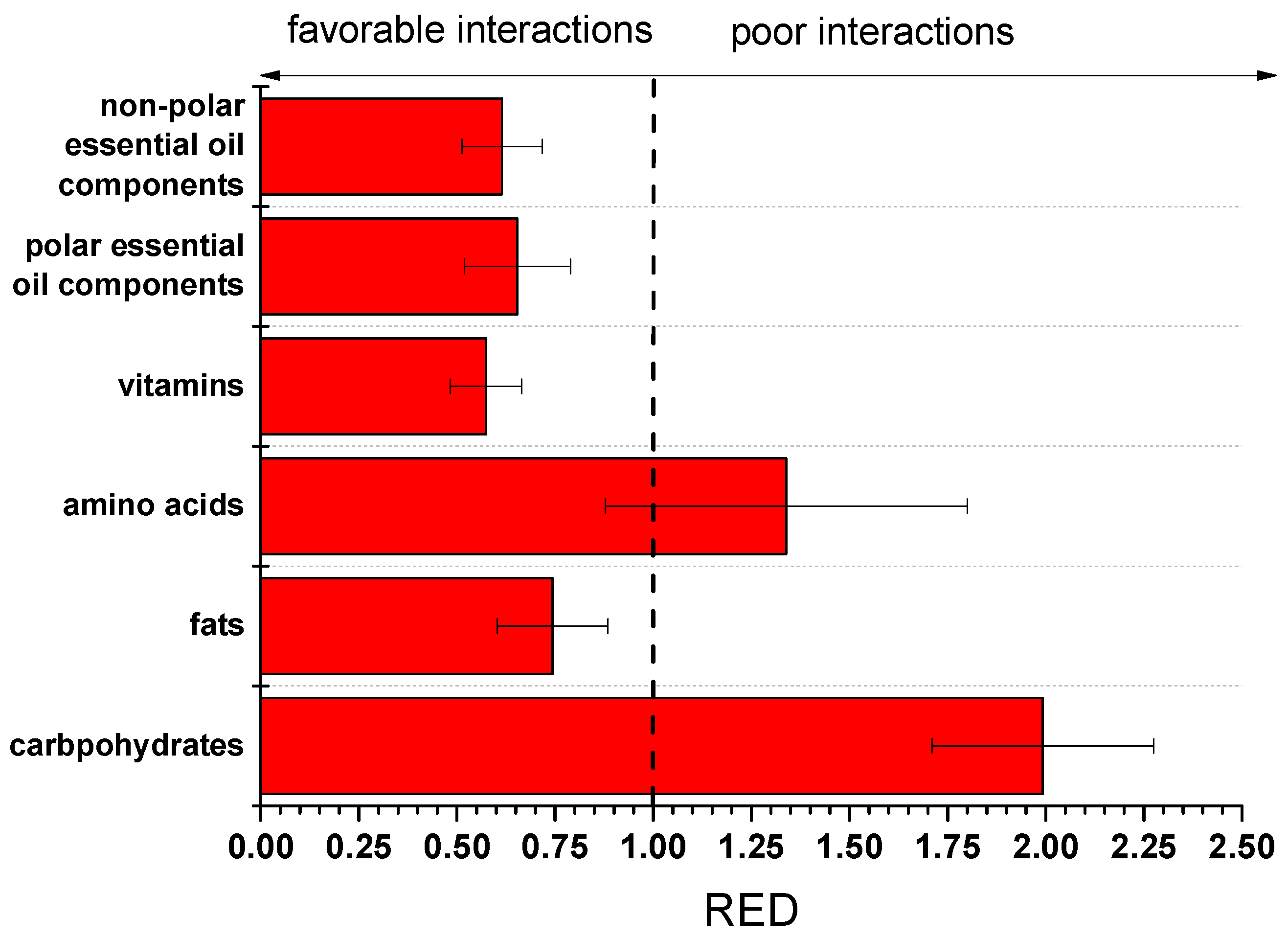
o. Forty-seven (47) food components were categorized in six groups: carbohydrates, fats and lipids, amino acids, vitamins, polar essential oil components, and non-polar essential oil components. For each substance, the R
a value was calculated. Then an average R
a value was calculated for each group of substances. Then the RED value for each group was calculated (as mentioned above using the R
a value of cutin-hexane as the R
o value). By comparing the RED value with 1, it can be predicted with which group of substances cutin is likely to exhibit favorable interactions and compatibility. The existence of strong interactions suggests a high probability of migration and/or permeation.
4. Further Discussion
Based on the FTIR results and discussion of
Section 3.1, it appears that cutin can be affected by water. Esterification/hydrolysis is a two-way reaction that should reach equilibrium and not continue over time. The degree of hydrolysis should be quantified and it must be checked whether this hydrolysis affects other properties, e.g., mechanical, or if it is practically negligible. These will allow us to evaluate if cutin can be used for high water content foods.
It should be stressed that HSPs are quite useful; however, obviously, they are not always successful, and the corresponding predictions cannot be taken for granted. In any case, based on the HSP predictions, cutin seems to have good compatibility with polar and non-polar essential oil components, various vitamins, fats, and lipids. Thus, both migration of cutin into the food and adsorption of such molecules on the surface of the cutin material are potentially possible, and for the case of lipids, this was experimentally confirmed. Also, high permeation would be expected for foods rich in non-polar essential oil compounds. Of course, such interactions and migration should be further studied and quantified. Another major aspect, e.g., for the case of migration to sunflower oil, is whether this migration is continuous over time or it proceeds to some extent, reaches equilibrium, and stops. Furthermore, other aspects should also be taken into account. Specifically, in the ideal case of a fully cross-linked polymer with no impurities, a zero migration would be expected. A portion of the observed migration may be due to impurities or low molecular weight fragments of cutin. Optimization of the polymerization procedure so as to increase the degree of crosslinking of cutin and its molecular weight could assist in minimizing the migration risk. Also, it is worth mentioning that, if similar calculations are performed for other polyesters, e.g., PLA, similar conclusions or even stronger interactions would be obtained, e.g., PLA exhibits good compatibility with fats, vitamins, etc. The fact that cutin is cross-linked and in combination with the lower values of δ
p and δ
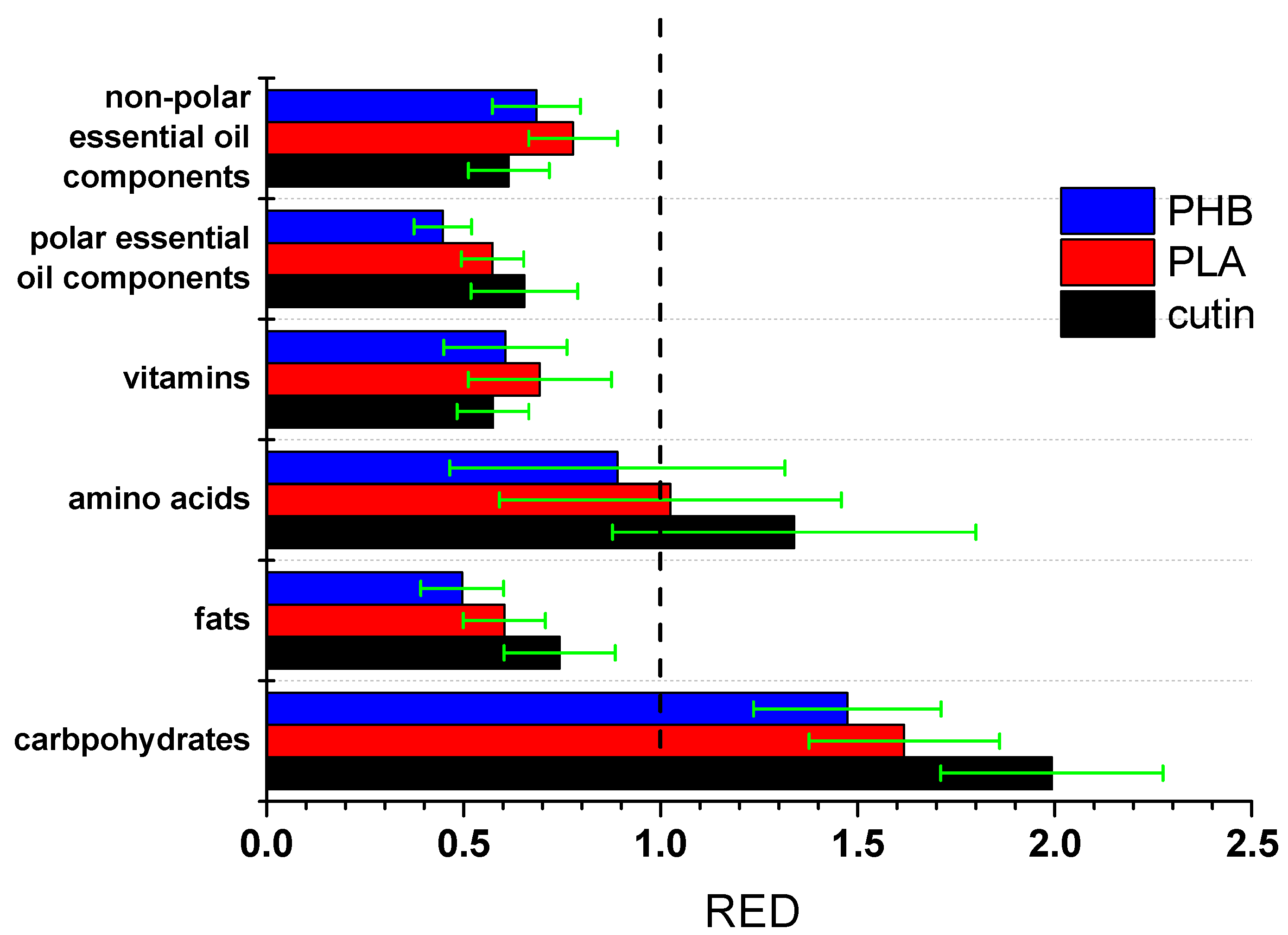
hb compared to other polyesters suggests that among such bio-based polyesters, cutin is expected to exhibit one of the lowest migration potentials. Indeed, the RED values for the same food components as above with PLA and poly(hydroxy butyrate) (PHB) were calculated from the reported values of HSP and interaction radius (R
o) of these polymers [
30]. The results are presented in
Figure 6.
As can be seen, cutin exhibits lower average RED values (better compatibility) with non-polar essential oil components and marginally lower with vitamins. This is rather expected due to the low value of cutin’s δp. However, for all other food component categories the average RED values of cutin are higher than the ones of the other polyesters. The error bars are rather high and cause a partial overlapping in some cases. These error bars arise from the standard deviation of the HSP of each group. Nevertheless, the average values clearly suggest a trend. Thus, it seems that cutin is less susceptible to migration than other bio-based polyesters.
Finally, it should be stressed that most food packing materials are composite multi-layered laminate materials, and thus migration issues could be surpassed by using cutin as a base and making a surface film from another polymer in order to avoid hydrolysis permeation etc.




 ,
,