
Effects of Propylene Carbonate on the Properties of Epoxy Resin/Carbon Fiber Multilayer Material Used for Underwater Artifact Extraction


Abstract
1. Introduction
2. Materials and Methods
2.1. Materials
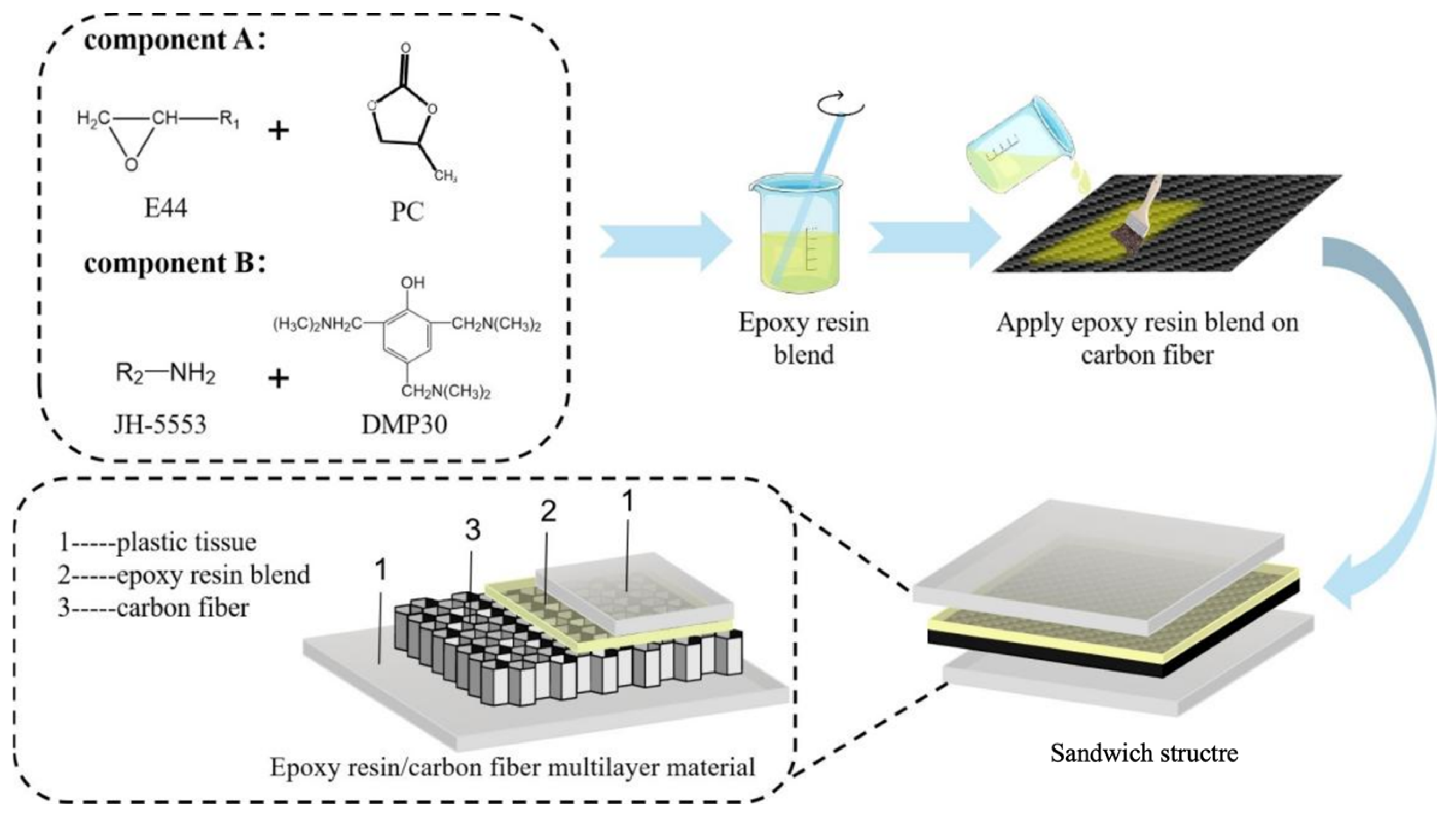
2.2. Preparation of Epoxy Resin/Carbon Fiber Multilayer Material
2.3. Characterization and Testing
2.3.1. Gel Time
2.3.2. Fourier Transform Infrared Spectrometer
2.3.3. Thermogravimetric Analysis
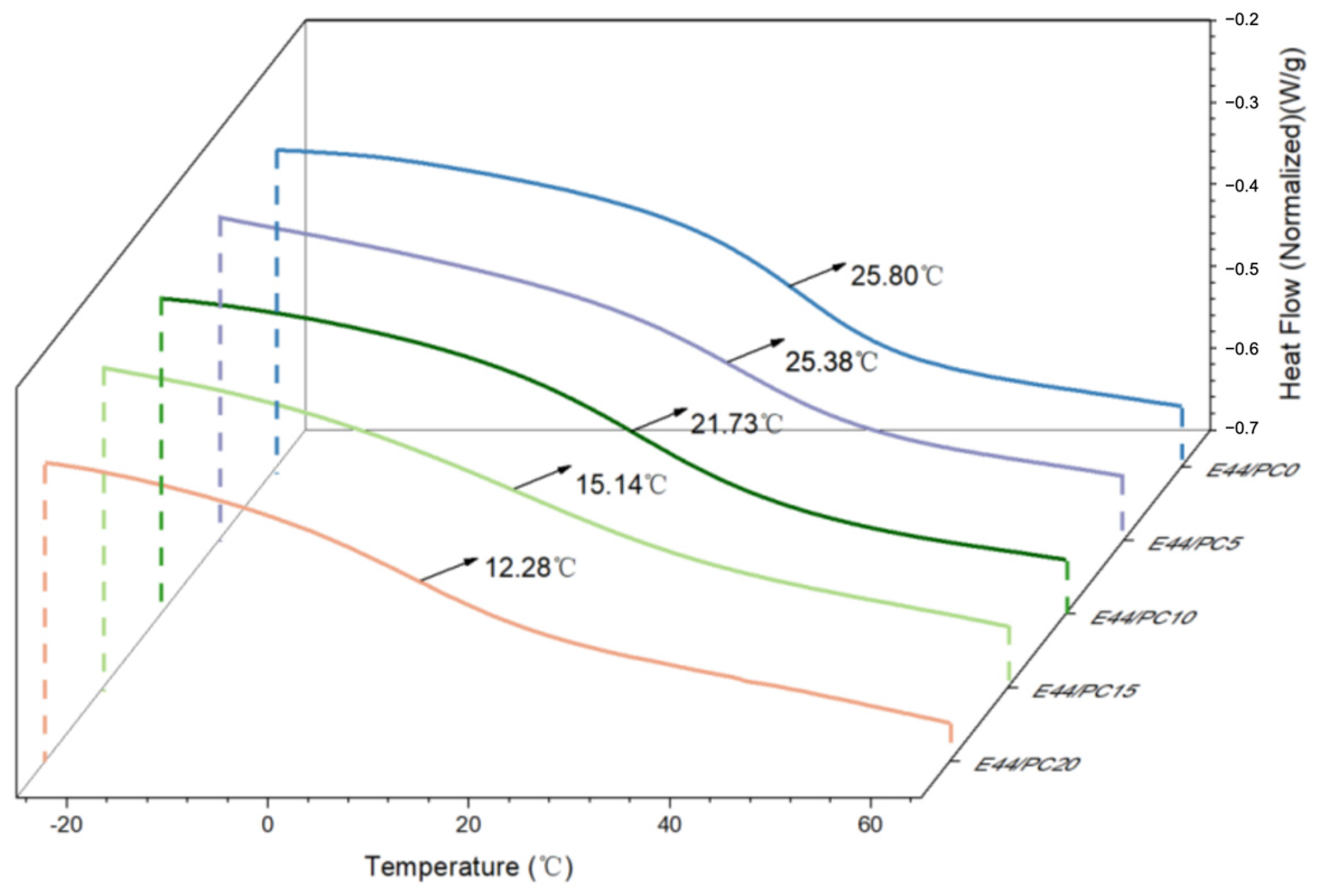
2.3.4. Glass Transition Temperature
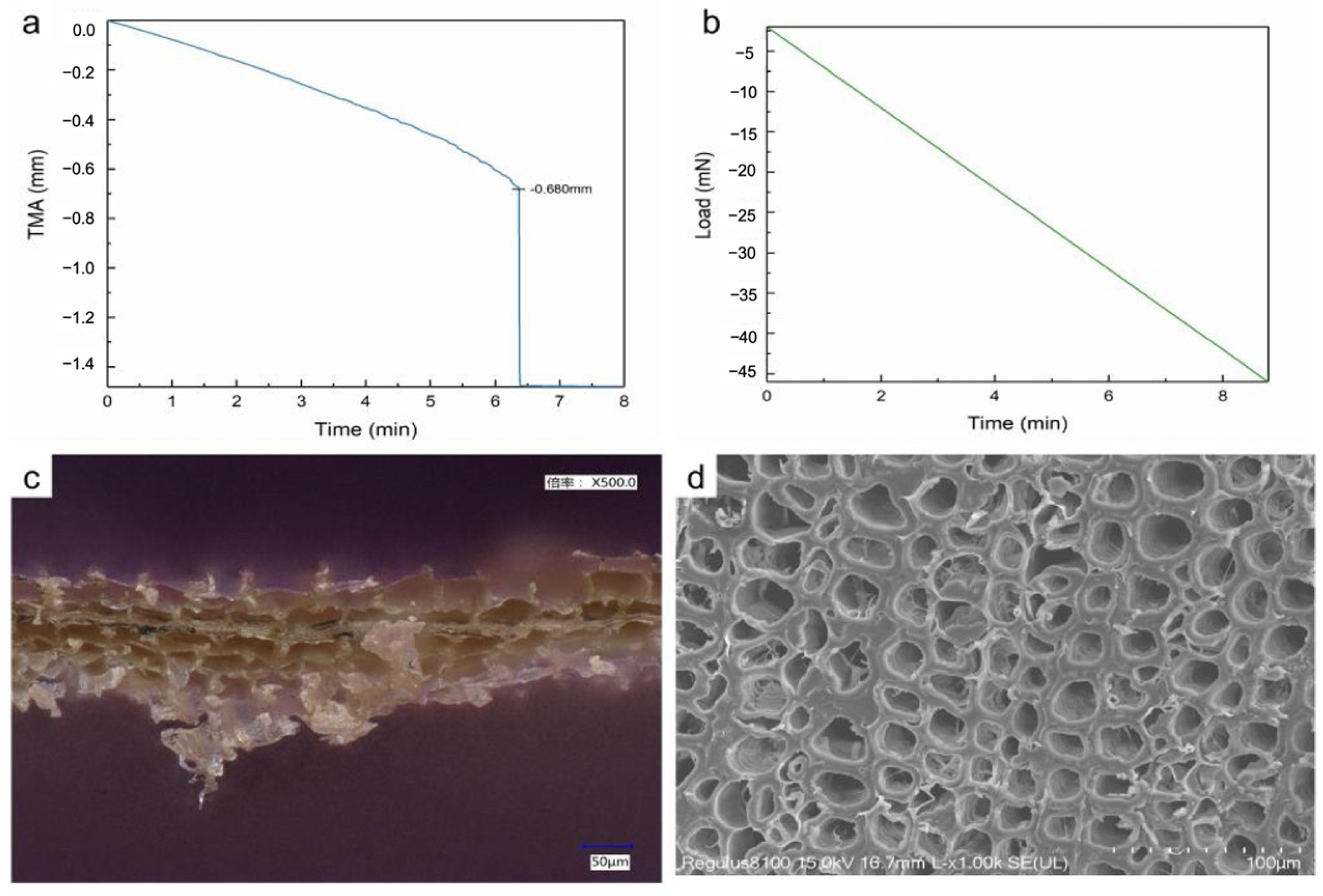
2.3.5. Thermal Expansion Performance
2.3.6. Mechanical Testing
2.3.7. Scanning Electron Microscope
2.3.8. Degradation of Archaeological Wood
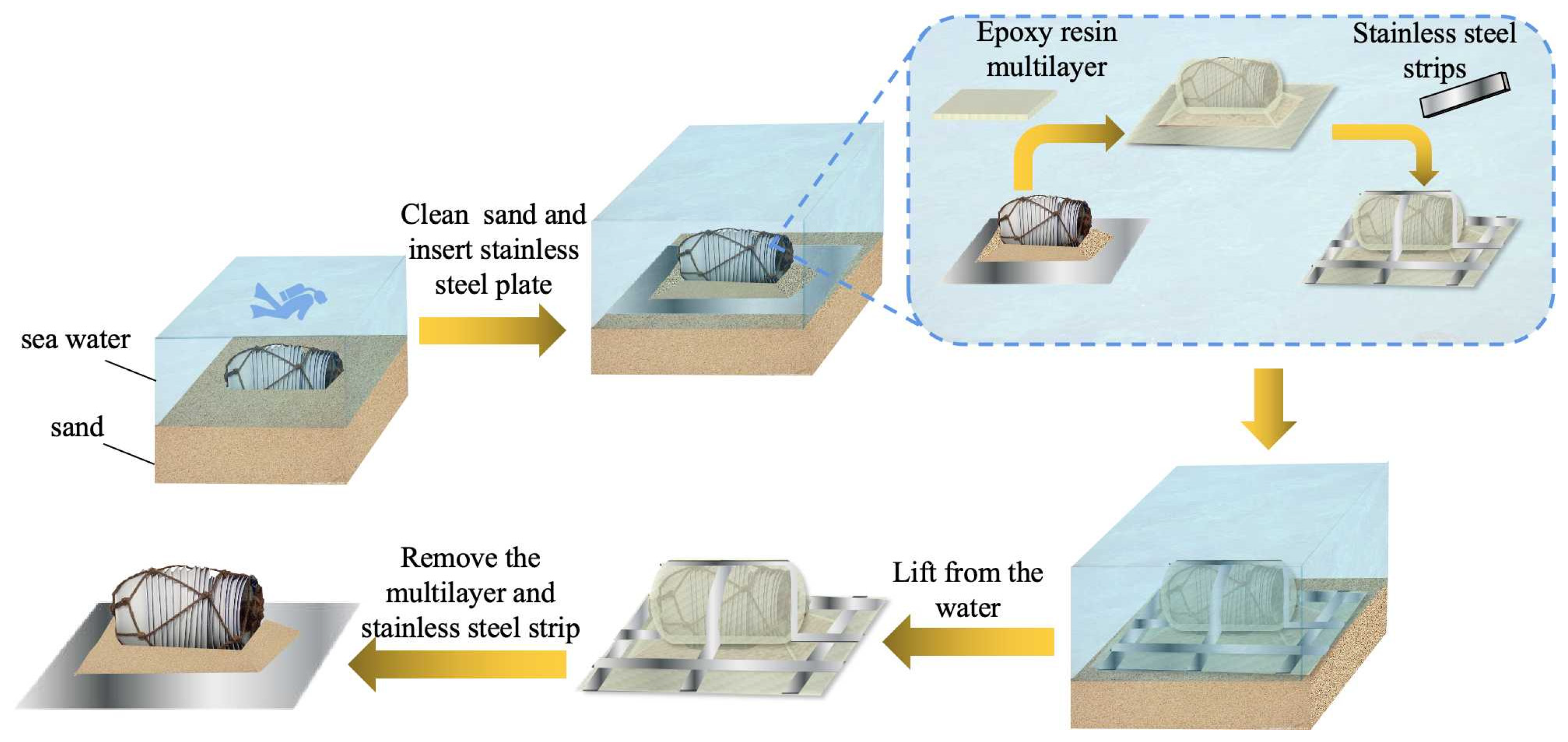
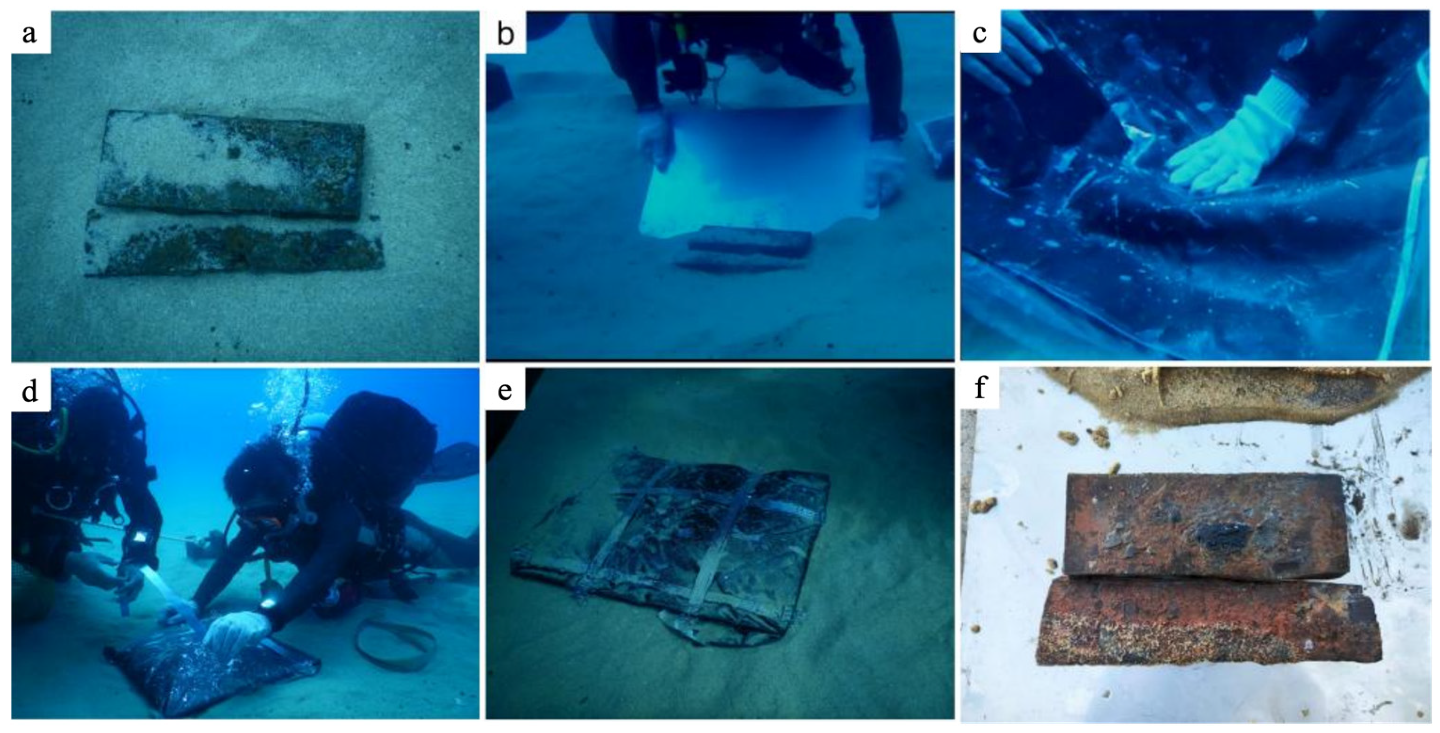
2.3.9. How to Use Multilayer Material
3. Results
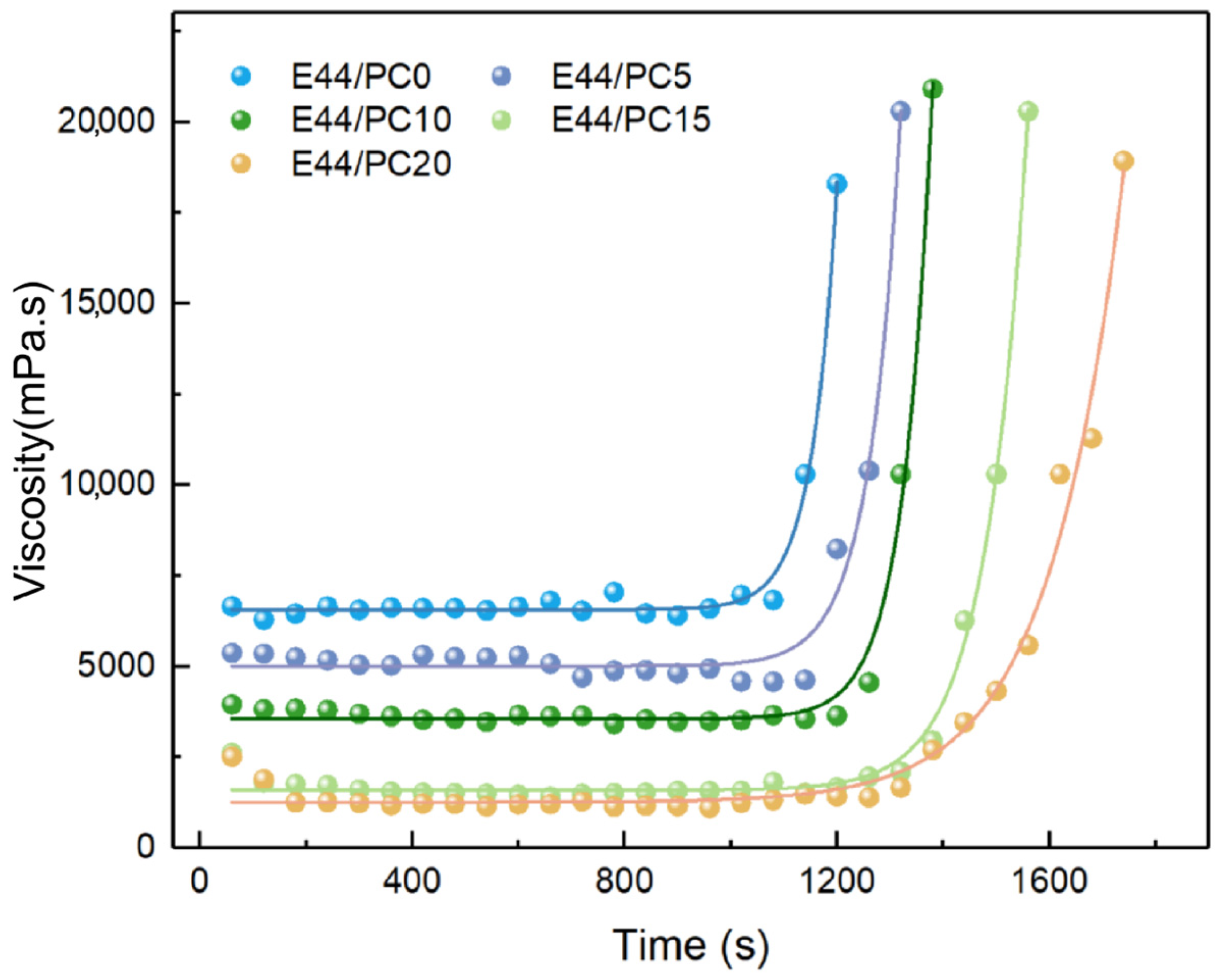
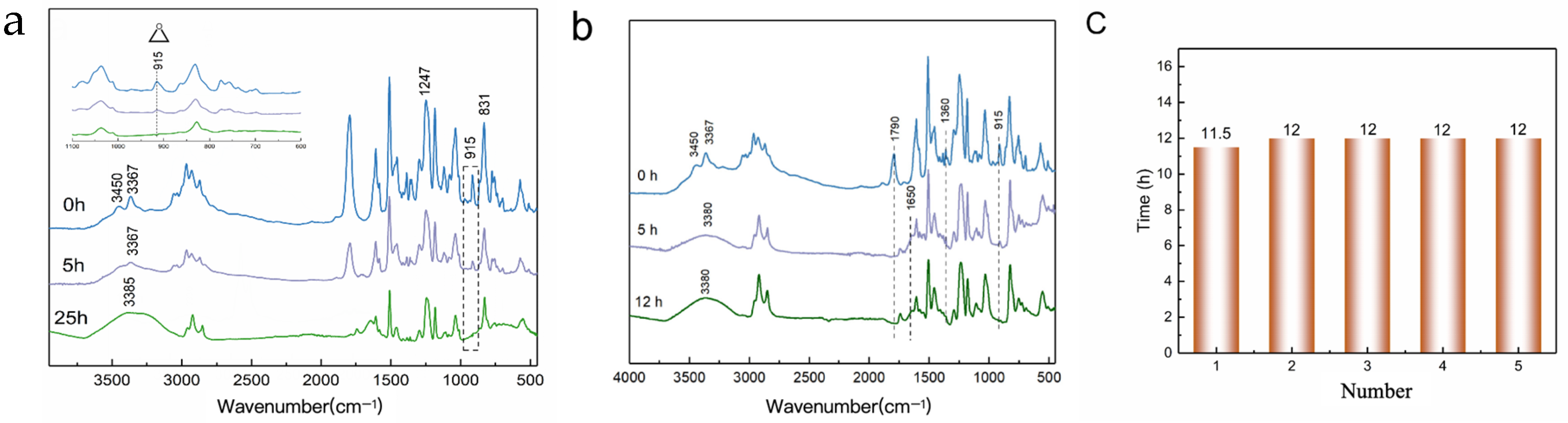
3.1. Curing Process
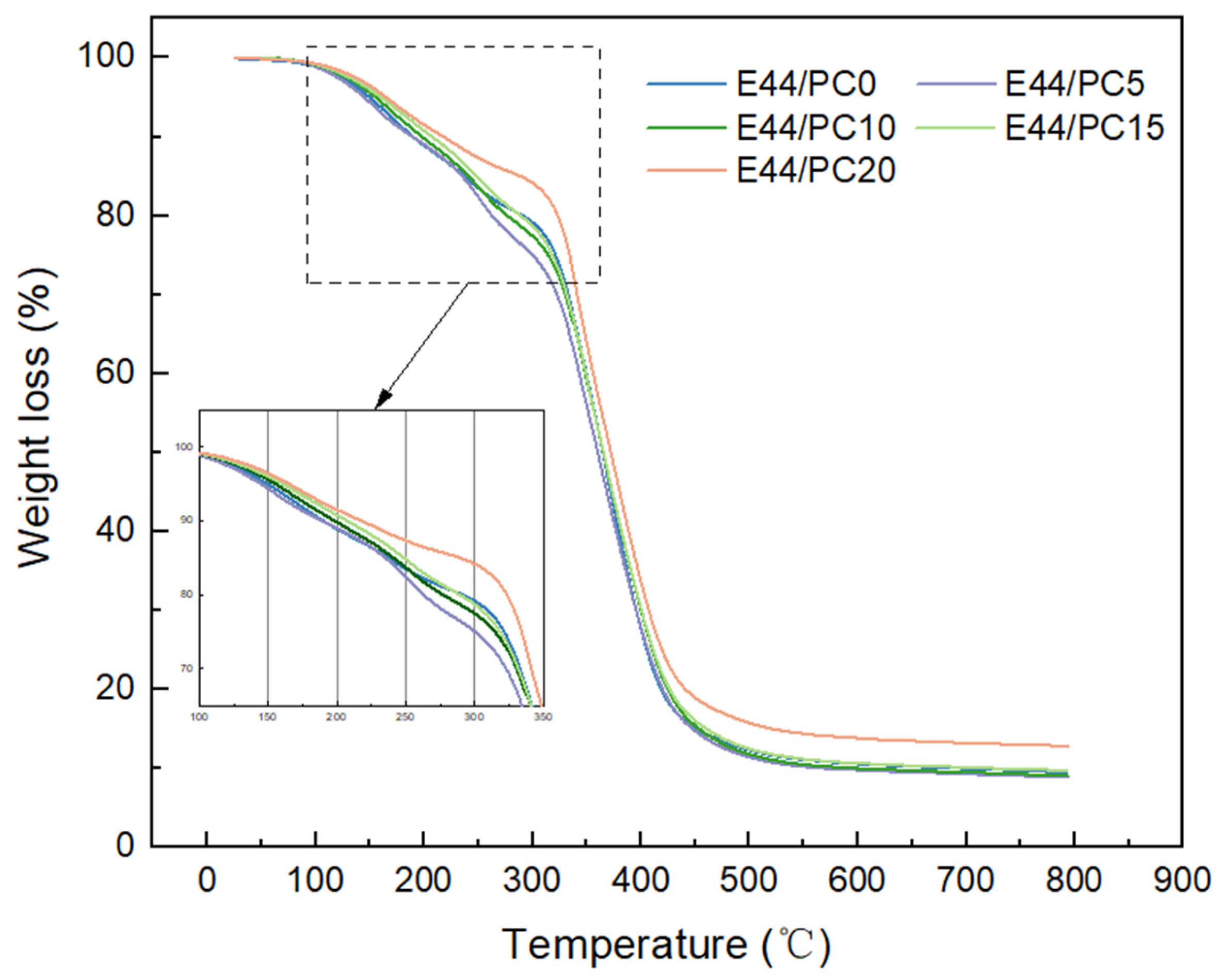
3.2. Thermogravimetric Properties
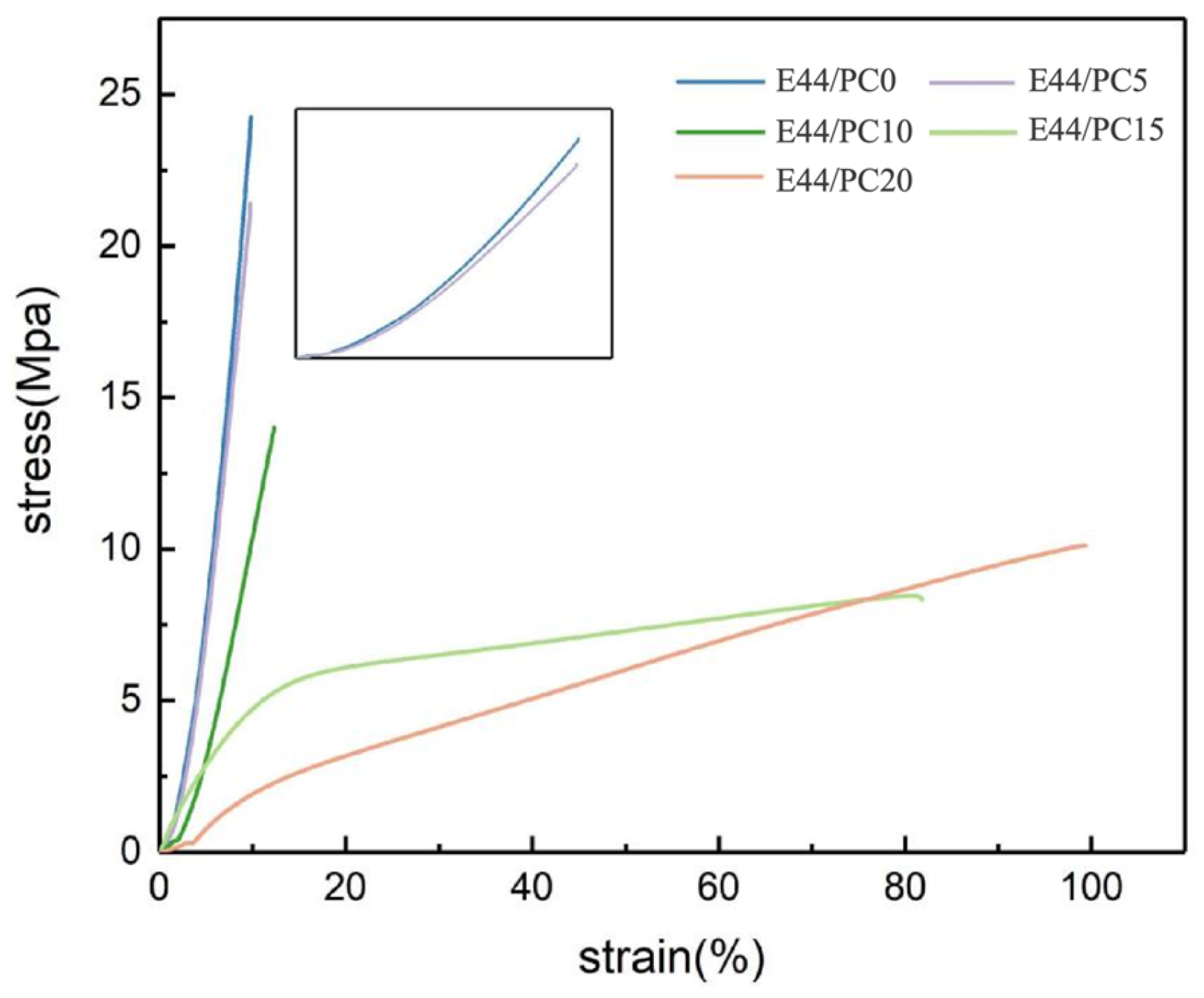
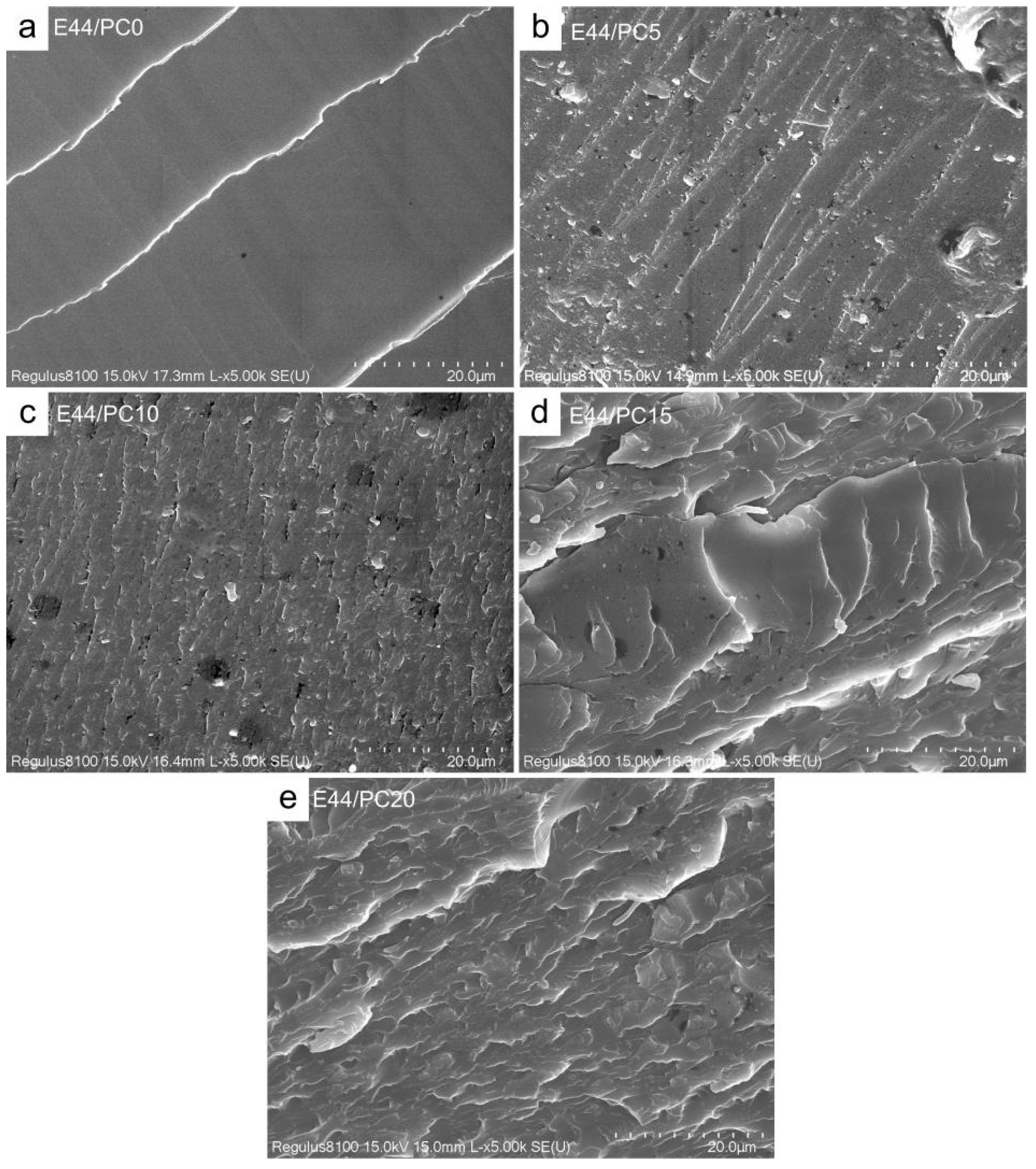
3.3. Mechanical Properties
3.4. Application
4. Conclusions
Author Contributions
Funding
Data Availability Statement
Acknowledgments
Conflicts of Interest
Abbreviations
| PC | Propylene carbonate |
| Tg | The glass transition temperature |
| E44 | Bisphenol A type epoxy resin |
| DMP30 | Tris (dimethylaminomenthyl) phenol |
| CTE | Coefficient of Thermal Expansion |
| MWC | The maximum water content |
References
- Pan, J.; Jia, J.; Cai, L. Global enhancement network underwater archaeology scene parsing method. Robotica 2023, 41, 3541–3564. [Google Scholar] [CrossRef]
- Estalayo, E.; Aramendia, J.; Bellot-Gurlet, L.; Garcia, L.; Garcia-Camino, I.; Madariaga, J.M. The interaction of sediments with the archaeological iron remains from the recovery shipwreck of Urbieta (Gernika, North of Spain). J. Raman Spectrosc. 2020, 52, 230–240. [Google Scholar] [CrossRef]
- Paoletti, V.; Secomandi, M.; Piromallo, M.; Giordano, F.; Fedi, M.; Rapolla, A. Magnetic survey at the submerged archaeological site of Baia, Naples, southern Italy. Archaeol. Prospect. 2005, 12, 51–59. [Google Scholar] [CrossRef]
- Jeffery, B.; McKinnon, J.F.; Van Tilburg, H. Underwater Cultural Heritage in the Pacific: Themes and Future Directions. Int. J. Asia Pac. Stud. 2021, 17, 135–168. [Google Scholar] [CrossRef]
- Nishikawa, C. Underwater Cultural Heritage in Asia Pacific and the UNESCO Convention on the Protection of the Underwater Cultural Heritage. Int. J. Asia Pac. Stud. 2021, 17, 15–38. [Google Scholar] [CrossRef]
- Korniejenko, K.; Kontny, B. The Usage of Virtual and Augmented Reality in Underwater Archeology. Appl. Sci. 2024, 14, 8188. [Google Scholar] [CrossRef]
- Bruno, F.; Barbieri, L.; Mangeruga, M.; Cozza, M.; Lagudi, A.; Čejka, J.; Liarokapis, F.; Skarlatos, D. Underwater augmented reality for improving the diving experience in submerged archaeological sites. Ocean Eng. 2019, 190, 106487. [Google Scholar] [CrossRef]
- Belfiore, C.M.; Russa, M.F.; Randazzo, L.; Montana, G.; Pezzino, A.; Ruffolo, S.A.; Aloise, P. Laboratory tests addressed to realize customized restoration procedures of underwater archaeological ceramic finds. Appl. Phys. A 2013, 114, 741–752. [Google Scholar] [CrossRef]
- McCawley, J.C.; Pearson, C. Conservation of marine archaeological objects. Stud. Conserv. 1991, 36, 121–128. [Google Scholar] [CrossRef]
- Geoffrey, Q.C. Salvage and the underwater cultural heritage. Mar. Policy 1996, 20, 337–342. [Google Scholar] [CrossRef]
- Zhao, M.; Zhai, Y.; Zhao, J.; Zhou, W.; Zhao, L.; Ge, Y.; Zhang, K.; Luo, H. Microbial corrosion on underwater pottery relics with typical biological condensation disease. Herit. Sci. 2023, 11, 1. [Google Scholar] [CrossRef]
- Ricci, S.; Antonelli, F.; Sacco Perasso, C.; Poggi, D.; Casoli, E. Bioerosion of submerged lapideous artefacts: Role of endolithic rhizoids of Acetabularia acetabulum (Dasycladales, Chlorophyta). Int. Biodeterior. Biodegrad. 2016, 107, 10–16. [Google Scholar] [CrossRef]
- Nutley, D. Submerged Cultural Sites: Opening a time capsule. Mus. Int. 2018, 60, 7–17. [Google Scholar] [CrossRef]
- Yong-qiang, Z. The Integral Salvage of Ancient Sunken Vessel Nanhai I. Navig. China 2008, 31, 383–387. [Google Scholar]
- Wu, J.; Hsu, S.; Ku, S.; Ho, C.; Yu, C.; Yang, P. Adrenal insufficiency in prolonged critical illness. Crit. Care 2008, 12, 3. [Google Scholar] [CrossRef] [PubMed]
- Petriaggi, B.D.; Gregory, D.J.; Dencker, J. Recovery of Fragile Objects from Underwater Archaeological Excavations: New Materials and Techniques by SASMAP Project. In Proceedings of the Digital Heritage. Progress in Cultural Heritage: Documentation, Preservation, and Protection, Limassol, Cyprus, 3–8 November 2014; pp. 625–634. [Google Scholar]
- EU SASMAP Project Website. Available online: https://cordis.europa.eu/project/id/308340/reporting (accessed on 27 September 2025).
- Chen, X.; Zhang, B.; Xie, L.; Wang, F. MWCNTs polyurethane sponges with enhanced super-hydrophobicity for selective oil–water separation. Surf. Eng. 2020, 36, 651–659. [Google Scholar] [CrossRef]
- Chen, X.; Zhang, B.; Zhang, Z. A novel method of temporary solidification and extraction of underwater fragile relics in their original state. Int. J. Adhes. Adhes. 2021, 104, 102724. [Google Scholar] [CrossRef]
- Yao, L.; Zhu, L.; Zhang, B. Application of 4-dihydrochromone as a temporary consolidant in underwater archaeology. J. Cult. Herit. 2022, 57, 235–242. [Google Scholar] [CrossRef]
- Chen, X.; Xie, L.; Wang, F.; Wu, Y.; Zhang, B.; Zhu, L. Temporary consolidation and packaging of fragile cultural relics at underwater archaeological sites to maintain their original state during extraction. Archaeometry 2020, 62, 1067–1077. [Google Scholar] [CrossRef]
- Wang, X.; Zhang, B.; Hu, Y. Research on extraction of fragile bamboo slips by underwater temporary solidification in original state. J. Cult. Herit. 2021, 51, 174–181. [Google Scholar] [CrossRef]
- Wang, X.; Zhang, B.; Hu, Y.; Zhu, L. Temporary solidifying extraction and in-situ preservation of fragile marine wooden artifacts: Experimental study and pilot test. J. Cult. Herit. 2022, 53, 220–225. [Google Scholar] [CrossRef]
- Huang, Q.; Zha, J.; Han, X.; Wang, H. Temporary Consolidation of Marine Artifact Based on Polyvinyl Alcohol/Tannic Acid Reversible Hydrogel. Polymers 2023, 15, 4621. [Google Scholar] [CrossRef] [PubMed]
- Li, J.; Zhao, H.; Sui, G. Renewable green reactive diluent for bisphenol A epoxy resin system: Curing kinetics and properties. RSC Adv. 2022, 12, 31699–31710. [Google Scholar] [CrossRef] [PubMed]
- Khalina, M.; Beheshty, M.H.; Salimi, A. The effect of reactive diluent on mechanical properties and microstructure of epoxy resins. Polym. Bull. 2018, 76, 3905–3927. [Google Scholar] [CrossRef]
- Pastarnokienė, L.; Jonikaitė-Švėgždienė, J.; Lapinskaitė, N.; Kulbokaitė, R.; Bočkuvienė, A.; Kochanė, T.; Makuška, R. The effect of reactive diluents on curing of epoxy resins and properties of the cured epoxy coatings. J. Coat. Technol. Res. 2023, 20, 1207–1221. [Google Scholar] [CrossRef]
- Priya, S.P.; Rai, S.K. Studies on the Mechanical Performance of PMMA Toughened Epoxy–Silk and PC Toughened Epoxy–Silk Fabric Composites. J. Reinf. Plast. Compos. 2016, 25, 33–41. [Google Scholar] [CrossRef]
- Yu, Y.; Wang, M.; Foix, D.; Li, S. Rheological Study of Epoxy Systems Blended with Poly(ether sulfone) of Different Molecular Weights. Ind. Eng. Chem. Res. 2008, 47, 9361–9369. [Google Scholar] [CrossRef]
- GB/T 2567-2008; Test Method for Mechanical Properties of Resin Casting. Standards Press of China: Beijing, China, 2008.
- Joy, J.; Winkler, K.; Bassa, A.; Vijayan, P.P.; Jose, S.; Anas, S.; Thomas, S. Miscibility, thermal degradation and rheological analysis of epoxy/MABS blends. Soft Matter 2023, 19, 80–89. [Google Scholar] [CrossRef]
- Guo, Y.; Tang, J.; Drumright, R.E.; Baikerikar, K.K.; Ortiz, R.S. Epoxy Coating Composition. PCT/US2016/033192. WO2016187380A1, 24 November 2016. Available online: https://patentscope.wipo.int/search/en/detail.jsf?docId=WO2016187380 (accessed on 20 October 2025).
- Meng, F.; Zhang, W.; Zheng, S. Epoxy resin cured with poly(4-vinyl pyridine). J. Mater. Sci. 2005, 40, 6367–6373. [Google Scholar] [CrossRef]
- Ramin, M.; Grunwaldt, J.-D.; Baiker, A. IR spectroscopy and phase behavior studies of the catalytic synthesis of propylene carbonate: Expanded liquid versus supercritical fluid. Appl. Catal. A Gen. 2006, 305, 46–53. [Google Scholar] [CrossRef]
- Nikolić, G.; Zlatković, S.; Čakić, M.; Čakić, S.; Lacnjevac, Č.; Rajić, Z. Fast Fourier Transform IR Characterization of Epoxy GY Systems Crosslinked with Aliphatic and Cycloaliphatic EH Polyamine Adducts. Sensors 2010, 10, 684–696. [Google Scholar] [CrossRef]
- Lissant, K.J.; Mayhan, K.G. A study of medium and high internal phase ratio water/polymer emulsions. J. Colloid Interface Sci. 1973, 42, 201–208. [Google Scholar] [CrossRef]
- Zhang, L.; Li, X.; Wang, Y.; Chen, J.; Liu, H. Preparation and Properties of Polyether Aliphatic Polymerized Amide as a Vegetable Oil-Based Epoxy Curing Agent. Polymers 2022, 14, 1234. [Google Scholar] [CrossRef]
- Qin, Y.; Wang, Z.; Ma, C.; Fu, Q.; Zhang, P.; Cheng, X. Consistent Glass Transition Temperature of Epoxy Resin by Three Different Test Methods on the Same Nanomechanical Test Instrument. Discov. Polym. 2025, 2, 15. [Google Scholar] [CrossRef]
- Mousavi, S.R.; Estaji, S.; Raouf Javidi, M.; Paydayesh, A.; Khonakdar, H.A.; Arjmand, M.; Rostami, E.; Jafari, S.H. Toughening of epoxy resin systems using core–shell rubber particles: A literature review. J. Mater. Sci. 2021, 56, 18345–18367. [Google Scholar] [CrossRef]
- Roudsari, G.M.; Mohanty, A.K.; Misra, M. Exploring the Effect of Poly(propylene carbonate) Polyol in a Biobased Epoxy Interpenetrating Network. ACS Sustain. Chem. Eng. 2017, 5, 10410–10420. [Google Scholar] [CrossRef]
- Shcherbakov, A.S.; Mostovoy, A.S.; Yakovlev, N.A.; Arzamastsev, S.V. Effect of Carbon Nanotube Functionalization on the Physicochemical and Mechanical Properties of Modified Fiber-Reinforced Composites Based on an Epoxy Resin. Russ. J. Appl. Chem. 2021, 94, 1080–1087. [Google Scholar] [CrossRef]
- Chowdhury, H.; Saha, A.; Hasan, M.; Haider, J. Effects of Alkaline and Carboxilated Graphene Oxide (CGO) Treatment on Mechanical, Thermal, and Electrical Properties of Jute Fiber-Reinforced Epoxy Composites. J. Compos. Sci. 2025, 9, 104. [Google Scholar] [CrossRef]
- Rudawska, A.; Frigione, M. Effect of Diluents on Mechanical Characteristics of Epoxy Compounds. Polymers 2022, 14, 2277. [Google Scholar] [CrossRef]



| Number | Component A (Phr) | Component B (Phr) | ||
|---|---|---|---|---|
| E44 | PC | JH-5553 | DMP30 | |
| E44/PC0 | 100 | 0 | 60 | 3 |
| E44/PC5 | 100 | 5 | 60 | 3 |
| E44/PC10 | 100 | 10 | 60 | 3 |
| E44/PC15 | 100 | 15 | 60 | 3 |
| E44/PC20 | 100 | 20 | 60 | 3 |
| Number | E44/PC0 | E44/PC5 | E44/PC10 | E44/PC15 | E44/PC20 |
|---|---|---|---|---|---|
| Stable viscosity (mPa·s) | 7773 ± 703 | 5392 ± 144 | 3560 ± 89 | 1774 ± 92 | 1118 ± 48 |
| Relax time (s) | 48 | 55 | 60 | 78 | 139 |
| Workable time (min) | 18 | 20 | 21 | 24 | 26 |
| Numbers | First Stage | Second Stage | Third Stage | Carbon Residue /% | |||
|---|---|---|---|---|---|---|---|
| Tmax /°C | Weight Loss/% | Tmax /°C | Weight Loss/% | Tmax /°C | Weight Loss /% | ||
| E44/PC0 | - | - | 231 | 16.19 | 371 | 65.76 | 5.71 |
| E44/PC5 | 167 | 9.44 | 244 | 8.08 | 363 | 68.83 | 3.50 |
| E44/PC10 | 169 | 9.03 | 244 | 7.85 | 367 | 70.93 | 2.32 |
| E44/PC15 | 167 | 9.68 | 243 | 6.22 | 364 | 71.91 | 2.97 |
| E44/PC20 | 166 | 9.15 | 241 | 4.86 | 351 | 71.20 | 1.90 |
| Number | Warp Direction (10−5/°C) | Weft Direction (10−5/°C) | ||
|---|---|---|---|---|
| Tgunder | Tgabove | Tgunder | Tgabove | |
| E44/PC0 | 2.2 | 2.4 | 2.5 | 5.8 |
| E44/PC5 | 2.2 | 2.7 | 2.4 | 3.5 |
| E44/PC10 | 2.2 | 2.3 | 2.5 | 4.6 |
| E44/PC15 | 2.3 | 2.3 | 2.6 | 4.9 |
| E44/PC20 | 1.7 | 2.8 | 2.5 | 5.1 |
| Number | Tensile Strength (MPa) | Flexural Strength (MPa) | Elongation at Break (%) |
|---|---|---|---|
| E44/PC0 | 21.68 ± 2.43 | 108.02 ± 5.06 | 8.92 ± 0.83 |
| E44/PC5 | 21.35 ± 1.32 | 134.89 ± 4.78 | 10.08 ± 0.61 |
| E44/PC10 | 12.42 ± 1.16 | 114.69 ± 3.18 | 10.99 ± 1.23 |
| E44/PC15 | 8.94 ± 1.69 | 77.23 ± 4.91 | 86.14 ± 2.30 |
| E44/PC20 | 7.63 ± 0.62 | 61.98 ± 3.62 | 96.71 ± 2.41 |
Disclaimer/Publisher’s Note: The statements, opinions and data contained in all publications are solely those of the individual author(s) and contributor(s) and not of MDPI and/or the editor(s). MDPI and/or the editor(s) disclaim responsibility for any injury to people or property resulting from any ideas, methods, instructions or products referred to in the content. |
© 2025 by the authors. Licensee MDPI, Basel, Switzerland. This article is an open access article distributed under the terms and conditions of the Creative Commons Attribution (CC BY) license (https://creativecommons.org/licenses/by/4.0/).
Share and Cite
Wang, H.; Huang, Q.; Han, X. Effects of Propylene Carbonate on the Properties of Epoxy Resin/Carbon Fiber Multilayer Material Used for Underwater Artifact Extraction. Polymers 2025, 17, 2891. https://doi.org/10.3390/polym17212891
Wang H, Huang Q, Han X. Effects of Propylene Carbonate on the Properties of Epoxy Resin/Carbon Fiber Multilayer Material Used for Underwater Artifact Extraction. Polymers. 2025; 17(21):2891. https://doi.org/10.3390/polym17212891
Chicago/Turabian StyleWang, Hao, Qijun Huang, and Xiangna Han. 2025. "Effects of Propylene Carbonate on the Properties of Epoxy Resin/Carbon Fiber Multilayer Material Used for Underwater Artifact Extraction" Polymers 17, no. 21: 2891. https://doi.org/10.3390/polym17212891
APA StyleWang, H., Huang, Q., & Han, X. (2025). Effects of Propylene Carbonate on the Properties of Epoxy Resin/Carbon Fiber Multilayer Material Used for Underwater Artifact Extraction. Polymers, 17(21), 2891. https://doi.org/10.3390/polym17212891