Article

Mass Spectrometry of Collagen-Containing Allogeneic Human Bone Tissue Material

by
Nikolay A. Ryabov
1,
Larisa T. Volova
1,
Denis G. Alekseev
1,*,
Svetlana A. Kovaleva
2,
Tatyana N. Medvedeva
1 and
Mikhail Yu. Vlasov
1
1
Research Institute of Biotechnology “BioTech”, Samara State Medical University of the Ministry of Health of the Russian Federation, 443079 Samara, Russia
2
Core Shared Research Facility “Industrial Biotechnologies”, Federal Research Center “Fundamentals of Biotechnology” of the Russian Academy of Sciences, 117312 Moscow, Russia
*
Author to whom correspondence should be addressed.
Polymers 2024, 16(13), 1895; https://doi.org/10.3390/polym16131895
Submission received: 8 April 2024 / Revised: 2 June 2024 / Accepted: 7 June 2024 / Published: 2 July 2024
(This article belongs to the Special Issue Biopolymers for Regenerative Medicine Applications)

Abstract

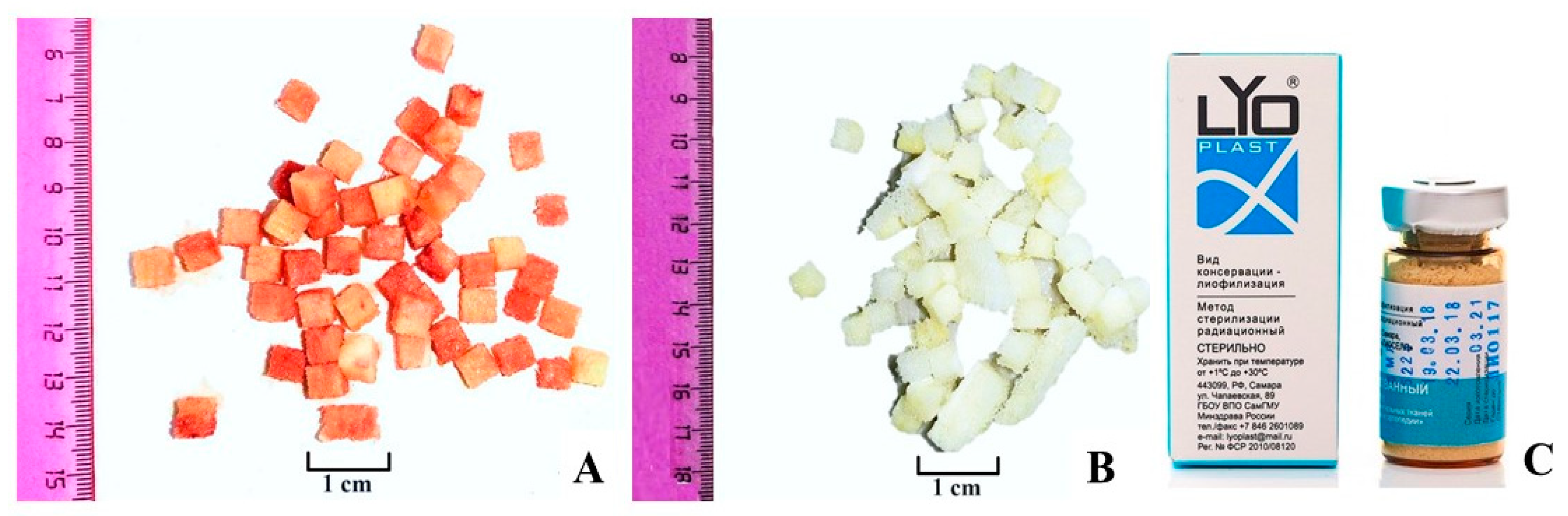
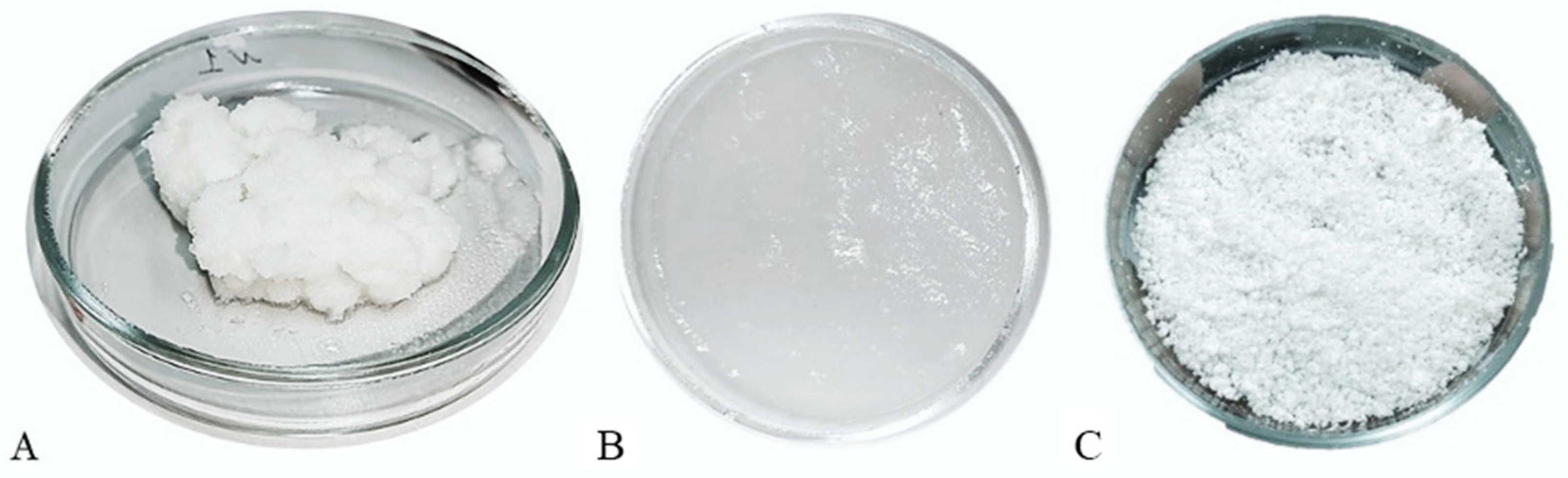
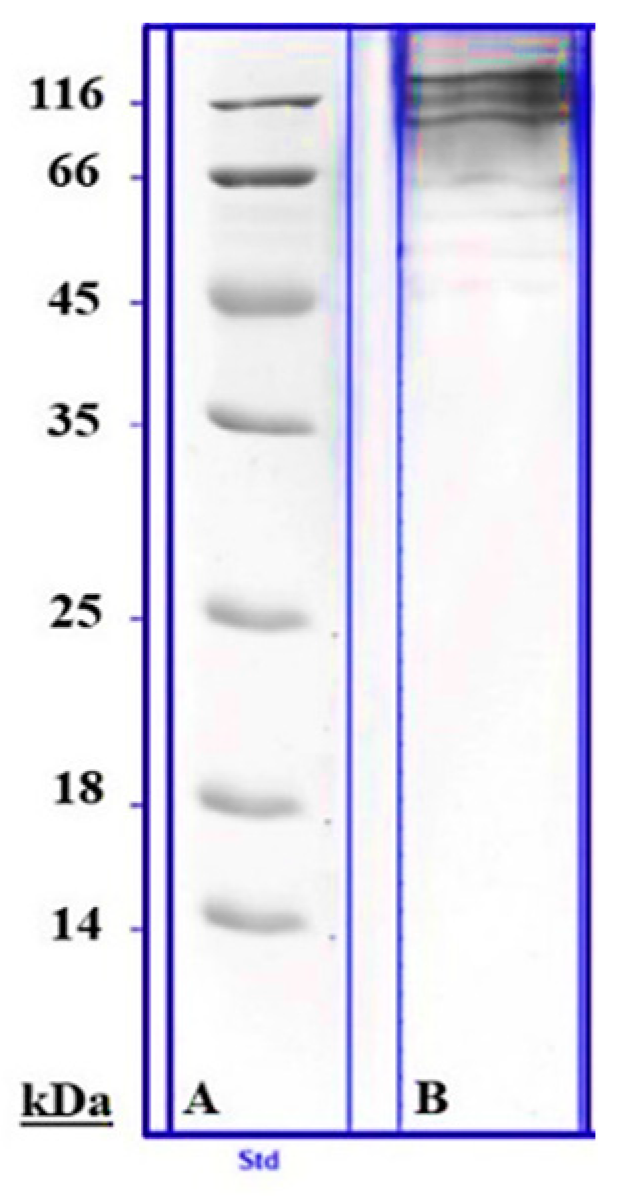
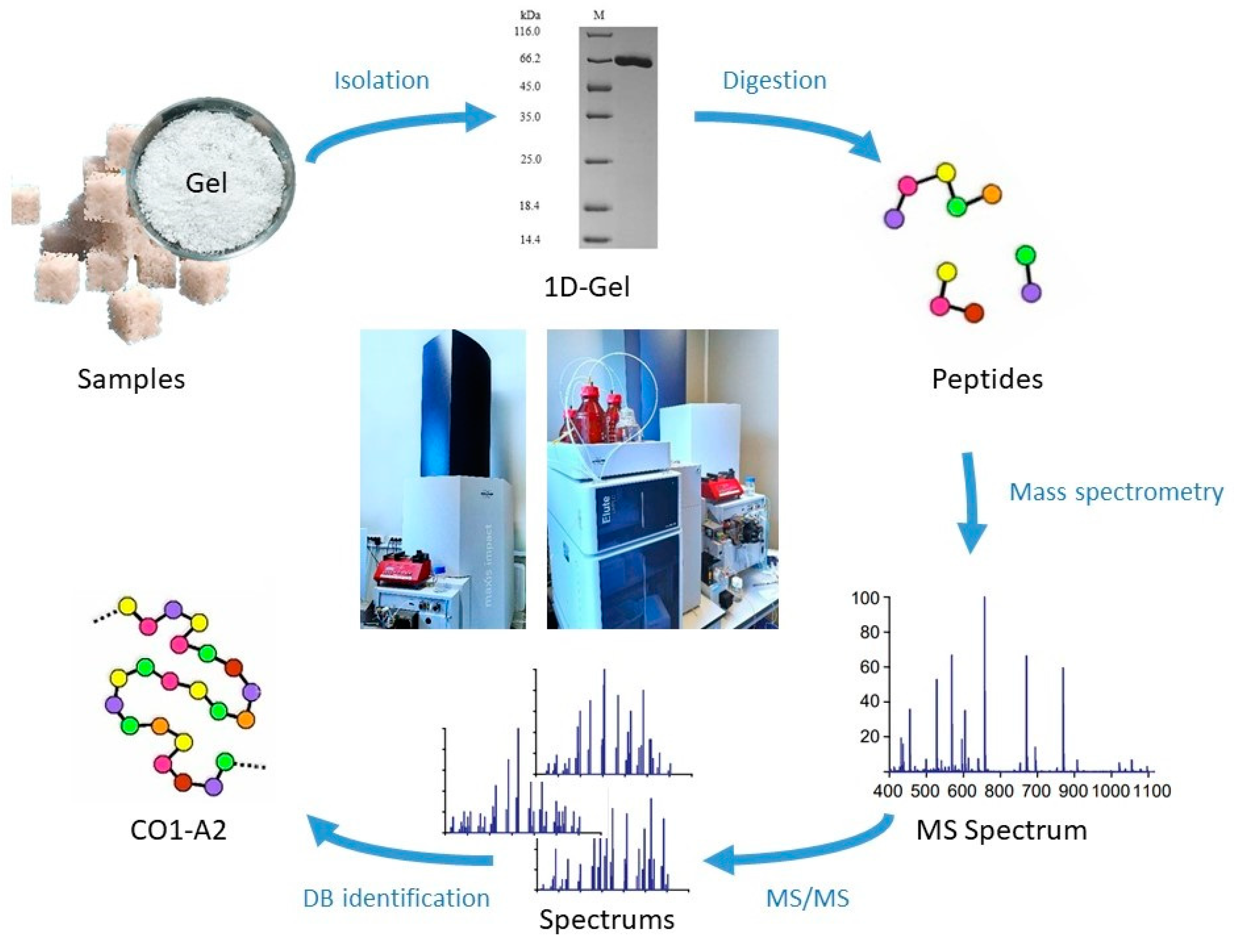
The current paper highlights the active development of tissue engineering in the field of the biofabrication of living tissue analogues through 3D-bioprinting technology. The implementation of the latter is impossible without important products such as bioinks and their basic components, namely, hydrogels. In this regard, tissue engineers are searching for biomaterials to produce hydrogels with specified properties both in terms of their physical, mechanical and chemical properties and in terms of local biological effects following implantation into an organism. One of such effects is the provision of the optimal conditions for physiological reparative regeneration by the structural components that form the basis of the biomaterial. Therefore, qualitative assessment of the composition of the protein component of a biomaterial is a significant task in tissue engineering and bioprinting. It is important for predicting the behaviour of printed constructs in terms of their gradual resorption followed by tissue regeneration due to the formation of a new extracellular matrix. One of the most promising natural biomaterials with significant potential in the production of hydrogels and the bioinks based on them is the polymer collagen of allogeneic origin, which plays an important role in maintaining the structural and biological integrity of the extracellular matrix, as well as in the morphogenesis and cellular metabolism of tissues, giving them the required mechanical and biochemical properties. In tissue engineering, collagen is widely used as a basic biomaterial because of its availability, biocompatibility and facile combination with other materials. This manuscript presents the main results of a mass spectrometry analysis (proteomic assay) of the lyophilized hydrogel produced from the registered Lyoplast® bioimplant (allogeneic human bone tissue), which is promising in the field of biotechnology. Proteomic assays of the investigated lyophilized hydrogel sample showed the presence of structural proteins (six major collagen fibers of types I, II, IV, IX, XXVII, XXVIII were identified), extracellular matrix proteins, and mRNA-stabilizing proteins, which participate in the regulation of transcription, as well as inducer proteins that mediate the activation of regeneration, including the level of circadian rhythm. The research results offer a new perspective and indicate the significant potential of the lyophilized hydrogels as an effective alternative to synthetic and xenogeneic materials in regenerative medicine, particularly in the field of biotechnology, acting as a matrix and cell-containing component of bioinks for 3D bioprinting.
Keywords: bone tissue; allogeneic biomaterial; biopolymers; collagen; hydrogel; mass spectrometry; biofabrication; 3D bioprinting bone tissue; allogeneic biomaterial; biopolymers; collagen; hydrogel; mass spectrometry; biofabrication; 3D bioprinting