Article

Manuka Honey Reduces NETosis on an Electrospun Template Within a Therapeutic Window


by
Benjamin A. Minden-Birkenmaier
1,
Richard A. Smith
2,
Marko Z. Radic
3,
Marie van der Merwe
4 and
Gary L. Bowlin
1,*
1
Department of Biomedical Engineering, University of Memphis, 330 Engineering Technology Building, Memphis, TN 38152, USA
2
Department of Orthopaedic Surgery & Biomedical Engineering, University of Tennessee Health Science Center, E228A Coleman Building, 956 Court Avenue, Memphi, TN 38163, USA
3
Department of Microbiology, Immunology and Biochemistry, University of Tennessee Health Science Center, 201 Molecular Science Building, 858 Madison Ave., Memphis, TN 38152, USA
4
School of Health Studies, University of Memphis, Fieldhouse 310, Memphis, TN 38152, USA
*
Author to whom correspondence should be addressed.
Polymers 2020, 12(6), 1430; https://doi.org/10.3390/polym12061430
Submission received: 14 May 2020 / Revised: 19 June 2020 / Accepted: 23 June 2020 / Published: 26 June 2020
(This article belongs to the Special Issue Functional Electrospun Nanofibers)

Abstract

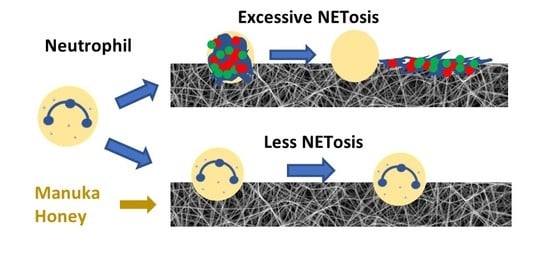
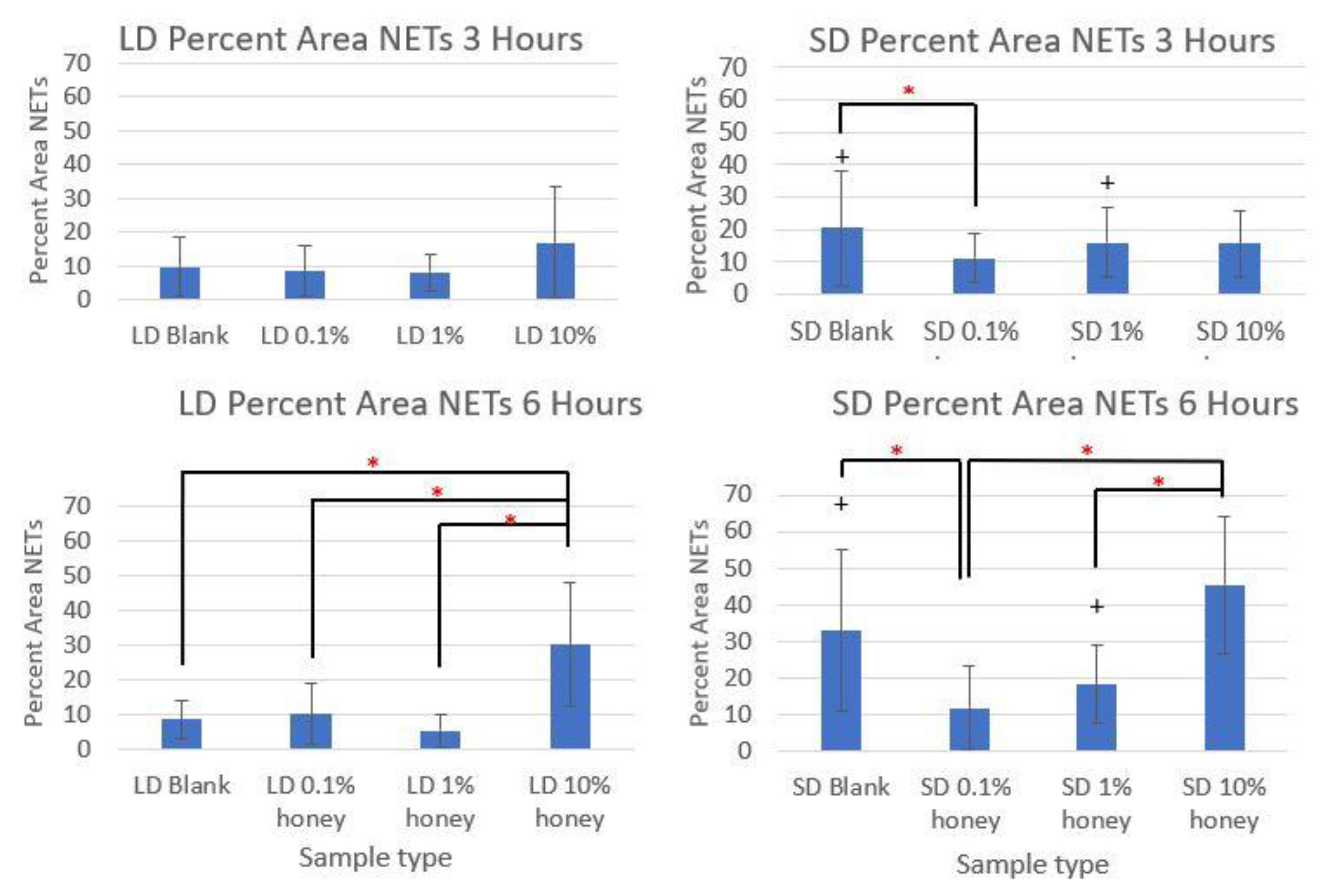
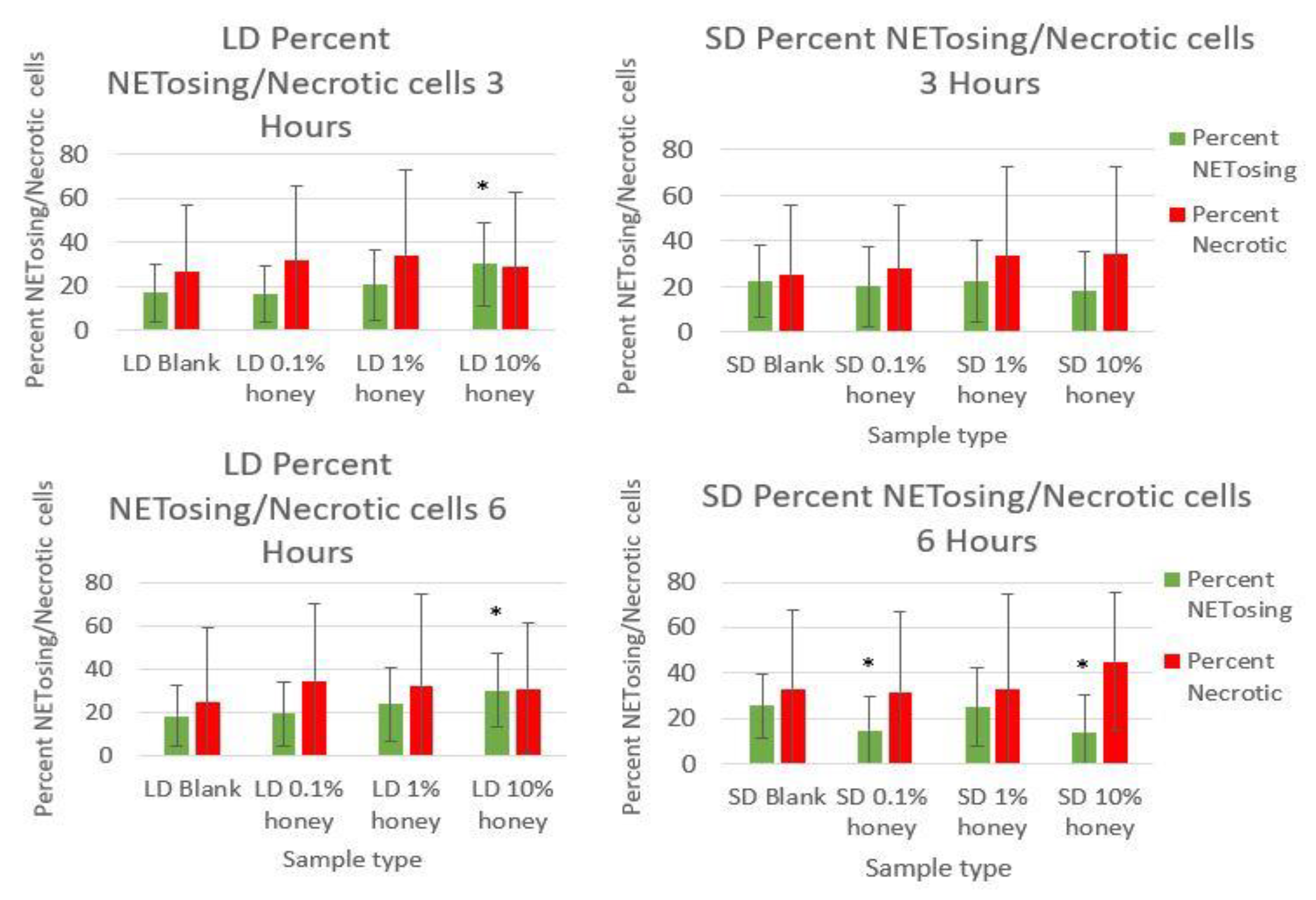
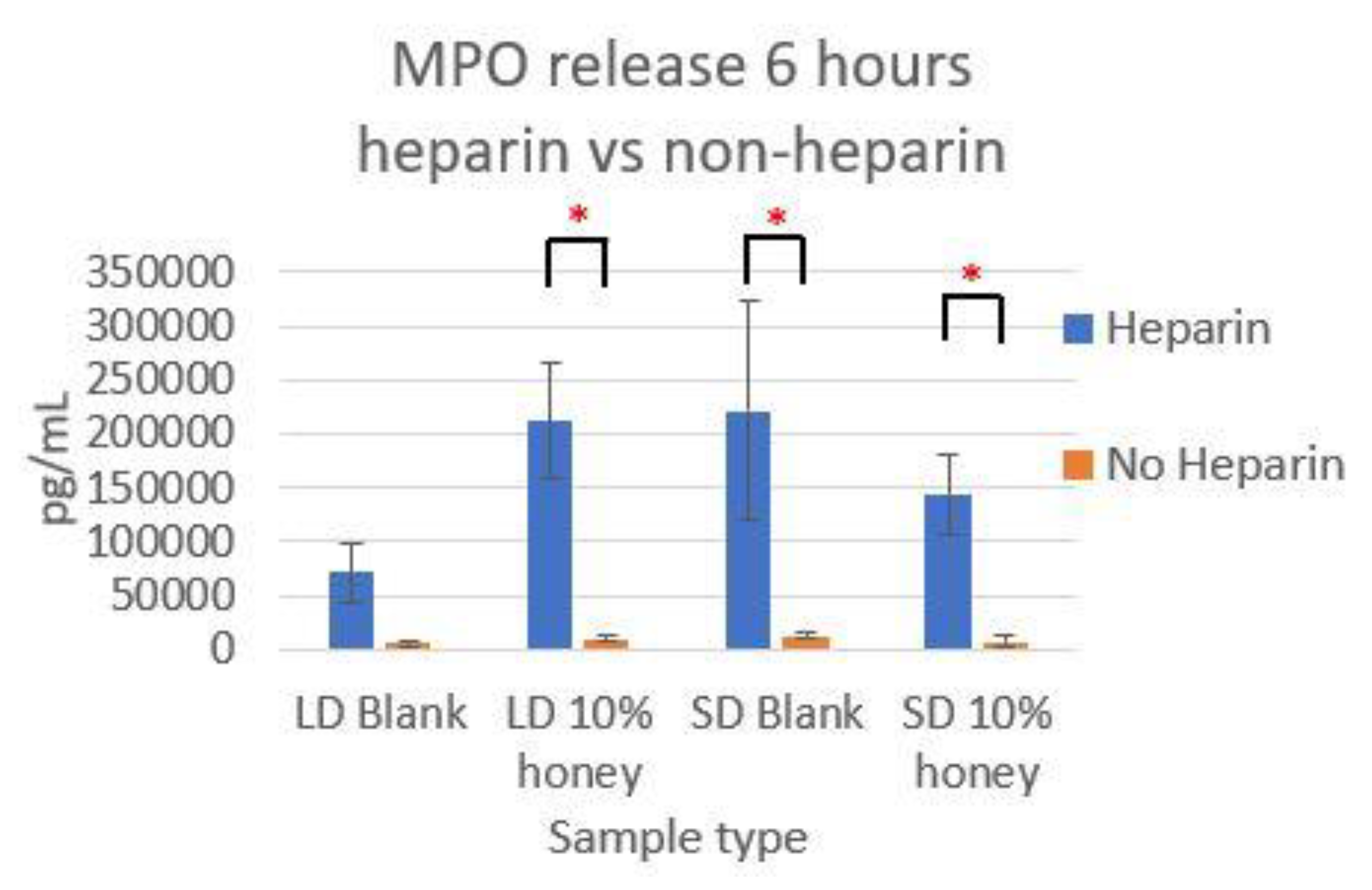
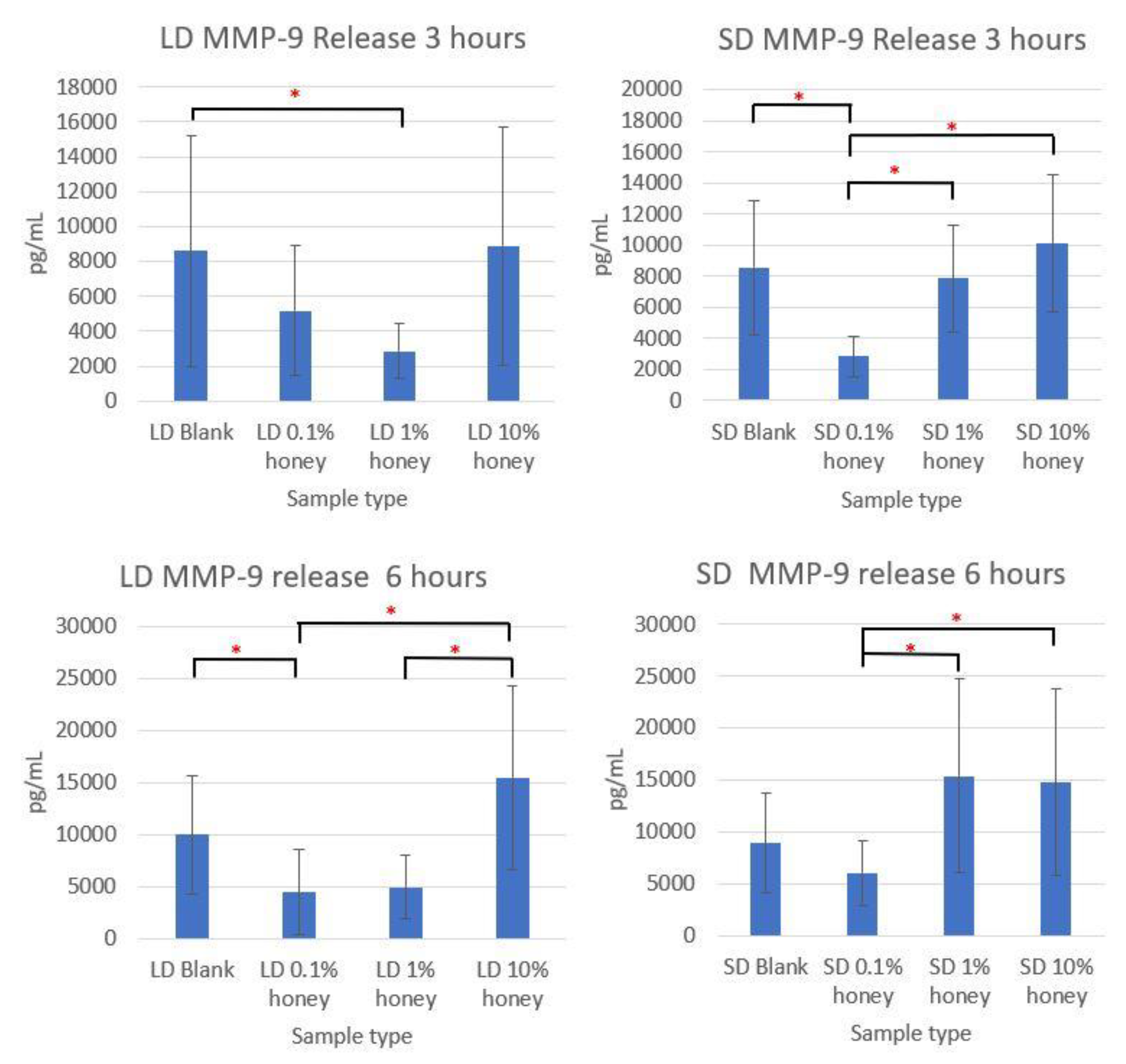
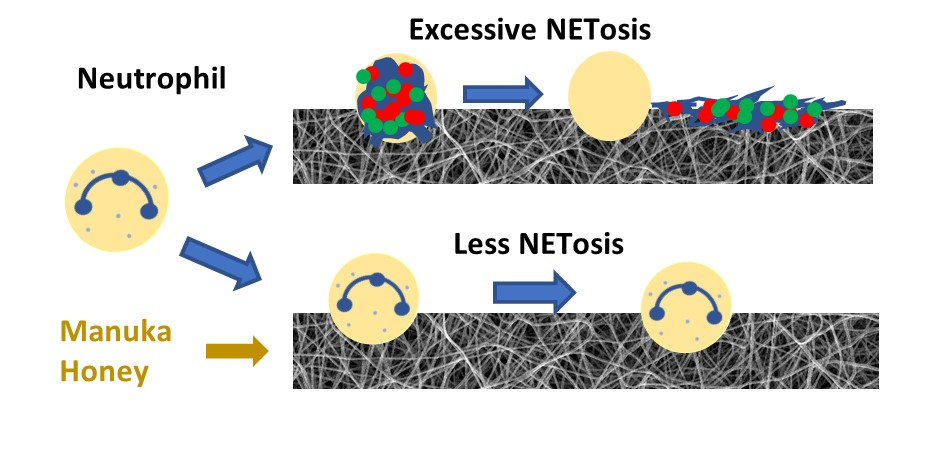
Manuka honey, a topical wound treatment used to eradicate bacteria, resolve inflammation, and promote wound healing, is a focus in the tissue engineering community as a tissue template additive. However, its effect on neutrophil extracellular trap formation (NETosis) on a tissue engineering template has yet to be examined. As NETosis has been implicated in chronic inflammation and fibrosis, the reduction in this response within the wound environment is of interest. In this study, Manuka honey was incorporated into electrospun templates with large (1.7–2.2 µm) and small (0.25–0.5 µm) diameter fibers at concentrations of 0.1%, 1%, and 10%. Template pore sizes and honey release profiles were quantified, and the effect on the NETosis response of seeded human neutrophils was examined through fluorescence imaging and myeloperoxidase (MPO) analysis. The incorporation of 0.1% and 1% Manuka honey decreased NETosis on the template surface at both 3 and 6 h, while 10% honey exacerbated the NETosis response. Additionally, 0.1% and 1% Manuka honey reduced the MMP-9 release of the neutrophils at both timepoints. These data indicate a therapeutic window for Manuka honey incorporation into tissue engineering templates for the reduction in NETosis. Future in vivo experimentation should be conducted to translate these results to a physiological wound environment.
Keywords: Manuka honey; NETosis; inflammation; neutrophil; electrospinning; tissue engineering; polydioxanone Manuka honey; NETosis; inflammation; neutrophil; electrospinning; tissue engineering; polydioxanone
Graphical Abstract