Article

Experimental Investigation of the Effects of Silver and Copper Content on the Fluidity of Biodegradable Zinc Alloys


Drone Technology and Operations Programme, Department of Electronics and Automation, Vocational School, Istanbul Beykent University, 34475 Istanbul, Turkey
Crystals 2026, 16(2), 90; https://doi.org/10.3390/cryst16020090
Submission received: 2 January 2026 / Revised: 20 January 2026 / Accepted: 26 January 2026 / Published: 28 January 2026
(This article belongs to the Section Crystalline Metals and Alloys)
Editorial Note: The Special Issue Microstructure Analysis, Phase Composition and Properties of Metal has been withdrawn. Consequently, this article has been removed from this Special Issue's webpage on 4 March 2026 and remains available within the regular issue in which it was originally published. The editorial office confirms that this article adhered to MDPI's standard editorial process (https://www.mdpi.com/editorial_process).

Abstract

Ag and Cu in biodegradable Zn alloys have been the focus of research due to their biocompatible corrosion products, as well as their ability to improve the mechanical properties of the alloy. In this research, the impact of Ag and Cu on the fluidity of biodegradable Zn alloys was evaluated through the spiral fluidity test. Zn–xAg and Zn–xCu alloys containing Ag or Cu in pure Zn at proportions of 0.5, 1, 2, and 3 wt.% were prepared. In the first stage of the study, the casting temperature to be used in the fluidity tests of the alloys was determined by casting pure Zn at different temperatures. Spiral castings of the alloys were then produced and the fluidity lengths in the spiral channel were measured. Test results showed that the mold filling distances decreased with increasing amounts of Ag and Cu, with Cu causing a stronger reduction than Ag at comparable addition levels. When the Ag content in Zn was raised from 0.5 wt.% to 1 wt.%, a significant reduction in fluidity was observed. Formation of CuZn5 and ε–AgZn3 phases in the microstructures was identified as the main factor limiting melt flow. These findings provide insights into how Ag and Cu additions influence the castability of Zn alloys, offering guidance for optimizing alloy composition for biodegradable implant applications.

1. Introduction

Metallic implants can be divided into two groups: permanent (non-dissolving in the body) and biodegradable (gradually dissolving in the body) [1]. Permanent metallic implants are manufactured from stainless steel, titanium, or Co–Cr alloys, which possess high mechanical strength and corrosion resistance [2]. After tissue healing, the removal of these implants via a second surgical procedure becomes necessary, which increases expenses and forces patients to undergo an additional healing process [3]. Considering these disadvantages, materials that maintain their mechanical integrity during the healing process and subsequently dissolve in the body have been developed. The use of biodegradable materials eliminates the need for a second surgery, and their degradation products can be beneficial to the body. For example, zinc supports bone formation and wound healing, while magnesium plays a role in protein coagulation [1]. As biodegradable metallic materials, Fe-, Mg-, and Zn-based alloys have been extensively studied [4]. While Fe-based biodegradable materials exhibit excellent strength and ductility, their degradation rate in the body is far below the desired level, and their corrosion products adversely affect medical imaging [5]. Corrosion of Mg alloys, on the other hand, occurs faster than desired and causes the formation of undesirable H2 corrosion products [6,7,8]. Among these three biodegradable metal systems, zinc-based alloys have attracted increasing attention due to their balanced degradation behavior and favorable biological response compared to Fe- and Mg-based counterparts [1].
Zinc, which humans have used since the 3rd millennium BC, remains one of the most widely used metals today. Zinc is not only used in various everyday applications, but it is also an essential element required by the human body [9]. The standard electrode potential of zinc (−0.763 V) lies between those of magnesium (−2.372 V) and iron (−0.441 V) [10]. Zinc not only degrades at a near-optimal rate in the body [5], but its corrosion products (e.g., ZnO, Zn(OH)2) are also harmless [11]. As an essential element in metabolic functions—including cell growth, immune response, and nervous system activity—Zn-based alloys are favored for biodegradable applications [12]. Yang et al. [5] observed that pure zinc stents maintained their mechanical properties for six months, with nearly 41% volume degradation occurring after 12 months in the body. They also reported that pure Zn showed excellent biocompatibility as a result of this study.
Despite these favorable electrochemical, biological, and degradation characteristics, the practical use of pure zinc as a biodegradable implant material is hindered by its relatively low mechanical strength [13]. Numerous alloying elements have been explored to improve the mechanical and functional properties of Zn-based biodegradable alloys, provided that their addition does not compromise biosafety [4,14,15,16]. Among these, silver (Ag) and copper (Cu) have received particular attention due to their proven biocompatibility, antimicrobial activity, and effectiveness in strengthening zinc through solid solution and intermetallic phase formation [14,17,18,19,20,21,22,23,24,25,26].
Among the numerous alloying elements investigated to strengthen zinc, silver (Ag) stands out due to its well-established medical use and intrinsic antibacterial properties, making it a promising candidate for enhancing both the mechanical and biological performance of biodegradable zinc-based materials [27,28,29]. Human silver intake is defined as 0.4–27 µg/day [30]. With these advantages, it is thought that Zn–Ag alloys will provide an advantage to biodegradable material by improving both its mechanical properties and antibacterial properties [31].
Similarly, copper is an essential trace element in the human body and has been shown to enhance the mechanical strength of zinc while also imparting antimicrobial functionality through phase formation such as CuZn5 [20,32]. Copper deficiency disrupts normal metabolic functions, and the recommended daily intake is 2–3 mg, while the adult human body contains approximately 80 µg of copper [33,34]. In Zn–Cu systems, copper has been shown to enhance the mechanical strength of zinc through solid solution hardening and the formation of the CuZn5 phase [20,35,36]. Zinc can dissolve approximately 2.75 wt.% Cu at 425 °C, and Zn–Cu alloys containing 2.7–22 wt.% Cu consist of ε–CuZn5 dendrites and an η–Zn solid solution [35].
Beyond their biological and mechanical contributions, the fluidity is a critical parameter for Zn alloys, as it directly affects mold filling, defect formation, and final casting quality [37]. There are studies in the literature that examine the fluidity of Zn alloys [37,38,39,40,41]. Xia et al. [38] investigated the effect of Mg on the fluidity of zinc in a study and reported that adding 1% Mg reduced the fluidity of pure zinc. However, as the Mg content increased, the fluidity of the Zn–Mg alloy increased. They explained this phenomenon by suggesting that the addition of Mg causes the formation of a dendritic structure, rather than the equiaxed grains that occur in pure zinc. They proposed that as the Mg addition increases (as the chemical composition approaches the eutectic point), finer dendrites form and fluidity increases. Studies report that the fluidity of Zn alloys can be improved by adding a third element [37] or nanoparticles [39,41].
While biodegradable Zn alloys are more commonly produced via additive manufacturing [22,42] and deformation processing [43,44], recent studies have also explored their production using different casting [45,46,47,48,49,50] or semi-solid molding methods [51]. In this context, the influence of biocompatible alloying elements such as Ag and Cu on the fluidity of Zn-based biodegradable alloys has not yet been systematically investigated. Therefore, this study aims to examine the effect of Cu and Ag additions on the fluidity behavior of Zn-based alloys, with the goal of minimizing casting defects and addressing an existing gap in the literature.

2. Materials and Methods

2.1. Alloy Preparation

For the experimental work, pure Zn (99.62 wt.%), Cu (99.6 wt.%), and Ag (99.1 wt.%) were utilized in alloy preparation. As shown in Table 1, the chemical compositions of the alloys are provided. Zn–xAg and Zn–xCu alloys were then produced by adding alloying element (Ag, Cu) at four different ratios (0.5, 1, 2, and 3 wt.%) to pure Zn. The alloys were produced by first melting pure Zn at 600 °C and then adding the alloying element granules to the molten metal and stirring mechanically via graphite rod every 5 min. After 30 min at 600 °C, the alloys were cast as ingots under an uncontrolled atmosphere.

2.2. Fluidity Test

The molds prepared according to the Archimedes’ spiral for the fluidity test were made of casting sand. The mold consists of two parts, namely an upper and a lower section, with the lower section containing a spiral channel through which the molten metal flows. With a cross-sectional size of 8 mm by 5 mm, the spiral’s overall length measures 1257 mm. Fluidity is measured by the distance the liquid metal or alloy travels in a channel where it can stop upon solidification. To evaluate the fluidity of pure Zn and identify the casting temperatures for the alloys, pure Zn was initially cast at 440 °C, 460 °C, 480 °C, and 500 °C. Preliminary experimental indicated that the addition of Ag and Cu decreases the fluidity of Zn. To quantitatively assess the extent of this reduction, a casting temperature of 480 °C—sufficient to nearly fill the mold—was selected for the fluidity experiments of the alloys. The alloys, produced in ingot form, were remelted and cast into a spiral mold at 480 °C. Each experiment was performed in triplicate using a new sand mold for each trial, and the average fluidity length was recorded.

2.3. Chemical Composition Analysis

The compositions of the produced alloys were examined using spiral-cast samples via an XRF device, specifically the Thermo Scientific Niton XL2 Analyzer (Thermo Fisher Scientific, Billerica, MA, USA).

2.4. Thermal Analysis

DSC analyses were performed on the spiral-cast samples using a NETZSCH STA 449F1 instrument (NETZSCH-Gerätebau GmbH, Selb, Germany) under an argon atmosphere over a temperature range of 300–500 °C, with a heating rate of 10 °C/min.

2.5. Phase Characterization

Phase characterization was carried out on a Rigaku D-MAXRINT-2200 type X-ray diffractometer (Rigaku Corporation, Tokyo, Japan) in the CuKα 2θ (20–90°) range at a speed of 3.5°/min. For phase identification, the obtained XRD patterns were compared with JCPDS reference data.

2.6. Microstructure Examination

The microstructures of the samples taken from the vertical section of the spiral arms were examined under an optical microscope (FM-BJ-X Portable Metallurgical Monocular Microscope (Suzhou FlyingMan Precision Instruments Co., Ltd., Suzhou, China)). Microstructure examination samples were subjected to abrasive grinding with 320, 400, 600, 800, 1000, and 1200 grit sandpapers, and then polished with 6 µm diamond paste. Etching was performed by soaking in 3 vol.% HNO3 + ethanol solution for 5 s.

3. Results and Discussion

3.1. Fluidity Results

Table 1 presents the chemical compositions of pure Zn, Zn–xAg, and Zn–xCu alloys used in the fluidity tests.
When the chemical compositions of the alloys produced in Table 1 are examined, it is understood that the Cu and Ag ratios differ. In casting production, such differences occur due to oxidation in the chemical composition during melting and casting [49]. In order to determine at which temperature the fluidity tests of Zn–xCu and Zn–xAg alloys should be performed, pure Zn was first cast at different temperatures. The results of these castings are shown in Figure 1.
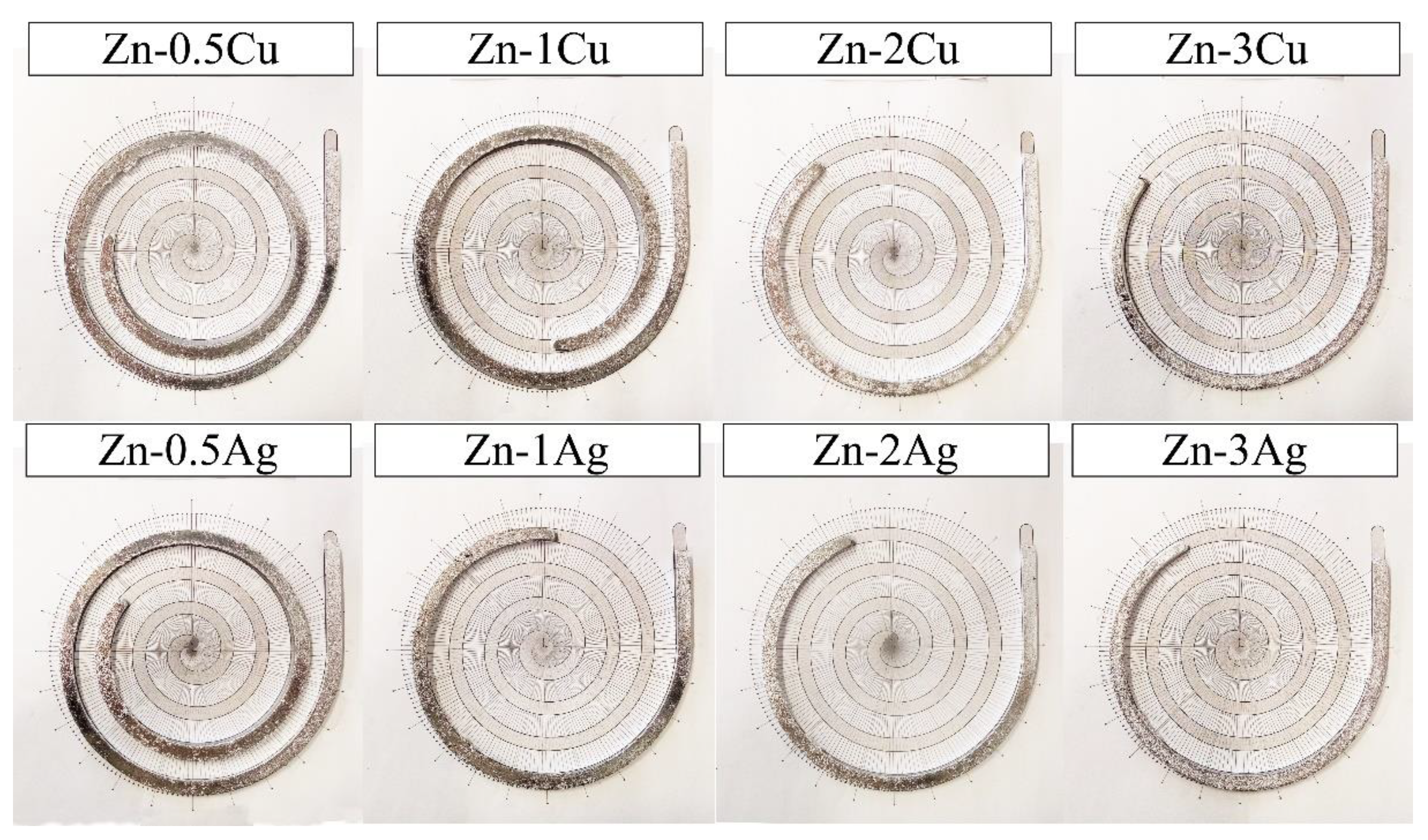
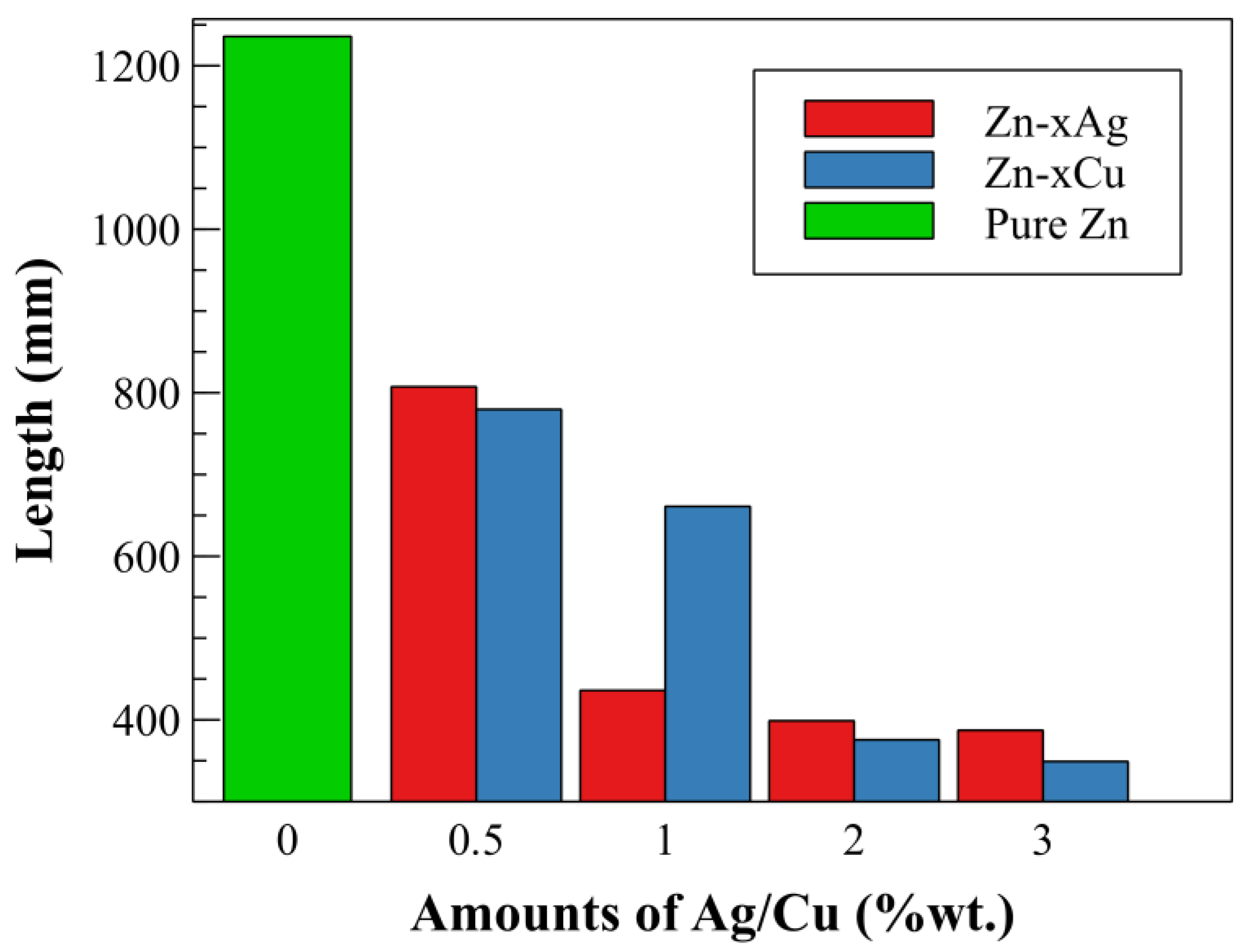
According to the results presented in Figure 1, pure Zn achieved complete mold filling at a casting temperature of 500 °C. At 480 °C, which is 20 °C lower than 500 °C, pure Zn reached an almost full filling length before solidification occurred. Yang et al. [52], who studied the effect of casting temperature on Zn–4.6Al alloy, stated that casting at 460 °C exhibited the best mechanical properties. They attributed this result to the micro-pores formed in the microstructure. The spirals obtained as a result of the fluidity test castings of Zn–xCu and Zn–xAg alloys are shown in Figure 2 and the graph showing the fluidity length of the alloys is shown in Figure 3.
The fluidity of alloys is influenced by various factors, including liquidus and solidus temperatures, the width of the solidification interval, thermal conductivity, density, crystallization latent heat, dynamic viscosity, and superheat. When the pouring temperature is kept constant, a decrease in the liquidus temperature corresponds to an increase in the superheat of the alloy, which reduces melt viscosity and consequently enhances fluidity [53]. Similarly, a narrower solidification interval prolongs the time the melt remains in the liquid state, thereby improving fluidity [54]. Thermal conductivity also plays a crucial role; alloys with lower thermal conductivity exhibit a smaller liquid–solid two-phase region during solidification, leading to reduced flow resistance and better fluidity. The effect of viscosity depends on the stage of mold filling: during the initial turbulent stage, its influence on fluidity is limited, whereas in the later laminar flow stage, higher viscosity increases flow resistance and decreases alloy fluidity [53]. Density further affects fluidity, as alloys with higher density contain more heat, which extends the duration of the liquid state under the same superheat conditions, enhancing fluidity. Finally, the latent heat of crystallization influences solidification kinetics: greater latent heat released during solidification slows the process and contributes to improved fluidity [54].
Figure 2 and Figure 3 clearly show that both Ag and Cu added to pure Zn reduce the fluidity. Notably, increasing Ag from 0.5 wt.% to 1 wt.% causes a sharp drop in fluidity, indicating the critical onset of ε–AgZn3 phase formation. In contrast, Cu consistently reduces fluidity more strongly than Ag at equivalent concentrations due to the earlier formation and higher volume fraction of CuZn5 phases. While pure Zn was 1235 mm at 480 °C casting temperature, when 0.5, 1, 2, and 3 wt.% Ag was added, solidification occurred after 807 mm, 435 mm, 398 mm and 387 mm, respectively. When 0.5, 1, 2, and 3 wt.% Cu was added to pure Zn, the fluidity length were measured as 779 mm, 660 mm, 375 mm and 349 mm, respectively. When the filling distances (Figure 3) are analyzed, it is understood that Cu reduces the fluidity of pure Zn more than Ag. It is also observed that increasing the Cu content in Zn leads to a similar reduction in fluidity length. However, when the alloys to which Ag is added are examined, it is seen that there is a sudden decrease in the fluidity length with an increase in the Ag ratio from 0.5 to 1. This sudden decrease is not observed when the Ag ratio in the alloy is increased from 1, 2, and 3 wt.%.

3.2. DSC Analysis

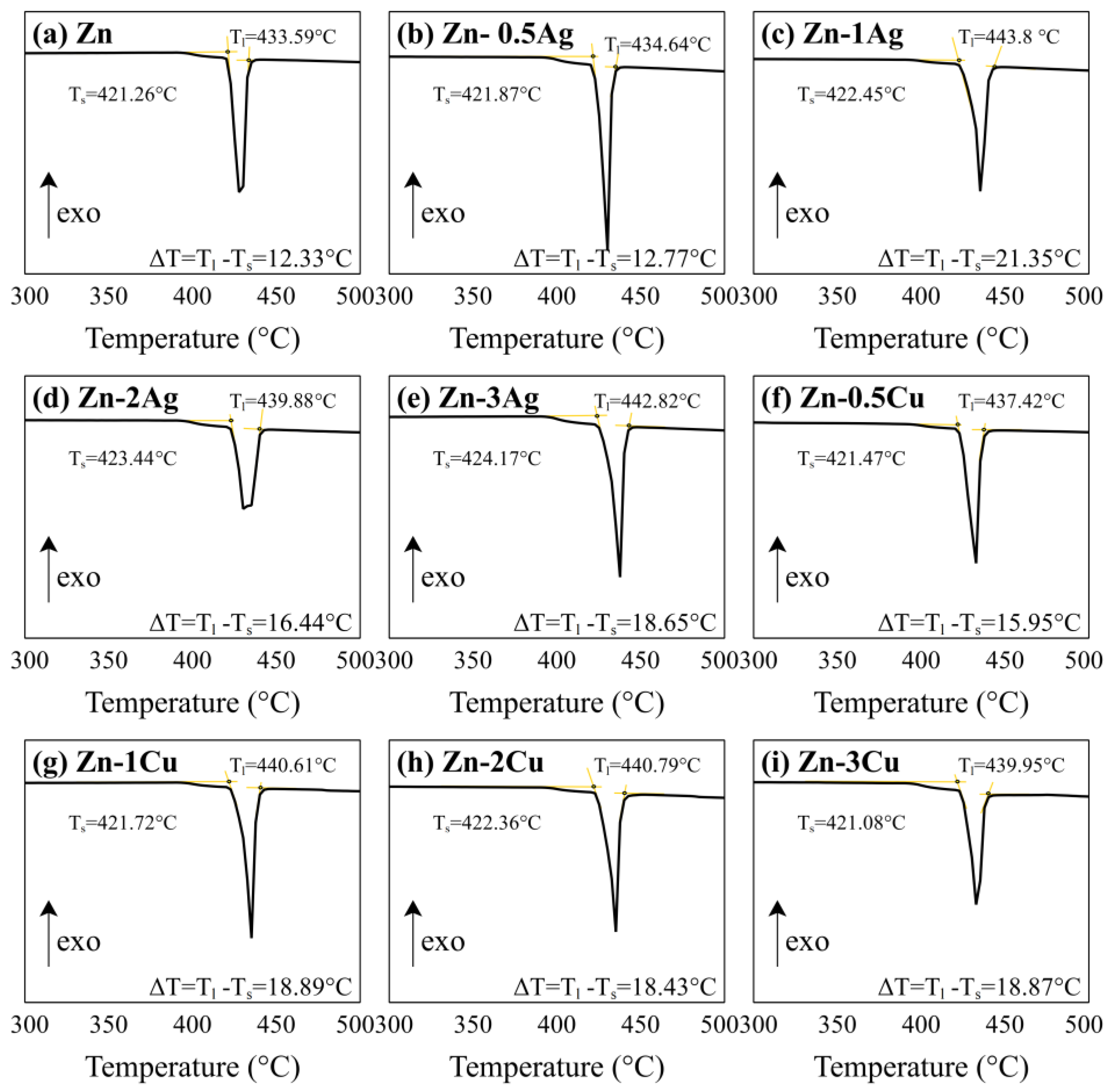
Figure 4 shows the DSC analysis results of Zn and Ag and Cu added alloys.
As shown in the DSC graphs in Figure 4, based on the DSC curve analysis method recommended by ICTA, the intersections of the peak tangent with the baseline on the DSC curve indicate the solidus (Ts) and liquidus (Tl) temperatures [38]. Solidification of the liquid metal takes place in the range between Tl and Ts. Figure 4a presents the DSC curve of pure Zn. Theoretically, even if the melting and solidification temperatures of pure metals occur at a certain point (Zn melting point 419.5 °C), solidification and melting of pure metals are observed in a temperature range when heating–cooling is not performed under equilibrium conditions [38]. The ΔT value indicates the region where solid and liquid phases coexist, and the larger this temperature range, the larger the solid + liquid volume. According to solidification theory, the volume of the mixture is governed by the temperature difference (ΔT) and the cooling rate; as ΔT increases, the volume fraction of the solid phase increases, resulting in reduced fluidity. The larger ΔT observed for Cu-containing alloys compared to Ag corresponds to a greater fraction of coexisting solid and liquid phases, which limits the time available for the melt to flow and explains the sharper reduction in spiral filling for Cu and the abrupt drop between 0.5 and 1 wt.% Ag. Minor discrepancies in previously reported liquidus temperatures are noted for Zn–1Ag, which may result from local composition variations, non-equilibrium solidification, or measurement limitations inherent to small spiral-cast specimens. During solidification, heat is conducted from the liquid metal to the mold walls, promoting grain growth from the walls toward the center. Once these growing grains impinge upon one another, the flow of the alloy is halted. [55]. According to Figure 4, it is understood that the added Cu causes a larger ΔT value than Ag, which reduces the fluidity. Examination of the DSC analysis results in Figure 4 alongside the flow distance plots in Figure 3 reveals that the Zn alloys (except Zn–1Ag) display uniform flow behavior, which aligns well with the predictions of the volume solidification model [55,56].

3.3. XRD Analysis

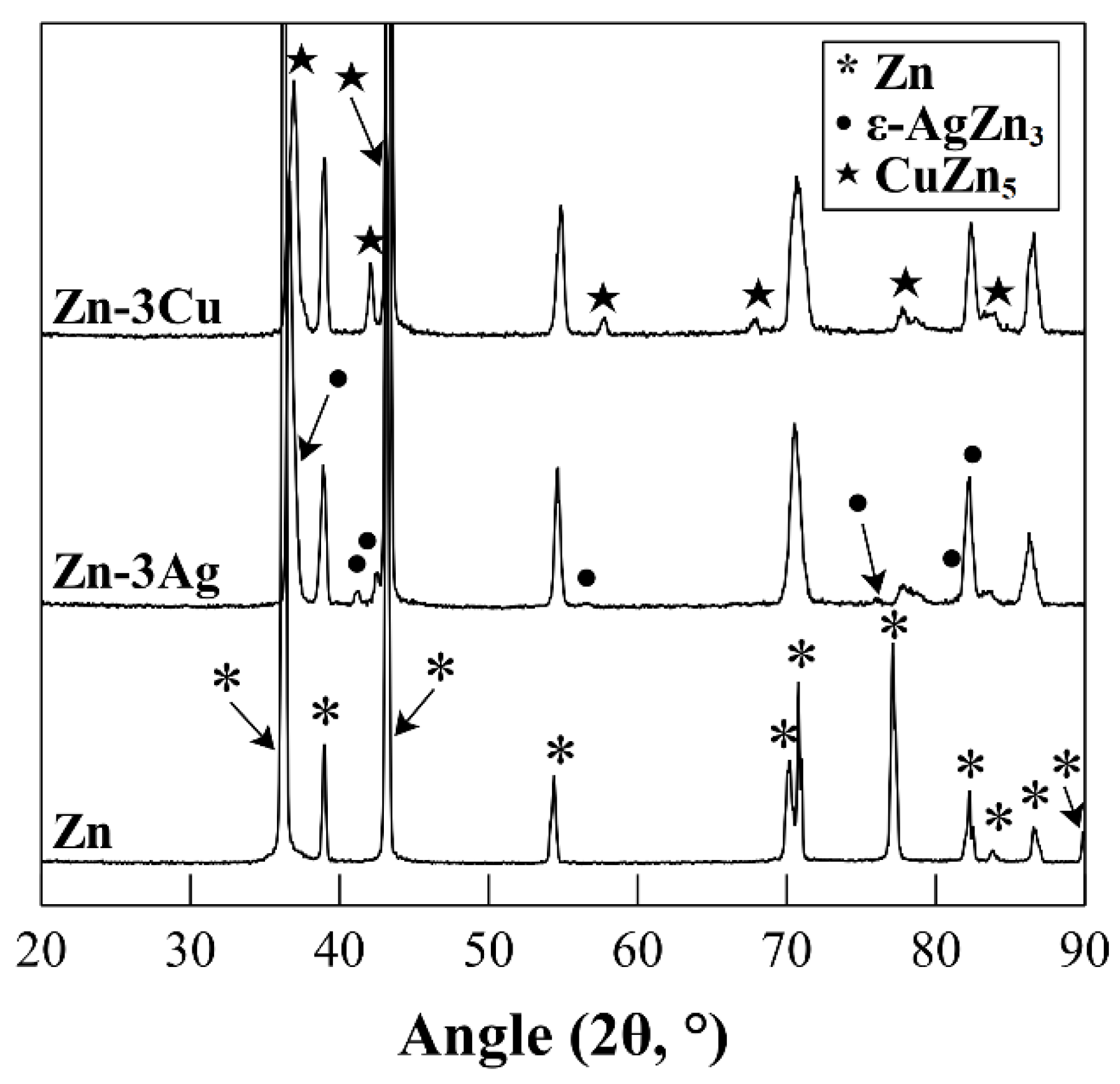
Figure 5 presents the XRD analysis results for pure Zn along with the samples containing Ag and Cu.
The XRD characterization was performed for pure Zn and alloys alloyed with 3 wt.% Ag or Cu. These alloys were preferred because it is not possible to consistently determine the phases of 2 wt.% and below in the structure in XRD analysis [57]. Studies in the literature also support this [45]. When the XRD patterns of pure Zn are examined (Figure 5), it is seen that the structure consists only of Zn phase (PDF card no: 00-004-0831). Ag incorporation into pure Zn results in the formation of the AgZn3 phase. It is clearly seen in Figure 5 that as the amount of Ag added to pure Zn increases, the pure Zn peaks shift to the right. The reason for this is the change in the lattice parameter with the added Ag. Shuai et al. [19] report similar results in a study they conducted. When Cu is alloyed with pure Zn, CuZn5 phase (PDF card no: 00-035-1151) is formed. It is known that intermetallic phases formed in the structure can negatively affect the flowability by reducing the critical solid fraction at the flow tip [58].

3.4. Microstructure

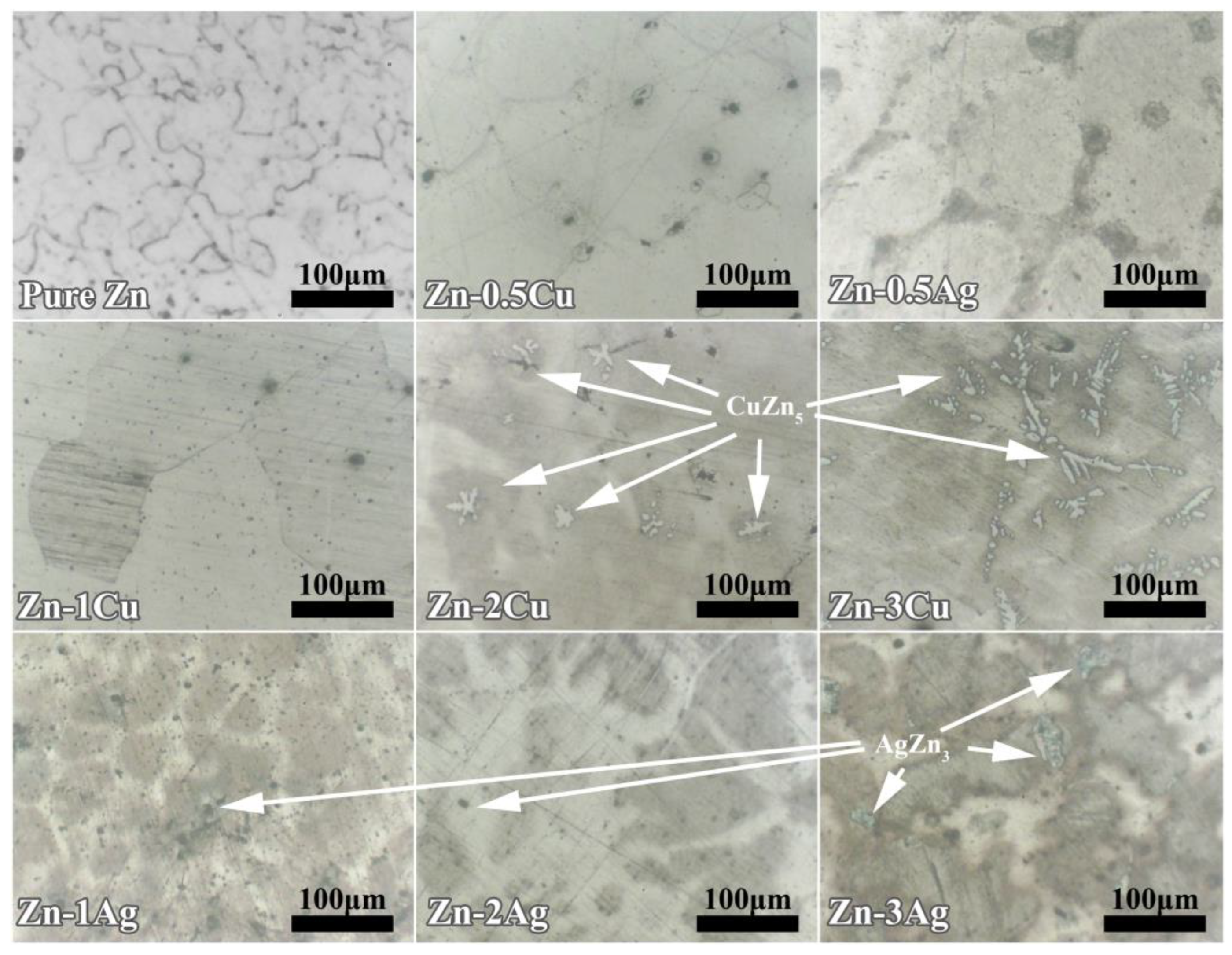
Figure 6 illustrates the optical microscope observations of pure Zn and the Ag or Cu-modified alloys.
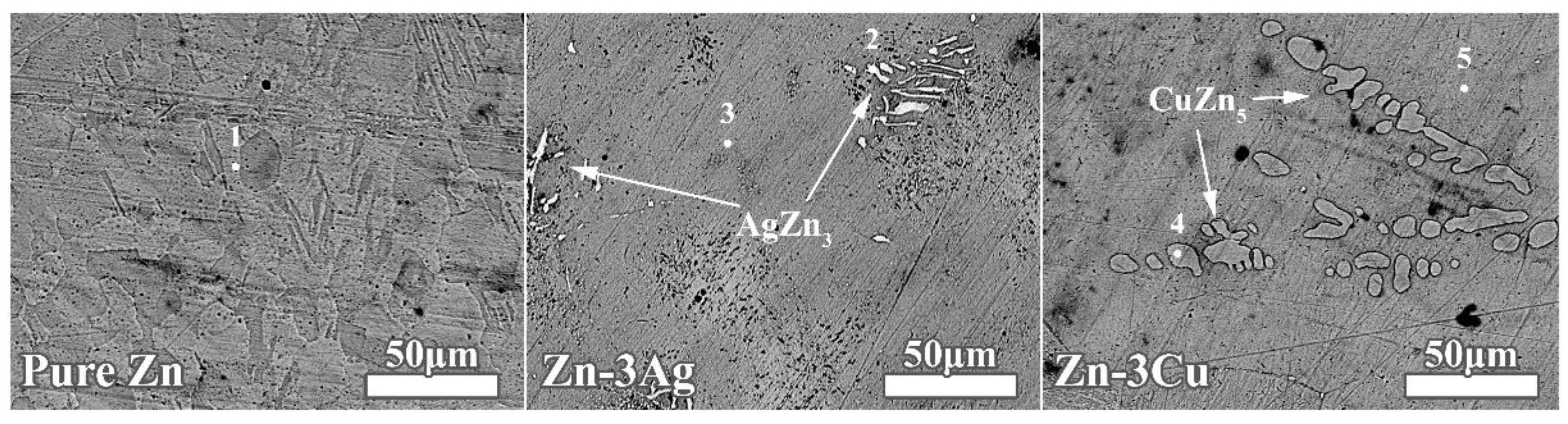
When the optical microscope images of the microstructure given in Figure 6 and SEM images given in Figure 7 are examined, it is seen that pure Zn consists of equiaxed grains. In their study, Sikora-Jasinska et al. [28] noted that cast pure zinc may feature a coarse grain structure with grains larger than 1 mm. The solidification of pure metals is characterized by a smooth solid–liquid interface and laminar growth. In pure zinc, equiaxed grains form primarily due to excessive undercooling and heterogeneous nucleation induced by contact with the mold wall. In alloyed systems, dendritic growth occurs during solidification, and the presence of solid dendrites in the liquid reduces melt fluidity; larger solidification ranges further promote dendrite growth and decrease fluidity.
It is observed that as Ag is added to pure Zn, fine dendrites and AgZn3 phases form in the microstructure (Table 2). Although Ag acts as a grain refiner, the growth of these secondary phases suppresses the potential enhancement of fluidity [58]. Literature reports indicate that Ag additions below 2.5 wt.% typically yield an equiaxed grain structure, whereas Ag contents exceeding this level lead to microstructures dominated by primary η–Zn phase and dendritic ε–AgZn3 formations [28]. The ε–AgZn3 phase can act as a nucleation site, often accompanied by an Ag-rich zone formed via peritectic transformation [59]. A peritectic point exists in the Zn–Ag phase diagram at 3 wt.% Ag, involving the transformation reaction liquid + ε–AgZn3 → η–Zn. This is consistent with the interdependence theory describing Ag as an effective grain refiner in Zn–Ag binary systems containing less than 3 wt.% Ag [28,59]. As shown in Figure 6, increasing Ag content leads to growth and volumetric expansion of the secondary phases, resulting in decreased fluidity (Figure 3). Ag in liquid Zn provides the critical supercooling for nucleation, but as dendrite volume increases with higher Ag content, melt flow becomes more difficult.
In Cu-added Zn alloys, a single-phase microstructure forms at 0.5–1 wt.% Cu, whereas increasing Cu content beyond 1 wt.% leads to the formation and growth of CuZn5 secondary phases. In the Zn–Cu binary alloy system, a peritectic reaction occurs at 425 °C at 1.7 wt.% Cu. Peritectic solidification prolongs the coexistence of liquid and solid phases, increasing the solid fraction during solidification and consequently reducing melt fluidity [60]. When the XRD pattern in Figure 5 is examined, CuZn5 is identified as the principal secondary phase [19]. Fluidity test results in Figure 3 show that the formation of CuZn5 phases sharply decreases the solidification distance. Increasing the amount of Cu added to Zn raises the liquidus temperature, causing solidification to start at higher temperatures and further reducing fluidity (Figure 4). Similarly, when Ag addition to Zn reaches 3 wt.%, AgZn3 solidifies first in the liquid phase. Accordingly, Figure 8 presents schematic diagrams illustrating the flow-stopping mechanisms of the alloys in which CuZn5 (Figure 8a) and AgZn3 (Figure 8b) phases are formed.
DSC, XRD, and microstructural analyses collectively reveal the influence of alloying on the solidification behavior and fluidity of Zn-based alloys. DSC results indicate that the solidification range (ΔT) increases with the addition of Ag or Cu, with Cu producing a larger ΔT than Ag, which leads to a higher fraction of solid coexisting with the liquid and consequently reduces melt fluidity. XRD patterns show the formation of AgZn3 and CuZn5 intermetallic phases in the alloys, while pure Zn consists solely of the Zn phase. Optical microscopy and SEM images confirm that pure Zn exhibits equiaxed grains formed through heterogeneous nucleation and limited undercooling, whereas alloyed systems develop dendritic structures. The growth and volumetric expansion of secondary phases, including AgZn3 and CuZn5, act as physical barriers to melt flow, further decreasing fluidity. These observations demonstrate that both the extension of the solid–liquid coexistence region and the formation of intermetallic phases are key factors limiting the fluidity of Zn alloys, consistent with flow distance measurements (Figure 3) and solidification theory.

4. Conclusions

The key findings derived from this investigation on the influence of Ag and Cu additions on the fluidity of Zn can be summarized as follows:
  • The incorporation of Ag and Cu into Zn progressively reduces alloy fluidity, with Cu causing a stronger reduction than Ag at equivalent concentrations. This effect is primarily associated with an increase in the solidification range (ΔT) and the formation of intermetallic phases.
  • The addition of 0.5–1 wt.% Ag and 1–2 wt.% Cu represents critical ranges, corresponding to the onset of rapid ΔT increase and intermetallic phase formation (ε–AgZn3 for Zn–Ag alloys, CuZn5 for Zn–Cu alloys), which sharply reduce fluidity.
  • The observed anomaly in which 1 wt.% Ag reduces fluidity more than 1 wt.% Cu highlights the sensitivity of Zn–Ag alloys to small Ag additions, likely due to early formation of ε–AgZn3 phases.
  • Overall, the combined influence of increased ΔT, intermetallic phase formation, and dendritic microstructure evolution governs the melt flow behavior of Zn alloys.
These findings provide essential insights for optimizing casting parameters and alloy compositions to enhance the processability of biodegradable Zn-based implants.

Funding

The author received no financial support for the research, authorship, and/or publication of this article.

Data Availability Statement

The data presented in this study are available on request from the corresponding author.

Conflicts of Interest

The author declares that there are no conflicts of interest or competing interests.

Abbreviations

The following abbreviations are used in this manuscript:
XRFX-ray Fluorescence
DSCDifferential Scanning Calorimetry
XRDX-ray Diffraction
SEMScanning Electron Microscopy
EDSEnergy Dispersive Spectroscopy
PDFPowder Diffraction File

References

  1. Mohd Salaha, Z.F.; Abdullah, N.N.A.A.; Chan, K.F.; Gan, H.S.; Mohd Yusop, M.Z.; Ramlee, M.H. Biodegradable orthopaedic implants: A systematic review of in vitro and in vivo evaluations of magnesium, iron, and zinc alloys. Results Eng. 2025, 27, 105746. [Google Scholar] [CrossRef]
  2. Li, J.; Fan, H.; Li, H.; Hua, L.; Du, J.; He, Y.; Jin, Y. Recent Advancements in the Surface Modification of Additively Manufactured Metallic Bone Implants. Addit. Manuf. Front. 2025, 4, 200195. [Google Scholar] [CrossRef]
  3. Paiva, J.C.C.; Oliveira, L.; Vaz, M.F.; Costa-de-Oliveira, S. Biodegradable Bone Implants as a New Hope to Reduce Device-Associated Infections—A Systematic Review. Bioengineering 2022, 9, 409. [Google Scholar] [CrossRef]
  4. Zheng, Y.F.; Gu, X.N.; Witte, F. Biodegradable metals. Mater. Sci. Eng. R Rep. 2014, 77, 1–34. [Google Scholar] [CrossRef]
  5. Yang, H.; Wang, C.; Liu, C.; Chen, H.; Wu, Y.; Han, J.; Jia, Z.; Lin, W.; Zhang, D.; Li, W.; et al. Evolution of the degradation mechanism of pure zinc stent in the one-year study of rabbit abdominal aorta model. Biomaterials 2017, 145, 92–105. [Google Scholar] [CrossRef]
  6. Witte, F. Reprint of: The history of biodegradable magnesium implants: A review. Acta Biomater. 2015, 23, S28–S40. [Google Scholar] [CrossRef]
  7. Kuhlmann, J.; Bartsch, I.; Willbold, E.; Schuchardt, S.; Holz, O.; Hort, N.; Höche, D.; Heineman, W.R.; Witte, F. Fast escape of hydrogen from gas cavities around corroding magnesium implants. Acta Biomater. 2013, 9, 8714–8721. [Google Scholar] [CrossRef]
  8. Liu, J.; Lin, Y.; Bian, D.; Wang, M.; Lin, Z.; Chu, X.; Li, W.; Liu, Y.; Shen, Z.; Liu, Y.; et al. In vitro and in vivo studies of Mg-30Sc alloys with different phase structure for potential usage within bone. Acta Biomater. 2019, 98, 50–66. [Google Scholar] [CrossRef]
  9. Yang, H.; Huang, H.; Li, S.; Qin, Y.; Wen, P.; Qu, X.; Jia, B.; Zheng, Y. Biodegradable zinc-based metallic materials: Mechanisms, properties, and applications. Prog. Mater. Sci. 2026, 157, 101584. [Google Scholar] [CrossRef]
  10. Cheng, J.; Liu, B.; Wu, Y.H.; Zheng, Y.F. Comparative in vitro Study on Pure Metals (Fe, Mn, Mg, Zn and W) as Biodegradable Metals. J. Mater. Sci. Technol. 2013, 29, 619–627. [Google Scholar] [CrossRef]
  11. Jain, D.; Pareek, S.; Agarwala, A.; Shrivastava, R.; Sassi, W.; Parida, S.K.; Behera, D. Effect of exposure time on corrosion behavior of zinc-alloy in simulated body fluid solution: Electrochemical and surface investigation. J. Mater. Res. Technol. 2021, 10, 738–751. [Google Scholar] [CrossRef]
  12. Zhang, X.; Zhang, L.; Zhang, D.; Han, L.; Bai, J.; Huang, Z.; Guo, C.; Xue, F.; Chu, P.K.; Chu, C. Effects of bovine serum albumin on the corrosion behavior of biodegradable Zn–Cu alloy under dynamic flowing conditions. Mater. Chem. Phys. 2023, 304, 127838. [Google Scholar] [CrossRef]
  13. Gouda, M.; Salaman, S.; ElDeeb, A.B.; Kobayashi, S.; Borek, W.; Ebied, S. Effect of alloying elements on the characteristics of metallic biodegradable materials: A review. Chin. J. Mech. Eng. 2026, 39, 100024. Available online: https://www.sciencedirect.com/science/article/pii/S1000934525000240 (accessed on 20 January 2026).
  14. Li, L.; Jiao, H.; Liu, C.; Yang, L.; Suo, Y.; Zhang, R.; Liu, T.; Cui, J. Microstructures, mechanical properties and in vitro corrosion behavior of biodegradable Zn alloys microalloyed with Al, Mn, Cu, Ag and Li elements. J. Mater. Sci. Technol. 2022, 103, 244–260. [Google Scholar] [CrossRef]
  15. Zhuo, X.; Wu, Y.; Ju, J.; Liu, H.; Jiang, J.; Hu, Z.; Bai, J.; Xue, F. Recent progress of novel biodegradable zinc alloys: From the perspective of strengthening and toughening. J. Mater. Res. Technol. 2022, 17, 244–269. [Google Scholar] [CrossRef]
  16. Yang, N.; Venezuela, J.; Allavena, R.; Lau, C.; Dargusch, M. Zinc-based subcuticular absorbable staples: An in vivo and in vitro study. Acta Biomater. 2023, 167, 593–607. [Google Scholar] [CrossRef]
  17. Yan, Y.; Zhu, J.; Yan, Y.; Liu, Y.; Liu, Y.; Liu, M.; Qiu, H.; Huang, Q.; Yan, X. Corrosion mechanism and tribological behavior of biodegradable Zn-0.8Cu alloy fabricated by selective laser melting. Mater. Today Adv. 2025, 28, 100632. [Google Scholar] [CrossRef]
  18. Mostaed, E.; Ardakani, M.S.; Sikora-Jasinska, M.; Drelich, J.W. Precipitation induced room temperature superplasticity in Zn-Cu alloys. Mater. Lett. 2019, 244, 203–206. [Google Scholar] [CrossRef] [PubMed]
  19. Tang, Z.; Niu, J.; Huang, H.; Zhang, H.; Pei, J.; Ou, J.; Yuan, G. Potential biodegradable Zn-Cu binary alloys developed for cardiovascular implant applications. J. Mech. Behav. Biomed. Mater. 2017, 72, 182–191. [Google Scholar] [CrossRef] [PubMed]
  20. Zhang, Y.; Ma, W.; Tian, J.; Chen, R.; Song, B.; Lu, X.T. Microstructure, corrosion degradation, and tribocorrosion behavior of biodegradable porous Zn-Cu scaffolds. Mater. Today Commun. 2025, 46, 112677. [Google Scholar] [CrossRef]
  21. García-Mintegui, C.; Córdoba, L.C.; Buxadera-Palomero, J.; Marquina, A.; Jiménez-Piqué, E.; Ginebra, M.P.; Cortina, J.L.; Pegueroles, M. Zn-Mg and Zn-Cu alloys for stenting applications: From nanoscale mechanical characterization to in vitro degradation and biocompatibility. Bioact. Mater. 2021, 6, 4430–4446. [Google Scholar] [CrossRef]
  22. Liu, J.; Wang, D.; Liu, B.; Li, N.; Liang, L.; Chen, C.; Zhou, K.; Baker, I.; Wu, H. Microstructural evolution, mechanical properties and corrosion mechanisms of additively manufactured biodegradable Zn-Cu alloys. J. Mater. Sci. Technol. 2024, 186, 142–157. [Google Scholar] [CrossRef]
  23. Niu, J.; Tang, Z.; Huang, H.; Pei, J.; Zhang, H.; Yuan, G.; Ding, W. Research on a Zn-Cu alloy as a biodegradable material for potential vascular stents application. Mater. Sci. Eng. C 2016, 69, 407–413. [Google Scholar] [CrossRef] [PubMed]
  24. Li, L.; Liang, W.; Ban, C.; Suo, Y.; Lv, G.; Liu, T.; Wang, X.; Zhang, H.; Cui, J. Effects of a high-voltage pulsed magnetic field on the solidification structures of biodegradable Zn-Ag alloys. Mater. Charact. 2020, 163, 110274. [Google Scholar] [CrossRef]
  25. Wang, X.; Di, T.; Li, W.; Liu, D.; Sun, X. Interfacial strengthening and antibacterial behavior in an ultrafine-grained Zn-Ag-based biocomposites fabricated by the Cu2O-induced in situ wetting approach. J. Mater. Sci. Technol. 2023, 152, 109–134. [Google Scholar] [CrossRef]
  26. Jara-Chávez, G.; Amaro-Villeda, A.; Campillo-Illanes, B.; Ramírez-Argáez, M.; González-Rivera, C. Effect of Ag and Cu Content on the Properties of Zn-Ag-Cu-0.05Mg Alloys. Metals 2024, 14, 740. [Google Scholar] [CrossRef]
  27. Li, P.; Schille, C.; Schweizer, E.; Rupp, F.; Heiss, A.; Legner, C.; Klotz, U.E.; Geis-Gerstorfer, J.; Scheideler, L. Mechanical Characteristics, In Vitro Degradation, Cytotoxicity, and Antibacterial Evaluation of Zn-4.0Ag Alloy as a Biodegradable Material. Int. J. Mol. Sci. 2018, 19, 755. [Google Scholar] [CrossRef]
  28. Sikora-Jasinska, M.; Mostaed, E.; Mostaed, A.; Beanland, R.; Mantovani, D.; Vedani, M. Fabrication, mechanical properties and in vitro degradation behavior of newly developed ZnAg alloys for degradable implant applications. Mater. Sci. Eng. C 2017, 77, 1170–1181. [Google Scholar] [CrossRef]
  29. Dag, I.E.; Erdal, E.; Mhadhbi, M.; Avar, B. Effect of Iron on the Microstructure, Mechanical Properties, Corrosion Behavior, and Biocompatibility of Mechanically Alloyed Zn-3Ag Biodegradable Alloys. J. Funct. Biomater. 2025, 16, 435. [Google Scholar] [CrossRef]
  30. Hadrup, N.; Lam, H.R. Oral toxicity of silver ions, silver nanoparticles and colloidal silver—A review. Regul. Toxicol. Pharmacol. 2014, 68, 1–7. [Google Scholar] [CrossRef]
  31. Mostaed, E.; Sikora-Jasinska, M.; Drelich, J.W.; Vedani, M. Zinc-based alloys for degradable vascular stent applications. Acta Biomater. 2018, 71, 1–23. [Google Scholar] [CrossRef]
  32. Bost, M.; Houdart, S.; Oberli, M.; Kalonji, E.; Huneau, J.F.; Margaritis, I. Dietary copper and human health: Current evidence and unresolved issues. J. Trace Elem. Med. Biol. 2016, 35, 107–115. [Google Scholar] [CrossRef] [PubMed]
  33. Chen, Q.; Thouas, G.A. Metallic implant biomaterials. Mater. Sci. Eng. R Rep. 2015, 87, 1–57. [Google Scholar] [CrossRef]
  34. Ren, L.; Nan, L.; Yang, K. Study of copper precipitation behavior in a Cu-bearing austenitic antibacterial stainless steel. Mater. Des. 2011, 32, 2374–2379. [Google Scholar] [CrossRef]
  35. Yang, Y.; Zhao, F.; Cui, D.; Tan, Y. Achieving ultrahigh strength and ductility in biodegradable Zn-xCu alloys via hot-rolling and tailoring Cu concentration. Mater. Charact. 2024, 218, 114530. [Google Scholar] [CrossRef]
  36. Yang, Y.; Cui, D.; Zhao, F.; Tan, Y. A strategy to simultaneously improve mechanical properties and biocompatibility of biodegradable Zn-Cu alloys as potential vascular stents. J. Alloys Compd. 2025, 1020, 179468. [Google Scholar] [CrossRef]
  37. Xia, Z.; Kong, G.; Lai, D.; Zhang, S.; Che, C.; Song, J. Effect of Al on the fluidity of Zn-3Mg alloys. J. Alloys Compd. 2023, 936, 167677. [Google Scholar] [CrossRef]
  38. Xia, Z.; Kong, G.; Zhang, S.; Che, C.; Lai, D. Effect of Mg on the fluidity of zinc alloys. Mater. Lett. 2022, 320, 132264. [Google Scholar] [CrossRef]
  39. Chen, G.C.; Zeng, Y.; Zheng, T.; Li, X. Nano-treating enhanced ductility and fluidity of Zn-4Al alloy. Mater. Lett. 2024, 377, 137556. [Google Scholar] [CrossRef]
  40. Zhao, L.; Zhuo, X.; Jiang, J.; Ma, A. Significantly enhanced strength-ductility synergy in an ECAP processed Zn-3.5Ag-0.08Mg alloy via lowering processing temperature. Mater. Sci. Eng. A 2023, 885, 145615. [Google Scholar] [CrossRef]
  41. Chen, G.C.; Killips, A.; Madni, A.; Li, X. Nanotechnology-enhanced squeeze casting of Zamak 3 alloy. Manuf. Lett. 2025, 44, 237–242. [Google Scholar] [CrossRef]
  42. Zhao, S.; Zhou, C.; Hou, J.; Li, P.; Che, H.; Zheng, Y.; Gao, J.; Shi, Y.; Huang, C.; Li, X.; et al. Machine learning-guided process optimization and comprehensive evaluation of additively manufactured biodegradable Zn-2Cu alloy. J. Mater. Sci. Technol. 2025, 236, 245–261. [Google Scholar] [CrossRef]
  43. He, D.; Zhou, M.; Dai, Z.; Zhang, Z.; Dong, X.; Chen, G.; Zha, Y.; Han, Y.; Zhong, L.; Zhu, Y.; et al. In vitro corrosion behaviors of representative plastic deformed biodegradable Zn-0.8Li alloy in normal saline solution. J. Mater. Sci. Technol. 2026, 268, 312–323. [Google Scholar] [CrossRef]
  44. Zhang, M.; Li, F.; Zhang, D.; Dai, Y.; Zhang, X.; Lin, S.; Li, Y.; Wen, C. A biodegradable Zn-4Cu-2Se alloy with enhanced work-hardening, antibacterial, and anti-tumor properties for orthopedic applications. Acta Biomater. 2025, 202, 660–679. [Google Scholar] [CrossRef] [PubMed]
  45. Rahman, A.; Husain, M.M.; Prasad, N. Evaluation of the Microstructure, Mechanical Properties, Corrosion Resistance, and Cytocompatibility of Stir-Cast Ca- and Zn-Modified WE43 Nanocomposites for Biodegradable Orthopedic Implants. J. Alloys Compd. 2025, 1037, 182336. [Google Scholar] [CrossRef]
  46. Liu, E.; Zhu, W.; Lu, Z.; Liu, L.; Yang, S.; Xiao, X. Microstructure, mechanical properties, and degradation behavior of biodegradable Zn-xMn alloys. J. Mater. Res. Technol. 2025, 39, 5553–5564. [Google Scholar] [CrossRef]
  47. Chen, B.; Sun, X.; Liu, D.; Tian, H.; Gao, J. A novel method combining VAT photopolymerization and casting for the fabrication of biodegradable Zn–1Mg scaffolds with triply periodic minimal surface. J. Mech. Behav. Biomed. Mater. 2023, 141, 105763. [Google Scholar] [CrossRef]
  48. Yan, T.; Wang, X.; Fan, J.; Nie, Q. Microstructure and properties of biodegradable co-continuous (HA+β-TCP)/Zn–3Sn composite fabricated by vacuum casting-infiltration technique. Trans. Nonferr. Met. Soc. China 2021, 31, 3075–3086. [Google Scholar] [CrossRef]
  49. Dai, S.; Liao, L.; Feng, Y.; Yao, W.; Cai, Y.; Brechtl, J.; Afifi, M.A.; Khan, M.A.; Zhiying, R.; Li, J. Investigation on microstructures, mechanical properties, and corrosion behavior of novel biodegradable Zn-xCu-xTi alloys after hot rolling fabricated by self-developed newly gradient continuous casting. J. Mater. Res. Technol. 2024, 30, 1426–1435. [Google Scholar] [CrossRef]
  50. Basit, S.; Kartal, F.; İlgazi, M.; Arisan, E.; Yilmazer, Y.; Dikici, B.; Bulutsuz, A.; Dalbayrak, B.; Islamgaliev, R.; Yilmazer, H. Design of biodegradable Zn-Ag-xAl alloys: Investigation of microstructure, corrosion, and bacterial sensitivity for urological implants. J. Alloys Compd. 2025, 1044, 184556. [Google Scholar] [CrossRef]
  51. Wei, Q.; Luo, X.; Wu, M.; Fan, Z.; Huang, B.; Huang, R.; Yu, K.O.; Konakov, V.G. Microstructure, mechanical and corrosion properties of biodegradable Zn-1Mg alloy prepared by semisolid powder moulding. Mater. Today Commun. 2025, 47, 113141. [Google Scholar] [CrossRef]
  52. Yang, L.J. The effect of casting temperature on the properties of squeeze cast aluminium and zinc alloys. J. Mater. Process. Technol. 2003, 140, 391–396. [Google Scholar] [CrossRef]
  53. Zhang, J.; Zhang, X.; Wang, H.; Wu, M.; Ma, X.; Liang, X.; Zhang, J.; Liu, R.; Zhao, H.; Sun, Z.; et al. Study on improving the fluidity of Ti2AlNb alloy. Calphad 2023, 83, 102621. [Google Scholar] [CrossRef]
  54. Han, J.-Y.; Ahn, K.S.; Baek, W.-K.; Suh, S.-I.; Kim, Y.H.; Kim, T.-S.; Kang, K.J. Usefulness of bile as a biomarker via ferroptosis and cysteine prenylation in cholangiocarcinoma; role of diagnosis and differentiation from benign biliary disease. Surg. Oncol. 2020, 34, 174–181. [Google Scholar] [CrossRef] [PubMed]
  55. Mao, G.; Liu, D.; Gao, W.; Liu, S.; Zhong, L. The effects of copper (Cu) or zinc (Zn) on fluidity of A357 alloy. Mater. Lett. 2021, 304, 130733. [Google Scholar] [CrossRef]
  56. Mao, G.; Wu, Z.; Liu, S.; Zhong, L.; Gao, W. The fluidity of A357 alloy with scandium (Sc) and zirconium (Zr) addition. J. Mater. Res. Technol. 2020, 9, 13570–13574. [Google Scholar] [CrossRef]
  57. Hestnes, K.H.; Sørensen, B.E. Evaluation of quantitative X-ray diffraction for possible use in the quality control of granitic pegmatite in mineral production. Miner. Eng. 2012, 39, 239–247. [Google Scholar] [CrossRef]
  58. Yang, L.; Li, W.; Du, J.; Wang, K.; Tang, P. Effect of Si and Ni contents on the fluidity of Al-Ni-Si alloys evaluated by using thermal analysis. Thermochim. Acta 2016, 645, 7–15. [Google Scholar] [CrossRef]
  59. Liu, Z.; Qiu, D.; Wang, F.; Taylor, J.A.; Zhang, M. The grain refining mechanism of cast zinc through silver inoculation. Acta Mater. 2014, 79, 315–326. [Google Scholar] [CrossRef]
  60. Kerr, H.W.; Kurz, W. Solidification of peritectic alloys. Int. Mater. Rev. 1996, 41, 129–164. [Google Scholar] [CrossRef]
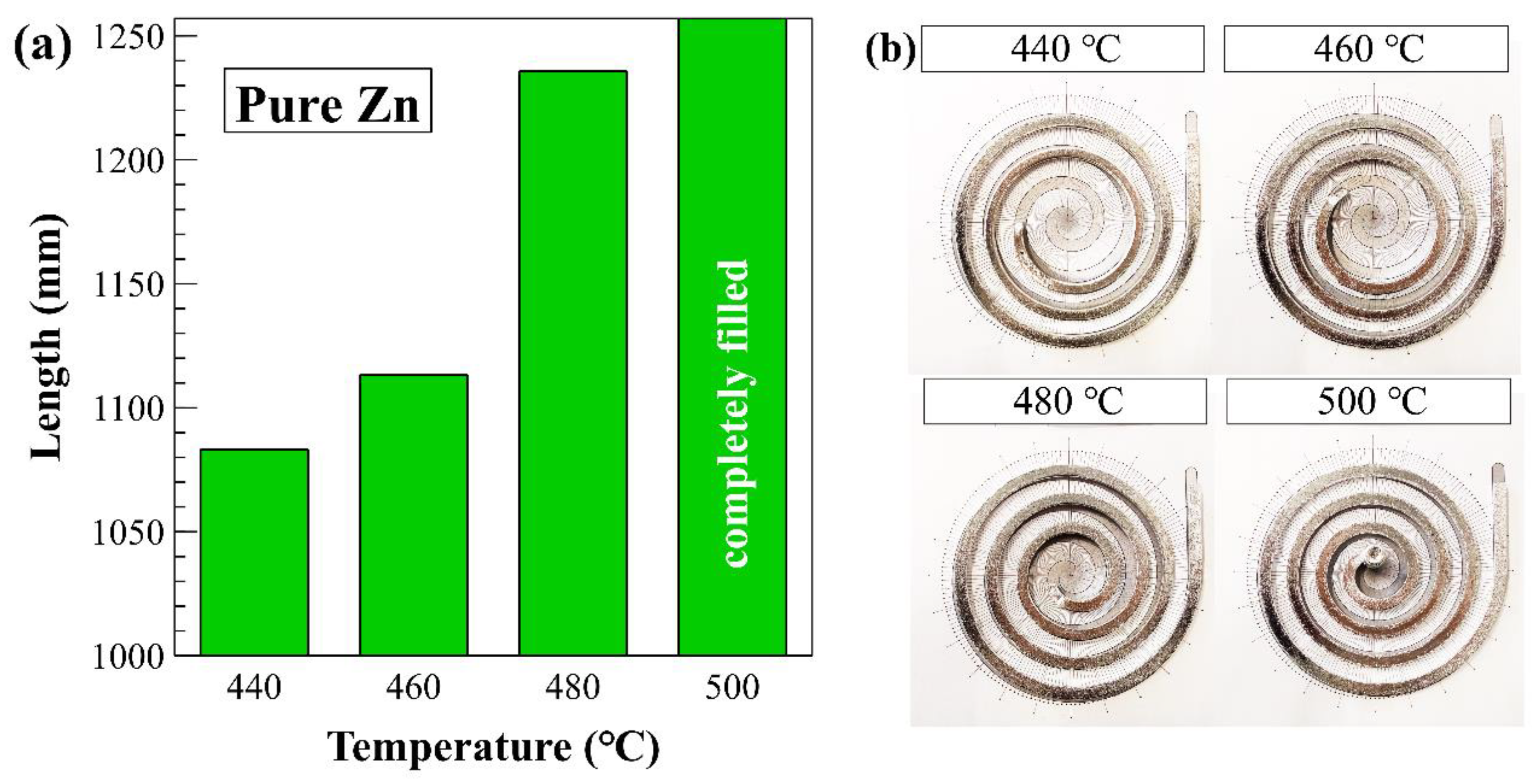
Figure 1. Fluidity test results of pure Zn cast at different temperatures: (a) flow distance measurements, (b) fluidity test spirals.
Crystals 16 00090 g001
Figure 2. Fluidity test spirals obtained at 480 °C of Zn alloys with different amounts of Cu and Ag added.
Crystals 16 00090 g002
Figure 3. Results of fluidity tests for Zn–xAg and Zn–xCu alloys cast at 480 °C.
Crystals 16 00090 g003
Figure 4. DSC analysis data of pure Zn, Zn–xAg and Zn–xCu alloys.
Crystals 16 00090 g004
Figure 5. XRD analysis of pure Zn, Zn–xAg and Zn–xCu alloys.
Crystals 16 00090 g005
Figure 6. Optical micrographs of pure Zn, Zn–xAg, and Zn–xCu alloys.
Crystals 16 00090 g006
Figure 7. Microstructure SEM images of pure Zn, Zn–3Ag and Zn–3Cu alloys.
Crystals 16 00090 g007
Figure 8. Schematic representation of the flow-stoppage mechanism in the fluidity test: (a) CuZn5-containing alloys, (b) AgZn3-containing alloys.
Crystals 16 00090 g008
Table 1. Chemical compositions of the produced alloys determined by XRF.
AlloyCu [wt.%]Ag [wt.%]Zn [wt.%]
Pure Zinc--99.62
Zn–0.5Cu0.56-Balance
Zn–1Cu0.99-Balance
Zn–2Cu1.98-Balance
Zn–3Cu2.82-Balance
Zn–0.5Ag-0.57Balance
Zn–1Ag-1.00Balance
Zn–2Ag-1.81Balance
Zn–3Ag-2.85Balance
Table 2. EDS analysis of pure Zn, Zn–xAg and Zn–xCu alloys.
LocationZn (wt.%)Ag (wt.%)Cu (wt.%)
195.45--
290.1512.72-
394.541.23-
484.81-5.50
590.34--
Disclaimer/Publisher’s Note: The statements, opinions and data contained in all publications are solely those of the individual author(s) and contributor(s) and not of MDPI and/or the editor(s). MDPI and/or the editor(s) disclaim responsibility for any injury to people or property resulting from any ideas, methods, instructions or products referred to in the content.