Article

Preparation of Temperature-Responsive Janus Nanosheets and Their Application in Emulsions

1
College of Chemical and Materials Engineering, Hainan Vocational University of Science and Technology, Haikou 571126, China
2
School of Chemical Engineering, University of Science and Technology Liaoning, Anshan 114051, China
3
School of Chemistry and Chemical Engineering, Hainan University, Haikou 570228, China
*
Authors to whom correspondence should be addressed.
These authors contributed equally to this work.
Crystals 2025, 15(10), 891; https://doi.org/10.3390/cryst15100891
Submission received: 24 September 2025 / Revised: 13 October 2025 / Accepted: 13 October 2025 / Published: 15 October 2025
(This article belongs to the Section Macromolecular Crystals)

Abstract

In this study, patch-structured C8/CHO template microspheres were successfully synthesized through in situ reduction and sol–gel reactions, providing a reusable platform for subsequent modifications. Based on these templates, temperature-responsive PW12O403−-PILs/PNIPAM Janus nanosheets were prepared via sequential Schiff-base coupling and ATRP. Structural characterizations (XRD, SEM, TEM, FTIR, and TGA) confirmed successful functionalization and nanosheet formation. The PNIPAM moiety endowed the nanosheets with temperature responsiveness, while the incorporation of polymerized ionic liquids and phosphotungstate anions further enhanced amphiphilicity and dispersion stability. When applied as particulate emulsifiers in water/toluene systems, the Janus nanosheets formed stable Pickering emulsions at elevated temperatures and underwent reversible emulsification–demulsification upon temperature cycling. These findings demonstrate the potential of PW12O403−-PILs/PNIPAM Janus nanosheets as smart emulsifiers for responsive separation and formulation technologies.

1. Introduction

Emulsification and demulsification play vital roles in both industrial processes and daily life. In the food industry, for example, emulsifiers improve production efficiency, enhance texture, and, by stabilizing dispersed systems, contribute to higher product quality and longer shelf life [1,2]. In heterogeneous reactions, such as biodiesel production, esterification between lower alcohols (e.g., methanol, ethanol, propanol, butanol, pentanol) and fatty acids (e.g., animal and vegetable oils) represents the key step [3,4]. However, the poor miscibility of some alcohols with fatty acids hinders reaction efficiency. The addition of emulsifiers improves miscibility, enlarges the interfacial area, and thus promotes reaction progress. A similar challenge occurs in petroleum refining: during electrostatic desalting, low-quality crude oil often contains filterable solids that induce emulsion layer formation, reducing desalting efficiency. In such cases, demulsifiers are commonly used to break the emulsion and optimize refining performance [5,6].
Among various particulate emulsifiers, Janus particles have attracted increasing attention due to their intrinsic anisotropy, which enables them to stabilize immiscible phases. Molecular dynamics simulations by some studies [7,8] demonstrated that Janus particles of different shapes exhibit distinct interfacial orientations: spherical and rod-like particles adopt a single equilibrium orientation, whereas disk-shaped particles adopt two, leading to superior emulsification efficiency. These findings highlight the potential of anisotropic Janus particles in stabilizing complex multiphase systems.
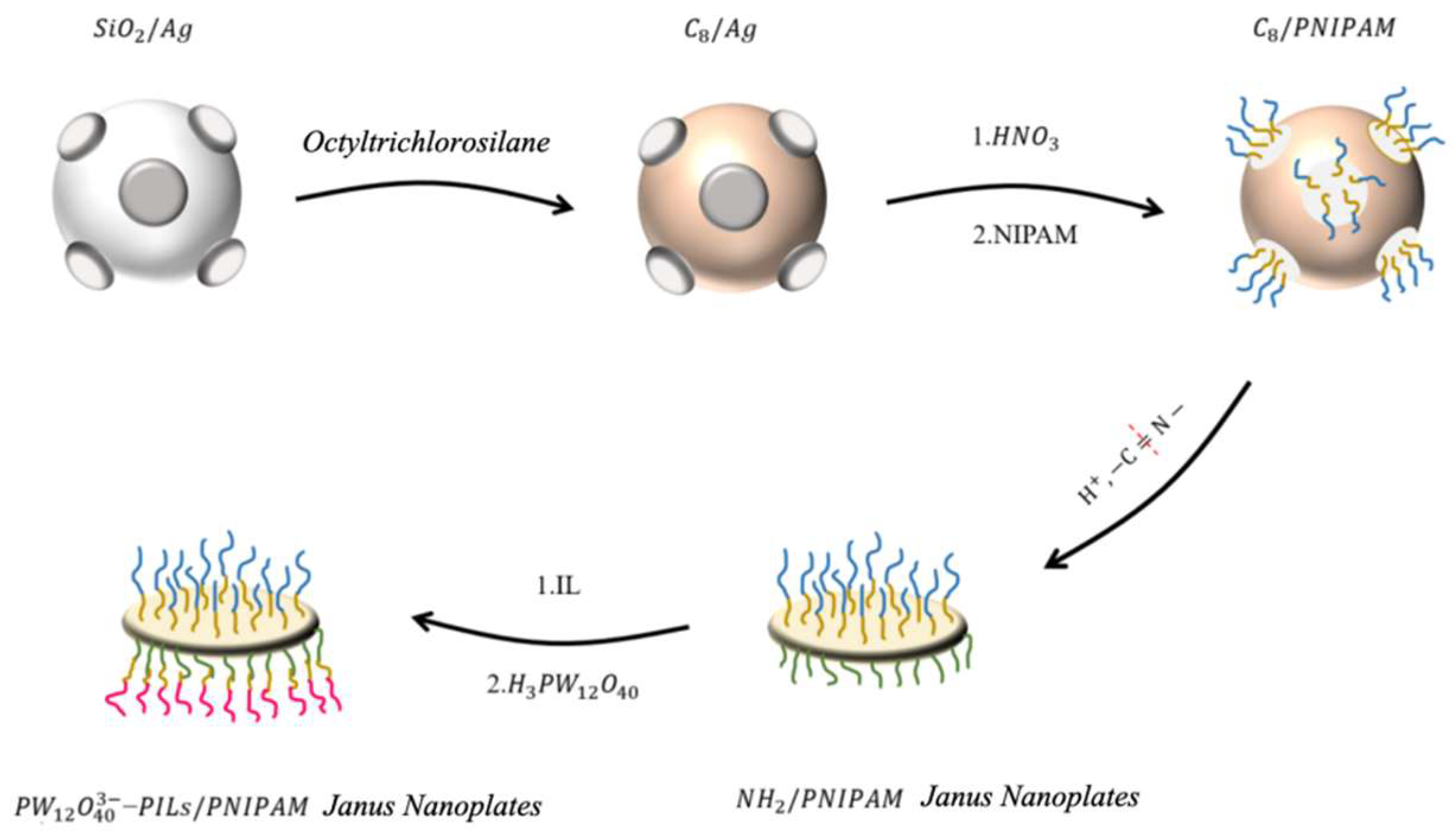
More recently, the concept of responsive materials has provided new opportunities for smart emulsification [9]. Responsive materials can alter their physical or chemical properties in response to external stimuli such as temperature, pH, or light [10]. When combined with Janus structures, they yield amphiphilic, stimuli-responsive emulsifiers whose emulsification and demulsification performance can be actively tuned by environmental factors [11]. Building on this idea, the present study designs and prepares temperature-responsive nanosheets and applies them as particulate emulsifiers for water/oil systems. By adjusting the system temperature, controlled emulsification and demulsification are achieved [12]. Furthermore, microspheres derived from the exfoliation of nanosheets serve as reusable templates for subsequent reactions, enabling the regeneration of nanosheet structures (Figure 1) [13].

2. Results and Discussion

2.1. XRD Analysis

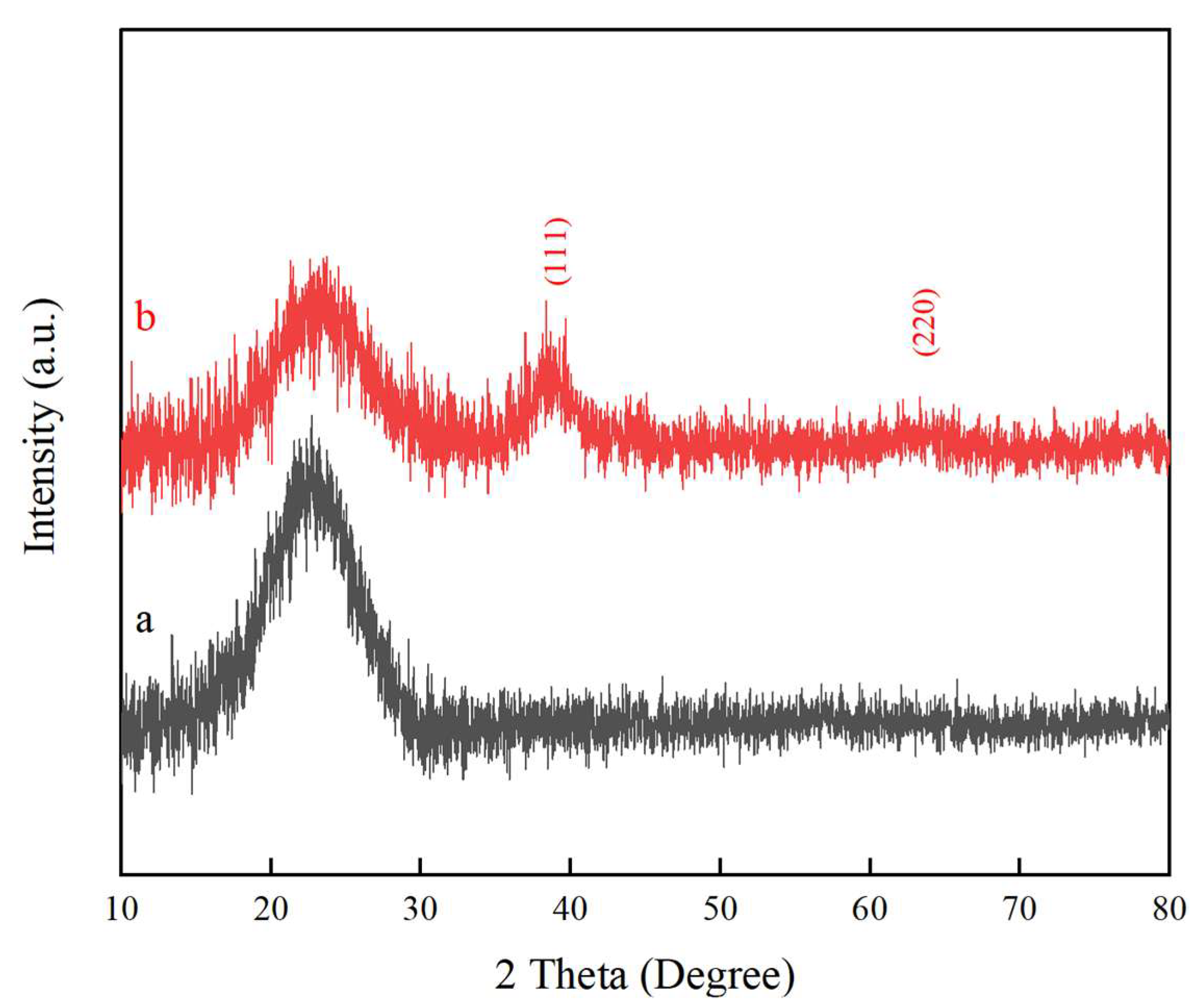
The structural characteristics of SiO2 NPs and SiO2/Ag NPs were analyzed using an X’Pert Powder diffractometer (Rigaku Corporation, Tokyo, Japan), and the corresponding diffraction patterns are presented in Figure 2. The X-ray diffraction (XRD) patterns from 3 to 40 degree were collected on Rigaku D/max-2500 with an incident wavelength of 0.154 nm (Cu Kα radiation) and a Lynx-Eye detector. Because silica is amorphous, pattern (a) shows no sharp diffraction peaks; instead, a broad peak appears at 2θ = 20–30°, confirming the formation of SiO2 NPs. In contrast, pattern (b) exhibits distinct peaks at 2θ = 38.5° and 65.1°, which can be assigned to the (111) and (220) [14,15] planes of metallic silver. Compared with the Fe3O4@SiO2 NPs described in previous studies, these silver peaks are weaker and fewer in number.
This difference may arise from the relatively small size of silver particles reduced in situ on the silica surface. The Ag NPs likely act as “protective placeholders,” with their diameter directly dictating the size of the subsequent Janus nanosheets. In this work, we aimed to prepare Janus sheets of ~5 nm, requiring the Ag NPs to be of similar dimensions. When ~5 nm Ag NPs are uniformly distributed across the silica surface, their overall mass contribution becomes negligible relative to the silica microsphere core. Consequently, the characteristic peaks of silver are less intense, consistent with the presence of small, well-dispersed Ag NPs.

2.2. SEM Analysis

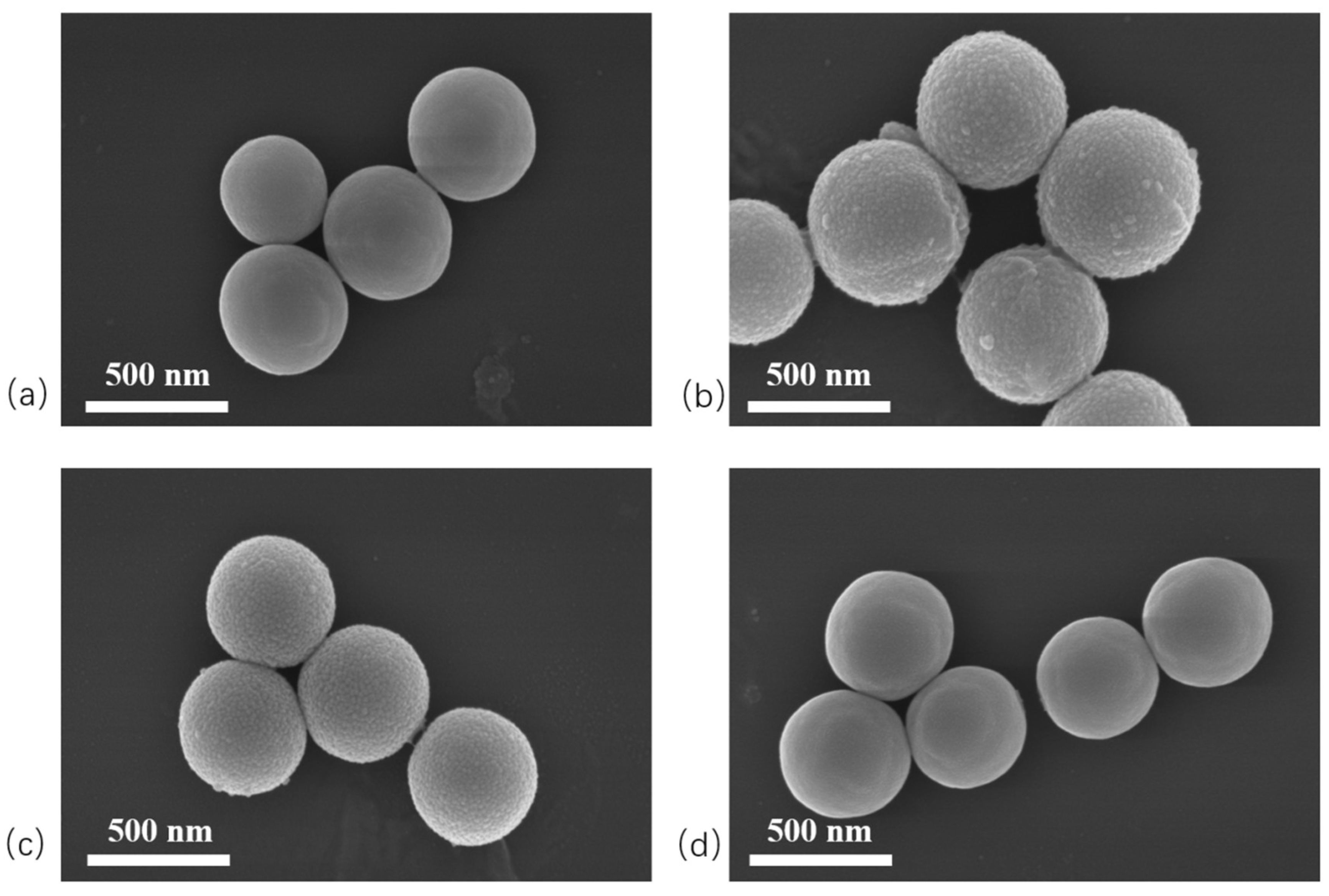
The morphology of the samples was examined by scanning electron microscopy (SEM), and the images are presented in Figure 3. Figure 3a shows SiO2 nanoparticles, which appear as uniform microspheres with an average diameter of ~400 nm, clear boundaries, no aggregation, and smooth surfaces.
In contrast, Figure 3b displays SiO2/Ag NPs, where the deposition of silver nanoparticles renders the microsphere surface rough and uneven. The silver nanoparticles are clearly visible and are approximately 5 nm in size. Figure 3c shows C8/Ag NPs, in which C8 groups were grafted into the gaps between silver nanoparticles. Due to the short molecular chains of the C8 groups, the microsphere surface remains uneven after modification.
Figure 3d corresponds to C8/OH NPs obtained after ultrasonic etching in nitric acid for 2 h. The sites formerly occupied by silver nanoparticles appear as concave pits on the microsphere surface, and no protruding particles are observed. These morphological features confirm that the silver nanoparticles were successfully removed.
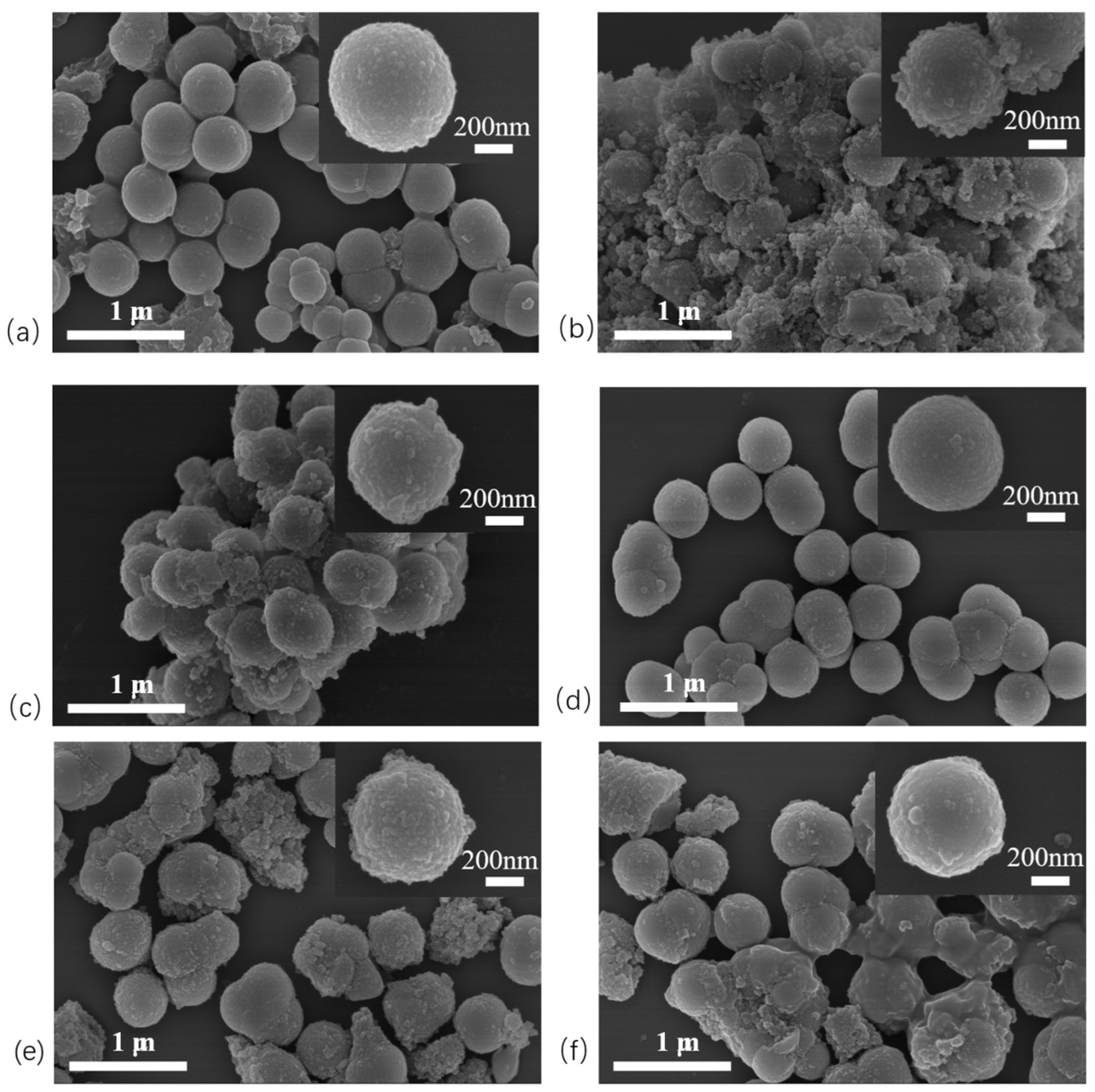
The morphological evolution of the microspheres during stepwise functionalization was examined by SEM, and the images are presented in Figure 4. Figure 4a shows C8/CHO NPs. The microspheres exhibit protrusions at sites that were originally concave, corresponding to aldehyde silane groups grafted through sol–gel reactions with surface hydroxyl groups of silica.
Figure 4b presents C8/CNSi(OC2H5)3 NPs, obtained when the outward-facing aldehyde groups on C8/CHO microspheres reacted with amino groups of amino silane via a Schiff-base reaction. As a result, the microsphere surfaces appear more densely covered with material, confirming the successful attachment of amino silane moieties.
In Figure 4c, C8/SiO2 NPs are displayed. Compared with Figure 4b, fewer small particles are observed between the microspheres. These particles can be interpreted as outward-facing ethoxysilane groups introduced during amino silane modification. Subsequent sol–gel reactions converted these groups into a thin silica layer, thereby reducing the number of visible particles on the microsphere surface.
Figure 4d shows C8/SiO2-Br NPs obtained after ATRP initiator modification. Morphologically, the microspheres exhibit little to no change compared with earlier stages, suggesting that initiator grafting does not significantly alter the overall particle appearance. In contrast, Figure 4e displays microspheres grafted with PNIPAM via ATRP. These microspheres show a marked increase in surface polymer coverage, giving them a distinctly rougher morphology.
Finally, Figure 4f corresponds to template C8/CHO NPs obtained by ultrasonic exfoliation of C8/PNIPAM NPs under acidic conditions, exploiting the dynamic –C=N– bond. The microsphere surfaces appear less covered than in Figure 4e but still exhibit protrusions, which are attributable to outward-facing aldehyde groups. These observations confirm the reversible modification pathway and demonstrate the recyclability of template microspheres for further functionalization.
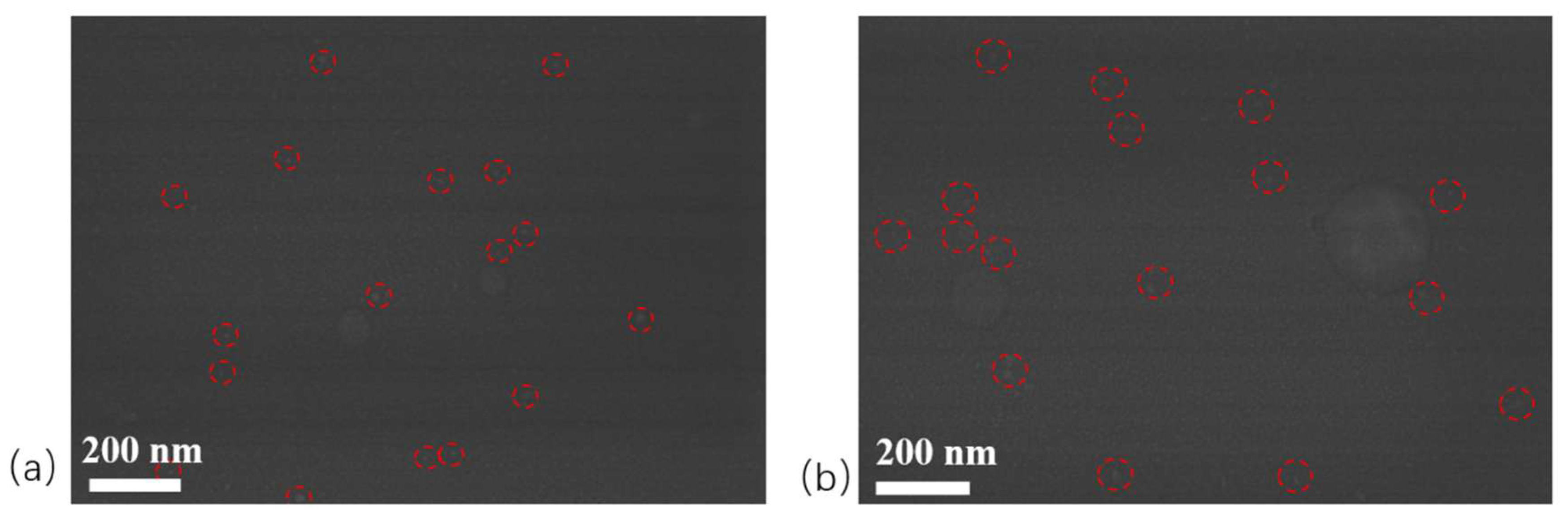
The morphological features of exfoliated and functionalized Janus nanosheets were further examined by SEM, as shown in Figure 5. Figure 5a presents NH2/PNIPAM Janus nanosheets, highlighted by the red dashed circle. Because these nanosheets are both small and thin, the structures observed in the SEM image may appear curled or stacked, consistent with their fragile sheet-like nature.
Figure 5b displays temperature-responsive PW12O403−-PILs/PNIPAM Janus nanosheets, marked by the red dashed circle. Their morphology appears similar to that of NH2/PNIPAM Janus nanosheets, showing no significant differences in overall structure. This similarity likely results from the synthesis pathway, in which PW12O403−-PILs/PNIPAM Janus nanosheets are obtained by grafting polymerized ionic liquids onto the amino side of NH2/PNIPAM Janus nanosheets. Since this modification does not alter the intrinsic disk-like morphology, the two types of nanosheets exhibit comparable SEM appearances.

2.3. FTIR Analysis

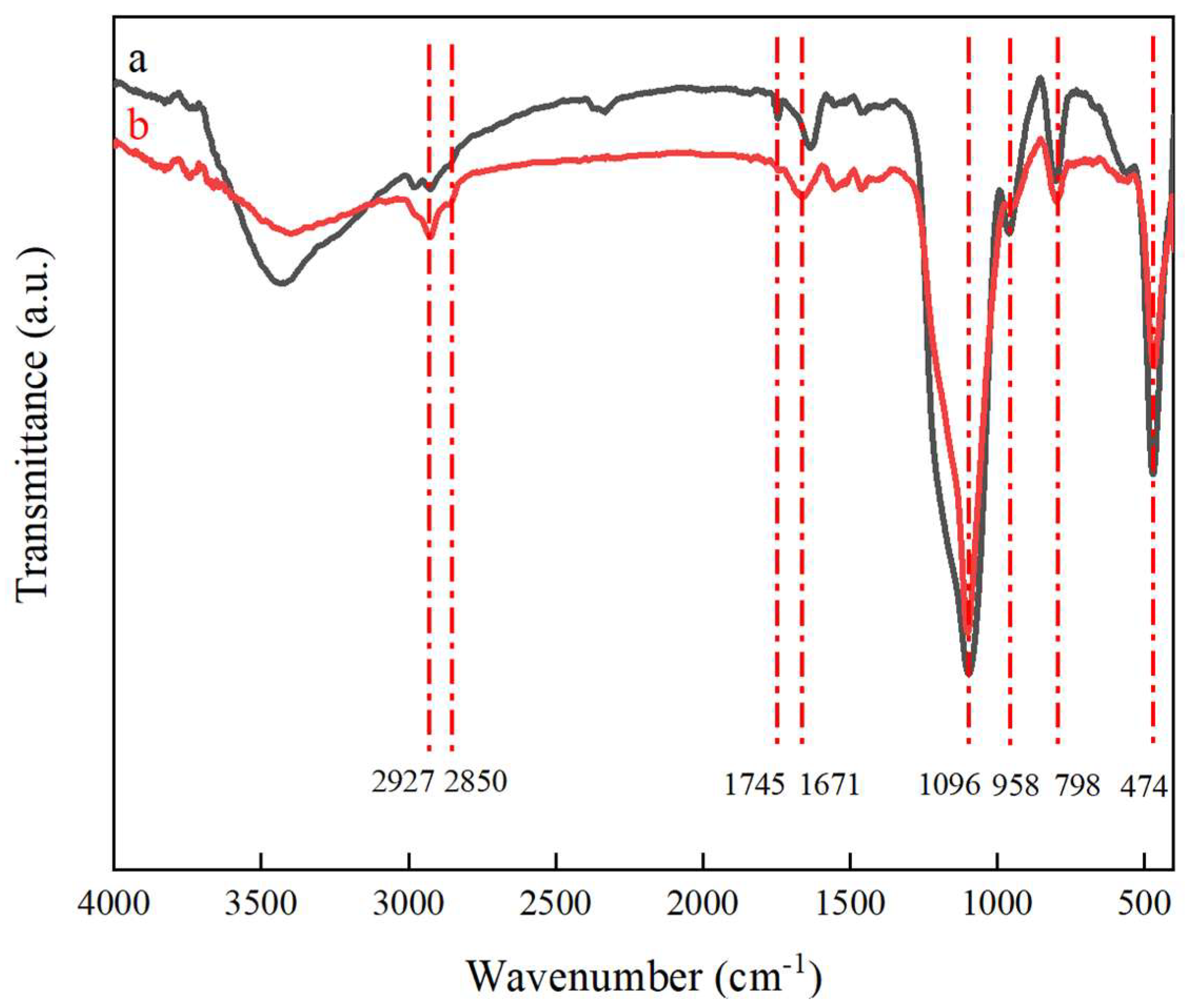
The functionalization of SiO2 was confirmed by FTIR spectroscopy, and the results are presented in Figure 6. Characteristic peaks were observed at 474 cm−1 (Si–O–Si bending), 798 cm−1 (O–Si–O bending), 958 cm−1 (Si–OH stretching), and 1096 cm−1 (Si–O–Si stretching). Notably, the Si–O–Si stretching band at 1096 cm−1 was much stronger than the bending vibration at 474 cm−1, indicating the presence of abundant oxygen bridges and confirming the successful synthesis of SiO2 nanoparticles [16,17].
To further functionalize the nanoparticles, hydrophobic C8 groups were introduced into the interparticle gaps of Ag NPs on the SiO2/Ag NP surface via a sol–gel process. This modification imparted hydrophobicity to the resulting C8/OH surface. The Ag NPs acted as “protective placeholders” and were subsequently etched away through a redox reaction with nitric acid, exposing new hydrophilic silanol groups that provided active sites for subsequent modifications.
Following nitric acid etching, the silanol groups reacted with triethoxysilyl butyraldehyde through a sol–gel reaction, yielding C8/CHO NPs with outward-facing –CHO groups. In the FTIR spectrum of C8/CHO NPs (curve a, Figure 6), a distinct absorption at 1745 cm−1 corresponded to –CHO stretching vibrations, while weaker bands at 2850 cm−1 and 2927 cm−1 were assigned to –CH3 and –CH2 groups, respectively, confirming successful aldehyde functionalization.
The outward-facing aldehyde groups subsequently reacted with the amino groups of 3-aminopropyltriethoxysilane via a Schiff-base reaction, forming dynamic imine (–C=N–) linkages. This transformation was clearly supported by FTIR analysis of the C8/CNSi(OC2H5)3 NPs (curve b, Figure 6), where the aldehyde peak disappeared and a new band emerged at 1671 cm−1, attributed to imine absorption. These results confirm the successful synthesis of C8/CNSi(OC2H5)3 NPs with functional –C=N– linkages on their surface.
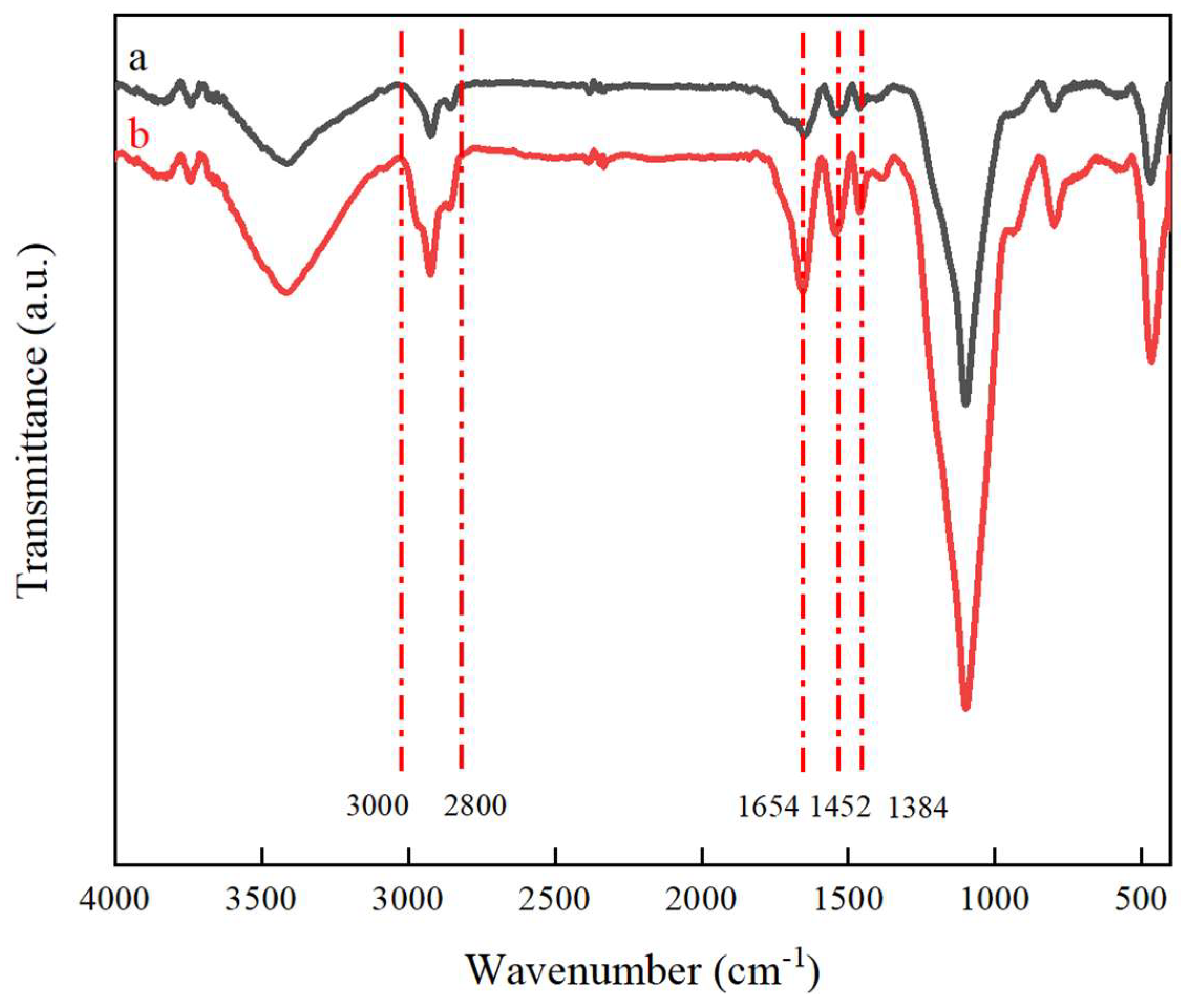
A thin silica layer was formed on the surface of C8/CNSi(OC2H5)3 NPs through a sol–gel reaction. To further functionalize the particles, the hydroxyl groups on the outer silica shell of C8/SiO2 NPs were reacted with 2-bromoisobutyryl bromide via an acyl bromination process, thereby producing C8/SiO2-Br NPs. The FTIR spectrum of C8/SiO2-Br NPs (Figure 7a) exhibits a characteristic absorption band at 1654 cm−1, attributed to the C=O stretching vibration in amide (CONH) groups [18,19], confirming successful surface modification.
Subsequently, atom transfer radical polymerization (ATRP) was employed to graft PNIPAM chains onto the nanoparticle surface. In this process, CuBr acted as the catalyst, while tris(2-dimethylaminoethyl)amine served as the ligand, stabilizing the catalyst and improving its solubility. These components together enabled the efficient polymerization of N-isopropylacrylamide (NIPAM) monomers on the nanoparticle surface.
The FTIR spectrum of C8/PNIPAM NPs (Figure 7b) provides direct evidence of successful grafting. A band near 1384 cm−1 arises from the splitting of coupled symmetric deformations of the dimethyl groups on the isopropyl moiety [20,21], while a peak at 1452 cm−1 corresponds to isopropyl vibrations. In addition, the amide band at 1654 cm−1 becomes more pronounced, and the C–H stretching bands at 2800–3000 cm−1 are markedly stronger than those of the ATRP-modified sample. Together, these features confirm the successful grafting of PNIPAM onto the C8/SiO2-Br microspheres [22,23], yielding temperature-responsive C8/PNIPAM microspheres [18,19].
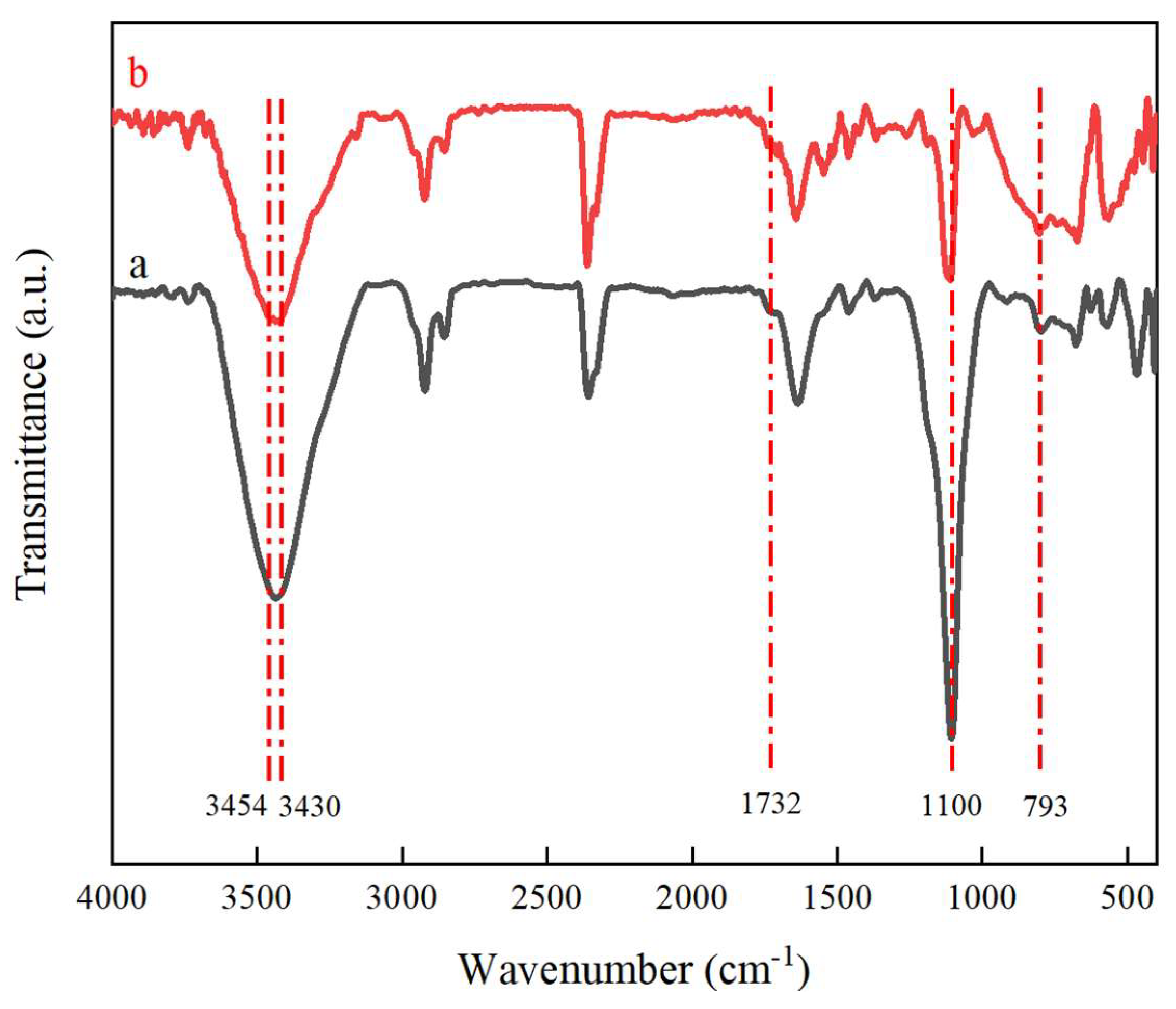
Because the dynamic C=N bond is unstable under acidic conditions, NH2/PNIPAM Janus nanosheets were separated from C8/PNIPAM nanoparticles. The FTIR spectrum of the Janus nanosheets (Figure 8b) displays characteristic –NH2 absorption bands at 3454 and 3430 cm−1, confirming the presence of amino groups. Figure 8a corresponds to the FTIR spectrum of template microspheres (C8/CHO NPs) obtained after nanosheet removal, which exhibits a clear aldehyde peak at 1732 cm−1.
Both spectra also show Si–O–Si and O–Si–O vibration bands at 1100 and 793 cm−1, confirming the presence of SiO2 nanoparticles in both the Janus nanosheets and the template microspheres. Notably, the Si–O–Si peak is stronger in the template microspheres than in the Janus nanosheets. This difference arises because the microspheres possess a silica core subjected to multiple surface modifications, resulting in a higher silica mass fraction, whereas the Janus nanosheets contain only a thin silica layer on the surface, representing a smaller silica fraction.
The detached C8/CHO NPs act as reusable template microspheres. After centrifugation, they can be applied again to prepare C8/PNIPAM NPs, thereby reducing costs and simplifying experimental procedures in practical applications. This recyclability demonstrates not only the efficiency of the synthetic route but also its potential value for large-scale preparation of Janus nanosheets.
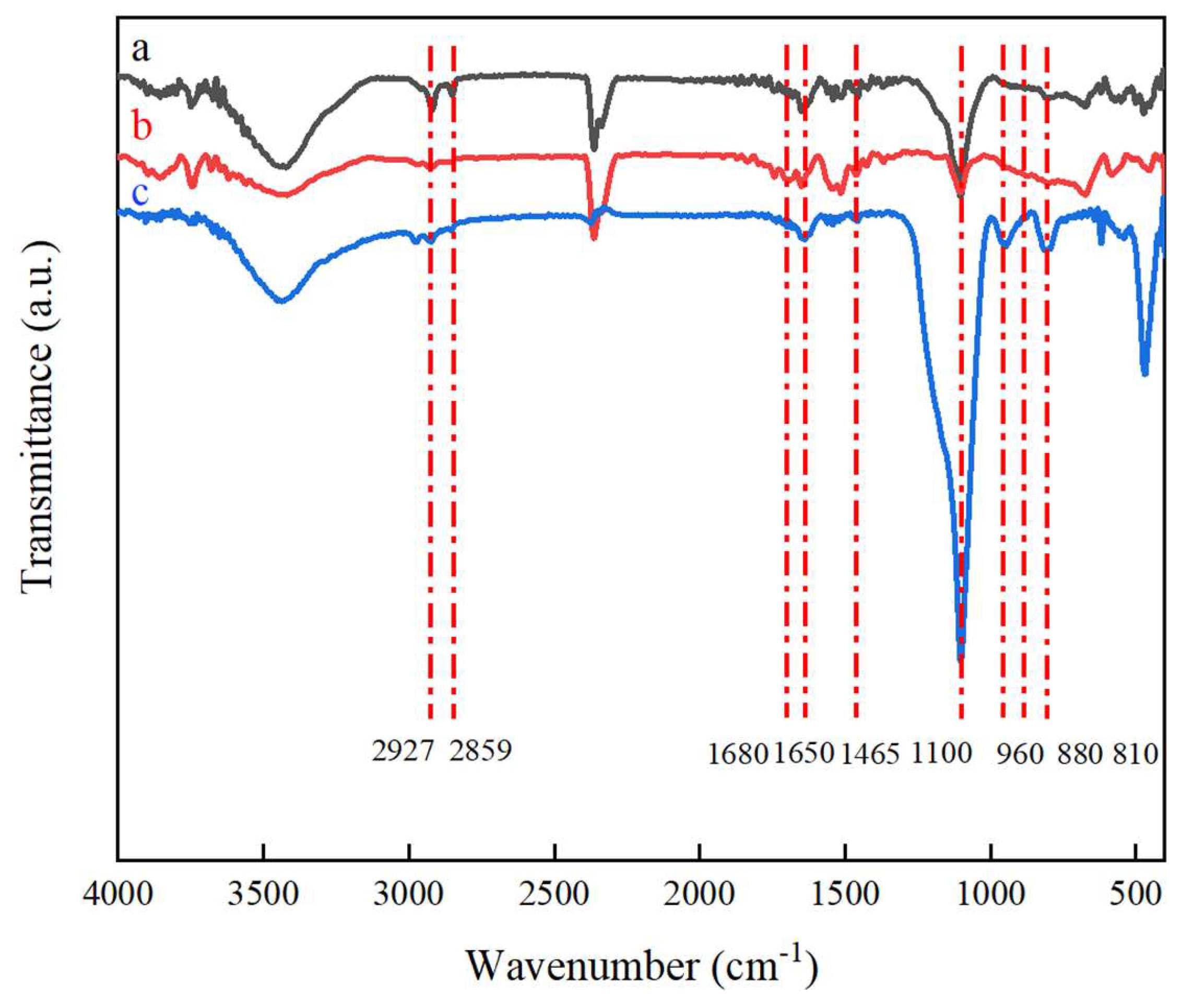
The ATRP initiator was first grafted onto the amino side of PNIPAM Janus nanosheets, yielding Br/PNIPAM Janus nanosheets. The FTIR spectrum (Figure 9a) shows a characteristic absorption band at 1650 cm−1, assigned to the C=O stretching vibration of the amide (CONH) group, confirming successful initiator attachment.
Subsequently, a second ATRP was employed to graft 1-vinyl-3-ethylimidazolium bromide monomers onto the amino side of the nanosheets. The resulting PILs/PNIPAM Janus nanosheets exhibited distinct FTIR features (Figure 9b): peaks at 1465 and 1680 cm−1 were characteristic of the imidazole ring, while absorptions at 2927 and 2859 cm−1 corresponded to –CH2– and –CH3 stretching vibrations, respectively. These results confirm the successful incorporation of imidazolium-based ionic liquid moieties onto the Janus nanosheet surface.
To further enhance functionality, the ion-exchange property of the grafted ionic liquid was exploited to incorporate PW12O403− anions, producing PW12O403−-PILs/PNIPAM Janus nanosheets. The FTIR spectrum (Figure 9c) revealed absorption bands at 810, 880, and 960 cm−1, attributed to O–b1–W, O–b2–W, and W=O vibrations, respectively. In addition, the P–O stretching band appeared at 1100 cm−1, overlapping with the Si–O–Si signal. The appearance of these characteristic peaks provides strong evidence for the successful synthesis of PW12O403−-PILs/PNIPAM Janus nanosheets.

2.4. TEM Analysis

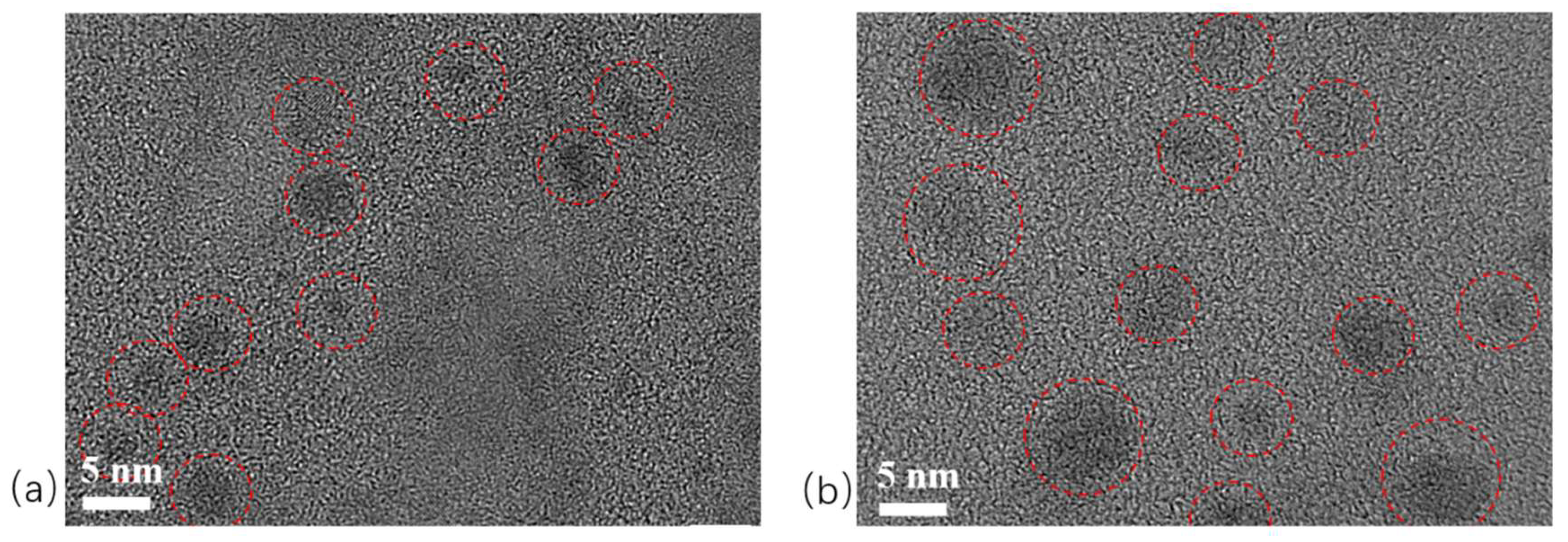
To obtain clearer insights into nanosheet morphology, high-magnification transmission electron microscopy (TEM) was employed to examine NH2/PNIPAM and PW12O403−-PILs/PNIPAM Janus nanosheets. As shown in Figure 10a, the NH2/PNIPAM Janus nanosheets exhibit an average diameter of ~5 nm.
In comparison in Figure 10b, the PW12O403−-PILs/PNIPAM Janus nanosheets are slightly larger, with a diameter of ~7 nm, and appear darker in TEM contrast. This difference arises because polymerized ionic liquids were grafted onto the amino side of NH2/PNIPAM nanosheets, thereby increasing their thickness and resulting in a darker appearance under TEM.
These observations confirm that the incorporation of polymerized ionic liquids not only increases the overall size of the Janus nanosheets but also alters their imaging contrast, providing further evidence of successful surface modification.

2.5. TG Analysis

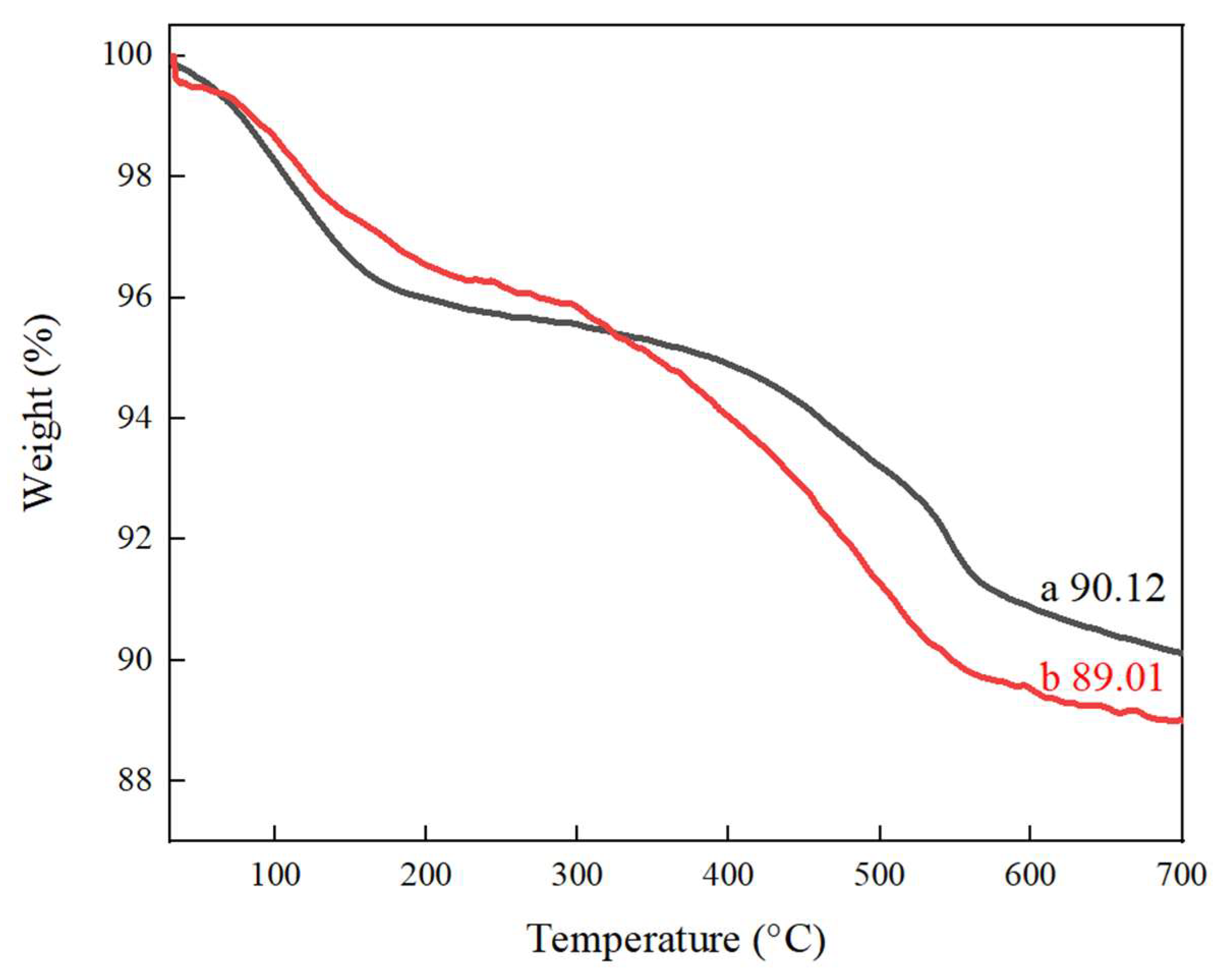
Thermogravimetric analysis (TGA) was conducted to determine the organic content grafted onto the silica surface. The formula used is as follows:
residual mass = m1/(m1 + m2)
Figure 11a presents the TGA curve of C8/OH NPs, which shows a residual mass of 90.12% at 700 °C, as expressed in Equation (1)
S i O 2 S i O 2 + C 8 = 90.12 %
Accordingly, the SiO2 mass fraction was calculated as 90.12%, while the grafted C8 fraction accounted for 9.88%.
Figure 11b shows the TGA curve of C8/PNIPAM NPs, which exhibits a residual mass of 89.01% at 700 °C, as given in Equation (2)
S i O 2 S i O 2 + C 8 + P N I P A M = 89.01 %
Because C8/PNIPAM NPs were prepared by grafting PNIPAM onto C8/OH NPs, the SiO2 mass fraction was assumed to remain at 90.12%. Substituting this value into Equation (2) yielded a PNIPAM content of 1.25%.
These results confirm that both C8 and PNIPAM were successfully grafted onto the silica nanoparticles and provide quantitative evidence for the degree of organic modification.
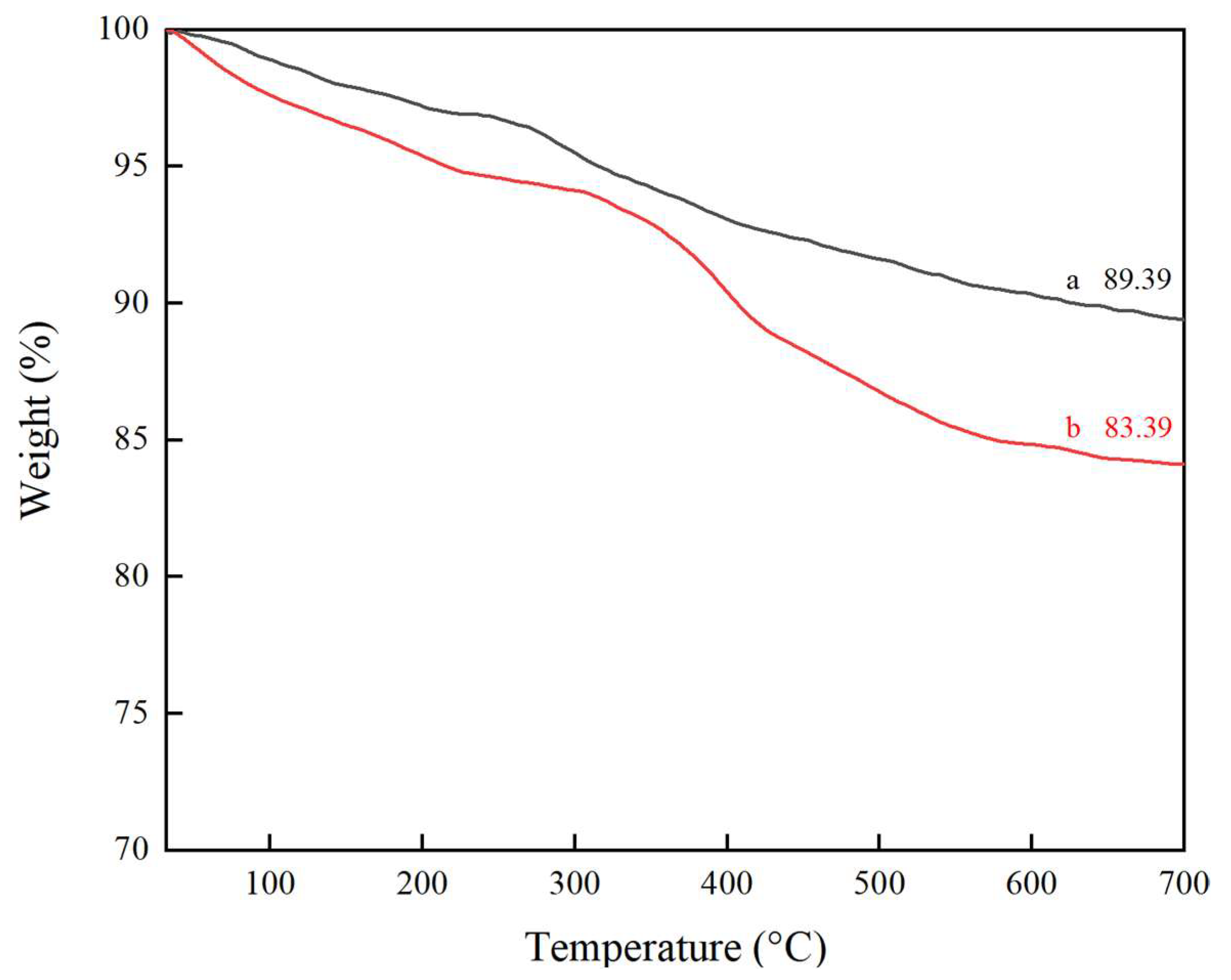
Thermogravimetric analysis (TGA) of the Janus nanosheets was also conducted under a nitrogen atmosphere to quantify the organic content. Figure 12a shows the TGA curve of NH2/PNIPAM Janus nanosheets, which exhibited a residual mass of 89.39% at 700 °C, as expressed in Equation (3)
S i O 2 S i O 2 + P N I P A M = 89.39 %
Based on this result, the SiO2 mass fraction was calculated to be 89.39%, while PNIPAM accounted for 10.61%.
Figure 12b presents the TGA curve of PW12O403−-PILs/PNIPAM Janus nanosheets, which displayed a residual mass of 83.39% at 700 °C, as given in Equation (4)
S i O 2 S i O 2 + P N P I P A M + P I L = 83.39 %
Since these nanosheets were synthesized by grafting phosphotungstate-based polymeric ionic liquids onto the amino side of NH2/PNIPAM Janus nanosheets, the SiO2 mass fraction was assumed to remain at 88%. Using this value in Equation (4) yielded a grafted PW12O403−-PIL content of 7.19%.
These results confirm the successful grafting of both PNIPAM and PW12O403−-PILs onto the Janus nanosheets and provide quantitative evidence for the degree of surface modification.

2.6. Emulsification Experiment

The temperature-responsive behavior of PW12O403−-PILs/PNIPAM Janus nanosheets was investigated by dispersing them in water and toluene. Changes in environmental temperature were used to probe the hydrophilic–hydrophobic properties of the surface functional groups.
PNIPAM is known to have a lower critical solution temperature (LCST) of 32 °C. Its structure contains both hydrophobic moieties (vinyl backbone and isopropyl side chains) and hydrophilic amide groups. In aqueous solution, the hydrophilic groups form hydrogen bonds with water molecules, while water–water hydrogen bonding also occurs. Because hydrogen bonding is highly temperature-dependent, changes in temperature modulate these interactions and, consequently, the solubility of the polymer.
Below the LCST, the free energy gained from hydrogen bonding (polymer–water and water–water) exceeds the free energy cost of exposing hydrophobic groups [24,25,26,27]. As a result, the polymer adopts an extended conformation and behaves hydrophilically. Above the LCST, hydrogen bonding weakens, causing the polymer to collapse into a globular conformation and precipitate from solution, thereby exhibiting hydrophobicity [28,29,30].
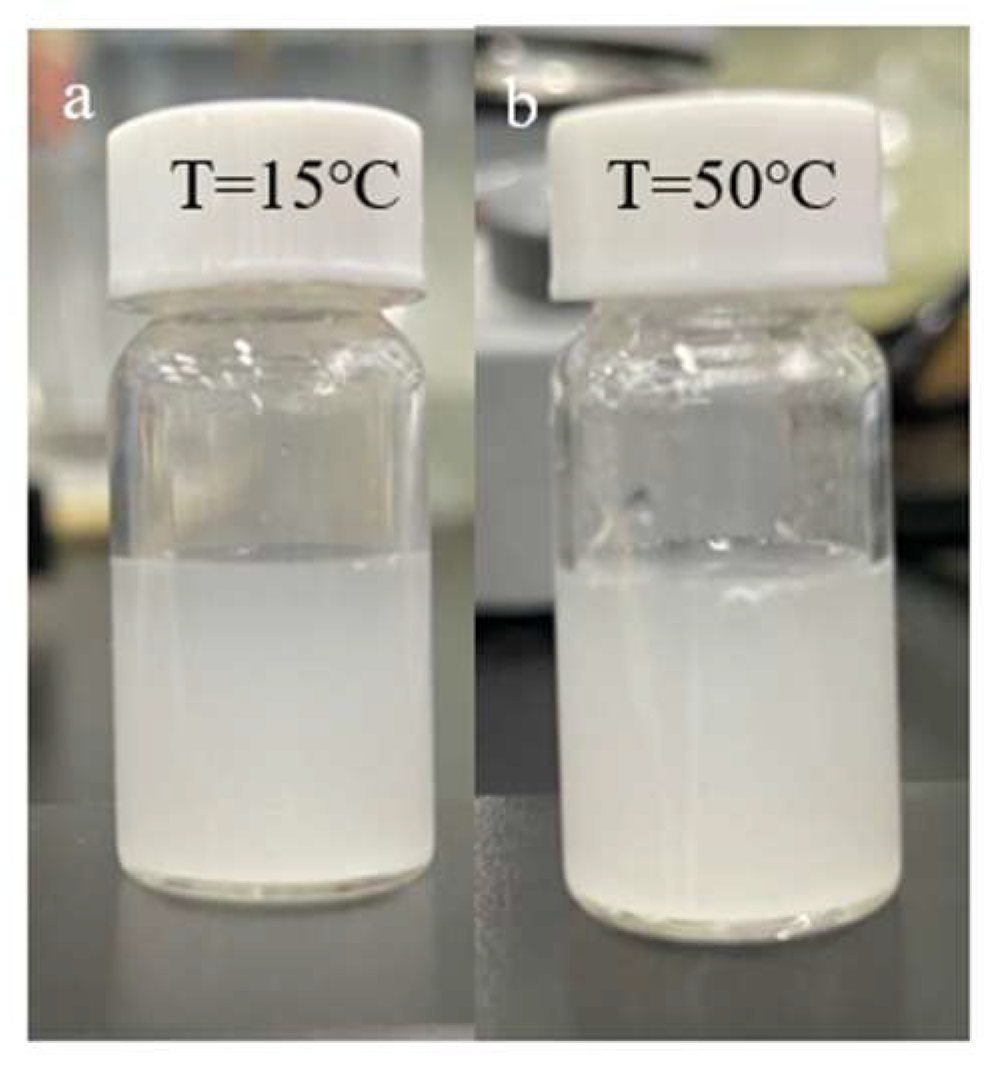
At temperatures below the LCST, amphiphilic PW12O403−-PILs/PNIPAM Janus nanosheets are uniformly dispersed in water (Figure 13a). Even when the temperature is above the LCST, for example, at 50 °C, where PNIPAM becomes hydrophobic, PW12O403−-PILs/PNIPAM Janus nanosheets remain uniformly dispersed in water (Figure 13b). This indicates that the incorporation of PIL and PW12O403− groups enhances dispersion stability, even under conditions where PNIPAM alone would induce aggregation.
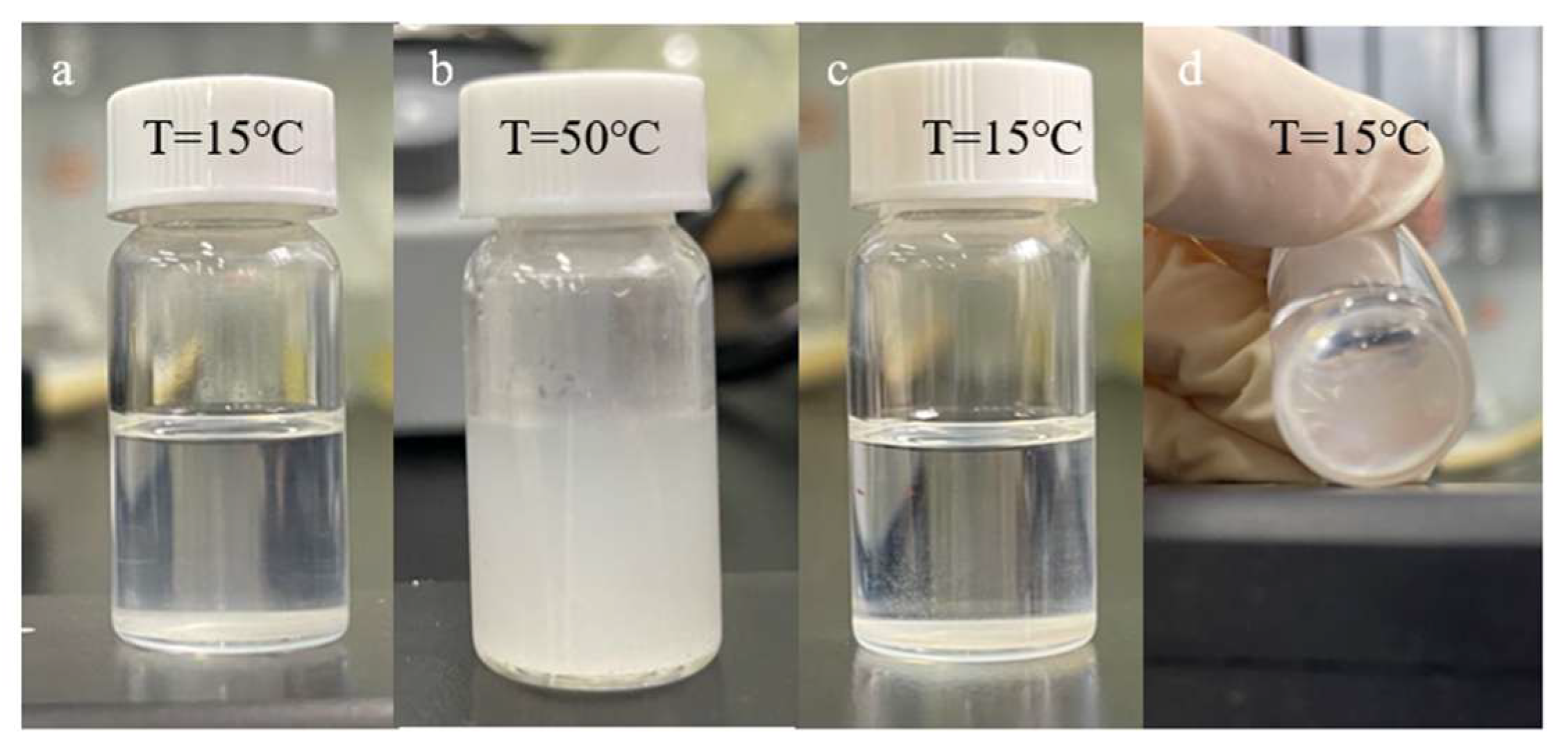
The temperature-dependent dispersion behavior of PW12O403−-PILs/PNIPAM Janus nanosheets was also examined in toluene, as shown in Figure 14. At temperatures below the LCST, the nanosheets exhibit hydrophilic properties and fail to disperse in the nonpolar solvent (Figure 14a).
In contrast, when the temperature is raised above the LCST, the nanosheets become amphiphilic due to the collapse of PNIPAM chains and disperse uniformly in toluene (Figure 14b). This demonstrates the reversible switch from hydrophilic to amphiphilic behavior upon heating.
When the temperature is subsequently lowered again below the LCST, the nanosheets precipitate from toluene and fail to remain dispersed (Figure 14c,d). This reversible transition confirms the temperature-responsive nature of PW12O403−-PILs/PNIPAM Janus nanosheets and highlights their potential utility in stimuli-responsive emulsification and separation processes.
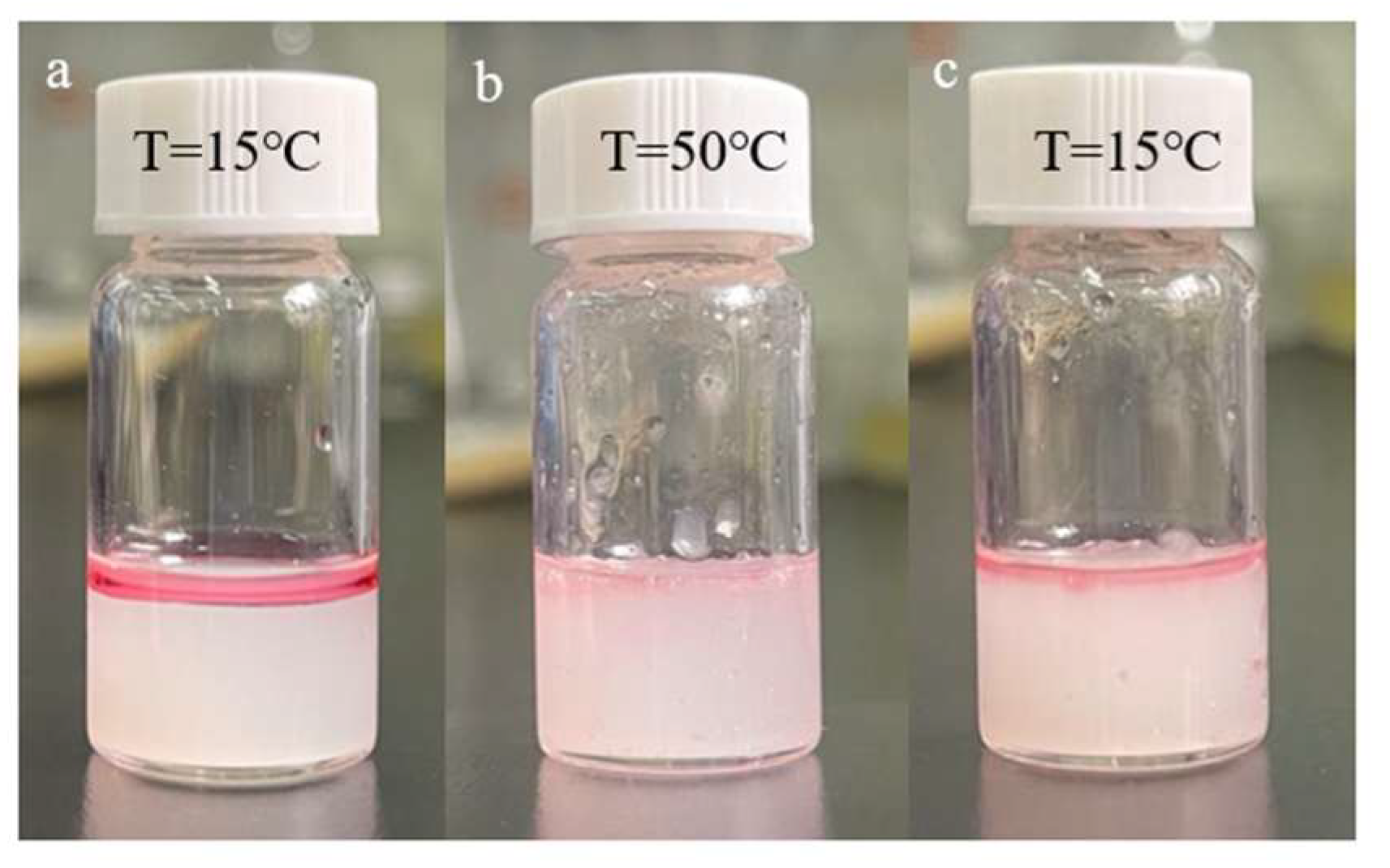
The tunable hydrophilic–hydrophobic properties of PW12O403−-PILs/PNIPAM Janus nanosheets were exploited to investigate their performance as Pickering emulsifiers in a biphasic water/toluene system (Figure 15). By regulating the environmental temperature, the nanosheets were able to switch surface properties, enabling controlled emulsification and demulsification.
At 15 °C, the nanosheets failed to emulsify the water/toluene mixture (Figure 15a), as polymers on both sides exhibited hydrophilic behavior and thus were ineffective as emulsifiers. In contrast, at 50 °C, the nanosheets successfully emulsified the mixture, producing a uniform light-pink emulsion (Figure 15b). This result was attributed to the amphiphilic character of both sides of the nanosheets, which enabled them to act as particle emulsifiers.
Upon cooling back to 15 °C, a pink oil layer reappeared and the emulsion broke (Figure 15c), because both sides of the nanosheets reverted to hydrophilic behavior. These results clearly demonstrate that by cycling the temperature (15 °C → 50 °C → 15 °C), the nanosheets can reversibly switch between hydrophilic–hydrophilic and hydrophilic–hydrophobic states. This switching behavior allows for precise control over emulsification and demulsification in water/toluene biphasic systems, highlighting the potential of these nanosheets in stimuli-responsive separation and formulation processes.
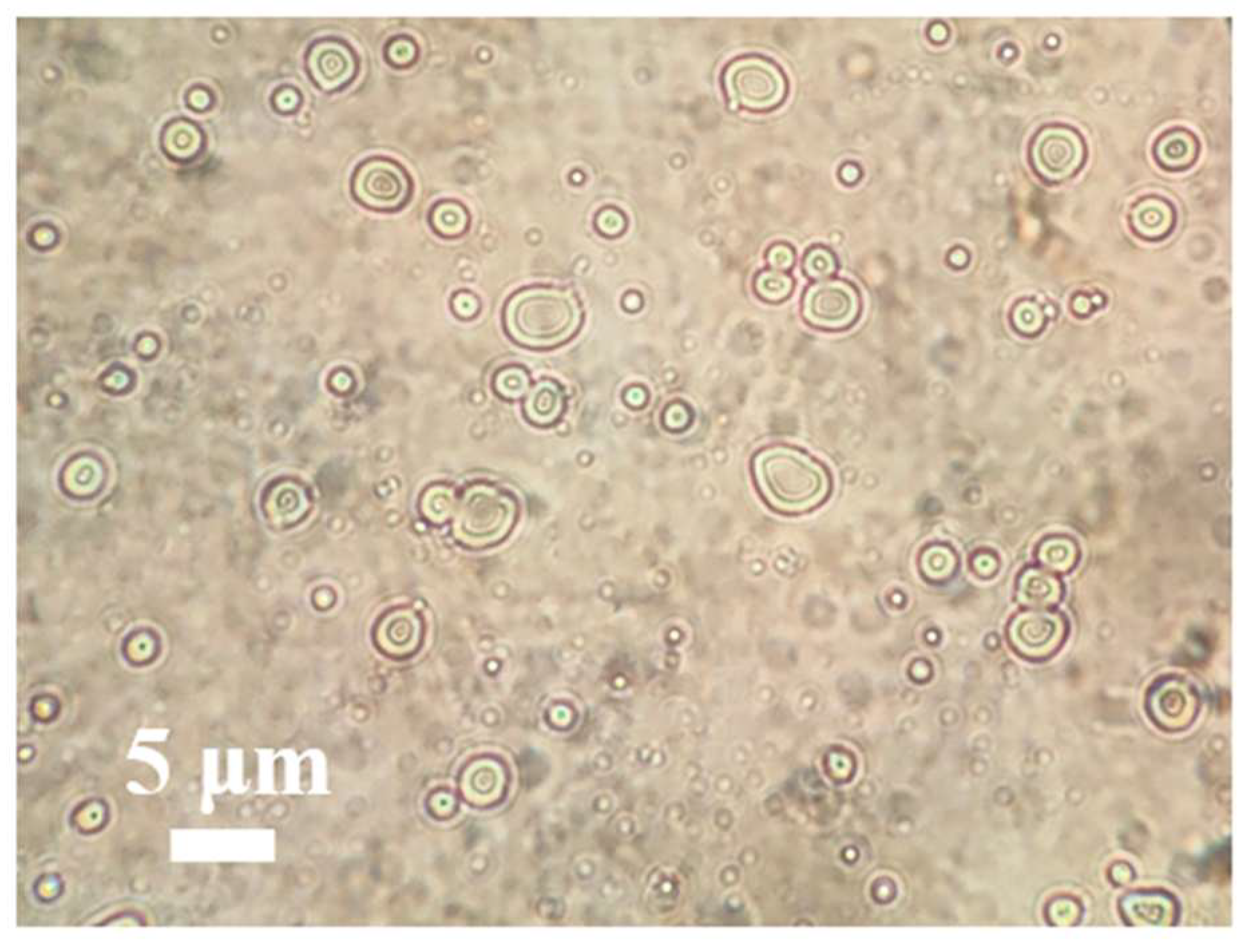
The droplet morphology of emulsions stabilized by PW12O403−-PILs/PNIPAM Janus nanosheets at 50 °C was examined using optical microscopy. The nanosheets acted as effective Pickering emulsifiers for the biphasic deionized water/toluene system under these conditions.
As shown in Figure 16, the resulting emulsion droplets exhibited an average diameter of ~5 μm, indicating the formation of uniform and stable droplets. This observation further confirms the ability of the temperature-responsive Janus nanosheets to effectively stabilize emulsions at elevated temperatures.

2.7. Contact Angle Test

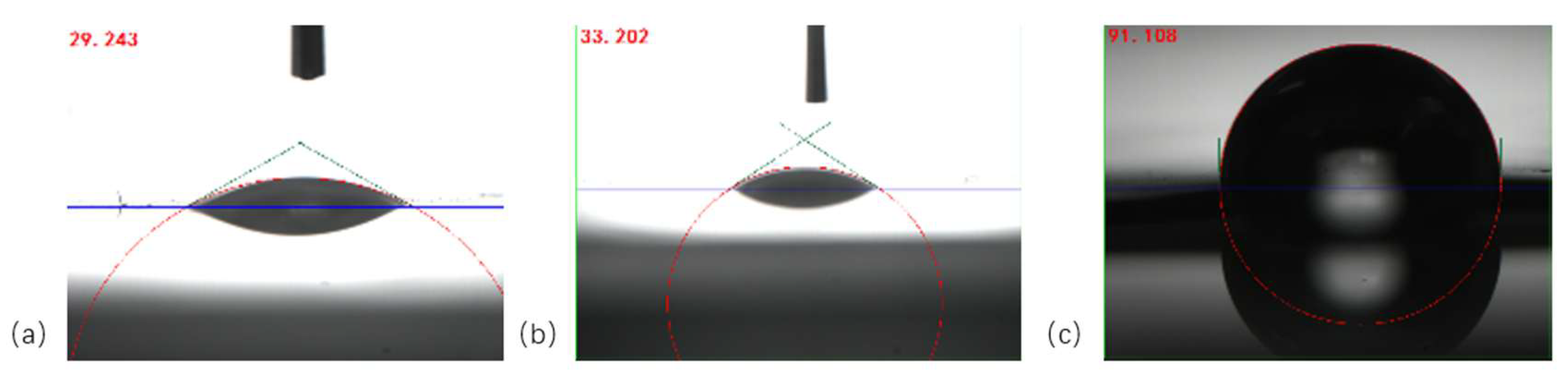
The wettability of PW12O403−-PILs/PNIPAM Janus nanosheets was evaluated by measuring the contact angles of both sides using a contact angle goniometer (Figure 17). For sample preparation, the nanosheets were self-assembled with either the PW12O403−-PILs side or the PNIPAM side oriented upward.
Figure 17a shows the measurement with the PW12O403−-PILs side oriented upward. The contact angle was 29.243°, indicating that this side is hydrophilic. When the PNIPAM side was measured at room temperature (T < LCST), the contact angle was 33.202° (Figure 17b), also confirming hydrophilic behavior under these conditions.
At 50 °C (T > LCST), however, the PNIPAM side exhibited a contact angle of 91.108° (Figure 17c), demonstrating a transition to hydrophobicity. This change arises from the collapse of PNIPAM chains above the LCST, which reduces hydrogen bonding with water and exposes hydrophobic groups.
These findings confirm that PW12O403−-PILs/PNIPAM Janus nanosheets exhibit temperature-responsive wettability, switching between hydrophilic and hydrophobic states depending on the environmental temperature. Such reversible wettability provides a structural basis for their temperature-controlled emulsification and demulsification performance.

3. Experiment

3.1. Materials and Methods

The chemical reagents used in this study are of analytical grade, and no additional purification was performed. The specific reagents and their sources are as follows: 3-Aminopropyltriethoxysilane (APTES), azobisisobutyronitrile (AIBN), toluene, anhydrous ethanol, dichloromethane (DCM), triethylamine (TEA), 2-bromoisobutyryl bromide, isopropanol, tris(2-dimethylaminoethyl)amine (Me6TREN), N-isopropylacrylamide (NIPAM), copper(I) bromide (CuBr), 1-vinyl-3-ethylimidazolium bromide, and phosphotungstic acid (H3PW12O40) were provided by Sigma-Aldrich (St. Louis, MO, USA) and used as received without further purification. Deionized water was obtained from a Milli-Q purification system (resistivity ≥ 18.2 MΩ·cm) and used in all experiments.
Main instruments: X-ray diffractometer (XRD), Rigaku D/MAX-2500 (Rigaku Corporation, Tokyo, Japan), used for characterizing the crystal structure of nano-ZnO. Transmission electron microscope (TEM), JEOL JEM-2100 (JEOL Ltd., Tokyo, Japan), was used to observe the sample’s morphology and particle size. X-ray photoelectron spectroscopy (XPS), PHI 5000 (Physical Electronics, Chanhassen, MN, USA), was used to analyze the sample’s surface chemical state. Thermogravimetric analyzer (TGA), Shimadzu DTG-60 (Shimadzu Corporation, Kyoto, Japan).

3.2. Sample Preparation

3.2.1. Preparation of C8/Ag NPs

Synthesis of SiO2 NPs. A 150 mL reaction flask was sequentially charged with 50 mL ethanol, 20 mL deionized water, and 10 mL ammonia, followed by stirring for 20 min. Subsequently, 6 mL tetraethyl orthosilicate (TEOS) was added, and the reaction mixture gradually turned milky white. After stirring at room temperature for 8 h, the suspension was centrifuged to collect the white precipitate. The product was washed with deionized water to neutrality and dried at 60 °C to afford silica nanoparticles (SiO2 NPs).
Synthesis of SiO2/Ag NPs. SiO2 NPs (0.1 g) were ultrasonically dispersed in 15 mL ethanol for 30 min, followed by the addition of 0.08 g silver nitrate. The mixture was stirred at 50 °C for 1.5 h before introducing 27 μL n-butylamine, and stirring was continued for an additional 40 min. The suspension was centrifuged, and the resulting solid was washed with ethanol and dried at 50 °C to yield silica/silver nanoparticles (SiO2/Ag NPs).
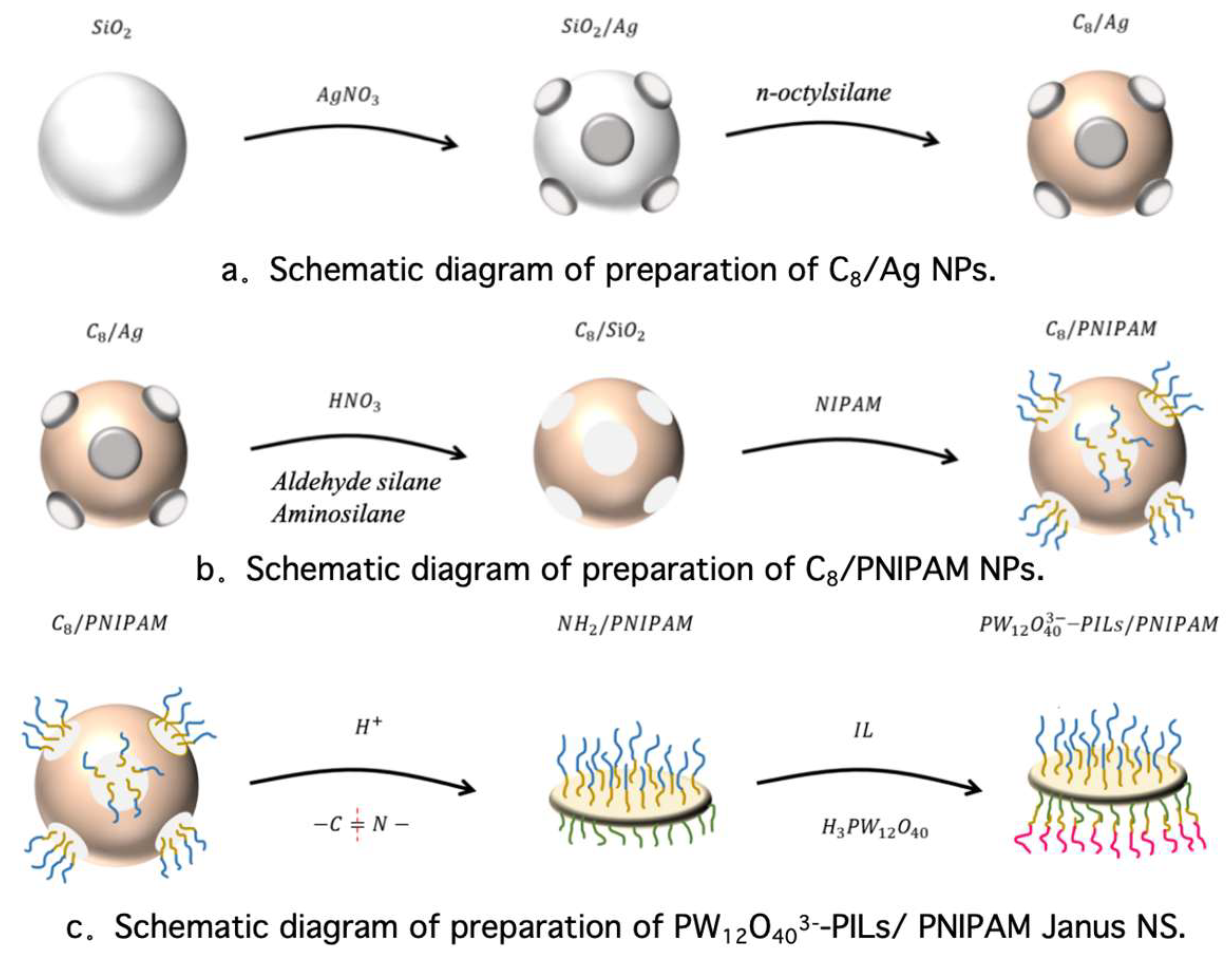
Synthesis of C8/Ag NPs. SiO2/Ag NPs (0.1 g) were ultrasonically dispersed in a mixture of 28 mL ethanol and 2 mL ammonia for 30 min. The suspension was stirred magnetically at room temperature for 24 h, after which 200 μL n-octyltriethoxysilane was introduced and stirring continued for 12 h. The reaction flask was then transferred to an oil bath at 80 °C and refluxed under magnetic stirring for 4 h. The mixture was centrifuged, and the solid product was washed with ethanol and vacuum-dried at 50 °C to yield octyl/silver nanoparticles (C8/Ag NPs) (Figure 18).

3.2.2. Preparation of C8/PNIPAM NPs

Synthesis of C8/OH NPs. C8/Ag NPs (0.1 g) were dispersed in 30 mL of 2 M HNO3 and sonicated for 2 h to promote the redox reaction of silver with nitric acid. The product was centrifuged, washed sequentially with deionized water and ethanol, and dried at 50 °C to yield octyl/hydroxyl nanoparticles (C8/OH NPs).
Synthesis of C8/CHO NPs. C8/OH NPs were dispersed in 24 mL ethanol and 0.9 mL ammonia, sonicated for 30 min, and stirred at room temperature for 24 h. Then, 200 μL triethoxysilylbutyraldehyde was introduced, and stirring was continued for another 12 h. The reaction flask was transferred to an oil bath at 80 °C and refluxed for 4 h. The product was recovered by centrifugation, washed with ethanol, and dried at 50 °C to afford octyl/aldehyde nanoparticles (C8/CHO NPs).
Synthesis of C8/CNSi(OC2H5)3 NPs. C8/CHO NPs (80 mg) were dispersed in 30 mL toluene, sonicated, and stirred at room temperature for 1 h. Then, 160 mg 3-aminopropyltriethoxysilane was added, and stirring was continued for 24 h. The flask was transferred to an oil bath at 90 °C and refluxed for 6 h. After cooling, the product was centrifuged, washed with deionized water and ethanol, and vacuum-dried at 50 °C to yield octyl/triethoxysilane nanoparticles (C8/CNSi(OC2H5)3 NPs).
Synthesis of C8/SiO2 NPs. The nanoparticles were ultrasonically dispersed in 38 mL ethanol and 2 mL deionized water and stirred at 70 °C for 24 h. After cooling to room temperature, the solid was separated by centrifugation, washed alternately with deionized water and ethanol, and dried at 50 °C to afford octyl/silica nanoparticles (C8/SiO2 NPs).
Synthesis of C8/SiO2-Br NPs. Dried C8/SiO2 NPs (30 mg) were dispersed in 20 mL dry CH2Cl2, cooled in an ice bath to 0 °C, and stirred with 0.6 mL triethylamine. A solution of 0.3 mL 2-bromoisobutyryl bromide in 10 mL CH2Cl2 was added dropwise over 0.5 h, followed by stirring at room temperature for 24 h. The product was separated by centrifugation, washed with CH2Cl2, and dried to yield ATRP initiator-modified octyl/bromide nanoparticles (C8/SiO2-Br NPs).
Synthesis of C8/PNIPAM NPs. C8/SiO2-Br NPs (50 mg) were dispersed in 10 mL isopropanol. Tris(2-dimethylaminoethyl)amine (30 mg) and N-isopropylacrylamide (0.5 g) were added, and the solution was purged with N2 for 0.5 h. CuBr (15 mg) was then introduced under N2, and the mixture was allowed to react at 30 °C for 24 h. Polymerization was terminated by exposure to air. The product was isolated by centrifugation, washed with isopropanol and ethanol, and vacuum-dried at 50 °C to afford octyl/poly(N-isopropylacrylamide) nanoparticles (C8/PNIPAM NPs) (Figure 18).

3.2.3. Preparation of PW12O403−-PILs/PNIPAM Janus NS

Preparation of NH2/PNIPAM Janus Nanosheets. An ethanol–HCl solution (pH 4–5) was prepared by adding 200 μL of 0.1 M HCl to 20 mL anhydrous ethanol and mixing thoroughly. C8/PNIPAM NPs (30 mg) were ultrasonically dispersed in this solution for 3 min. The suspension was centrifuged at 1000 rpm for 1 min to sediment the C8/CHO NP template microspheres, and the supernatant was decanted. Centrifugation of the supernatant was repeated until no further sediment was observed. The remaining suspension was then centrifuged at 10,800 rpm for 2 min to afford NH2/PNIPAM Janus nanosheets, which were washed with ethanol and deionized water and vacuum-dried at 50 °C. The same procedure was applied to wash and dry the C8/CHO NP microspheres.
Preparation of Br/PNIPAM Janus Nanosheets. NH2/PNIPAM Janus nanosheets (20 mg) were dispersed in 12 mL dry CH2Cl2, cooled in an ice bath to 0 °C, and stirred with 0.4 mL triethylamine. A solution of 0.2 mL 2-bromoisobutyryl bromide in 8 mL CH2Cl2 was added dropwise over 0.5 h, and stirring continued at room temperature for 24 h. The solid product was recovered by centrifugation, washed with CH2Cl2, and dried to yield Br/PNIPAM Janus nanosheets.
Preparation of PILs/PNIPAM Janus Nanosheets. Br/PNIPAM Janus nanosheets (20 mg) were dispersed in 20 mL isopropanol in a round-bottom flask, to which 12 μL tris(2-dimethylaminoethyl)amine and 0.2 g 1-vinyl-3-ethylimidazolium bromide were added. The solution was purged with N2 for 0.5 h before adding 6 mg CuBr, and the mixture was reacted at 30 °C for 24 h. Polymerization was terminated by exposure to air. The product was collected by centrifugation, washed with isopropanol and ethanol, and dried to yield PILs/PNIPAM Janus nanosheets.
Preparation of PW12O403−-PILs/PNIPAM Janus Nanosheets. Phosphotungstic acid (30 mg) was dispersed in 10 mL deionized water, into which PILs/PNIPAM Janus nanosheets (10 mg) were introduced. The suspension was stirred at 30 °C for 24 h. After cooling to room temperature, the solid was separated by centrifugation, washed with deionized water, and dried to yield PW12O403−-PILs/PNIPAM Janus nanosheets (Figure 18).

3.3. Emulsification Tests

Emulsification experiments were performed using PW12O403−-PILs/PNIPAM Janus nanosheets as particulate emulsifiers. In a typical procedure, PW12O403−-PILs/PNIPAM Janus nanosheets (4 mg) were dispersed in 3 mL deionized water, followed by the addition of 300 μL toluene containing a trace amount of Sudan IV dye to aid visualization. The mixture was sonicated at 15 °C for 3 min, and the resulting emulsion behavior was observed.
To investigate temperature responsiveness, the same emulsion system was subsequently heated to 50 °C. The emulsion response was recorded, and changes in phase behavior were noted. Upon cooling back to below the lower critical solution temperature (LCST), the demulsification process was observed, confirming the reversible emulsification/demulsification capability of the Janus nanosheets.

3.4. Material Characterization

Thermal gravimetric analysis (TGA) was performed using a thermal gravimetric analyzer to measure the mass changes in a sample as it is heated in a crucible under a controlled nitrogen atmosphere. The temperature was increased according to a programmed rate, and the mass change in the sample at different temperatures was used to determine the content of relevant substances in the material.
This method is widely applied, such as in measuring the carbon black content in rubber [31,32] and determining the thermal degradation kinetics of phenylsilicone rubber [33,34]. Typically, when polymers are heated, they undergo 2–3 weight losses, corresponding to 2–3 distinct steps in the TGA curve [35,36,37].
The testing conditions were as follows: the sample was heated under a nitrogen atmosphere, with a temperature range of 30 °C to 700 °C, a heating rate of 10 °C/min, and a holding time of 30 min.

4. Conclusions

In this work, C8/CHO template microspheres with a “patch” structure were successfully synthesized via in situ reduction and sol–gel reactions. These microspheres are reusable, thereby minimizing operational steps and reducing both time and material costs in practical applications.
On the basis of these templates, temperature-responsive PW12O403−-PILs/PNIPAM Janus nanosheets were prepared through sequential Schiff-base and ATRP reactions. The PNIPAM moiety imparted temperature responsiveness, enabling the nanosheets to act as efficient Pickering emulsifiers.
When applied to toluene/water systems, the Janus nanosheets formed stable emulsions. More importantly, emulsification and demulsification could be precisely controlled by adjusting the environmental temperature. This reversible, temperature-driven behavior highlights the potential of PW12O403−-PILs/PNIPAM Janus nanosheets in smart emulsification and responsive separation technologies.

Author Contributions

Material preparation, catalytic experiments and writing—original draft, Y.G.; writing—review and editing, D.X.; data analysis, X.Q. and H.Y.; theoretical investigation, W.X.; original idea and supervision, X.X. and S.H.; heoretical investigation, J.Z. All authors have read and agreed to the published version of the manuscript.

Funding

The study was supported by the university-level team research project of Hainan Vocational University of Science and Technology in 2024 “Research on Polyionic Liquid Materials and Their Catalytic Properties (HKKY2024-TD-17)”; Hainan Province 2025 Higher Education Teaching Reform Research Project: Research on the Ideological and Political Teaching Model of the “Principles of Chemical Engineering” Course Based on Target Problem-Oriented Approach (Hnjg2025ZC-127), Hainan Province 2025 Higher Education Scientific Research Project: Study on Polyionic Liquid Materials and Their Photocatalytic Performance (Hnky2025-66), Research on Teaching Methods of Mechanical Manufacturing Courses under Informationization Conditions (HKJG2024-35). The Hainan University of Science and Technology Vocational College Innovation and Entrepreneurship Training Program for College Students also provided support (2025).

Data Availability Statement

The data that support the findings of this study are available from the corresponding author upon reasonable request.

Conflicts of Interest

The authors declare no conflicts of interest.

References

  1. Sondhi, S. Application of biosurfactant as an emulsifying agent. In Applications of Next Generation Biosurfactants in the Food Sector; Academic Press: Cambridge, MA, USA, 2023; pp. 43–56. [Google Scholar]
  2. Reshmy, R.; Philip, E.; Madhavan, A.; Binod, P.; Awasthi, M.K.; Pandey, A.; Sindhu, R. Applications of biosurfactant as an antioxidant in foods. In Applications of Next Generation Biosurfactants in the Food Sector; Academic Press: Cambridge, MA, USA, 2023; pp. 391–401. [Google Scholar]
  3. Rajendran, N.; Kang, D.; Han, J.; Gurunathan, B. Process optimization, economic and environmental analysis of biodiesel production from food waste using a citrus fruit peel biochar catalyst. J. Clean. Prod. 2022, 365, 132712. [Google Scholar] [CrossRef]
  4. Soodesh, C.Y.; Seriyala, A.K.; Navjot; Chattopadhyay, P.; Rozhkova, N.; Michalkiewicz, B.; Chatterjee, S.; Roy, B. Carbonaceous catalysts (biochar and activated carbon) from agricultural residues and their application in production of biodiesel: A review. Chem. Eng. Res. Des. 2024, 203, 759–788. [Google Scholar] [CrossRef]
  5. Abdulredha, M.M.; Hussain, S.A.; Abdullah, L.C.; Hong, T.L. Water-in-oil emulsion stability and demulsification via surface-active compounds: A review. J. Pet. Sci. Eng. 2022, 209, 109848. [Google Scholar] [CrossRef]
  6. Yang, X.; Chen, S.; Chen, H.; He, L.; Ni, Y.; Liu, S.; Chen, Z.; Tian, Y. Comprehensive review of stabilising factors, demulsification methods, and chemical demulsifiers of oil-water emulsions. Sep. Purif. Technol. 2025, 358, 130206. [Google Scholar] [CrossRef]
  7. Borówko, M.; Staszewski, T.; Tomasik, J. Janus Ligand-Tethered Nanoparticles at Liquid–Liquid Interfaces. J. Phys. Chem. B 2023, 127, 5150–5161. [Google Scholar] [CrossRef]
  8. Hossain, M.T.; Gates, I.D.; Natale, G. Dynamics of Brownian Janus rods at a liquid–liquid interface. Phys. Fluids 2022, 34, 012117. [Google Scholar] [CrossRef]
  9. Wu, Y.; Zeng, M.; Cheng, Q.; Huang, C. Recent progress toward physical stimuli-responsive emulsions. Macromol. Rapid Commun. 2022, 43, e2200193. [Google Scholar] [CrossRef]
  10. Brugger, B.; Richtering, W. Magnetic, thermosensitive microgels as stimuli-responsive emulsifiers allowing for remote control of separability and stability of oil in water-emulsions. Adv. Mater. 2007, 19, 2973–2978. [Google Scholar] [CrossRef]
  11. Lan, Y.; Choi, J.; Li, H.; Jia, Y.; Huang, R.; Stebe, K.J.; Lee, D. Janus particles with varying configurations for emulsion stabilization. Ind. Eng. Chem. Res. 2019, 58, 20961–20968. [Google Scholar] [CrossRef]
  12. Wang, S.; Yang, H.; Liu, H.; Wu, Q.; Zhang, G.; Liang, F. Temperature-Responsive Janus Colloidal Emulsifier for the Removal of Organic Pollutants in One Pot. ACS Appl. Mater. Interfaces 2025, 17, 37125–37134. [Google Scholar] [CrossRef]
  13. Yin, T.; Yang, Z.; Lin, M.; Zhang, J.; Dong, Z. Preparation of Janus nanosheets via reusable cross-linked polymer microspheres template. Chem. Eng. J. 2019, 371, 507–515. [Google Scholar] [CrossRef]
  14. Akhtarianfar, S.F.; Khayatian, A.; Kashi, M.A. Effect of annealing of ZnO/Ag double seed layer on the electrical properties of ZnO/Ag/ZnO heterostructure nanorods. J. Mater. Sci. Mater. Electron. 2024, 35, 1042. [Google Scholar] [CrossRef]
  15. Liu, J.; Liu, Z.; Chen, Z.; Zhang, H.; Ye, B. Thermal diffusion and epitaxial growth of Ag in Ag/SiO2/Si probed by XRD, depth-resolved XPS, and slow positron beam. Appl. Surf. Sci. 2019, 496, 143527. [Google Scholar] [CrossRef]
  16. Bazzi, L.; Hesemann, P.; Laassiri, S.; EL Hankari, S. Alternative approaches for the synthesis of nano silica particles and their hybrid composites: Synthesis, properties, and applications. Int. J. Environ. Sci. Technol. 2023, 20, 11575–11614. [Google Scholar] [CrossRef]
  17. Al Ragib, A.; Chakma, R.; Wang, J.; Alanazi, Y.M.; El-Harbawi, M.; Arish, G.A.; Islam, T.; Siddique, M.A.B.; Islam, A.R.M.T.; Kormoker, T. The past to the current advances in the synthesis and applications of silica nanoparticles. Nano-Struct. Nano-Objects 2024, 40, 101395. [Google Scholar] [CrossRef]
  18. Liu, X.; Shen, J.; Wang, Y.; Li, M.; Fu, S. Photoinduced Metal-Free Atom Transfer Radical Polymerization for the Modification of Cellulose with Poly (N-isopropylacrylamide) to Create Thermo-Responsive Injectable Hydrogels. Int. J. Mol. Sci. 2024, 25, 2867. [Google Scholar] [CrossRef]
  19. Iqbal, M.A.; Younis, M.W.; Maqbool, M.; Goh, H.H.; Kurniawan, T.A.; Amjad, M.; Othman, M.H.D. Revolutionizing photocatalysis: Synthesis of innovative poly (N-tertiary-butylacrylamide)-graft-hydroxypropyl cellulose polymers for thermo-responsive applications via metal-free organic photoredox catalysis. Int. J. Biol. Macromol. 2025, 288, 138775. [Google Scholar] [CrossRef]
  20. Rawand, M.A. Silica Core@ Shell Nanoparticles for Biomedical Applications: A Study in Pharmaceutical Sciences; Åbo Akademi University: Turku, Finland, 2024. [Google Scholar]
  21. Djayanti, K.; Maharjan, P.; Cho, K.H.; Jeong, S.; Kim, M.S.; Shin, M.C.; Min, K.A. Mesoporous silica nanoparticles as a potential nanoplatform: Therapeutic applications and considerations. Int. J. Mol. Sci. 2023, 24, 6349. [Google Scholar] [CrossRef]
  22. Xu, B.; Li, S.; Shi, R.; Liu, H. Multifunctional mesoporous silica nanoparticles for biomedical applications. Signal Transduct. Target. Ther. 2023, 8, 435. [Google Scholar] [CrossRef] [PubMed]
  23. Sun, L.; Zhou, Y.; Li, X.; Li, J.; Shen, D.; Yin, S.; Wang, H.; Huo, P.; Yan, Y. Thermo-responsive functionalized PNIPAM@ Ag/Ag3PO4/CN-heterostructure photocatalyst with switchable photocatalytic activity. Chin. J. Catal. 2020, 41, 1573–1588. [Google Scholar] [CrossRef]
  24. Yin, H.; Cao, Y.; Fan, T.; Zhang, M.; Yao, J.; Li, P.; Chen, S.; Liu, X. In situ synthesis of Ag3PO4/C3N5 Z-scheme heterojunctions with enhanced visible-light-responsive photocatalytic performance for antibiotics removal. Sci. Total Environ. 2021, 754, 141926. [Google Scholar] [CrossRef]
  25. Tizazu, G. Investigation of the effect of molecular weight, density, and initiator structure size on the repulsive force between a PNIPAM polymer brush and protein. Adv. Polym. Technol. 2022, 2022, 9741080. [Google Scholar] [CrossRef]
  26. Shen, Y.-F.; Luo, M.-B. Height-Switching of Active Polymers in Binary Polymer Brushes. Macromolecules 2025, 58, 5421–5430. [Google Scholar] [CrossRef]
  27. Gao, Y.; Cao, T.; Du, J.; Qi, X.; Yan, H.; Xu, X. The Bi-Modified (BiO) 2CO3/TiO2 Heterojunction Enhances the Photocatalytic Degradation of Antibiotics. Catalysts 2025, 15, 56. [Google Scholar] [CrossRef]
  28. Komarova, G.A.; Kozhunova, E.Y.; Gumerov, R.A.; Potemkin, I.I.; Nasimova, I.R. Effect of Polymer Network Architecture on Adsorption Kinetics at Liquid–Liquid Interfaces: A Comparison Between Poly (NIPAM-co-AA) Copolymer Microgels and Interpenetrating Network Microgels. Gels 2025, 11, 58. [Google Scholar] [CrossRef]
  29. Buritica, S.; Gutteriez, J.; Lapeyre, V.; Garrigue, P.; Brisson, A.; Tran, S.; Laurichesse, E.; Ly, I.; Schmitt, V.; Diat, O.; et al. Inter cross-linking microgels by superchaotropic nanoions at interface: Controlled stabilization of emulsions. J. Colloid Interface Sci. 2025, 699, 138257. [Google Scholar] [CrossRef]
  30. Dan, A.; Agnihotri, P.; Bochenek, S.; Richtering, W. Adsorption dynamics of thermoresponsive microgels with incorporated short oligo (ethylene glycol) chains at the oil–water interface. Soft Matter 2021, 17, 6127–6139. [Google Scholar] [CrossRef]
  31. Umar, M.; Ofem, M.I.; Anwar, A.S.; Salisu, A.G. Thermo gravimetric analysis (TGA) of PA6/G and PA6/GNP composites using two processing streams. J. King Saud Univ.-Eng. Sci. 2020, 34, 77–87. [Google Scholar] [CrossRef]
  32. Vikram, K.; Bhaumik, S.; Pramanik, S. Effect of graphite on tribological and mechanical properties of PA6/5GF composites. J. Therm. Anal. Calorim. 2023, 148, 3341–3355. [Google Scholar] [CrossRef]
  33. Cao, T.; Gao, Y.; Xia, W.; Qi, X. Preparation of Bi@Ho3+:TiO2/Composite Fiber Photocatalytic Materials and Hydrogen Production via Visible Light Decomposition of Water. Catalysts 2024, 14, 588. [Google Scholar] [CrossRef]
  34. Gao, Y.; Wang, X.; Cheng, Y.; Qi, X.; Yan, H. Development and Assessment of a Water-Based Drilling Fluid Tackifier with Salt and High-Temperature Resistance. Crystals 2025, 15, 82. [Google Scholar] [CrossRef]
  35. de Barros, A.H.; Magalhães, R.F.; Murakami, L.M.S.; Diniz, M.F.; Sanches, N.B.; de Carvalho, T.A.; Dutra, J.C.N.; Dutra, R.d.C.L. Determination of elastomer content in NR/SBR/BR blends. Polímeros 2025, 35, e20250023. [Google Scholar] [CrossRef]
  36. Camadanli, S.; Hisir, A.; Dural, S. Synthesis and performance of moisture curable solvent free silane terminated polyurethanes for coating and sealant applications. J. Appl. Polym. Sci. 2022, 139, 51722. [Google Scholar] [CrossRef]
  37. Chi, Q.-C.; Li, J.; Wang, C.-Y.; Ren, Q. Synthesis of hydroxy silane coupling agent and the silane-terminated polyurethane chain-extended by butanediol. J. Coat. Technol. Res. 2022, 19, 1457–1466. [Google Scholar] [CrossRef]
Figure 1. Schematic diagram of preparation of temperature-responsive Janus nanosheets.
Crystals 15 00891 g001
Figure 2. XRD patterns. (a) SiO2 NPs; (b) SiO2/Ag NPs.
Crystals 15 00891 g002
Figure 3. SEM image of patchy silica. (a) SiO2 NPs; (b) SiO2/Ag NPs; (c) C8/Ag NPs; (d) C8/OH NPs.
Crystals 15 00891 g003
Figure 4. SEM image of functionalized silica. (a) C8/CHO NPs; (b) C8/CNSi(OC2H5)3 NPs; (c) C8/SiO2 NPs; (d) C8/SiO2-Br NPs; (e) C8/PNIPAM NPs and (f) stripped template C8/CHO NPs.
Crystals 15 00891 g004
Figure 5. SEM image of nanosheets. (a) NH2/PNIPAM Janus NS; (b) PW12O403−-PILs/PNIPAM Janus NS.
Crystals 15 00891 g005
Figure 6. Infrared spectrum of functionalized silica. (a) C8/CHO NPs; (b) C8/CNSi(OC2H5)3 NPs.
Crystals 15 00891 g006
Figure 7. Infrared spectrum of silica before stripping of Janus sheet. (a) C8/SiO2-Br NPs; (b) C8/PNIPAM NPs.
Crystals 15 00891 g007
Figure 8. Infrared spectra of the template microspheres and Janus nanosheet obtained after stripping. (a) C8/CHO NPs; (b) NH2/PNIPAM Janus NS.
Crystals 15 00891 g008
Figure 9. FTIR diagram of nanosheet. (a) Br/PNIPAM Janus NS; (b) PW12O403−-PILs/PNIPAM Janus NS; (c) PW12O403−-PILs/PNIPAM Janus NS.
Crystals 15 00891 g009
Figure 10. TEM photograph of nanosheets. (a) NH2/PNIPAM Janus NS; (b) PW12O403−-PILs/PNIPAM Janus NS.
Crystals 15 00891 g010
Figure 11. TGA curves of functionalized silica. (a) C8/-OH NPs; (b) C8/PNIPAM NPs.
Crystals 15 00891 g011
Figure 12. TGA curve of nanosheets. (a) NH2/PNIPAM Janus NS; (b) PW12O403−-PILs/PNIPAM Janus NS.
Crystals 15 00891 g012
Figure 13. Optical image of C8/PW12O403−-IL NPs emulsion containing methyl orange/toluene mixture (a) The temperature is 15 °C; (b) The temperature is 50 °C.
Crystals 15 00891 g013
Figure 14. Images of PW12O403−-PILs/PNIPAM Janus NS were dispered in toluene phase (a) The temperature is 15 °C; (b) The temperature is 50 °C; (c) The temperature is 15 °C; (d) The temperature is 15 °C.
Crystals 15 00891 g014
Figure 15. Images of PW12O403−-PILs/PNIPAM Janus NS emulsified water/toluene two-phase solution at different temperatures (a) The temperature is 15 °C; (b) The temperature is 50 °C; (c) The temperature is 15 °C.
Crystals 15 00891 g015
Figure 16. Optical photo of PW12O403−-PILs/PNIPAM Janus NS emulsion containing water/toluene mixture.
Crystals 15 00891 g016
Figure 17. PW12O403−-PILs/PNIPAM Janus NS bilateral hydrophilic and hydrophobic angle test. (a) PW12O403−-PILs side; (b) PNIPAM side (at room temperature); (c) PNIPAM side (T > LCST).
Crystals 15 00891 g017
Figure 18. Schematic diagram illustrating the preparation of (a) C8/Ag nanoparticles (NPs), (b) C8/PNIPAM NPs, and (c) PW12O403−-PILs/PNIPAM Janus nanosheets (NS).
Crystals 15 00891 g018
Disclaimer/Publisher’s Note: The statements, opinions and data contained in all publications are solely those of the individual author(s) and contributor(s) and not of MDPI and/or the editor(s). MDPI and/or the editor(s) disclaim responsibility for any injury to people or property resulting from any ideas, methods, instructions or products referred to in the content.