Article

Experimental and Modeling Analysis of Holey Graphene Electrodes for High-Power-Density Li-Ion Batteries


1
Department of Applied Science, R.O.C. Naval Academy, Zuoying, Kaohsiung 813, Taiwan
2
Department of Chemistry, National Sun Yat-Sen University, Kaohsiung 804, Taiwan
3
Department of Electrical Engineering, Yuan Ze University, Zhongli, Taoyuan 320, Taiwan
4
School of Defense Science, Chung Cheng Institute of Technology, National Defense University, Dasi, Taoyuan 335, Taiwan
5
Department of Chemical & Materials Engineering, Chung Cheng Institute of Technology, National Defense University, Dasi, Taoyuan 335, Taiwan
6
Department of Mechanical Engineering, Ming Chi University of Technology, Taishan, New Taipei City 243, Taiwan
*
Authors to whom correspondence should be addressed.
Crystals 2020, 10(11), 1063; https://doi.org/10.3390/cryst10111063
Submission received: 28 October 2020 / Revised: 19 November 2020 / Accepted: 20 November 2020 / Published: 22 November 2020

Abstract

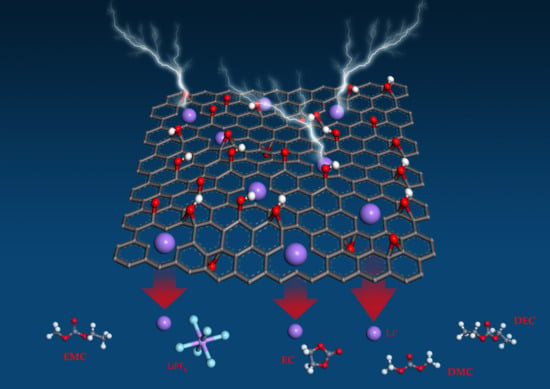
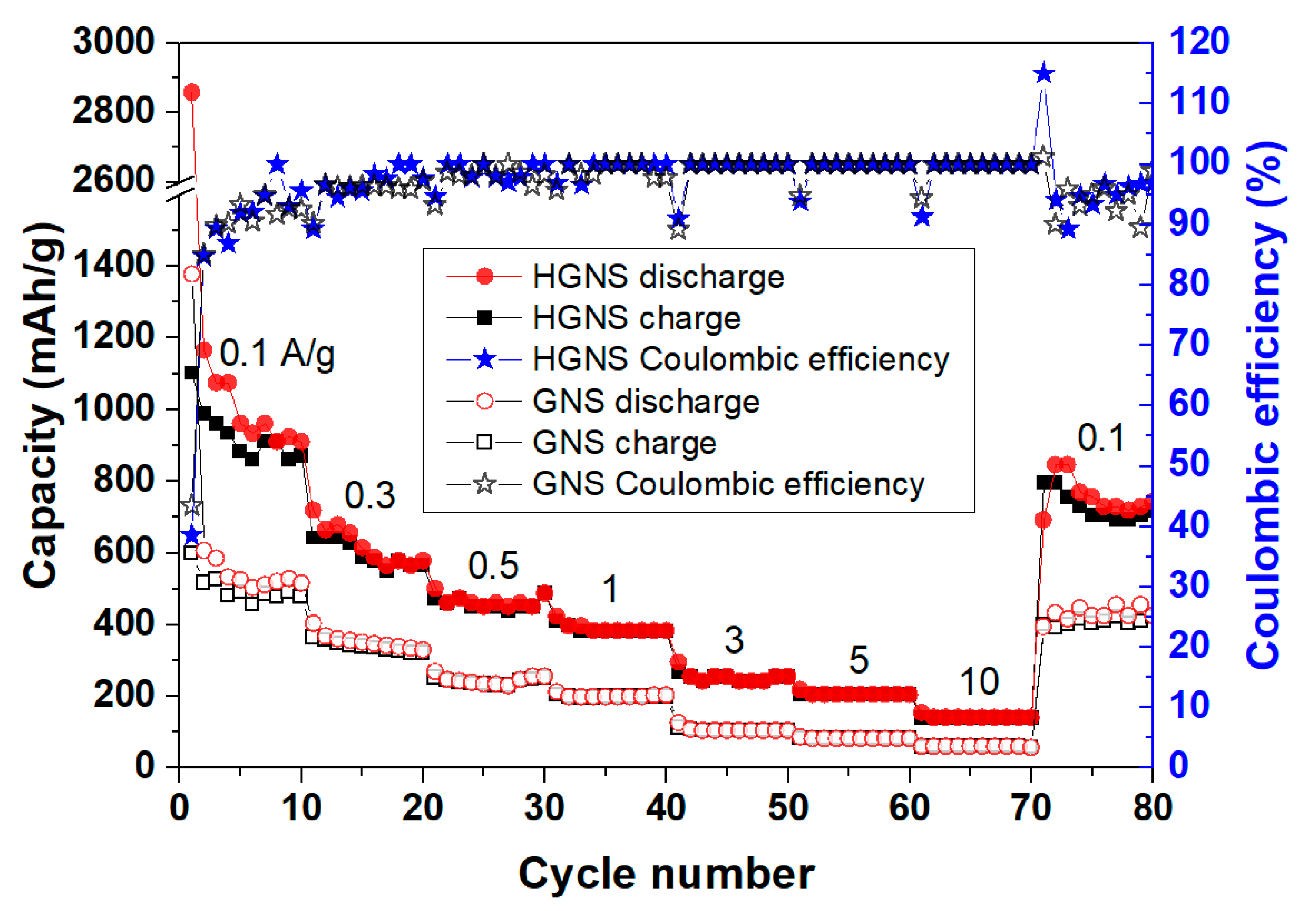
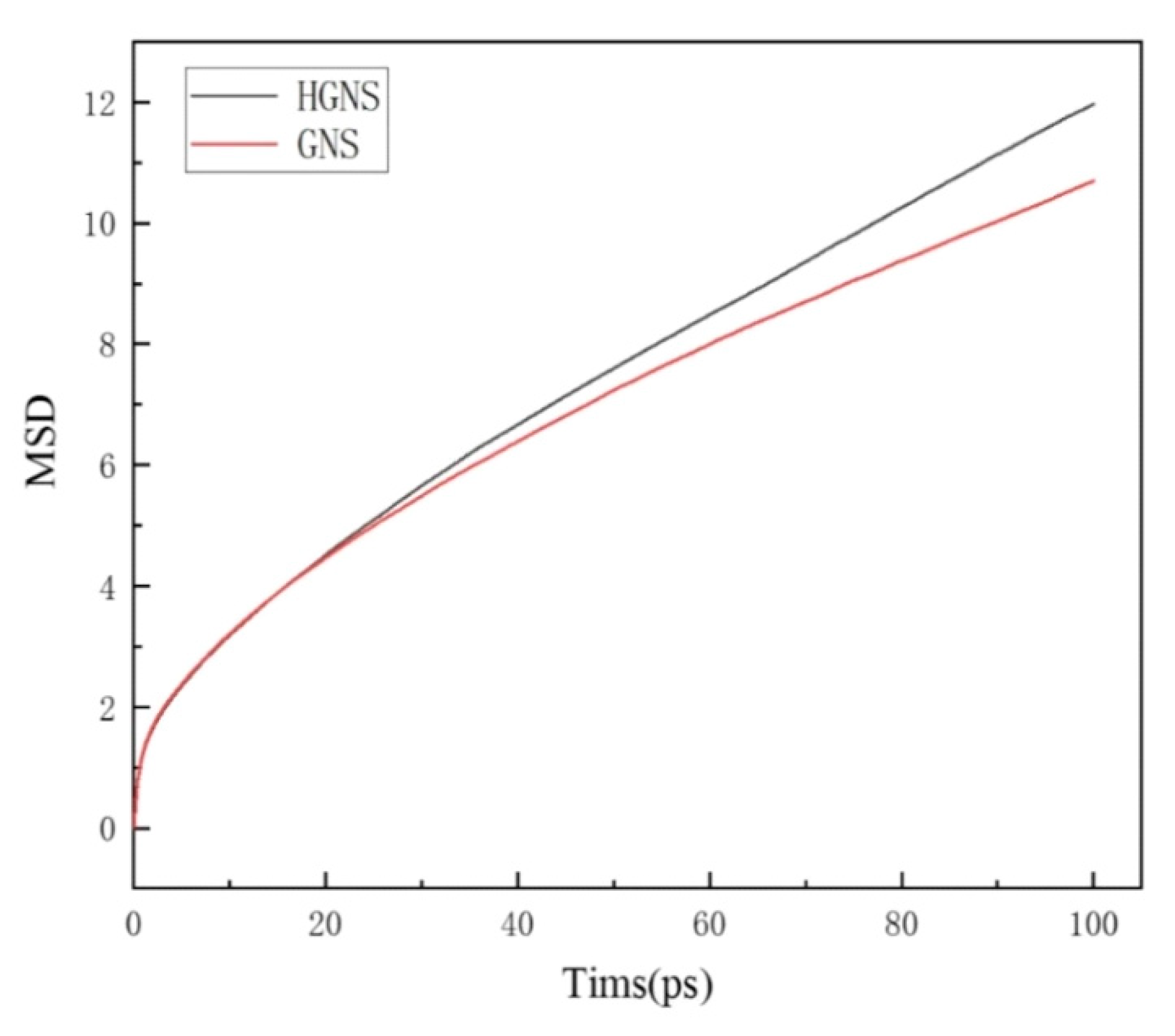
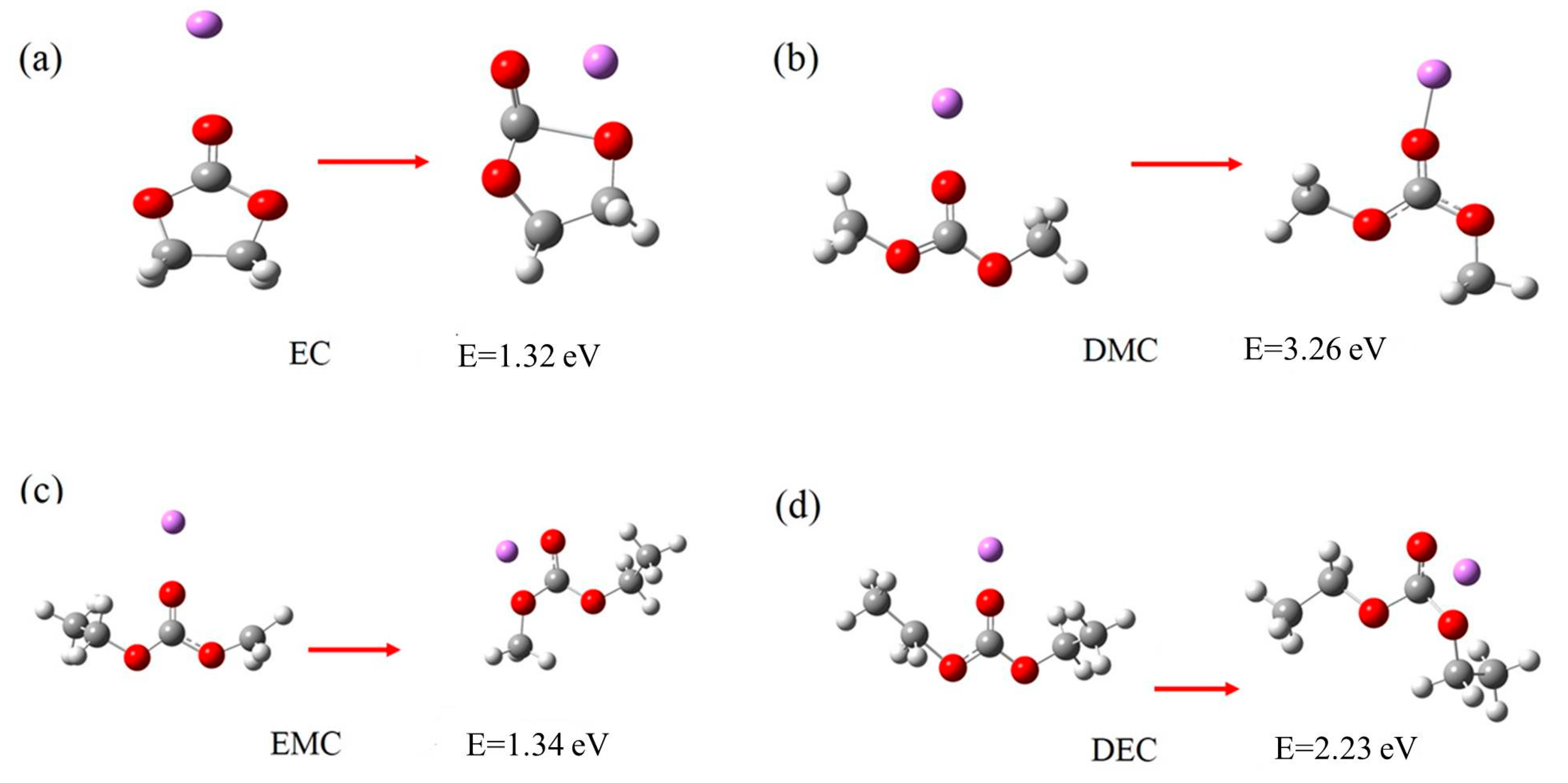
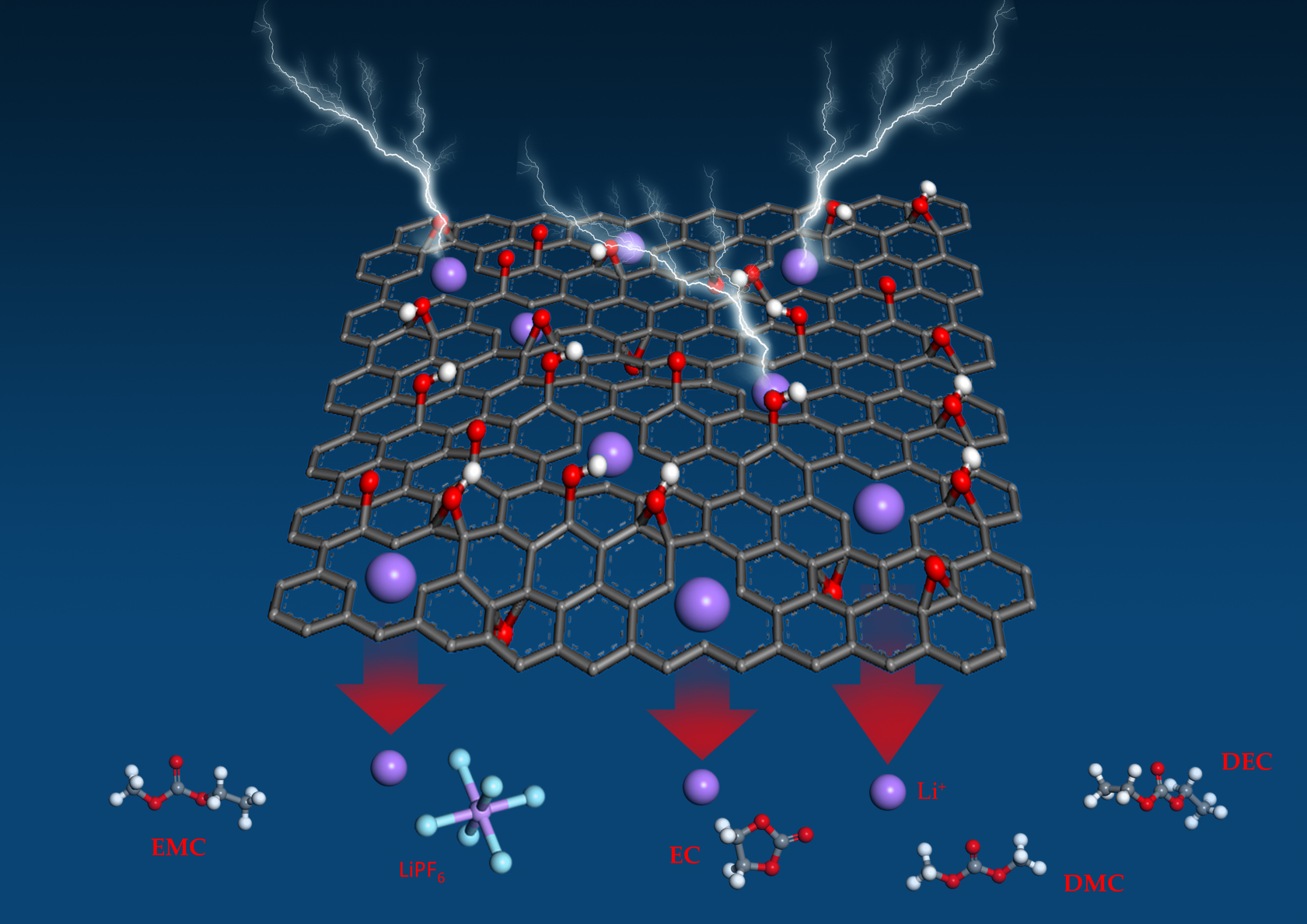
The performances of lithium-ion batteries (LIBs) using holey graphene (HGNS) as the anode material are compared with those using non-holey graphene (GNS). The effects of graphene holes on ion transport are analyzed with a combined experiment/modeling approach involving molecular dynamics (MD) simulations. The large aspect ratio of GNS leads to long transport paths for Li ions, and hence a poor rate capability. We demonstrate by both experiments and simulations that the holey structure can effectively improve the rate capability of LIBs by providing shortcuts for Li ion diffusion through the holes in fast charge/discharge processes. The HGNS anode exhibits a high specific capacity of 745 mAh/g at 0.1 A/g (after 80 cycles) and 141 mAh/g at a large current density of 10 A/g, which are higher than the capacity values of the GNS counterpart by 75% and 130%, respectively. MD simulations also reveal the difference in lithium ion transport between GNS and HGNS anodes. The calculations indicate that the HGNS system has a higher diffusion coefficient for lithium ions than the GNS system. In addition, it shows that the holey structure can improve the uniformity and quality of the solid electrolyte interphase (SEI) layer, which is important for Li ion conduction across this layer to access the electrode surface. Moreover, quantum chemistry (QC) computations show that ethylene carbonate (EC), a cyclic carbonate electrolyte with five-membered-ring molecules, has the lowest electron binding energy of 1.32 eV and is the most favorable for lithium-ion transport through the SEI layer. A holey structure facilitates uniform dispersion of EC on graphene sheets and thus enhances the Li ion transport kinetics.
Keywords: holey graphene; lithium ion battery; molecular dynamics; diffusion; rate capability; solid electrolyte interphase; ethylene carbonate holey graphene; lithium ion battery; molecular dynamics; diffusion; rate capability; solid electrolyte interphase; ethylene carbonate
Graphical Abstract